


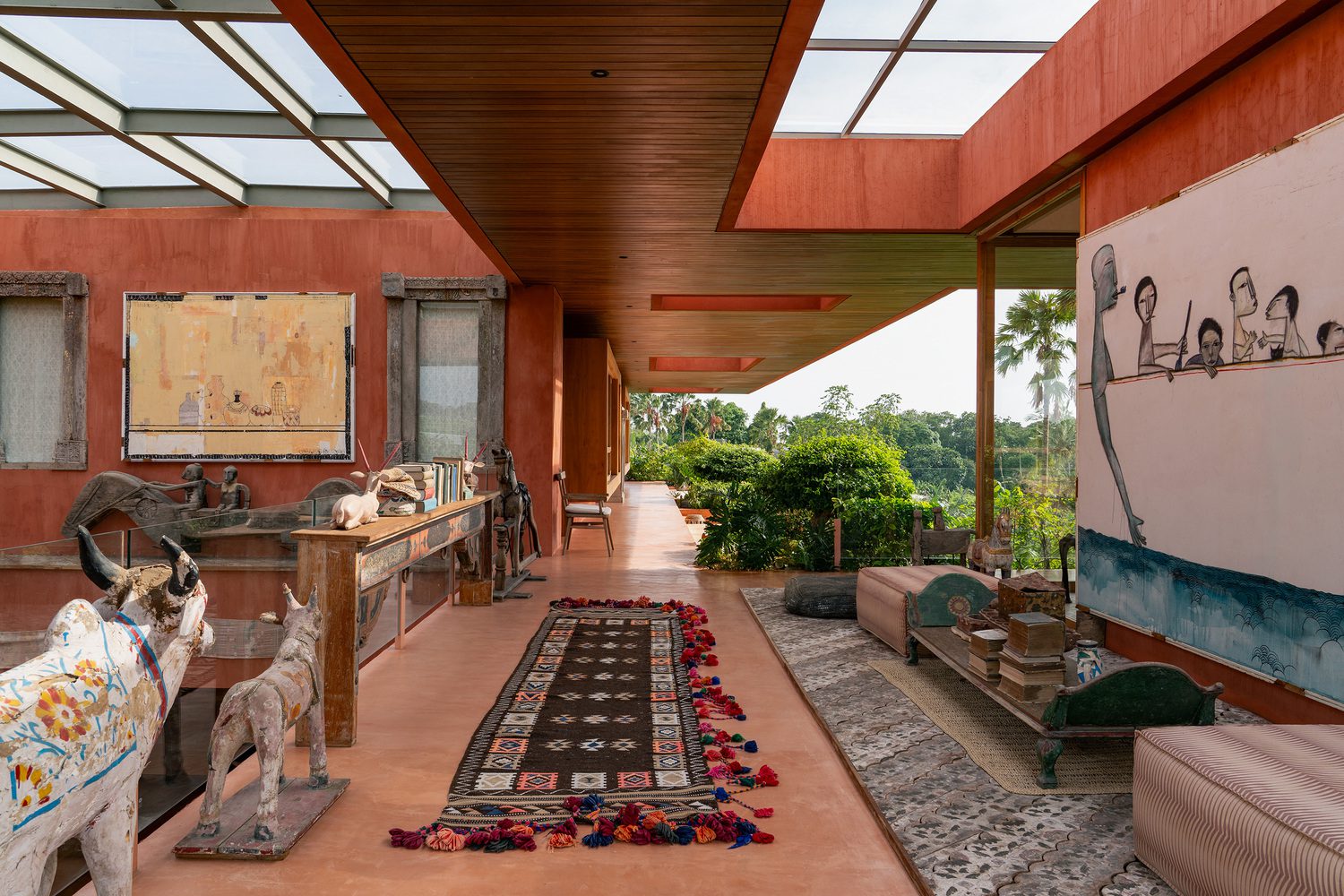
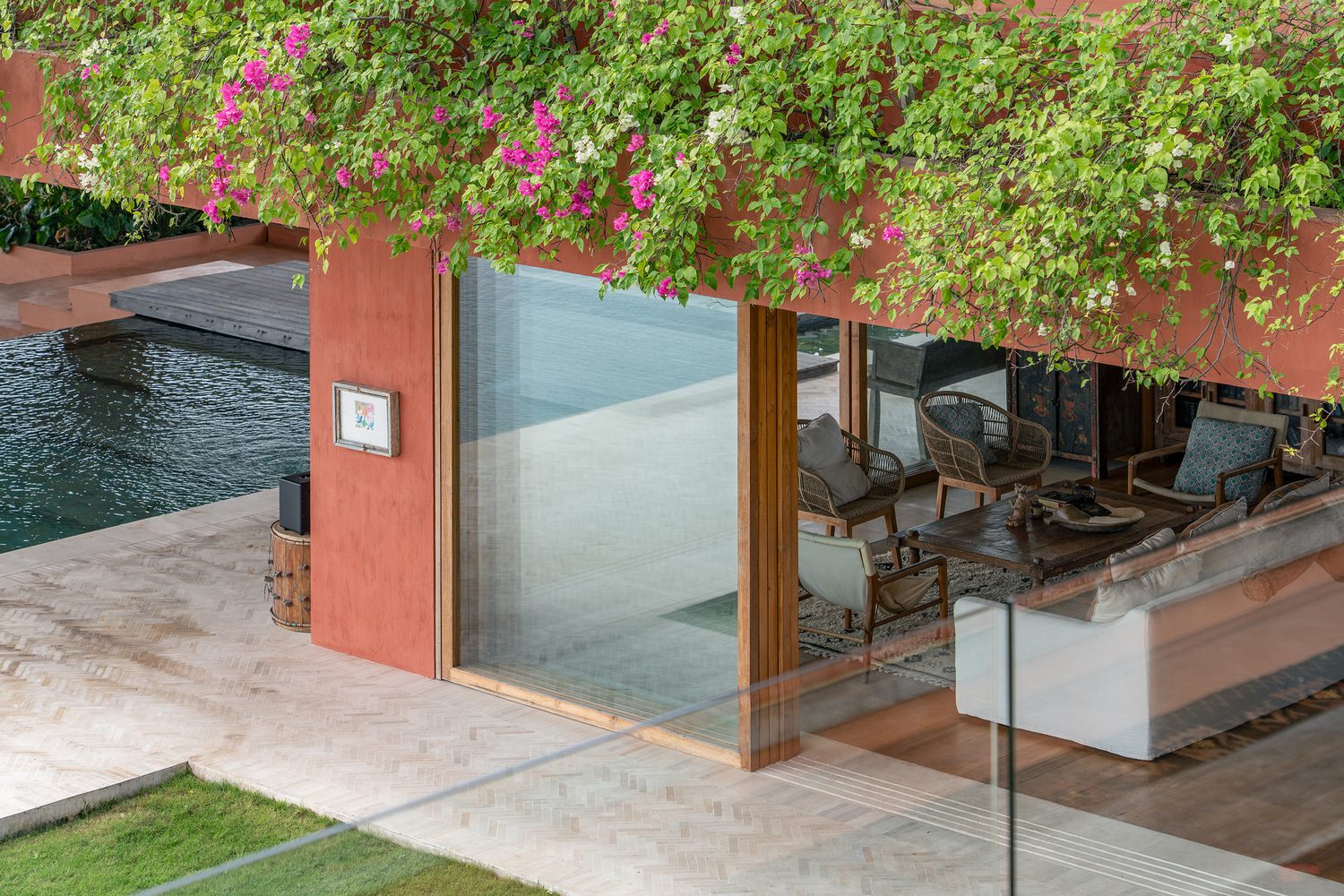
Nenek Coco Villa, a house where the architectural frame is every work of art. Born from the vision of a painter and an architect, Nenek Coco is a residence–villa that offers an eclectic first impression to all who encounter it. The idea emerged from the couple’s need for a quiet place surrounded by the greenery of rice fields, where they could focus, find inspiration, connect with nature, and be surrounded by their vintage artworks spanning centuries. Its brutalist architecture and expansive open spaces allow the house to function as both a home for the family and a gallery for their collections.
© Indra Wiras
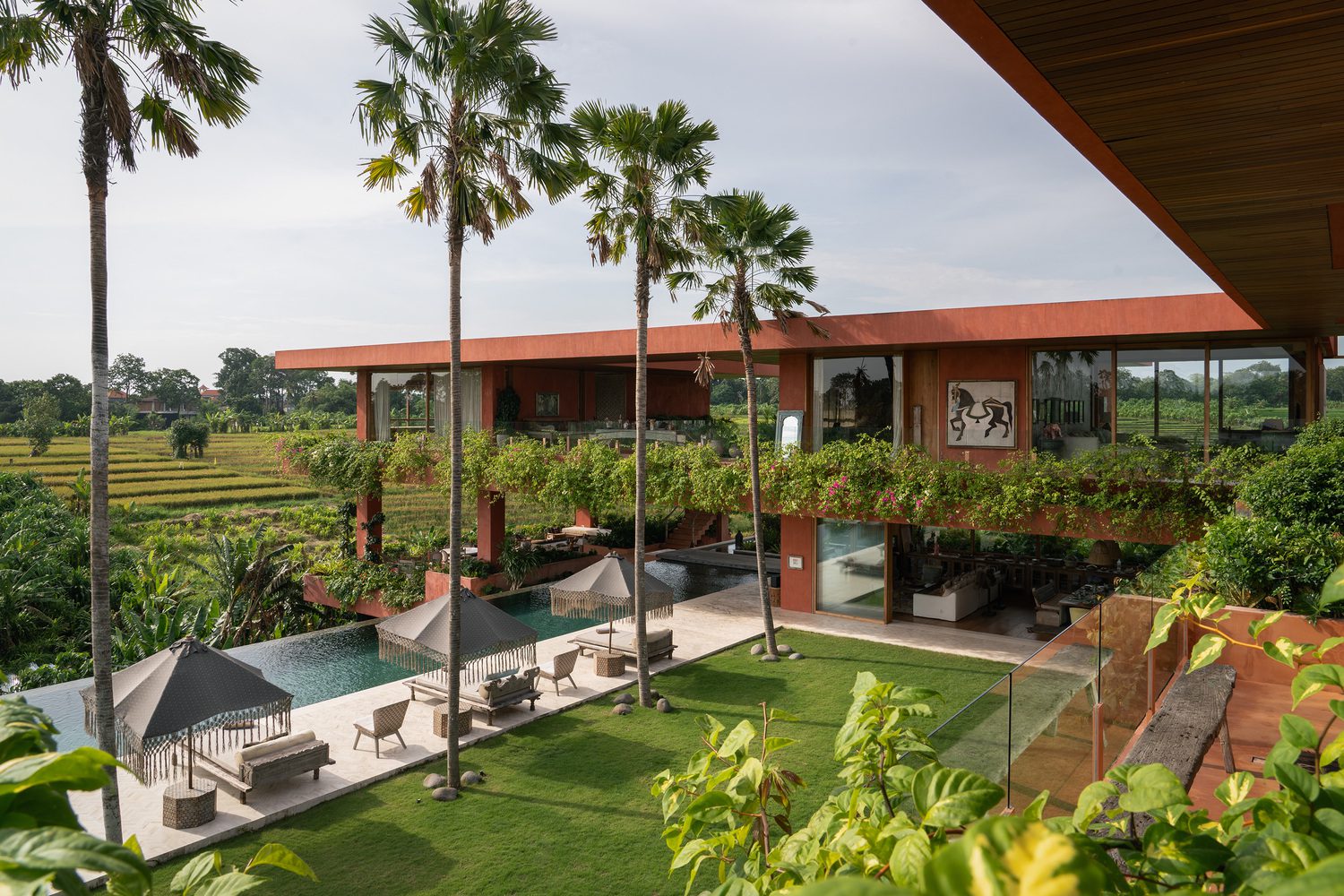
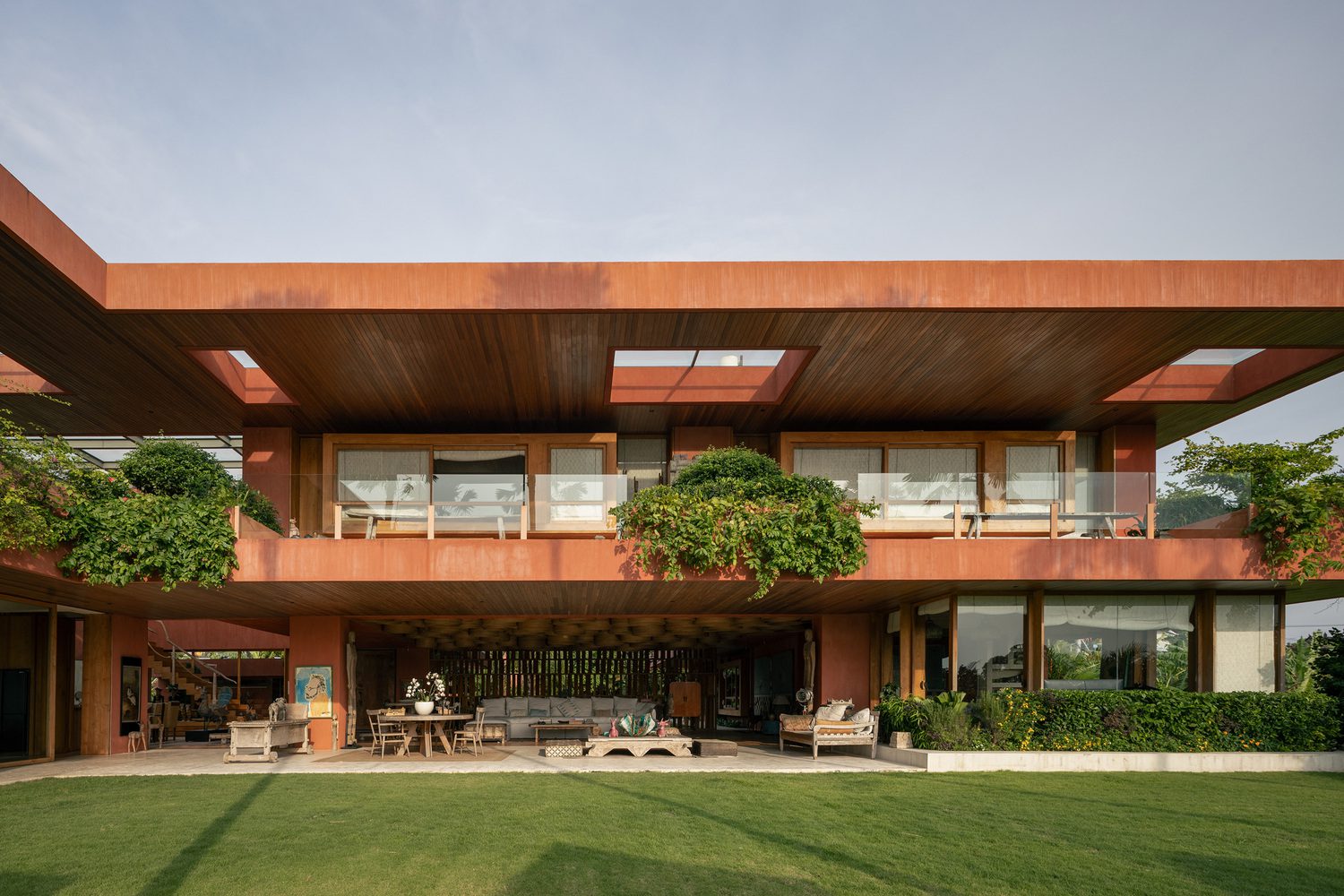
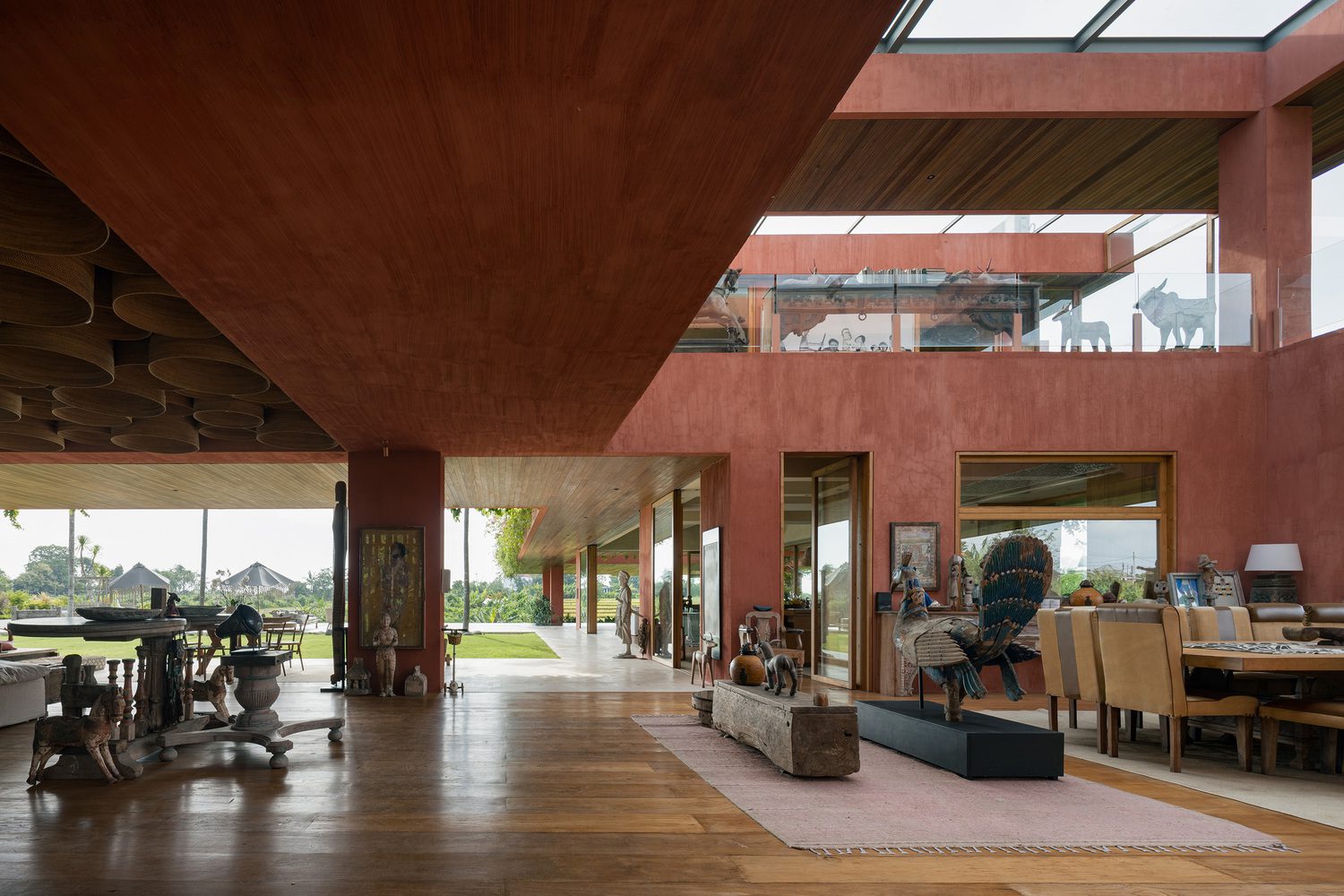
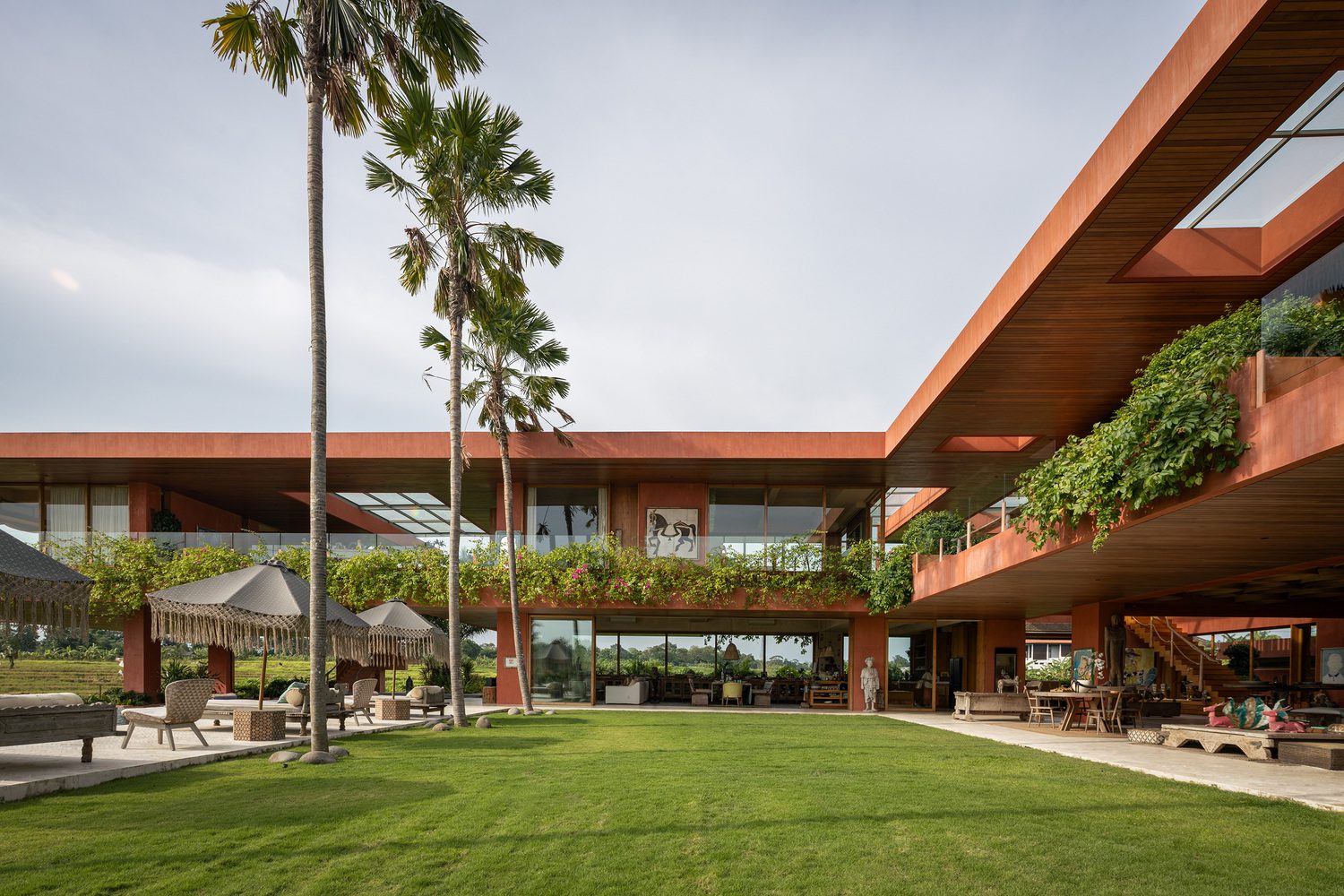
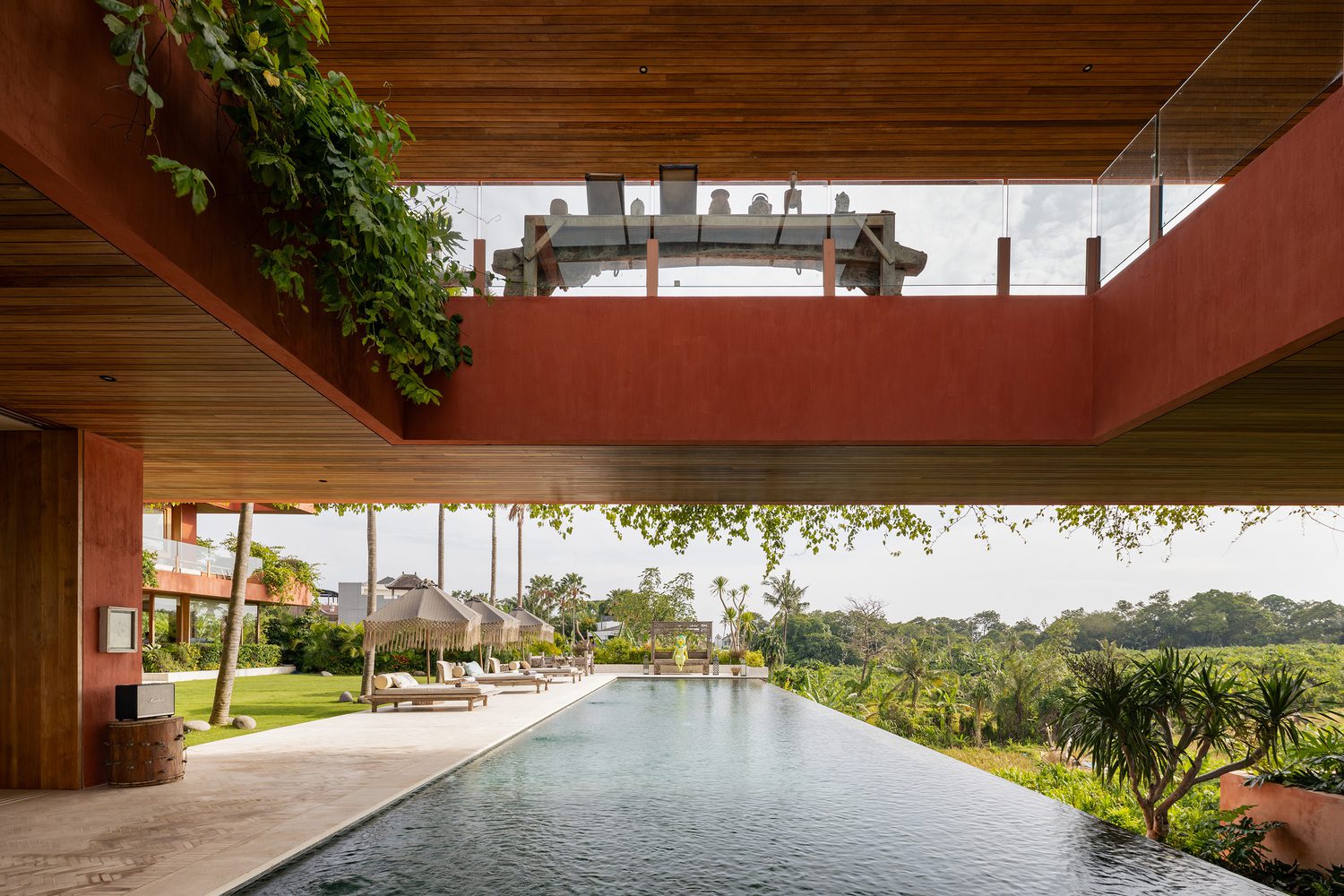
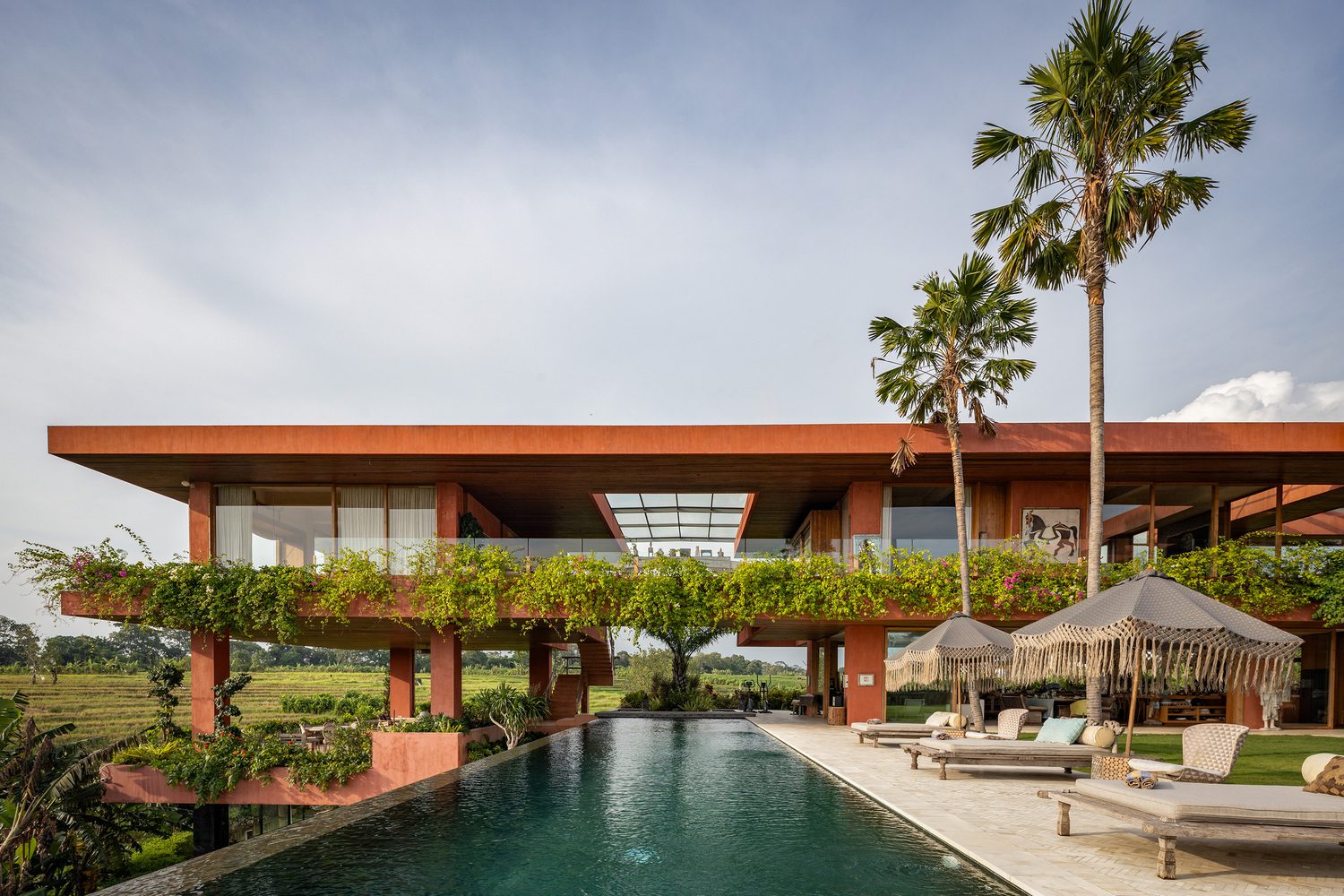
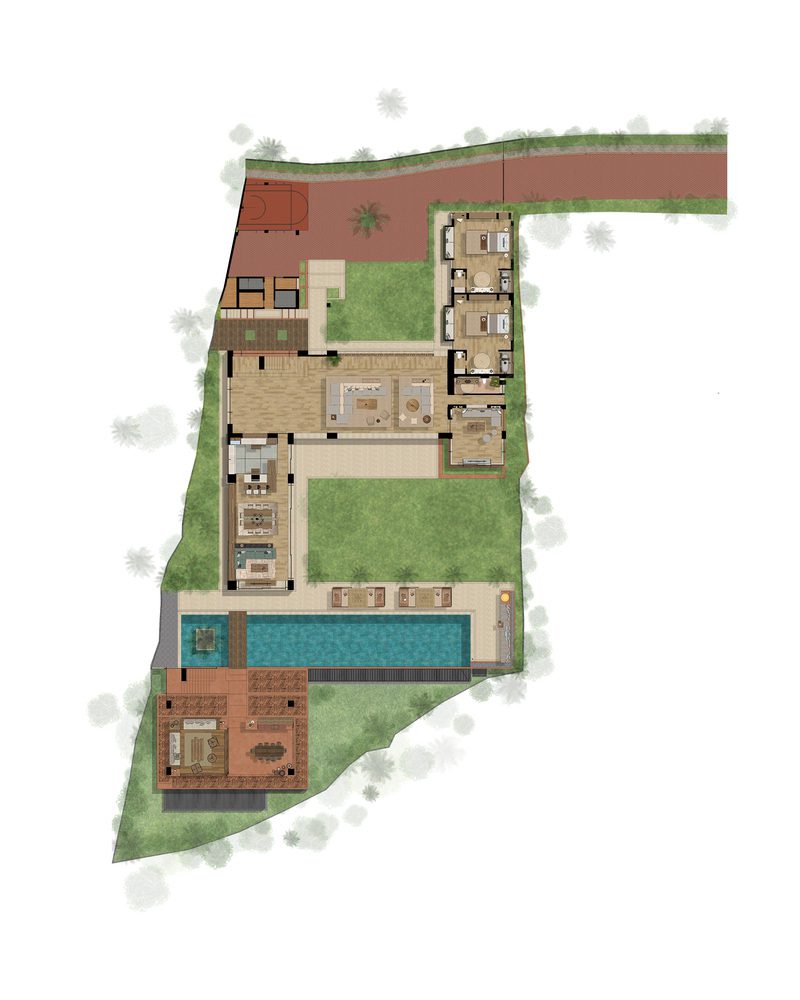
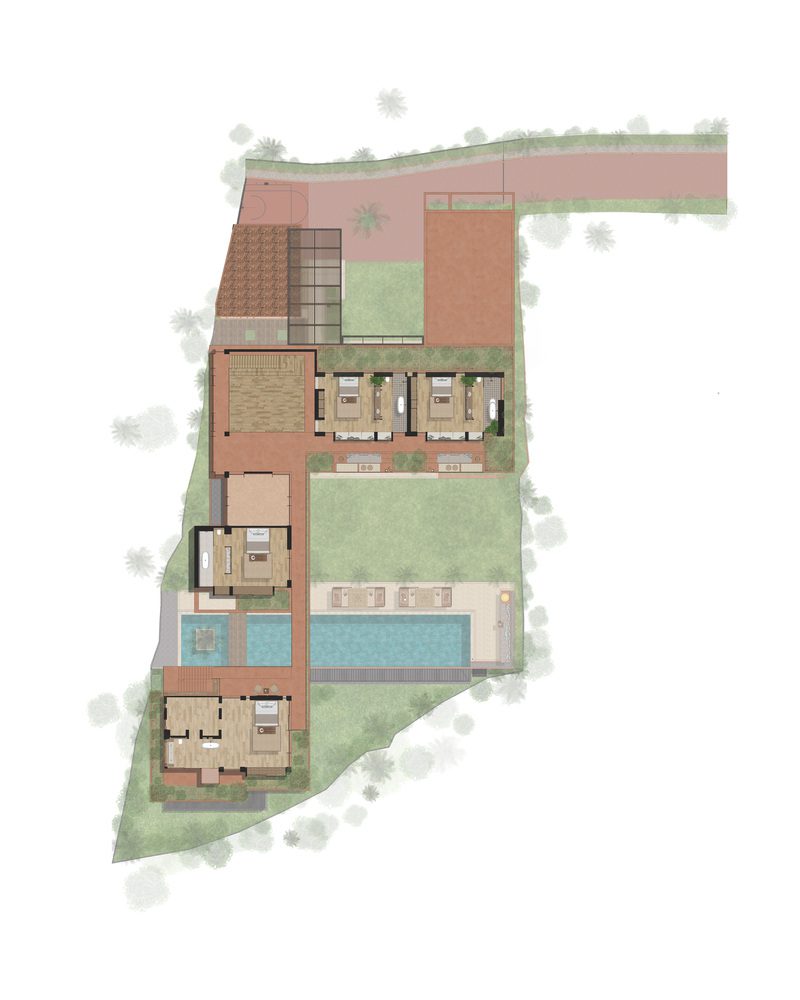
Creating a living gallery that supports casual daily activities presents a unique challenge. With many people inhabiting the house, careful consideration was required to balance domestic life and exhibition space, allowing both purposes to function seamlessly without compromising one another. Taking advantage of a sloping site set away from the main road and surrounded by rice fields, the architect designed an L-shaped building oriented toward the sunset. The house appears as a two-story structure from the front, while revealing three stories from the rear, responding naturally to the site’s topography. A generously scaled swimming pool—nearly the size of an Olympic pool—stretches along the open frontage, offering uninterrupted views of the surrounding landscape.
© Indra Wiras
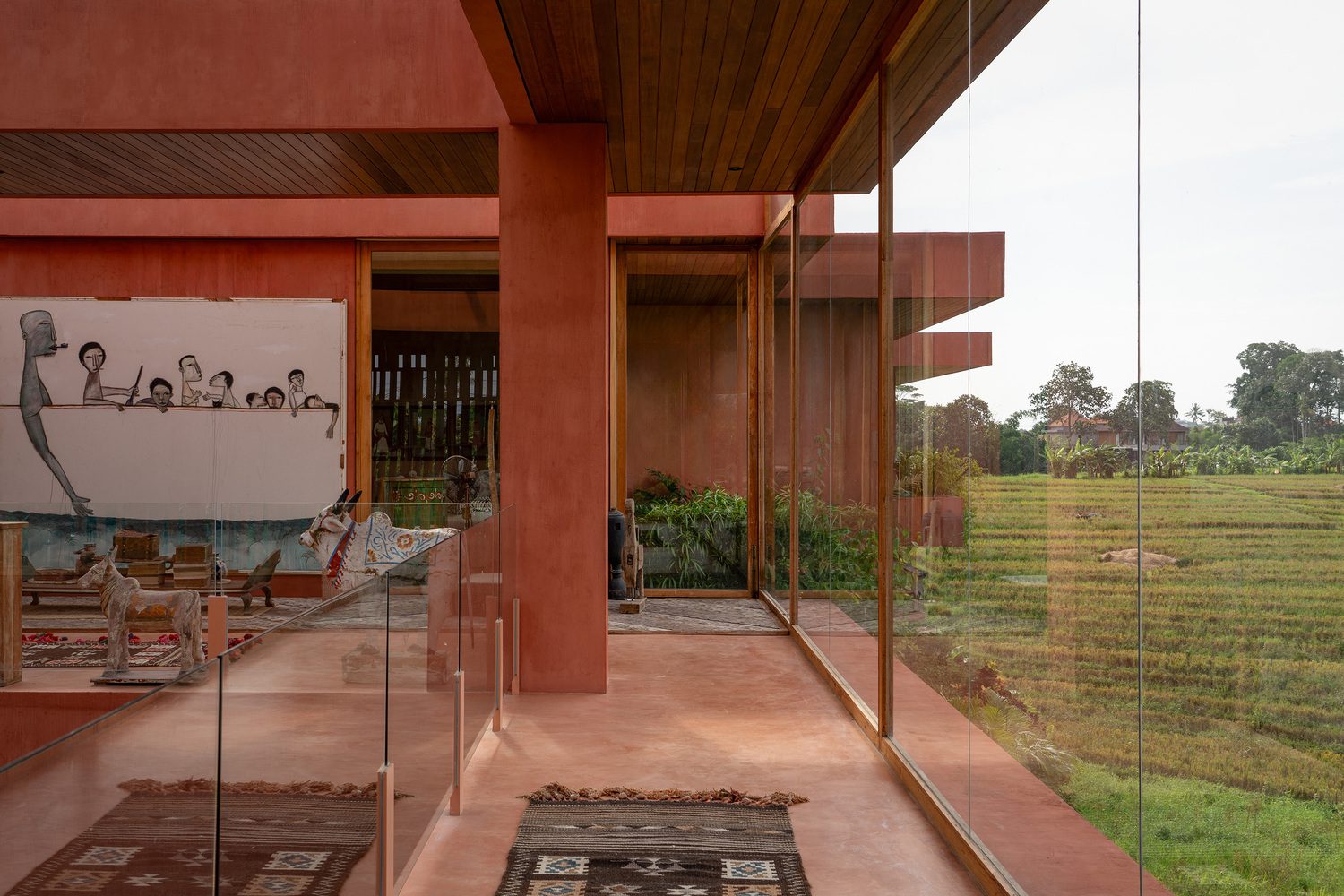
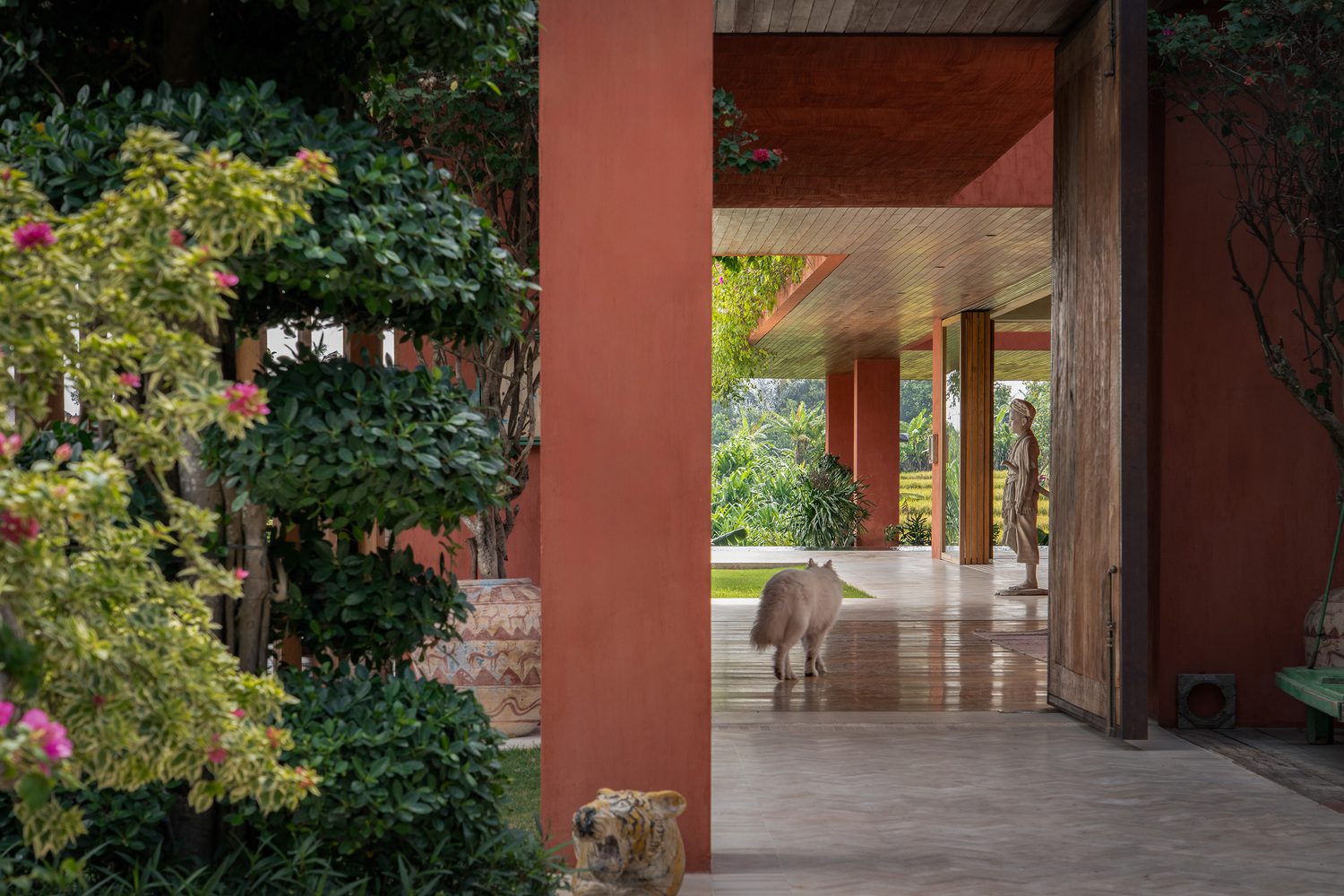
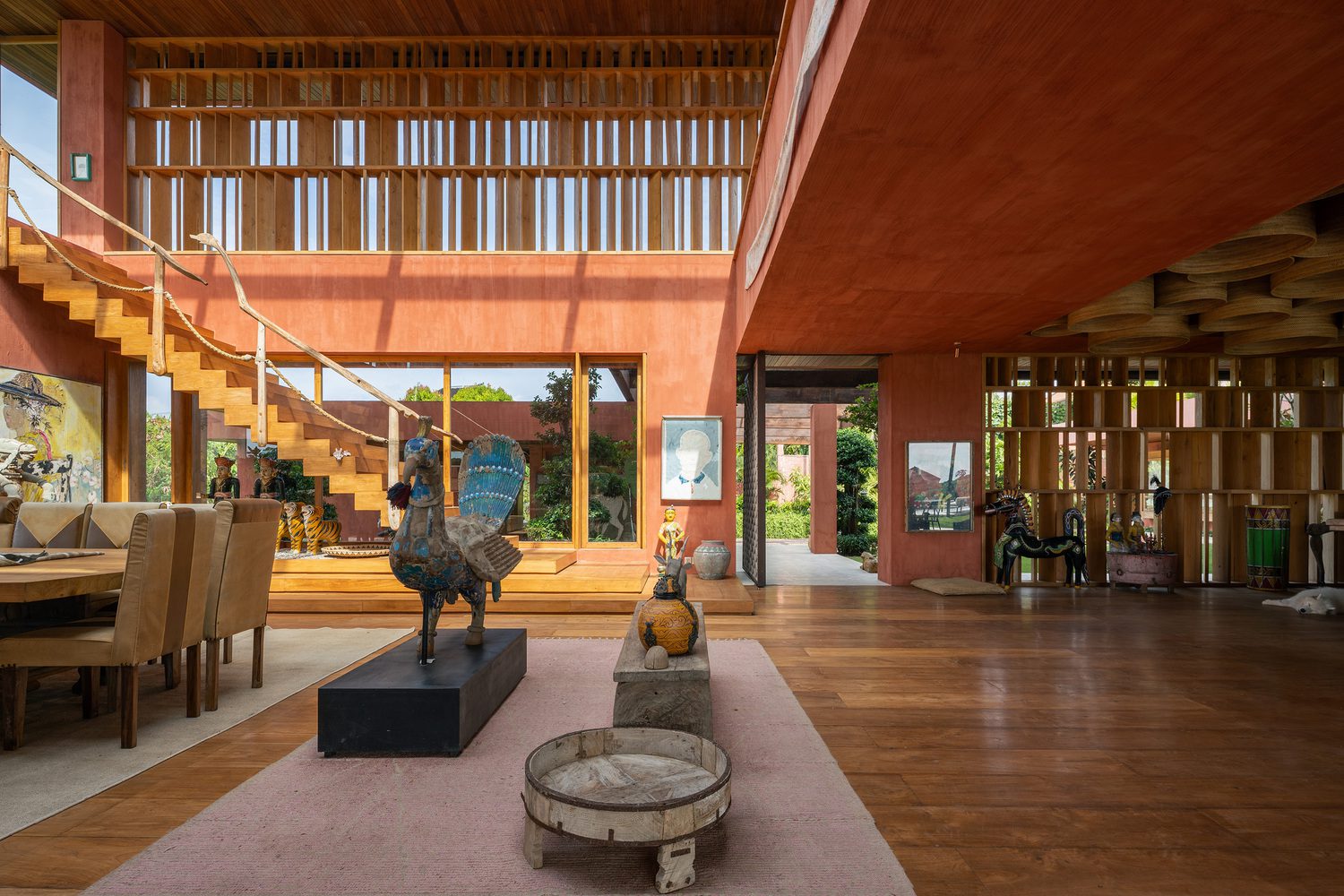
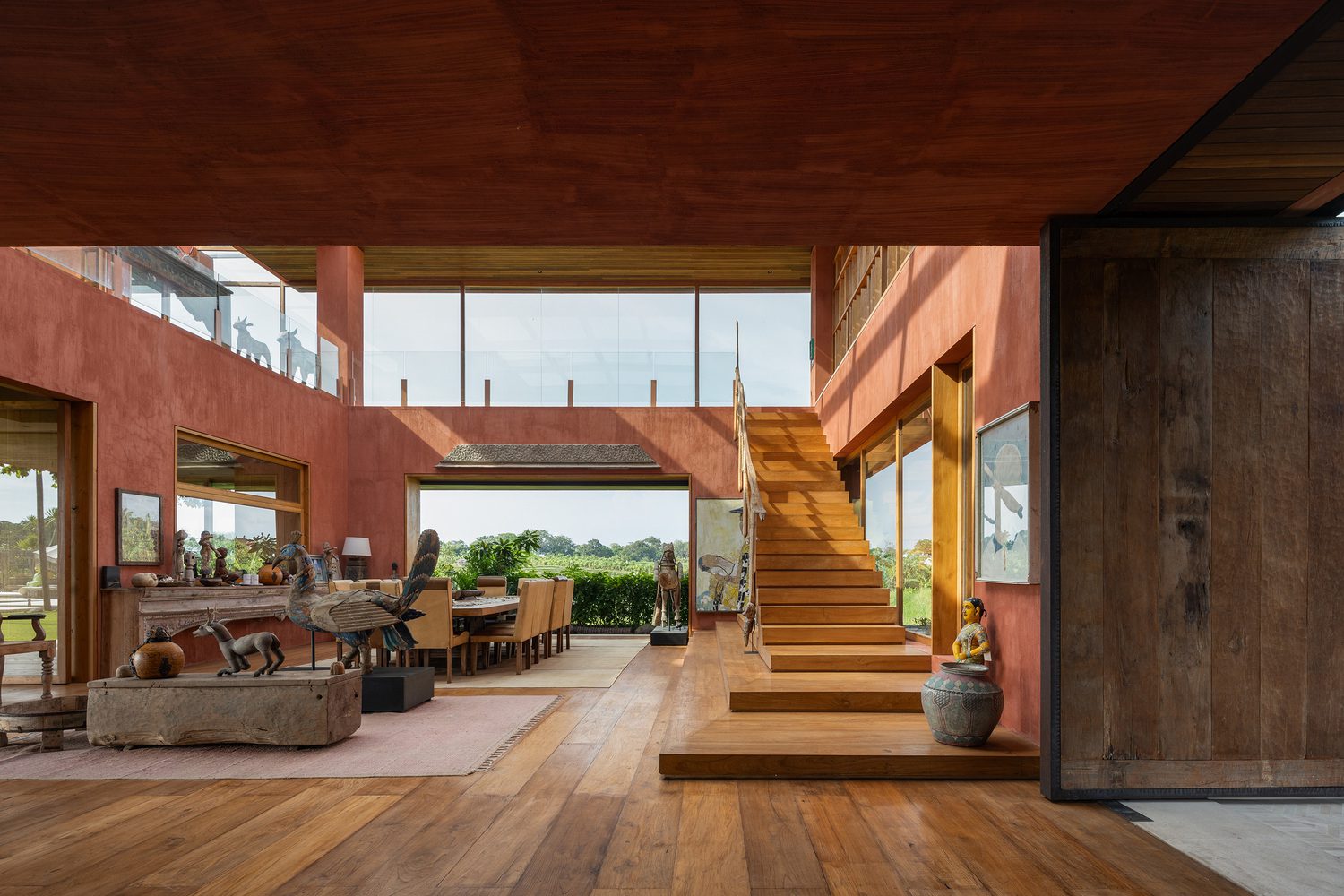
Nenek Coco comprises six bedrooms and a master suite, with wood and rustic iron expressed consistently throughout the house. Upon entry, art is immediately integrated into the spatial experience. Faded wooden statue carving and painting elements are thoughtfully placed throughout the interior, greeting visitors and establishing a dialogue between art, materiality, and space.
© Indra Wiras
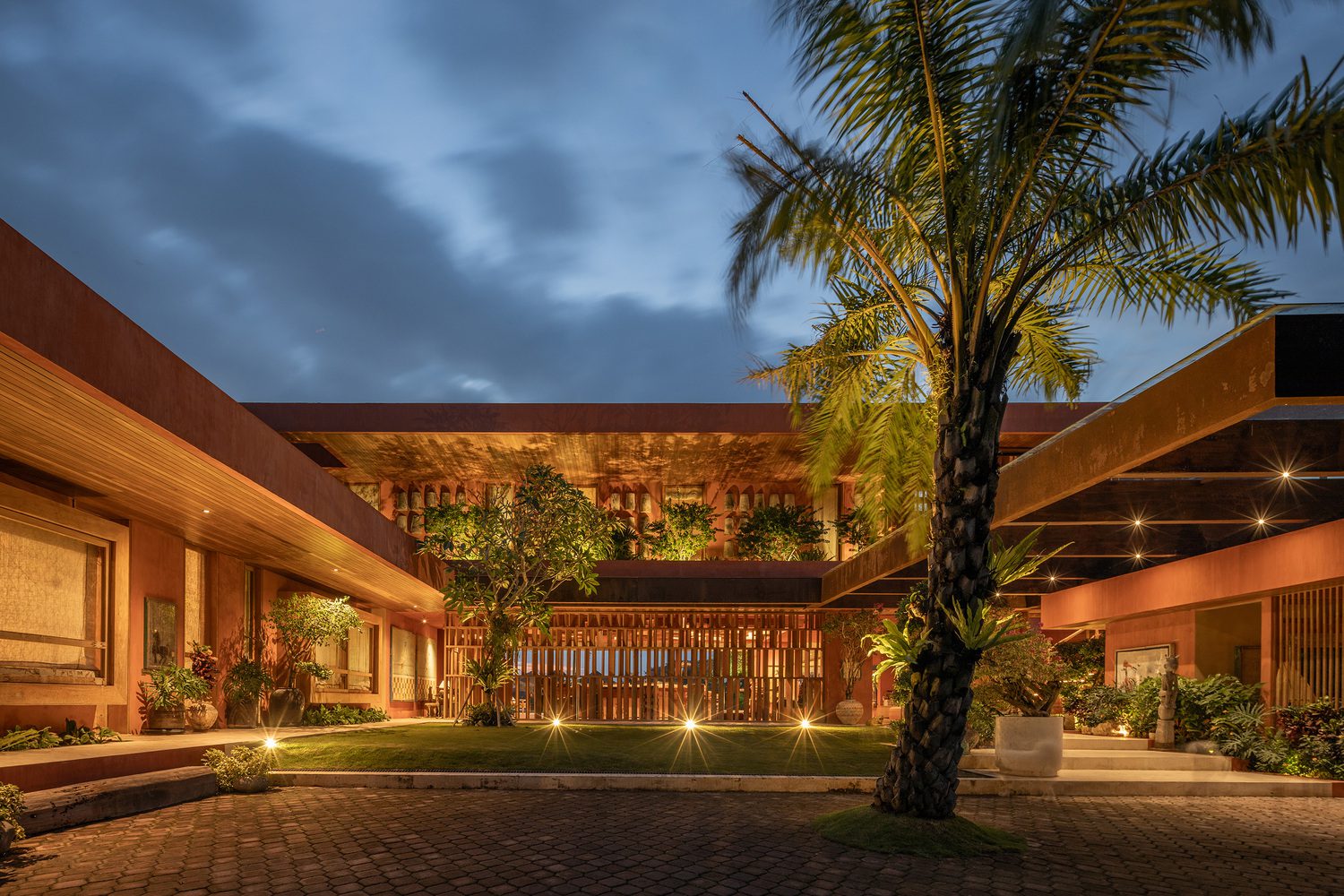
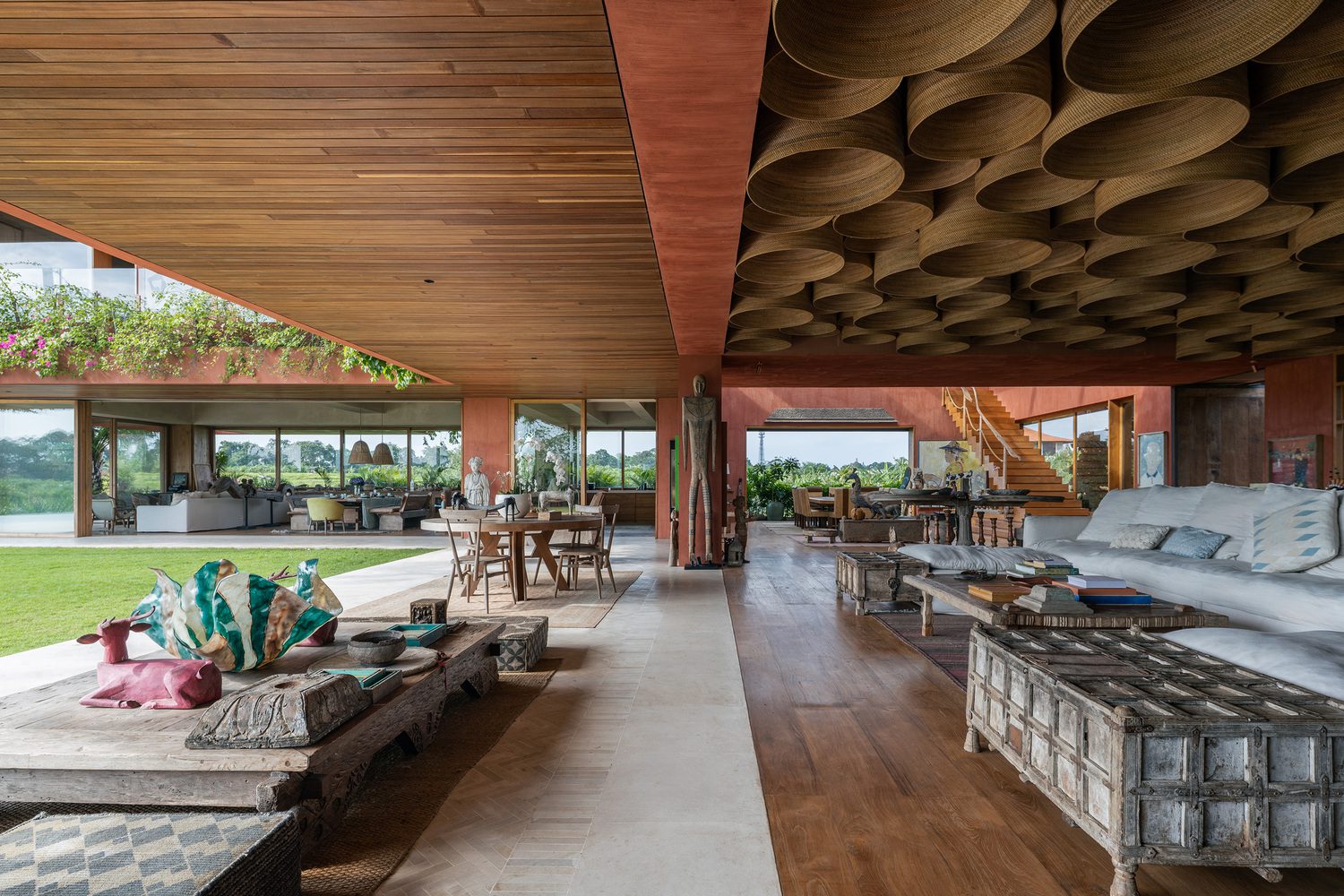
The front facade employs a unique pattern of wood screen providing both privacy from neighboring houses and filtered daylight into the interior. The living room is organized around a vintage fabric sofa, with a suspended installation of woven grass baskets articulating the ceiling plane. One staircase leads down to the quietest part of the house, where the gallery is located. The room is equipped to display paintings, creating a dedicated space for art within the home. Architecture acts as a frame for art itself.
© Indra Wiras
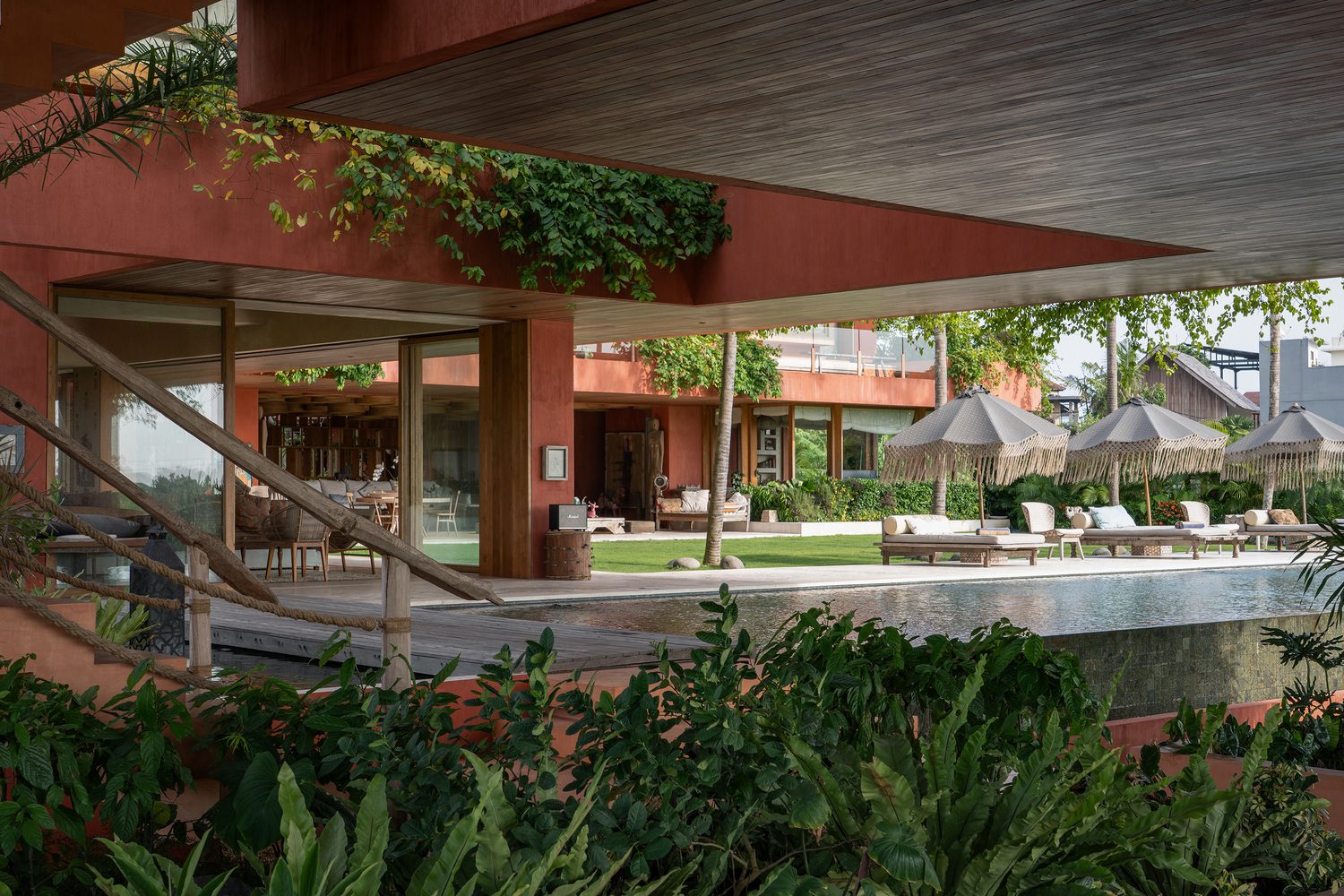
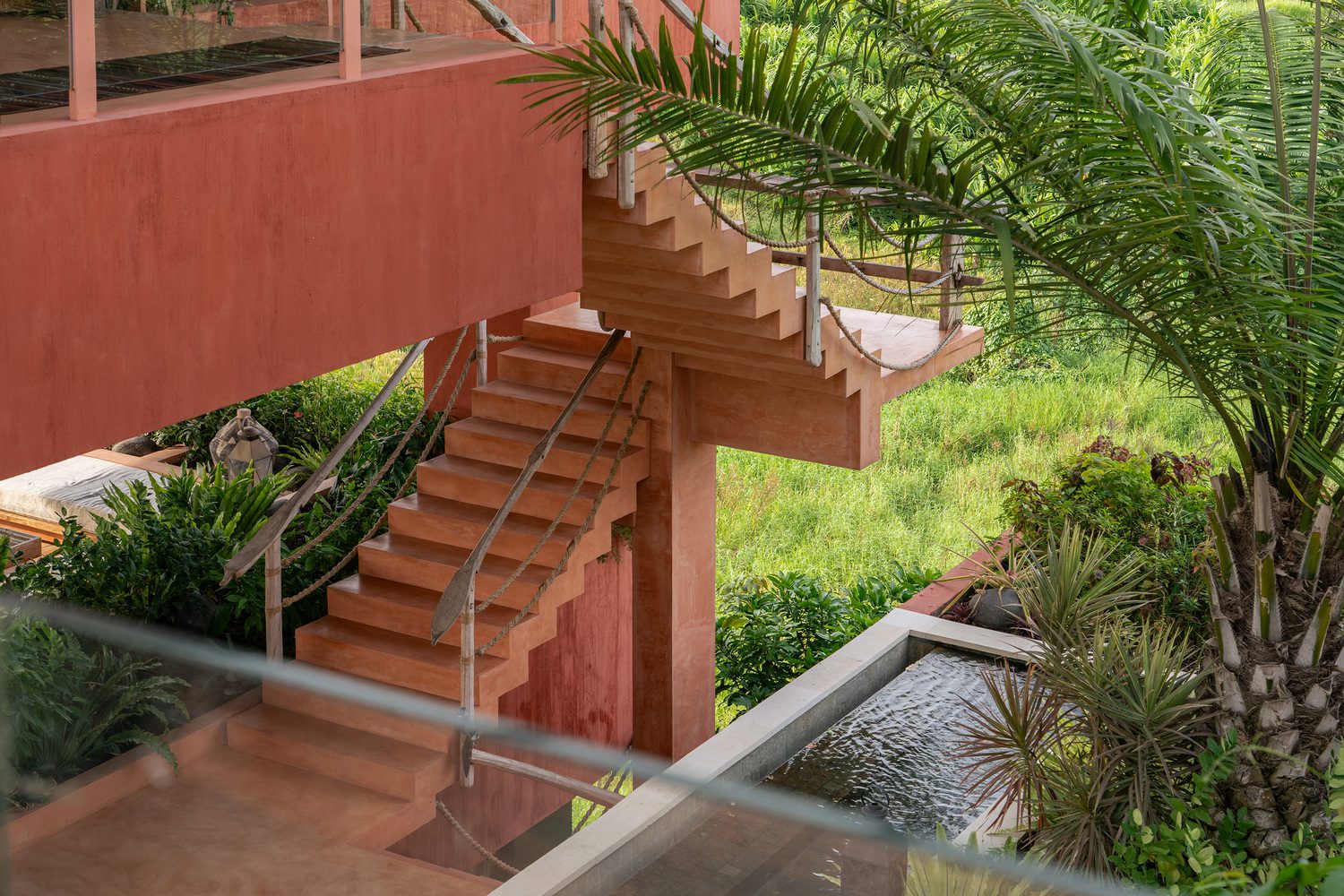
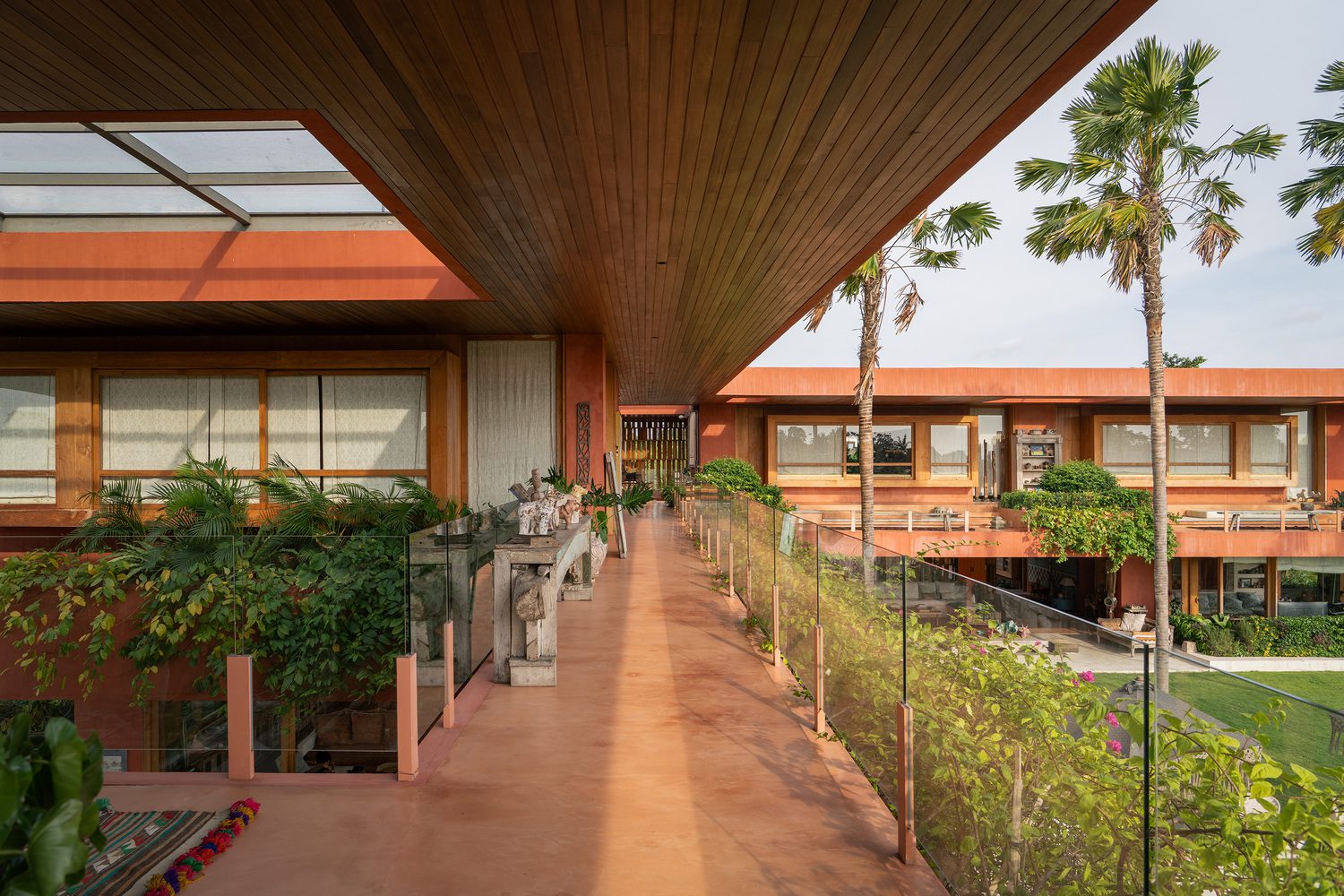
The design emphasizes raw, honest materials and the clarity of straight, geometric lines. Rather than embracing the typical cold tone of concrete, the house is finished throughout with an earthy terracotta hue. This effect is achieved by mixing special cement with color pigments. Although it stands out, it does not overpower the wood elements. The architect explores the idea of framing within the house.
© Indra Wiras
Straight concrete lines act as structural and visual frames throughout, defining the swimming pool, the staircase, and each room, while also highlighting the artwork and decorative elements within these spaces. High ceilings in selected areas and a lot of semi-open spaces allow natural light and airflow to penetrate throughout the house while also maximizing views of the surrounding landscape.
Project Info:
-
Architects: Sukyf & Architects
- Country: Indonesia, Bali
- Area: 2252 m²
- Year: 2023
-
Photography: Indra Wiras
-
Manufacturers: Demix
-
Lead Architects: Felipe Gonzalez Jimenez De La Espada
- Design Team: Rahayu Sitha D, Ekho Adiputra
- General Contractor: ANC Lab

Anastasia Andreieva is an accomplished Architectural Projects Editor at Arch2O, bringing a unique blend of linguistic expertise and design enthusiasm to the team. Born and raised in Ukraine, she holds a Master’s degree in Languages from Taras Shevchenko National University of Kyiv. Her deep passion for architecture and visual storytelling led her to transition from translation and editorial roles into the world of design media. With a keen eye for conceptual clarity and narrative structure, Anastasia curates and presents global architectural projects with precision and flair. She is particularly drawn to parametric and digital design, cultural context, and emerging voices in architecture. When I’m not analyzing the latest architectural trends, you’ll probably find me searching for hidden gems in cityscapes or appreciating the beauty of well-crafted spaces. After all, great design—like great connections—can be found in the most unexpected places. Speaking of connections, because architecture isn’t the only thing that brings people together.