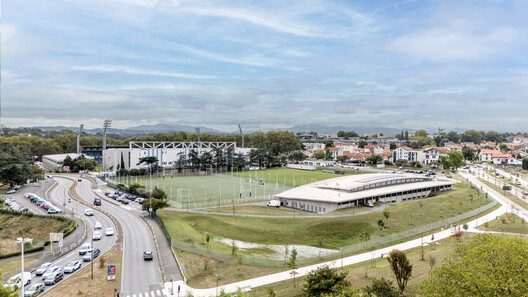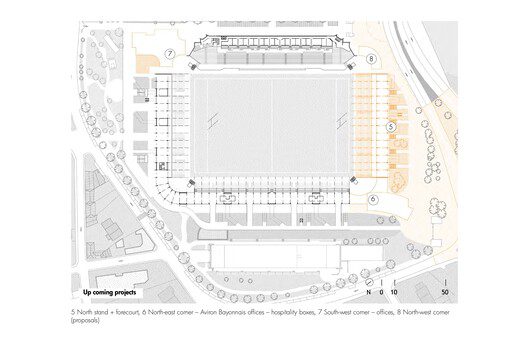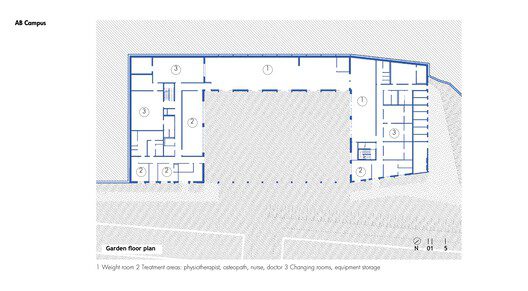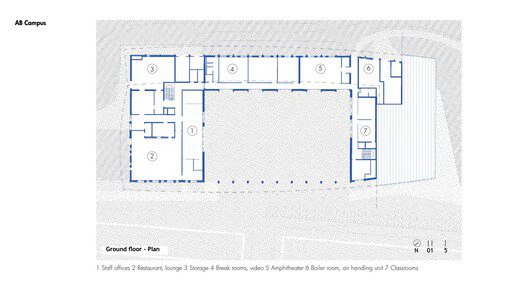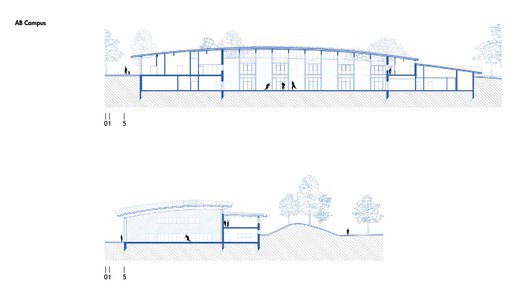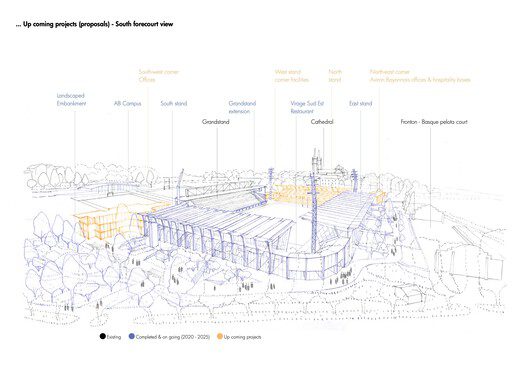


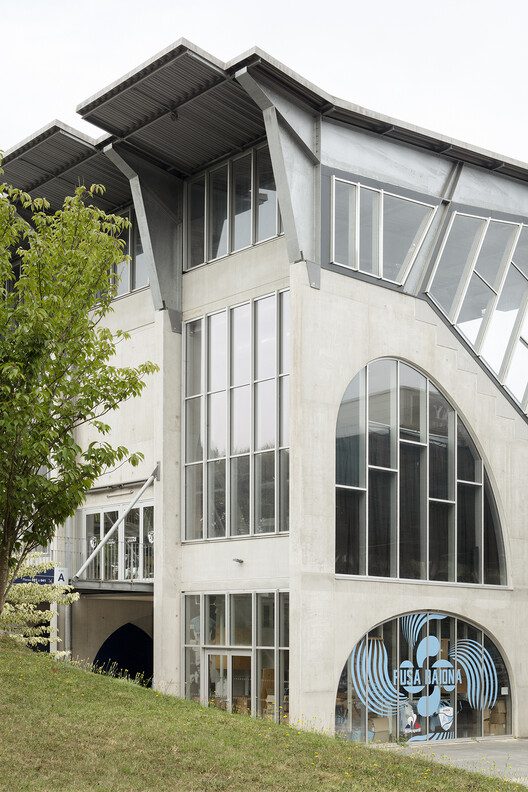
Jean Dauger Stadium, The redevelopment of the Jean Dauger sports complex is an integral element in considering Bayonne’s green belt. Reclaimed from ground originally used for military manœuvres and occupied by moats at the foot of the ramparts, this green space, with pleasure gardens and open-air sports facilities, has benefited from its historic and cultural status, giving it a sense of significance and protecting it from invasive urban development.
© Mathieu Choiselat
This status has also helped to establish it as an urban divide between the old town and the surrounding neighbourhoods. Today, as cycle and pedestrian routes are given pride of place in urban development and transport projects, and green cooling islands are recognised an essential ingredient to comfortable city living, this green belt is more relevant than ever. It is being reclaimed by pedestrians and cyclists who cross or skirt it in its leafy shade. The Jean Dauger sports ground is an integral part of this green belt, forming its southern section.
© Agnès Clotis
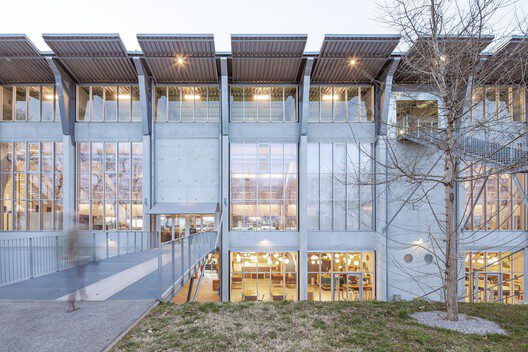
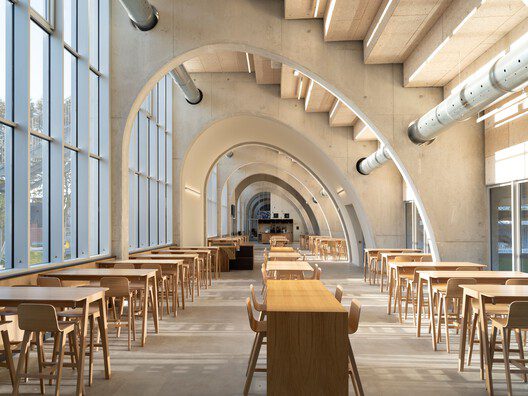
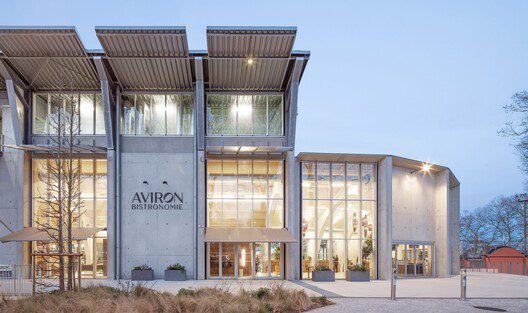
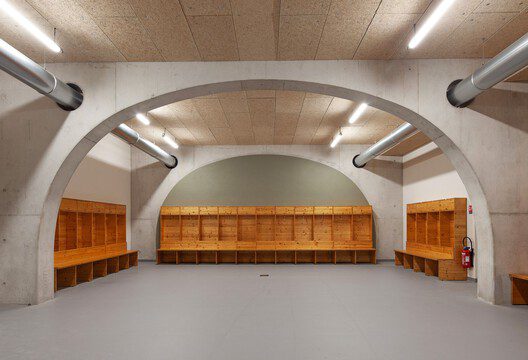
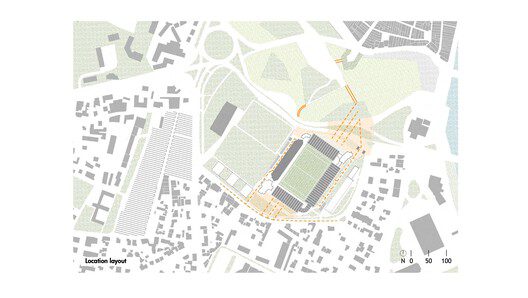
Each individual project in this area is part of an overall strategy aiming to facilitate active transport along and through the sports facilities and in their surrounding parkland, as well as to create public space around the edges. The idea is that when they are not being used during the rugby season, the stadium’s stands and their annexe buildings should be used for urban life.
© Agnès Clotis
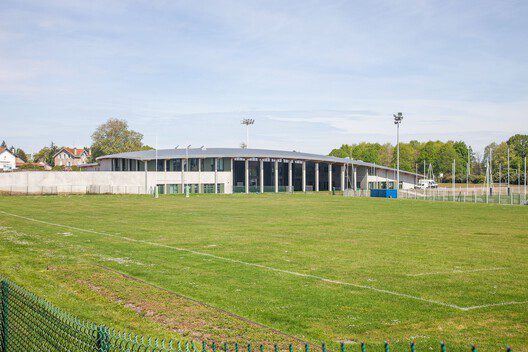
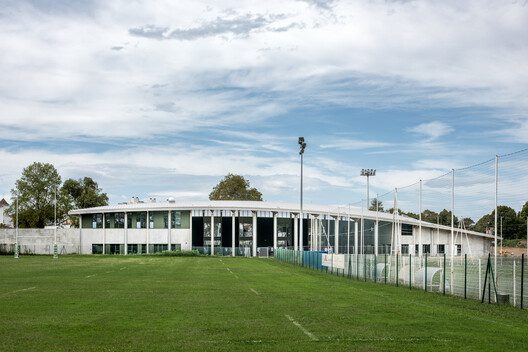
The concept of a park — The Jean Dauger sports complex is first and foremost a sports facility set within a green space connected to the historic old town and in the centre of the city. Its urban and landscaping features make the rugby stadium a unique setting for sporting events and the vibrant atmosphere that they generate.
© Jean-François Tremege
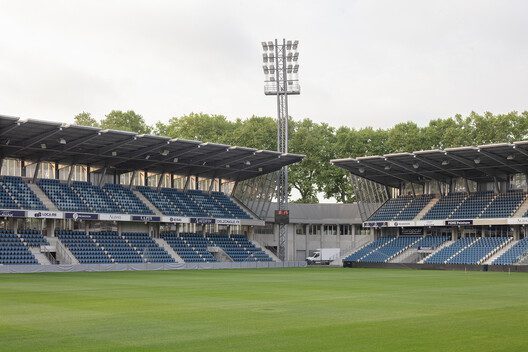
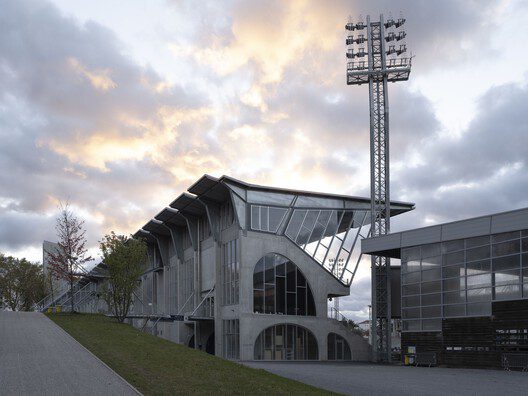
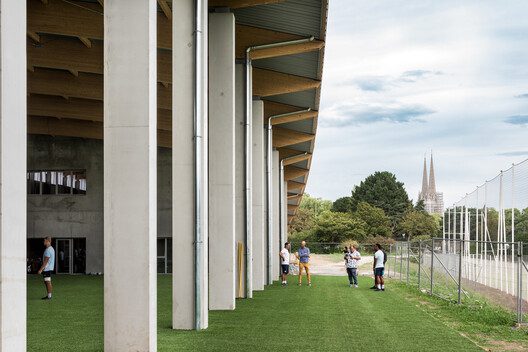
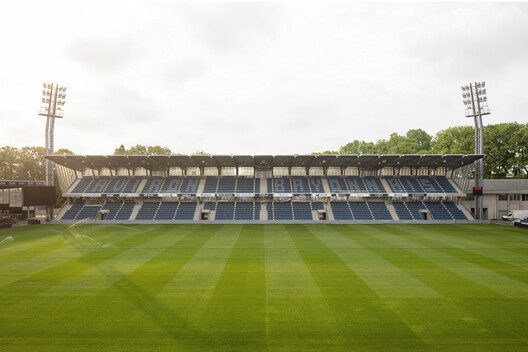
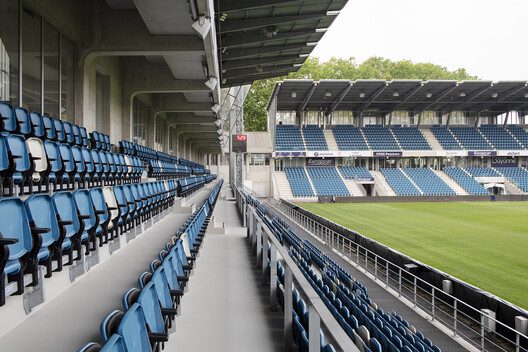
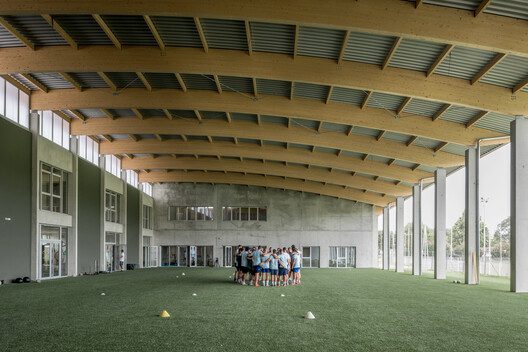
The rugby stadium — The project transforms a stadium based on the geometry of cycling and athletics tracks encircling a rugby pitch, into a ‘cauldron’ type stadium. The distance between stands and pitch is reduced to a minimum for a more intense atmosphere and relationship between players and fans. This transformation has been achieved by preserving the original stand, the ‘grandstand’, to which the pitch comes closer, and grouping the stands on the other three sides as close as possible to the touch lines and dead ball line This centripetal approach frees up space behind the stands, which has been used to create a park, public areas to welcome spectators to games, and raised walkways on the embankment around the stadium.
© Jean-François Tremege
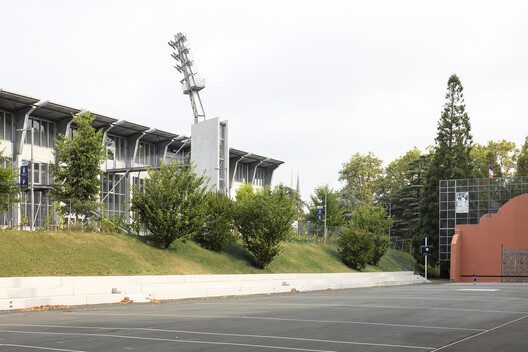
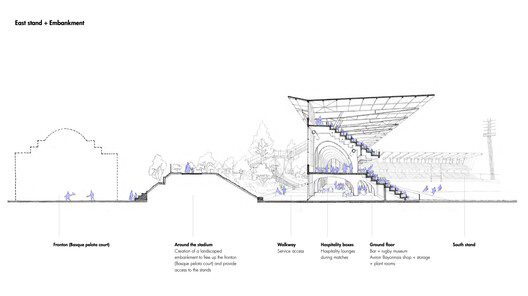
Built on slightly sloping ground running south–north, the stadium’s relationship to its surrounding landscape is perceived differently depending on orientation. The collective memory retains the image of a ground enclosed by the slopes of the cycle track, placing spectators above the playing field. The new project takes advantage of this elevated position of the stand on the south side and introduces a peripheral embankment, thereby reducing the perceived height of the stands as seen from the surrounds and reducing its impact on the public space.
© Cléa Meksvanh
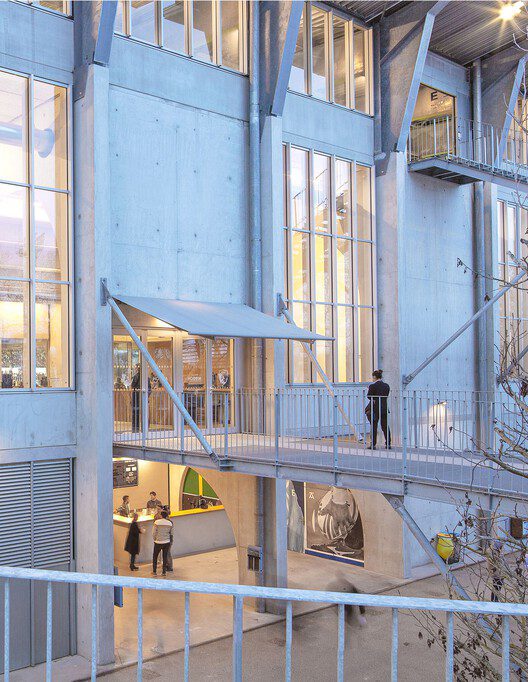
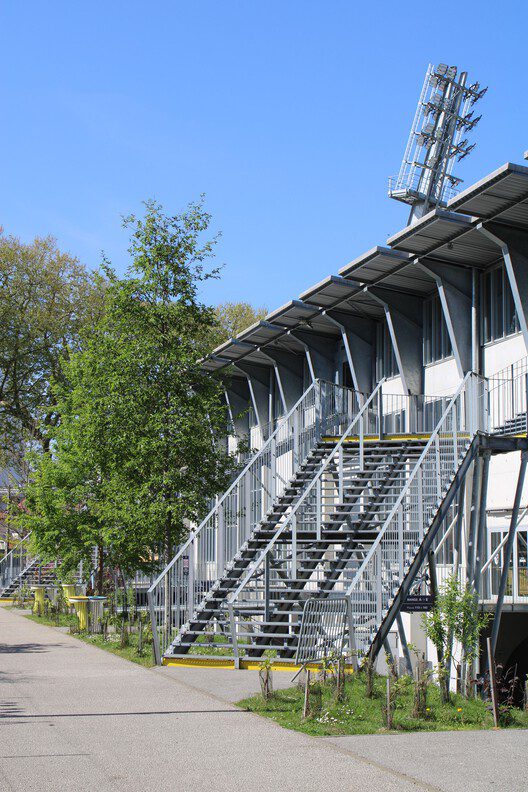
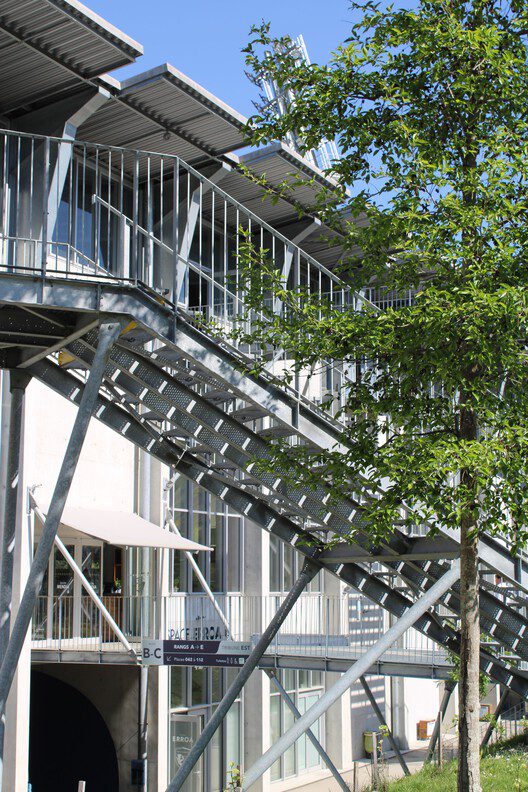
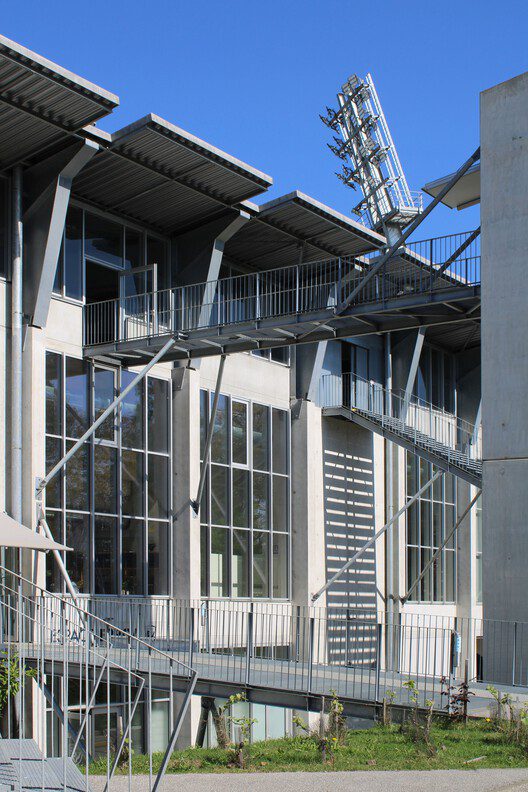
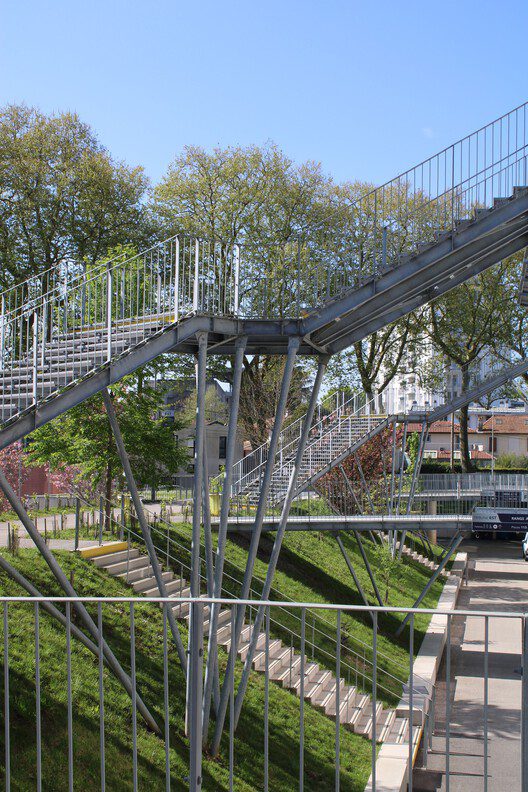
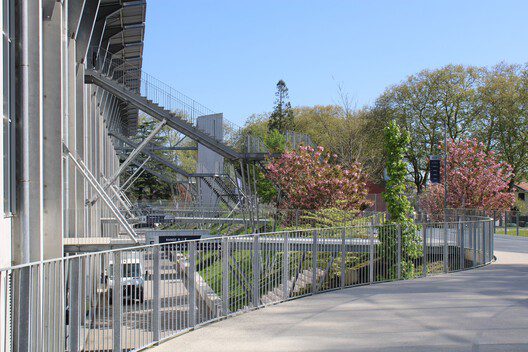
East stands + Embankment — To break with the usual design of stands, which houses the vertical circulation within the depth of the structures and terraces, the stairs and walkways providing access to seating are placed externally. They rise through the foliage of the trees in the park on spidery metal structures. The forecourts and embankments, which service the entrance points, are enlivened by the surrounding architectural and vegetal profusion, as well as by the activity glimpsed through the windows of the stands, establishing links between the stadium and the city.
Project Info :
-
Architects: Patrick Arotcharen Architecte
- Country: Bayonne ,France