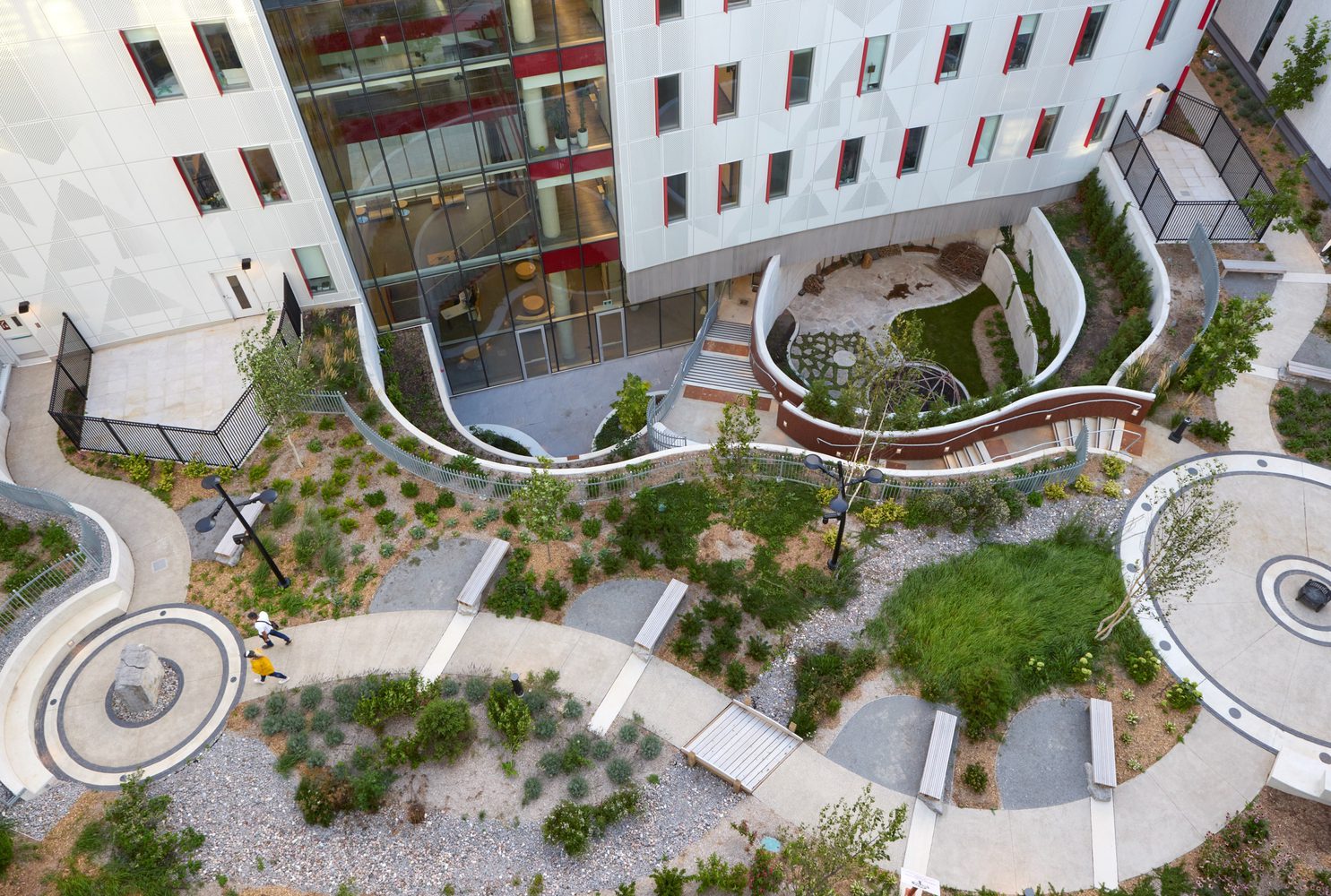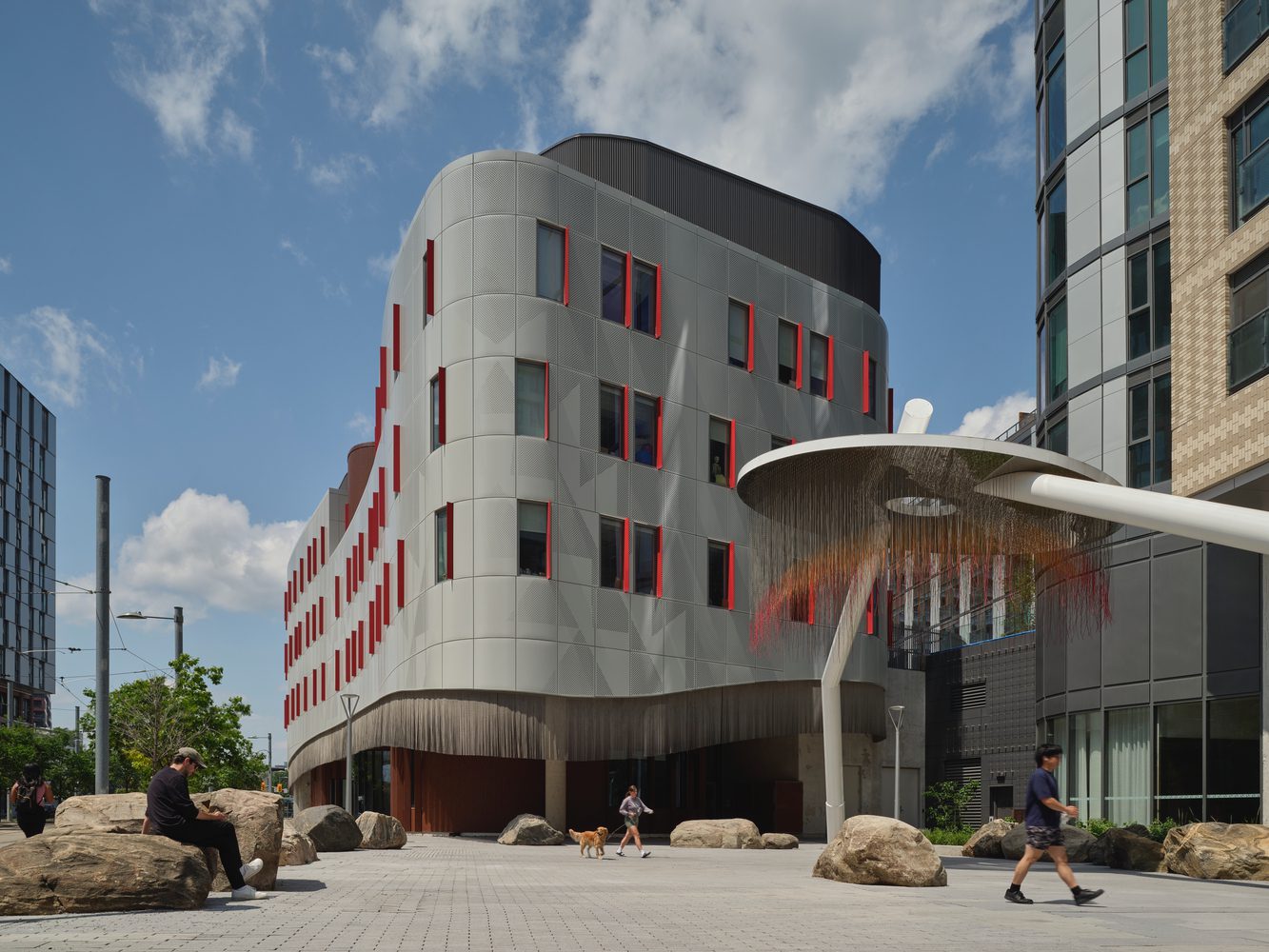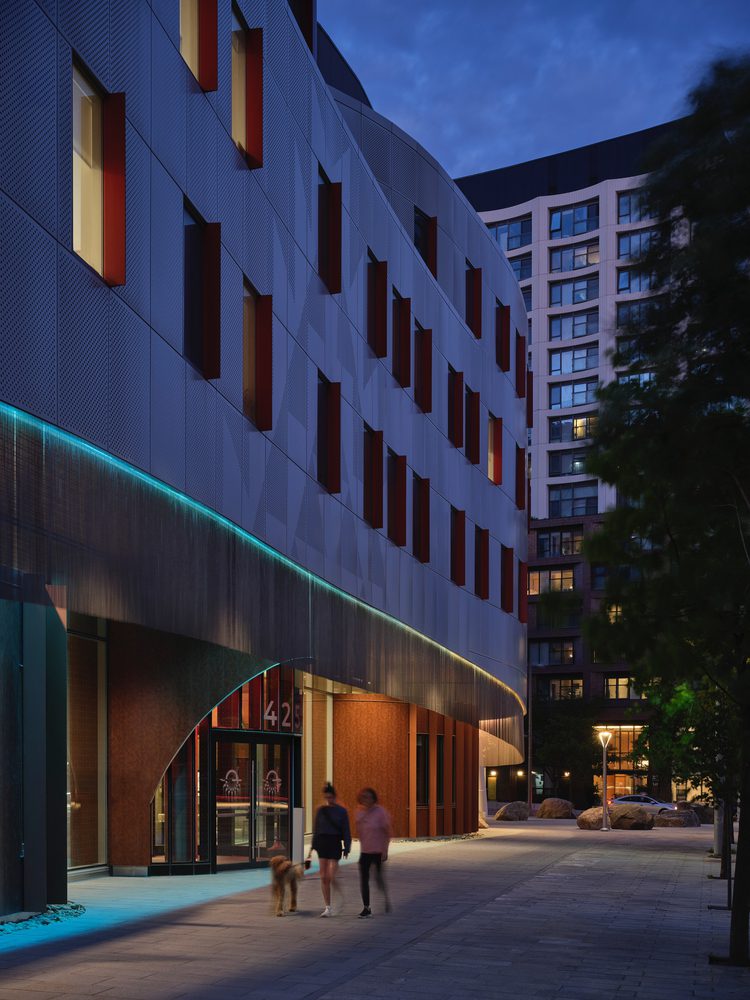


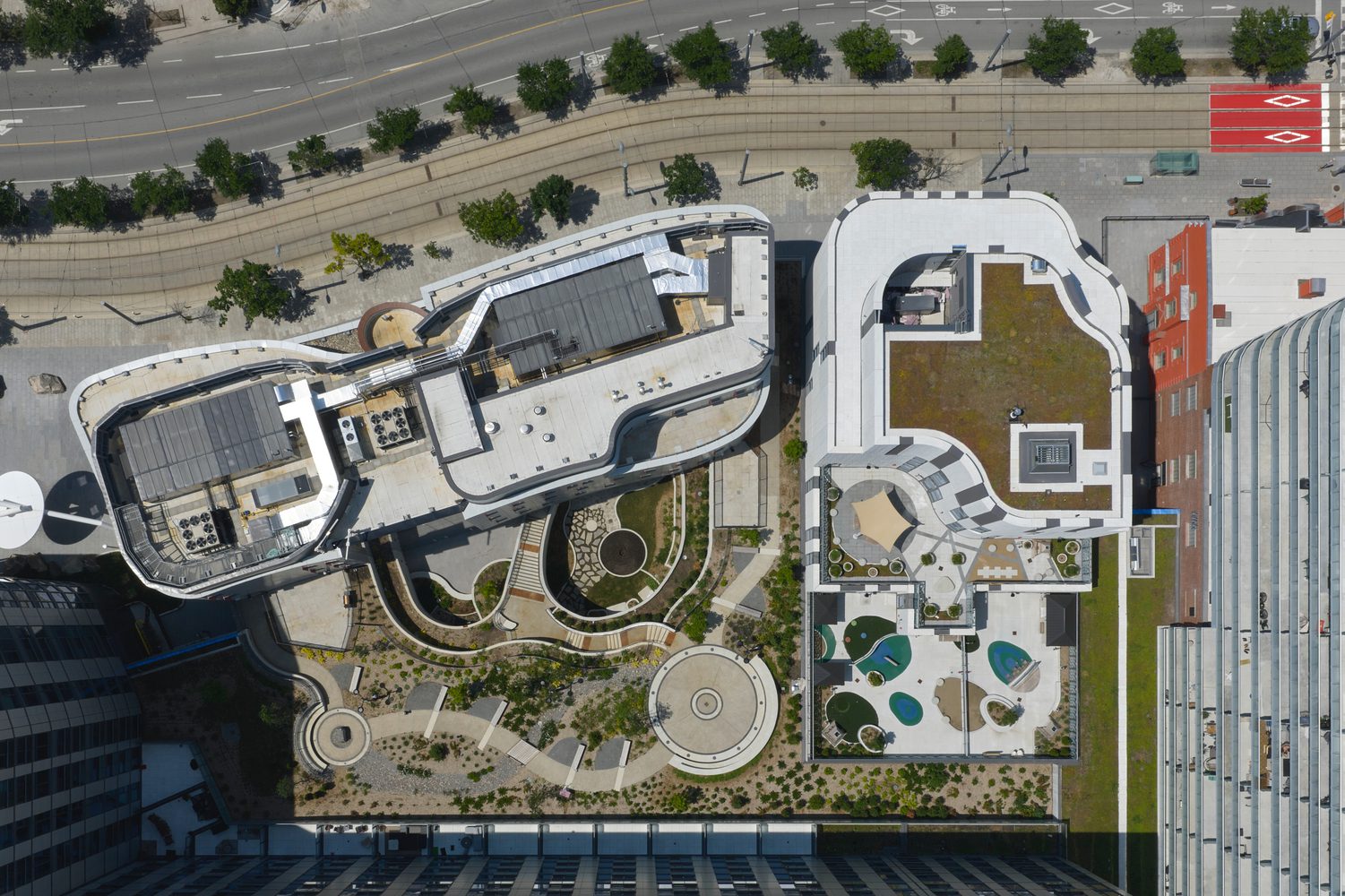
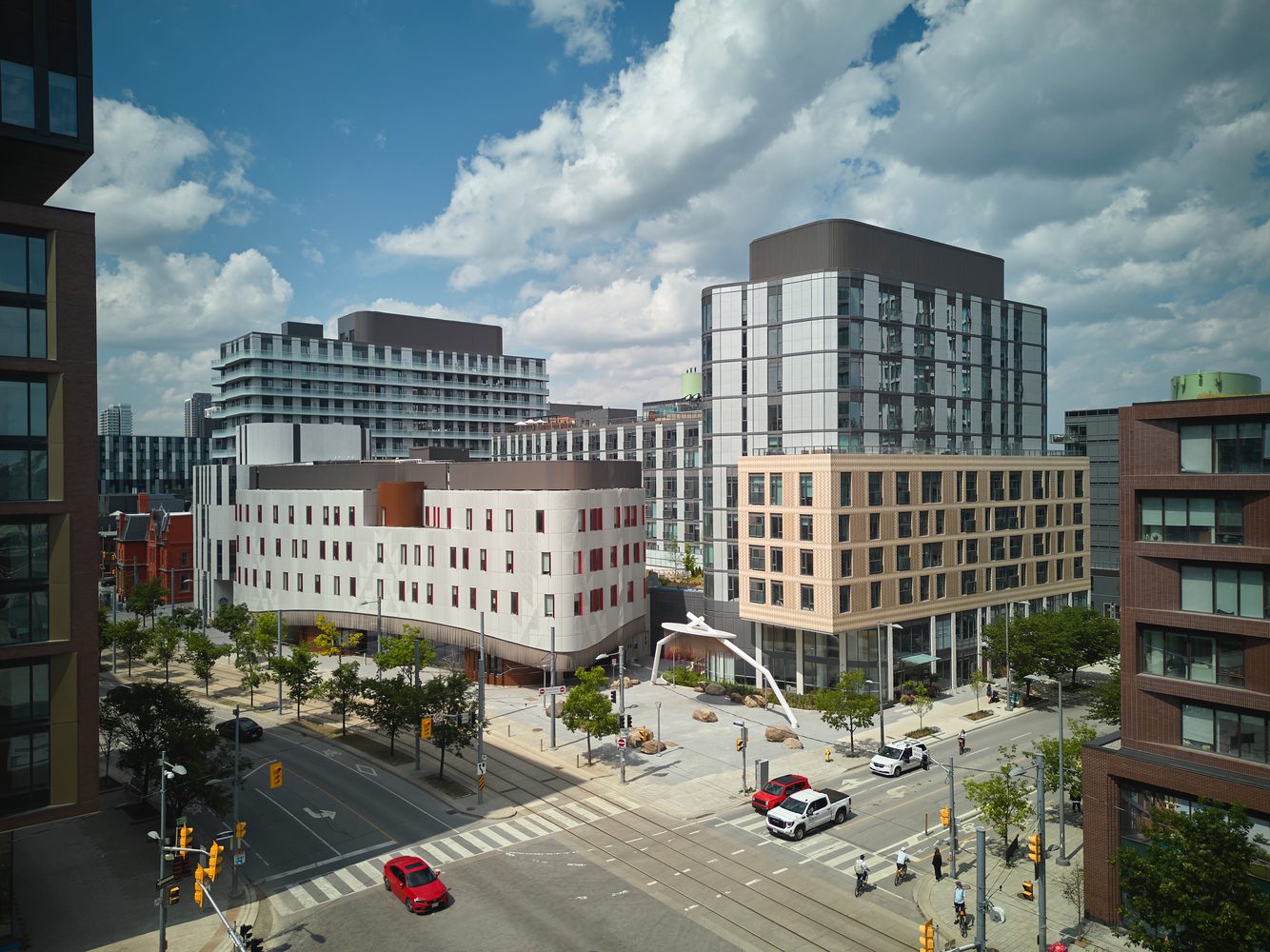
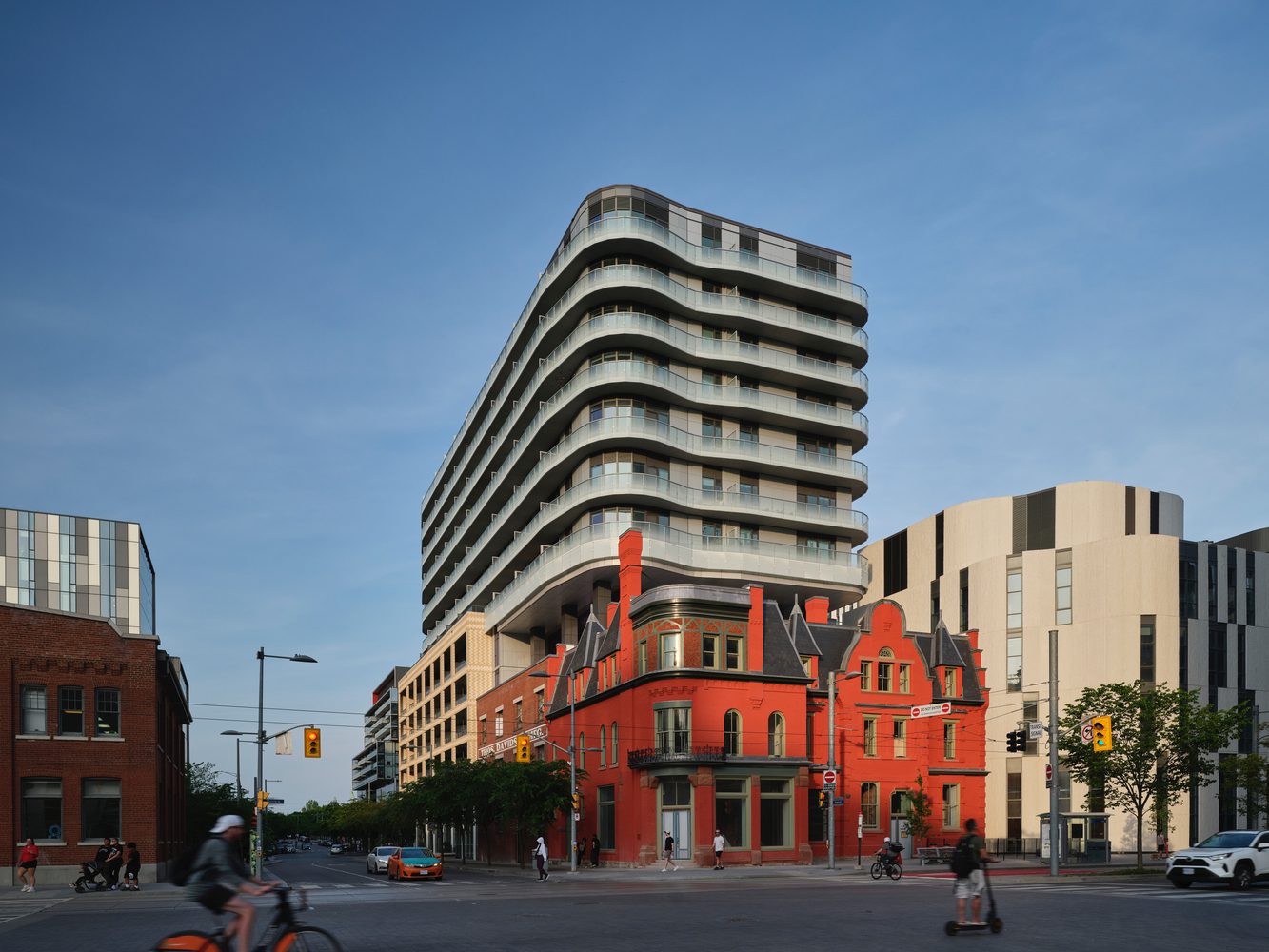
The Toronto Indigenous Hub emerges as an urban landmark where architecture, healing, and reconciliation intertwine in an unprecedented comprehensive proposal. Located in the Canary District, this 40,000 m² development occupies an entire block and integrates an Indigenous Community Health Center, two mid-rise residential buildings —Canary House and Birch House, with a total of 400 homes—, the Miziwe Biik Training Institute, a civic plaza, and the Indigenous Peoples Garden Patio. It is a carefully designed urban ecosystem aimed at serving and strengthening Toronto’s urban Indigenous community, estimated at around 70,000 people.
© Riley Snelling
The project is the result of two decades of work led by the late Indigenous leader Joe Hester, who promoted the vision of a culturally representative urban space. The Ontario province transferred 9,700 m² of ancestral lands to Anishnawbe Health Toronto (AHT), opening the opportunity to create a center that offers health, education, childcare, training, commerce, and housing based on traditional values.
© Riley Snelling
The design was developed through deep collaboration between Indigenous and non-Indigenous teams: Two Row Architect, Stantec Architecture, BDP Quadrangle, ERA Architects, Urban Strategies, and other partners. Every decision —from materials to solar orientation— was conceived under a co-design model rooted in the Indigenous principle of Two-Eyed Seeing: integrating ancestral knowledge and Western perspectives as complementary viewpoints.
© Riley Snelling
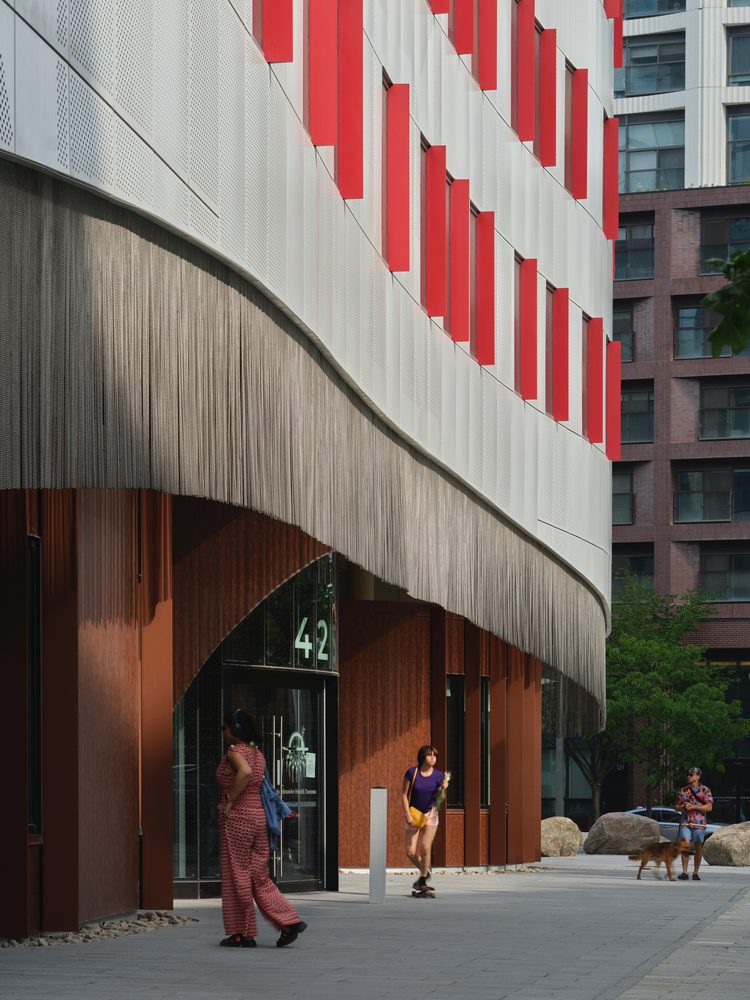
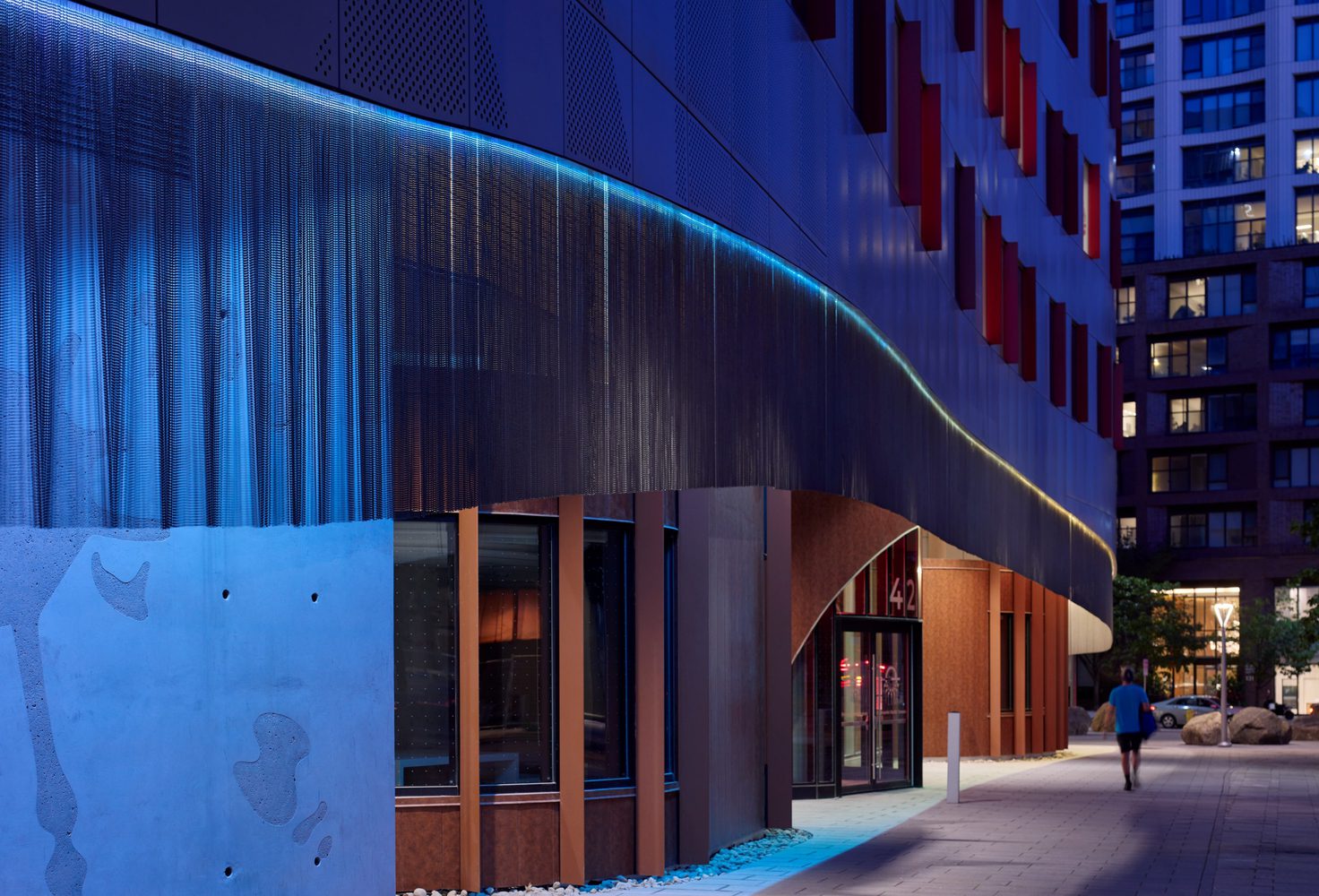
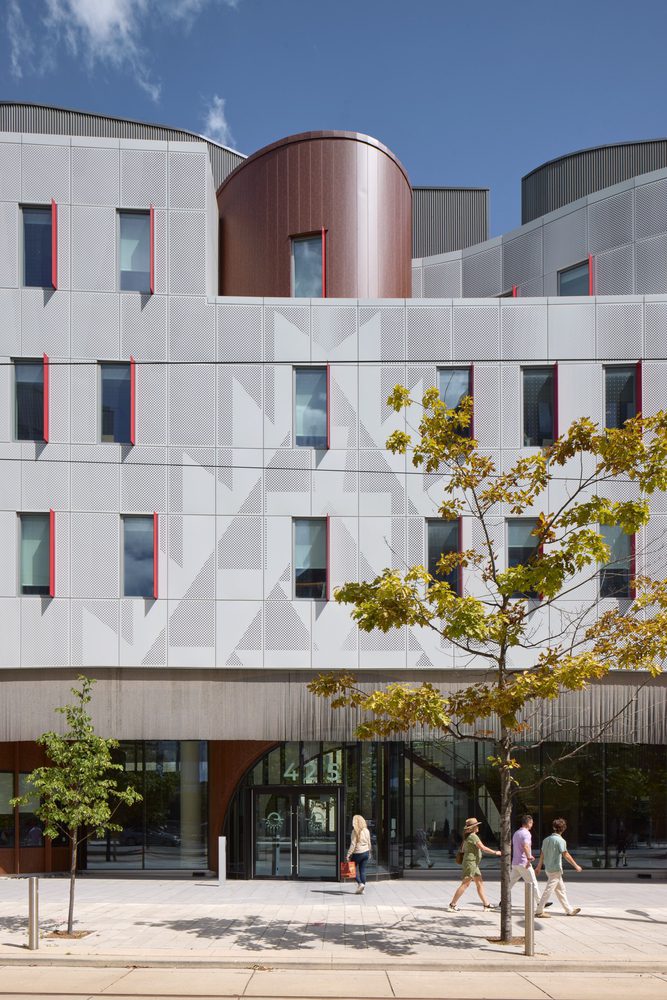
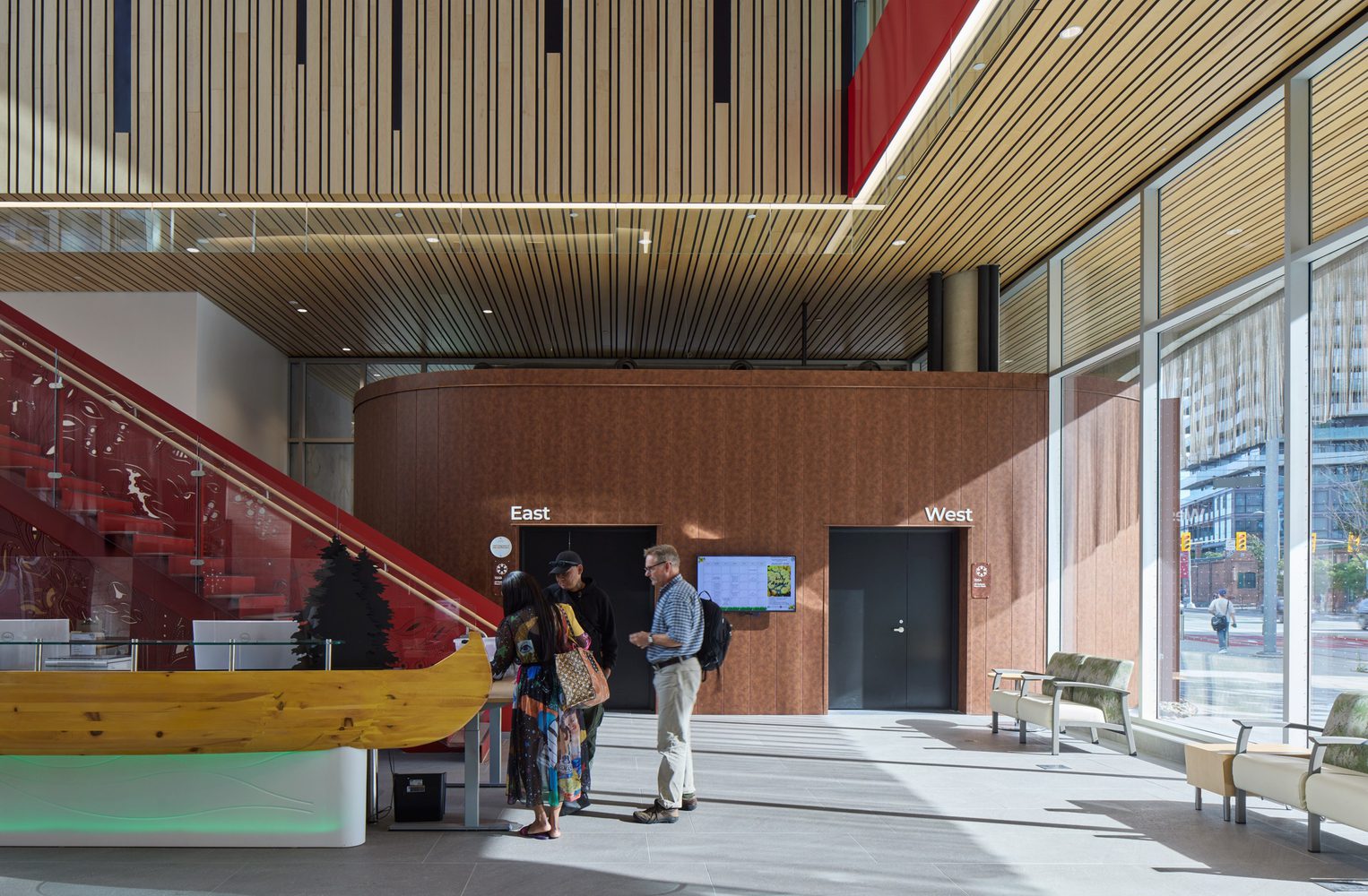
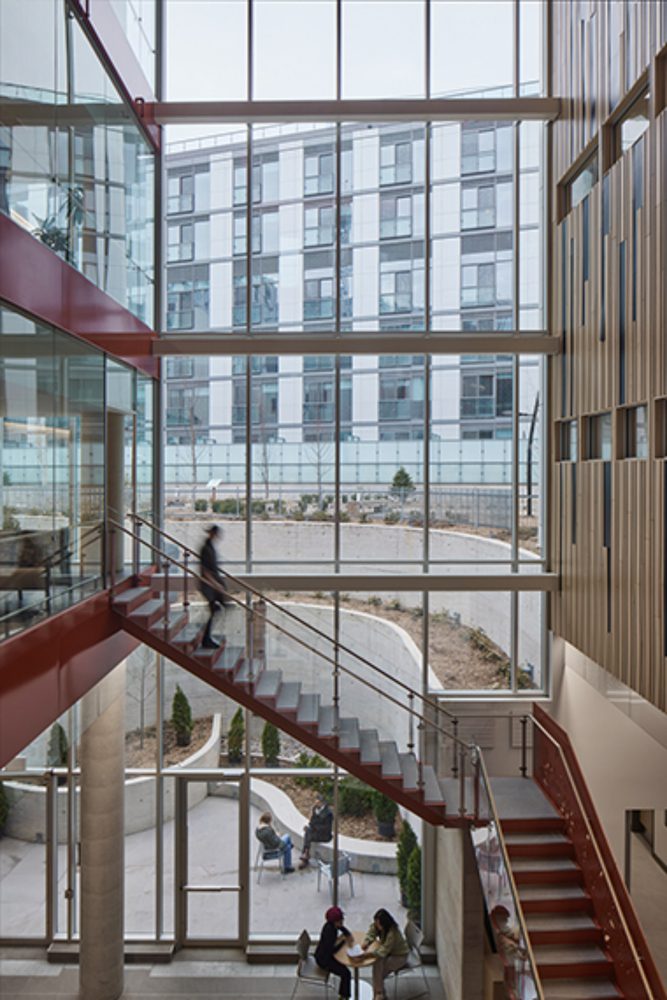
The Health Center embodies this philosophy symbolically and physically. Its shape is inspired by a traditional shawl wrapping a loved one, a gesture that communicates protection, care, and connection with Indigenous medicine. The curved facade combines cast-in-place concrete and lightweight metal panels, avoiding materials associated with colonial architecture, such as brick. Its atrium opens eastward, aligned with sunrise, reflecting the spiritual importance of rebirth and renewal.
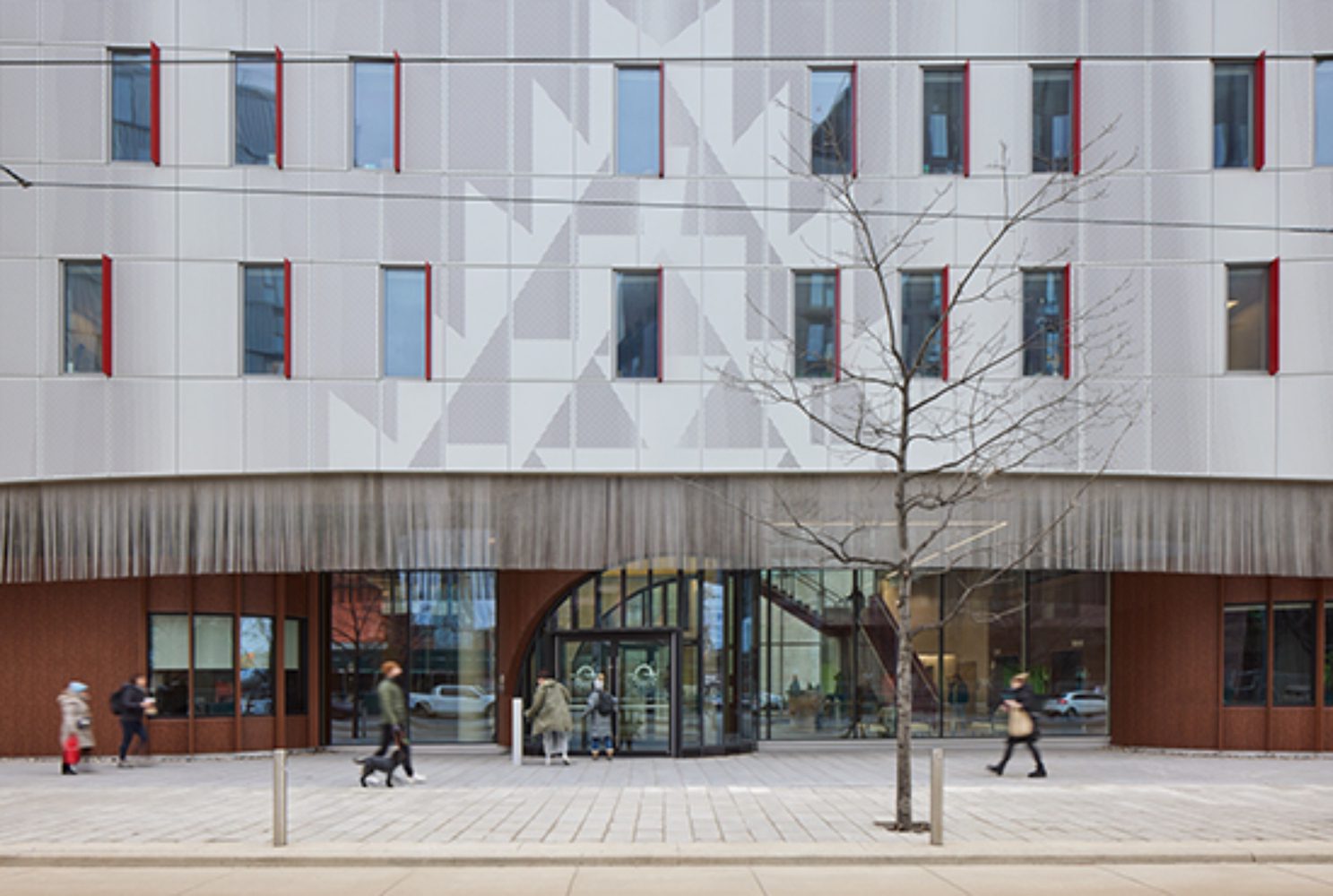
© James Brittain
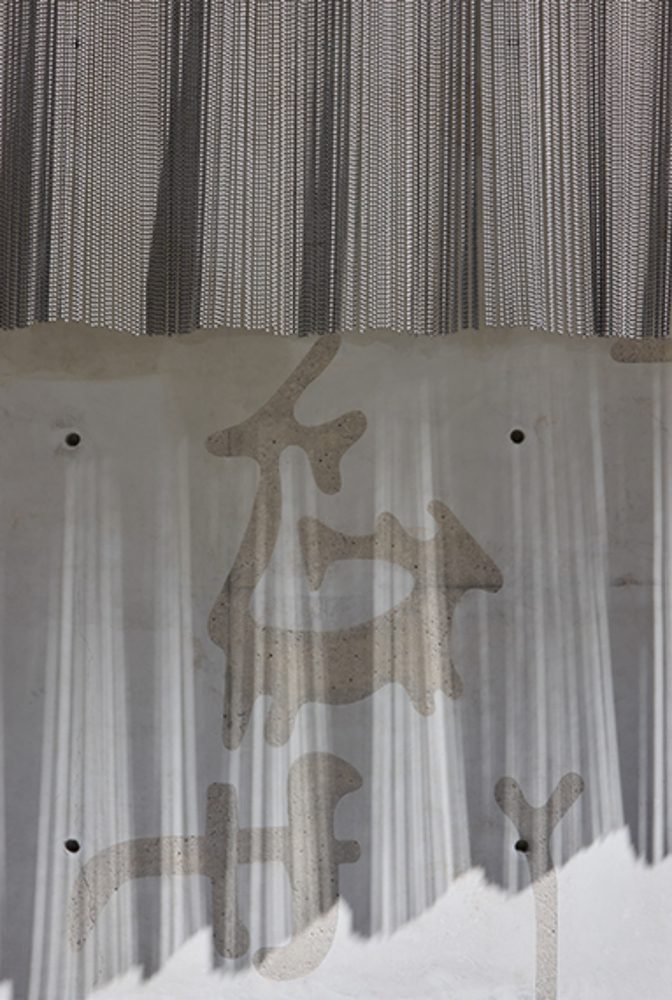
Eight guiding principles shaped Indigenous design: use of materials from the original AHT site, integration of forms inspired by “stones in the creek,” recognition of directionality, lightness in upper volumes, relationship with the solar path, impact both day and night, use of native species in gardens and green roofs, and meticulous attention to Indigenous art. These principles extended beyond the health center: the residential buildings feature brick patterns that evoke traditional baskets, like a “blanket” embracing the site.
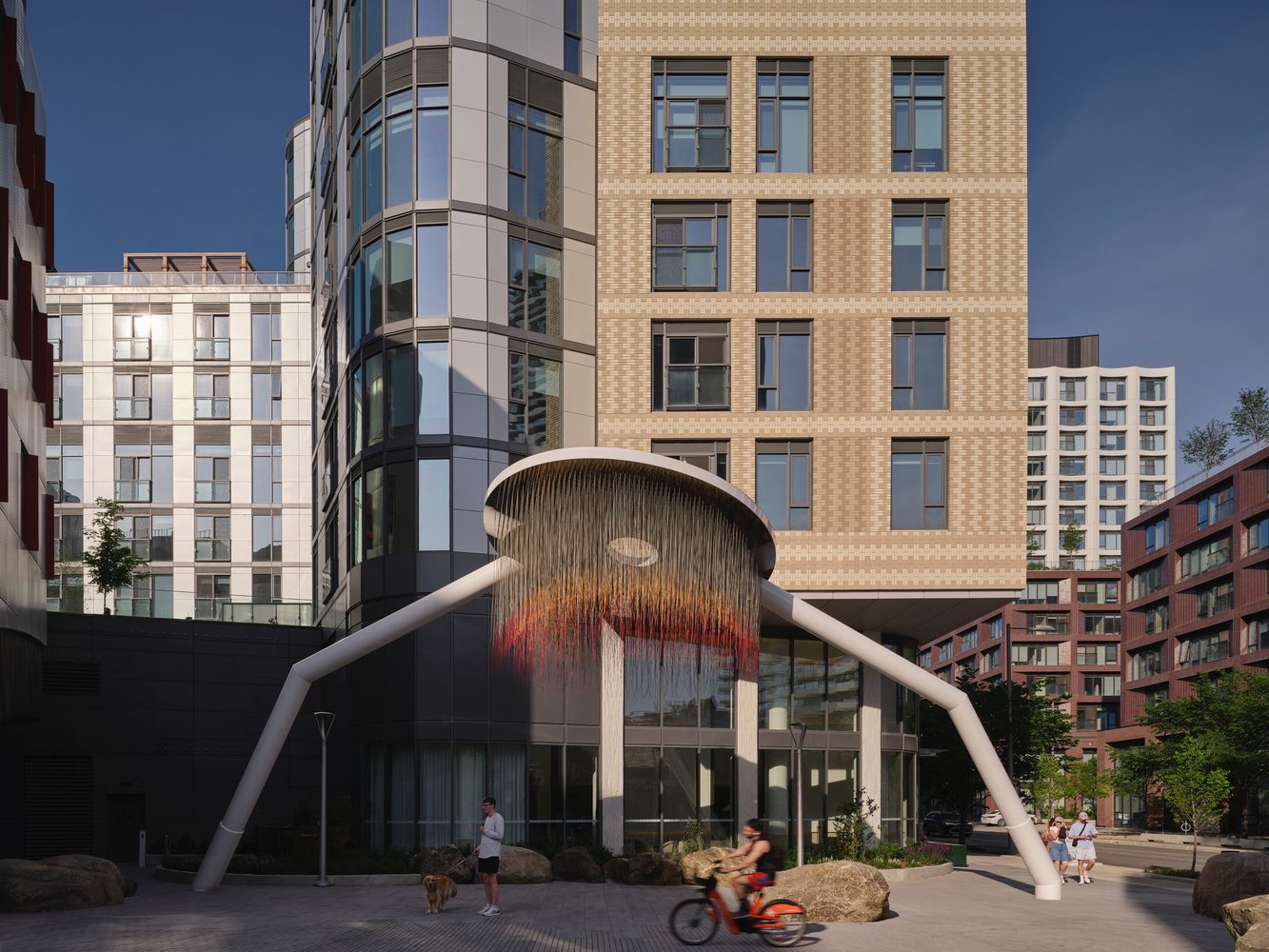
© Riley Snelling
The Indigenous Peoples Garden Patio, elevated 6.5 meters above the street, incorporates medicinal gardens where workers and patients cultivate sacred plants like sage and sweetgrass. Next to it, a play area and a civic plaza with Indigenous public art reinforce community connection and a sense of belonging.
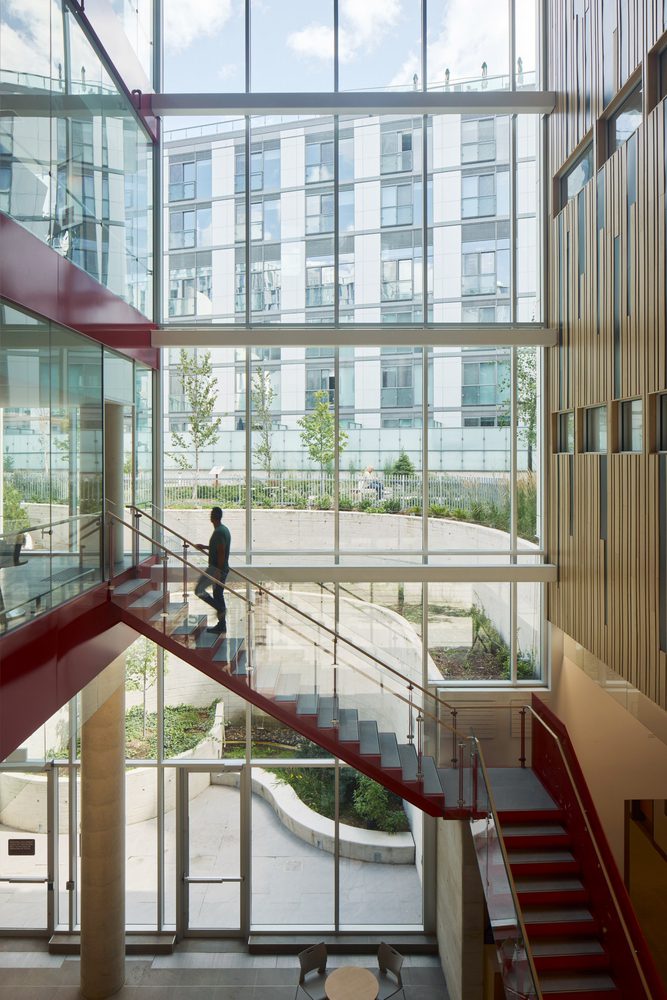
© James Brittain
The Miziwe Biik Institute draws inspiration from birch forests, incorporating prefabricated panels that mimic the texture of bark and windows symbolizing various ages of the tree. The entire development balances urban cohesion with individual expression of each component, achieving a presence that stands out without imposing.
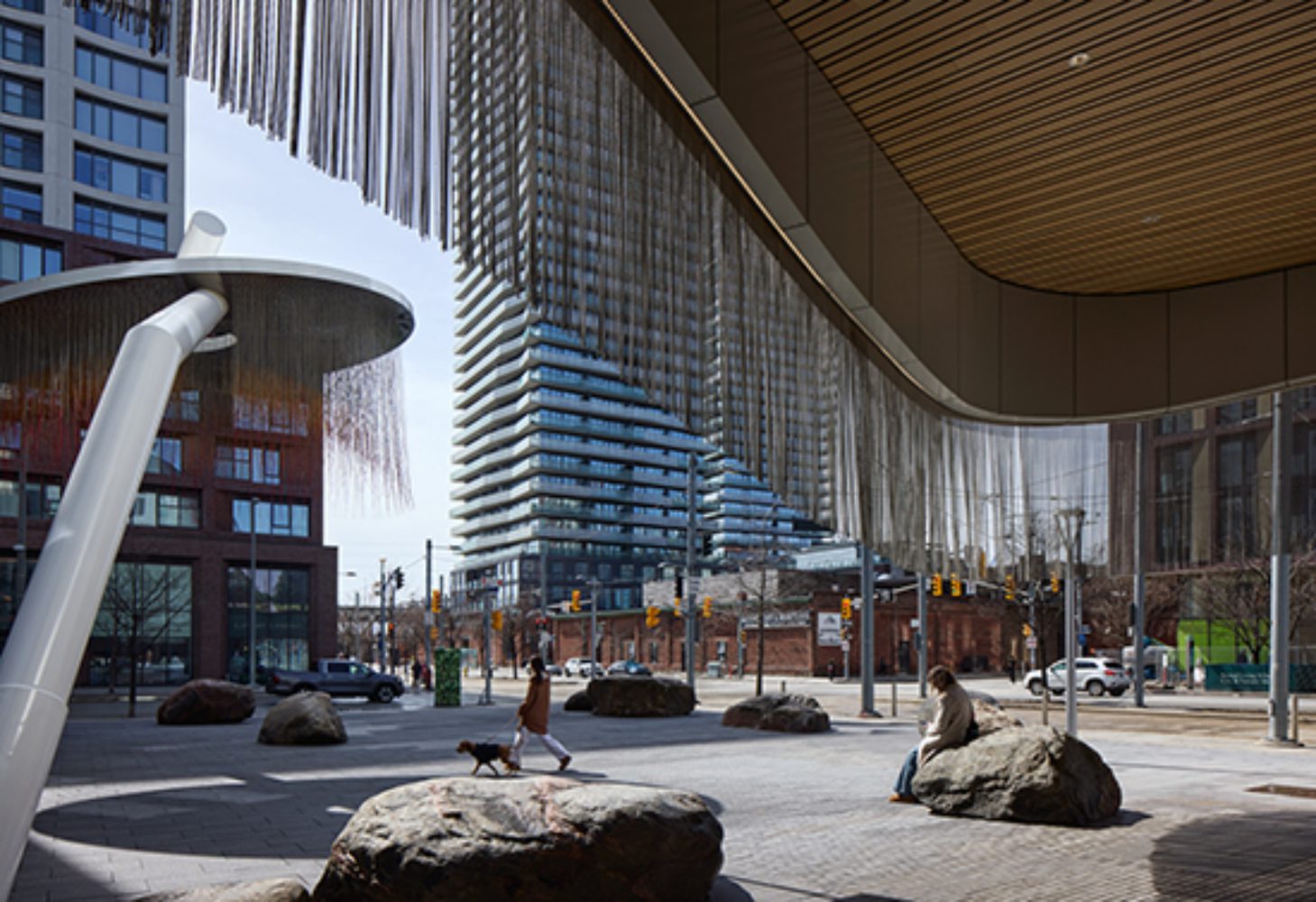
© James Brittain
The Indigenous Hub is not merely an architectural project: it is an urban model of reconciliation, demonstrating that contemporary revitalization and Indigenous cultural resurgence can coexist and enhance each other. It is a structural —not just symbolic— act of restitution, representation, and healing, redefining how a city can build community from the land toward the future.
Project Info:
Architects: BDP Quadrangle
Country: Toronto, Canada
Area: 40000 m²
Year: 2025
Photographs: Riley Snelling, James Brittain
Design Team: BDP Quadrangle