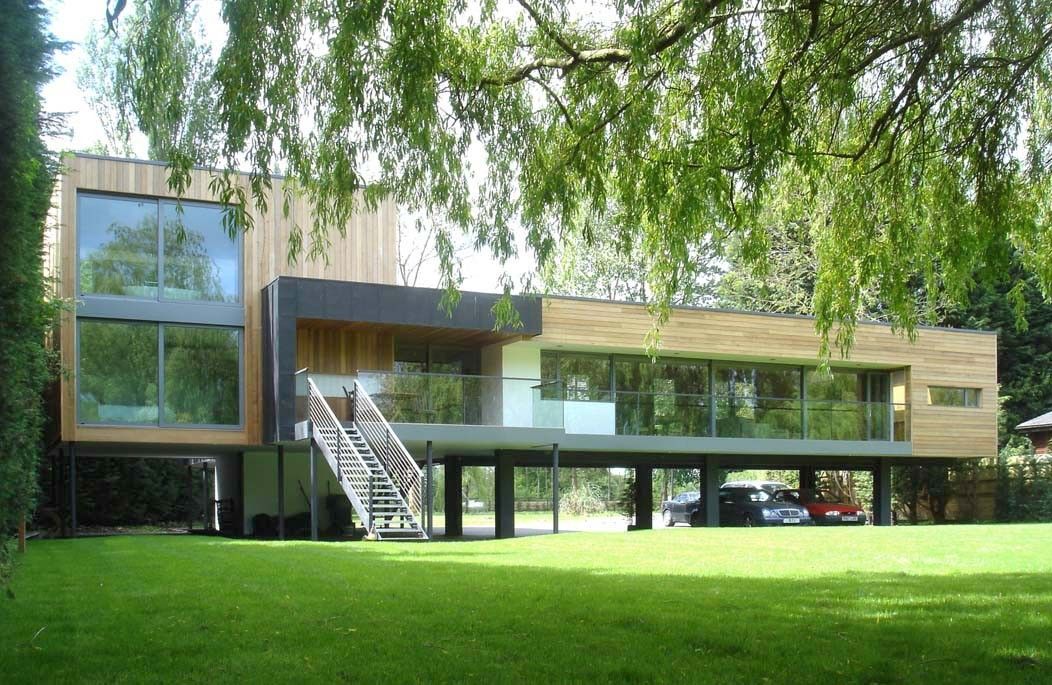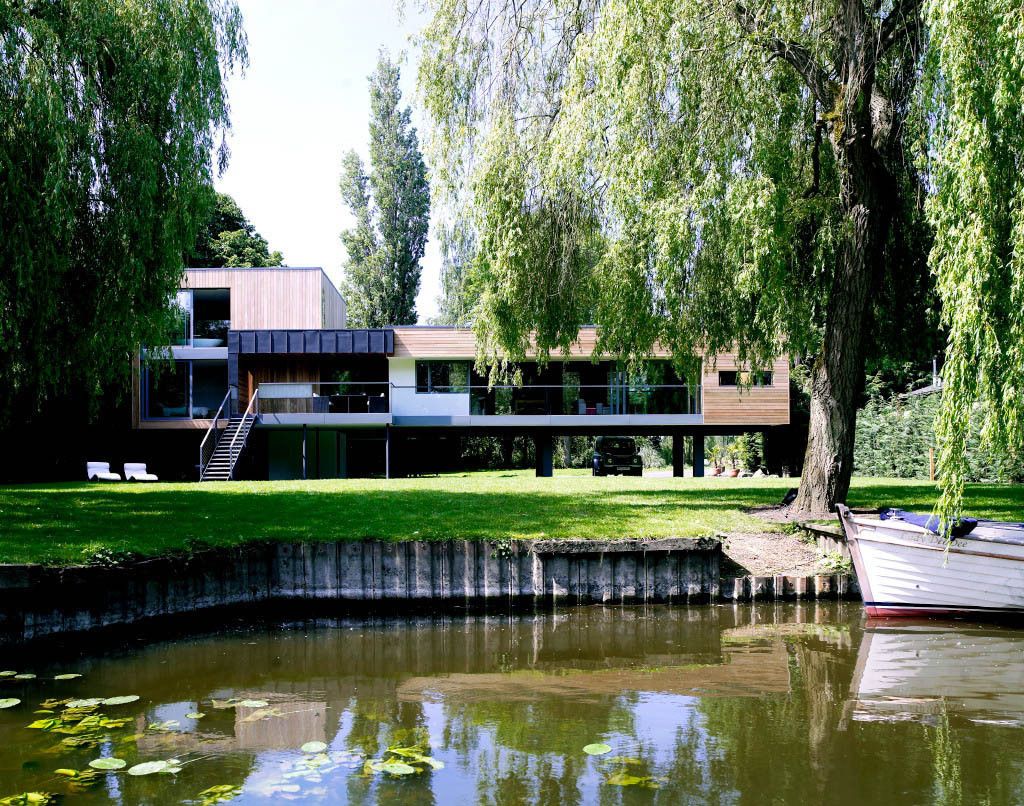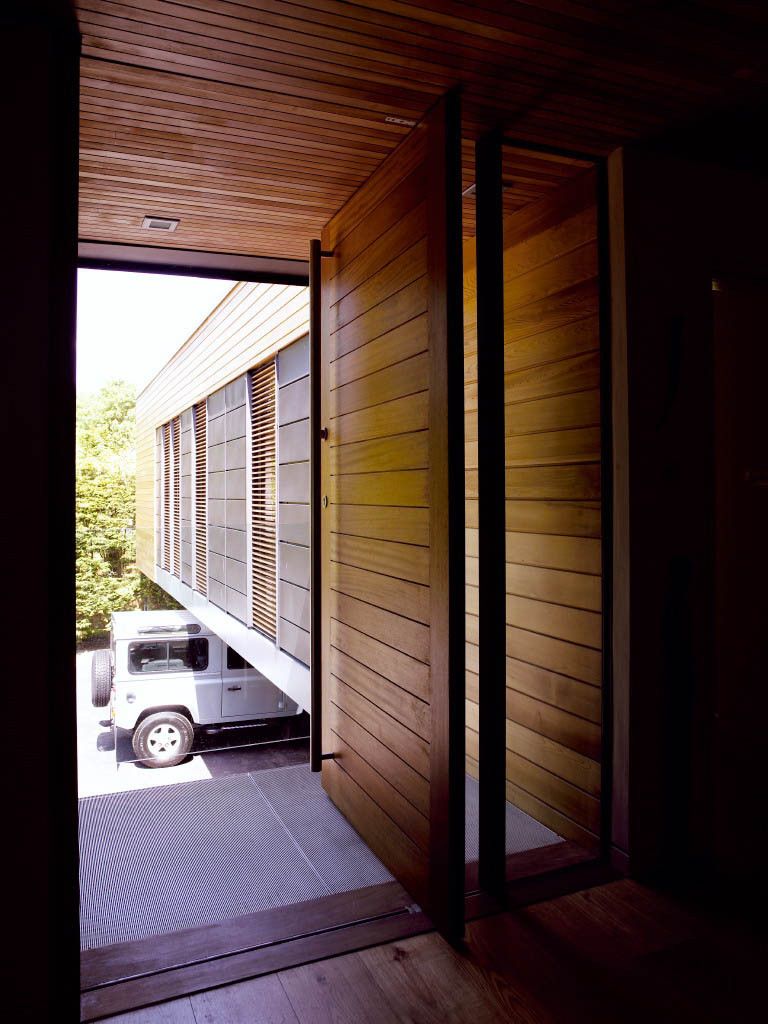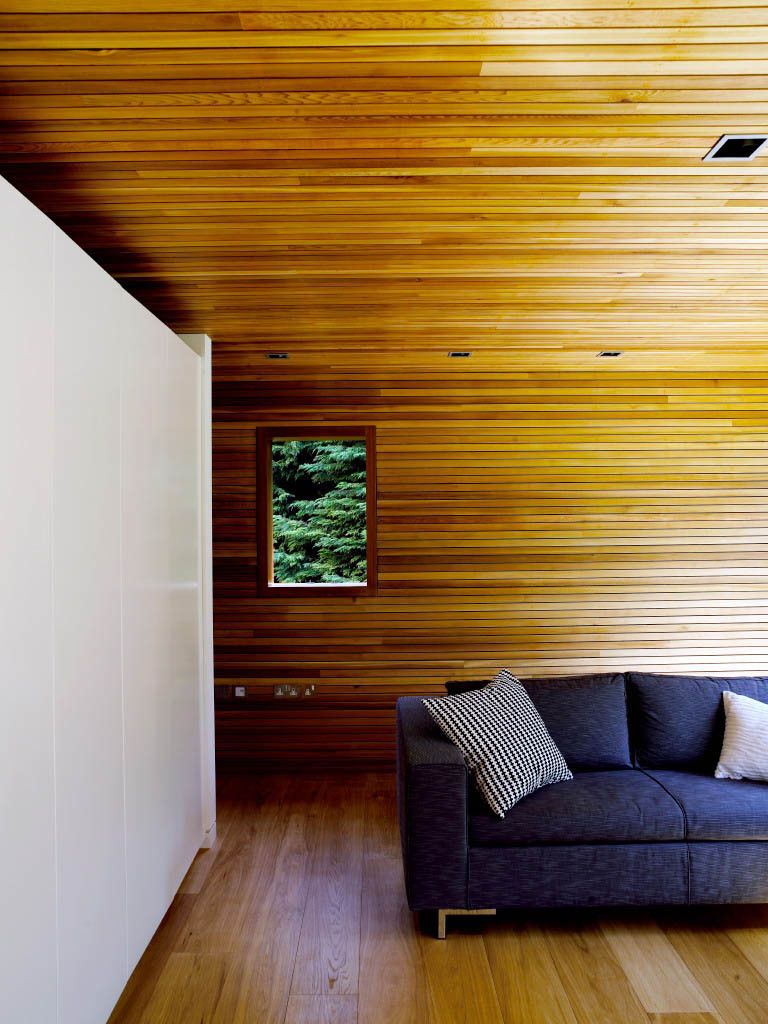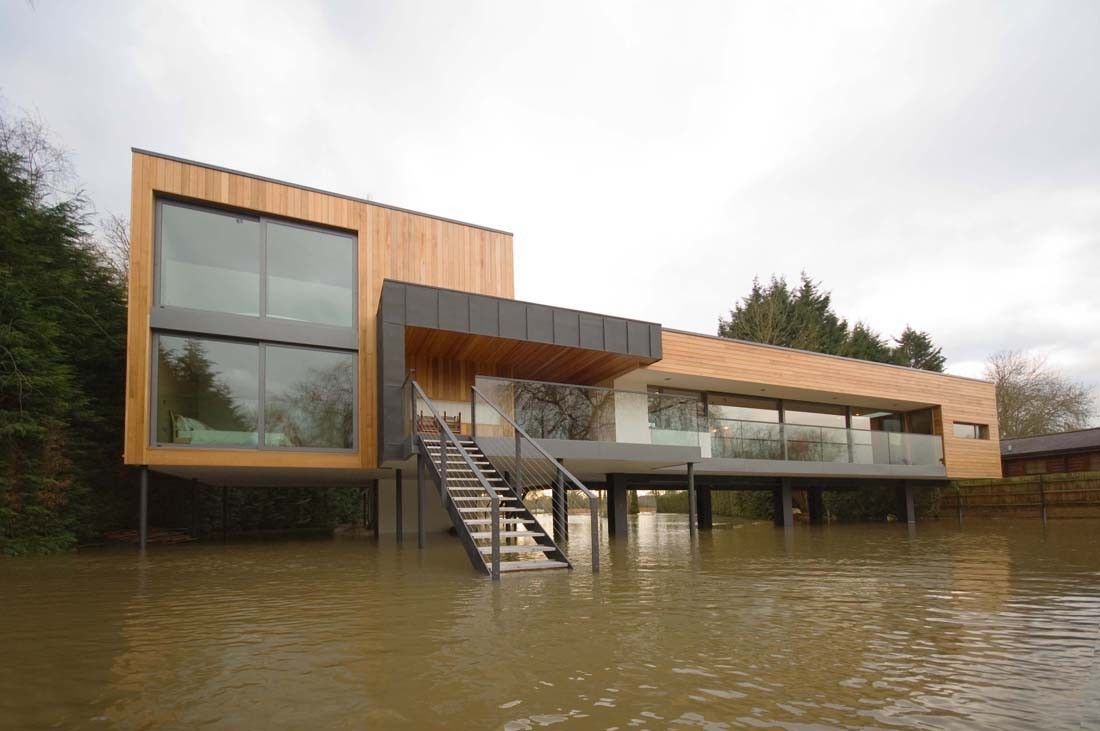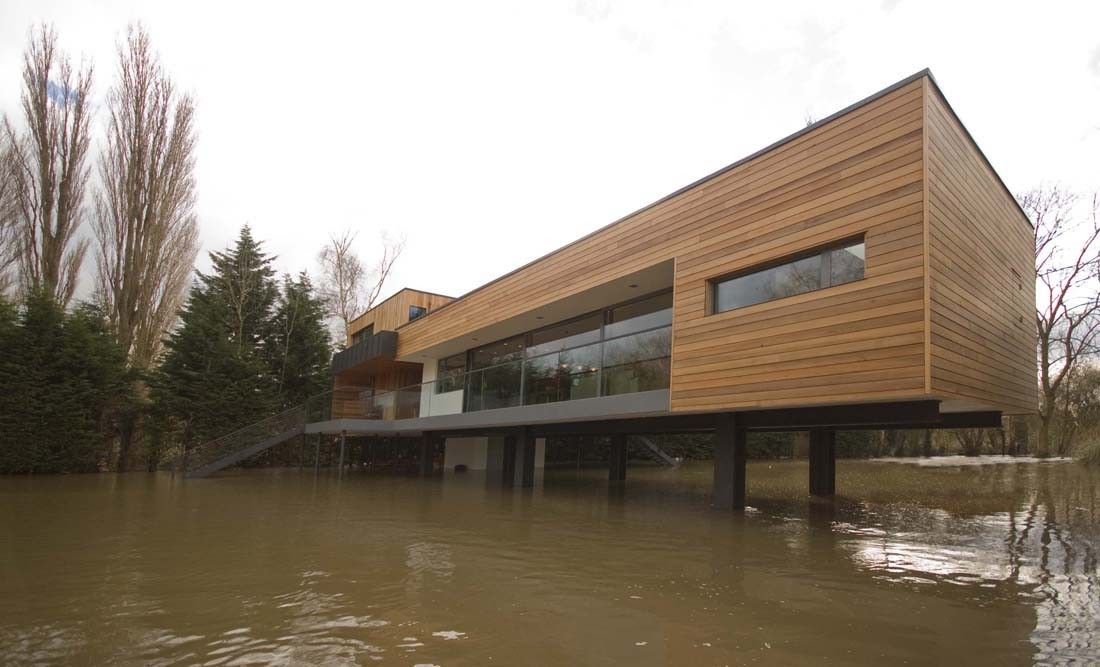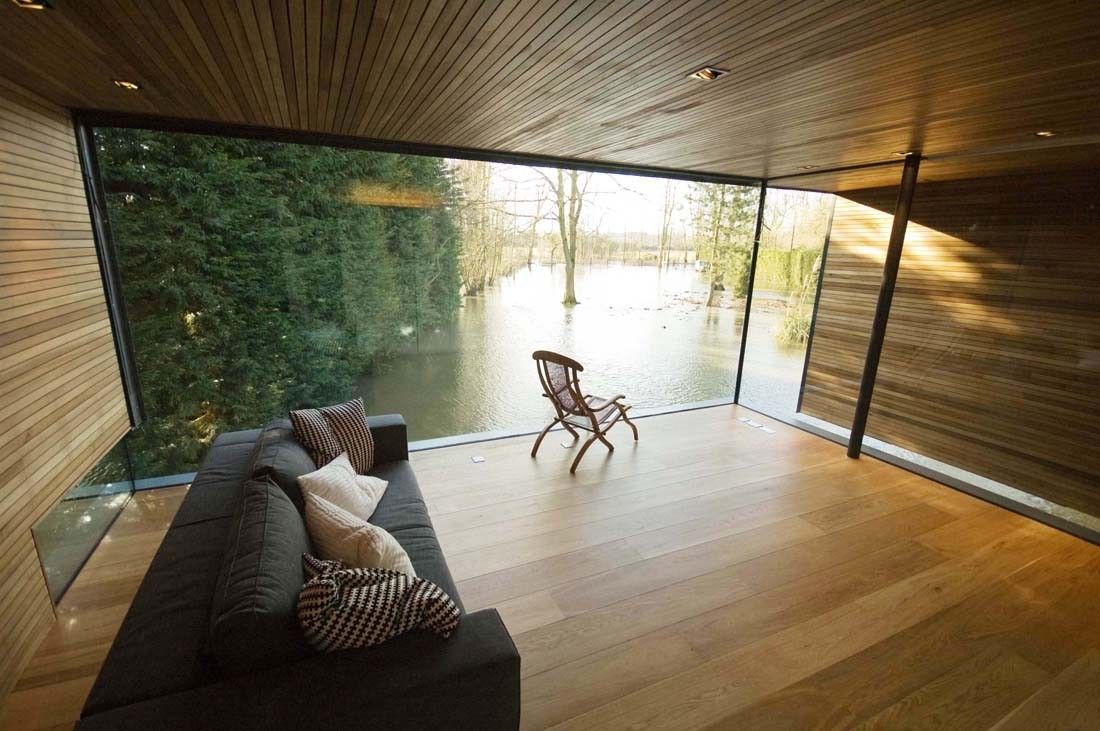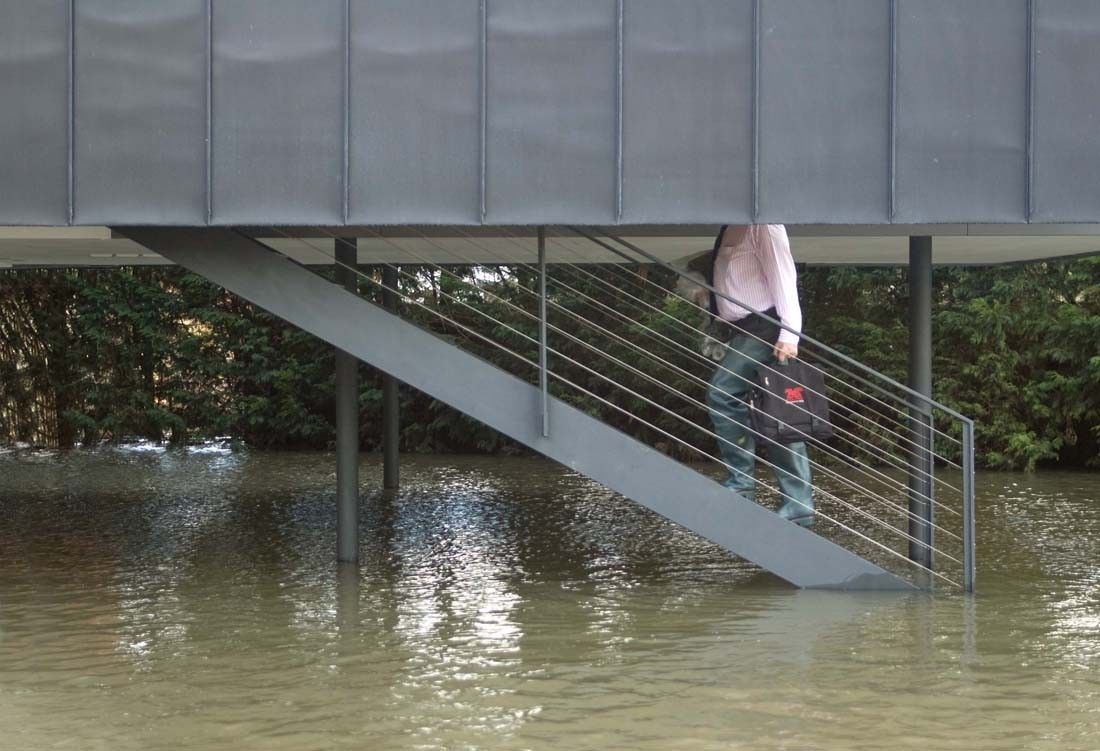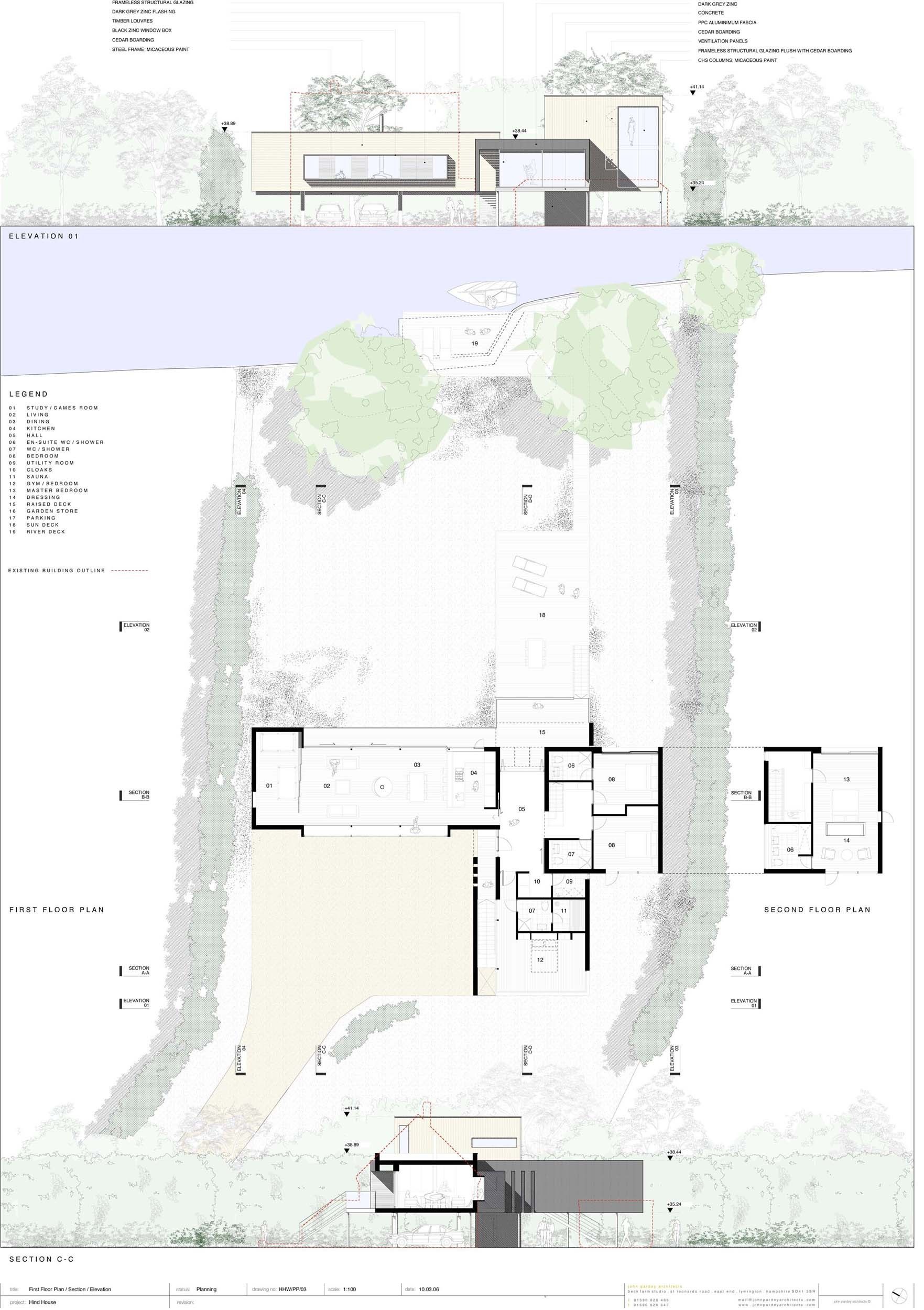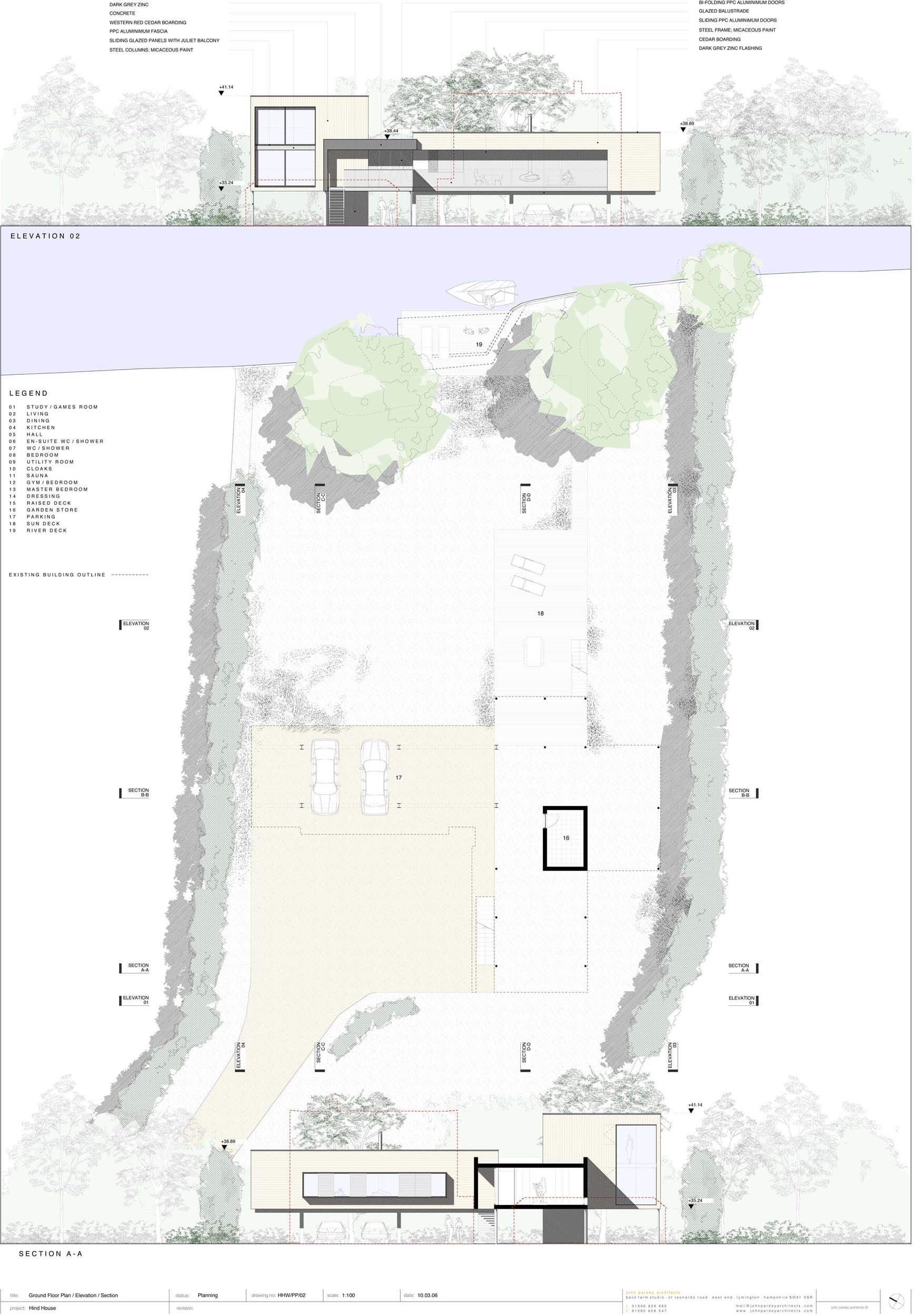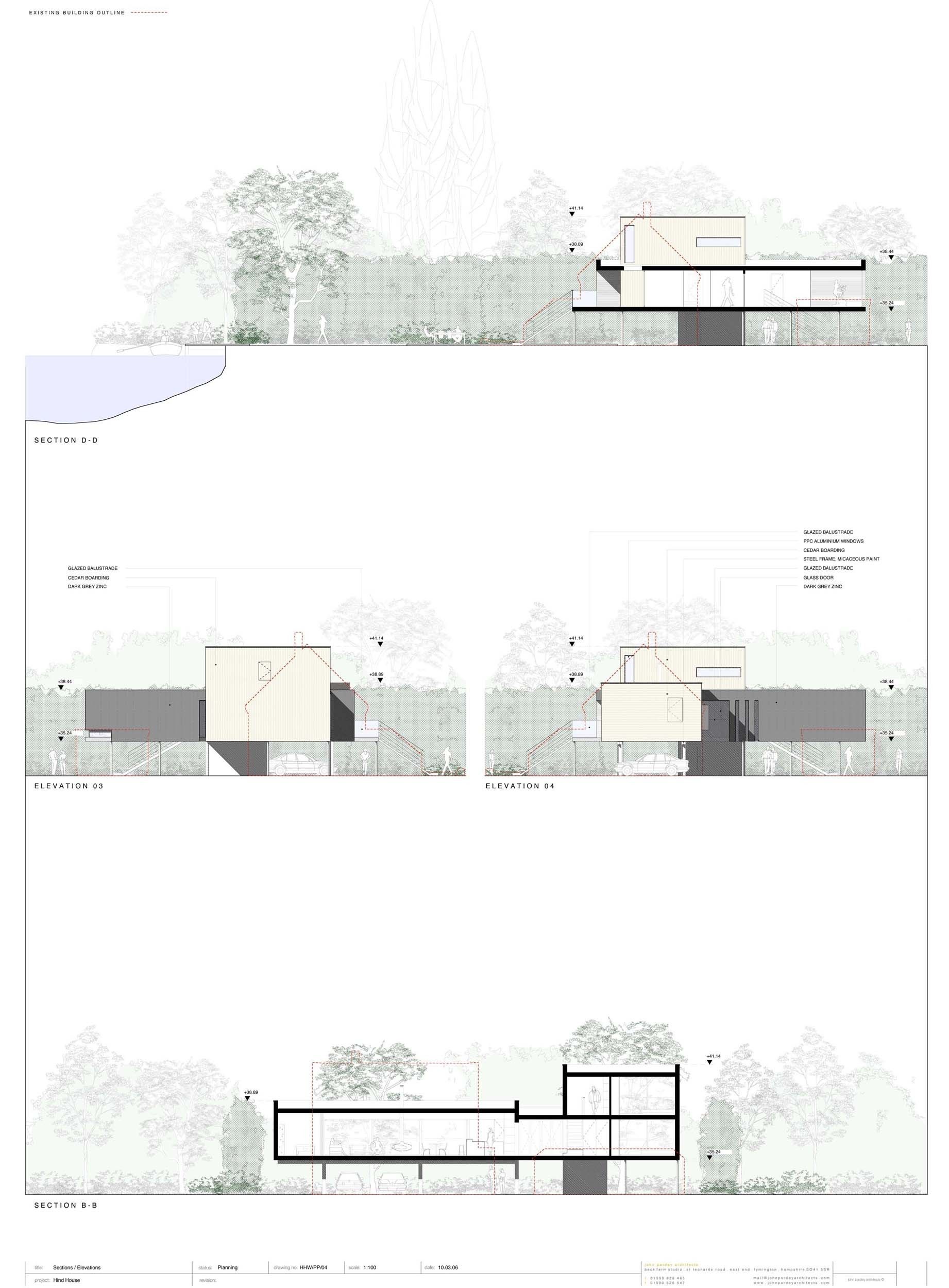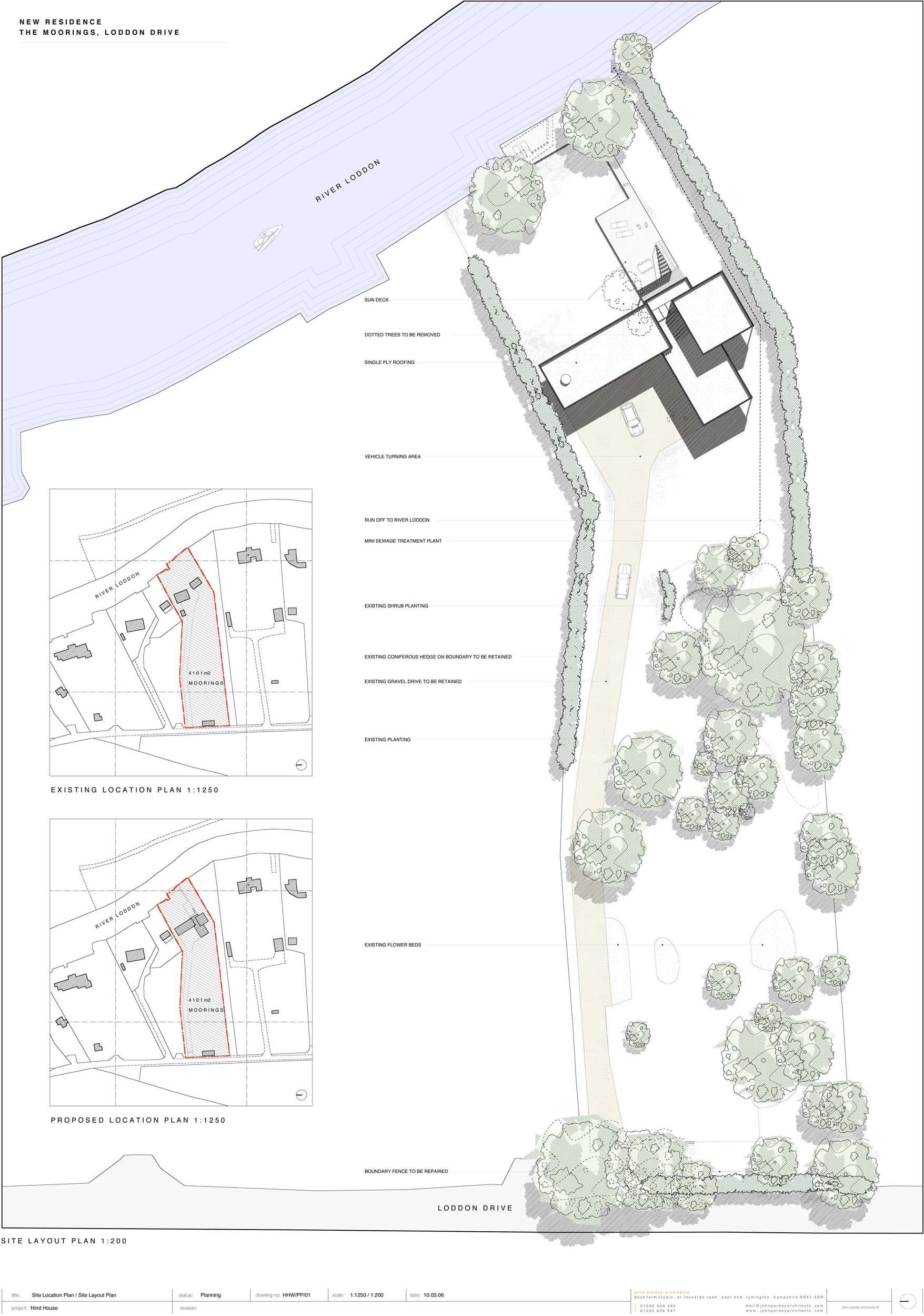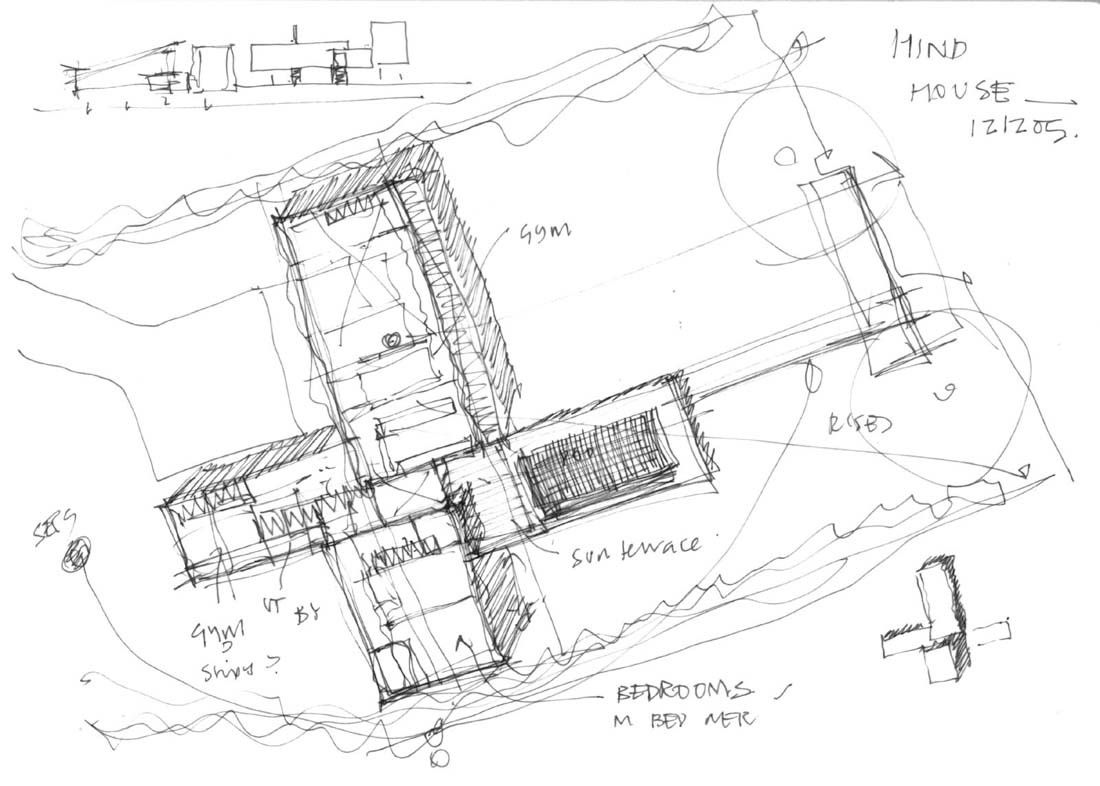


This Hind House sits on the banks of the River Loddon, near Wargrave. We based our concept on three elements; living, guest and bedroom spaces, to create ‘wings’ that adopt a pinwheel form, raised up on columns to deal with flooding from the river.

courtesy of Richard Powers and John Pardey Architects
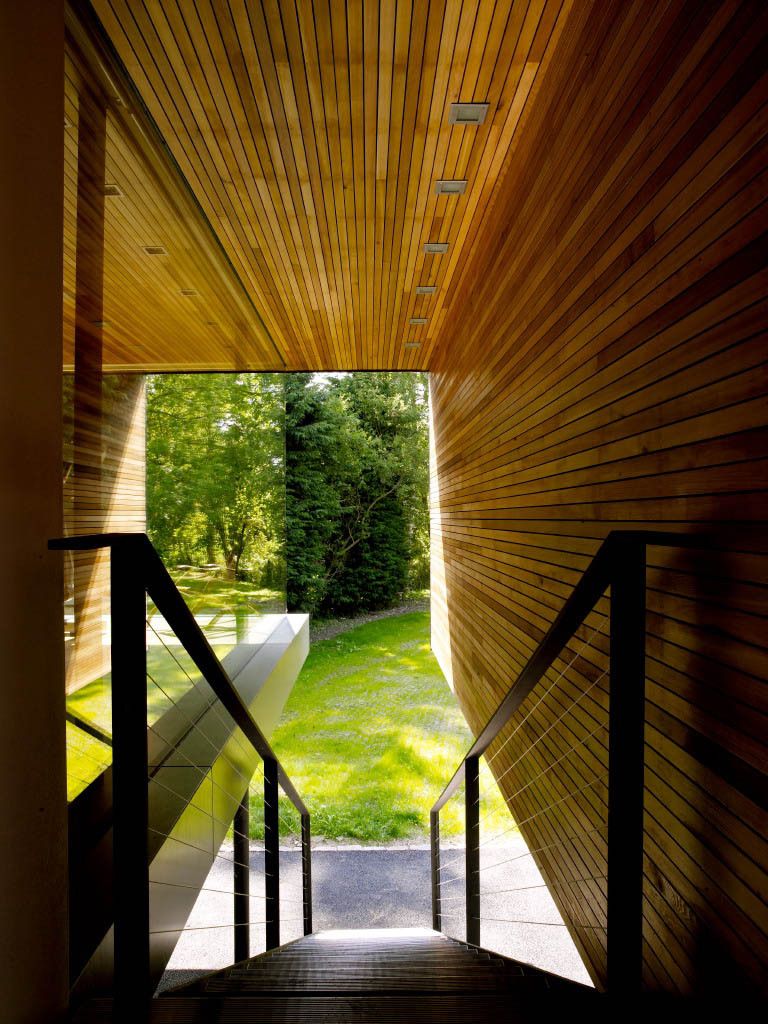
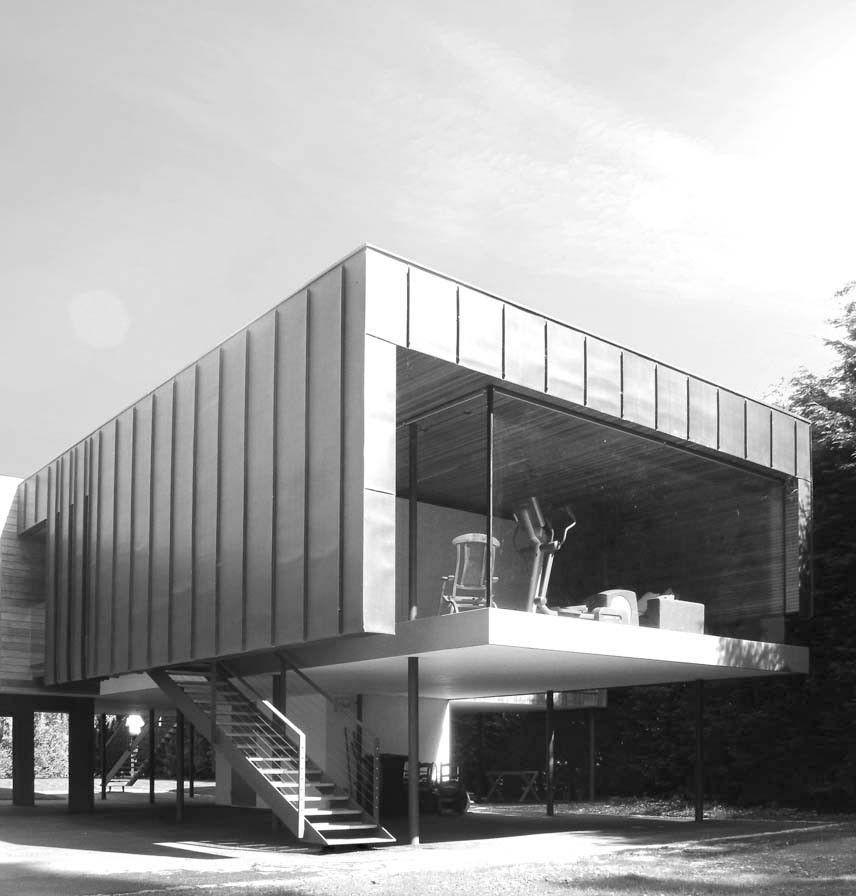
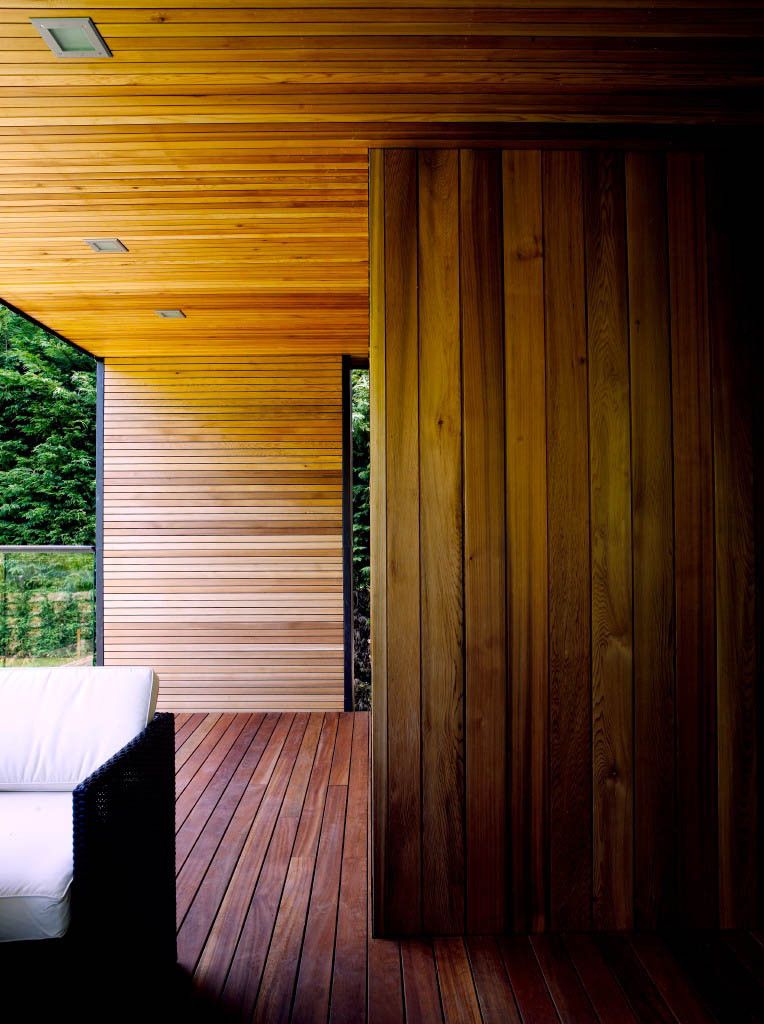
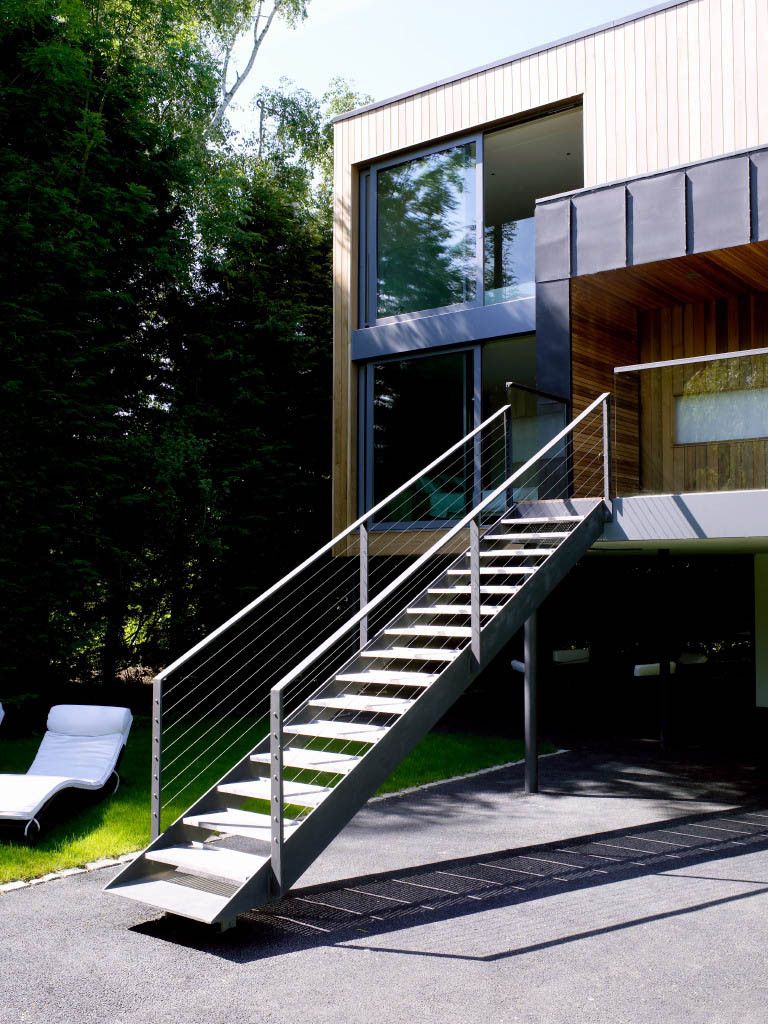
A dark, zinc-clad wing is pushed forward to receive an entrance staircase that slices up into an open timber lined hood, with a glazed room to the side containing a guest suite and gym. The stair arrives onto a balcony and entrance – a central hall space – this is the day room, dedicated to outdoor living that leads out onto a large deck.
courtesy of Richard Powers and John Pardey Architects
Following the zigzag of the pinwheel, a staircase then leads down to a garden deck, with boardwalk that arrives at a landing stage on the river’s edge. The house is steel-framed, with timber stud infill; cedar and zinc-clad, with aluminium framed windows and single-ply roofing. The Hind House won a RIBA Regional Award in 2009 and was short-listed for the RIBA Stephen Lawrence Prize, also in 2009.
courtesy of Richard Powers and John Pardey Architects
Project Info:
Architects: John Pardey Architects
Project Location: United Kingdom
Project Year: 2008
Photographs:Richard Powers
Project Area: 242.0 sqm
Project Architect: Henry Goss
Structural Engineer: Barton Engineers, London (Bob Barton)
Project Manager / Contractor: Ridgetree Construction, Wargrave (Clive Hicks)