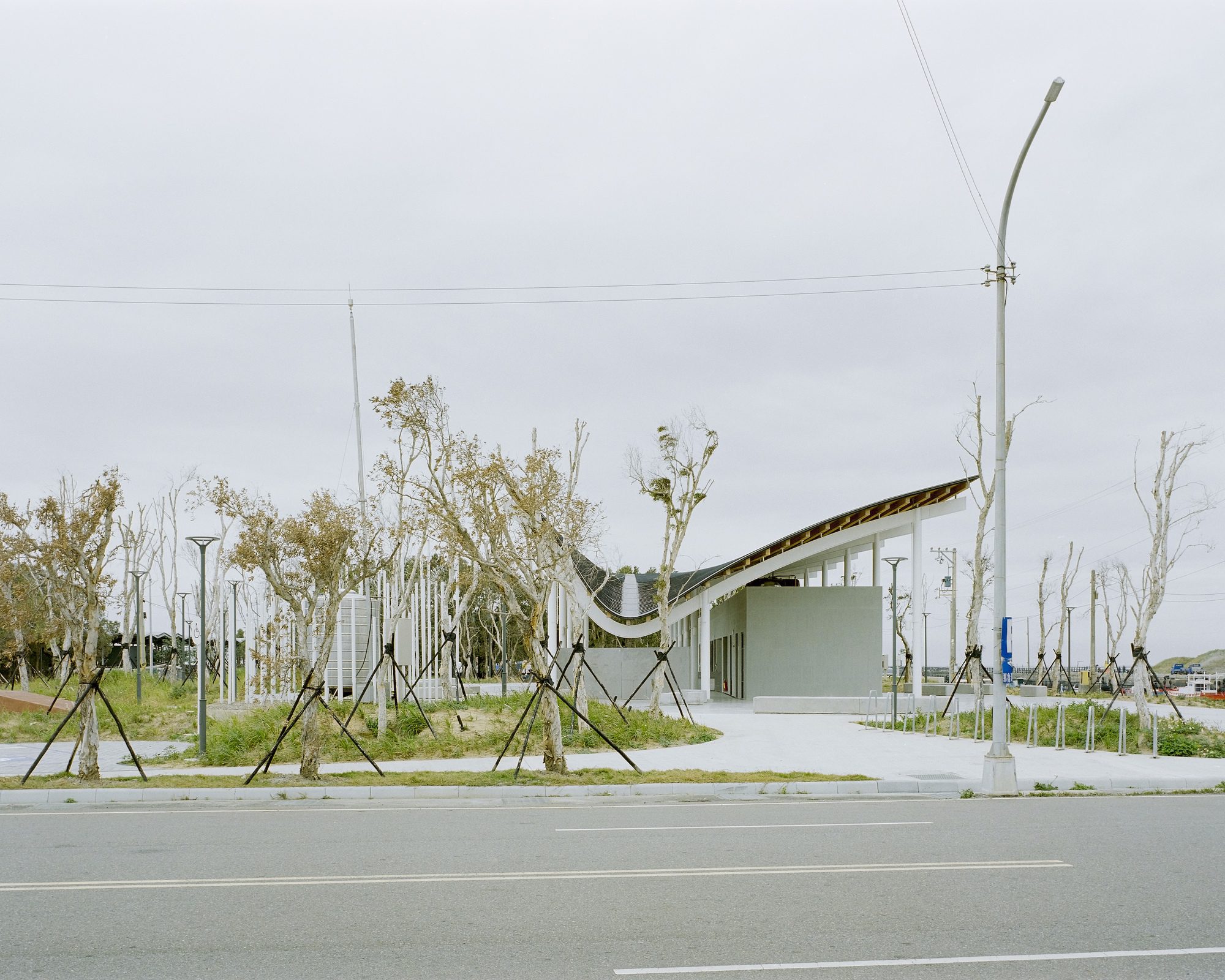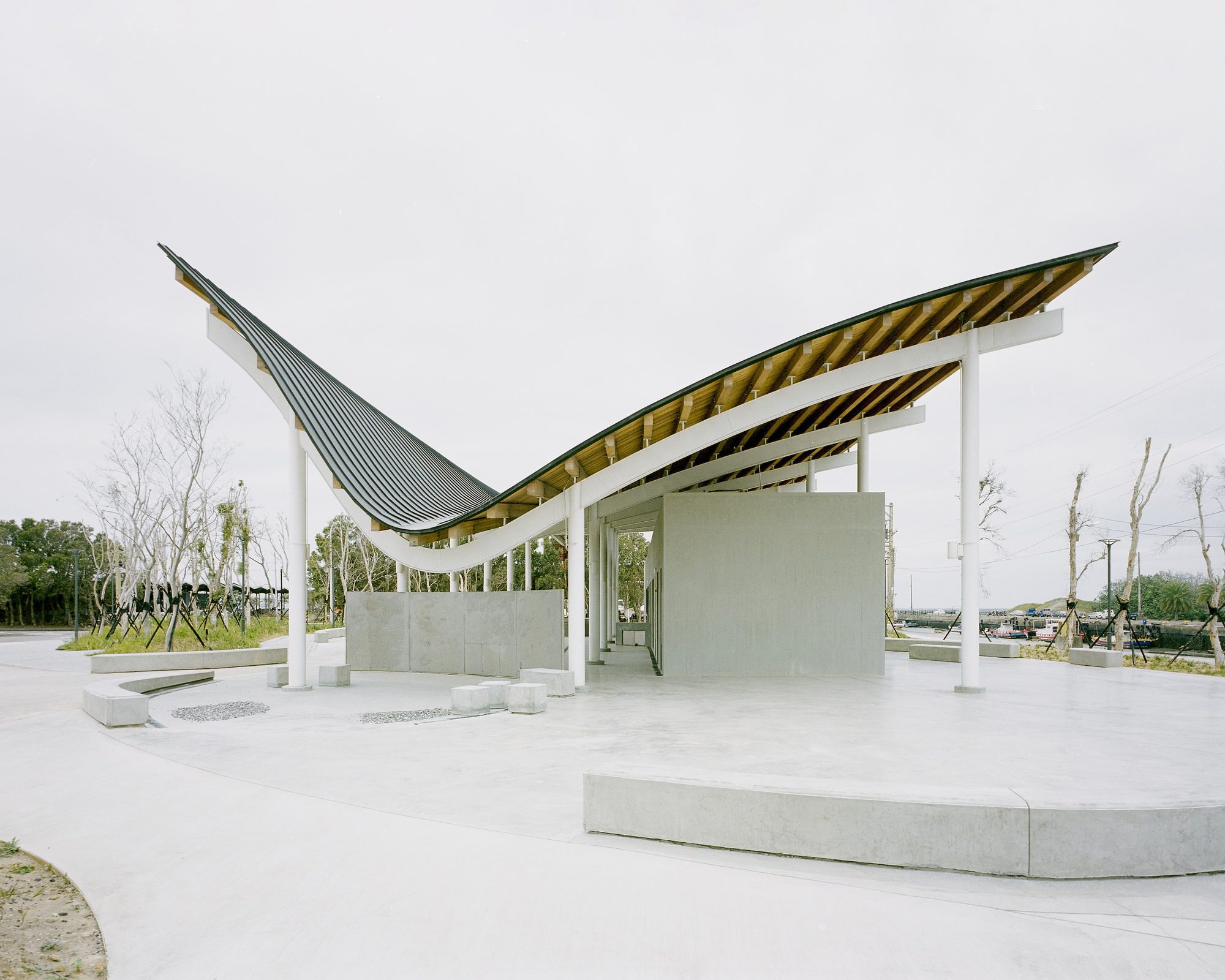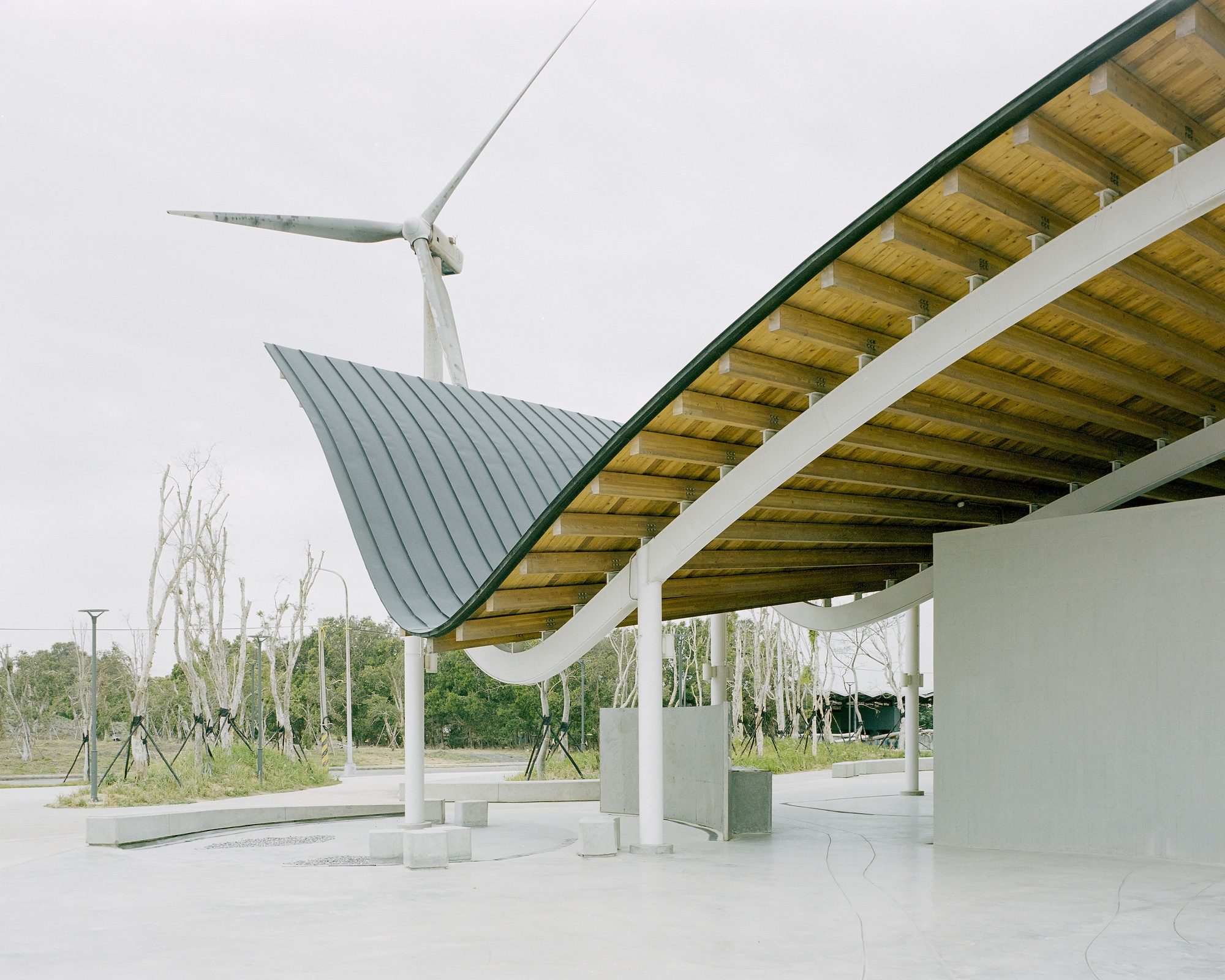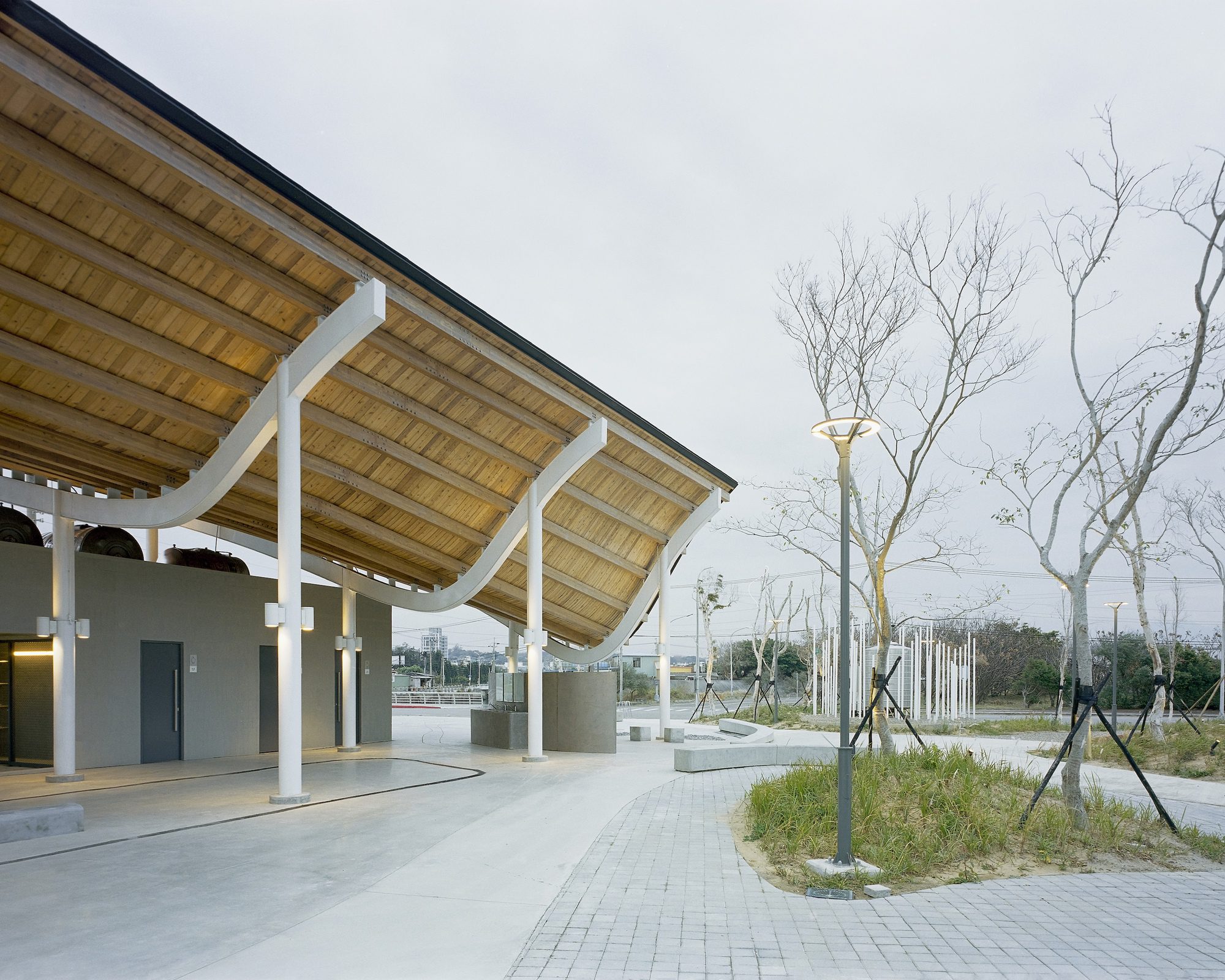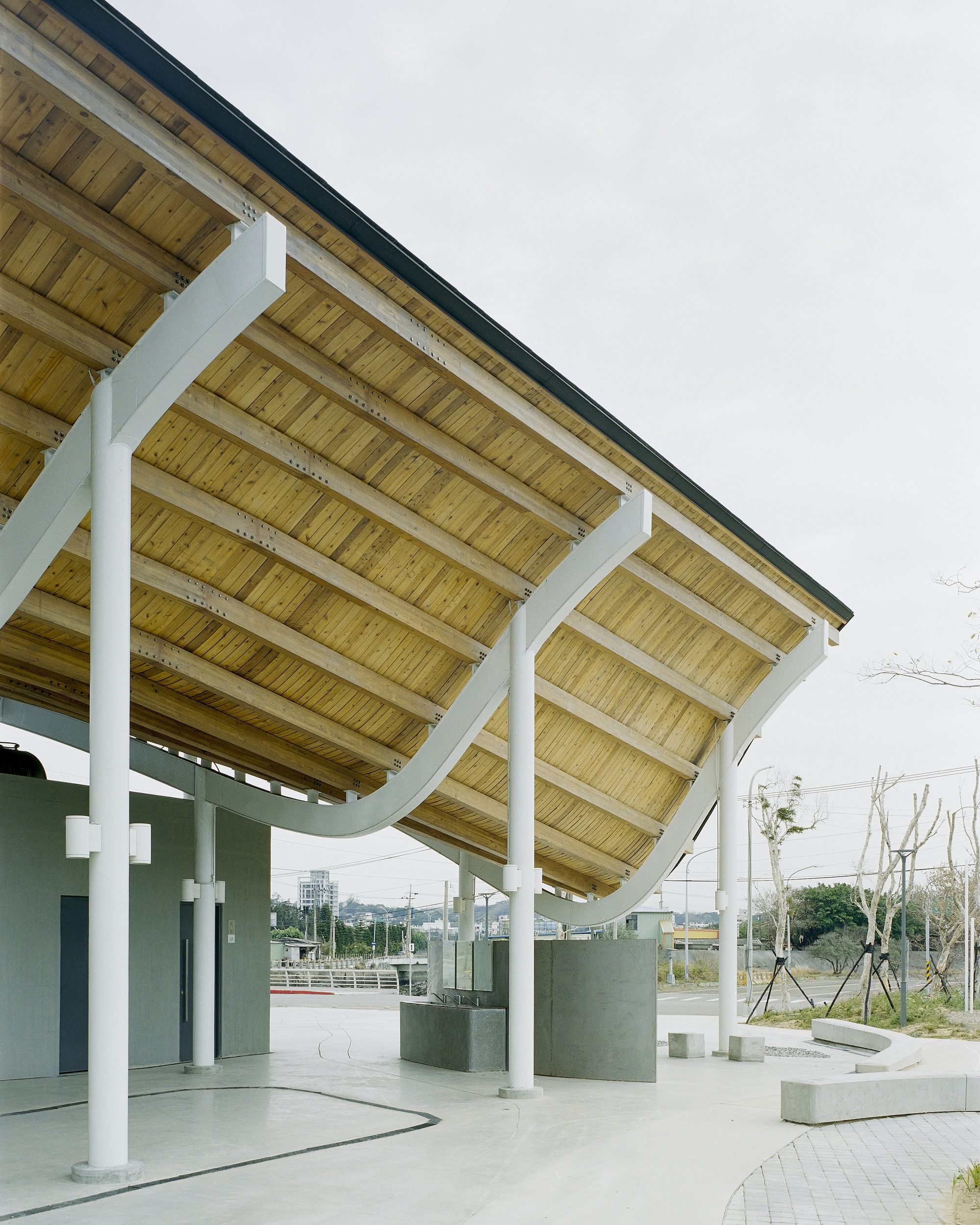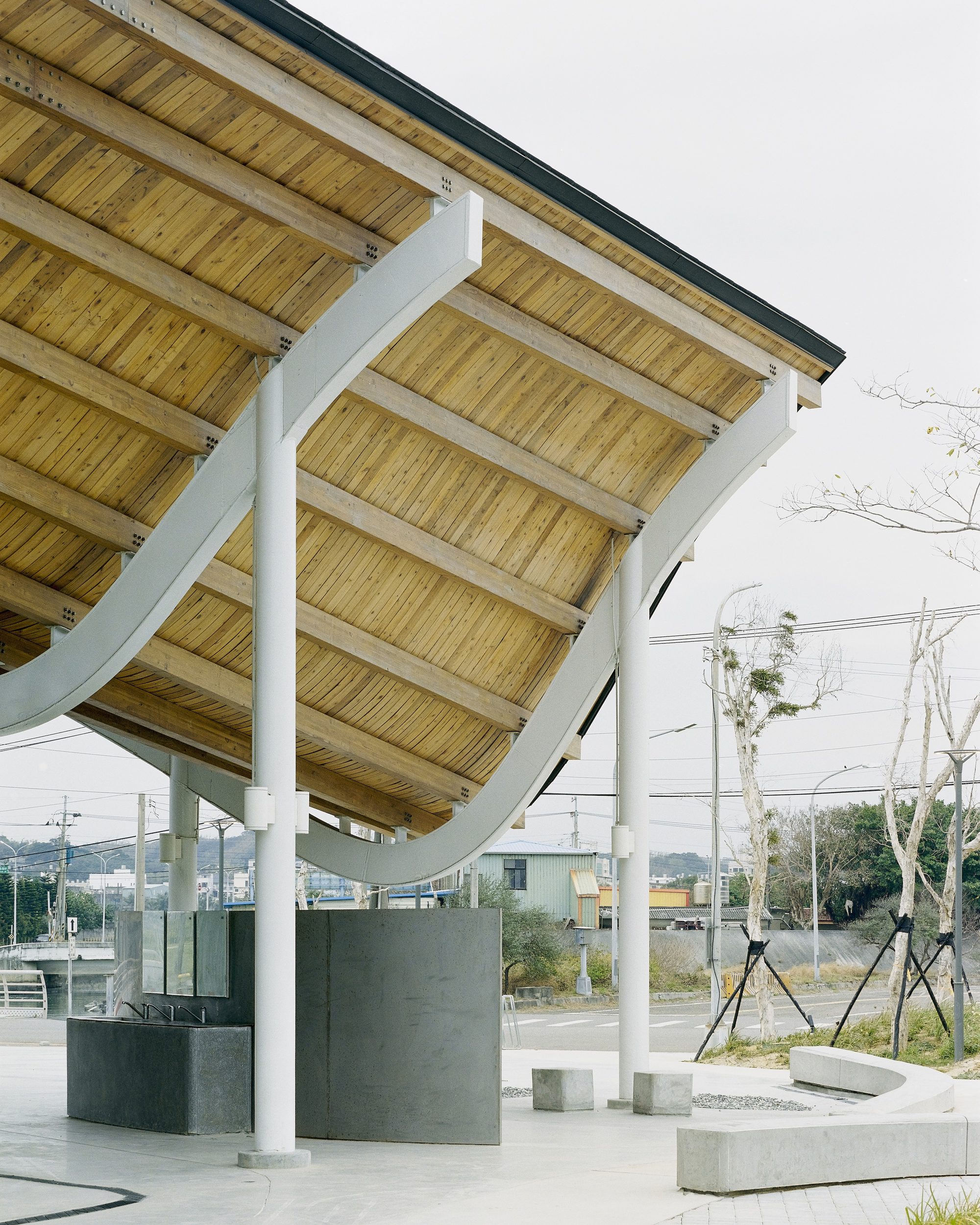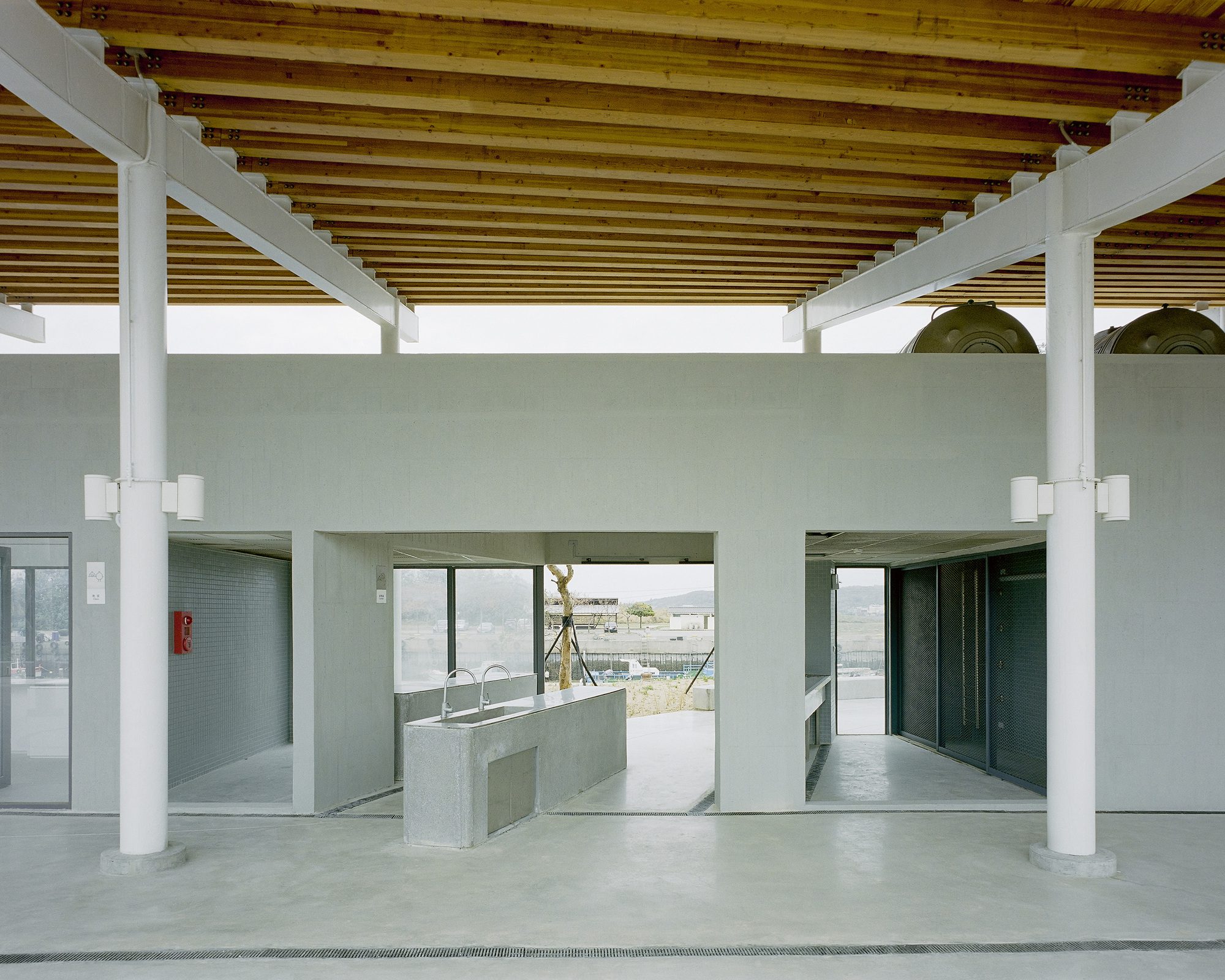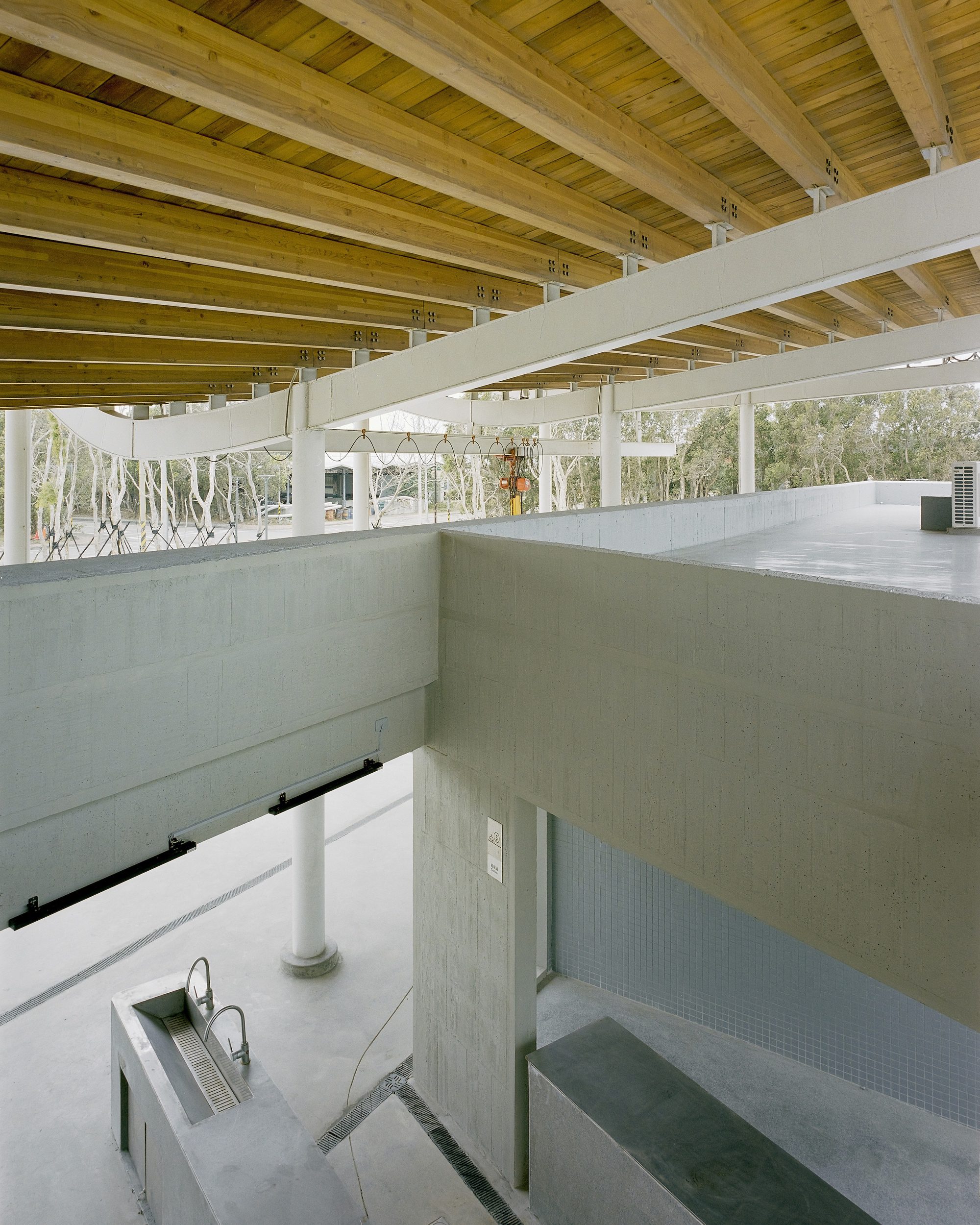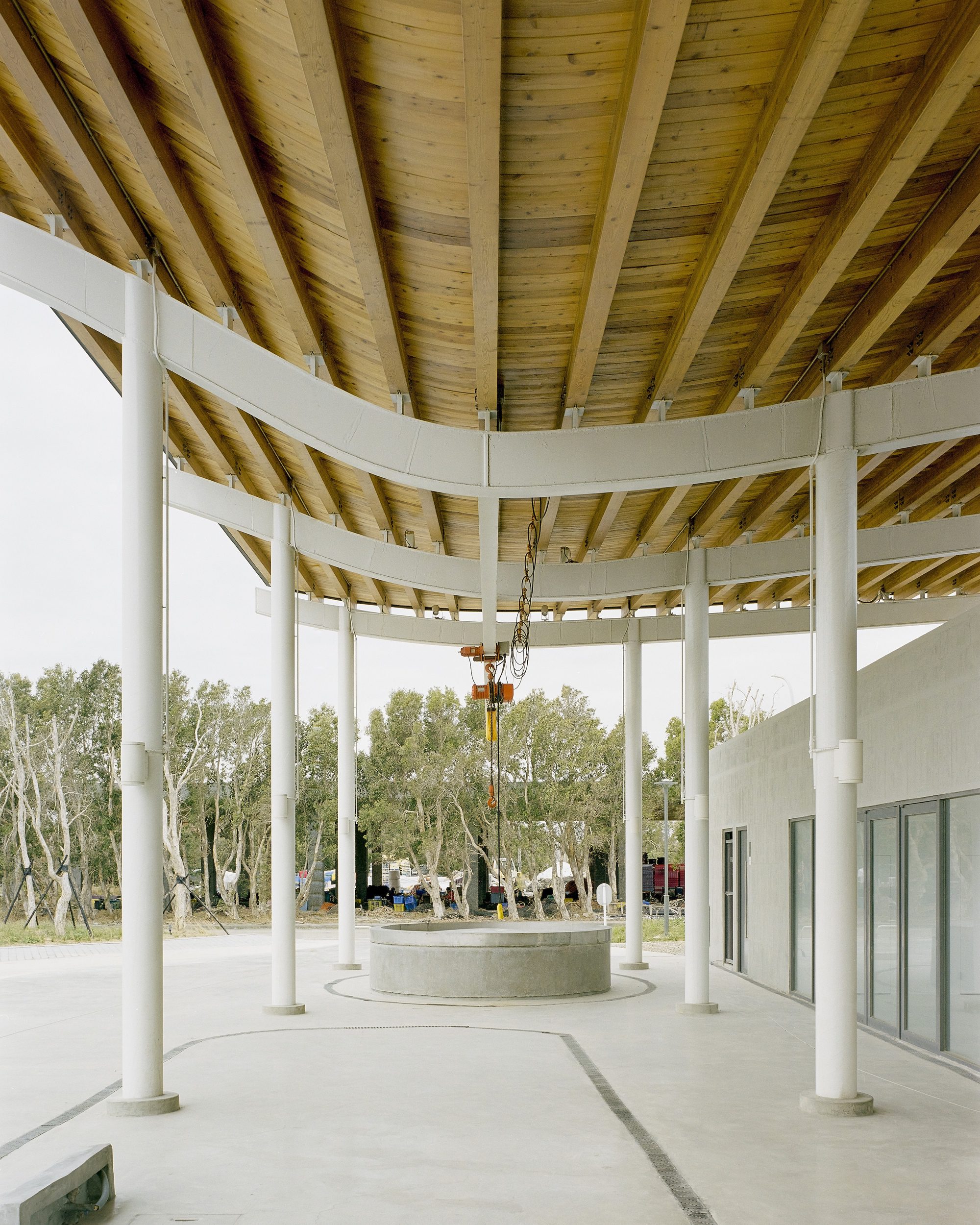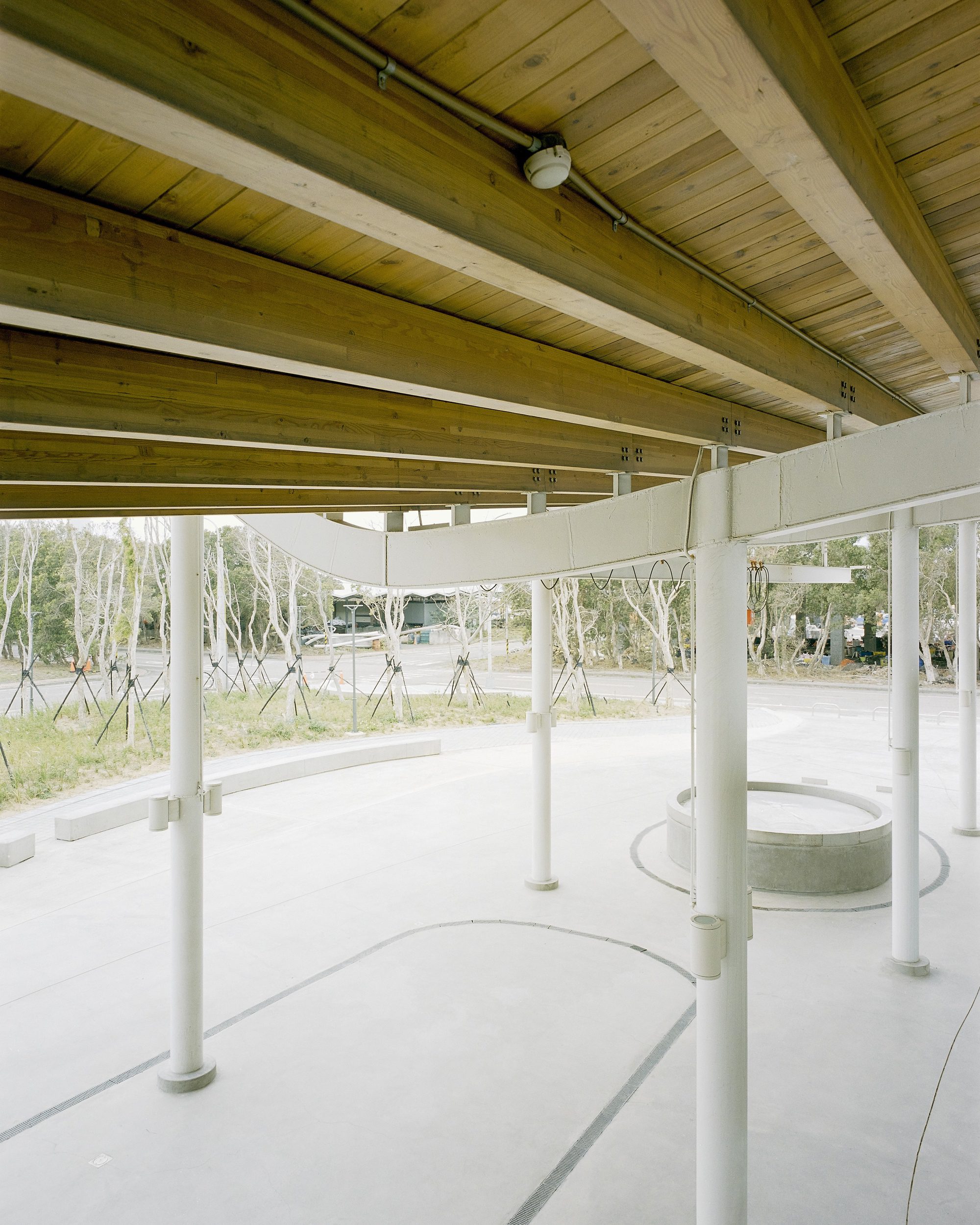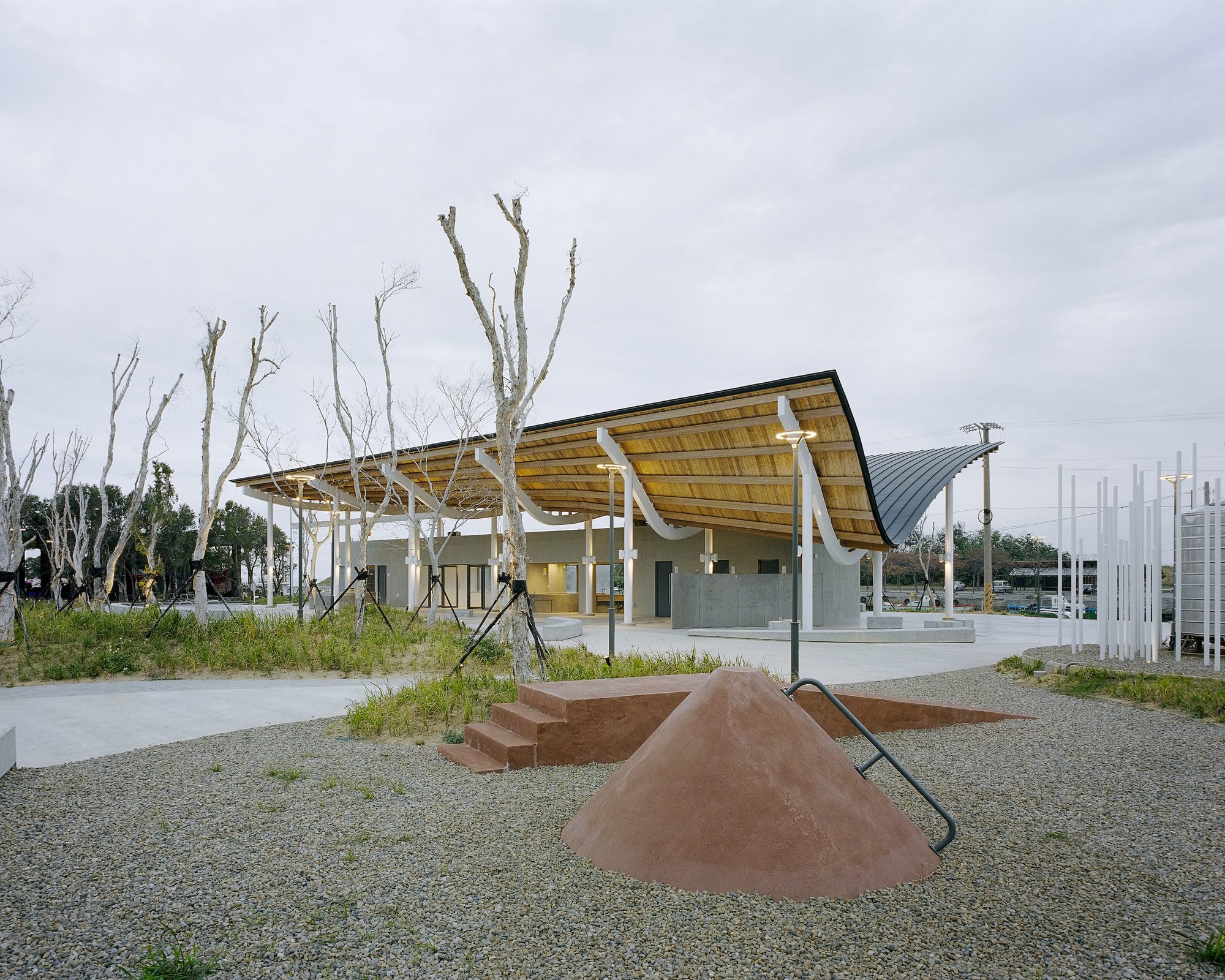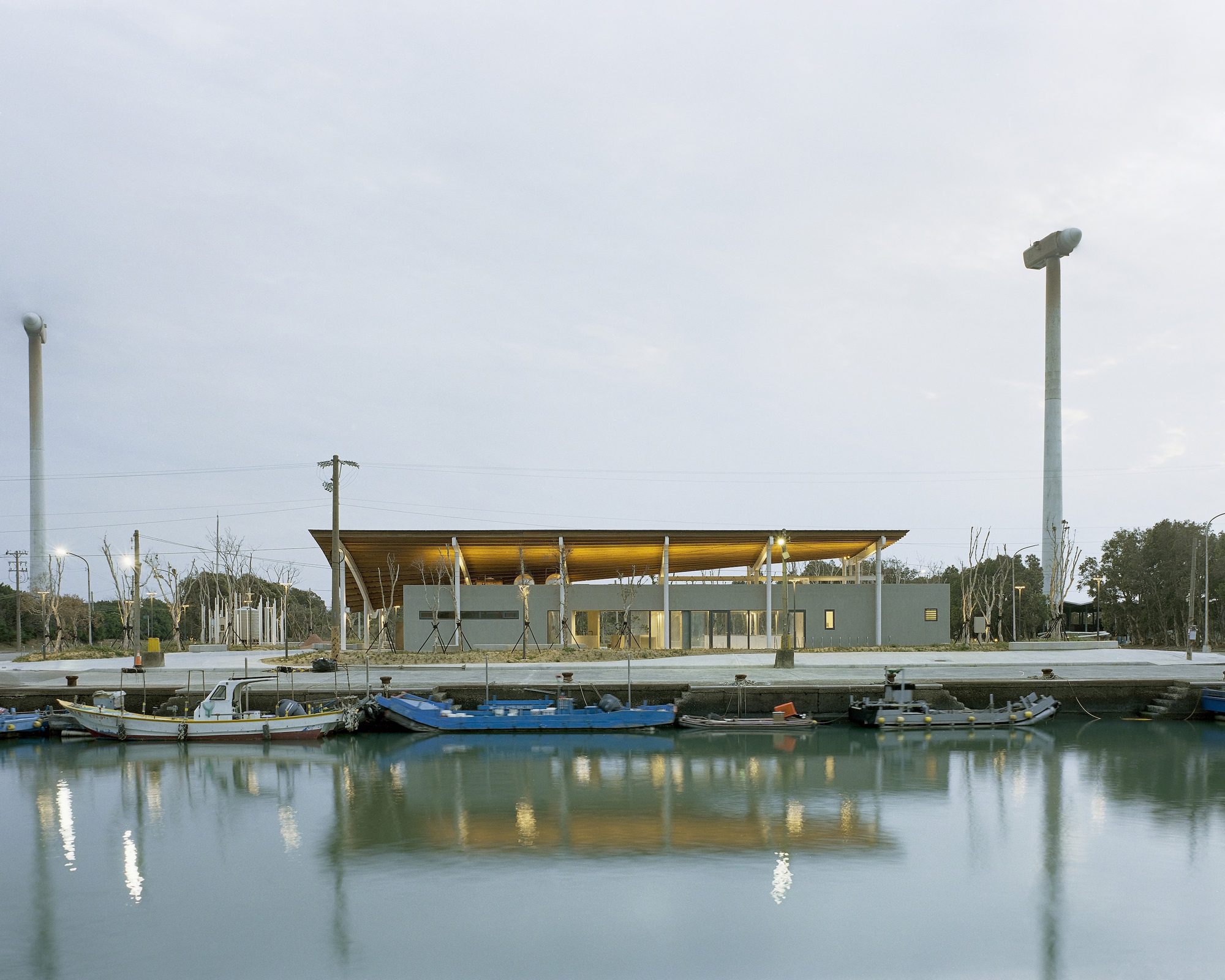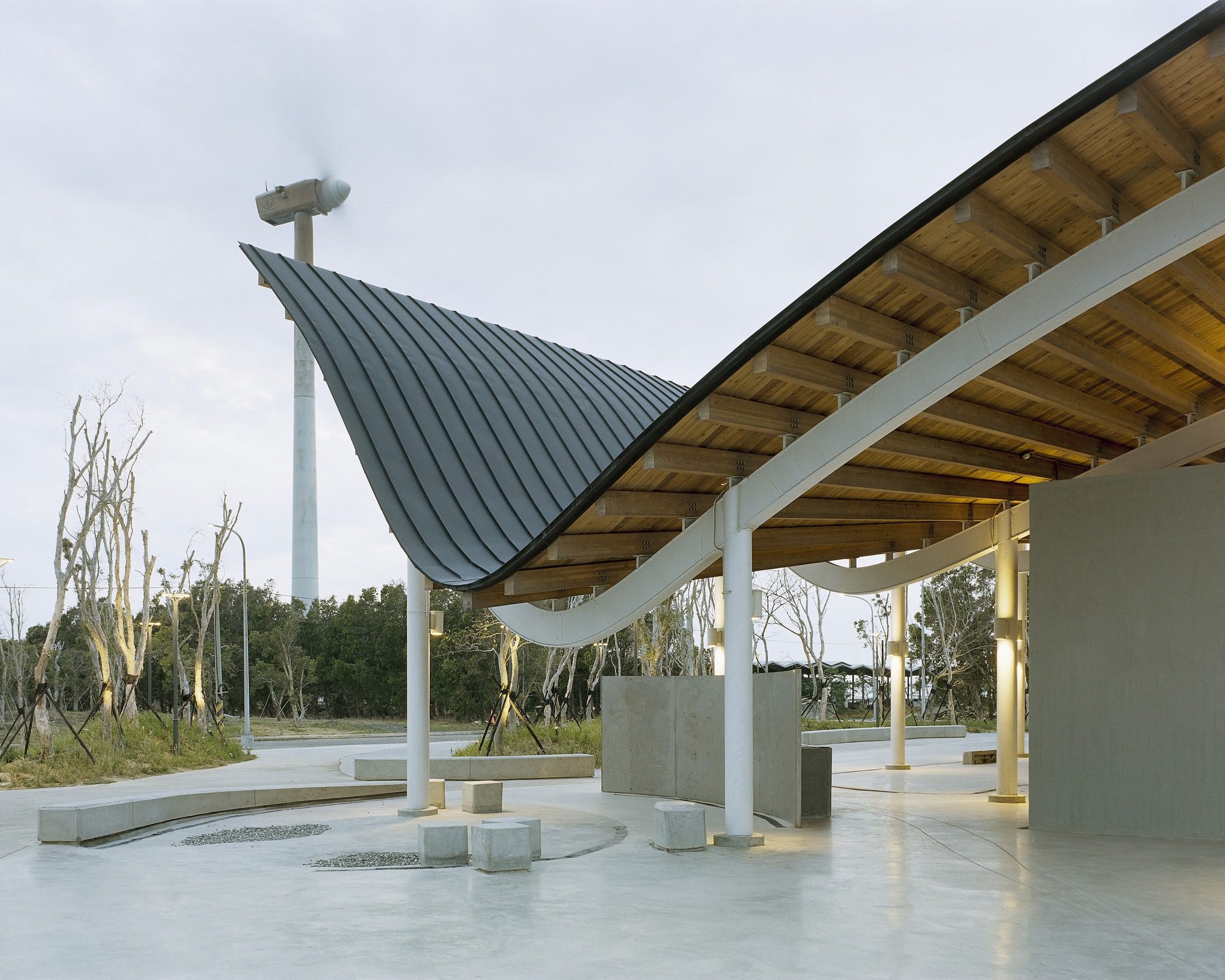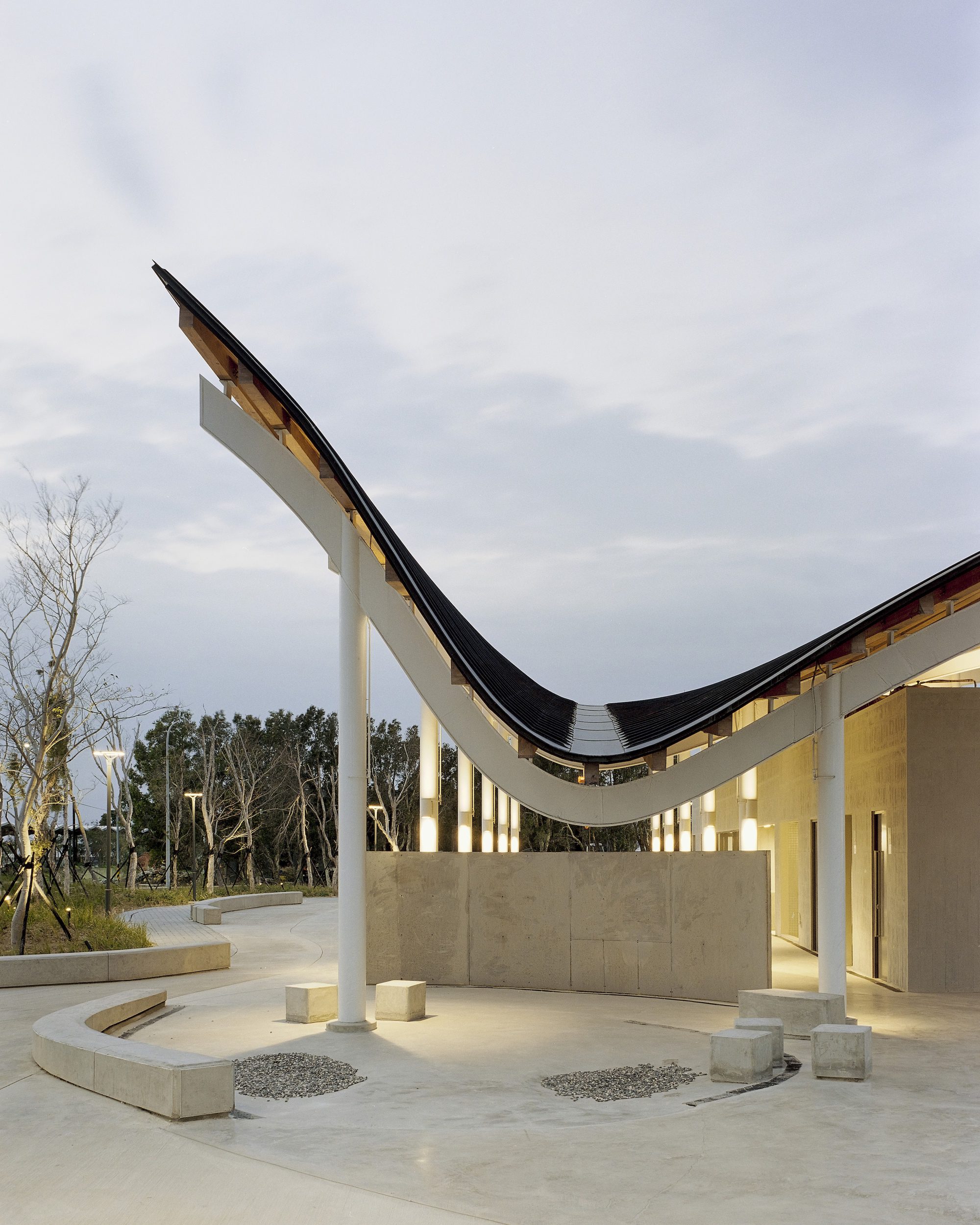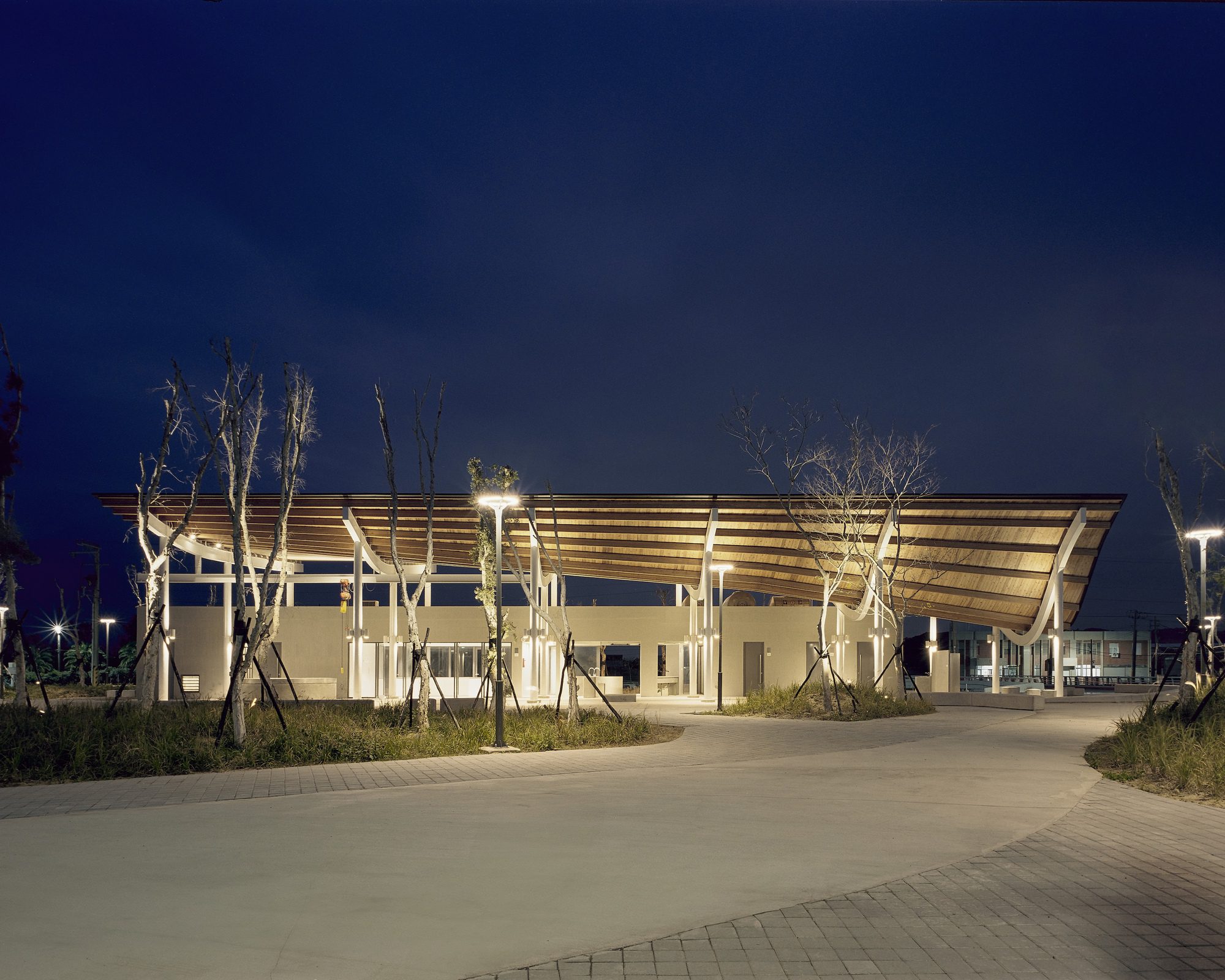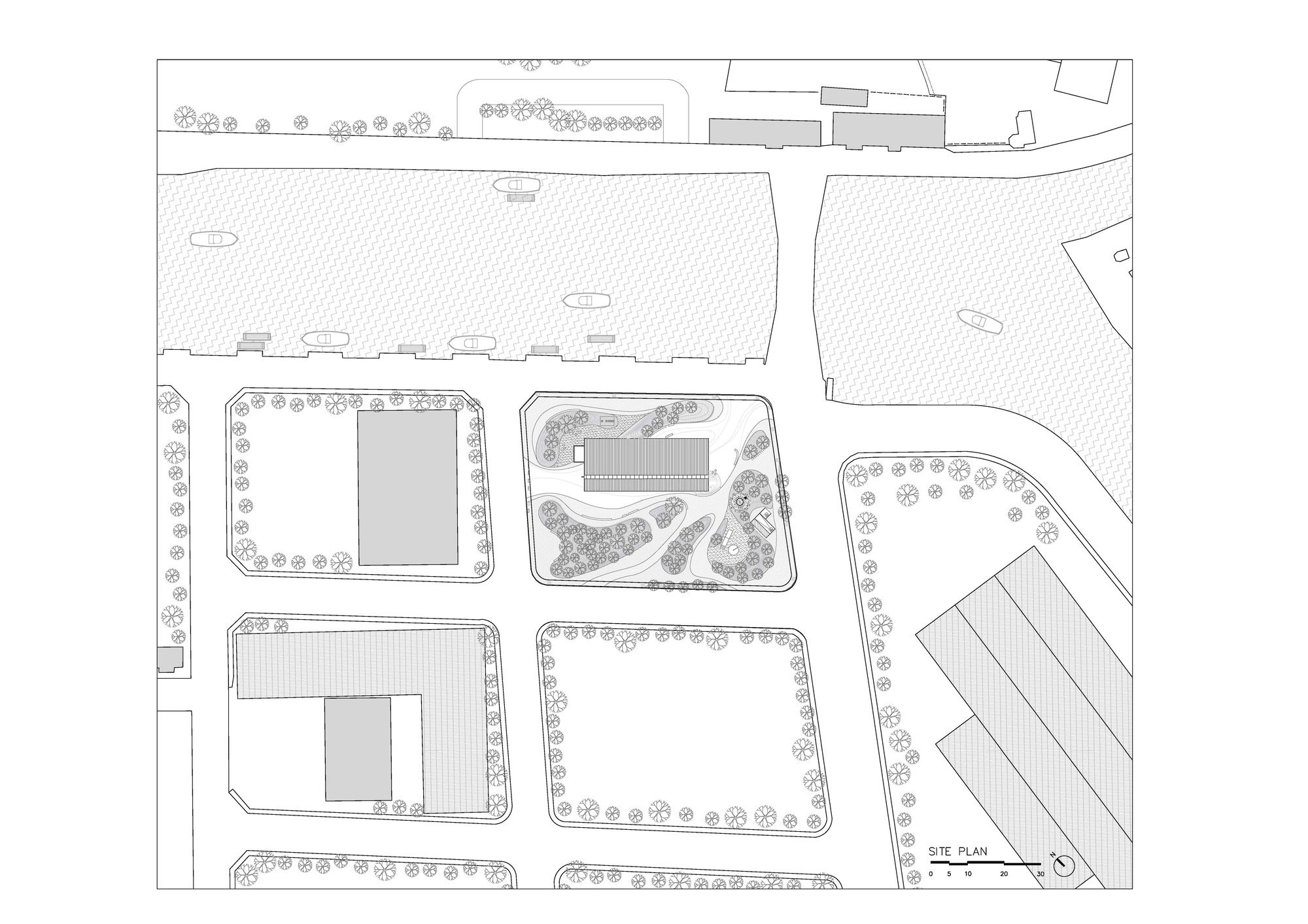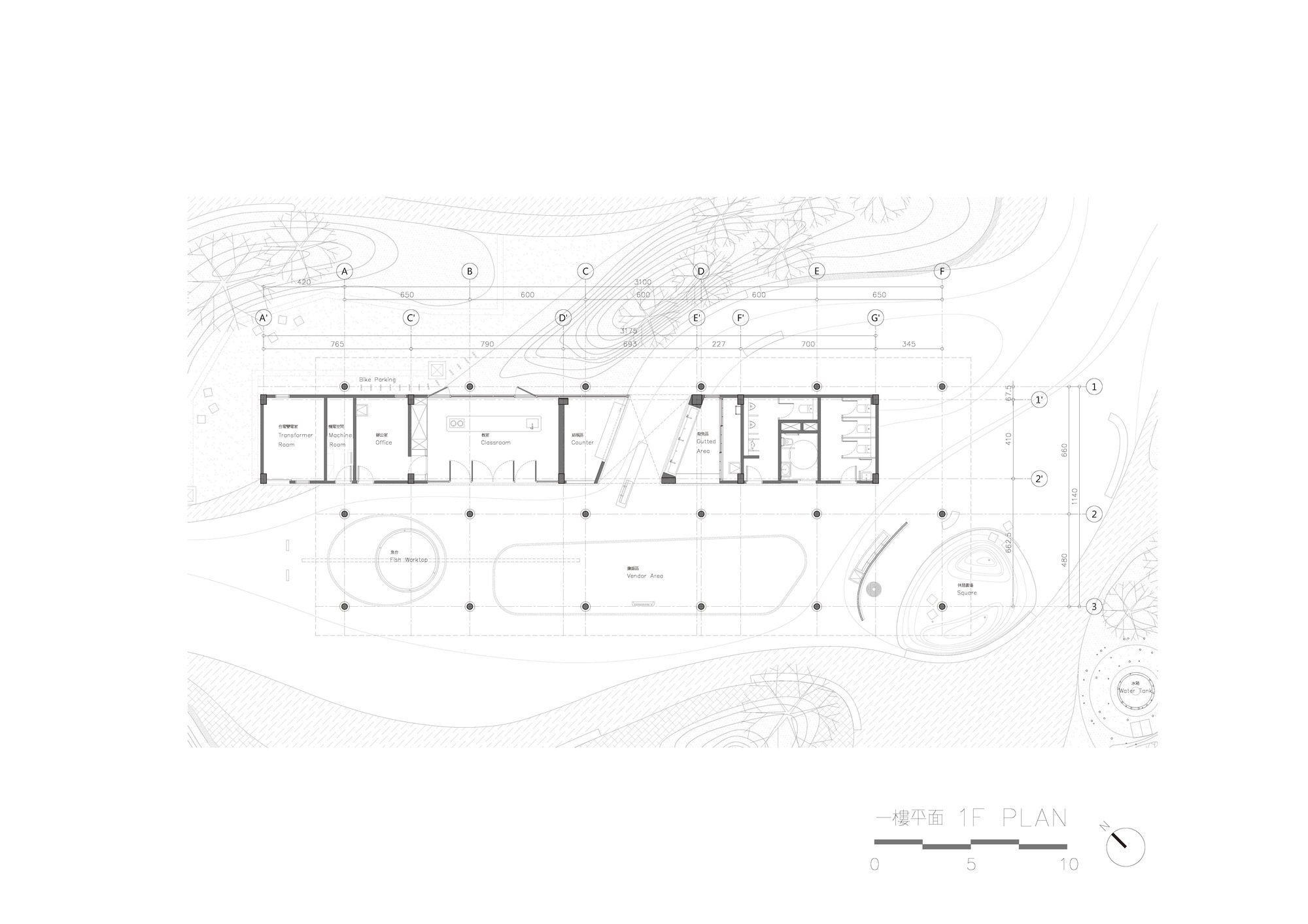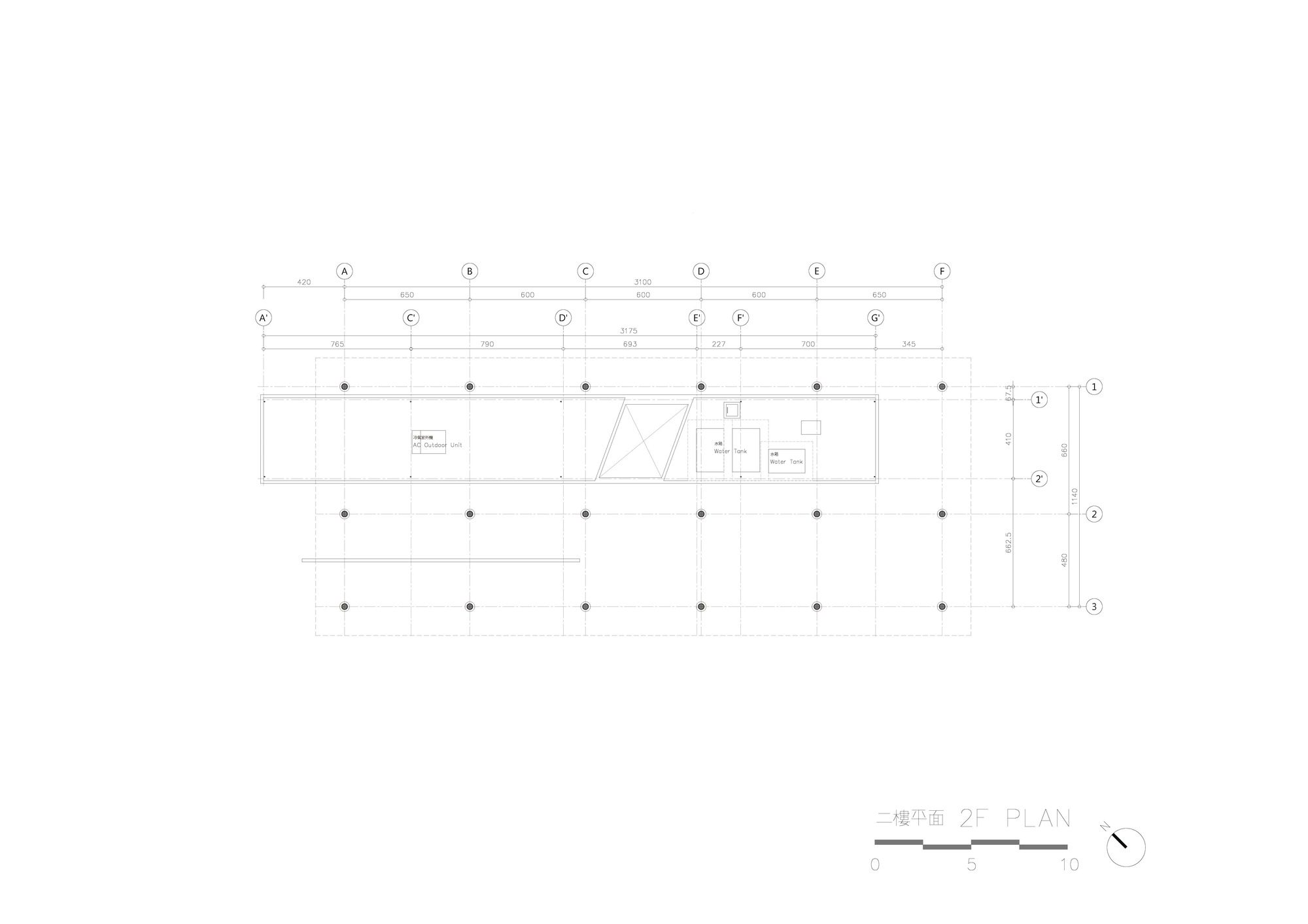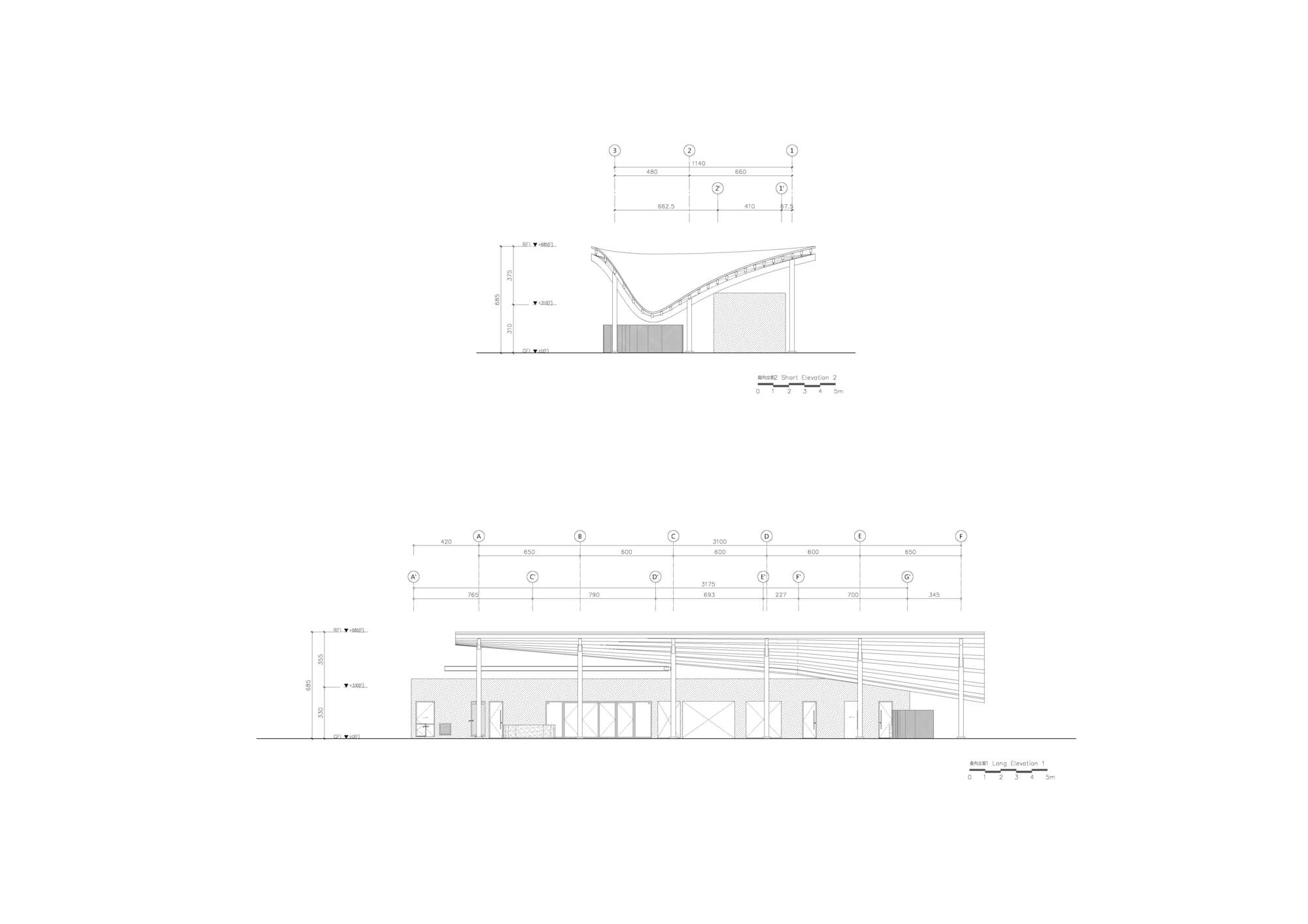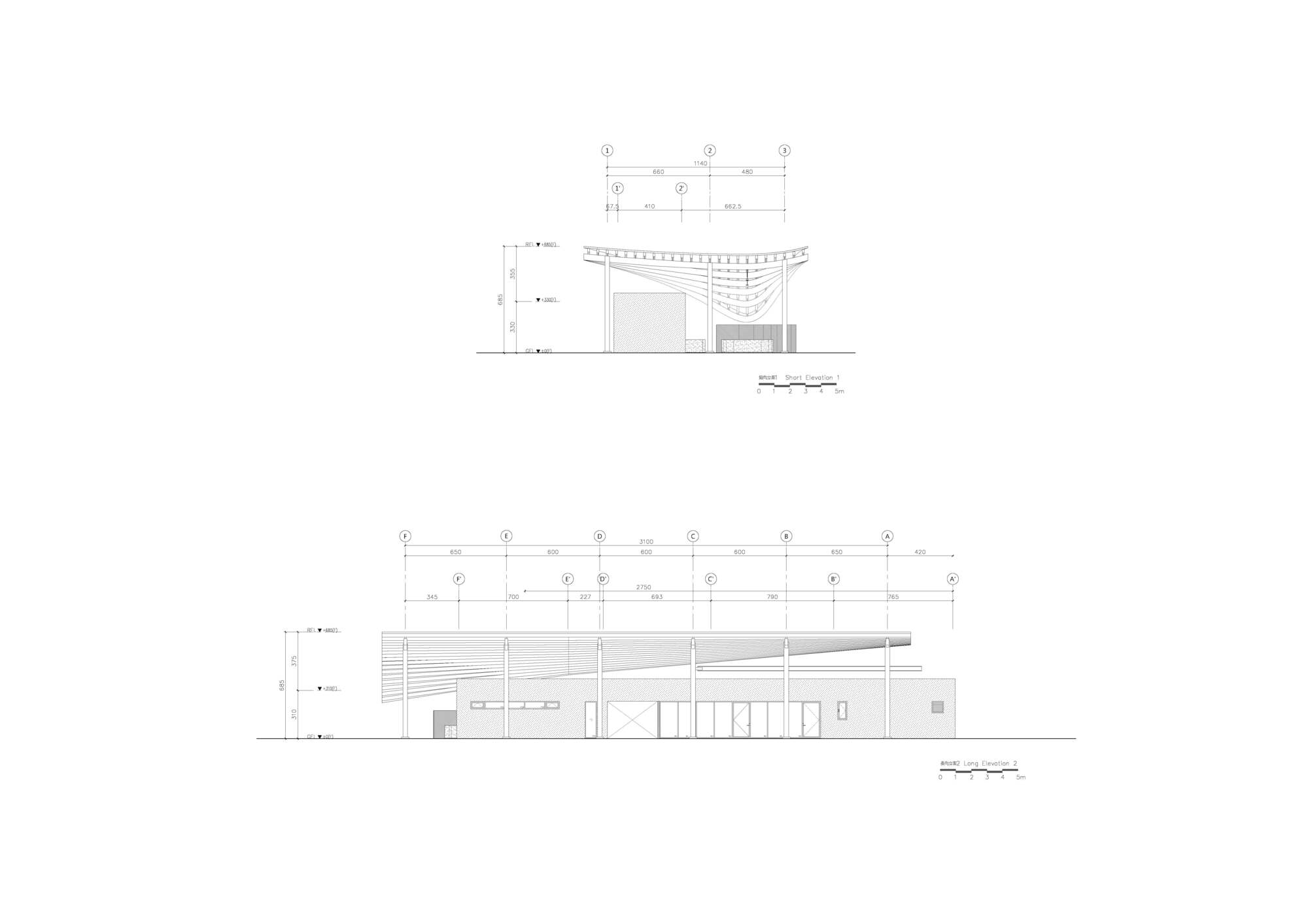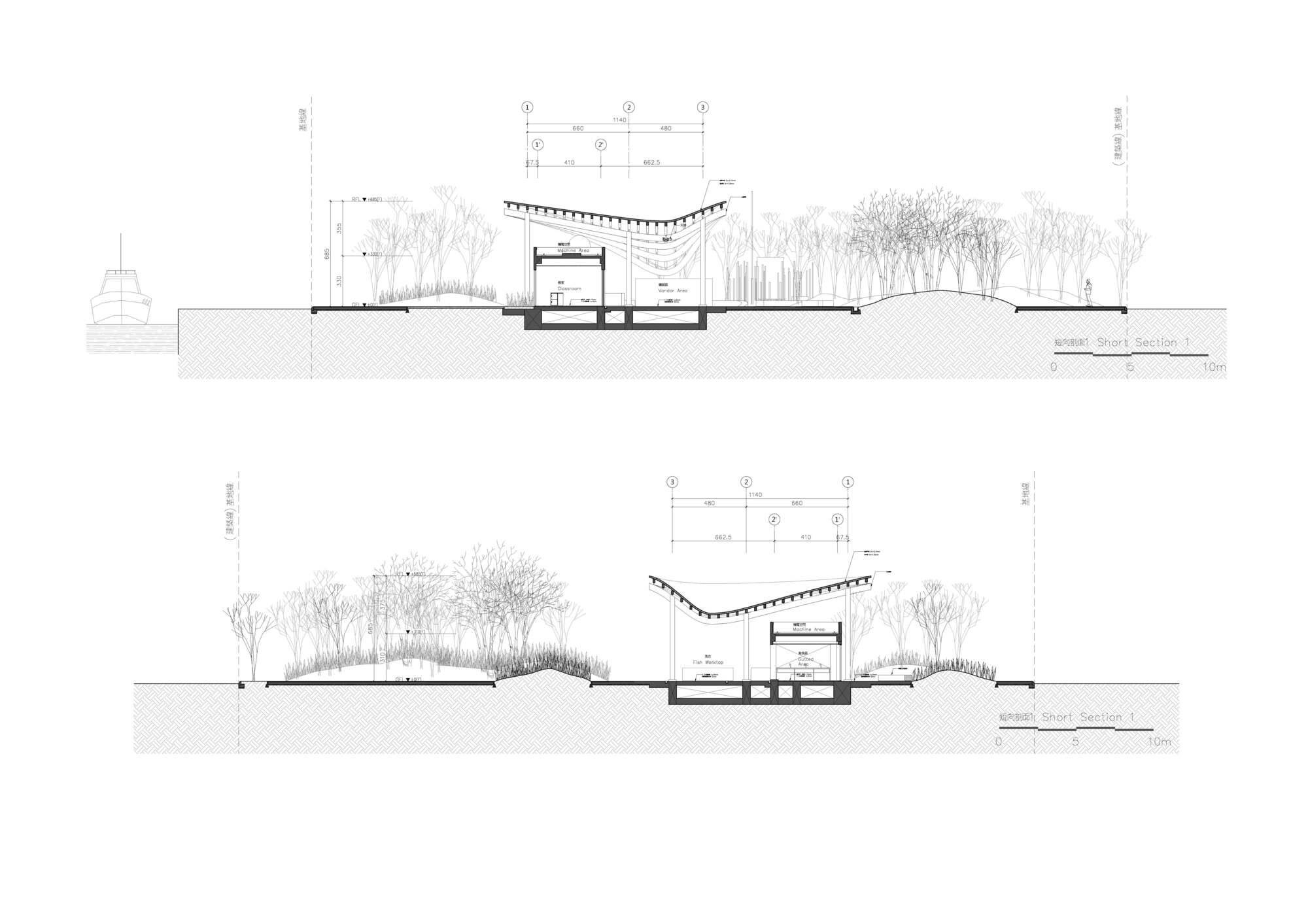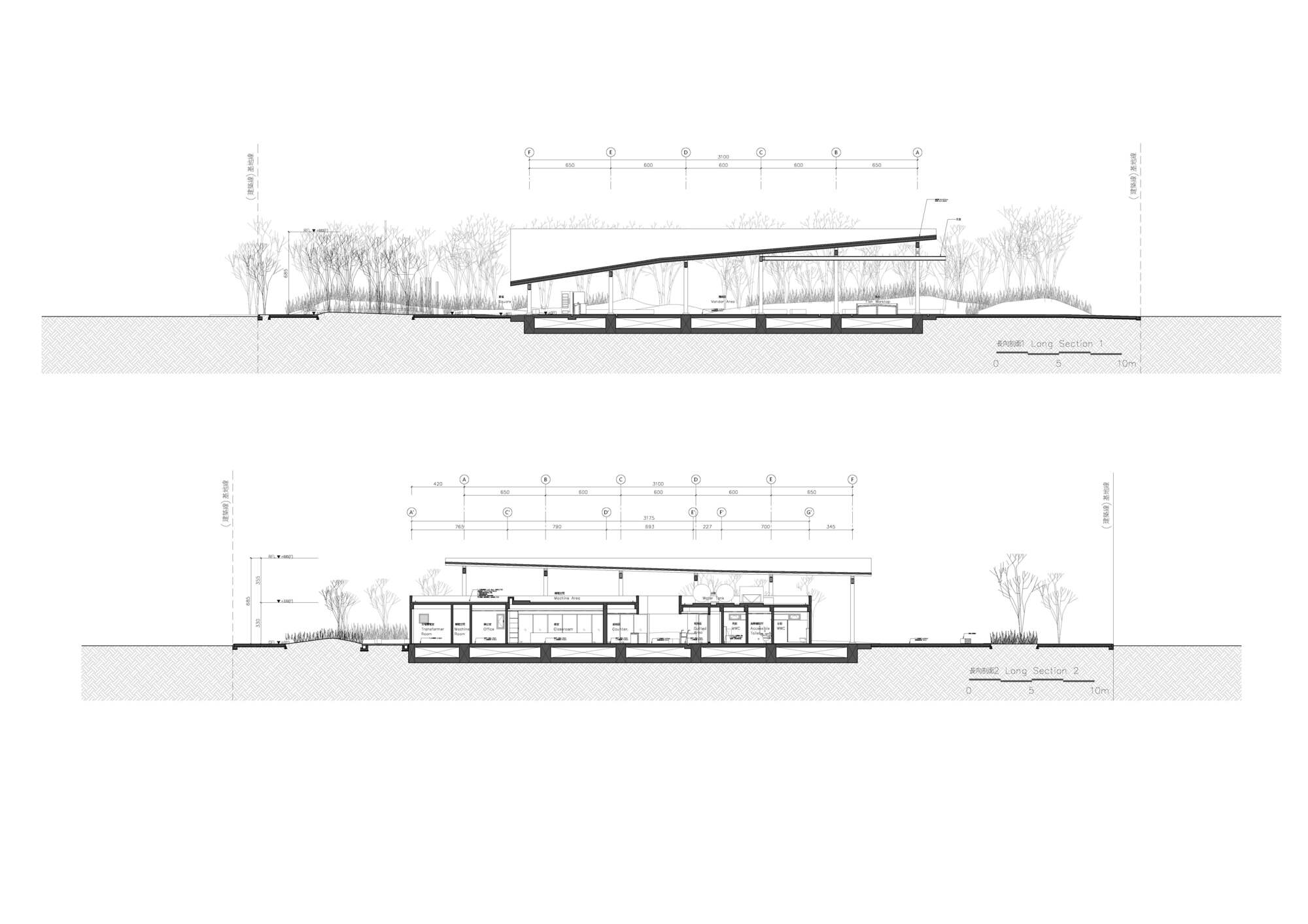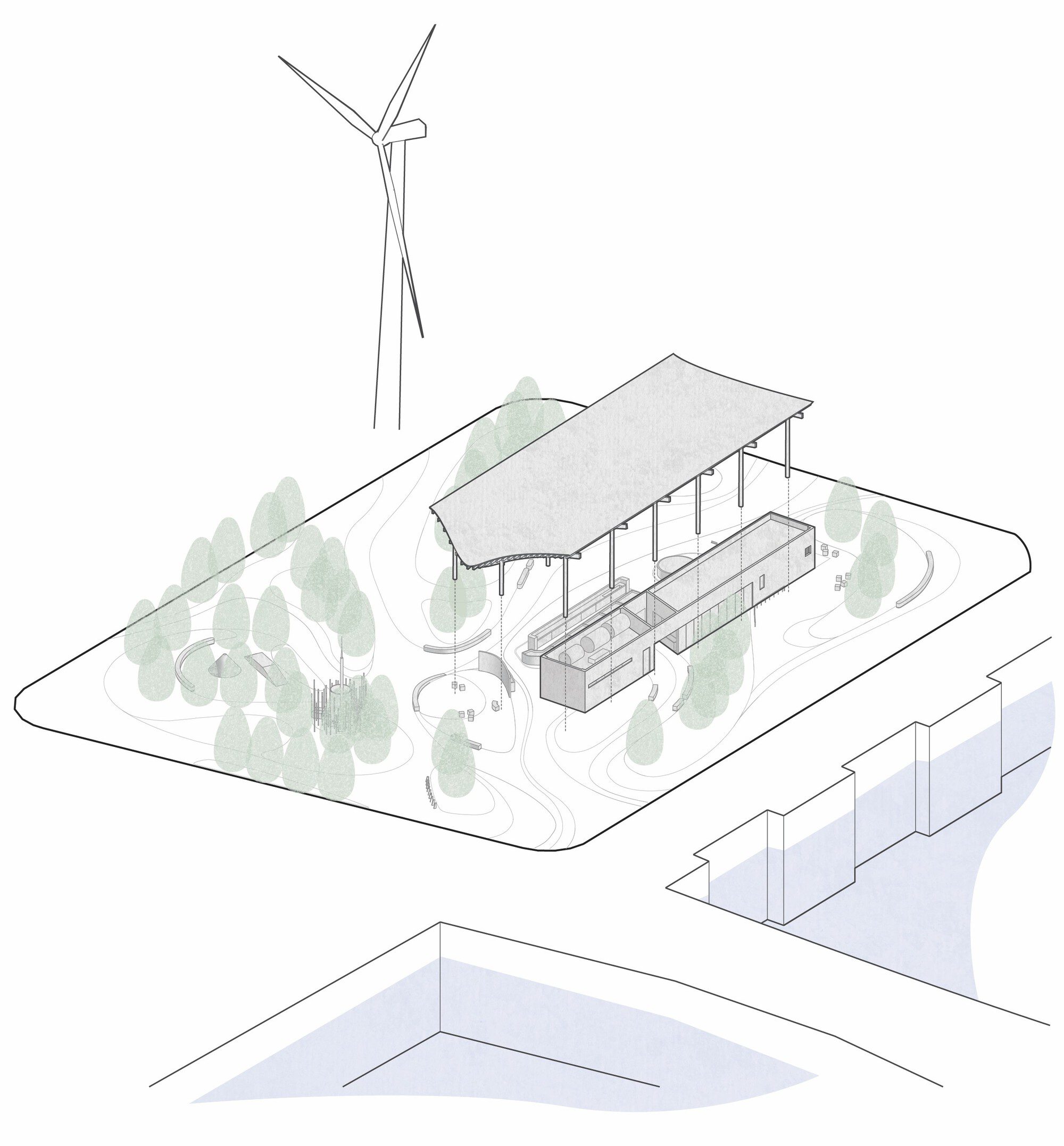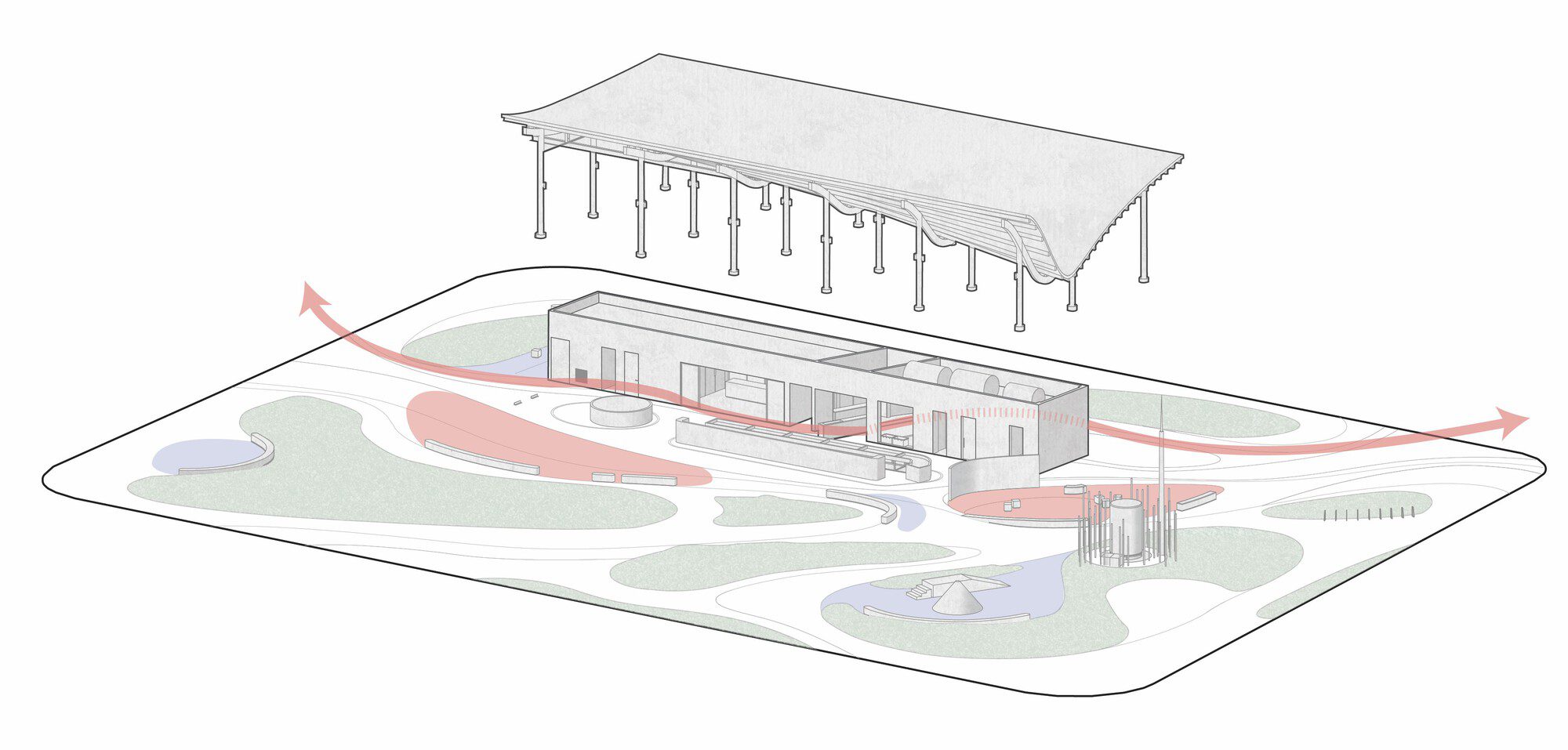

Harbourside Canopy, Site and Setting – The central structure of the project is the fishing market, a landscape pavilion composed of sheds, walls, berms, and trees. This open volume connects the fishing activity at the dock with the inland marketplace. The north-facing concrete wall, running parallel to the pier, anchors the structure while buffering against strong winds. Earth berms and windbreak forests further stabilize the environment and create a layered transition between interior and exterior. The city envisions this space as a direct-sale fishing market that combines fixed-net operations, retail fish stalls, and educational programs to celebrate and promote the region’s fishing culture.
© Studio Millspace
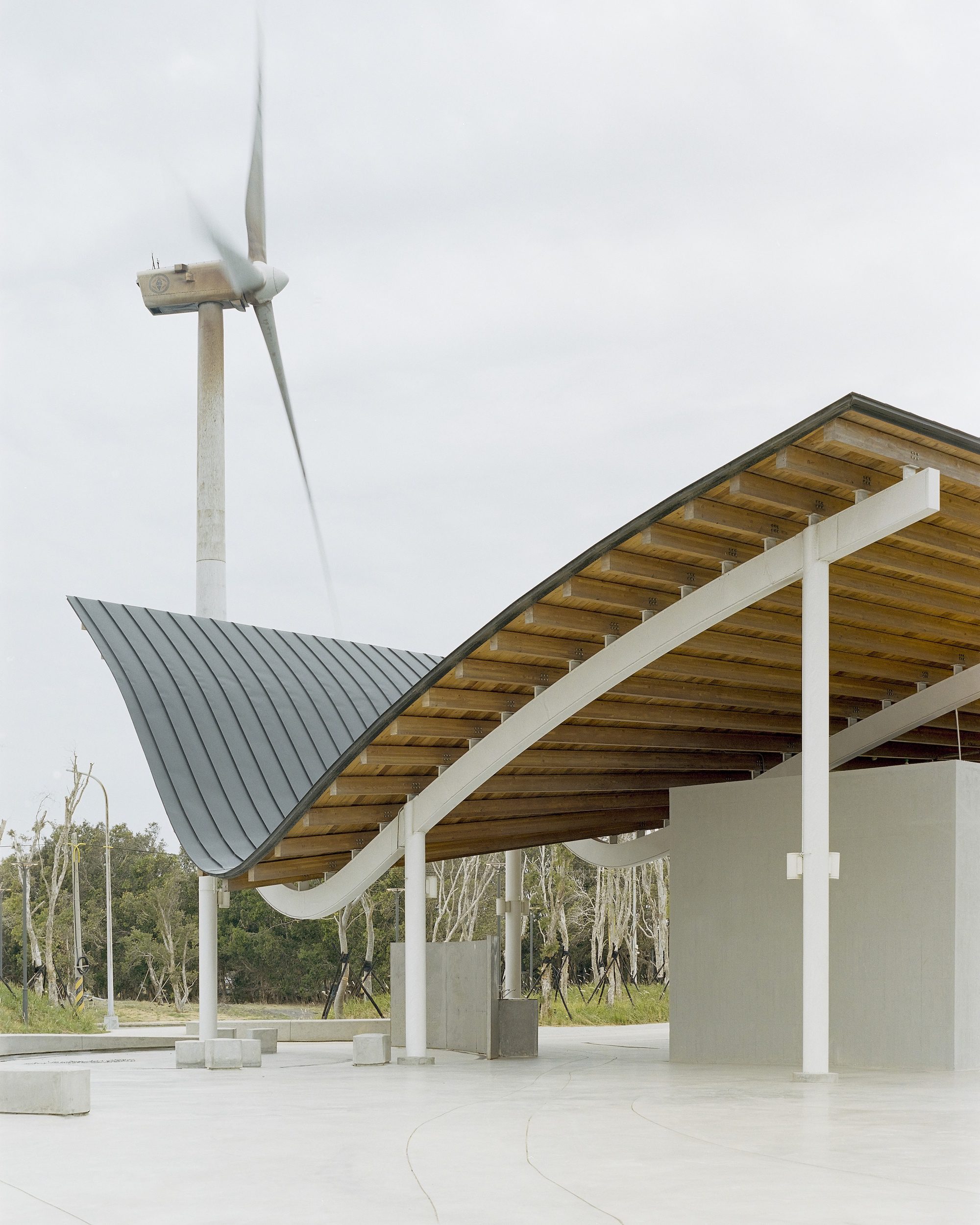
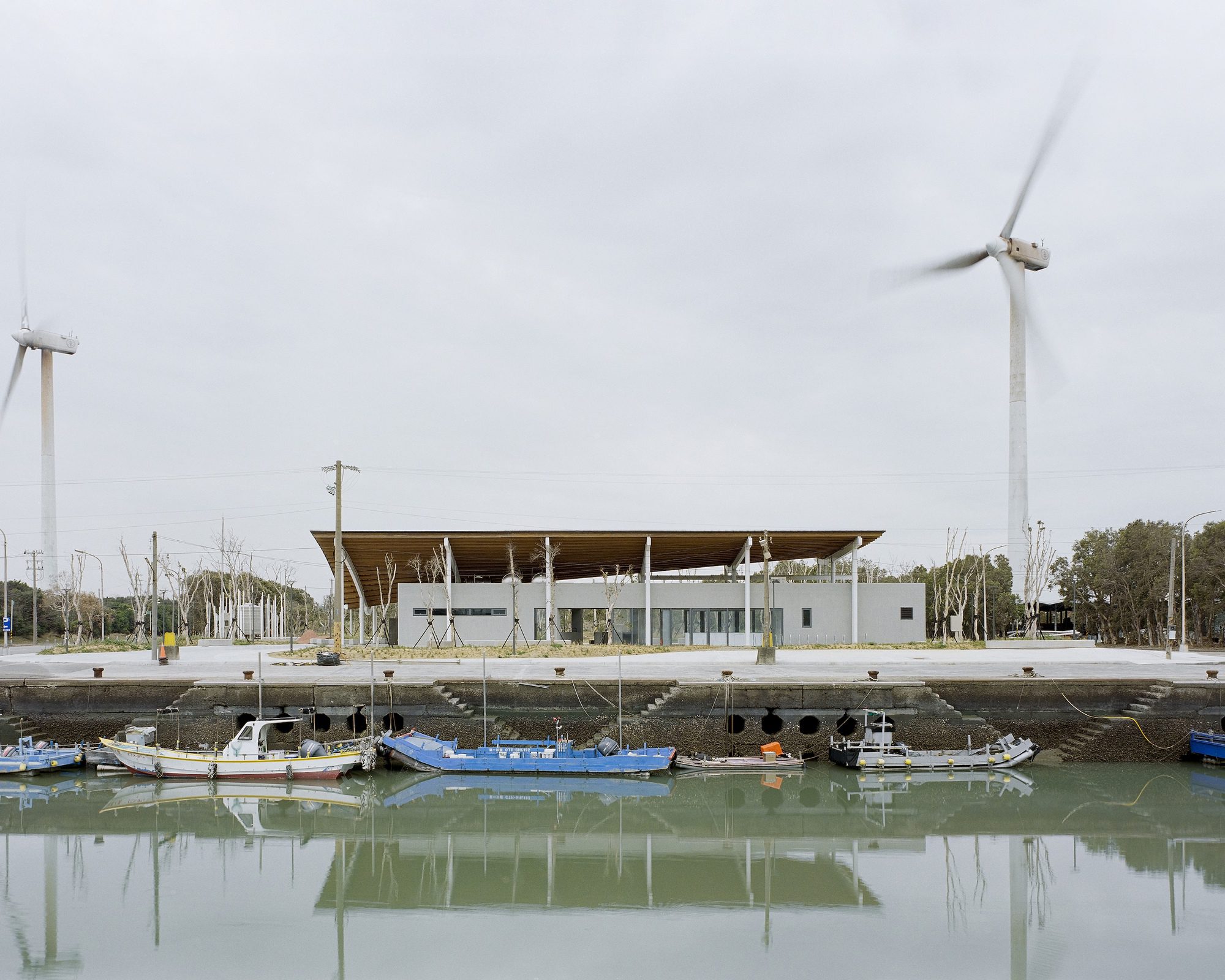
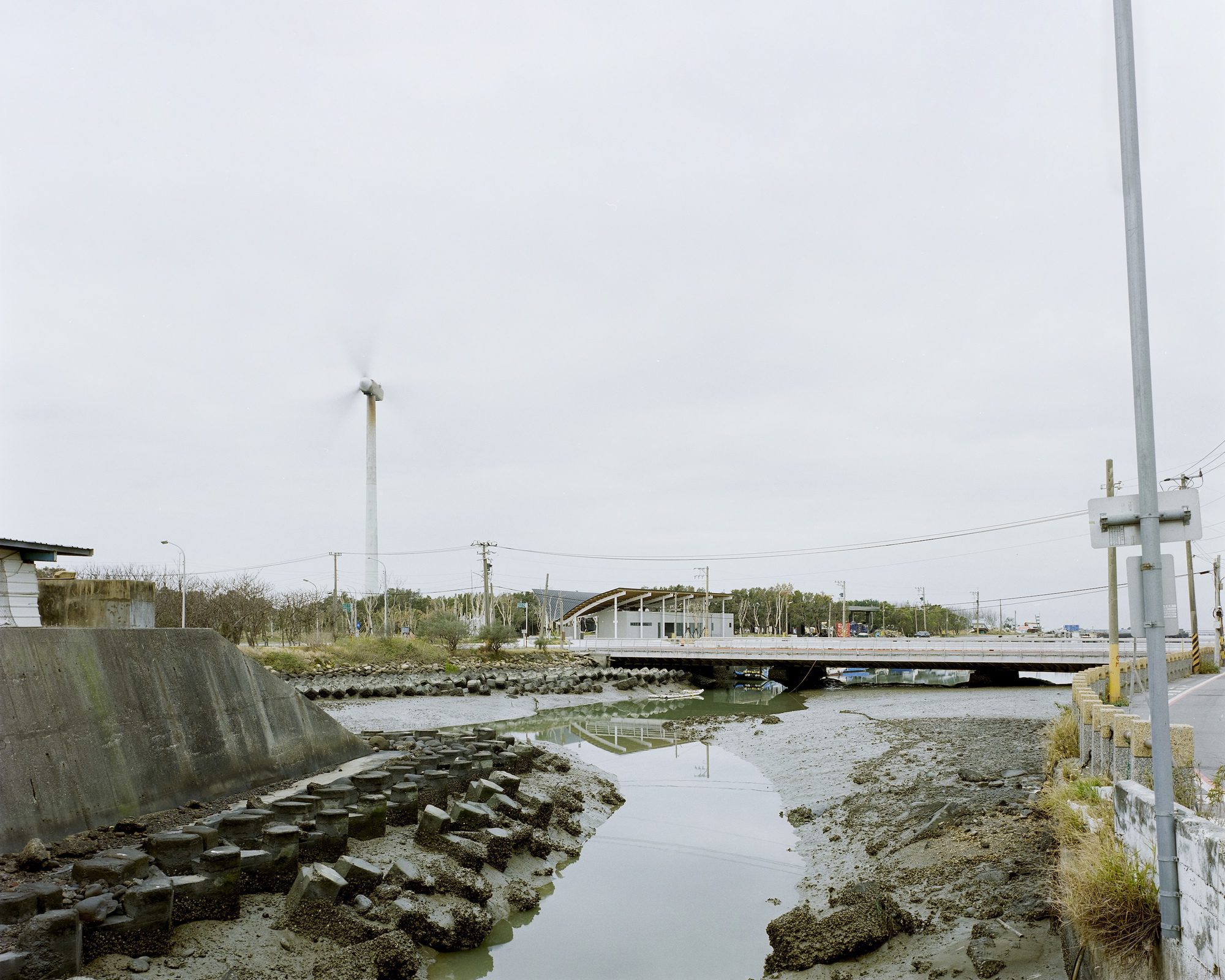
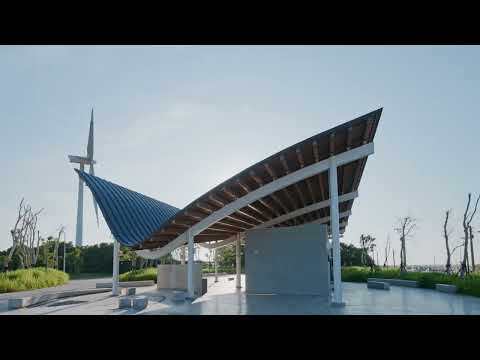
Harbor Life and Everyday Rhythms – As one enters the port, a series of familiar elements comes into view: wind turbines stand in the distance, while rows of Melaleuca trees and linear steel sheds line the seawall in a consistent pattern. These elements are arranged along the harbor edge, forming a repetitive and recognizable sequence that defines the visual and functional character of the waterfront. Together, they reflect the spatial rhythm and operational structure of the fishing port.
© Studio Millspace
The sheds, embraced by vegetation, provide crucial shelter from monsoon winds and rain. Together with the docks, they form a system of labor: mending nets, drying them in the sun, and offering a shaded place to rest. Even the roadside becomes part of this working landscape, doubling as a net-drying platform. Architecture, nature, and occupation merge in a quiet choreography.
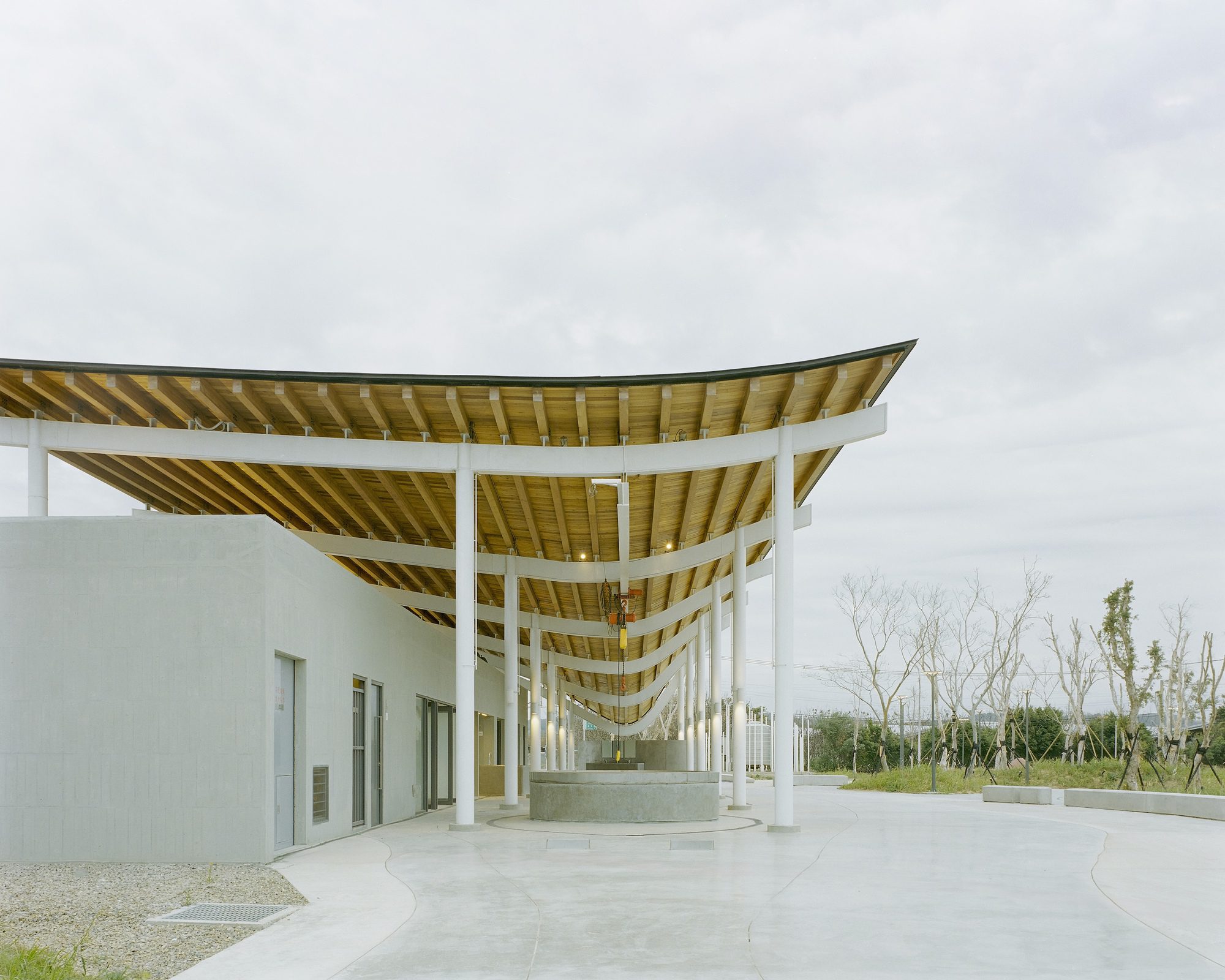
© Studio Millspace
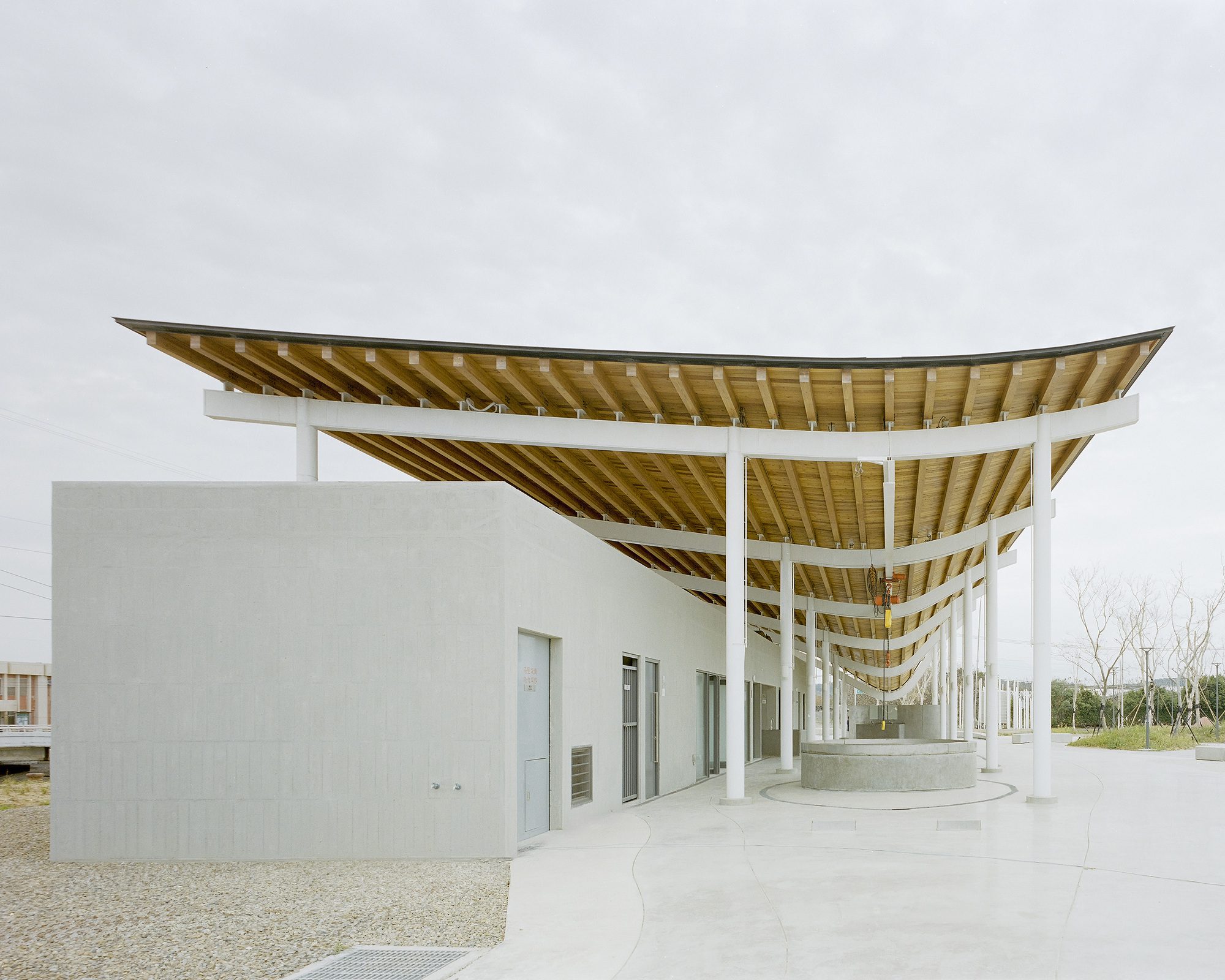
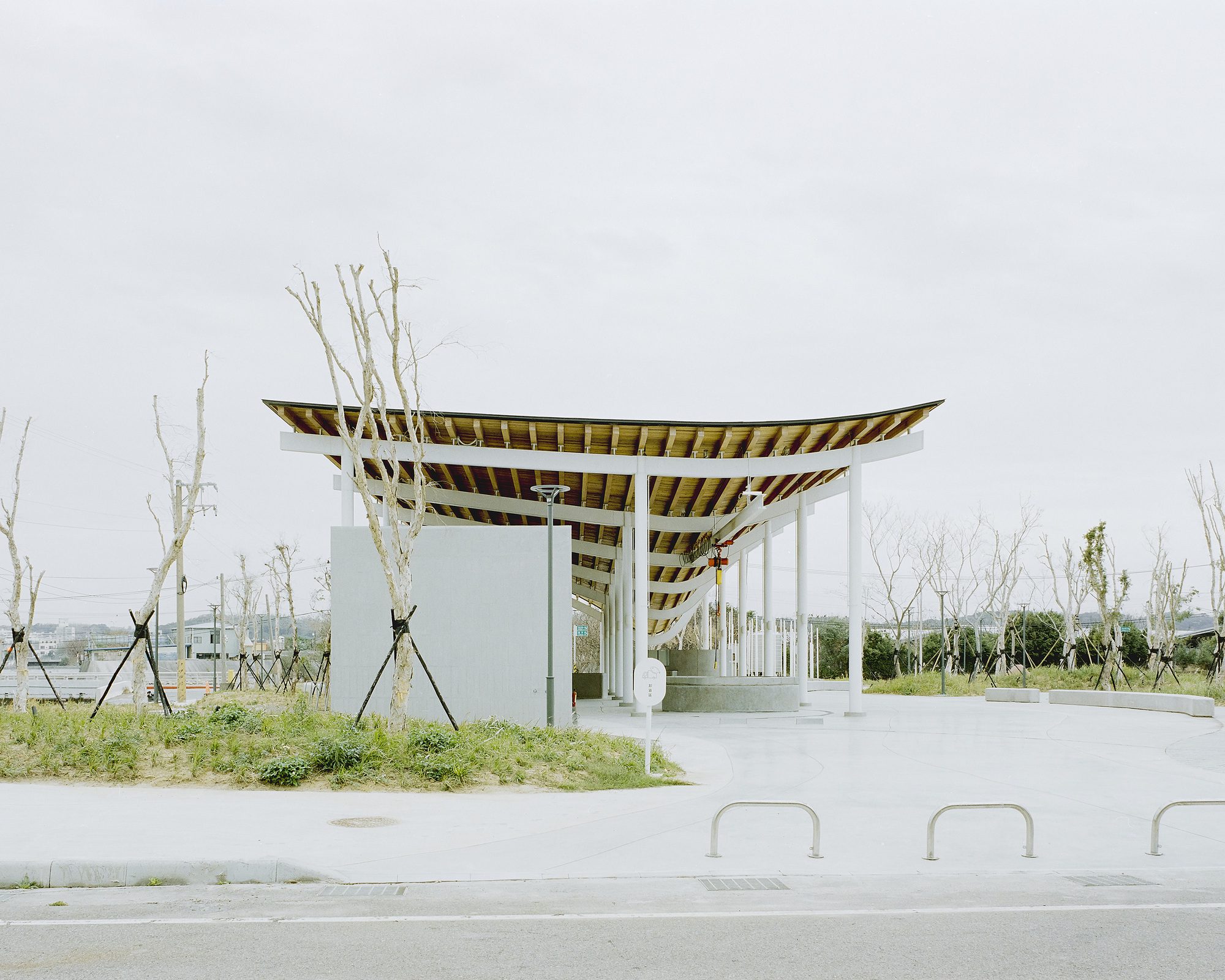
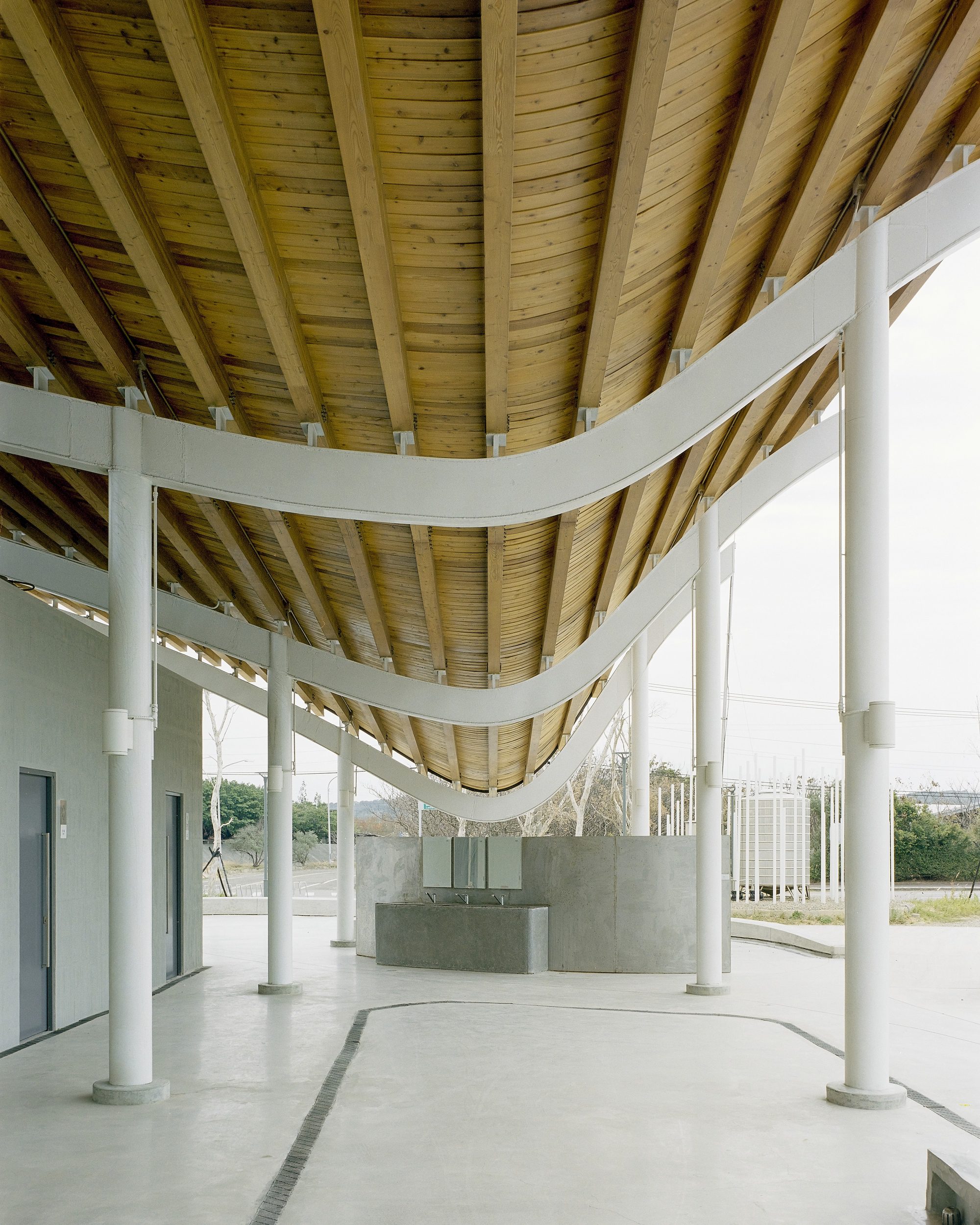
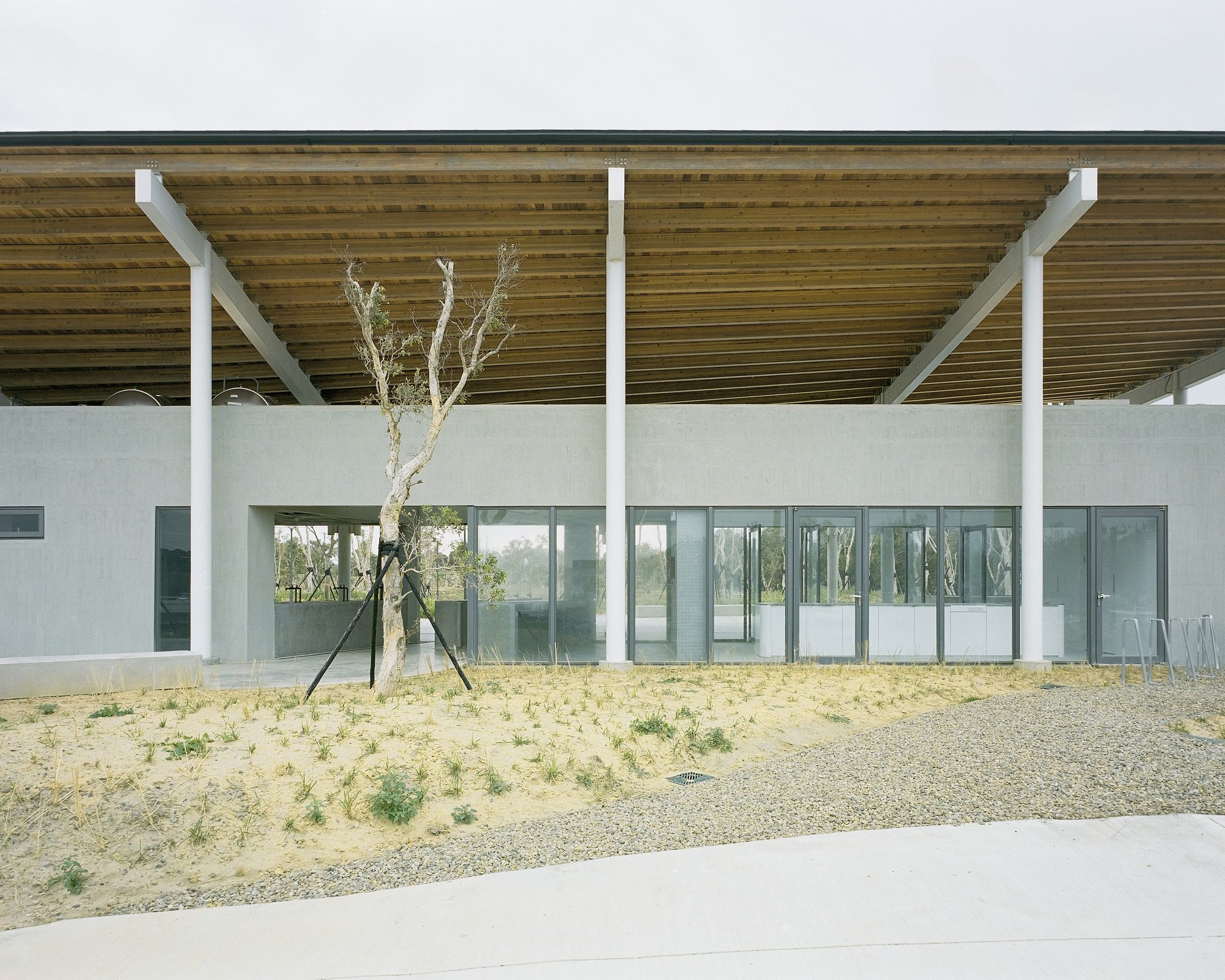
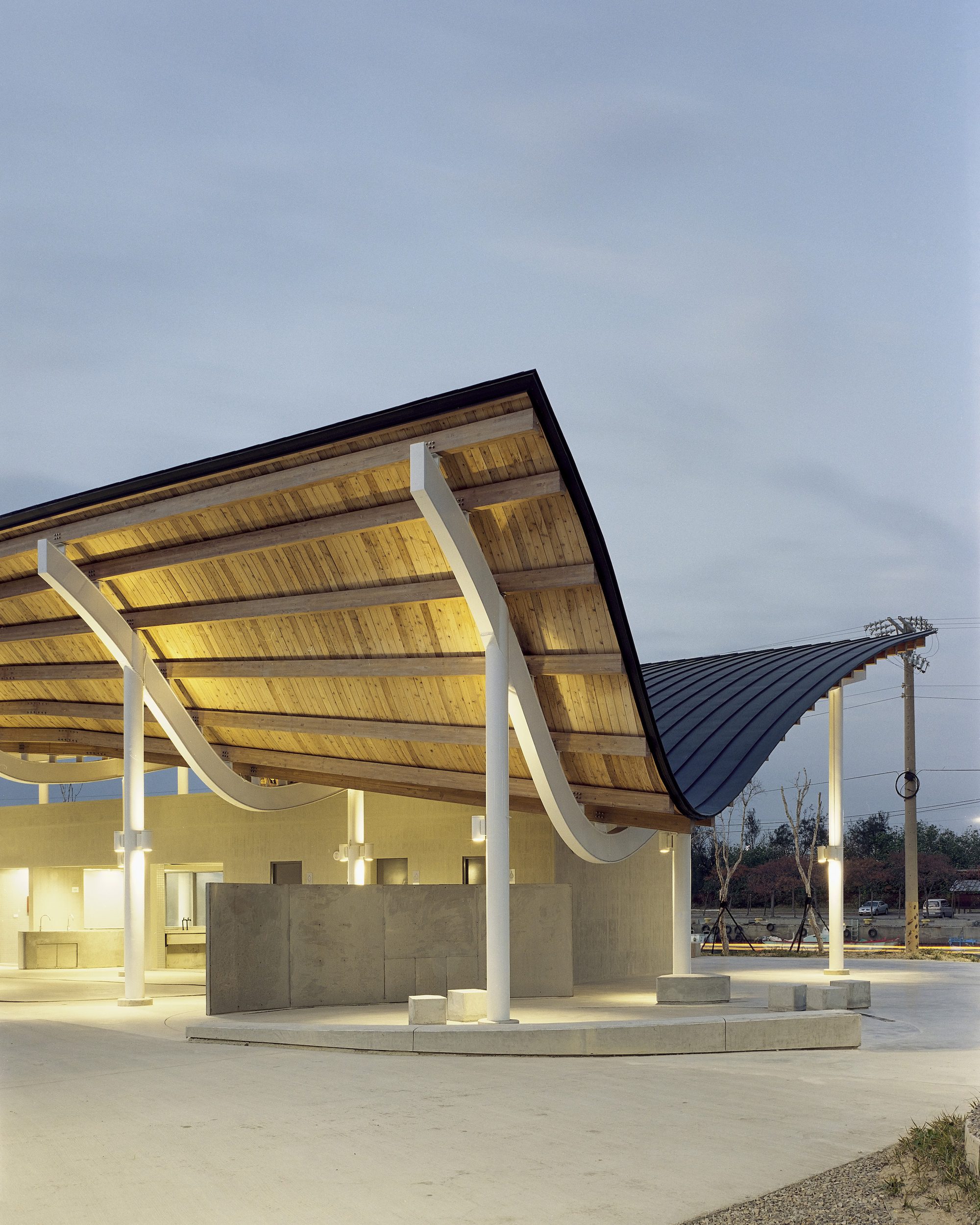
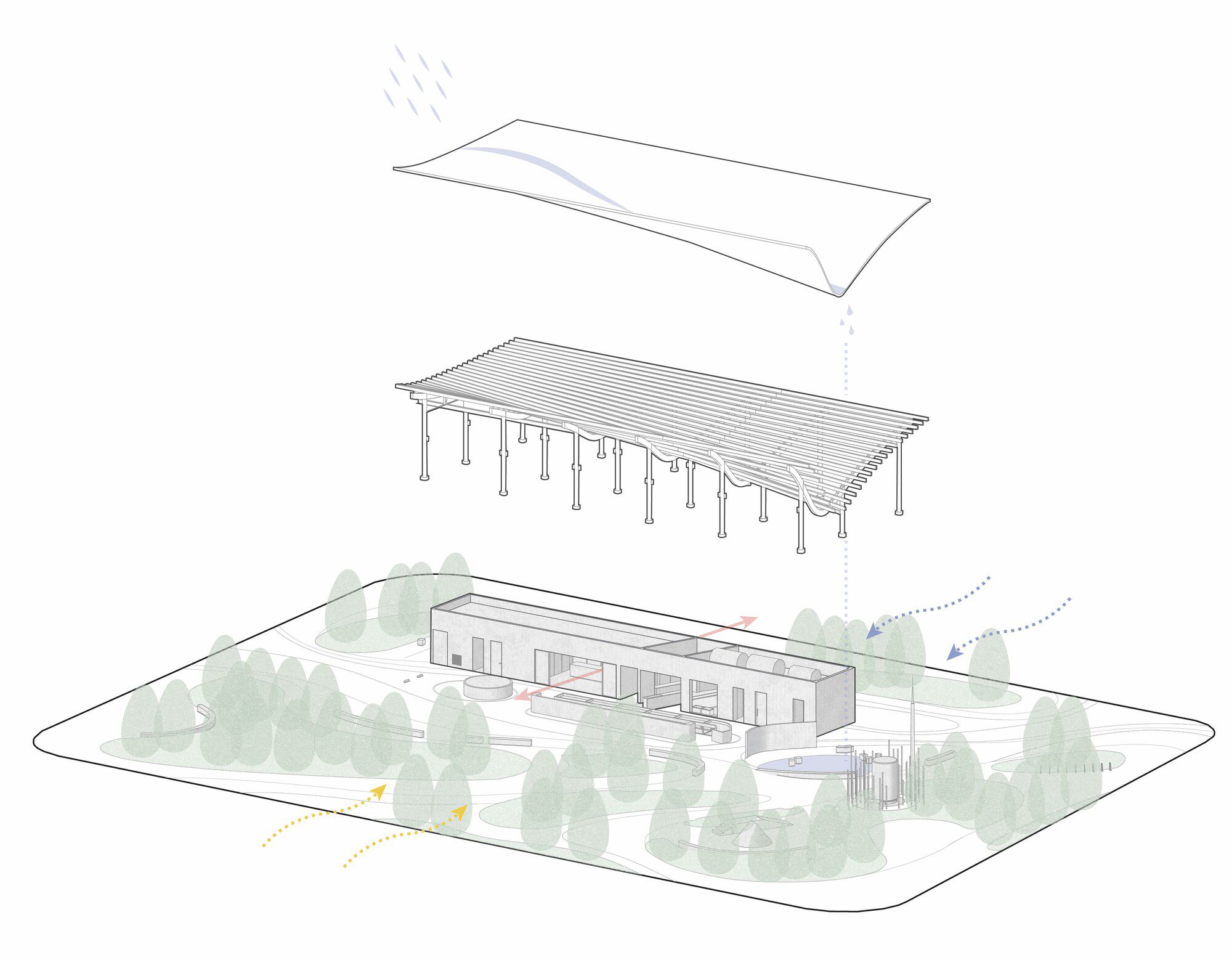
The Market: Where Harbor Becomes Landscape – The central structure of the project is the fishing market, a landscape pavilion composed of sheds, walls, berms, and trees. This open volume connects the fishing activity at the dock with the inland marketplace. The north-facing concrete wall, running parallel to the pier, anchors the structure while buffering against strong winds. Earth berms and windbreak forests further stabilize the environment and create a layered transition between interior and exterior.
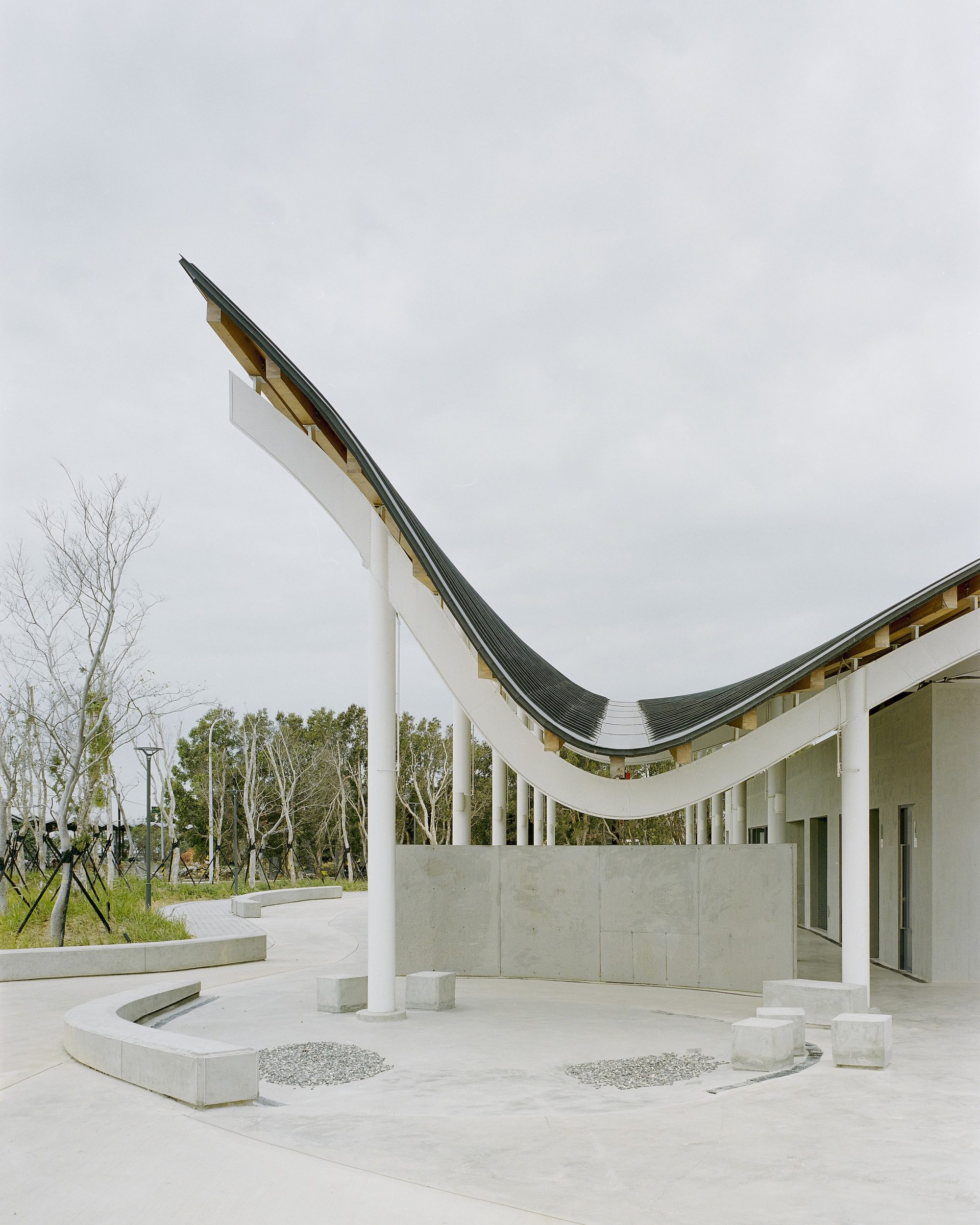
© Studio Millspace
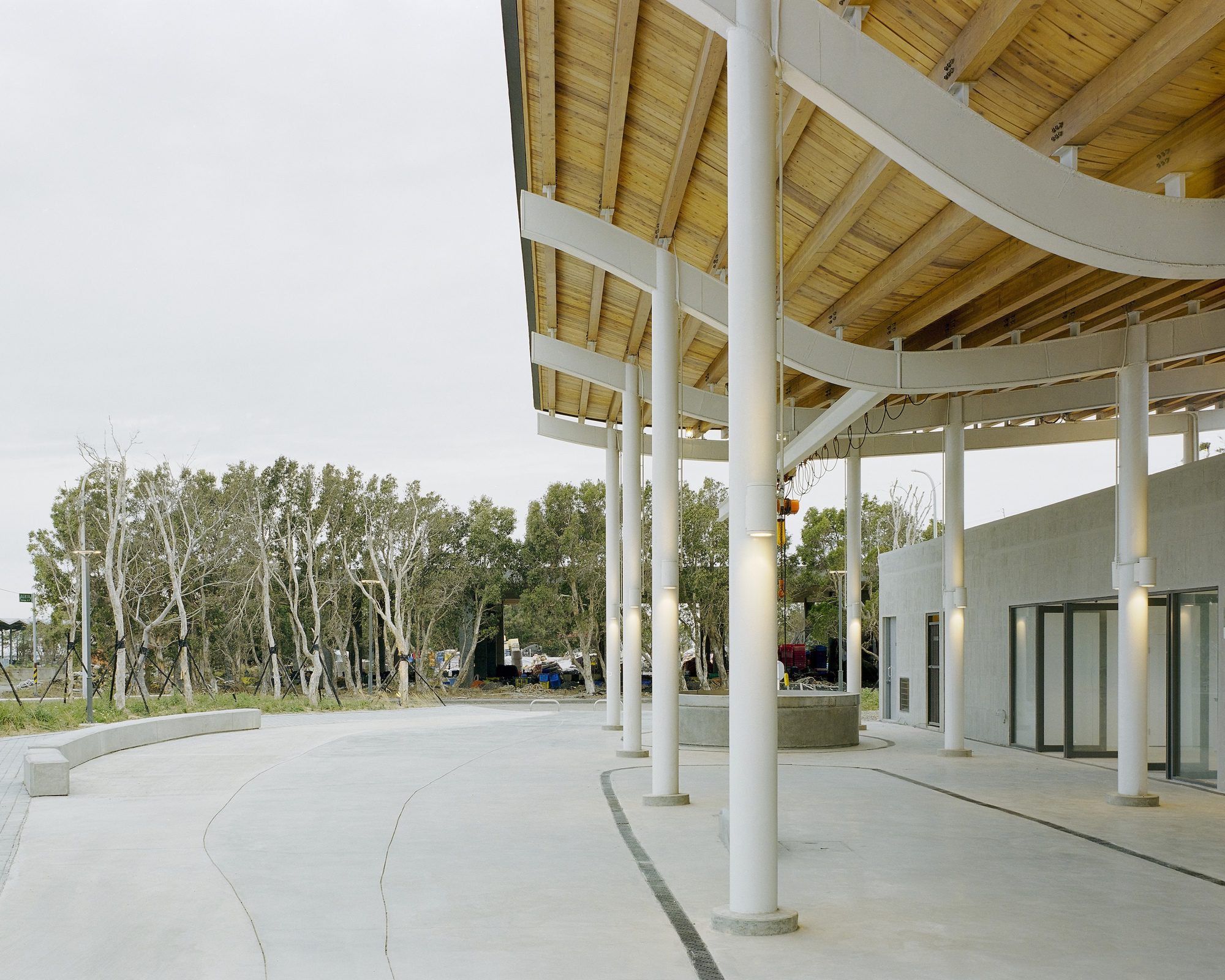
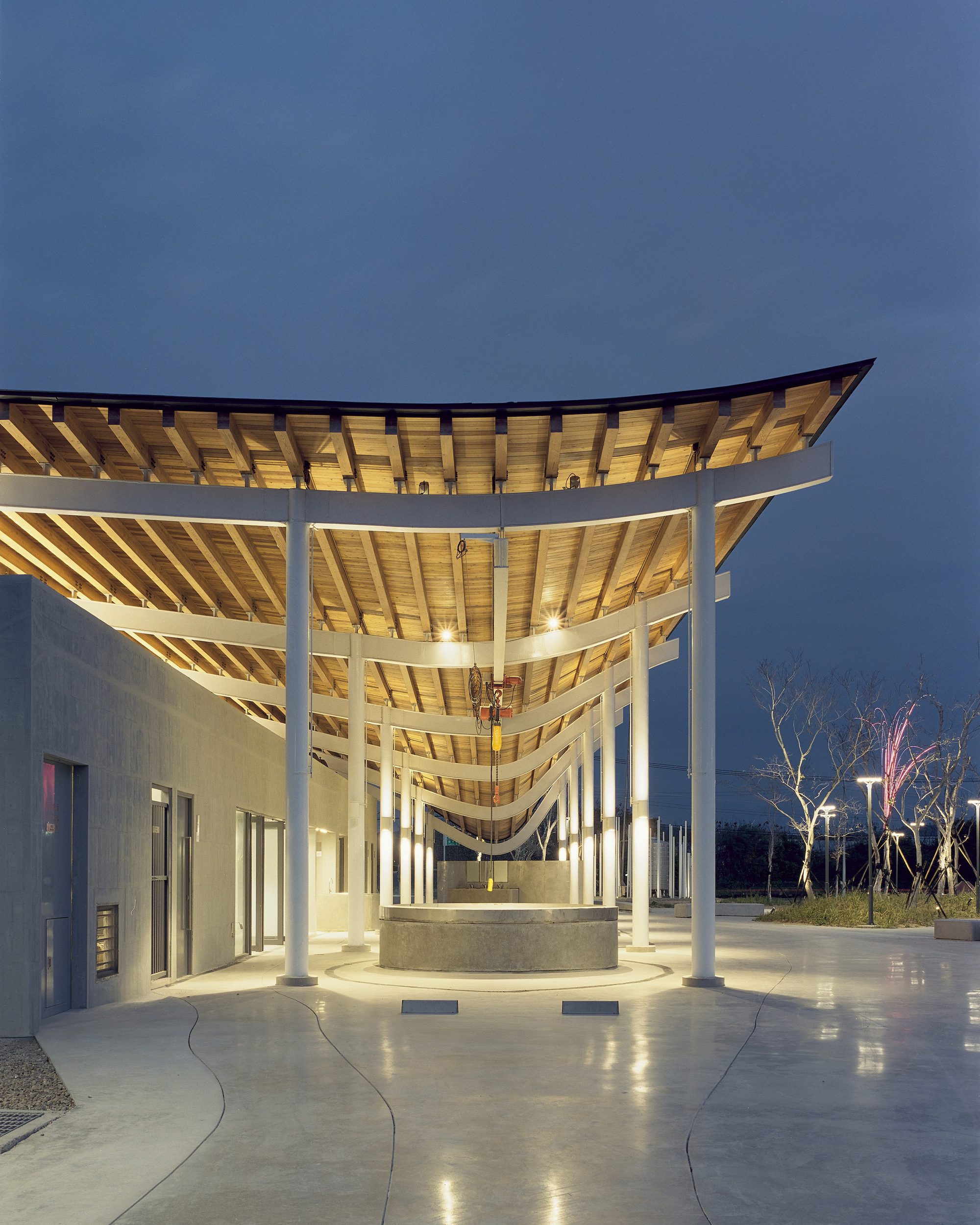
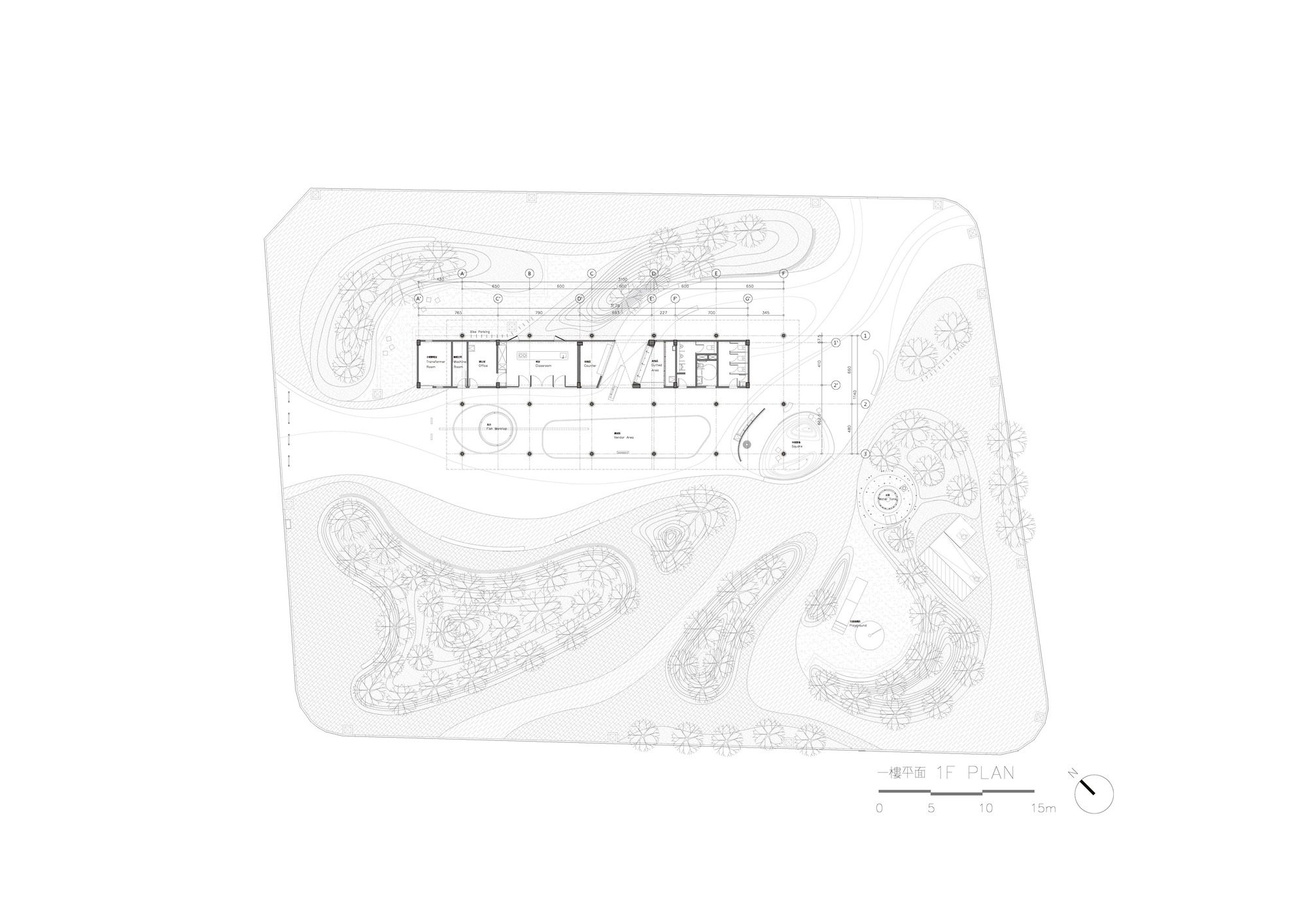
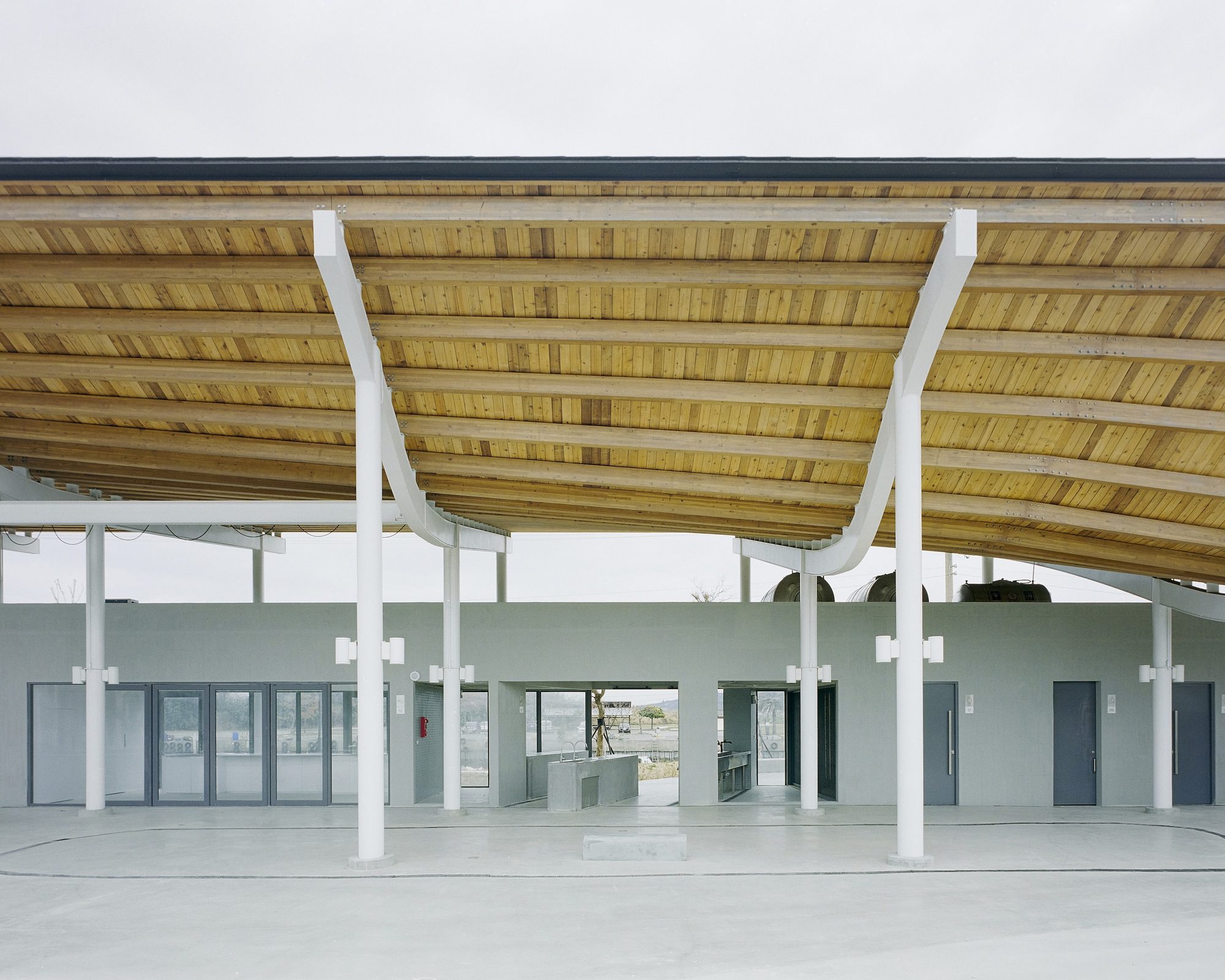
The classroom—facing both the harbor and the market—allows visual transparency and movement to flow freely, letting the sounds and sights of fishing become part of the learning and shopping experience. Set upon the site like permanent tools of labor, concrete trays, fish cleaning tables, circular fish pans, and temporary vendor stalls are organized according to the logic of the fishing process. Their arrangement reflects the practical sequence of unloading, sorting, and selling.
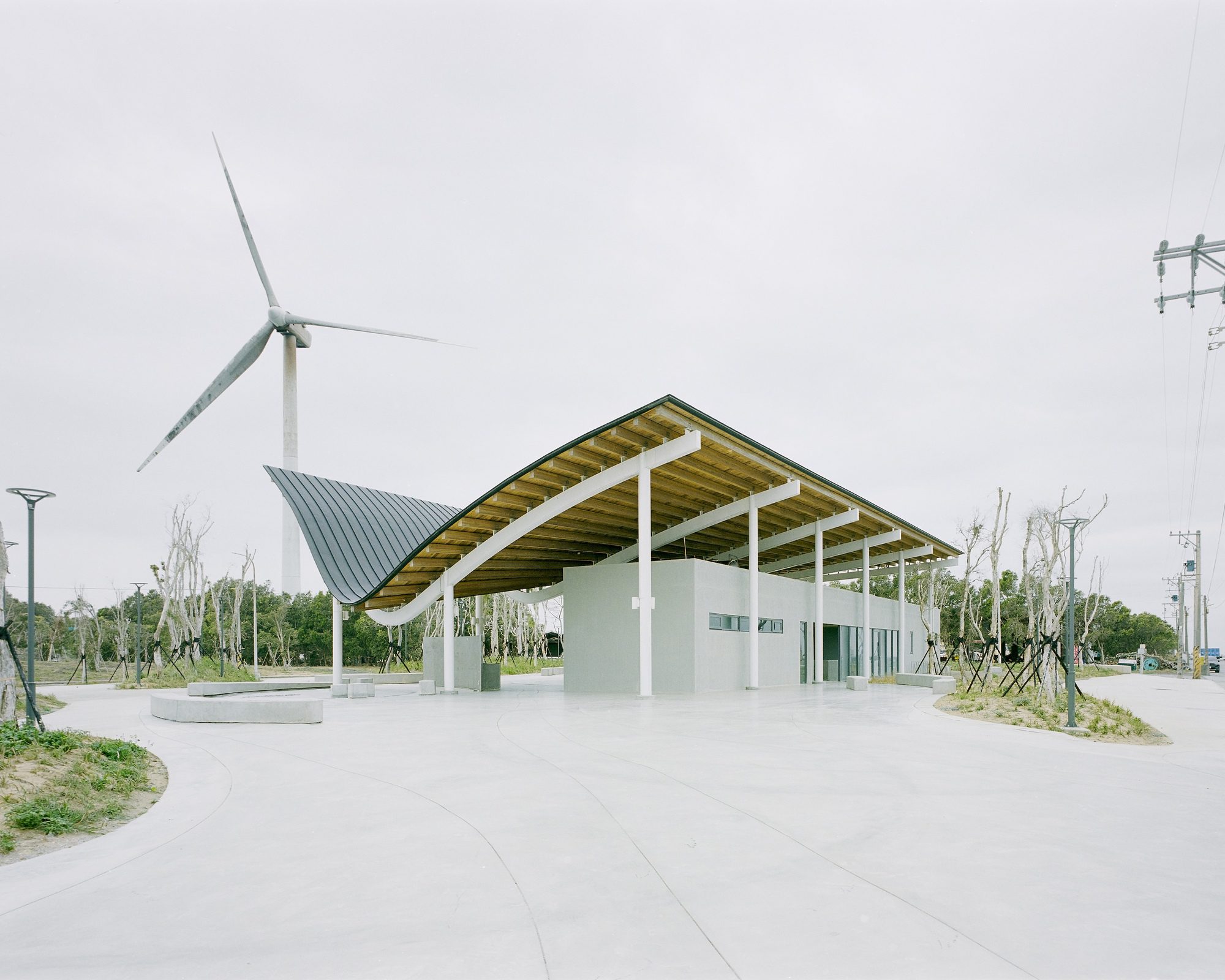
© Studio Millspace
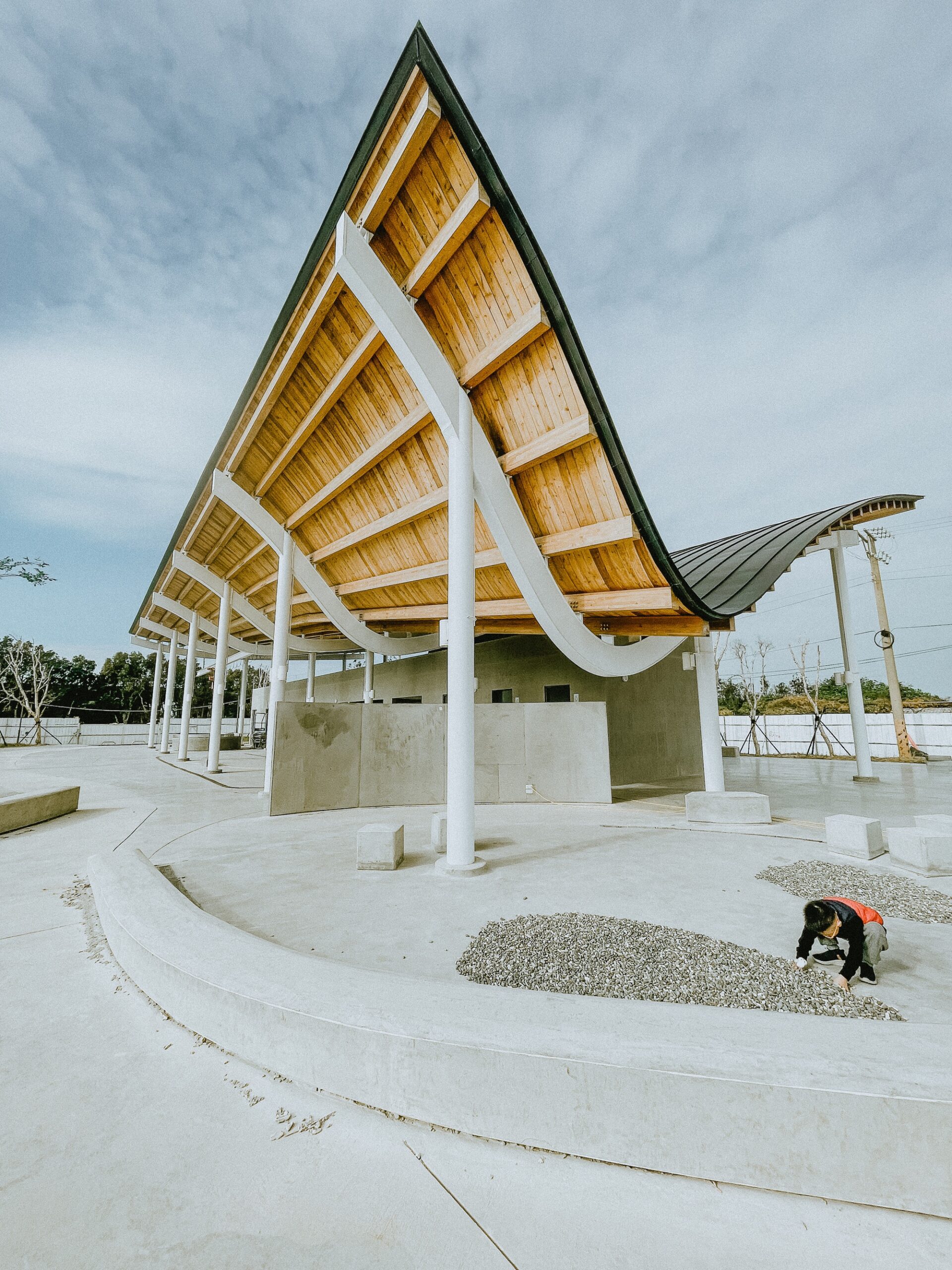
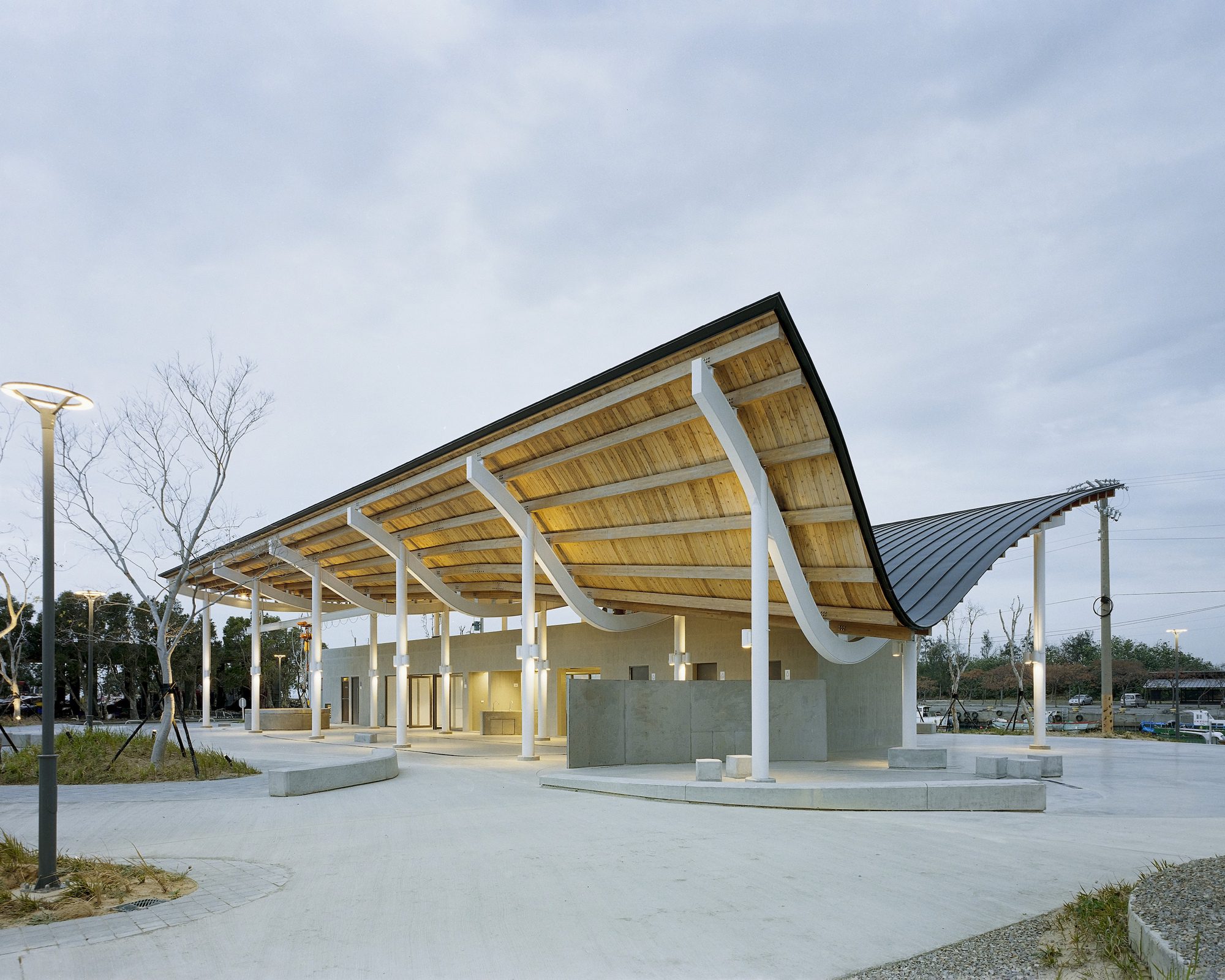
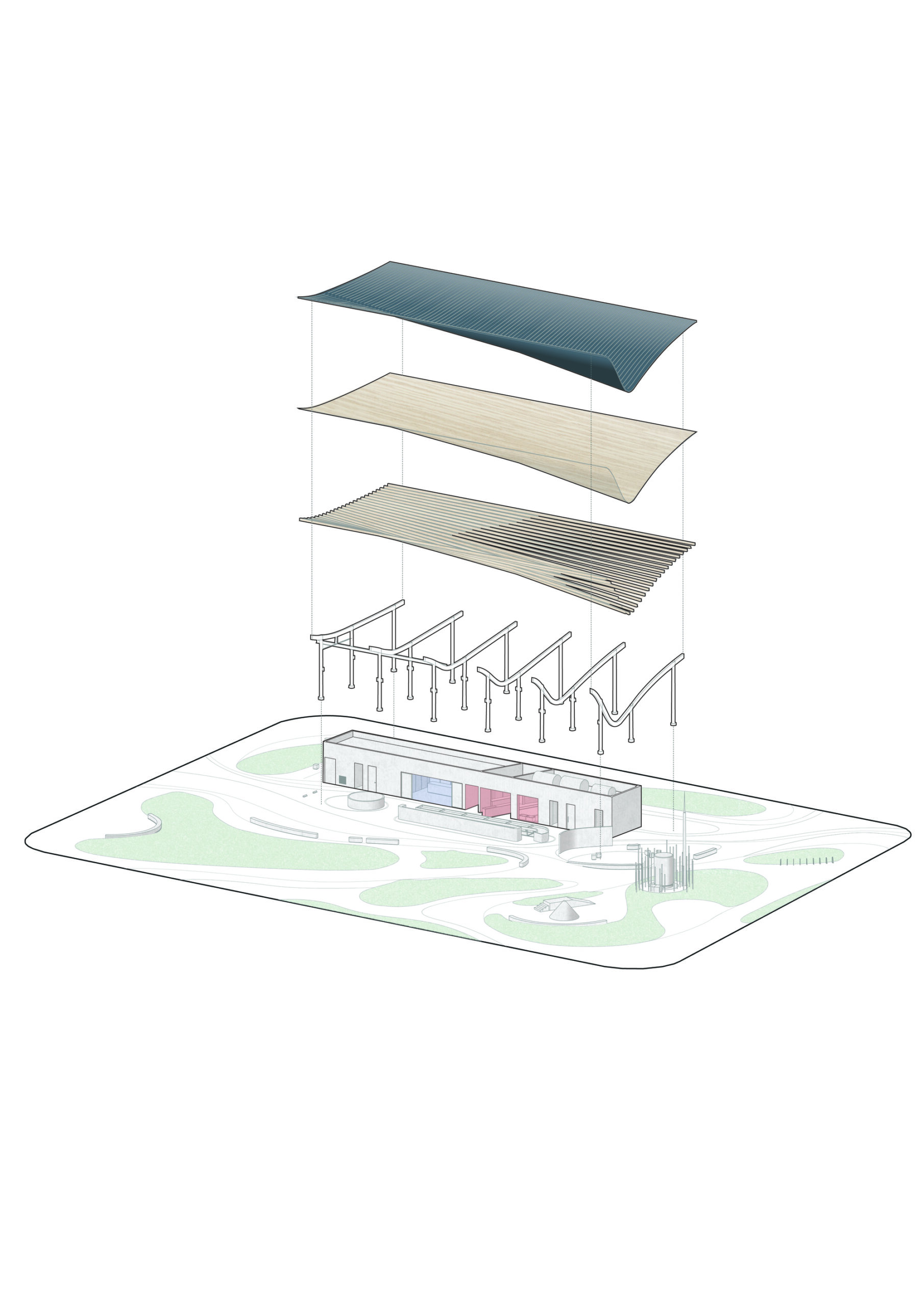
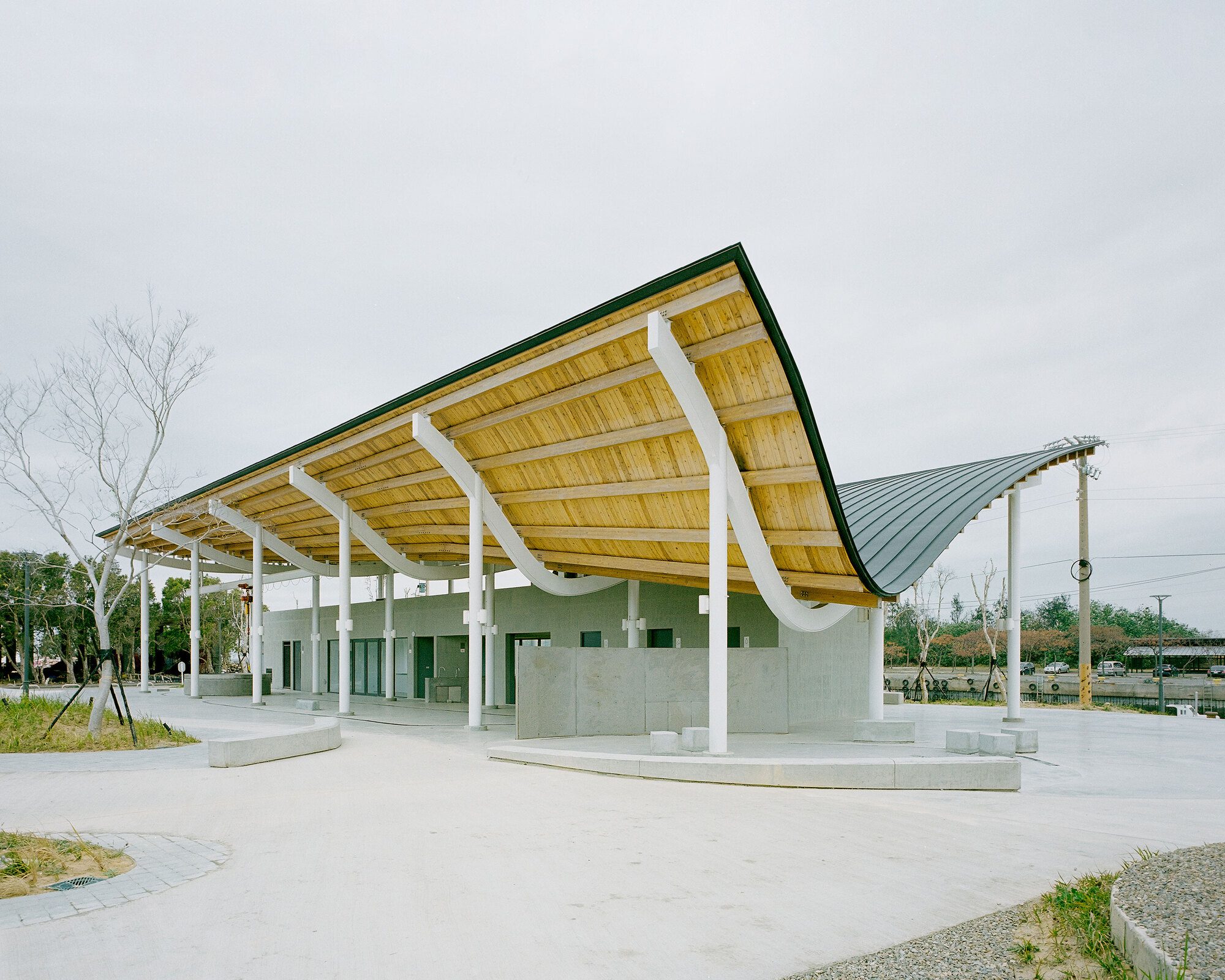
Overhead, a steel-beam crane structure spans the working zone, guiding the spatial sequence. A timber-framed roof shelters the core, channeling rainwater to the ground to form small shallow pools—spaces that invite gathering, reflection, and pause. The dialogue between timber and concrete, light and mass, forms the architectural identity of the market.
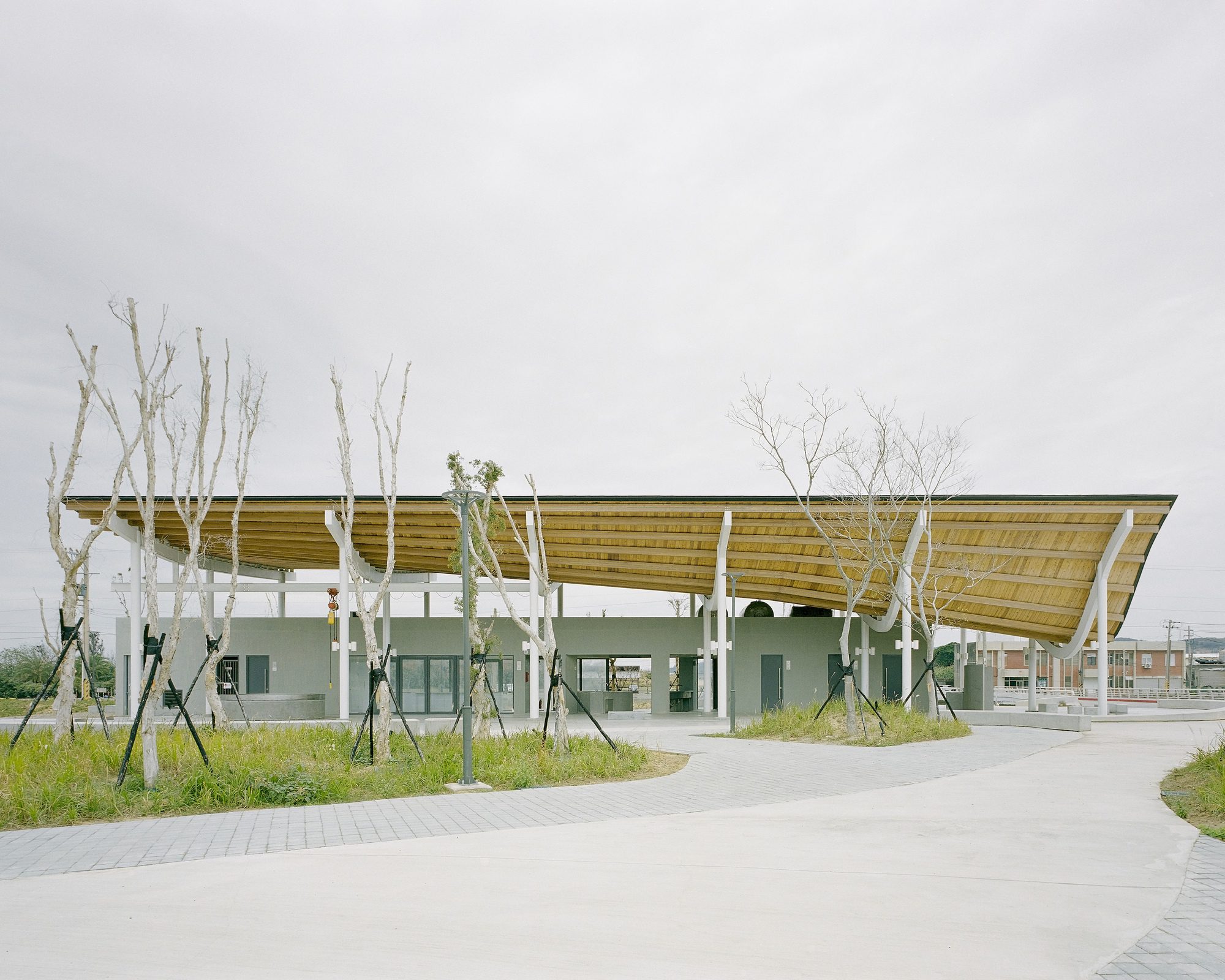
© Studio Millspace
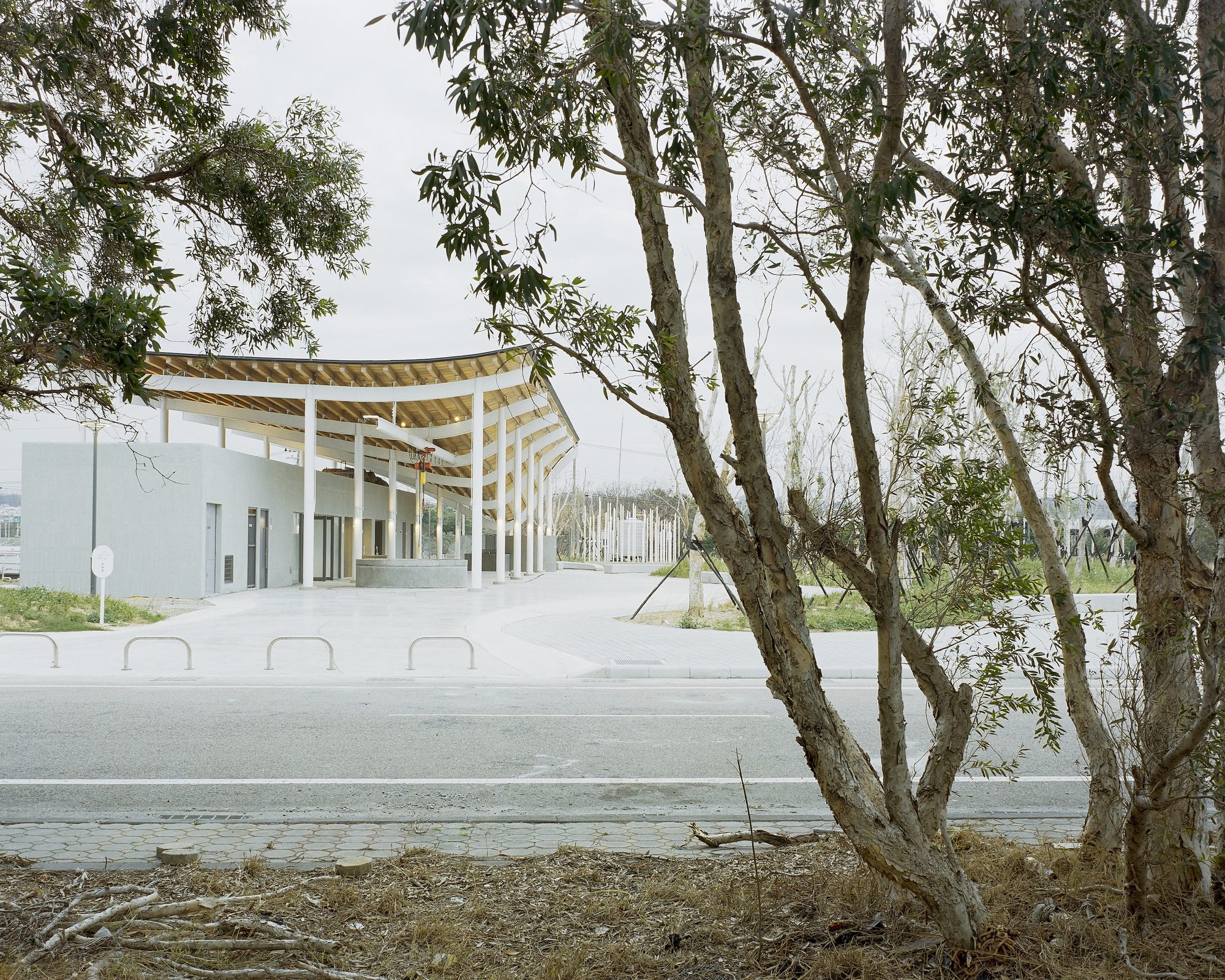
Environment and Visual Connections – Movement through the site is guided by layered views and soft transitions. From the outer road, one can peer through tree branches into the market activity beneath the shed. Along the southern slope, the Melaleuca Forest and grasses offer shade, filter the wind, and shape resting spaces with informal seating. Within the site, visual connections unfold: from the harbor through the classroom, from the dock toward the market, and from shaded paths into sunlit clearings. The experience is one of continuous arrival and subtle immersion.
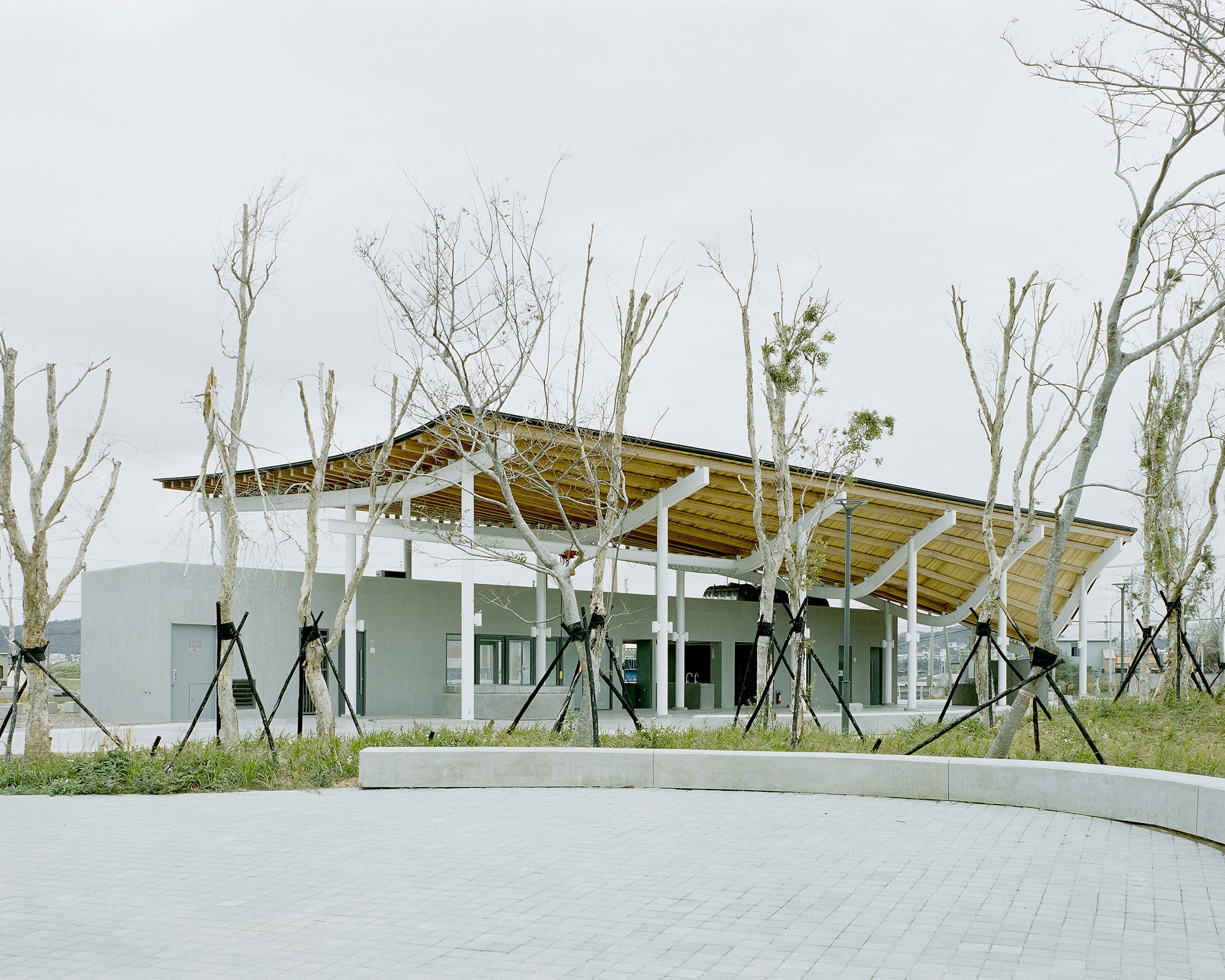
© Studio Millspace
The fishing market has become more than a place of sale—it is a harbor anchor, a rest stop, and a community service station. It serves the local fishing crews, the indigenous village, and passing travelers along the highway and bike path. The shed acts as a threshold: a place where activities begin, pause, and meet.
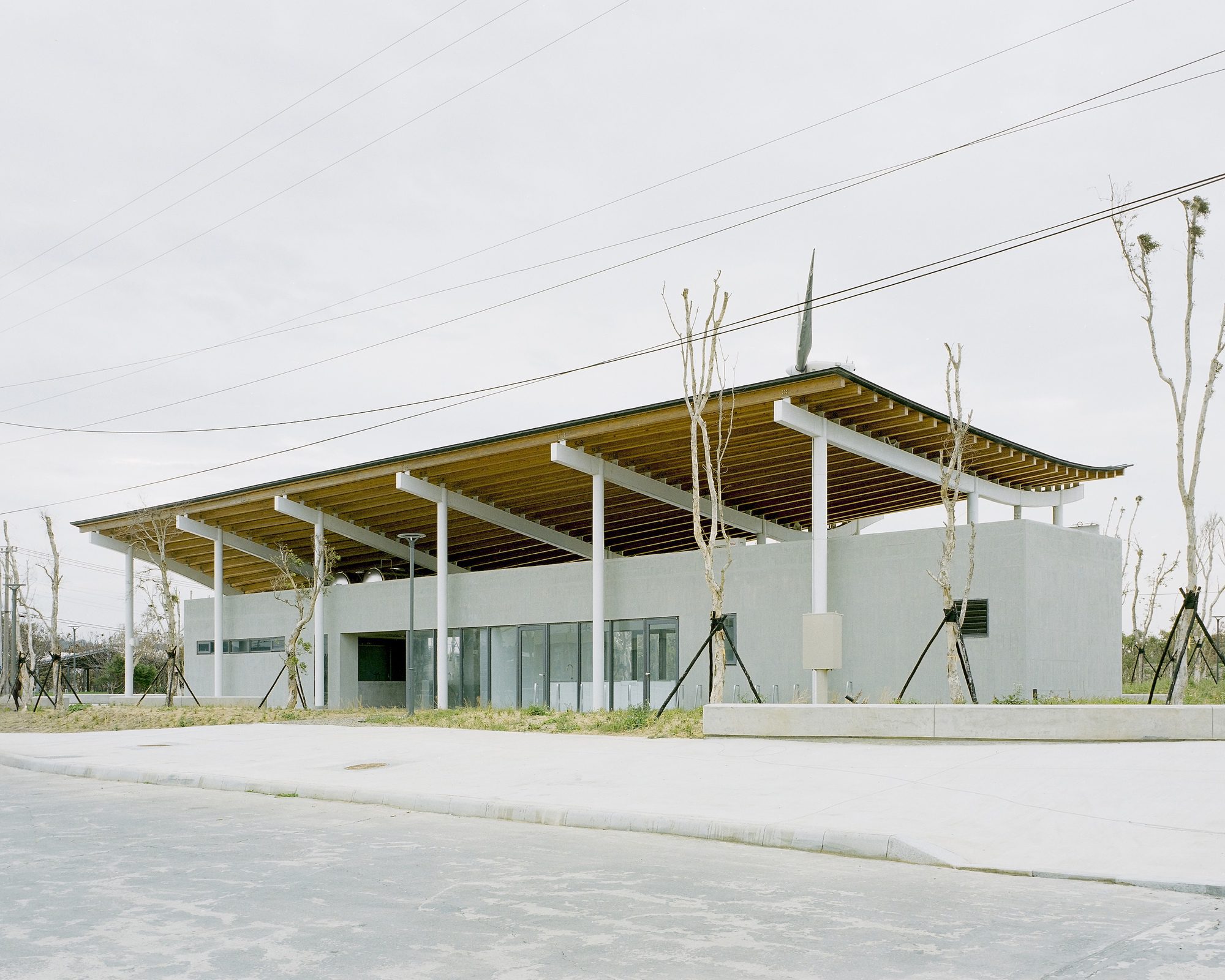
© Studio Millspace
By gently dividing space and framing everyday scenes, the project turns fishing into a visible and meaningful experience. The architecture doesn’t impose; it supports, frames, and reveals—offering a platform where landscape, labor, and life quietly intersect beneath trees, wind, and sky.
Project Info
Architects: B+P Architects
Country: Taiwan, Hsinchu
Area: 496 m²
Year: 2025
Photographs: Studio Millspace
Structural Engineering: Dynas Engineering Consultants Co., Ltd.
Electrical, Plumbing, Hvac Engineering: Hung To Engineering Consultants Co., Ltd.
Lighting Design: IO Lighting Design Co., Ltd.
Construction: Ching Sung Construction Co., Ltd. ”
Timber Construction: Fure Jang Enterprise Co. Ltd.