


The new expansion of Portland Japanese Garden in Oregon, designed by Japanese architect Kengo Kuma opened to the public on 2 April 2017. The expansion was the Tokyo-based architect’s first public commission in the US. The original Portland Japanese Garden opened in 1967, and it was designed by Takuma Tono, a professor at Tokyo Agricultural University.
Courtesy of Kengo Kuma
The garden has gained popularity since then, and to house its increasing growth, a design competition for an expansion was issued; a competition which Kuma has won.
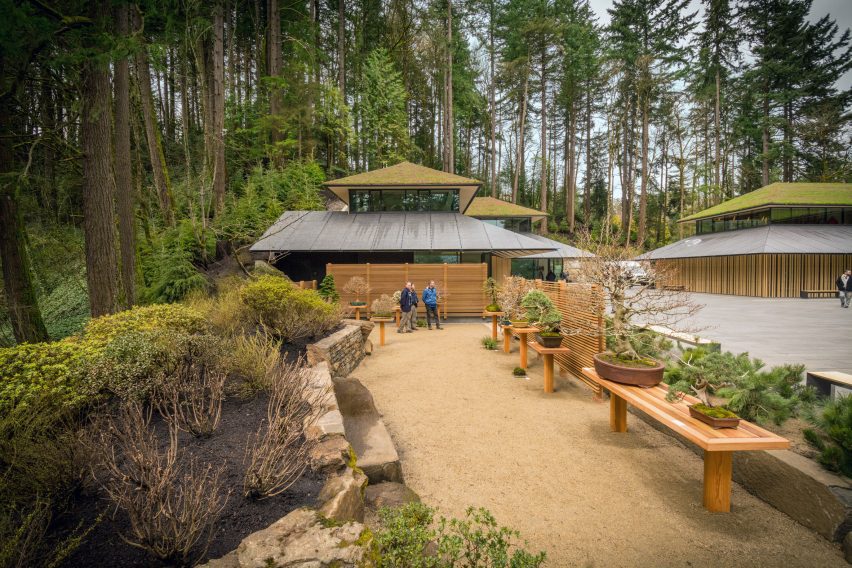
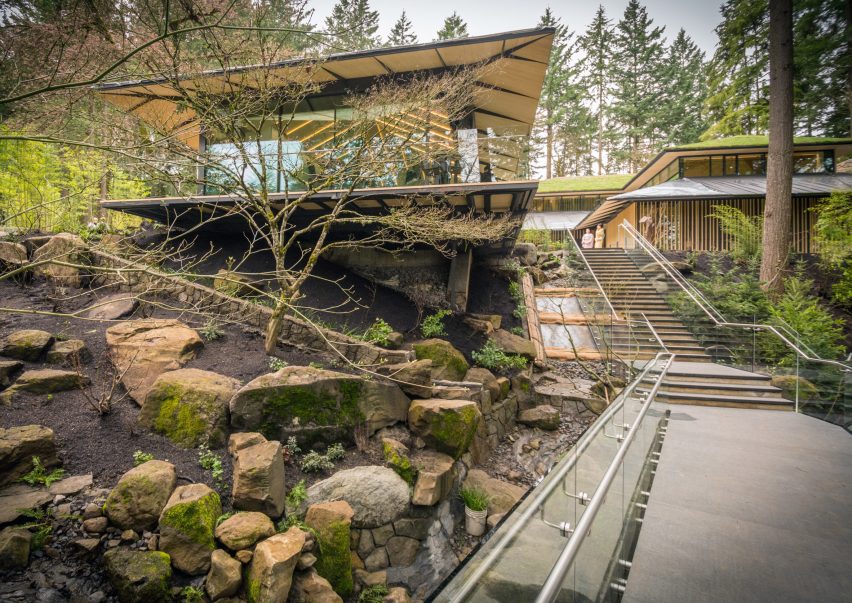
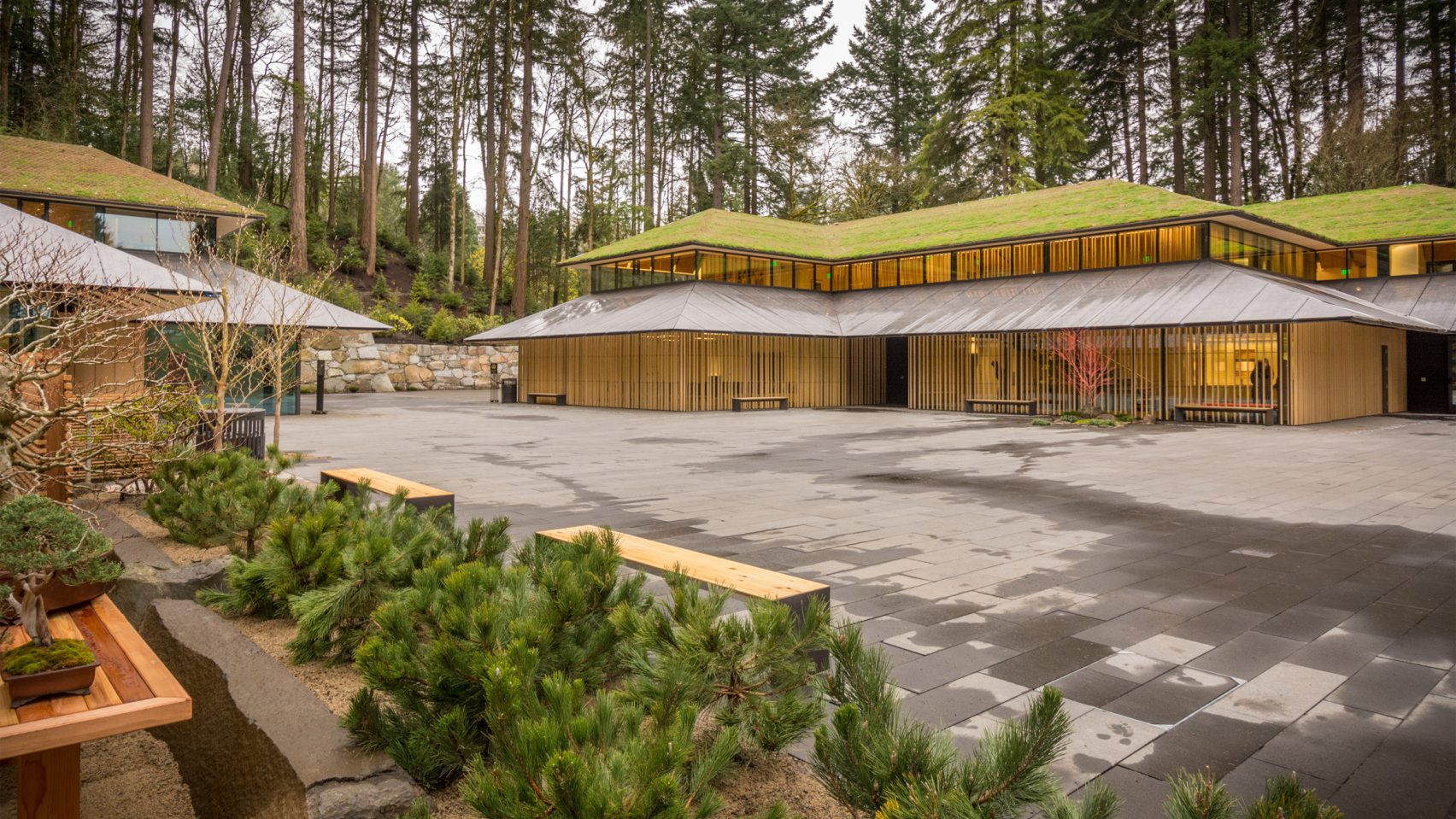
The new expansion turns the available free garden space into a Cultural Village, inspired by Monzemachi or Japanese temple towns. It is comprised of three pavilions: a village house, a garden house, and a tea house, as well as a central courtyard for events and activities.
Courtesy of Kengo Kuma
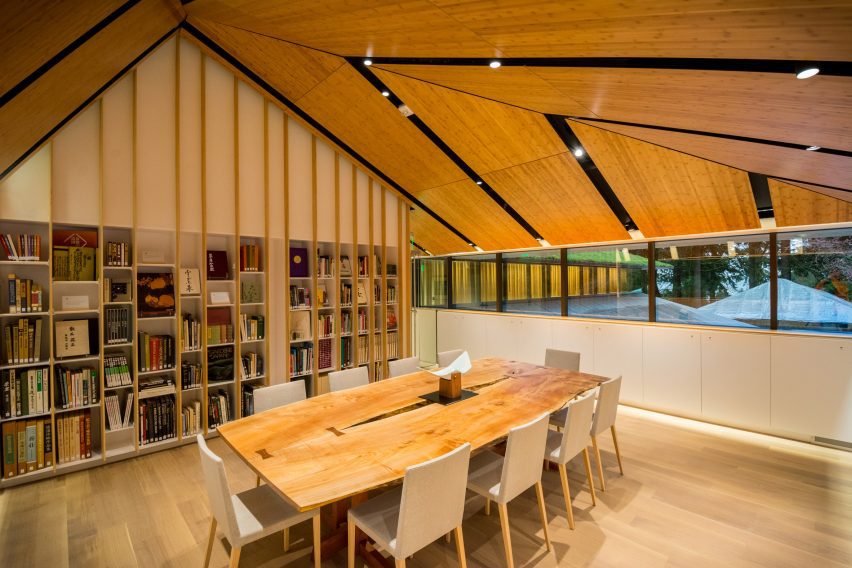
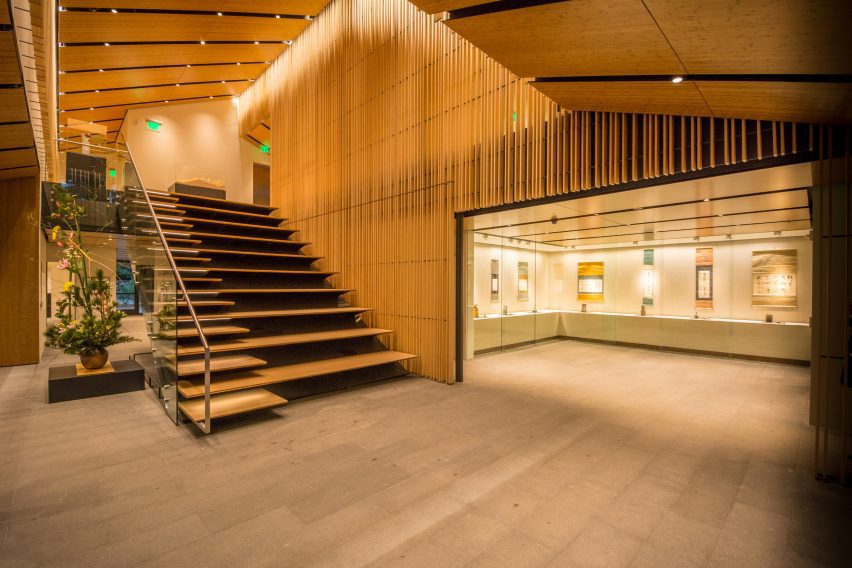
It, also, includes a multipurpose room, a library, galleries, and a gift shop. The new design modifications required the main entrance of the garden to move to the base of the hill on Kingston Avenue.
Read also: Electric Garden| Zac Mathews
Portland Japanese Garden Materials
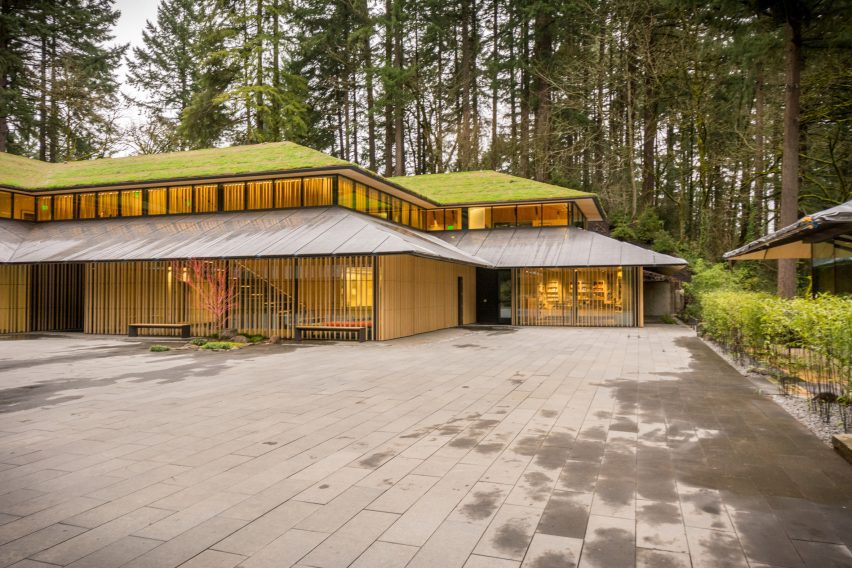
The new buildings of the expansion are all made of steel and glass and wrapped in wood bars. The interiors are, also, dominated by wood, which can be clearly observed in furniture, walls, floor, and ceiling.
The roofs resemble, in form, those of the Japanese Pagoda, and the top levels are provided with green roofs to absorb rainwater.
Courtesy of Kengo Kuma
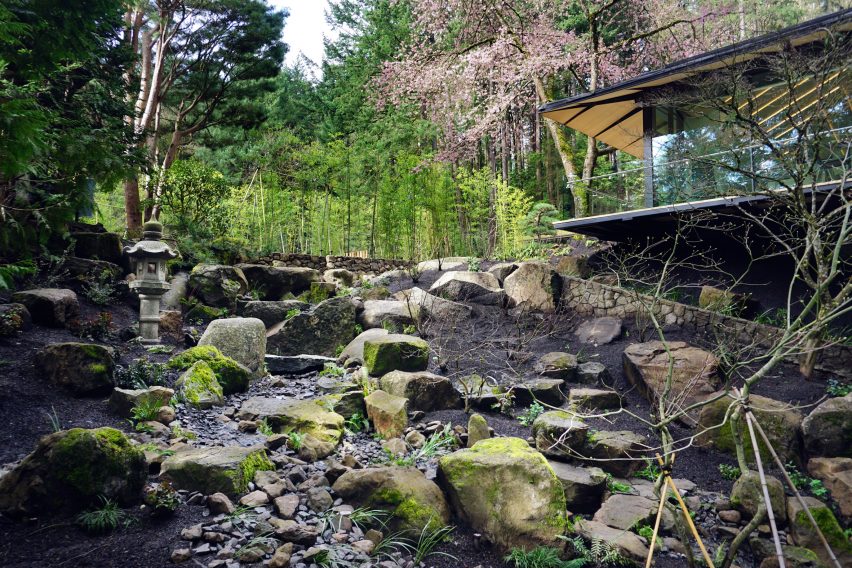
The garden has, also, enriched its greenery with three new additions: moss hillside, a bonsai terrace, and Chabana garden, the only tea flower garden in the US.
The overall cost of this expansion project is $33.5 million, and it has taken almost 2 years to be accomplished. The 50-year-old garden receives annually more than 350,000 visitors, and it is considered one of the most popular and authentic gardens of the type, outside Japan.

Yosra is an architect, writer, and teacher. She is always into learning something new. Her life motto is: "A jack of all trades is a master of none, but oftentimes better than a master of one.” One day she will travel the world and visit its architectural wonders. In the meanwhile, she contends herself with reading and writing about them.