

The most common countertop materials are granite, marble, engineered quartz, porcelain or sintered stone, laminate, solid wood, stainless steel and concrete. None is best for every room: granite and porcelain resist heat well, quartz resists stains, marble is beautiful but etches, wood is warm but needs oiling, and laminate is cheapest but least durable. This guide is for architects, specifiers and homeowners choosing surfaces for kitchens and bathrooms. It gives a neutral comparison chart, explains each material’s strengths and weaknesses, flags health and safety issues such as silica dust from engineered stone, and ends with a selection checklist.
Countertop materials comparison chart
The chart summarises typical performance. Ratings are general, not test results for any product; quality varies widely within each material, so check the manufacturer’s data and care guidance for the exact product you choose.
| Material | Heat | Stains | Scratches | Acids | Maintenance | Notes |
|---|---|---|---|---|---|---|
| Granite | Very good | Good if sealed | Very good | Good | Seal periodically | Each slab unique; heavy |
| Marble | Good | Fair | Fair | Poor (etches) | pH-neutral cleaning; patina | Best for low-use areas |
| Engineered quartz | Fair (resin) | Very good | Good | Good | Low; use trivets | Fabrication silica hazard; banned in Australia from July 2024 |
| Porcelain / sintered stone | Very good | Very good | Very good | Very good | Low | Edges can chip |
| Laminate | Poor | Good | Poor | Good | Low; protect joints | Lowest cost |
| Solid wood | Poor | Fair | Fair (repairable) | Fair | Regular oiling | Warm; can be sanded |
| Stainless steel | Very good | Very good | Poor (scratches) | Good | Low | Hygienic; seamless sinks |
| Concrete | Good | Fair if sealed | Good | Fair | Seal periodically | Custom shapes; heavy |
Source: Arch2O comparison based on general material properties; Queensland Government (engineered stone ban) (as of 28 October 2026).
Prices change quickly and vary by region and installer, so they are not given here. In general, laminate and wood are at the lower end, granite, quartz and porcelain in the middle to upper range, and premium marble, quartzite and custom concrete at the top.
The main countertop materials
1. Granite
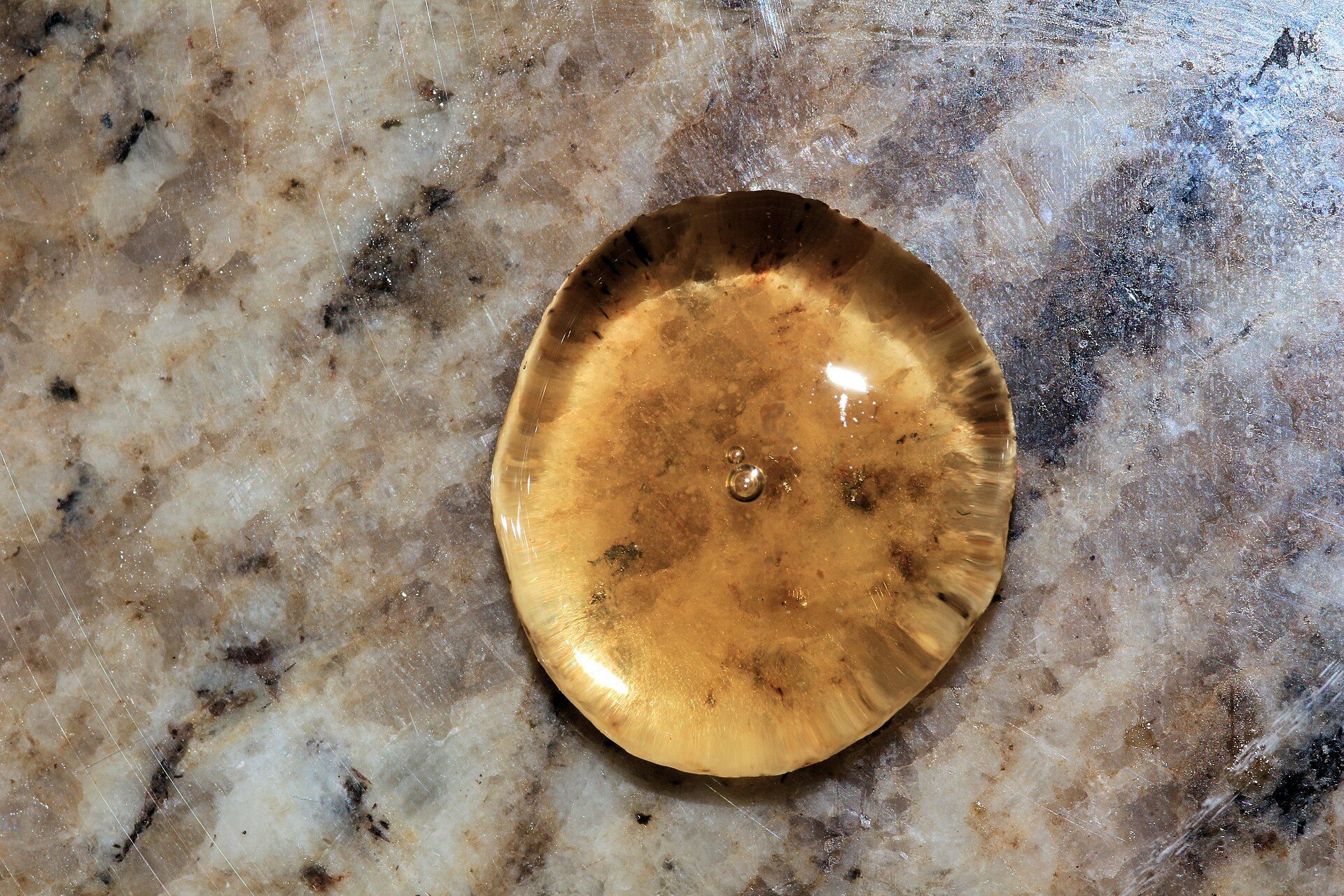
A spill beading on polished granite: a well-sealed surface keeps liquids on top until they are wiped away. Photo: Paul Harrison, CC BY-SA 4.0, via Wikimedia Commons. Paul Harrison, source, CC BY-SA 4.0
Granite is a hard igneous rock made largely of quartz and feldspar. It resists heat and scratches well and each slab is unique. It is somewhat porous, so most granites are sealed to reduce staining, and lighter stones show marks more easily. “Granite” in the trade can include several other hard stones, so ask about the actual stone and its absorption.
2. Marble
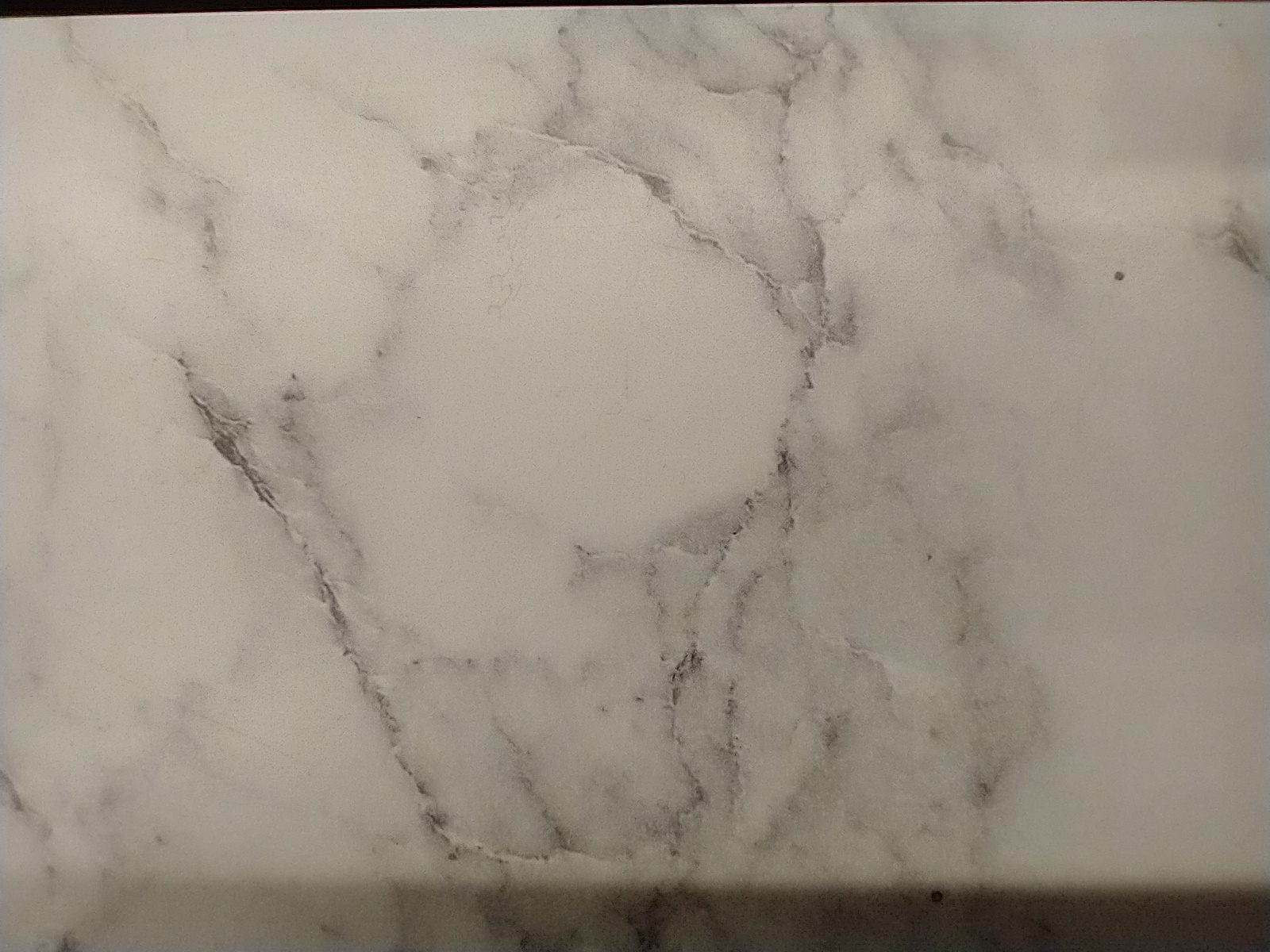
A white marble slab for countertops: the veining varies from slab to slab, so slabs are usually chosen in person. Stilfehler, source, CC BY-SA 4.0
Marble is a metamorphic rock made mostly of calcite. It is prized for its veining and stays cool, which suits pastry work. Its weakness is chemistry: acids such as lemon juice, vinegar, wine and tomato react with the calcite and leave dull “etch” marks, and sealing does not prevent this, because sealers reduce staining, not acid attack (Slabwise guide to etching). Honed (matte) finishes hide etching better than polished ones. Marble is often a better choice for bathroom vanities than busy kitchens.
3. Engineered quartz (engineered stone)
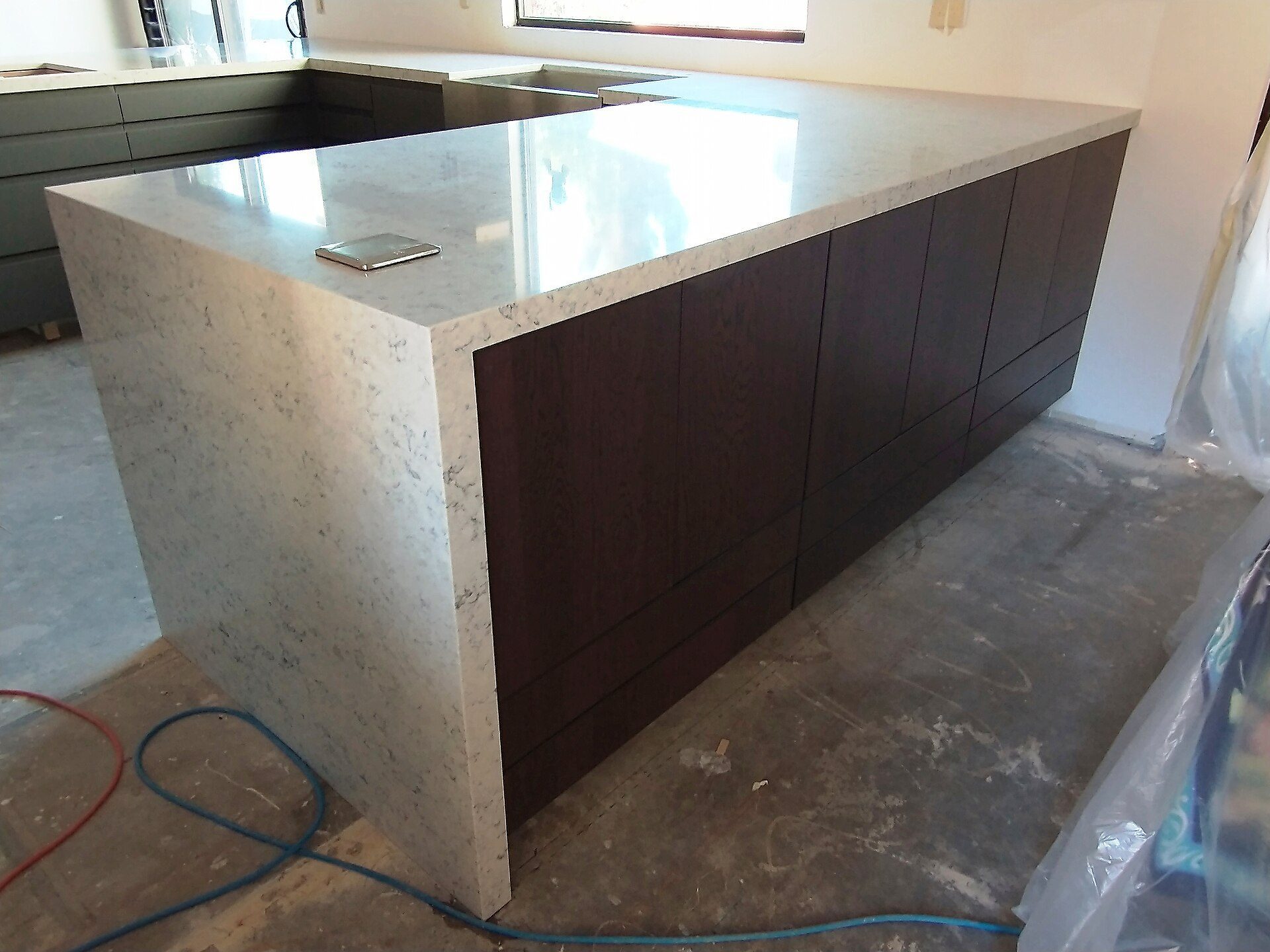
A newly installed worktop with a waterfall end, a detail often made in engineered quartz or porcelain (material not stated by the photographer). Photo: Stilfehler, CC BY-SA 4.0, via Wikimedia Commons. Stilfehler, source, CC BY-SA 4.0
Engineered quartz is made from crushed quartz or other minerals bound with polymer resin and pigments. It is non-porous, so it resists stains and needs no sealing, and it comes in consistent colours and patterns. The resin can be damaged by high heat, so hot pans need a trivet, and some strong cleaners can affect it. There is also an important health issue for workers: cutting and polishing engineered stone releases very high levels of respirable crystalline silica, and many cases of the lung disease silicosis have been linked to fabricators (Dezeen, 2023). Australia banned the use of engineered stone benchtops, panels and slabs from 1 July 2024, while allowing previously installed stone to remain (Queensland Government). Other countries regulate fabrication with dust controls. Specifiers should ask how the product will be fabricated and by whom.
4. Porcelain and sintered stone
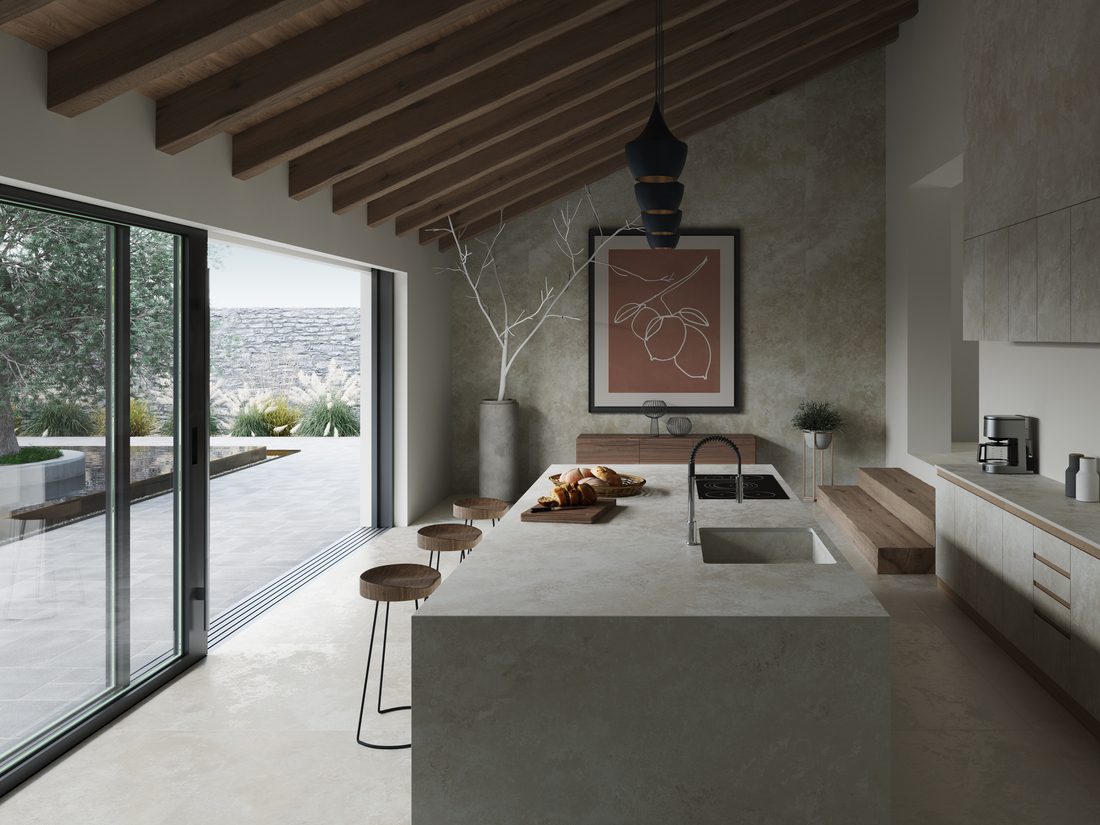
A sintered-stone kitchen island and worktop (Neolith Rapolano), shown in the maker's product image. Image: © Neolith, used under licence
Large-format porcelain slabs and sintered stone are made from clays and minerals fired at very high temperatures. They are dense, highly resistant to heat, stains and UV light, and can be made in thin panels that also suit outdoor kitchens. Edges and corners can chip if hit, and the pattern may be printed on the surface only, so chipped edges can show a different colour; through-body products avoid this.
5. Laminate
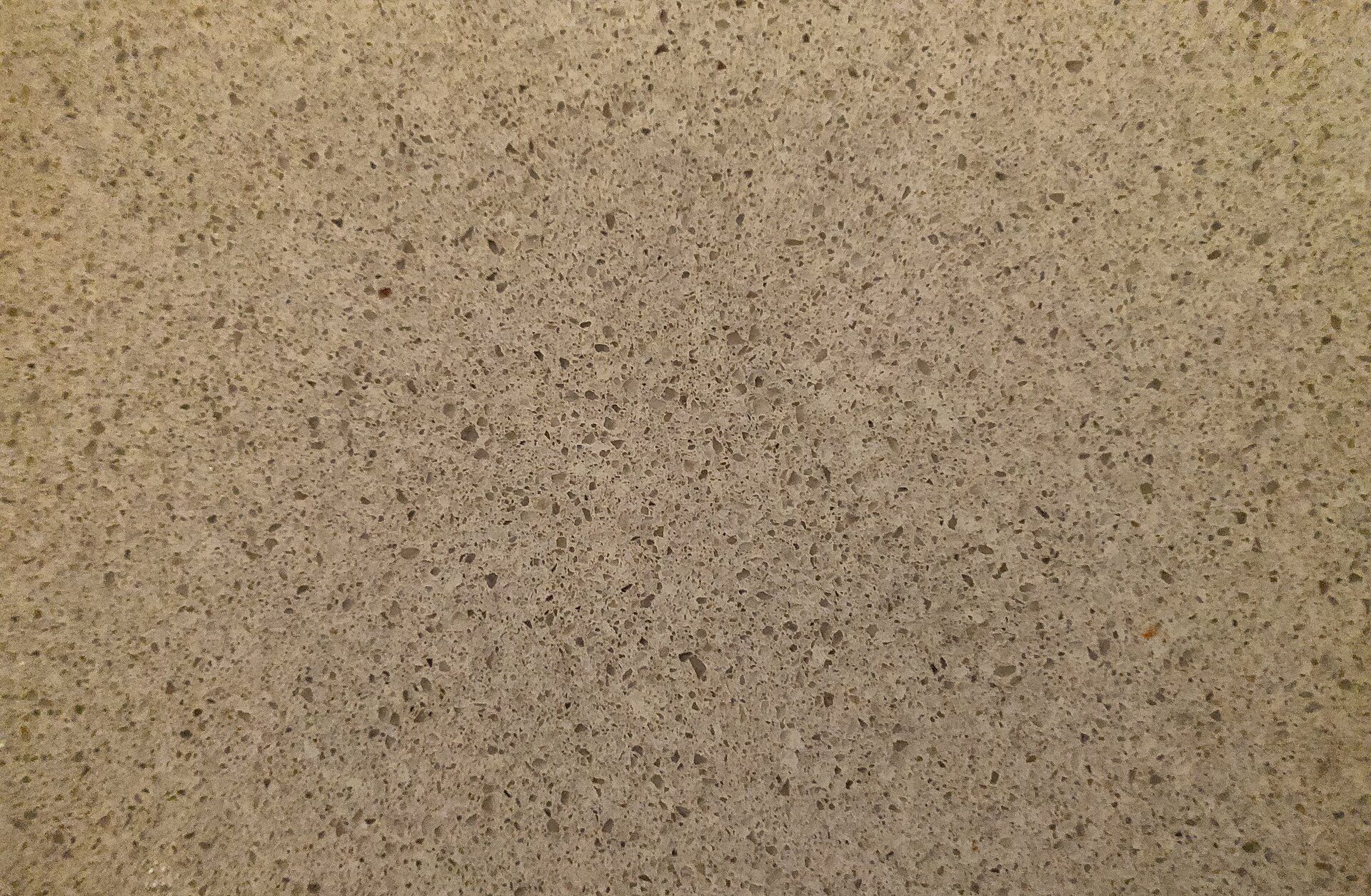
A beige laminate countertop. Photo: Kurtkaiser, CC0, via Wikimedia Commons. Image: Kurtkaiser (Creative Commons Zero)
High-pressure laminate is a thin decorative plastic layer bonded to a particleboard or MDF core. It is the most affordable common option, light and easy to install, with many patterns. It scratches and burns more easily than stone, and water entering joints or cut-outs can swell the core, so careful sealing around sinks is essential.
6. Solid wood (butcher block)
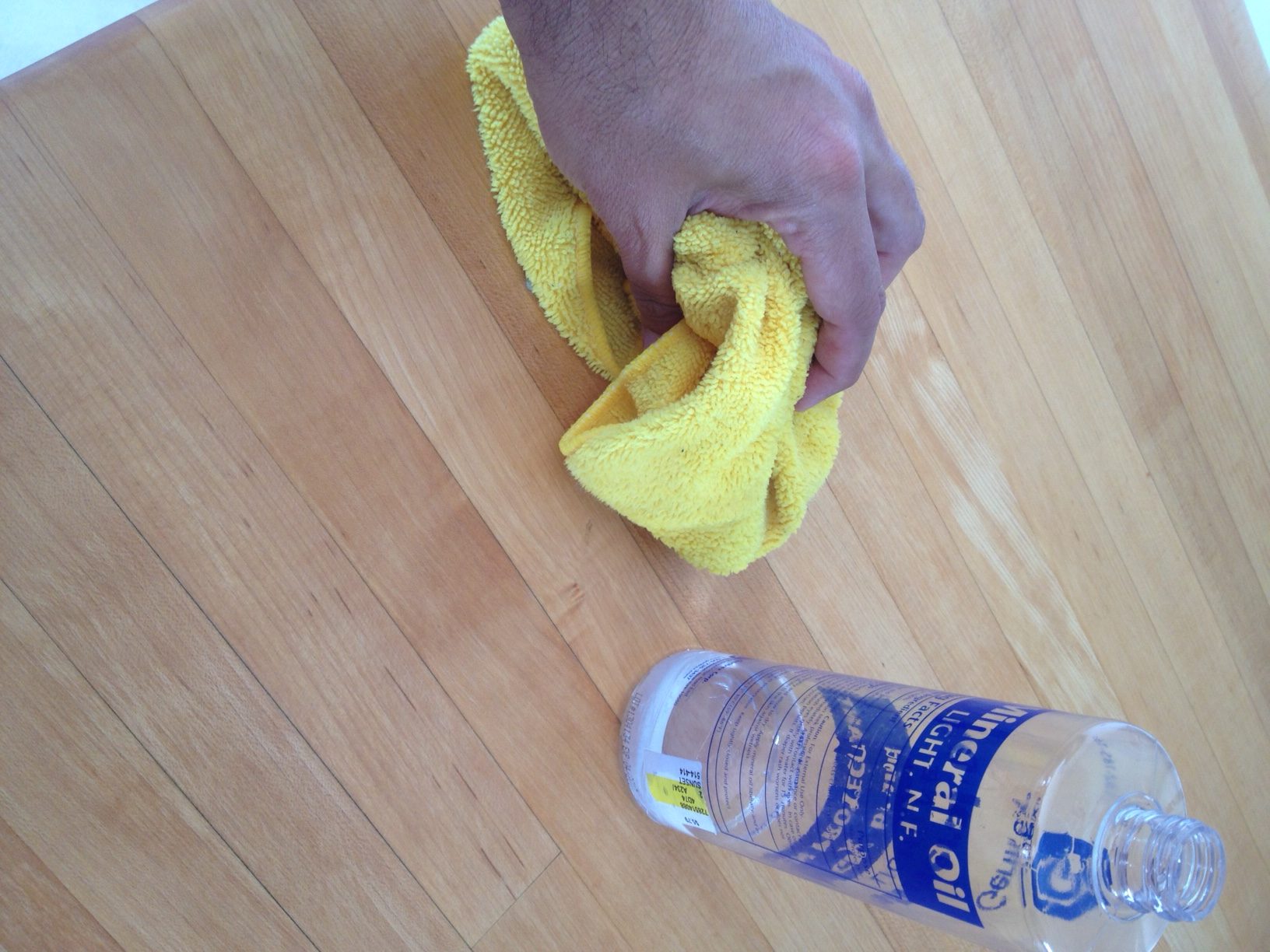
Oiling a butcher block worktop, the routine care solid wood needs. Photo: Timtempleton, CC BY-SA 3.0, via Wikimedia Commons. Timtempleton, source, CC BY-SA 3.0
Solid wood worktops, usually oak, maple, beech or walnut, add warmth and can be sanded and re-oiled when worn. They need regular oiling, are easily marked by heat and water, and must be kept dry around sinks. End-grain blocks are the most durable for chopping.
7. Stainless steel
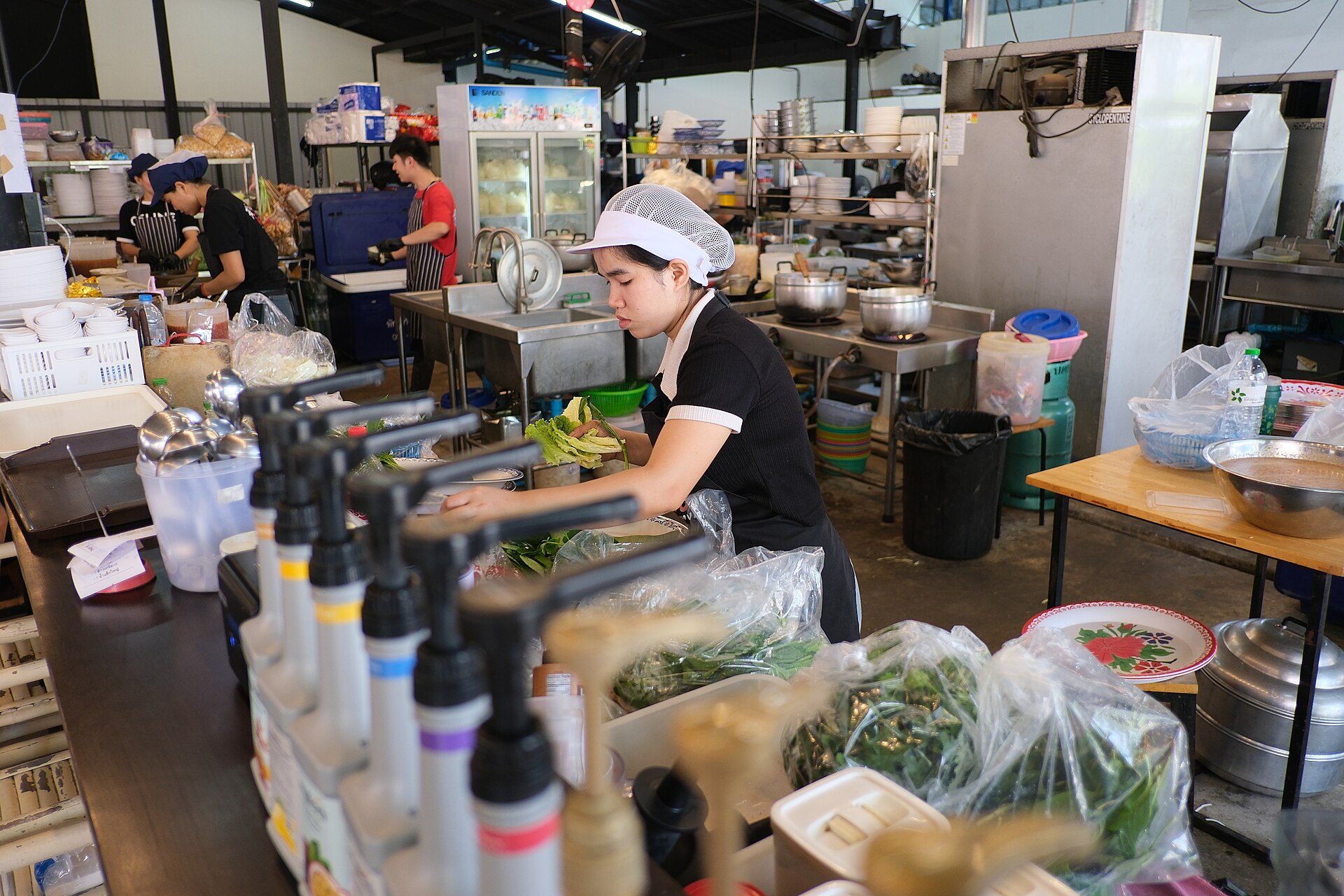
Stainless steel counters in a busy market kitchen, where hygiene and heat resistance matter most. Photo: PattayaPatrol, CC BY-SA 4.0, via Wikimedia Commons. PattayaPatrol, source, CC BY-SA 4.0
Stainless steel is the standard in professional kitchens because it is hygienic, heat-resistant and seamless when welded with integral sinks. It scratches and dents easily, though scratches blend into a brushed patina over time, and it can be noisy.
8. Concrete
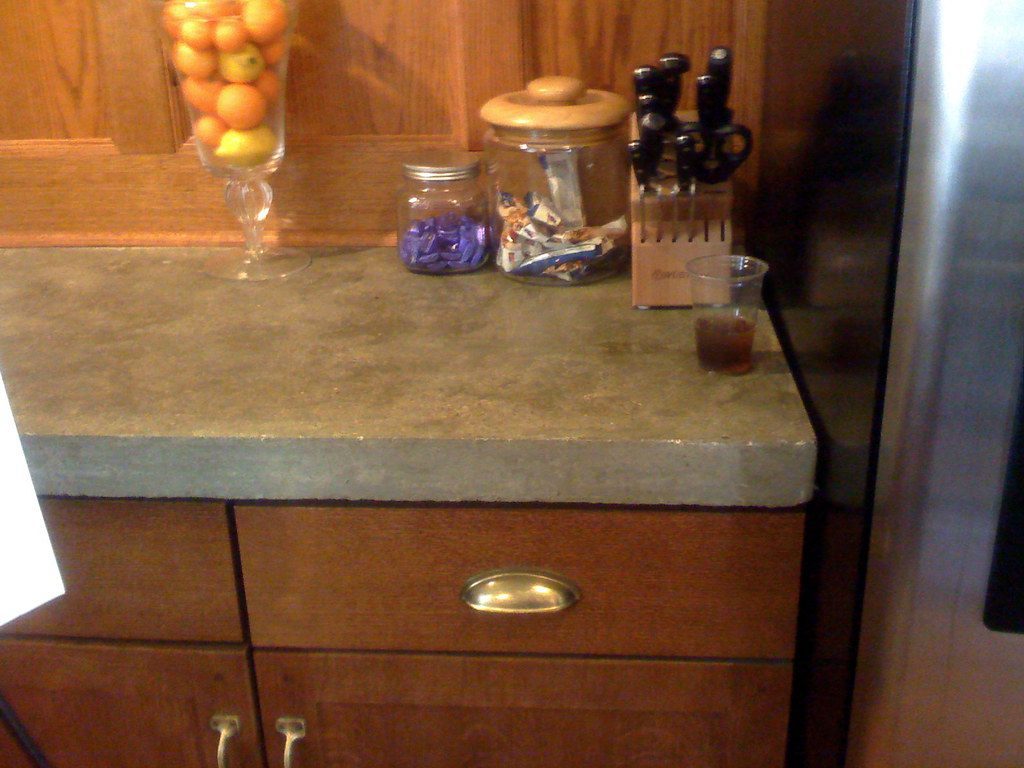
A cast concrete countertop in a kitchen: concrete can be cast in place or precast, then sealed. Kelly Sue, source, CC BY-SA 2.0
Concrete worktops can be cast in place or precast to any shape, with integral sinks and custom colours. They are heavy and porous, so they need sealing, and they can develop fine hairline cracks. Many concrete worktops are deliberately allowed to develop a patina.
Kitchens vs bathrooms
Kitchens put more stress on worktops: heat, knives, acids, oils and constant cleaning. Granite, quartz, porcelain and stainless steel are the most forgiving. Bathrooms face mainly water, cosmetics and cleaning products, so marble, wood (with care) and solid surface materials work well there. In both rooms, the details matter as much as the material: drip grooves under overhangs, sealed sink cut-outs, upstands or splashbacks, and adequate support for heavy stone. For tap and sink choices that complete the work surface, see our selection of the best faucets for kitchens and bathrooms.
A typical installation detail
Stone and quartz worktops are usually 20 mm or 30 mm thick, laid on level base cabinets, with joints placed away from sinks and hobs. Undermount sinks are fixed to the underside with brackets and sealed with silicone. Large overhangs need hidden steel supports. Sink and hob cut-outs need rounded inside corners to avoid cracks. Laminate and wood worktops are fixed from below with brackets that allow movement, and every cut edge is sealed. Always follow the fabricator’s or manufacturer’s requirements for thickness, support and overhang.
Maintenance at a glance
- Granite: wipe with a pH-neutral cleaner; reseal when water stops beading.
- Marble: wipe acids immediately; use pH-neutral cleaners; expect a patina.
- Quartz: mild soap and water; use trivets; avoid harsh chemicals.
- Porcelain: most cleaners are fine; protect edges from impact.
- Laminate: avoid standing water at joints; use boards and trivets.
- Wood: oil regularly; dry around the sink.
- Stainless steel: clean along the grain; avoid chlorine bleach.
- Concrete: reseal as recommended; wipe spills quickly.
How to choose countertop materials
- List how the surface will be used: heavy cooking, baking, a family kitchen, or a guest bathroom.
- Decide how much maintenance and patina you accept.
- Check heat, stain and scratch performance against your list.
- Consider weight and support, especially for stone and concrete.
- Ask about fabrication safety and sourcing, especially for engineered stone and natural stone.
- See full slabs or large samples before ordering; small samples hide variation.
Choosing countertop materials is about matching the surface to the use. For the wider family of building materials and how to compare them, see our guide on how to choose facade materials, which uses a similar selection approach.

Emily Reyes is a Brooklyn-based architecture writer and Article Curator at Arch2O, known for her sharp eye for experimental design and critical theory. A graduate of the Southern California Institute of Architecture (SCI-Arc), Emily’s early work explored speculative urbanism and the boundaries between digital form and physical space. After a few years in Los Angeles working with boutique studios on concept-driven installations, she pivoted toward editorial work, drawn by the need to contextualize and critique the fast-evolving architectural discourse. At Arch2O, she curates articles that dissect emerging technologies, post-anthropocentric design, and contemporary spatial politics. Emily also lectures occasionally and contributes essays to independent design journals across North America.