

The top interior design firms fall into two groups: large multidisciplinary practices that design offices, hotels, airports and hospitals worldwide, led by Gensler, and smaller author-led studios, such as India Mahdavi, Patricia Urquiola or Yabu Pushelberg, known for a distinctive style. This guide lists 30 influential interior design firms by region with one widely published project each, explains the transparent criteria we used, sets out how designers charge, and gives a checklist for choosing one. It is for homeowners, developers and design students. It is an editorial selection; no firm paid to appear.
Selection criteria
Many “best interior design firms” lists are paid placements. We used three public tests, and a firm needed to meet at least two:
- Size and reach: a high position in Interior Design magazine’s annual Top 100 Giants ranking, which ranks firms by interior design fees.
- Published work: completed projects widely published by the architecture and design press.
- Recognition and influence: major design awards, or a body of work that other designers clearly follow.
“Best” depends on your project: a 20-storey headquarters and a two-bedroom flat need different firms. The list is a starting point for research, not a ranking.
Interior design firms by region
Global practices
So what are the top interior design firms by size? In Interior Design’s 2026 Giants ranking, Gensler, headquartered in San Francisco, is number one, with design fees of about US$970 million; the 100 largest firms together earned a record US$6.38 billion in interior design fees in 2025. Other large players include Corgan (No. 8) and Stantec (No. 9), and HBA, which tops the ranking’s hospitality list, as the firms themselves report (Corgan, HBA). Firms of this size suit large commercial, workplace and hospitality projects with complex technical and procurement needs.
North America
New York and Los Angeles host many of the most published hospitality and residential studios. Rockwell Group, founded by the architect David Rockwell, works across restaurants, hotels and theatre sets. Yabu Pushelberg, founded in Toronto by George Yabu and Glenn Pushelberg, is known for luxury hotels. Kelly Wearstler’s Los Angeles studio is known for bold, layered hotel and residential interiors, Roman and Williams for its crafted, vintage-inflected hotels and restaurants, Commune Design for relaxed Californian hospitality, and AvroKO for restaurant and bar interiors.
Europe
Paris has long been a capital of the decorator’s art. Philippe Starck’s hotels of the late 1980s and 1990s, made with the hotelier Ian Schrager, helped invent the “boutique hotel”.

Philippe Starck at TED in 2013. Photo: Loic Le Meur, CC BY 2.0, via Wikimedia Commons. Loic Le Meur from France, source, CC BY 2.0
India Mahdavi’s colour-driven interiors are best known through The Gallery at Sketch in London, whose all-pink scheme became one of the most photographed restaurant interiors of the 2010s. Jacques Garcia is known for opulent, historicist hotels, and Studio KO for restrained, crafted interiors and buildings in France, Morocco and London.
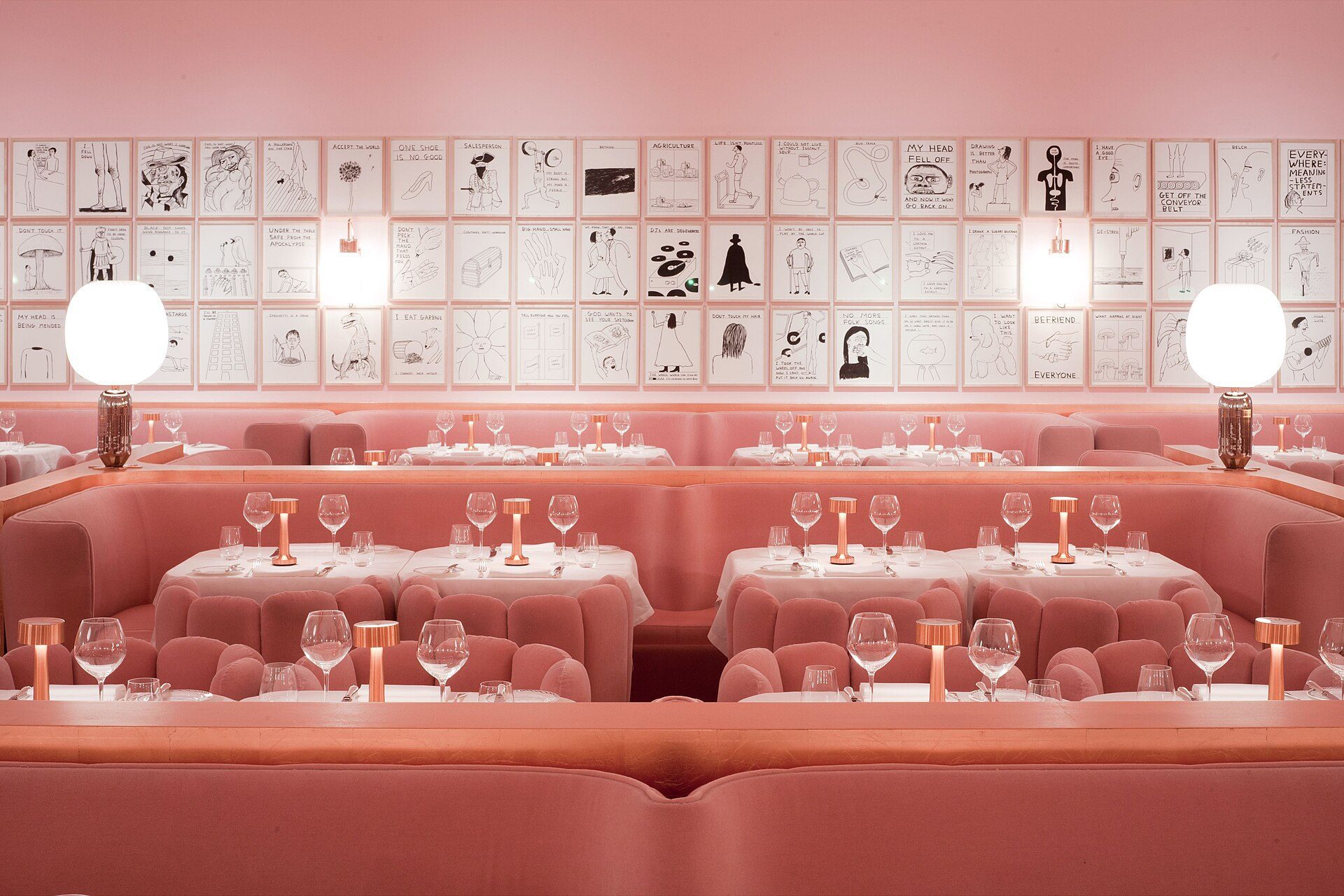
The Gallery at Sketch, London, designed by India Mahdavi. Photo: Noor Chalhoub, CC BY-SA 4.0, via Wikimedia Commons. Noor Chalhoub, source, CC BY-SA 4.0
In Italy, Milan-based Patricia Urquiola and Piero Lissoni work across furniture, product design and hotel interiors, and Dimore Studio is known for moody, colour-rich schemes mixing vintage and contemporary pieces.
In Belgium, Vincent Van Duysen’s calm, minimal interiors and his role as creative director of the furniture maker Molteni&C have made him one of the most influential European designers, while Axel Vervoordt’s practice mixes antiques, art and a wabi-inspired restraint.
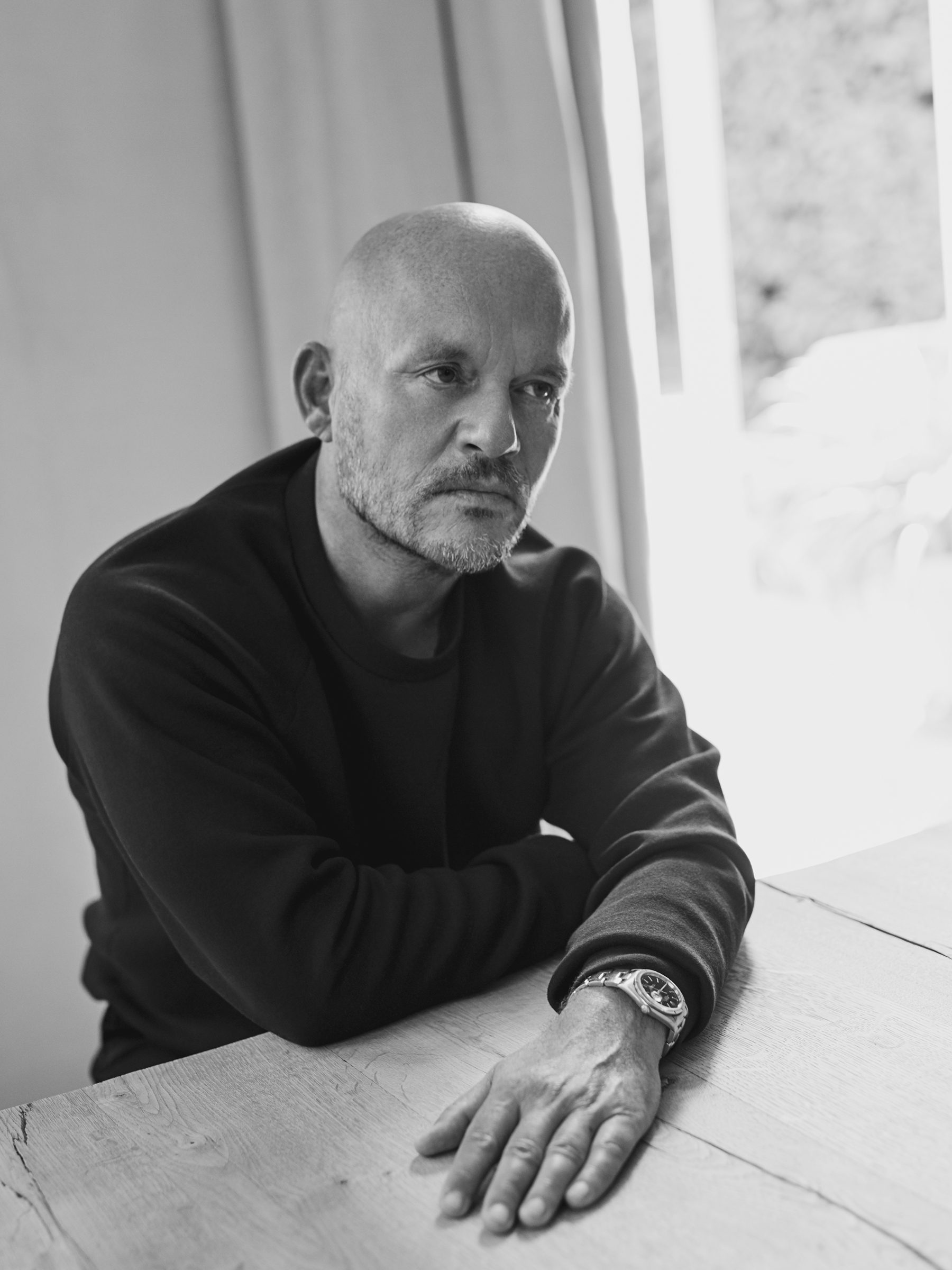
Vincent Van Duysen in Antwerp, 2020. Photo: Zeb Daemen, CC BY-SA 4.0, via Wikimedia Commons. Vincent Van Duysen Press, source, CC BY-SA 4.0
In London, Ilse Crawford’s Studioilse designs warm, human-centred interiors, from hotels such as Ett Hem in Stockholm to furniture for IKEA; Martin Brudnizki is known for rich, maximalist clubs and restaurants; Tom Dixon’s Design Research Studio works on hotels and restaurants alongside his lighting and furniture brand; and Copenhagen’s Space Copenhagen brings Danish craft to restaurants and hotels.
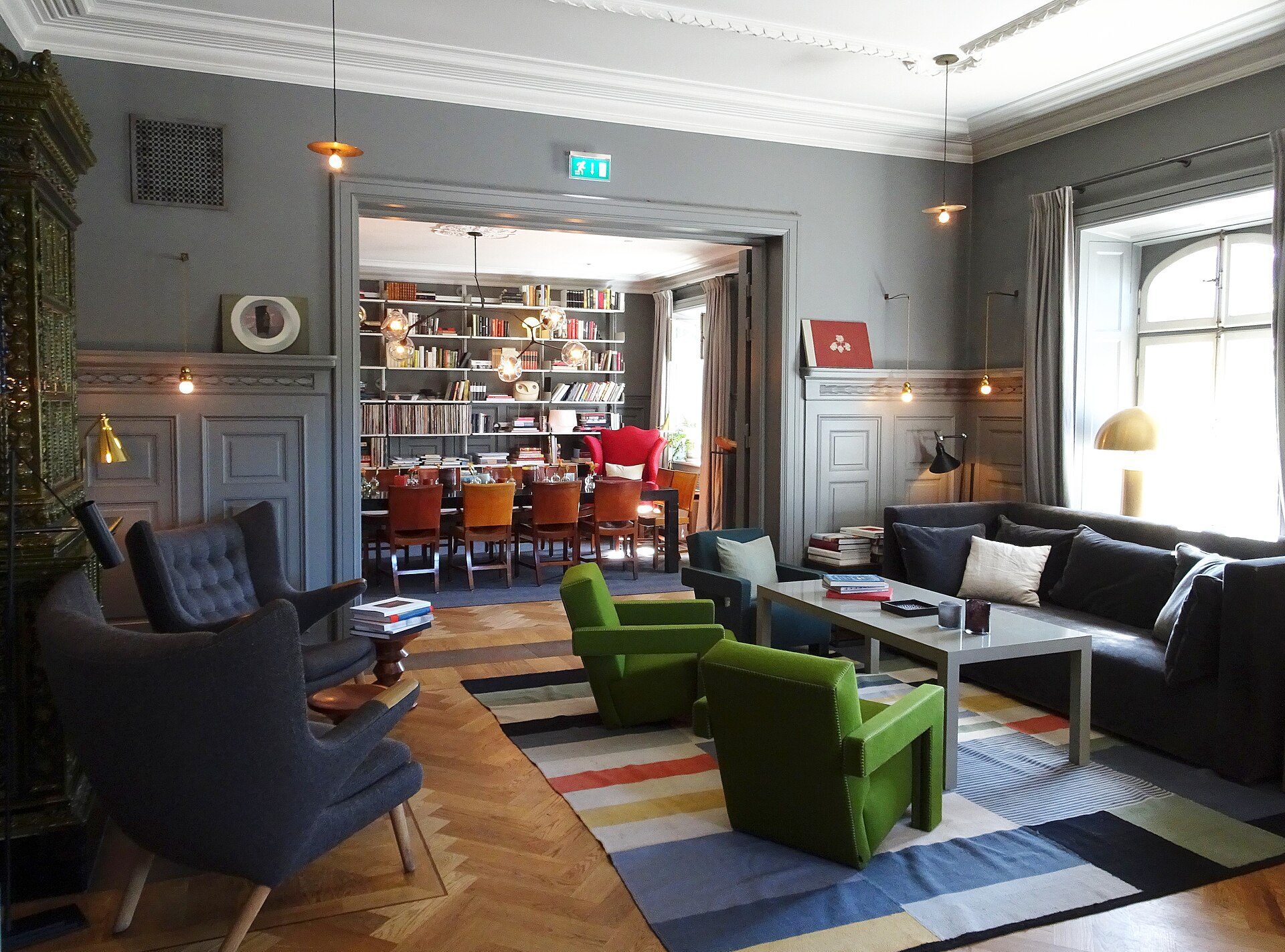
A lounge at Ett Hem, Stockholm, by Ilse Crawford's Studioilse. Photo: Holger Ellgaard, CC BY-SA 4.0, via Wikimedia Commons. Holger.Ellgaard, source, CC BY-SA 4.0
Faye Toogood’s London studio works across interiors, furniture and fashion, with a sculptural, material-led style.

Faye Toogood in 2026. Photo: Ernestmfor, CC BY 4.0, via Wikimedia Commons. Ernestmfor, source, CC BY 4.0
Asia-Pacific
Hong Kong and Shanghai have produced several of the most influential studios of the past two decades. André Fu Studio is best known for The Upper House hotel in Hong Kong (2009), Joyce Wang Studio for luxury hotels and restaurants in Asia and London, and Neri&Hu, founded in Shanghai by Lyndon Neri and Rossana Hu, for interiors and buildings that reinterpret Chinese domestic space. In Tokyo, Oki Sato’s nendo works from products to interiors with a light, witty touch.
The table lists all 30 firms with a base and one widely published project or area of work.
| Firm | Base | Known for |
|---|---|---|
| Gensler | San Francisco (global) | Workplace and large commercial interiors; No. 1 in Interior Design's 2026 Giants |
| HBA (Hirsch Bedner Associates) | Los Angeles (global) | Luxury hotels; No. 1 on the 2026 Giants hospitality list |
| Corgan | Dallas | Workplace, aviation and data-centre interiors; No. 8 in 2026 |
| Stantec | Edmonton (global) | Healthcare, education and workplace; No. 9 in 2026 |
| Perkins&Will | Chicago (global) | Workplace, healthcare and education interiors |
| HOK | St. Louis (global) | Workplace and civic interiors |
| Rockwell Group | New York | Restaurants, hotels and theatre sets |
| Yabu Pushelberg | Toronto and New York | Luxury hotels and retail |
| Kelly Wearstler | Los Angeles | Bold, layered hotels and homes |
| Roman and Williams | New York | Crafted hotels and restaurants |
| Commune Design | Los Angeles | Relaxed Californian hospitality and homes |
| AvroKO | New York | Restaurant and bar interiors |
| Philippe Starck | Paris | Boutique hotels with Ian Schrager; product design |
| India Mahdavi | Paris | Colour-driven interiors, e.g. The Gallery at Sketch, London |
| Jacques Garcia | Paris | Opulent, historicist hotels |
| Studio KO | Paris | Restrained, crafted interiors and buildings |
| Patricia Urquiola | Milan | Hotels, furniture and product design |
| Lissoni & Partners (Piero Lissoni) | Milan | Hotels, furniture and yachts |
| Dimore Studio | Milan | Moody, colour-rich interiors |
| Vincent Van Duysen | Antwerp | Minimal interiors; creative director of Molteni&C |
| Axel Vervoordt | Antwerp | Antiques, art and restrained interiors |
| Studioilse (Ilse Crawford) | London | Human-centred hotels, e.g. Ett Hem, Stockholm |
| Martin Brudnizki Design Studio | London | Maximalist clubs and restaurants |
| Design Research Studio (Tom Dixon) | London | Hotels and restaurants |
| Faye Toogood | London | Sculptural interiors, furniture and fashion |
| Space Copenhagen | Copenhagen | Restaurants and hotels in a Danish craft tradition |
| André Fu Studio | Hong Kong | The Upper House hotel, Hong Kong (2009) |
| Joyce Wang Studio | Hong Kong | Luxury hotels and restaurants |
| Neri&Hu | Shanghai | Interiors and buildings reinterpreting Chinese domestic space |
| nendo (Oki Sato) | Tokyo | Products and interiors with a light, witty touch |
Source: Interior Design 2026 Top 100 Giants (via firms' announcements) for the large firms; firms' published work for the rest; Arch2O selection (as of 25 October 2026).
Typical services and fee models
Interior design services usually run in stages: brief and survey, concept design, developed design and specification, procurement (ordering furniture and finishes), and site supervision and installation. Some firms offer only part of this, such as a design-only package you implement yourself.
What is the average cost to hire an interior designer? It varies widely by country, firm and scope. US consumer guides published in 2025-26 put typical hourly rates at roughly US$75 to US$450, design-only fees at about US$450 to US$1,500 per room, and percentage fees at about 10-15% of project cost, according to Fiverr’s 2026 guide, while HomeAdvisor reports that most US homeowners spent between about US$2,000 and US$15,000 in 2025. These are aggregator figures, not audited surveys; established studios charge far more. The main fee models are:
- Hourly: suits small jobs and consultations.
- Fixed fee: a set price per room or per stage, good for a defined scope.
- Percentage of project cost: common for large commercial and full-service residential projects.
- Cost-plus or mark-up: the designer buys furniture and finishes at trade price and adds a mark-up; ask for it to be stated in writing.
How to choose an interior design firm
- Match scale and type. Hire a firm that has completed projects like yours in size, type and budget.
- Look at completed work, not renders. Ask to visit a finished project or speak to a past client.
- Check credentials where they exist. In some places interior designers are registered (for example, several US states regulate the title “interior designer”); elsewhere, look for membership of a professional body.
- Agree the scope and fee in writing, including how changes, purchases and mark-ups are handled.
- Test the chemistry. You will work together for months; a good firm listens and explains its decisions.
- Review their portfolio critically. Our guide to architecture careers and portfolios explains what strong design portfolios show, which helps when judging a firm’s.
Many designers also use simple styling rules of thumb. The “3-5-7 rule”, for example, suggests grouping decorative objects in odd numbers (three, five or seven) because odd groupings look less rigid than pairs, as Livingetc explains. It is a styling guideline, not a professional standard, and good designers break it when scale and proportion call for it.
Summary
There is no single best interior design company: for large workplaces and hotels, look to the big multidisciplinary firms at the top of the Giants ranking; for a distinctive home, restaurant or boutique hotel, look to an author-led studio whose completed work matches your taste and budget. Shortlist three interior design firms, compare their scope and fees on the same brief, and choose the one whose finished projects, not just images, convince you.

Emily Reyes is a Brooklyn-based architecture writer and Article Curator at Arch2O, known for her sharp eye for experimental design and critical theory. A graduate of the Southern California Institute of Architecture (SCI-Arc), Emily’s early work explored speculative urbanism and the boundaries between digital form and physical space. After a few years in Los Angeles working with boutique studios on concept-driven installations, she pivoted toward editorial work, drawn by the need to contextualize and critique the fast-evolving architectural discourse. At Arch2O, she curates articles that dissect emerging technologies, post-anthropocentric design, and contemporary spatial politics. Emily also lectures occasionally and contributes essays to independent design journals across North America.