

An interior design degree is a college or university qualification that teaches space planning, materials, lighting, building codes, drawing and design studio practice. There are three main levels: an associate degree of about two years, a bachelor’s degree of about four years (the standard professional qualification), and a master’s degree for graduates who want to specialise or change career. Which interior design degree you choose affects not only what you learn but whether you can later sit professional exams such as the NCIDQ. This guide compares the degree types, explains accreditation, online study, costs and careers, and shows how each degree connects to certification.
It is written for school leavers, career changers and parents comparing programmes, with US figures where national data exists and notes on how other countries differ.
Interior design degree types compared
The table compares the three main levels, with what each prepares you for.
| Degree | Typical length | Focus | Leads to | NCIDQ route |
|---|---|---|---|---|
| Associate (AA, AAS) | About 2 years | Drawing, CAD, materials, residential and technical skills | Junior and technical roles; transfer to bachelor's | Possible, with more work experience |
| Bachelor's (BFA, BS, BID) | About 4 years | Full professional curriculum incl. commercial design, codes, systems | Professional practice | Standard route; least extra experience if CIDA-accredited |
| First-professional master's | 2–3 years | Full curriculum for graduates of other subjects | Professional practice, career change | Standard route if accredited |
| Post-professional master's | 1–2 years | Specialisation, research, teaching | Specialist and academic roles | For those already qualified |
Source: CIDA accreditation; CIDQ NCIDQ Candidate Handbook (Jan 2026); BLS (as of 21 October 2026).
Associate degree (about two years)
An associate degree, often an AAS or AA in interior design, covers drawing, CAD, materials, basic codes and studio projects. It suits students who want to enter the workforce quickly in residential design, retail and kitchen design, or technical support roles, or who plan to transfer credits into a bachelor’s programme later. Many community colleges offer it at much lower cost than universities.
Bachelor’s degree (about four years)
A Bachelor of Fine Arts (BFA), Bachelor of Science (BS) or Bachelor of Interior Design is the standard professional route. It adds commercial design, building systems, lighting, research, history and a capstone project, and often an internship. What degree is best for interior design? For most people aiming at commercial practice or certification, it is an accredited bachelor’s degree, because it gives the shortest route to the NCIDQ examination.
Master’s degree (two to three years)
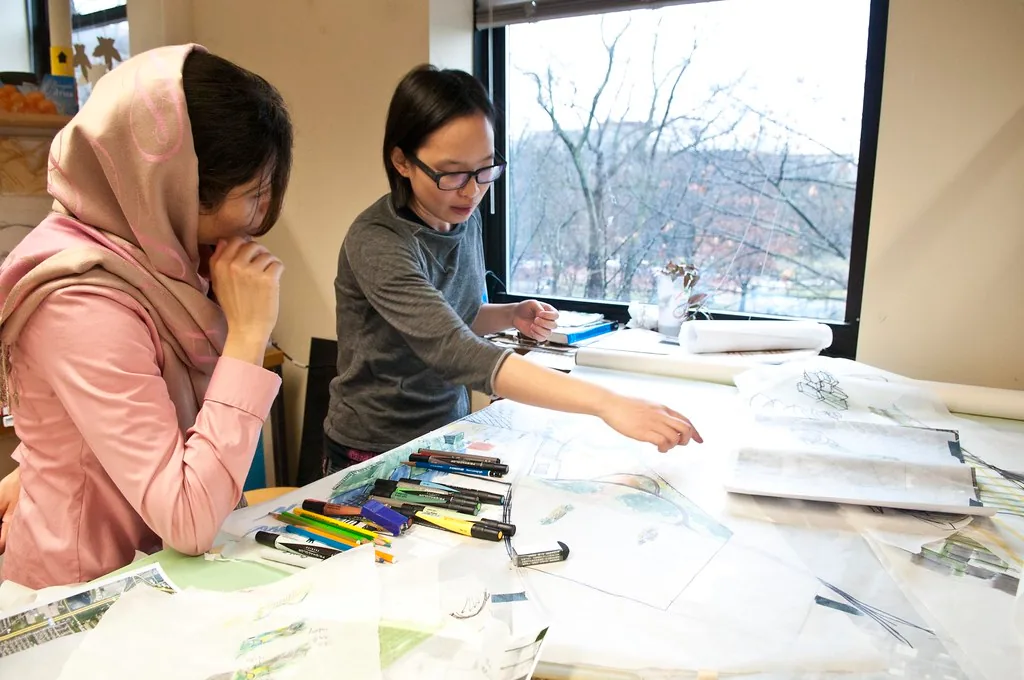
Master’s programmes come in two kinds: first-professional master’s degrees for graduates of other subjects, which cover the full professional curriculum, and post-professional master’s degrees for those who already hold an interior design degree and want to specialise in areas such as healthcare, sustainability, lighting or research, or to teach.
Accreditation: why CIDA matters
In the United States and Canada, professional-level interior design programmes are accredited by the Council for Interior Design Accreditation (CIDA). Accreditation decisions are based on whether a programme meets CIDA’s sixteen accreditation standards, covering areas from faculty and resources to knowledge of products, materials, codes and professional practice, and a new accreditation typically lasts six years. University sources put the number of accredited programmes at more than 150; check CIDA’s list, which is updated twice a year, for the current figure.
Accreditation matters for two reasons. First, it is an independent check on the quality of the programme. Second, graduates of CIDA-accredited bachelor’s or master’s programmes usually qualify for the NCIDQ examination with the least additional work experience. According to the NCIDQ candidate handbook, required experience hours depend on the education path, so a shorter or unaccredited qualification usually means more years of work before you can sit the full exam.
Outside North America, look for programmes recognised by the national professional body or accredited under the national higher education system; for example, the European Council of Interior Architects publishes education standards for its member countries.
Online interior design degrees
Online and hybrid interior design degrees are now common, and some are accredited. They suit working students and those far from a design school. The trade-offs are less hands-on studio work, fewer chances to build physical models and material boards with tutors, and less informal learning from classmates. If you study online, check whether the programme is accredited, how studio critiques are run, and whether it arranges internships. Our guide to online architecture degrees and programmes covers related options.

What an interior design degree costs
Costs vary enormously by country and type of institution. In the United States, the College Board’s Trends in College Pricing 2025 report gives average published tuition and fees for 2025–26 of $4,150 a year at public two-year colleges (in-district), $11,950 at public four-year institutions for in-state students, $31,880 for out-of-state students and $45,000 at private nonprofit four-year institutions. Interior design students should also budget for a capable laptop and software, drawing and model-making supplies, printing and plotting, and study trips. Many students pay less than the published price after grants and scholarships, so compare net prices.
Careers after an interior design degree
Graduates work in interior design and architecture practices, commercial fit-out firms, furniture and finishes manufacturers, retail, hospitality and workplace design, set and exhibition design, and increasingly in roles such as visualisation and BIM coordination. The US Bureau of Labor Statistics reported a median annual wage of $67,190 for interior designers in May 2025, with employment projected to grow 3% from 2025 to 2035. The degree is the start; a strong portfolio decides the first job. Our guide on how to build an architecture portfolio applies closely to interior design portfolios too.

Is it worth getting an interior design degree?
It is worth it if you want to work on commercial projects, become certified, or work in states and countries where interior design is regulated, because those routes require a recognised qualification. It is less essential for residential styling, home staging or decorating, where portfolios and experience count for more and shorter courses can be enough. Weigh the cost against the type of work you want, and remember that the most valuable parts of any degree are studio practice, internships and the portfolio you leave with.
How long does it take to become an interior designer? With a bachelor’s degree, about four years of study, plus roughly two years of experience and the exams if you aim for NCIDQ certification: around six years in total in North America.
Compare programmes using a route-to-practice checklist
Check the awarding institution, qualification level, accreditation period, course content and graduate eligibility in the country where you intend to work. Ask whether work experience can overlap with study and whether a portfolio or bridging qualification is needed. Compare total costs, studio access and placement support as well as tuition. A master degree is not automatically a professional conversion course, and a degree title alone does not establish eligibility for certification. Confirm the pathway directly with the regulator or credential body before enrolling.
Summary
Choose an associate degree for a fast, low-cost start; an accredited bachelor’s degree for the standard professional route; and a master’s degree to change career or specialise. Check accreditation, look at studio and internship opportunities, and compare total costs before you choose an interior design degree.

Luca Moretti is a content strategist with a foundation in urban design and architecture. Based in Milan, he focuses on writing that bridges aesthetics, material culture, and everyday spatial experiences.