

The Smithsonian’s Hirshhorn Sculpture Garden in Washington, D.C. will reopen on October 31st after a four-year redesign led by architect-artist Hiroshi Sugimoto. The Hirshhorn Sculpture Garden redesign forms part of a broader redevelopment of the museum led by Selldorf and SOM. The project drew debate along the way, and the Cultural Landscape Foundation raised objections to it before work was completed.
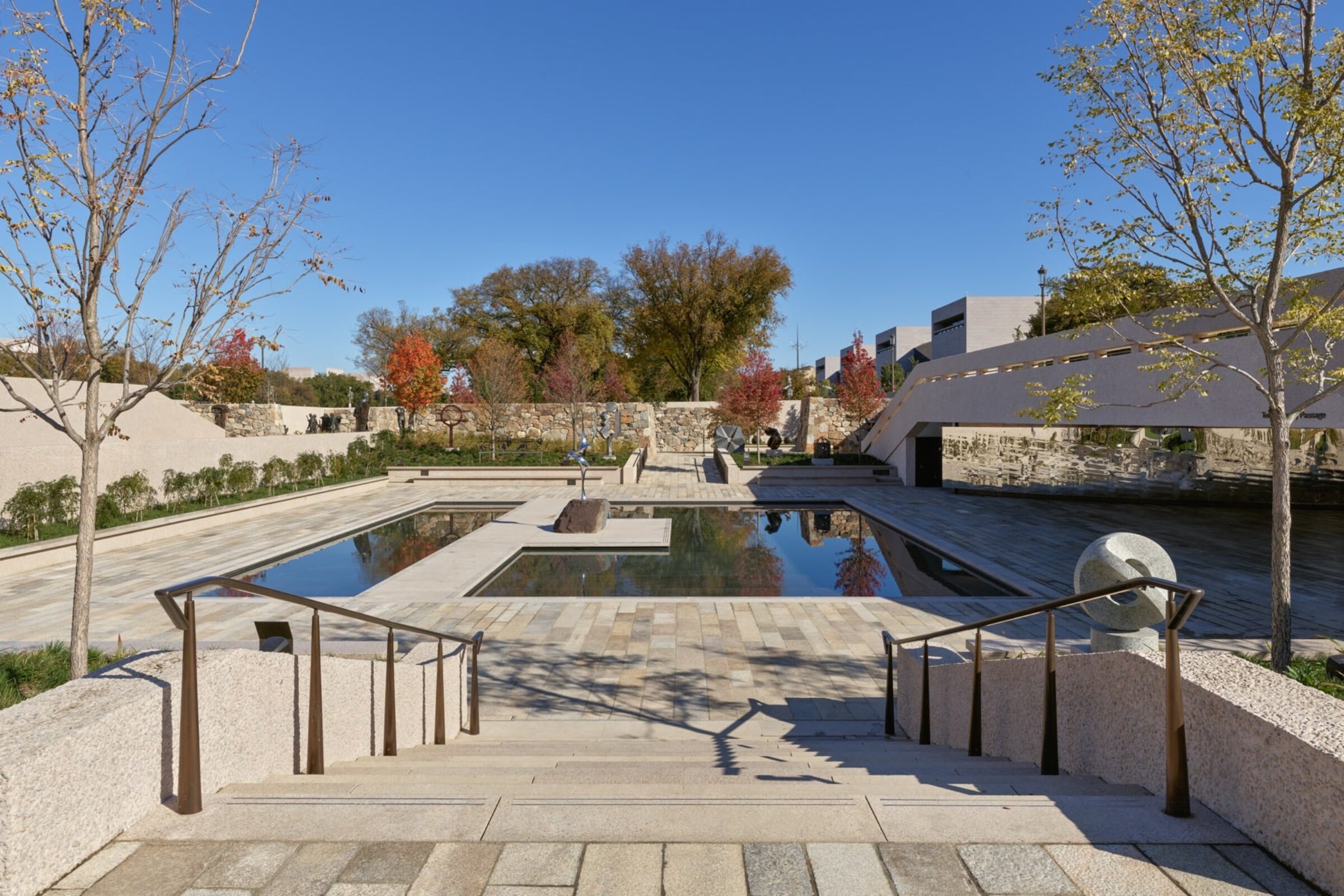
Rick Coulby, courtesy of Hirshhorn Museum and Sculpture Garden
The project repairs aging infrastructure and reorganizes the 1.3-acre site so it can hold 60 artworks, a 50% increase over the previous display. It also adds nearly 30,000 new plants and trees across the garden. Sugimoto’s scheme responds to the original design by Gordon Bunshaft, which opened in 1974, and it keeps that earlier layout as its point of reference rather than starting from a blank slate.
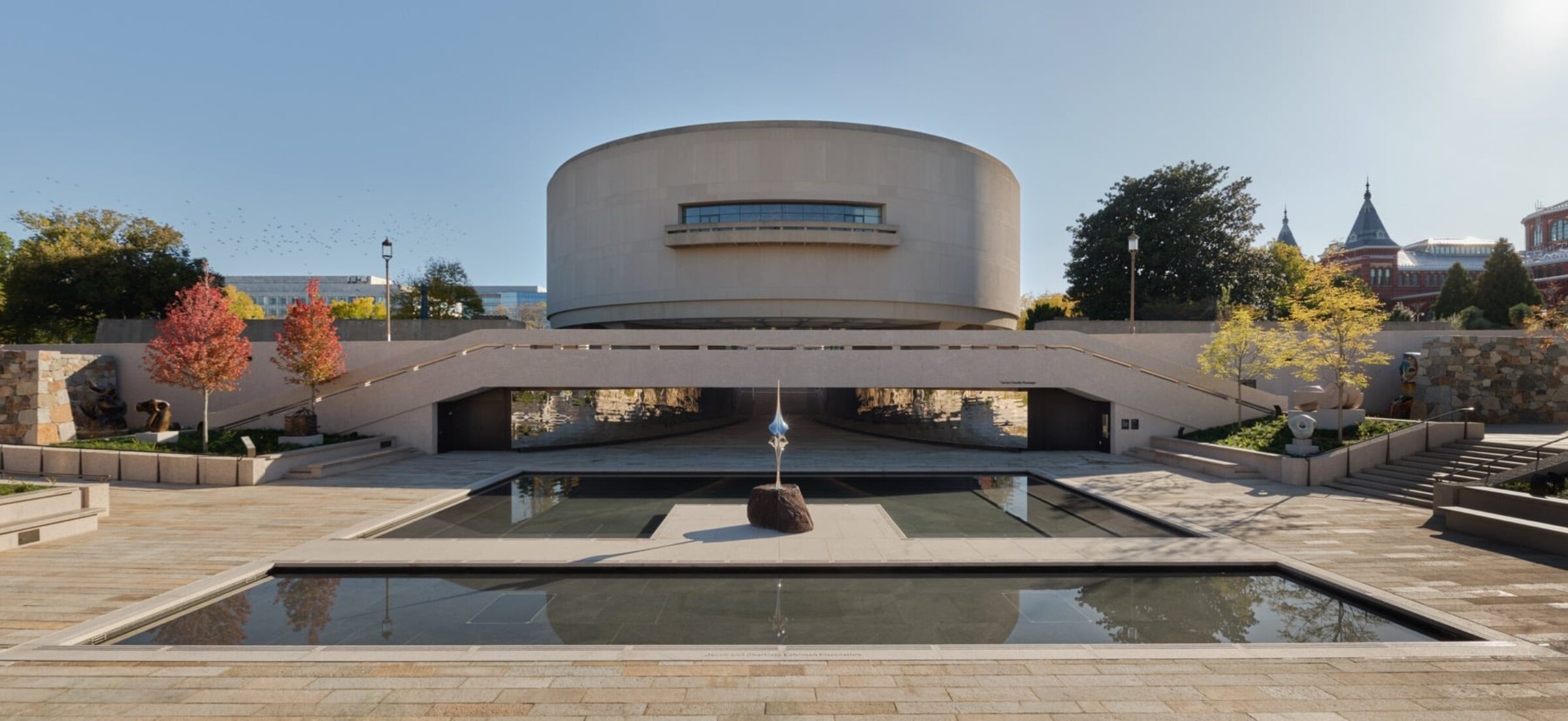
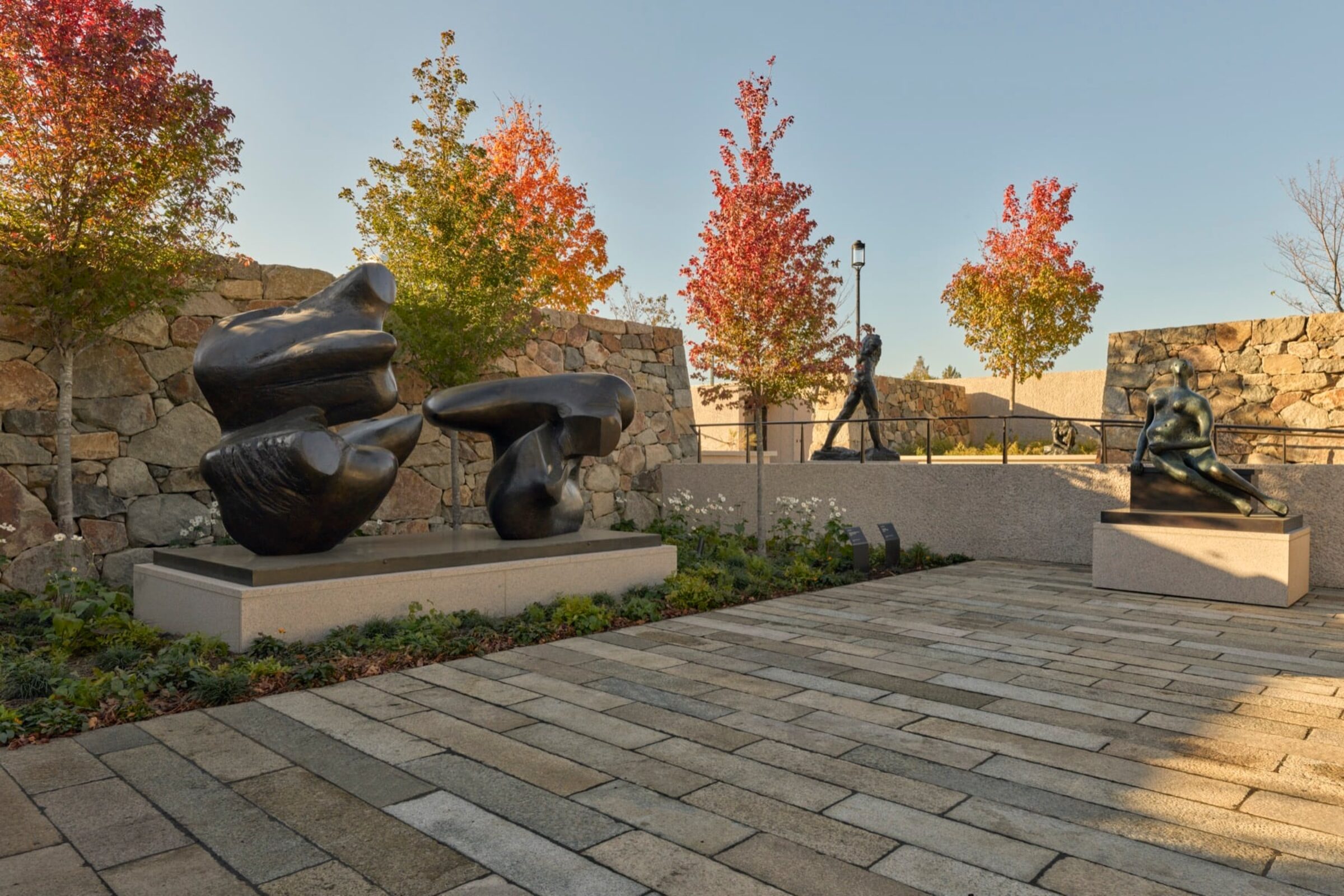
The main new element is a set of hand-hewn, dry-stacked stone walls built from 950 tons of stone. Dry-stacked walls are assembled without mortar, so each stone is held in place by its weight and fit. These walls define outdoor galleries and create distinct spaces for viewing sculpture, which gives each group of works its own setting within the larger garden.
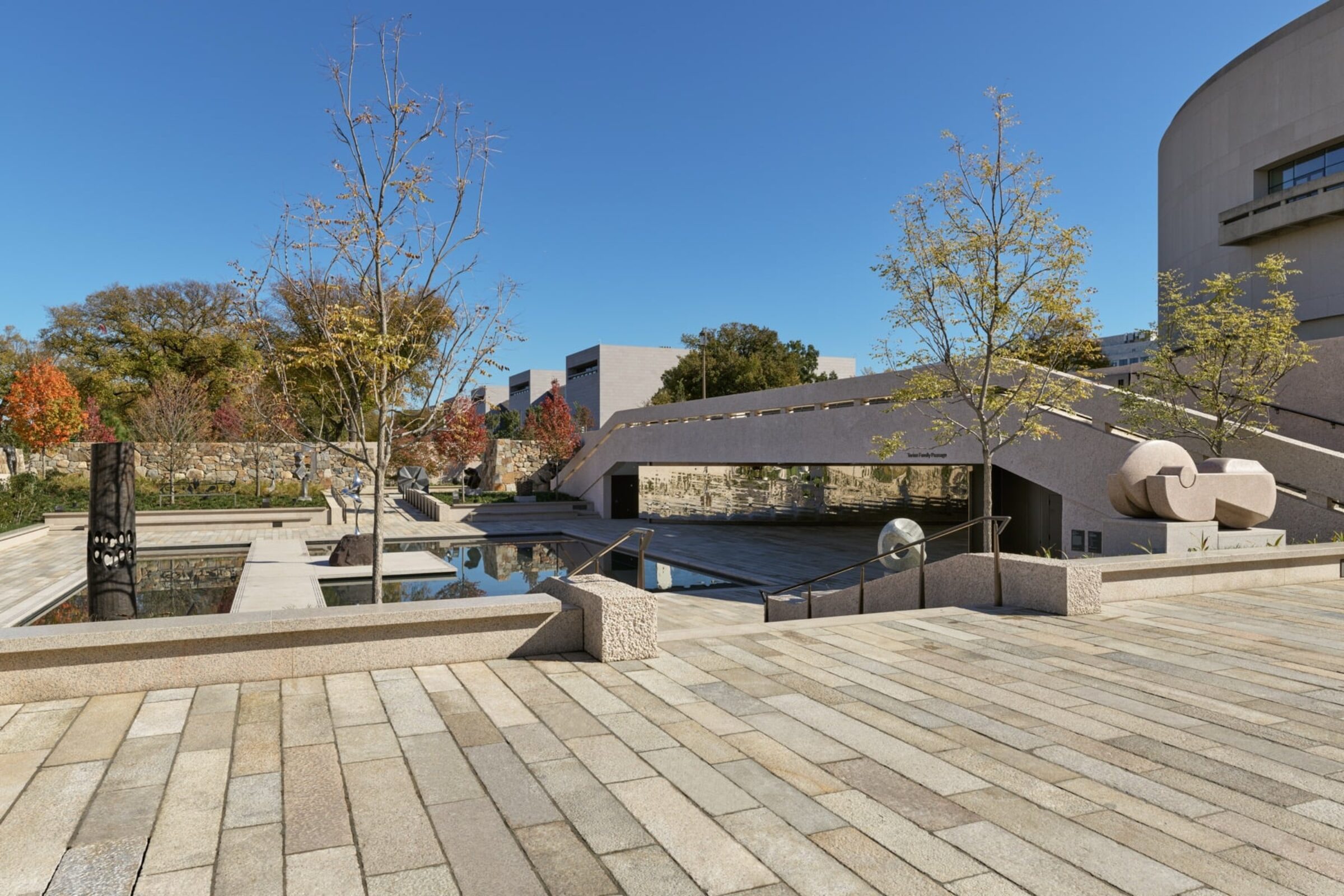
Beyond the walls, the revised layout changes how visitors move through the site. It introduces five entry points, a wider entrance from the National Mall, east and west overlooks, and flexible garden and lawn areas. These changes are intended to improve access across the museum campus, so people can reach the garden from several directions instead of a single approach.
Read more:
- Foster + Partners Unveils ‘The Star’ Tower Wrapped in Lush Spiral Gardens
- Physical Education Ground of Saint-Paul Gardens | NP2F
- Stone Garden Apartment Building | Lina Ghotmeh Architecture
- Site area: 1.3 acres
- Artworks on display: 60, a 50% increase
- New plants and trees: nearly 30,000
- Stone used in walls: 950 tons
- Entry points: five
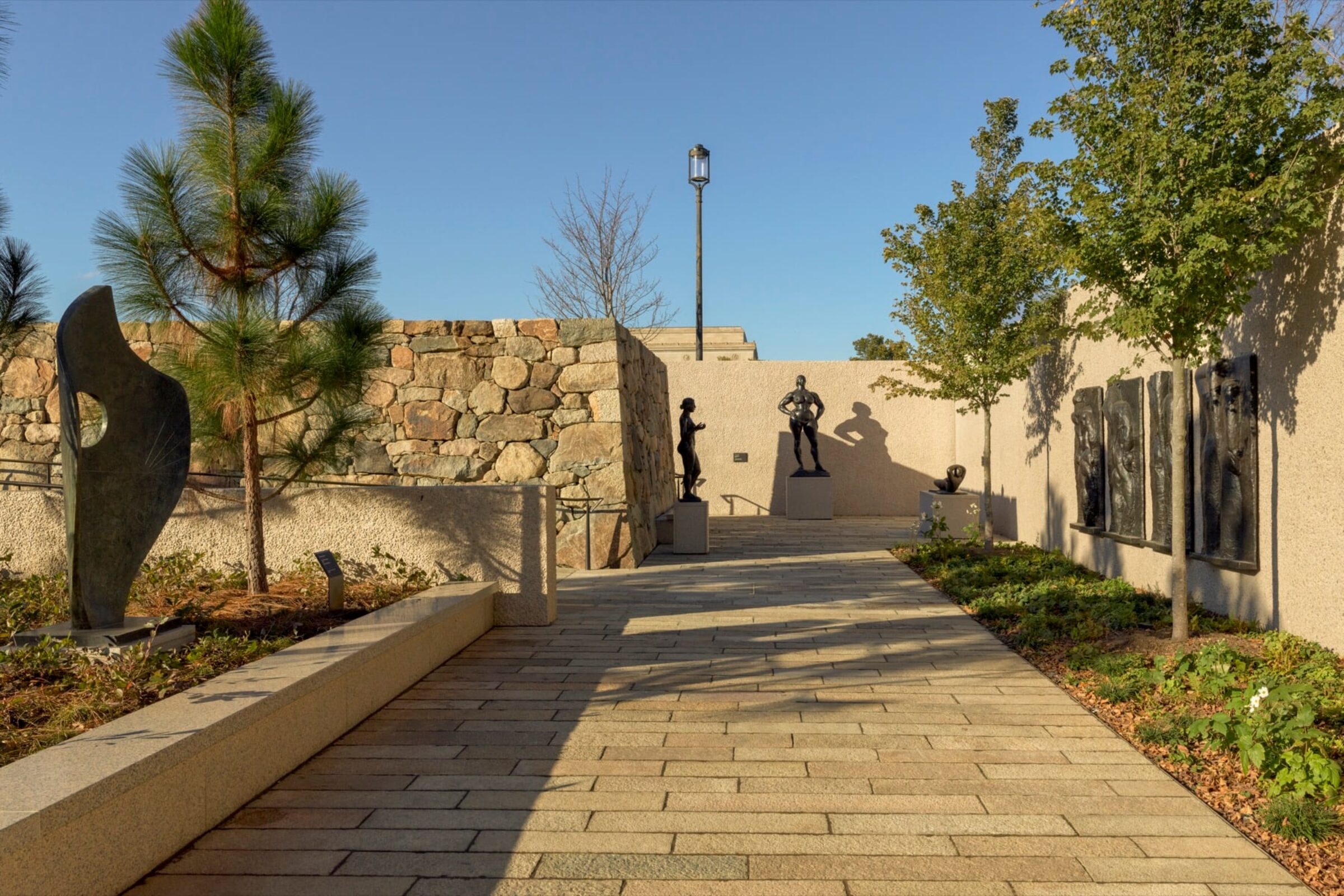
The reopening brings together works from the collection’s founding gift and more recent acquisitions. Of the 60 sculptures planned for the Sculpture Garden and Plaza, 39 come from Joseph H. Hirshhorn’s personal collection, and 21 of those were exhibited when the garden first opened in 1974. The East Garden emphasizes modern sculpture, with works by Henry Moore, Barbara Hepworth and David Smith alongside pieces by other 20th-century artists.
Contemporary installations extend across the rest of the site. They include Yoko Ono’s Wish Tree for Washington, DC (2007), which invites visitors to attach written wishes for peace to a Japanese dogwood. Recent acquisitions by artists including Lauren Halsey, Liz Larner and Pedro Reyes also sit in the garden, so older and newer works share the same stone-defined spaces.
The project was developed by Sugimoto’s Tokyo-based New Material Research Laboratory, in association with YUN Architecture. Quinn Evans served as architect of record, and Rhodeside & Harwell worked as landscape architect. The garden opens to the public on October 31st.
For more background, see our guide to sustainable landscape architecture.

Mireille Chevalier is a projects editor and architectural writer from Lyon. With a dual background in architecture and history, she brings a contextual lens to design criticism and theory