

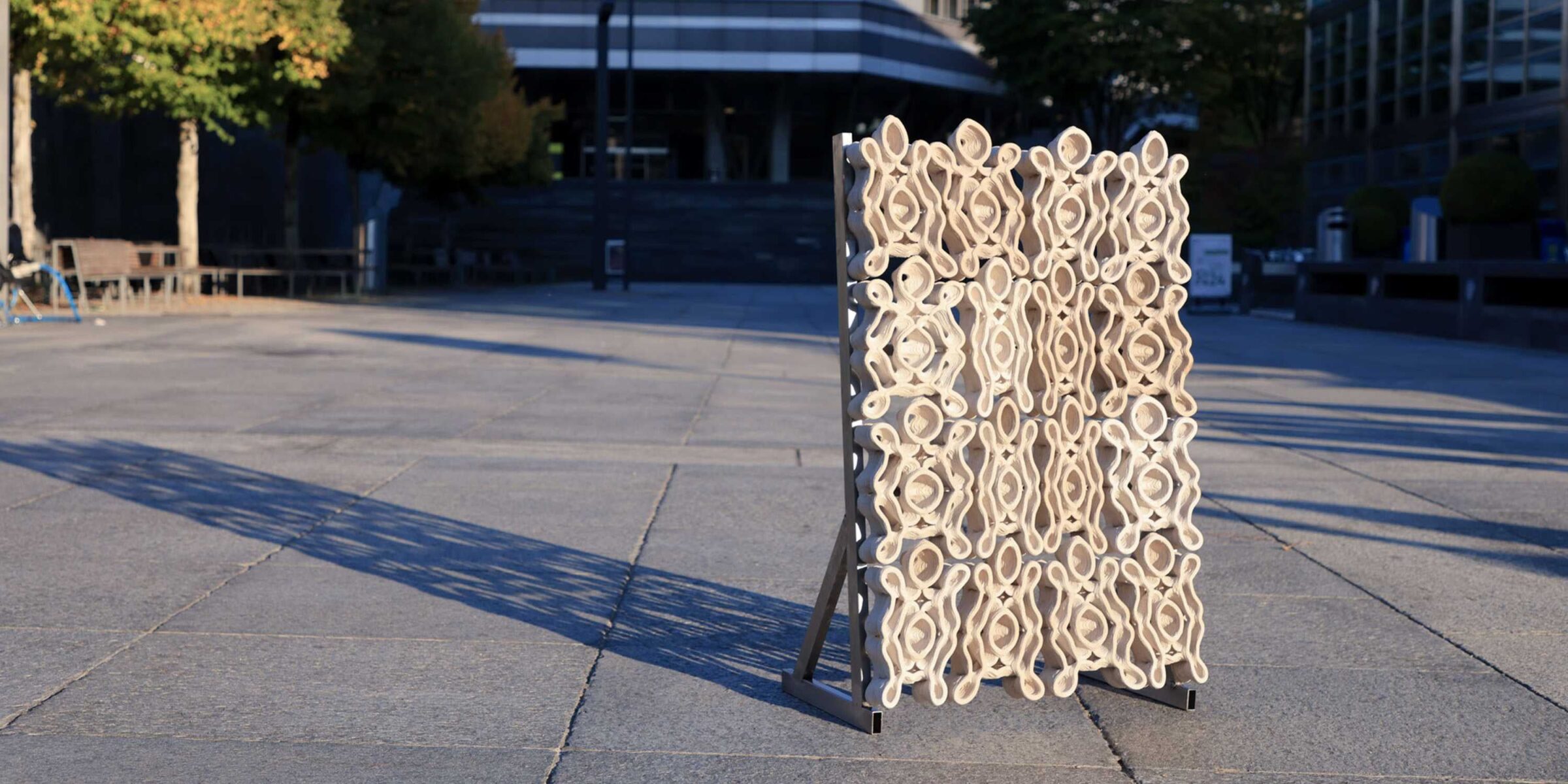
Karen Antorveza Paez, a researcher at the ETH Zurich Department of Architecture, has developed two digital manufacturing methods that use bacteria to bind sand into solid architectural elements. This bacteria-based 3D printing architecture research combines 3D printing and robotic fabrication, and it could offer an alternative to conventional cement-based construction.
Kai-Hsun Yeh / ETH Zurich
Both methods rely on Sporosarcina pasteurii bacteria, which produce calcium carbonate, or limestone, between grains of sand. The process is known as microbiologically induced calcite precipitation (MICP), and it creates mineral crystals that mechanically bind the grains together into a solid mass.
In the first method, a gel-based mixture containing sand and live bacteria is 3D-printed into the desired form. The printed piece is then immersed in a solution containing urea and calcium chloride, where mineralization takes two to five days, depending on the strength the component requires. The resulting components could be used for facade elements, sun shading, and partition walls.
Read more:
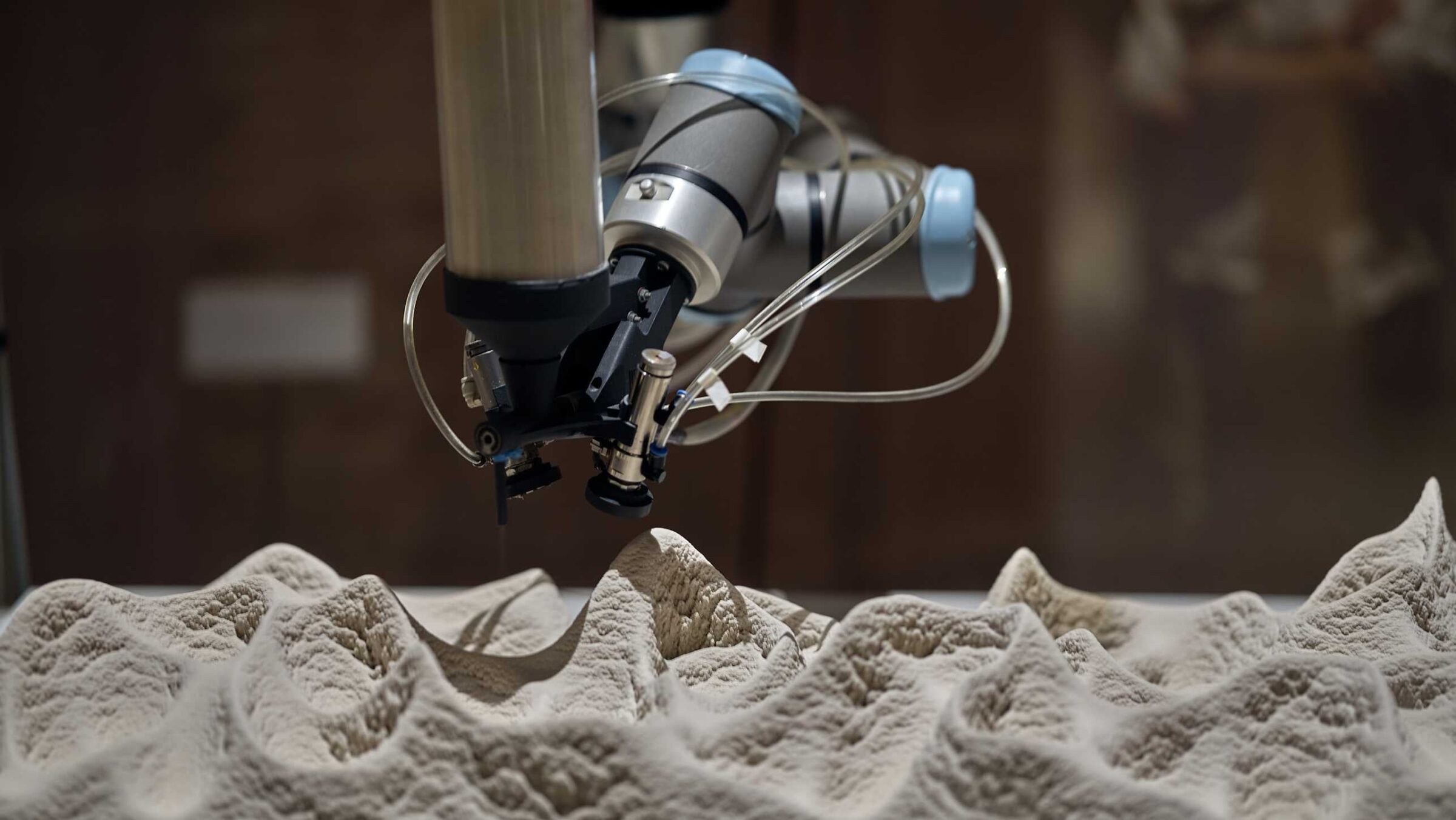
The second method removes the immersion bath altogether. A robotic arm applies sand, bacteria, and mineralization substances in successive layers, so the material hardens as the piece is built up. The team demonstrated this automated process continuously for six months at the 2025 Venice Architecture Biennale.
For more background, see our guide to facade cladding materials.

Jane Doe is an American architectural editor with a deep-rooted passion for design and the built environment. She holds a degree in Architecture from Columbia University, where she developed a strong foundation in both architectural theory and urban studies. With over a decade of editorial experience, Jane specializes in shaping content that bridges architecture, urbanism, and cultural discourse. Her work spans leading design publications, exhibition texts, and digital platforms, where she is known for her clear, engaging narratives and her ability to translate complex spatial ideas for a broad audience. Jane is particularly interested in issues of equity, sustainability, and the evolving role of cities in a changing world.