

Public fame in architecture requires a rare alignment of factors that have almost nothing to do with design skill: a singular, repeatable signature style, aggressive media coverage, decades of longevity, and a handful of landmark buildings photogenic enough to travel on social media. Most working architects, no matter how technically gifted or how many lives their buildings quietly improve, never assemble all four at once — which is why the profession has so few names the public actually recognizes.

A photogenic contemporary building of the kind that travels widely in architectural media, illustrating how camera-ready form, rather than design skill alone, drives public recognition.
Why are most architects not famous?
Fame in architecture is a marketing outcome, not a design outcome — it depends on visibility, a distinctive visual “brand,” and stylized geometry that photographs well, rather than pure structural ingenuity or spatial success. Compare architecture to film or music, where a single performer or director stands in front of the finished product and can be photographed, interviewed, and profiled. A building, by contrast, is the output of a firm: dozens of architects, engineers, contractors, and consultants, most of whom never appear in the press release.
The public also tends to remember buildings, not people. Millions of visitors know the Sydney Opera House; a much smaller number could name Jørn Utzon, and fewer still could describe what he actually contributed versus what the engineering firm Ove Arup & Partners solved on his behalf. Fame requires a face attached to a form, and architecture’s collaborative production process actively works against that pairing.
Longevity matters too. A painter’s early work can be “discovered” decades later. A building, once built, is fixed — an architect needs a string of commissions across a long career, consistent media coverage of each one, and a recognizable formal language tying them together, before the public starts connecting dots. Most architects build steadily but quietly for thirty years without ever producing the kind of singular, camera-ready icon that triggers mainstream recognition.
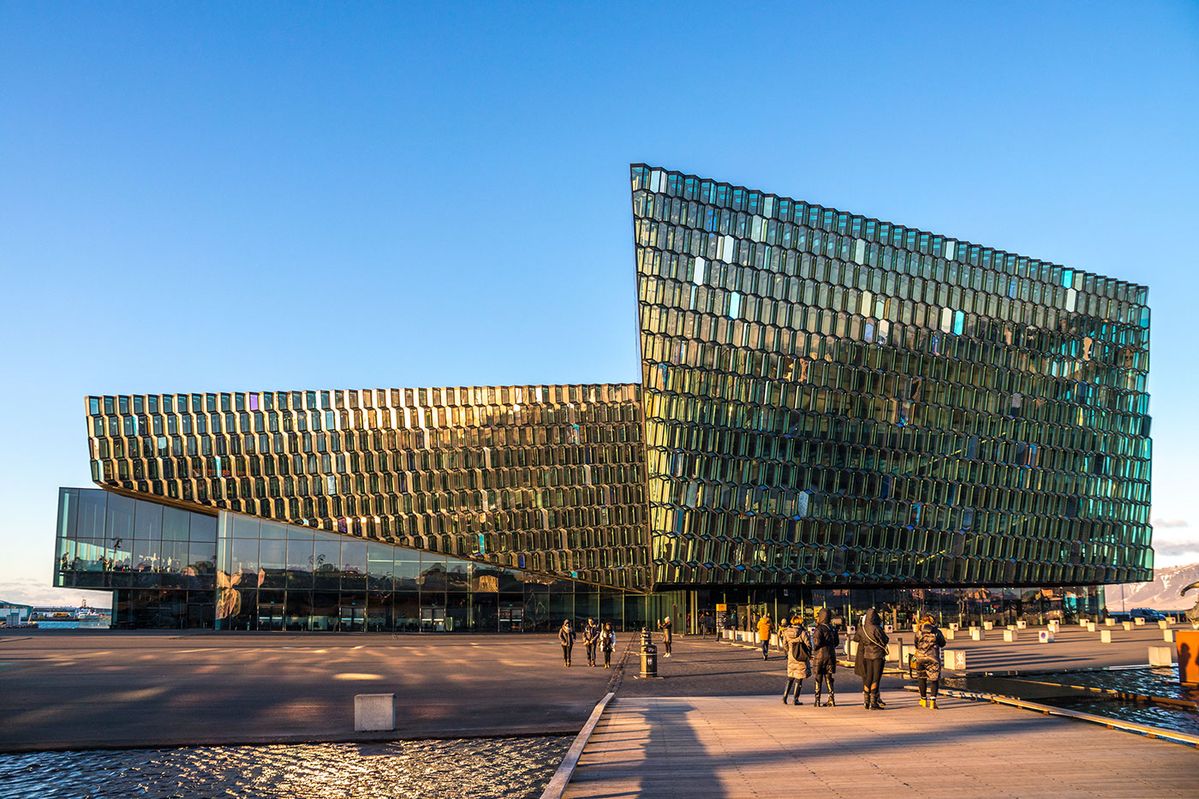
Contemporary architecture that is critically respected within the profession yet largely unknown to the general public. Photograph by Tania De Pascalis
Do Pritzker Prize winners become famous?
No. Winning architecture’s highest professional honor and becoming a public celebrity are two entirely separate tracks, and many Pritzker laureates remain completely unknown outside the discipline. The Pritzker Prize, architecture’s closest equivalent to a Nobel, is judged by a jury of architects, critics, and academics evaluating a body of work against criteria like formal innovation, social responsibility, and contribution to the discipline. None of those criteria require public name recognition.
Ask a general audience to name a Pritzker laureate and most will land on the handful who also achieved genuine celebrity — Frank Gehry, Zaha Hadid, perhaps Renzo Piano. Ask the same audience about laureates like Rafael Aranda, Carme Pigem, and Ramon Vilalta of RCR Arquitectes, or Francis Kéré, or Wang Shu, and recognition drops sharply, despite each having produced work the profession considers among the most significant of their generation. Peer respect is earned through the quality and rigor of the work itself; public stardom is earned through media cycles that have very little to do with peer evaluation.
Why does architecture undervalue collaborative work?
Architecture’s recognition system is built around the “lone genius” myth, crediting a single named figure for what is almost always a deeply collaborative act — and the Denise Scott Brown 2013 petition is the clearest documented case of how the industry handles that credit. In 1991, the Pritzker Prize was awarded solely to Robert Venturi for a body of work he had produced, in large part, in full partnership with his wife and professional collaborator, Denise Scott Brown, at their firm Venturi, Scott Brown and Associates. Scott Brown had co-authored the firm’s foundational texts, including the influential *Learning from Las Vegas*, and had shaped the theoretical and urbanist framework the jury cited as the basis for Venturi’s win. She received no prize.
In 2013, students at Harvard’s Graduate School of Design launched a petition calling on the Pritzker committee to retroactively recognize Scott Brown alongside Venturi for the 1991 award. The petition gathered signatures from thousands of architects, academics, and students worldwide, and became one of the most visible public debates about credit and gender in the profession’s modern history. The Pritzker jury reviewed the request and declined to alter the 1991 award, stating that prizes are not revised retroactively. Scott Brown herself has spoken about the episode as emblematic of a broader pattern: collaborative and intellectual contributions, particularly from partners working alongside a more publicly branded figure, are routinely folded into a single name rather than shared.
The case matters beyond one firm. It illustrates, in a single well-documented episode, exactly how the profession’s award structures, press coverage, and historical record all default to crediting one signature rather than a studio, a partnership, or a team — which means every architect working inside a collaborative practice, which is most of them, starts from a structural disadvantage when it comes to public recognition.
Can an architect be excellent without being famous?
Yes — fame is a media phenomenon layered on top of the profession, not a measurement of design quality, contextual success, or peer reverence. Some of the most technically accomplished architects working today are principals at firms whose names appear only in trade publications: engineers of complex hospital systems, designers of transit infrastructure serving millions of daily riders, or specialists in affordable housing who solve harder problems, with fewer resources, than most celebrated monuments ever face. Their absence from public awareness says nothing about the caliber of their work; it says only that their work was never packaged for a general audience.
The Structural Bias of Architectural Media
Architectural publishing, both trade and mainstream, is structurally tilted toward a narrow slice of the built environment. A sculptural museum, a dramatic private residence, or a signature cultural monument is visually self-contained: it can be photographed from a single angle, captioned in one sentence, and understood at a glance. These projects dominate magazine spreads, architecture Instagram accounts, and awards shortlists because they are cheap to communicate and easy to admire without technical background.
Complex infrastructure, master planning, hospital design, and affordable housing rarely get the same treatment, even though their societal footprint is enormous. A regional transit hub or a large-scale affordable housing development might house or move more people in a single year than a famous museum welcomes in a decade, yet it resists easy photography: it is functional rather than sculptural, it is judged by performance metrics rather than silhouette, and its success is often invisible precisely because it works. The architects behind these projects solve harder logistical and social problems with tighter budgets, more regulatory constraint, and far less design freedom — and receive a fraction of the coverage.
This bias compounds over a career. An architect who specializes in dramatic, photogenic cultural buildings accumulates a portfolio that magazines want to publish again and again, reinforcing a signature style the public eventually recognizes. An architect who specializes in housing, schools, or public infrastructure accumulates a portfolio that is critically respected but rarely reproduced outside professional journals, so no public-facing signature ever has the chance to form.
Redefining Success
For readers, students, and practitioners, the more useful question is rarely “is this architect famous?” but “does this space function well, respect its context, and serve the people who use it?” Judged by those standards, the profession’s real success stories are often anonymous: the school that ages gracefully over forty years, the housing block that stays livable and dignified, the transit station that quietly moves a city. None of that requires a household name attached to it.
Recognizing this doesn’t diminish the architects who do become famous — many, like Frank Gehry or Zaha Hadid, earned both peer respect and public visibility through genuinely significant work. It simply means that fame is one possible outcome of a career, not a requirement for one to matter. Evaluating architecture on its own terms, independent of celebrity, is a more honest way to understand what the discipline actually produces.

Luca Moretti is a content strategist with a foundation in urban design and architecture. Based in Milan, he focuses on writing that bridges aesthetics, material culture, and everyday spatial experiences.