

Architecture design competitions for students are worth entering when the competition is credible (a named jury, funded prizes, fair terms on who owns your design) and when its brief suits the work you already do well. Winning depends less on spectacular images than on answering the brief clearly, with one strong idea a jury can grasp in seconds. This guide is for architecture students and recent graduates: it shows how to judge whether a competition is worth the fee and the weeks, how juries usually score, how to adapt studio work and lay out boards, and what past architecture competitions teach. For broader career advice, see our tips on how to be a better architect.
[irp posts=’197712′]
Are architecture design competitions for students worth it?
Often, yes, but not always. A good competition gives you a real brief, a deadline, feedback from a jury if you are shortlisted, and a project for your architecture portfolio, whether or not you win. The costs are entry fees, which can be significant in some economies, and several weeks of work alongside your studio. The checklist below helps you decide before you pay.
How to tell whether a competition is credible
The International Union of Architects (UIA) bases its competition guidance on anonymity, transparency, equal treatment and non-discrimination, with a professional and independent jury and adequate prizes (UIA Competition Guide). Many student competitions are not UIA-endorsed, but the same tests are a good filter:
| Check | Good sign | Warning sign |
|---|---|---|
| Jury | Named jurors, mostly practising architects or academics | No jury named, or only the organisers |
| Prizes | Stated prize money, funded independently of entry fees | Prizes 'up to' an amount, or dependent on the number of entries |
| Entry fee | Modest, stated in full, with student rates | High fees, extra charges for registration and submission, no refunds |
| Intellectual property | Author keeps copyright; organiser licensed to publish and exhibit | All rights transferred to the organiser |
| Anonymity | Entries judged anonymously with a code | Names or schools visible to the jury |
| Timetable | Clear deadlines and results date, published past winners | Repeatedly extended deadlines, no past results |
| Brief | Real site or question, clear deliverables | Vague brief written mainly to sell registrations |
Source: Arch2O checklist informed by the UIA Competition Guide principles (anonymity, transparency, equal treatment, professional jury, adequate prizes) (as of 2026-11-01).
Who owns my design after I submit?
In most countries the author of a design keeps the copyright in it. Competition terms, however, often give the organiser a licence to publish, exhibit and sometimes use the entries, and some ask entrants to transfer rights. Read the intellectual-property clause before you enter; a fair competition takes only the rights it needs to publicise the results and, for a project competition, to commission the winner on agreed terms.
How do you win an architecture competition?
1. Select the right competition for you
Choose competitions that match your interests and skills. If your strength is parametric design and coding, an urban-planning competition is a different discipline. Students usually do better in ideas competitions than in project competitions that lead to a building, which need experience with codes, costs and consultants. Whether the competition leads to construction or only calls for ideas will have a big influence on your entry: regulations and context matter most for real buildings, while ideas competitions allow bolder proposals.
2. Can I enter a studio project?
Often you can, if the rules allow it and the project answers the brief. Check three things: whether the competition requires work produced for it (some forbid previously published or exhibited work), whether your school has rules on submitting coursework externally, and whether any of the work was done with classmates or tutors, who would then need to be credited. Adapting studio work usually means re-reading the competition brief and redrawing the key sheets around its questions, not just reformatting old boards.
3. Follow the brief, and exceed it
Analyse the brief carefully and check that your design answers every requirement, then take it further. Research the organisers and jurors to understand their priorities, but avoid copying their previous projects. The jury is looking for an idea that is both new and workable.
4. Form that functions
An entry that only looks good will not survive close reading. Show how the building or space works: how people arrive, how spaces connect, how it relates to the public realm, and the basic logic of structure and materials.
5. One clear idea
Juries review many entries quickly. A single strong concept that can be understood from one image and one sentence is more effective than several competing ideas. Bold concepts can win: large public competitions sometimes choose an ambitious idea knowing it will be refined later.
6. Get an outside view
After weeks on a project you stop seeing it as a stranger would. Before submission, ask someone who has not seen the project to explain it back to you from the boards alone. If they cannot, revise the boards.
7. Presentation is the key
Lead with the idea, not the technique. Use clear diagrams, a readable plan and section, and images that show the project in its context. Atmospheric renders help when they explain the experience; images that only decorate take space from the explanation.
How juries usually score entries
Criteria and weightings are set in each competition’s rules, so always use those. The table shows criteria that commonly appear in published competition rules and how to show each on your boards.
| Criterion | What the jury looks for | How to show it on your boards |
|---|---|---|
| Response to the brief | Every requirement addressed | Short brief-response diagram or checklist |
| Concept | One clear, original idea | Lead image and one-sentence statement |
| Function | Workable plan, circulation, programme areas | Clear plan with key areas labelled |
| Context | Relationship with site, city, landscape | Site plan, section through the context |
| Sustainability | Credible environmental strategy | Annotated section showing daylight, ventilation, materials |
| Feasibility | Structure, cost and buildability (project competitions) | Structural diagram, phasing or cost logic |
| Presentation | Legibility within seconds | Hierarchy: big idea first, details after |
Source: Arch2O synthesis of criteria commonly stated in competition rules; use each competition's own published criteria and weightings (as of 2026-11-01).
Boards and descriptions
Follow the format exactly: sheet size and orientation (often A1 or A0 landscape or portrait), number of sheets, file type and size, word limits for the description and the anonymity code. Entries that break the format are often disqualified before the jury sees them. Put no names, school logos or identifying marks on the boards when the competition is anonymous.
Common reasons entries are rejected
- Missing the deadline or uploading the wrong file format or size.
- Identifying the author on an anonymous entry.
- Ignoring part of the brief, such as the site or the programme area.
- Boards with no clear concept, too much text or unreadable drawings.
- Work that is not original or does not credit collaborators.
What competitions can teach you
The debate over whether competitions are good for architects continues, but a well-prepared entry gives you practice in working to a brief and a deadline, skills that are among the things they don’t teach you in architecture school. Five well-documented competitions show different lessons.
The classic: Sydney Opera House (1957)
The international competition for the Sydney Opera House attracted about 233 entries, according to the State Archives of New South Wales (other sources give 220-223). The winner, announced on 29 January 1957, was the 38-year-old Danish architect Jørn Utzon, then little known. The jury of four architects included Eero Saarinen; the popular story that Saarinen rescued Utzon’s scheme from the rejected entries is often repeated but not firmly documented. The lesson is that a single, clear and memorable idea can carry a competition, even from a young architect.
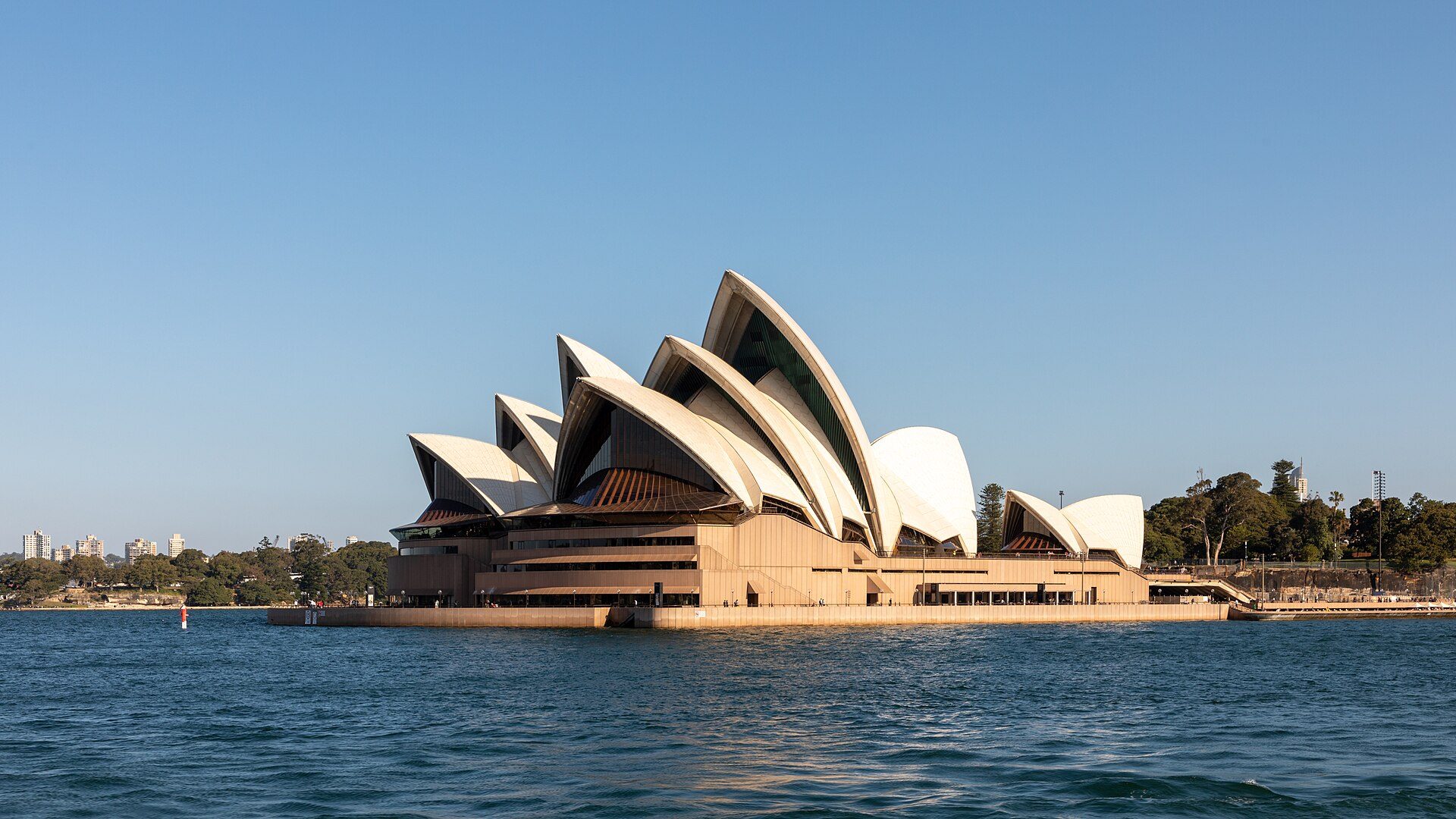
Sydney Opera House by Jørn Utzon, winner of the 1957 international competition. Photo: Dietmar Rabich, CC BY-SA 4.0, via Wikimedia Commons. Dietmar Rabich, source, CC BY-SA 4.0
Calgary New Central Library

Calgary’s New Central Library and Library Plaza Finalist– REX & Group 2 – Image Courtesy: www.rex-ny.com
The Calgary Public Library’s process narrowed 38 international submissions to a shortlist of four teams in August 2013: 3XN with AECOM, KPMB with BKDI, REX with Group2, and Snøhetta with DIALOG. Snøhetta and DIALOG were selected in November 2013, and the library opened in 2018 (ArchDaily).

Calgary’s New Central Library and Library Plaza Finalist– REX & Group 2 Courtesy: www.rex-ny.com
The winning scheme rethought what a central library is for in a digital age, as a civic and social space as much as a place for books.

Calgary’s New Central Library and Library Plaza Finalist– REX & Group 2 Courtesy: www.rex-ny.com
Lesson: do not be afraid to rethink the building type when the brief invites it, but make sure the new idea serves the site and the programme.
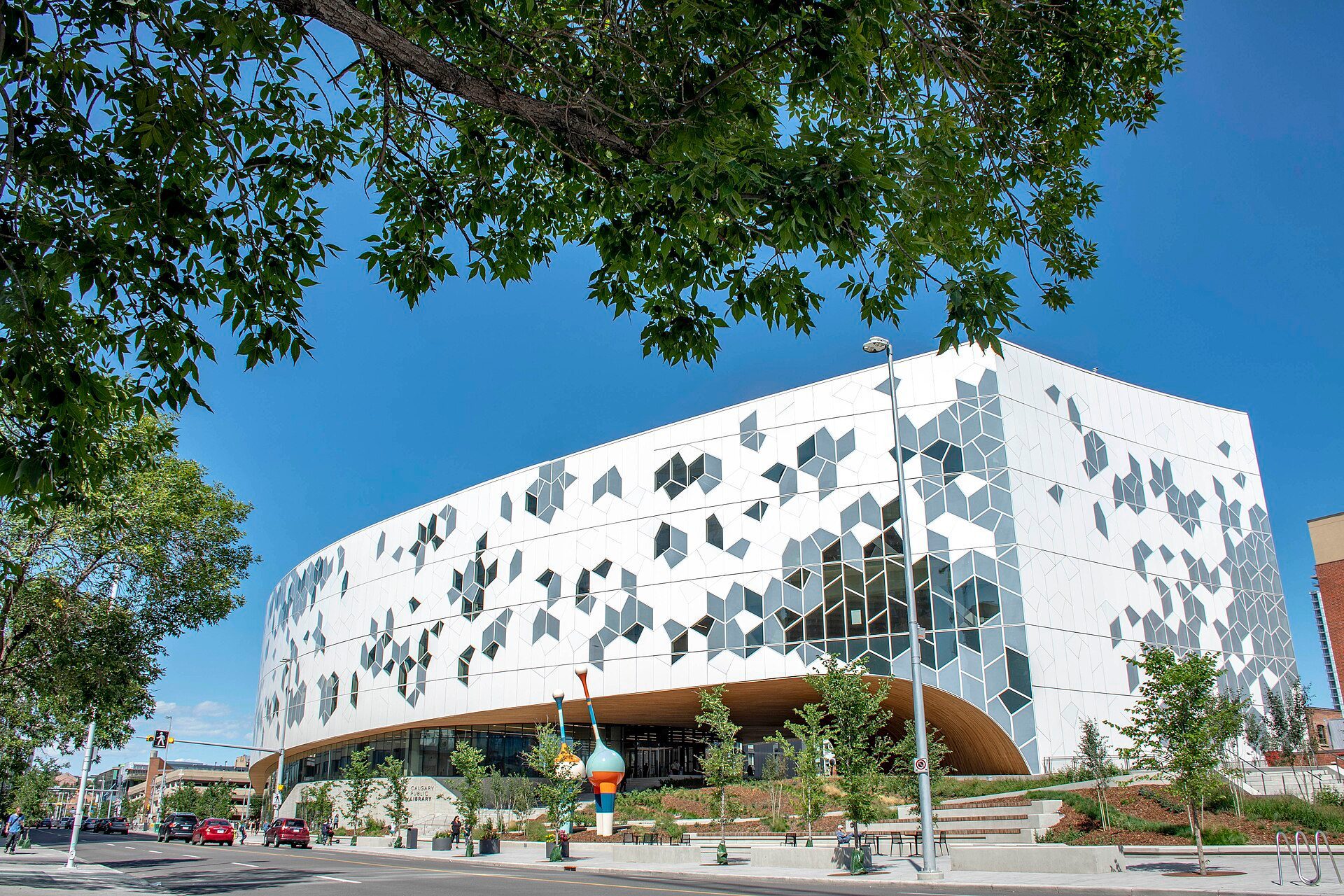
Calgary's Central Library by Snøhetta and DIALOG, selected through a 2013 competition. Photo: Calgary Public Library, CC0, via Wikimedia Commons. Image: Calgary Public Library (Creative Commons Zero)
Liget Budapest museum competitions

House of Hungarian Music– Sou Fujimoto Architects- Image Courtesy: Varosliget Zrt
The Liget Budapest Project in Budapest’s City Park ran several open international competitions in 2014-2015 for new museum buildings. They attracted hundreds of entries. Results included a shared first place for SANAA and Snøhetta for the New National Gallery and a win for Sou Fujimoto Architects for the House of Hungarian Music (Dezeen).

Fotomuzeum Budapest and the Hungarian Museum of Architecture– Középülettervező Zártkörűen Működő Részvénytársaság
Because the museums were to be built in a historic park, the briefs placed weight on protecting green space and on the buildings’ relationship with the park, alongside architectural quality, function, sustainability and cost.

Museum of Ethnography– Vallet de Martinis DIID Architectes – Image Courtesy of DIID Architectes
Lesson: read the brief for its priorities. When a client says that sparing the park matters, an entry that occupies less of it has an advantage.
St. Petersburg Pier, Florida
In January 2012, “The Lens” by Michael Maltzan Architecture won the competition to replace the city’s 1973 inverted-pyramid pier. Public opposition followed, and in an August 2013 referendum voters cancelled the city’s contract with the architects by 63% to 37% (Tampa Bay Times). The city started again and presented eight scaled-down proposals in late 2014.

New St. Petersburg Pier Finalist– Image Courtesy: ASD/Rogers Partners/KSLA
Lesson: on public projects, the jury is not the only audience. Test how your proposal will be understood by the people who will use it.
eVolo 2014 Skyscraper Competition
eVolo’s annual skyscraper competition is an ideas competition for vertical architecture. In 2014 the first prize went to Yong Ju Lee for “Vernacular Versatility”, which reinterprets traditional Korean timber architecture in a high-rise.

2014 eVolo Magazine Skyscraper Competition Winner – Image Courtesy of eVolo.us
Lesson: innovation can come from reinterpreting tradition, not only from new technology. Ideas competitions are the place to test such ideas.
Guggenheim Helsinki
The 2014-2015 open competition for a Guggenheim museum in Helsinki received 1,715 entries, one of the largest architecture competitions ever held. The jury, chaired by Mark Wigley, chose six anonymous finalists and selected “Art in the City” by Moreau Kusunoki Architectes in June 2015. In December 2016 Helsinki City Council voted 53 to 32 against the project, mainly over costs, and it was not built (Dezeen).

Guggenheim Helsinki Design Competition Finalist (Courtesy: www.designguggenheimhelsinki.org)
Lesson: the finalists were chosen for their sensitivity to the harbour site rather than for spectacle, and even a winning design depends on politics and funding. For students, this is a reminder that the value of a competition lies largely in the work itself.
Final checklist for architecture design competitions for students
- Check the jury, prizes, fee and intellectual-property terms before you register.
- Choose a competition that suits your skills and time.
- Read the brief twice and list every requirement.
- Develop one clear idea and test it on someone outside the project.
- Follow the board format and anonymity rules exactly.
- Keep the boards and the story behind them for your portfolio.
Winning does not always mean first place. Honourable mentions and shortlisted entries are often published and noticed, and every serious entry adds to your skills. If you want to compare recognition schemes, our overview of architecture awards explains the main international prizes.
Sources and further reading
- UIA Competition Guide for Design Competitions in Architecture and Related Fields (2020 edition, PDF copy).
- ArchDaily: Calgary New Central Library shortlist (2013).
- Tampa Bay Times: voters reject the Lens (2013).
- Dezeen: Guggenheim Helsinki scrapped (2016).

Ibrahim Abdelhady is an architect, academic, and media entrepreneur with over two decades of experience in architecture and digital publishing. He is the Founder and CEO of Arch2O.com, a leading platform in architectural media, renowned for showcasing innovative projects, student work, and critical discourse in design. Holding dual PhDs in Architecture, Dr. Abdelhady combines academic rigor with industry insight, shaping both future architects and architectural thought. He actively teaches, conducts research, and contributes to the global architecture community through his writing, lectures, and media ventures. His work bridges the gap between practice and academia, pushing the boundaries of how architecture is communicated in the digital age.