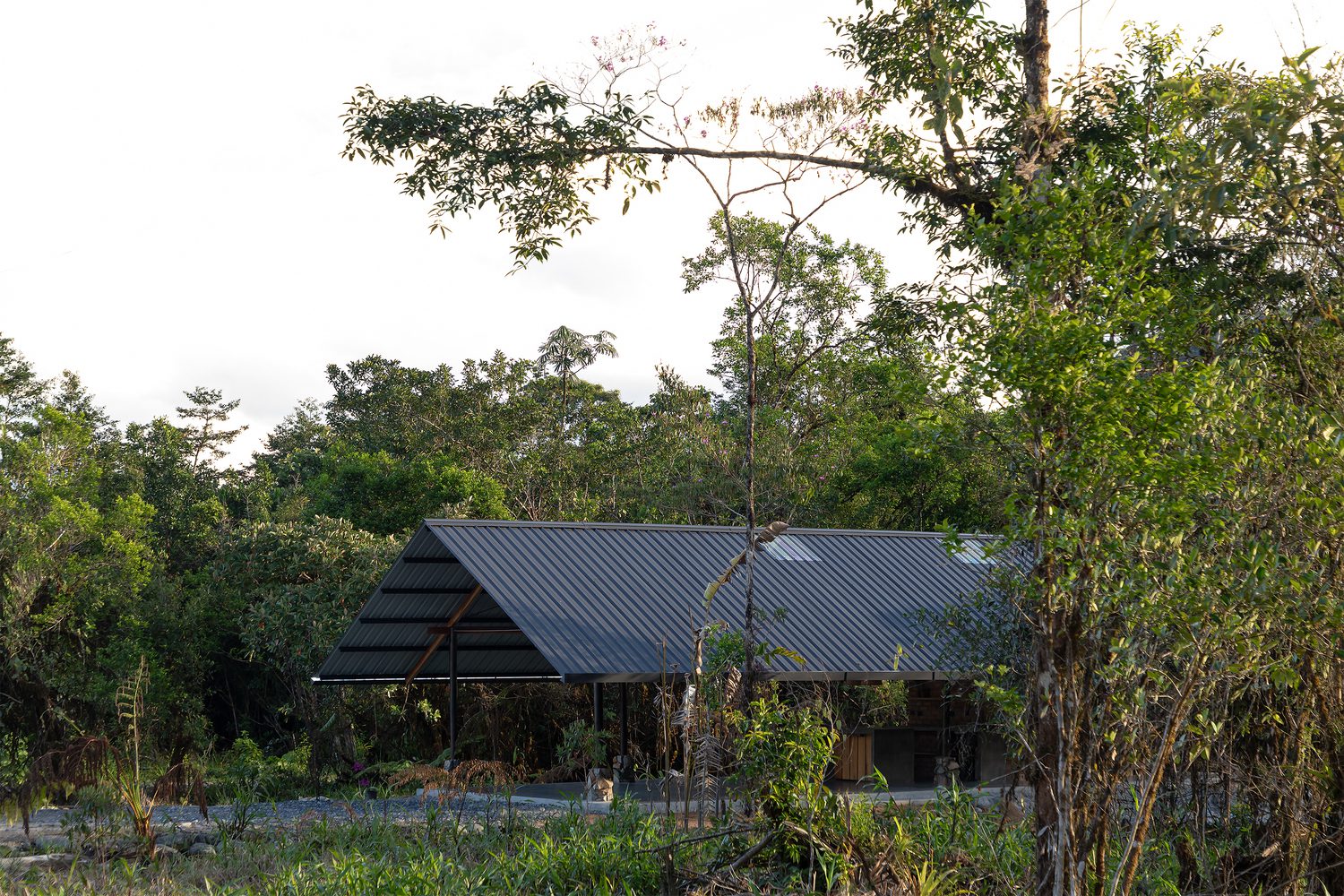
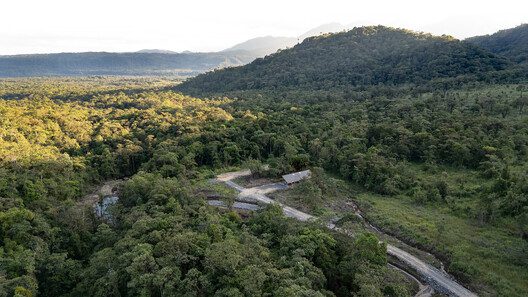
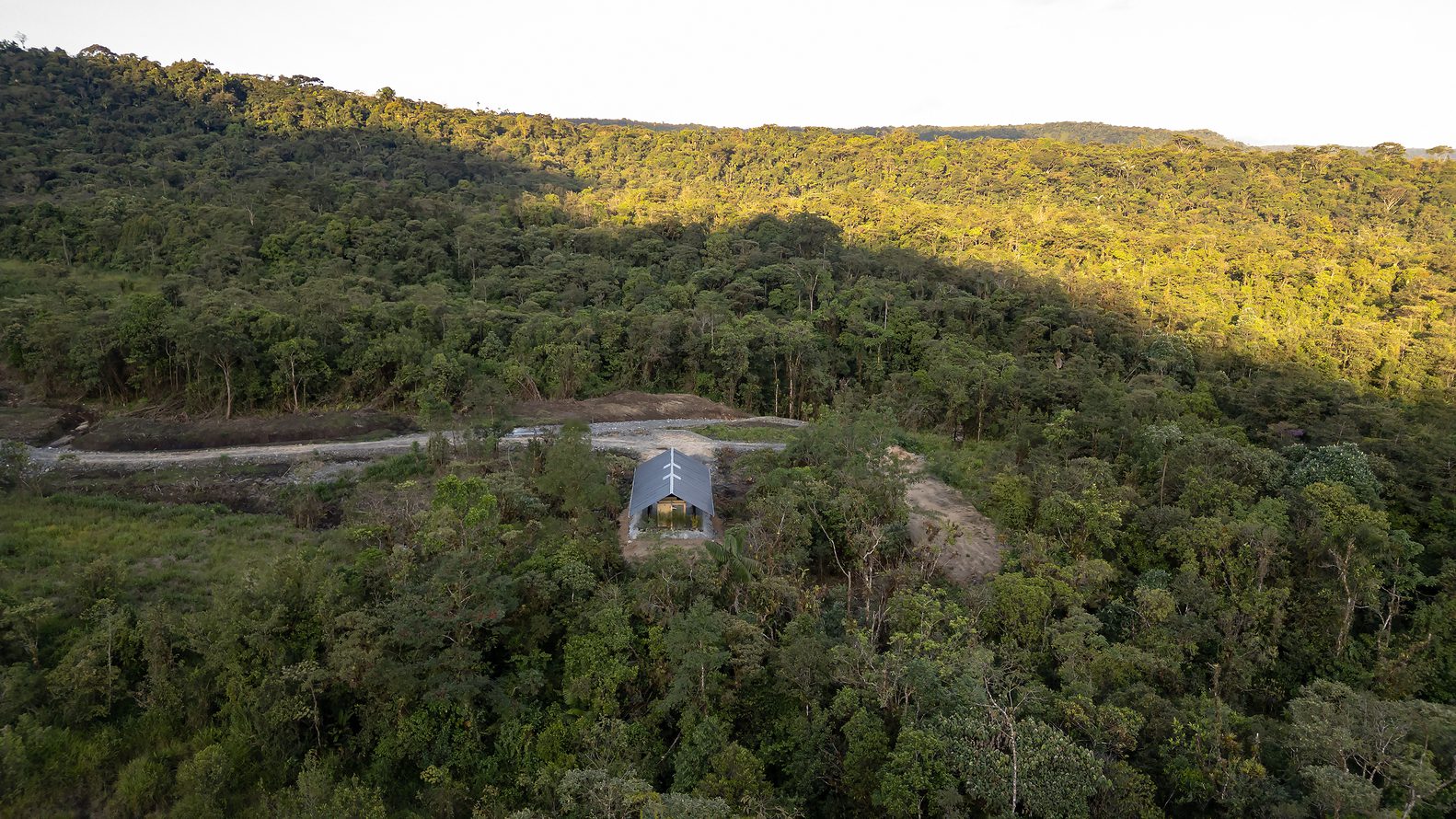
River Terrace, At 1,250 meters above sea level in a montane forest on the eastern foothills of Llanganates National Park, at the northern edge of Pastaza province, there are around 800 species of vascular and endemic plants.
© JAG Studio
Among them are palm species such as chonta, pambil, and killi, natural resources that have been part of the identity and imagination of ancestral Amazonian peoples, largely used as pillars in their vernacular constructions.
© JAG Studio
Within this natural context, the presence of bodies of water is common in the area; small streams or consolidated rivers have attracted a population committed to environmental conservation to install small shelter facilities, lodges, and reserves for animal rescue and ecological protection.
© JAG Studio
On a plot of 4.5 hectares, a young family is developing a sustainable tourism project that will be solidified over time. Thus, as a first intervention, the need for a transitional space arises along one of the routes leading to Llanganates Park.
© JAG Studio
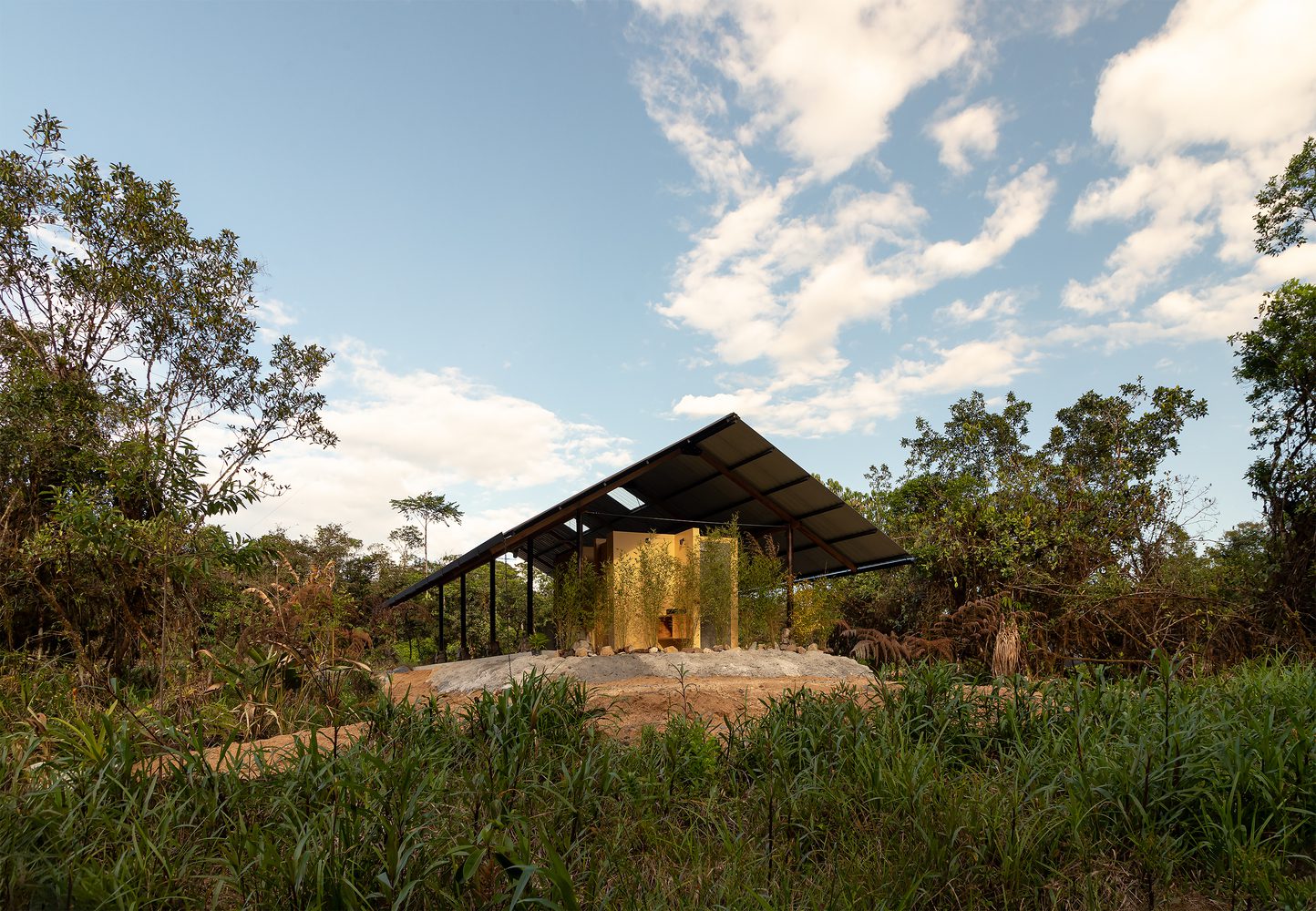
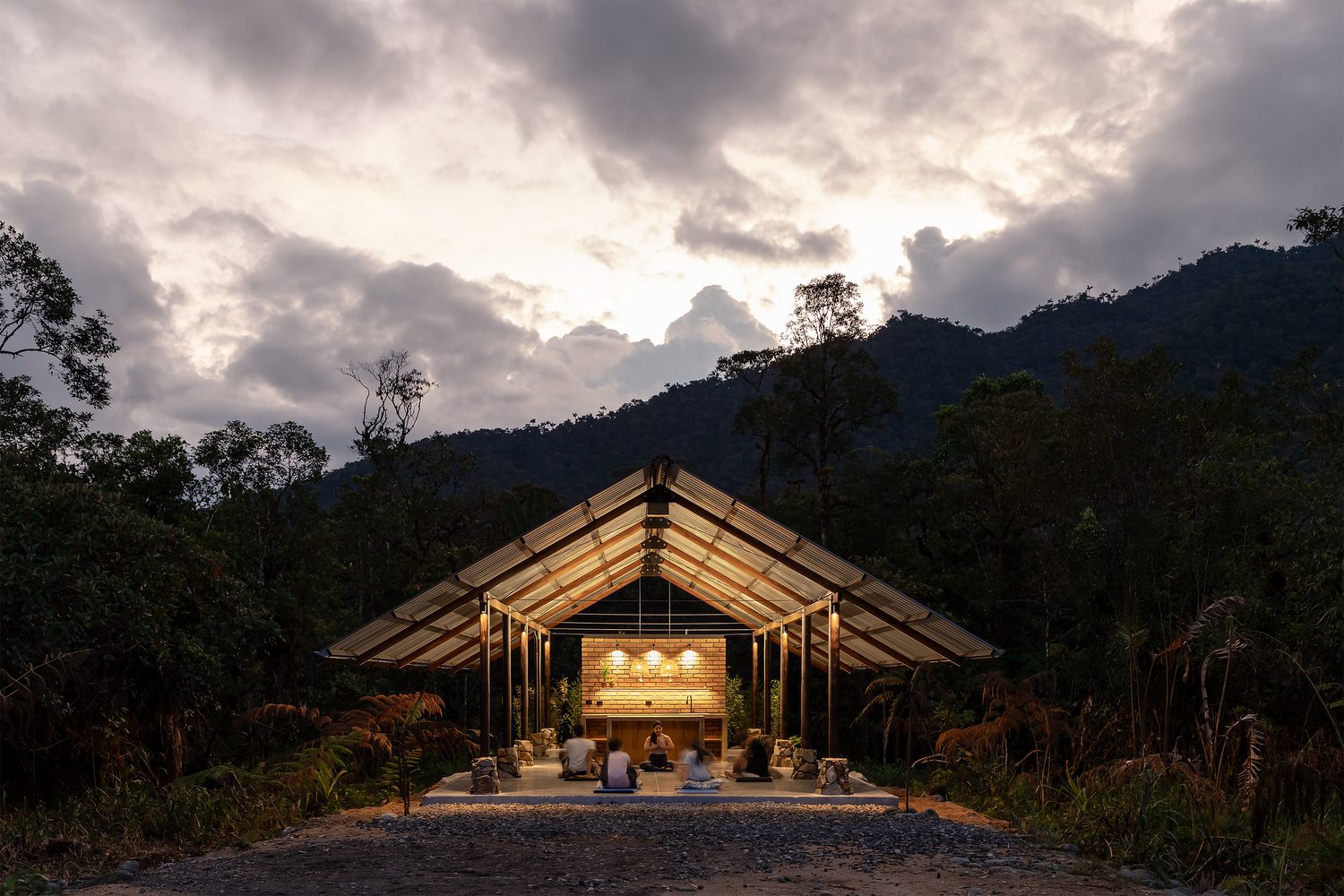
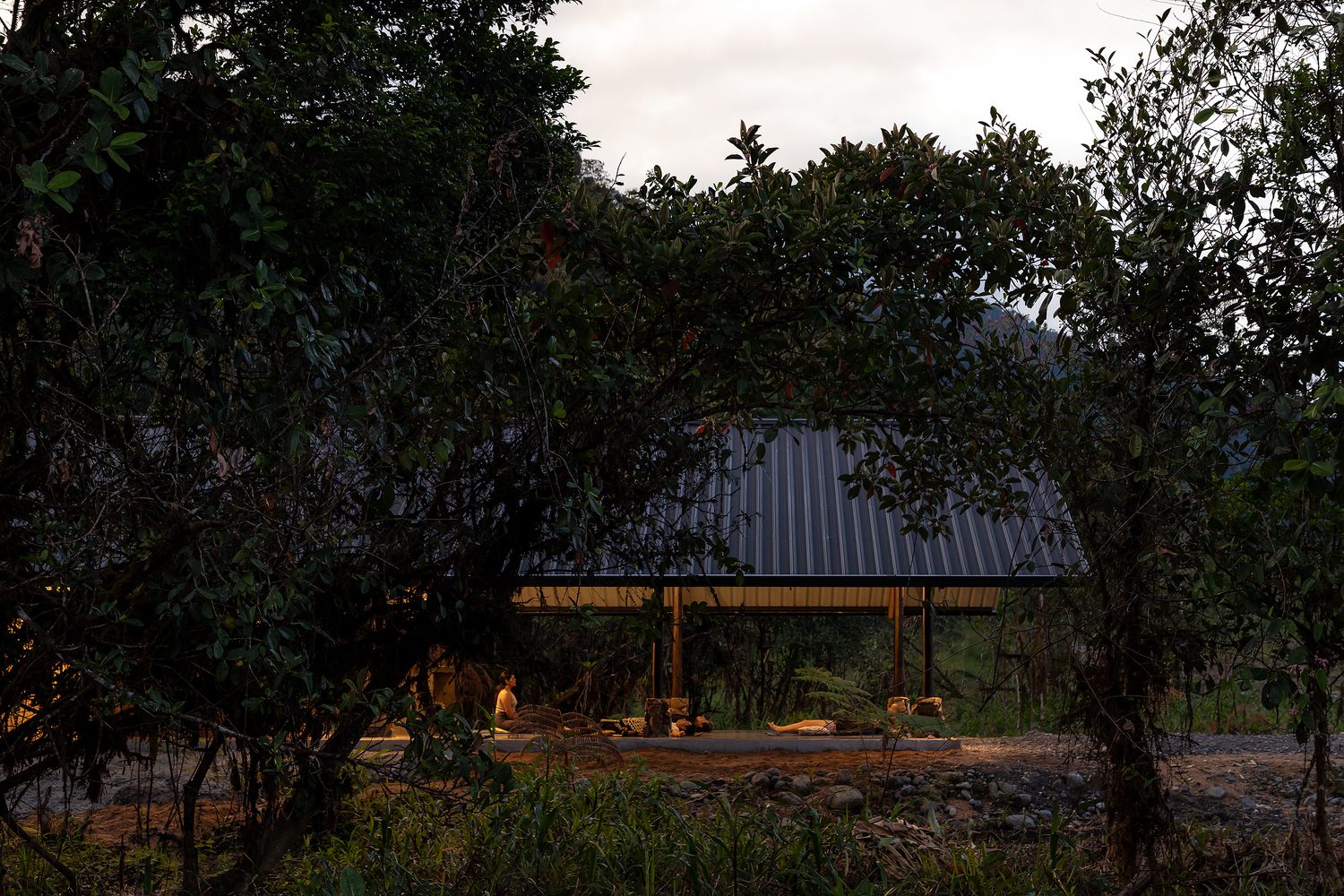
The project is established as a dynamic meeting point designed to adapt to various uses. The space invites transient tourists to freely occupy the area, capable of hosting activities such as meetings, dining, camping, or even a center for spiritual retreats.
© JAG Studio
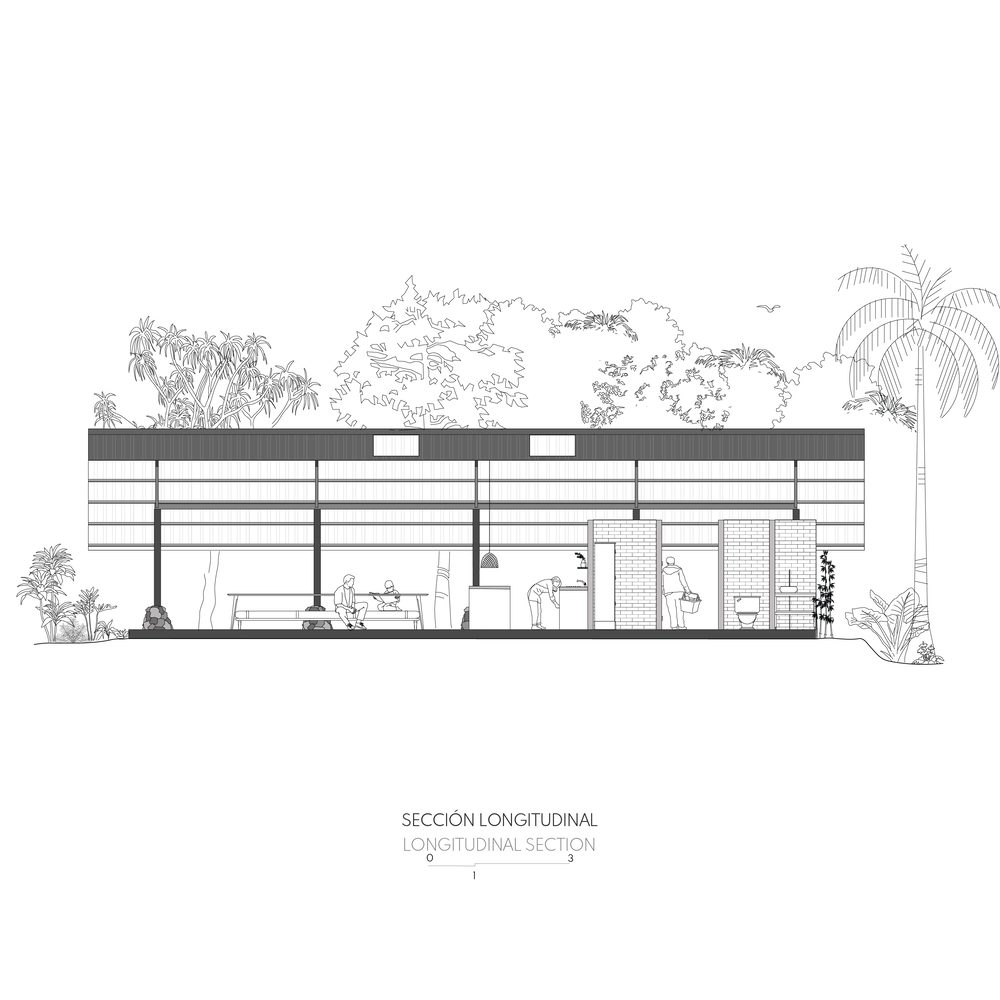
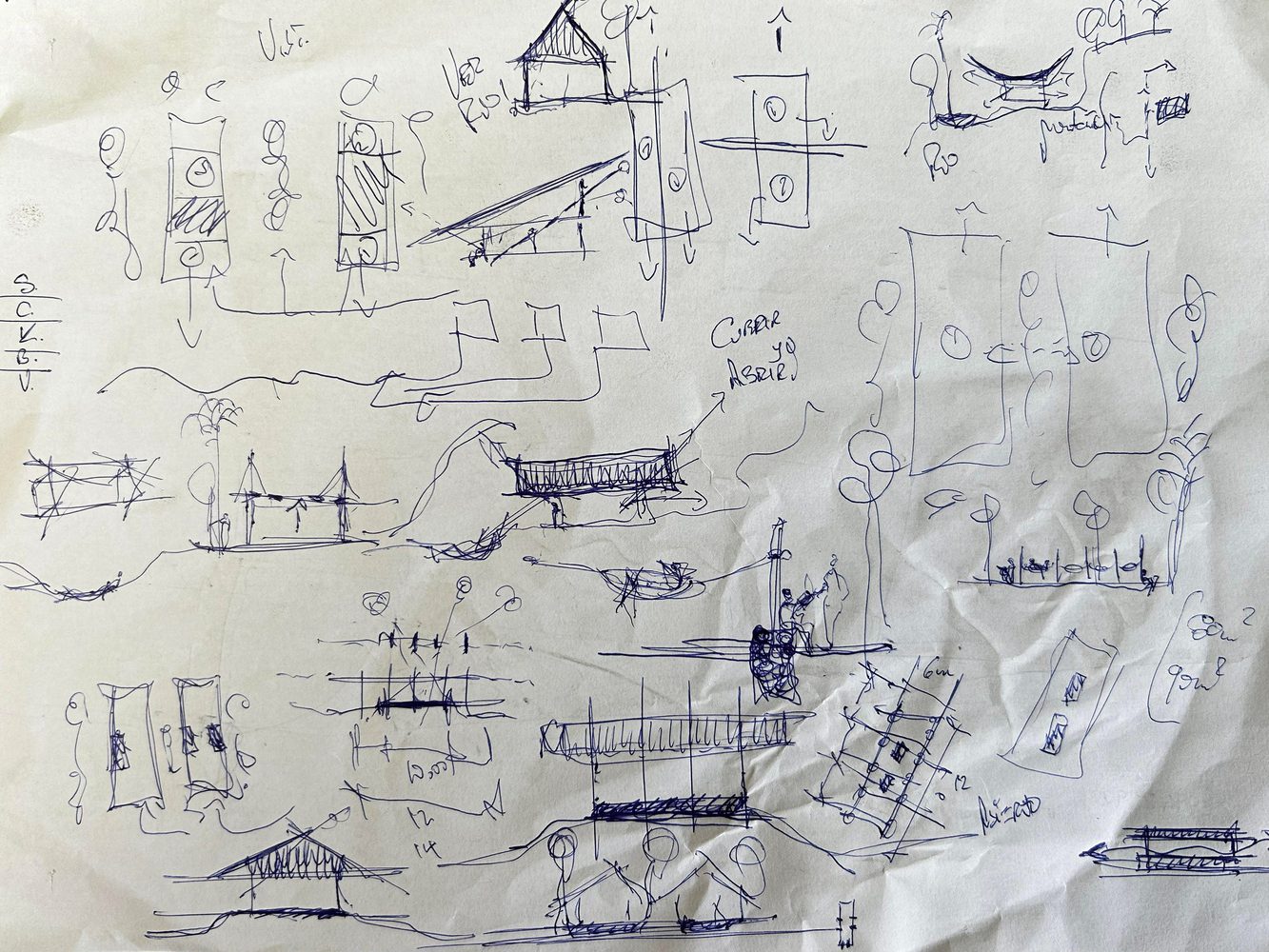
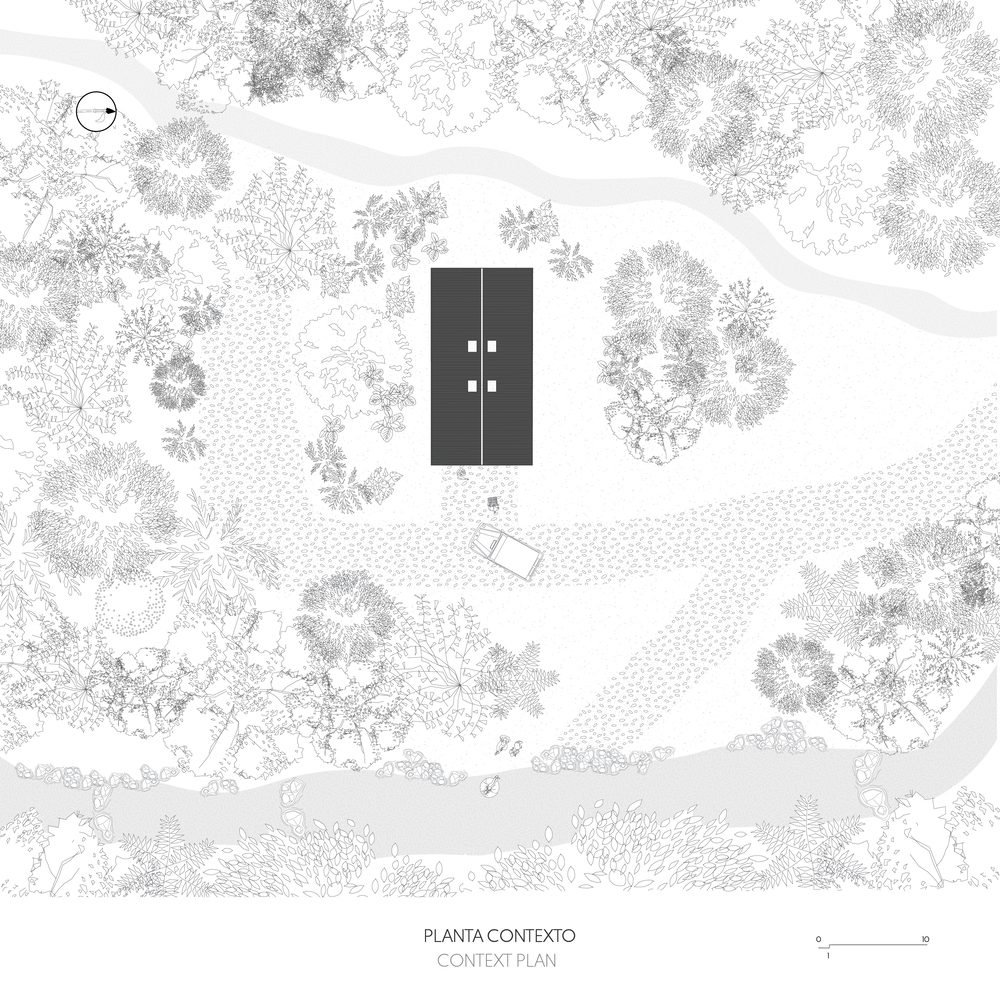
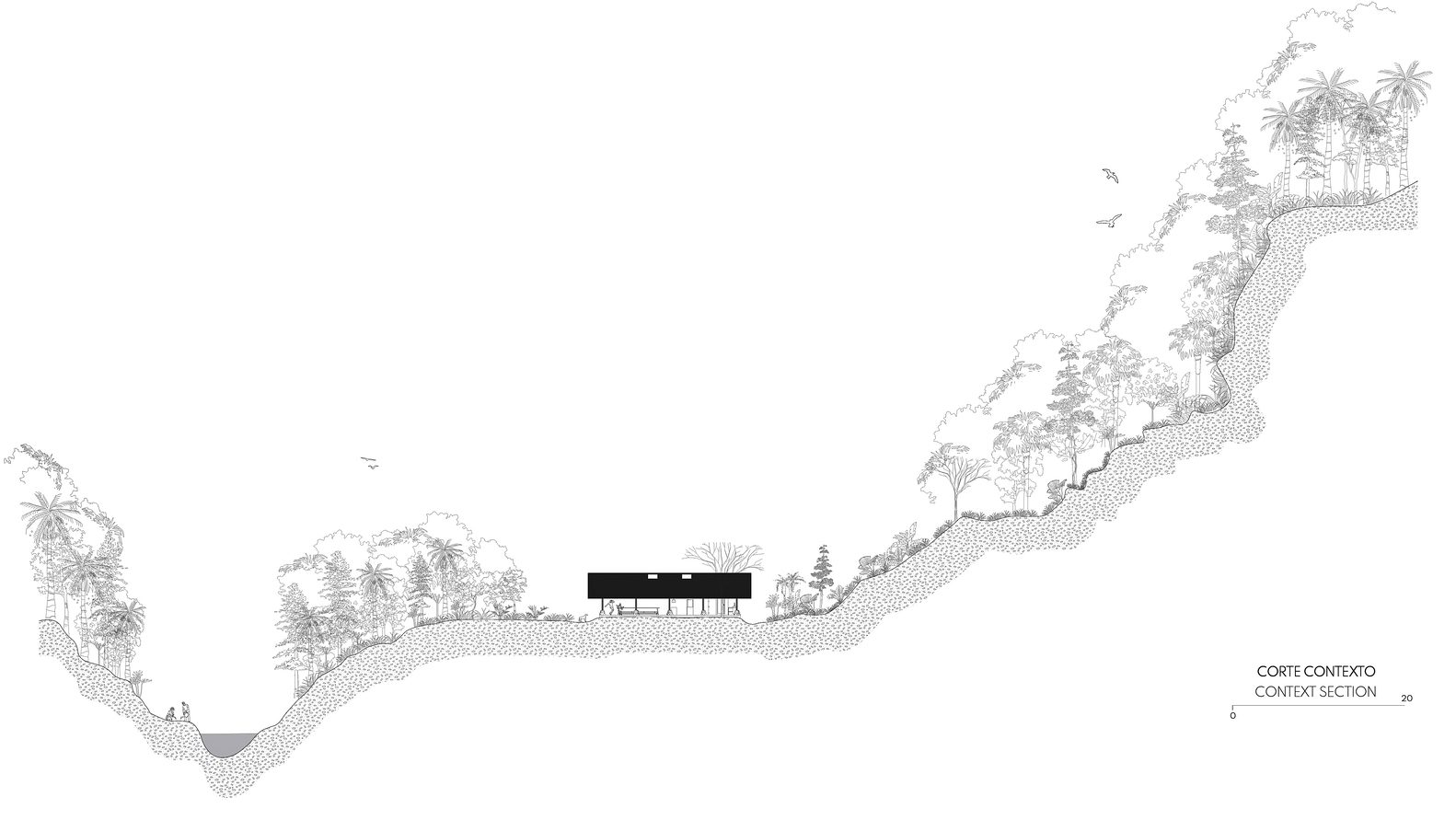
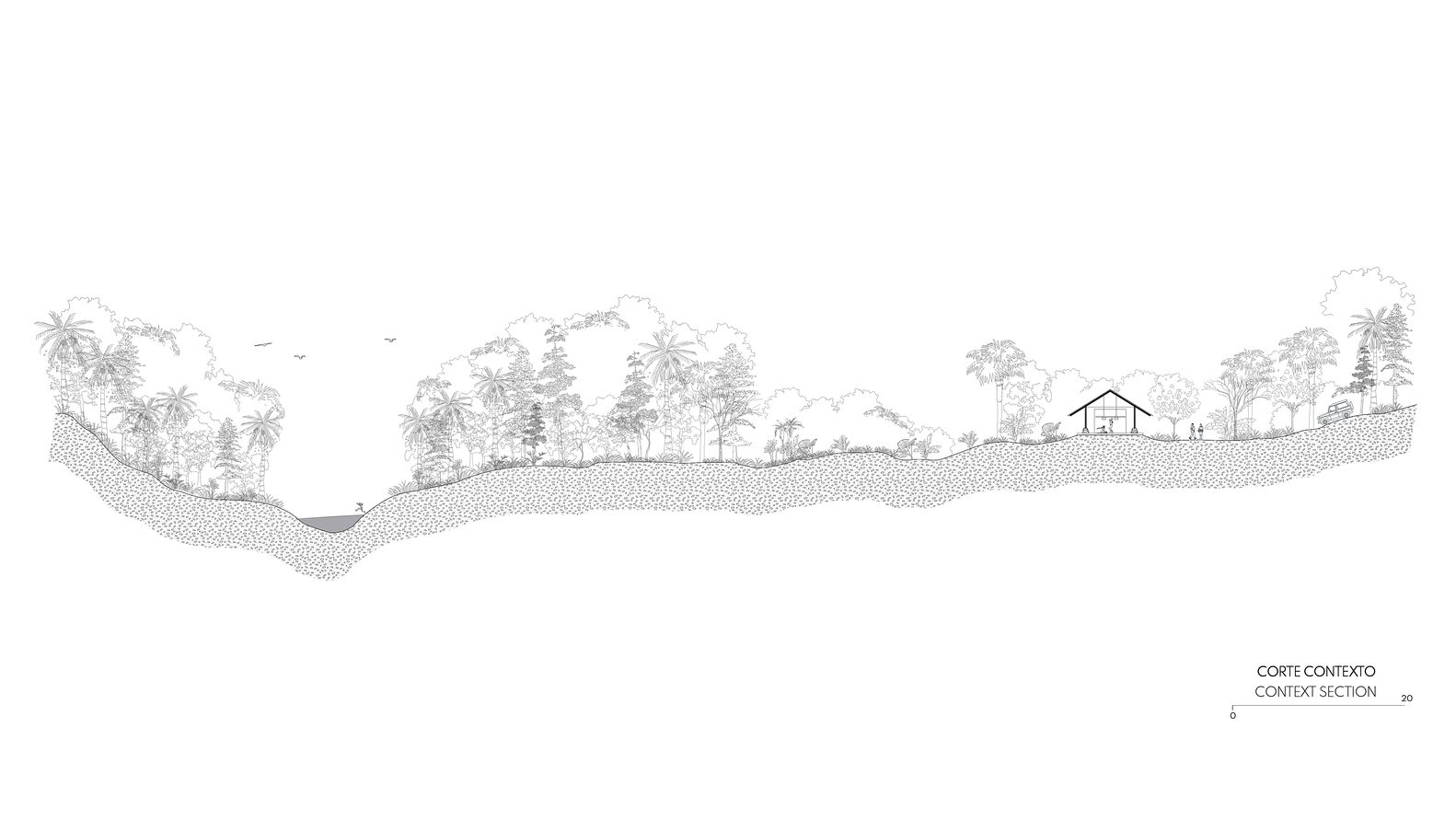
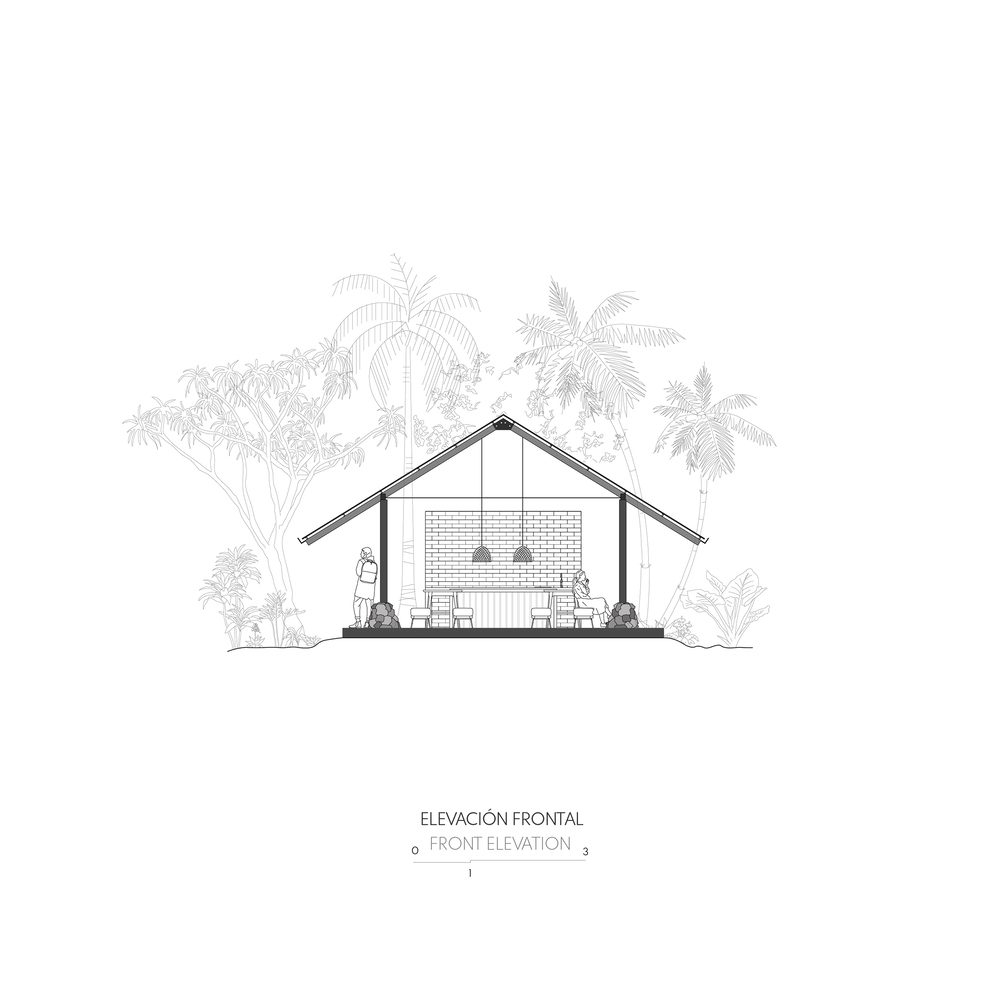
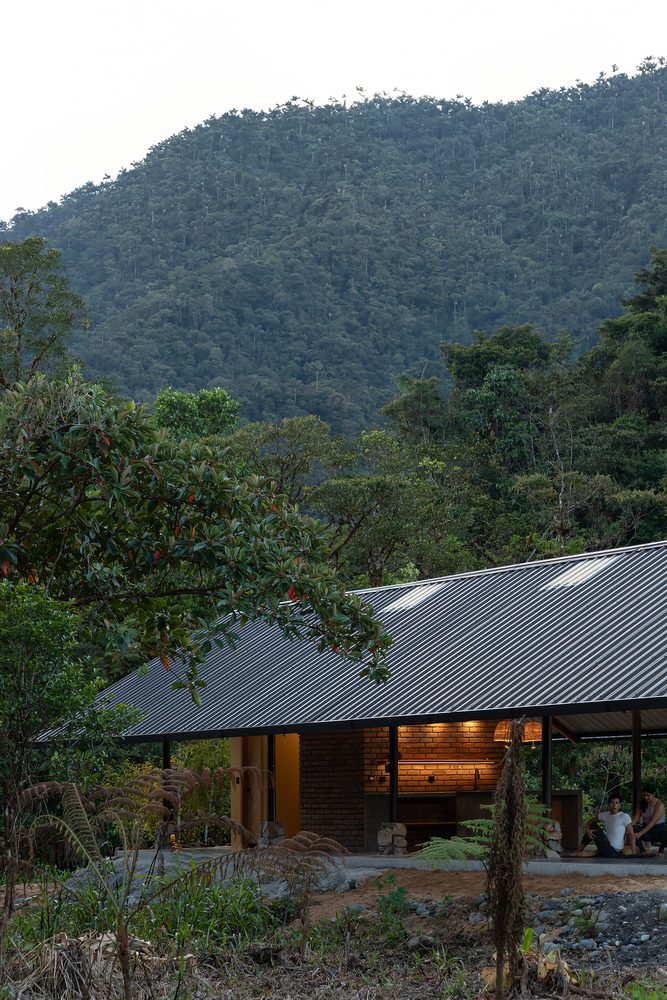
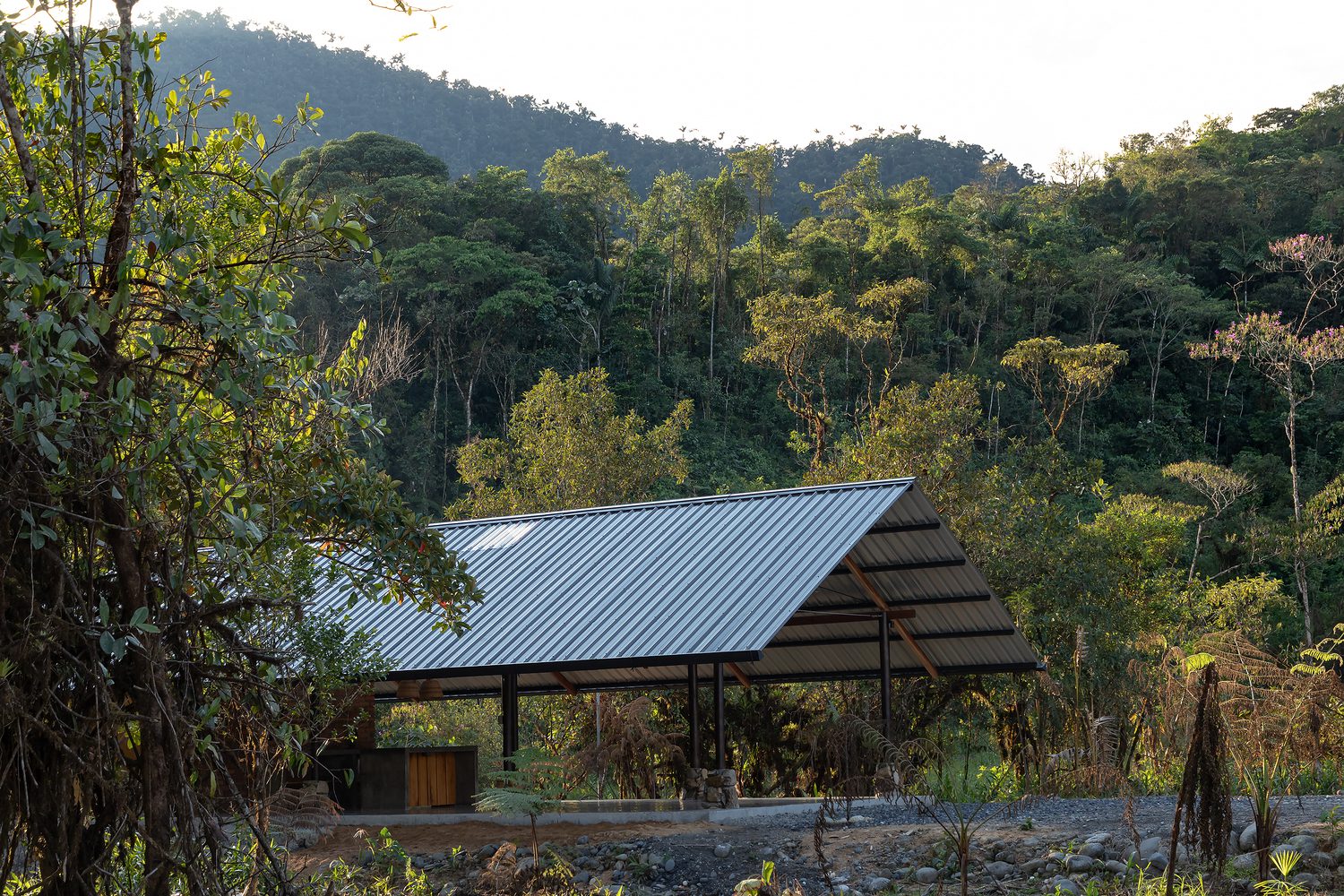
In the midst of irregular topography, overlooking a stream, the project is resolved with an open, free-plan structure that connects two zones: a semi-closed service area (storage, bathroom, shower, and changing room) and an open area that shapes the multi-use space.
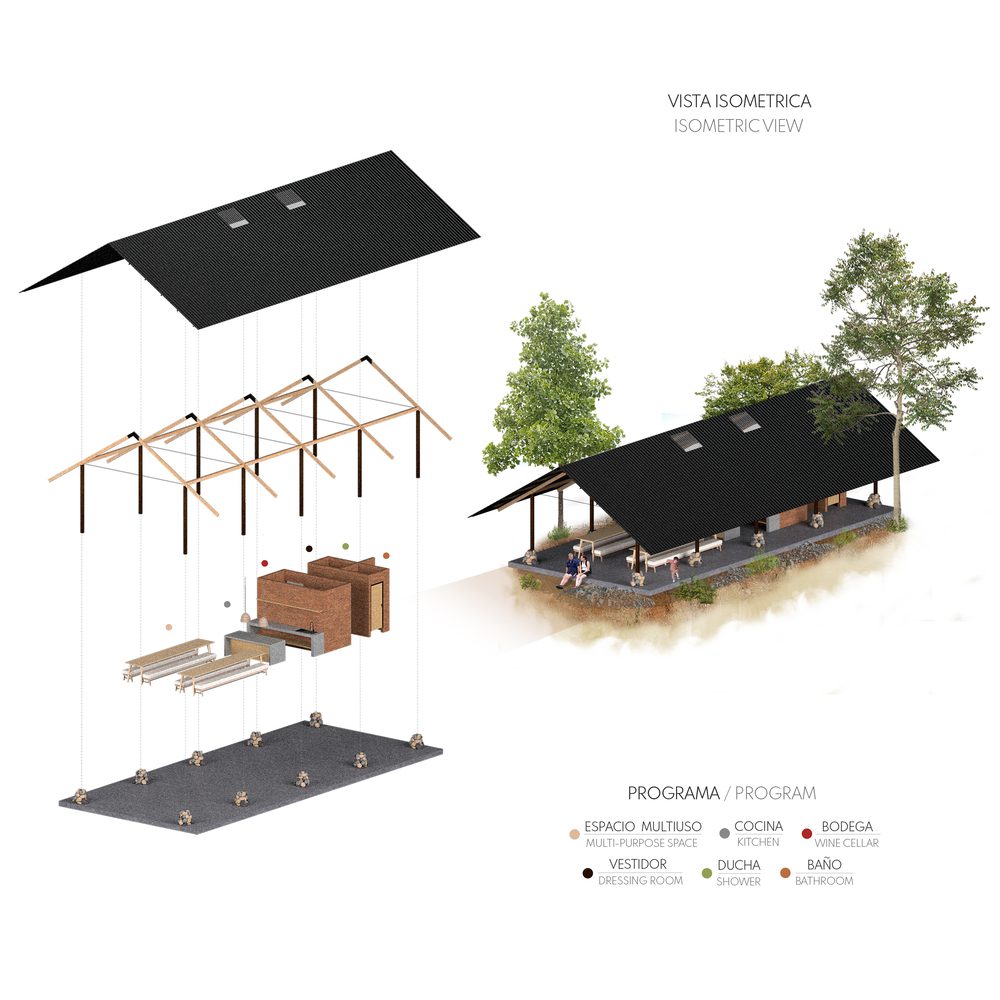
Isometric – Program
Orienting it towards the East, a volumetric form commonly used in vernacular constructions is employed, a shape that allows us to capture the first rays of sunlight to retain heat in a climate characterized by mist and constant rain, along with a roof design that also facilitates the prompt evacuation of rainwater for later storage and use in service areas.
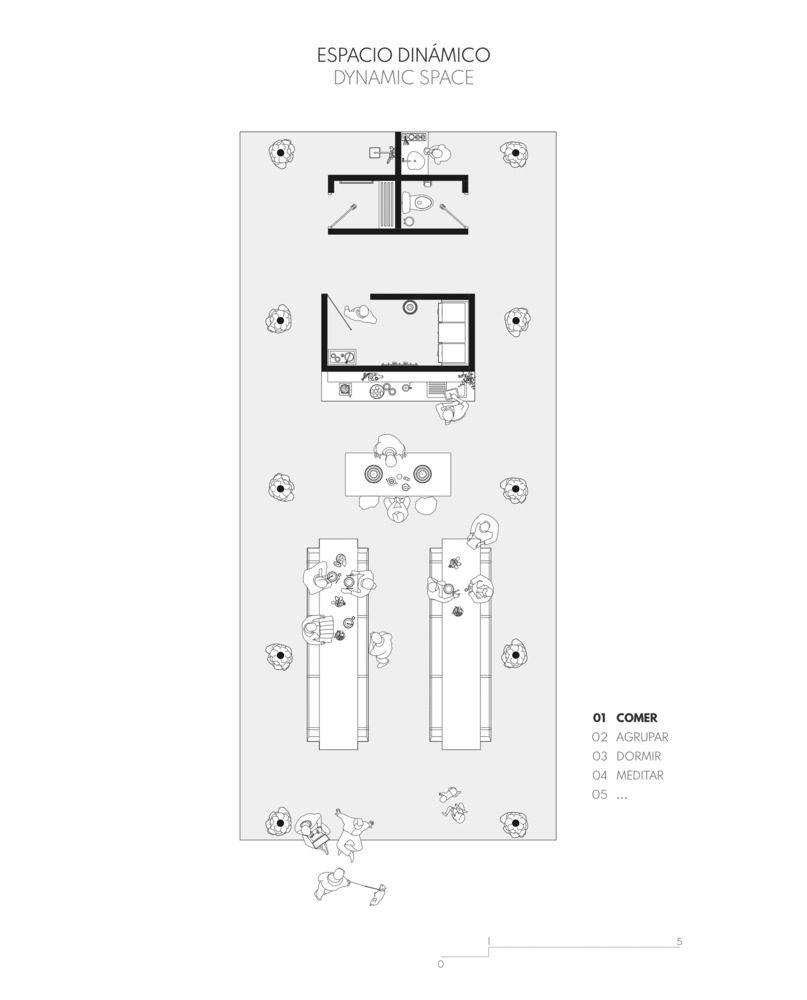
Espacio Dinámico
Killi logs taken from the same lot and rocks from the stream are part of the natural materials that compose the structure, which, through a mixed system crafted by artisan hands, carpenters, stone masons, and welders, establishes a process that gathers resources provided by the natural and urban context, actions that seek to rediscover a local identity that is increasingly lost.
Project Info:
-
Architects: Mestizo Estudio Arquitectura
- Country: Ecuador, Puyo
- Area: 95 m²
- Year: 2025
-
Photography: JAG Studio
-
Architect In Charge: Frank Espinoza Barrera
-
Contributors: Jorge Ardila, Raúl Ramos, Maricela Guamán, David Álvarez, Carlos Soledispa, Marcelo Mayancha