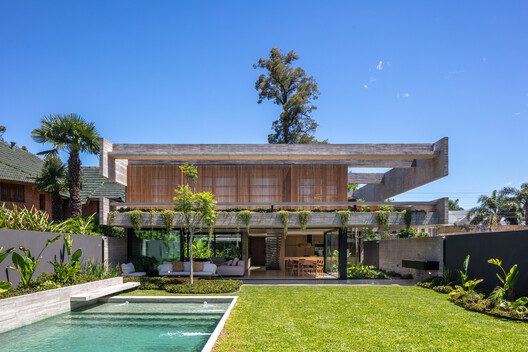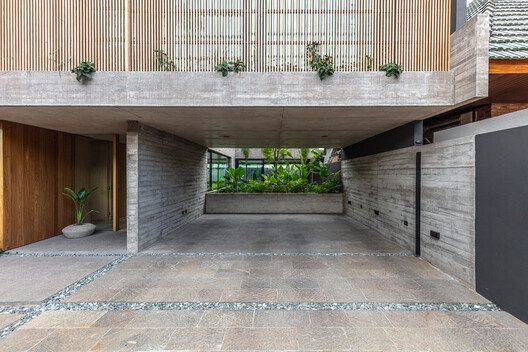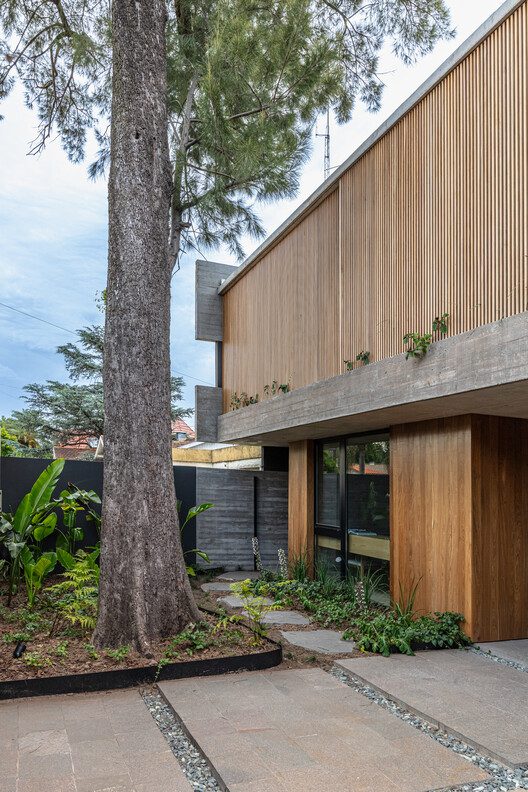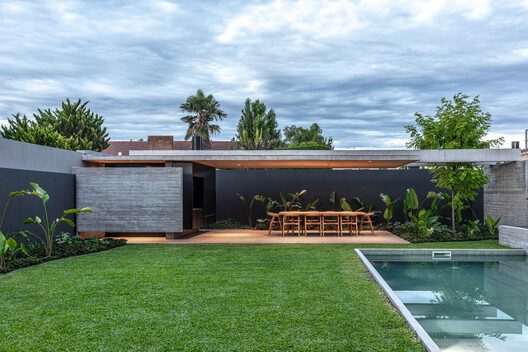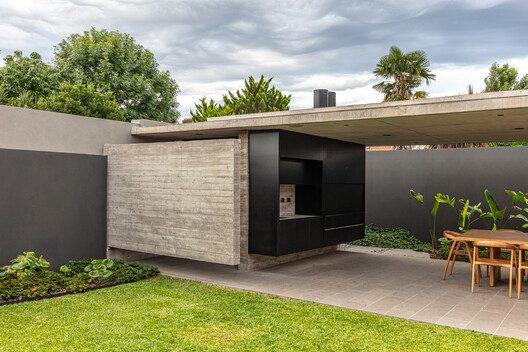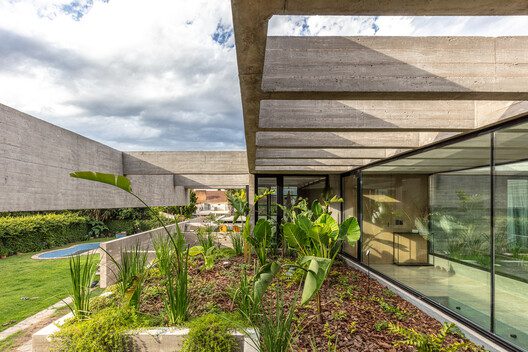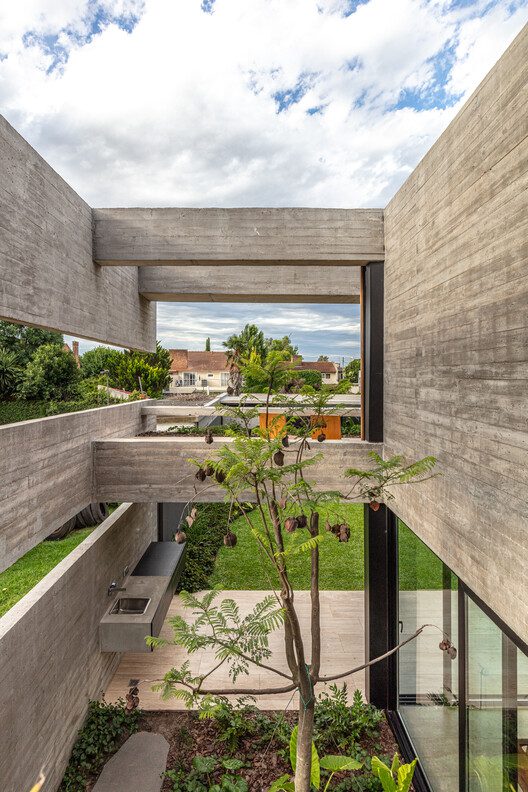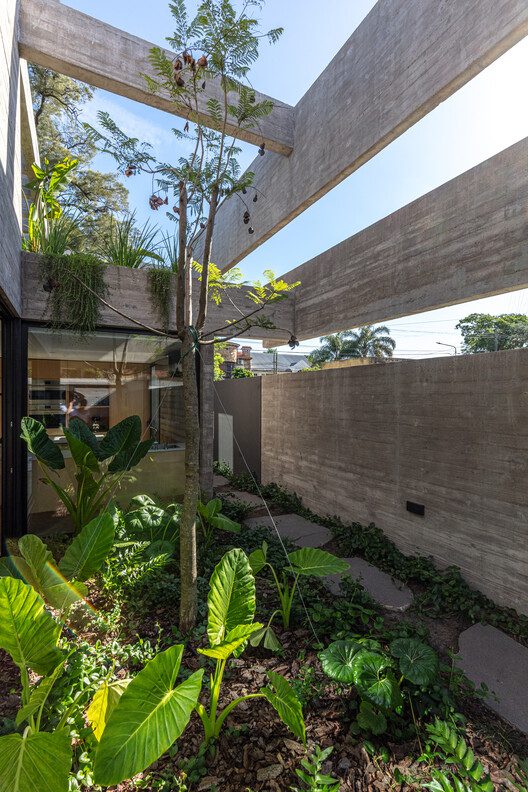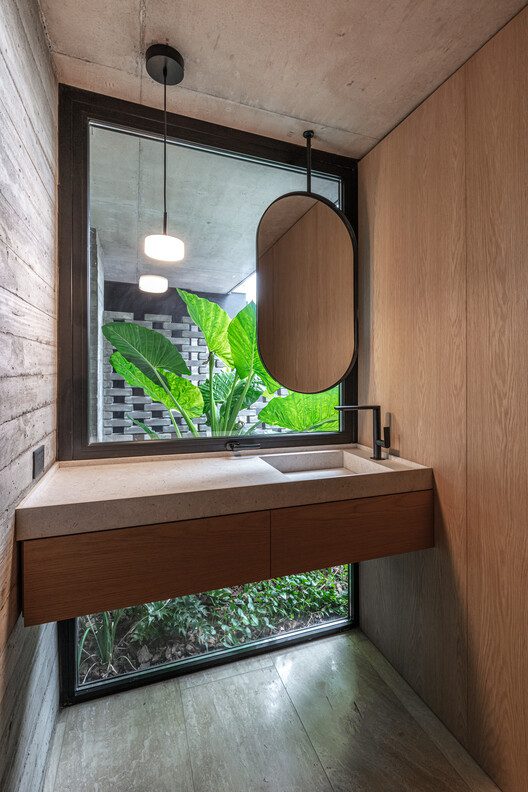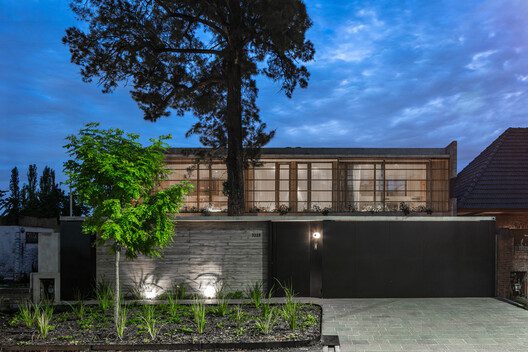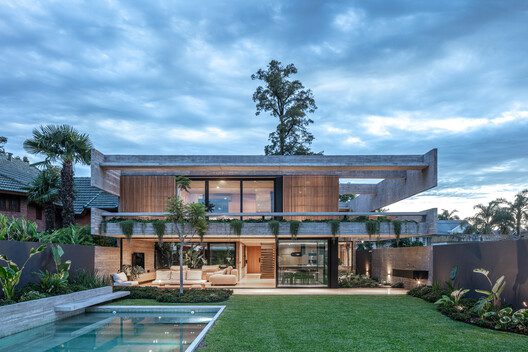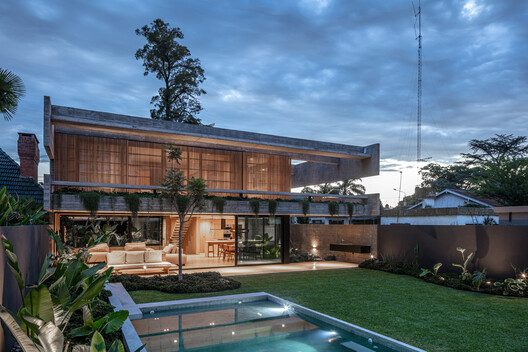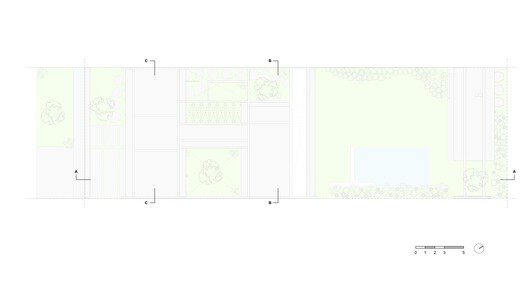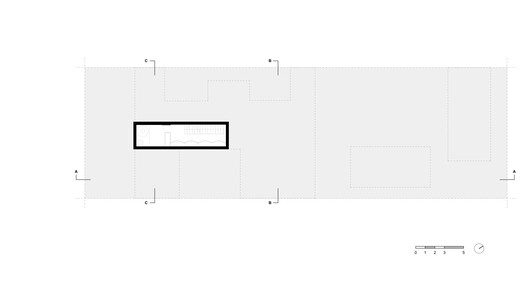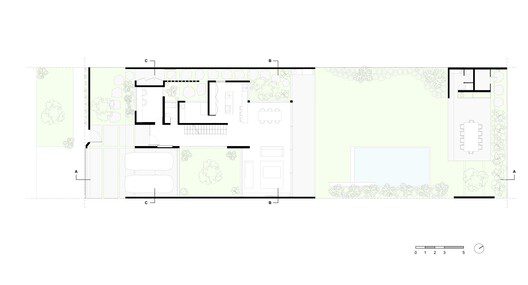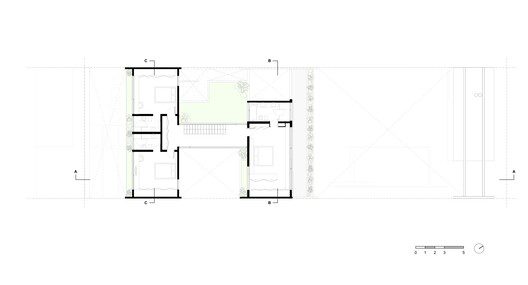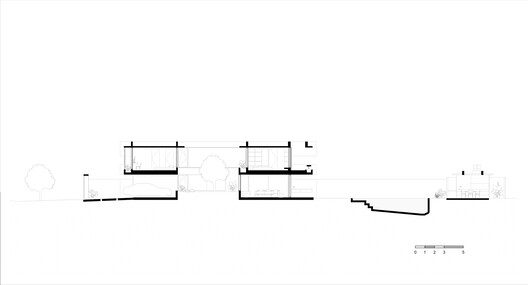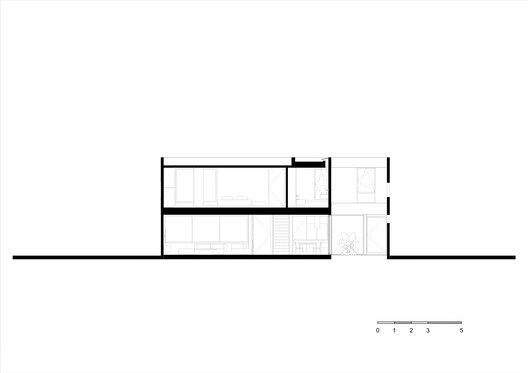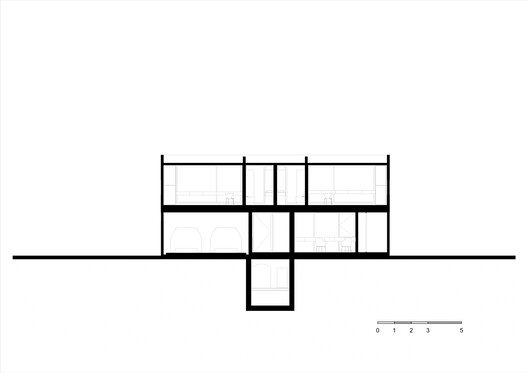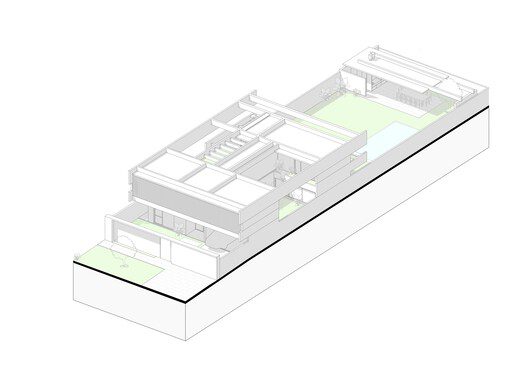


Machado House is situated on a plot measuring 13 meters in width by 44 meters in depth, resulting from the subdivision of the garden of a former grand residence, located in a residential neighborhood of Castelar characterized by its traditional houses. This dwelling stands out for its commitment to sensitive habitability, achieved through the fragmentation of a compact volume by creating internal courtyards that seek a careful synergy between interior spaces and the surrounding vegetation.
© Federico Kulekdjian
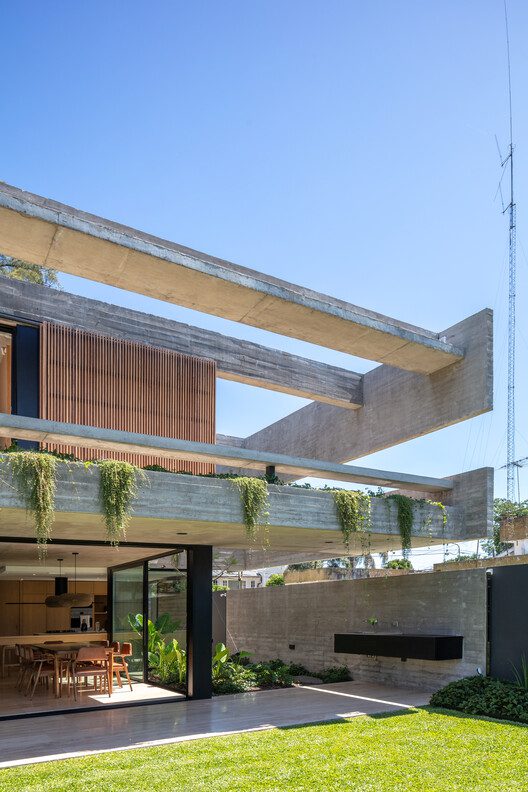
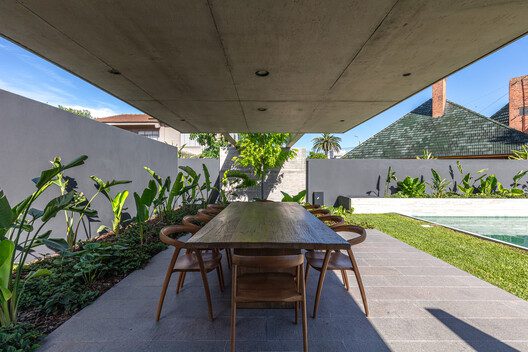
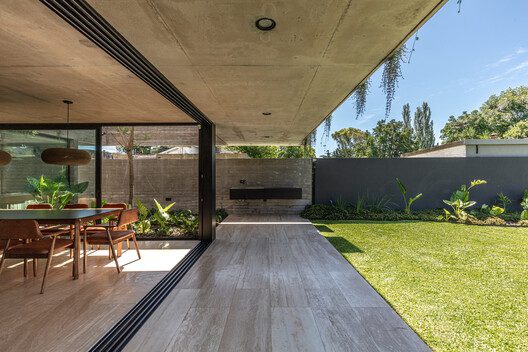
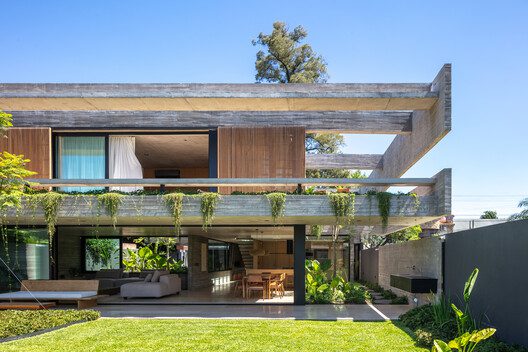
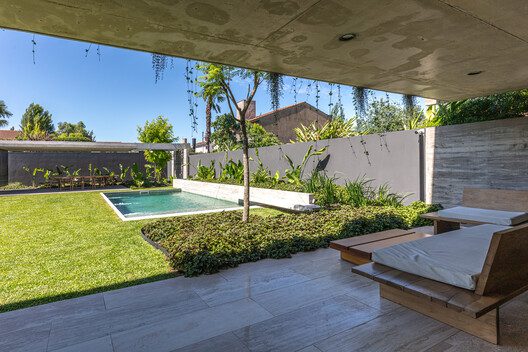
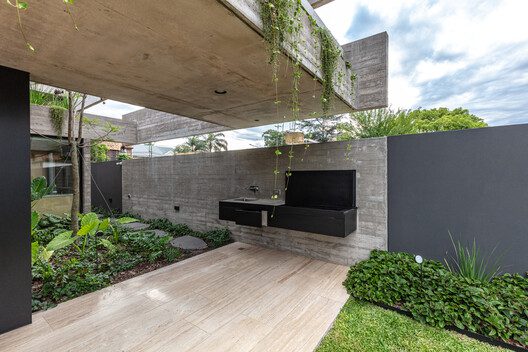
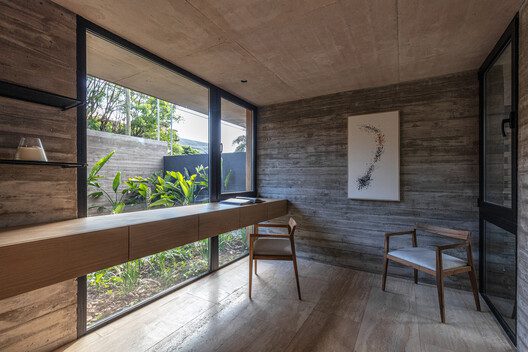
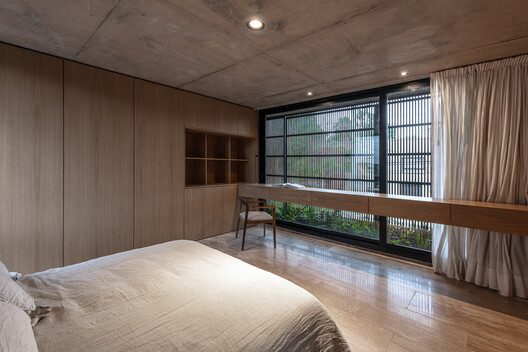
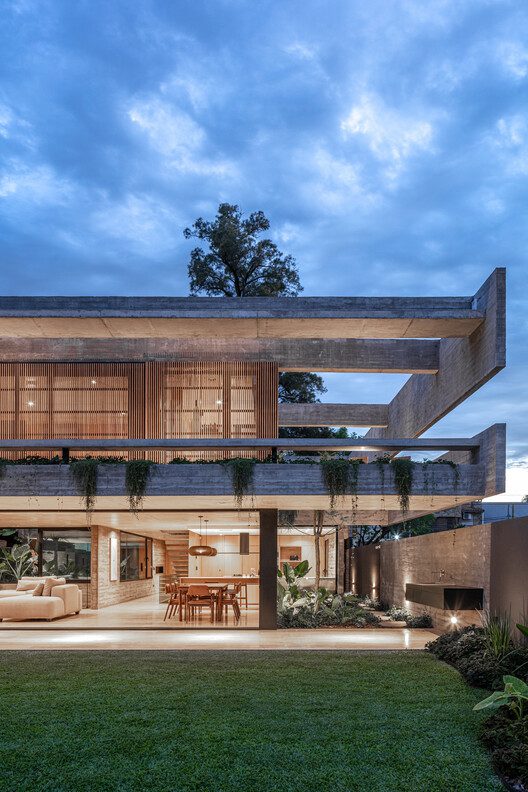
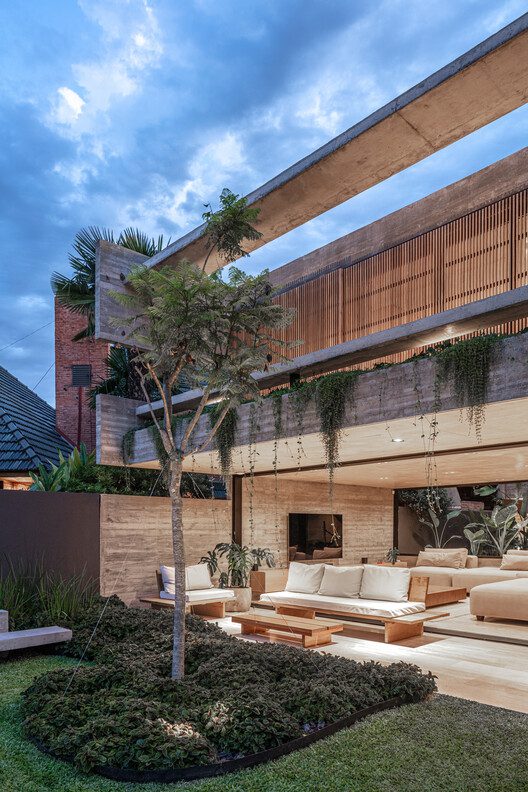
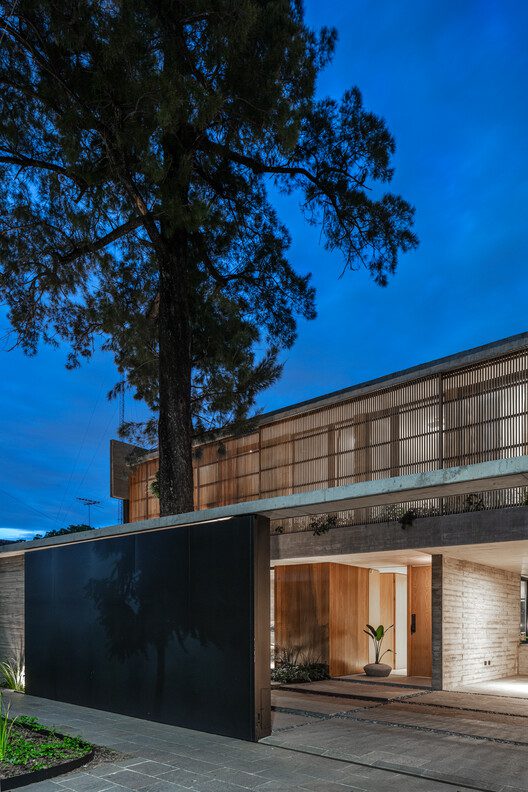
During the solar orientation study, it was determined that the rear facade of the house faces north. Consequently, expansive eaves were designed on the ground floor, with sufficient length to shield the interior from direct summer sunlight while allowing it to penetrate during the winter months. Additionally, these eaves act as transitional buffers between the interior and exterior, leveraging large windows placed across the various ground-floor rooms to facilitate natural ventilation and illumination of the spaces. On the upper floor, to enhance privacy, sliding wooden sunscreens were incorporated, enabling adjustable control over light entering the more private areas of the home.
© Federico Kulekdjian
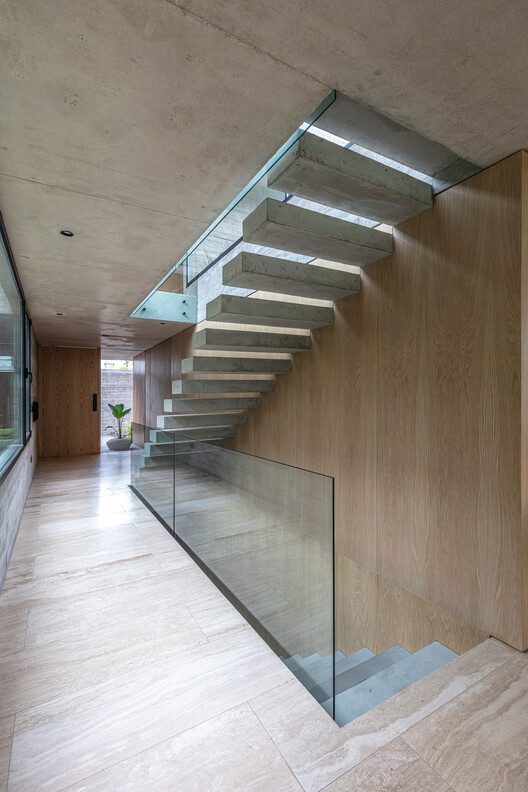
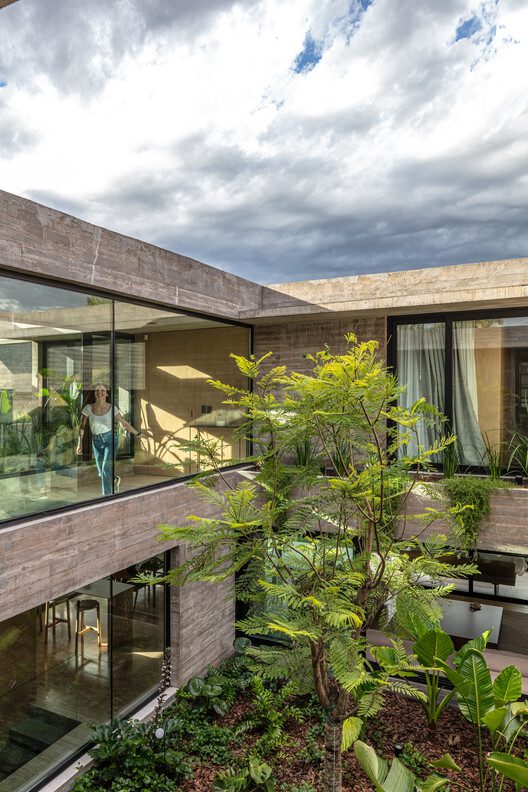
The ground and upper floors are organized around a central hall that connects the different areas of the house, fostering a fluid circulation between the functional spaces and the internal courtyards.
© Federico Kulekdjian
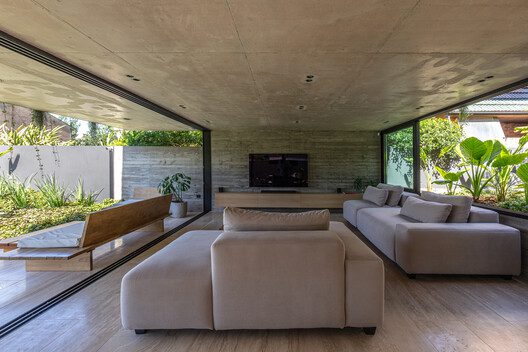
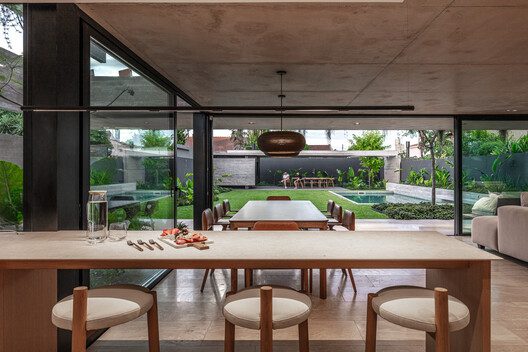
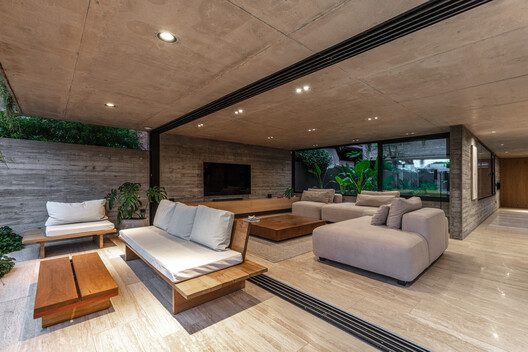
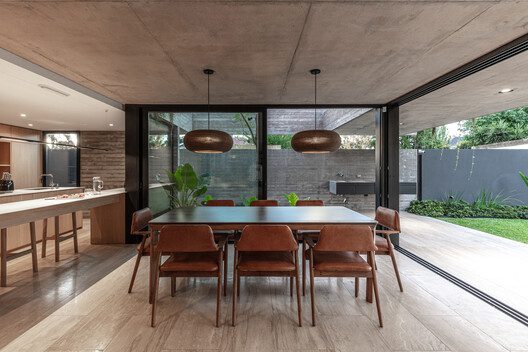
The living-dining area features floor-to-ceiling openings that extend toward the rear facade and the central courtyard, reinforcing the indoor-outdoor relationship. These windows integrate the surrounding vegetation from the aforementioned spaces, merging interior design with the natural environment and creating a fluid, dynamic spatial experience that emphasizes the connection to the landscape while enhancing the perception of spaciousness.
© Federico Kulekdjian
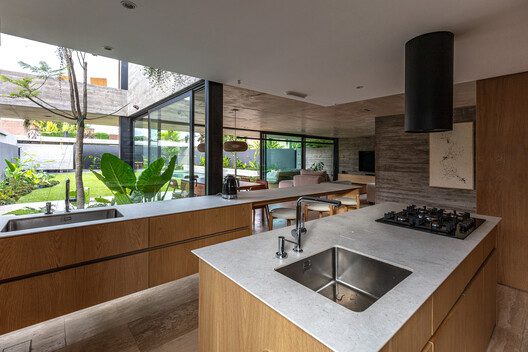
The kitchen is designed with a minimalist and functional approach—consistent with the rest of the home’s spaces—connecting directly to the dining and living areas, generating a sense of openness and continuity. It features a central island that serves as the functional and social heart of the space, complemented by a vertical storage unit and a countertop extension toward the dining area.
© Federico Kulekdjian
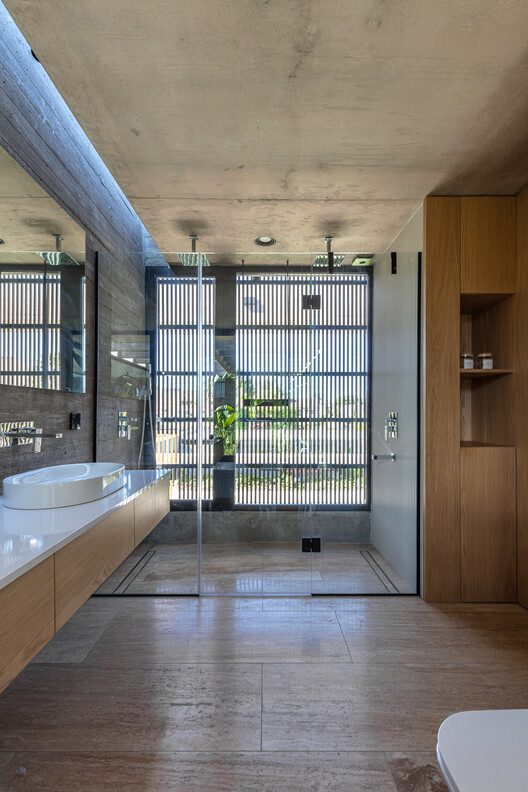
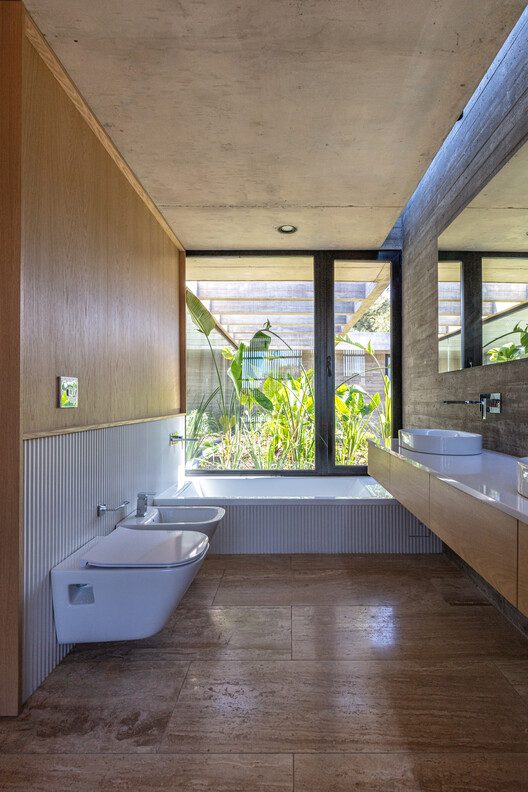
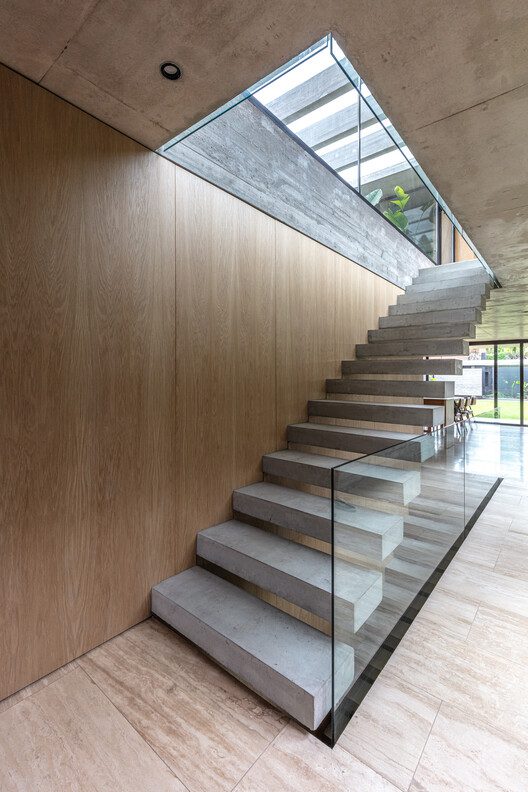
The materiality of the house is articulated through exposed reinforced concrete and wood, defining its aesthetic and structural character. The robust, noble texture of the concrete—a hallmark of our projects—is balanced by the warmth and subtlety of the wood, creating a harmonious contrast. This combination, enriched by the integration of vegetation in the expansion areas, establishes a sensitive and balanced living style. The proposal engages with its surroundings, blending contemporary architecture and nature into a spatial experience that prioritizes functionality, aesthetics, and a deep connection with the surrounding landscape.
© Federico Kulekdjian
La materialidad de la vivienda se articula mediante el hormigón armado visto y la madera, definiendo su carácter estético y estructural. La textura robusta y noble del hormigón, rasgo distintivo de nuestros proyectos, se equilibra con la calidez y delicadeza de la madera, creando un contraste armónico.
© Federico Kulekdjian
-
Architects: BTE-ARQ
- Country: Argentina
- Area: 4628 ft²
- Year: 2024
- Photographs: Federico Kulekdjian
- Manufacturers: Castro Hns, FV, GRUPO FORESTAL, Ilva, Peisa, Roca
- Lead Architects: Arq. Germán Bustamante.
- Collaborators: Arq. Lucas Guerra, Federico Vega, Arq. Federico Fortunato, Arq. Bruno Aversente.
- Electrical: Eléctrica Castelar
- Sanitary House: Sneuber Sanitarios
- Materials: Corralon Franco
- Landscaping: Antoniucci Paisajismo
- Structural Calculation: Ing. Ariel Fernandez
- Logistics: Volpark
- Openings: Tecsha Aberturas
- Elevators: Crisci Piletas
- Pre Rolled Concrete: Hormibon Hormigón elaborado
- Cladding: Grupo Forestal
- Marble Works: Marmolería Castro Hnos
- Program: Single-Family Homes