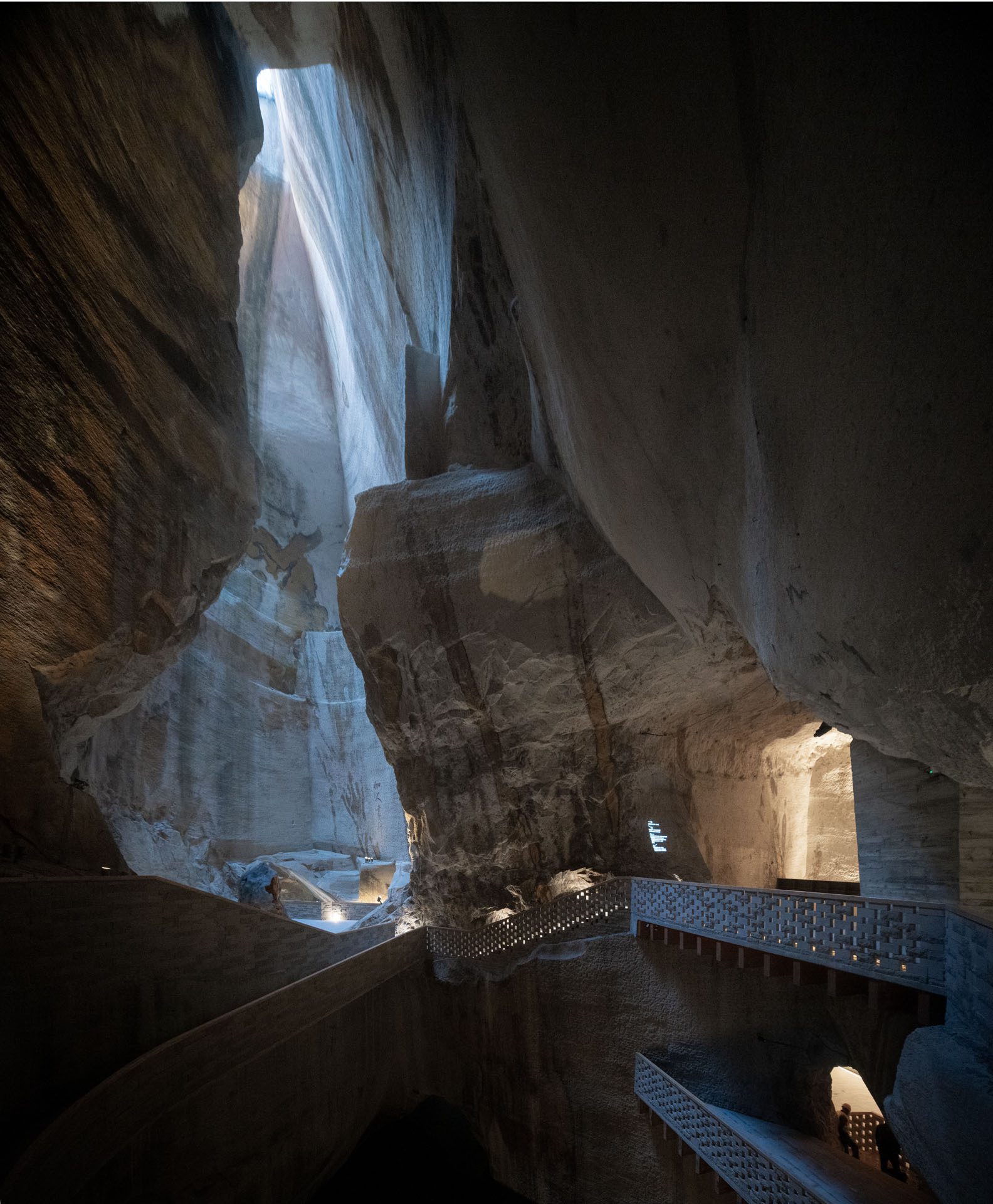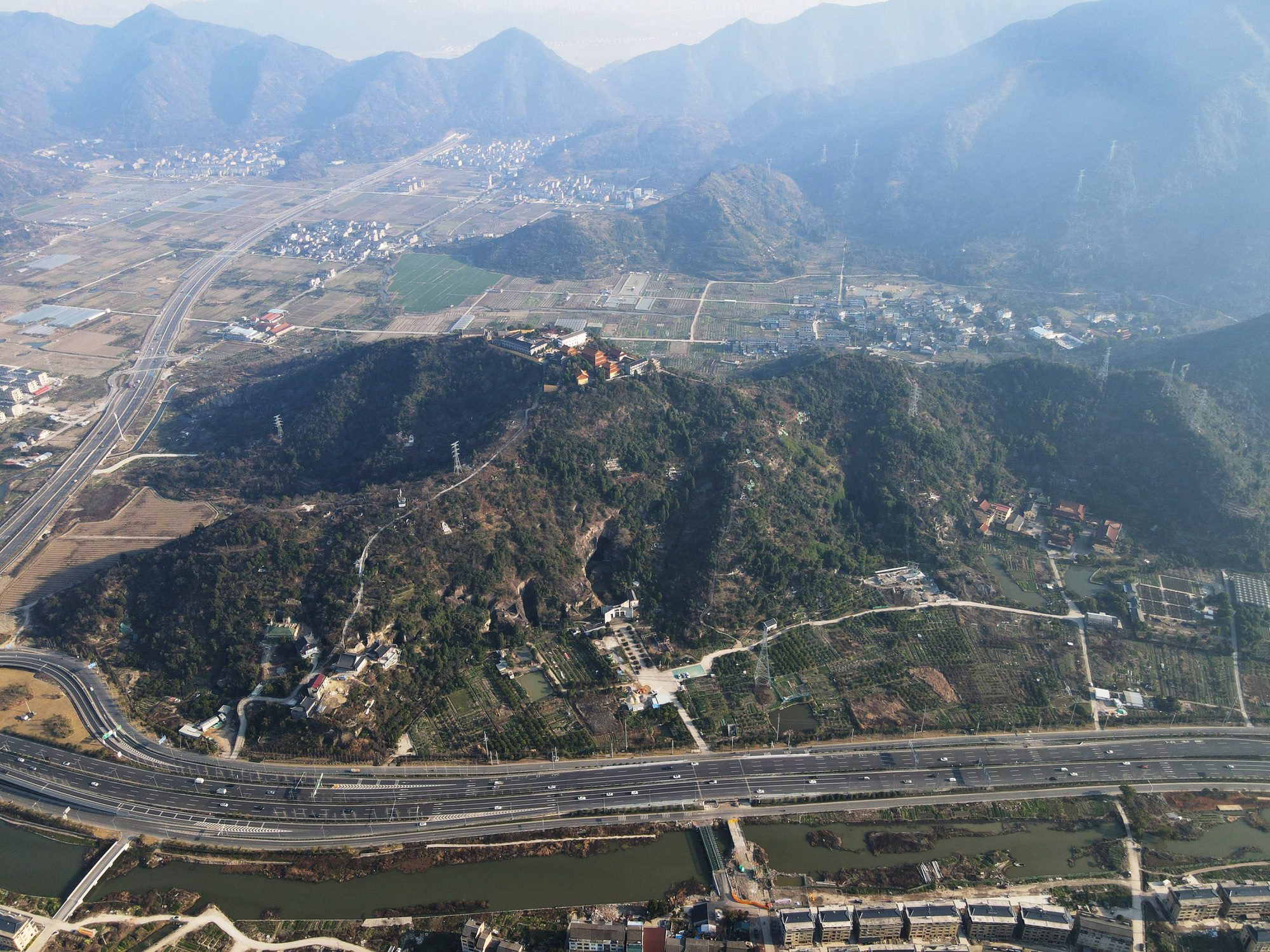


Huangyan Quarry Cultural & Art Center, The Huangyan Quarry Revitalization Project represents our continued focus on the socioeconomic, ecological, and cultural dimensions of post-industrial landscapes. Unlike the previous stone quarry transformations in remote rural areas of Jinyun, the Huangyan Quarry is located in a more urbanised environment adjacent to the city proper. Consequently, its programming caters to a younger demographic, evolving into a vibrant public node integrated into the city’s daily rhythms. Huangyan District, part of Taizhou City in Zhejiang Province, lies at the center of Zhejiang’s Golden Coast. With the airport only 26 km away and the high-speed rail station just 5.3 km away, it enjoys convenient access and strong regional connectivity. The region has abundant forests and mineral resources, and boasts three golden business cards: “Yongning, with a History of Over a Thousand Years, Origin of Chinese Oranges, and the Mold Capital”.
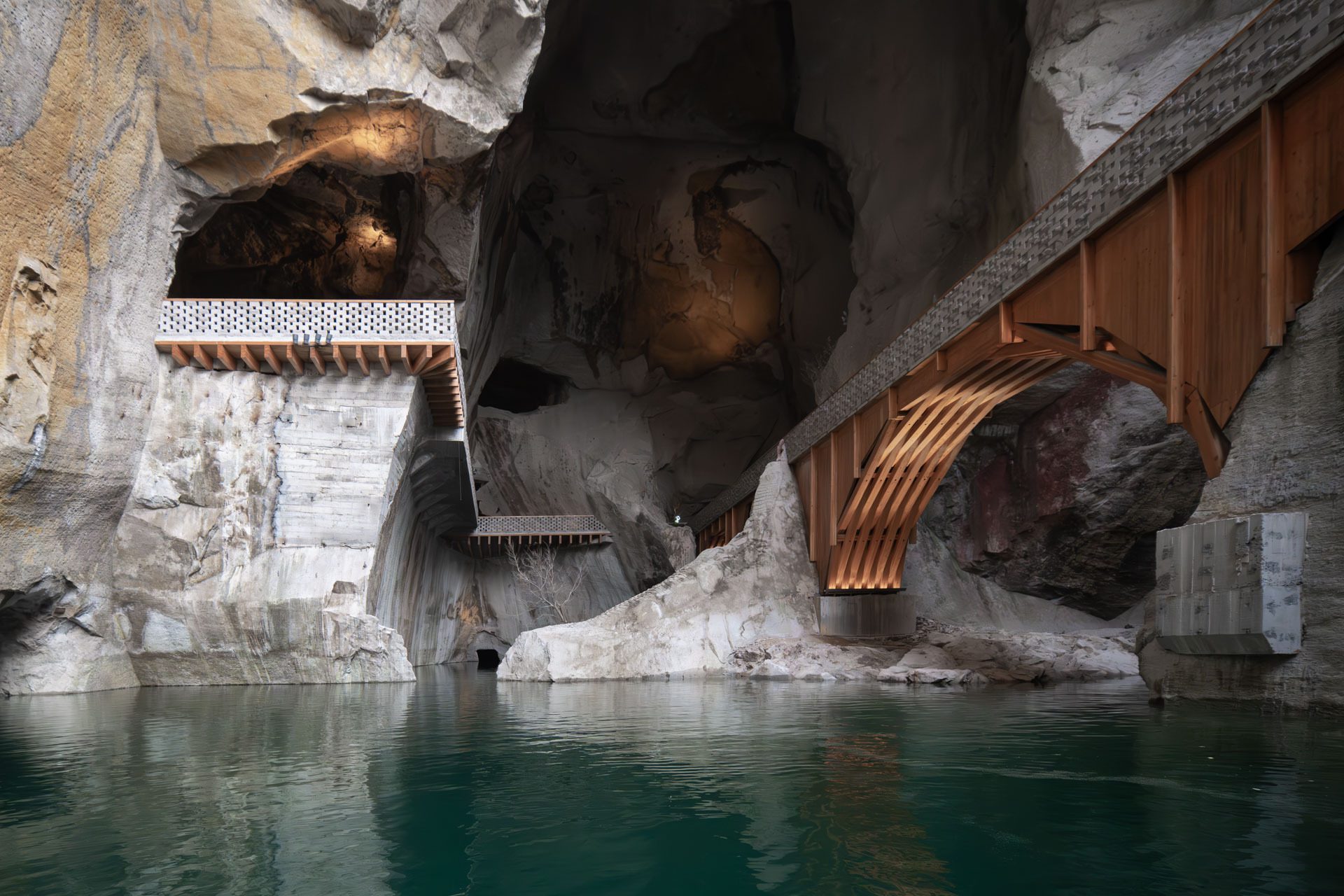
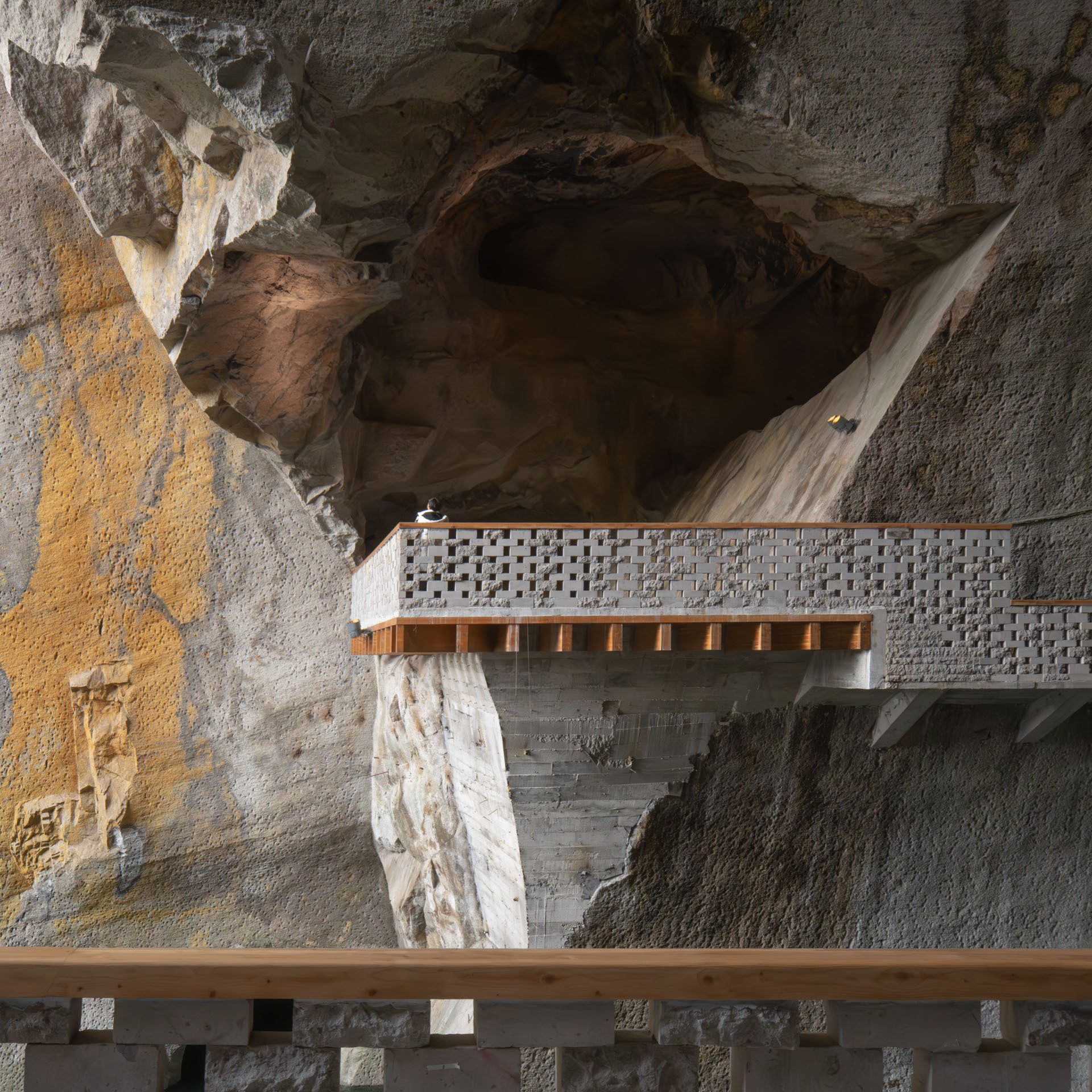
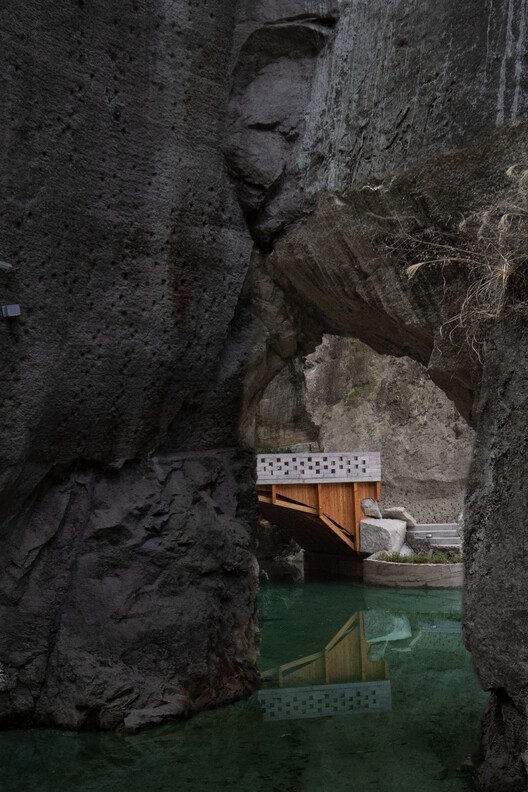
Quarry No.1. Image © Ziling Wang
The Huangyan Quarry began large-scale stone extraction in 675 AD, during the second year of the Tang Dynasty’s Shangyuan era. This quarrying activity was undertaken to support the construction of Yongning County and the prefectural city. Over centuries of continuous quarrying, a spectacular complex of artificial caves was formed. These include towering, hundred-meter-high slate cliffs, deep and expansive chambers, and dozens of interconnected caverns creating an impressive man-made cave system. Inside the caves, mineral deposits seeping from the rocks and the underground water systems within the hollowed-out mountains have created the world’s only natural rock painting scenery, along with unique landscapes such as the “Dongting Waterfall View” and emerald-green pools.
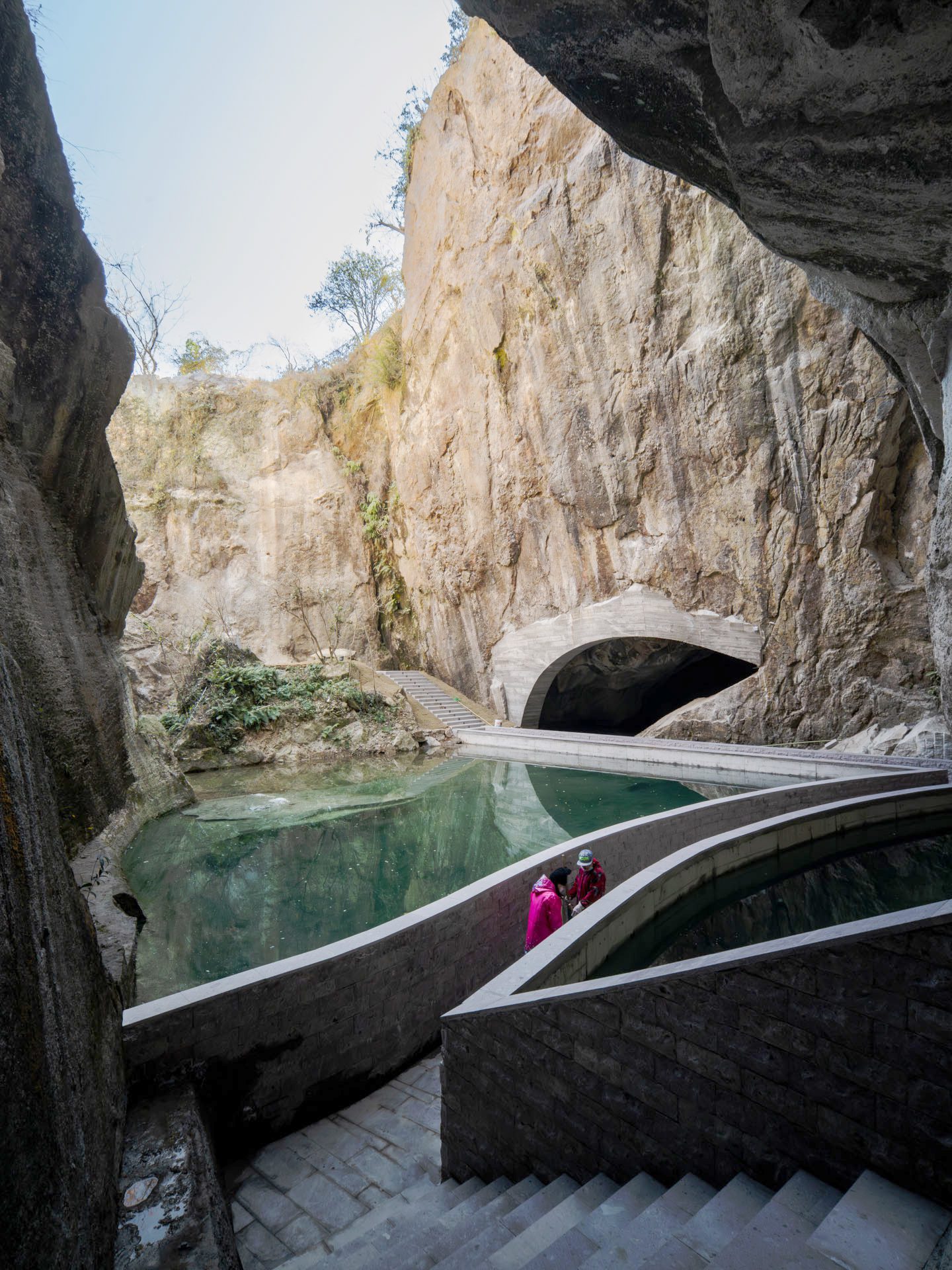
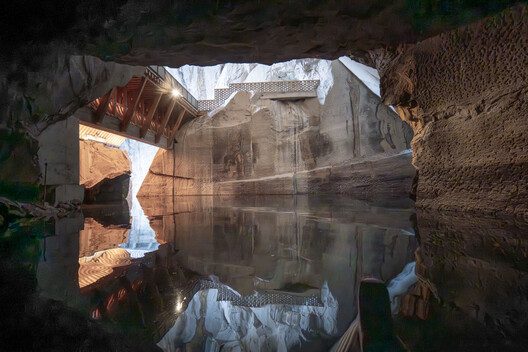
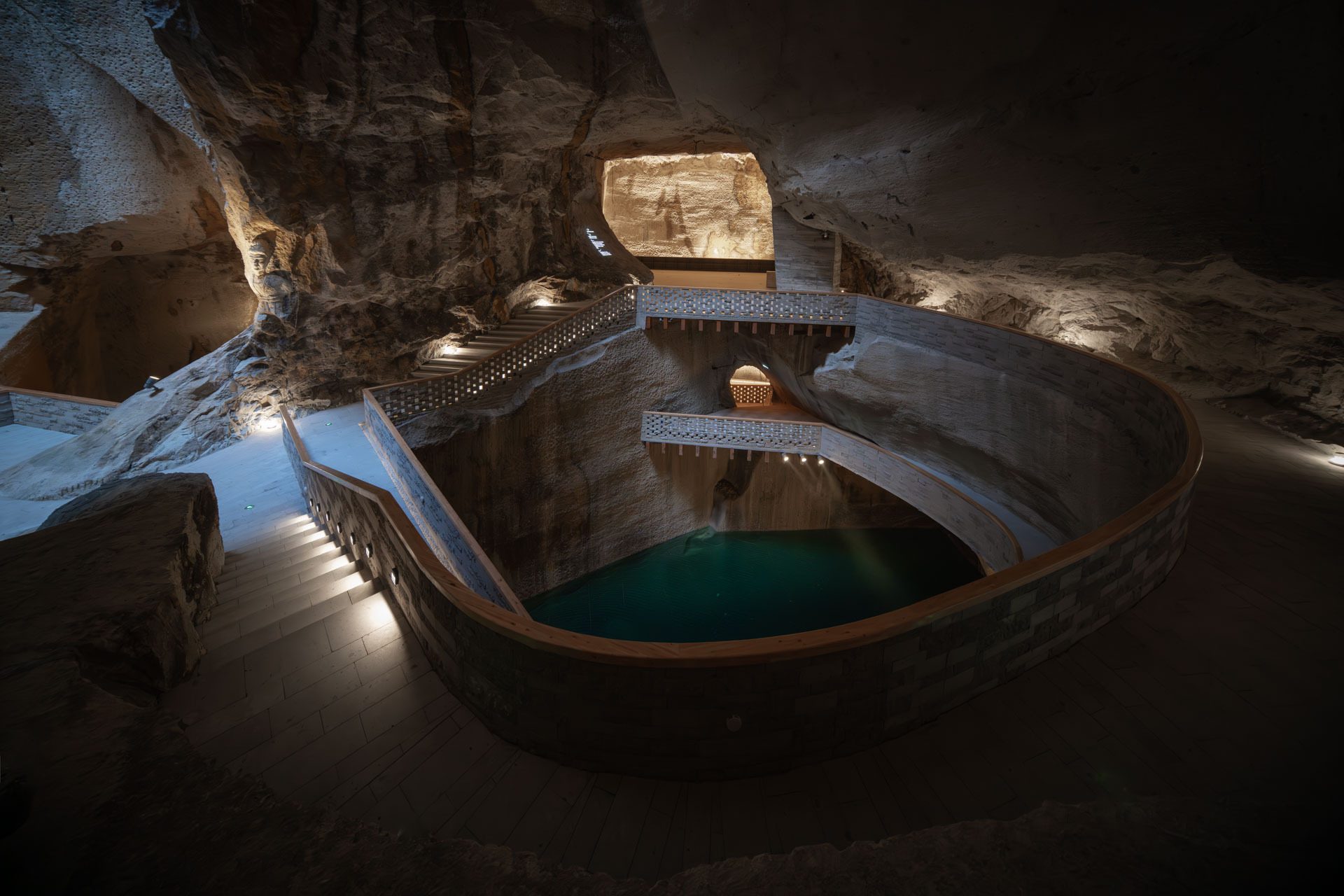
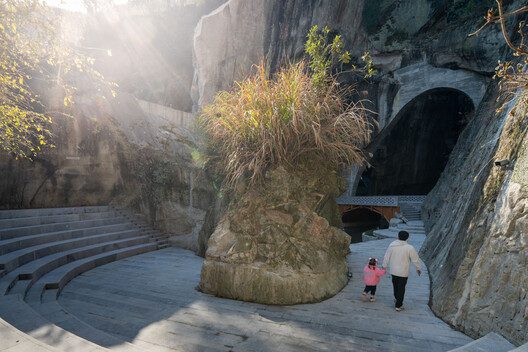
Quarry No.2. Image © Ziling Wang
The site was developed for tourism in 1989, but due to insufficient investment, poor design, limited cave space, and inadequate promotion, visitor numbers remained low, leading to operational difficulties. It was eventually closed in 2015. The project is designed as an art center and urban cultural facility, reflecting the diverse context of its location. Located in a rapidly urbanizing area, this quarry has a history dating back more than 1,400 years and has been transformed into an important urban asset.
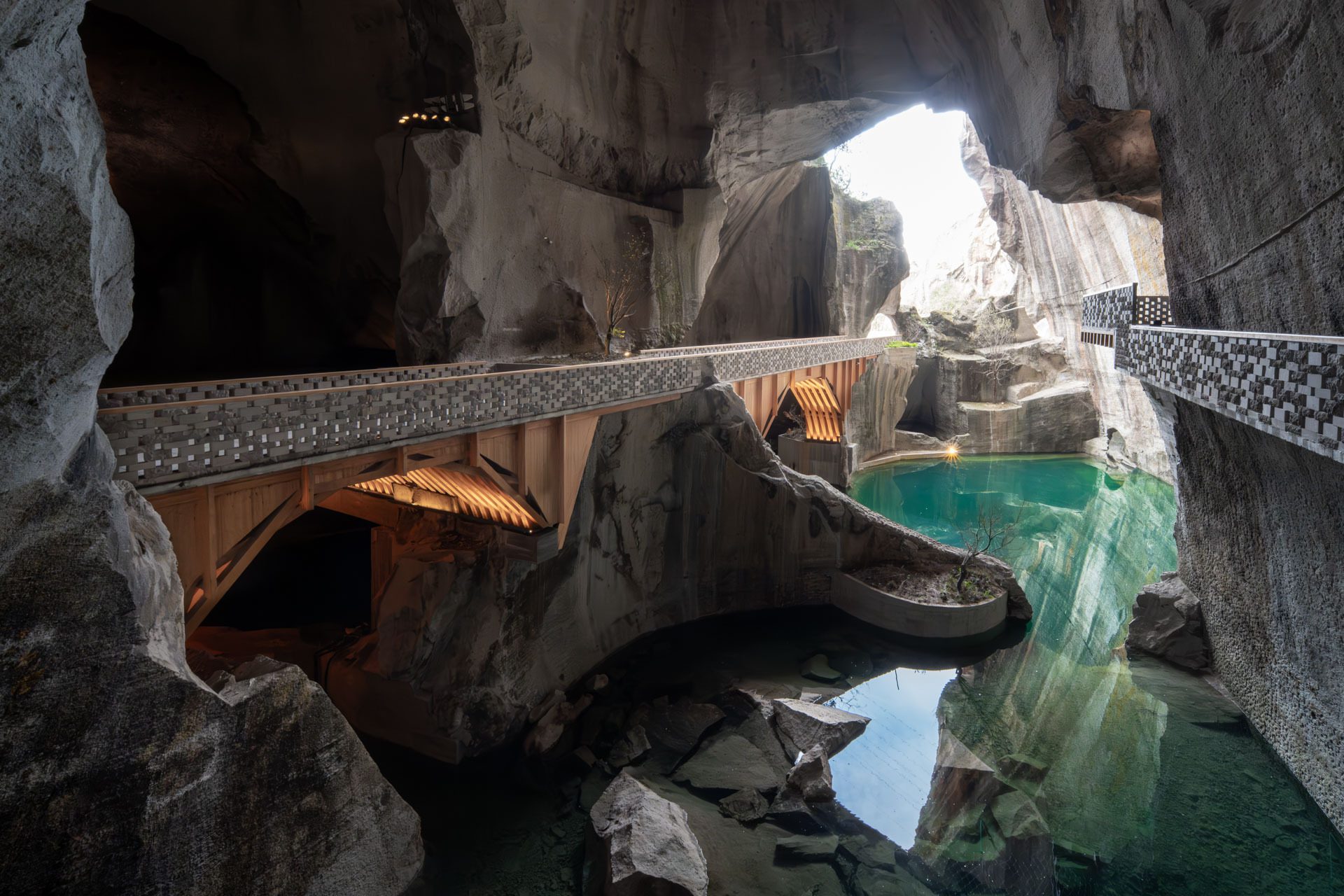
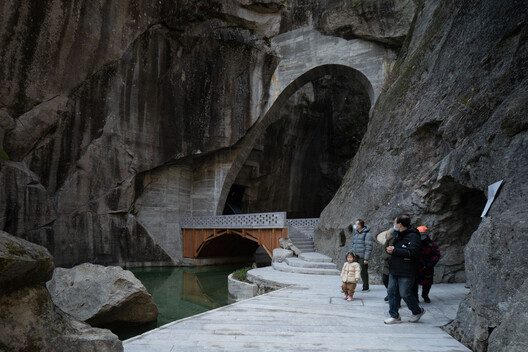
Quarry No.1. Image © Ziling Wang
The design approach emphasizes minimal intervention, preserving the site’s unique geological features while adapting it for public use. The project aims to create an “urban living room,” allowing visitors to engage with the local Huangyan culture and its natural environment. Through transforming the abandoned quarry into a multifunctional space, the project now serves as a showroom for cultural activities and community gatherings.
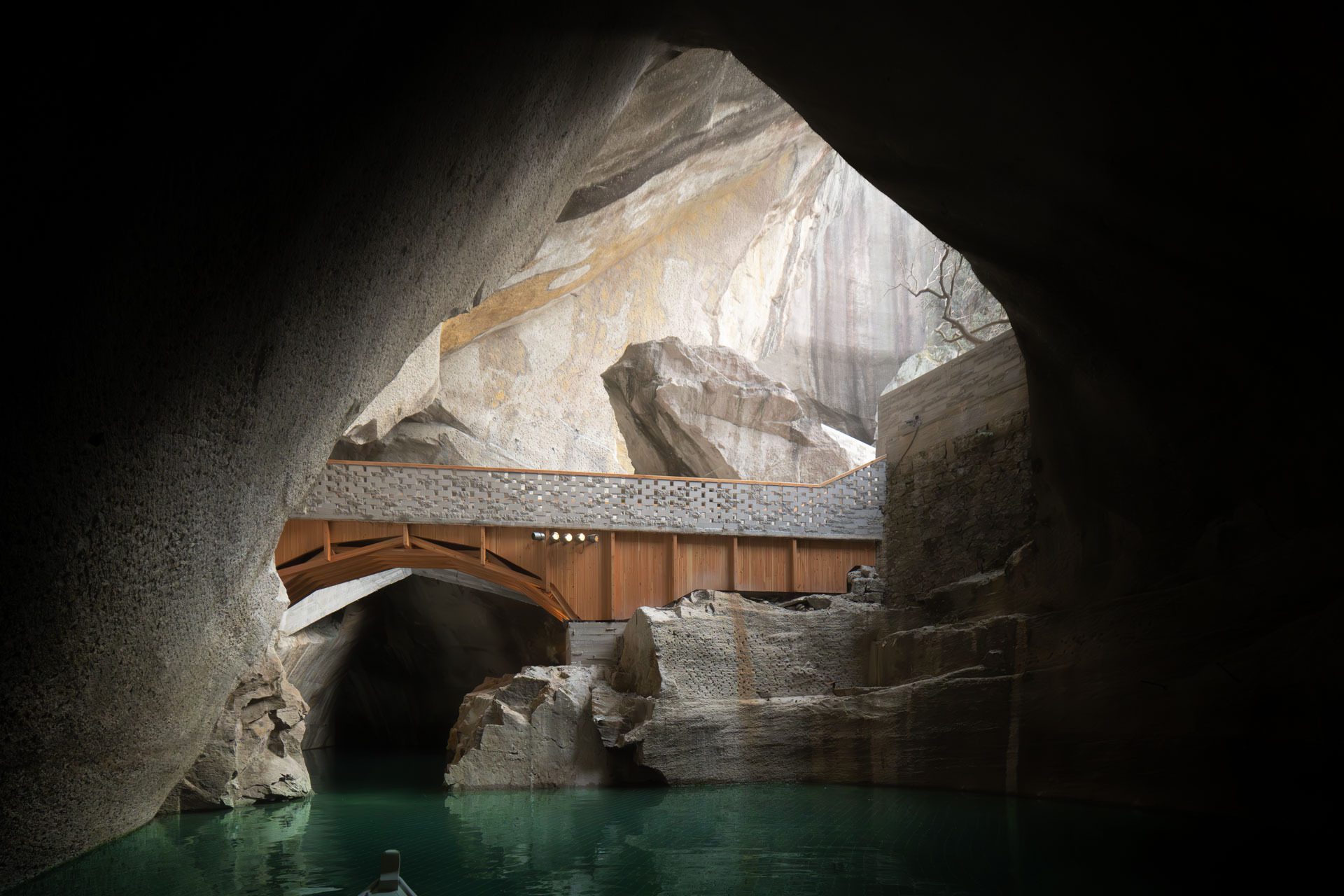
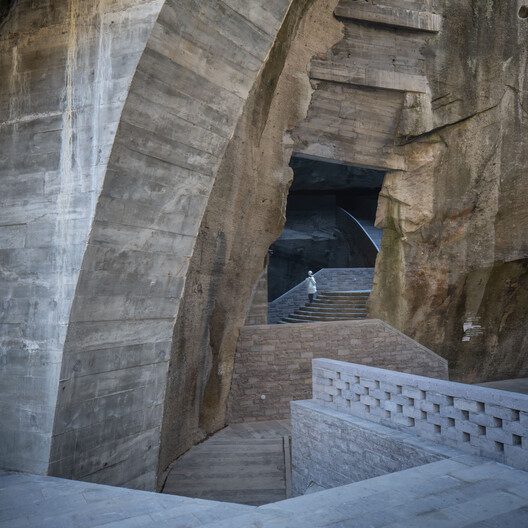
Quarry No.1. Image © Ziling Wang
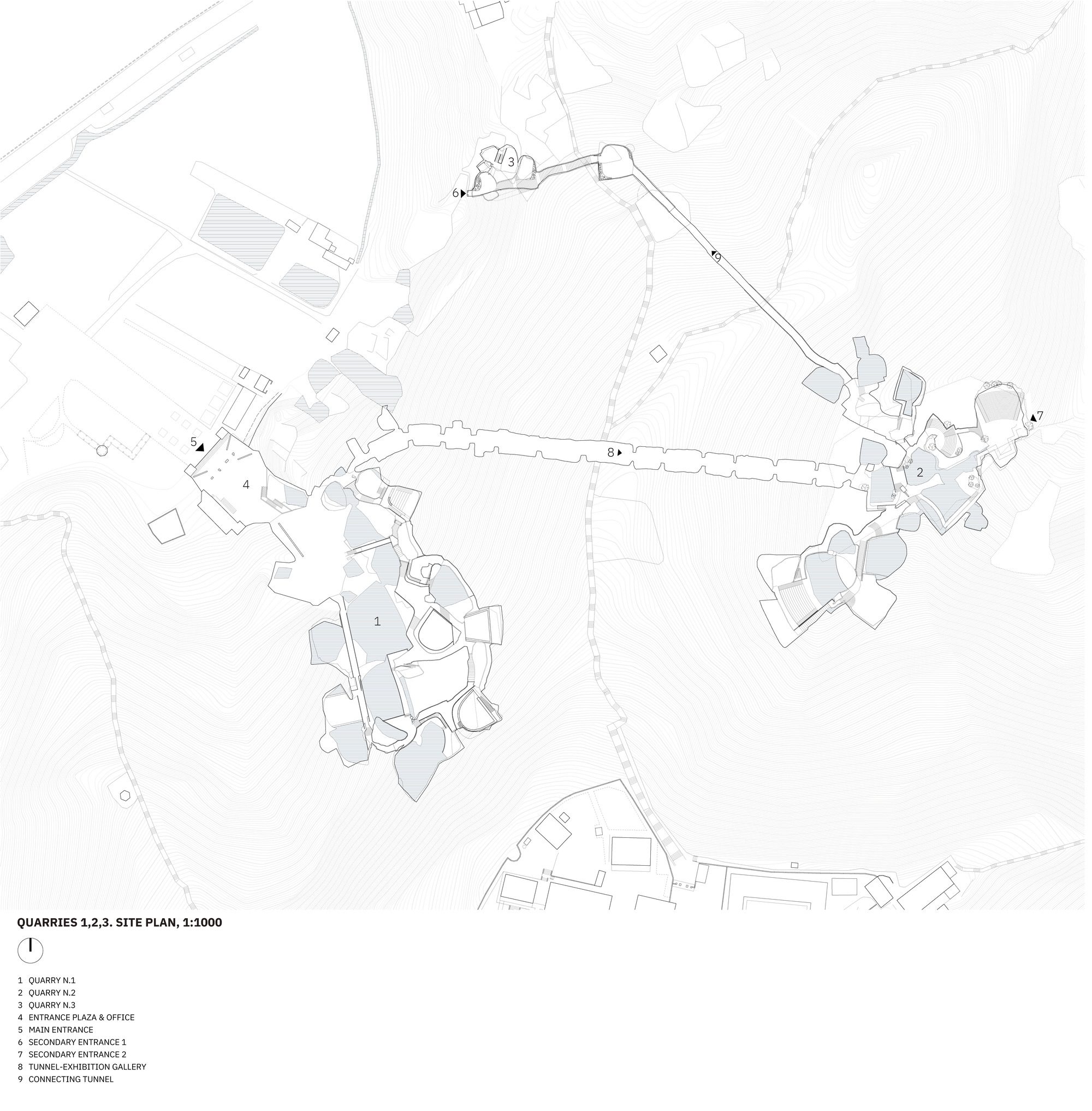
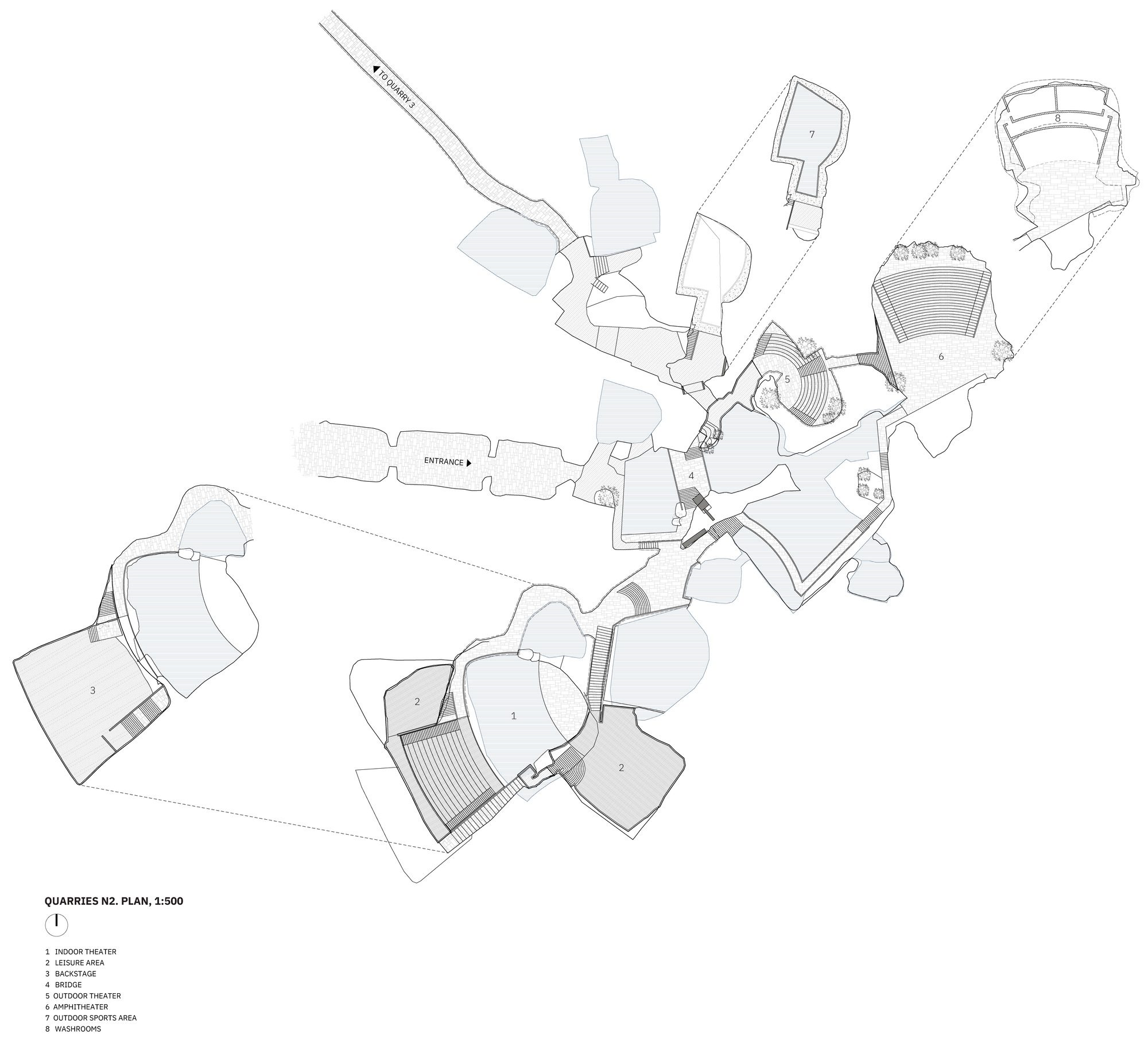
The project covers a total area of approximately 20,000 square meters, containing three quarry clusters. The design intervention focuses on introducing necessary circulation paths, creating stopping points with enlarged platforms and rooms that leverage the quarry’s existing geometry. These spaces mainly serve as walkways to facilitate movement throughout the site, while also creating a contrast between human-scale activities and the industrial scale of the quarry. Functionally, the design emphasizes both the organization of pathways and circulation, as well as providing resting spaces to accommodate future commercial formats and activity venues, such as cafés, small theaters, and cultural creative spaces, among others.
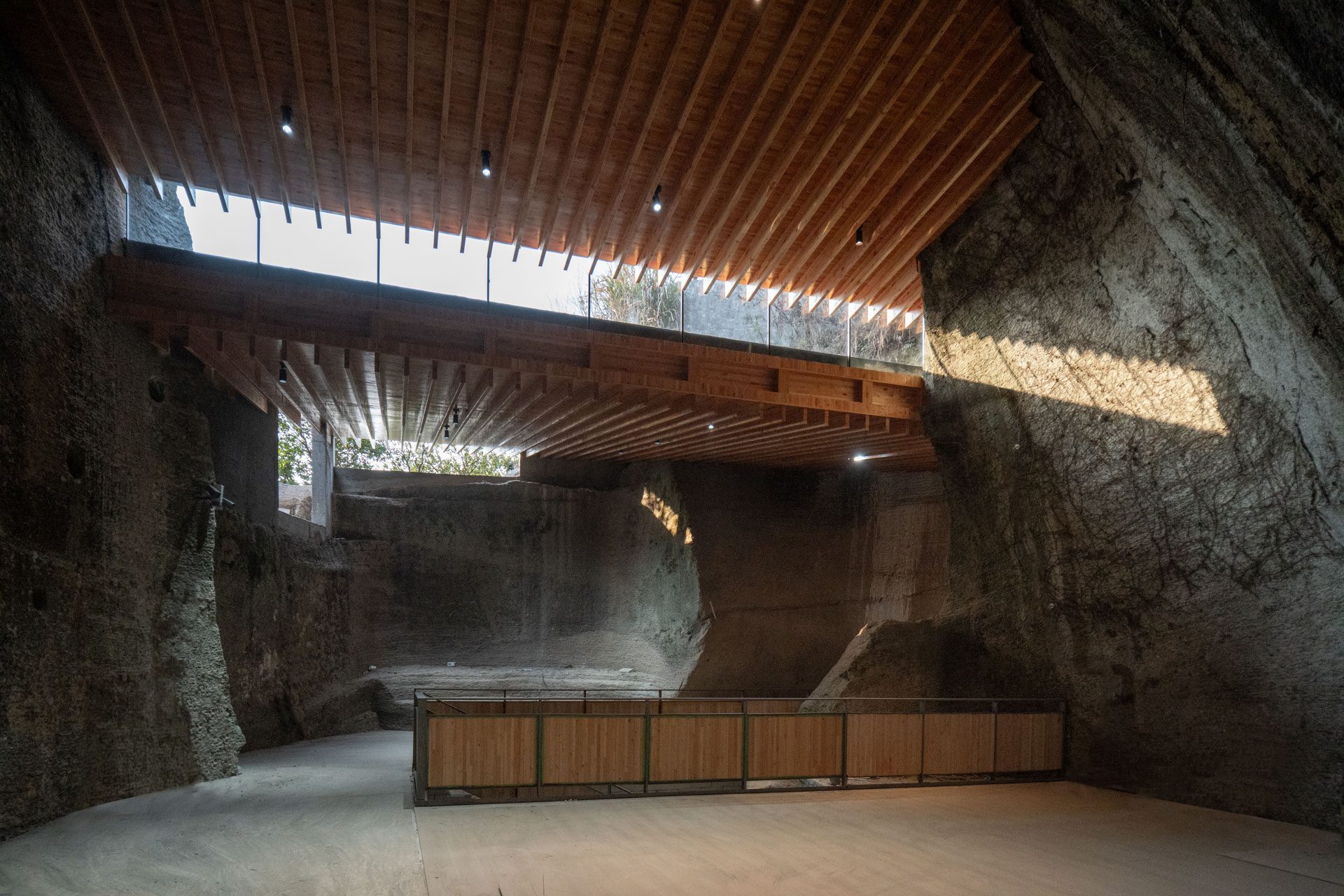
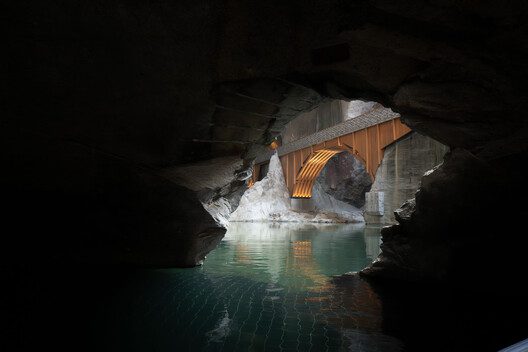
Quarry No.3. Image © Ziling Wang
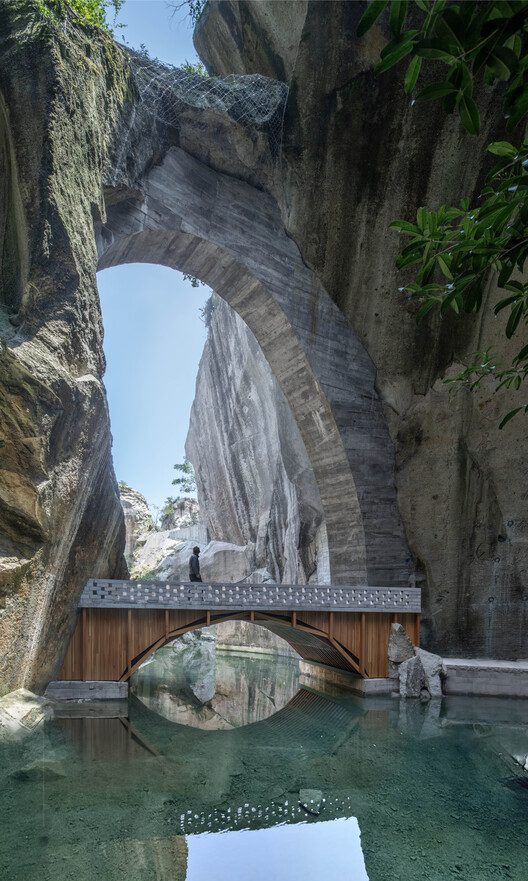
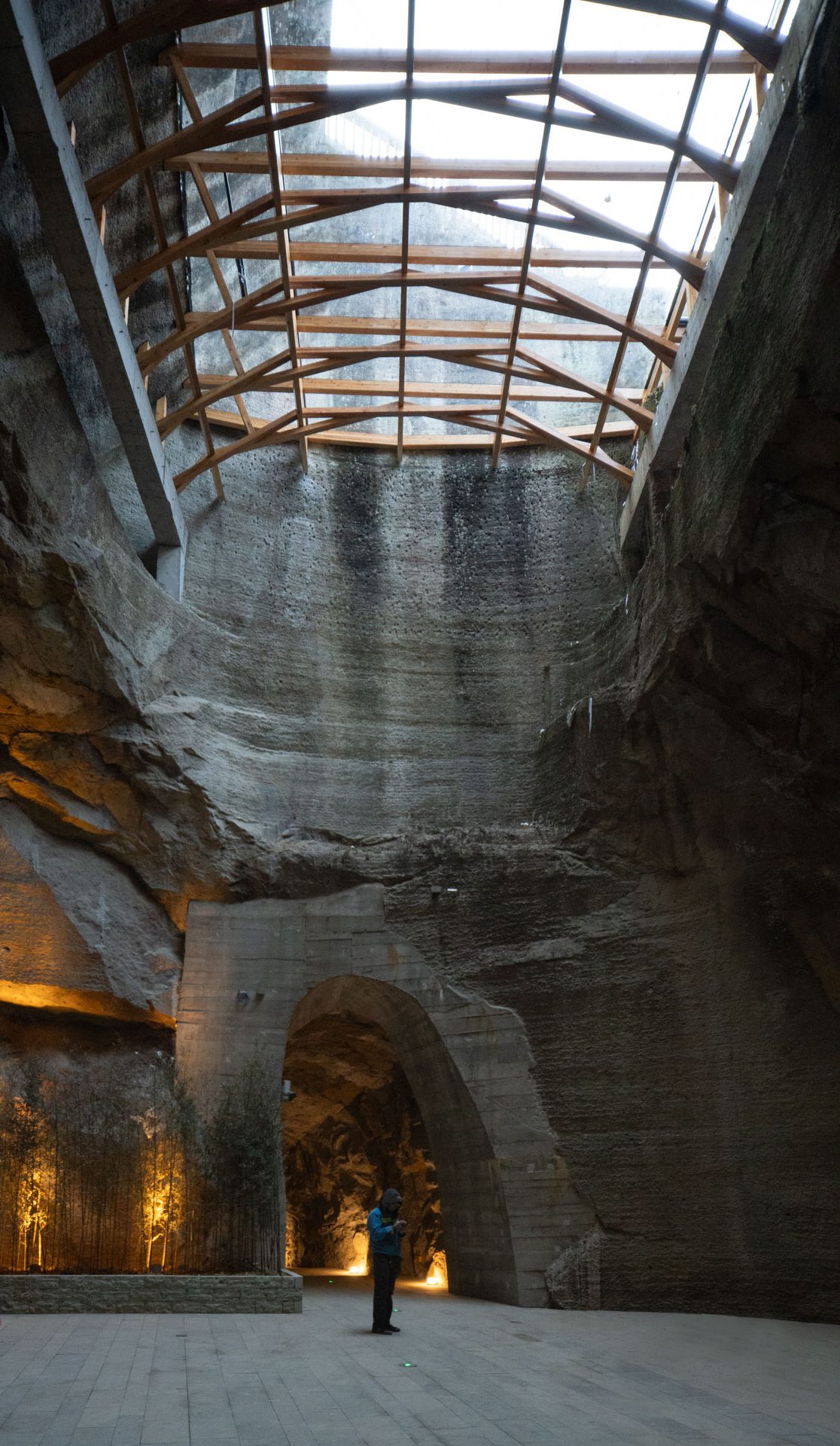
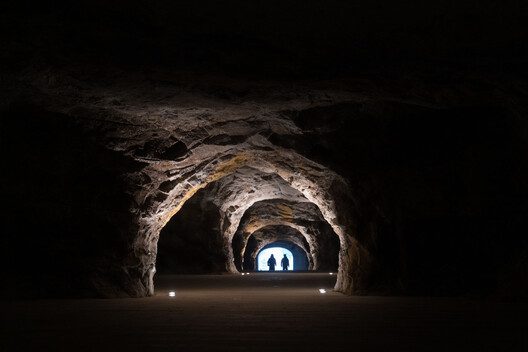
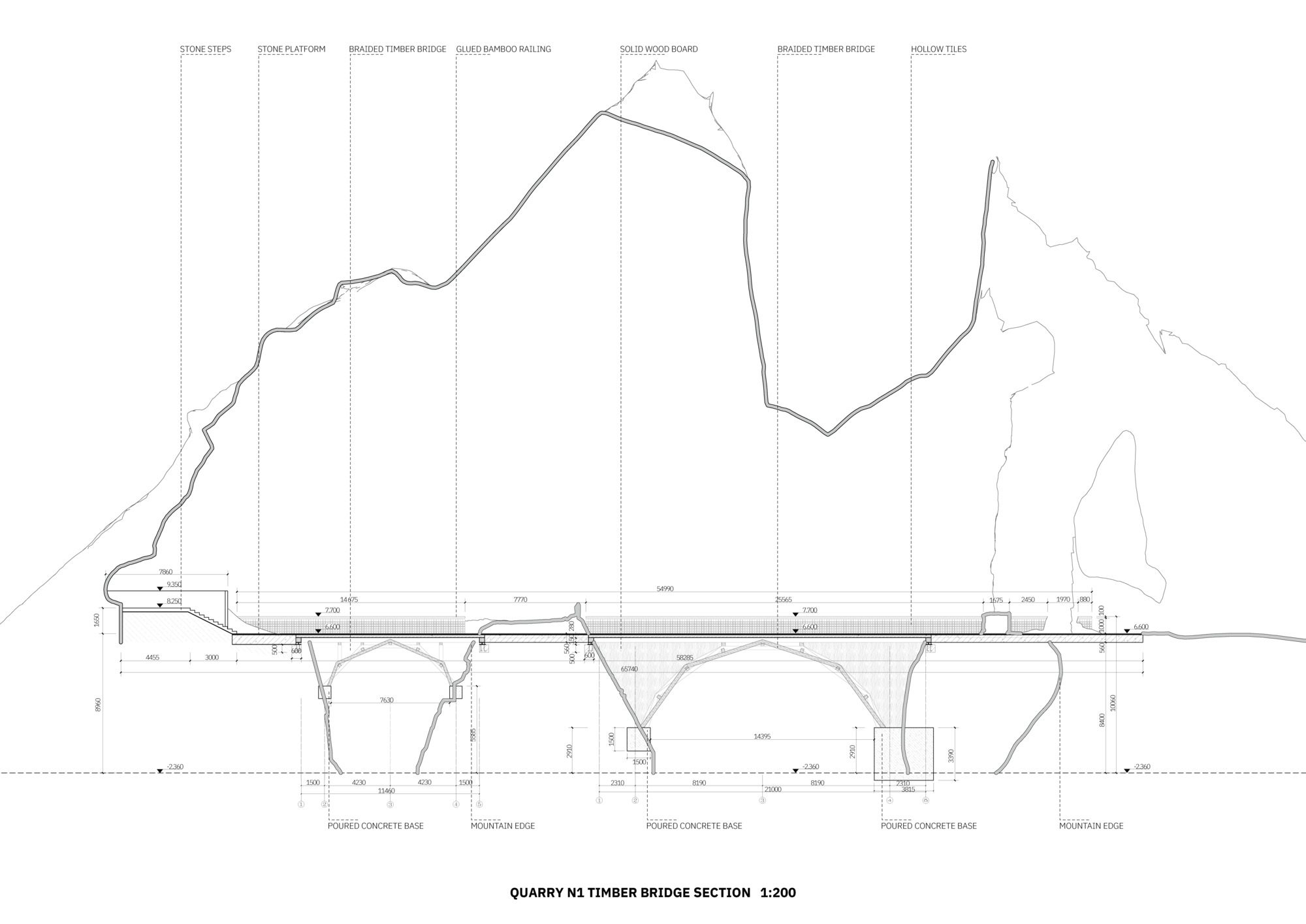
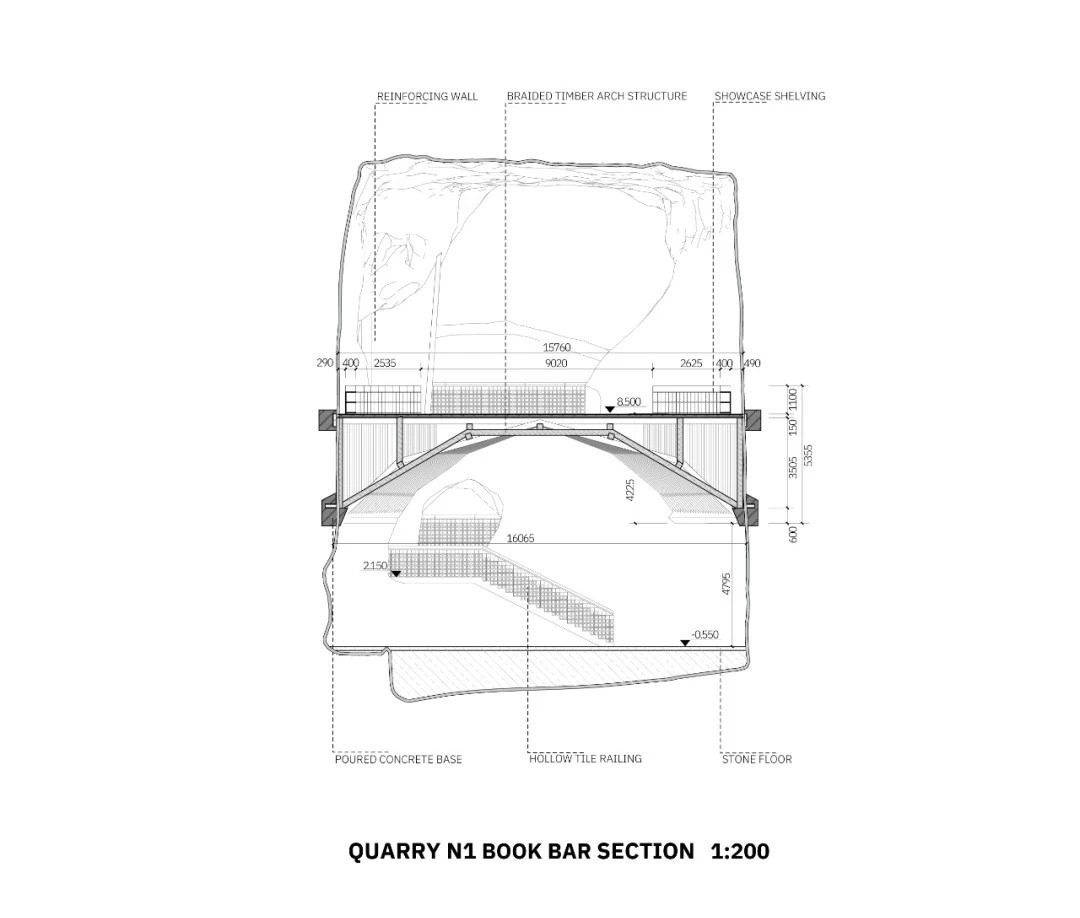
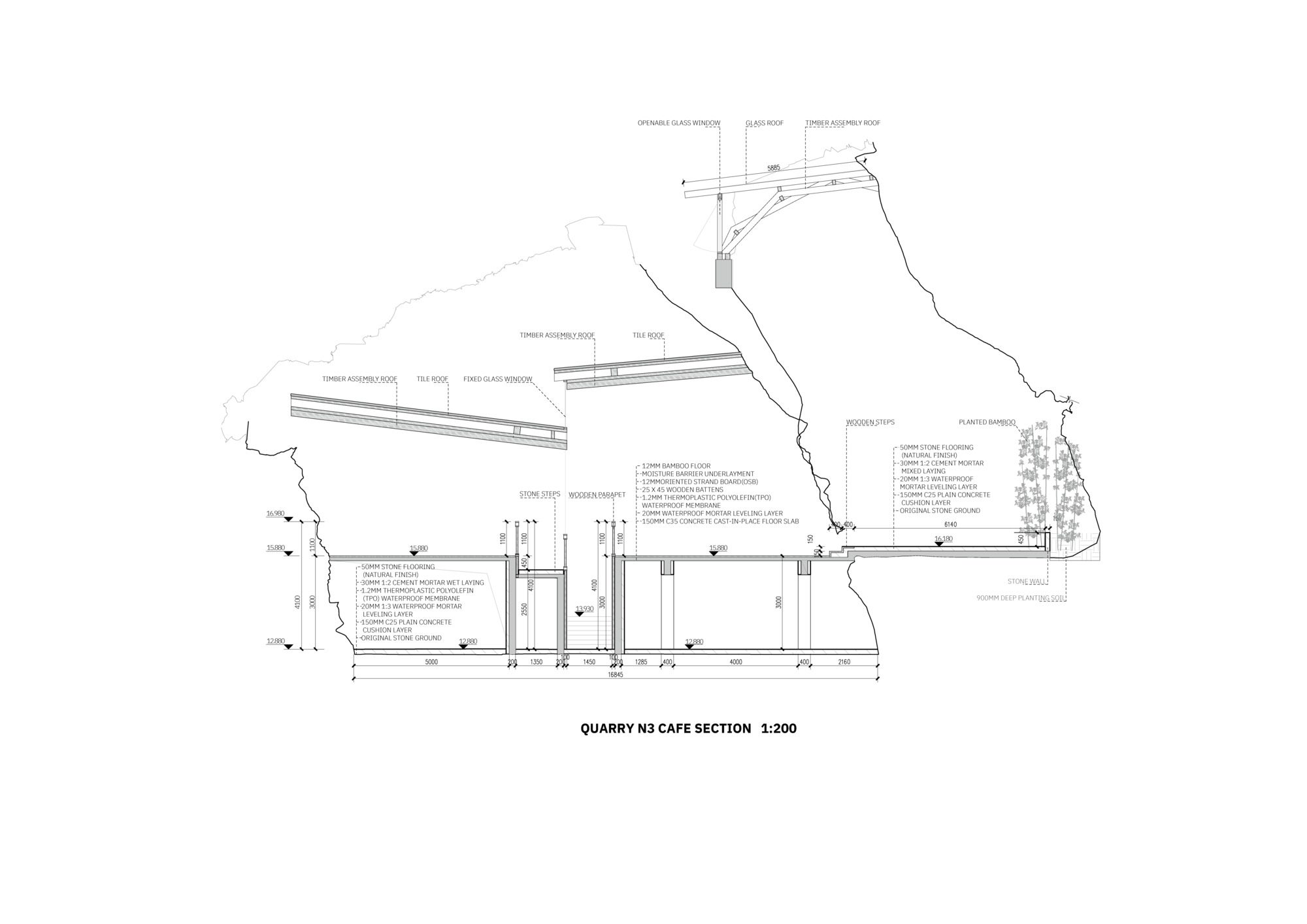
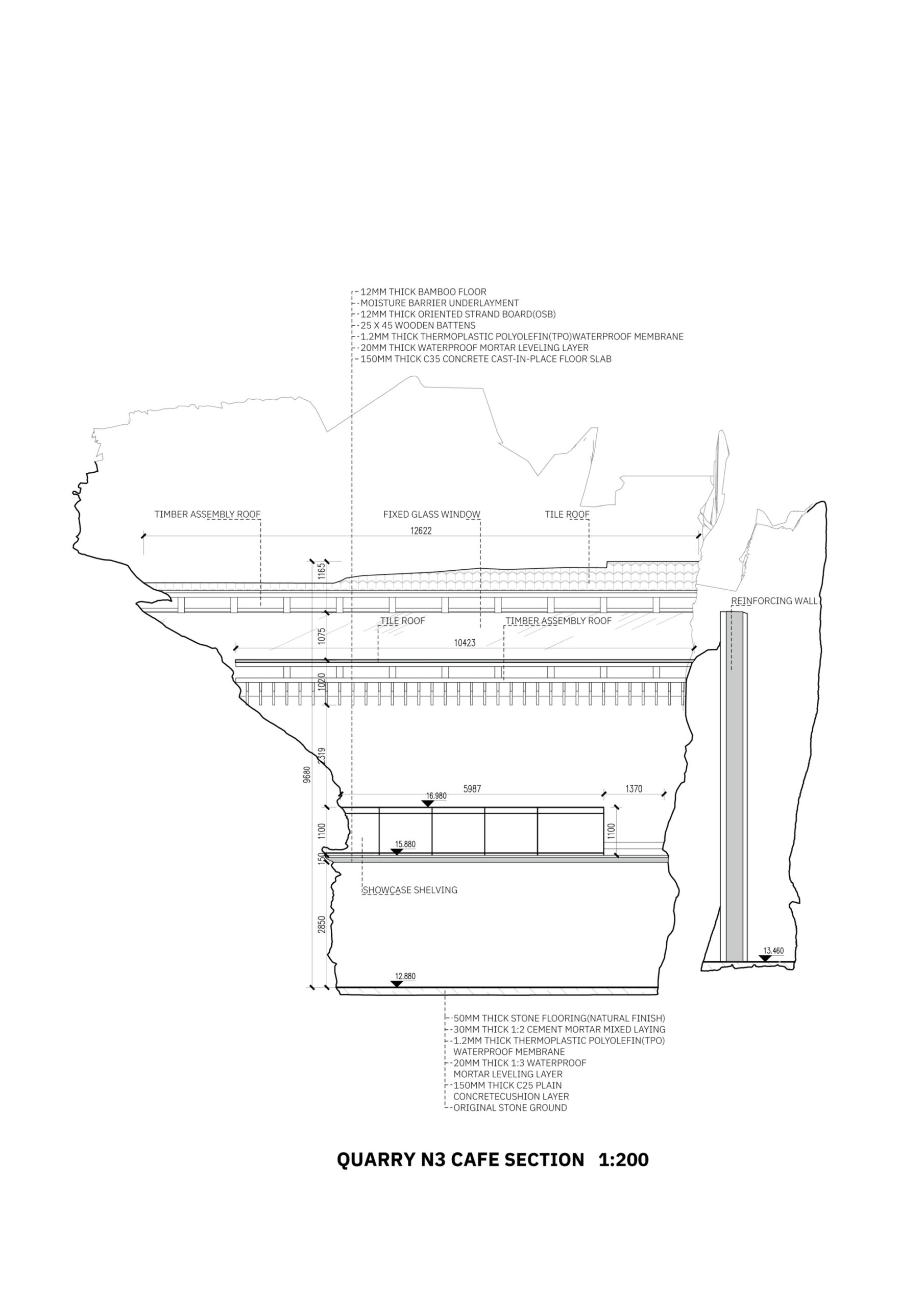
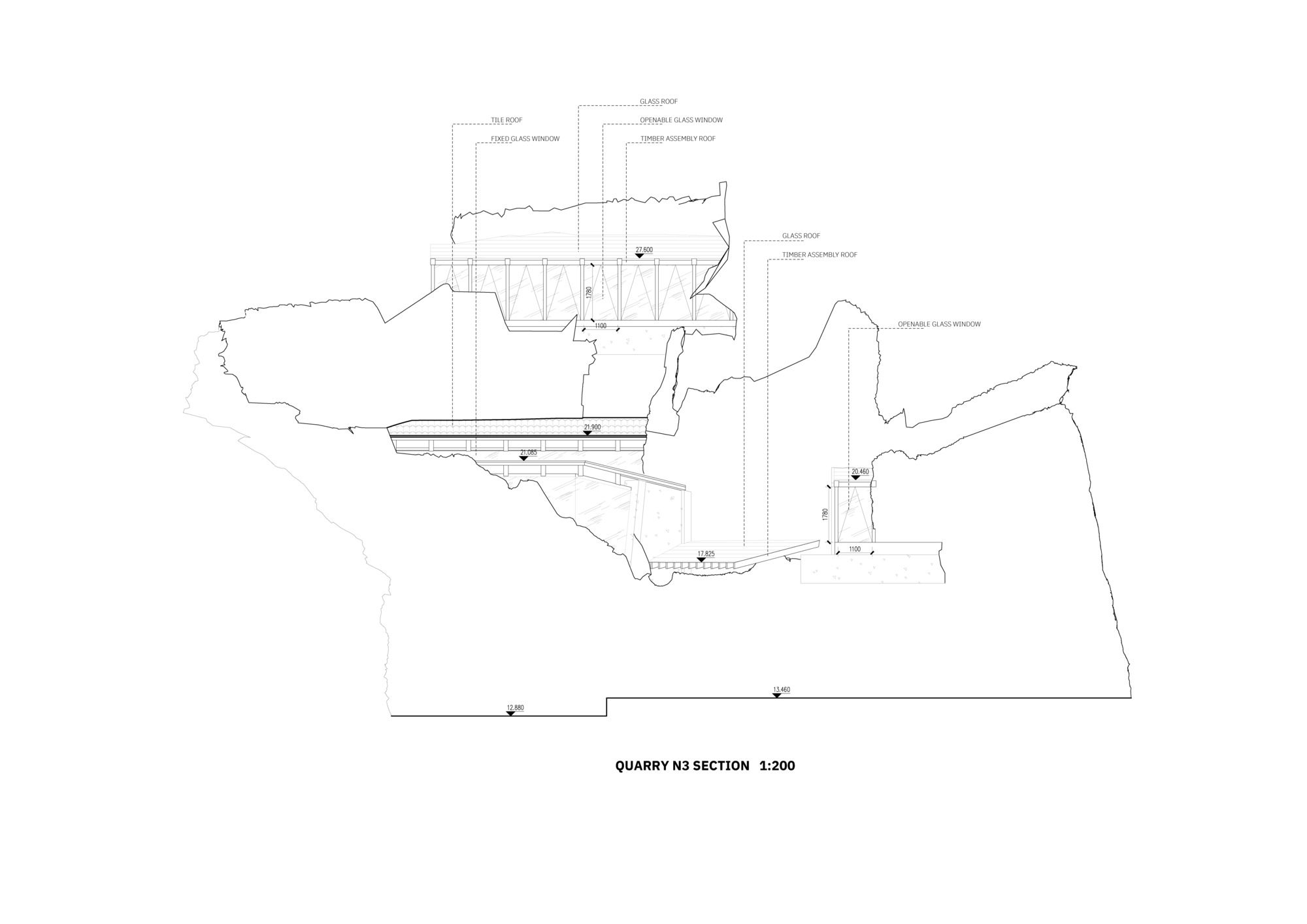
For the circulation route planning, woven timber arch bridges are incorporated to serve two main purposes. Firstly, they act as cultural symbols reflecting the local landscape aesthetics. Secondly, their structural form effectively addresses the narrow quarry entrance and constrained construction conditions by allowing components to be prefabricated in smaller units and assembled on-site. Moreover, this structural system can be scaled up from the bridge form to large-span floor slabs in new additions, simultaneously serving as roofing for the lower-level spaces. For Quarry No. 3 with its smaller volume, only the top portion is enclosed, where the density of the woven timber arches is reduced to form the roof structure while introducing overhead lighting. By varying the scale, density, and interface of the woven timber arches and repeating these elements, the structure creates a visual and functional connection throughout the intricately complex quarry space, establishing circulation flow and spatial relationships.
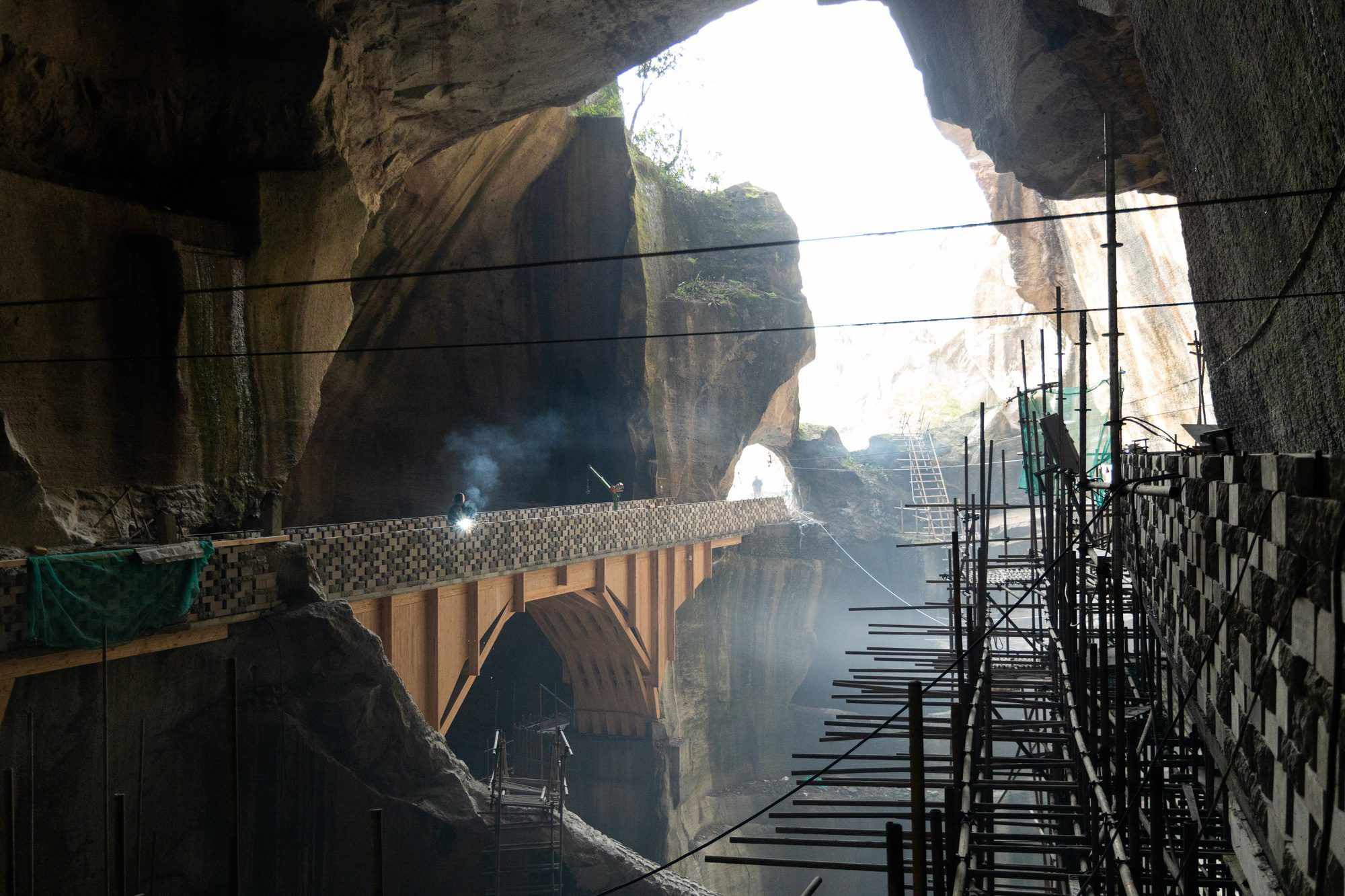
© Ziling Wang
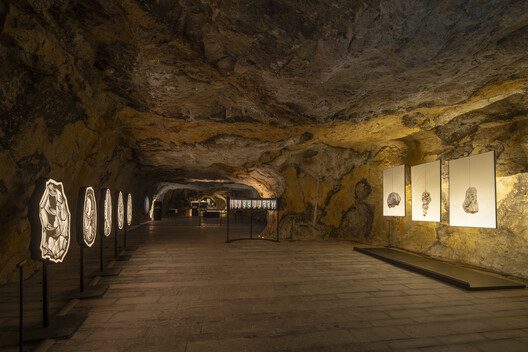
The quarry interior contains naturally uneven mineral compositions within the mountain mass. After centuries of manual extraction, the mineral cross-sections have formed massive yellow-toned natural rock paintings—a defining visual feature of the site. Notably, these yellow mineral deposits are the etymological origin of “Huangyan” (literally “Yellow Rock”). To emphasis this local identity and spatial character, we directed the lighting design to strategically illuminate these mineral “paintings.” The interplay between the minerals’ yellow hues and warm artificial lighting transforms them into colossal luminous elements within the space, while simultaneously guiding circulation paths.
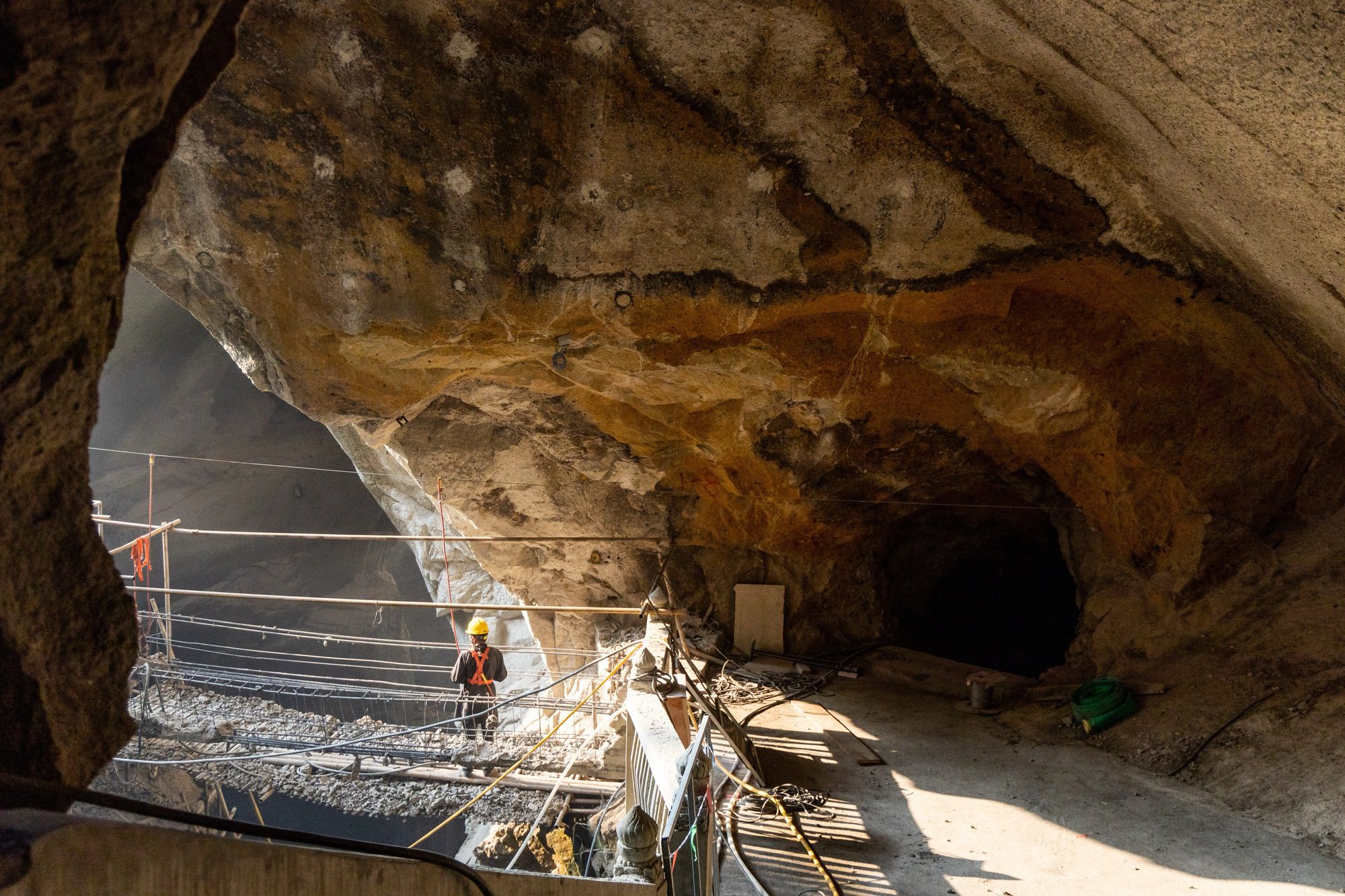
© Ziling Wang
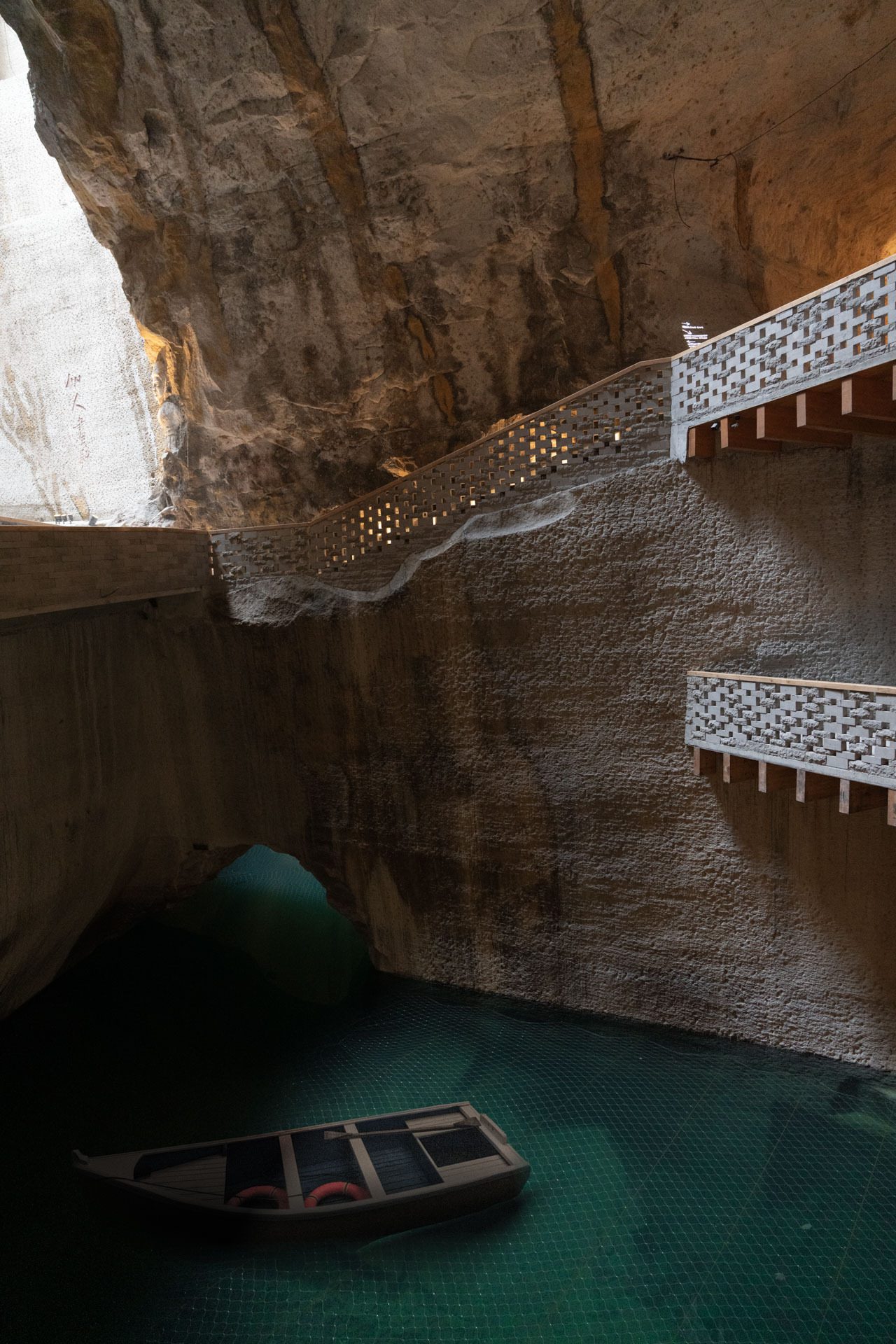
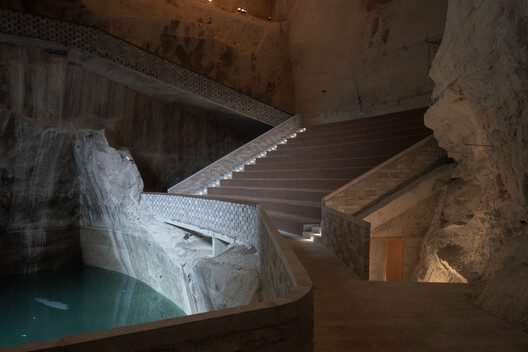
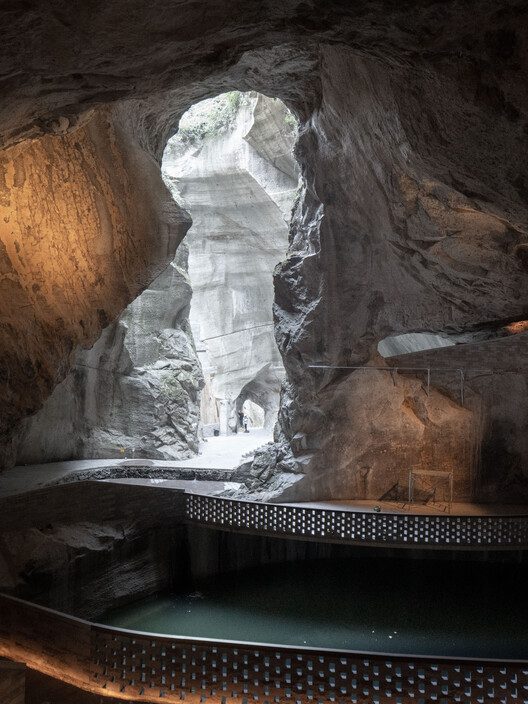
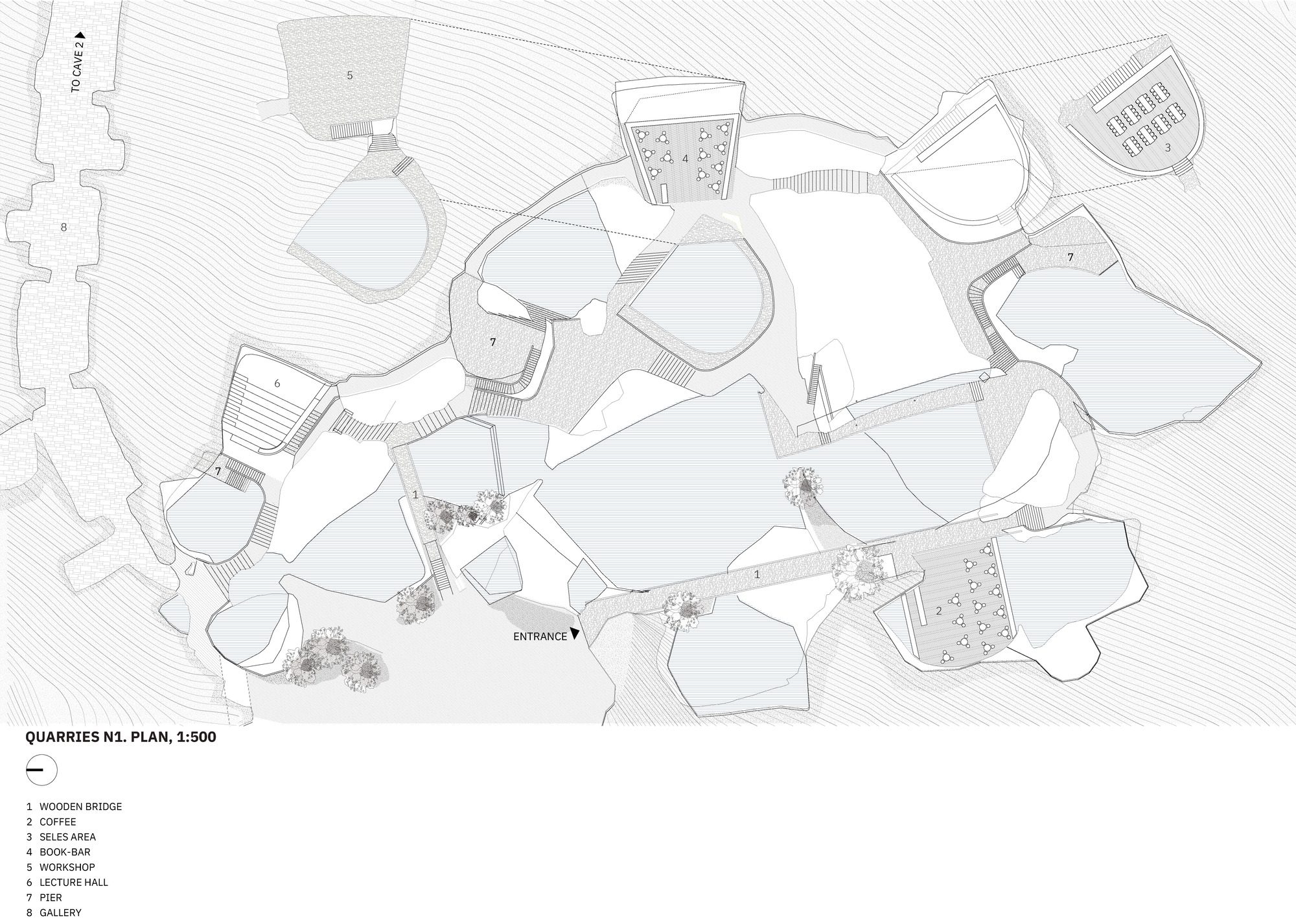
The quarry contains extensive subterranean chambers where groundwater accumulation has formed turquoise-blue pools in Quarries No. 1 and No. 2. These water bodies create a striking chromatic contrast with the yellow rock paintings, emerging as another key spatial feature. The design intentionally links these pools within Quarry No. 1, incorporating three docking piers at varying elevations to establish a water passage. This intervention enables boat access, offering multi-angled perspectives to experience the quarry.
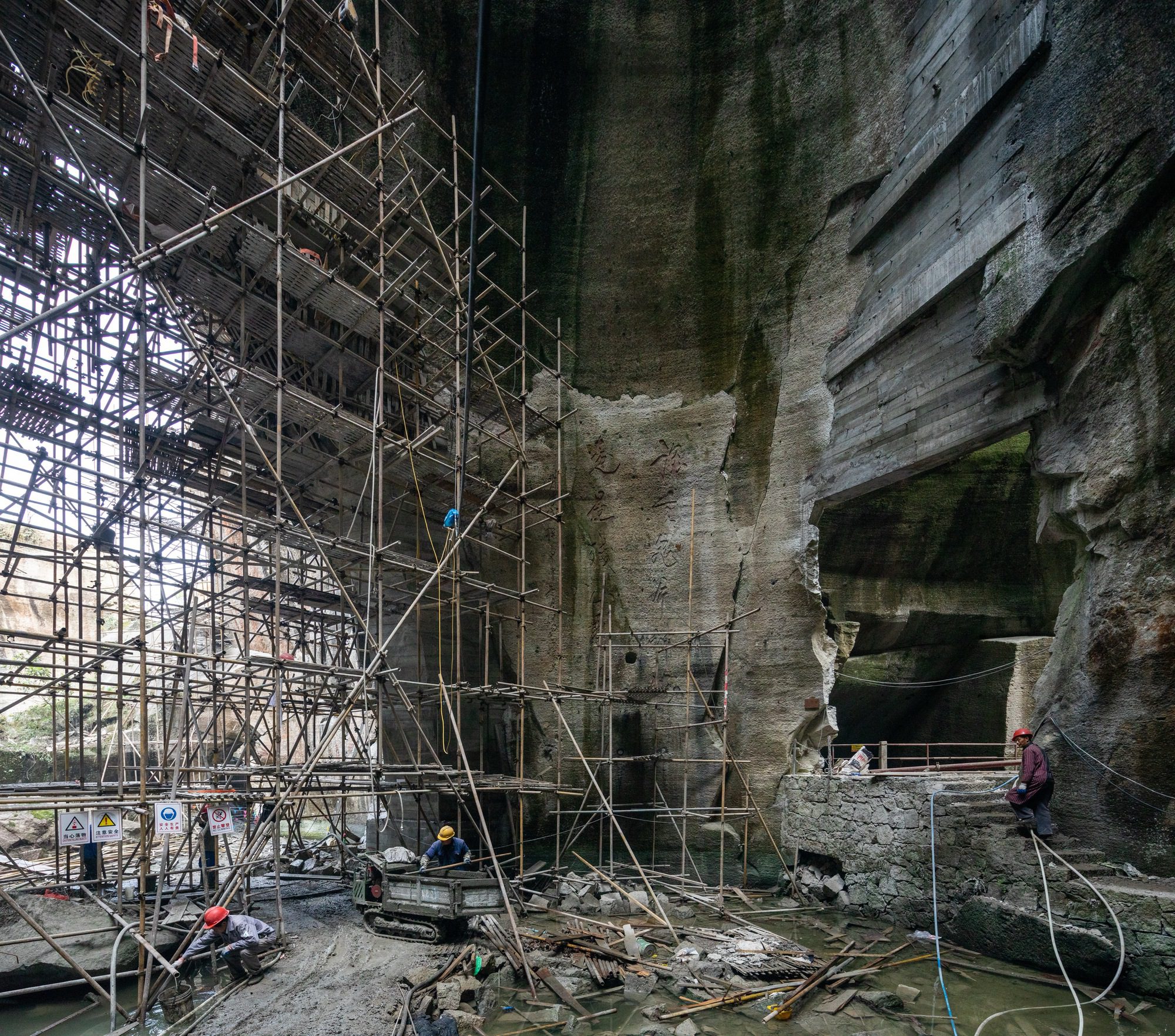
© Ziling Wang
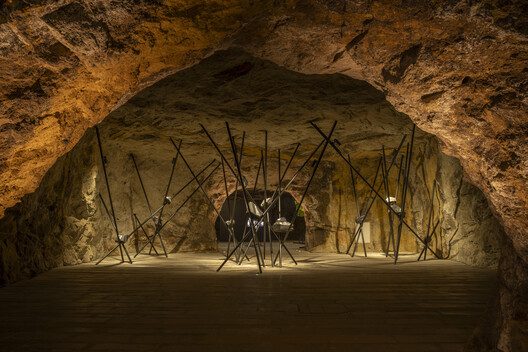
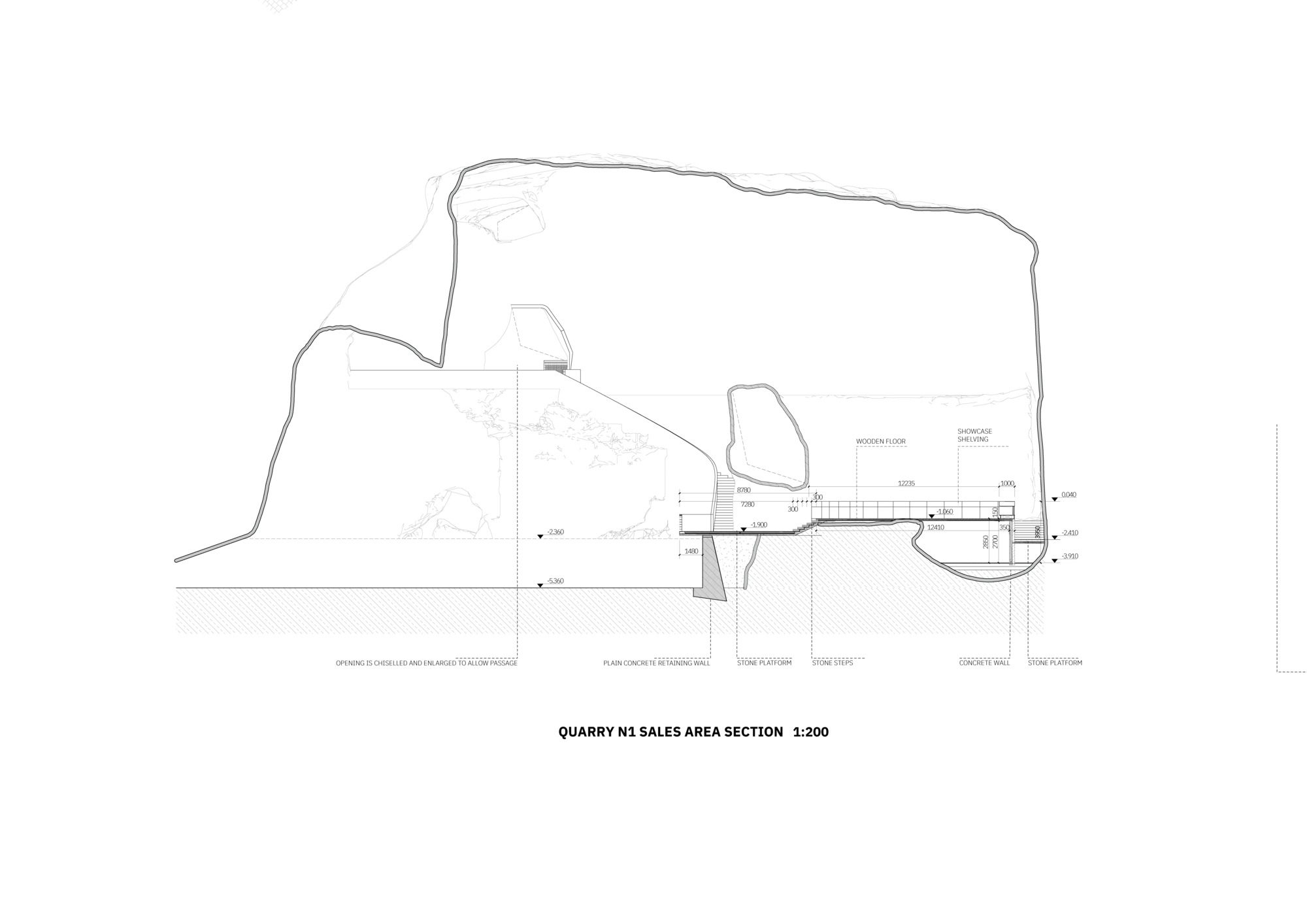
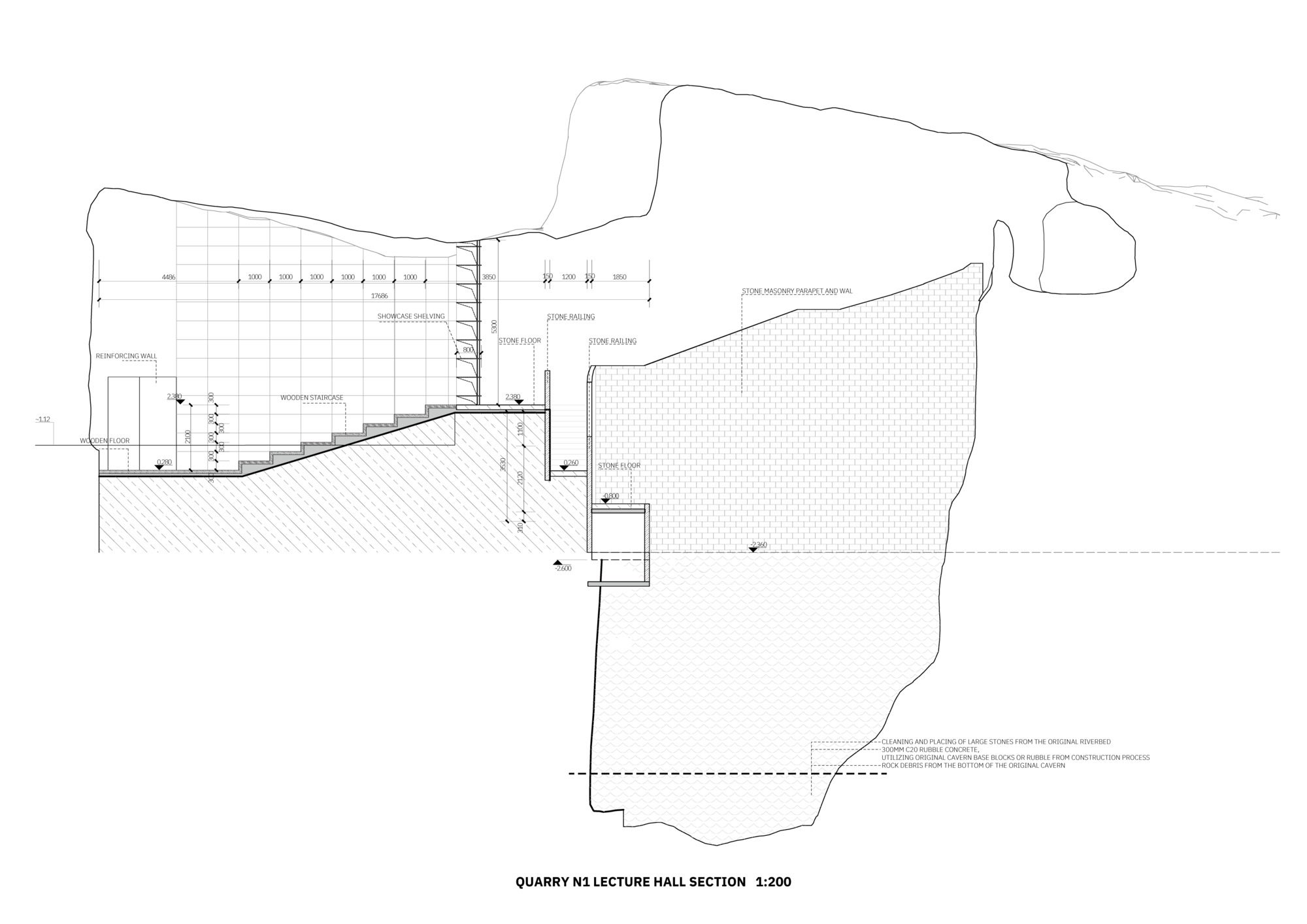
Quarry No.1 – Urban Living Room – As the quarry closest to the main entrance, quarry No.1 is themed as an “Urban Living Room,” with the memory of the old city as its core. By refining the cave’s structure and characteristics, it integrates elements such as trees, water features, docks, boats, murals, traditional landscape culture, and urban public functions. The space mainly includes a coffee lounge, workshops, a reading area, a lecture hall, as well as waterscape and tunnel experience areas.
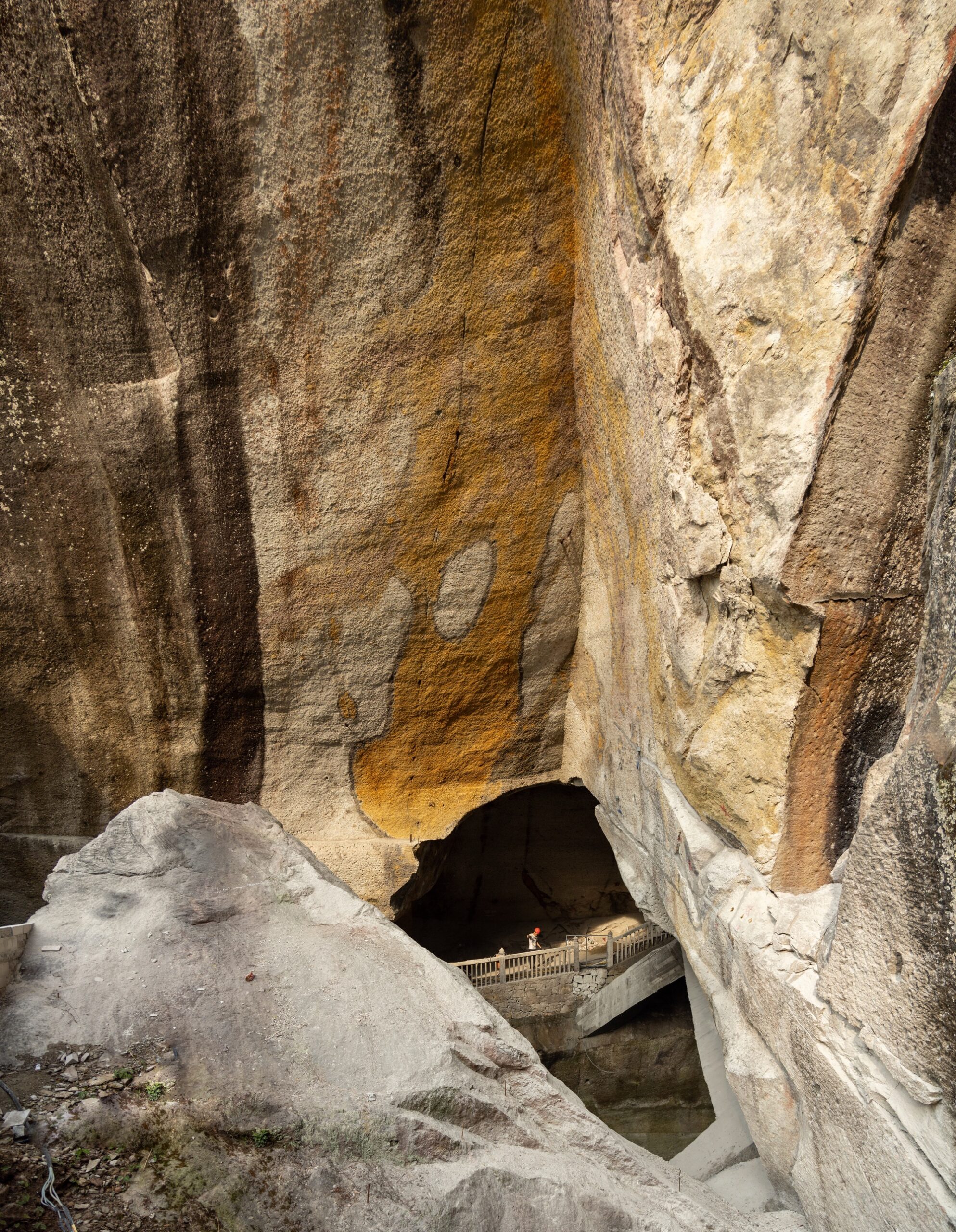
© Ziling Wang
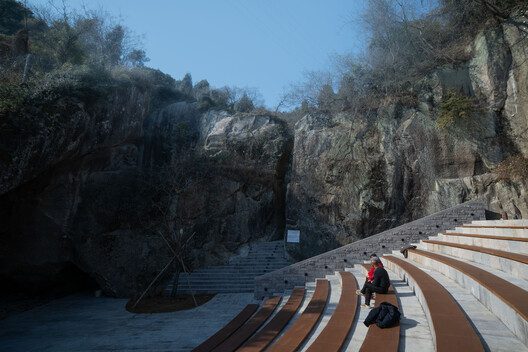
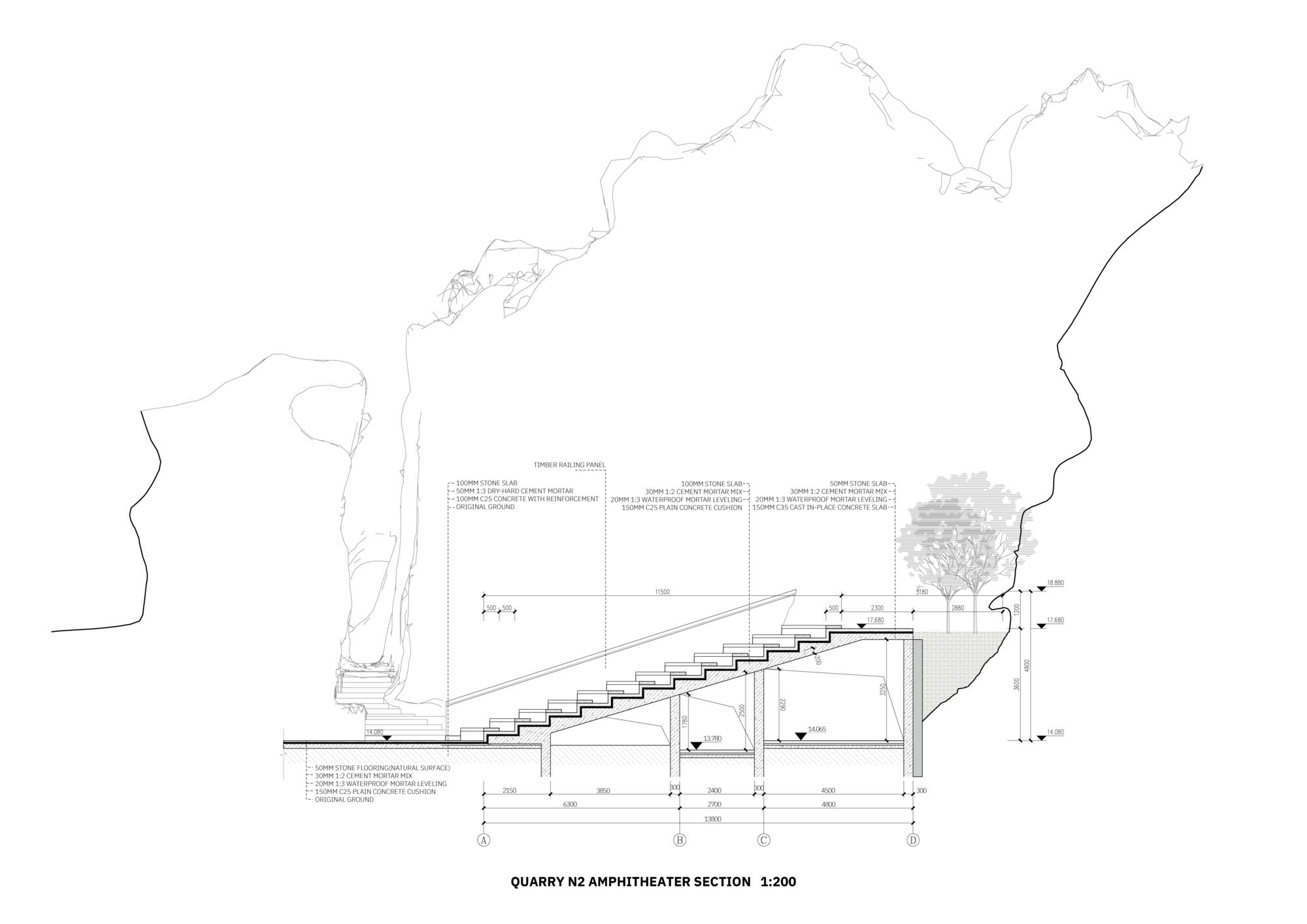
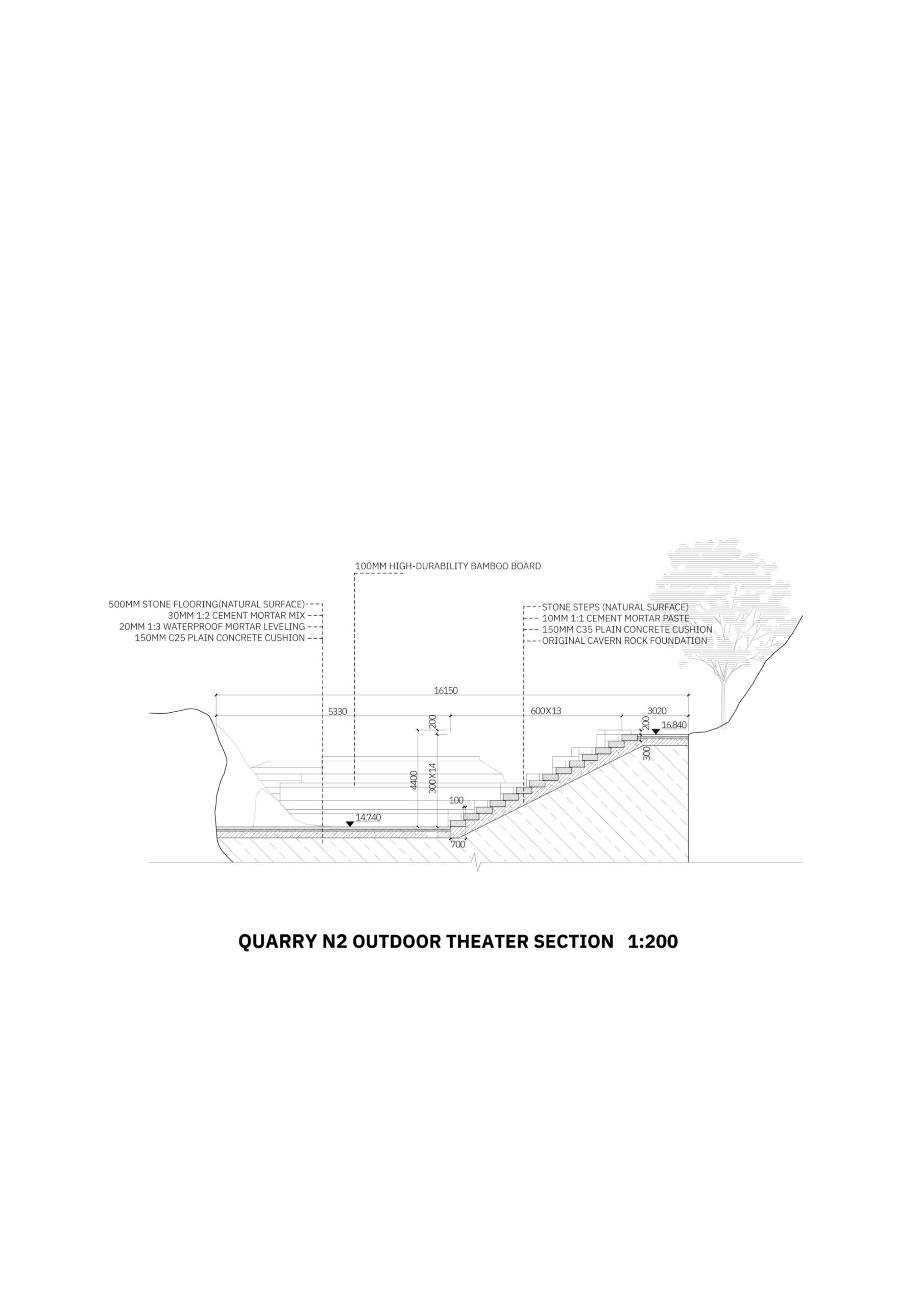
Quarry No.2 – Entertainment and Leisure space – The Quarry No.2 is primarily designed for entertainment and leisure purposes. The circular stone walls formed by the mining of stone materials in the site have natural and good acoustic effects. Taking this as an opportunity to combine with the terrain and create a natural theater. Three theaters and stage spaces, with potential for future additions including leisure spaces, rock climbing facilities, and diving experience zones.
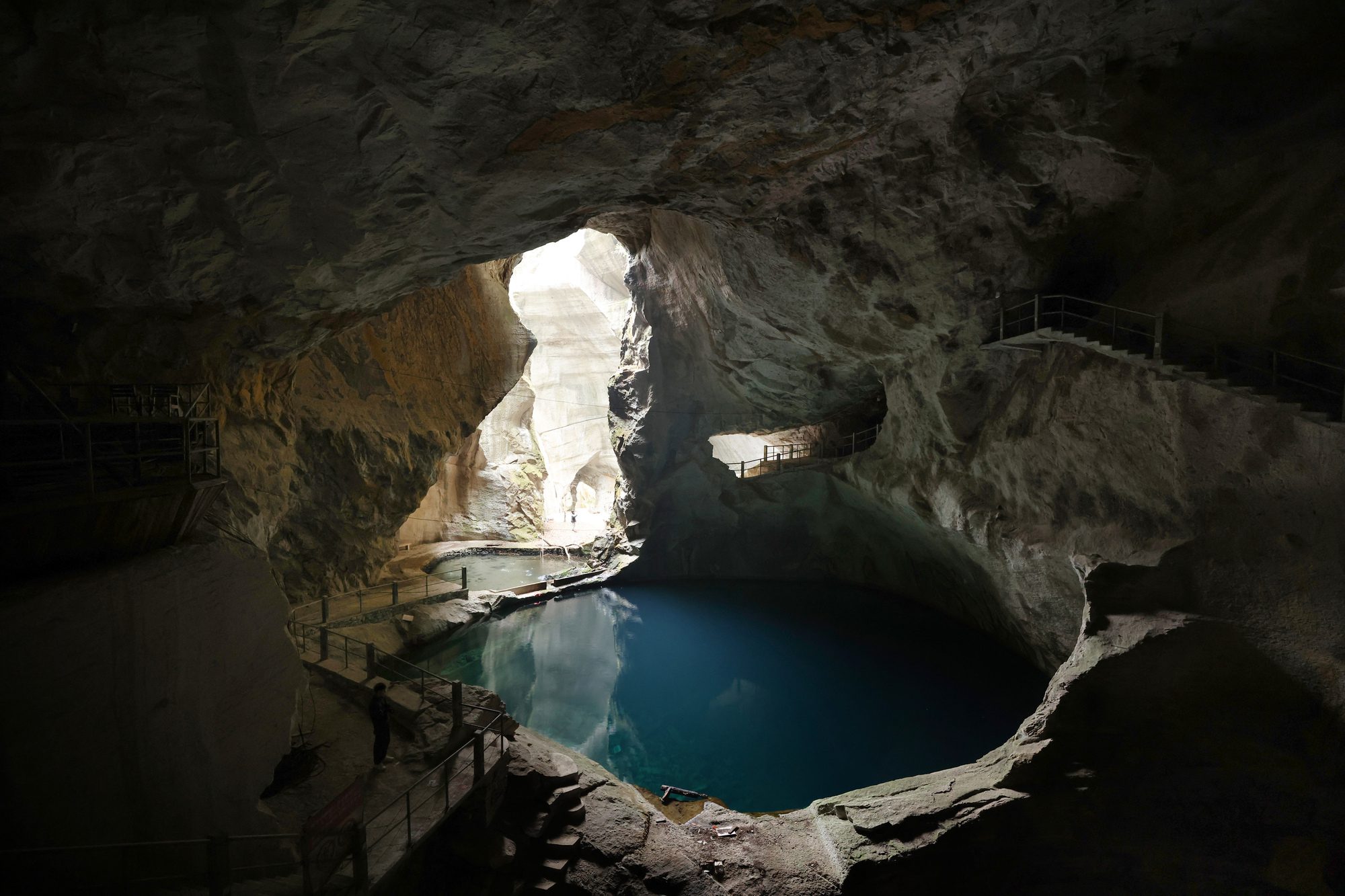
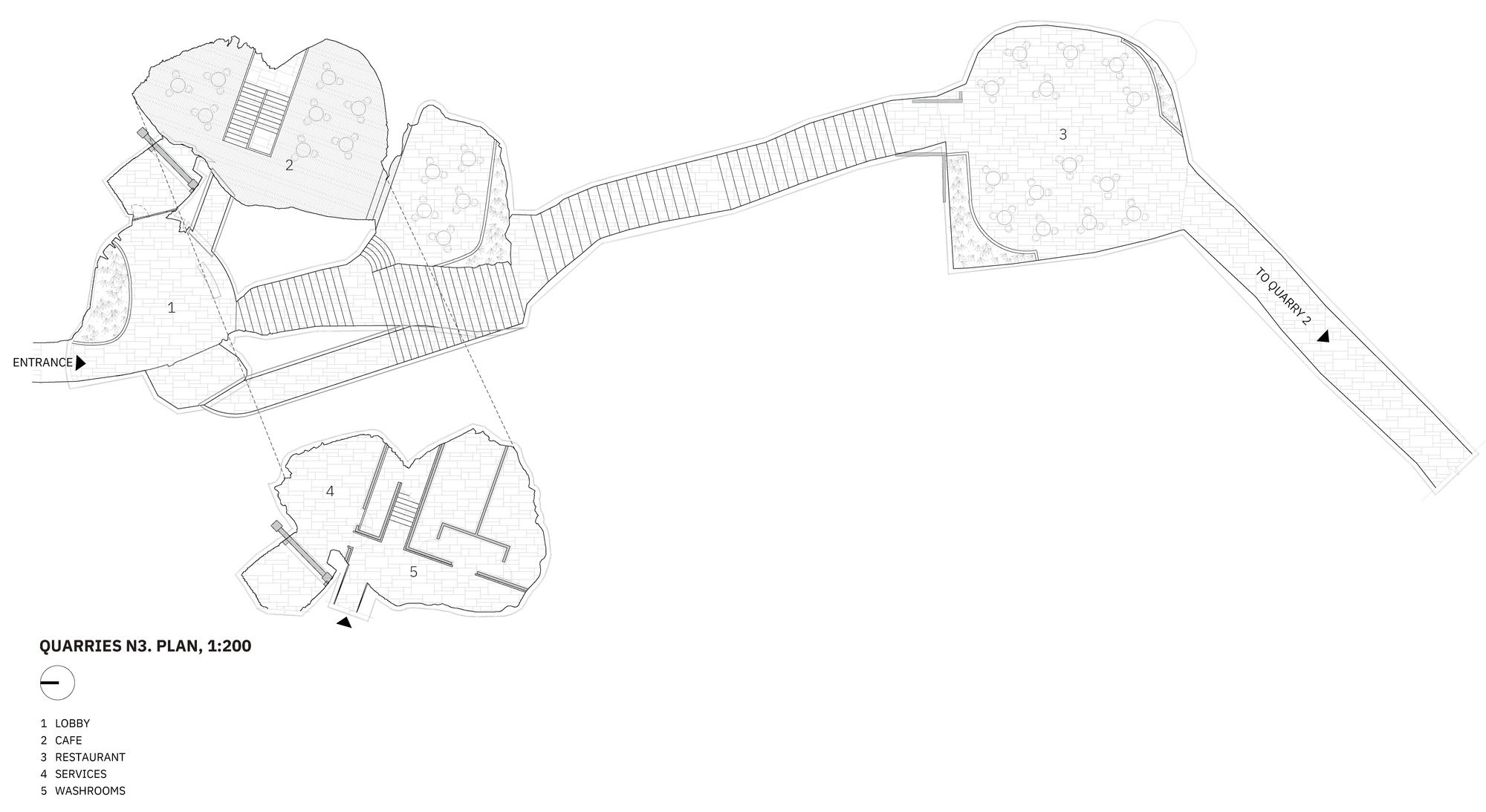
Quarry No. 3 – Secret Garden – The Quarry No. 3 is composed of a series of narrow tunnels connecting secluded spaces. The renovation of this quarry utilized the wood weaving technique to seal the opening at the top of the quarry, meeting the functional requirements in the lightest way possible without damaging the original appearance of the quarry. Quarry No. 3 will function as a restaurant, café, and reception area.
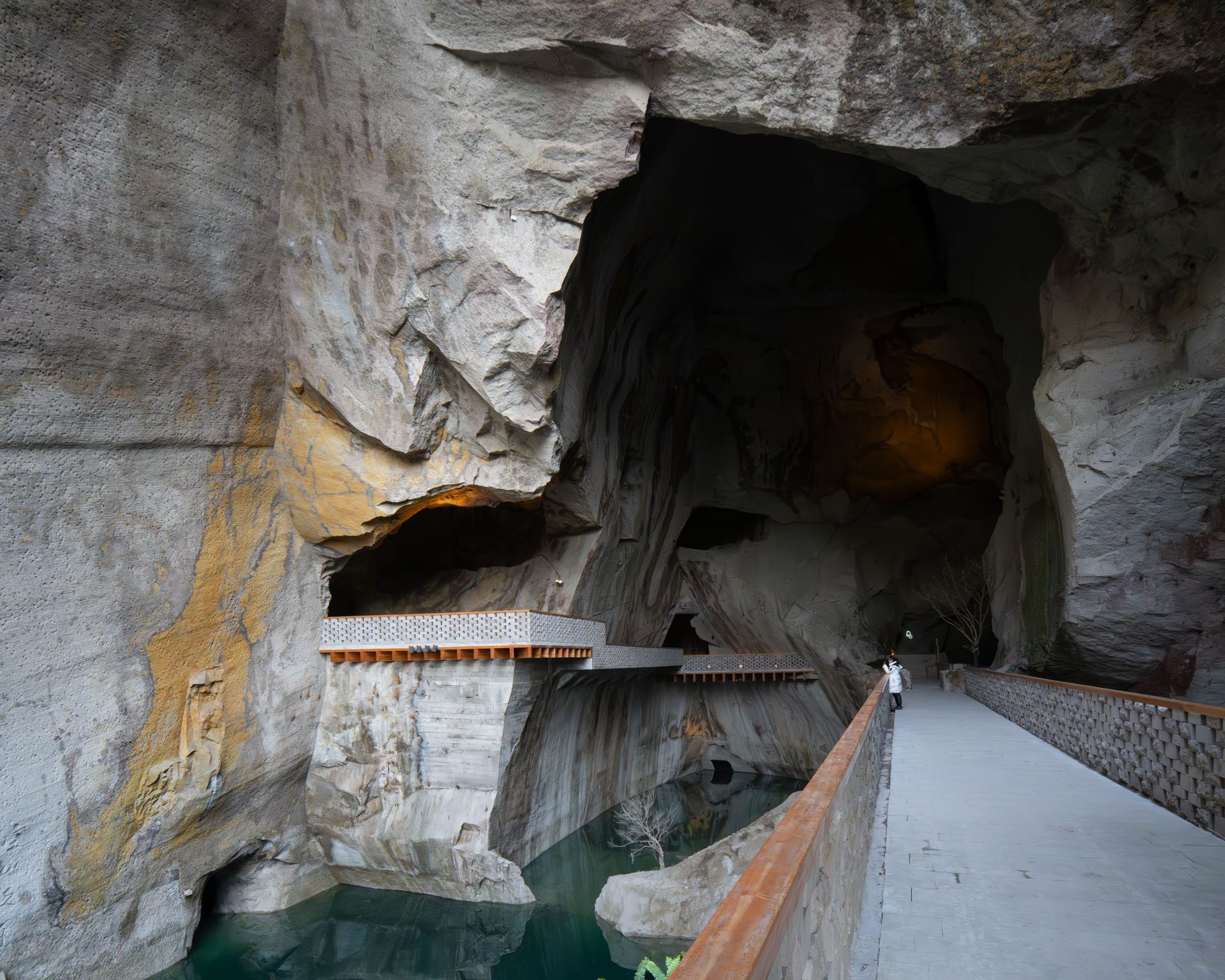
Quarry No.1. Image © Ziling Wang
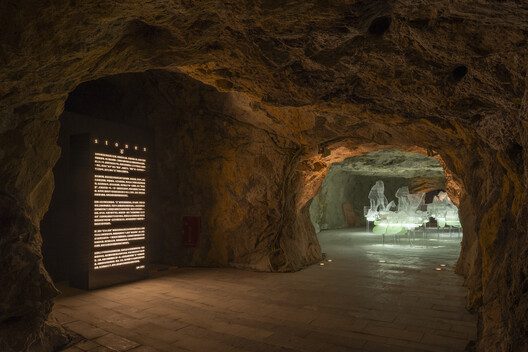
Gallery Space – The original tunnels connecting the three quarry have been transformed into exhibition spaces, achieving the goal of rationally utilizing the interior areas with minimal intervention.
Project Info
Architects: DnA
Country: China, Taizhou
Area: 19664 m²
Year: 2024
Photographs: Ziling Wang, Weiqi Jin
Lighting Design: Zhang Xin Studio, School of Architecture, Tsinghua University
Acoustic Design: Yan Xiang, Architectural Acoustics Laboratory, Tsinghua University
Reinforcement Design: The Architectural Design and Research Institute of Zhejiang University Co., Ltd.
Safety Assessment: Zhejiang Zhenan Comprehensive Engineering Surveying and Mapping Institute Co., Ltd.
Clients: Taizhou Yongning Industrial Investment Group Co., Ltd.