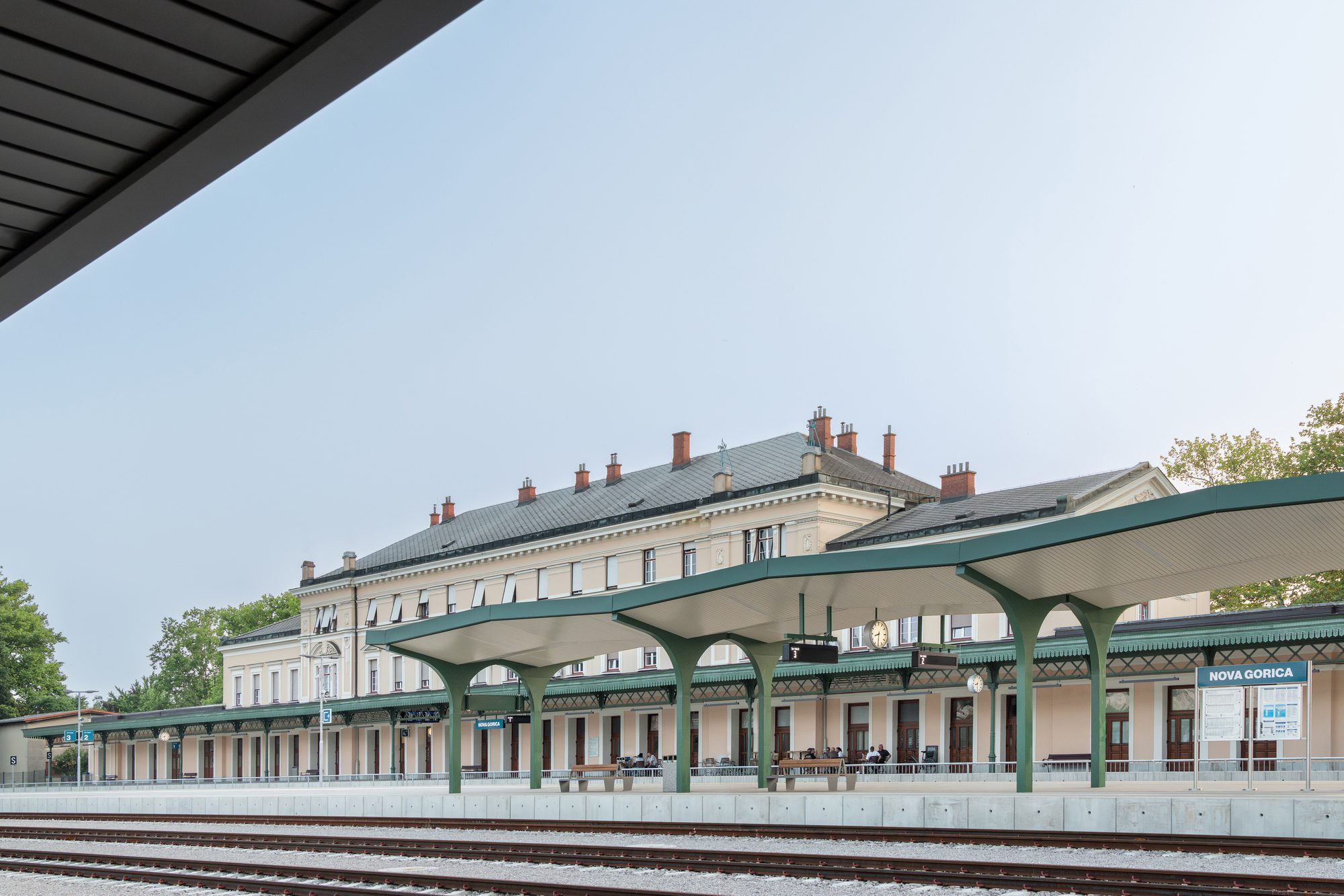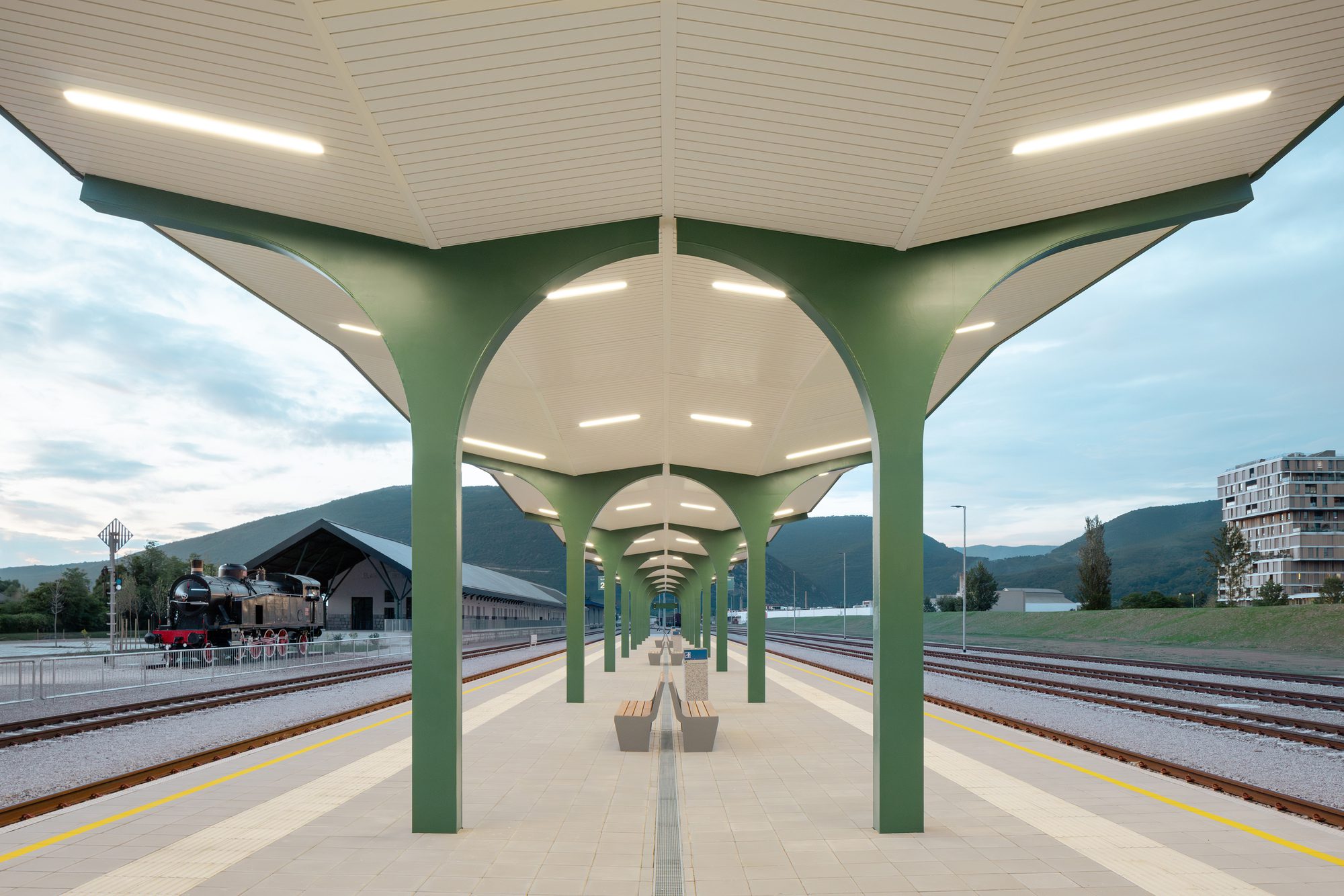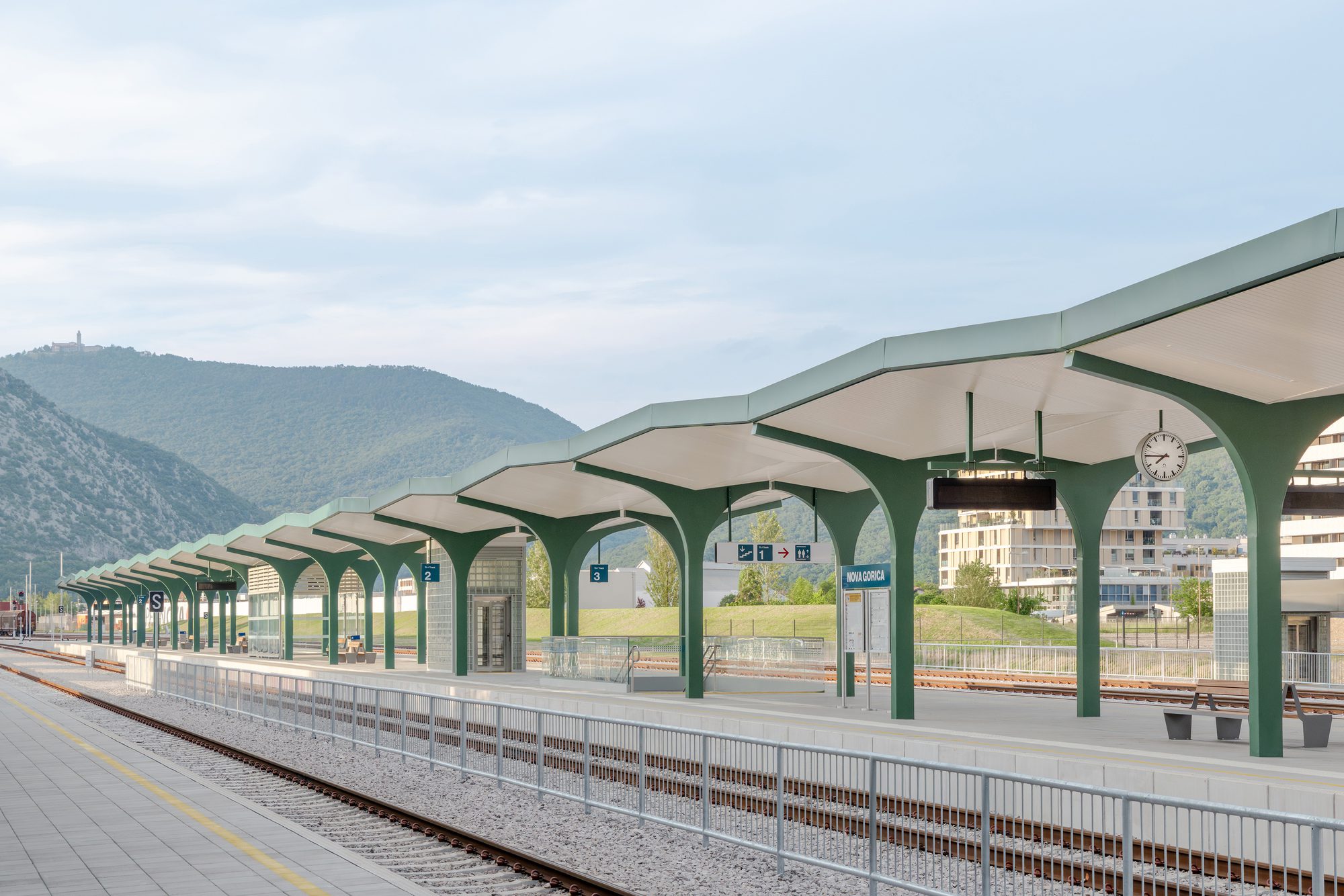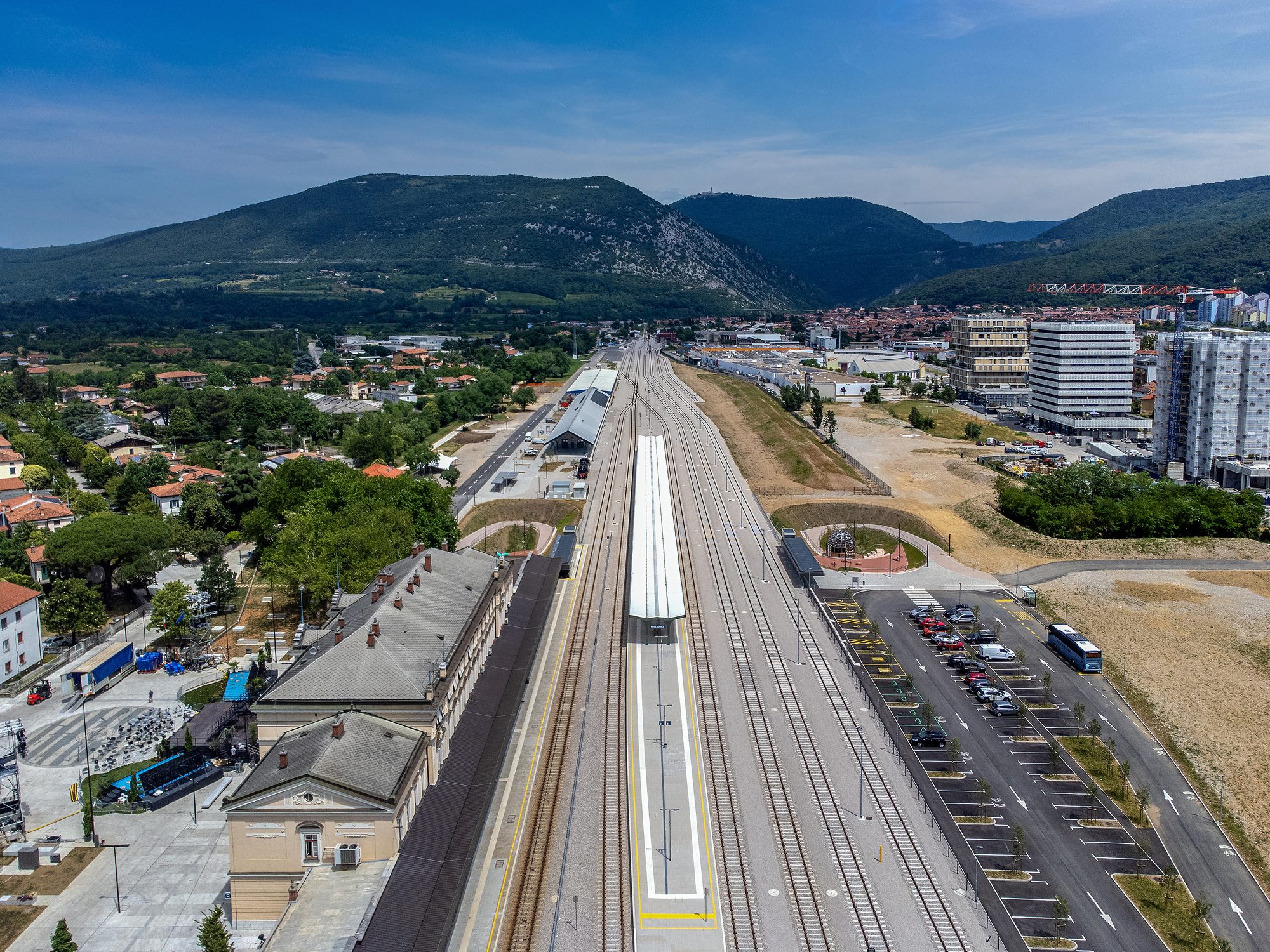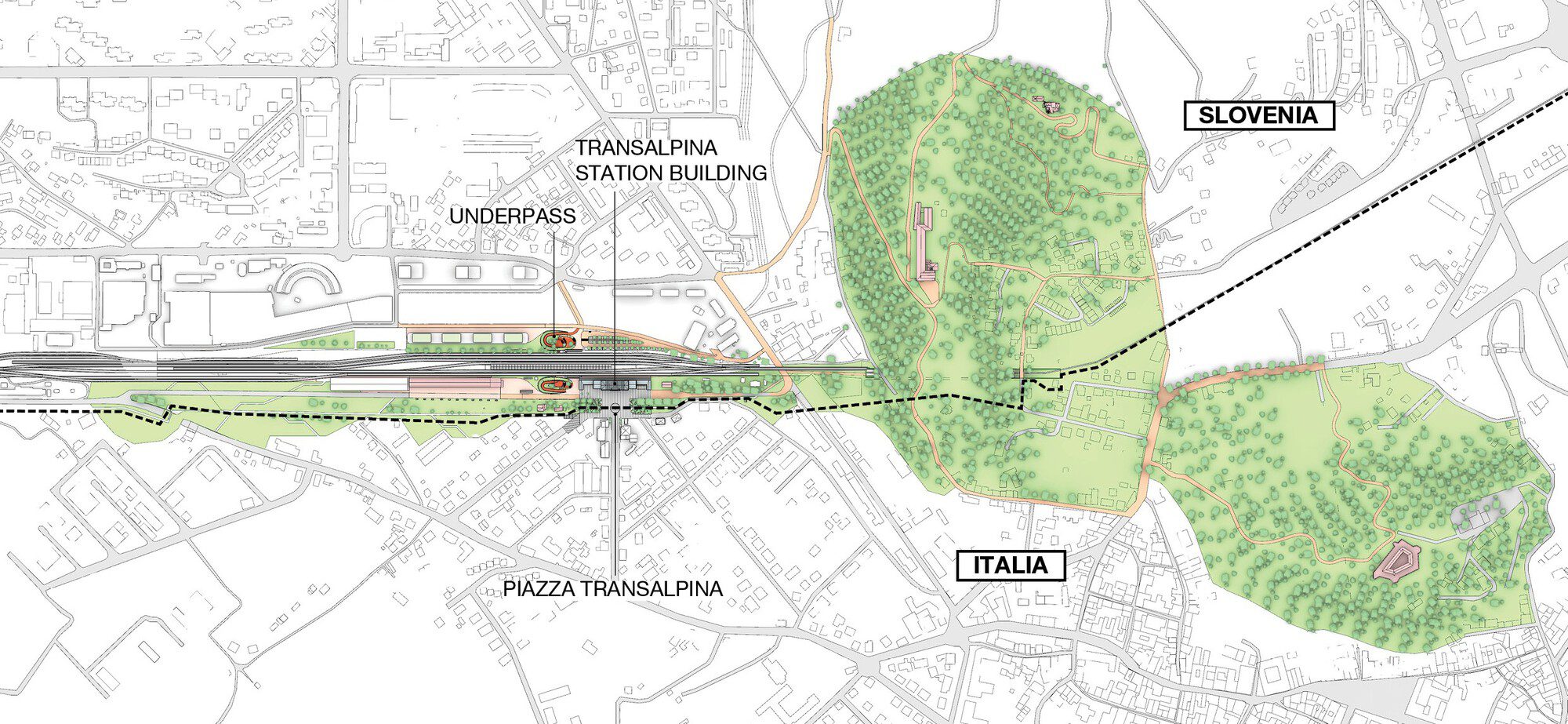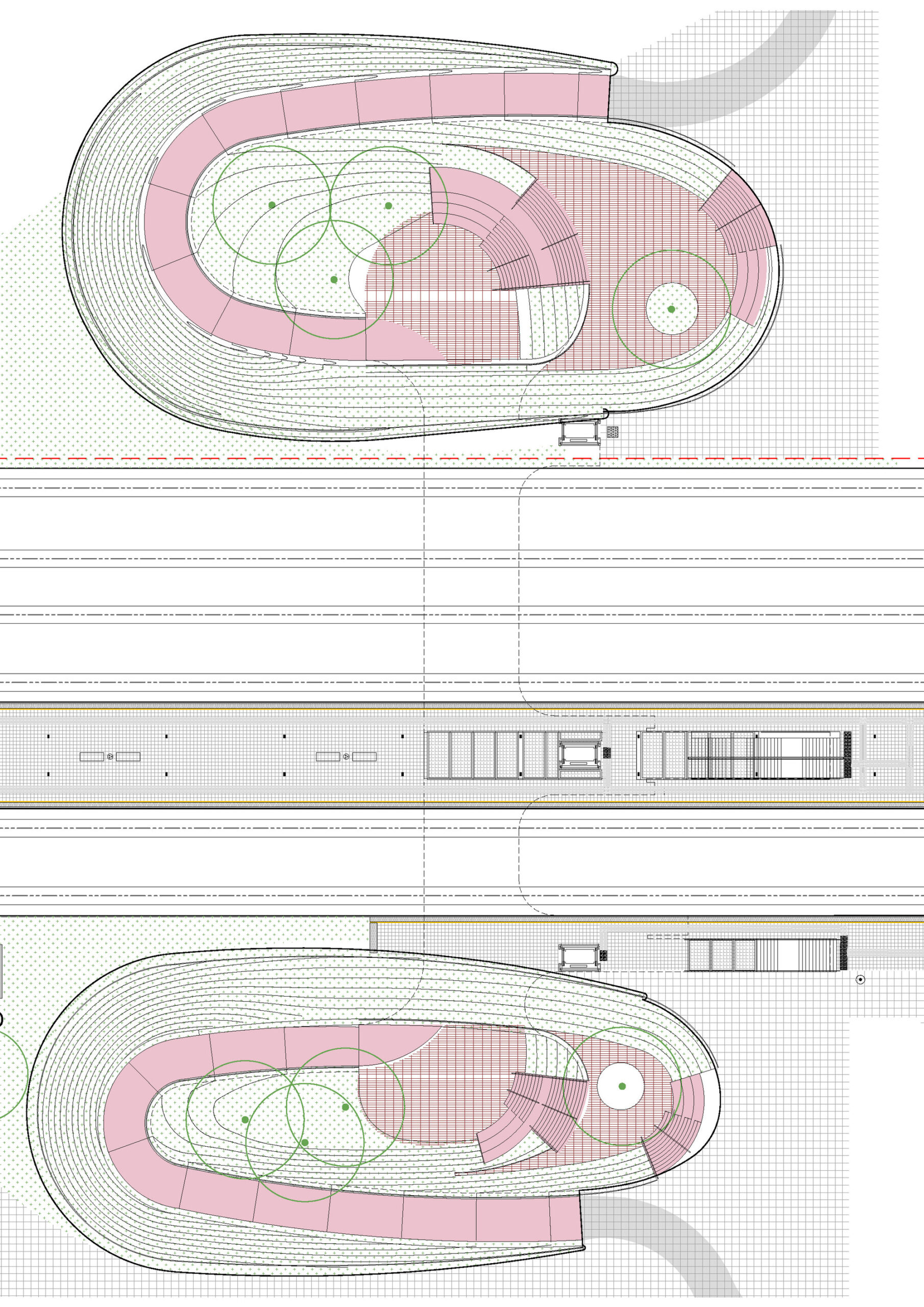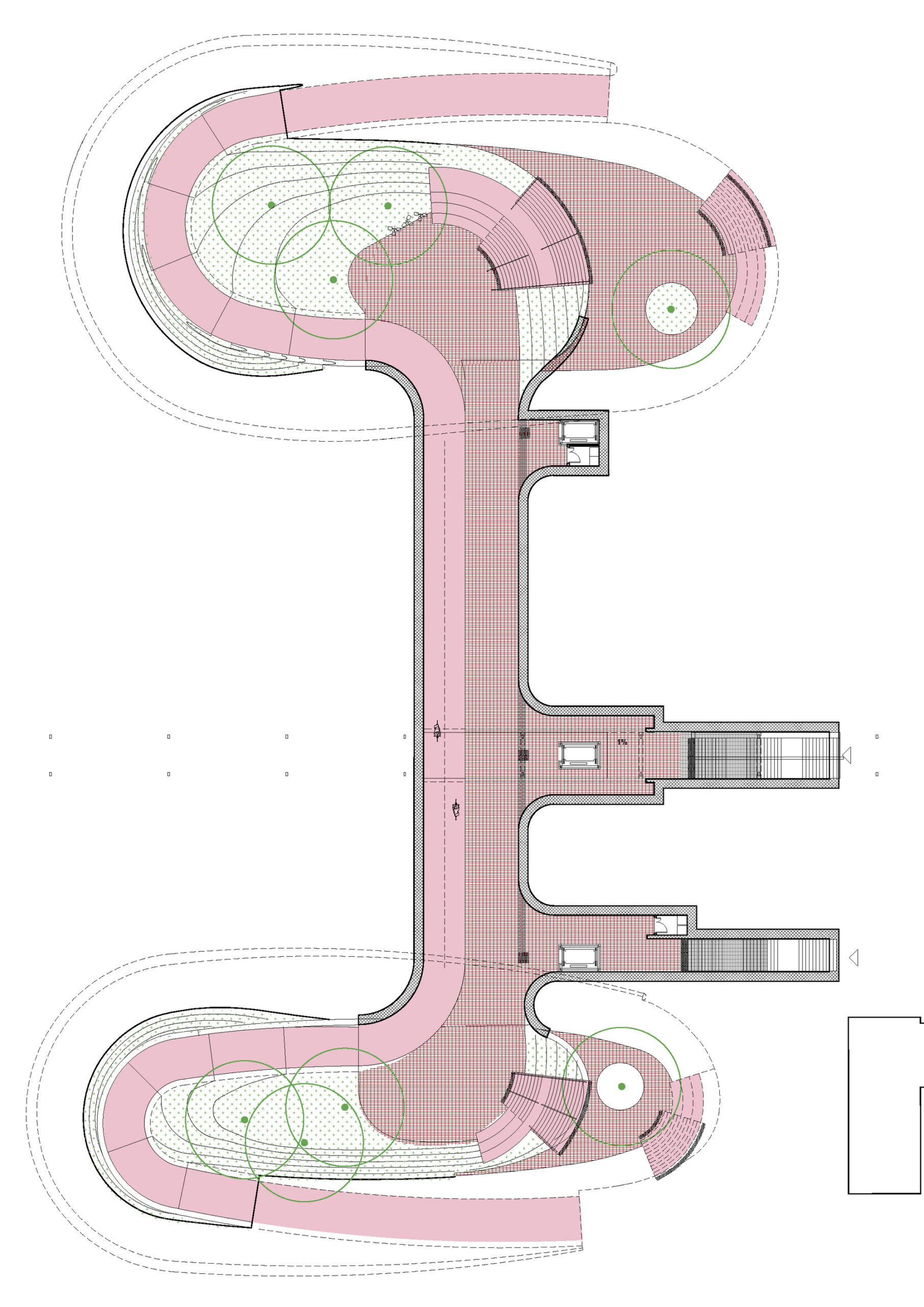


Nova Gorica Railway Station and Vrtača Underpass, Nova Gorica (Slovenia) and Gorizia (Italy) form a rare urban condition, two cities separated only by the now seemingly invisible line of a national border. The historic Transalpina Railway Station, opened in 1906, long stood as a symbol of political and spatial separation, located just meters from the border at Piazza Transalpina. This project transforms that threshold into a space of encounter, reimagining railway infrastructure as a platform for connection. It represents a transformative opportunity for Nova Gorica and Gorizia to strengthen their connection and foster positive cross-border exchange.
© Ana Skobe
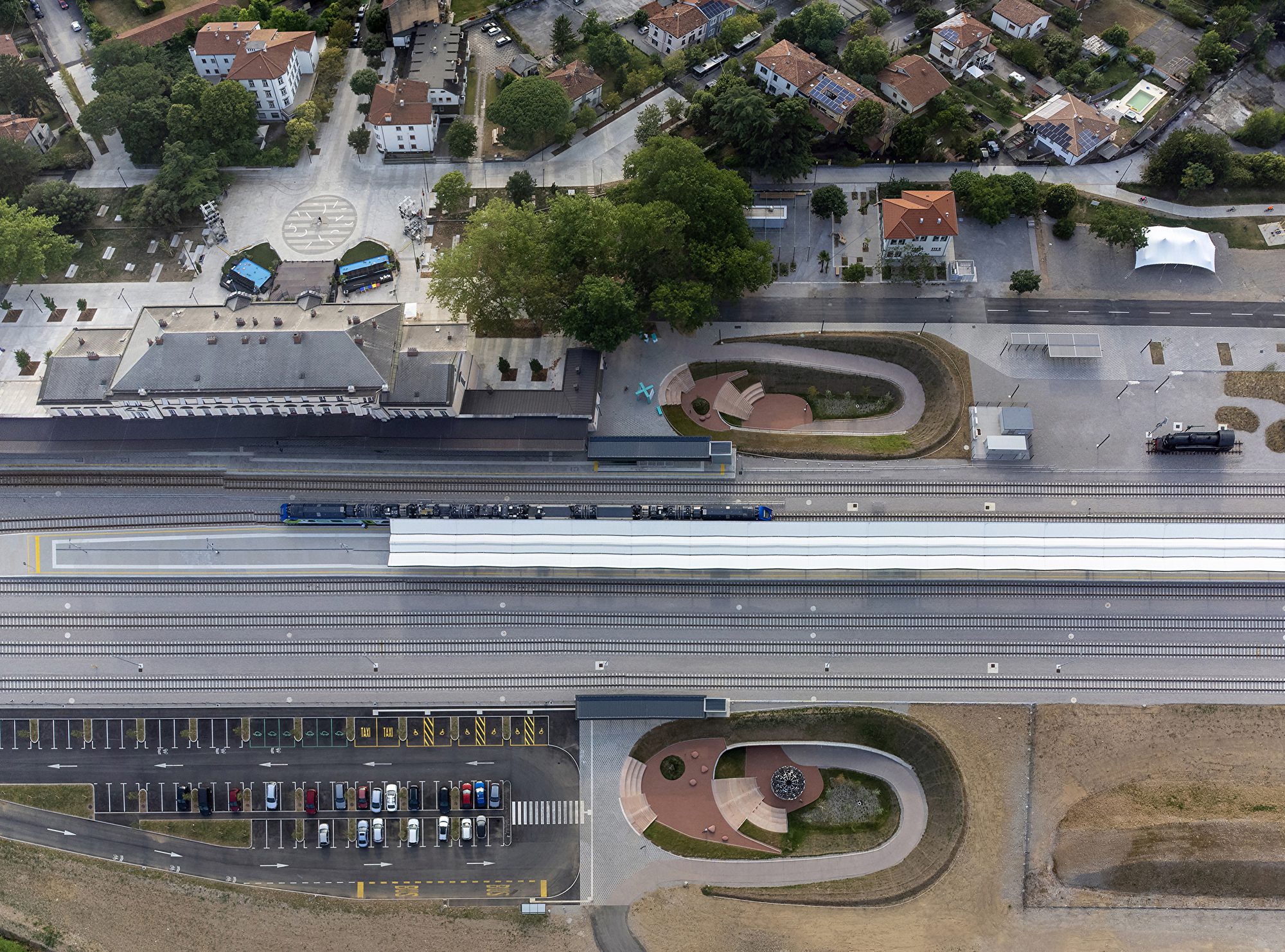
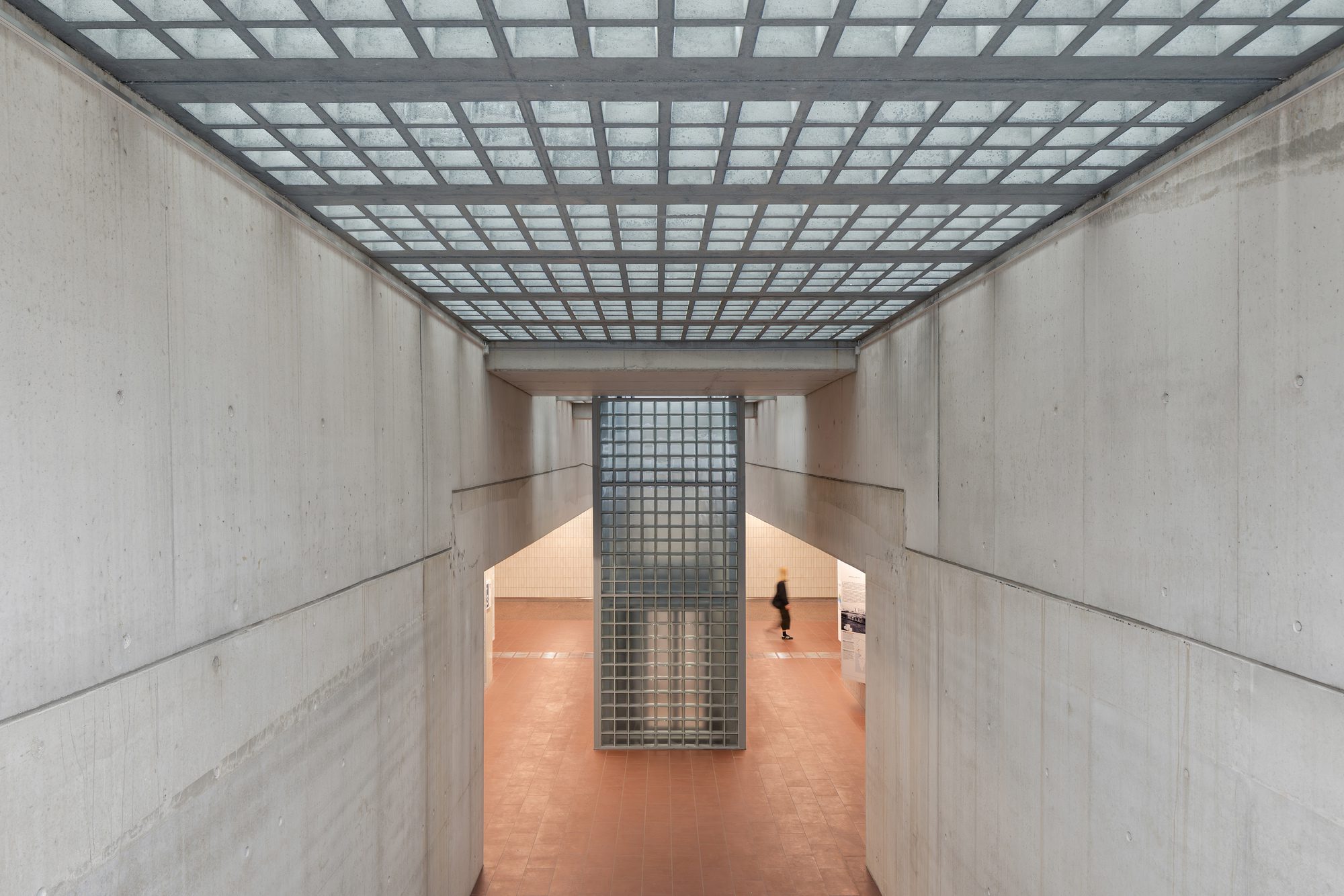
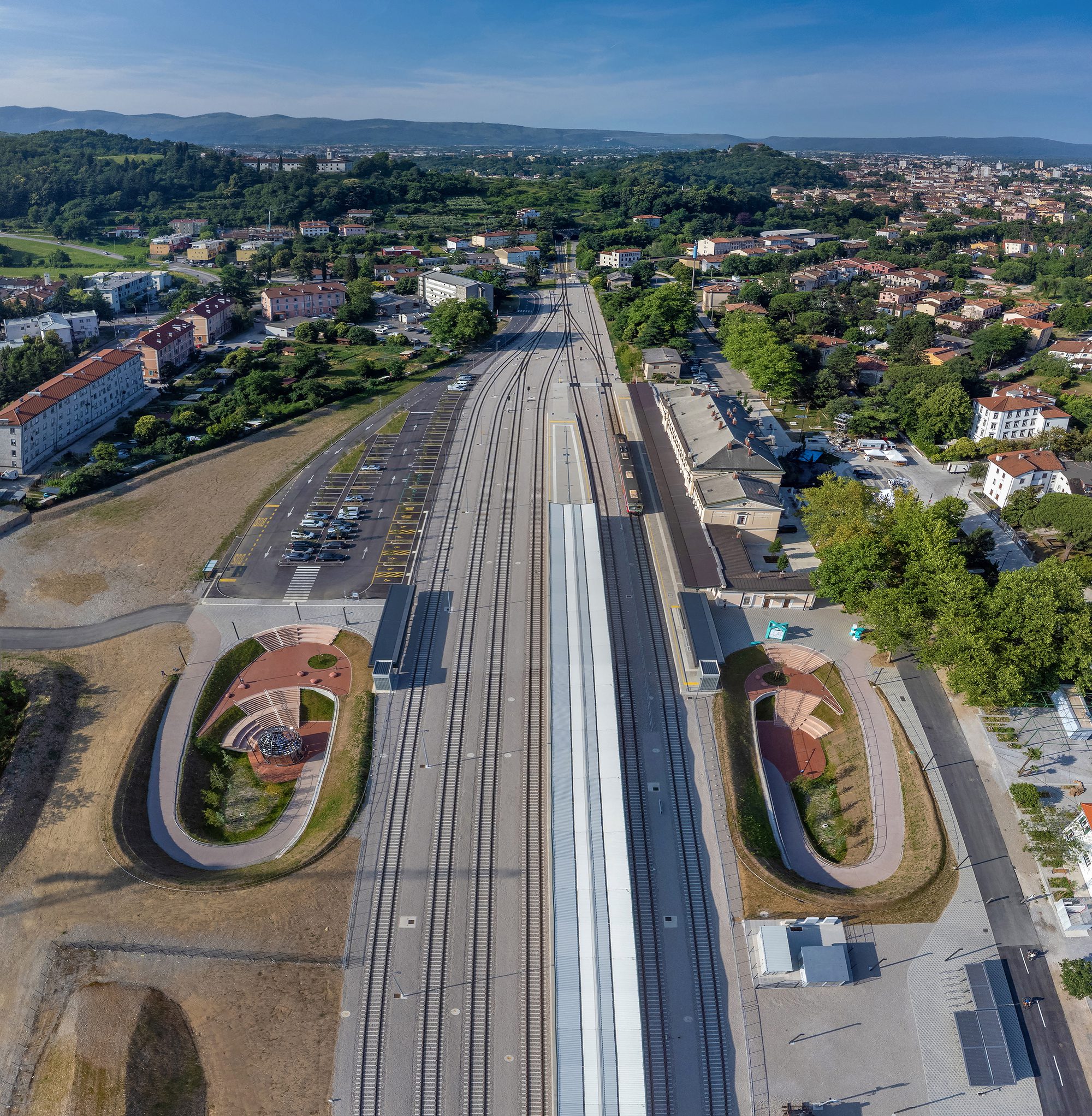
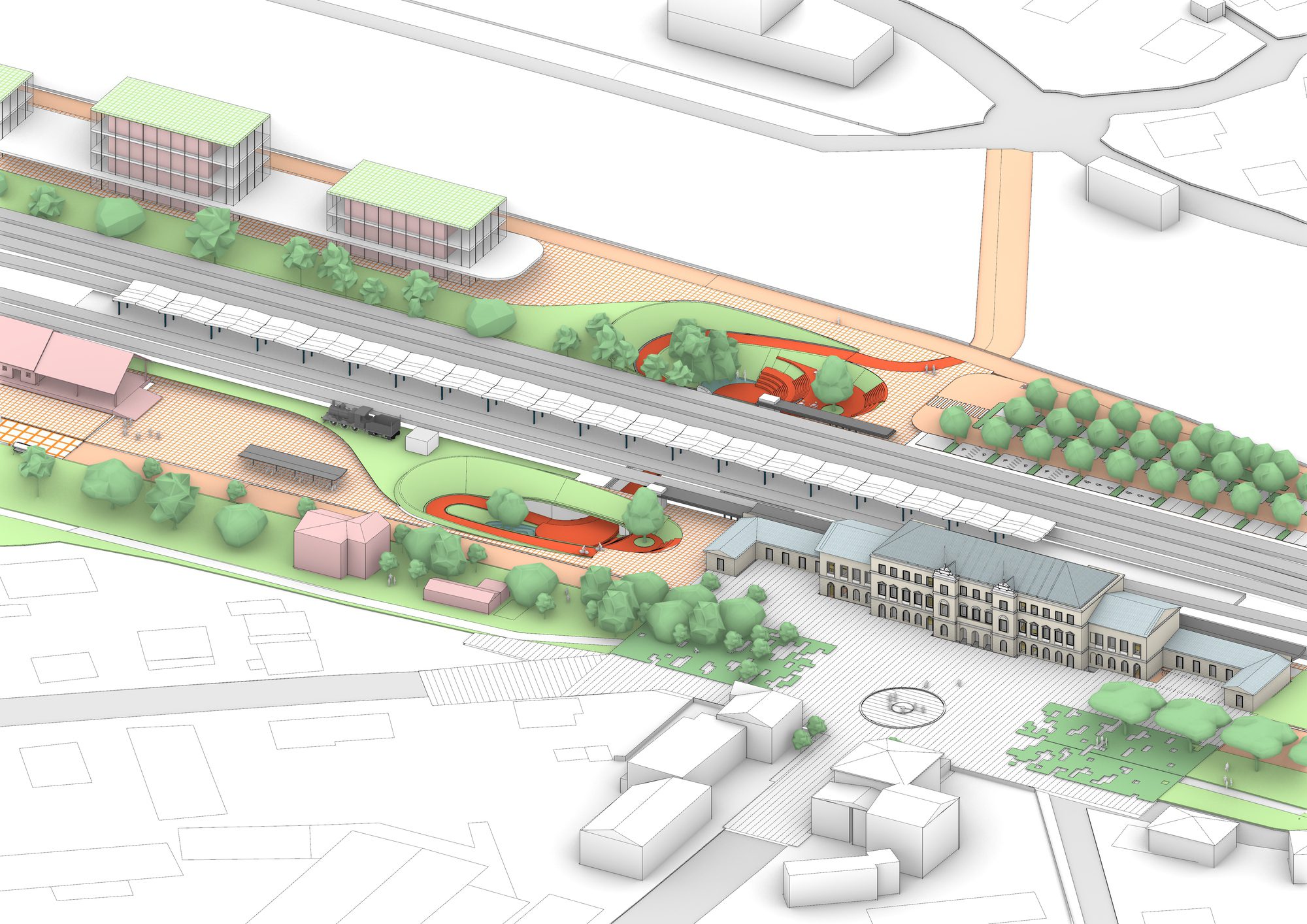
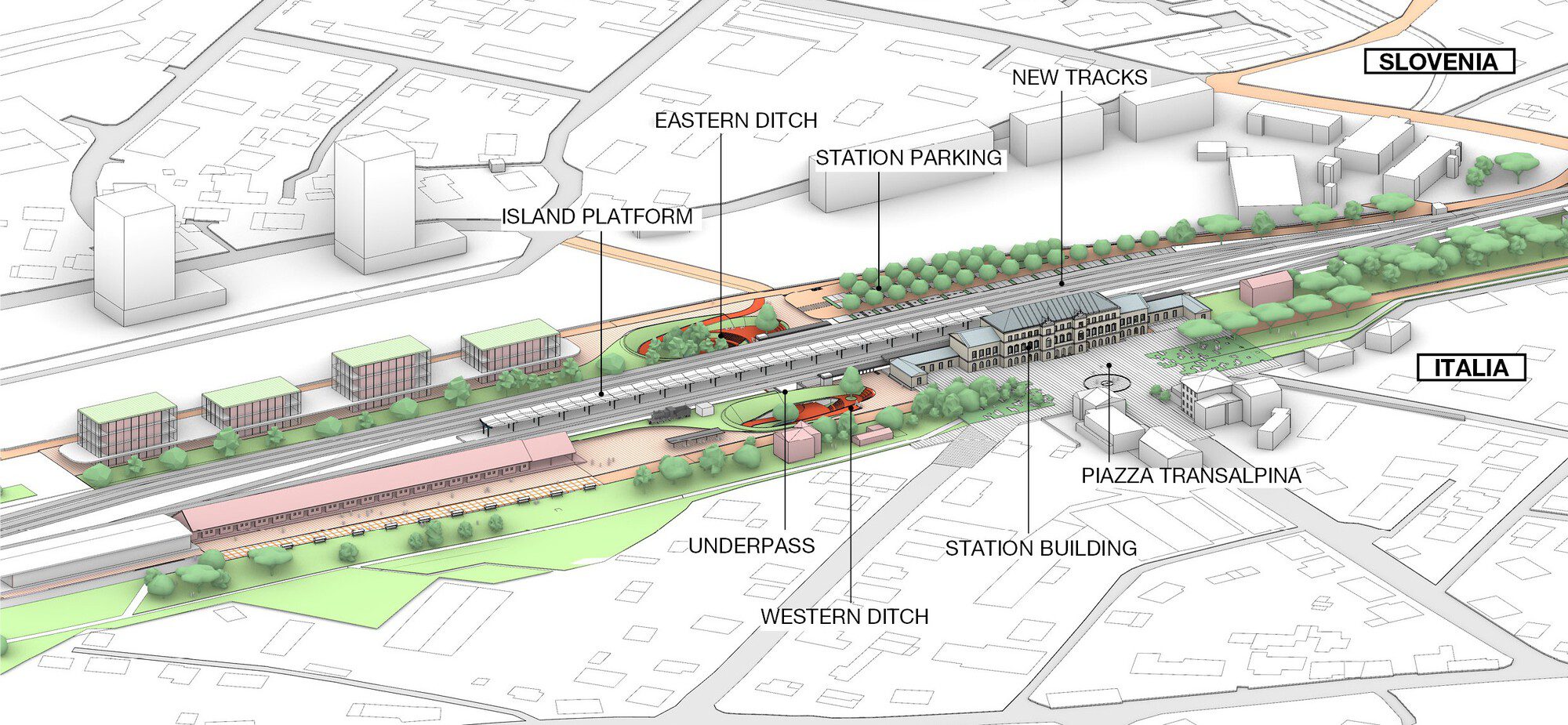
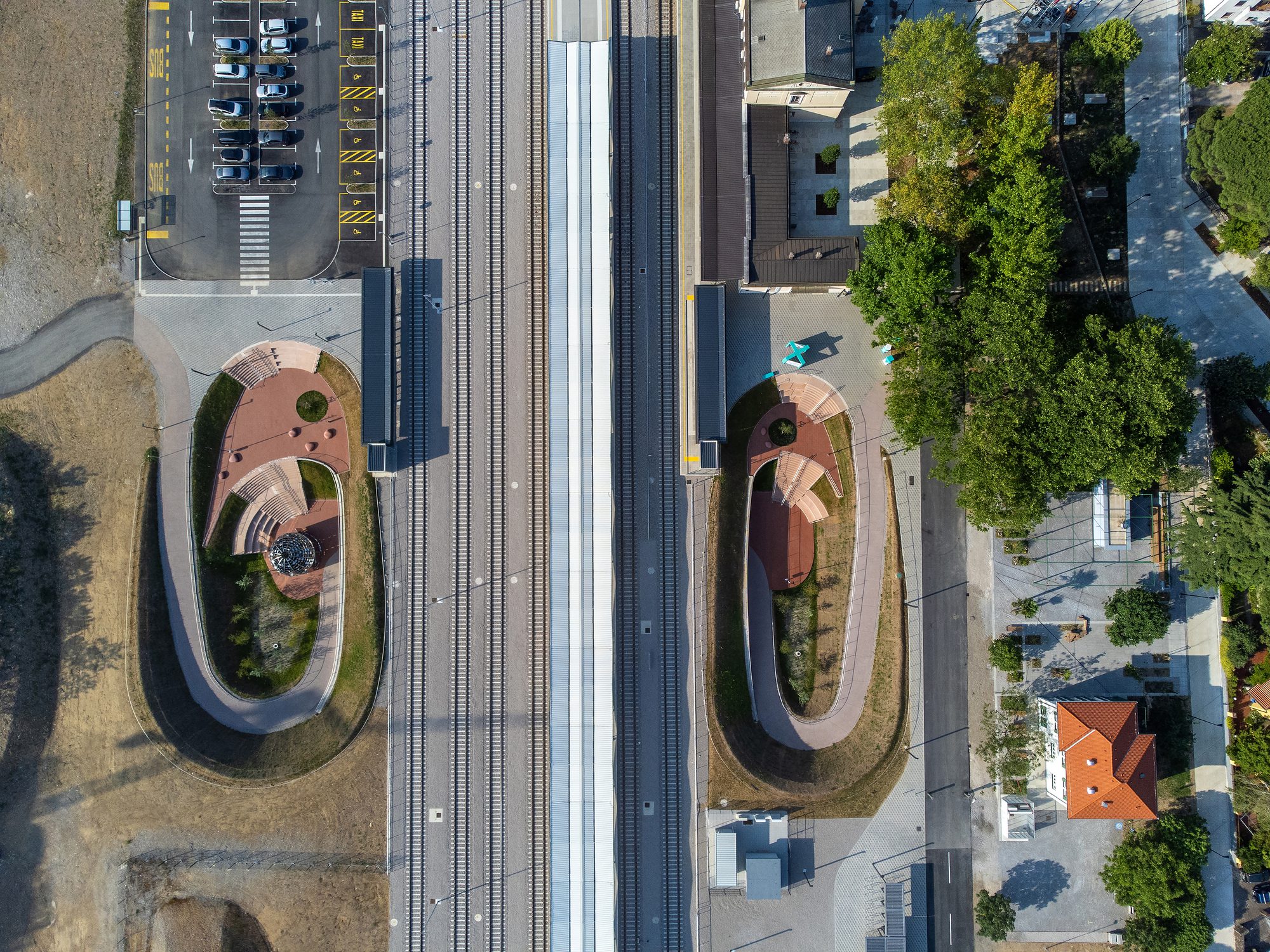
A key intervention enabling the project’s execution was the reduction of the existing 14-track system to six tracks and a new central island platform. This opened space for a new pedestrian connection beneath the rails, the Vrtača Underpass, a spatial and symbolic link that enhances mobility, accessibility, and urban cohesion by providing, for the first time, a safe and direct crossing between the two city centers.
© Matjaž Prešeren
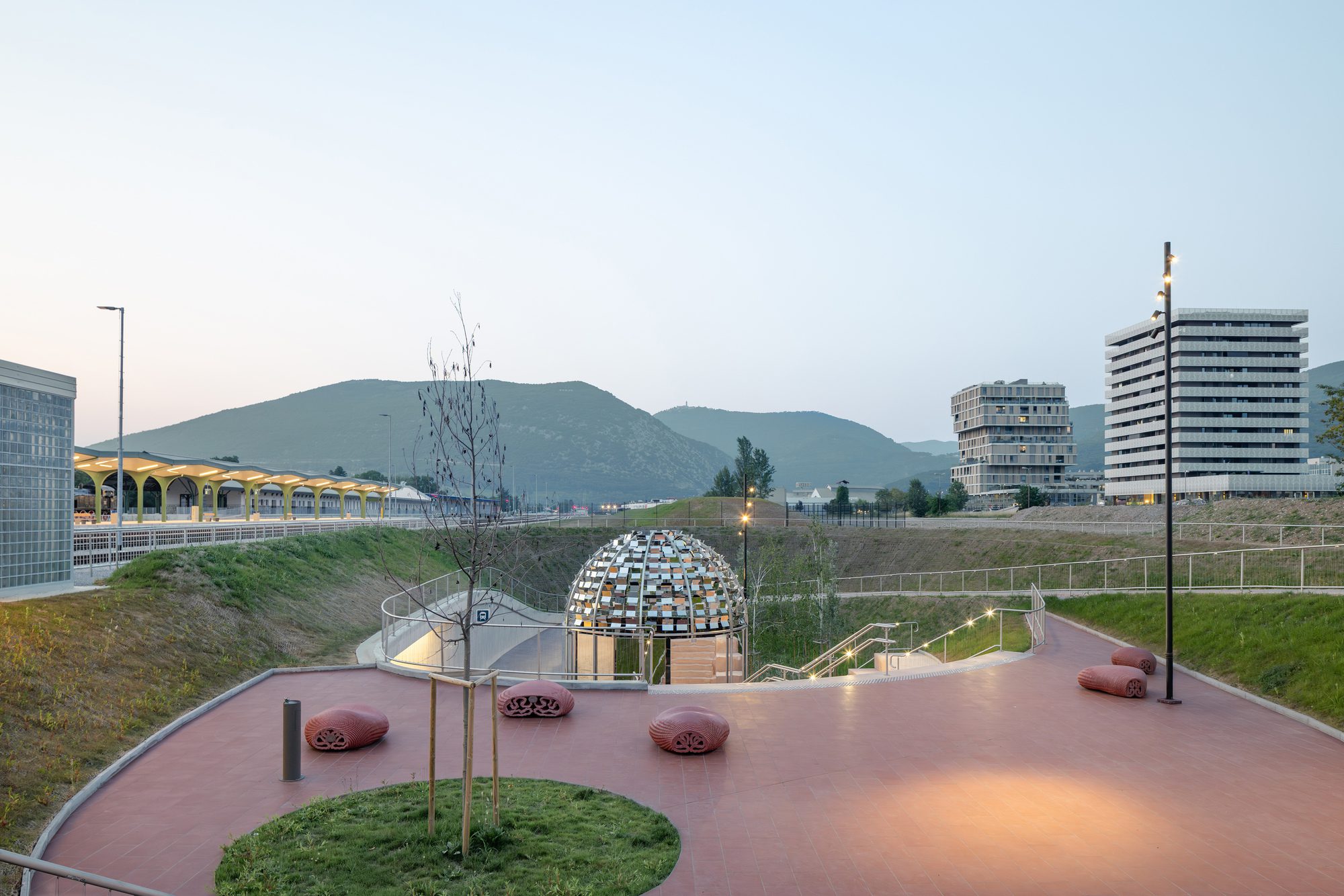
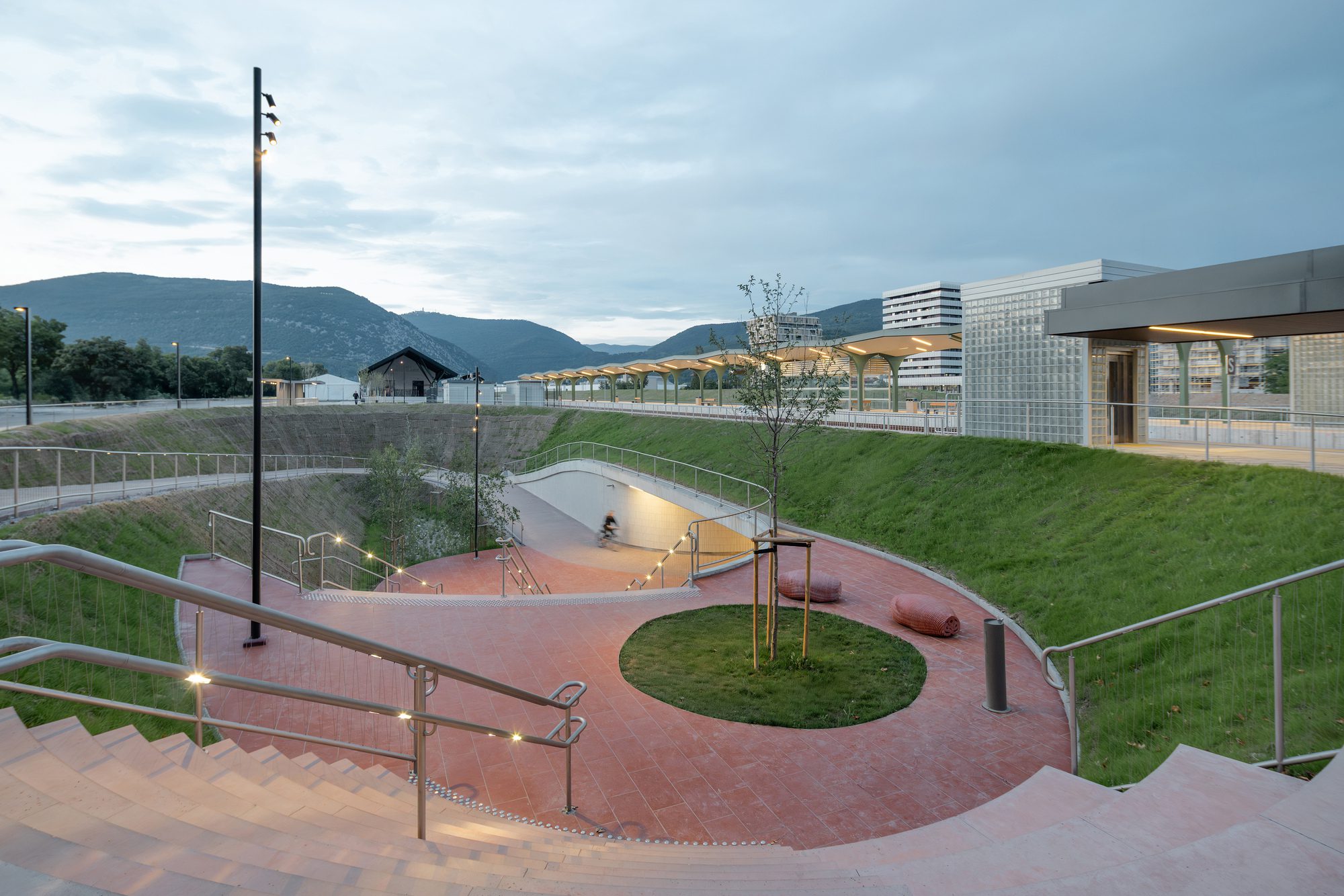
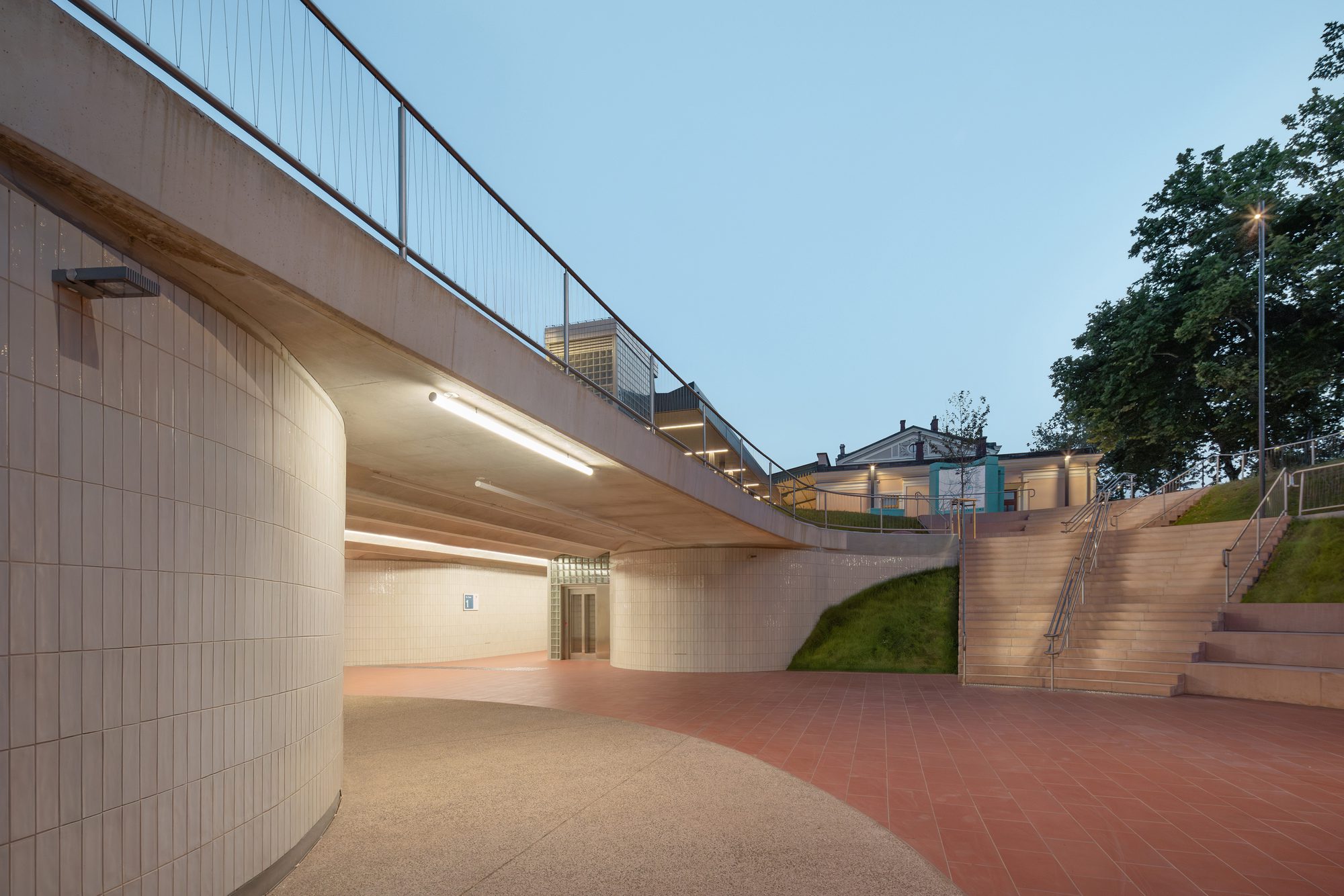
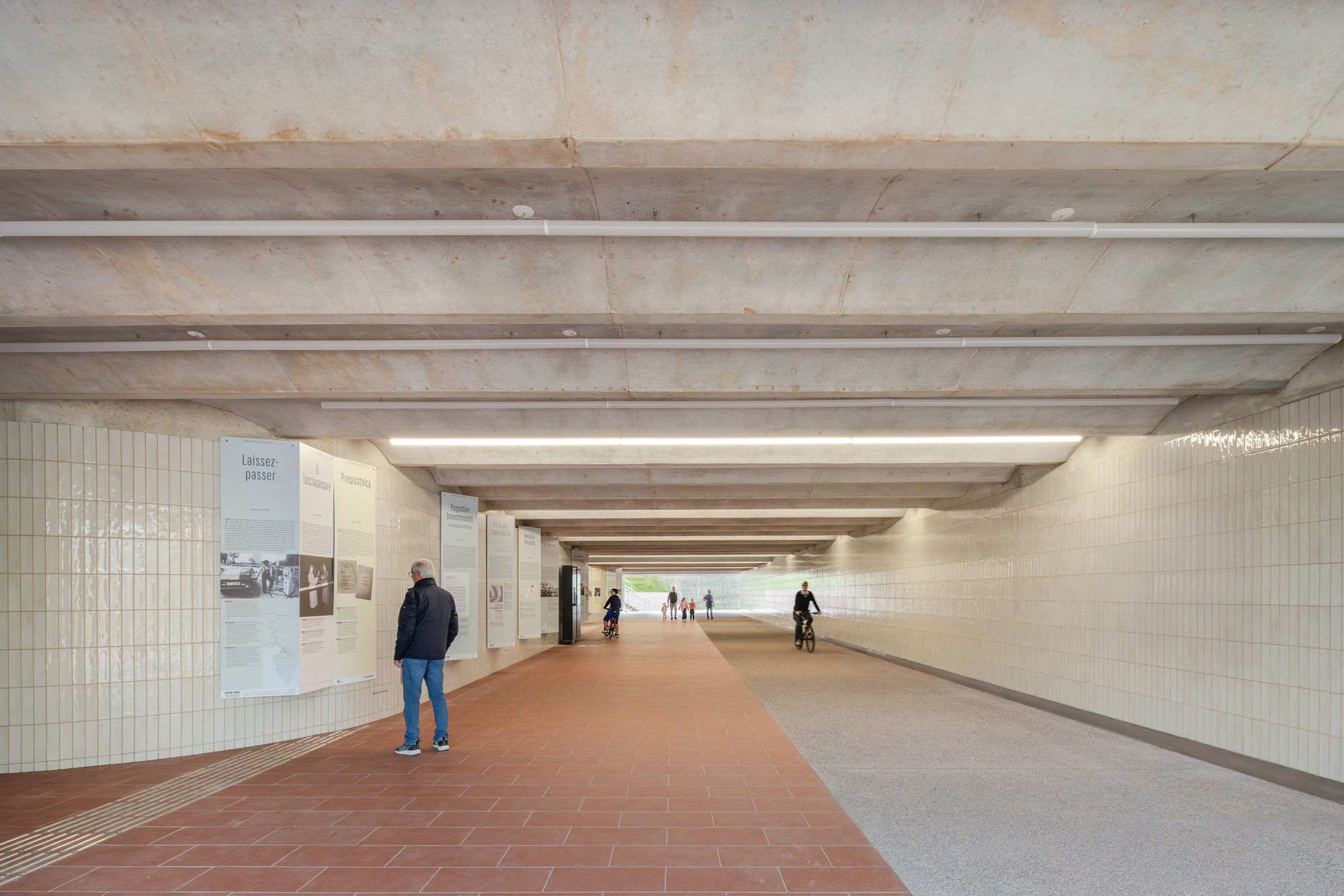
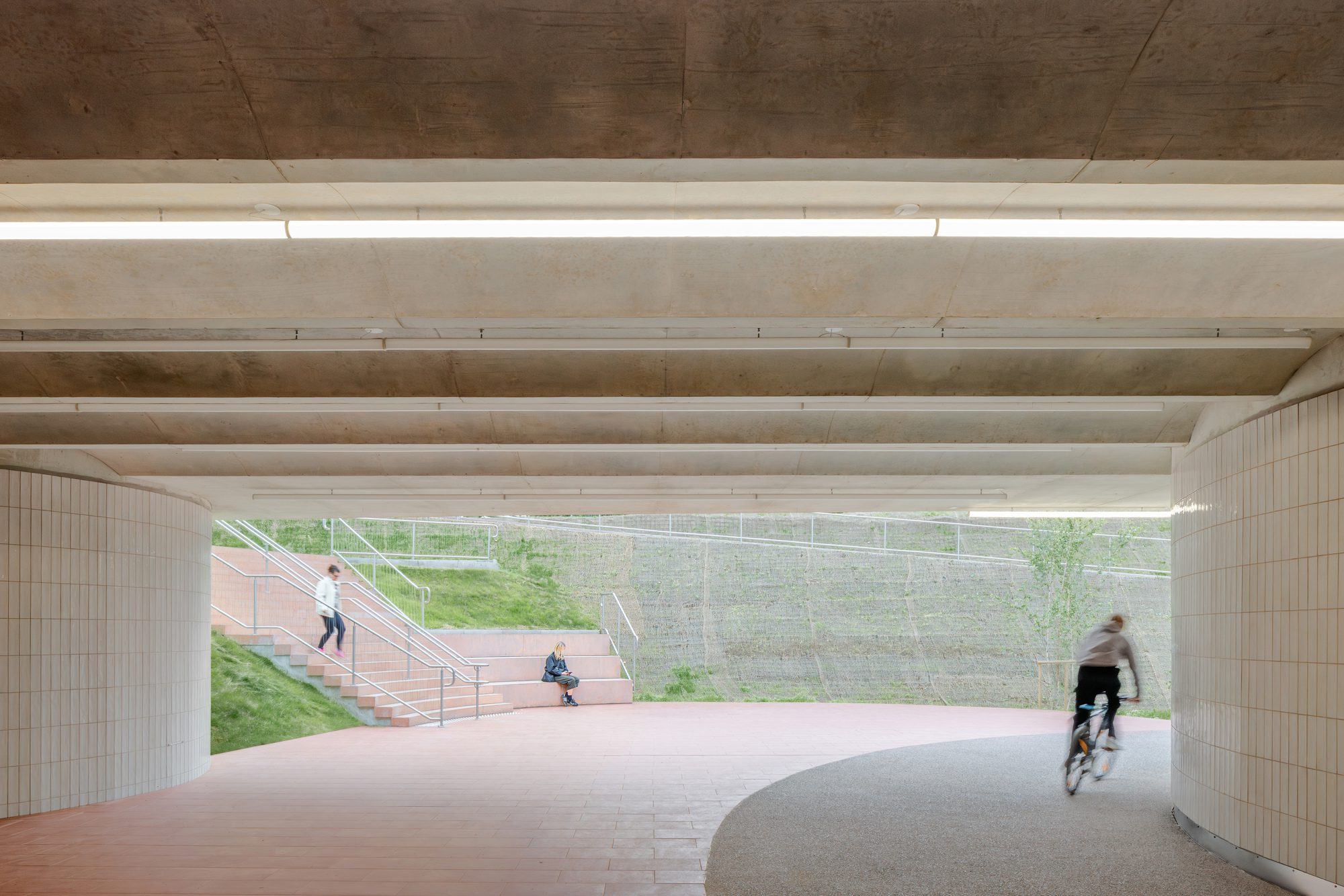
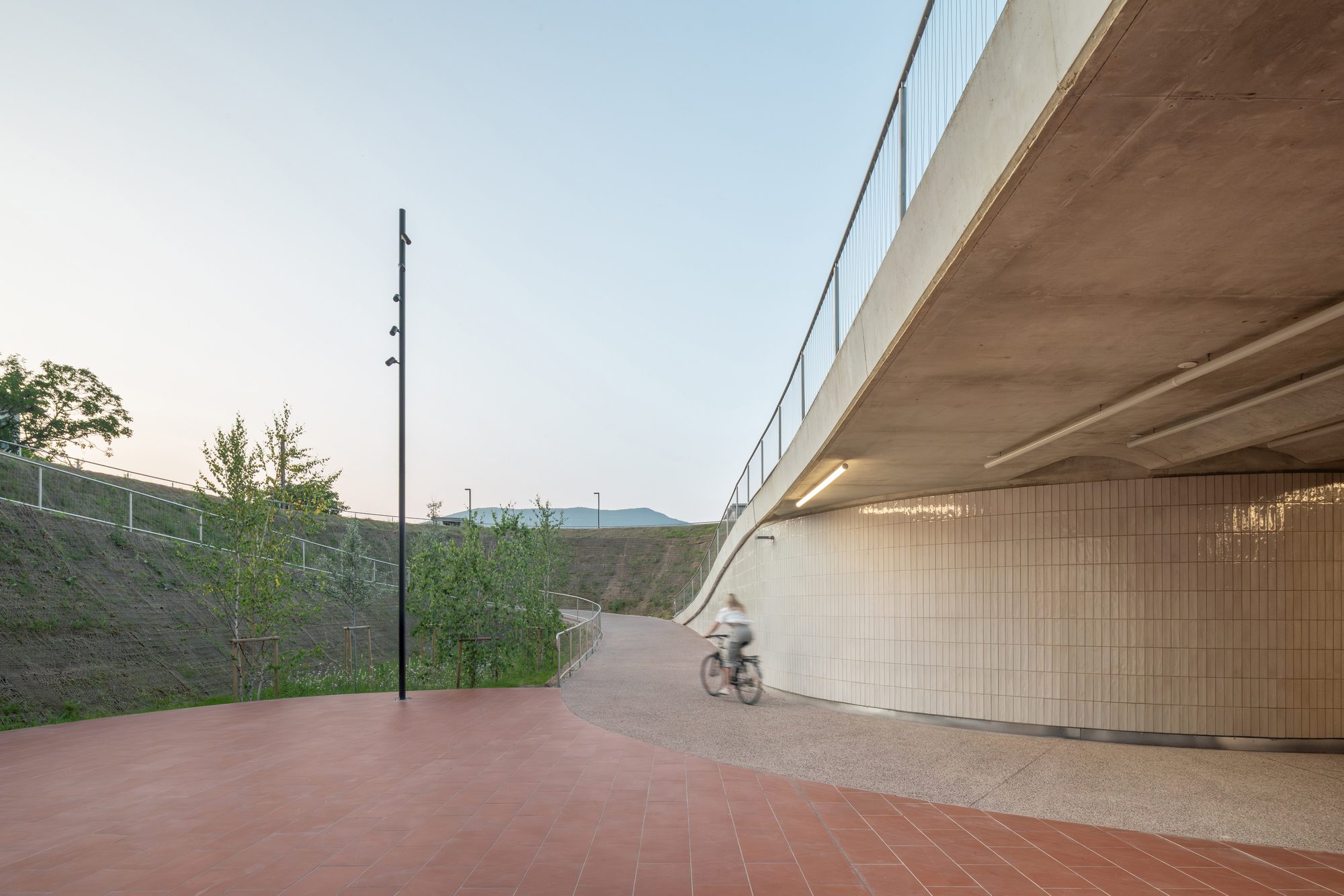
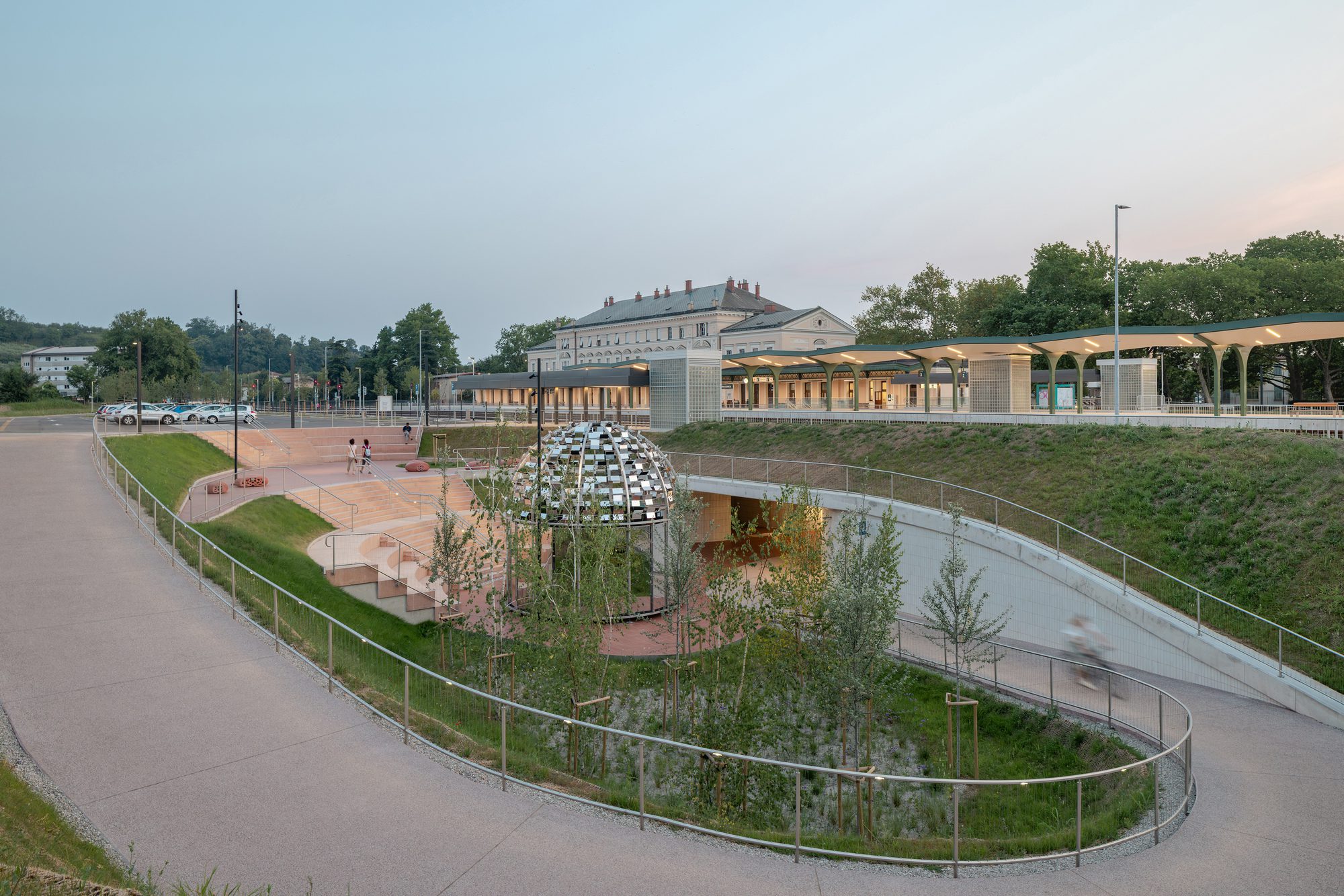
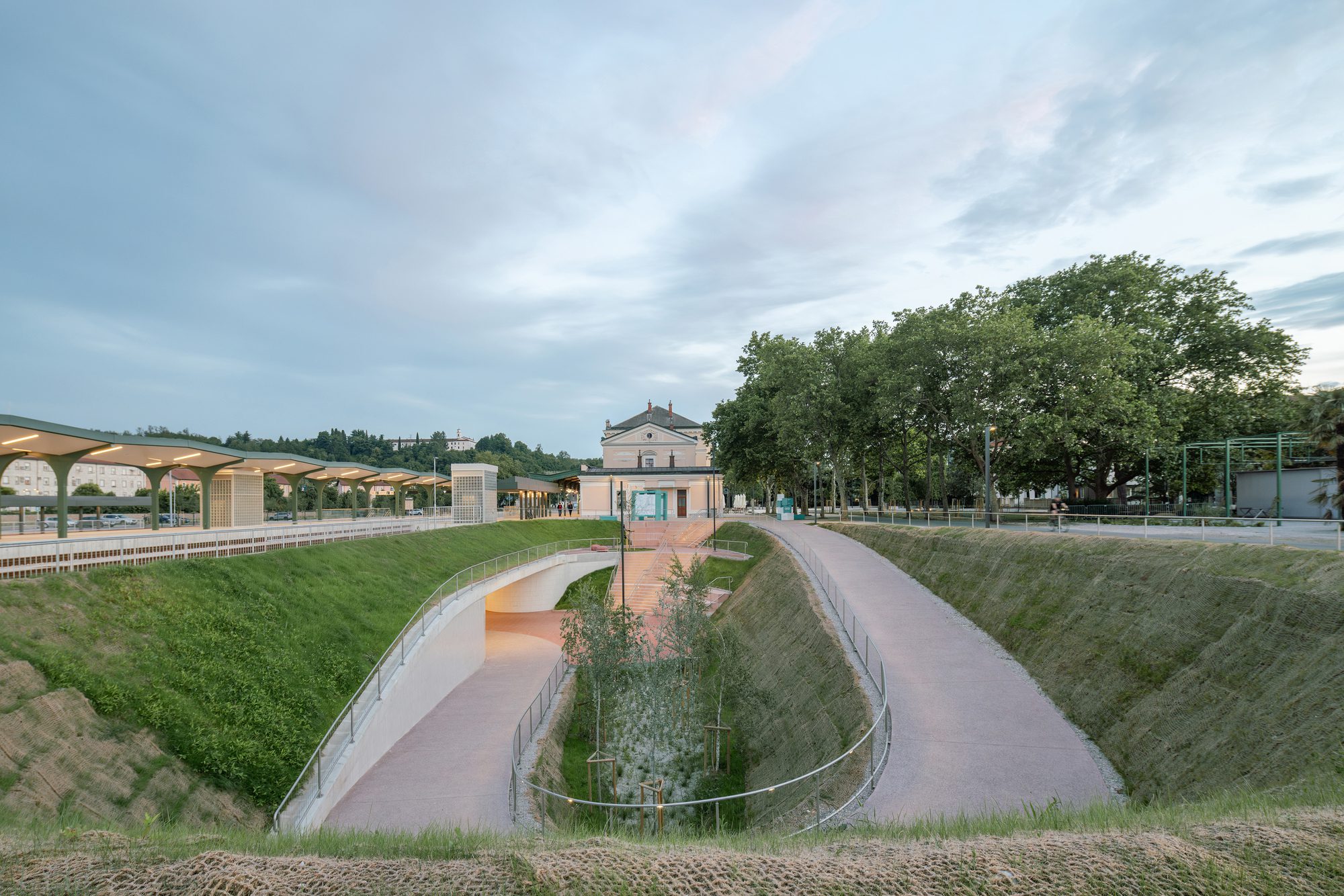
The passage beneath the tracks was carefully designed to exceed its utilitarian function and become a bright, welcoming public space. The underpass spans 36.6 meters in length and 8 meters in width (3.5 m for cyclists and 4.5 m for pedestrians). At both ends, it opens into elliptical sunken plazas – “vrtače” or “ditches” – that absorb daily flows while inviting informal use: sitting, gathering, pausing. From the underpass, visitors ascend to the plateau via wide staircases or spiral ramps for cyclists that wrap around the perimeter of the plaza.
© Ana Skobe
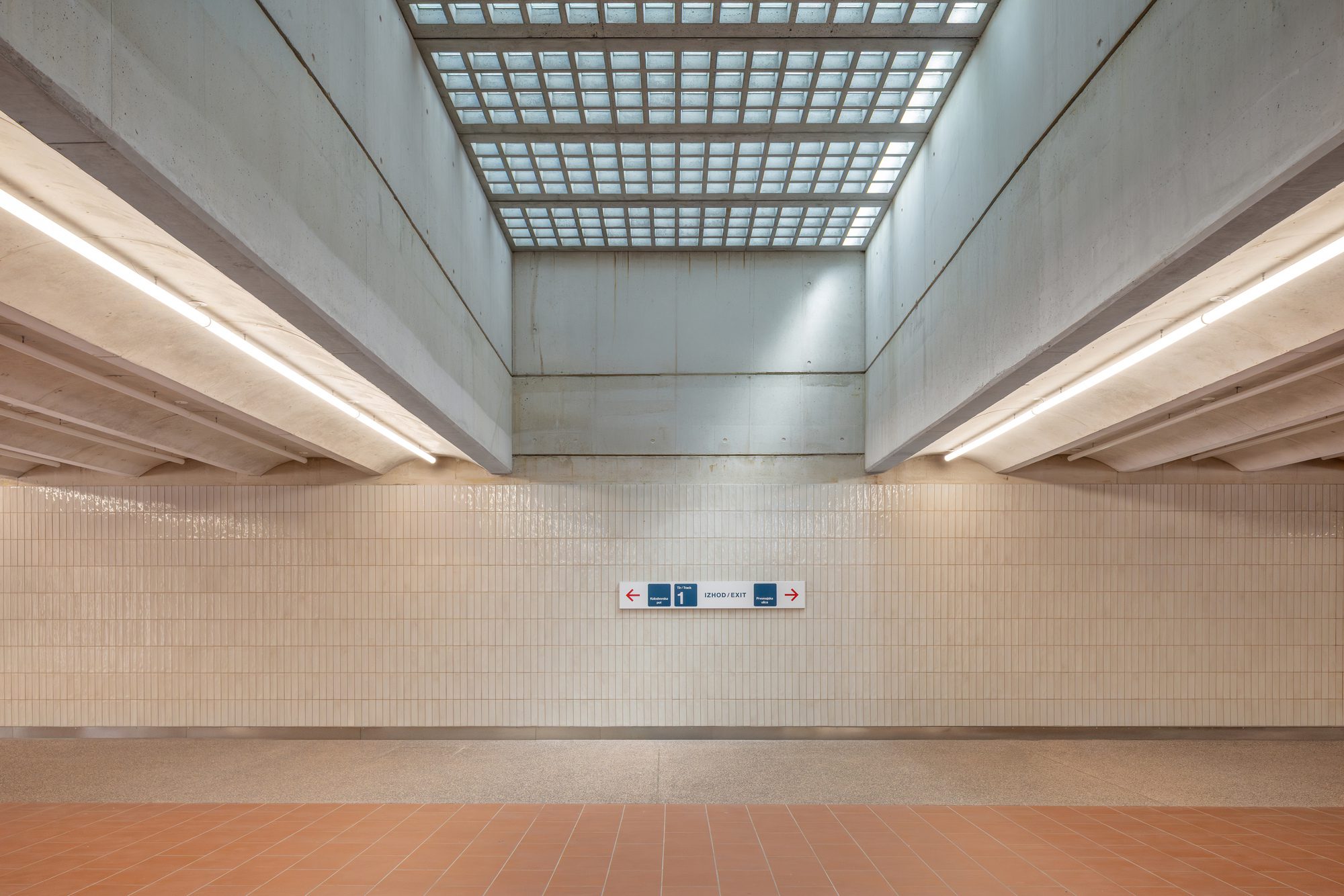
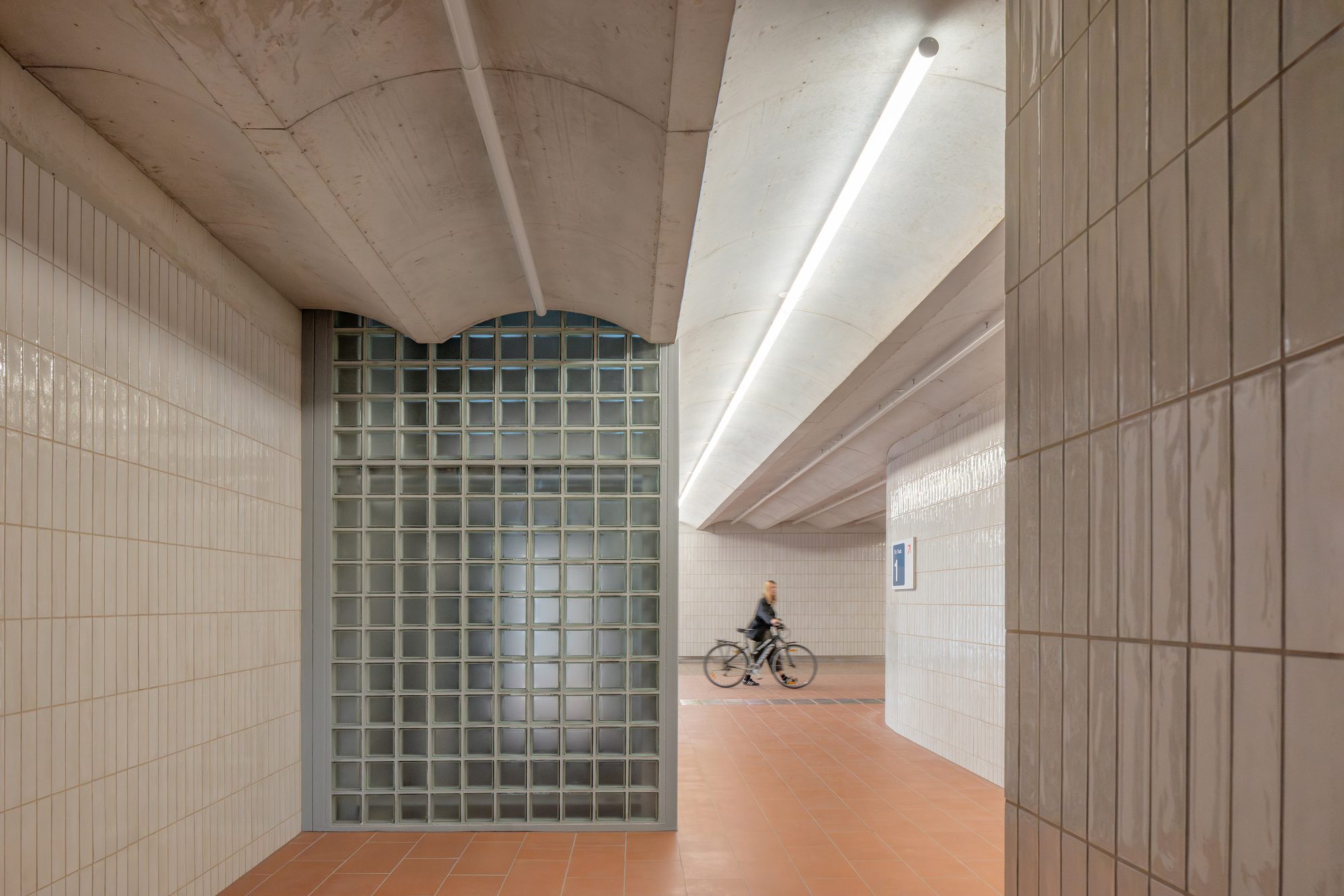
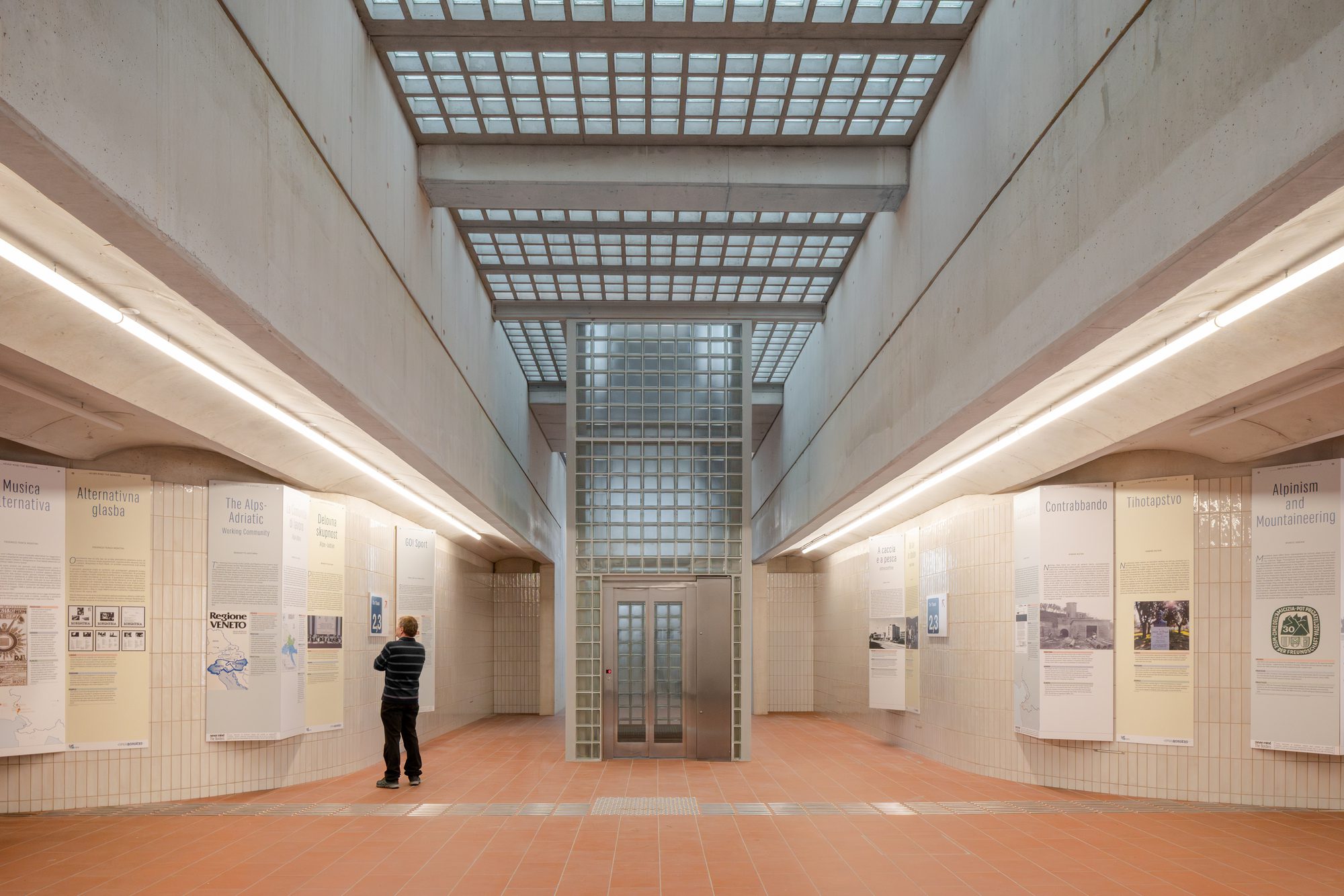
Materiality plays a key role in shaping the character of the space. Glossy white ceramic tiles reflect daylight entering from both ends and through a central skylight above the island platform, creating a well-lit, inviting atmosphere. The floor is paved in two tones of brick-red ceramic tiles, distinguishing pedestrian and cycling lanes. This vibrant paving continues into the plazas, where the ascending brick-red surfaces form a contrast with planted green slopes, which visually soften the intervention and introduce an element of nature. Additional natural features are the rain gardens in the center of each plaza, which collect water and help to regulate water levels in the underpass during periods of heavy rainfall.
© Ana Skobe
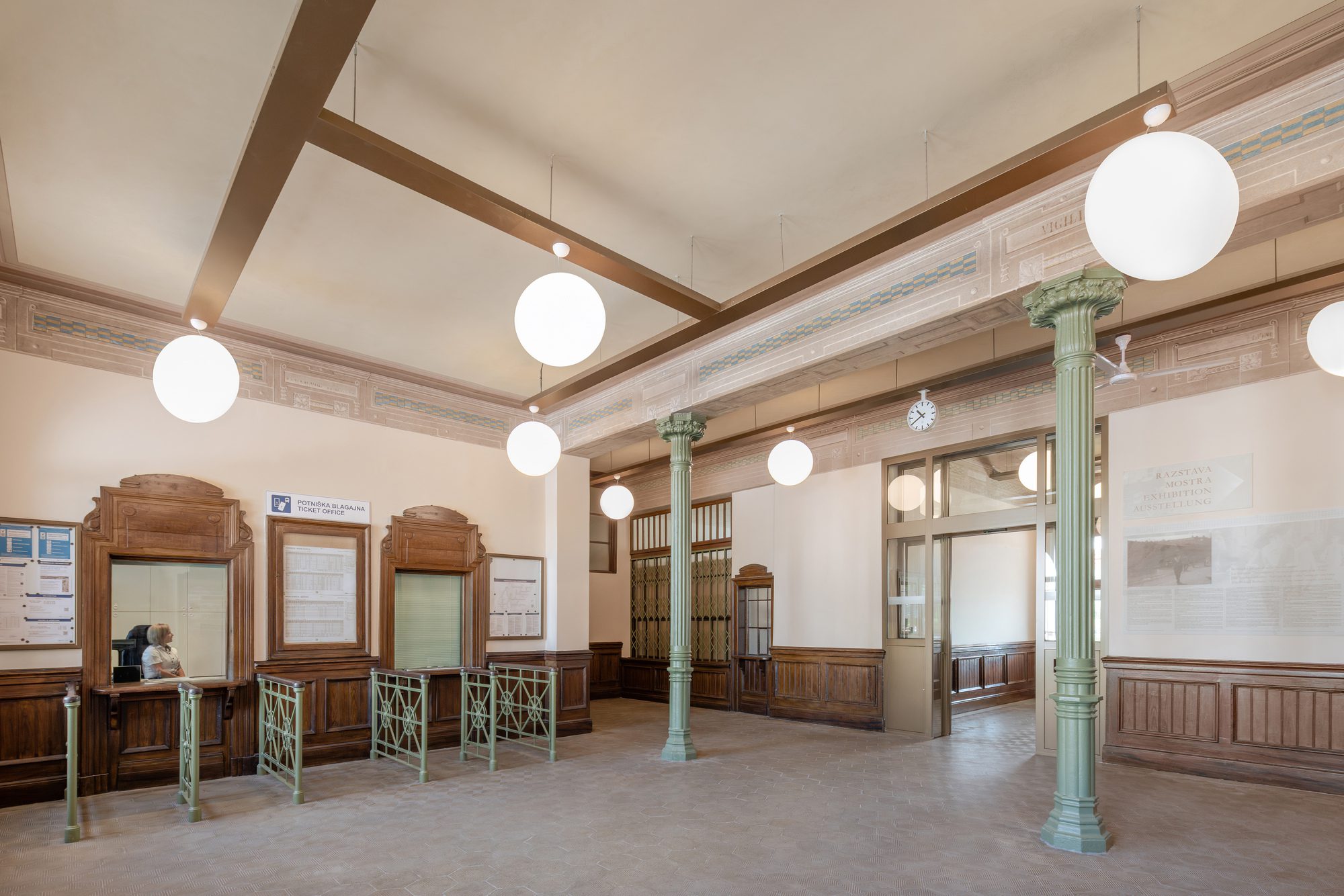
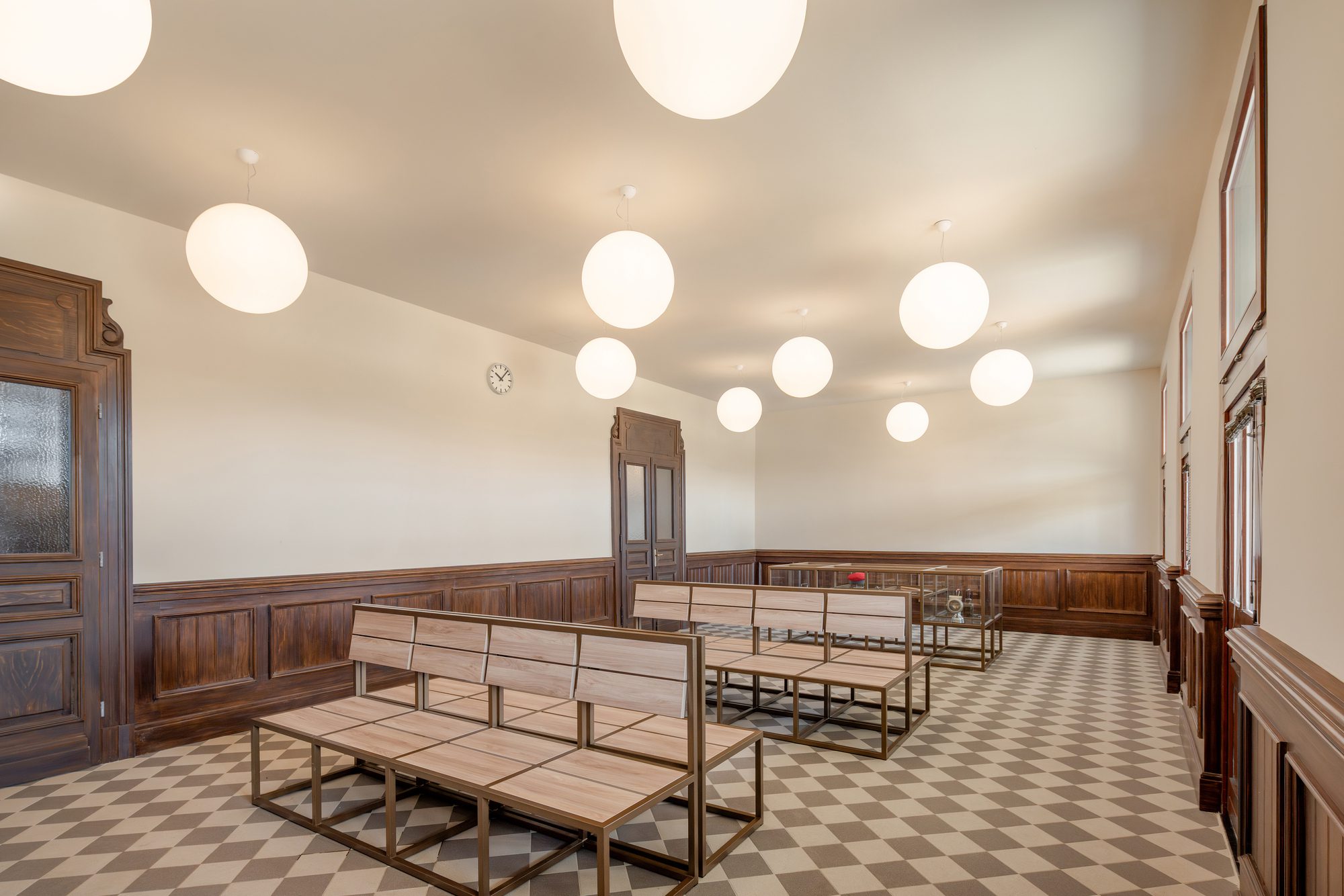
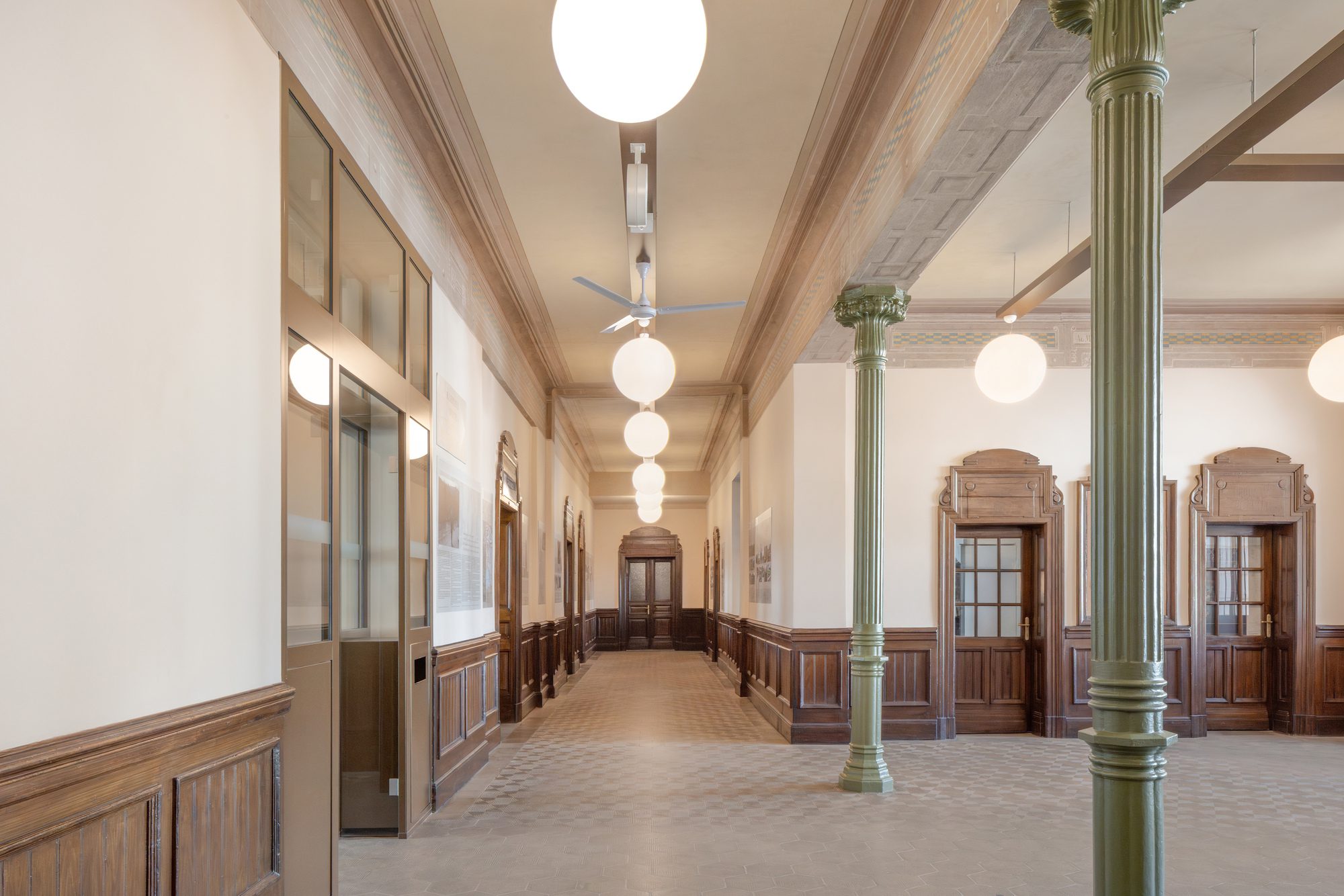
A vital part of the project was also the renovation and restoration of the Transalpina Station building. Interior spaces were redesigned to serve contemporary functions, with a focus on the entrance lobby, ticket offices, and a new waiting area. Key heritage elements – including the original paving, wooden wall panelling, newly discovered frescos, and the side platform canopy – were restored in close collaboration with the Institute for the Protection of Cultural Heritage (ZVKDS).
© Ana Skobe
The Vrtača Underpass has already become a vital urban infrastructure and a daily route for cyclists, commuters, and residents. It redefines not only how the railway is crossed, but what a border can be: not a place of division, but a shared space. With this, Nova Gorica and Gorizia are transforming their border into a place of cultural encounter, setting an inspiring model for European cross-border cooperation.
Project Info
Architects: SADAR + VUGA
Country: Slovenia
Area: 7128 m²
Year: 2025
Photographs: Ana Skobe, Matjaž Prešeren
Design Team: SADAR + VUGA
Landscape Architecture: Studio AKKA
Structural Engineering: Elea iC
Railway Infrastructure: SŽ