

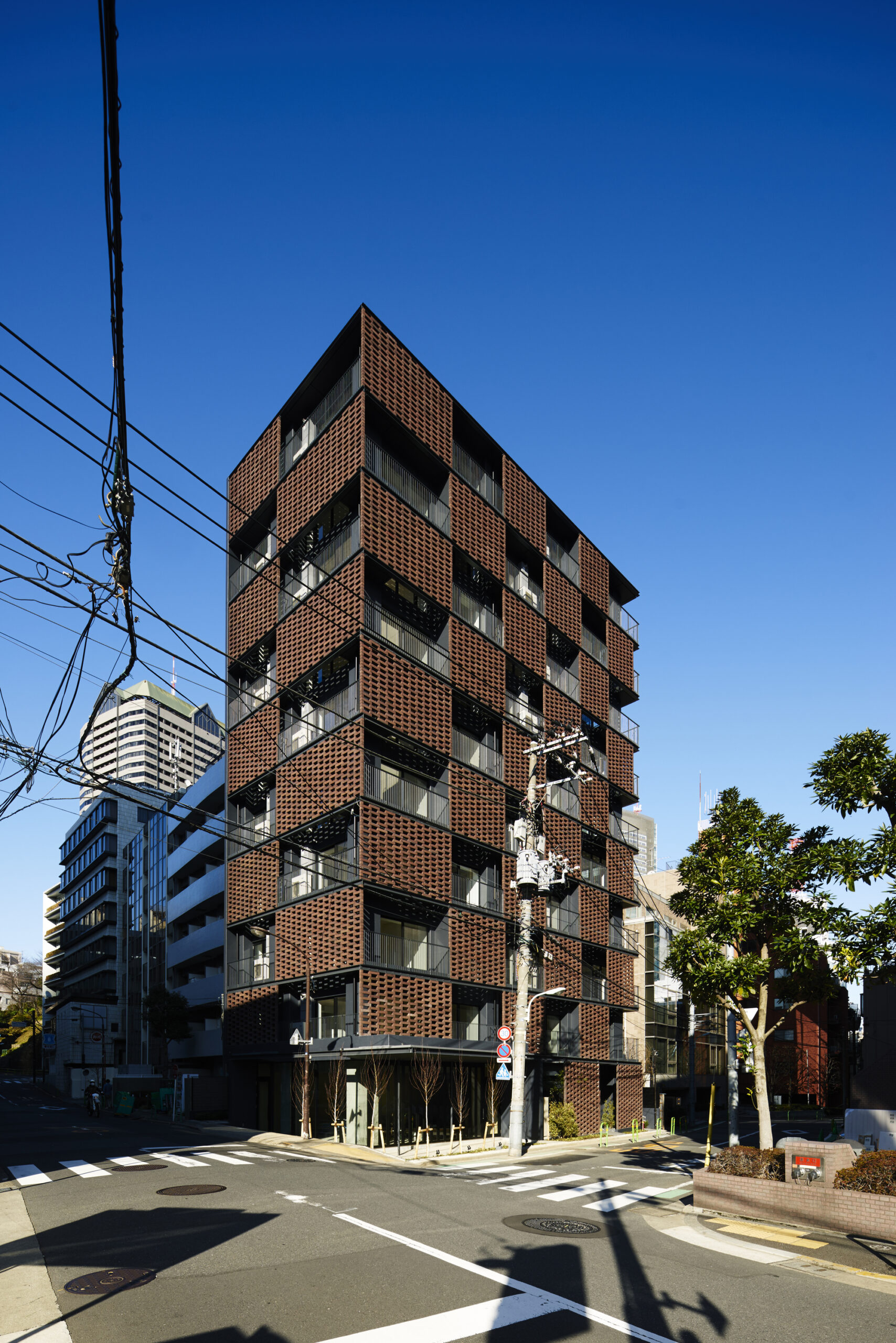
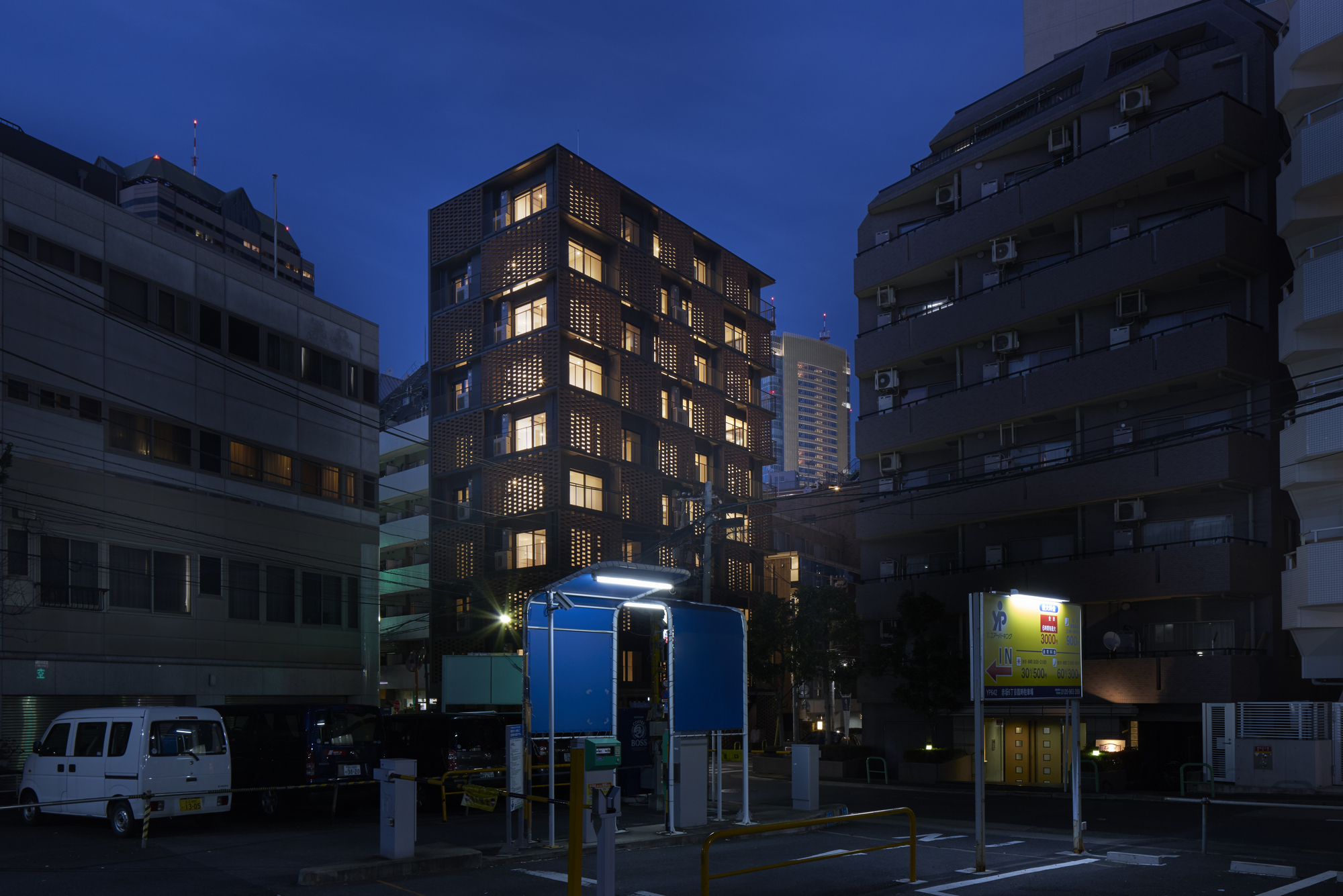
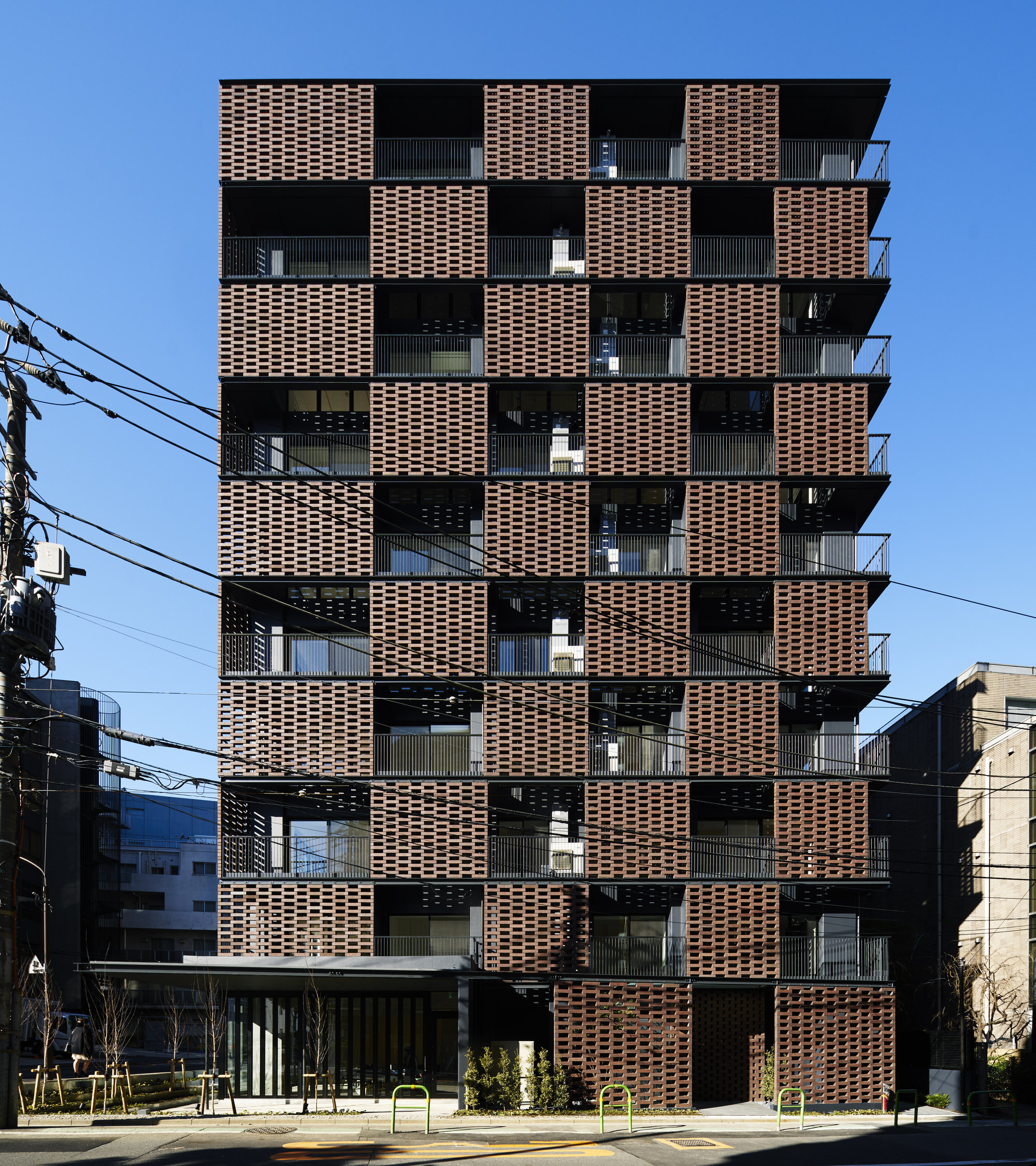
Akasaka Brick Residence building is located in heart of Tokyo, where many office buildings and apartment buildings are jumbled up close together.
© Daici Ano
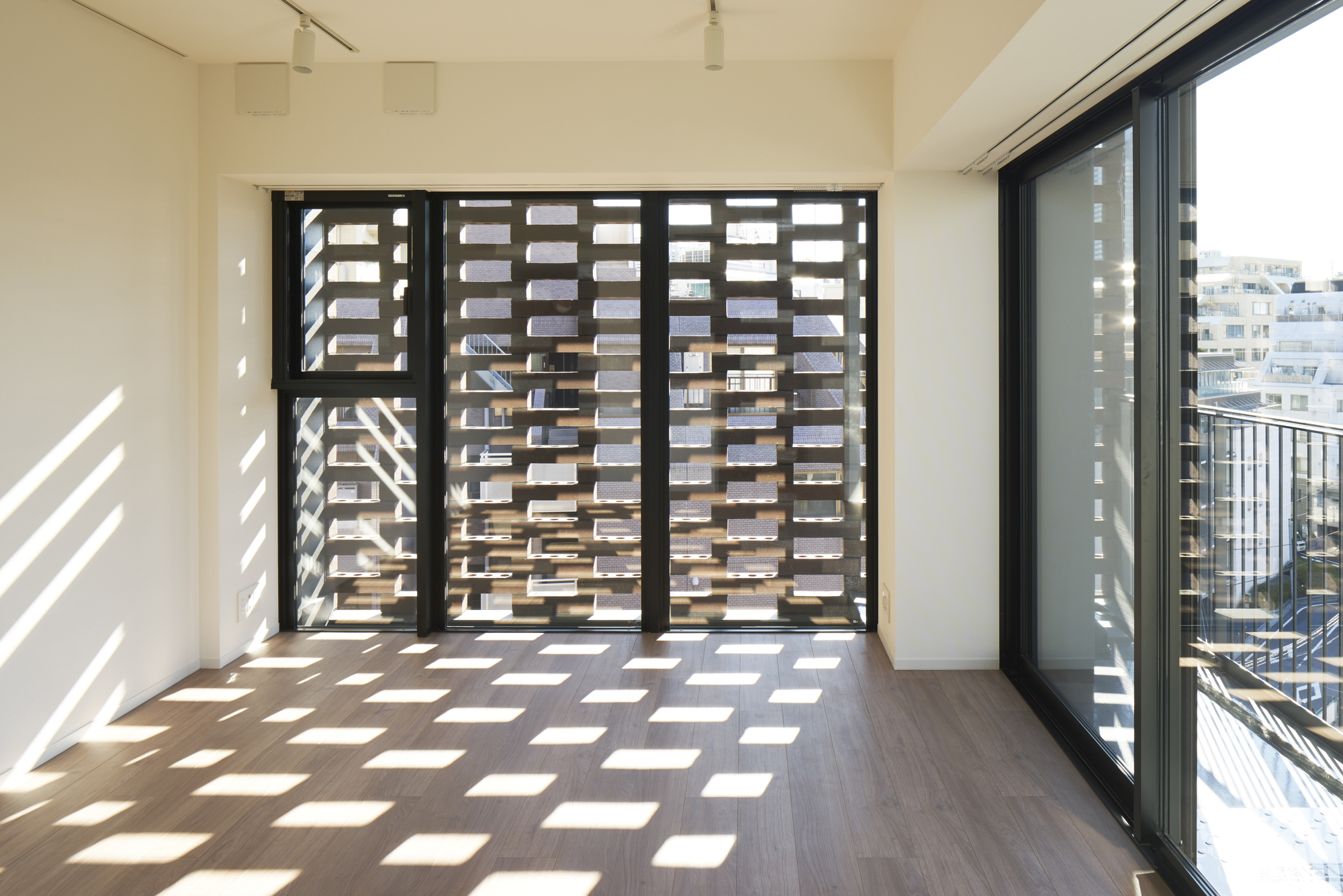
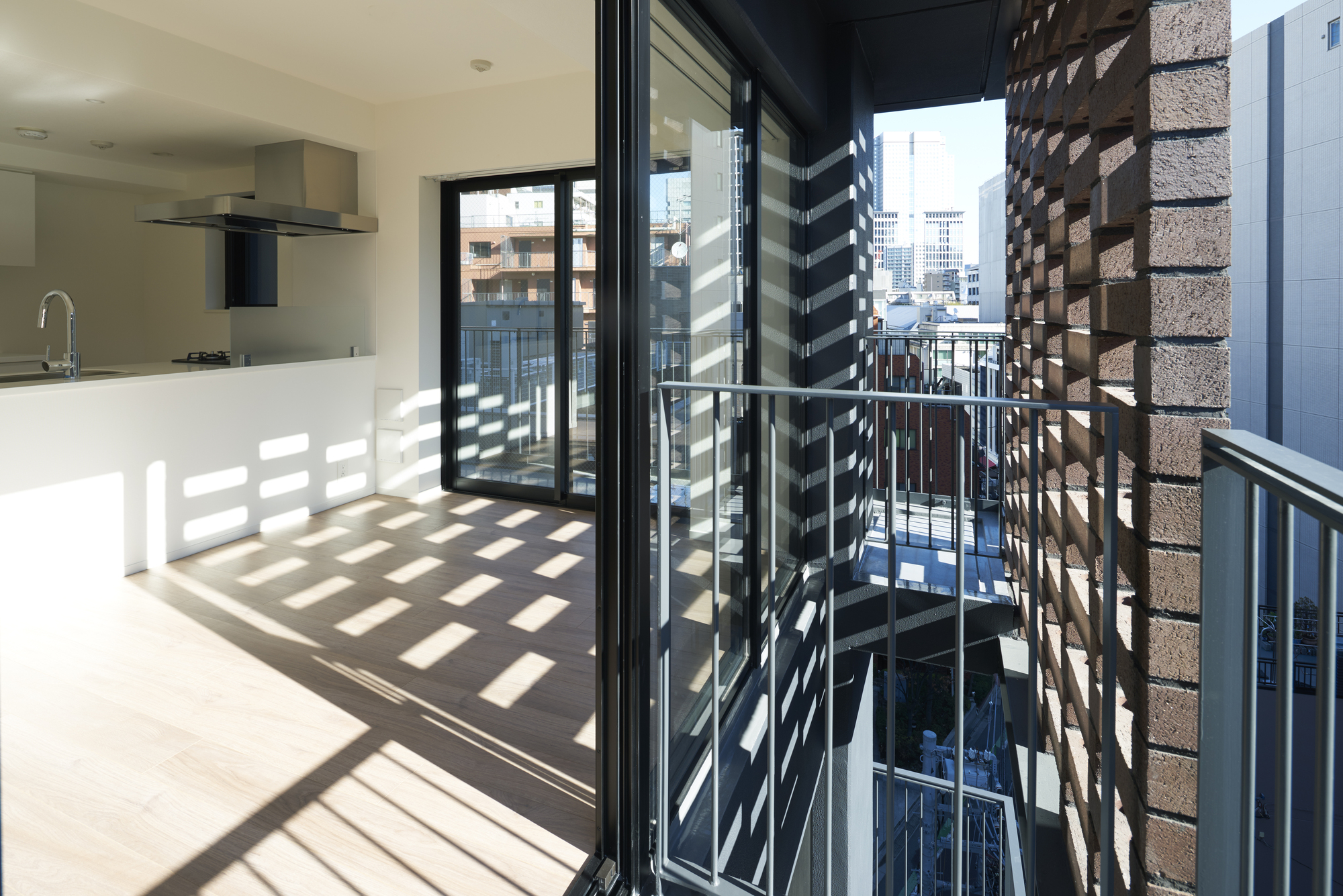
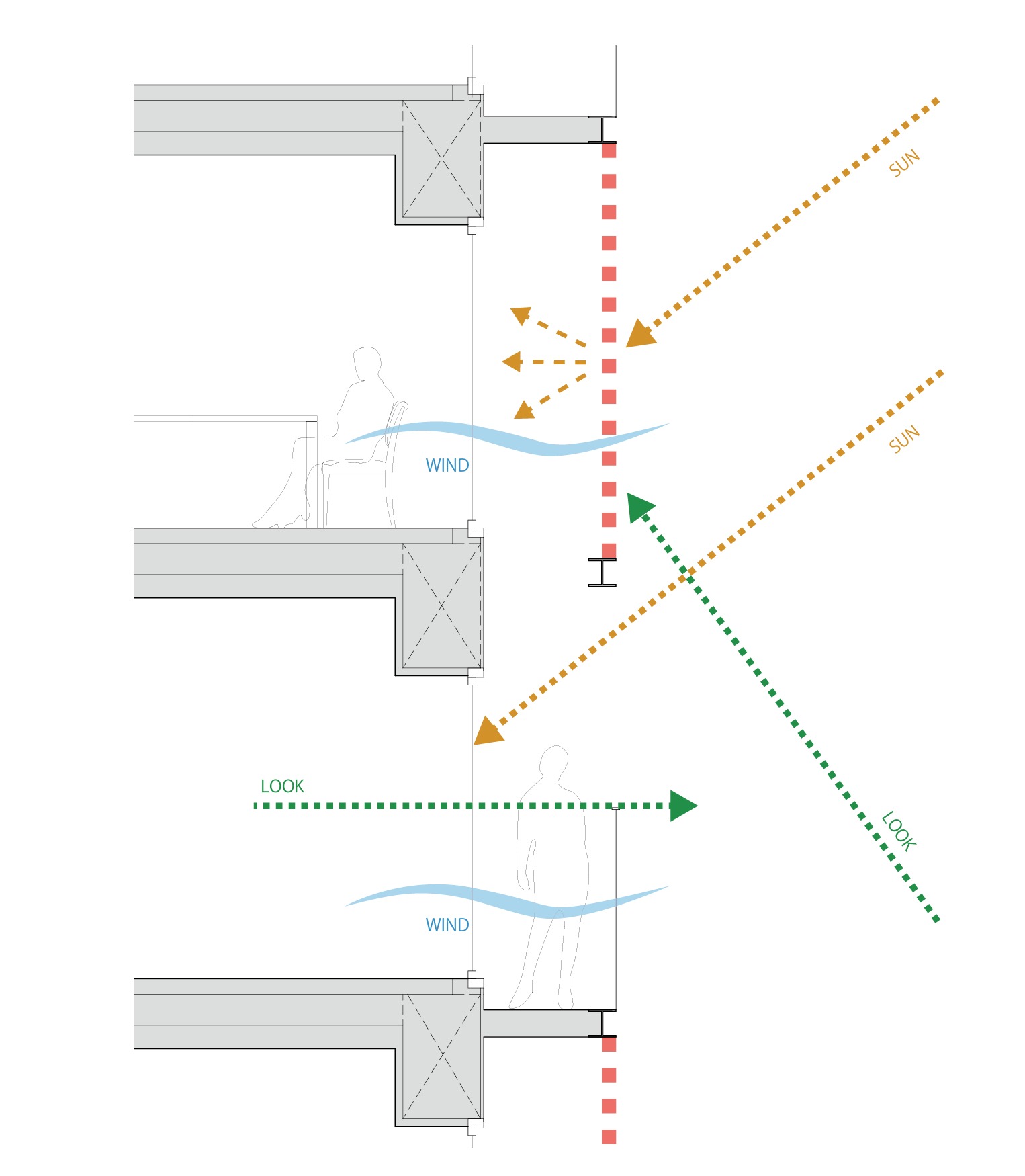
It would need special arrangements to keep moderate distance from neighborhood. In Tokyo, most apartments have continuous and opened balconies horizontally. It is necessary to provide an adequate aperture for sunlight and ventilation.
© Daici Ano
In high-density living area, the relationship between the inside and outside are switched by a curtain, like “on / off” . Then curtains express presence or absence.
© Daici Ano
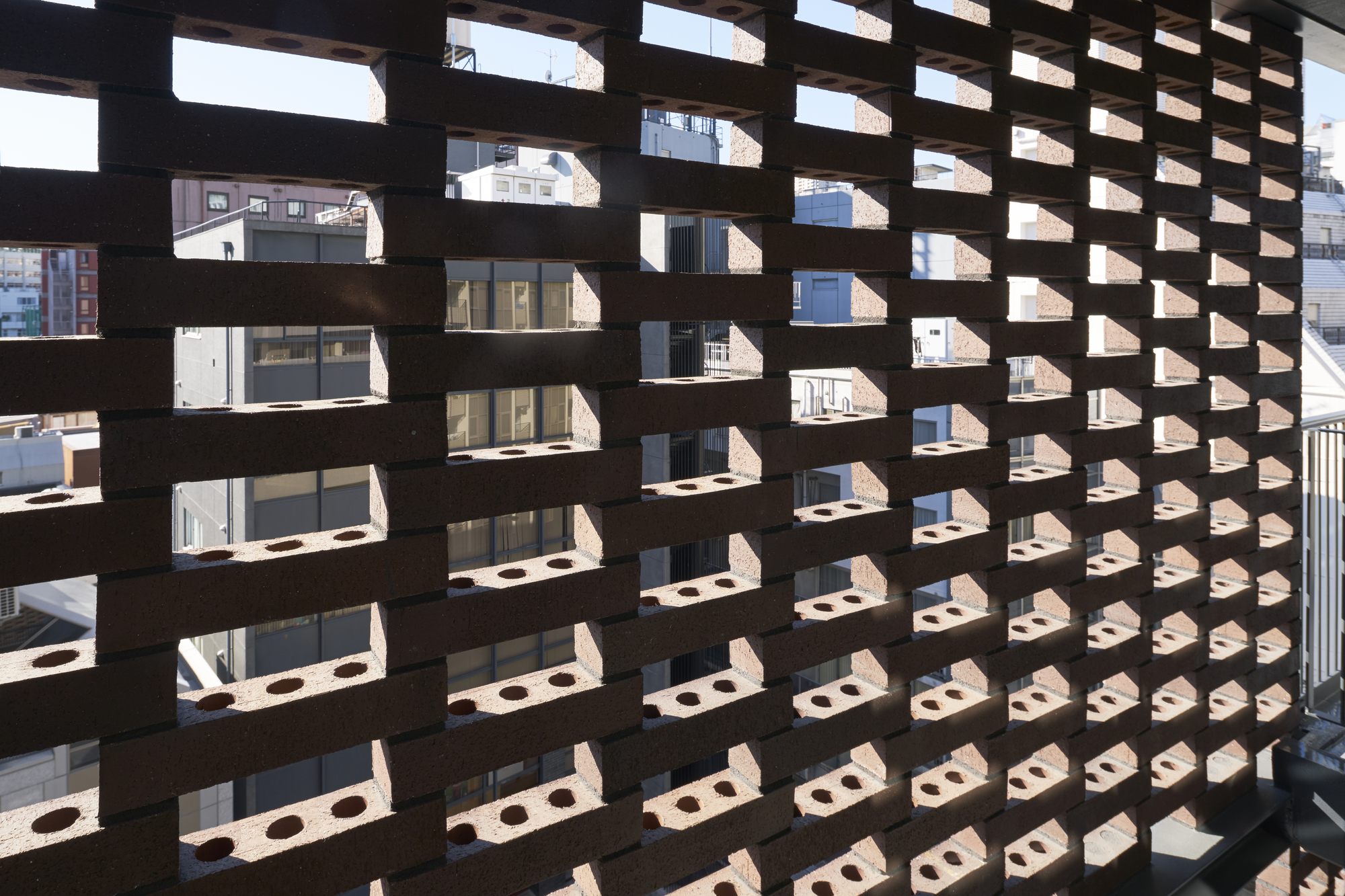
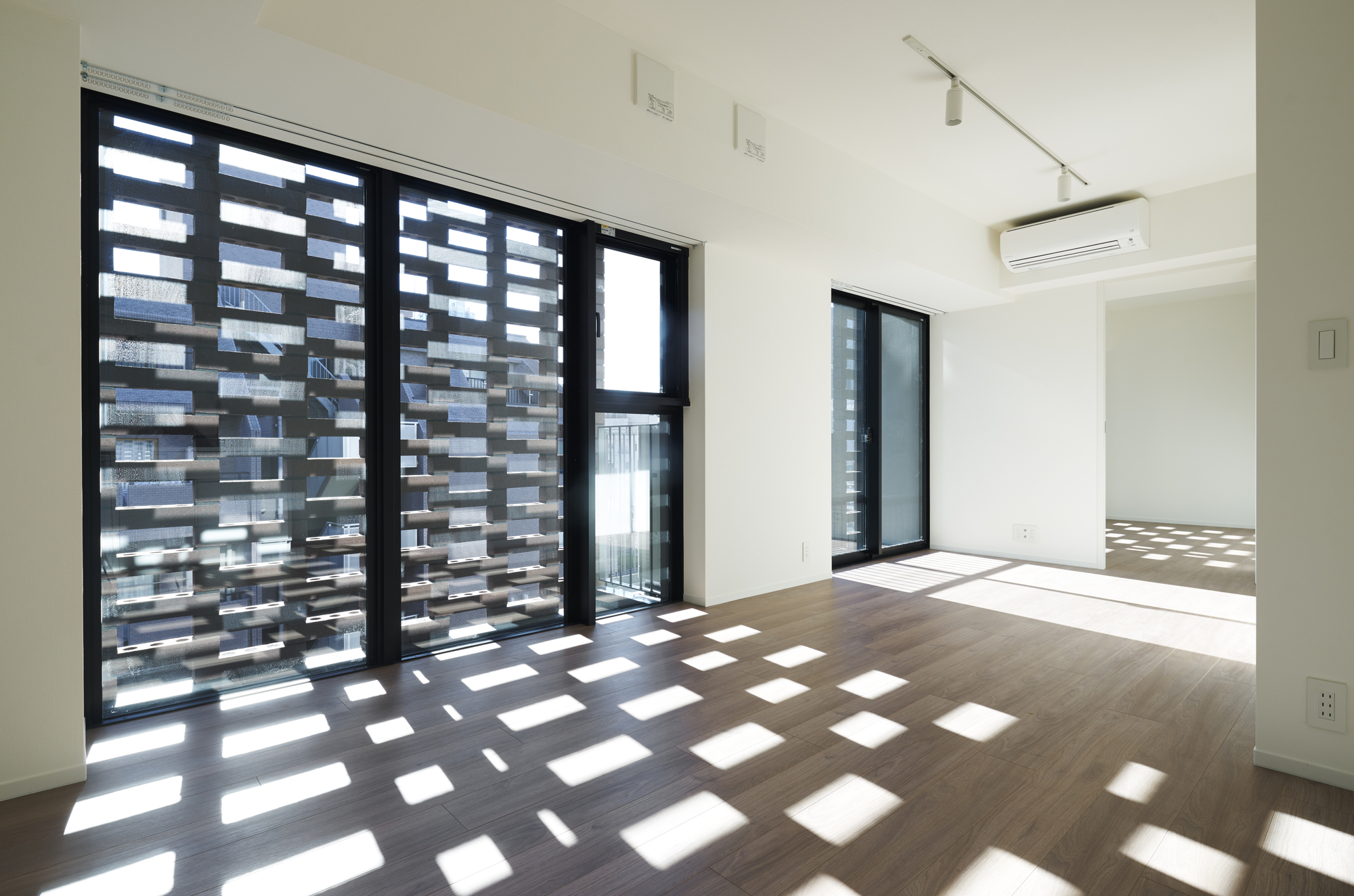
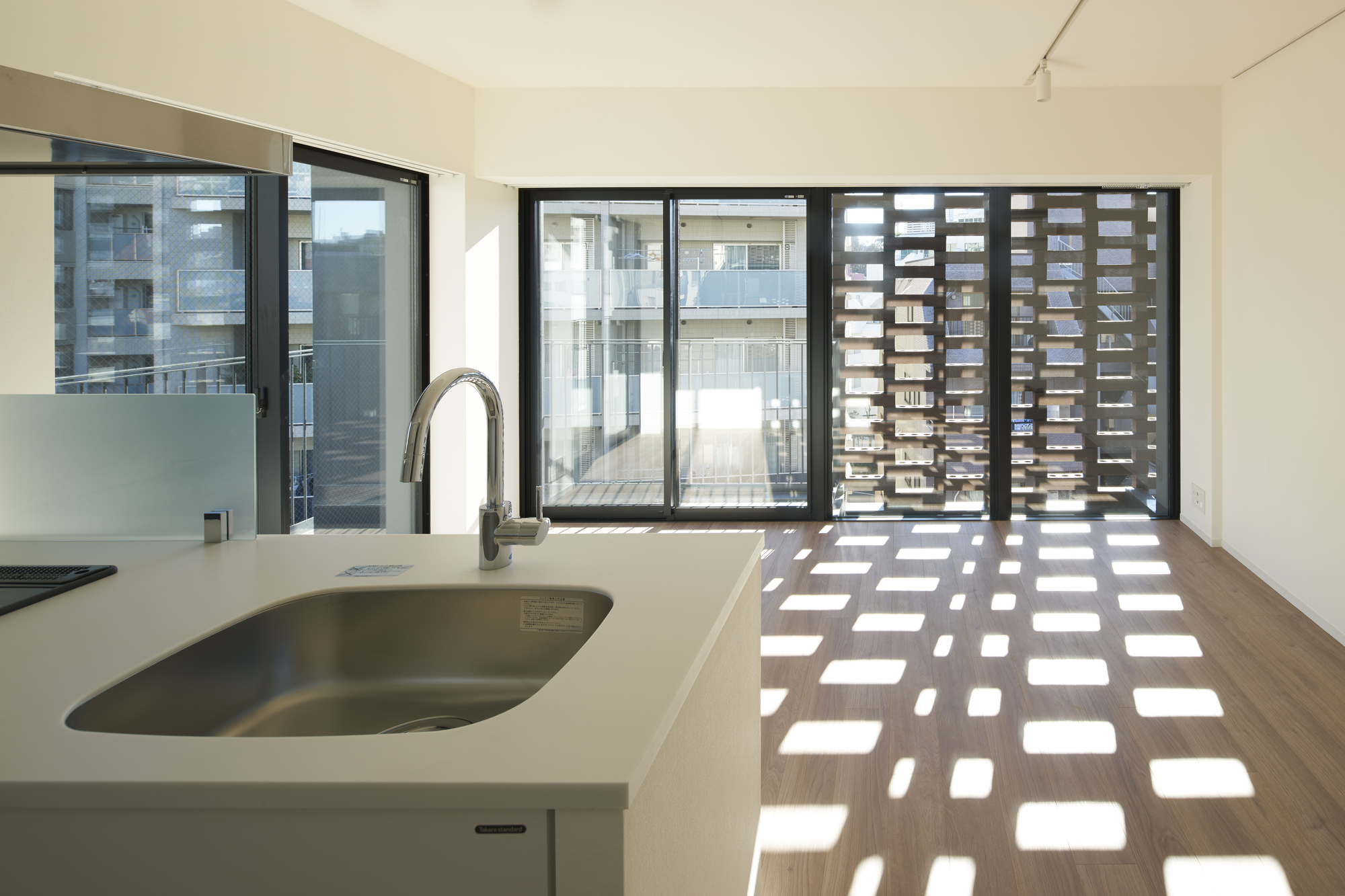
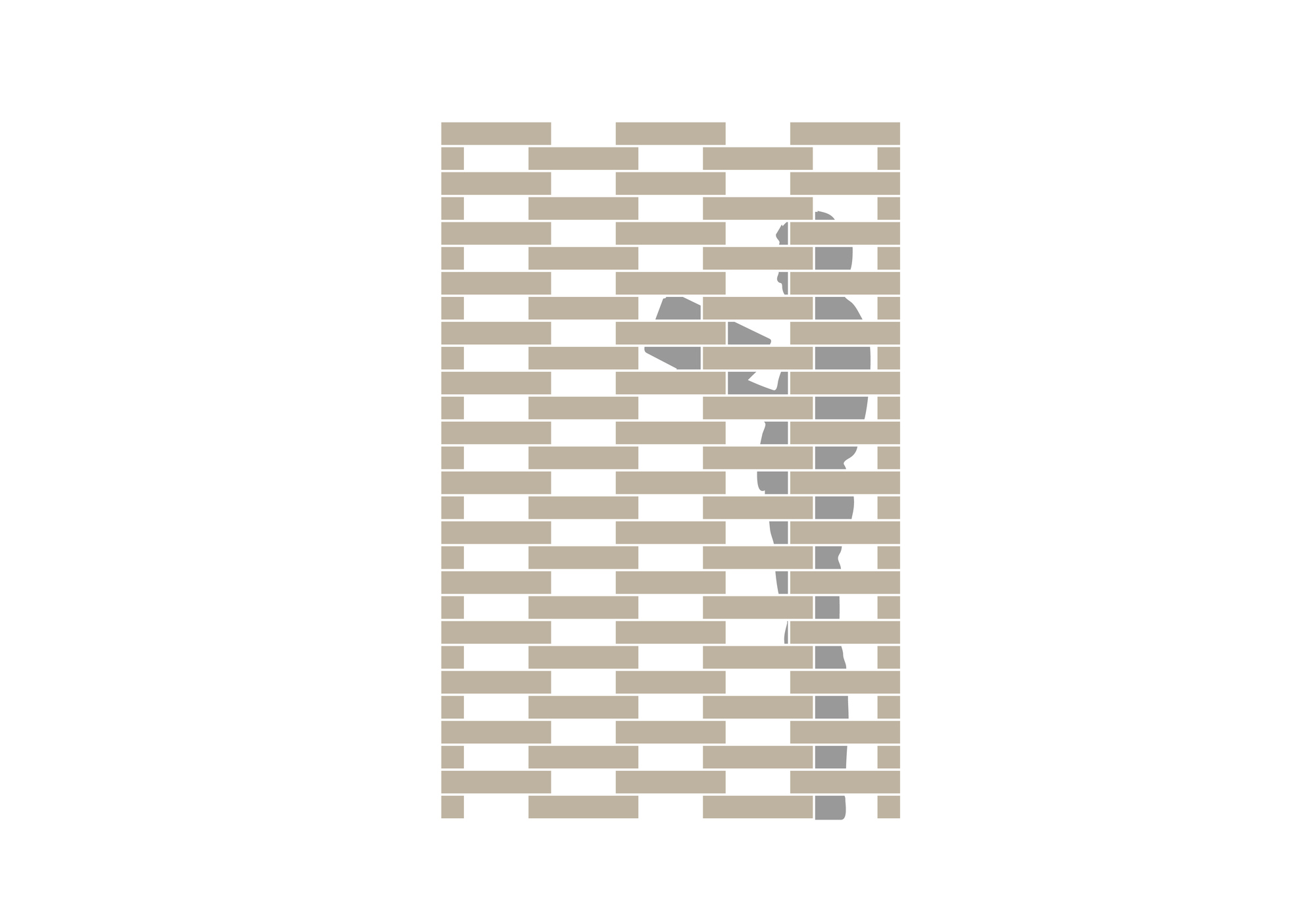
However, most curtains are kept closed in the city. The contradiction of providing an aperture in the city, was solved by using a brick screen at balconies.
© Daici Ano
Moreover, porous screen is fine example of comfortable living in hot and humid environment.
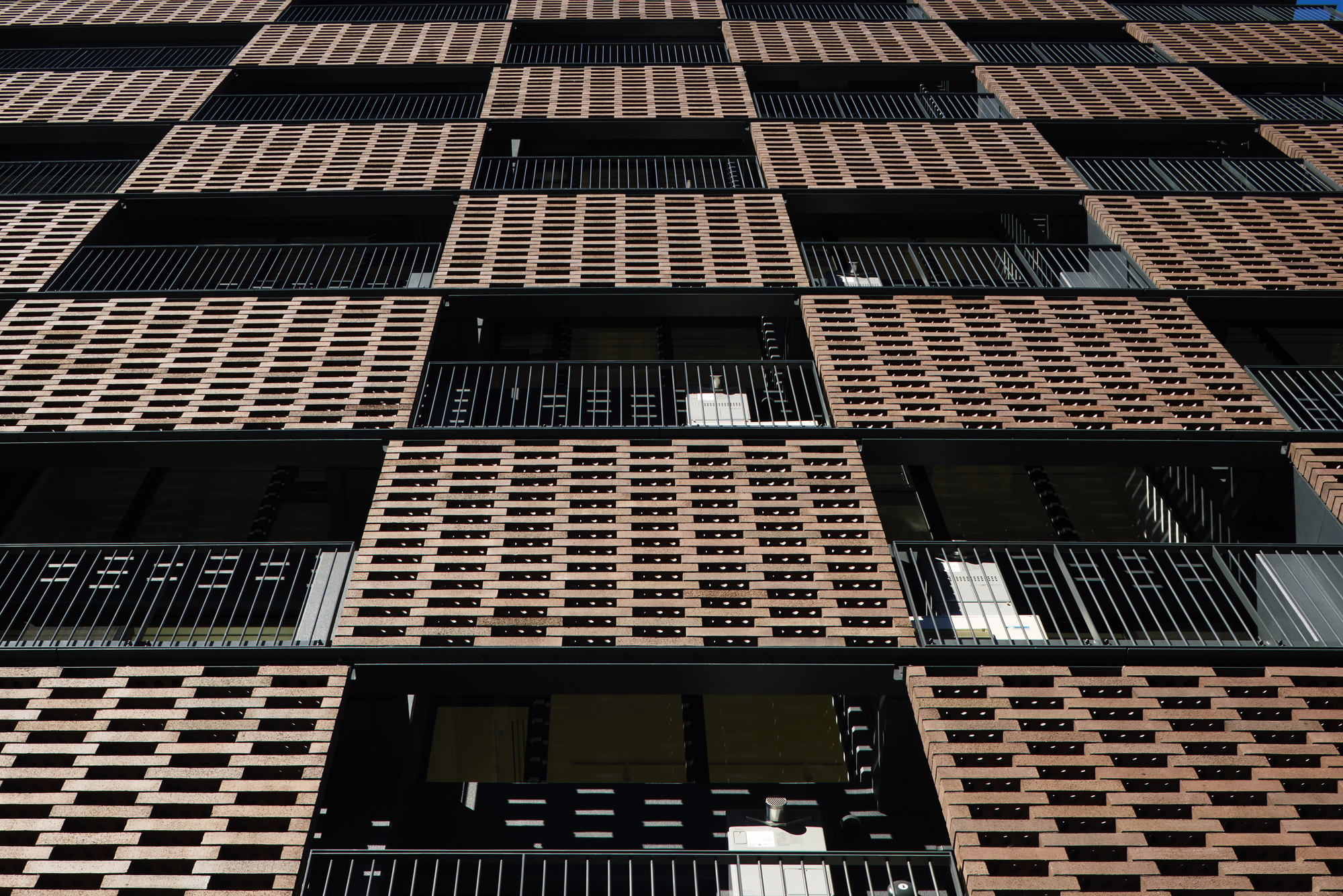
© Daici Ano
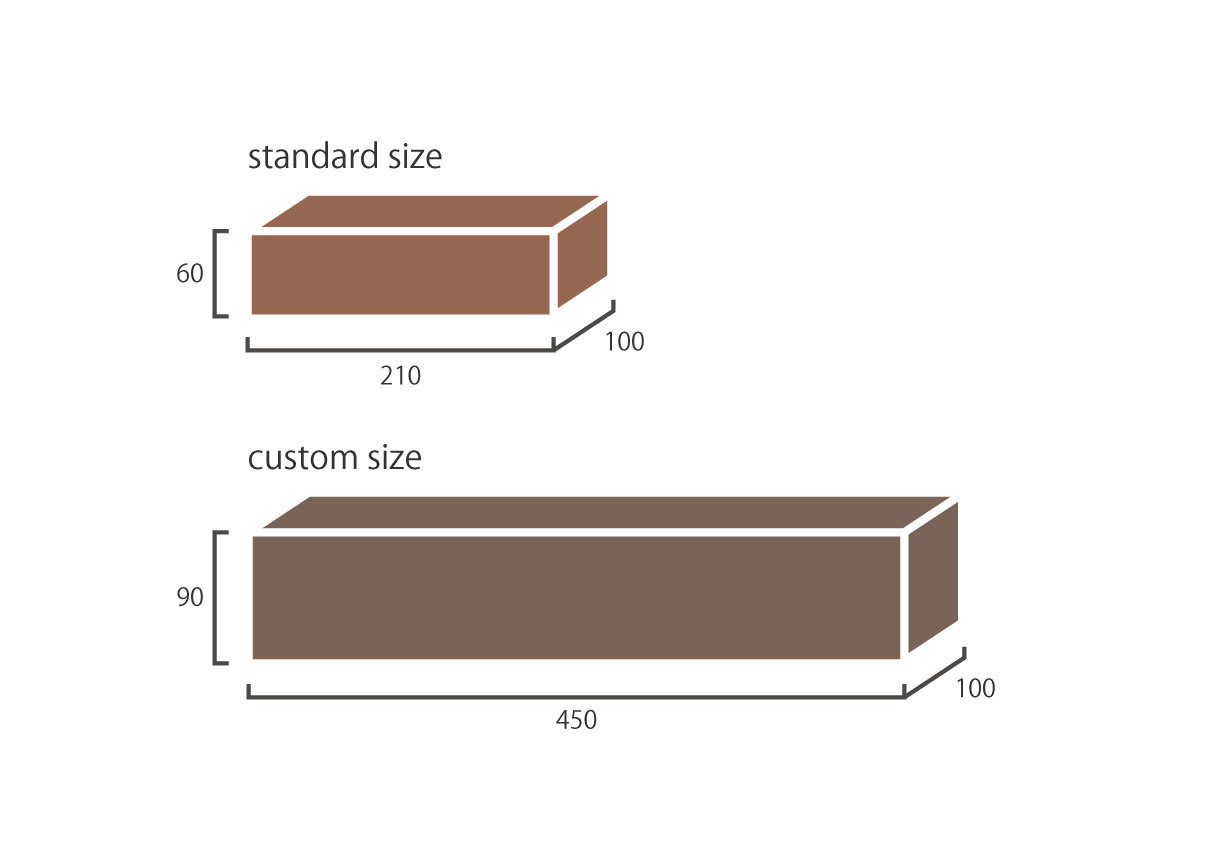
Those bricks intercept line of sight, but supply sunlight, ventilation and flue gas. So wide width are needed. Therefore, the Seto factory that is in famous production area for bricks made Those bricks to order.
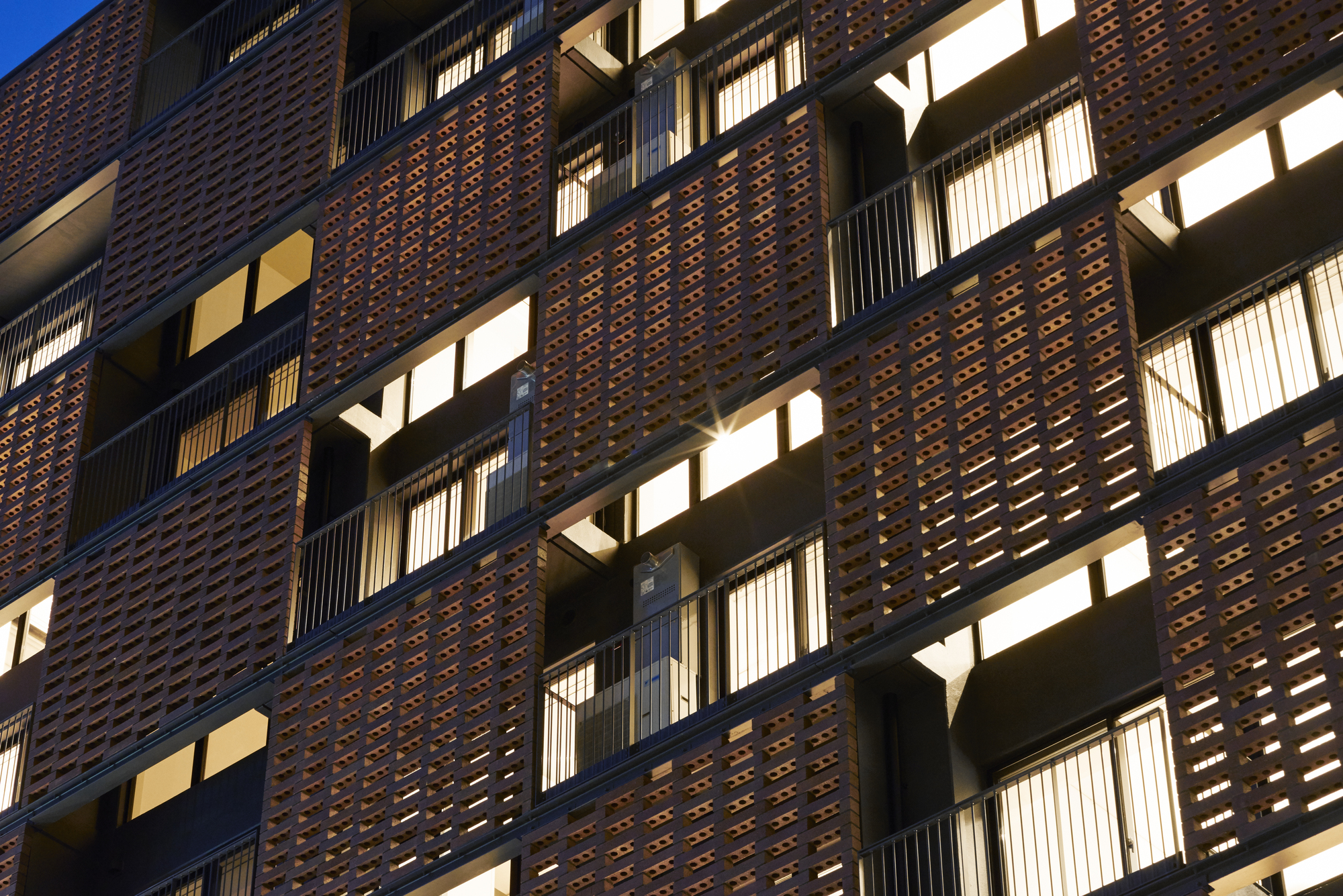
© Daici Ano
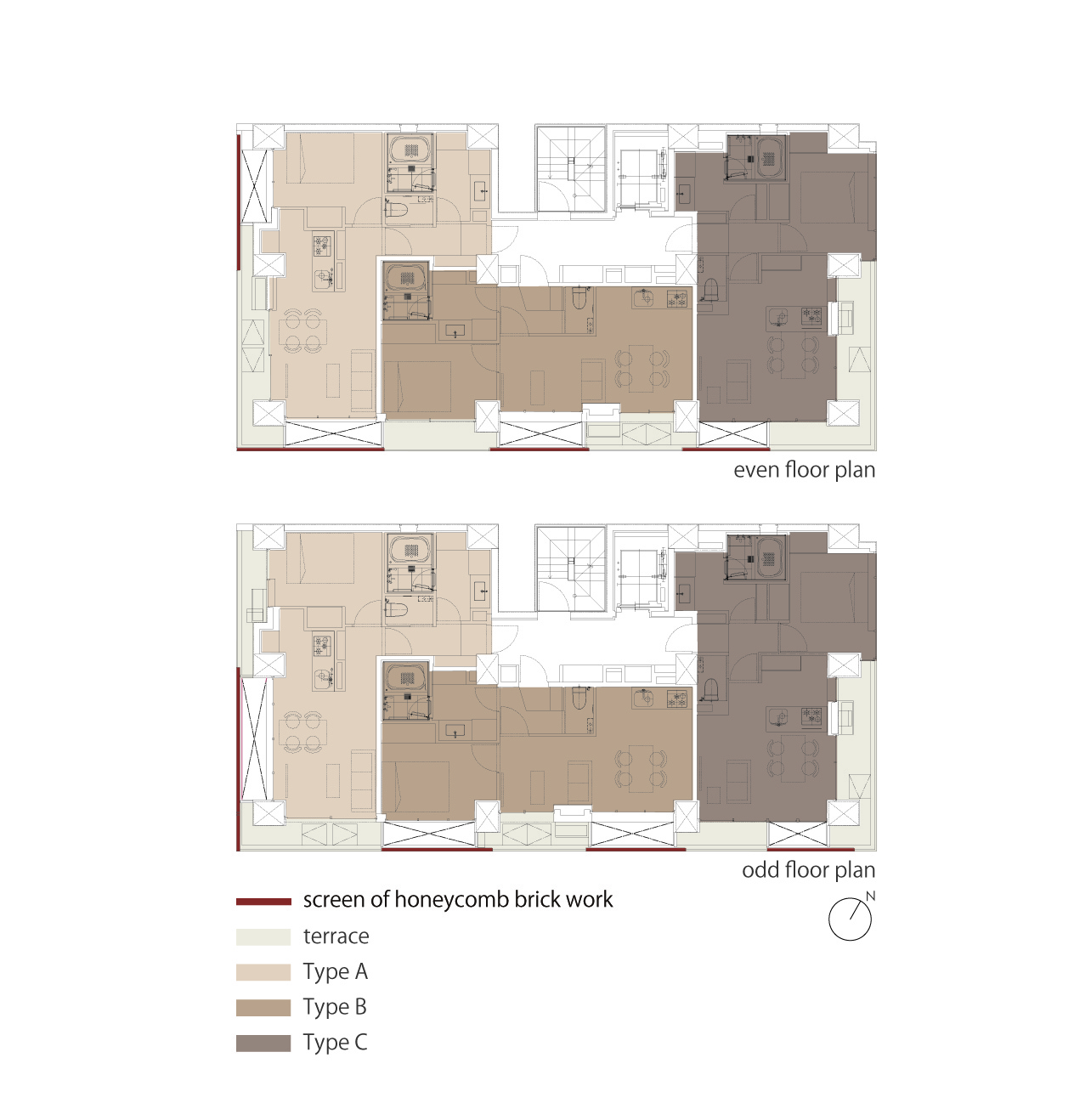
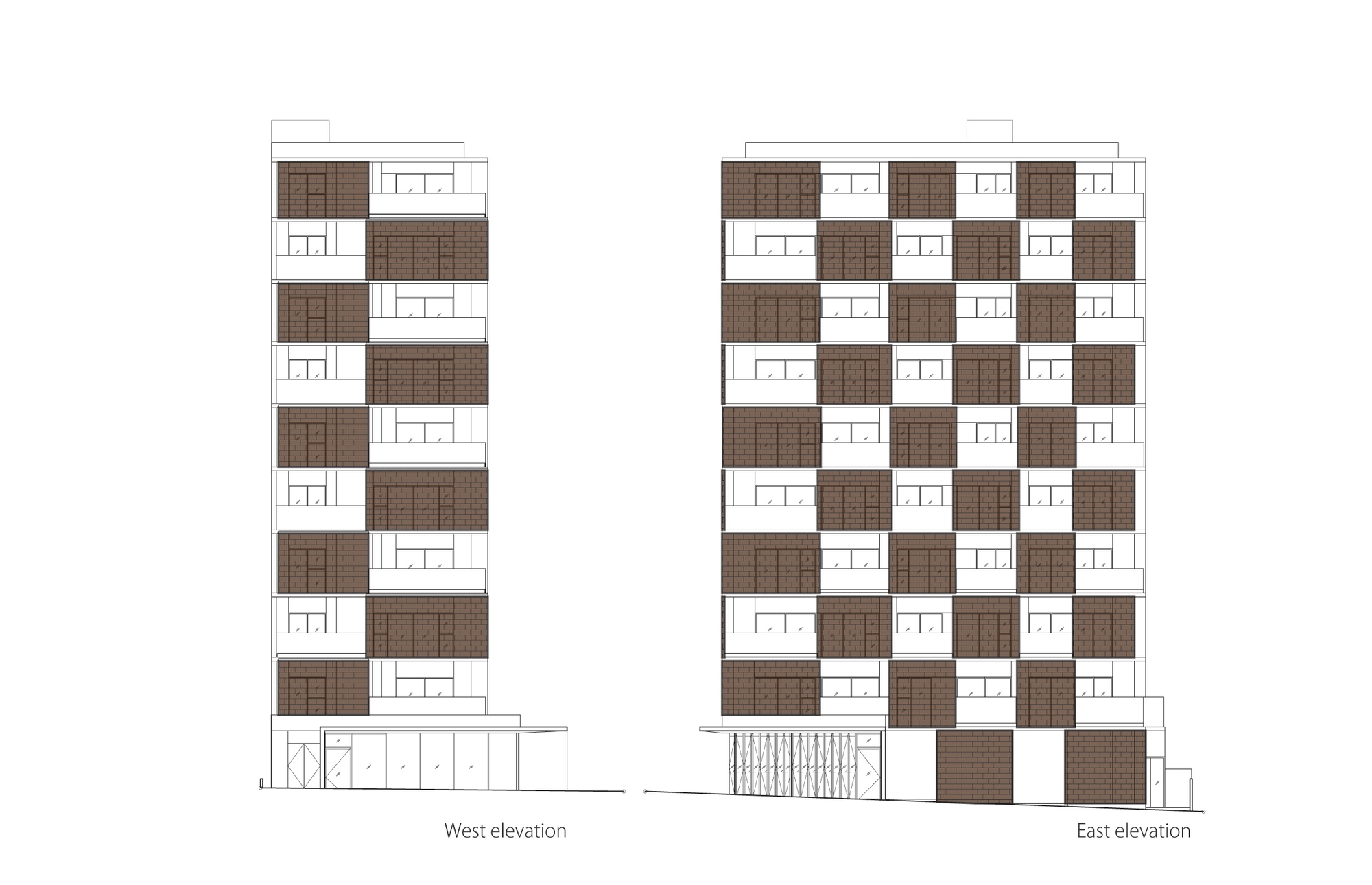
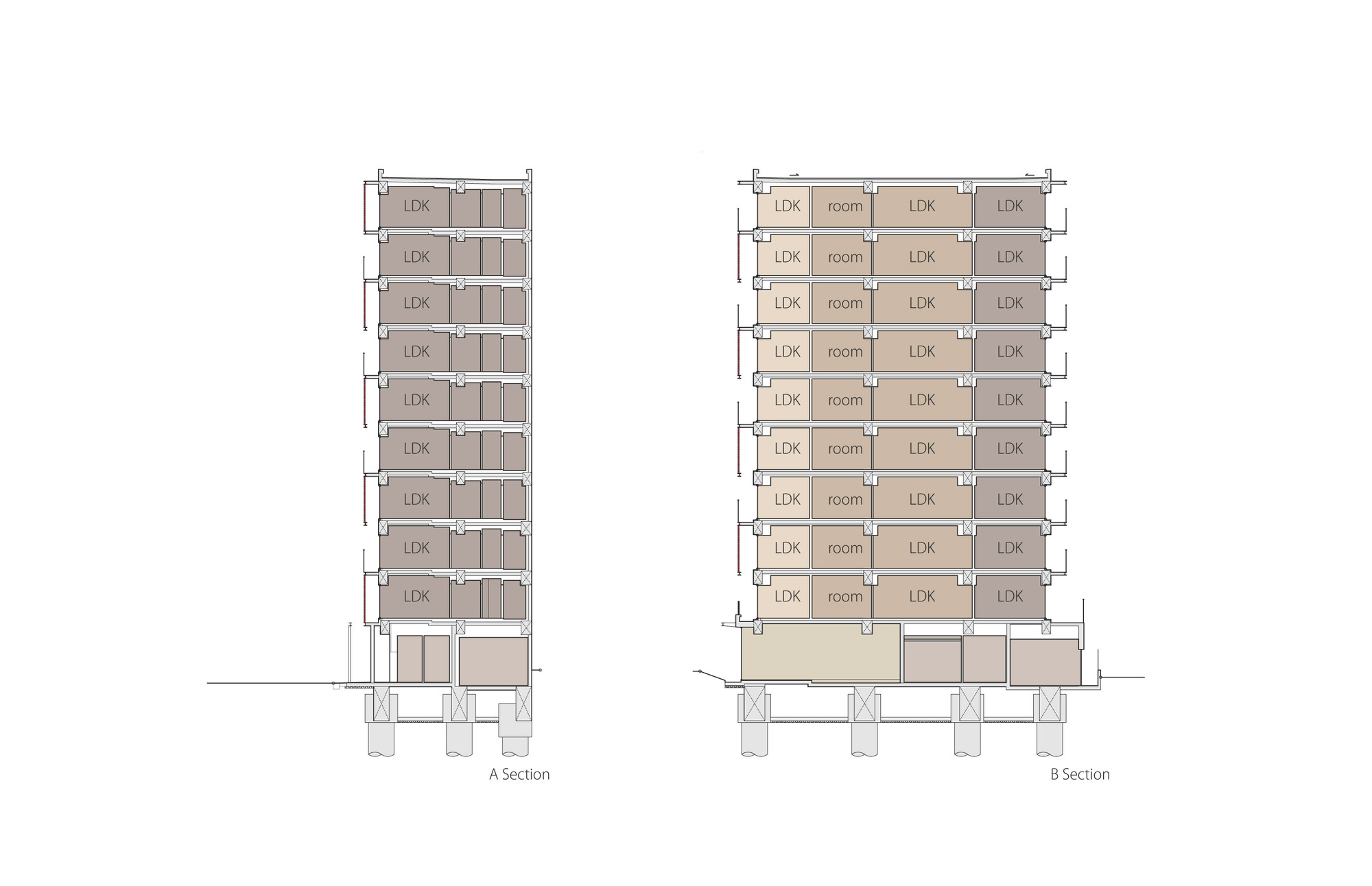
In most apartment, dwelling units are same on each floor because of the economic principle. In this apartment the position of screen are switched alternately on the odd floors and even floors. The dwelling unit changes diversify and makes beautiful facade with a little arrangement.
© Daici Ano
© Daici Ano
Project Info
Architects: KINO architects
Year: 2014
Country: Tokyo, Japan
Photographs: Daici Ano

Sophie Tremblay is a Montreal-based architectural editor and designer with a focus on sustainable urban development. A McGill University architecture graduate, she began her career in adaptive reuse, blending modern design with historical structures. As a Project Editor at Arch2O, she curates stories that connect traditional practice with forward-thinking design. Her writing highlights architecture's role in community engagement and social impact. Sophie has contributed to Canadian Architect and continues to collaborate with local studios on community-driven projects throughout Quebec, maintaining a hands-on approach that informs both her design sensibility and editorial perspective.