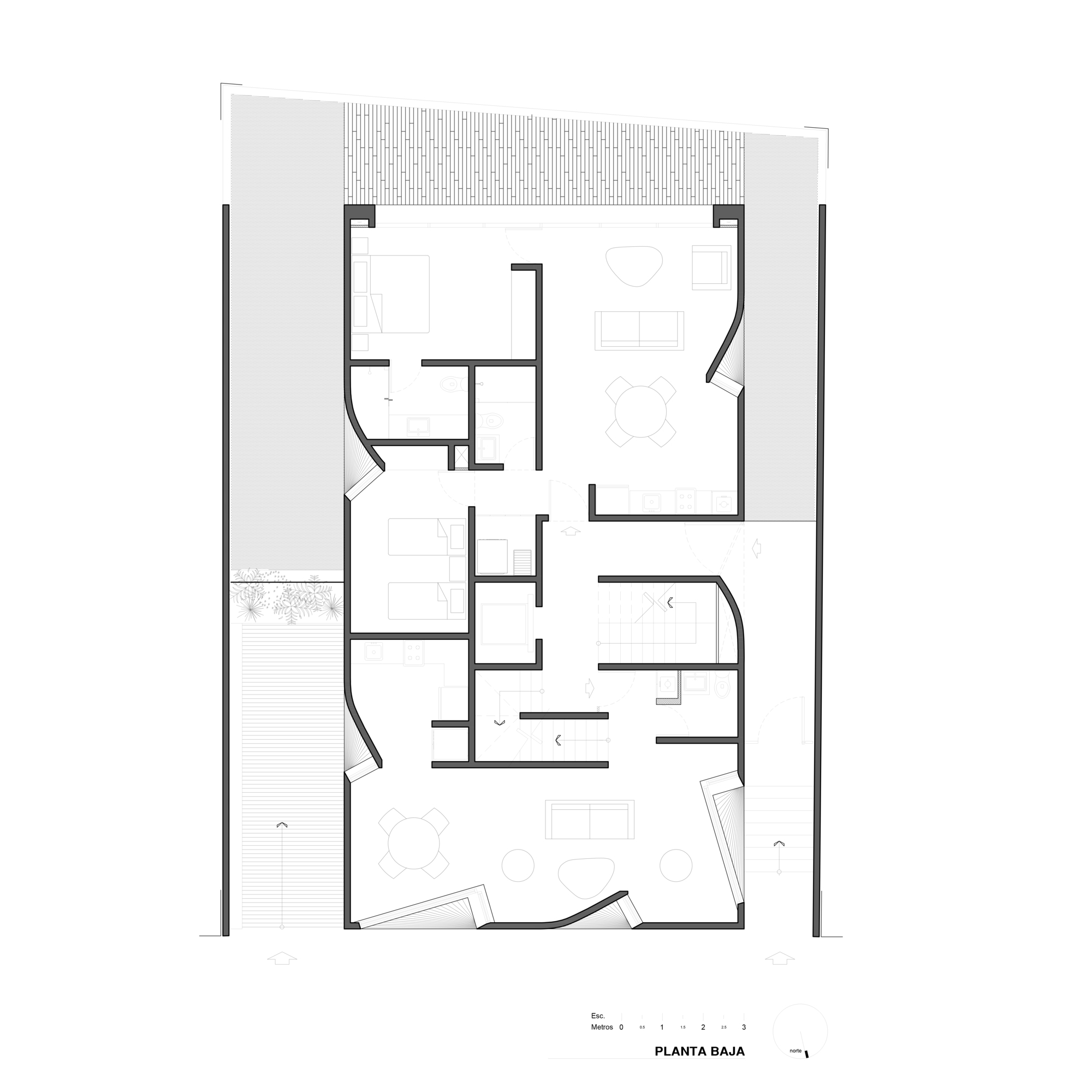
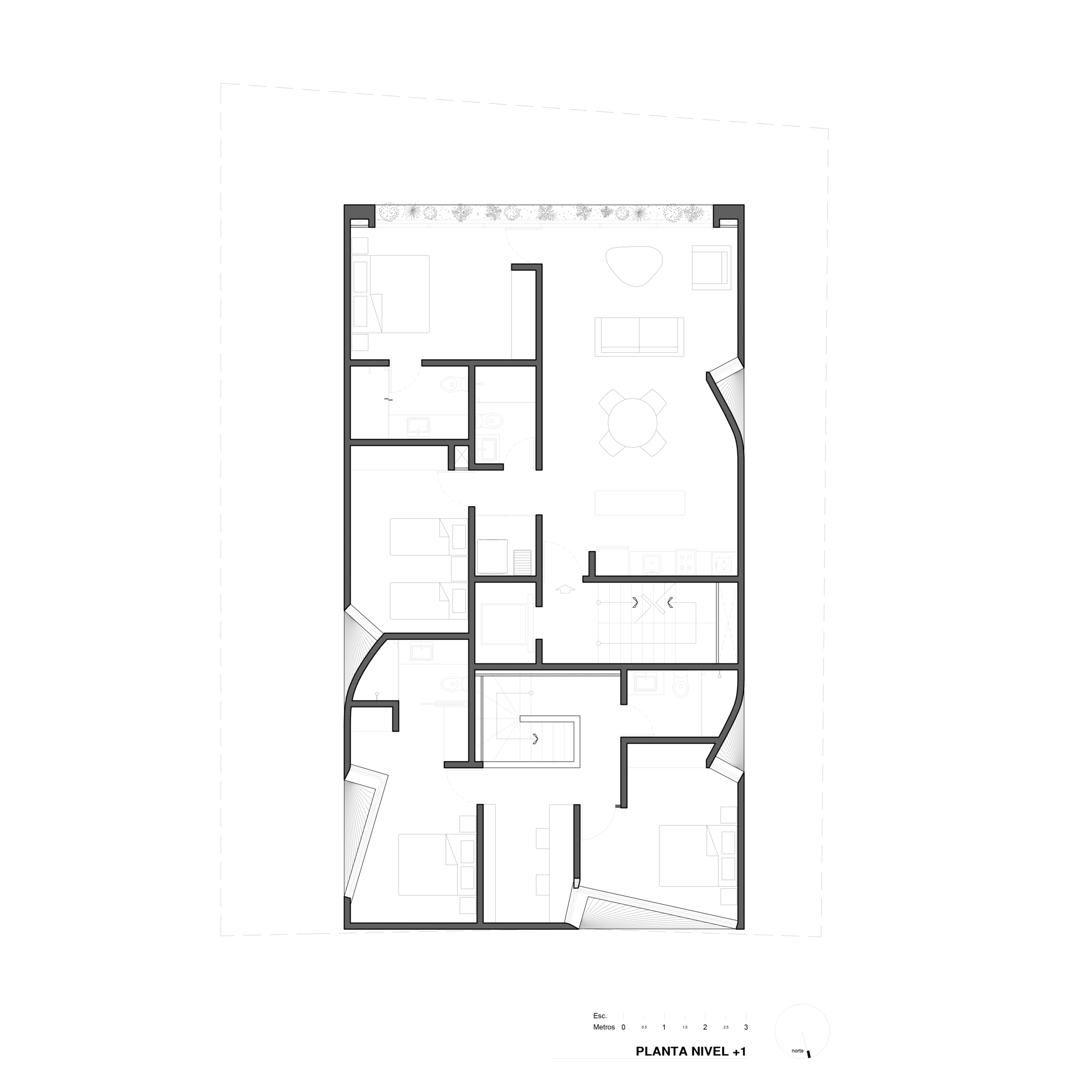
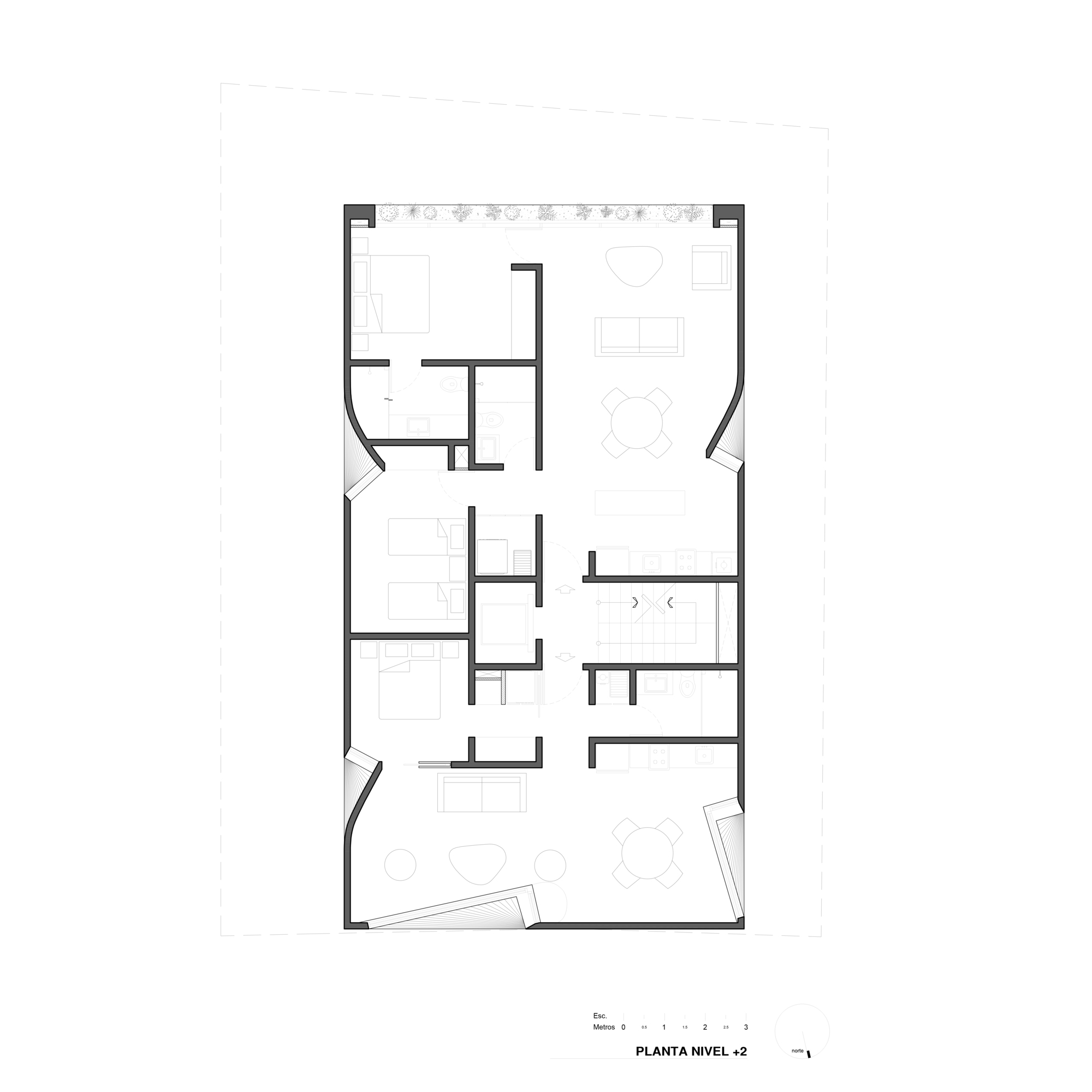
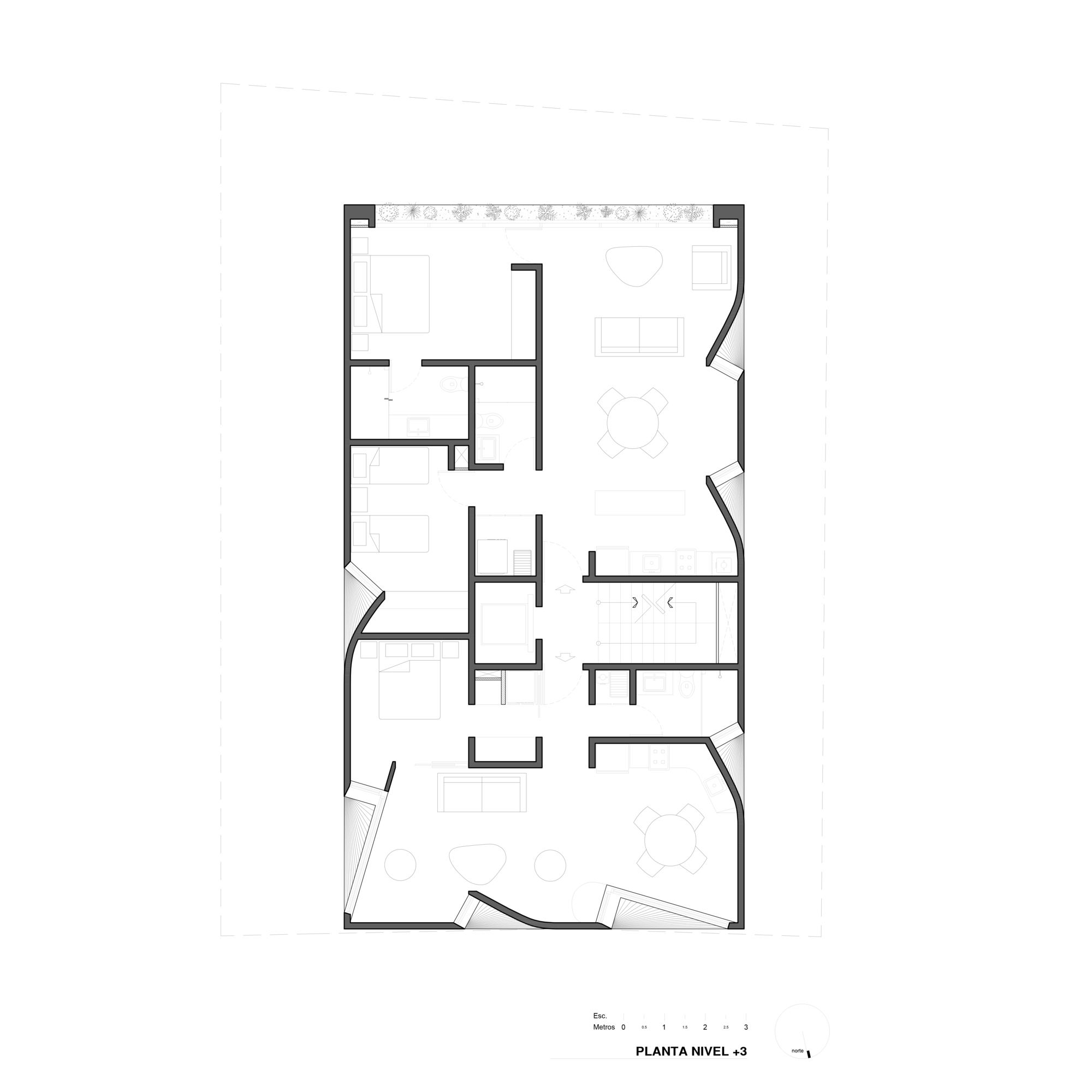
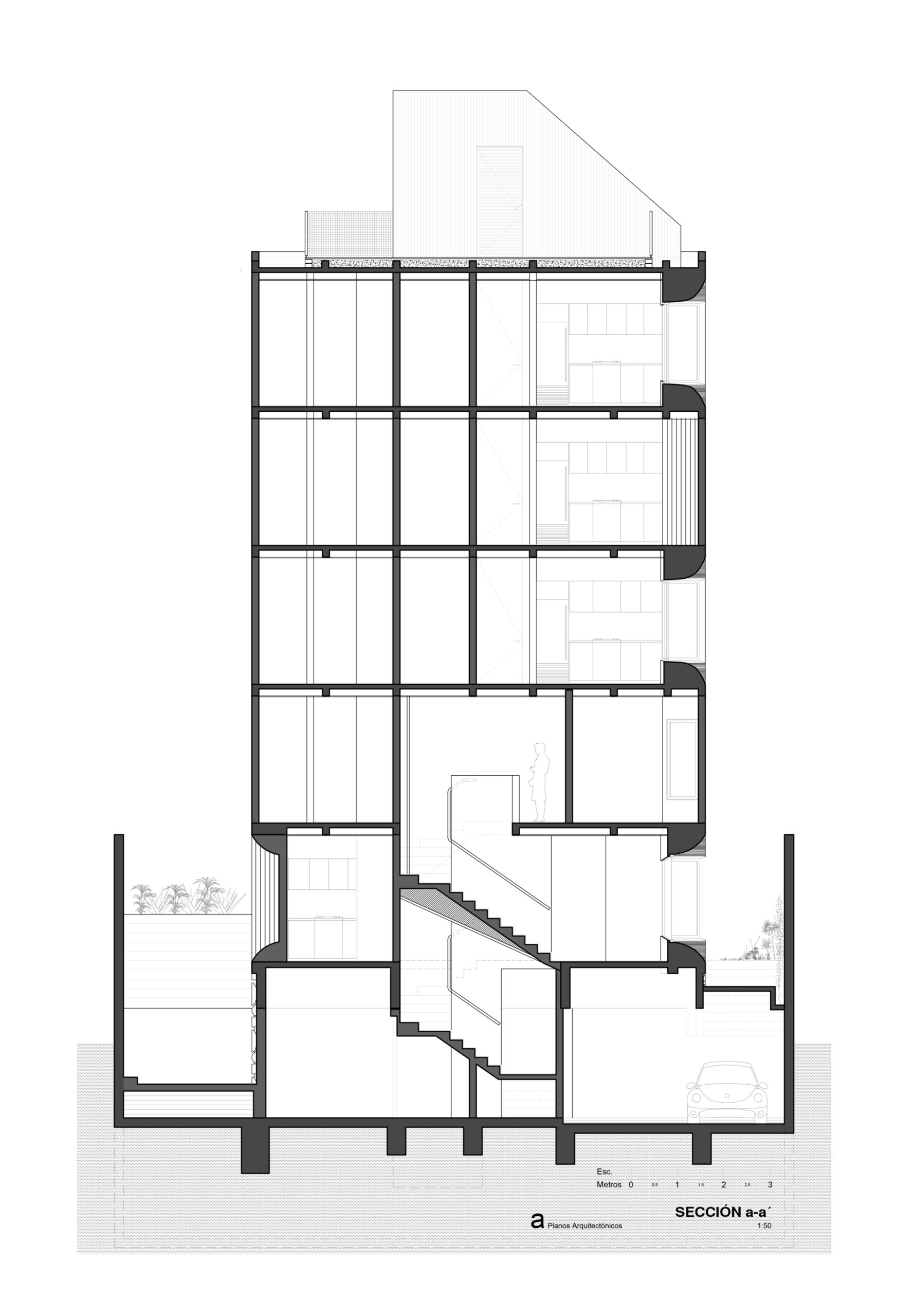
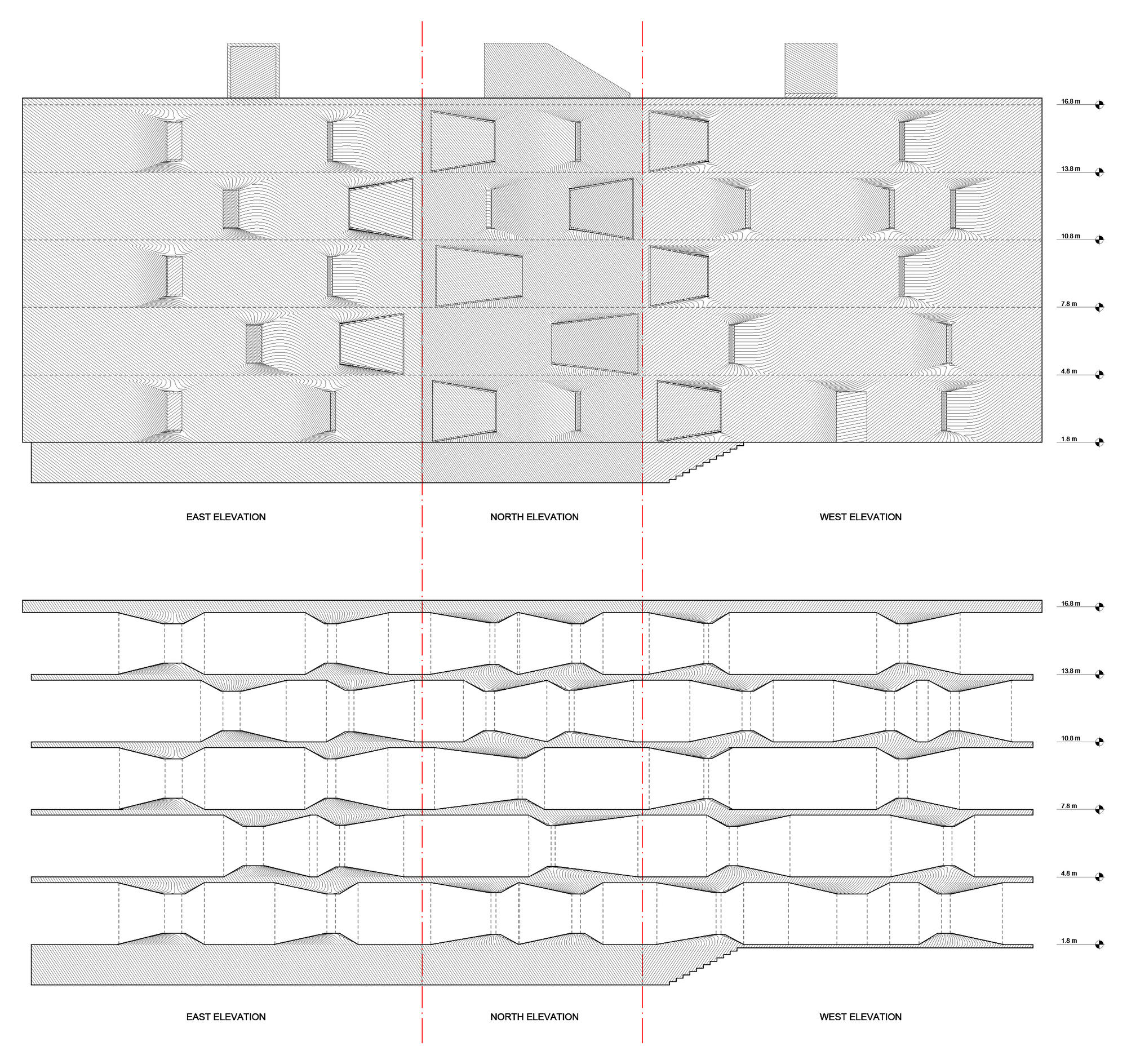
DL1310 Building , This project is a residential building in Mexico City consisting of seven 1-2 bedroom apartments with basement parking. It was decided from the beginning that the construction system would be cast-in-place concrete, that the unit types would be simple and direct, and that the building would maximize the site footprint and allowed height. These were limitations that satisfied the client’s desires and allowed us to focus our efforts on an interesting opportunity in the project: the openings.
© Rafael Gamo
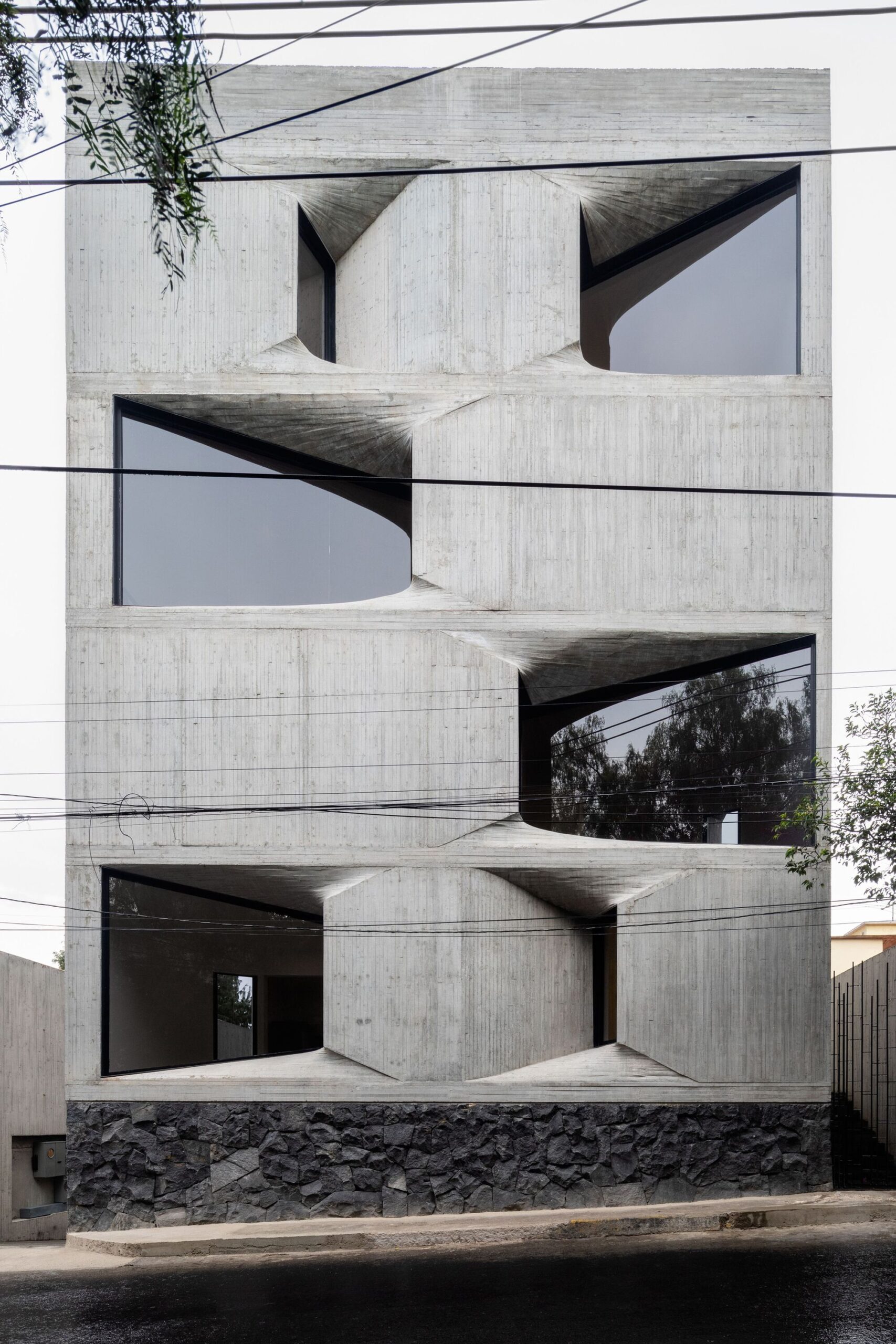
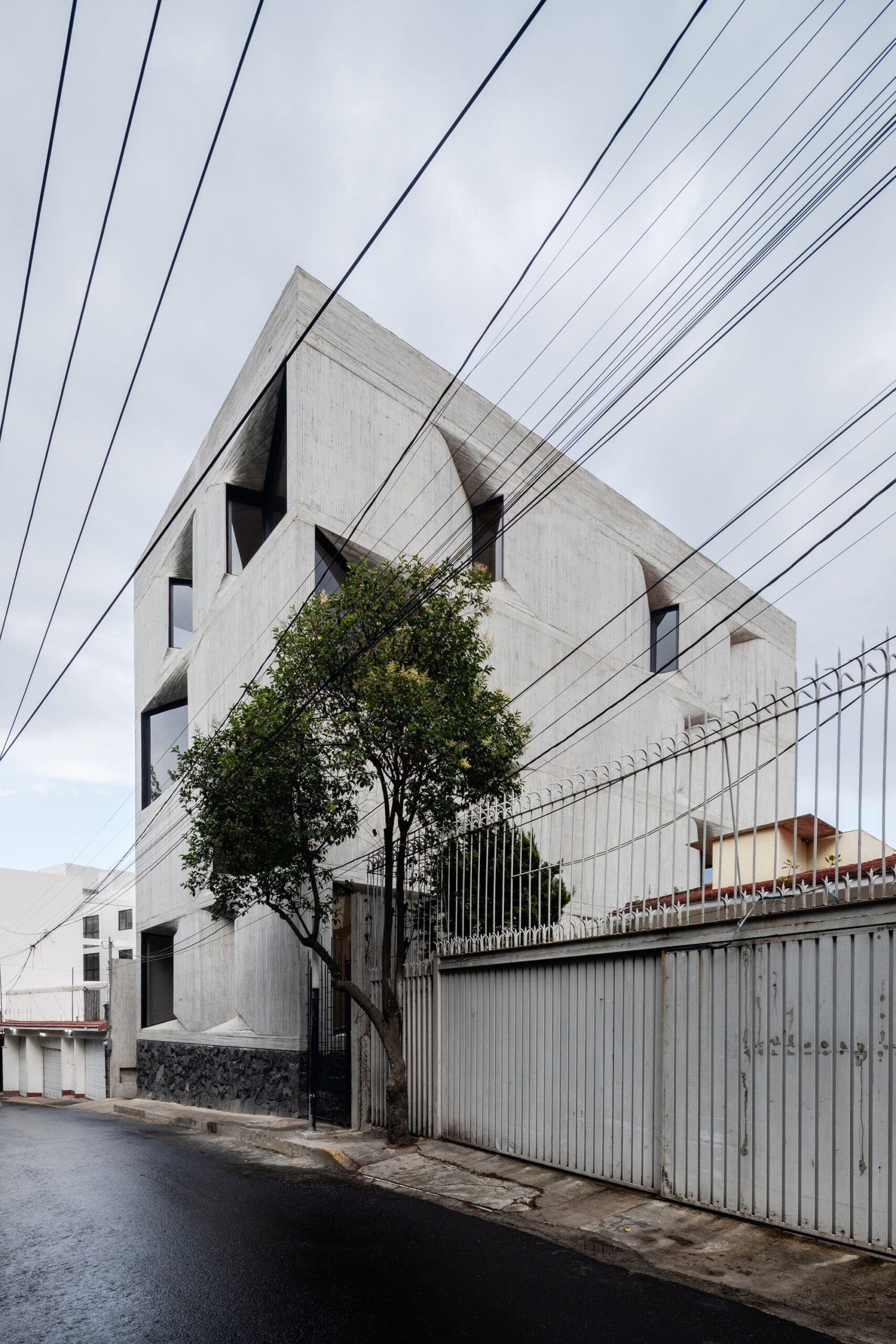
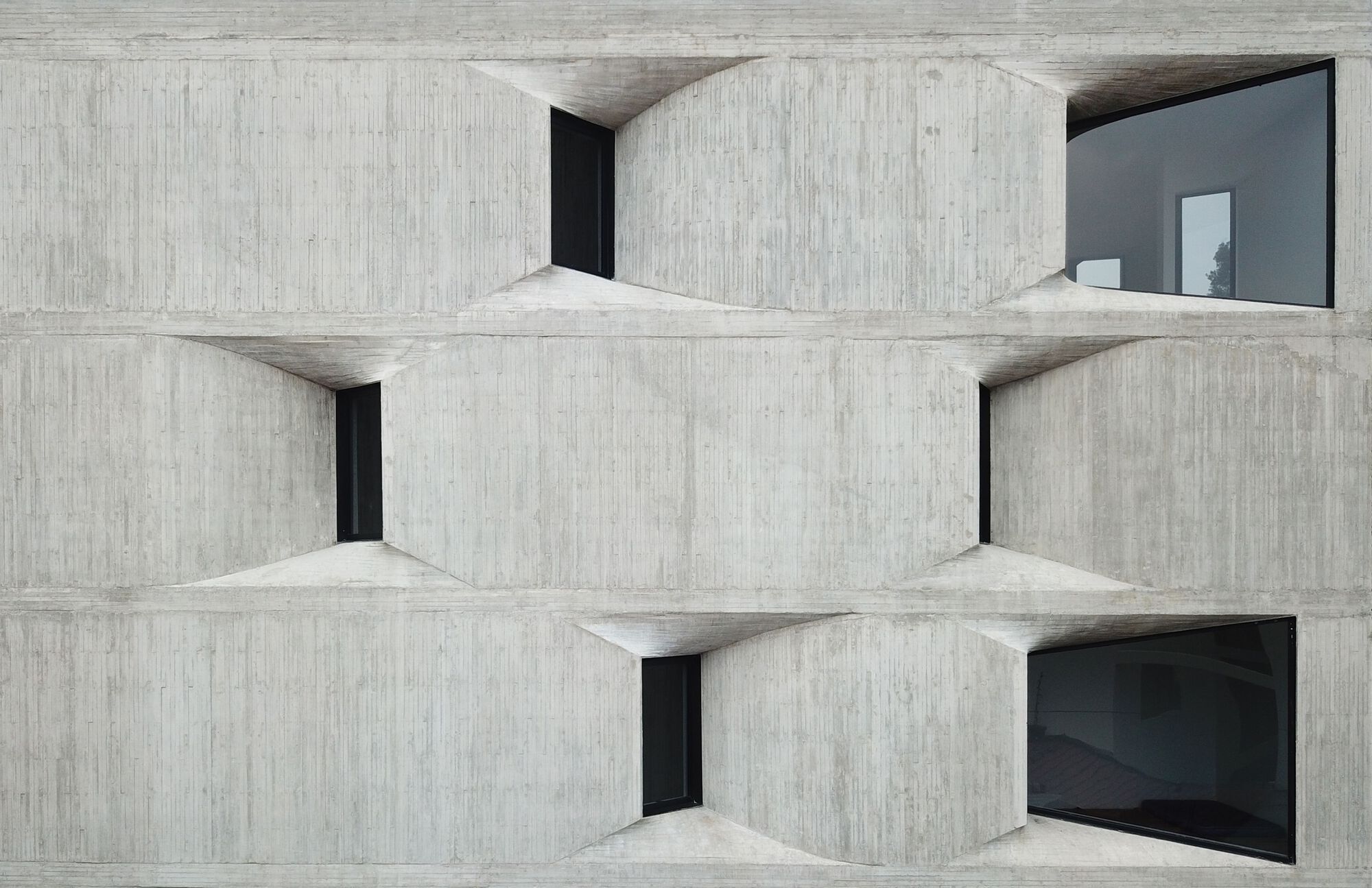
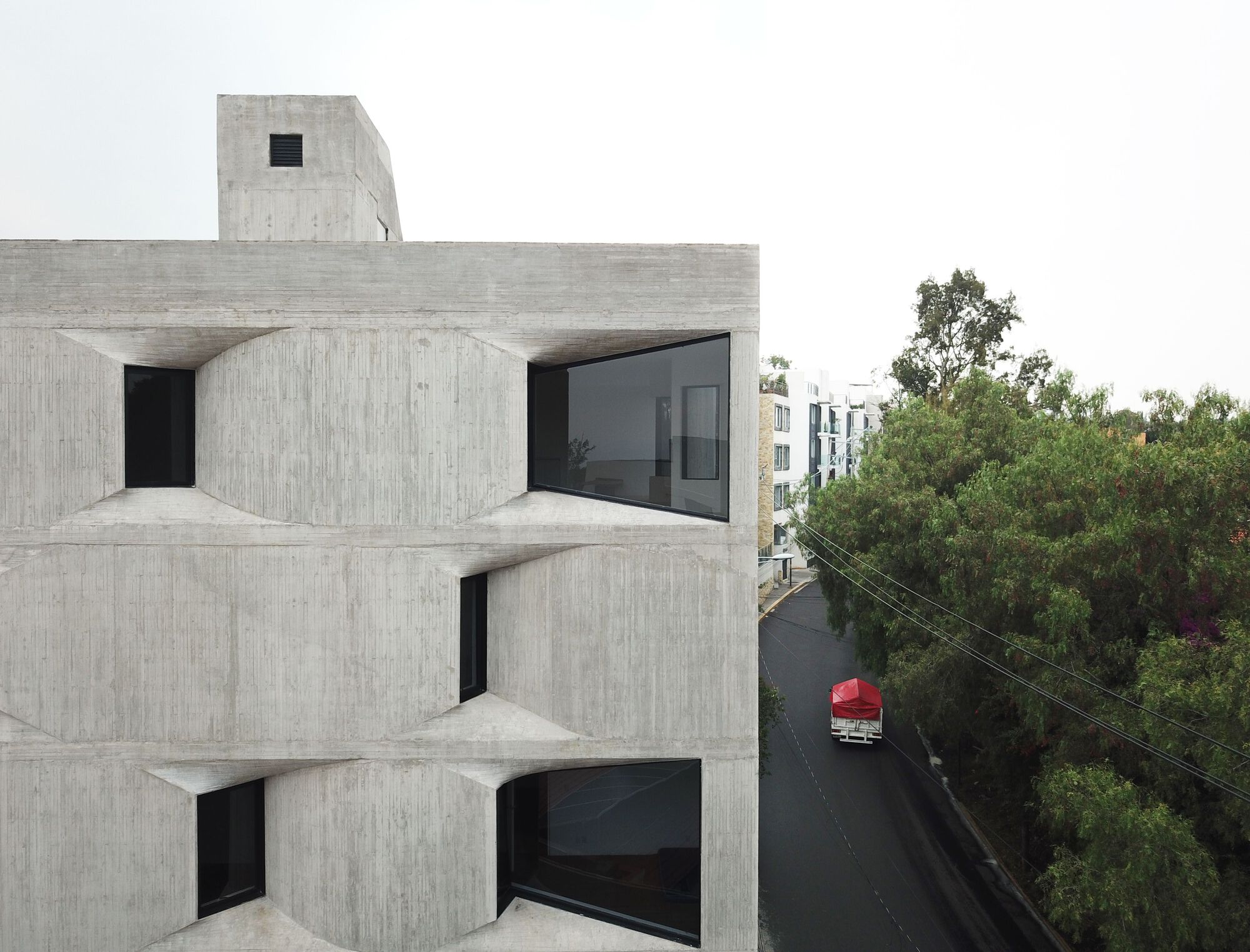
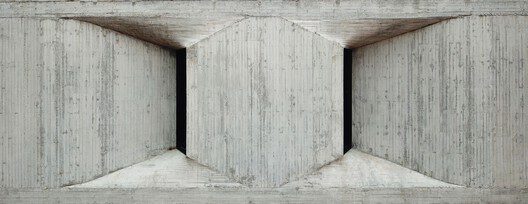
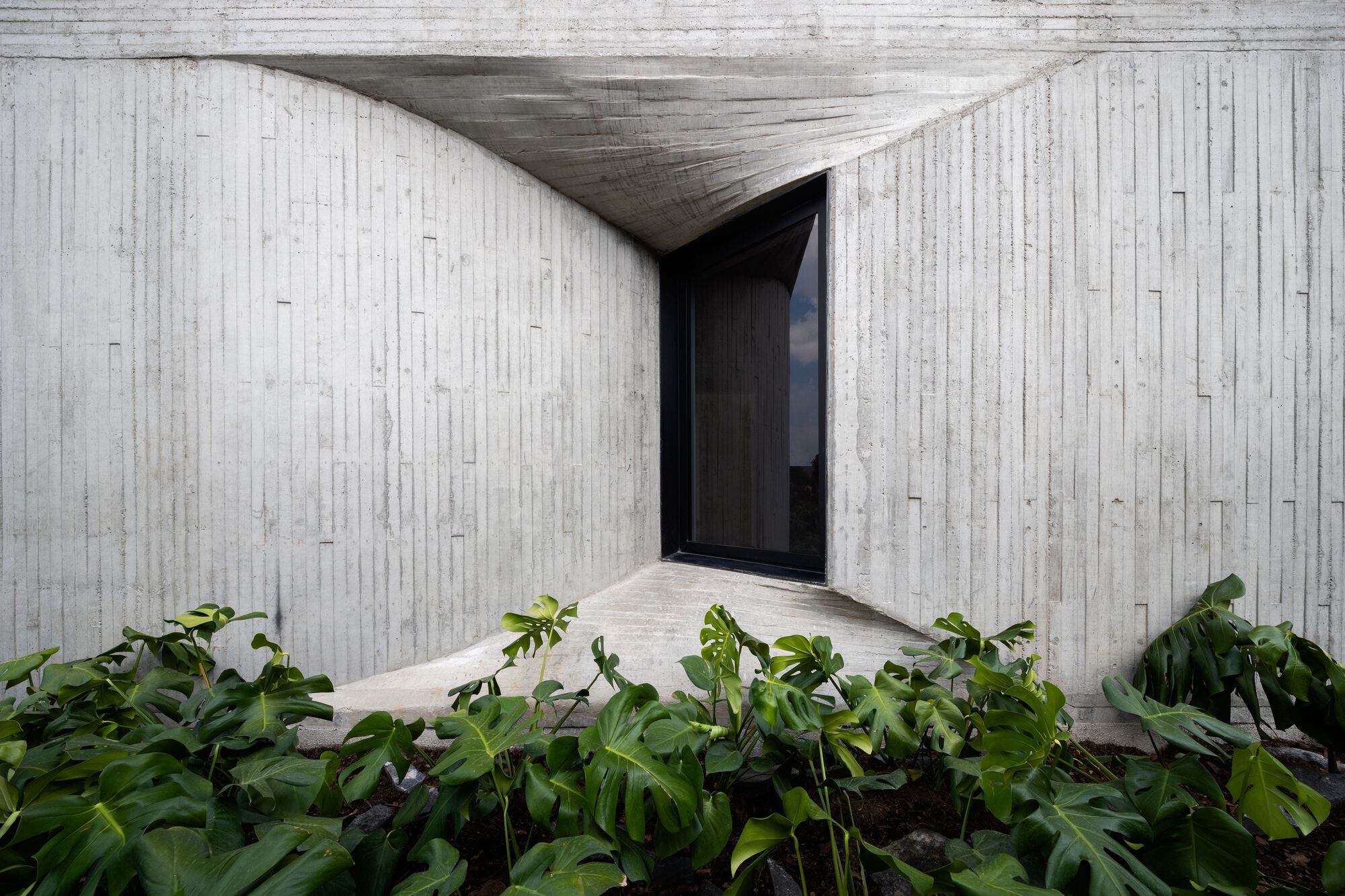
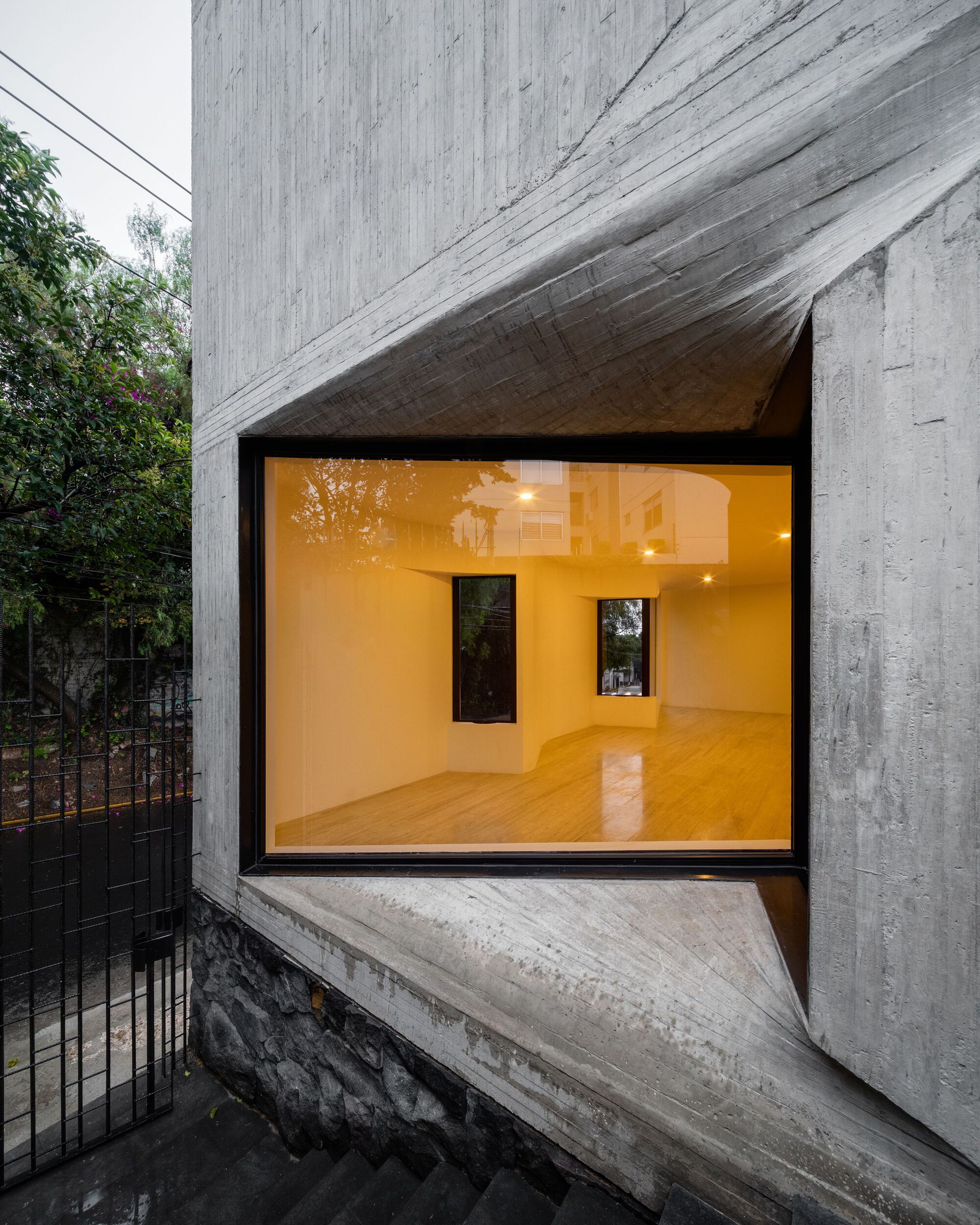
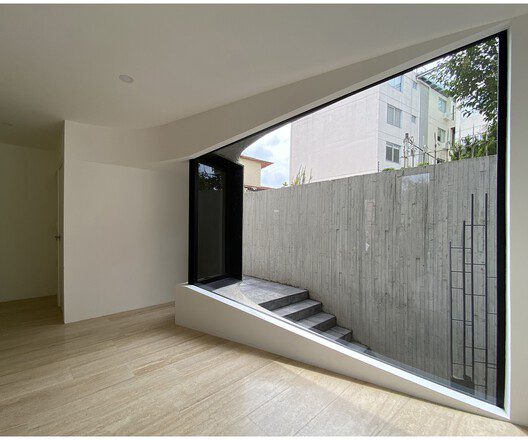
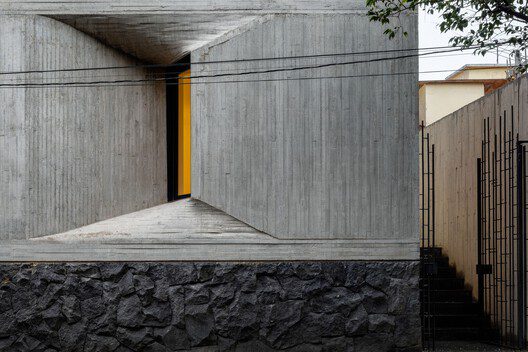
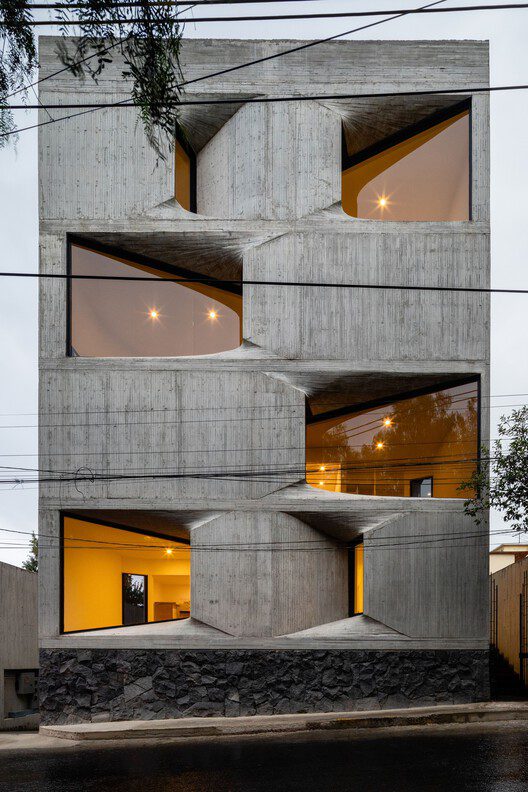
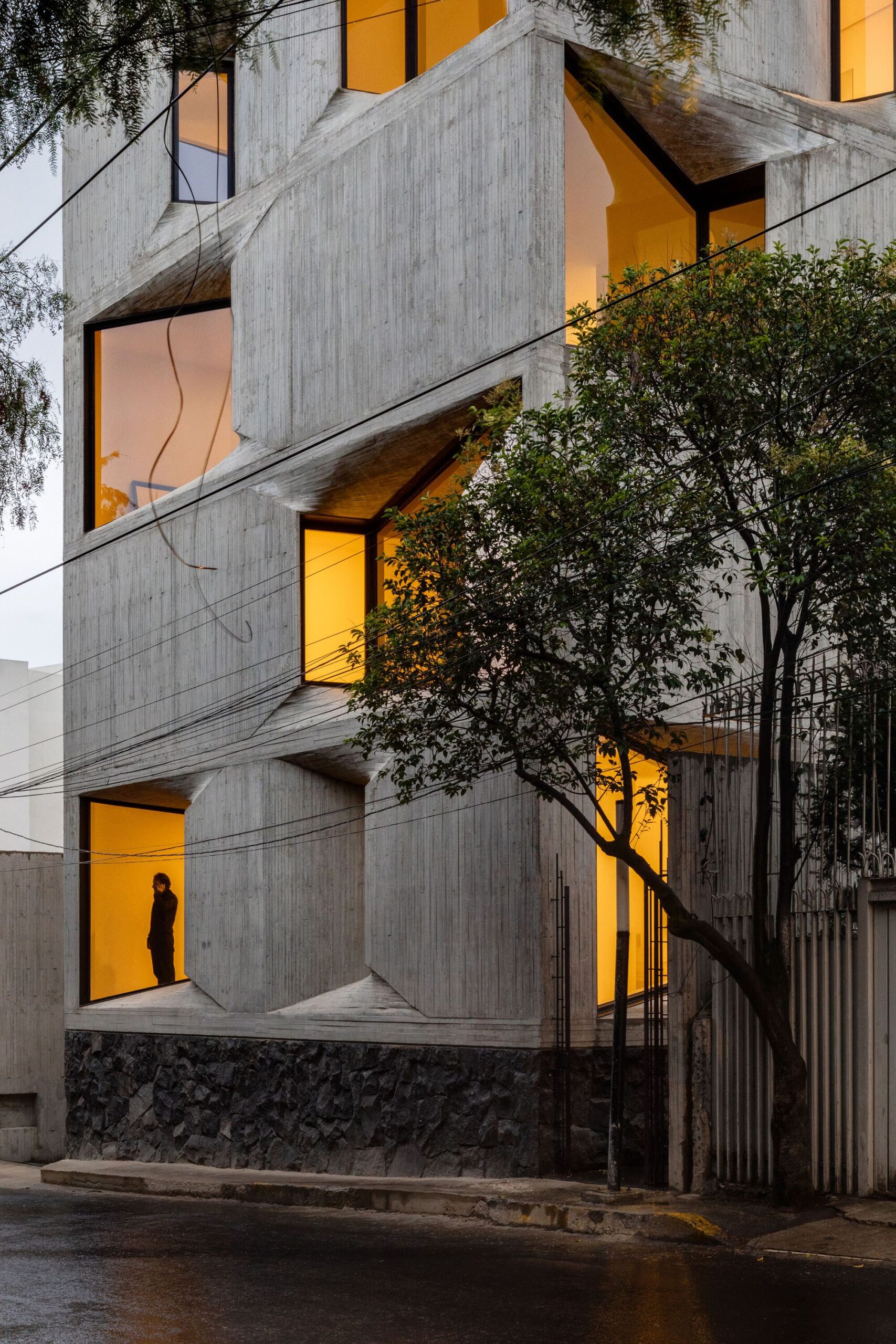
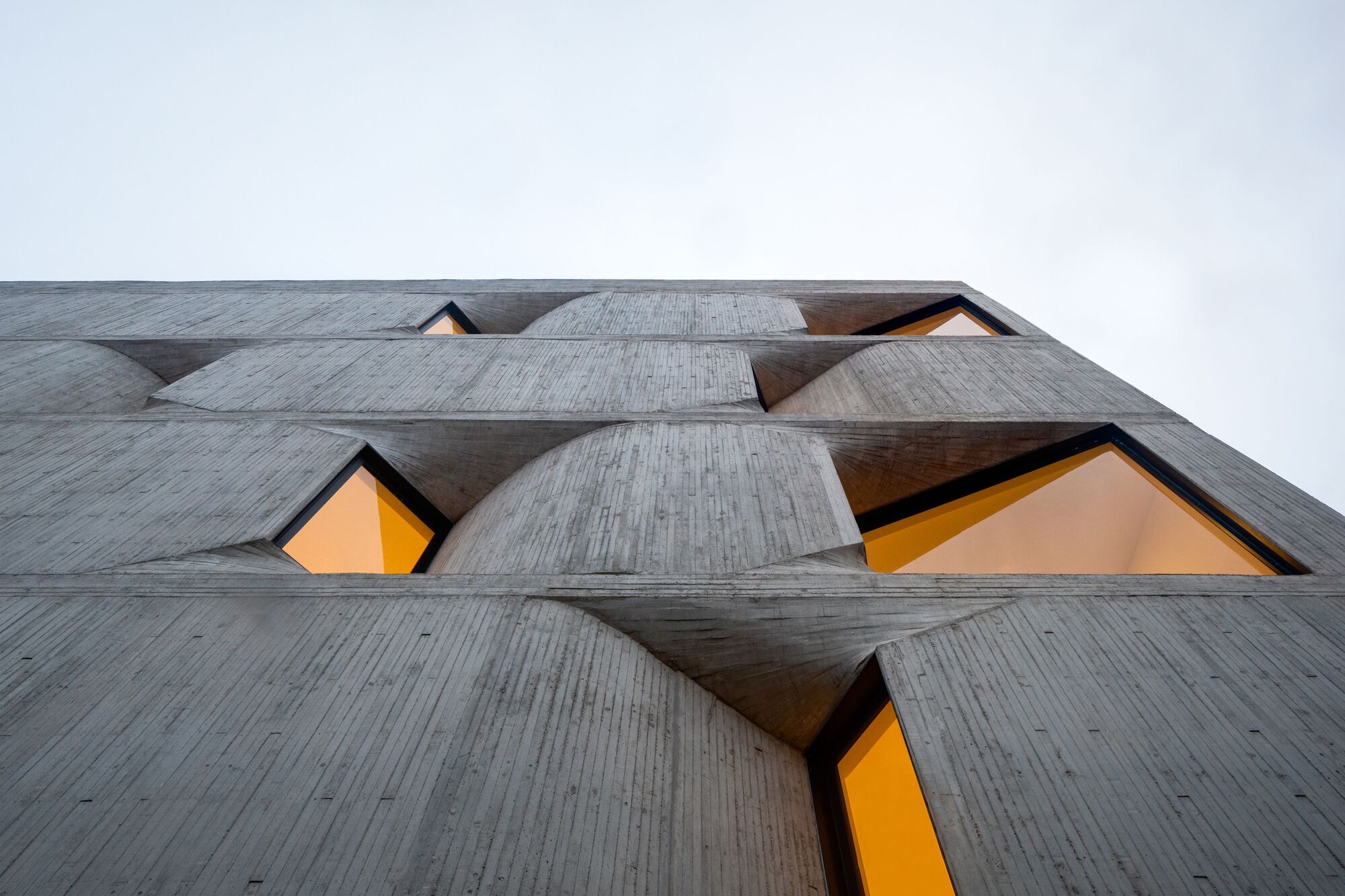
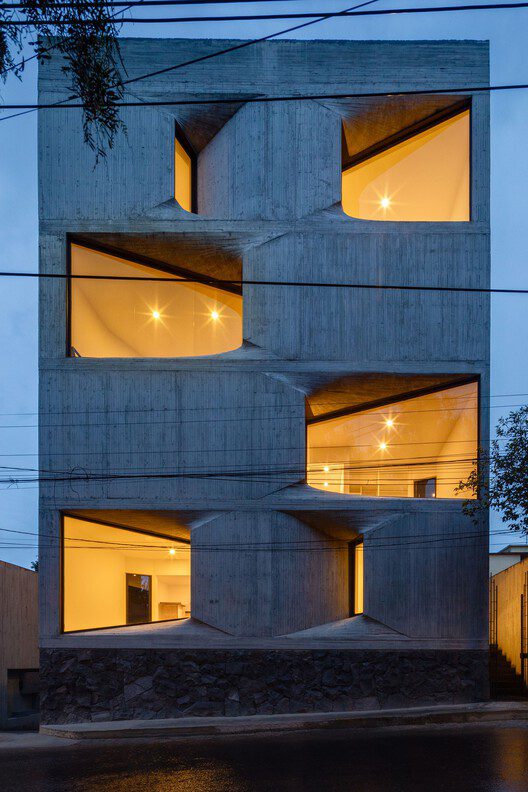
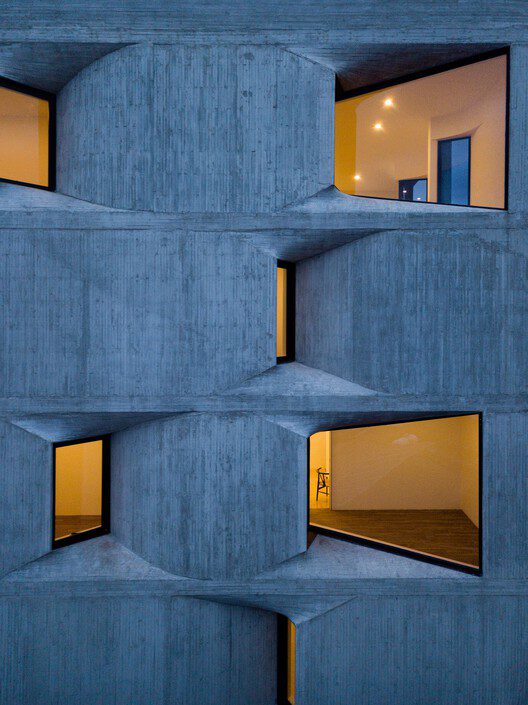
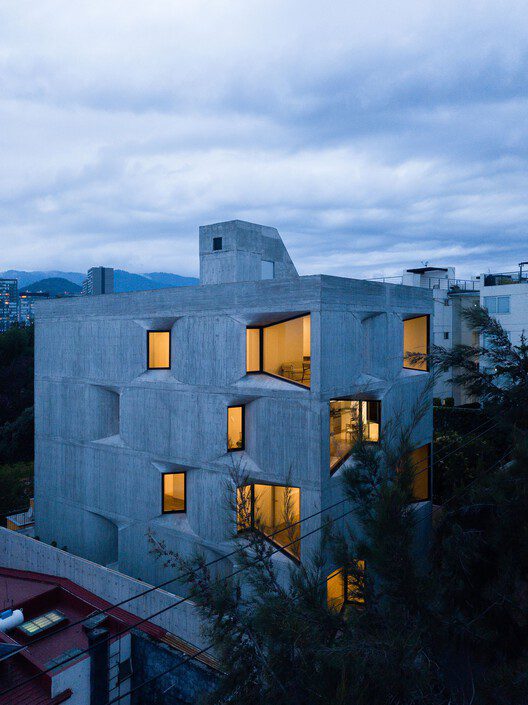
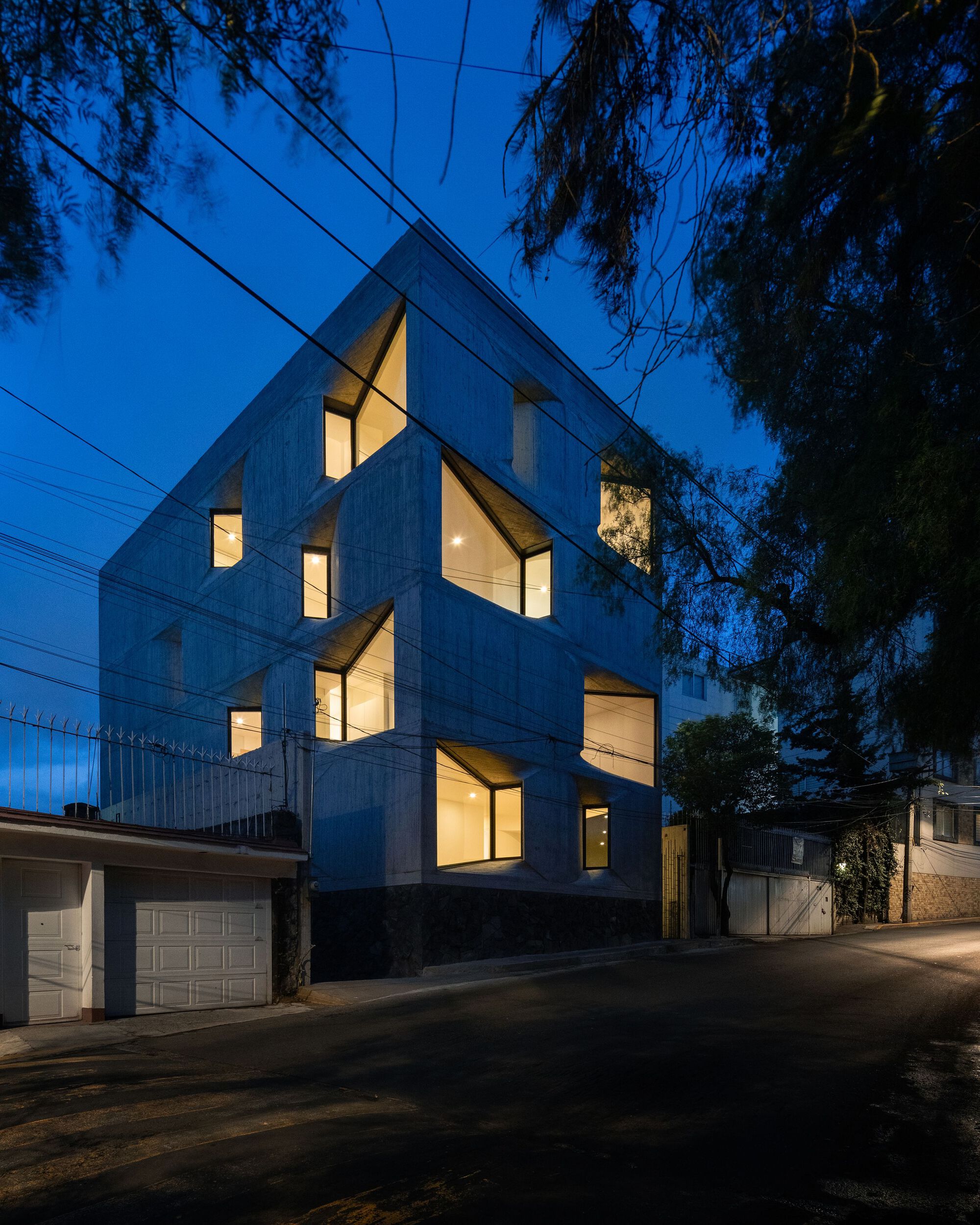
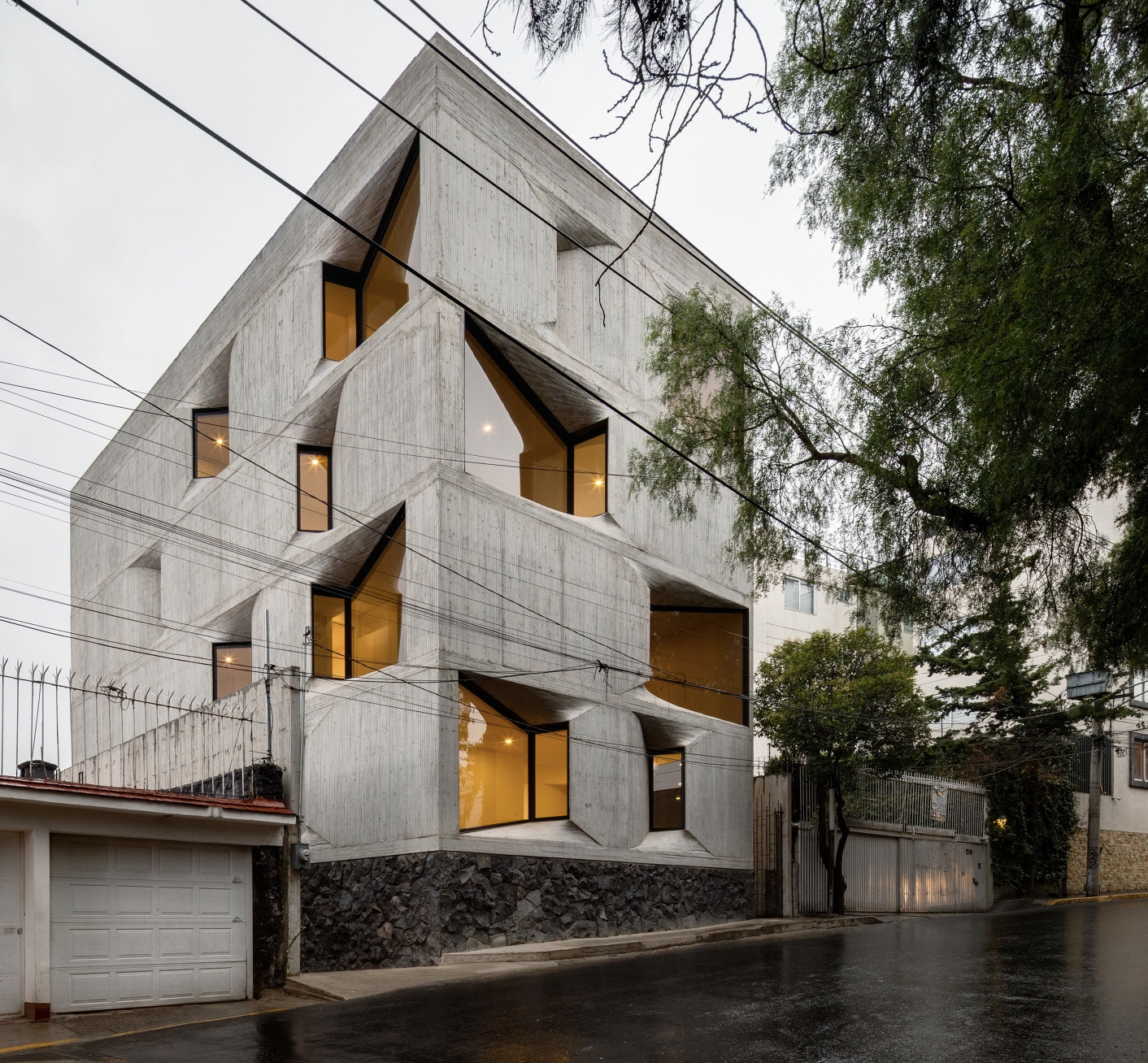
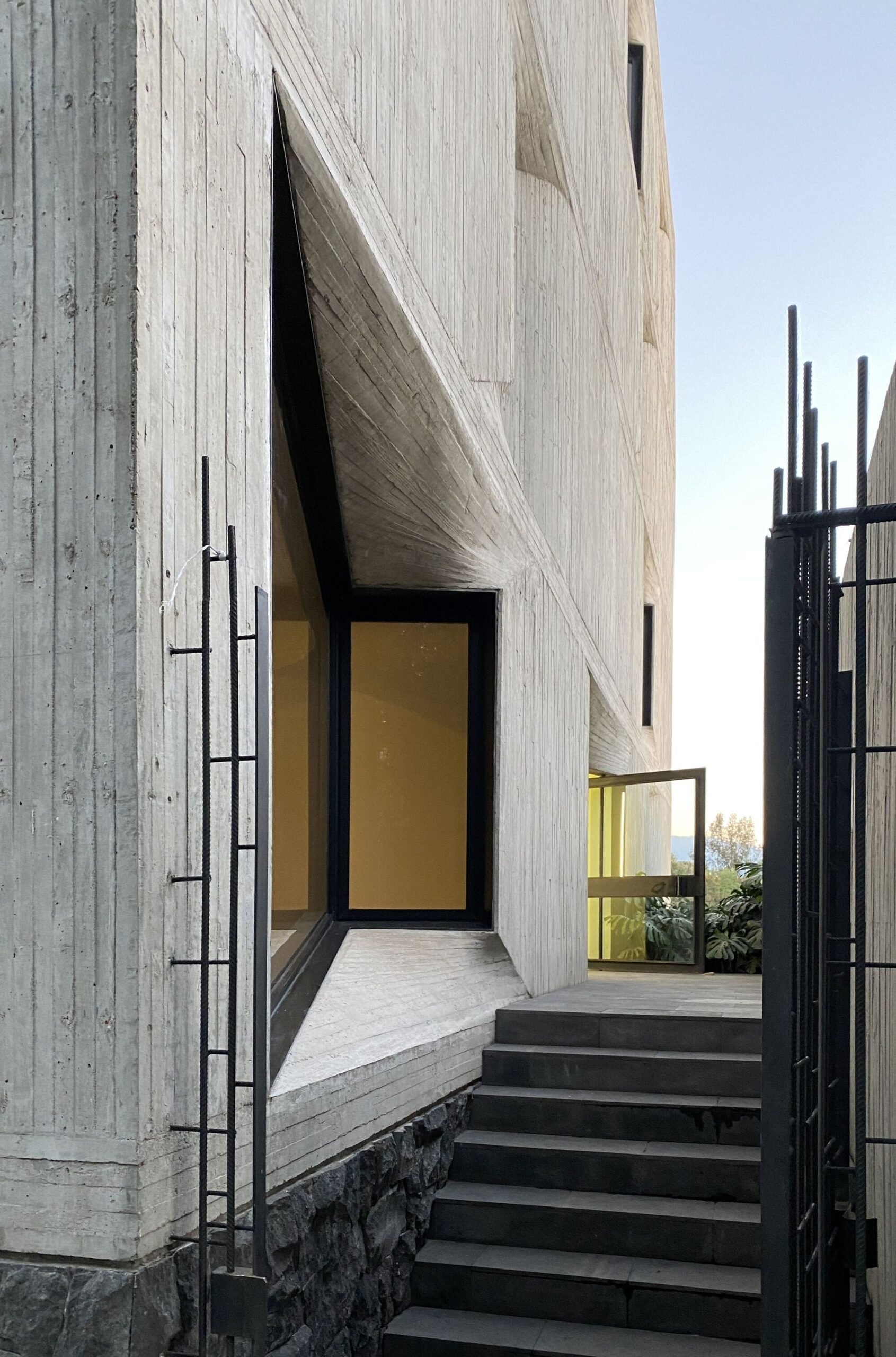
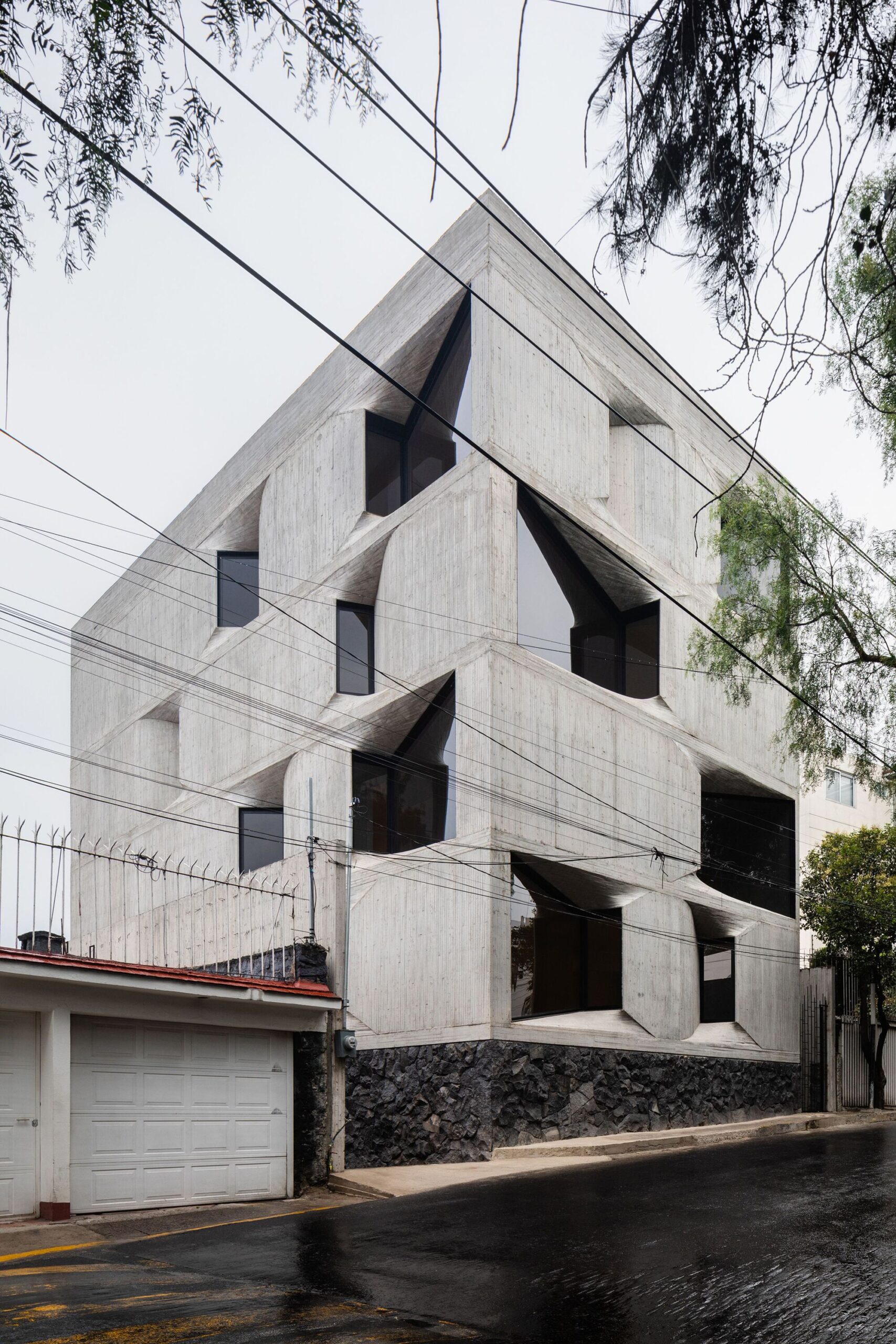
The site strategy led the two side elevations towards the lot lines, making standard windows undesirable. To allow light, views, and ventilation on all sides of the building, a scheme was developed to manipulate the windows into something familiar but subtly different. Rectangular windows rotate on the building’s façade, resulting in two ruled surfaces at the top and bottom and transforming the window into an inverted trapezoidal bay.
© Alexandra Bové
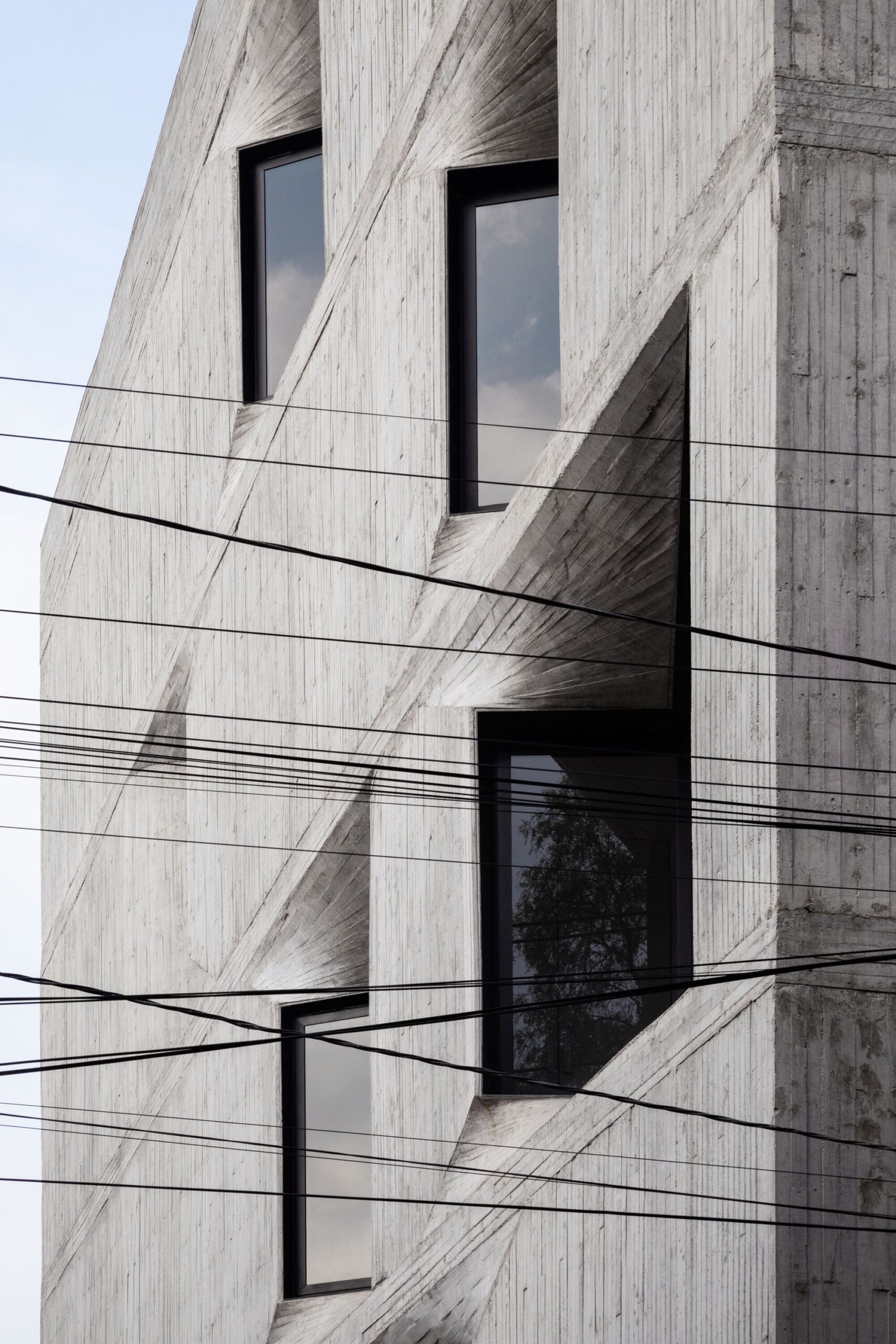
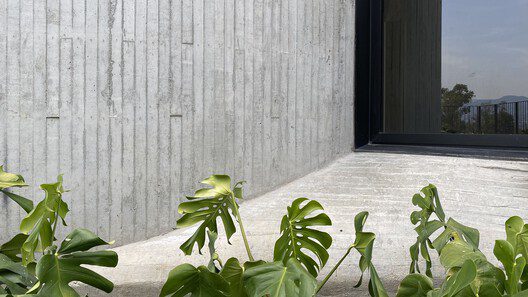
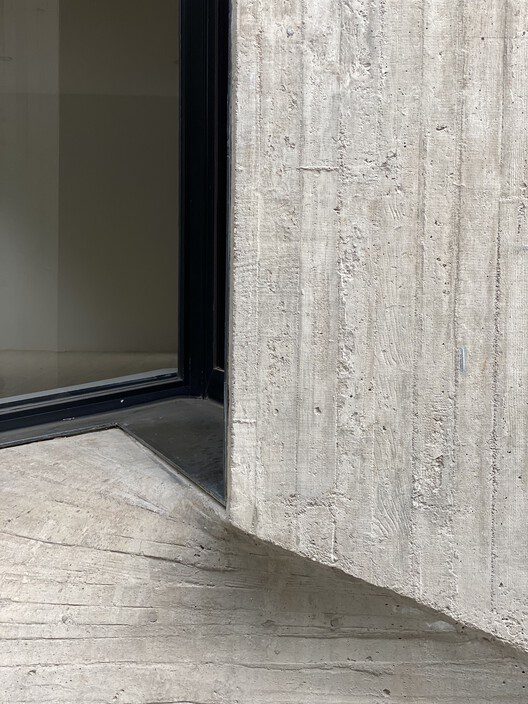
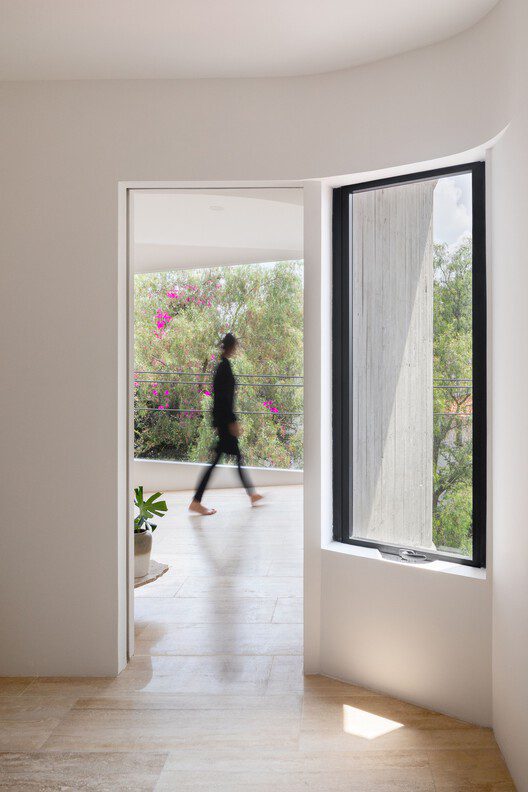
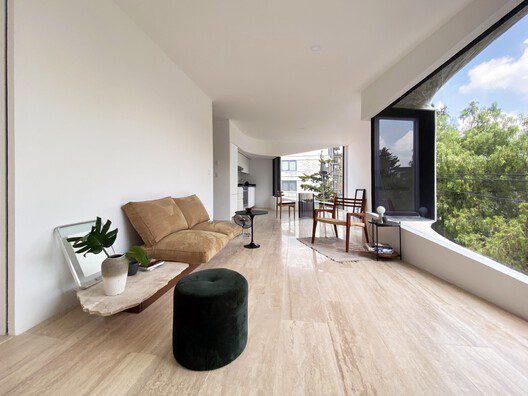
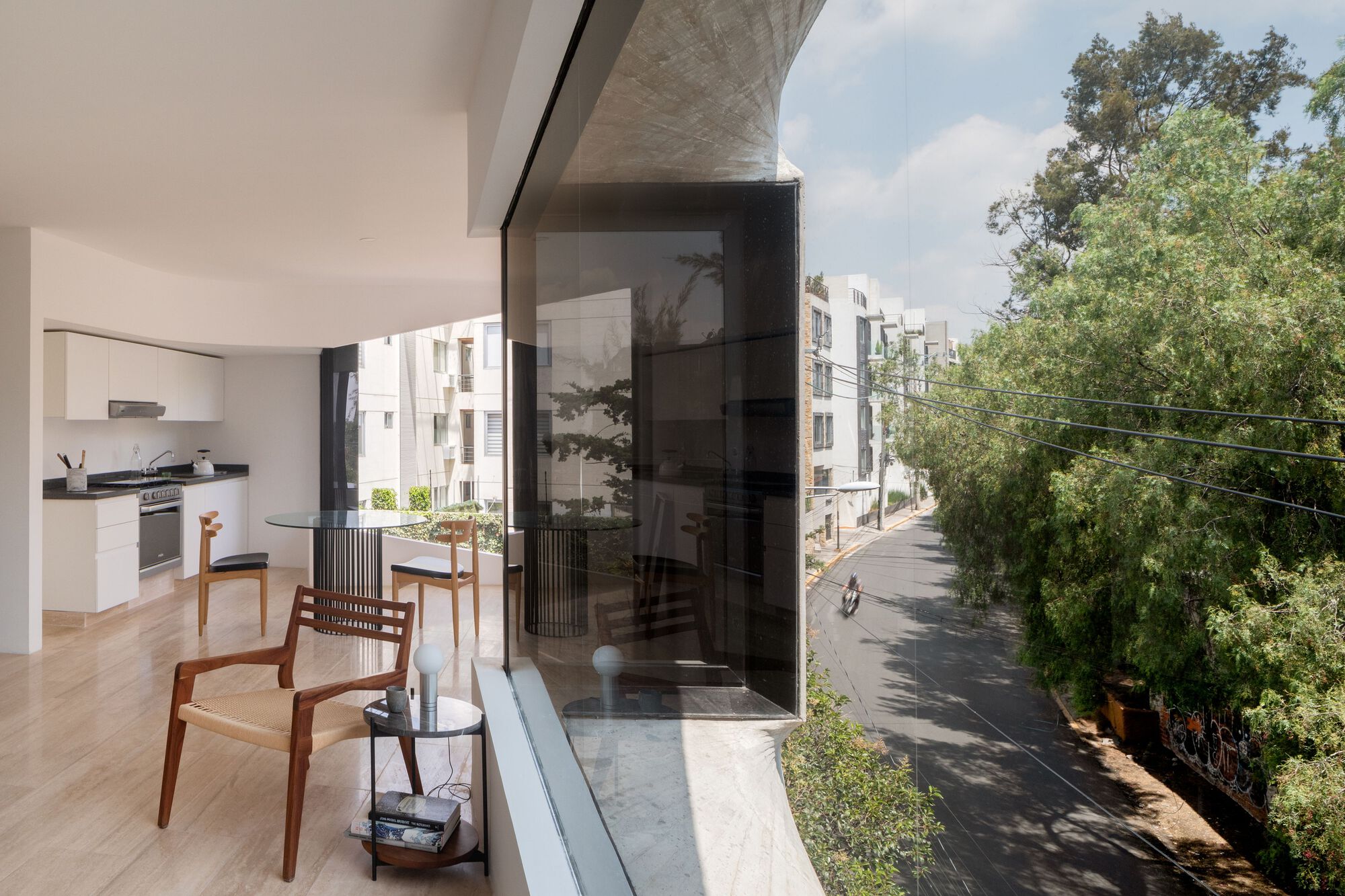
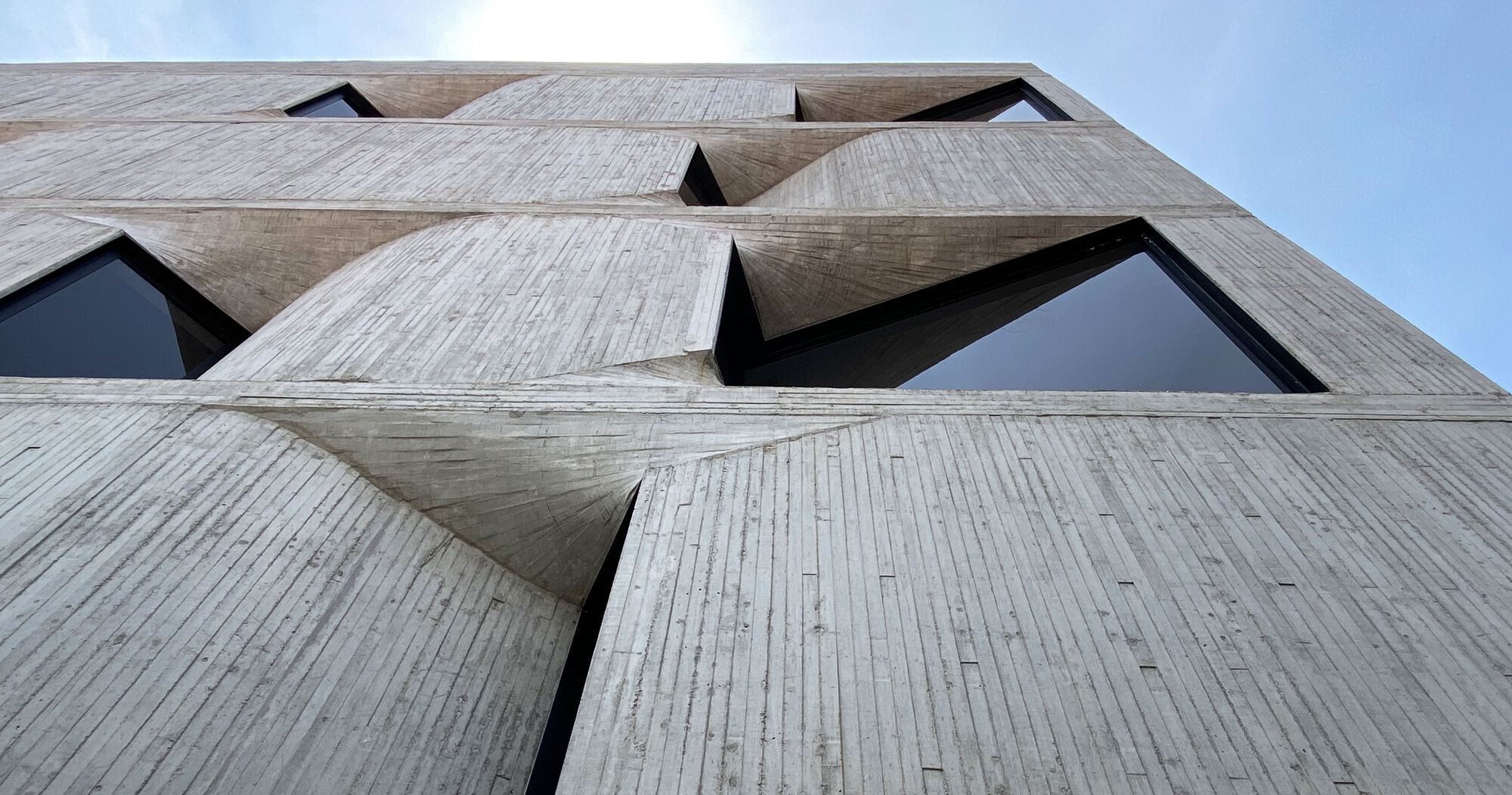
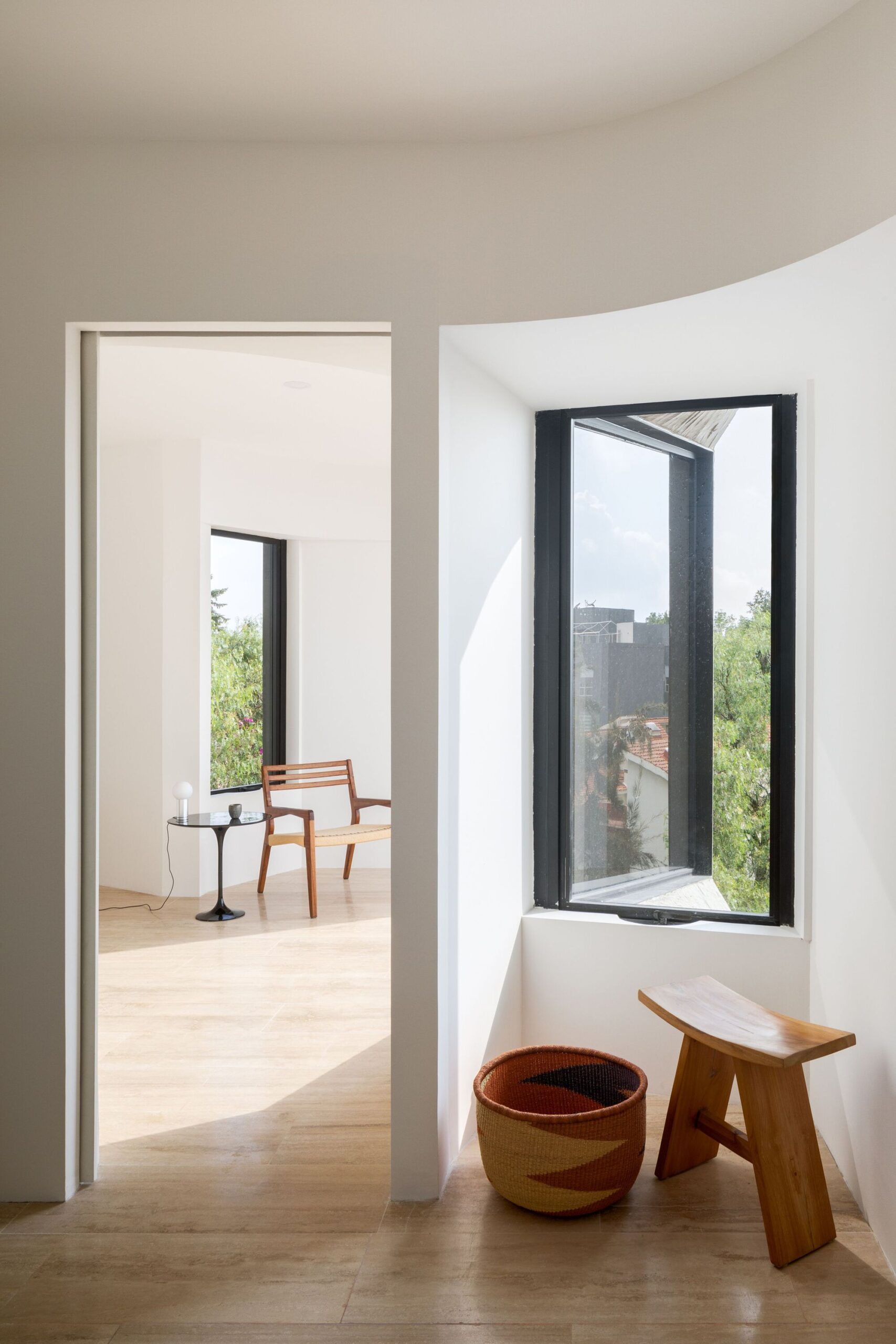
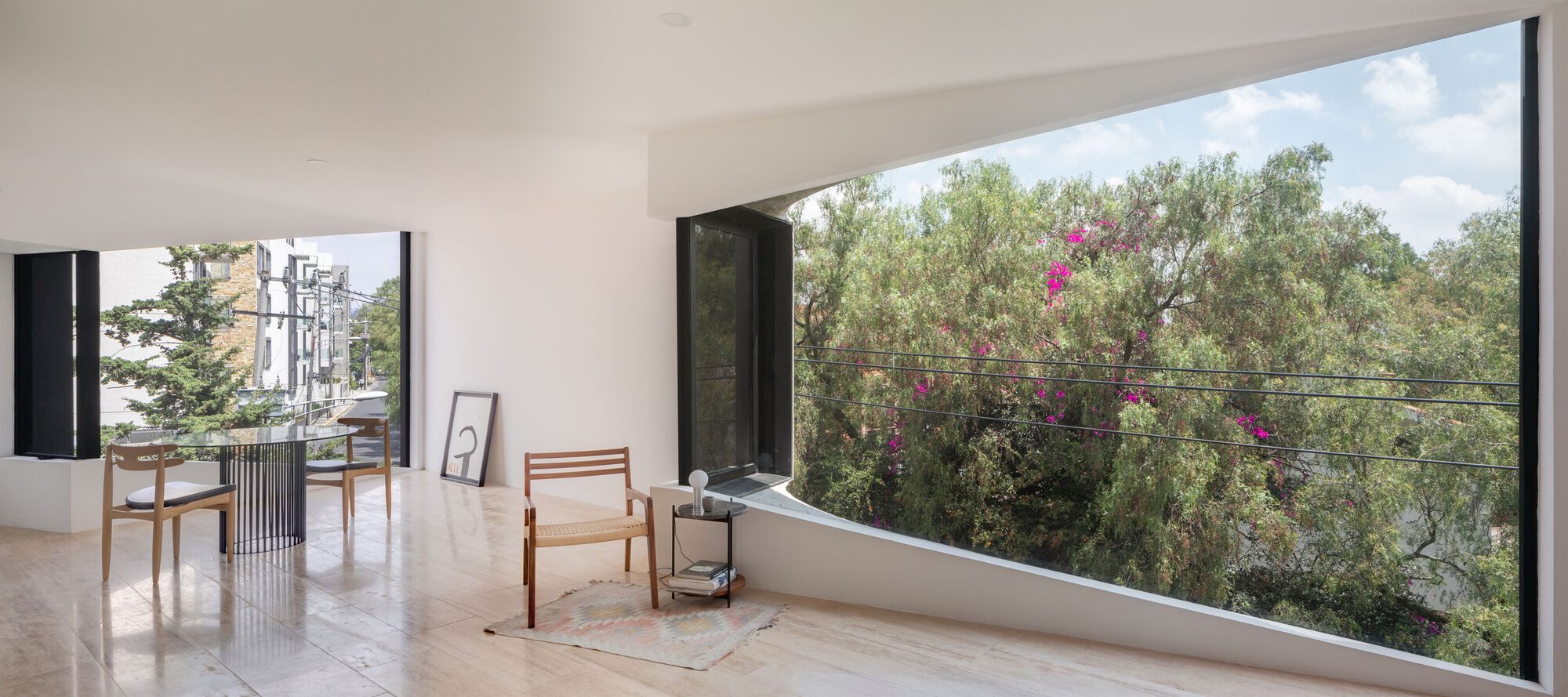
As the windows rotate inward, the slabs appear to pull at the head and sill. This results in a façade that is extremely forceful in its flatness and also a dynamic bas-relief of soft, undulating shadows. These windows also produced different interior moments as the changing façade matched the design of the standardized unit. Views from the interior became small events of forced oblique perspective as one looked both outward and to the street at the same time, making each unit unique as it approached the enclosure.
© Alexandra Bové
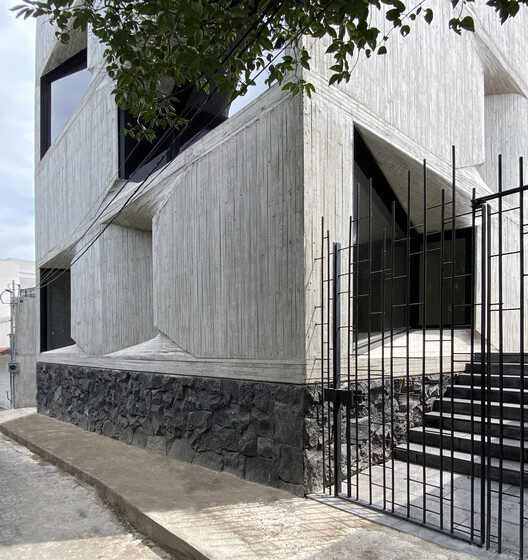
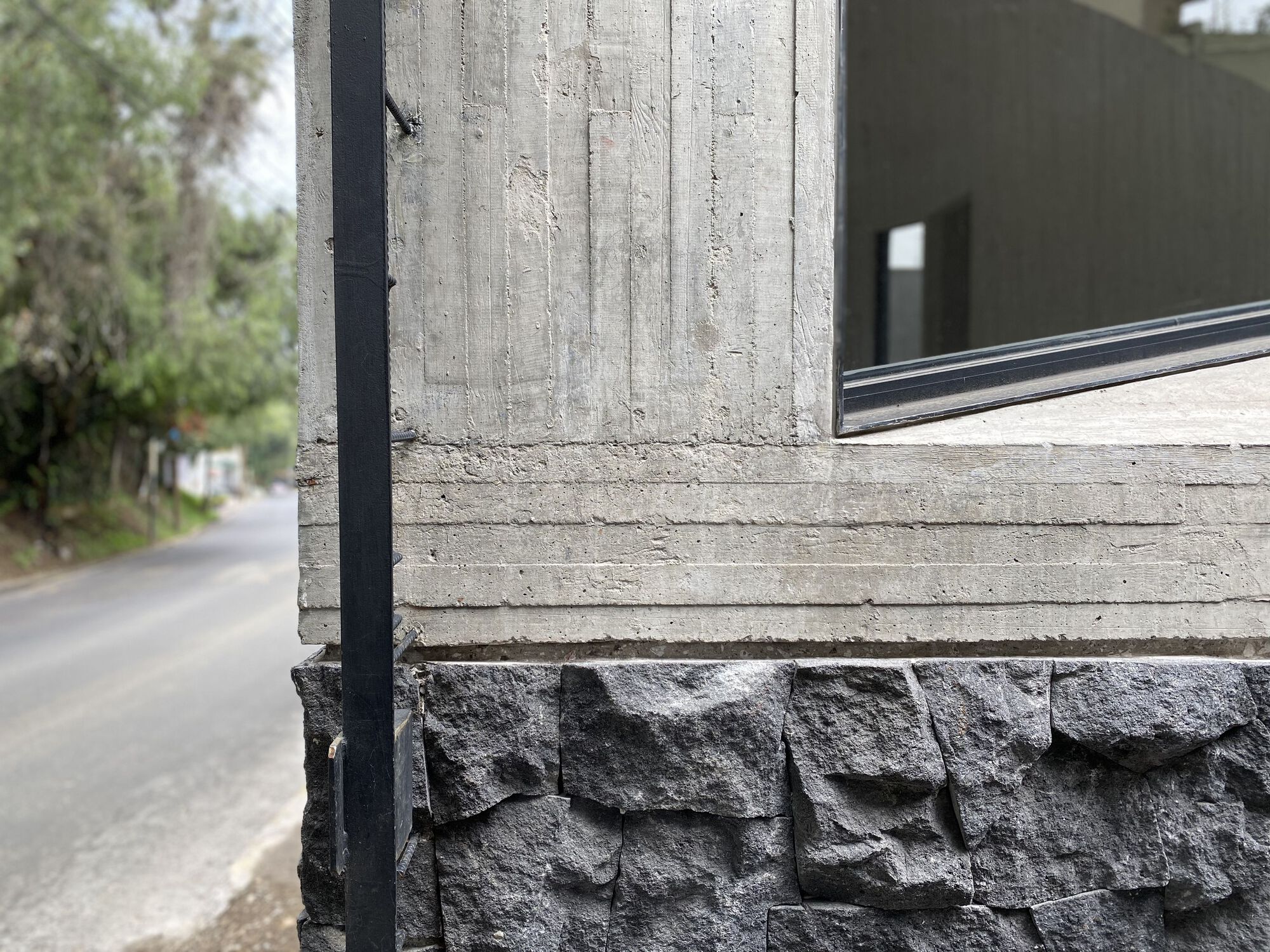
The design process for the openings was guided by both iterative digital models and research into the history of ruled concrete surfaces in Latin American architecture. Several large-scale models allowed us to find a tectonic articulation that used board-formed concrete as an integral expression of the opening concept.
© Rafael Gamo
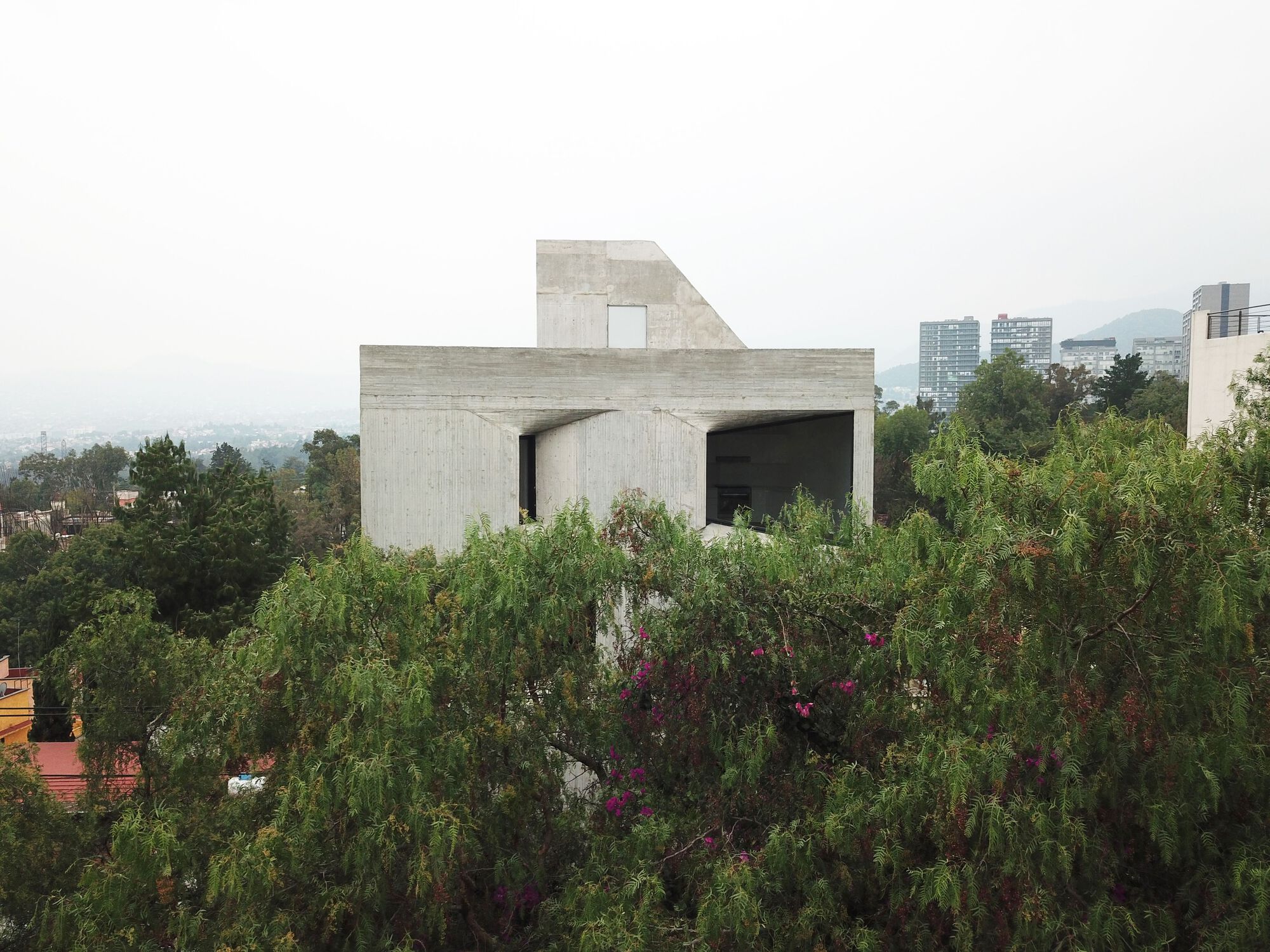
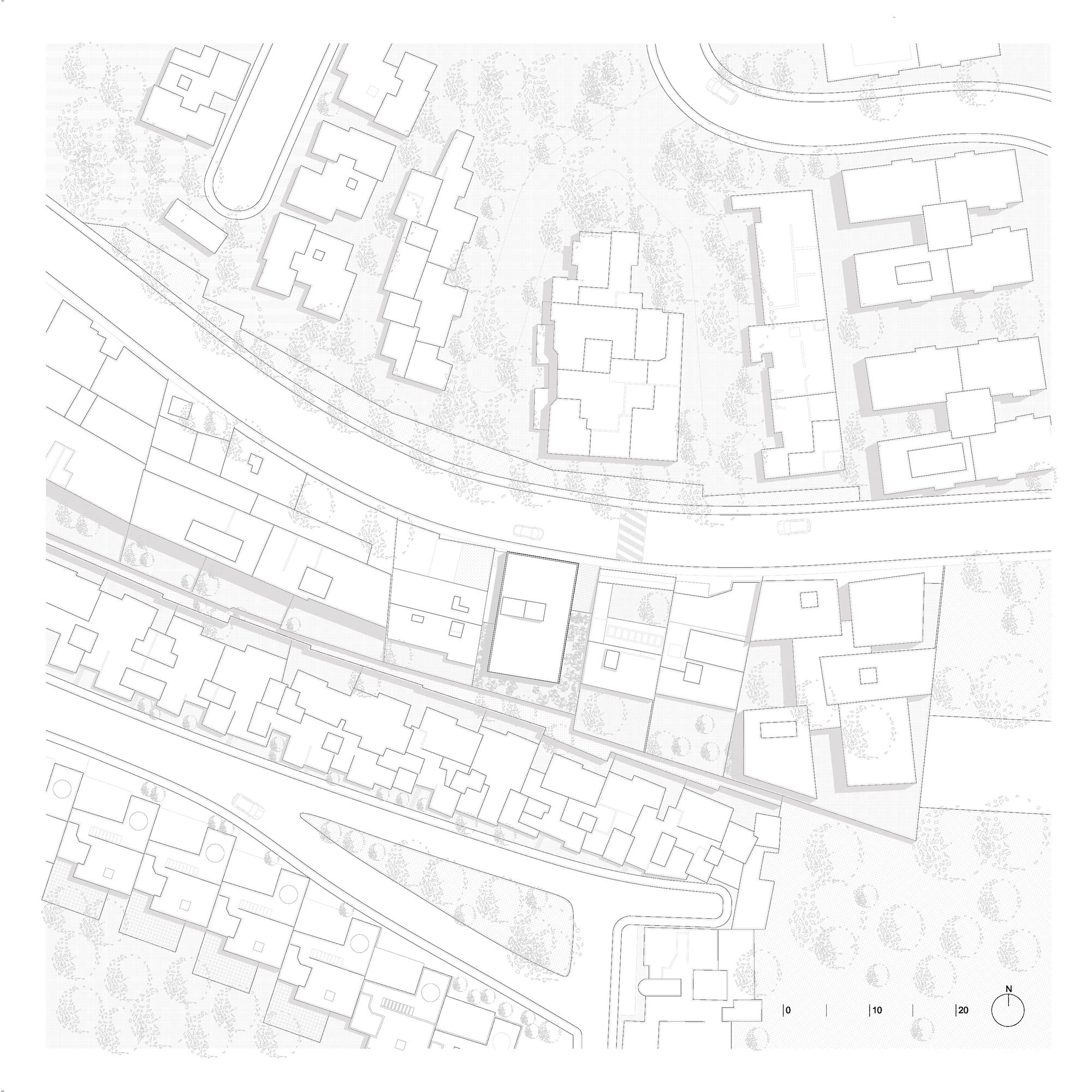
The final methodology used traditional construction techniques combined with reusable fiberglass casting modules to produce an alternative expression between digital technology and construction traditions. The lot constraints, typical of this urban neighborhood, drove the initial design decisions. The sloped, mid-block site is sandwiched between two existing single-family homes, both with the potential for accommodating vertical construction in the future.
© Rafael Gamo
With this in mind, Young & Ayata + Michan Architecture made the decision to reduce the building footprint and side walls of the lot, leaving space for windows on all four sides. Additionally, with the distance of the building to the property lines, an additional level could be added, as a variation to the code, thus maximizing the square footage and number of apartments.
© Rafael Gamo
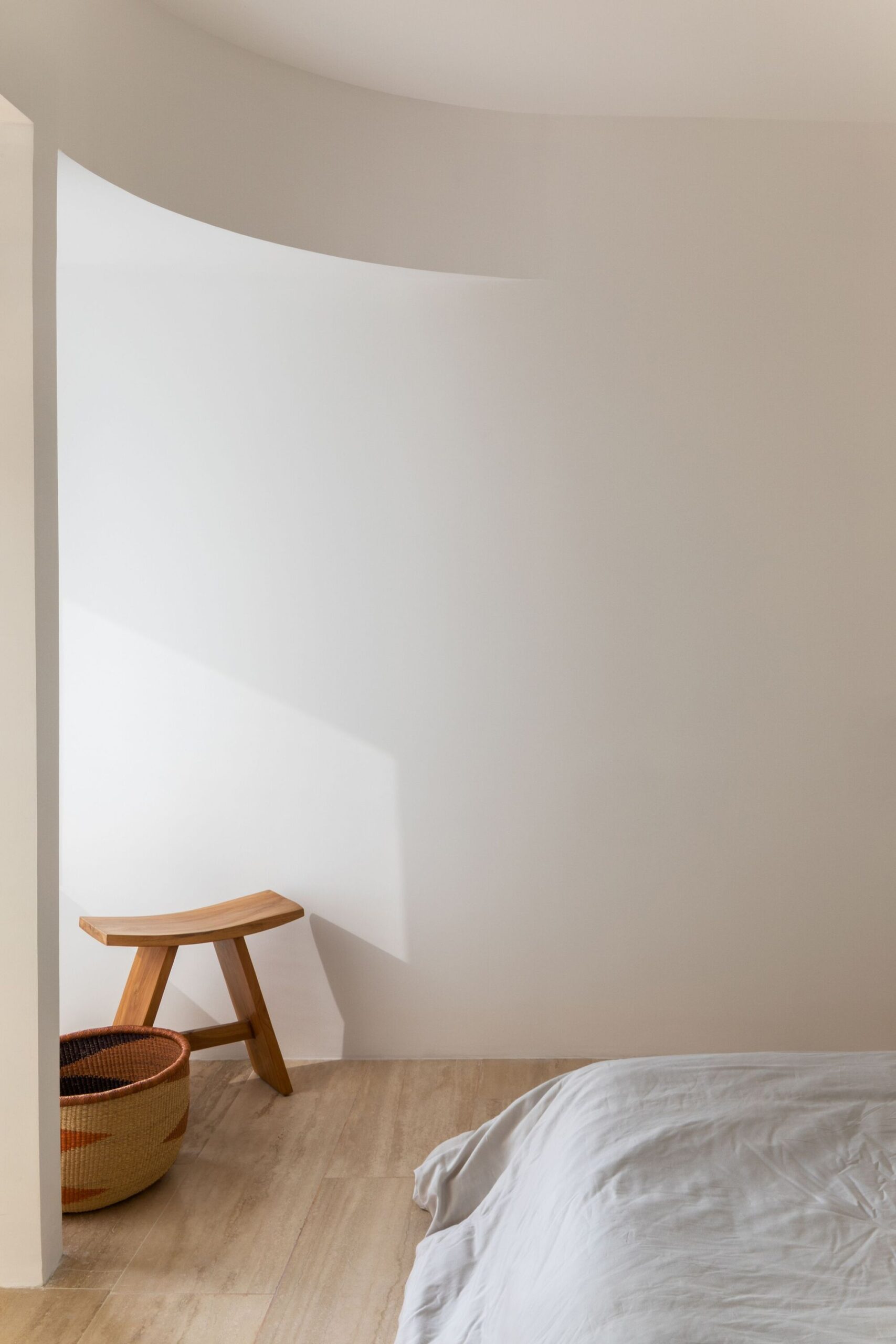
This slightly reduced footprint allowed for the use of recessed or punched windows, which became the feature of the building: 22 rectangular openings in five different sizes rotate on the facade, resulting in a mosaic of inverted and regulated trapezoids on all sides. From the interior, these windows create a variety of views and perspectives as the changing facade blends with standardized unit designs. This opening strategy determined the main building material: cast-in-place concrete, which produces a regulated and striated effect. The textured exterior, in dark gray, contrasts with a brighter and softer interior palette, where wood floors and polished limestone join white-painted walls, white fixtures, and daylight entry. The undulating openings create a fluid and floating bridge between the two ends.
Project Info
Architects: Michan Architecture, Young & Ayata
Country: Mexico, Ciudad de México
Area: 960 m²
Year: 2020
Photographs: Rafael Gamo, Alexandra Bové, Rafael Buzali
Manufacturers Holcim, Alsam Acabados, Aluvisa: Holcim
Lead Architects: Kutan Ayata, Michael Young, Isaac Michan Daniel, Narciso Martinez, Sina Ozbudun, Jorge Sanchez, Omar Acevedo