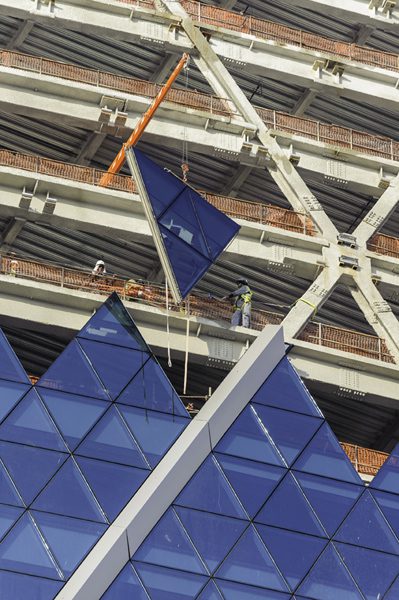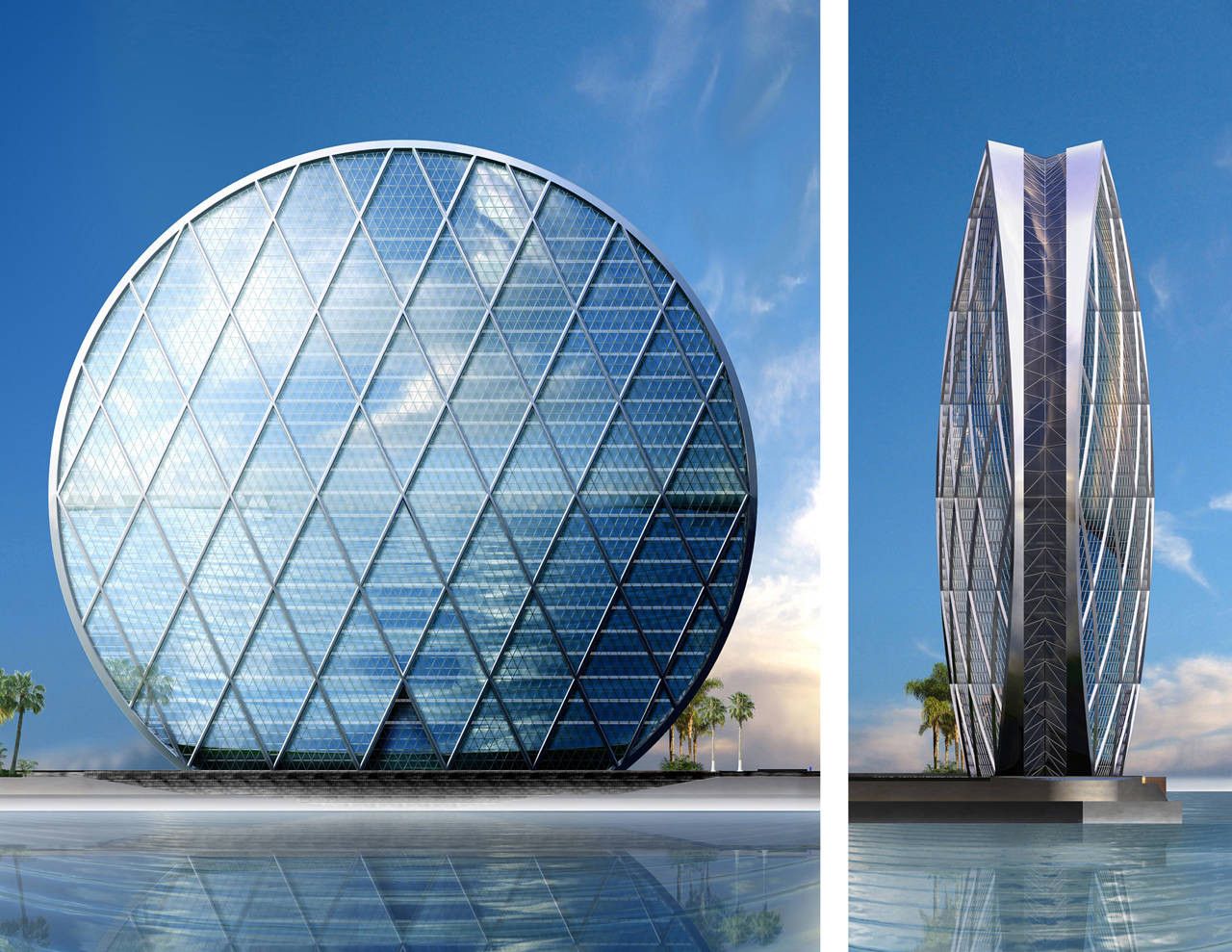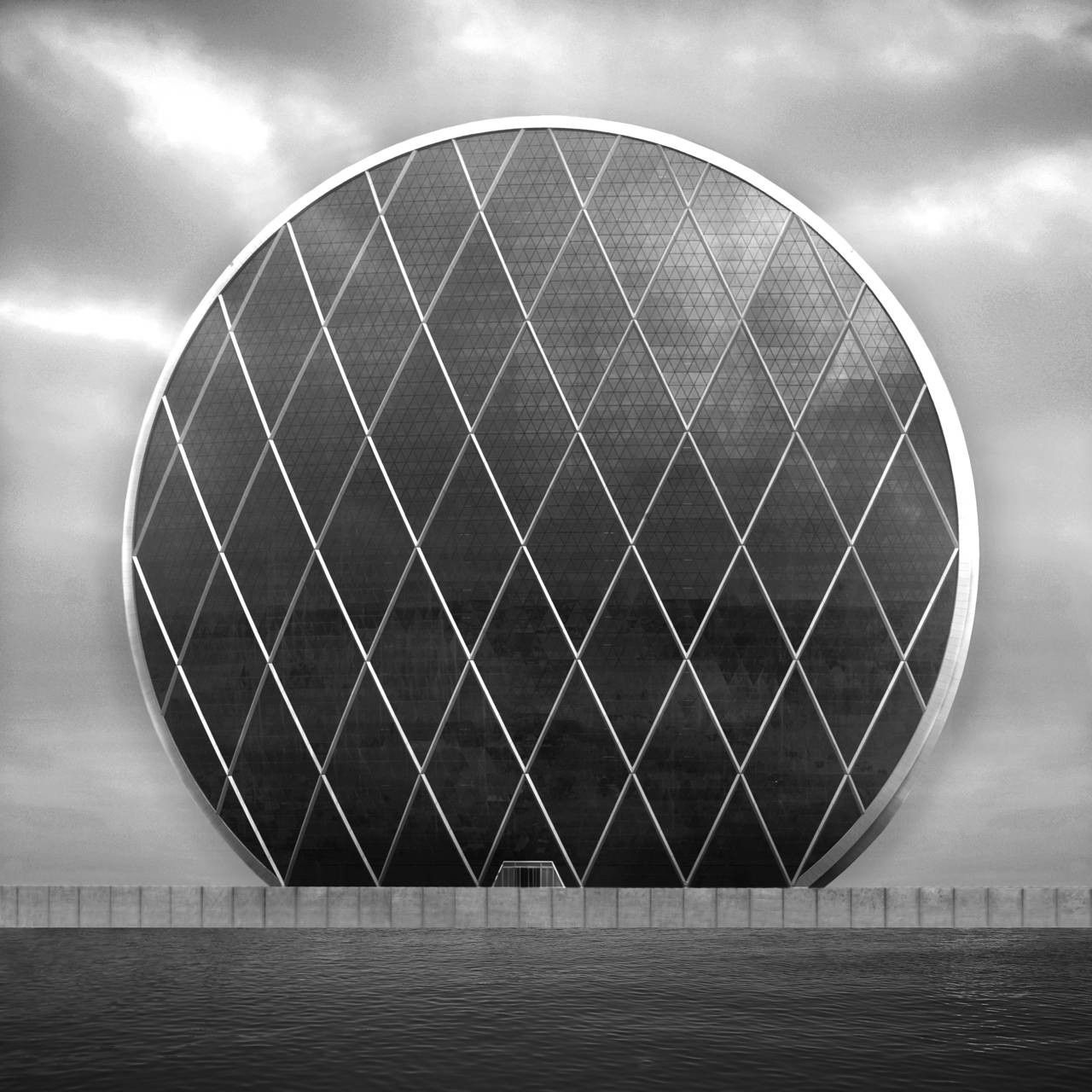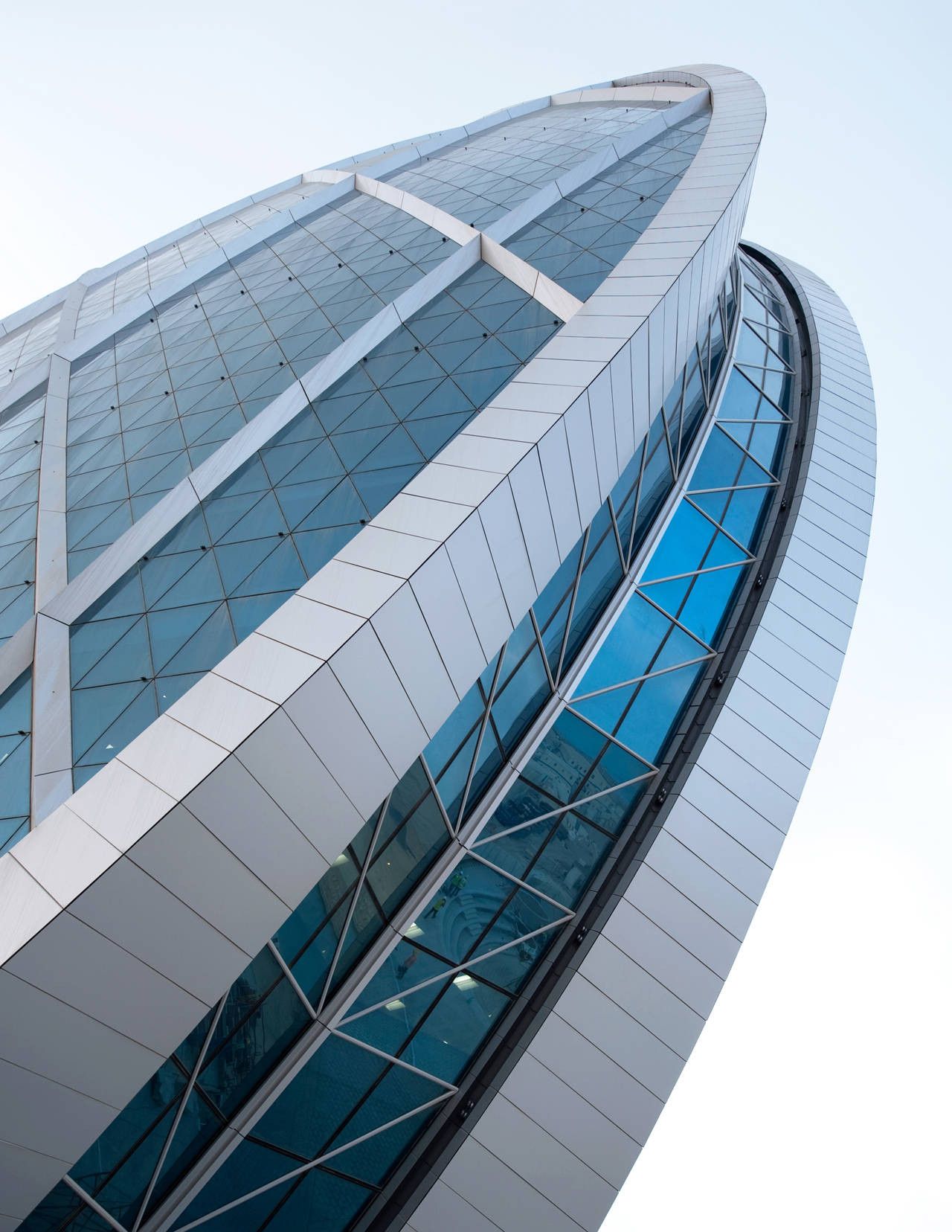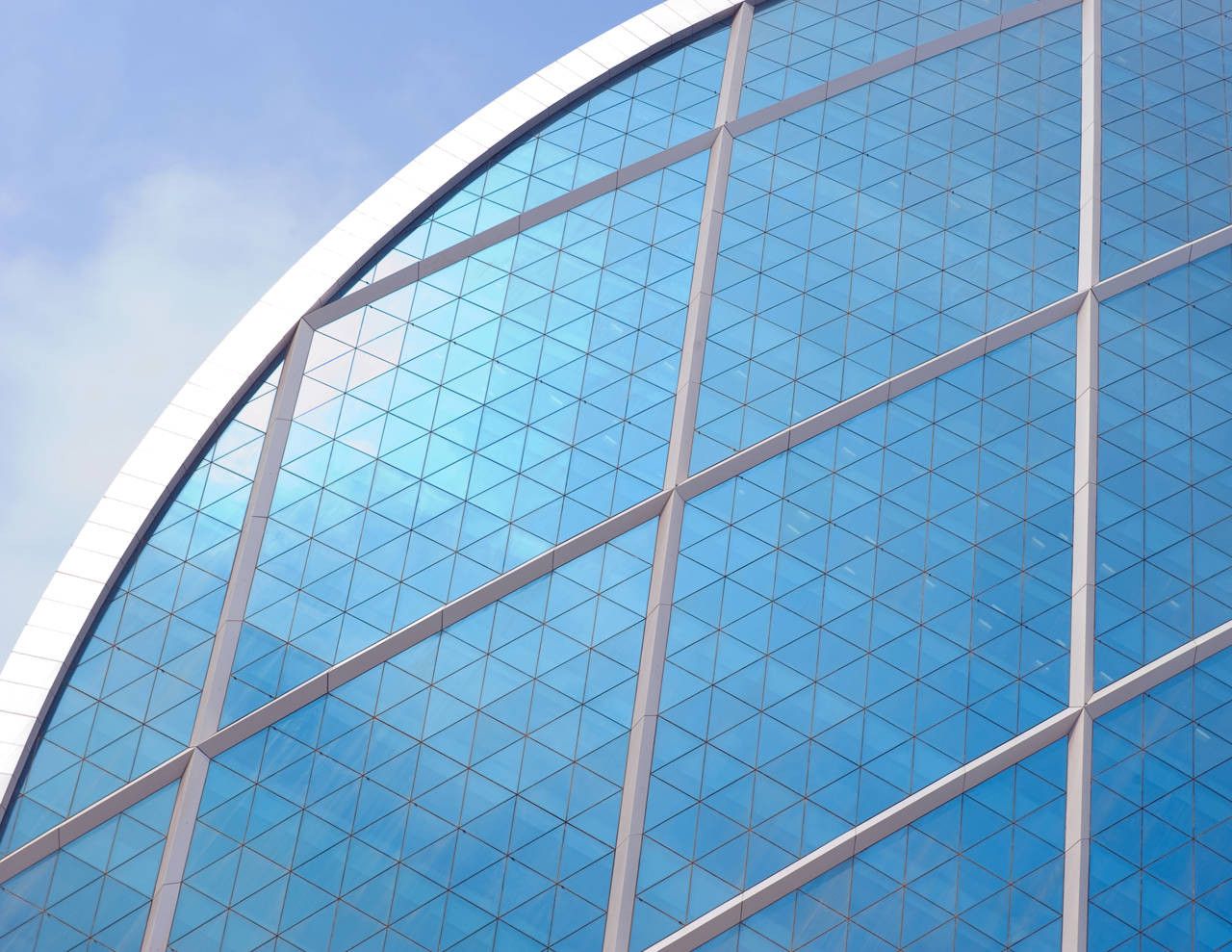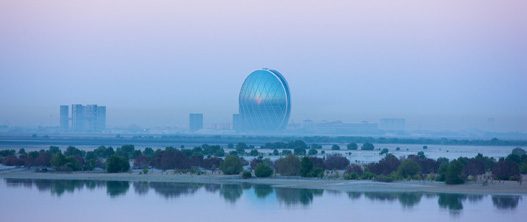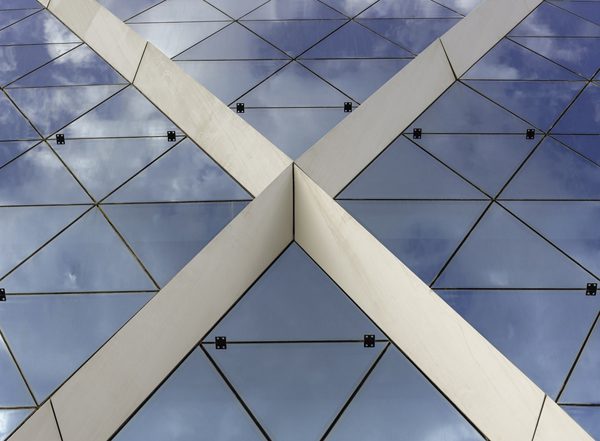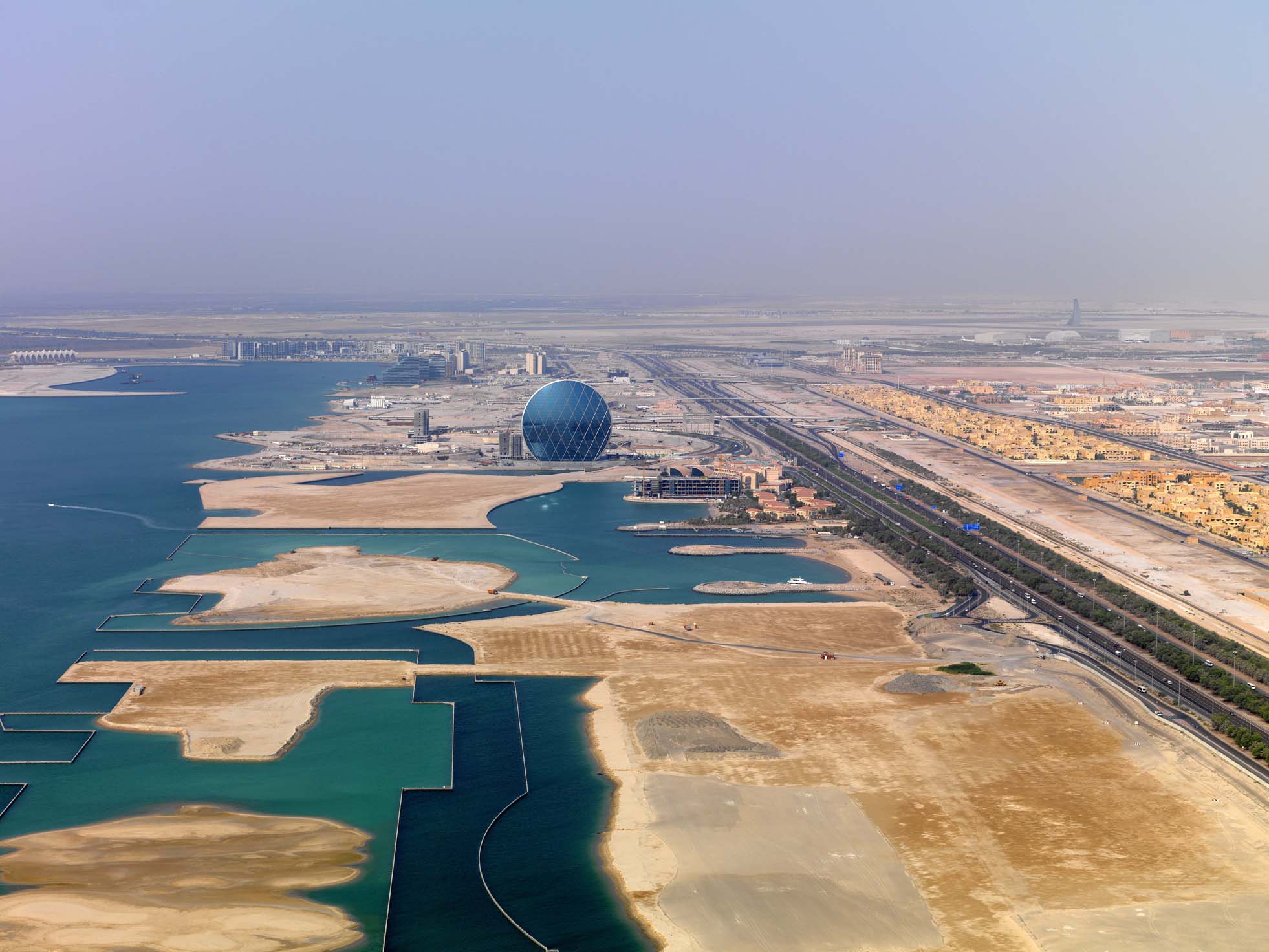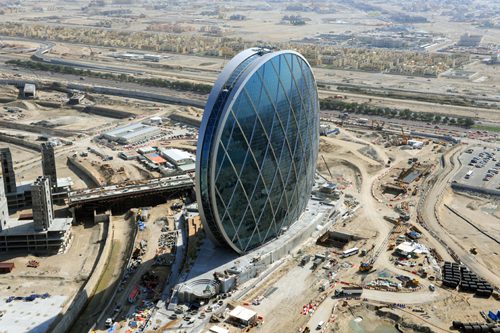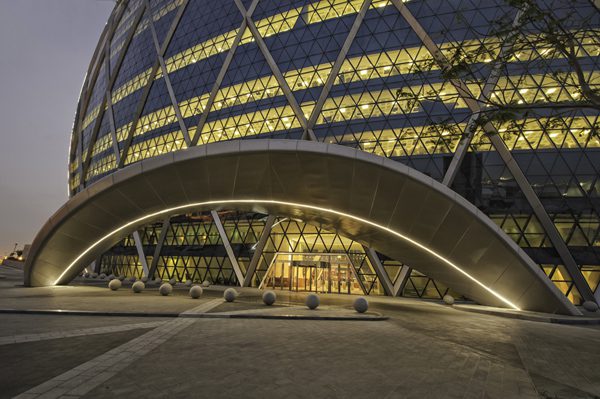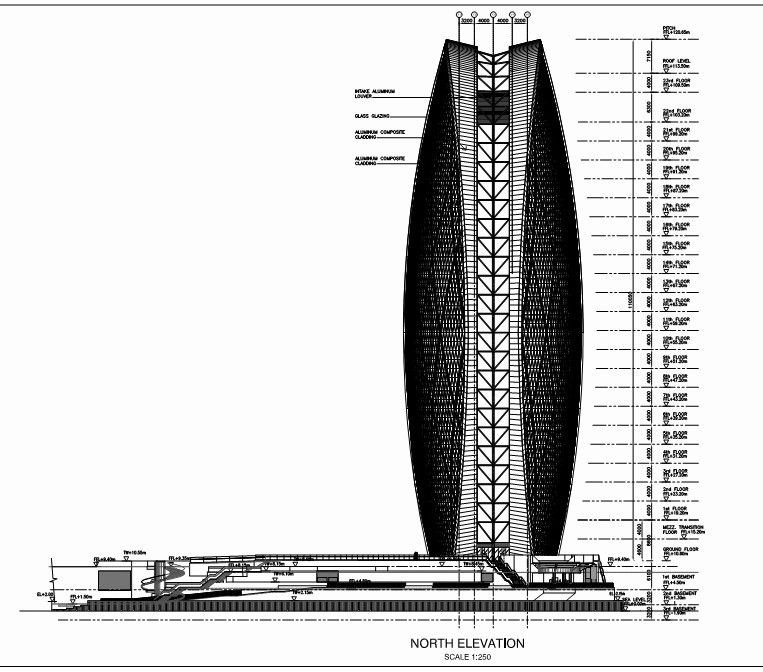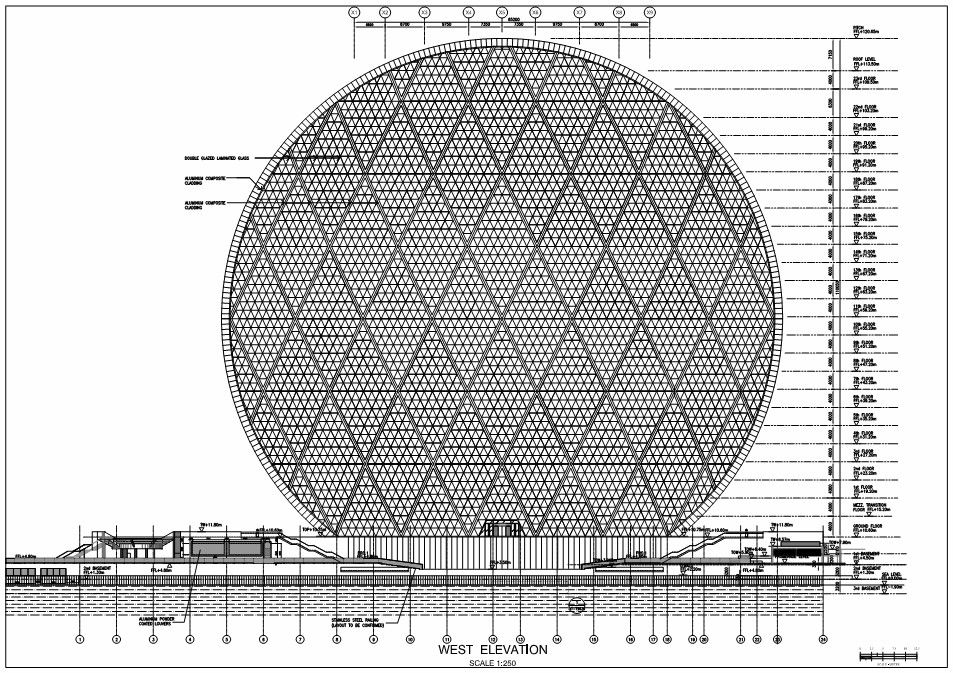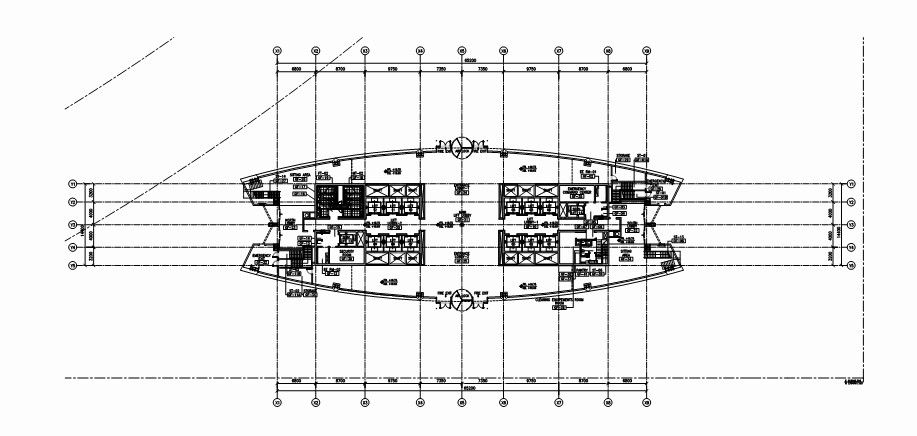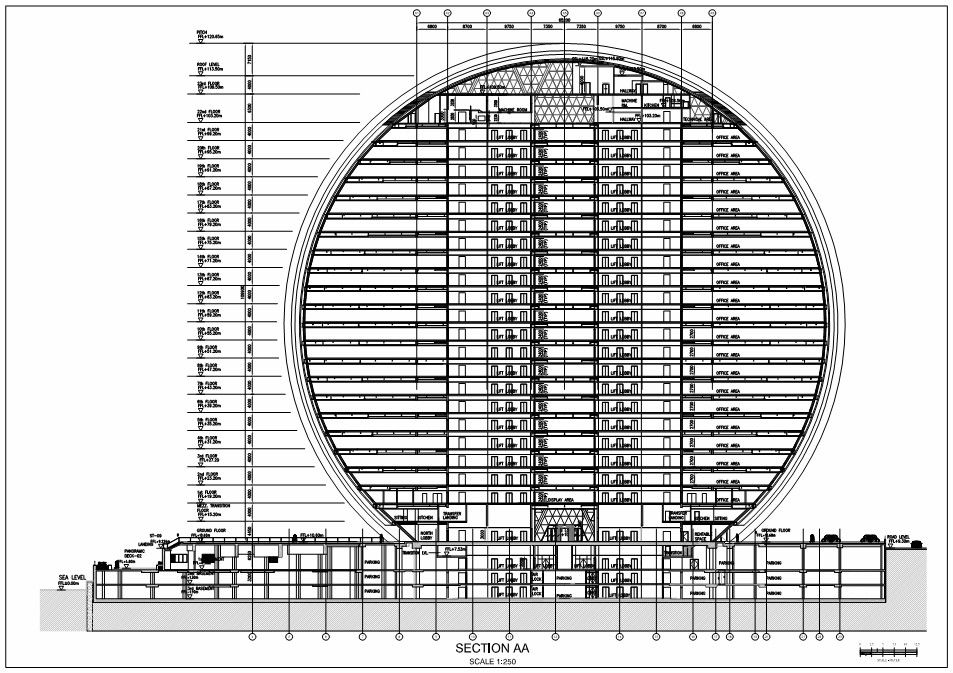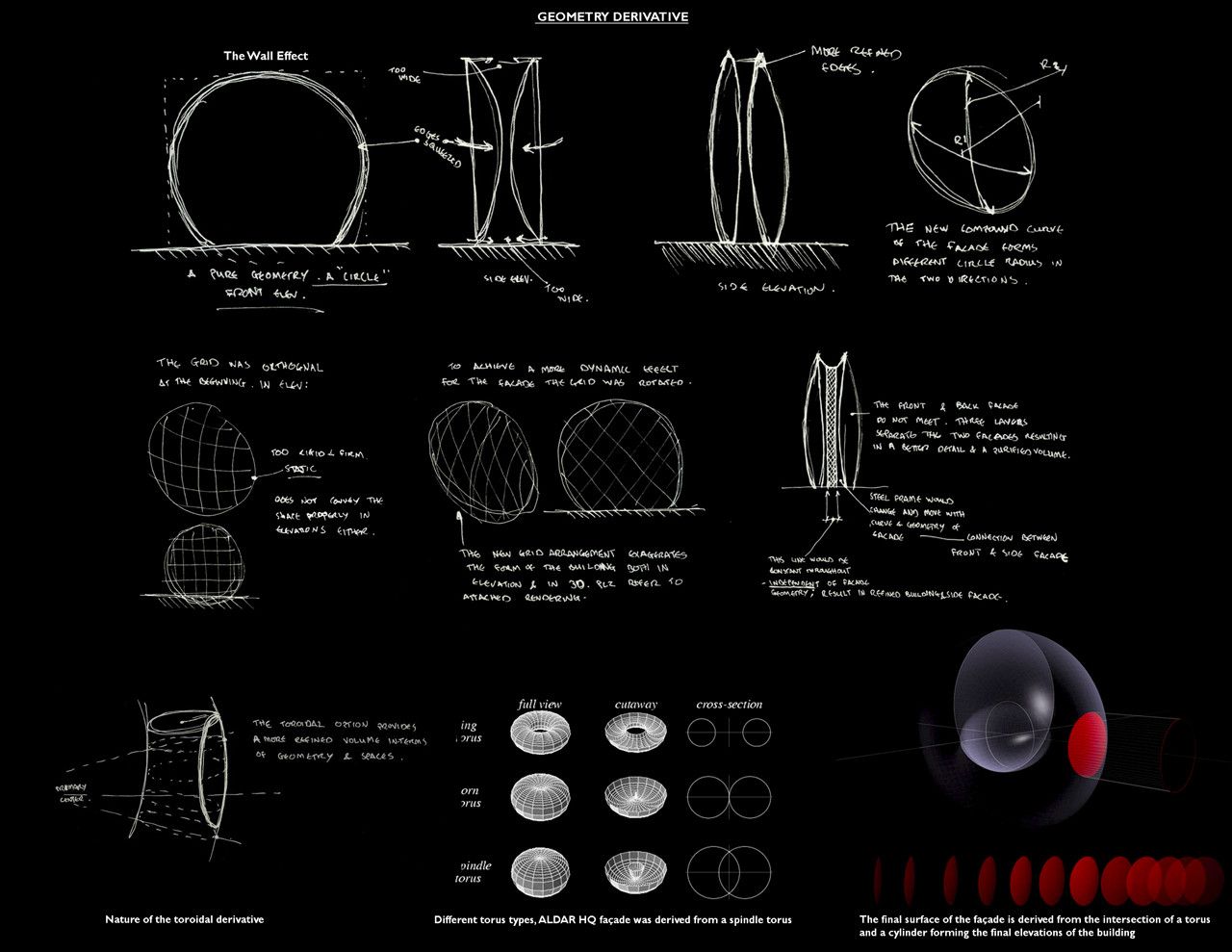


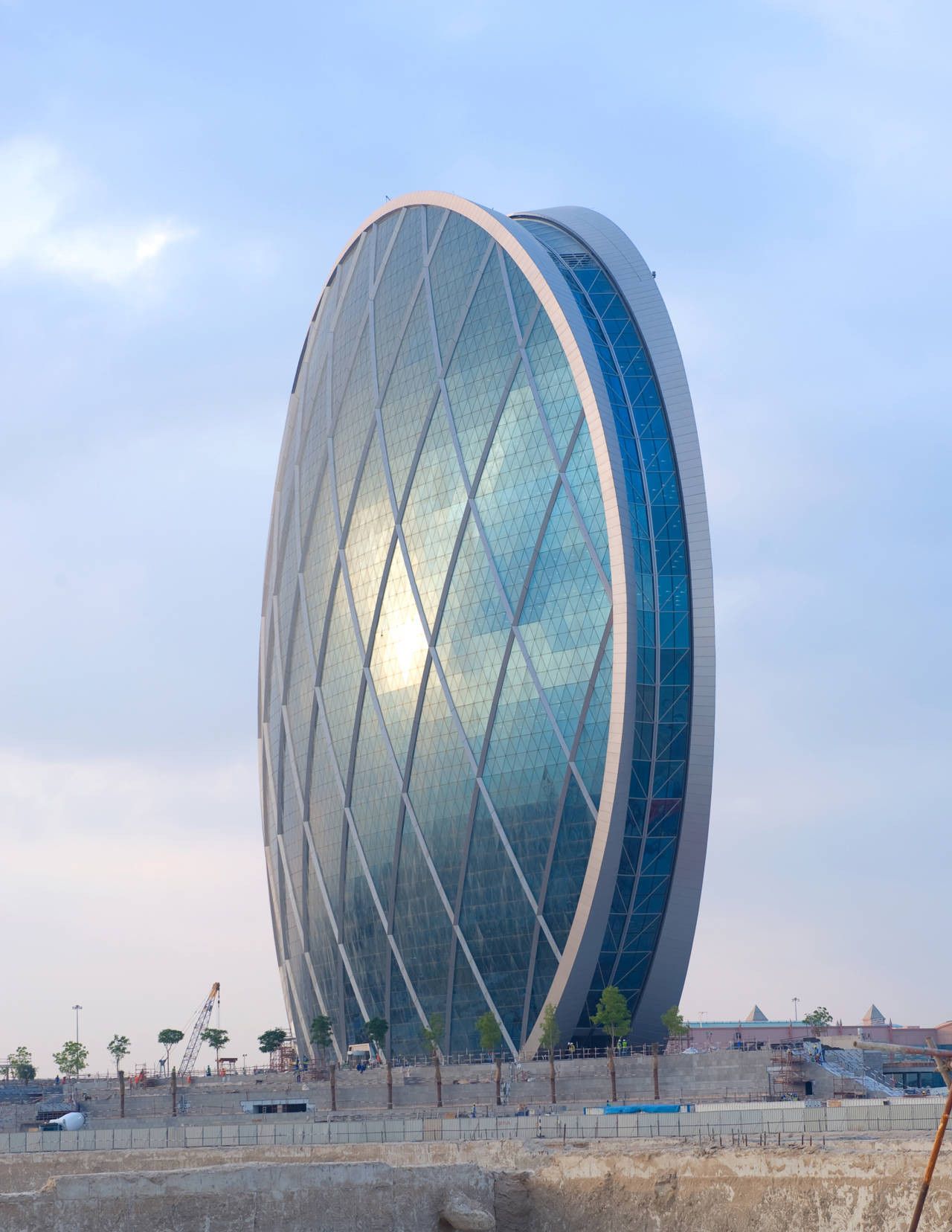
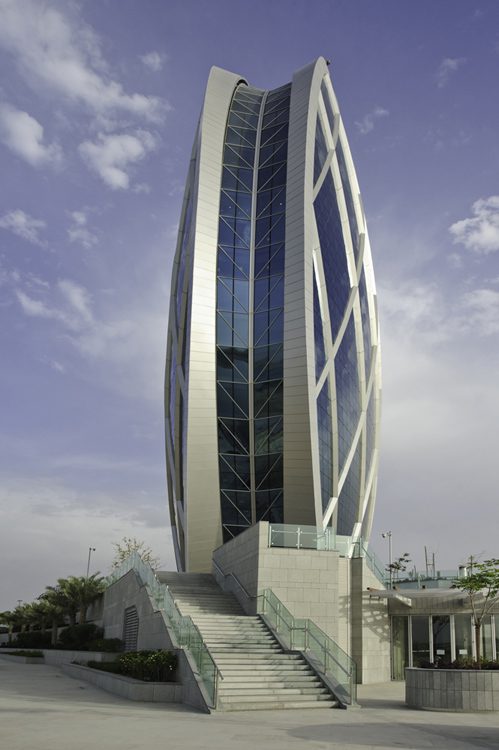
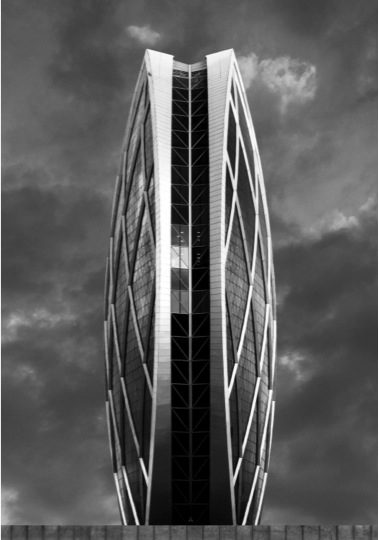
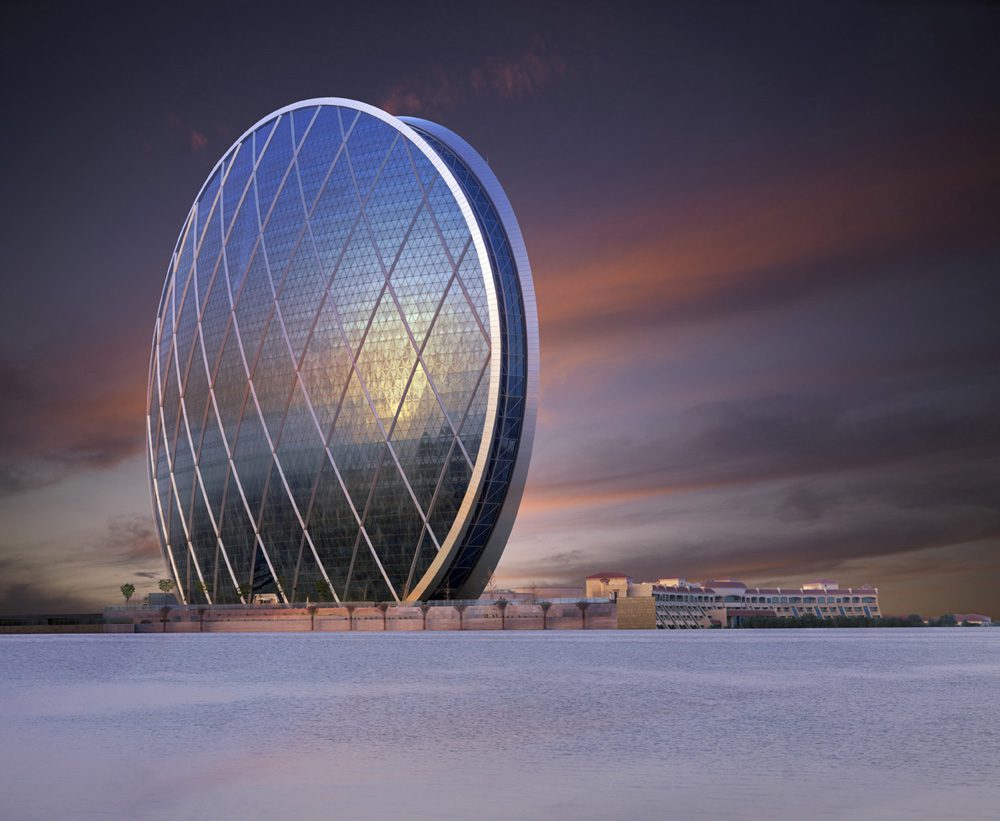
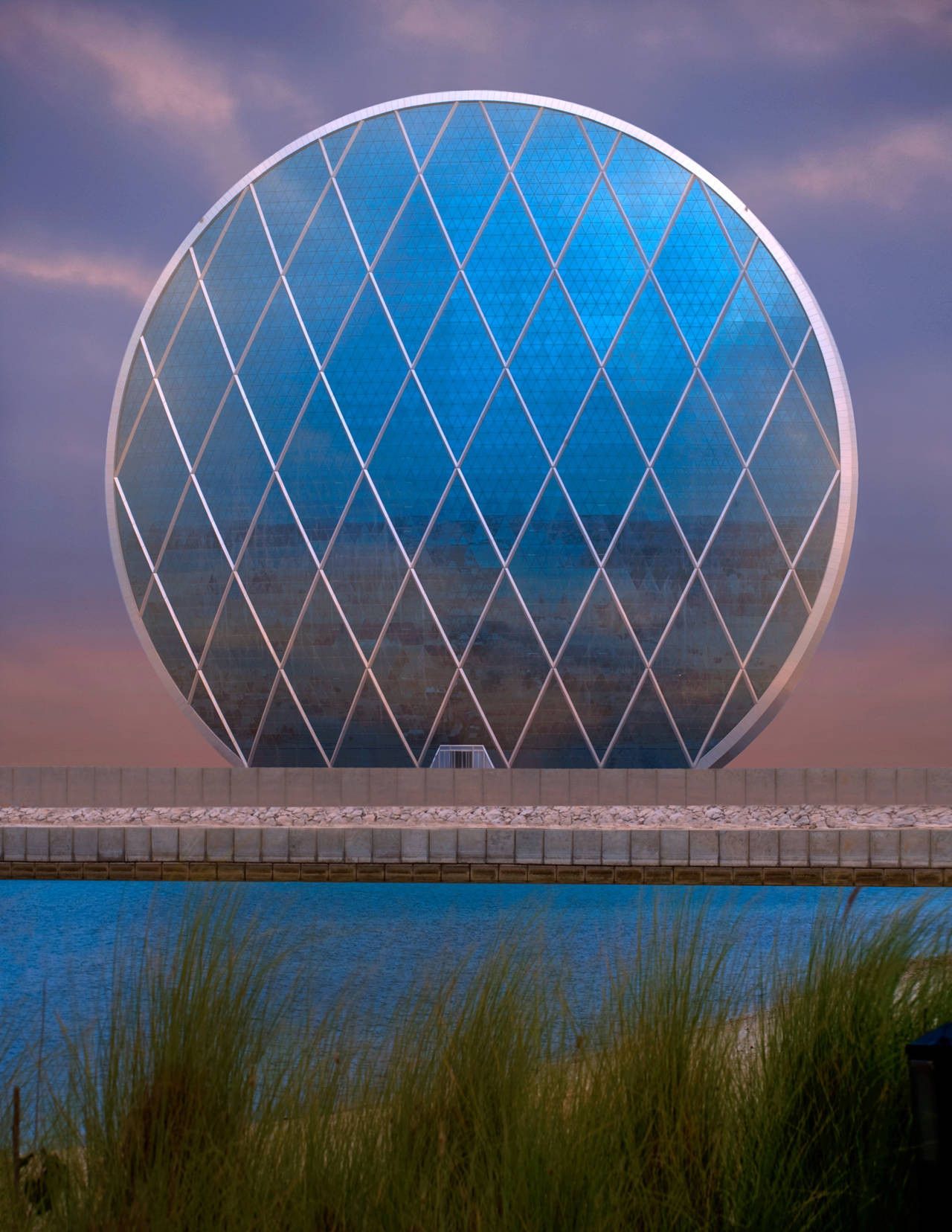
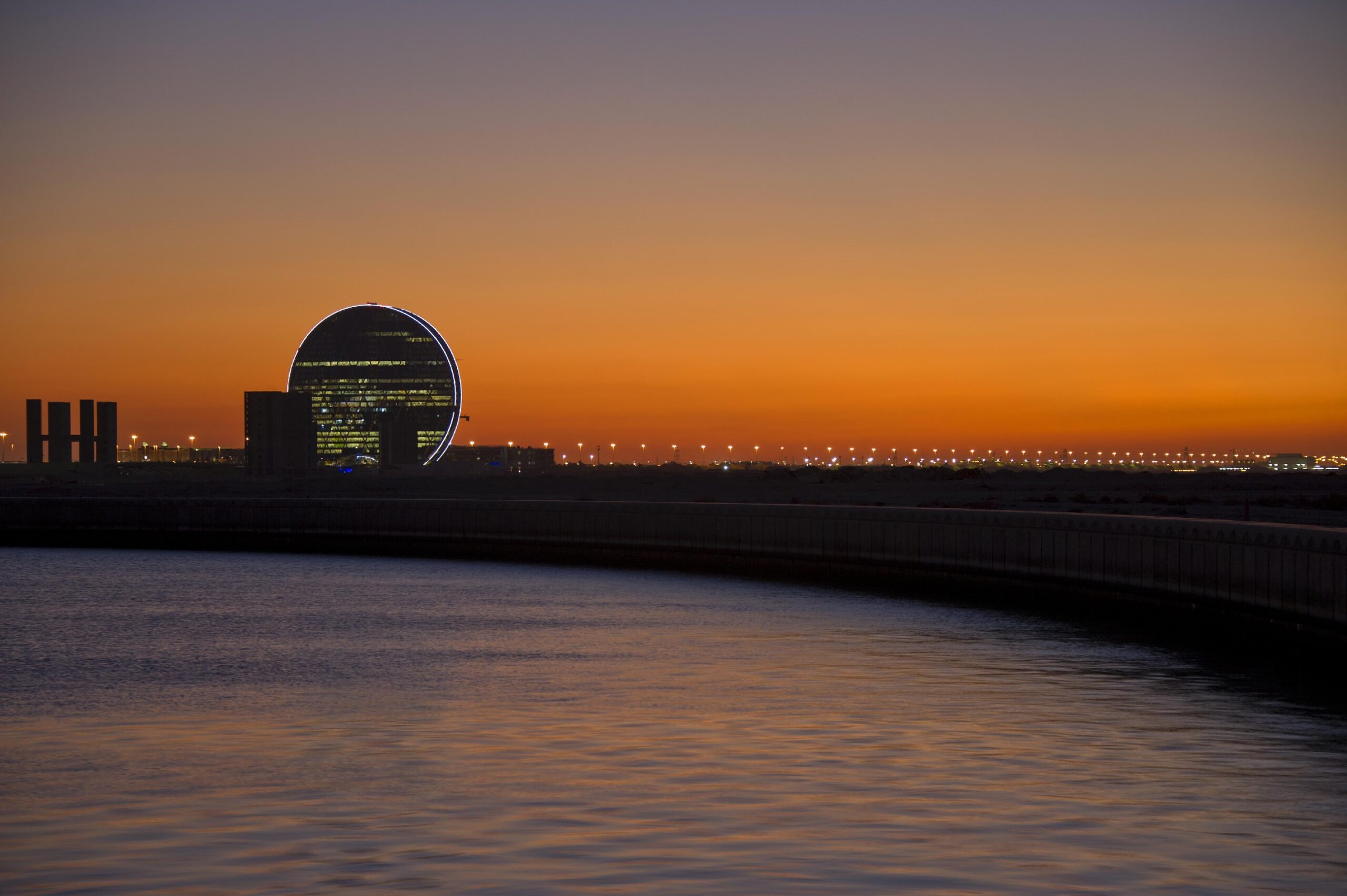
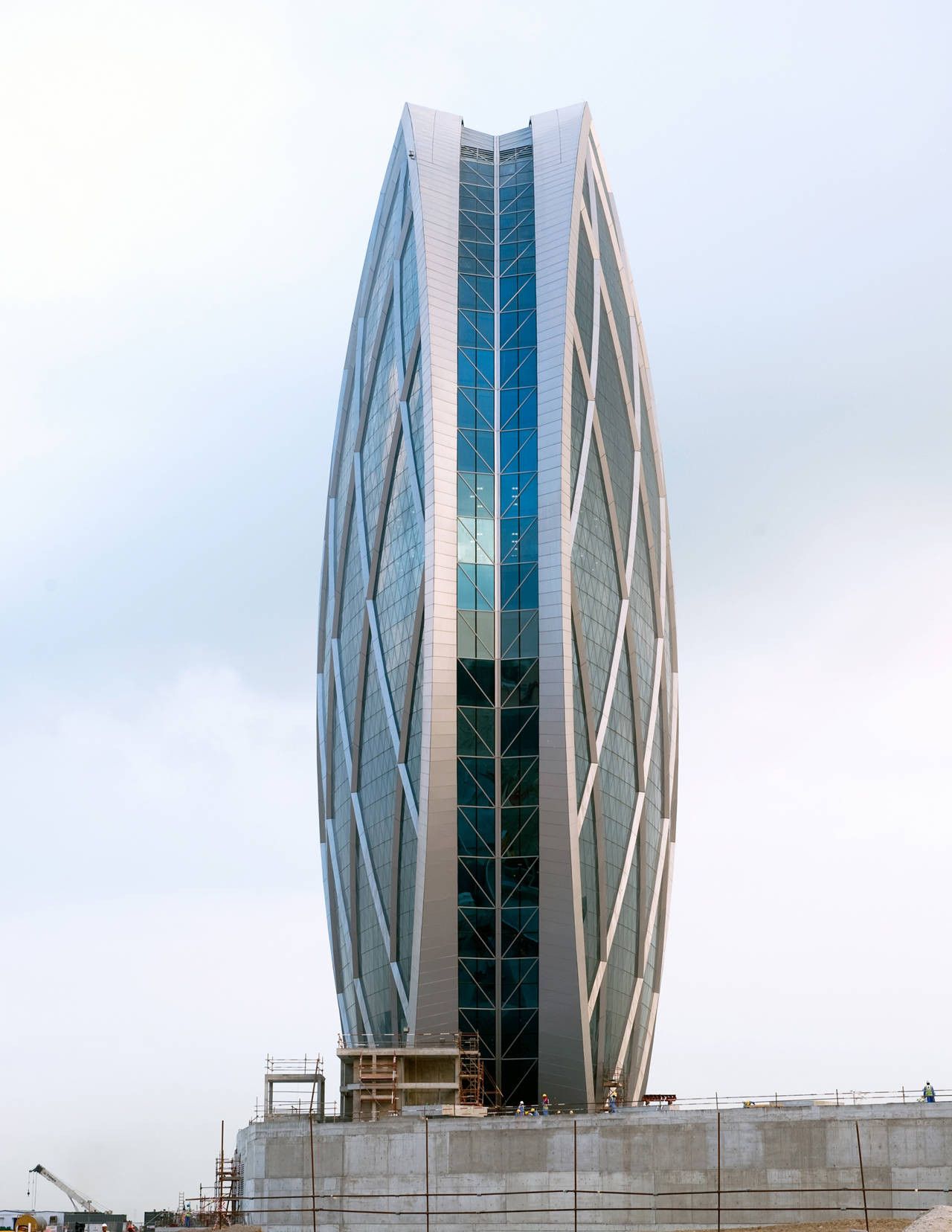
Al Dar Headquarters, MZ Architects shared with us “Al Dar Headquarters” project description.. The concept: The AlDar Headquarters designed by MZ Architects has a distinctive and innovative design: a semispherical building comprising two circular convex shaped facades linked by a narrow band of indented glazing. This iconic fully glazed structure is completely circular in elevation and curved in all other directions.
Courtesy of MZ Architects
The circular shape in architecture:
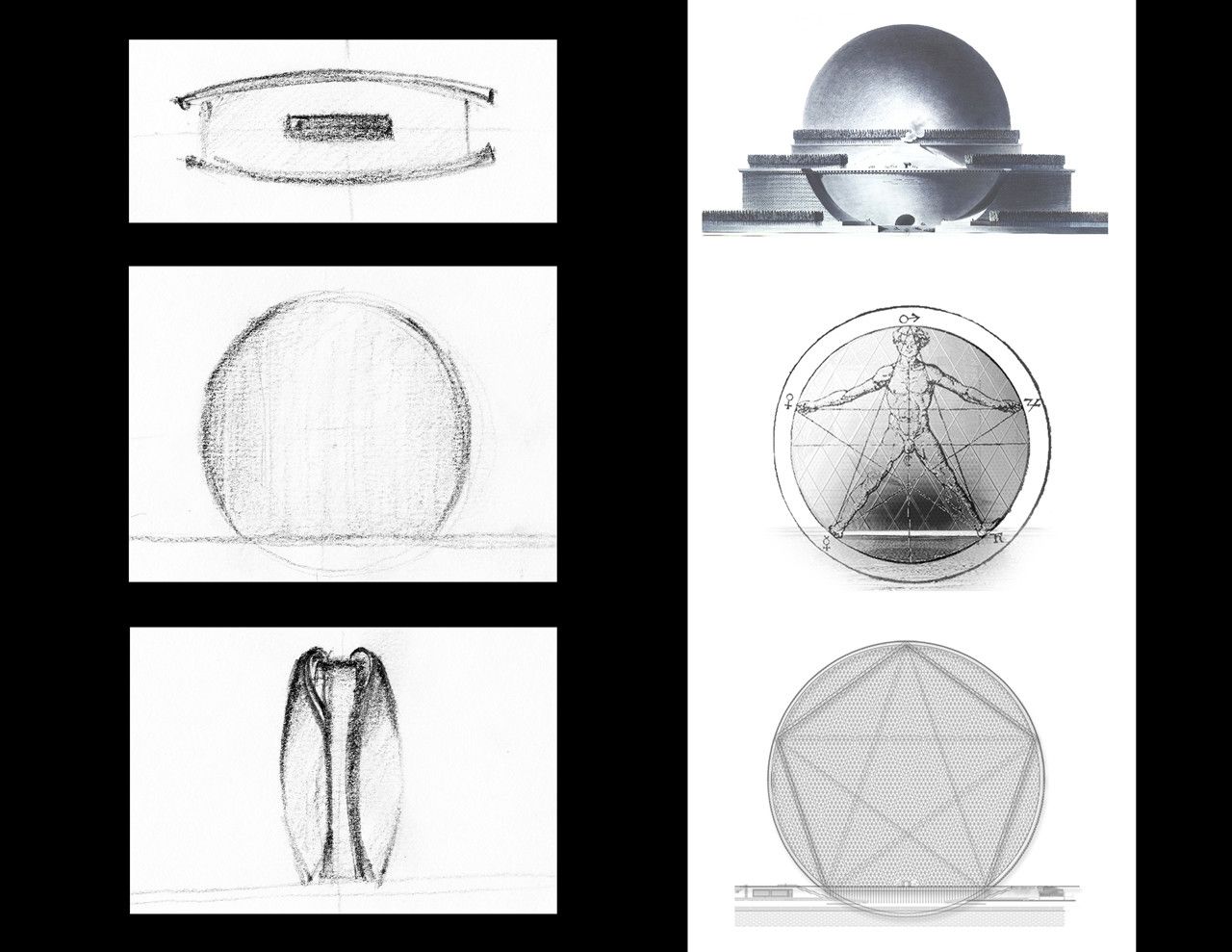
The Circle symbolizes unity, stability, rationality. It is also the symbol of infinity, without beginning or end, perfection, the ultimate geometric symbol. It represents a completeness which encompasses all space and Time. The Sphere, the 2-dimentional circle, is hailed by Boullée as the ideal and perfect form since no trick of perspective can alter its appearance .
Courtesy of MZ Architects
Inspired by the symbolism of the Circle and the Sphere, architects have used the geometric round shape in their building designs since the beginning of time. The circular shape of the tholos, the greek temple with a round ground plan rather than a square or rectangular one, is not unusual in Greek architecture and has also been used later on in the Roman building typology.
Courtesy of MZ Architects
In 1784, Boullée conceived his most emblematic project: the Cenotaph for Isaac Newton which would have taken the form of an immense sphere 150 m high, mirroring the universe, and embedded in a circular base. This structure remained however a sketch and was never built.
Courtesy of MZ Architects
Throughout the modern history of architecture, architects have also been designing and realizing circular-based buildings, round towers as well as domes and spheres used notably in the development of planetaria and theatres. The circular shape has always been used in the ground and floor plans with the traditional building elevation and roof. However, no one has attempted to build a structure completely circular in elevation. Such an idea would normally be left on sketches.
Courtesy of MZ Architects
The birth of the AlDar HQ shape:
Aldar HQ designed by MZ Architects has a distinctive and innovative design of this kind; its circular convex shaped façade gives it an outstanding and unique frontal altitude. This iconic fully glazed structure is completely circular in elevation and curved in all other directions.
Courtesy of MZ Architects
When challenged to create an iconic structure on Al Raha beach, Marwan Zgheib decided to create a simple building that would possess the calm, ideal beauty of classical architecture while also having considerable expressive power, a building that would compete with the iconic architecture of the UAE and create a sense of place and identity for the area.
Courtesy of MZ Architects
To attain this end, Zgheib first had to select from natural forms, under the guidance of a concept of regularity. Accordingly, he was inspired by the clam shell which has deep meaning for Abu Dhabi with its seafaring heritage, as well as the symbolism of the geometric round shape, and imagined two giant circular curved walls of glass mirroring an open clam shell. An extremely pure geometrical but daring design was born: a round skyscraper with a curved glass skin covering the area of four football fields.
Project info:
Architects: MZ Architects
Country: United Arab Emirates, Abu Dhabi
Year: 2010
Photographs: Courtesy ofMZ Architects
Manufacturers: Kingspan Insulated Panels
Project Manager: Al Dar Laing O'Rourke Construction
Civil, Mechanical And Electrical Engineer: Arup
Facade Design And Construction: Josef Gartner
Total Built Up Area (Including Basement): 123,000 sqm
Cost: AED 1,000,000,000
Owner & Developer: Al Dar Properties