

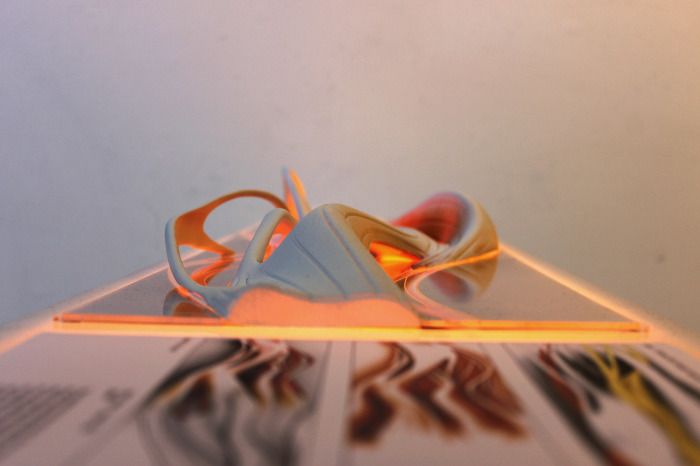
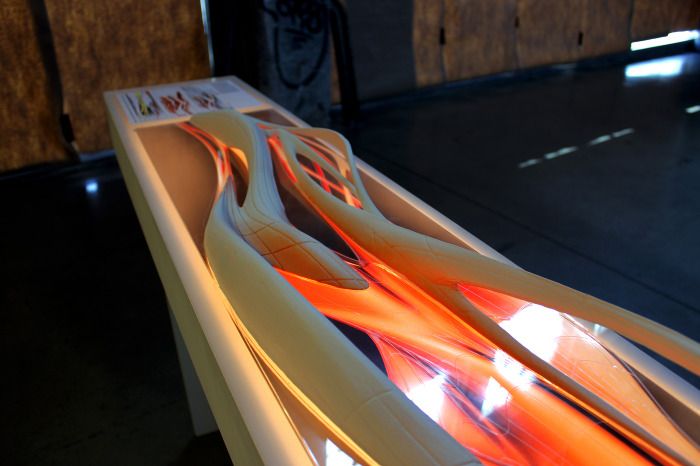
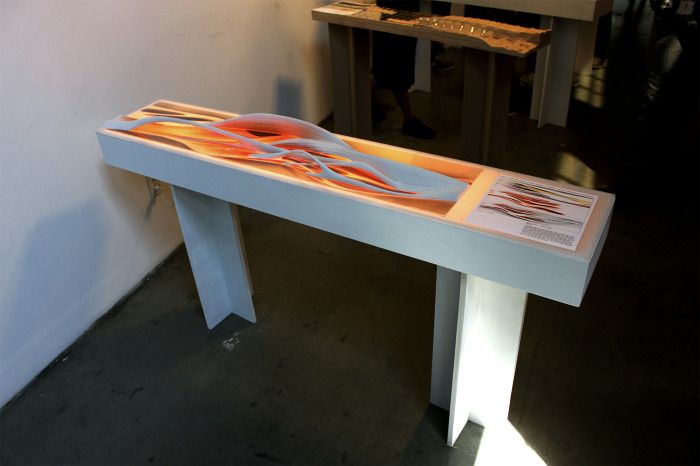
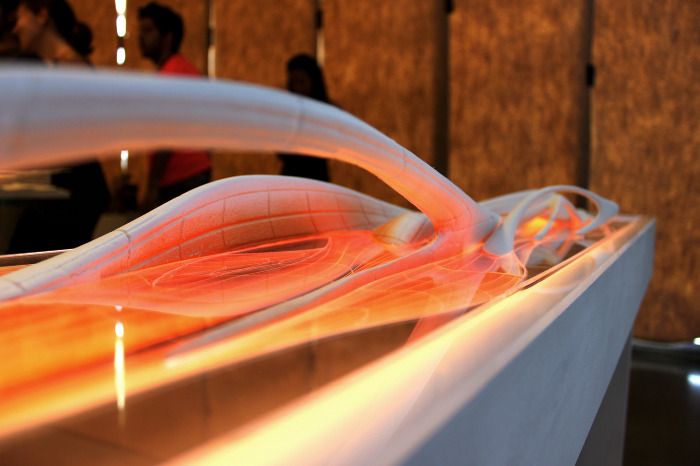
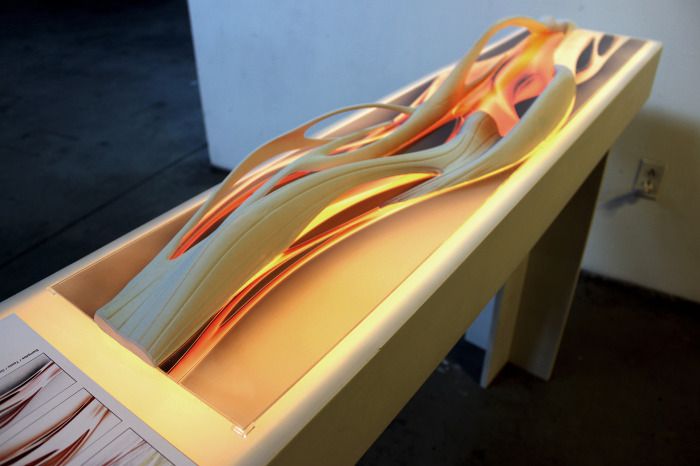
DrawDel Strands experiment is an integration of 2D and 3D. A drawing turns into a 3D model interfering with the surrounding space. It’s a process of layering, shifting, splitting, merging and twisting. The description of the piece said that its idea is inspired from tree morphology. When seeing it, it personally reminded me of the human body veins that lie under the skin. The composition reminds me of our body’s complexity that rhymes!
Courtesy of Nikita Troufanov and Gonzalo Padilla
The dynamic piece is exposed to a lot of transformation and surface wrapping. As described it turned “from thick and massive to thin and delicate”.
Courtesy of Nikita Troufanov and Gonzalo Padilla
I see the process contradicting to sculpting technique. I found it interesting to observe the difference. In sculpting, you have the mass and you start playing with it, trying to form a certain shape with curving, cutting, hollowing. On the contrary, the process of the oscillation doesn’t start with 3D mass but with a 2D drawing that then rises to life; if you let me say.
Courtesy of Nikita Troufanov and Gonzalo Padilla
Art was never achieved through one way only. You can do it one way or another. It’s all about inspiration, expression, process and materiality.

Anastasia Andreieva is an accomplished Architectural Projects Editor at Arch2O, bringing a unique blend of linguistic expertise and design enthusiasm to the team. Born and raised in Ukraine, she holds a Master’s degree in Languages from Taras Shevchenko National University of Kyiv. Her deep passion for architecture and visual storytelling led her to transition from translation and editorial roles into the world of design media. With a keen eye for conceptual clarity and narrative structure, Anastasia curates and presents global architectural projects with precision and flair. She is particularly drawn to parametric and digital design, cultural context, and emerging voices in architecture. When I’m not analyzing the latest architectural trends, you’ll probably find me searching for hidden gems in cityscapes or appreciating the beauty of well-crafted spaces. After all, great design—like great connections—can be found in the most unexpected places. Speaking of connections, because architecture isn’t the only thing that brings people together.