

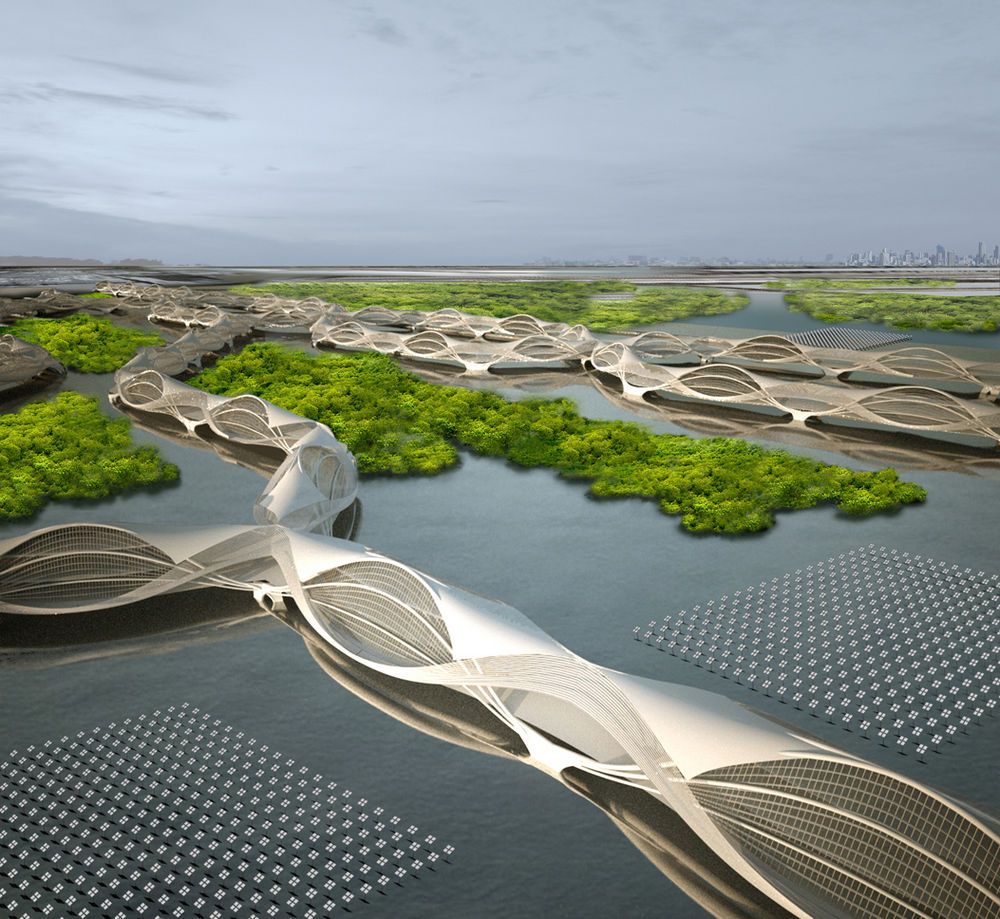
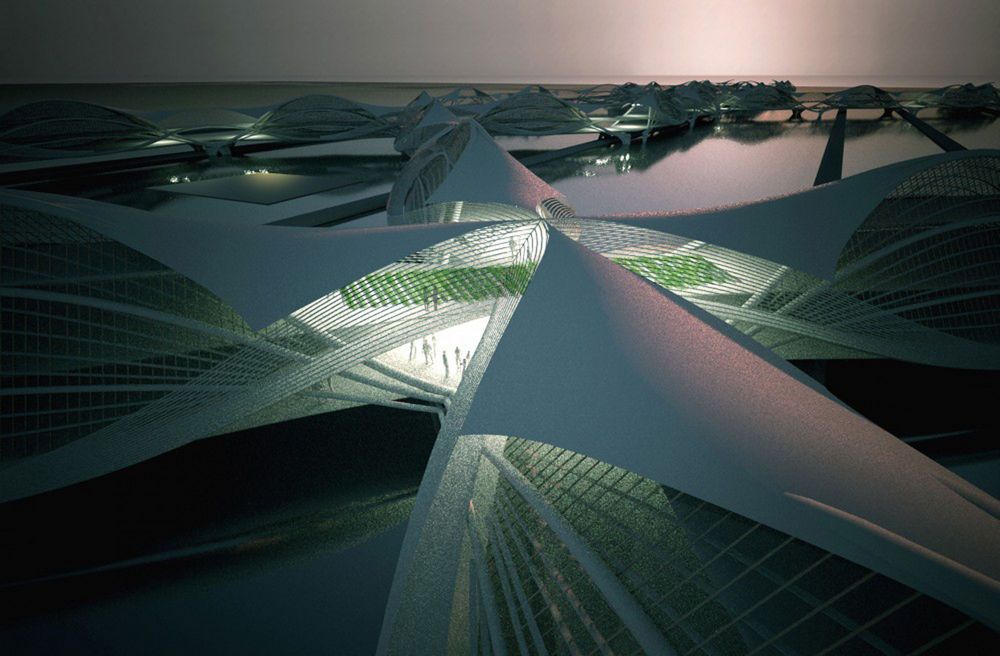
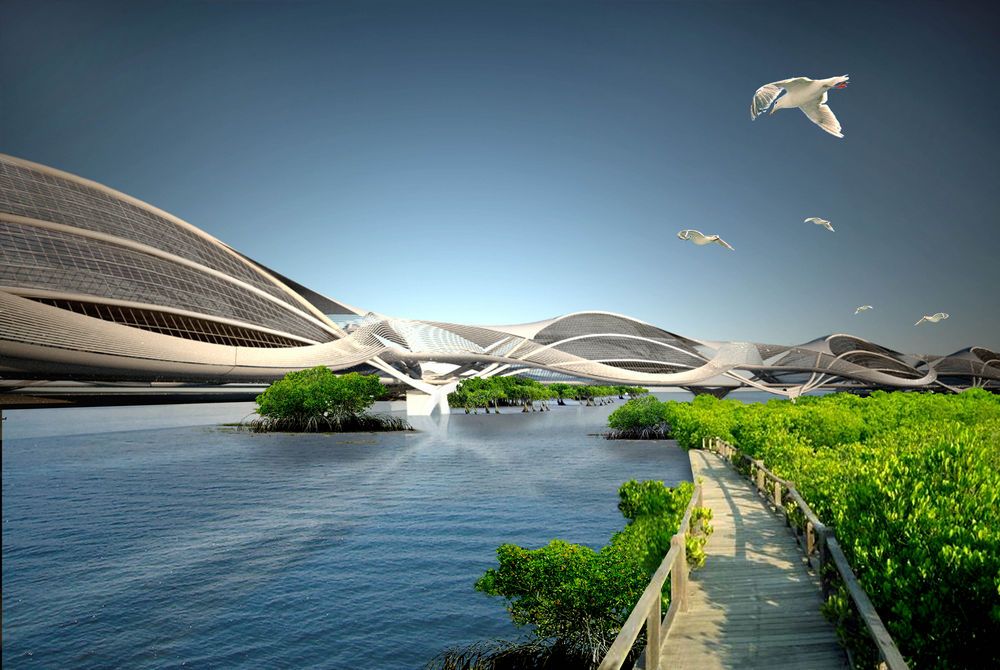
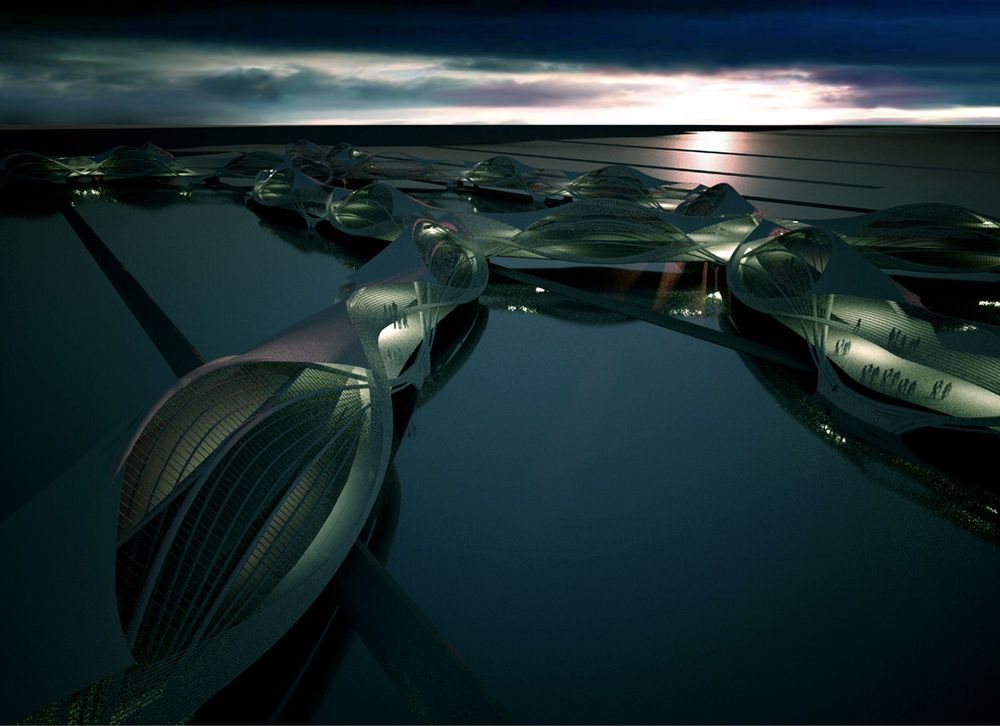
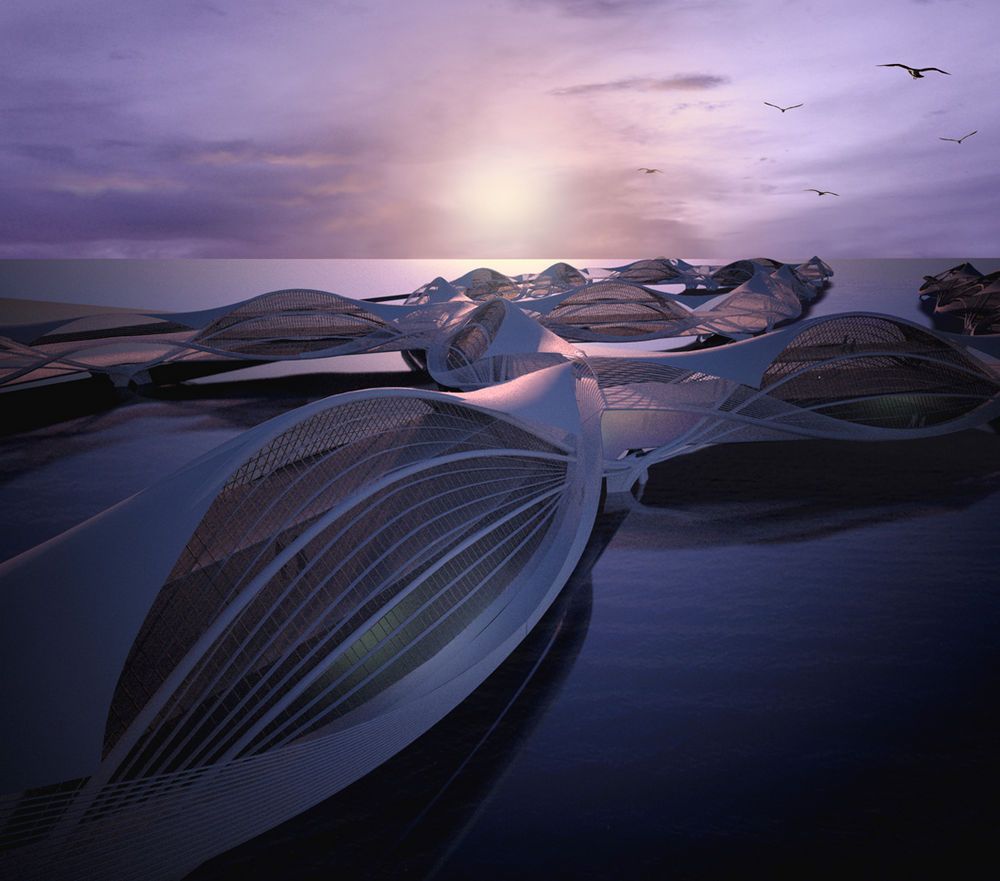
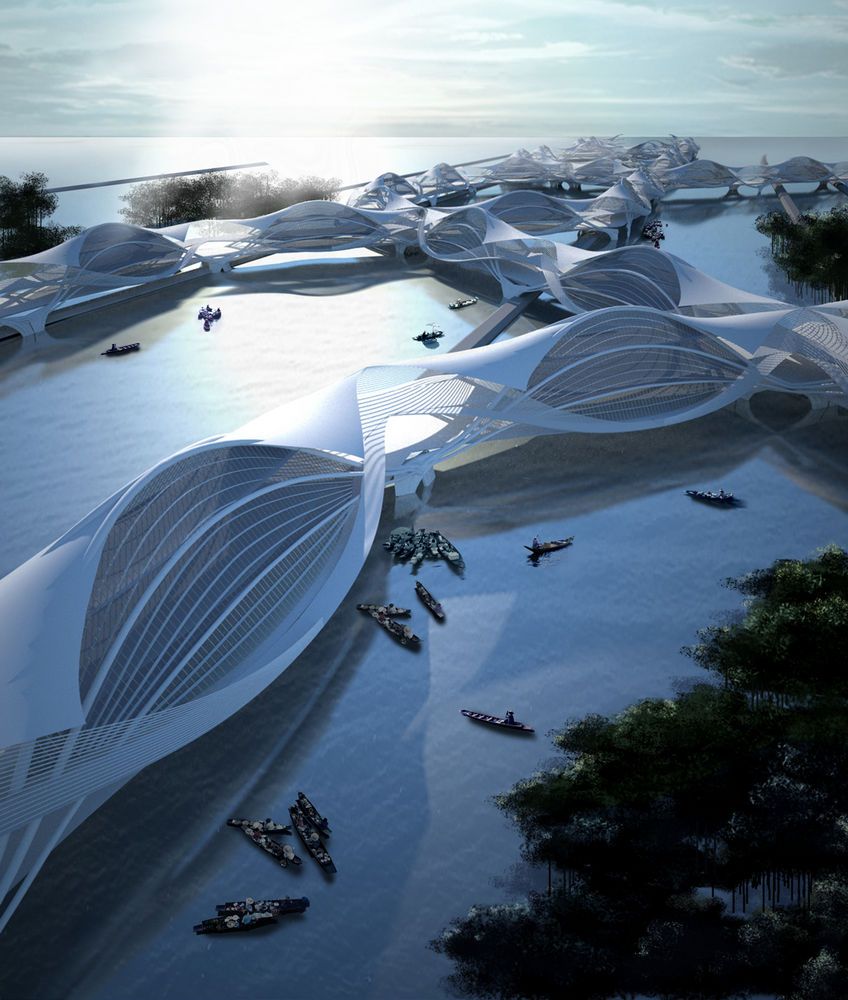
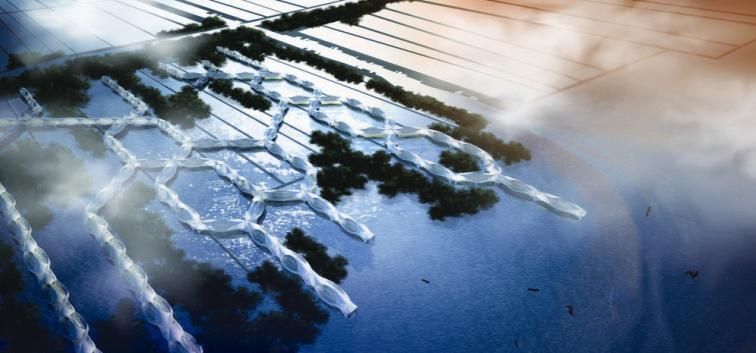
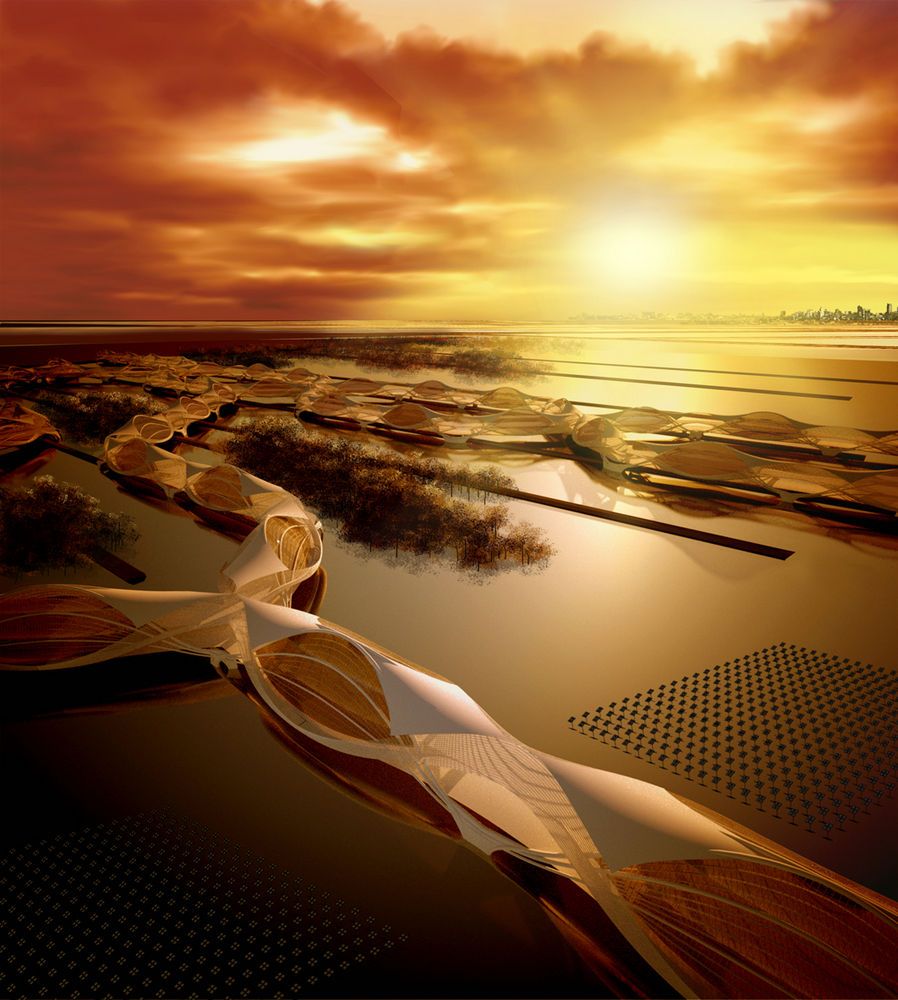
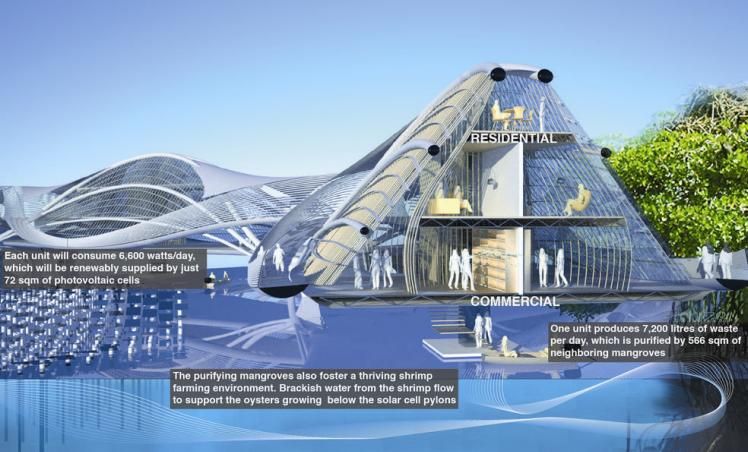
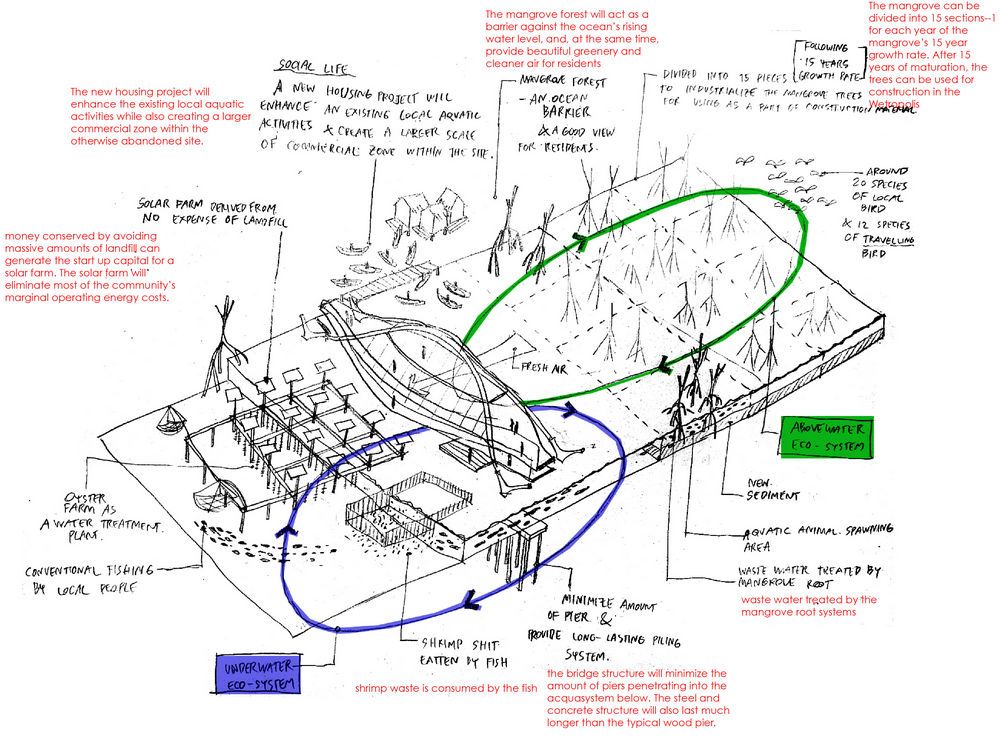
According to the head of Thailand’s National Disaster Warning Center, Meteorologist Smith Dharmasaroja, by 2030 much of Bangkok will lie under 1.5 meters (5 feet) of seawater. With the city sinking 10 cm below sea level, the latter rising by 40 cm annually, the safest place to create architecture is above water. Thus, a Bangkok-based architecture firm S+PBA recently unveiled drawings for a self-sustaining community that can thrive with the ebb and flow of rising tides. Dubbed “A Post Diluvian Future”, the “wetropolis” allows Bangkok to live with natural flooding instead of resisting it while creating a homeostasis that detoxifies the region’s polluted waters.
courtesy of S+PBA
The project examines the entirely supra-marine stilt home community of Koh Pan Yii, a settlement that floats on the Andaman sea in Southern Thailand, successfully sustaining all of the typical functions of an urban community—schools, public spaces, hospitals, utilities, industry. Wetropolis is a possible response to the problem of the rising sea levels and the rapid sinking of the capital city of Bangkok, S+PBA will present its more recent project A Post Diluvian Future, a prototype community that takes its inspiration from Thailand’s centuries old traditions of flood conscious aquatecture and turn it into a contemporary sustainable and visually stunning Wetropolis.
courtesy of S+PBA
Courtesy of S+PBA

Ibrahim Abdelhady is an architect, academic, and media entrepreneur with over two decades of experience in architecture and digital publishing. He is the Founder and CEO of Arch2O.com, a leading platform in architectural media, renowned for showcasing innovative projects, student work, and critical discourse in design. Holding dual PhDs in Architecture, Dr. Abdelhady combines academic rigor with industry insight, shaping both future architects and architectural thought. He actively teaches, conducts research, and contributes to the global architecture community through his writing, lectures, and media ventures. His work bridges the gap between practice and academia, pushing the boundaries of how architecture is communicated in the digital age.