

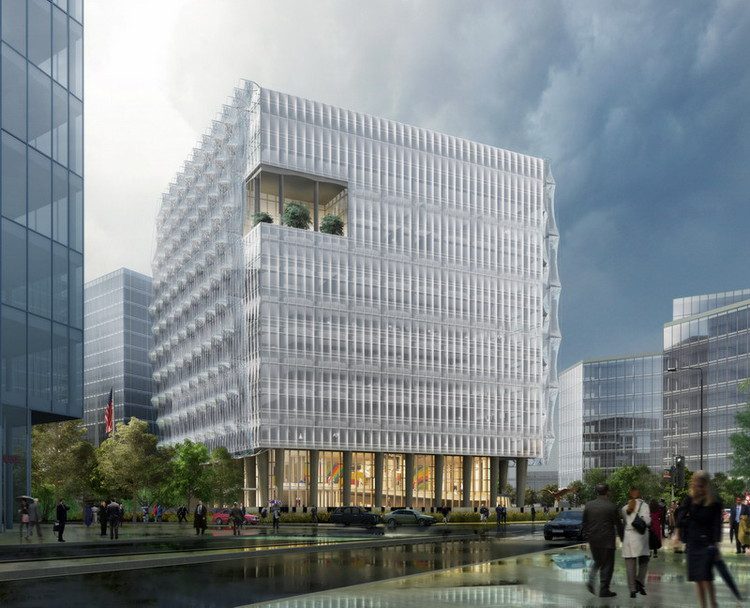
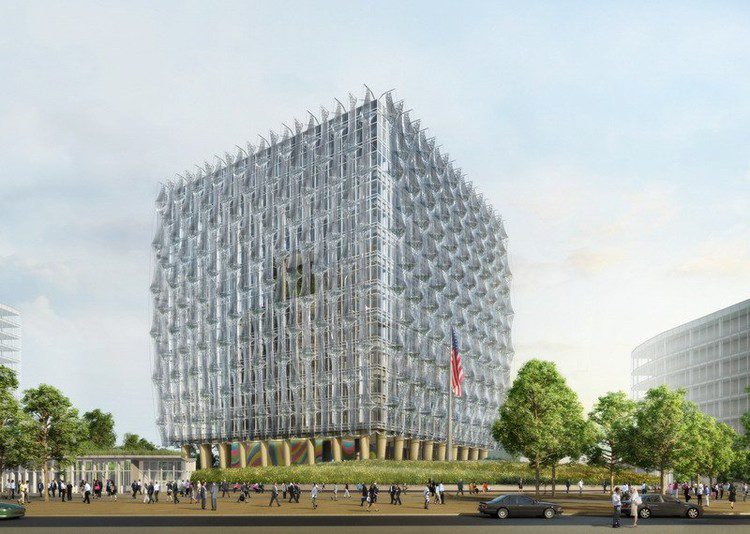
American Embassy in London: After Kieran Timberlake architects won the design competition in 2010, it was the time to announce the start of the construction of the new American embassy in South London in 2013.
Why ‘new’?
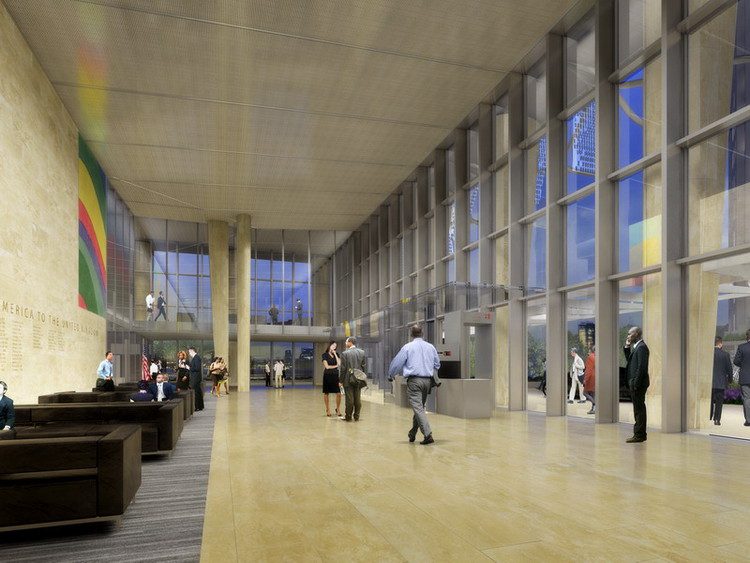
So what was not so right about the original US embassy? It was designed by Eero Saarinen in 1960 but has yet become overcrowded. Also, its post-modernist character does not meet up to the contemporary needs for high-level security and workplace anymore and this created the natural demand for re-designing the institution from scratch. Kieran Timberlake have best interpreted the brief in designing an open and welcoming, and also highly sustainable building.
Where to locate the ‘new’?
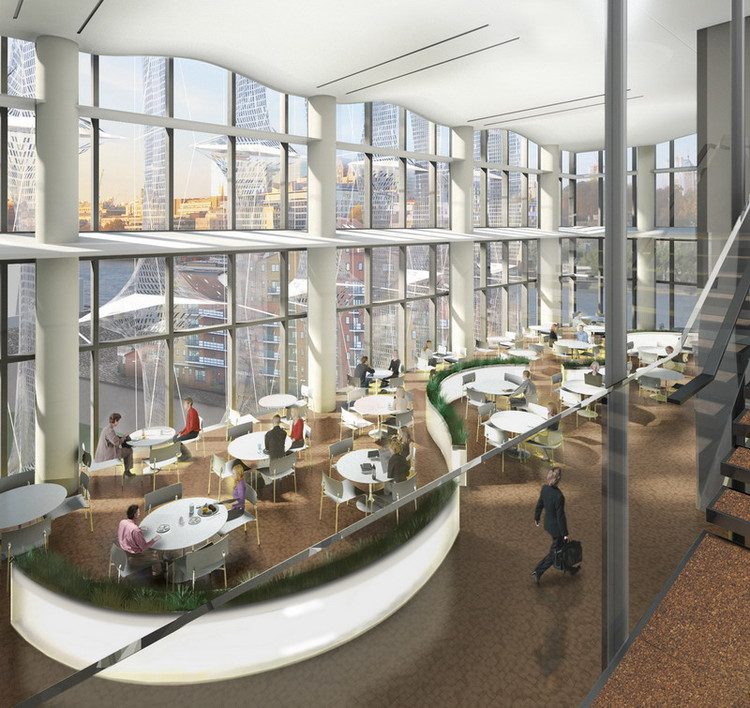
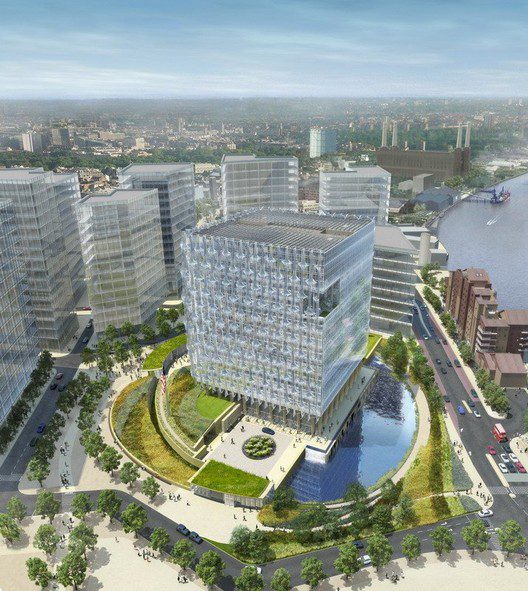
Two main factors contribute to the choice of the new location, Nine Elms. This zone of the Southbank is becoming highly industrial and undergoing major redevelopment. Kieran Timberlake’s embassy will be close to the Battersea power station, an iconic monumental architectural composition of Art Deco and progress. This strategic positioning offers a suitable setting for the new embassy. The building has an estimate of 1,000 visitors per day and this further emphasizes on its ideal location, enhancing the framework of Nine Elms’ urbanism. The addition of a civic plaza and a park offer public access and a pedestrianized greenway acts as a link between the Thames Embankment with Vauxhall.
What is the design concept?
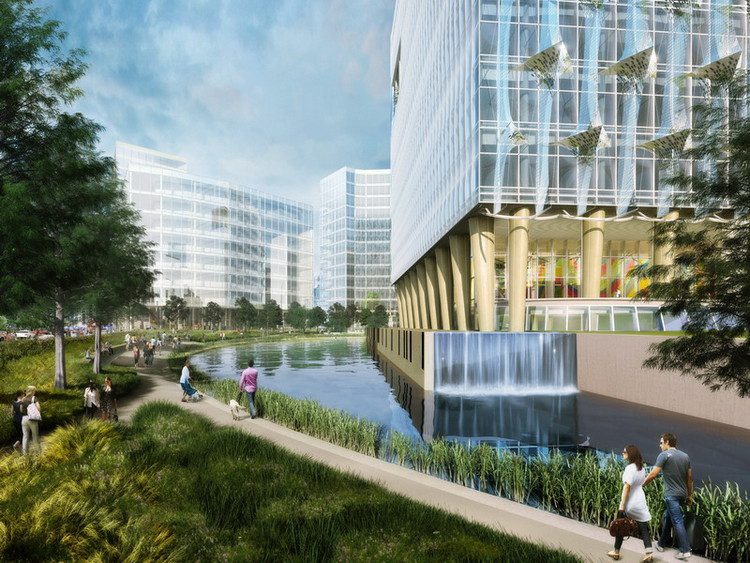
The architecture of the embassy speaks of the concept of ‘wholeness’ – and it represents things and objects through cohesiveness and coherency. The use of water, energy and materials are integrated into one in order to work together and be enhanced by each other. Focus is drawn into the chancery building – crystal-like segments that beautifully build up a harmonic repetition into a glazed façade composition. The chancery, like the rest of the building and its surroundings, has a dual function in its core – to engage attention visually and integrate imperceptible security measures.
What is the outcome expected?
There is a holistic approach towards the design investigation of this project. It aims at bringing together urbanism, building and landscape as one. At the core of the implementation are the evocation and performance of the building as an institution of importance. On the other hand side, the glazed façade element is made to function in a sustainable manner by screening excessive sunlight and letting enough daylight into the working space. Thus, the embassy does not only represent diplomacy and integration, but also environmental friendliness.

Anastasia Andreieva is an accomplished Architectural Projects Editor at Arch2O, bringing a unique blend of linguistic expertise and design enthusiasm to the team. Born and raised in Ukraine, she holds a Master’s degree in Languages from Taras Shevchenko National University of Kyiv. Her deep passion for architecture and visual storytelling led her to transition from translation and editorial roles into the world of design media. With a keen eye for conceptual clarity and narrative structure, Anastasia curates and presents global architectural projects with precision and flair. She is particularly drawn to parametric and digital design, cultural context, and emerging voices in architecture. When I’m not analyzing the latest architectural trends, you’ll probably find me searching for hidden gems in cityscapes or appreciating the beauty of well-crafted spaces. After all, great design—like great connections—can be found in the most unexpected places. Speaking of connections, because architecture isn’t the only thing that brings people together.