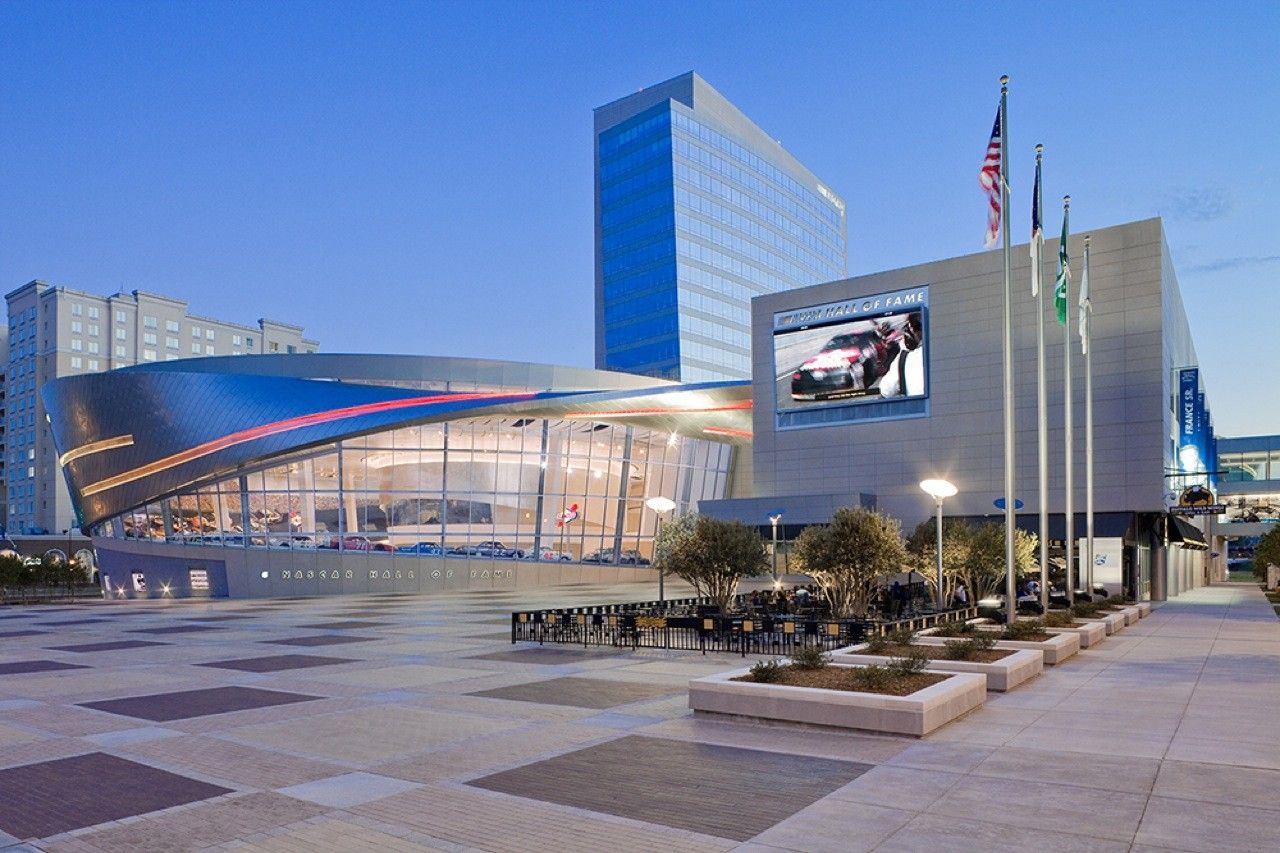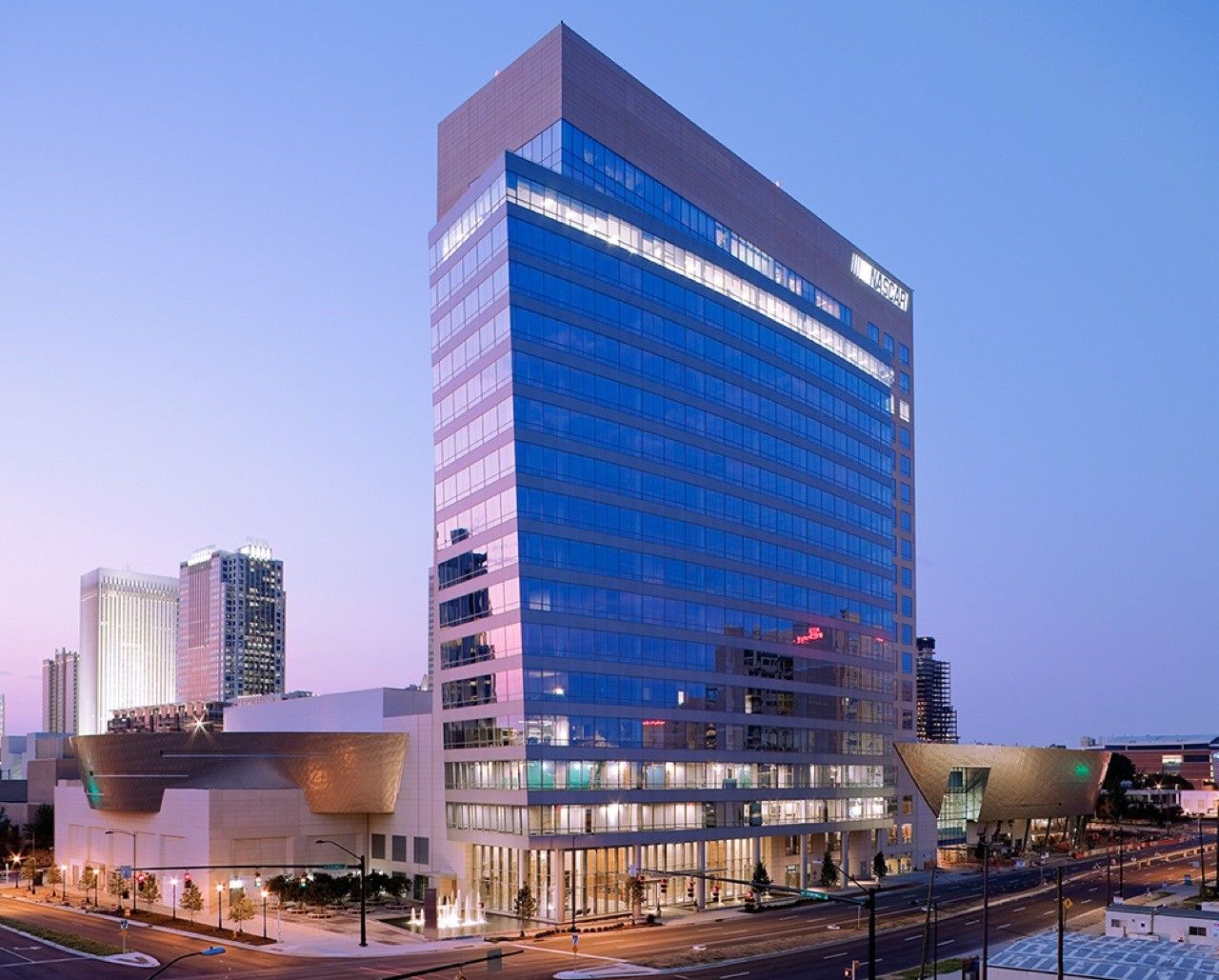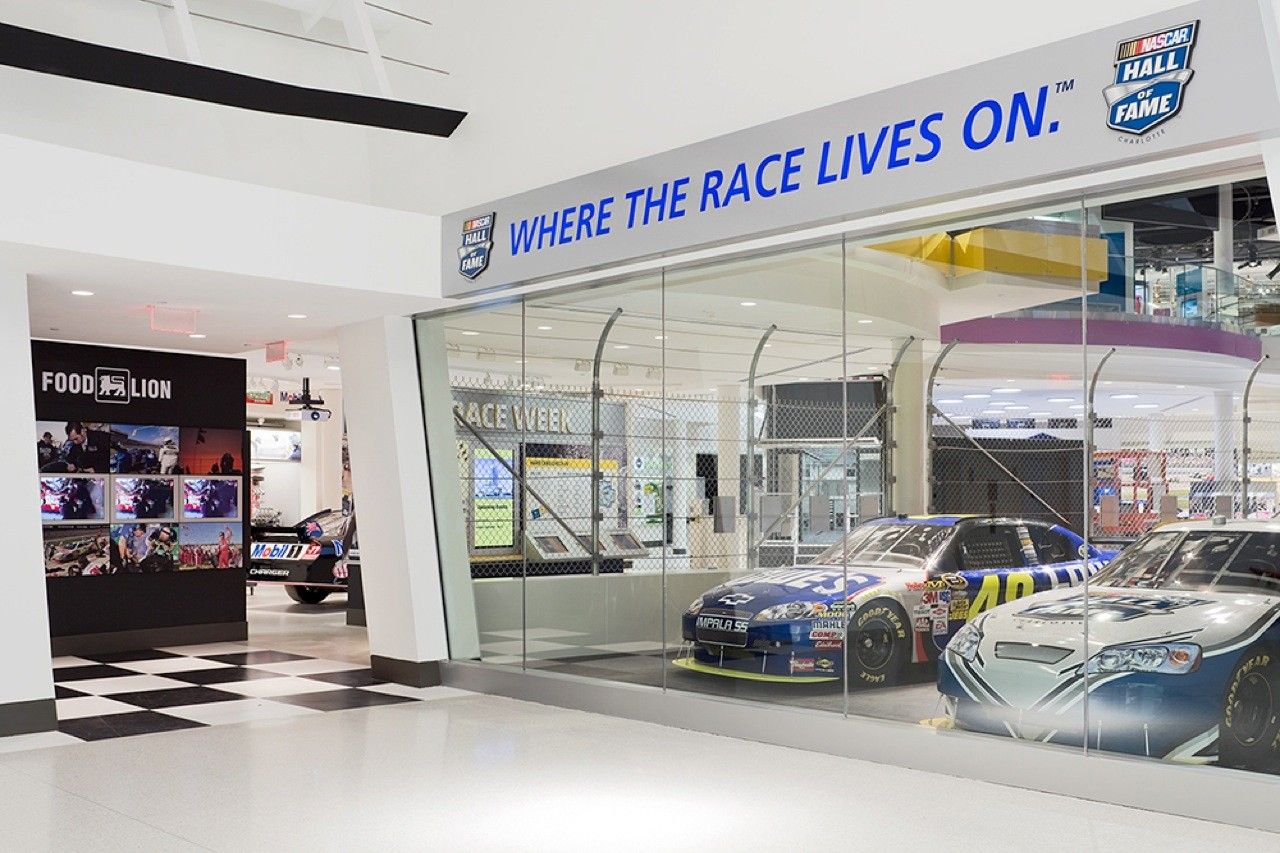


Spirit of Speed, the Performance of racing cars, and its vivacious Spectacle are the key outcome elements Pei Cobb Freed & Partners have worked on in order to achieve the design concept of NASCAR’s Hall of Fame Plaza building.
© Paul Warchol
Established as a family-owned-and-operated business in 1947, NASCAR governs auto racing sports events, also referred to as stock car racing. This is the essence, which inspires the team of architects to derive its concept around key features in the sport: dynamics, speed, fast cars, racers, spectators, and enthusiasm. Indeed, it is a challenge to represent a sport as an institution in an architectural form with a function in place. Commissioned to design ‘speed’ and ‘spectacle’ in a physical manner, Pei Cobb Freed & Partners focus on and further explore the conceptuality of the brief in order to bring in qualities such as form, shape, function, aesthetics, and a ‘wow’ effect. Thus, the concept is derived from the idea that when speed is captured in a ‘frozen’ moment, that moment is referred to as momentum. The brief set by NASCAR could be viewed as a case study of Grand Narrative in the sports industry. Their philosophy, power, and idea of Fame are to be interpreted in an architectural set of tools to communicate the beliefs of their institution.
© Peter Brentlinger
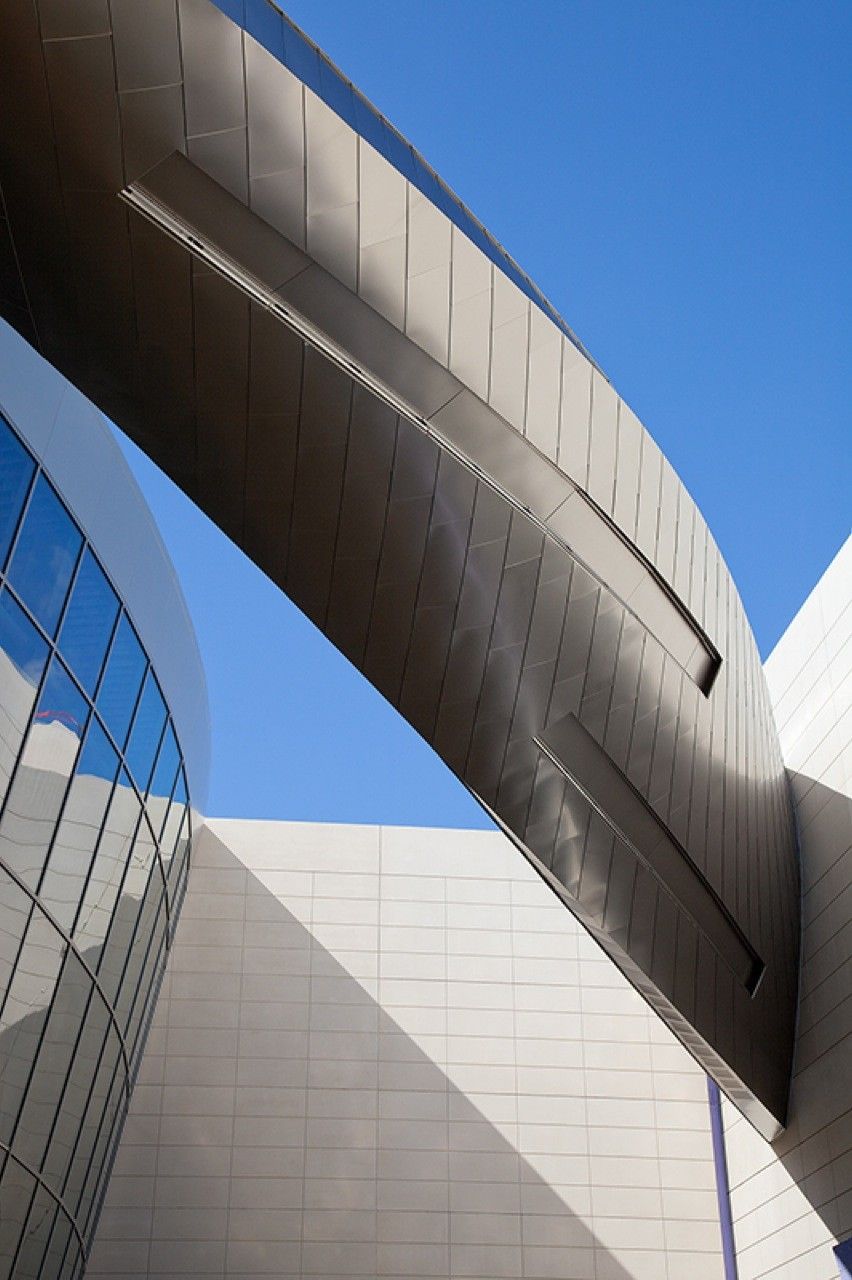
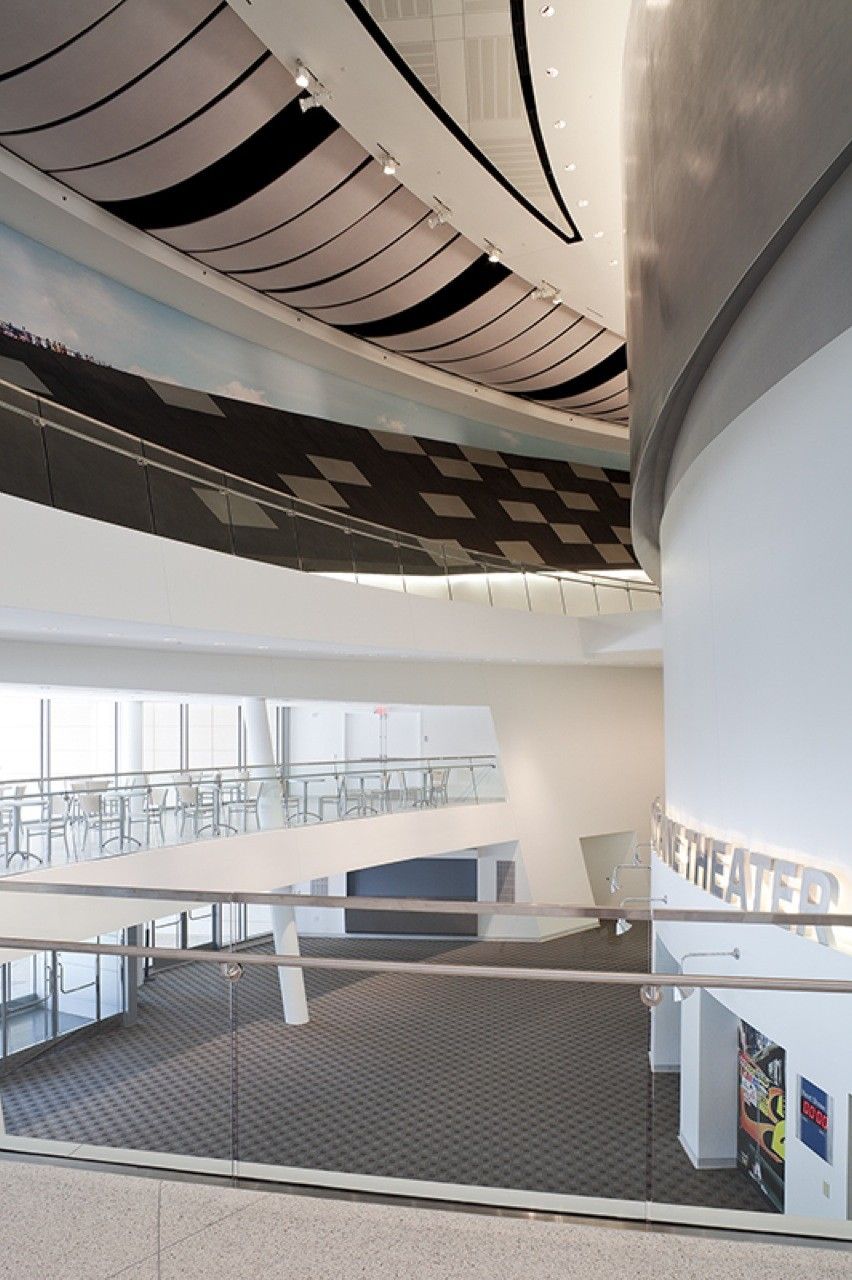
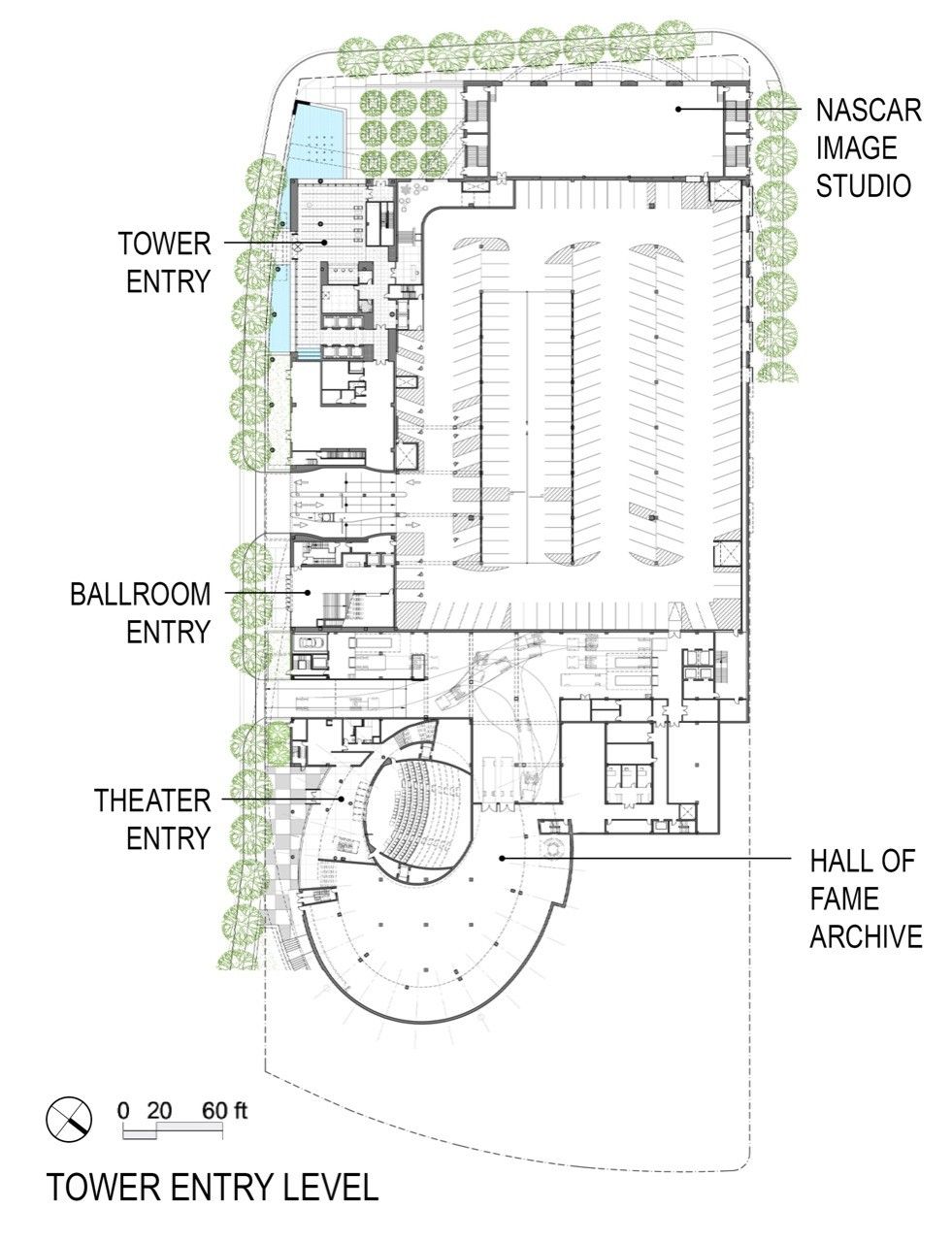
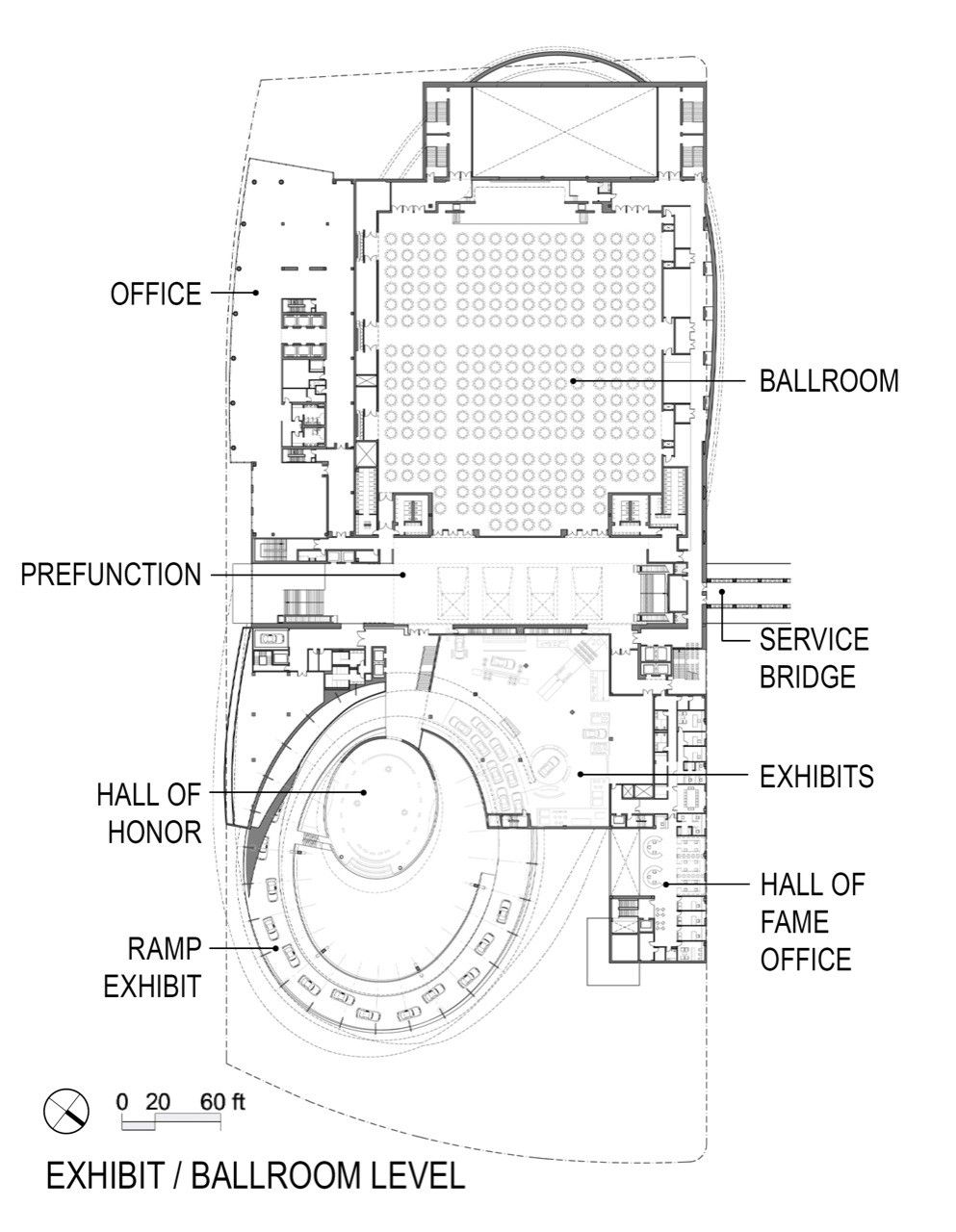
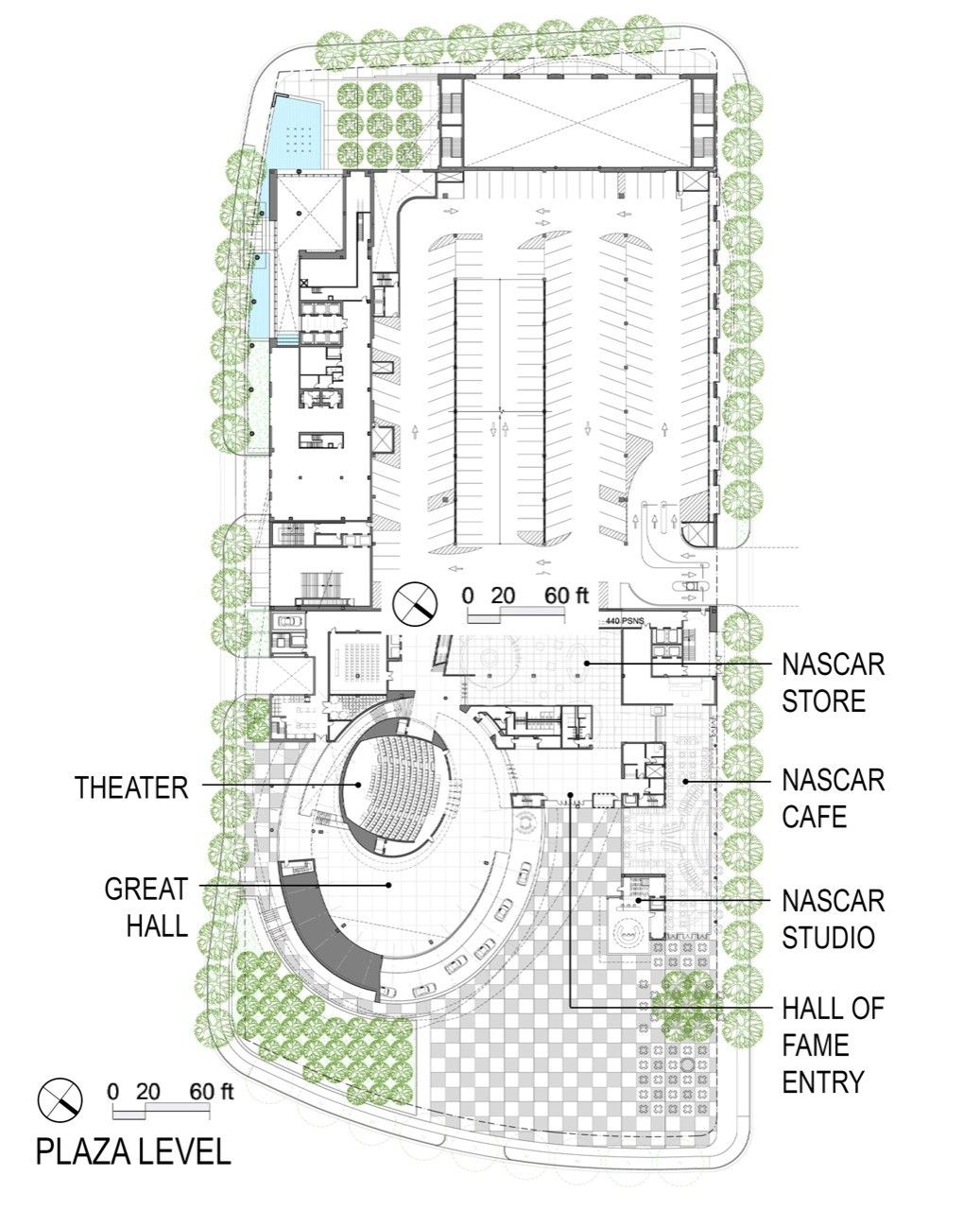
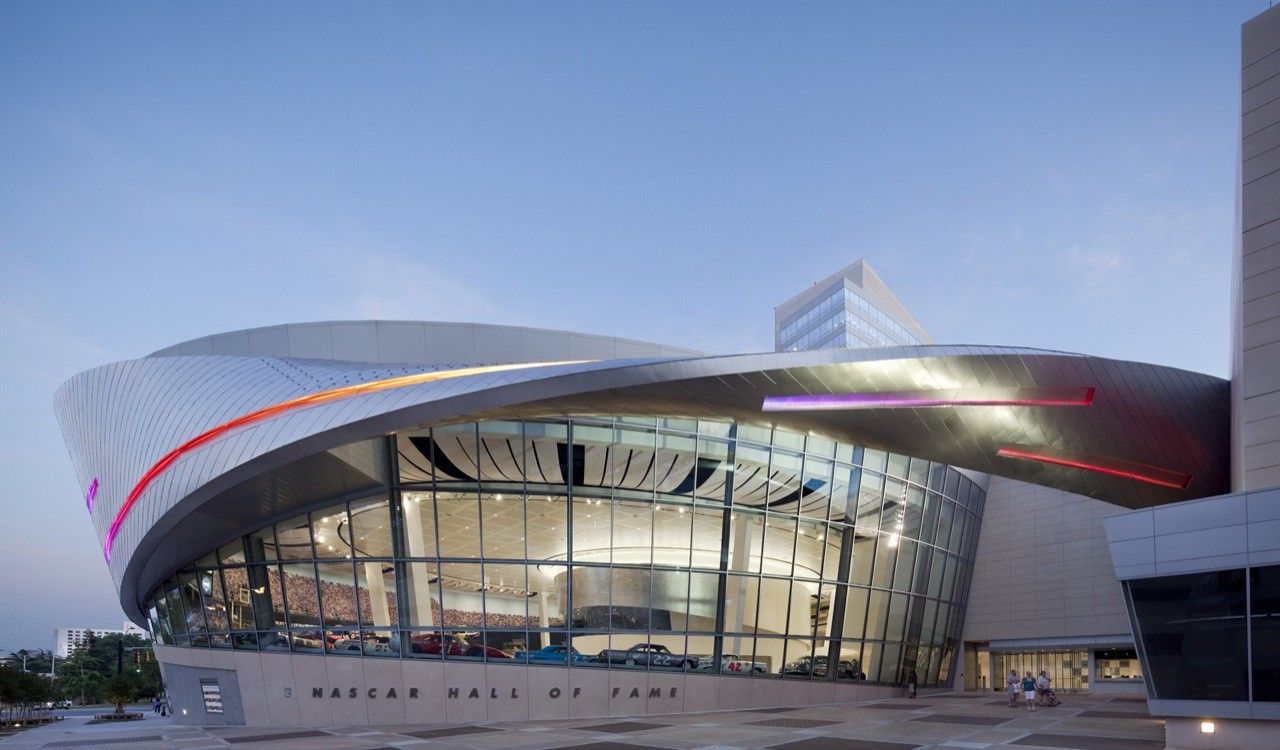
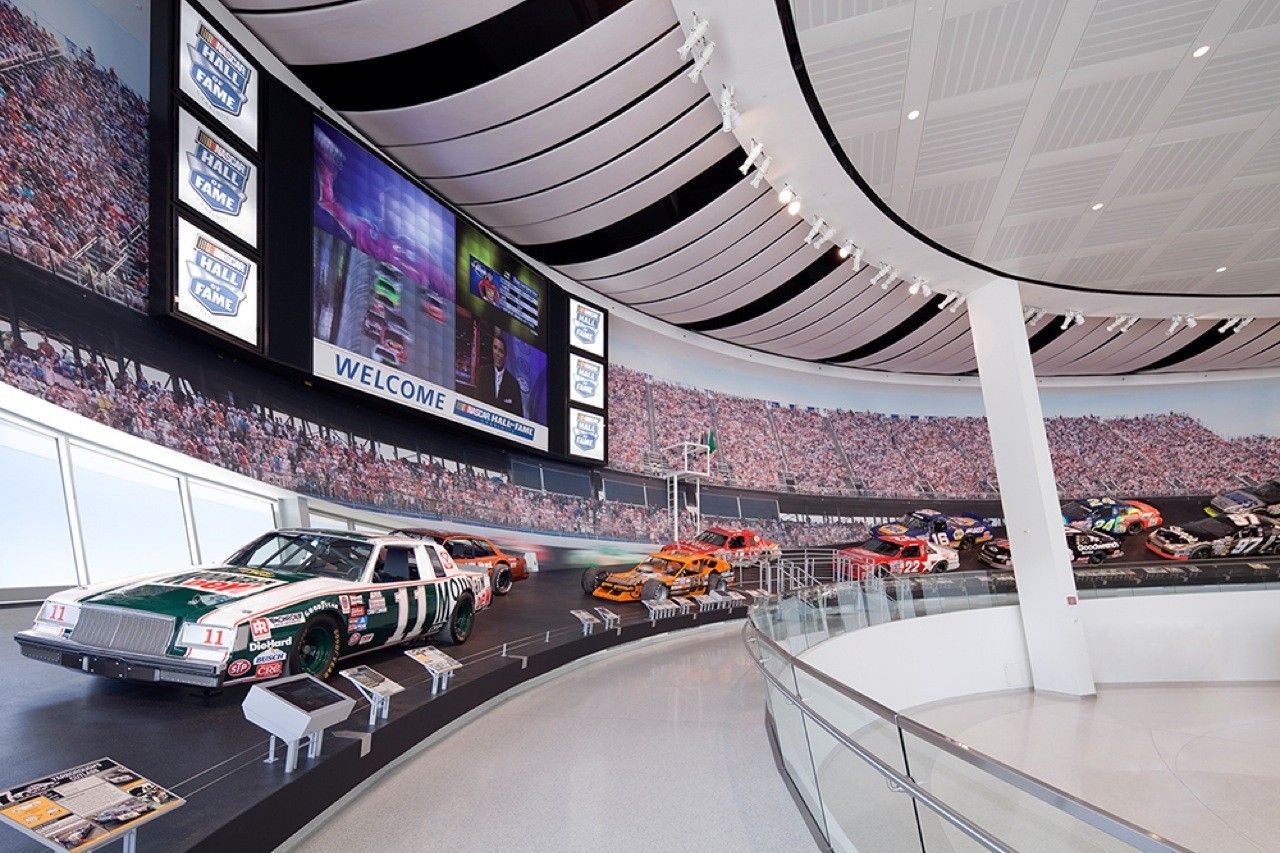
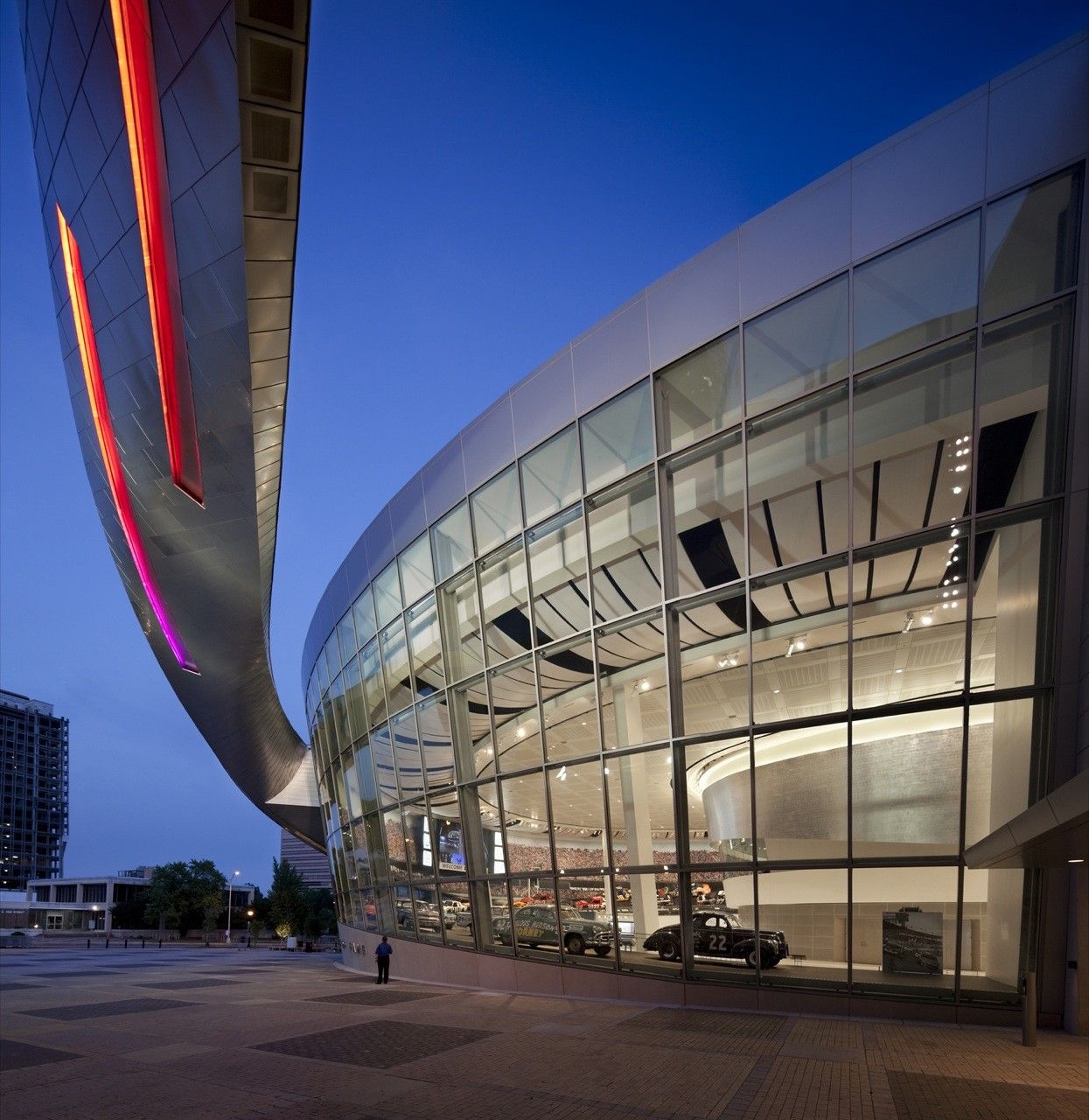
The essence of the design includes curvaceous slopes and sinuous shapes that provoke a sense of dynamics. The focal one of whom is the so-called Ribbon, a symbolic exterior element to best represent NASCAR’s perception of Speed. It is an architectural element, and also a creative synthesis between ‘speed’ and ‘spectacle’. The Ribbon’s form develops from an exterior wall curve into a twist over the main entrance to form a welcoming canopy at the end of its tremendous metallic twist. NASCAR’s Hall of Fame consists of one exterior and four interior spatial elements, complementing each other in terms of function and design aesthetics. There is a large open space – a forecourt, in front of the building, and is considered strategic designing. It is in the form of a sweeping curve, aimed to evoke a sense of an inviting and open atmosphere and further lead visitors to the space of Spectacle. That space is namely the main hall, or the Great hall – a large glazed space in an oval shape. Its physical appearance follows the exterior sweeping curve of the forecourt and thus brings out the concept of speed and race.
© Peter Brentlinger
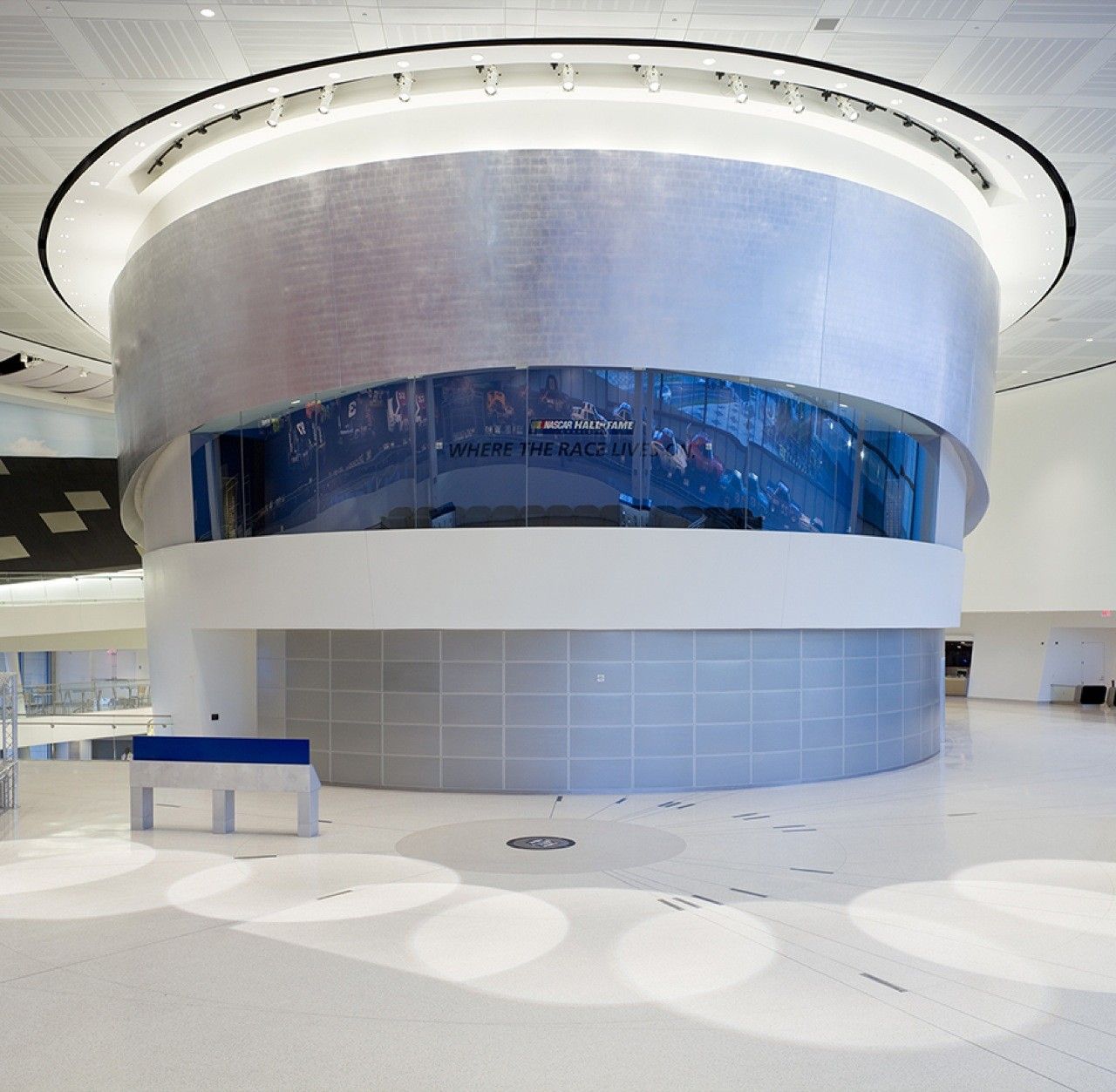
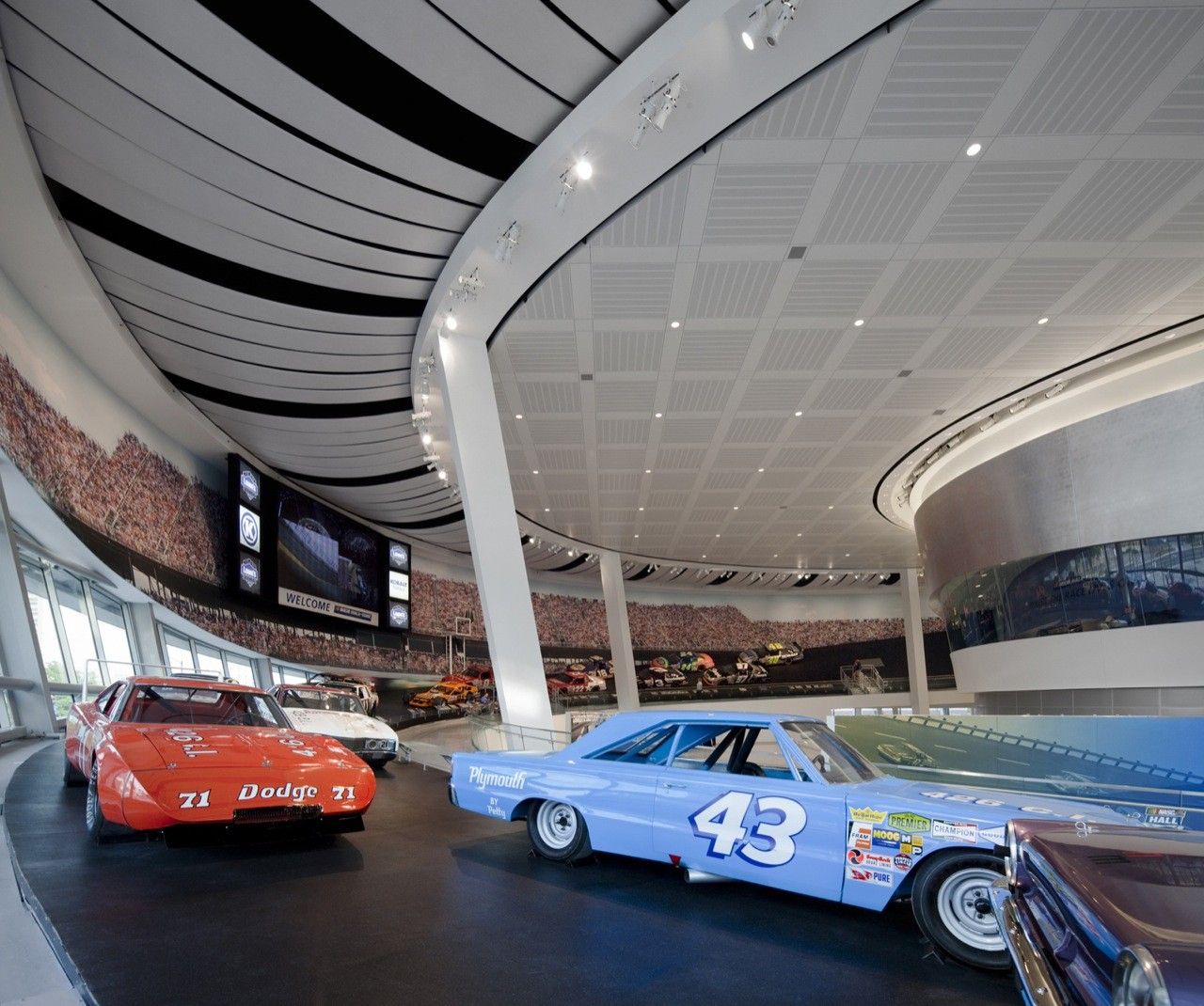
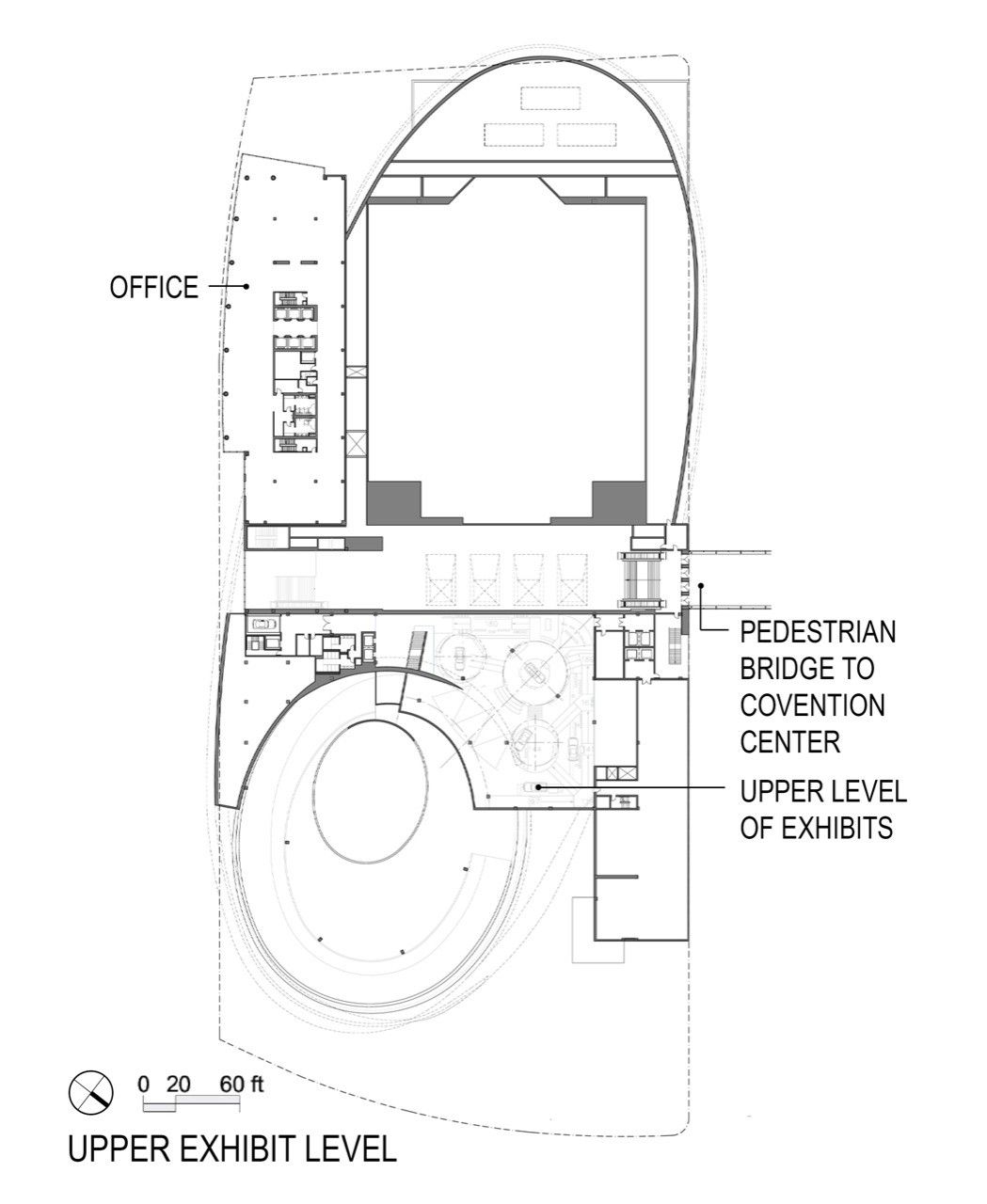
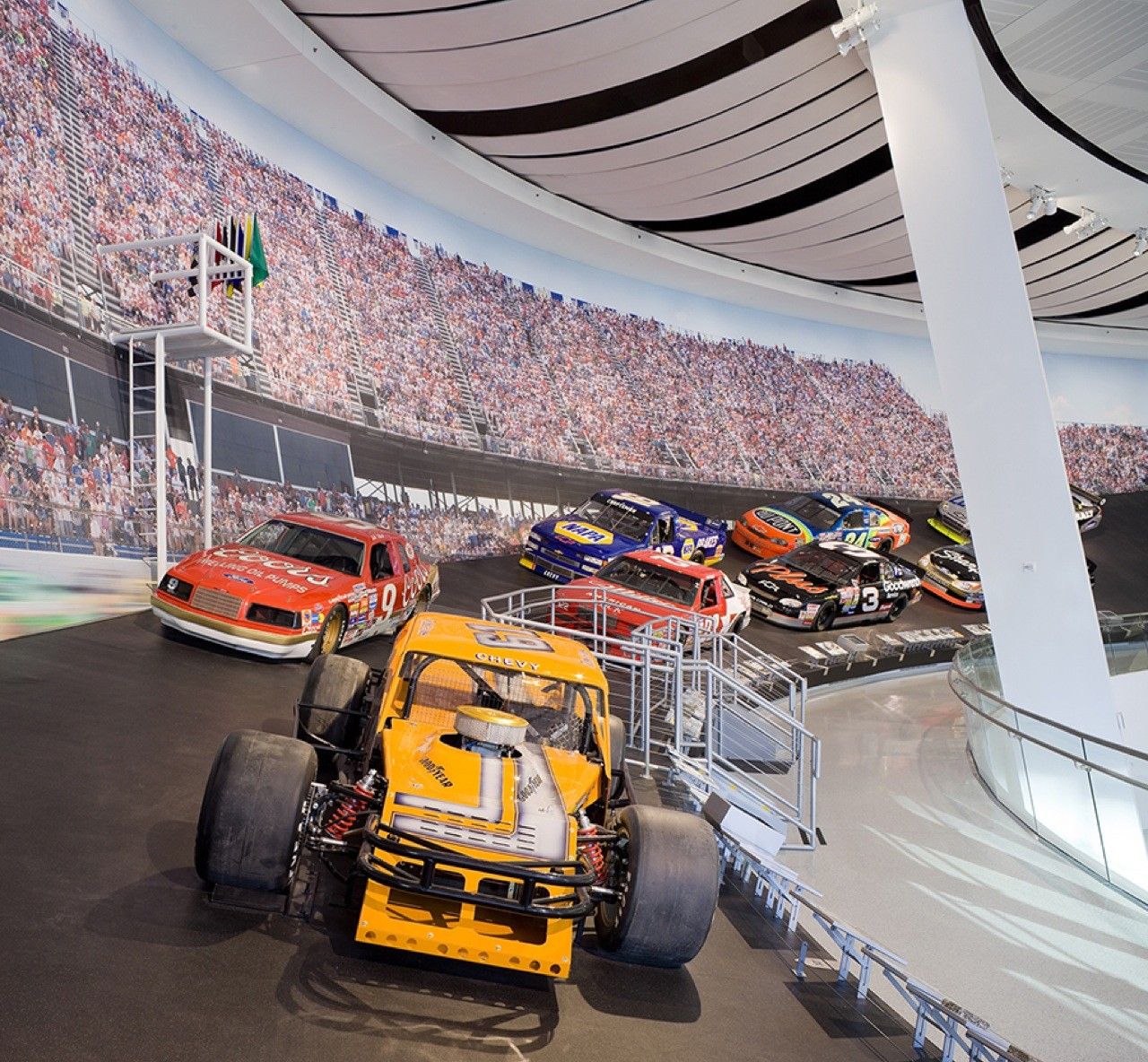
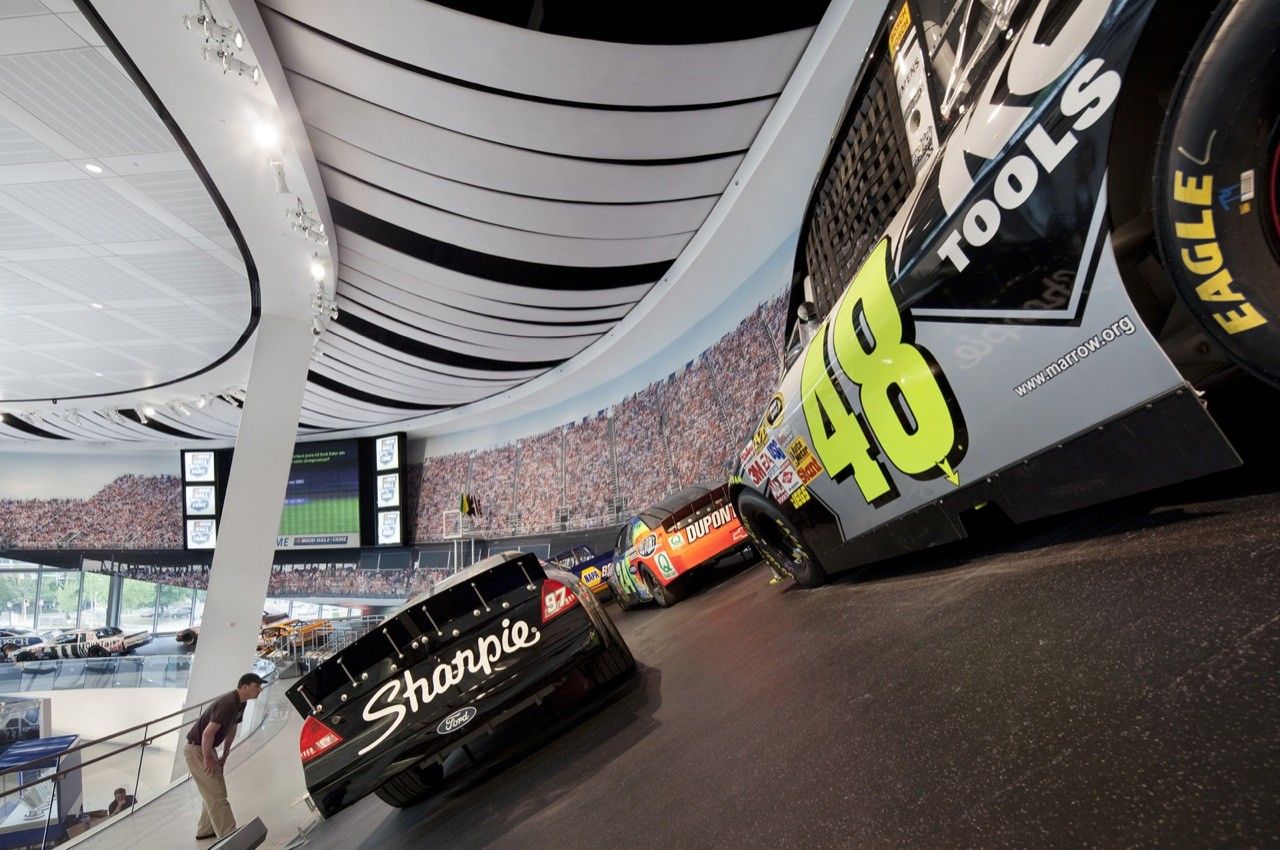
The Great Hall also turns into the essence of the sport’s philosophy and symbolizes the main orientation point for visitors. It leads them to the upper levels with rectangular shapes, which accommodate entry and exhibition space. What is important to note is how the architects have managed to guide visitors’ circulation from the exterior into the interior: a focal curved banked ramp is designed to guide them into the Hall of Fame and take them on a journey through the exhibition area where race cars are on display. Their positioning as artifacts is also crucial to the narrative of the space: as if frozen in motion, they resemble the Spirit of their own speed.
© Paul Warchol
The third interior space is called the Hall of Honour and is situated within the Great Hall and last, but not least – what brings life to the whole of the Hall of Fame Plaza is the broadcast studio for NASCAR’s media partners.
© Paul Warchol
Project info:
-
Architects: Pei Cobb Freed & Partners
- Area: 700000 m²
- Year: 2010
-
Photographs: Paul Warchol, Peter Brentlinger