

Yes, you can put a hammock in the room, indoors or out, if two conditions are met: there is enough distance between solid anchor points (about 2.7 m at the very least for a full hammock, and usually more), and both anchors go into structure, not plasterboard. This guide is for homeowners, renters checking what is possible and interior designers. It keeps our 20 ideas, and adds a dimensioned layout table, a worked anchor-load example and a materials and lighting checklist.
Hammocks and hanging chairs bring a playful, holiday mood into a room that can be enjoyed all year. They come in many styles, from dark woven designs to bright colours, and from minimal pieces to a full boho statement. Hammocks are often thought of as purely outdoor furniture, but they are not only for the great outdoors. With the right anchors you can hang one in most rooms of a house and use it whatever the weather, then take it outside in summer, between trees in the garden or by a lake.
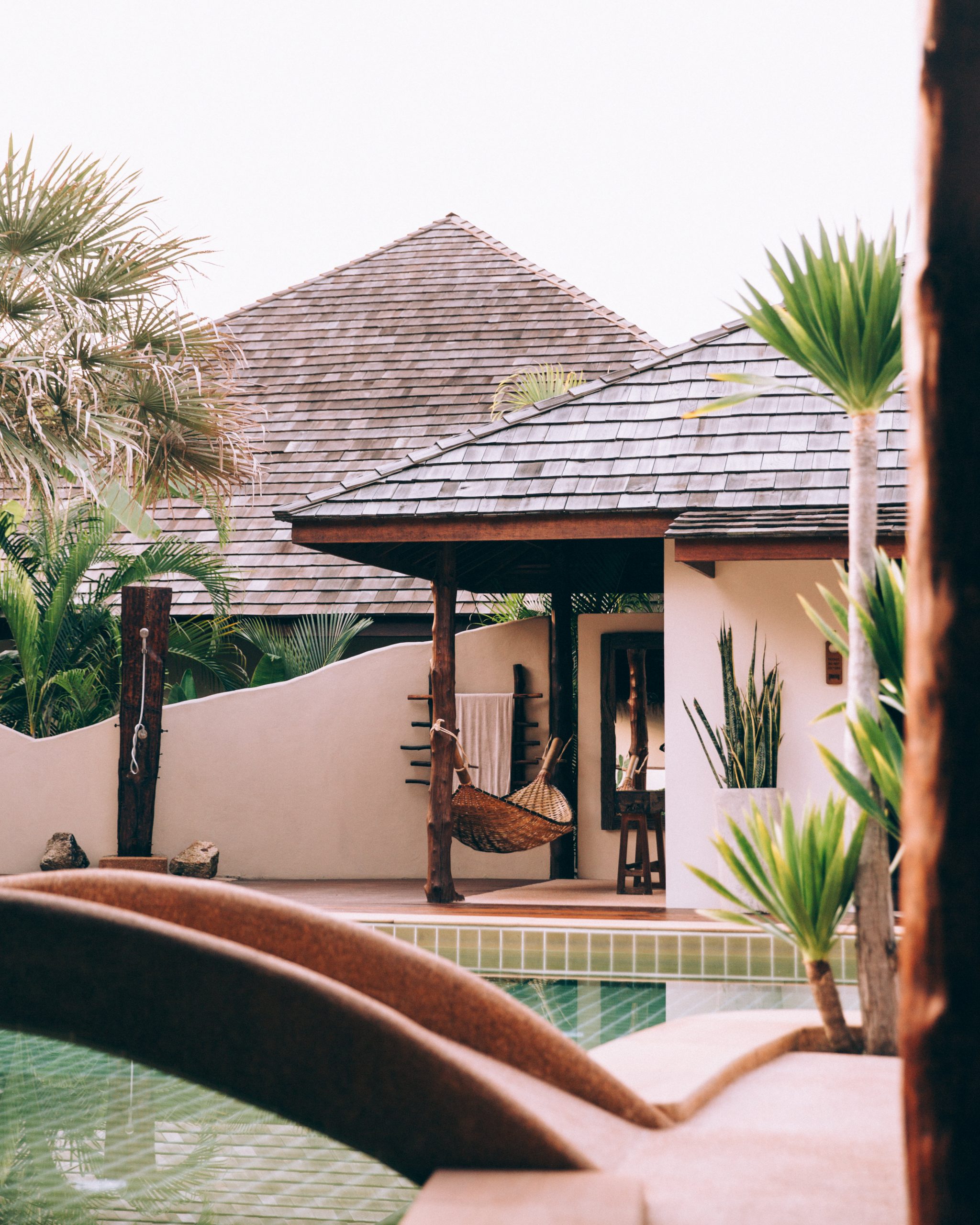
©Brodie, Burst.shopify.com
Do hammocks help with anxiety?
There is no good clinical evidence that hammocks treat anxiety, so be wary of anyone who says they do. What research does show is that gentle rocking can help sleep. In a study by Perrault and colleagues, published in Current Biology in 2019, 18 young adults slept one night on a slowly rocking bed and one night on a still bed. On the rocking night they reached non-REM sleep sooner, spent longer in deep sleep, woke less, and remembered more in an overnight memory test. An earlier study by the same Geneva group (Bayer et al., Current Biology, 2011) found that rocking during a 45-minute nap helped people fall asleep faster. Neither study used a hammock and the groups were small, so treat a hammock as a comfortable place to rest, not as therapy. A good hang is also more comfortable on the back than many expect: lying slightly diagonally in a gathered-end hammock gives a flatter lie than lying along its centre line.
20 brilliant ways to include hammocks in interiors and exteriors
Here we look at hammocks in their main types and how they can enrich indoor and outdoor spaces, from a home library or lounge to a bedroom or patio. Each idea notes what to check before you hang.
1. Hang one on your balcony
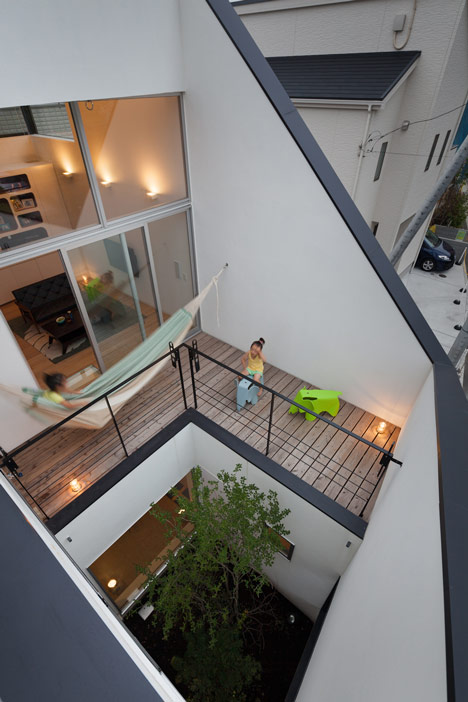
Courtesy of Ofuna
If you do not have a garden, a balcony can still give you a relaxing spot with a view and fresh air. On a rented or shared building, check with the landlord or building manager before drilling into the façade or balustrade, and never hang from a railing that was not designed for it.
2. Bring nature indoors
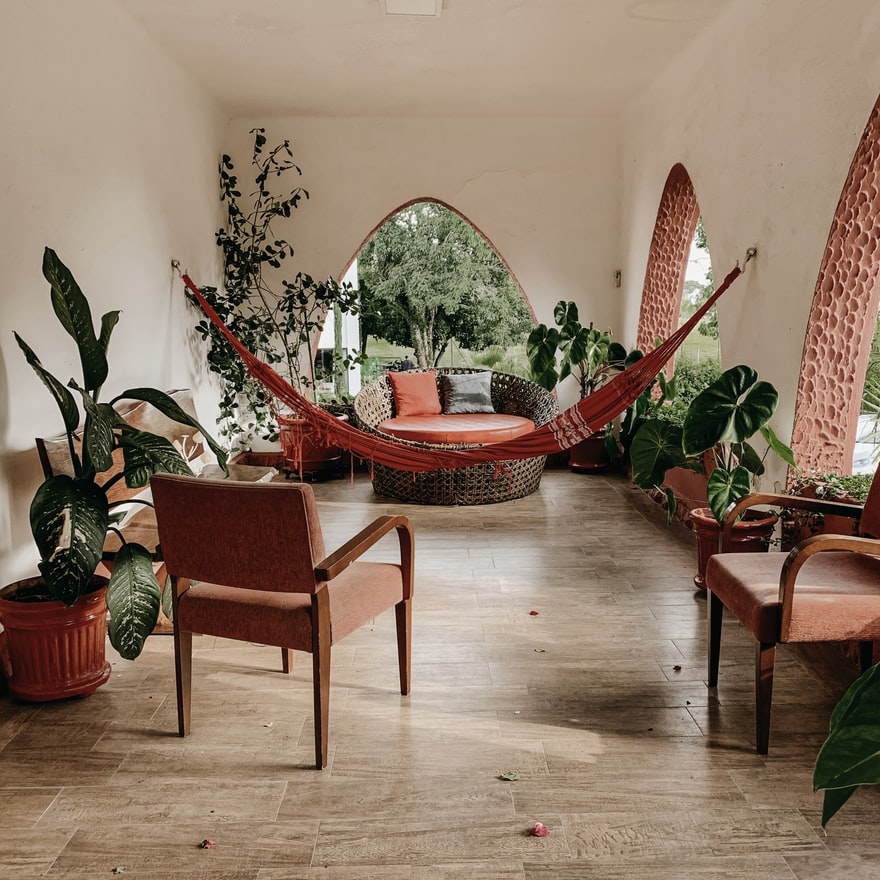
Courtesy of Jonathan Borba
Combine your hammock with plenty of plants to turn a dull corner of an apartment into a calm retreat. Keep pots and their saucers out of the swing path.
3. Hang it in your bedroom
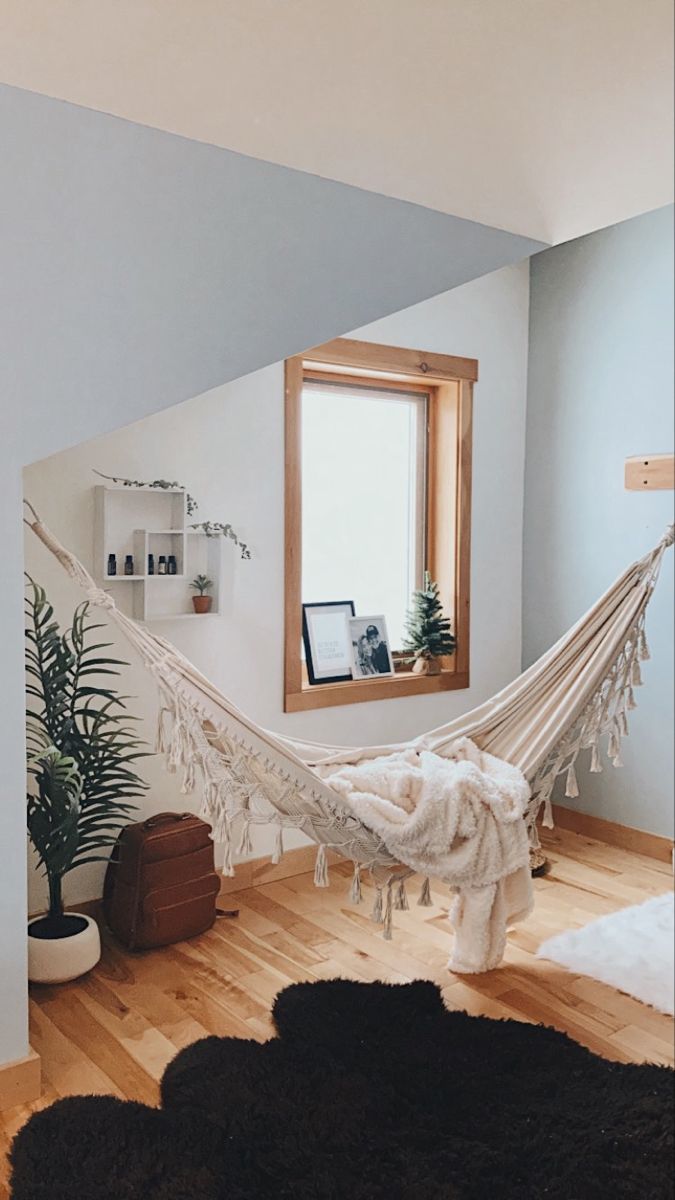
Courtesy of Emma Lynna
A hammock beside the bedroom window makes a quiet place to end the day. Window and door frames are useful anchor positions because the framing around openings is usually doubled.
Also read: Bedroom design ideas for low space
4. Create an indoor play corner
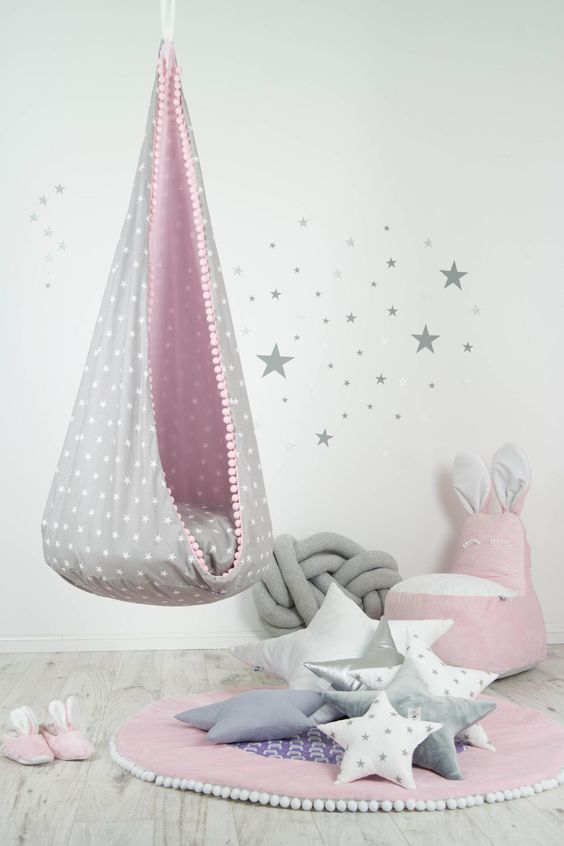
Courtesy of Etsy
Creating a small playground for kids out of a pod-style hanging seat can save space in a small apartment: it works as both a swing and a den. Hang children’s seats low, keep a soft floor below, and follow the maker’s age and weight limits.
5. A more relaxing reading corner
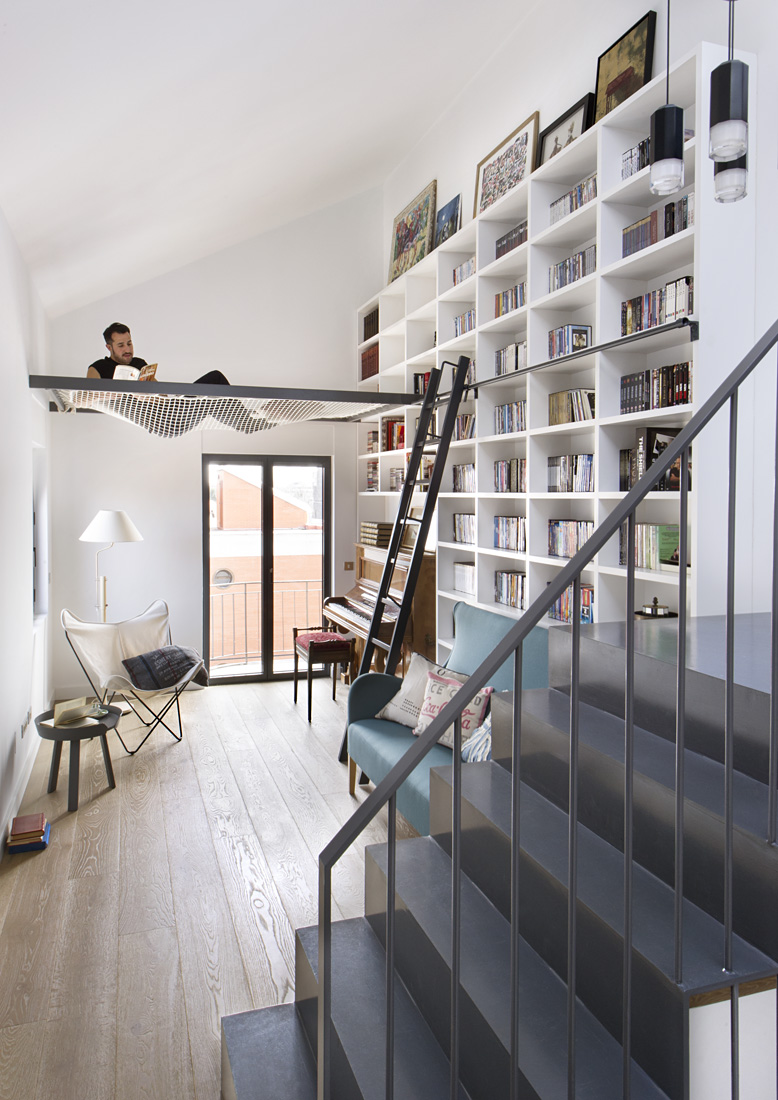
Courtesy of Eque y Seta
Hang a hammock beside a bookshelf for a reading corner. Fix the anchor to the wall or ceiling structure, not to the bookcase itself, unless the bookcase is built in and designed for the load.
6. Add one to your modern living room
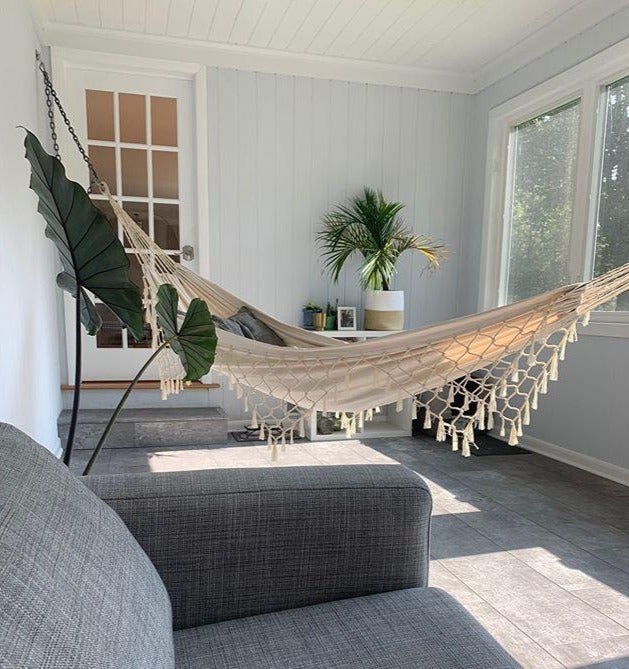
Courtesy of Limbo Imports
A macramé fringe hammock is a relaxing addition to a modern home. Lighter colours keep it from dominating the room.
7. Make it the focal point of your room
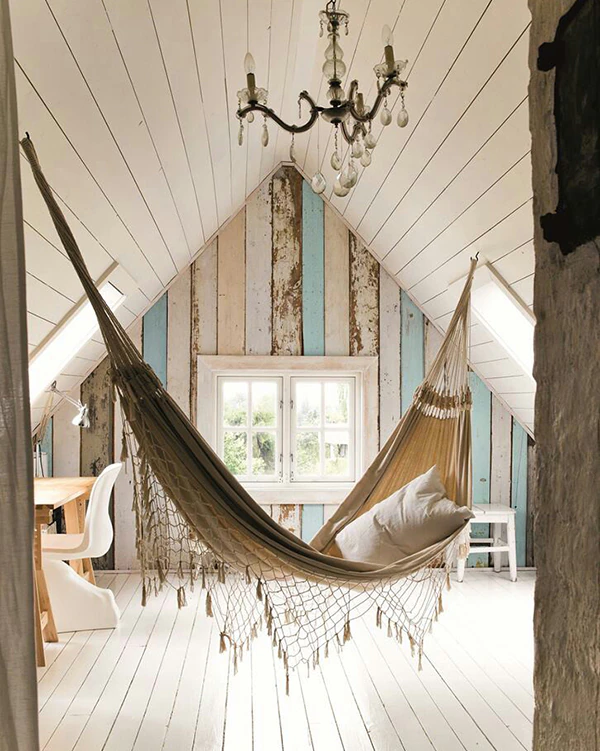
Courtesy of Livinator
Point the hammock towards a view or your favourite spot in the house so it becomes the centrepiece. In an attic room, the ridge beam or collar ties may look like natural anchors; ask a builder before using them.
8. Use it to divide zones
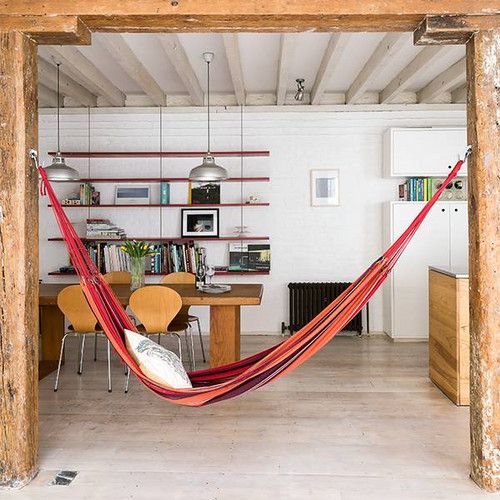
Courtesy of Domino
In an open-plan apartment a hammock can mark the line between two functions, such as dining and lounging, and give you a place to take a break between tasks. Leave a clear walking route around it.
9. Make the best of a double-height ceiling

Courtesy of Derek Swalwell
A double-height space can take a large hanging net. A net of this kind is part of the building’s structure and safety design: it needs an engineer, edge protection and, in most places, building control approval, so it is a project, not a weekend job.
10. Hang a simple swing
If you want one in your apartment but do not have room for a full hammock, a hanging swing chair needs only one anchor point.
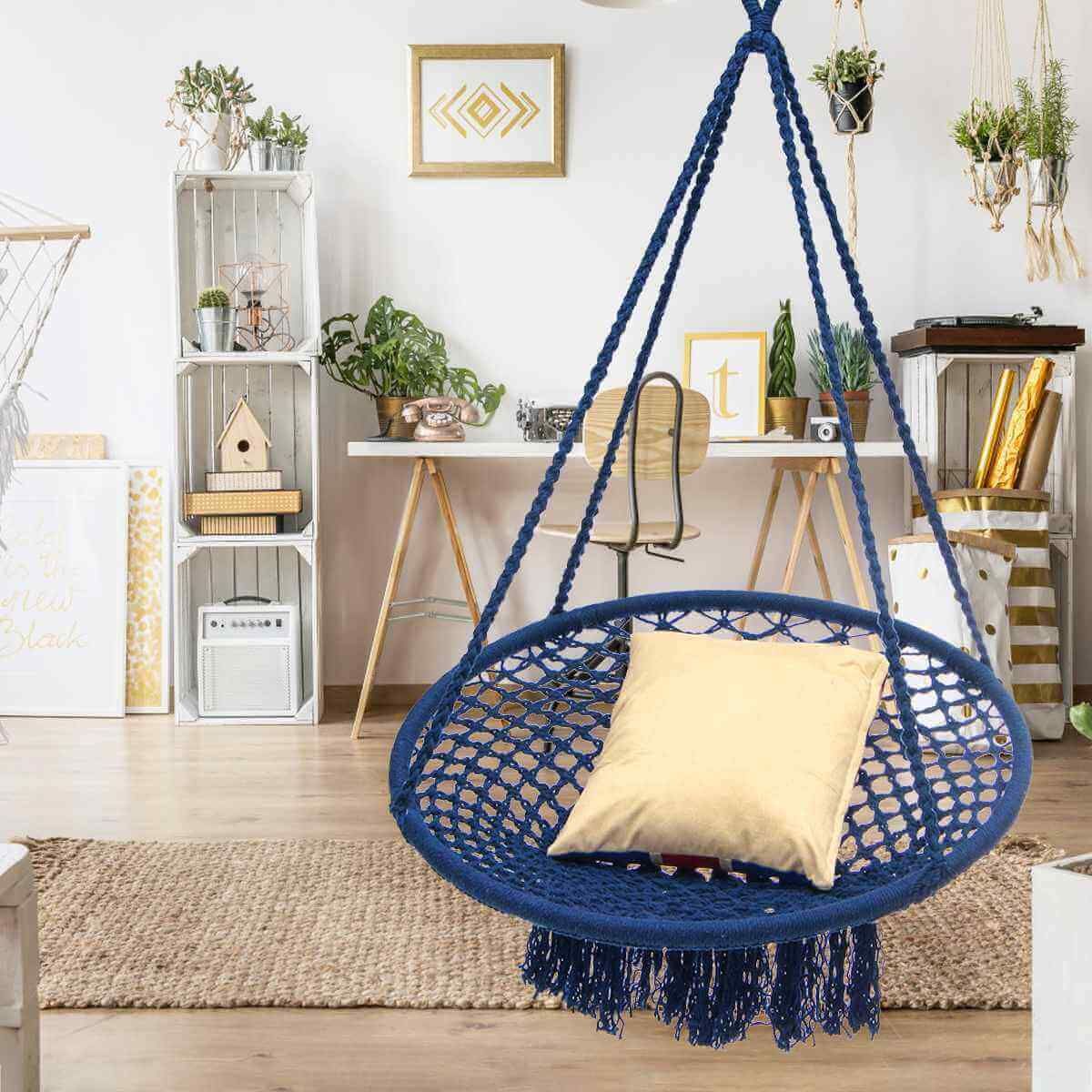
©Architecture Ideas, Pinterest
11. Hang plenty around the pool
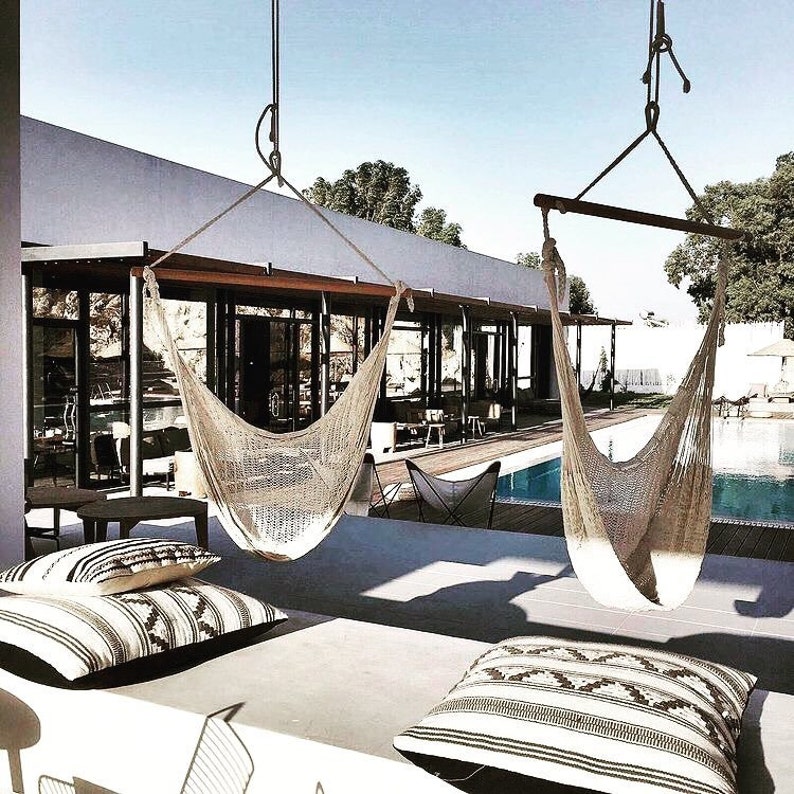
Courtesy of Etsy
Several hanging chairs around a pool make a shaded place to rest. Outdoors, choose fabrics and fixings rated for sun and water.
12. Over the pool

Courtesy of Anthro
A hammock over the edge of a pool gives a direct connection with the water. Keep it over the deck edge rather than deep water, and away from where people dive.
13. Use it instead of a sofa
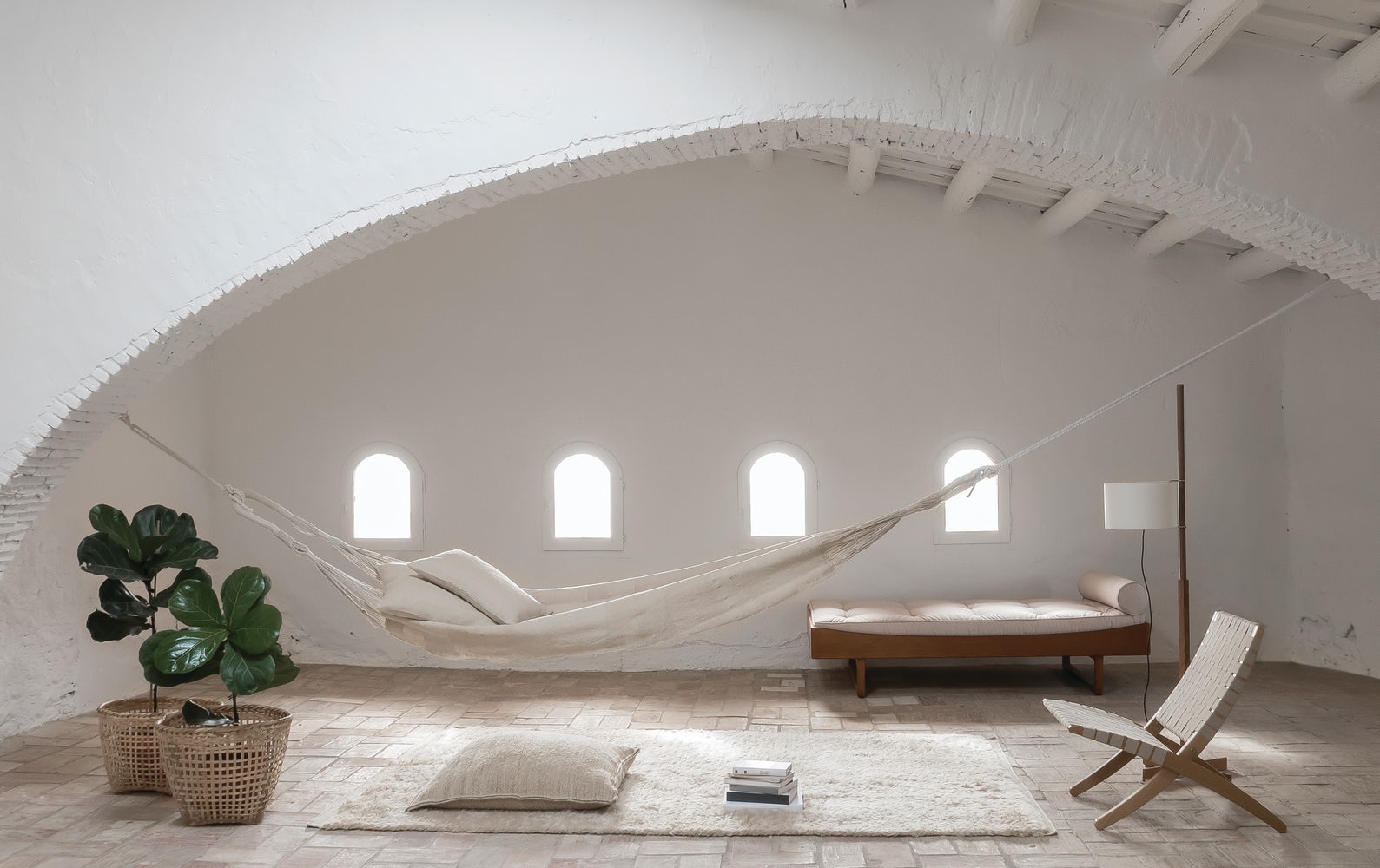
Courtesy of Design Within Reach
For a bold living room, use a hammock in place of a sofa. It works best as a second seat: a sofa still suits guests and long evenings better.
14. Hang some hammock chairs
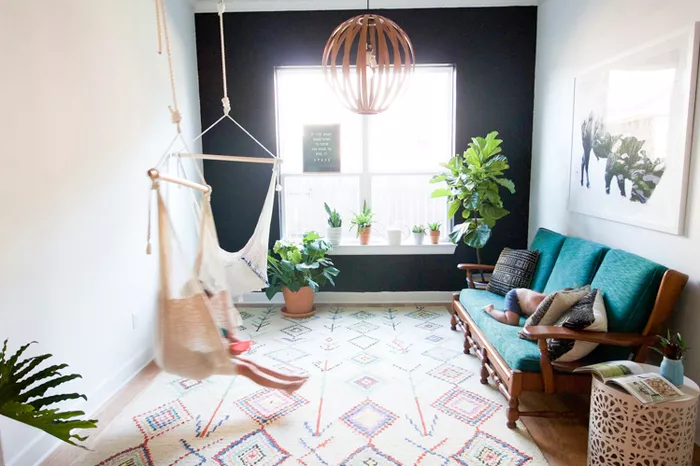
Courtesy of Live Free Creative Company
A couple of hammock chairs can turn a spare room or an awkward corner into a comfortable sitting space.
15. Hang it where the sun is
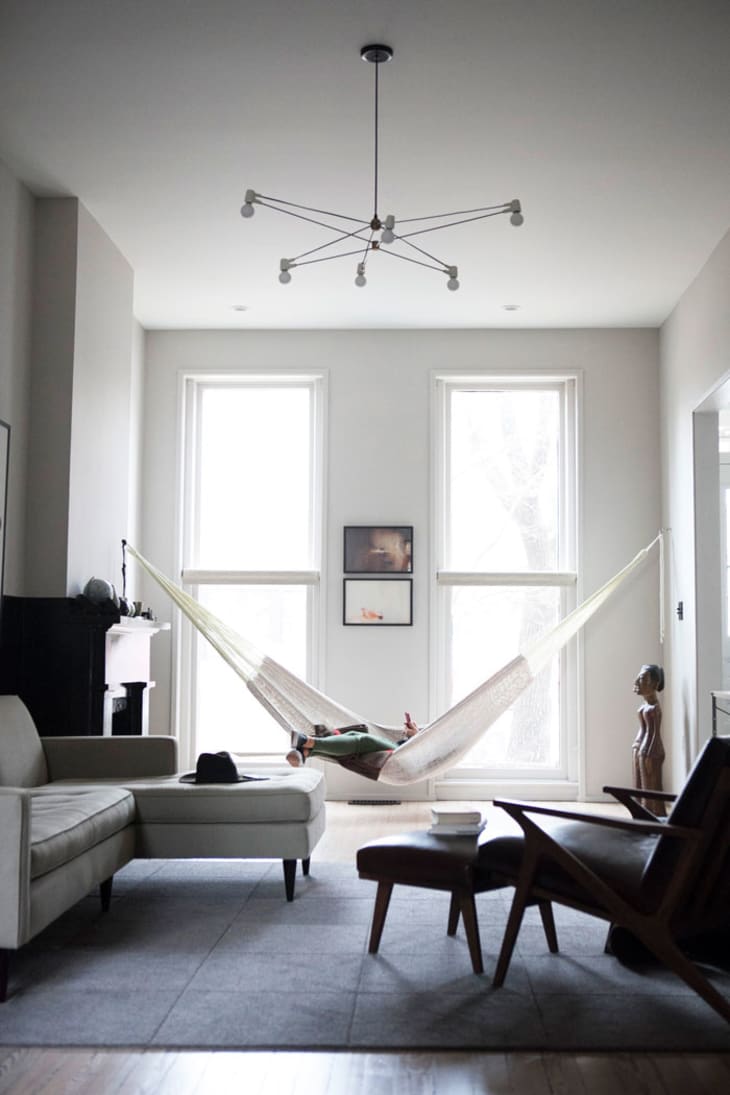
Courtesy of Design Sponge
Want to feel on holiday? Hang the hammock where there is plenty of daylight. Indoors, strong sun fades fabric, so a light cotton or a fade-resistant synthetic lasts longer by a window.
16. What about a beanbag hammock?

Courtesy of La Beanock
Some makers sell hybrids of a hammock and a beanbag, such as the Beanock shown here, which combine a fabric sling with cushioning. Check the frame or anchor requirements before you buy.
17. You can hang one in the kitchen
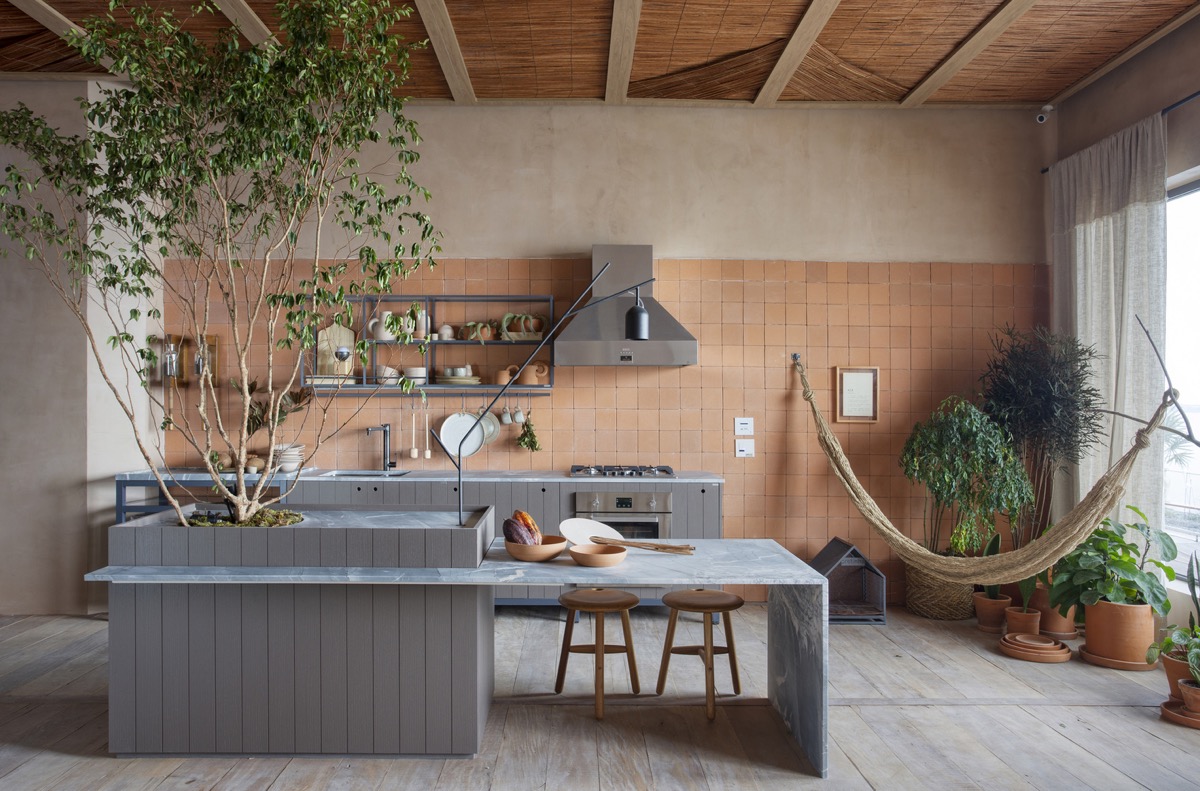
Courtesy of Natália Lemos + Paula Pupo
If you spend a lot of time in the kitchen, a hammock at the edge of the room lets you rest while the dough proves. Keep it well away from the hob and from where hot pans are carried.
18. Use it to add more cosiness
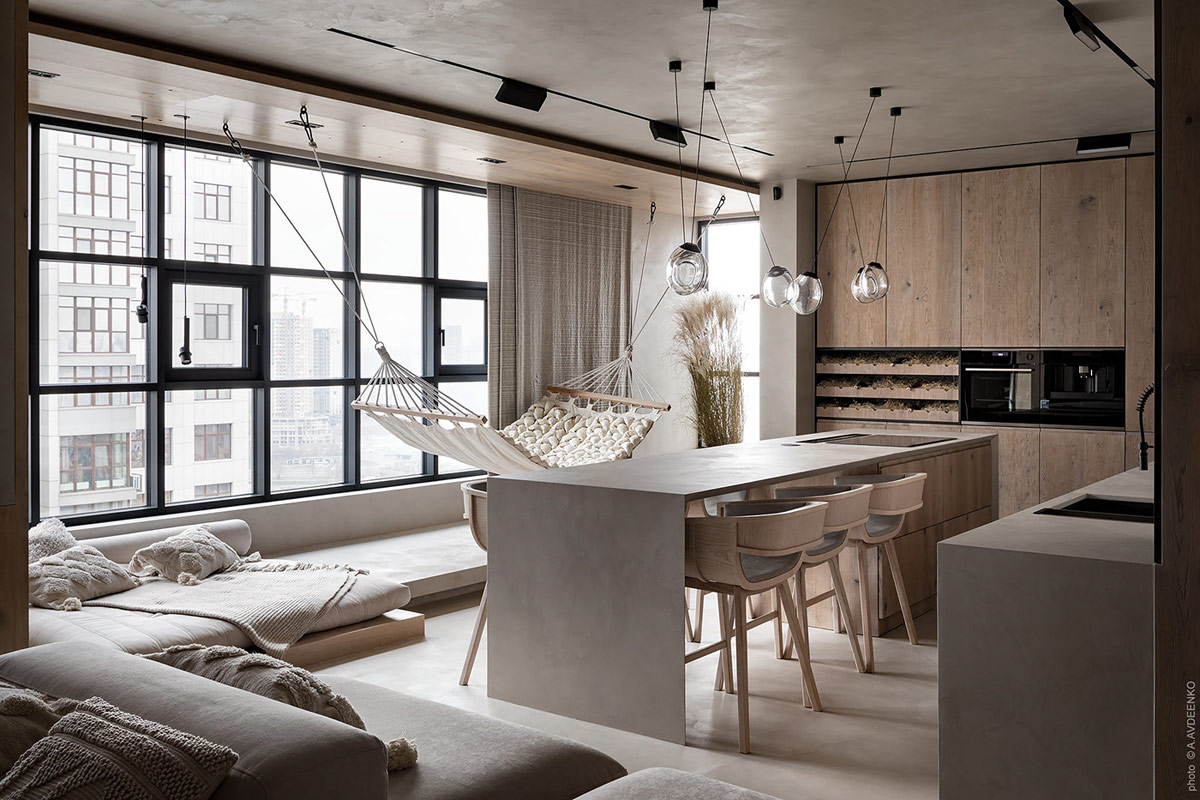
Courtesy of Andrey Avdeenko
In an open-plan lounge, a large hammock beside a daybed gives two places to lounge with a view of the city, ideal for sleepy afternoons.
19. Be strategic about the location
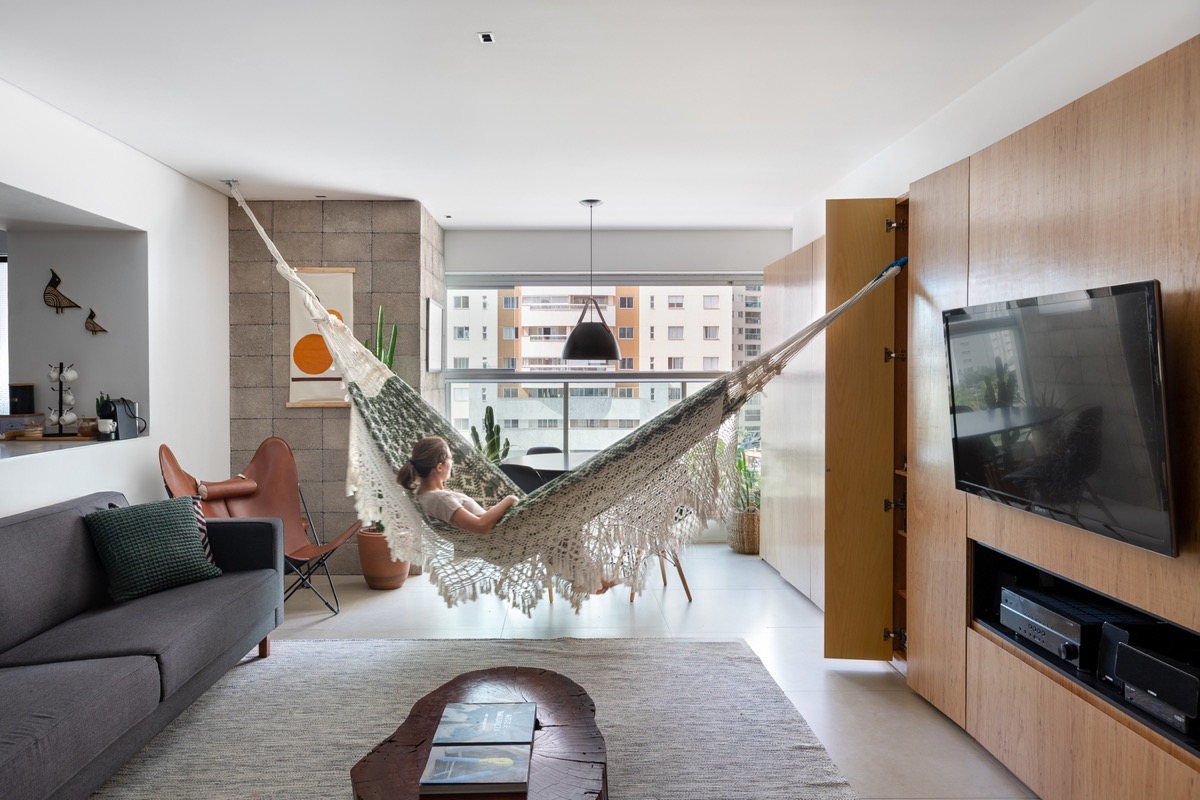
Courtesy of CoDA arquitetos
Place the hammock so you can see both the window and the television, as in this example.
20. Choose a design that suits your aesthetics
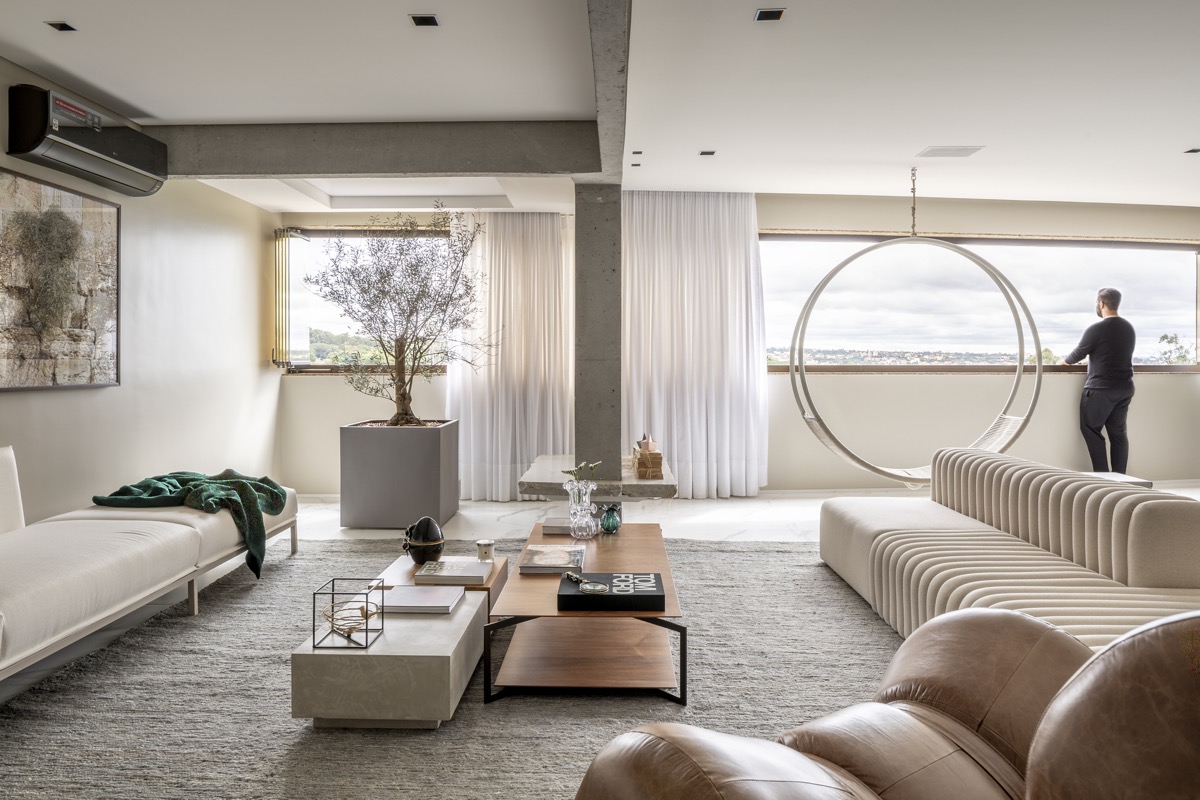
Courtesy of Studio 2 Arquitetura e Interiores
A loose swing silhouette may not suit a more formal room. A rigid circular hanging chair, like this one, balances comfort and a tidier look. For the wider picture, see our guide to interior design styles that last.
Layout options with dimensions
Before you plan a hammock in the room, measure the room. The figures below come from hammock-hanging guidance (cited in the table) plus simple geometry; they are planning figures, not a structural design. Always follow the maker’s instructions for your model.
| Layout | Anchors | Planning dimension | Notes | Basis |
|---|---|---|---|---|
| Wall to wall, full hammock | 2, into studs or joists at each end | About 3.6-4.6 m (12-15 ft) between anchors for a standard hammock; about 2.7 m (9 ft) is a practical minimum | Varies with hammock length; check the maker's figure | My Open Country hang guide; Hansen, The Ultimate Hang |
| Diagonal across a small room | 2, in opposite corners | A 3.0 x 3.0 m room gives 4.24 m corner to corner | Corners often have extra framing; keep a walking route | Geometry (3.0 x 1.414); Hansen suggests diagonal hangs |
| Hang angle | – | About 30 degrees from horizontal at each end | Tighter angles raise the anchor pull sharply (see worked example) | Hammock hang calculators (Omni; Hansen) |
| Sit height | – | About 45 cm (18 in) above the floor when occupied | Default sit height in common hang calculators; adjust to taste | Omni Calculator default |
| Hanging chair | 1, into a ceiling joist or beam | Full user weight plus swing on one point | Leave clear space for the swing; follow the maker's limits | Yellow Leaf Hammocks guidance; engineering judgement |
| Free-standing stand | None | Stand length set by the maker | Good for renters and concrete ceilings | Maker's data |
Source: Hammock-hanging guides (The Ultimate Hang; My Open Country; Omni Calculator) and Arch2O geometry (as of 1 November 2026).
Worked example: how much load does each anchor take? A hammock hung in a curve pulls on each anchor along the strap, not straight down. For a person of weight W lying centrally, the pull in each strap is about W divided by (2 × sin θ), where θ is the angle between the strap and the horizontal. For an adult of 100 kg, the weight is about 981 newtons. At the usual 30° angle, sin 30° = 0.5, so each anchor carries about 981 / (2 × 0.5) = 981 N, roughly the person’s full weight. Pull the hammock tighter to 15° (sin 15° = 0.26) and each anchor carries about 981 / 0.52 = 1,890 N, almost twice as much, and much of it now pulls sideways out of the wall. Getting in and swinging add more. This is why a slack, curved hang is both more comfortable and kinder to the building, and why each anchor should be rated for well over the user’s weight. A hanging chair on one ceiling anchor carries the whole load, plus the swing, on one point.

A cotton hammock hung indoors by a window: the deep, slack curve is what keeps the pull on each anchor close to the user's weight. Photo: freestocks.org, CC0, via Wikimedia Commons. Image: freestocks.org from Olsztyn, Poland (Creative Commons Zero)
Materials and lighting checklist
- Structure first: for any hammock in the room, find the timber stud or joist centre with a stud finder; drill a pilot hole and use a lag eye bolt or a shouldered eye screw sized by the maker. Do not anchor into plasterboard, metal studs or a single thin batten.
- Masonry and concrete: use fixings designed for masonry or concrete, never wood screws. In a rented flat, ask before drilling.
- Not sure? Ask a builder or structural engineer, especially for ceilings, roof trusses and anything over a stair, pool or double-height space.
- Suspension: straps, chain or rope rated for the load, with an adjustable link so you can set the curve; check knots and hardware for wear.
- Fabric indoors: cotton is soft and breathable; outdoors, choose synthetics or treated fabrics that resist sun and damp, and bring cotton in when it rains.
- Floor: a rug under the hammock softens the floor if someone slips out; keep sharp furniture corners out of the swing path.
- Lighting: put a reading light beside, not above, the hammock so it does not glare in your eyes when you lie back; soft indirect lighting in the living room keeps the corner calm in the evening.
- Style: fringed cotton, macramé chairs and rattan suit a relaxed boho interior design; plain canvas or a rigid ring chair suits a minimal room.
Sources and further reading
- Derek Hansen, Hanging a hammock indoors, The Ultimate Hang (anchor spacing, studs, eye bolts).
- Omni Calculator: hammock hang calculator (angle, sit height and anchor height).
- Perrault, A. et al. (2019), Whole-night continuous rocking entrains spontaneous neural oscillations with benefits for sleep and memory, Current Biology 29(3), 402-411.
Next step: measure the room’s longest clear run, mark the studs or joists at each end, and check the distance against the table above before you choose a hammock in the room. If the run is short, a single-point hanging chair is usually the better choice.

Toqa Mostafa is a dedicated editor at Arch2O, bringing a sharp editorial perspective to architectural storytelling. Based in Egypt, she curates and refines content that showcases innovative design and urban solutions. Her work at Arch2O highlights her ability to engage readers with compelling narratives, bridging architectural creativity and critical discourse. Toqa’s editorial expertise contributes significantly to Arch2O’s mission of exploring the intersection of design, technology, and sustainability.