

Have you ever been tired of working for other companies and felt like it’s finally your time to shine? Or just finished architecture school and felt that growing determination to step into the real world with something that’s your own? You’re not the only one—take a look at these inspiring 3 Young Architecture Firms Trying to Change The World! However, before you hand out that first business card, you’ll need to set up your architectural firm properly and give it the best possible head start. Follow the 5-point guide below for starting your own architectural firm.
What does an architecture firm do?
An architecture firm is a studio or practice made up of licensed professionals and trained architects who use their technical skills, scientific knowledge, and design sensibilities to create buildings, interiors, and spaces. These professionals don’t just draw beautiful plans—they may also plan, coordinate, and supervise the construction process, working closely with clients, consultants, and contractors to bring their designs to life.
How much does it cost to start an architecture firm?
Startup costs vary widely depending on where you live, whether you rent a studio or work from home, and what software, hardware, and staff you need at the beginning. Many architects start lean—using a home office, basic equipment, and a simple website—and then gradually reinvest profits into better tools, spaces, and talent.
Do I need industry experience before starting my own practice?
Real-world experience in other firms can be incredibly valuable, especially for understanding contracts, coordination, and how projects really run behind the scenes. That said, many architects start small practices early in their careers, balancing their ambition with mentorship, collaboration, and a willingness to keep learning on real projects.
5-point guide for starting your own architectural firm
1. Build the identity of your firm

Courtesy of audrius embraces architects
Any good business begins with clarity about where you want to go. For an architecture firm, your goals might involve the size of the team, revenue targets, the type of work you want to be known for, or where you want the practice to be in 5, 10, or 20 years. Start by writing down 3-5 clear, honest goals for your business, such as:
– What size do you imagine the firm growing to?
– Do you want to focus mainly on design work, or also enjoy managing the business?
– What type of projects and clients do you most want to work with?
– Do you see yourself selling the firm in 5 years, or building it as a long-term practice?
– Do you want the firm to become your primary source of income for the next 20 years?
Looking at other studios can also help clarify your ambitions. You might take cues from established practices in your city or even explore a short visit to 6 Prominent Architecture Firms to see how different offices work and present themselves.
2. Budget, Marketing, and Development
Courtesy of arch marketing
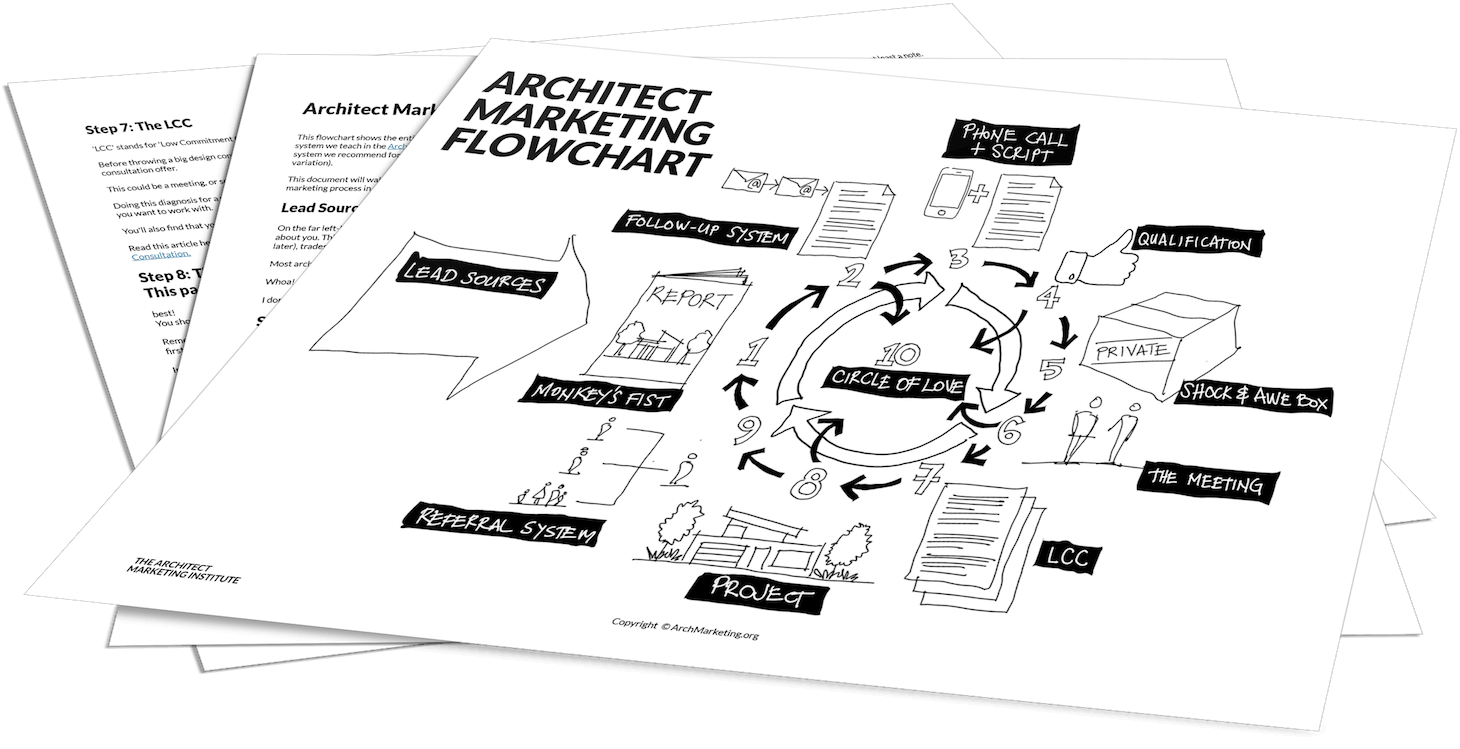
Most startups, including architecture firms, need more money and patience than people expect in the early days. The amount you need depends on your local market, your software and equipment requirements, whether you hire staff, and what kind of practice you’re trying to build. Instead of panicking, take a quiet moment to sit down and sketch out a simple, realistic budget. Consider questions like:
– Will you get a bank loan or personal loan, or will you bootstrap using your own savings?
– Can you start with minimal equipment and a modest location, then upgrade as your firm grows?
– How will you start marketing—through family, friends, former colleagues, word of mouth, social media, or all of the above?
– When will you launch a website to showcase work, publish ideas, and track your portfolio over time?
– How much will you need to set aside to pay employees and collaborators such as photographers, draftspeople, and visualizers?
If you’re a young architect planning a small, focused practice, it can be encouraging to learn from others on a similar path—see how young architects and small architecture firms structure their businesses and position themselves.
3. Setting up space

photography by © Patrick Reynolds
Creative people need a space that supports their creativity. Based on the size of your firm, your aesthetic tastes, and your location, design an office or studio that expresses your firm’s identity from the moment someone walks in. If you’re bootstrapping, working from home can be a perfectly smart first step, with advantages like privacy, no commute, and lower overheads.
If working from home full-time doesn’t fit your lifestyle, you can still design a lean setup: do most of your work remotely and rent a co-working or meeting space in the city when you need to meet clients. When you’re choosing and designing your studio, think about:
– A location that’s easy to reach and makes a solid first impression.
– A pleasant work environment with natural light, good ventilation, comfortable acoustics, and flexible task lighting for drawings and screens.
– A fair price and a clear, well-understood lease or contract.
– Essential studio amenities such as computers, stationery, ergonomic furniture, storage, and a small resource library.
– A space that reflects your design principles and personality—from the way you display models and drawings to how you arrange collaborative and quiet zones.
4. Workflow Management
Managing your workflow is one of the most important ingredients of a healthy architecture practice. Delivering projects on time—and communicating clearly about timelines—builds trust and a strong reputation in the market. As the principal architect, you’ll need a clear picture of how long each project phase takes, what stage each job is at, and who in your team is responsible for what.
Project management software can make this much easier, from tracking design milestones and meetings to handling invoicing and reporting. One example is Workflow Management Software, but you can choose any tool that fits your way of working. Here’s a simple checklist to guide your internal processes:
– Track time for all ongoing projects before committing to new ones.
– Use a structured project management system (even a simple spreadsheet is better than nothing).
– Create and store templates for meeting minutes, fee proposals, invoices, and final reports.
– Collaborate with bigger firms when it helps you learn or access larger projects.
– Participate regularly in design competitions to sharpen your skills and build visibility for the firm.
5. Get published, get noticed!

As a new firm, you’ll want your name to circulate within the design community as early as possible. One of the strongest ways to do this is by getting your work published or submitting it to competitions and awards. It also helps to study how established studios communicate—look at everything from intimate local practices to the best architecture firms in Chicago dominating the field and see how they present projects, narratives, and visuals.
Your final pointers for getting noticed include:
– Invest in high-quality architectural photography that matches your firm’s character and captures light, material, and atmosphere.
– Write clear, concise project texts that explain your design principles, key decisions, and how people experience the spaces.
– Maintain and regularly update your website with new work, ongoing projects, sketches, design ideas, and news about the practice.
– Conduct lectures, talks, and workshops to share your knowledge and connect with students, peers, and potential clients.
– Draw inspiration from young architecture firms that are shaping their own paths and carving out distinct identities.
If you’re still gaining experience before taking the leap, you can also focus on building the right skill set to join established practices—here’s what skills you need to add to your resume to join high profile architecture firms.
How do small architecture firms find their first clients?
Early clients often come from your existing network—friends, family, colleagues, and referrals from people who trust you and your work ethic. As your portfolio grows, your website, social media presence, public talks, and published projects become powerful tools for attracting new clients beyond your circle.
Is starting an architecture firm worth it?
Starting your own firm can be one of the most demanding yet rewarding decisions of your career. It gives you greater creative control and the chance to build a practice that truly reflects your values, but it also requires patience, persistence, and comfort with the business side of architecture.
The roller coaster of starting your own firm
Starting an architectural firm is not child’s play. The pointers above are just key pieces of a much larger, more intense process—but they can help you move from vague dreams to concrete action. The journey of beginning your own practice is a wild, exhausting, and exhilarating roller coaster, and for many architects, it becomes one of the most meaningful chapters of their professional lives.

Hadeer Shahin is the Built Projects Editor at Arch2O, where she curates innovative architectural works from around the globe. With a background in architecture from Alexandria University and hands-on experience in design and digital content, she bridges the gap between technical precision and editorial vision. Hadeer’s keen eye for spatial storytelling and her passion for contemporary design trends make her a vital contributor to Arch2O’s mission of highlighting excellence in the built environment.