

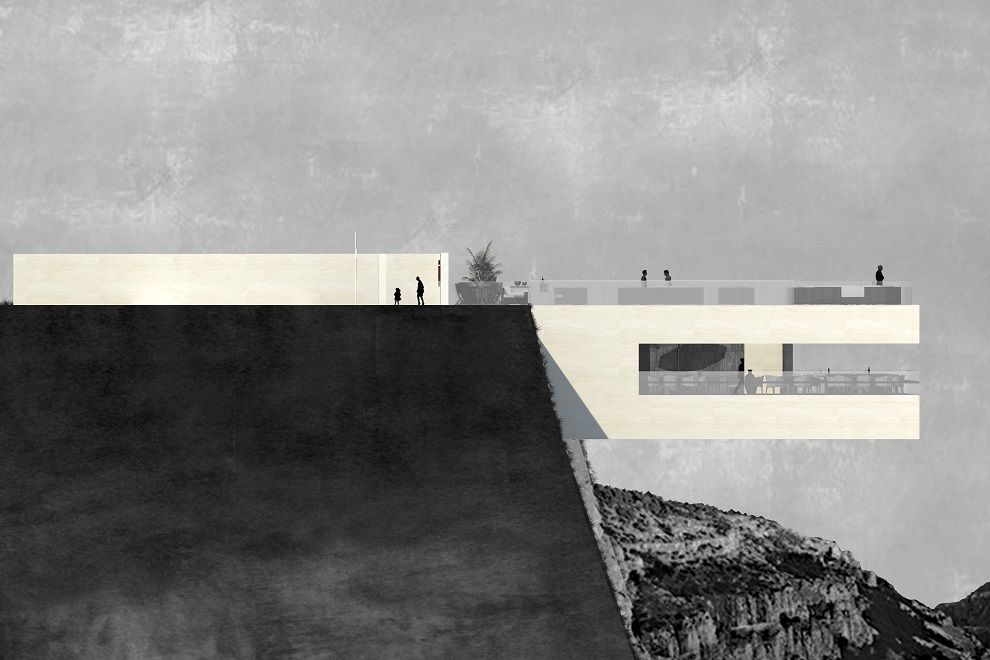
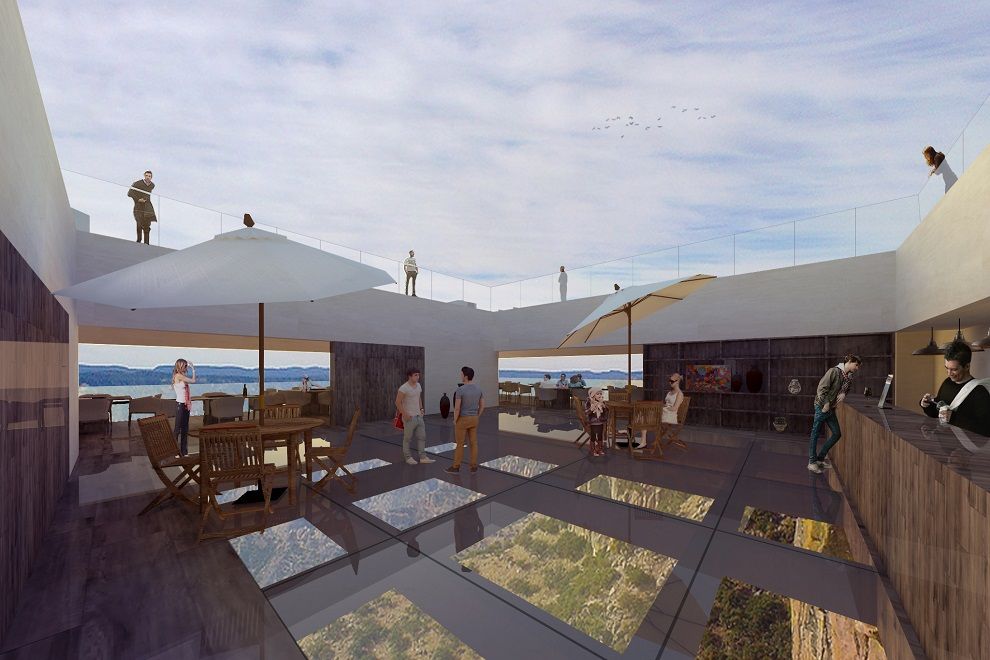
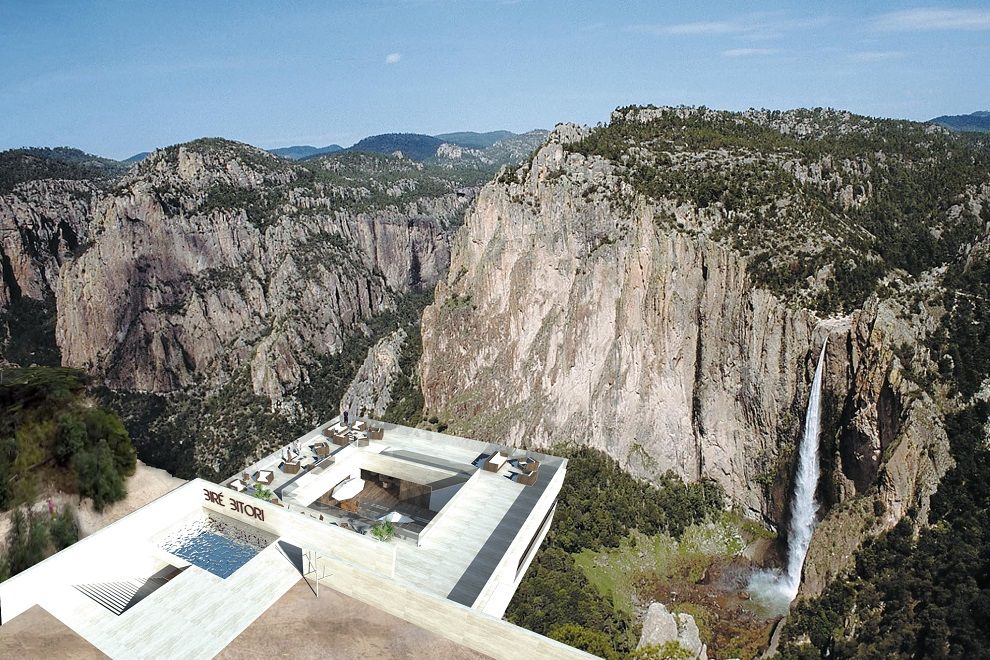
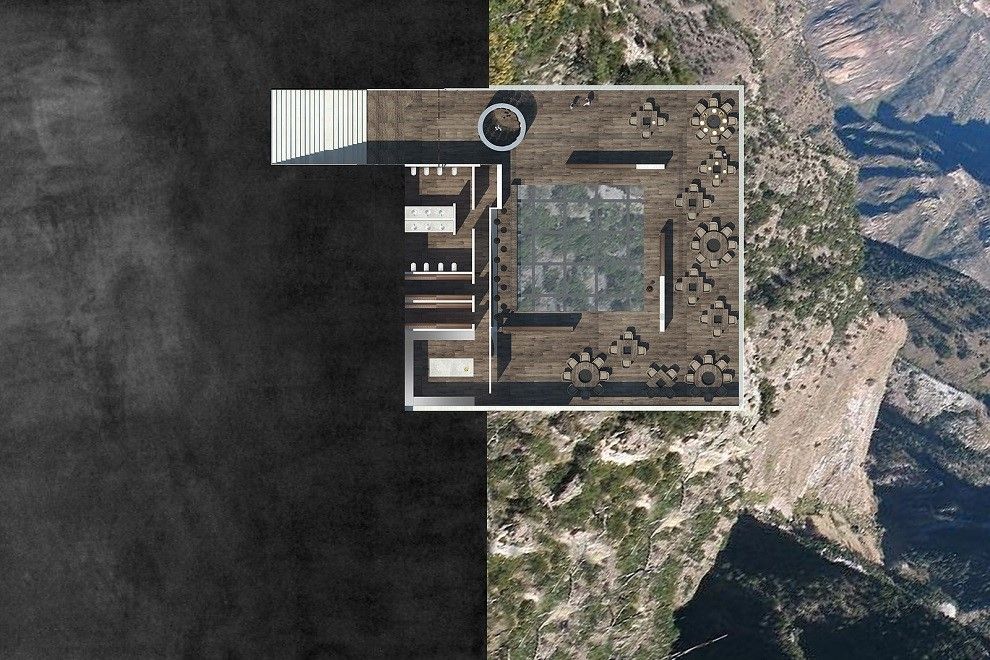
The Copper Canyon cliff in Mexico has been chosen by Tall Architects to build a restaurant that is based on a rock and completely suspended in the air. It seems that the Bire Bitori is a heart-stopping restaurant that was designed for adrenaline junkies and thrill seekers. This high preforming cantilevered concrete structure, highlights a top level swimming pool , a glass tiled 2nd floor looking down 6,000 feet to the beautiful Copper Canyon cliff.
Courtesy of Tall Arquitectos
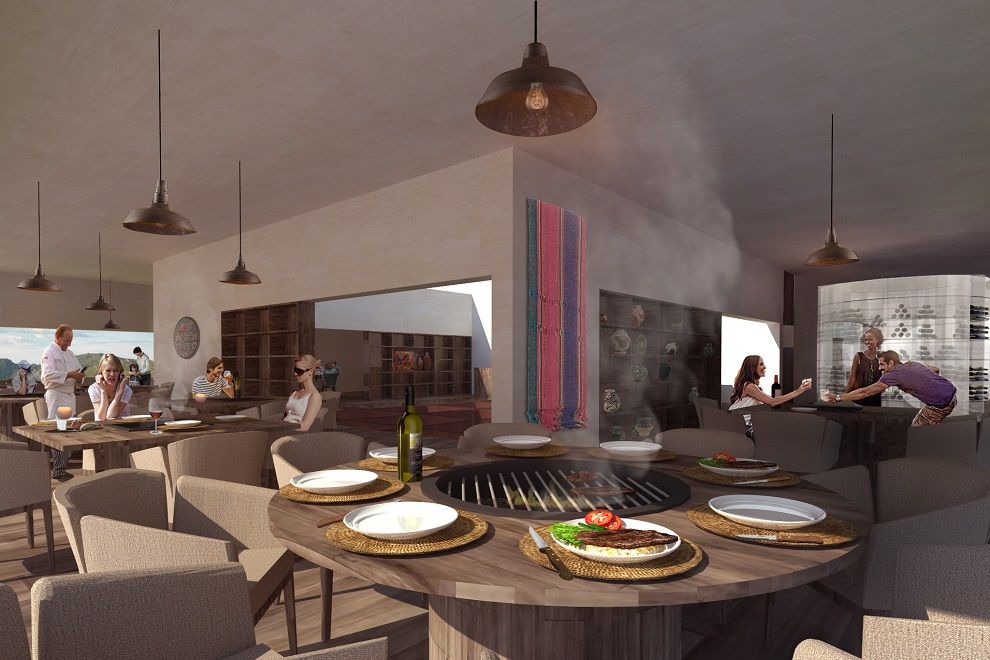
The design consists of two parts: the first floor is a restaurant with glass floor and big windows where guests have a view of the Canyon, which may not only suit the design architect in terms of reducing weight but also it’d allow a stunning view of the deep heights (approx 6,000 feet) beneath the restaurant. The open-plan interior is characterized by a natural material palette and is lined with picture windows to ensure diners are always connected to the extraordinary landscape that surrounds them. The second floor is the rooftop, where guests are open to take panoramic photos along with of famous Basaseachic Falls in the background.
Courtesy of Tall Arquitectos
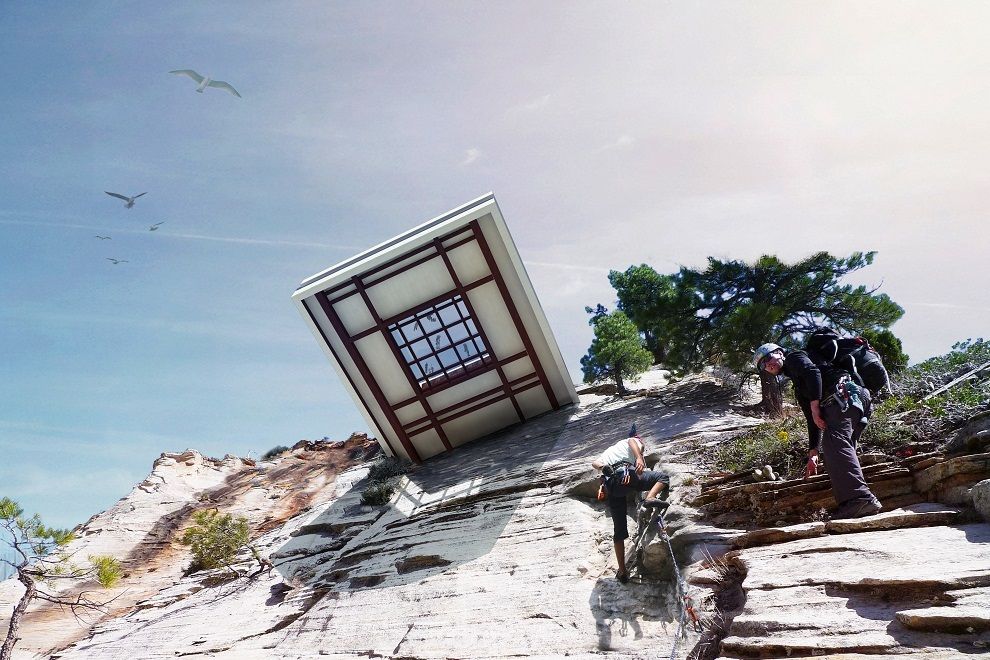
The next adventure also is quite sporty, the restaurant can be reached by climbing a mountain.Viewers are open to take panoramic photos along with of famous Basaseachic Falls in the front. Biré Bitori is made with minimal design architectural engineering while the material finishes of Biré Bitori render.
Ibrahim Abdelhady is an architect, academic, and media entrepreneur with over two decades of experience in architecture and digital publishing. He is the Founder and CEO of Arch2O.com, a leading platform in architectural media, renowned for showcasing innovative projects, student work, and critical discourse in design. Holding dual PhDs in Architecture, Dr. Abdelhady combines academic rigor with industry insight, shaping both future architects and architectural thought. He actively teaches, conducts research, and contributes to the global architecture community through his writing, lectures, and media ventures. His work bridges the gap between practice and academia, pushing the boundaries of how architecture is communicated in the digital age.