


Introduction
Not a year has passed since the world was shaken by the tragic news of Zaha Hadid’s death, one of the most prominent architects of our time. The Iraqi-born British architect is widely regarded as one of the most accomplished women in the profession and a pioneering force in contemporary architecture. Also, there are unpredictable facts you never knew about Zaha Hadid. With more than 950 projects in 44 countries and an extended list of prestigious awards, she firmly proved her statement that architecture is no longer a man’s world. Zaha’s long and winding road to success started with what she called “a fabulous childhood” and passed through five milestones of highs and lows that shaped the architect the world came to know. For a broader look at how she and other masters transformed design, you can also explore why famous architects like Frank Lloyd Wright and Zaha Hadid revolutionized design.
“Architecture is no longer a man’s world. This idea that women can’t think three dimensionally is ridiculous.”
Zaha Hadid, Veuve Cliequeote
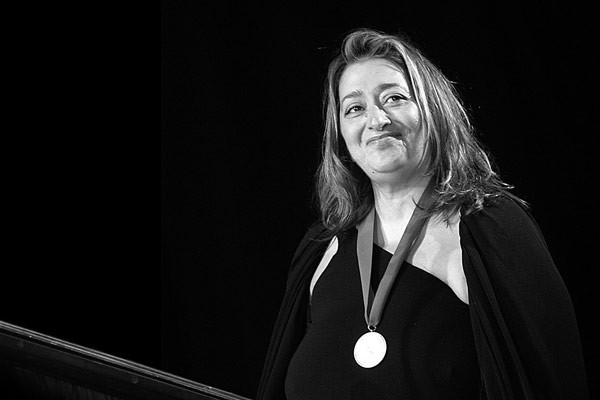
Courtesy of The Hyatt Foundation.
Hadid was born in the early 1950s and spent her childhood during the brief golden years of modern Iraq. The ruling government then decided to channel the country’s growing oil wealth into modernizing Baghdad by inviting pioneers of modern architecture such as Frank Lloyd Wright, Le Corbusier, Oscar Niemeyer, and Walter Gropius, creating a hopeful and progressive atmosphere. At home, her liberal parents encouraged her curiosity, nurtured her confidence, and raised her to be independent, all of which helped forge her strong personality. The first clear sign of that determination appeared when, at the age of 11, she decided she wanted to be an architect.
Milestone 1: Choosing Architecture
What did Zaha Hadid study?
Zaha Hadid could have been the first Iraqi astronaut—or at least that is what her brother liked to say. Yet her passion for architecture never wavered, and her mother nurtured it by letting young Zaha design the interiors of the guest room and her own bedroom. After earning a degree from the Department of Mathematics at the American University of Beirut, she headed to London in 1972 to study at the Architectural Association (AA), then a hotbed of avant-garde architectural thought.
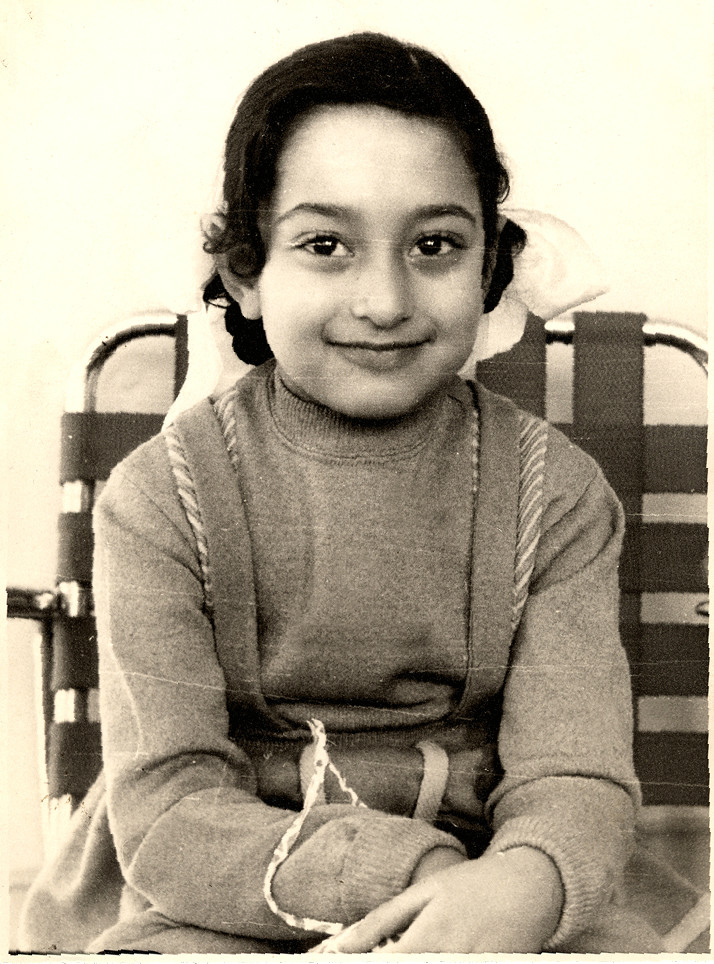
Zaha Hadid, the child !
“I had a fabulous childhood…” Zaha once said, describing her life in Iraq during the optimistic peak of the 1950s.
Zaha Hadid, the child !
“I had a fabulous childhood…” Zaha described her life in Iraq when it was in 1950’s in its peak.
Milestone 2: A Radical Graduation Project
How did Zaha Hadid start her career?
After three years of growing weary of the stable and conventional architectural movements of the time, Zaha decided it was time to make a real difference in her fourth year at the AA. She broke away from the prevailing orthodoxy with a studio project she described as “very anti-design” and “almost a movement of anti-architecture.” Her work drew heavily on Suprematism—a Russian art movement founded by Kazimir Malevich that uses basic geometric forms and restricted colors—which became central to her early architectural language.
The influence of Suprematism was clear in her 1977 graduation project, where she fragmented and abstracted one of Malevich’s compositions and reshaped it into a new architectural form. Zaha’s remarkable talent, praised by her teachers Rem Koolhaas and Elia Zenghelis, was immediately recognized after graduation: she was appointed as an assistant lecturer at the AA and became a partner at the Office for Metropolitan Architecture (OMA) before launching her own studio in 1979. If you are curious about how her abstract drawings and canvases fed into these early ideas, you can dive deeper into Zaha Hadid’s paintings and what they reveal about her creative framework.
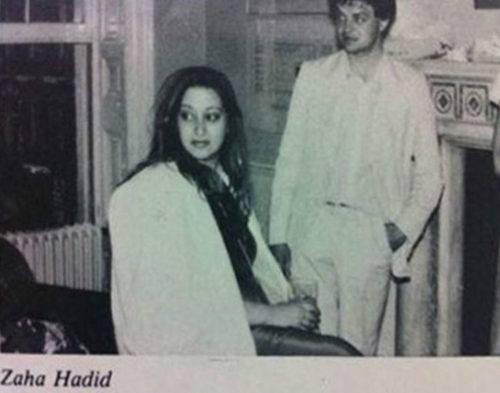
Milestone 3: Working Hard, Reaching “The Peak”
Zaha’s early professional years were defined by relentless hard work—teaching by day and designing by night. That effort seemed to pay off in 1982–83 when she won the international competition for The Peak, a leisure club in Hong Kong, with a radical scheme that stunned the jury. Her distinct Suprematist-inspired drawings and dynamic axonometric projections captured global attention and gave her an unexpected, career-changing victory.
This milestone was a huge step up in Zaha’s career; as Elia Zenghelis later put it: “The Peak was the peak and still remains a peak.” It firmly placed her on the architectural map and turned her London studio into a magnet for ambitious students, including Patrick Schumacher, who would later become her studio partner. Yet despite the acclaim, her winning Peak proposal was never built, and several subsequent competition designs met the same fate, earning her the label of a “paper architect.”
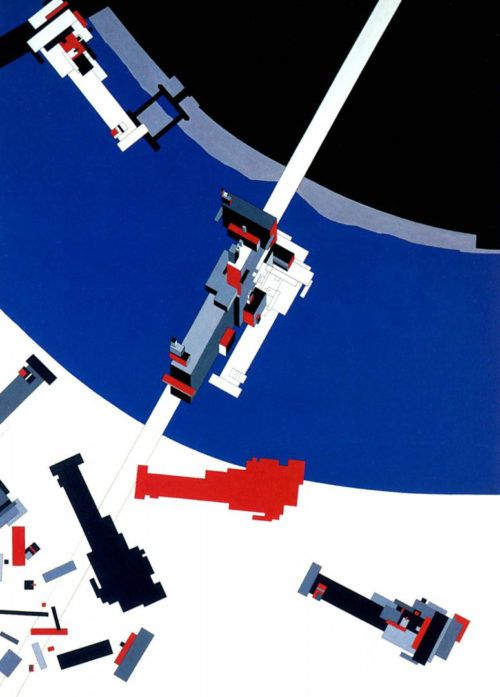
Courtesy of Zaha Hadid Architects.
Milestone 4: Rejection and the Cardiff “Curse”
Finally, after many attempts to step firmly into the built, three-dimensional realm, Zaha won the competition to design the Vitra Fire Station in 1990. The project, titled “Movement Frozen,” is a sharp, elongated concrete volume whose angular lines and dynamic geometry appear to stretch toward a focal point, redefining how concrete can express motion and tension. As architectural photographer Hélène Binet remarked, Zaha created “an incredible signature,” after which concrete “became something else.”
But the light of Vitra was followed by the shadow of the Cardiff Bay Opera House competition. In 1994 Zaha’s prize-winning proposal for the Cardiff Bay Opera House provoked fierce controversy and criticism from those who argued her design was impractical or too radical for the site. Zaha, however, found the hostility incomprehensible and believed the project was technically achievable: “It is not a square building or a rectangle. That project was easy…could be easily done.” The backlash and eventual cancellation affected her deeply, to the point where she seriously considered quitting architecture altogether.
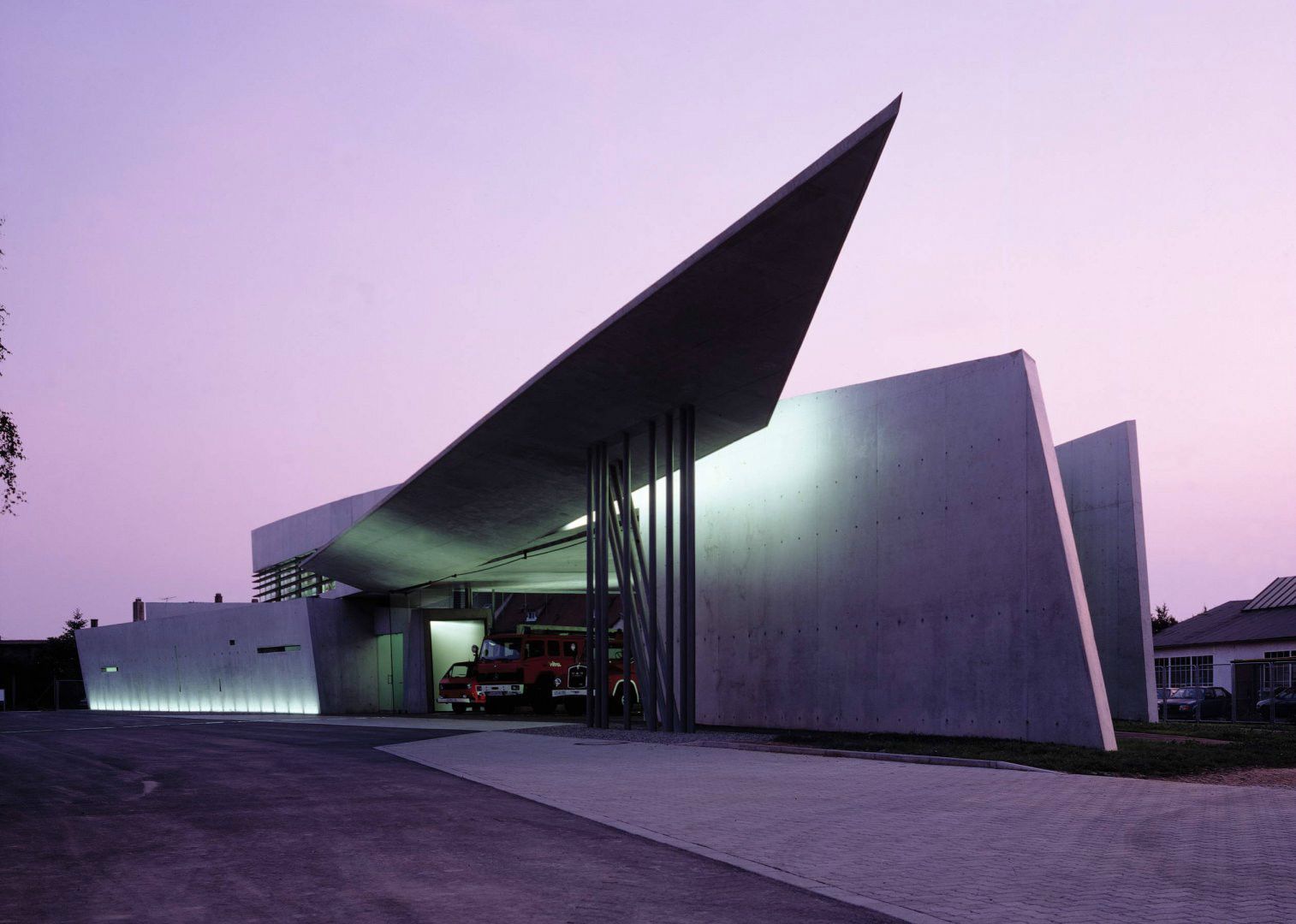
Courtesy of Zaha Hadid Architects.
Milestone 5: Global Recognition and Legacy
Fortunately—for Zaha and for the world—Patrick Schumacher proved to be a steadfast supporter and motivator. With his support, she regained her footing, and together they steered Zaha Hadid Architects out of the downturn triggered by the Cardiff “curse,” entering a golden era as the new millennium began.
The 2000s finally witnessed many of Zaha Hadid’s previously unbuildable designs becoming reality, helped by advances in digital design tools, parametric modeling, and construction technologies that could handle her complex geometries. Her buildings—from cultural institutions to bridges, museums, and sports venues—became international landmarks, celebrated by both the architectural community and the wider public for their fluid forms, innovative structure, and experiential spaces.
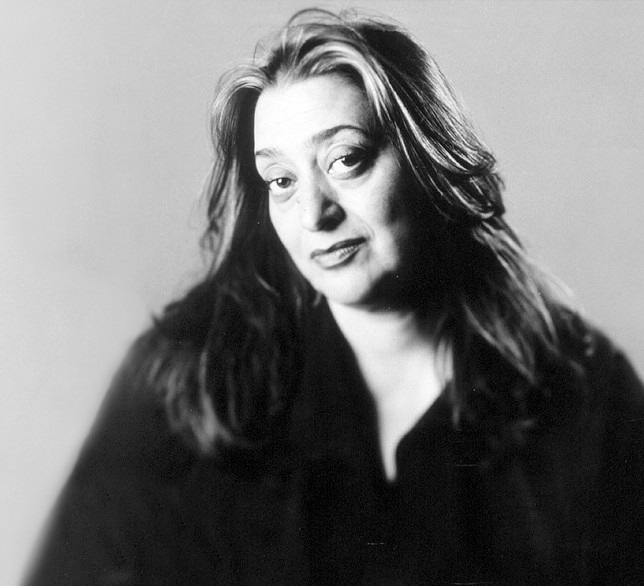
Courtesy of The Hyatt Foundation.
What is Zaha Hadid known for?
In 2004, Zaha Hadid became the first woman to receive the Pritzker Prize, the most prestigious award in architecture, recognizing her as a leading figure in the field. In 2010 and 2011 she also won the RIBA Stirling Prize for the MAXXI Museum in Rome and the Evelyn Grace Academy in London, confirming her position at the forefront of contemporary design.
In 2012, she was appointed Dame Zaha Hadid after being made a Dame Commander of the Order of the British Empire (DBE), one of the highest honors in the UK. Her final major recognition, shortly before her death at age 65 from a heart attack in Miami in March 2016, was the 2016 Royal Gold Medal from the RIBA, making her the first woman to receive the medal in her own right.
Zaha Hadid carved her name deeply into architectural history through her groundbreaking projects, her fearless experimentation, and her barrier-breaking achievements as a woman in a male-dominated field. The world may not fully know every hardship she endured to reach that status, but people certainly recognize that she is a figure worthy of profound respect and a powerful proof of what women are capable of in architecture and beyond. For more context on the breadth of her influence, you can revisit 10 unpredictable facts you never knew about Zaha Hadid, which reveal personal details behind the public legend.
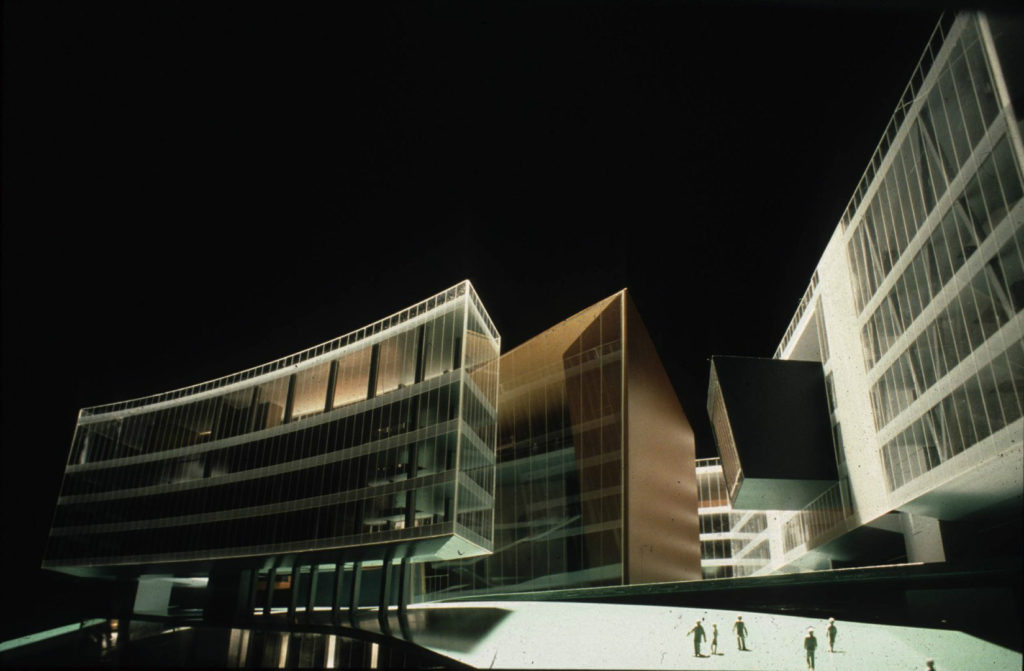
Courtesy of Zaha Hadid Architects.
What is Zaha Hadid’s architectural style?
Zaha Hadid is best known for a highly expressive, futuristic style characterized by sweeping curves, dynamic lines, and fluid, sculptural forms that often seem to defy gravity. Her work, sometimes described as deconstructivist and later as “parametric,” uses advanced digital tools, bold structural strategies, and innovative materials to create immersive spatial experiences rather than static objects.
Why is Zaha Hadid called the “Queen of the Curve”?
Zaha Hadid earned the nickname “Queen of the Curve” because she consistently transformed rigid architectural conventions into flowing, continuous spaces and façades. Instead of relying on right angles and simple boxes, she explored complex geometries and curved lines that made her buildings feel in motion, from roofs and bridges to interiors and lighting.
How did Zaha Hadid’s childhood influence her architecture?
Zaha’s childhood in Baghdad, surrounded by both ancient Mesopotamian landscapes and modernist experiments by global architects, deeply shaped her spatial imagination. Frequent family travels, a strong emphasis on education, and parents who supported her independence allowed her to see architecture as a tool for cultural transformation, not just construction.
What are some of Zaha Hadid’s most famous buildings?
Among Zaha Hadid’s best-known works are the MAXXI Museum in Rome, the London Aquatics Centre, the Heydar Aliyev Center in Baku, and the Guangzhou Opera House. These projects showcase her signature flowing forms, innovative structural systems, and carefully choreographed natural and artificial lighting that guides movement and frames space.
