

The way the Kennedy Center chose its architect of record is now under scrutiny, because a Washington Post investigation has questioned how a small Minnesota firm won a $257 million renovation. The firm, ATSR, will coordinate the architectural work on the project at the performing arts center in Washington. An architect of record is the firm that carries legal responsibility for the construction documents and signs off on the design.
The scale of the job against the size of the practice sits at the center of the Post’s questions. The newspaper notes that ATSR employs just 50 people, including eight architects, according to an industry database. In the Post’s words, the firm “generally does work that is a fraction of the scale and expense of the job,” and one of its most ambitious projects, according to its online portfolio, was a high school renovation completed in 2016 that cost about $40 million.
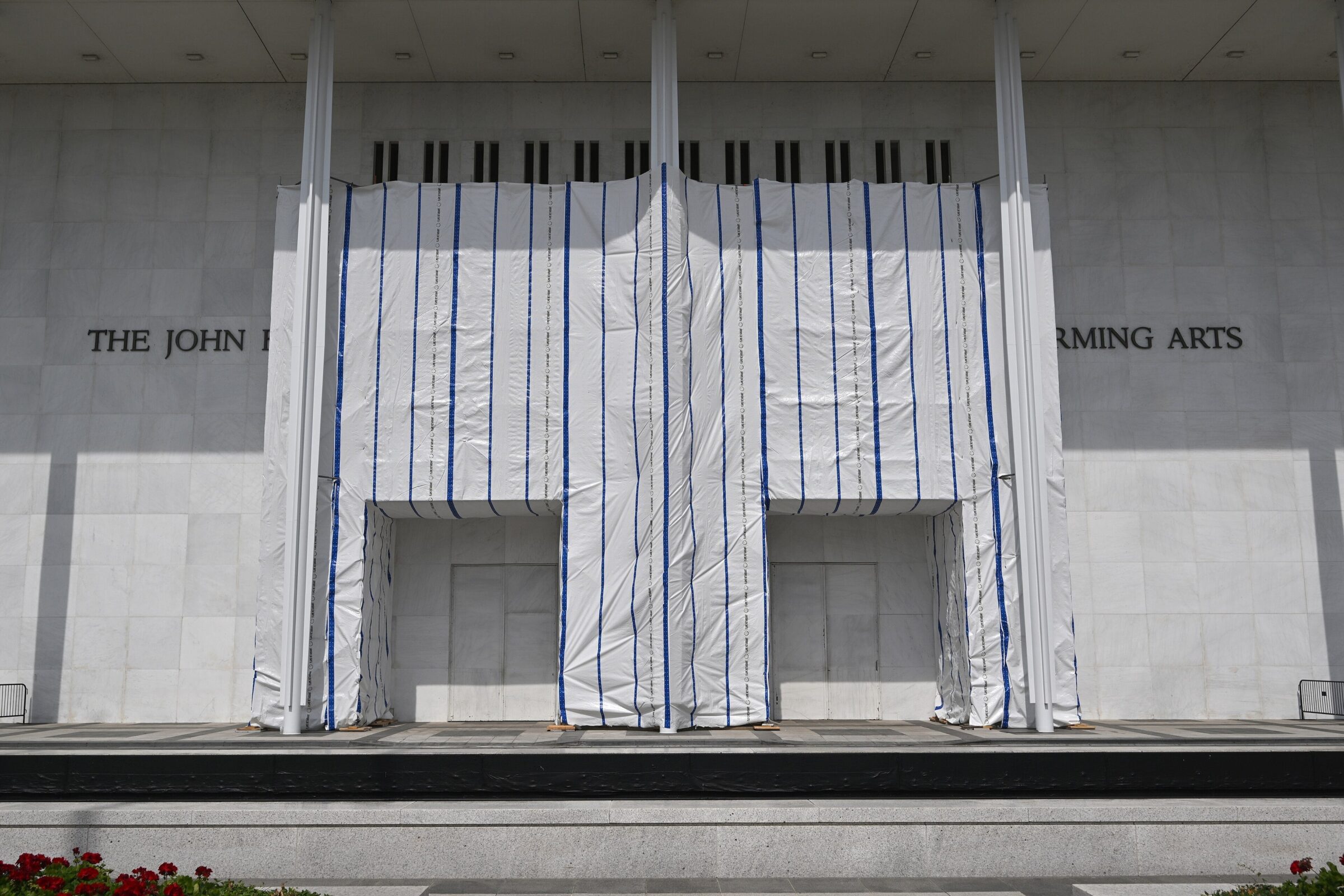
The Kennedy Center facade as it appeared on June 26, 2026, twelve days after Donald Trump’s name was removed following a court order. Photo by G. Edward Johnson, via Wikimedia Commons, licensed under CC BY 4.0 .
Attention then turns to how the appointment was made, since the Post reports that it followed the project’s abandonment of typical federal contracting policies. The center replaced those rules with new policies it wrote itself, and critics of the process have focused on that change. A spokesperson for the center told the outlet that the institution “procured these services in strict accordance with our contracting and procurement policy.”
The same spokesperson defended the new approach as a practical advantage for the renovation. According to the statement, it “enabled us to secure ATSR’s professional services with verified competitive pricing, maintain full procurement compliance, and mobilize qualified contractors efficiently without administrative delays or cost redundancies.” The center’s position is therefore that its own policy delivered both savings and speed without breaking any rules.
The Post also adds a caveat to its own reporting, which keeps the story from reading as a simple charge of unfitness. The outlet clarifies that the firm’s low profile within Minnesota does not make it unqualified for a project of the Kennedy Center’s scale. It also reports that the center has assembled a large team of engineers and preservation experts around the architect, which spreads the technical load beyond a single small office.

ATSR’s role is defined in precise terms. The firm will manage the scheme’s design and coordinate the consultants, and it will bear professional responsibility for the plans that its architect signs and seals. That responsibility, which attaches to the licensed architect’s stamp on the drawings, remains with ATSR throughout the renovation.

Jane Doe is an American architectural editor with a deep-rooted passion for design and the built environment. She holds a degree in Architecture from Columbia University, where she developed a strong foundation in both architectural theory and urban studies. With over a decade of editorial experience, Jane specializes in shaping content that bridges architecture, urbanism, and cultural discourse. Her work spans leading design publications, exhibition texts, and digital platforms, where she is known for her clear, engaging narratives and her ability to translate complex spatial ideas for a broad audience. Jane is particularly interested in issues of equity, sustainability, and the evolving role of cities in a changing world.