

The Royal Botanic Garden Edinburgh has reopened its historic Palm Houses after five years of work, and the Edinburgh Palm Houses restoration now presents two separate glasshouses as one connected visitor space. Nearly 600 plant specimens have returned to their historic home. The project forms the first major stage of a long-term glasshouse programme at the garden in Edinburgh, and it combined architectural conservation with community activity.
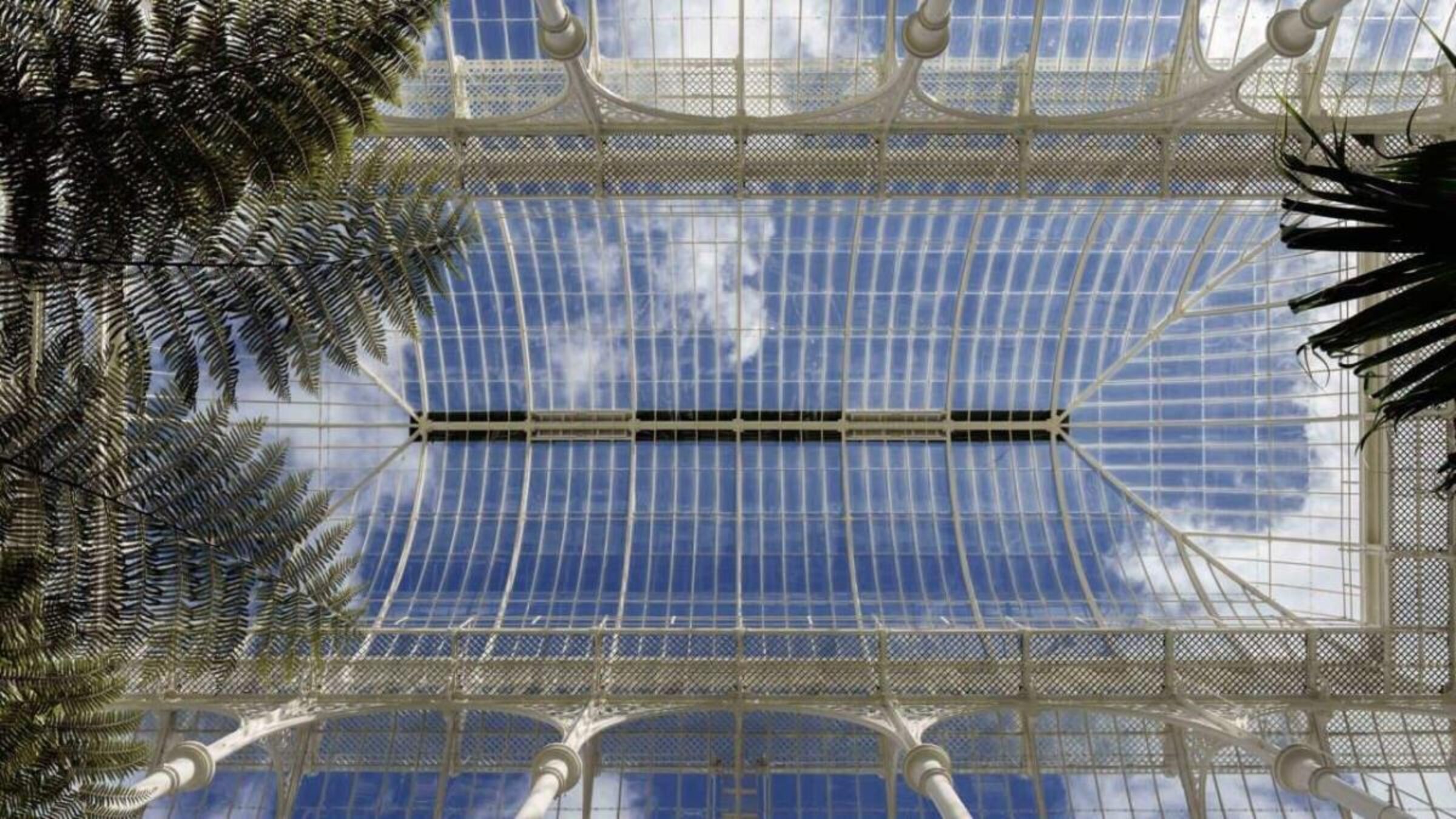
Edinburgh Palm Houses reopen as part of Edinburgh Biomes restoration programme
The two A-listed structures come from different periods, which explains why reuniting them mattered. The octagonal Palm House was built in 1834, and the Victorian dome followed in 1858. The dome is the world’s tallest traditional Palm House. During the restoration, builders removed a partition that had divided the two houses, which opened up views across the interior and lets visitors experience the glasshouses as a single space.
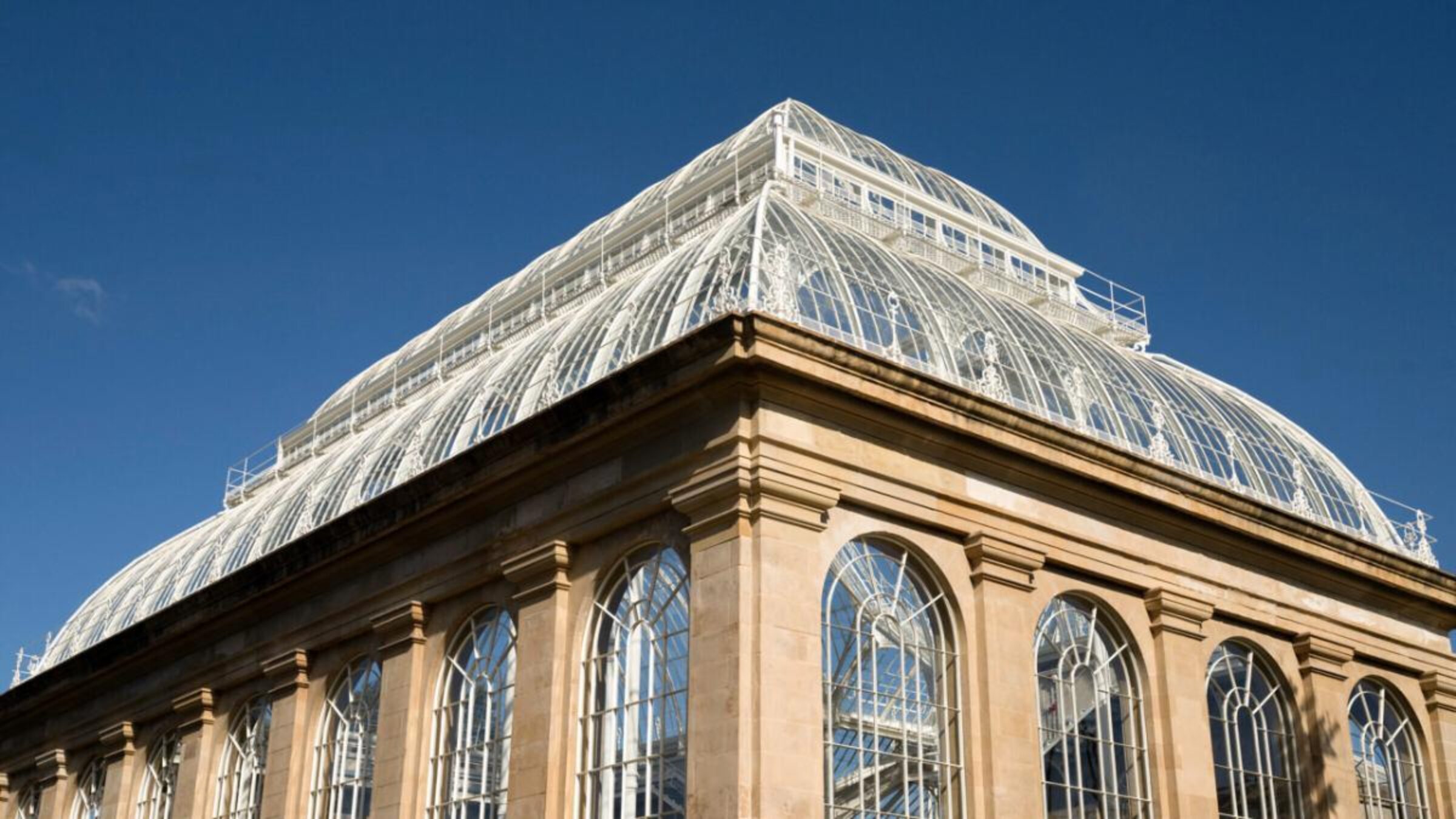
The Edinburgh Botanic Gardens is in the middle of a major renovation / Edinburgh Botanic Gardens
The conservation work focused on the fabric of both buildings, much of which had to be replaced or repaired by specialist teams. All 5,750 panes of glass were replaced with toughened glass made to bespoke templates, a type designed to withstand severe weather better than the original panes. Specialists also repaired or restored 600sq m of the original Georgian and Victorian ironwork and carried out 500sq m of sandstone repairs. New interpretation now helps visitors explore the history of the buildings and the plants they house.
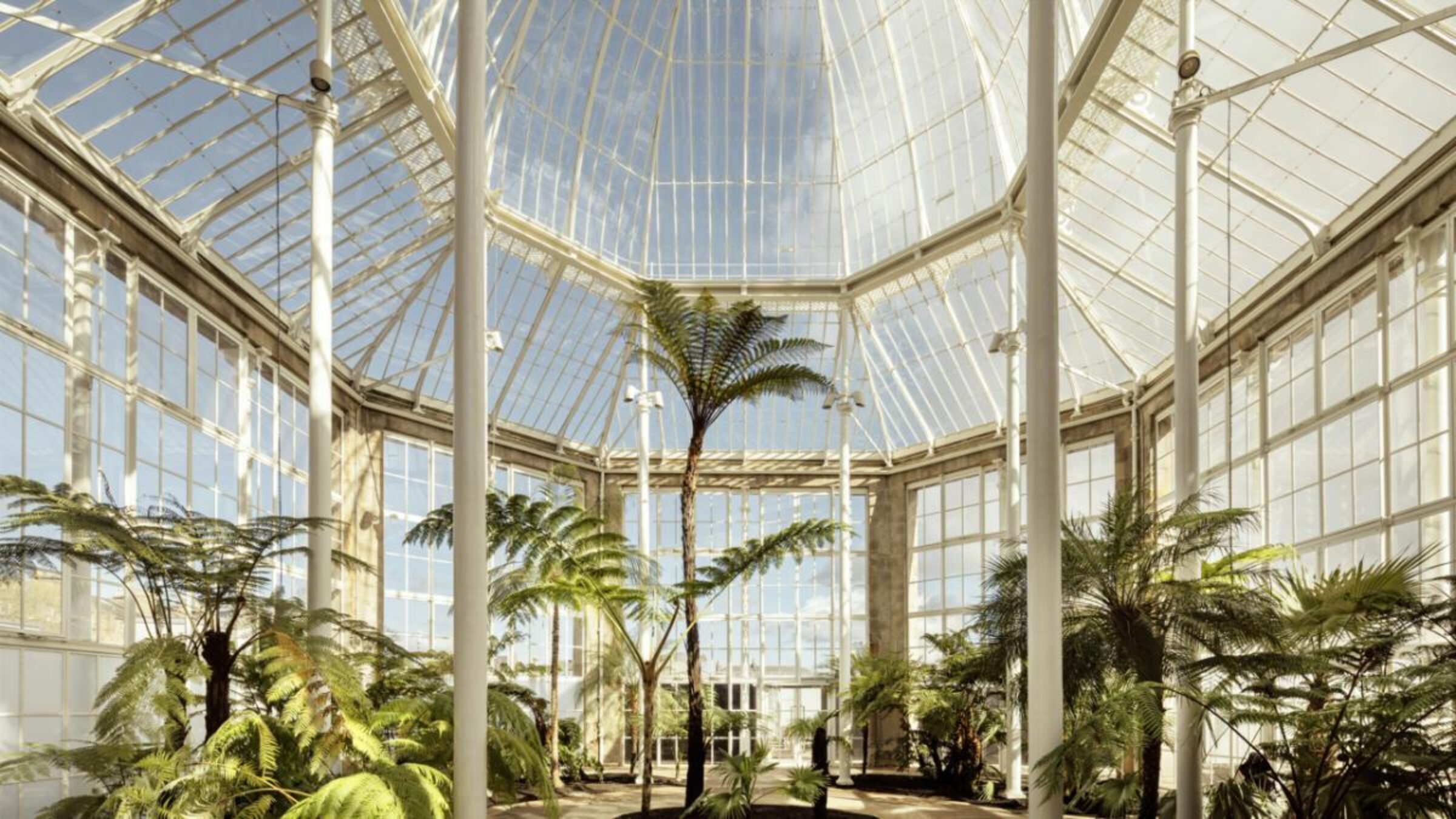
The Edinburgh Biomes programme is costing £58.1 million / Edinburgh Botanic Gardens
The plants had to leave before any of this could begin, so the work started with the collection itself. Horticulturists removed 800 specimens for safekeeping before construction started, and around 600 have now been returned, including plants endangered in the wild. Among them is an eight-metre stone gate palm, believed to be the tallest of its kind in cultivation outside China. The collection also includes a young sabal palm, descended from a specimen estimated to have been around 200 years old when it was felled in 2021.
Read more:
- Following Restoration, Eames House Reopens to the Public with Enhanced Access
- Serpentine Pavilion 2025 Revealed: Marina Tabassum Introduces a Kinetic Timber Structure
- Aguas Claras Hotel Restaurant and Yoga Pavilion | Studio Saxe
Alongside the building work, the project involved local people in the life of the glasshouses. Five community groups took part in 21 creative sessions with specialists, artists and musicians. Their work included textile banners, ceramic vessels, music and a Palm House tea blend, all of which was displayed at a celebration ahead of the public reopening.
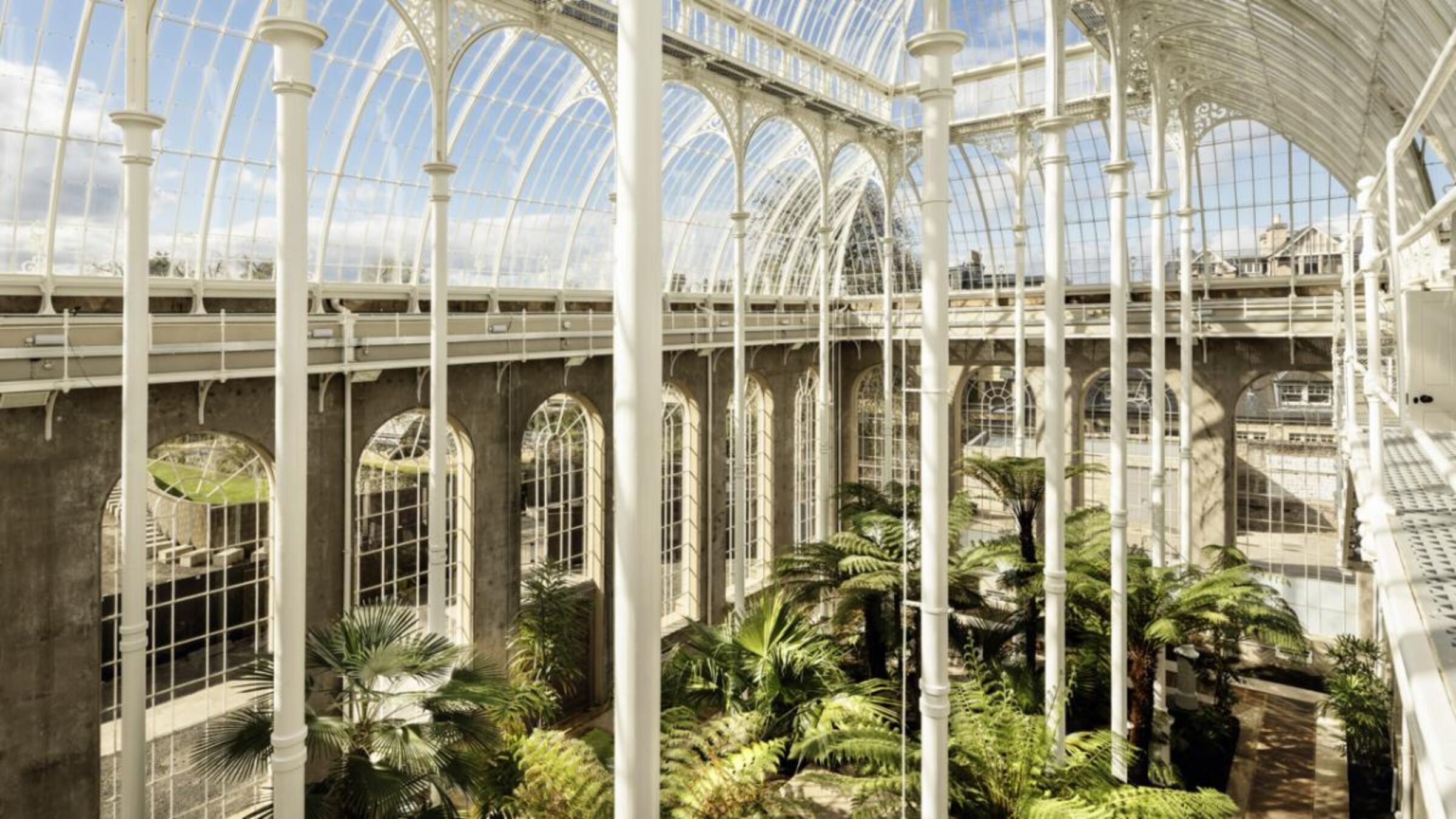
The two spaces have been connected to give a clear sightline / Edinburgh Botanic Gardens
The Palm Houses are one part of the wider Edinburgh Biomes programme, which the garden runs as its long-term glasshouse restoration and development scheme. Its purpose is to protect the plant collection and modernise the facilities. Key figures for the programme include:
- Total cost: £58.1 million (US$77.6 million, €69.5 million), supported by the Scottish Government and donors
- National Lottery Heritage Fund contribution: £4.8 million (US$6.4 million, €5.7 million)
- Plant species safeguarded: 13,500, including those endangered or extinct in the wild
- Species in the glasshouses alone: around 6,000
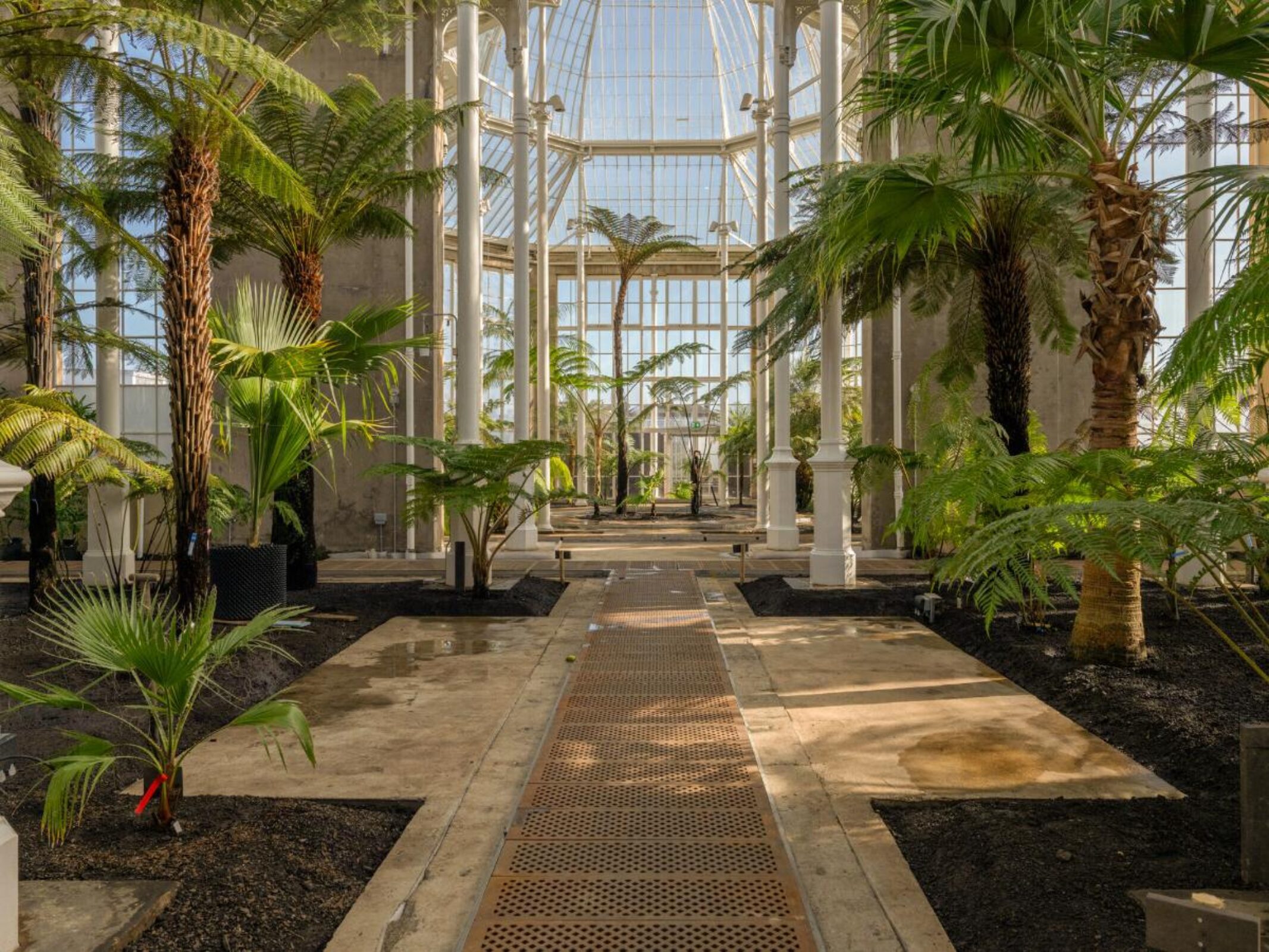
The glass houses are home to 800 plants / Edinburgh Botanic Gardens
Further work is planned for the 1960s Front-Range Glasshouses and the research glasshouses. The programme also includes a more efficient energy centre and a biosecure plant health hub. Professor Julia Knights, Regius Keeper of the Garden, said the reopening was “a globally significant moment for Scotland and the world”, pointing to the role of the plant collection in research, conservation and education.

Mireille Chevalier is a projects editor and architectural writer from Lyon. With a dual background in architecture and history, she brings a contextual lens to design criticism and theory