

{
“@context”: “https://schema.org”,
“@graph”: [
{
“@type”: “Article”,
“@id”: “https://www.arch2o.com/50-architecture-books-make-best-architect/#article”,
“isPartOf”: {
“@type”: “WebPage”,
“@id”: “https://www.arch2o.com/50-architecture-books-make-best-architect/”
},
“headline”: “The 50 Best Architecture Books (2026): Ranked & Reviewed”,
“description”: “The 50 architecture books worth owning in 2026 — ranked by category, with a top-10 shortlist, student picks, and where to read many of them legally free.”,
“inLanguage”: “en-US”,
“mainEntityOfPage”: “https://www.arch2o.com/50-architecture-books-make-best-architect/”,
“datePublished”: “2020-01-15T08:00:00+00:00”,
“dateModified”: “2026-07-20T08:00:00+00:00”,
“author”: {
“@type”: “Person”,
“name”: “Arch2O Editorial Team”,
“url”: “https://www.arch2o.com/author/editorial-team/”
},
“publisher”: {
“@type”: “Organization”,
“name”: “Arch2O”,
“url”: “https://www.arch2o.com”,
“logo”: {
“@type”: “ImageObject”,
“url”: “https://www.arch2o.com/wp-content/uploads/logo.png”
}
},
“about”: {
“@id”: “https://www.arch2o.com/50-architecture-books-make-best-architect/#itemlist”
}
},
{
“@type”: “ItemList”,
“@id”: “https://www.arch2o.com/50-architecture-books-make-best-architect/#itemlist”,
“name”: “50 Architecture Books That Will Make You a Better Architect”,
“numberOfItems”: 50,
“itemListOrder”: “https://schema.org/ItemListUnordered”,
“itemListElement”: [
{ “@type”: “ListItem”, “position”: 1, “item”: { “@type”: “Book”, “name”: “The Ten Books on Architecture”, “author”: { “@type”: “Person”, “name”: “Vitruvius” } } },
{ “@type”: “ListItem”, “position”: 2, “item”: { “@type”: “Book”, “name”: “The Four Books of Architecture”, “author”: { “@type”: “Person”, “name”: “Andrea Palladio” } } },
{ “@type”: “ListItem”, “position”: 3, “item”: { “@type”: “Book”, “name”: “Architecture: Form, Space, and Order”, “author”: { “@type”: “Person”, “name”: “Francis D.K. Ching” } } },
{ “@type”: “ListItem”, “position”: 4, “item”: { “@type”: “Book”, “name”: “Building Construction Illustrated”, “author”: { “@type”: “Person”, “name”: “Francis D.K. Ching” } } },
{ “@type”: “ListItem”, “position”: 5, “item”: { “@type”: “Book”, “name”: “101 Things I Learned in Architecture School”, “author”: { “@type”: “Person”, “name”: “Matthew Frederick” } } },
{ “@type”: “ListItem”, “position”: 6, “item”: { “@type”: “Book”, “name”: “The Eyes of the Skin: Architecture and the Senses”, “author”: { “@type”: “Person”, “name”: “Juhani Pallasmaa” } } },
{ “@type”: “ListItem”, “position”: 7, “item”: { “@type”: “Book”, “name”: “The Death and Life of Great American Cities”, “author”: { “@type”: “Person”, “name”: “Jane Jacobs” } } },
{ “@type”: “ListItem”, “position”: 8, “item”: { “@type”: “Book”, “name”: “Modern Architecture: A Critical History”, “author”: { “@type”: “Person”, “name”: “Kenneth Frampton” } } },
{ “@type”: “ListItem”, “position”: 9, “item”: { “@type”: “Book”, “name”: “Thinking Architecture”, “author”: { “@type”: “Person”, “name”: “Peter Zumthor” } } },
{ “@type”: “ListItem”, “position”: 10, “item”: { “@type”: “Book”, “name”: “Architects’ Data”, “author”: { “@type”: “Person”, “name”: “Ernst Neufert” } } },
{ “@type”: “ListItem”, “position”: 11, “item”: { “@type”: “Book”, “name”: “Experiencing Architecture”, “author”: { “@type”: “Person”, “name”: “Steen Eiler Rasmussen” } } },
{ “@type”: “ListItem”, “position”: 12, “item”: { “@type”: “Book”, “name”: “Complexity and Contradiction in Architecture”, “author”: { “@type”: “Person”, “name”: “Robert Venturi” } } },
{ “@type”: “ListItem”, “position”: 13, “item”: { “@type”: “Book”, “name”: “Yes Is More: An Archicomic on Architectural Evolution”, “author”: { “@type”: “Organization”, “name”: “BIG (Bjarke Ingels Group)” } } },
{ “@type”: “ListItem”, “position”: 14, “item”: { “@type”: “Book”, “name”: “The Seven Lamps of Architecture”, “author”: { “@type”: “Person”, “name”: “John Ruskin” } } },
{ “@type”: “ListItem”, “position”: 15, “item”: { “@type”: “Book”, “name”: “Toward an Architecture”, “author”: { “@type”: “Person”, “name”: “Le Corbusier” } } },
{ “@type”: “ListItem”, “position”: 16, “item”: { “@type”: “Book”, “name”: “Delirious New York: A Retroactive Manifesto for Manhattan”, “author”: { “@type”: “Person”, “name”: “Rem Koolhaas” } } },
{ “@type”: “ListItem”, “position”: 17, “item”: { “@type”: “Book”, “name”: “S,M,L,XL”, “author”: { “@type”: “Person”, “name”: “Rem Koolhaas and Bruce Mau” } } },
{ “@type”: “ListItem”, “position”: 18, “item”: { “@type”: “Book”, “name”: “The Poetics of Space”, “author”: { “@type”: “Person”, “name”: “Gaston Bachelard” } } },
{ “@type”: “ListItem”, “position”: 19, “item”: { “@type”: “Book”, “name”: “A Pattern Language: Towns, Buildings, Construction”, “author”: { “@type”: “Person”, “name”: “Christopher Alexander” } } },
{ “@type”: “ListItem”, “position”: 20, “item”: { “@type”: “Book”, “name”: “The Timeless Way of Building”, “author”: { “@type”: “Person”, “name”: “Christopher Alexander” } } },
{ “@type”: “ListItem”, “position”: 21, “item”: { “@type”: “Book”, “name”: “The Architecture of the City”, “author”: { “@type”: “Person”, “name”: “Aldo Rossi” } } },
{ “@type”: “ListItem”, “position”: 22, “item”: { “@type”: “Book”, “name”: “The Image of the City”, “author”: { “@type”: “Person”, “name”: “Kevin Lynch” } } },
{ “@type”: “ListItem”, “position”: 23, “item”: { “@type”: “Book”, “name”: “Architecture and Disjunction”, “author”: { “@type”: “Person”, “name”: “Bernard Tschumi” } } },
{ “@type”: “ListItem”, “position”: 24, “item”: { “@type”: “Book”, “name”: “The Manhattan Transcripts”, “author”: { “@type”: “Person”, “name”: “Bernard Tschumi” } } },
{ “@type”: “ListItem”, “position”: 25, “item”: { “@type”: “Book”, “name”: “Ornament and Crime”, “author”: { “@type”: “Person”, “name”: “Adolf Loos” } } },
{ “@type”: “ListItem”, “position”: 26, “item”: { “@type”: “Book”, “name”: “The Concise Townscape”, “author”: { “@type”: “Person”, “name”: “Gordon Cullen” } } },
{ “@type”: “ListItem”, “position”: 27, “item”: { “@type”: “Book”, “name”: “Life Between Buildings: Using Public Space”, “author”: { “@type”: “Person”, “name”: “Jan Gehl” } } },
{ “@type”: “ListItem”, “position”: 28, “item”: { “@type”: “Book”, “name”: “Cities for People”, “author”: { “@type”: “Person”, “name”: “Jan Gehl” } } },
{ “@type”: “ListItem”, “position”: 29, “item”: { “@type”: “Book”, “name”: “Lessons for Students in Architecture”, “author”: { “@type”: “Person”, “name”: “Herman Hertzberger” } } },
{ “@type”: “ListItem”, “position”: 30, “item”: { “@type”: “Book”, “name”: “The Mathematics of the Ideal Villa and Other Essays”, “author”: { “@type”: “Person”, “name”: “Colin Rowe” } } },
{ “@type”: “ListItem”, “position”: 31, “item”: { “@type”: “Book”, “name”: “Collage City”, “author”: { “@type”: “Person”, “name”: “Colin Rowe and Fred Koetter” } } },
{ “@type”: “ListItem”, “position”: 32, “item”: { “@type”: “Book”, “name”: “The New Architecture and the Bauhaus”, “author”: { “@type”: “Person”, “name”: “Walter Gropius” } } },
{ “@type”: “ListItem”, “position”: 33, “item”: { “@type”: “Book”, “name”: “Silence and Light: Writings and Lectures”, “author”: { “@type”: “Person”, “name”: “Louis Kahn” } } },
{ “@type”: “ListItem”, “position”: 34, “item”: { “@type”: “Book”, “name”: “The Future of Architecture”, “author”: { “@type”: “Person”, “name”: “Frank Lloyd Wright” } } },
{ “@type”: “ListItem”, “position”: 35, “item”: { “@type”: “Book”, “name”: “An Autobiography”, “author”: { “@type”: “Person”, “name”: “Frank Lloyd Wright” } } },
{ “@type”: “ListItem”, “position”: 36, “item”: { “@type”: “Book”, “name”: “Genius Loci: Towards a Phenomenology of Architecture”, “author”: { “@type”: “Person”, “name”: “Christian Norberg-Schulz” } } },
{ “@type”: “ListItem”, “position”: 37, “item”: { “@type”: “Book”, “name”: “Ten Canonical Buildings 1950-2000”, “author”: { “@type”: “Person”, “name”: “Peter Eisenman” } } },
{ “@type”: “ListItem”, “position”: 38, “item”: { “@type”: “Book”, “name”: “Eladio Dieste: Innovation in Structural Art”, “author”: { “@type”: “Person”, “name”: “Stanford Anderson” } } },
{ “@type”: “ListItem”, “position”: 39, “item”: { “@type”: “Book”, “name”: “On Weathering: The Life of Buildings in Time”, “author”: { “@type”: “Person”, “name”: “Mohsen Mostafavi and David Leatherbarrow” } } },
{ “@type”: “ListItem”, “position”: 40, “item”: { “@type”: “Book”, “name”: “Points + Lines: Diagrams and Projects for the City”, “author”: { “@type”: “Person”, “name”: “Stan Allen” } } },
{ “@type”: “ListItem”, “position”: 41, “item”: { “@type”: “Book”, “name”: “Extrastatecraft: The Power of Infrastructure Space”, “author”: { “@type”: “Person”, “name”: “Keller Easterling” } } },
{ “@type”: “ListItem”, “position”: 42, “item”: { “@type”: “Book”, “name”: “The Architectural Uncanny: Essays in the Modern Unhomely”, “author”: { “@type”: “Person”, “name”: “Anthony Vidler” } } },
{ “@type”: “ListItem”, “position”: 43, “item”: { “@type”: “Book”, “name”: “The Architecture of the École des Beaux-Arts”, “author”: { “@type”: “Person”, “name”: “Arthur Drexler” } } },
{ “@type”: “ListItem”, “position”: 44, “item”: { “@type”: “Book”, “name”: “Theory and Design in the First Machine Age”, “author”: { “@type”: “Person”, “name”: “Reyner Banham” } } },
{ “@type”: “ListItem”, “position”: 45, “item”: { “@type”: “Book”, “name”: “Los Angeles: The Architecture of Four Ecologies”, “author”: { “@type”: “Person”, “name”: “Reyner Banham” } } },
{ “@type”: “ListItem”, “position”: 46, “item”: { “@type”: “Book”, “name”: “An Essay on Architecture”, “author”: { “@type”: “Person”, “name”: “Marc-Antoine Laugier” } } },
{ “@type”: “ListItem”, “position”: 47, “item”: { “@type”: “Book”, “name”: “The Four Elements of Architecture and Other Writings”, “author”: { “@type”: “Person”, “name”: “Gottfried Semper” } } },
{ “@type”: “ListItem”, “position”: 48, “item”: { “@type”: “Book”, “name”: “On the Art of Building in Ten Books”, “author”: { “@type”: “Person”, “name”: “Leon Battista Alberti” } } },
{ “@type”: “ListItem”, “position”: 49, “item”: { “@type”: “Book”, “name”: “How Buildings Learn: What Happens After They’re Built”, “author”: { “@type”: “Person”, “name”: “Stewart Brand” } } },
{ “@type”: “ListItem”, “position”: 50, “item”: { “@type”: “Book”, “name”: “Anti-Object: The Dissolution and Disintegration of Architecture”, “author”: { “@type”: “Person”, “name”: “Kengo Kuma” } } }
]
}
]
}
Every architect has a shelf. Some of it is aspirational — spines uncracked, bought during a hopeful phase in second year. Some of it is real: dog-eared, coffee-stained, annotated in three colours of pen because you kept changing your mind.
This list is about building the second kind of shelf.
Below are 50 architecture books grouped into 10 categories, from Vitruvius to Bjarke Ingels, from structural logic to the poetics of a shadow falling across a wall. You don’t need all 50. But if you read the right 12, you will design differently within a year. That’s not a marketing promise — it’s just what happens when you swap Pinterest scrolling for someone who spent a decade thinking about one idea.
Short answer for the people in a hurry: if you read only five, read Architecture: Form, Space, and Order (Ching), The Eyes of the Skin (Pallasmaa), The Death and Life of Great American Cities (Jacobs), 101 Things I Learned in Architecture School (Frederick), and Thinking Architecture (Zumthor). Those five cover craft, sensation, city, practice, and philosophy. Everything else on this list deepens one of those five.
How to Use This List (Don’t Read It Top to Bottom)
A reading list is only useful if it matches where you are. Here’s the honest sequencing:
| Where you are | Start with categories | Roughly how many books |
|---|---|---|
| Pre-university / considering architecture | 10, 4, 6 | 4–5 |
| First & second year student | 6, 1, 4 | 8–10 |
| Third year to graduation | 3, 5, 7 | 10–12 |
| Fresh graduate / year out | 9, 7, 8 | 6–8 |
| Practising architect | 3, 8, 9 | ongoing |
If you’re still choosing where to study, our guide to the top architecture schools pairs well with the first two categories — the reading and the school shape each other more than most people admit.
1. Foundations and Classics (The Ones Everything Else Argues With)
1. The Ten Books on Architecture — Vitruvius The oldest surviving architecture treatise, written around 25 BCE, and the origin of the firmitas, utilitas, venustas triad — firmness, commodity, delight. Read it less for practical guidance and more to see how little the core questions have changed in two thousand years.
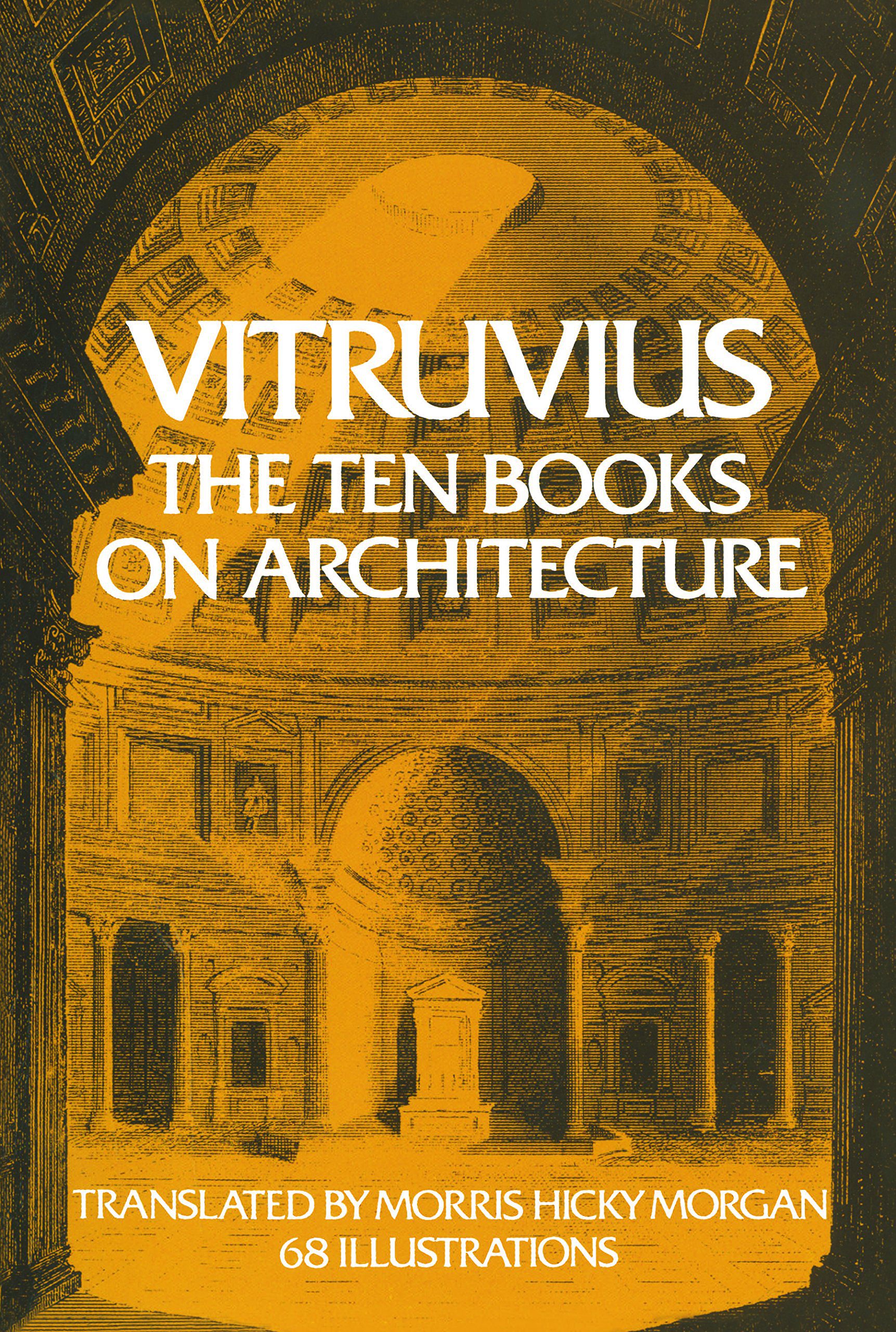
The Ten Books on Architecture — Vitruvius
2. The Four Books of Architecture — Andrea Palladio Palladio published his own buildings alongside Roman precedents, which was an act of astonishing confidence. It became the most copied architecture book in history and shaped everything from English country houses to the White House.
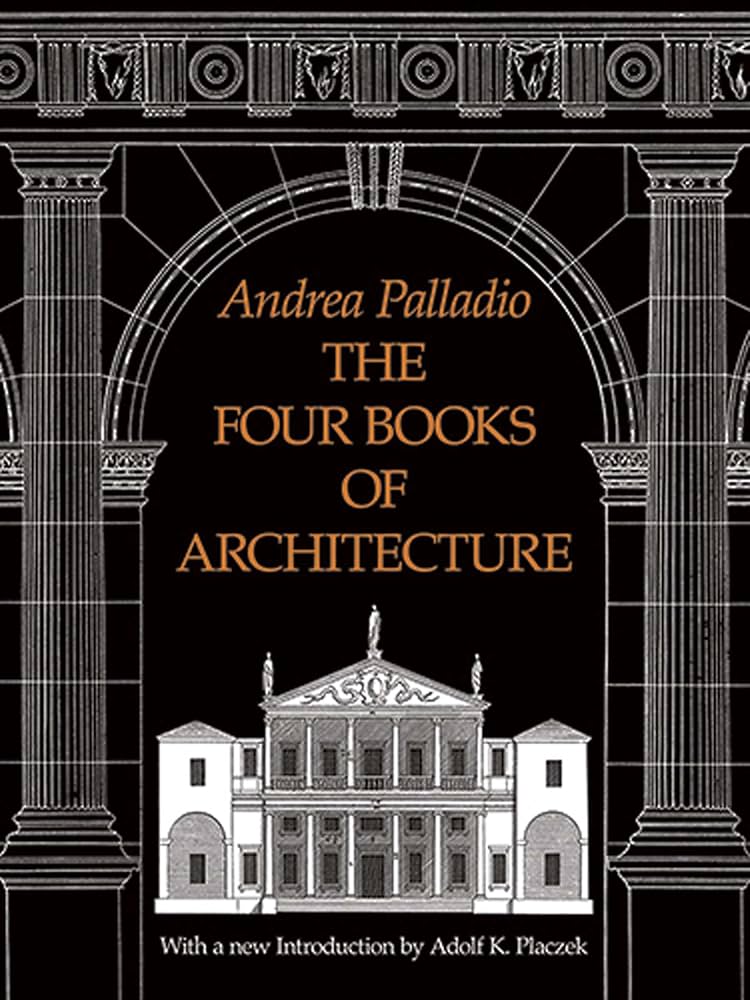
The Four Books of Architecture — Andrea Palladio
3. The Seven Lamps of Architecture — John Ruskin Ruskin argues that buildings carry moral weight — that how you build says what you believe. You’ll disagree with half of it, which is the point.
4. Architecture Without Architects — Bernard Rudofsky A photo essay on vernacular building from around the world, and a quiet demolition of the idea that architecture requires architects. It permanently changes how you look at a hill town or a mud-brick wall.
5. Experiencing Architecture — Steen Eiler Rasmussen The gentlest great book on this list. Rasmussen writes about texture, sound, colour, and rhythm in plain language, and it remains the best first architecture book anyone can read.
2. The Modern Movement and Its Manifestos
6. Towards a New Architecture — Le Corbusier Grain silos, ocean liners, and the house as a machine for living in. It’s propaganda, brilliantly designed propaganda, and understanding the twentieth century without it is nearly impossible.
Towards a New Architecture — Le Corbusier
7. Ornament and Crime — Adolf Loos A short, furious, deliberately provocative essay linking decoration to cultural backwardness. Read it in an hour, argue about it for a decade.
8. Space, Time and Architecture — Sigfried Giedion The book that constructed the official story of modernism, connecting Cubism, industrial engineering, and the new architecture into one narrative. Essential — and worth reading critically, because narratives this tidy always leave people out.
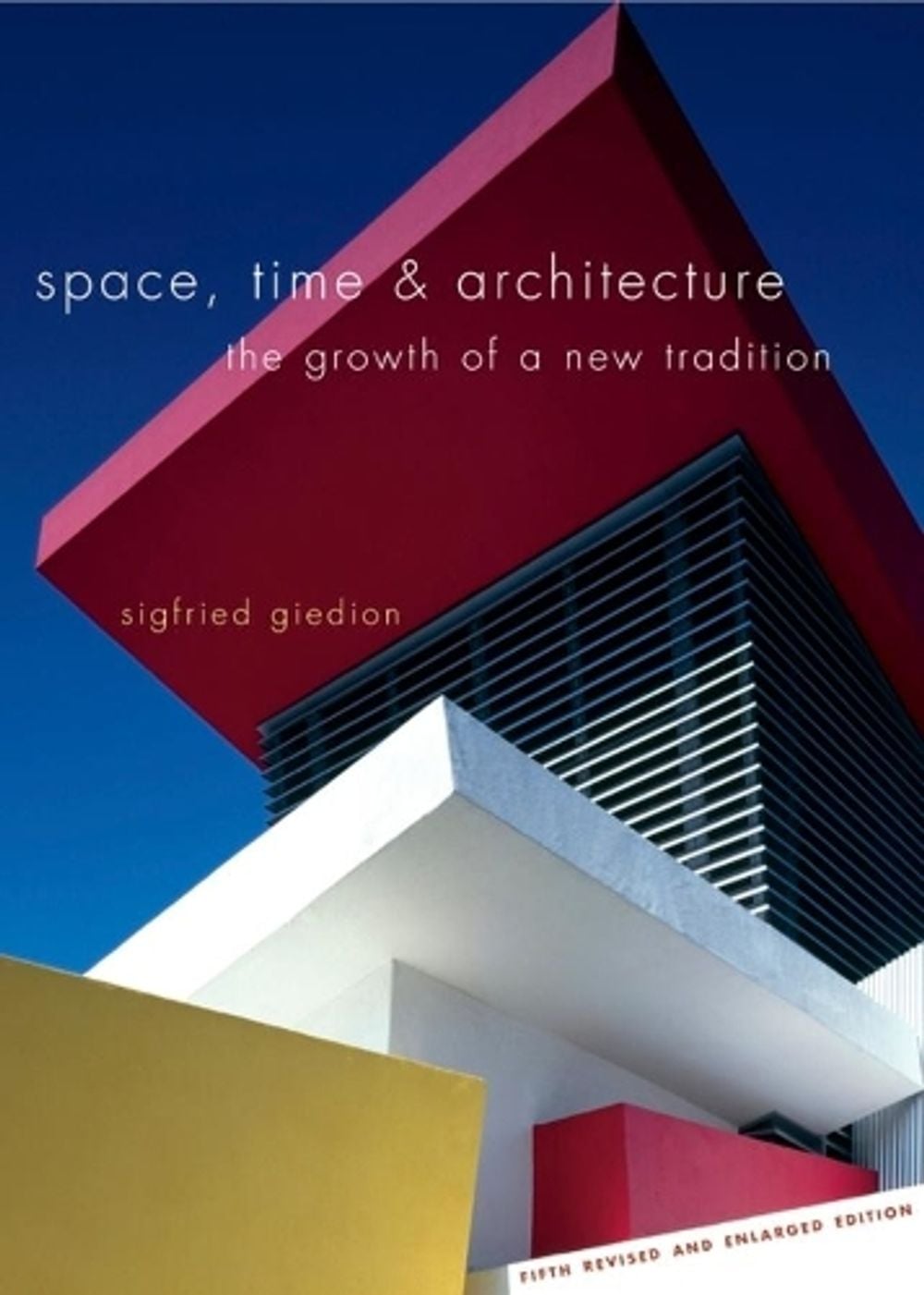
Space, Time and Architecture — Sigfried Giedion
9. Theory and Design in the First Machine Age — Reyner Banham Banham went back to the primary sources and found modernism’s official history full of holes. It’s the best model of how to do architectural research on this list.
10. The New Vision — László Moholy-Nagy The Bauhaus approach to material, light, and perception, distilled by one of its most restless teachers. Useful for anyone who wants to understand why foundation-year exercises look the way they do.
3. Theory and Criticism (Where Modernism Got Complicated)
11. Complexity and Contradiction in Architecture — Robert Venturi “Less is a bore.” Venturi makes an elegant case for ambiguity, layering, and the messy vitality of real buildings. It reads like a slow-motion counterattack on modernist purity.
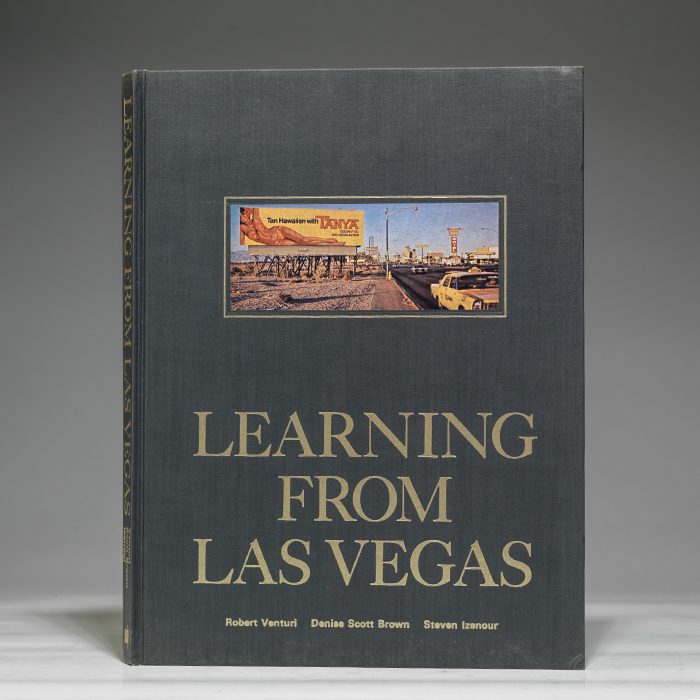
12. Learning from Las Vegas — Venturi, Denise Scott Brown, Steven Izenour The Strip studied with the seriousness usually reserved for Rome. Ducks, decorated sheds, and a lasting lesson: look at what’s actually there before deciding what should be.
Learning from Las Vegas — Venturi, Denise Scott Brown, Steven Izenour
13. The Architecture of the City — Aldo Rossi Rossi treats the city as a collective artefact built up over time, with monuments as memory anchors. It’s dense, and it’s the origin of most serious thinking about typology.
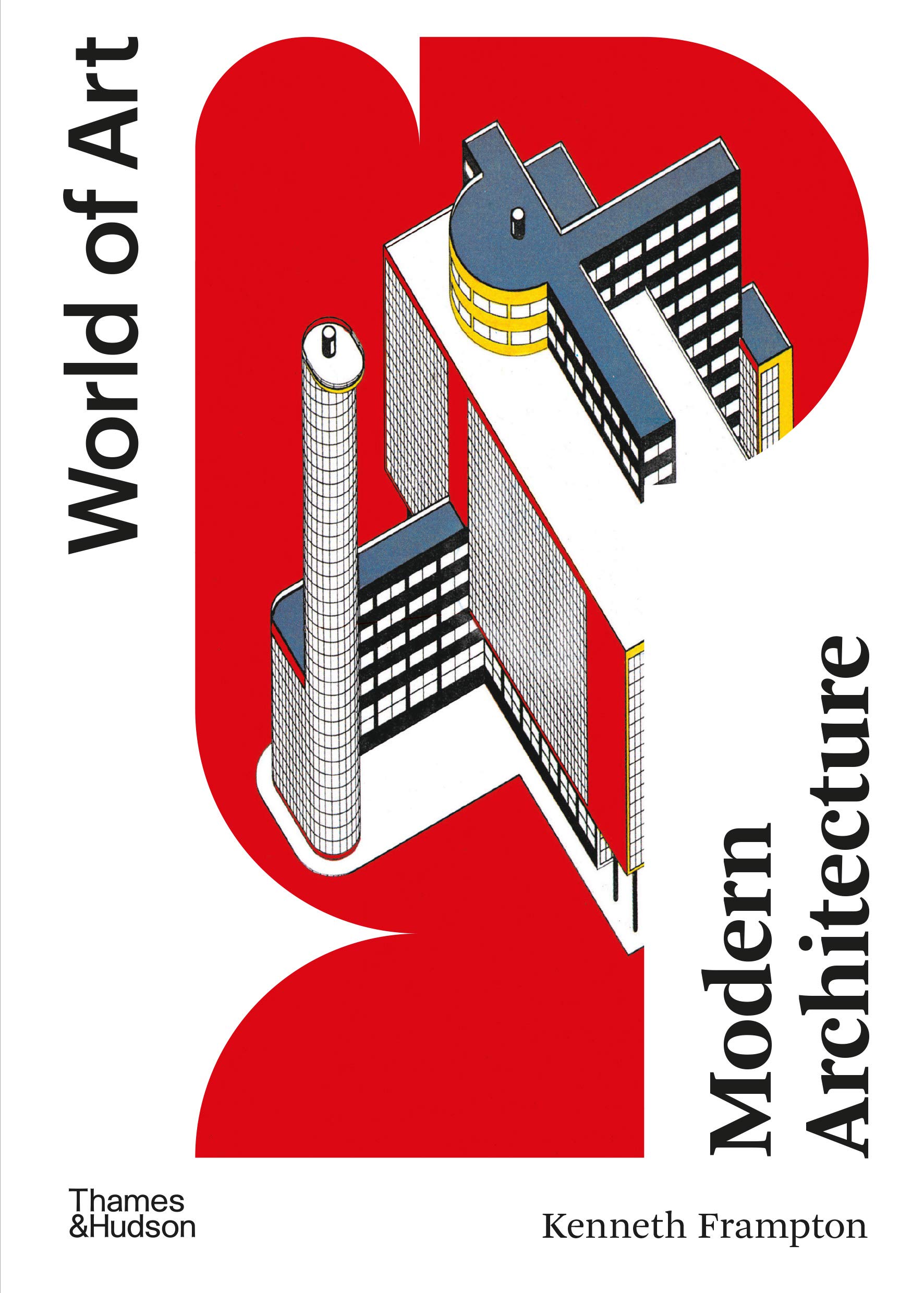
14. Modern Architecture: A Critical History — Kenneth Frampton The reference survey — thorough, opinionated, global in scope, and the source of “critical regionalism.” Keep it near your desk for the rest of your career.
Modern Architecture: A Critical History — Kenneth Frampton
15. The Language of Post-Modern Architecture — Charles Jencks Jencks named the movement and famously dated modernism’s death to the 1972 demolition of Pruitt-Igoe. A useful, entertaining map of what came after.
4. Phenomenology: Architecture as Sensation
16. The Eyes of the Skin — Juhani Pallasmaa An argument that architecture has become dominated by vision at the expense of touch, sound, and smell. Slim, beautiful, and the single most likely book here to change how you design next week.
17. Thinking Architecture — Peter Zumthor Short essays on memory, material, and the reasons a building moves you. Zumthor writes the way he builds: nothing extra.
18. Atmospheres — Peter Zumthor A lecture expanded into a small book about the nine things that make a space feel a certain way. Read it in one sitting, then read it again in a year.
Atmospheres — Peter Zumthor
19. Genius Loci — Christian Norberg-Schulz The “spirit of place” made into a working framework — how landscape, settlement, and character combine into identity. The foundation of most decent site-analysis thinking.
20. The Poetics of Space — Gaston Bachelard A philosopher on attics, cellars, drawers, corners, and nests. It’s not an architecture book, and it’s on every architecture reading list for good reason.
5. Cities, Streets, and Public Life
21. The Death and Life of Great American Cities — Jane Jacobs Jacobs took apart mid-century planning orthodoxy from a Greenwich Village sidewalk, and won. “Eyes on the street” entered the language because of this book.
22. The Image of the City — Kevin Lynch Paths, edges, districts, nodes, landmarks — five terms that let you describe how people actually navigate a place. Still the cleanest analytical tool in urban design.
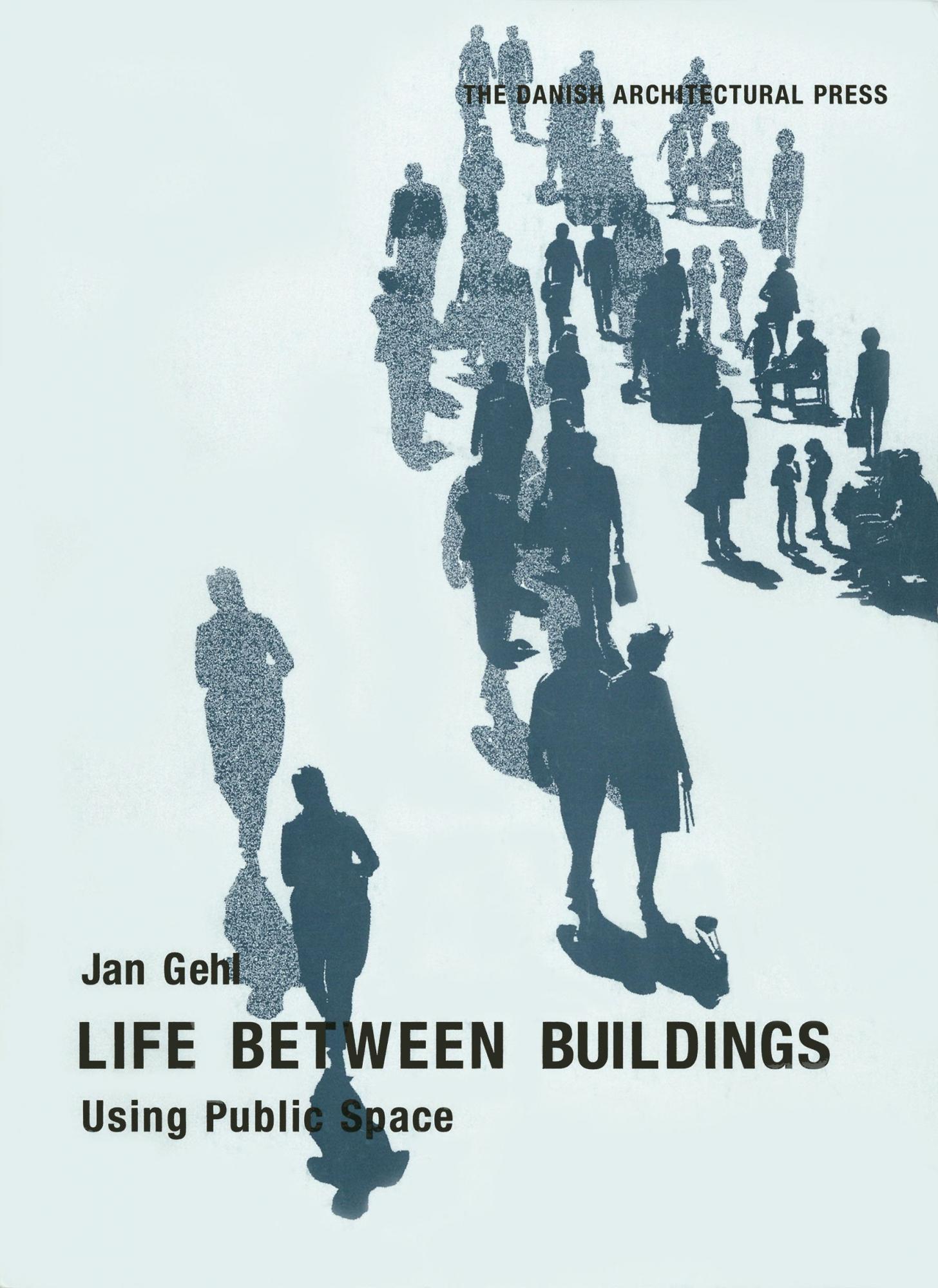
23. Life Between Buildings — Jan Gehl Gehl counted people. Where they sat, how long they stayed, when they stopped walking. The result is a practical manual for designing space people voluntarily occupy.
Life Between Buildings — Jan Gehl
24. The Social Life of Small Urban Spaces — William H. Whyte Time-lapse film studies of plazas that worked and plazas that didn’t, with startlingly simple conclusions about seating, sun, and food. Short, funny, and quietly rigorous.
25. Delirious New York — Rem Koolhaas A “retroactive manifesto” for Manhattan, treating congestion as a culture rather than a problem. It’s a masterclass in inventing a theory out of a city that already exists.
6. Design Process, Drawing, and Representation
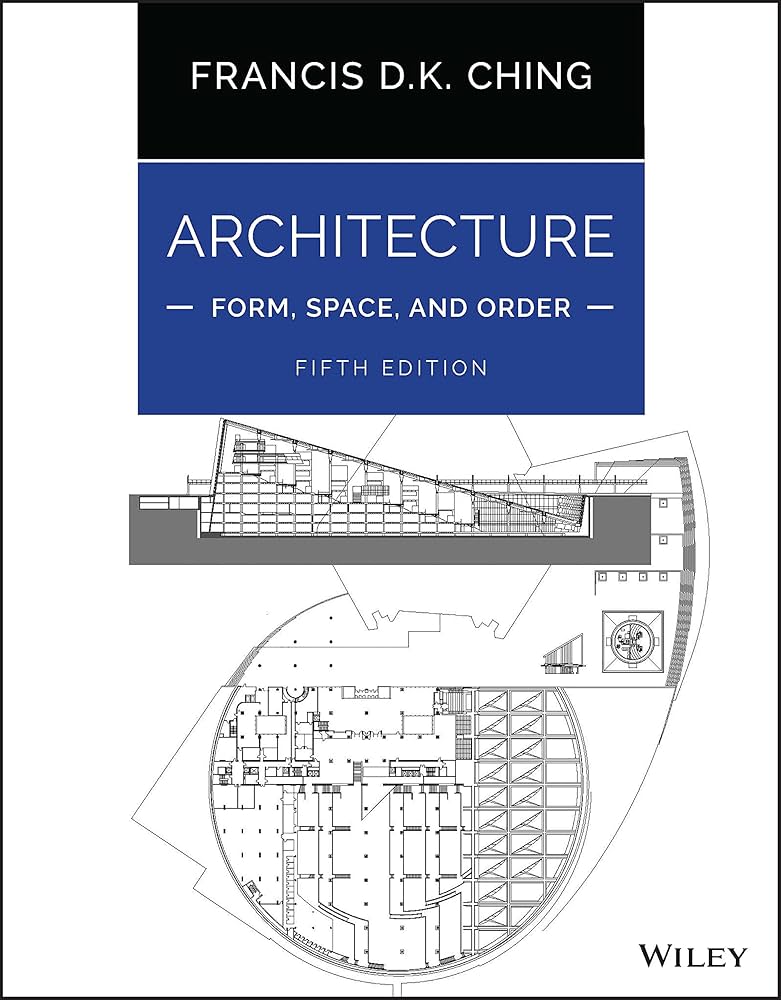
26. Architecture: Form, Space, and Order — Francis D.K. Ching The most useful architecture textbook ever produced, full stop. Every spatial move you’ll ever make is here, drawn with unreasonable clarity.
27. Architectural Graphics — Francis D.K. Ching Line weights, lettering, projection, and shadow-casting, taught properly. Even in an all-digital workflow, the conventions here are what make a drawing legible.
Architectural Graphics — Francis D.K. Ching
28. Design Drawing — Francis D.K. Ching Freehand thinking-on-paper as a design skill, not an art hobby. The fastest route to sketching that actually helps you decide something.
29. A Pattern Language — Christopher Alexander et al. 253 interlocking patterns, from “alcoves” to “network of paths,” each stated as a problem and a response. Divisive in academia, beloved by builders and software engineers alike.
A Pattern Language — Christopher Alexander et al.
30. 101 Things I Learned in Architecture School — Matthew Frederick One idea per spread, with a drawing. It’s the book to hand a confused first-year, and quietly the book most third-years should re-read.
7. Construction, Structure, and Detail
31. Building Construction Illustrated — Francis D.K. Ching How buildings actually go together, from foundations to finishes, drawn so well you’ll understand assemblies you’ve never seen. The third Ching on this list, and it earns its place.
32. Fundamentals of Building Construction — Edward Allen & Joseph Iano Deeper and more technical than Ching, organised by material and system. This is the one you keep once you start doing real detail packages.
33. Why Buildings Stand Up — Mario Salvadori Structural behaviour explained through intuition rather than equations. If structures class broke your spirit, this repairs it.
Why Buildings Stand Up — Mario Salvadori
34. Why Buildings Fall Down — Matthys Levy & Mario Salvadori Forensic case studies of collapses and what caused them. Nothing teaches structural humility faster.
35. The Details of Modern Architecture — Edward R. Ford A history of construction told through joints, sections, and the gap between what modernists claimed and what they built. The best argument that detailing is a form of thinking.
8. Environment, Climate, and Sustainability
36. Sun, Wind & Light — G.Z. Brown & Mark DeKay Passive design strategies organised so you can use them at concept stage, not as a retrofit. It belongs on the desk during schematic design, not on the shelf.
37. Heating, Cooling, Lighting — Norbert Lechner The standard textbook on environmental systems for architects, covering climate-responsive design before it covers equipment. Comprehensive without becoming an engineering manual.
Heating, Cooling, Lighting — Norbert Lechner
38. Cradle to Cradle — William McDonough & Michael Braungart Reframes sustainability from “less bad” to genuinely regenerative, with materials designed for perpetual cycles. Read it alongside its critics for the full picture.
39. The Green Studio Handbook — Alison Kwok & Walter Grondzik Around eighty strategies with sizing rules of thumb and worked examples. It is the practical companion to the two books above.
40. Design Like You Give a Damn — Architecture for Humanity Humanitarian and emergency design case studies, from shelters to schools to clinics. A necessary corrective if your feed is all luxury villas.
9. Practice, Standards, and the Business of Architecture
41. The Architect’s Handbook of Professional Practice — AIA Contracts, liability, fees, project delivery, and firm management. Not thrilling, deeply necessary, and the gap between it and studio culture explains a lot of early-career distress.
42. Architects’ Data — Ernst Neufert The dimensional bible: how much space a person, a car, a hospital bed, or a bowling alley needs. You will open it more often than any theory book you own.
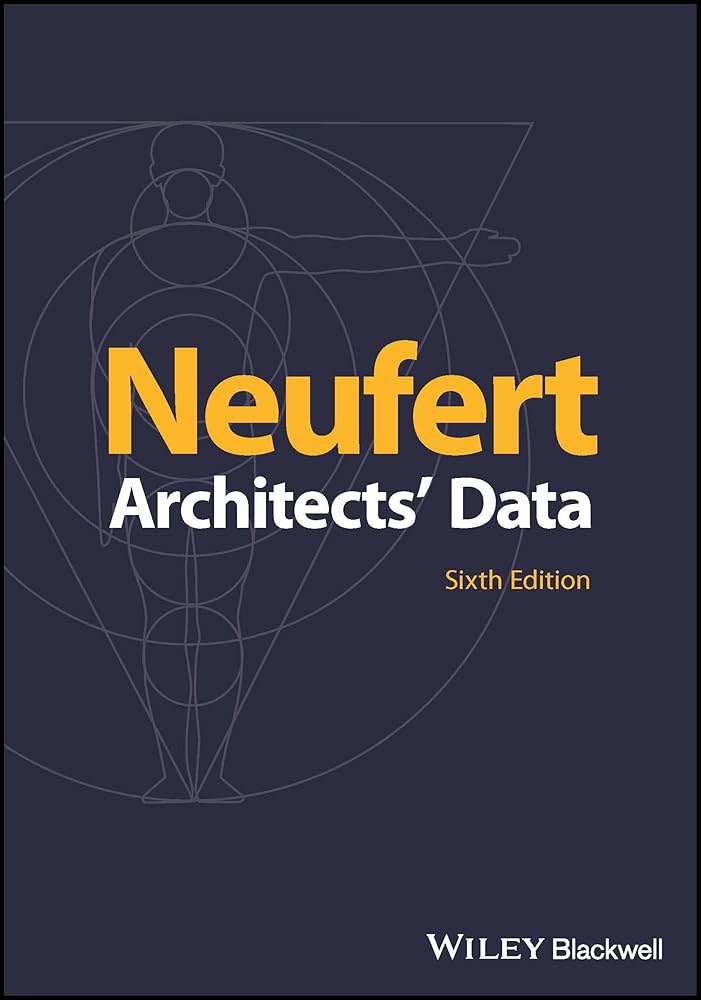
Architects’ Data — Ernst Neufert
43. Metric Handbook: Planning and Design Data — edited by Pamela Buxton Building-type-by-building-type planning data with current standards and typical layouts. Neufert’s more contemporary companion, and often more directly usable.
44. The Architecture Reference & Specification Book — Julia McMorrough A pocket-sized condensation of the codes, standards, and data you check constantly. Ideal for site visits and studio desks.
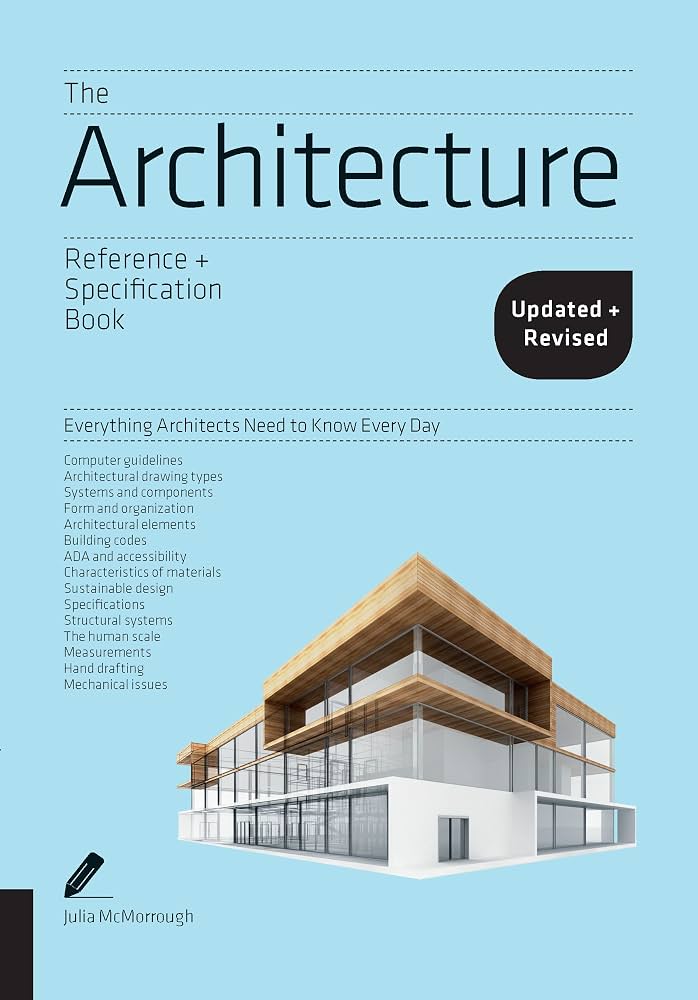
The Architecture Reference & Specification Book — Julia McMorrough
45. How Buildings Learn — Stewart Brand What happens to buildings after the photographs are taken — how they’re altered, patched, and adapted over decades. It may permanently change what you consider “finished.”
10. Inspiration, Monographs, and Books You’ll Actually Enjoy
46. S,M,L,XL — Rem Koolhaas & Bruce Mau 1,300 pages of projects, essays, diary entries, and a glossary, designed as an object as much as a book. Graphic design’s centre of gravity shifted after this.
47. Yes Is More — Bjarke Ingels Group An architecture manifesto in comic-book form, explaining projects as evolving diagrams. The clearest demonstration on this list of how to communicate an idea.
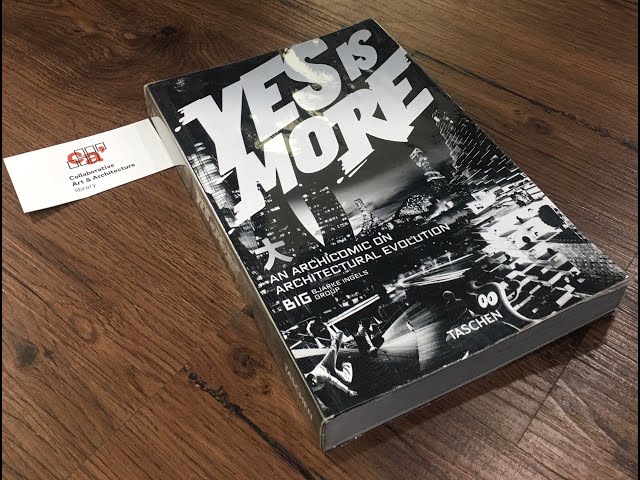
Yes Is More — Bjarke Ingels Group
48. Made in Tokyo — Atelier Bow-Wow A field guide to Tokyo’s absurd hybrid buildings — a golf range on a warehouse roof, a highway threaded through a block. It teaches you to find architecture in the unglamorous.
49. In Praise of Shadows — Jun’ichirō Tanizaki An essay on darkness, patina, lacquer, and the aesthetics of dimness in traditional Japanese space. Every architect who reads it starts questioning their lighting plan.
50. The Architecture of Happiness — Alain de Botton Accessible, occasionally infuriating reflections on why buildings make us feel the way we do. The best book on this list to give to a non-architect who wants to understand what you do.
Two honourable mentions: Invisible Cities by Italo Calvino, and The Fountainhead by Ayn Rand — read the first for imagination, the second only so you know what people mean when they reference it.
What Books Should Every Architecture Student Read?
The non-negotiable core is smaller than most lists suggest — roughly eight books:
- Ching, Architecture: Form, Space, and Order — the grammar of spatial design
- Ching, Building Construction Illustrated — how it stands up and stays dry
- Frederick, 101 Things I Learned in Architecture School — studio survival
- Pallasmaa, The Eyes of the Skin — designing beyond the visual
- Jacobs, The Death and Life of Great American Cities — buildings live in cities
- Frampton, Modern Architecture: A Critical History — the map of the last 150 years
- Zumthor, Thinking Architecture — why any of it matters
- Neufert, Architects’ Data — the dimensions you’ll otherwise guess wrong
Everything else is specialisation. Read these eight properly and you’ll have the vocabulary to hold your own in any crit.
What Is the Best Architecture Book for Beginners?
Experiencing Architecture by Steen Eiler Rasmussen — assuming you want to fall in love with the subject. It uses no jargon and explains why a plaster wall feels different from a brick one.
If you want something more practical from day one, start with 101 Things I Learned in Architecture School: one idea per page, finished in an afternoon, and re-readable for years.
If you’re arriving from a non-design background, The Architecture of Happiness is the friendliest doorway.
Can You Learn Architecture From Books Alone?
You can learn a great deal — history, theory, structural intuition, construction logic, and dimensional standards are all genuinely book-learnable. Many self-taught designers build real competence this way.
What books can’t give you is the studio feedback loop: making something, watching it fail in front of other people, and rebuilding it. They also can’t give you a licence — in nearly every country, registration requires an accredited degree plus documented experience plus examinations.
The realistic model is: books for knowledge, projects for skill, an accredited programme for the licence. If registration is your goal, start by comparing accredited programmes in our overview of architecture schools around the world.
Where Can I Download Architecture Books for Free?
Legally, more than you’d expect. Public-domain classics — Vitruvius, Palladio, Ruskin — are freely available through archives and digital libraries because their copyright has long expired. Many universities and institutions also publish open-access theory titles, and most publishers post substantial preview chapters.
We’ve collected the legitimate options in two places:
- Download the best architecture books for free — the main curated collection
- Architecture ebooks, part 2 — the follow-up round-up with additional titles
Also worth checking before you buy anything: your school library’s digital lending, Internet Archive’s controlled lending, and JSTOR’s free-reads allowance for registered users. For current in-copyright titles like Ching or Neufert, buy or borrow — the authors are still working, and pirated PDFs are usually badly scanned anyway.
Which Architecture Book Is Best for Design Concepts?
For generating and testing concepts, three do the heavy lifting:
- Architecture: Form, Space, and Order — gives you the moves themselves: centralised, linear, radial, clustered, grid; addition versus subtraction; datum, rhythm, hierarchy.
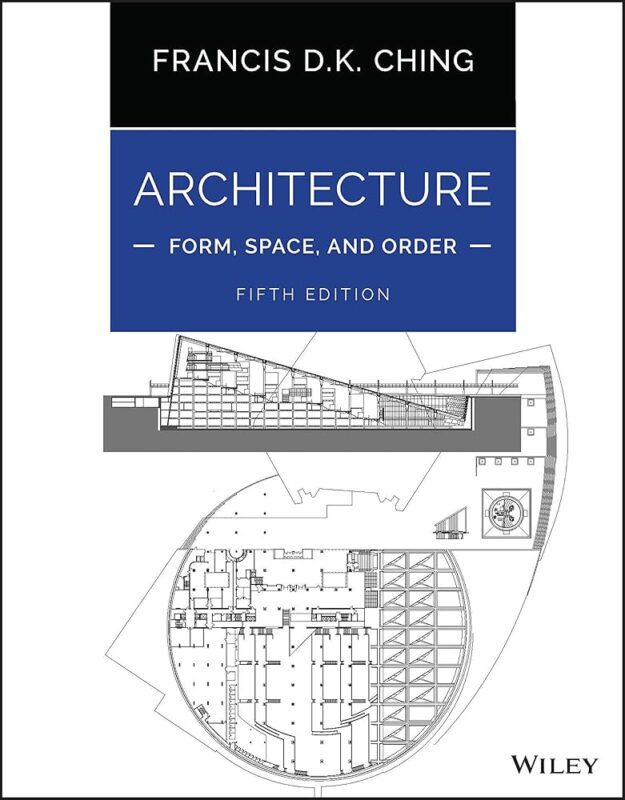
Architecture: Form, Space, and Order
- Complexity and Contradiction in Architecture — teaches you that a concept can hold two opposing ideas at once and be stronger for it.
- Yes Is More — shows how to turn a concept into a communicable diagram, which is where most student projects fail.
Add Atmospheres if your concepts keep coming out technically sound and emotionally flat.
How Many Architecture Books Should You Read Per Year?
Twelve is a good, unglamorous target — one a month, mixing one technical, one theoretical, and one for pleasure each quarter. Practising architects who read even six a year are usually noticeably ahead of peers who read none.
Quality of reading matters more than quantity. Three books read with notes, marginalia, and sketches will outperform twenty skimmed. Which leads to the next question.
How Do You Actually Read an Architecture Book?
Architecture books resist front-to-back reading, and that’s fine. What works:
- Read the drawings first. In Ching, Ford, or Allen & Iano, the images carry the argument. Spend real time on a section drawing before reading the paragraph next to it.
- Sketch as you go. Redrawing a plan from the book, badly, embeds it far better than highlighting.
- Keep a one-page-per-book note. Three ideas, one quotation, one project it changed your mind about. You’ll thank yourself in year four.
- Read theory in pairs. Le Corbusier next to Venturi. Jacobs next to a planning manual. Argument is how these books were meant to be consumed.
- Abandon freely. If a book isn’t landing, shelve it for two years. The Architecture of the City makes far more sense after you’ve designed in a real urban context.
Are Expensive Architecture Books Worth It?
For reference books used weekly — Ching, Neufert, the Metric Handbook, Allen & Iano — yes, unambiguously. Cost per use is negligible, and a physical page you can leave open beside a screen beats a PDF you have to keep re-finding.
For one-time reads and monographs, borrow first. University libraries, public libraries, and second-hand editions cover most of it, and older editions of theory books are usually identical in substance to the newest printing.
Buy the ones you’ll annotate. Borrow the ones you’ll only finish once.
The Bottom Line
Fifty books is a career, not a summer. The architects who get better are not the ones who own the longest shelf — they’re the ones who read a handful of books slowly enough that the ideas start showing up in their drawings without being invited.
Pick three from this list. Buy one, borrow one, and download one from the free architecture books collection. Start tonight.

Emily Reyes is a Brooklyn-based architecture writer and Article Curator at Arch2O, known for her sharp eye for experimental design and critical theory. A graduate of the Southern California Institute of Architecture (SCI-Arc), Emily’s early work explored speculative urbanism and the boundaries between digital form and physical space. After a few years in Los Angeles working with boutique studios on concept-driven installations, she pivoted toward editorial work, drawn by the need to contextualize and critique the fast-evolving architectural discourse. At Arch2O, she curates articles that dissect emerging technologies, post-anthropocentric design, and contemporary spatial politics. Emily also lectures occasionally and contributes essays to independent design journals across North America.