

There is no single official ranking of the best interior design schools in the world, so this guide compares ten well-known programmes on facts you can check: accreditation, degree and length, published tuition and portfolio requirements, each taken from the school’s or accreditor’s own page on 24 October 2026. Seven of the ten (SCAD, Pratt, NYSID, FIT, Cornell, VCU and BCIT) hold accreditation from the Council for Interior Design Accreditation (CIDA); RISD, Chelsea College of Arts in London and UTS in Sydney are leading schools that sit outside CIDA’s system. The list is ordered by country, not ranked.
It is written for school leavers, career changers and architecture graduates considering interior design. Is interior design a promising career? While most architecture schools have studios that teach interiors, interior architecture has become a discipline of its own, and there are things you need to know before becoming an interior designer. For architecture as a whole, see the leading architecture schools worldwide.
Interior design applies creative and technical solutions within a structure to create interior environments that are safe, functional and attractive. The specialised knowledge includes programming, design analysis, space planning, interior construction, building codes, materials, furnishings and equipment.
Also check: most prominent architecture schools in the world · top 10 architecture schools in Europe · top architecture schools in Germany · top architecture schools in the UK · best architecture schools in the USA
How this list was compiled
Earlier versions of this article ranked schools using a mix of 2015 ranking sources and claims that could not be traced. This update replaces that ranking with a transparent comparison. Each school was checked against:
- Accreditation: CIDA’s list of accredited programmes, which covers the United States and Canada plus a small number of programmes in Cyprus, Saudi Arabia, Qatar and the United Arab Emirates. Schools elsewhere are judged by national systems instead.
- Degree and length: from the programme’s official page.
- Tuition: the latest figure published by the school, with the year; where the school’s page could not be confirmed, the table says so.
- Portfolio: whether the programme asks for one.
Job-placement rates and “notable alumni” lists were removed, because the figures previously quoted could not be matched to current school data and several alumni claims were wrong.
Comparison table by country (official data, dated)
| Country | School and programme | CIDA accredited | Length (full time) | Published tuition | Portfolio |
|---|---|---|---|---|---|
| USA | SCAD (Savannah, Atlanta): interior design | Yes | 4 years (BFA) | US$42,975 a year, 2026-27 undergraduate | Check programme page |
| USA | Pratt Institute (Brooklyn): interior design BFA | Yes | 4 years | US$64,703 a year, 2026-27 undergraduate | Yes |
| USA | NYSID (New York): BFA, MFA | Yes (BFA, MFA) | 4 years (BFA) | US$1,450 per credit (undergraduate), 2026-27 | Check programme page |
| USA | RISD (Providence): Interior Architecture BFA; MDes | No | 4 years (BFA) | US$66,460 a year, 2026-27 undergraduate | Yes |
| USA | FIT, SUNY (New York): interior design BFA | Yes | 4 years | Resident and non-resident rates in FIT catalogue | Check programme page |
| USA | Cornell (Ithaca): BS Design and Environmental Analysis, Interior Design Pathway | Yes (to spring 2029) | 4 years | See Cornell bursar | Check programme page |
| USA | VCU (Richmond): interior design BFA; MFA Interior Environments | Yes (since 1973) | 4 years (BFA) | See VCU tuition pages | Check programme page |
| Canada | BCIT (Burnaby): Bachelor of Interior Design | Yes (term from 2023) | 4 years incl. certificate and diploma stages | See BCIT programme page | Check programme page |
| UK | Chelsea College of Arts, UAL: BA (Hons) Interior and Spatial Design | No (CIDA does not accredit UK programmes) | 3 years | £10,050 home / £31,510 international a year (Sept 2027 entry) | Usually; max 30 pages |
| Australia | UTS (Sydney): Bachelor of Design in Interior Architecture | No | 3 years | A$29,332 indicative total (domestic, government-supported) | Check programme page |
Source: CIDA accredited programmes list; official school tuition and programme pages linked in the article (as of 24 October 2026).
So which school has the best interior design programme? It depends on where you want to practise. In the United States and Canada, a CIDA-accredited degree is the most direct educational route towards the NCIDQ examination administered by the Council for Interior Design Qualification (CIDQ), which several US states and Canadian provinces use for registration or licensing. In the UK and Australia, the national university system and professional bodies matter more than CIDA.
The best interior design schools in the world: 10 programmes compared
United States
1. Savannah College of Art and Design (SCAD), Savannah and Atlanta

©SCAD
SCAD’s interior design programmes in Savannah and Atlanta, Georgia, appear on CIDA’s accredited list. The college also runs a campus in Lacoste, France, and the online SCADnow programme. Its published undergraduate tuition for 2026-27 is US$14,325 per quarter, or US$42,975 for a full-time academic year of three quarters.
SCAD is a large art and design university, so interior design students work alongside programmes such as architecture and furniture design.
Also read: 12 interior design trends of the year
2. Pratt Institute, Brooklyn, New York
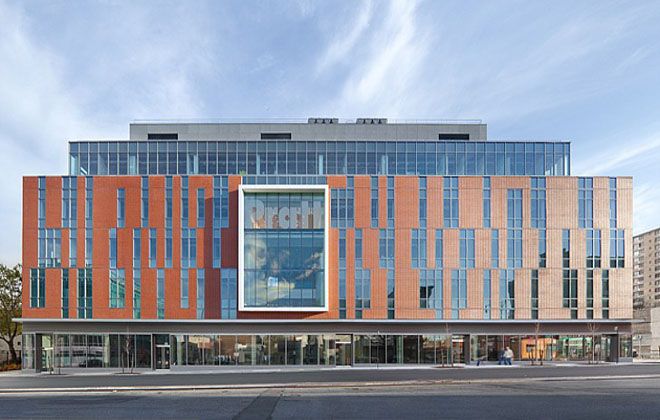
©Pratt Institute
Pratt’s interior design programme in Brooklyn is CIDA-accredited and offers both undergraduate (BFA) and graduate study. Pratt lists 2026-27 full-time undergraduate tuition of US$64,703 a year, before fees and living costs.
Its location in New York gives students access to one of the world’s largest concentrations of interior design practices, showrooms and manufacturers.
Also read: top online interior design courses for beginners
3. New York School of Interior Design (NYSID), New York

©Wikimedia
NYSID is a specialist college devoted entirely to interior design. Its BFA and MFA programmes are on CIDA’s accredited list. It also offers the AAS and Basic Interior Design certificate at undergraduate level and an MPS. Its 2026-27 tuition page lists US$1,450 per credit for undergraduate programmes, US$24,600 per semester for the MFA and US$1,640 per credit for MPS programmes.
Because it is small and focused on one discipline, NYSID suits students who already know they want to practise interior design rather than explore several art and design fields.
4. Rhode Island School of Design (RISD), Providence

Rhode Island School of Design campus exterior. ©Jo Sittenfeld
RISD’s Department of Interior Architecture offers a BFA and two Master of Design degrees, in Adaptive Reuse and in Exhibition and Narrative Environments. Adaptive reuse, the transformation of existing buildings, is central to both levels, and studios also cover domestic, retail and theatre and production design. RISD’s programme is not on CIDA’s list. Providence sits between the cultural centres of Boston and New York.
RISD’s undergraduate cost of attendance for 2026-27 lists tuition of US$66,460 a year.
5. Fashion Institute of Technology (FIT), New York
FIT, part of the State University of New York (SUNY), has a CIDA-accredited Bachelor of Fine Arts in interior design. As a public institution, it charges lower tuition to New York residents than to out-of-state students; current rates are in the FIT undergraduate catalogue. Its Manhattan location and links with the fashion and retail industries make it a strong option for students interested in retail and hospitality interiors.

The Fashion Institute of Technology (SUNY) campus on West 27th Street, Manhattan. Photo: Beyond My Ken, CC BY-SA 4.0. Beyond My Ken, source, CC BY-SA 4.0
6. Cornell University, Ithaca
Cornell’s interior design route is the Interior Design Pathway within the Bachelor of Science in Design and Environmental Analysis, in the College of Human Ecology. Cornell says the programme has held CIDA accreditation for more than two decades, with its current accreditation running through spring 2029. The programme combines design with research on how environments affect people, which suits students interested in healthcare, workplace or evidence-based design.
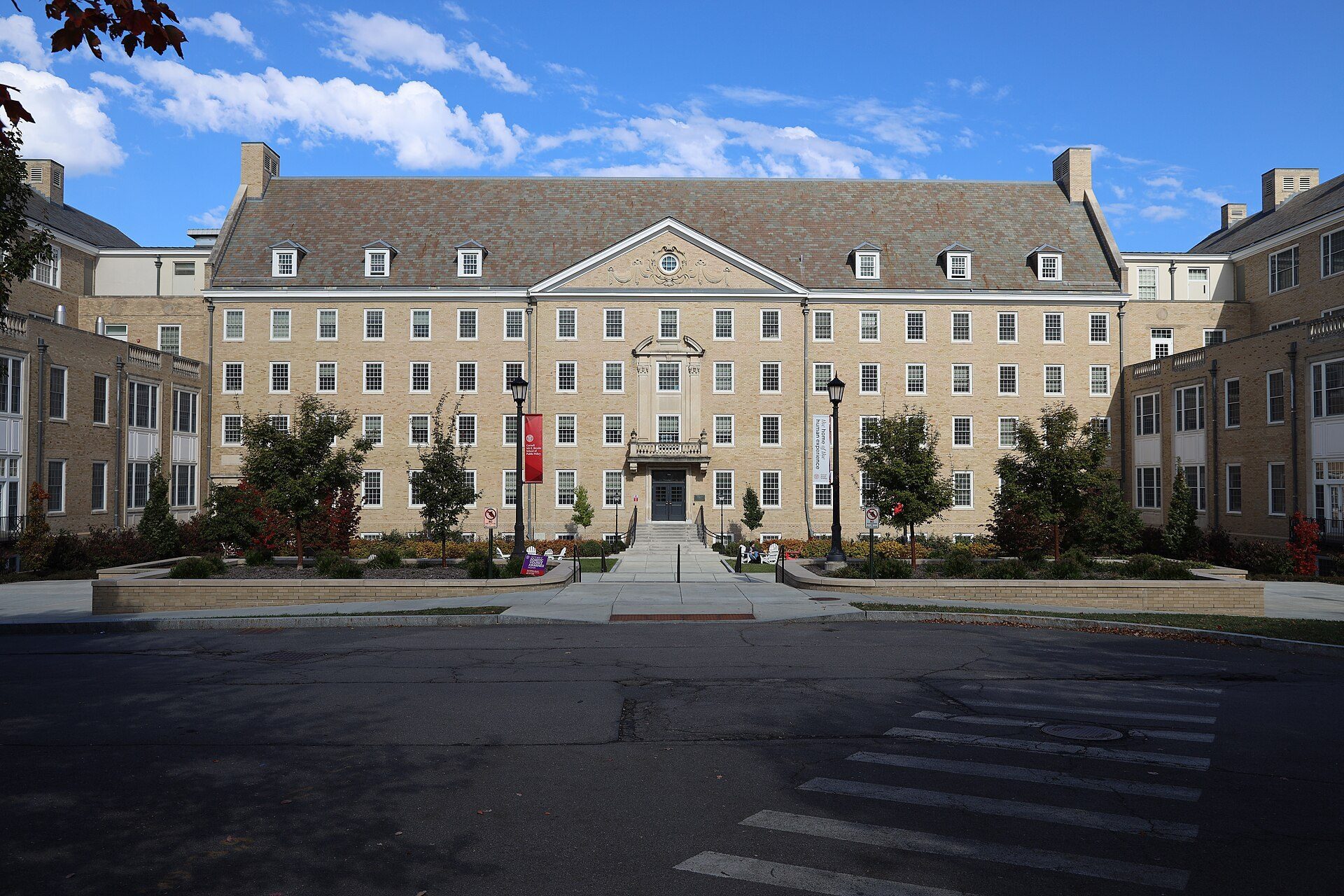
Martha Van Rensselaer Hall, home of Cornell's College of Human Ecology and its Design and Environmental Analysis programme, Ithaca. Hstoops, source, CC BY-SA 4.0
7. Virginia Commonwealth University (VCU), Richmond
VCUarts in Richmond offers a CIDA-accredited Bachelor of Fine Arts in interior design and an MFA in Design with a concentration in Interior Environments. VCU’s major map states the department has been accredited since 1973. VCU also runs a CIDA-accredited BFA at its campus in Doha, Qatar, one of the few accredited programmes outside North America.

The Pollak Building, home of VCUarts in Richmond, Virginia, in an archive photograph. Photo: VCU Libraries, CC BY 2.0. VCU Libraries, source, CC BY 2.0
Canada
8. British Columbia Institute of Technology (BCIT), Burnaby
BCIT’s Bachelor of Interior Design is CIDA-accredited and is reached in stages: a foundation year, a diploma, and then the degree, four years in total, with full-time and part-time options. A CIDA decision summary records a six-year accreditation term effective 2023. The polytechnic model emphasises technical and practical skills.

The British Columbia Institute of Technology's Burnaby campus. Photo: BCIT School of Business, CC BY 2.0. BCIT School of Business, source, CC BY 2.0
United Kingdom
9. Chelsea College of Arts, University of the Arts London

©UAL
Chelsea’s BA (Hons) Interior and Spatial Design is a three-year full-time course. For September 2027 entry, UAL lists fees of £10,050 a year for home students and £31,510 a year for international students. Applicants are usually asked for a digital portfolio of no more than 30 pages after applying through UCAS, and may be invited to a short online interview. The course is not CIDA-accredited; CIDA does not accredit UK programmes.
The course develops students’ skills in creating, designing and visualising spaces, and Chelsea’s location within UAL connects it to a wide range of art and design disciplines.
Australia
10. University of Technology Sydney (UTS)

©UTS
UTS offers a three-year full-time Bachelor of Design in Interior Architecture, with an indicative total tuition fee of A$29,332 for government-supported domestic students; international fees are published separately. A four-year double degree with Creative Intelligence and Innovation is also available. Studios teach both analogue and digital tools for interior and spatial design.
Also read: the fundamentals of minimalist interior design
Schools removed from earlier versions of this list
Four schools from the previous version could not be verified against a working official website on 24 October 2026, so they are no longer compared. If you are considering any of them, contact the school directly and confirm its current courses, award and recognition.
Florence Design Academy, Florence: a private design school offering interior design courses in English. Its official website did not respond during checks, and the earlier claim that it is CIDA-accredited is wrong: it does not appear on CIDA’s list.

Florence Design Academy, Florence
The Interior Design School, London: an independent school in Queen’s Park, north-west London, known for a one-year Professional Diploma. The domain previously associated with it now shows a parked page, so current courses could not be confirmed.

©Interior Design School, London
Visual College of Art and Design (VCAD), Vancouver: VCAD lists an Interior Design programme, linked to its Calgary campus, but its site does not state the credential or length, and it is not on CIDA’s list as the earlier version claimed.

©Vancouver College of Arts
Dublin Institute of Design: the website previously used by the institute now redirects to an unrelated site, so its current status could not be confirmed. It was also not CIDA-accredited, as earlier claimed.

©Free-apply.com
Also read: 17 interior design tricks
How to compare interior design programmes
Finding the right school is easier once you decide what you want from it. These criteria matter most.
1. Check accreditation for the country where you will practise
If you plan to work in the United States or Canada, check that the programme appears on CIDA’s list. CIDA accreditation is a review of the programme’s quality against professional standards, and it simplifies the education requirement for the NCIDQ exam. Elsewhere, check national recognition instead, such as a recognised university degree or validation by a national professional body.
2. How many years does it take to become an interior designer?
Most bachelor’s programmes in this comparison take three years in the UK and Australia and four years in the United States and Canada. Professional recognition usually also requires supervised work experience after graduation, and in North America passing the NCIDQ exam; check the current eligibility routes on CIDQ’s website.
3. Choose a broad or a focused programme
Some schools, such as SCAD or RISD, place interior design within a large art and design university with many electives and neighbouring disciplines. Others, such as NYSID, focus on interior design alone and suit students who already know what they want to pursue. Spend time on each school’s curriculum pages and student work before deciding.
4. Pick the right degree type
Interior design is taught under several degree titles. In the United States, a Bachelor of Fine Arts (BFA) is a professional art and design degree with a large studio component; a Bachelor of Science (BS), as at Cornell, often combines design with research and technical subjects; a Bachelor of Arts (BA) usually includes more liberal arts study. In the UK the usual award is a BA (Hons). What matters most for practice is accreditation or recognition, not the title.
5. Check portfolio requirements early
Most programmes ask for a portfolio. Chelsea, for example, asks for no more than 30 pages. Some requirements are easy to meet; others need months of preparation, so check them well before deadlines. Arch2O’s guide to building an architecture portfolio applies equally to interior design applications.
6. Count the full cost
Tuition is only part of the cost. Living costs in New York, London or Sydney can equal or exceed tuition, and studio materials, software and model-making add to it. Compare the school’s full published cost of attendance, as RISD and Pratt publish, rather than tuition alone.
Sources and further reading
- Council for Interior Design Accreditation: accredited programmes (accessed 24 October 2026)
- SCAD: undergraduate tuition · Pratt: 2026-27 tuition · NYSID: tuition · RISD: cost of attendance
- Cornell: DEA accreditation · VCU: interior design major map · BCIT: interior design
- UAL Chelsea: BA Interior and Spatial Design · UTS: Bachelor of Design in Interior Architecture
Next step: shortlist three programmes in the country where you want to practise, check their accreditation and full cost, and start your portfolio early. These are among the best interior design schools in the world, but the best one for you is the one that matches your goals and budget.

Muhammad Umair Siddiqui is an architect and former Arch2O assistant editor with expertise in urban design and architectural project management. Based in Pakistan, he brings strong skills in AutoCAD, 3ds Max, and Adobe Suite, combining technical proficiency with a deep understanding of design and planning principles.