


Who is Zaha Hadid?
Who is Zaha Hadid? Dame Zaha Hadid (1950–2016) was an Iraqi-born British architect, founder of Zaha Hadid Architects in London and, in 2004, the first woman to win the Pritzker Architecture Prize. She is known for fluid, dynamic buildings such as the London Aquatics Centre and the Guangzhou Opera House, many of them designed after years in which her radical drawings were considered unbuildable. This article, for students and readers interested in architects’ careers, follows five turning points that made her who she was, with a dated timeline and the buildings that illustrate each stage.
She died suddenly in March 2016. Her practice says it has worked on some 950 projects in 44 countries, and her career overturned the idea that architecture was a man’s profession. For lesser-known details of her life, see these unpredictable facts you never knew about Zaha Hadid; for her place among the masters, read why famous architects like Frank Lloyd Wright and Zaha Hadid revolutionised design.
When she received the Veuve Clicquot Business Woman Award in 2013, she said that architecture had been very male-dominated when she started and that her own progress had been a long fight, as Dezeen reported.
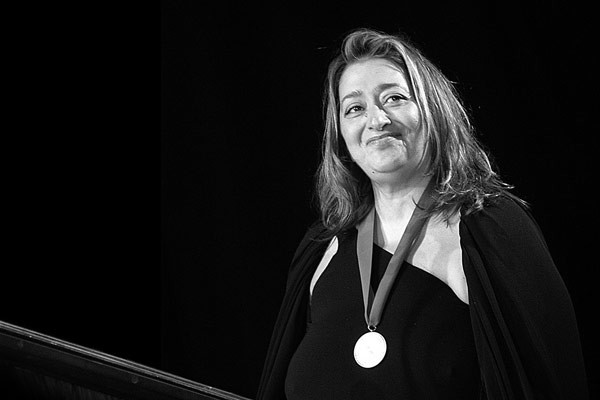
Courtesy of The Hyatt Foundation.
A childhood in modernising Baghdad
Hadid was born in Baghdad on 31 October 1950 into a liberal, secular family, and grew up during a period of optimism in modern Iraq, according to the American University of Beirut. In the 1950s the government used growing oil revenue to modernise Baghdad and invited leading modernists to design for the city, among them Frank Lloyd Wright, Le Corbusier and Walter Gropius (Oscar Niemeyer also worked in Iraq, on a later plan). She later recalled her childhood with great warmth, and is often quoted as saying she decided to become an architect at the age of 11.
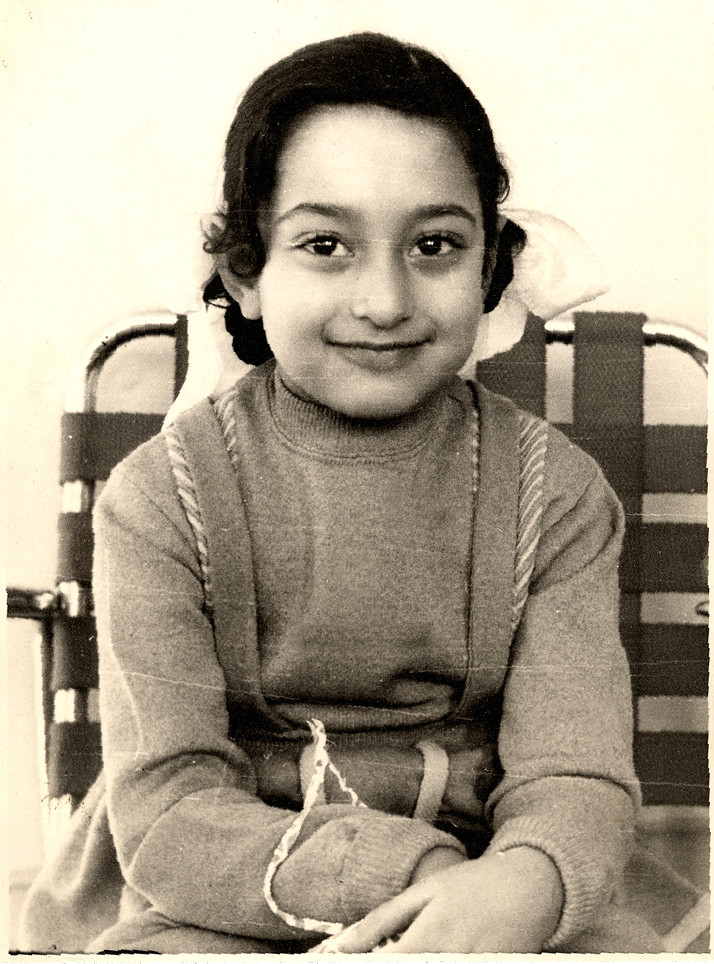
Zaha Hadid, the child !
Milestone 1: choosing architecture
Hadid first studied mathematics at the American University of Beirut. In 1972 she moved to London to study at the Architectural Association (AA), then the most experimental architecture school in Britain, according to her Pritzker Prize biography. Mathematics stayed with her: geometry and abstraction, rather than history or style, became the starting point of her designs.
Milestone 2: a radical graduation project
At the AA her teachers included Rem Koolhaas and Elia Zenghelis. She turned to the Russian avant-garde, especially Kazimir Malevich’s Suprematism, which composes paintings from floating geometric shapes and restricted colours. Her 1976–77 diploma project, Malevich’s Tektonik, proposed a 14-storey hotel on London’s Hungerford Bridge and was presented as an acrylic painting, as the Zaha Hadid Foundation records.
After graduating in 1977 she joined Koolhaas and Zenghelis at the Office for Metropolitan Architecture (OMA) and taught at the AA, then opened her own London practice in 1980 (some sources give 1979). Painting remained her main design tool for years; read more about Zaha Hadid’s paintings and what they reveal about her creative framework.
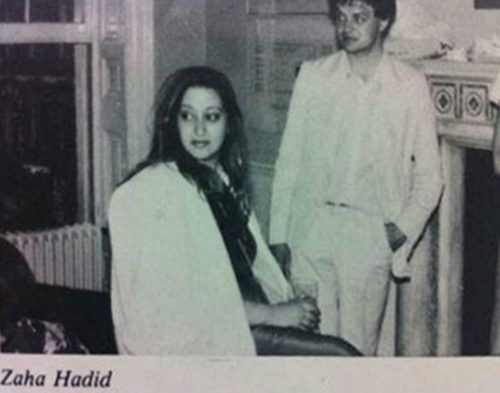
Milestone 3: working hard, winning The Peak
Her early years were spent teaching and entering competitions. In 1983 she won the international competition for The Peak, a private leisure club on the hills above Hong Kong, with explosive, Suprematist-inspired paintings of layered beams and planes. She later said that the project cemented ideas she had been developing since she was a student, according to Britannica.
The Peak made her internationally known and drew ambitious young architects to her office, among them Patrik Schumacher, who became her long-time partner in the practice. But the club was never built, and several later competition wins also went unbuilt, which earned her the label “paper architect”.
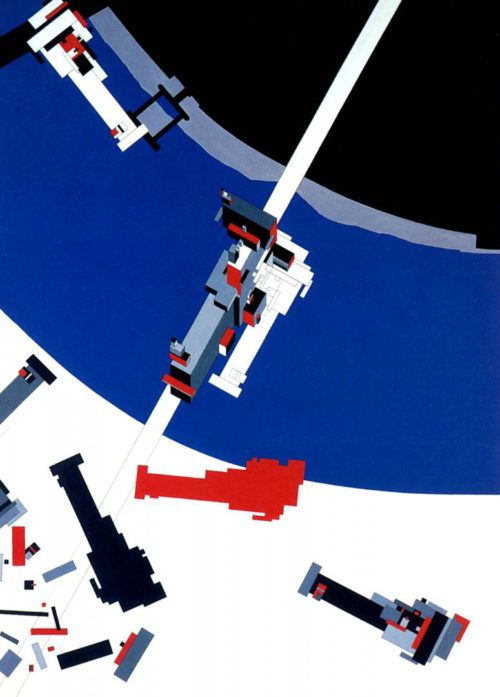
Courtesy of Zaha Hadid Architects.
Milestone 4: Vitra and the Cardiff rejection
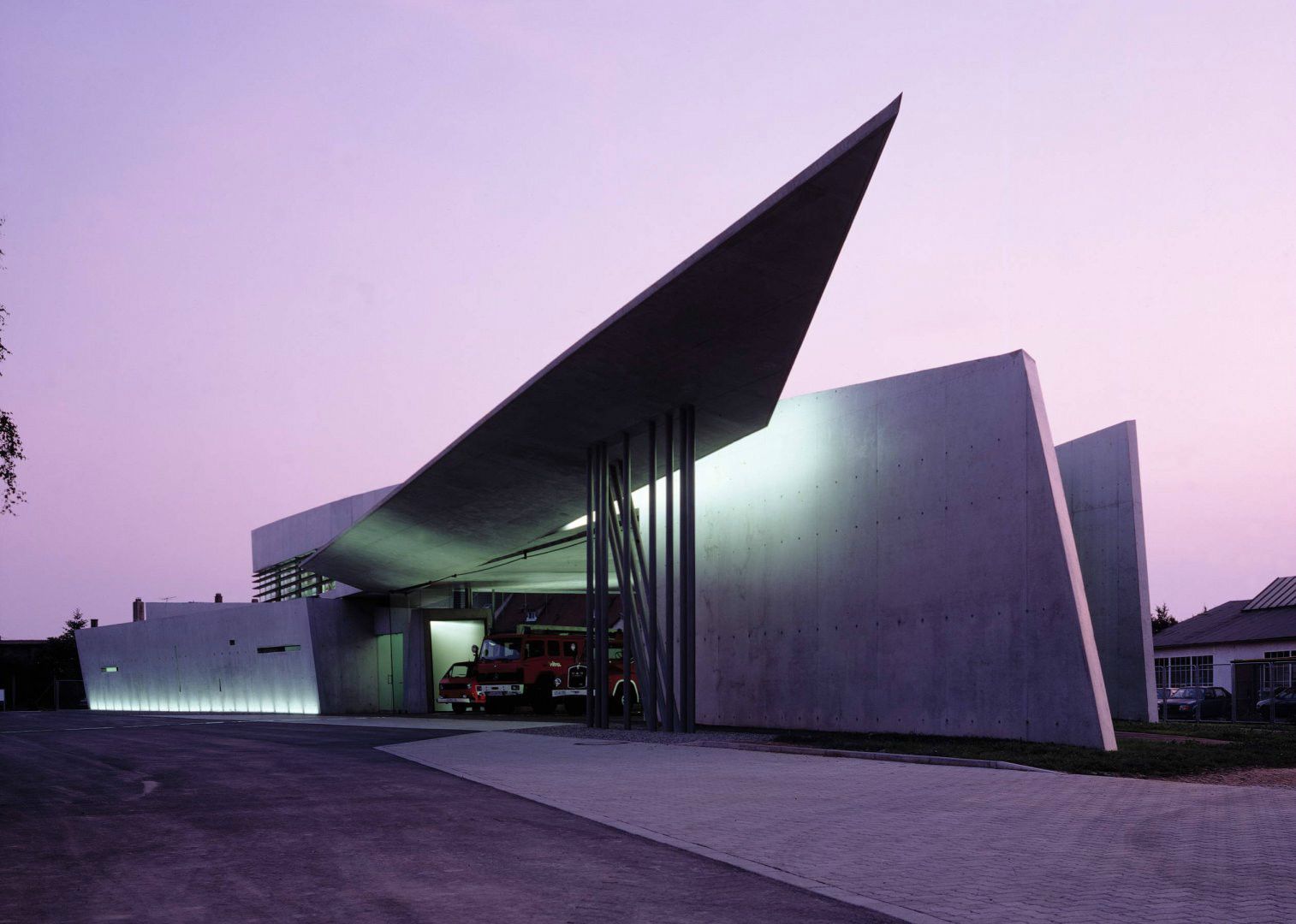
Her first major built work came from a client willing to take a risk. Rolf Fehlbaum, head of the furniture company Vitra, commissioned a fire station for the company’s site in Weil am Rhein, Germany, completed in 1993. Its sharp, tilted concrete planes look like movement frozen in mid-air. Because local fire-service arrangements changed, it served only briefly as a fire station and became an exhibition space, as Britannica notes.
Courtesy of Zaha Hadid Architects.
Then came the setback of the Cardiff Bay Opera House. Hadid’s design won the open competition in 1994 and won again when the trust asked for resubmissions, but in 1995 the Millennium Commission refused to fund it, and the scheme was abandoned, according to the National Library of Wales archive of the Opera House Trust. Critics had called the design impractical, and Hadid said she never understood why it was rejected, as Times Higher Education reported in 1997. The site was later used for the Wales Millennium Centre by other architects.
Milestone 5: global recognition and legacy
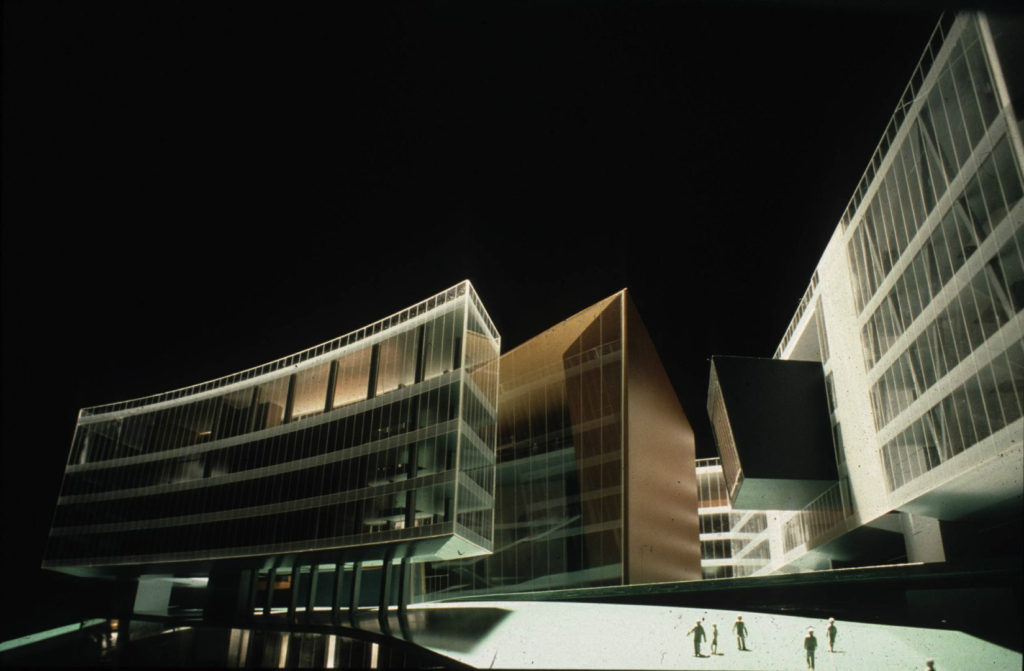
With Schumacher, Hadid rebuilt the office’s momentum around the turn of the millennium. Digital modelling and new fabrication methods finally made her complex geometry buildable, and from the 2000s Zaha Hadid Architects completed museums, opera houses, bridges, schools and sports venues around the world.
Courtesy of The Hyatt Foundation.
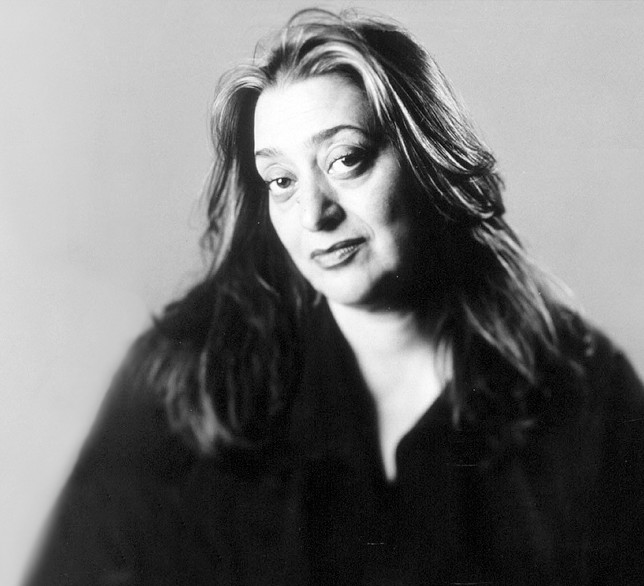
In 2004 she became the first woman to win the Pritzker Prize. She won the RIBA Stirling Prize two years running: in 2010 for the MAXXI museum in Rome and in 2011 for Evelyn Grace Academy in Brixton, London.
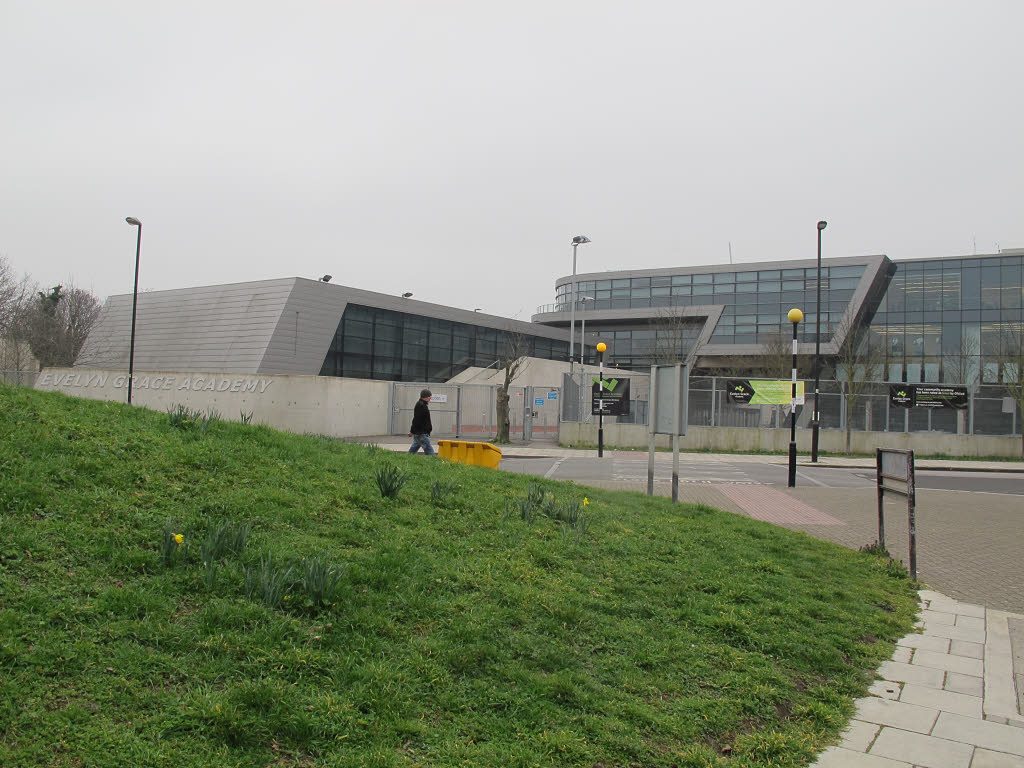
Evelyn Grace Academy, Brixton, London, winner of the 2011 RIBA Stirling Prize. Photo: Stephen Craven, CC BY-SA 2.0, via Geograph and Wikimedia Commons. Stephen Craven, source, CC BY-SA 2.0
She was made a Dame (DBE) in 2012 for services to architecture. In February 2016 she received the Royal Gold Medal of the RIBA, the first woman to be awarded it in her own right. Weeks later, on 31 March 2016, she died of a heart attack in a Miami hospital, where she was being treated for bronchitis, aged 65, as Dezeen reported.
Courtesy of Zaha Hadid Architects.
Zaha Hadid’s architectural style
Hadid’s early work, angular and fragmented, was shown in the 1988 “Deconstructivist Architecture” exhibition at New York’s Museum of Modern Art. Her later buildings became smoother and more continuous: sweeping curves, floors that rise into walls and roofs, and spaces that seem to flow rather than stand. Schumacher named the computational approach behind this later work “parametricism”. The press called her the “Queen of the Curve”, because she replaced the right angle and the box with continuous, curved surfaces in plan, section and facade.
Her childhood in Baghdad, among Mesopotamian landscapes and modernist experiments, and her training in mathematics are often cited as the roots of this spatial imagination, though she herself spoke more about abstraction and landscape than about any single influence.
Buildings that show who Zaha Hadid became
The question “who is Zaha Hadid?” is most often answered with her buildings. These completed works show the mature style that took her two decades to build.
The London Aquatics Centre, built for the 2012 Olympic Games, has a wave-like roof spanning the pools; temporary spectator wings were removed after the Games.
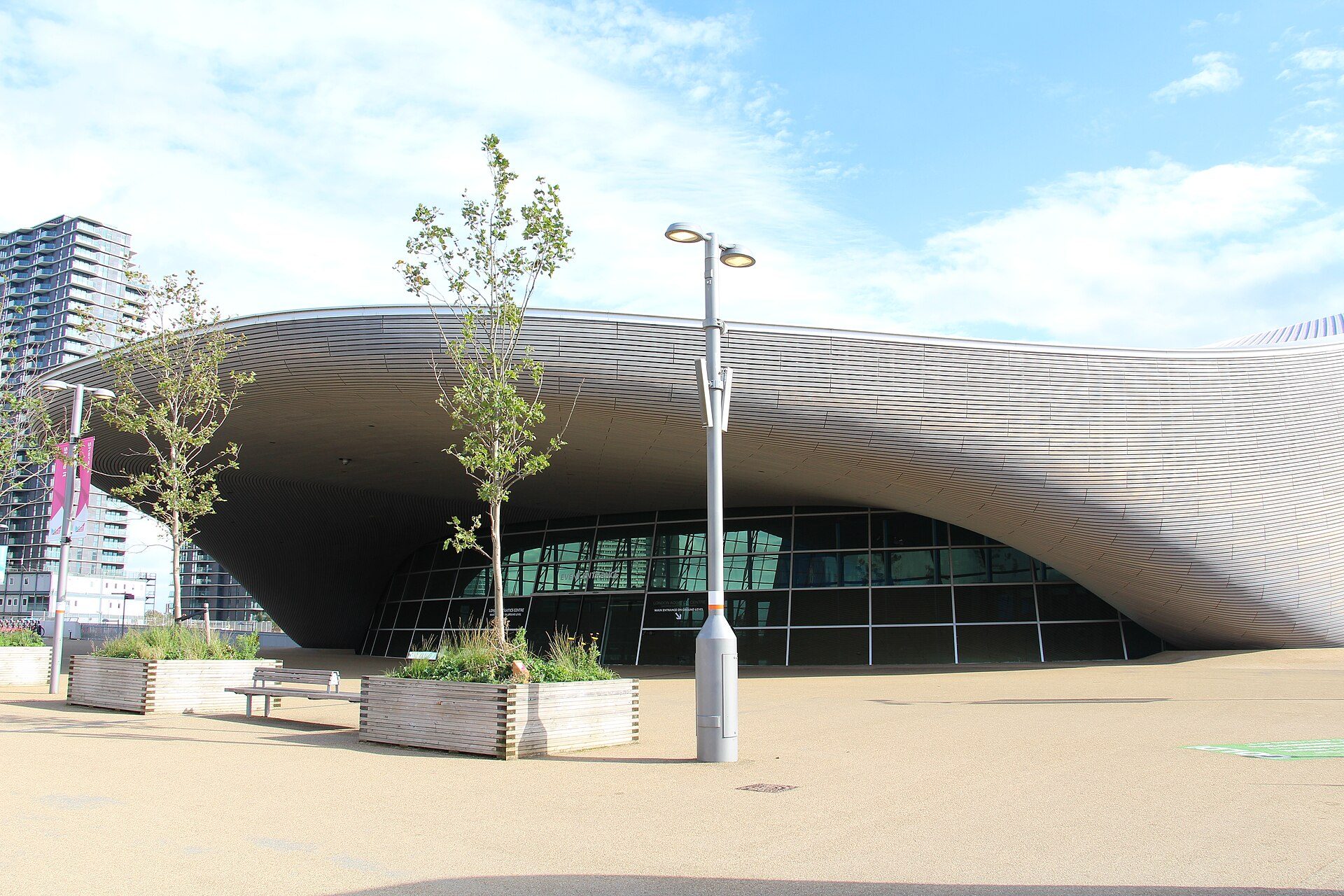
The London Aquatics Centre at Queen Elizabeth Olympic Park, built for the 2012 Olympic Games. Photo: Fred Romero, CC BY 2.0, via Wikimedia Commons. Fred Romero from Paris, France, source, CC BY 2.0
The Guangzhou Opera House in China, which opened in 2010, sits beside the Pearl River as two faceted volumes of different sizes, clad in granite and glass.
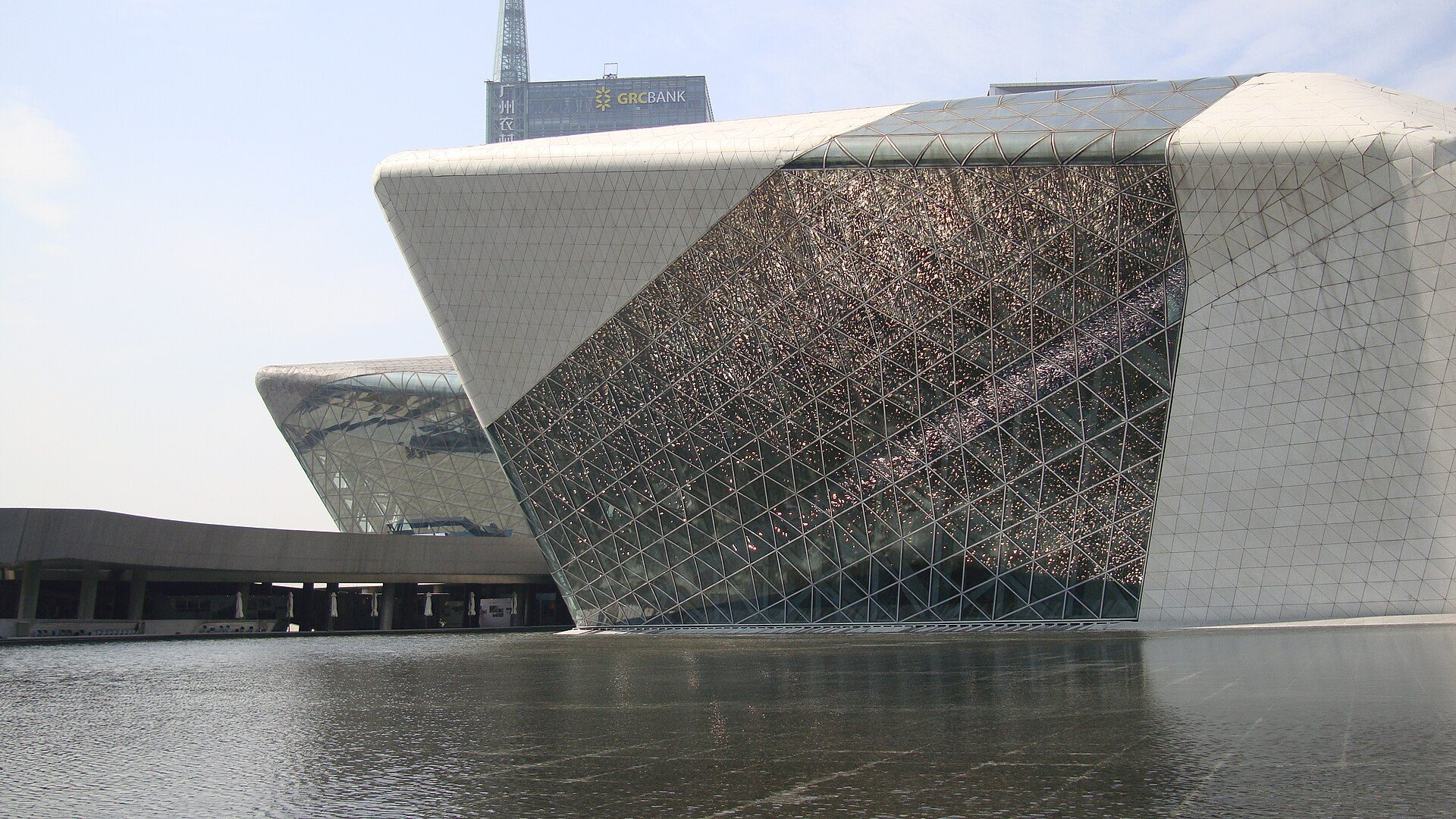
The Guangzhou Opera House, opened in 2010. Photo: Mr a., CC BY 3.0, via Wikimedia Commons. Mr a, source, CC BY 3.0
The MAXXI National Museum of 21st Century Arts in Rome (2010) interweaves long concrete galleries, and the Heydar Aliyev Center in Baku (2012) is a single continuous curving surface that rises from the plaza to wrap the building. Both are among her most published works; copyright restrictions on photographing recent buildings in Italy and Azerbaijan mean we do not show them here. Arch2O readers can see more of her most-visited projects in our article on how Google commemorated Zaha Hadid with a Doodle, and her studio’s later work in New York in Zaha Hadid sets her sights on New York’s High Line.
| Year | Event |
|---|---|
| 1950 | Born in Baghdad, 31 October |
| 1972 | Moves to London to study at the Architectural Association, after mathematics at AUB |
| 1977 | Graduates (diploma project Malevich's Tektonik); joins OMA |
| 1980 | Opens her own London practice (some sources: 1979) |
| 1983 | Wins The Peak competition, Hong Kong (unbuilt) |
| 1993 | Vitra Fire Station, Weil am Rhein, completed |
| 1994-95 | Wins Cardiff Bay Opera House competition; funding refused in 1995 |
| 2004 | First woman to win the Pritzker Architecture Prize |
| 2010 | RIBA Stirling Prize for MAXXI, Rome; Guangzhou Opera House opens |
| 2011 | RIBA Stirling Prize for Evelyn Grace Academy, London |
| 2012 | Made a Dame (DBE); London Aquatics Centre used for the Olympics |
| 2016 | RIBA Royal Gold Medal (February); dies in Miami on 31 March |
Source: Pritzker Prize biography; AUB; Zaha Hadid Foundation; National Library of Wales; Dezeen (as of 24 October 2026).
Sources and further reading
- The Pritzker Architecture Prize, Biography: Zaha Hadid.
- American University of Beirut, Honorary doctorate profile.
- Zaha Hadid Foundation, Malevich’s Tektonik.
- Britannica, Zaha Hadid.
- National Library of Wales, Cardiff Bay Opera House Trust archive.
- Dezeen, Zaha Hadid dies following a heart attack (2016).
This article is part of our guide to architectural styles.
