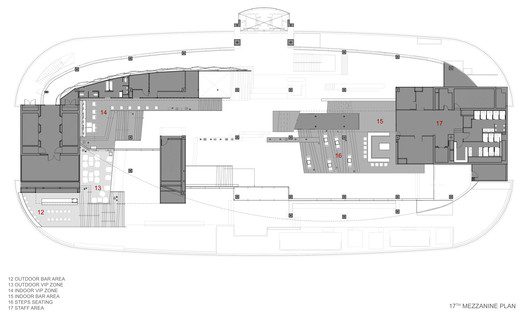

ZENSE, in 2010, the Red Shirt Riots take place in Bangkok, an event which saw many of the city’s public buildings put to flame. One casualty of this unfortunate set of circumstances was the Zen Tower in the Central World Complex. The podium was utterly destroyed while flames and smoke in their endless search upwards destroyed interior furnishings and finishes.
© Ketsiree Wongwan
ZENSE, one of the city’s most popular restaurant/bars, located on the top floor of the Zen Tower, was not spared. As a result DEPT, the original designers were called back to perform the refit/design. Below is a description of the work provided by the architects.
© Ketsiree Wongwan
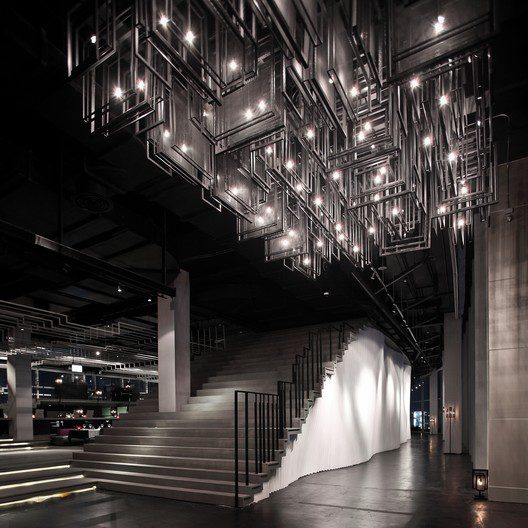
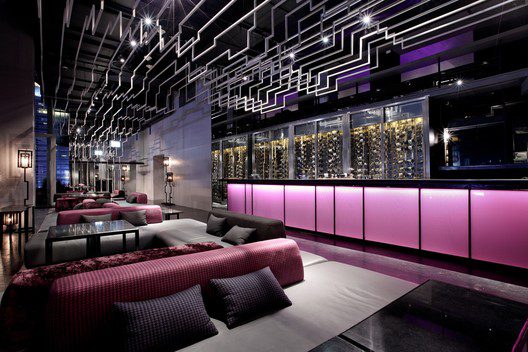
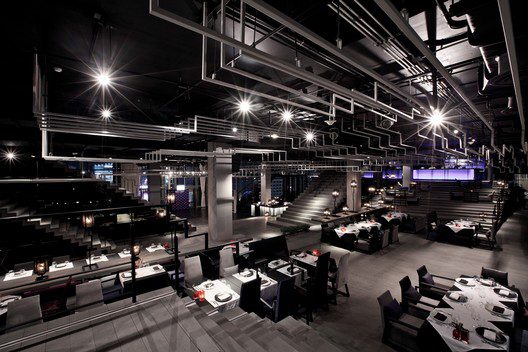
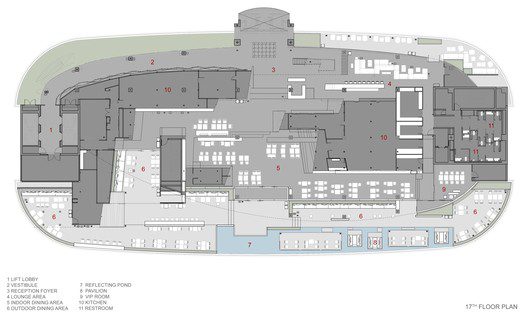
Our challenge is how to remind our guests of the splendor of the original ZENSE while not bringing back the memory of the unfortunate incident. We decided to enhance our original spatial design in a more vibrant color scheme and stronger articulation. We continued our original approach of fusing together four design disciplines: fashion design, interior design, landscape architecture, and architecture. The essence of landscape architecture in interior spatial articulation is also maintained.
© Ketsiree Wongwan
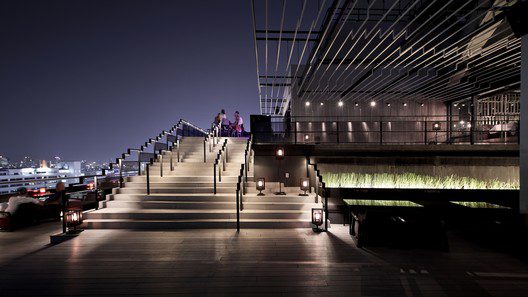
To reflect the character of the project owner, ZEN Department Store, we introduced the dynamic world of fashion into the static domain of architecture, by adapting the aesthetic and technique of pleating fabric into architectural elements and functionality.
© Ketsiree Wongwan
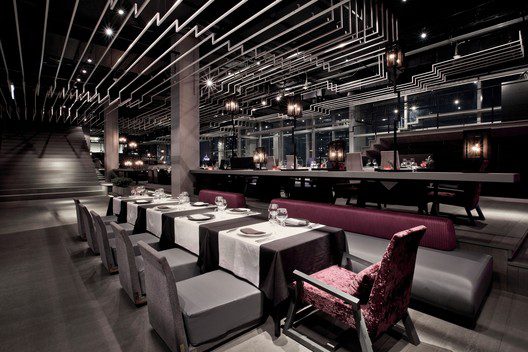
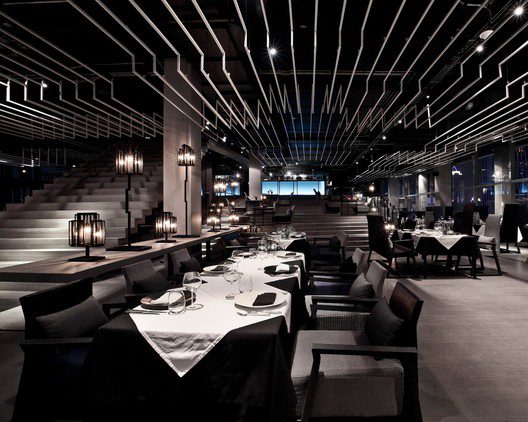
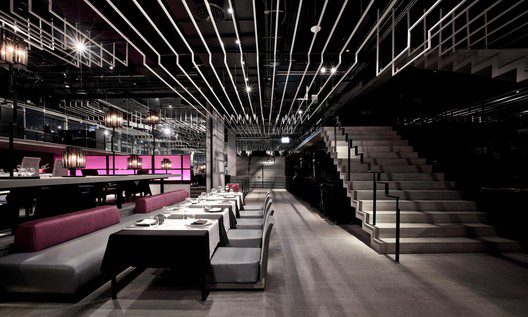
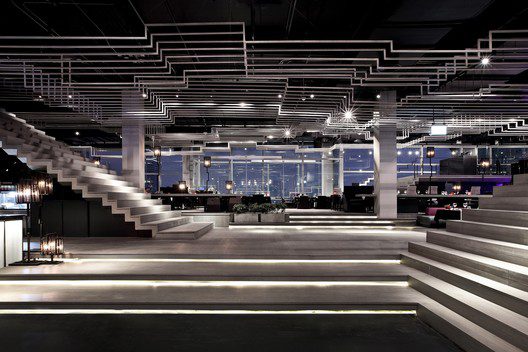
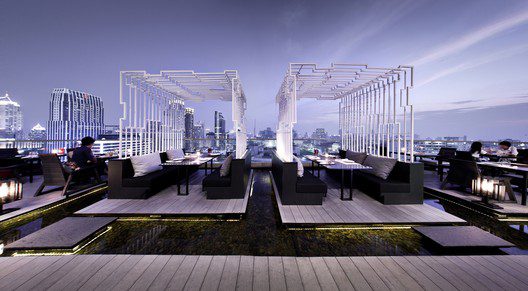
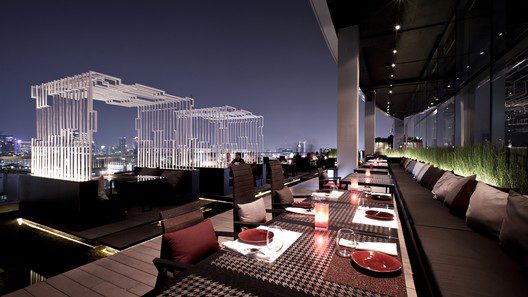
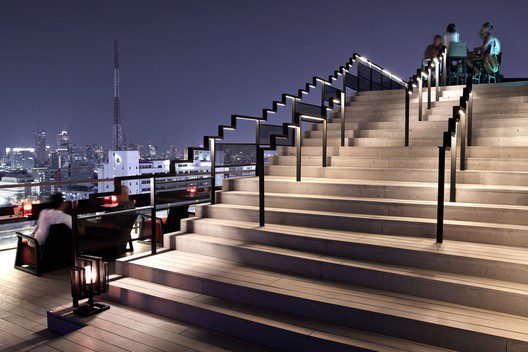
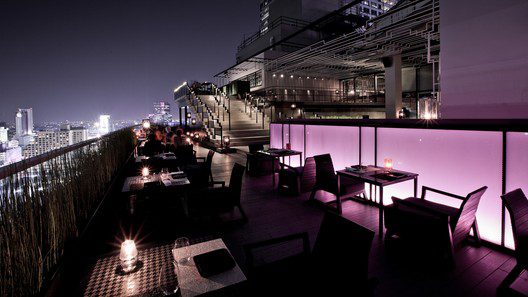
In interior space, pleating elements are found throughout; from pleated stairs and railing, pleated seating, pleated performing stage, to pleated roof planes over show kitchens. To create an energetic flow of the space and to obscure all piping underneath exposed ceiling slabs, pleating planes of fine steel lines were added as floating planes below the ceiling. These planes are also applied in floating dining pavilions which give a unique picture frame to the Bangkok city skyline.
© Ketsiree Wongwan
To highlight the interface between fashion and architecture, elements of fashion were introduced in the furniture and interior finishing. Hound-tooth patterning was used not only on fabric but also on dining tables’ stone tops. Layers of patterned & translucent partitions in restrooms were also inspired by lace fabric.
Project info:
Architects: Department of ARCHITECTURE
Country: Thailand, Bangkok
Area: 4000 m²
Year: 2012
Photographs: Ketsiree Wongwan
Lighting Designer: Accent Studio
Cost: 80 Million THB
Owner: Zen Department Store