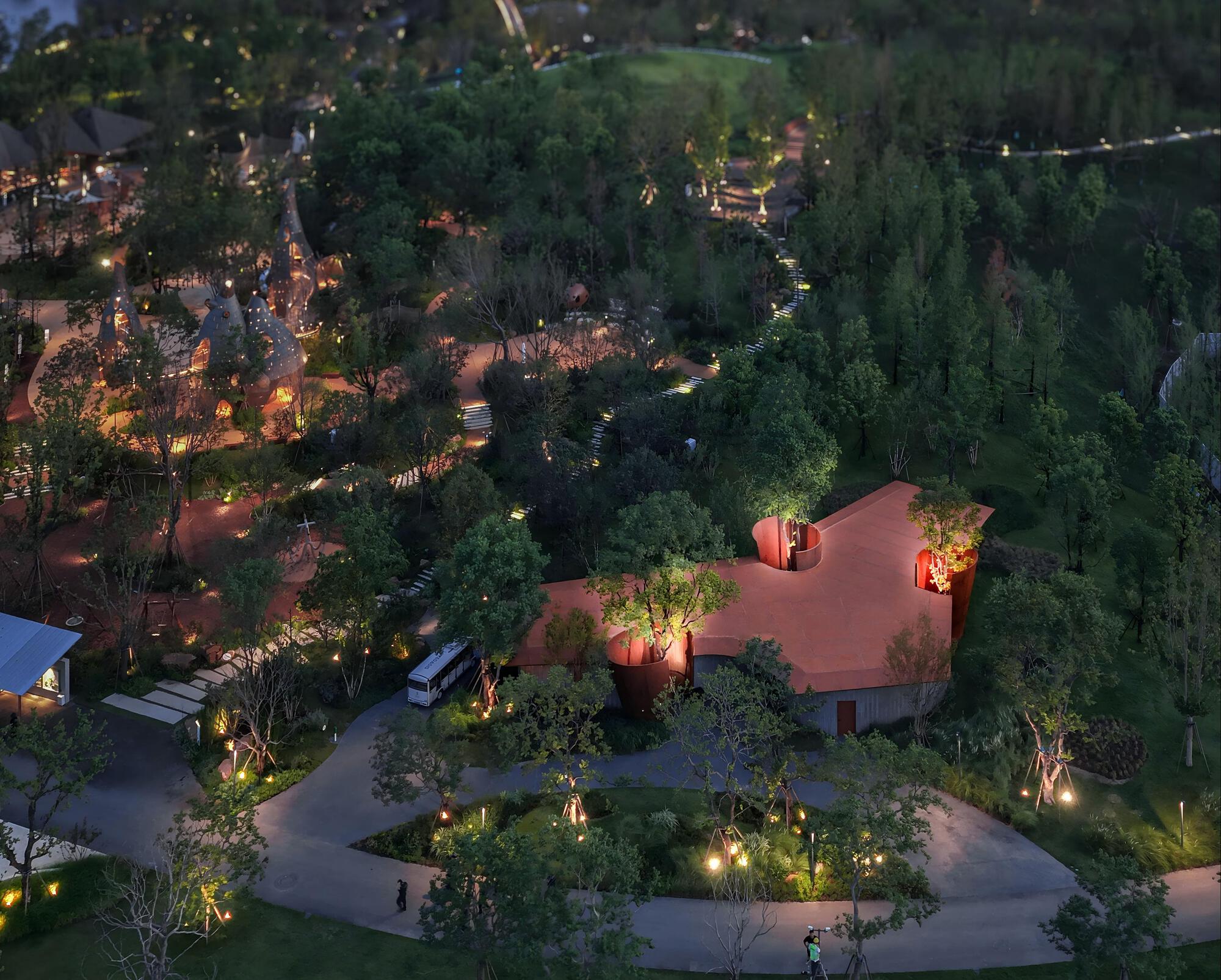


In response to the growing desire to escape urban concrete jungles, Wuhan LuxeIsland emerges as a natural utopia on the city’s fringe. This cultural tourism destination, conceived by Wuhan Wide Horizon Real Estate, embodies a vision of harmonious coexistence between people and the environment. Guided by a “low-intervention, high-integration” philosophy, the project allows nature to take center stage while architecture and landscape engage in continuous dialogue, weaving a coherent narrative of nature from macro scale to minute detail.
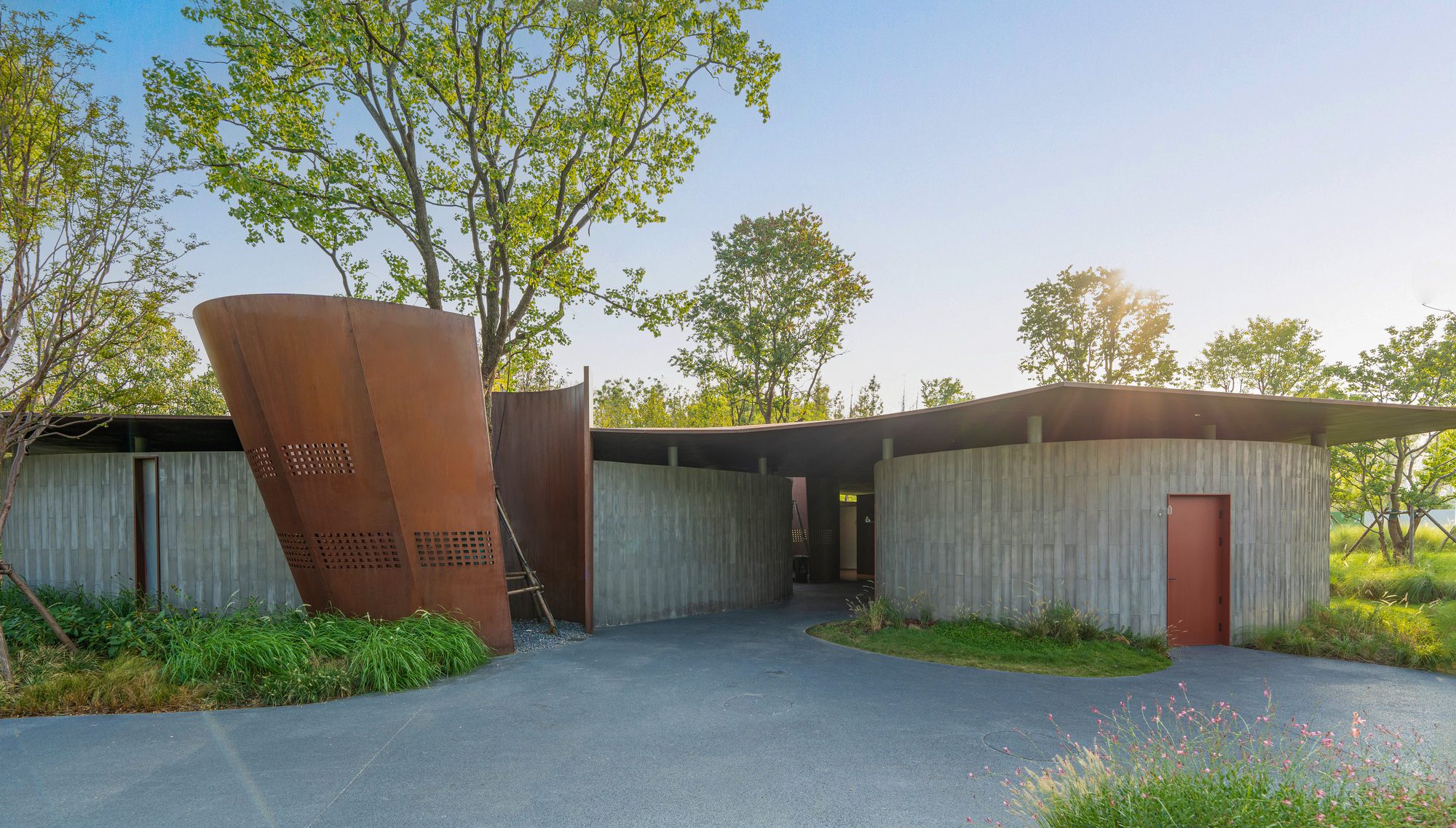
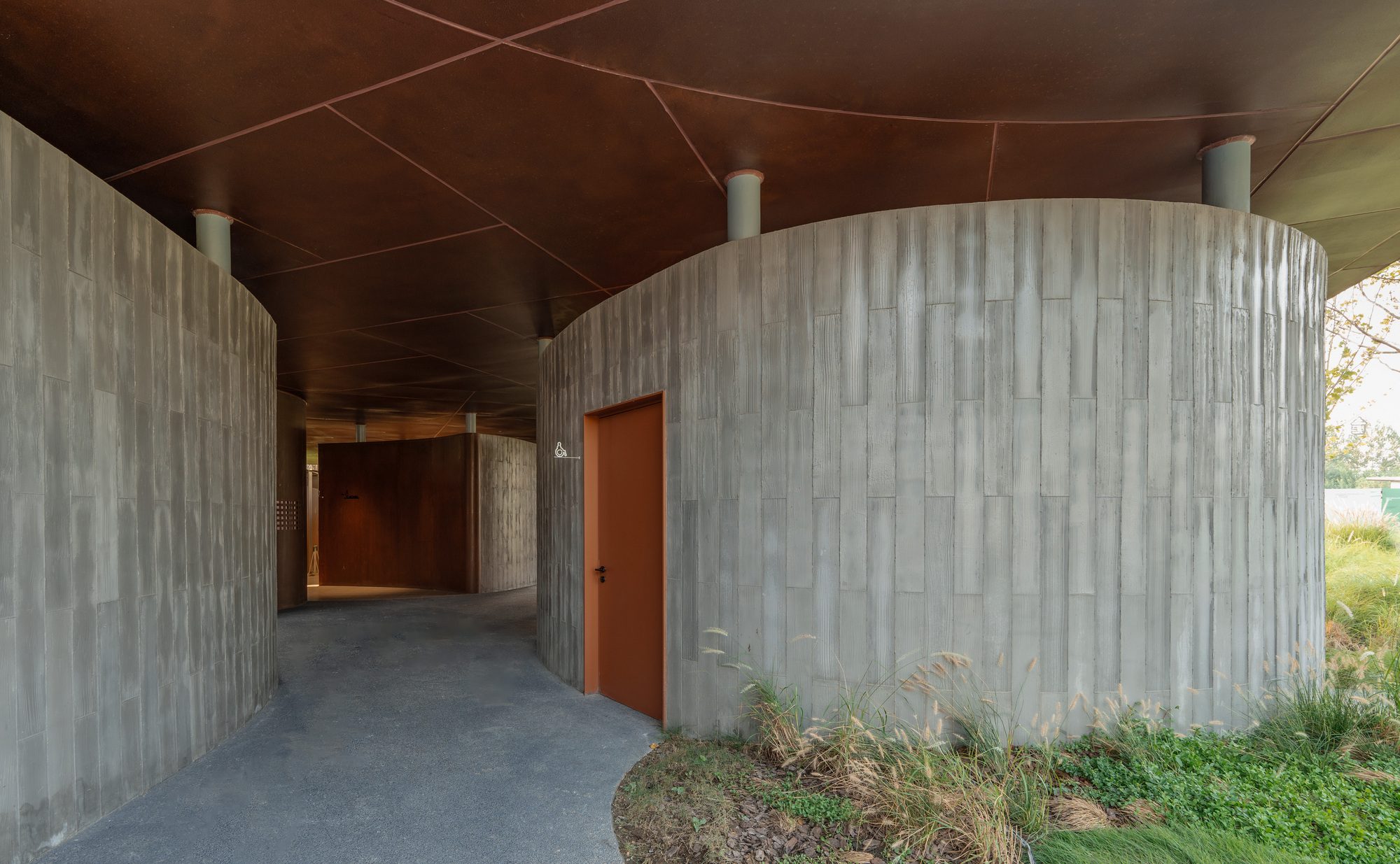
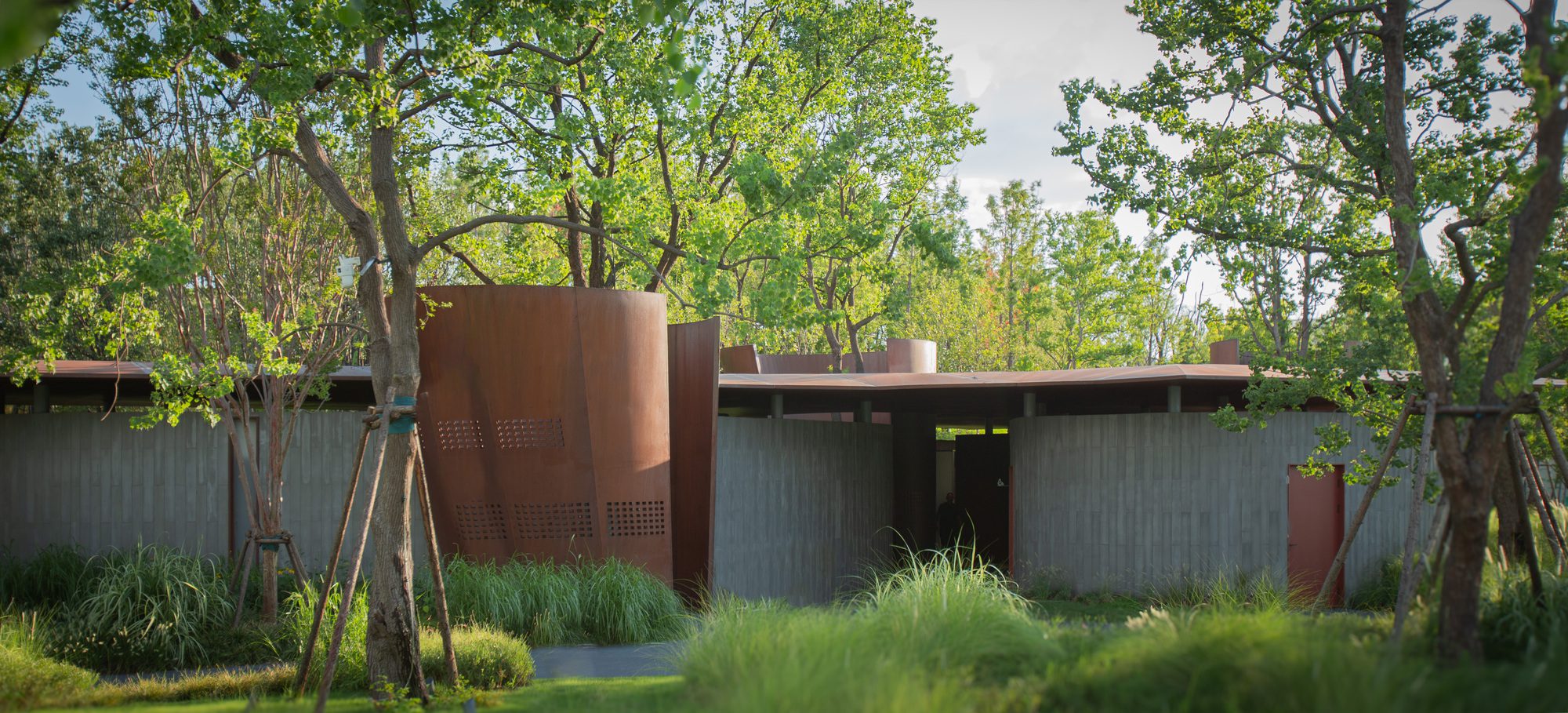
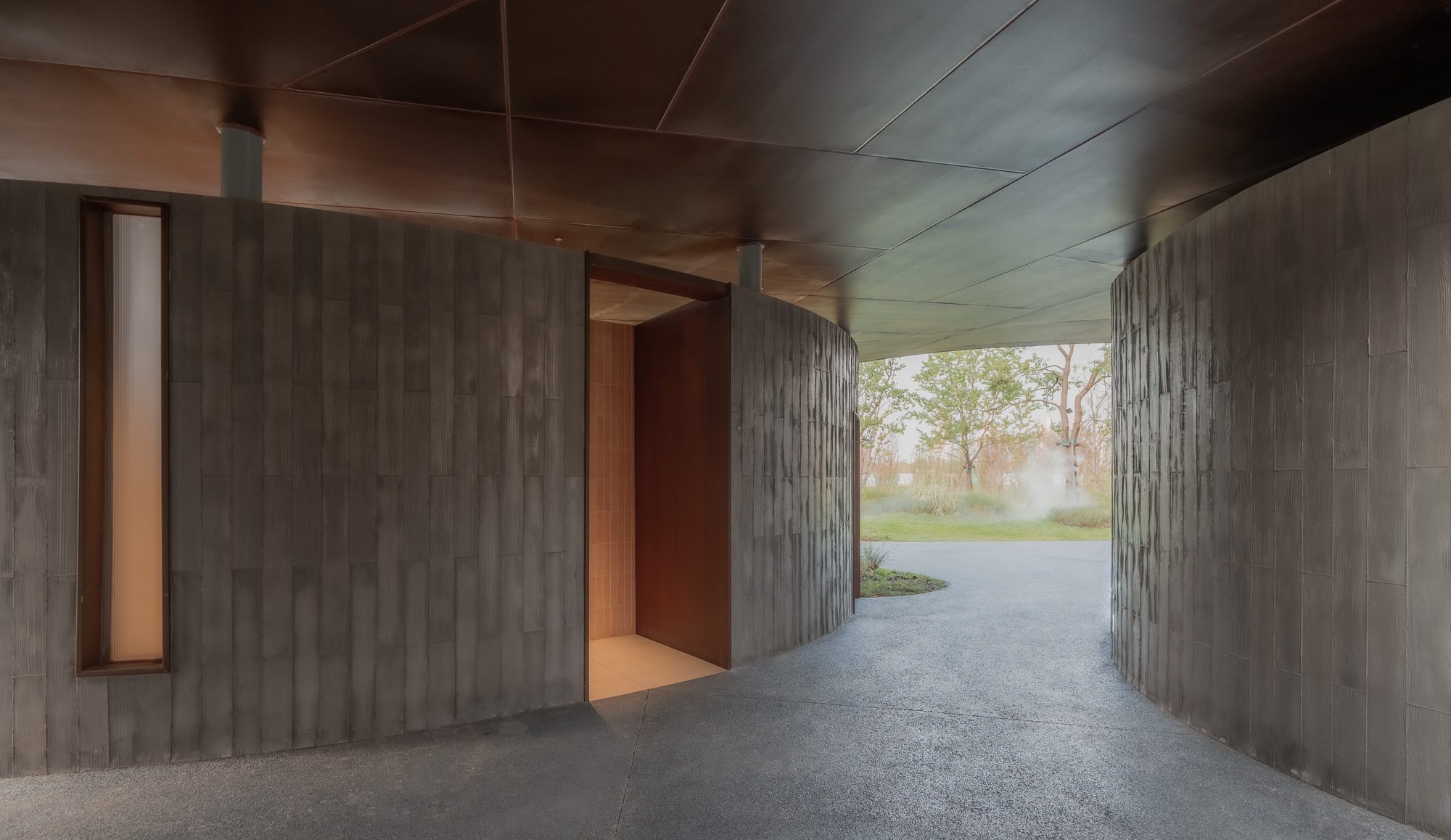
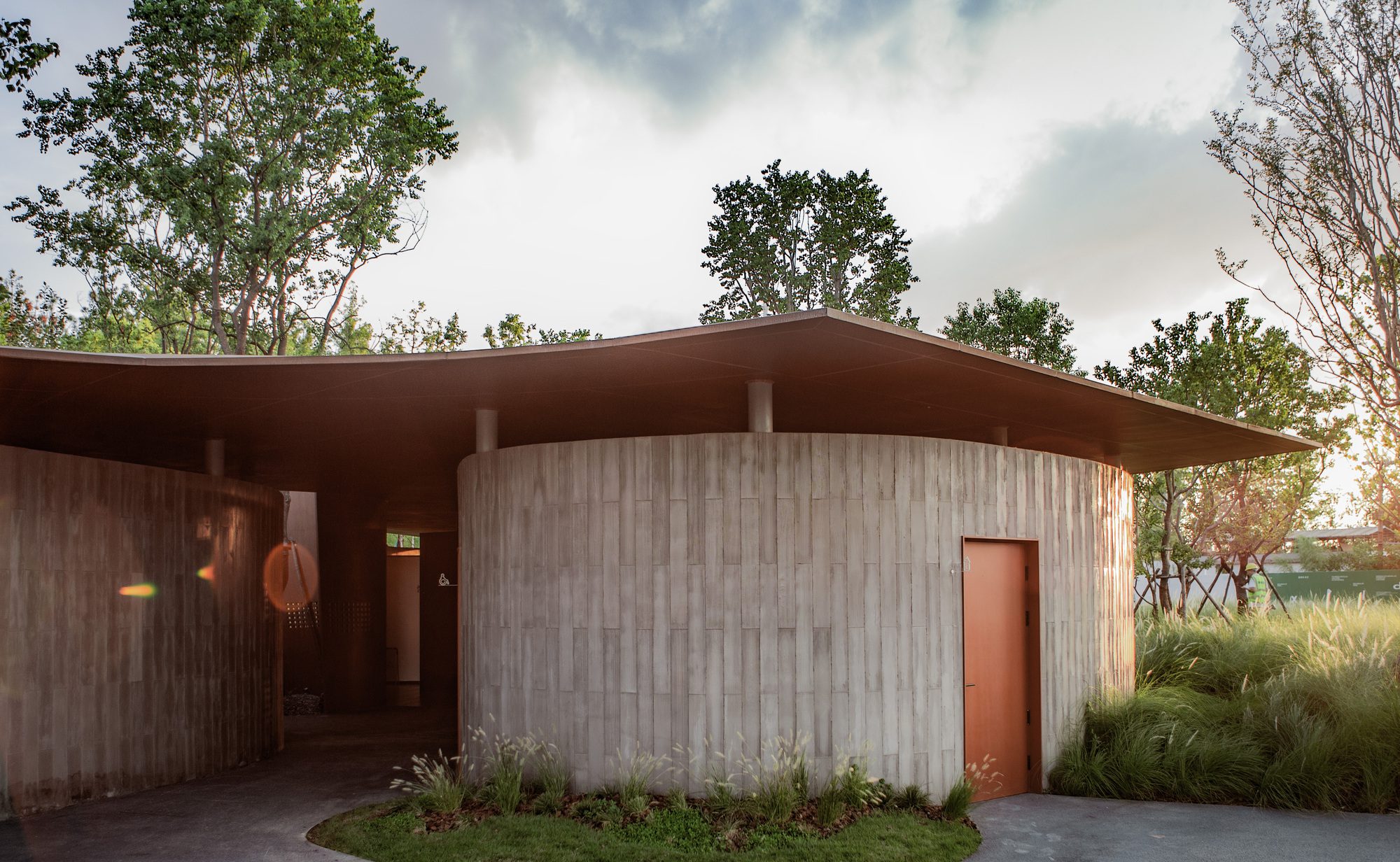
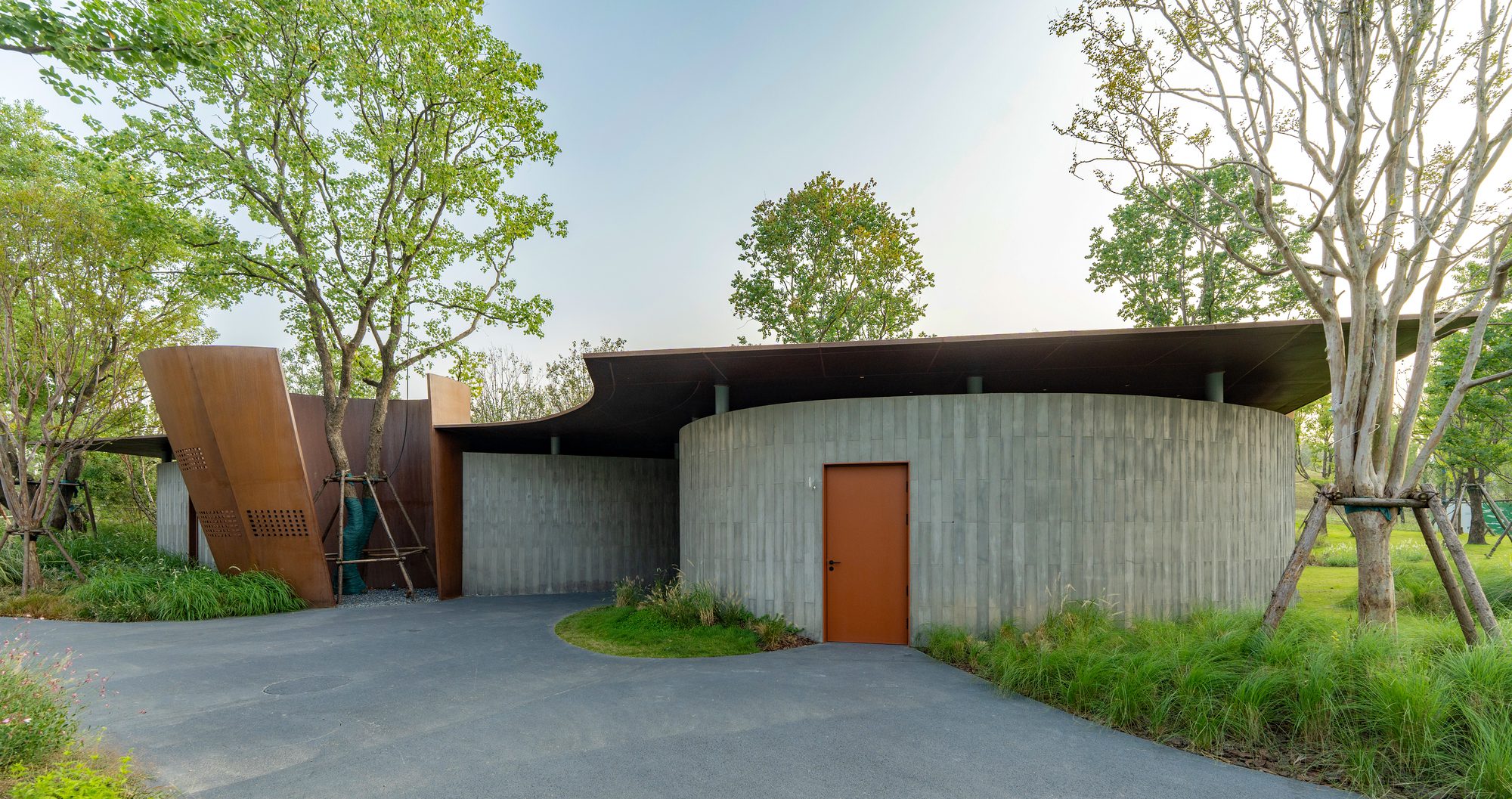
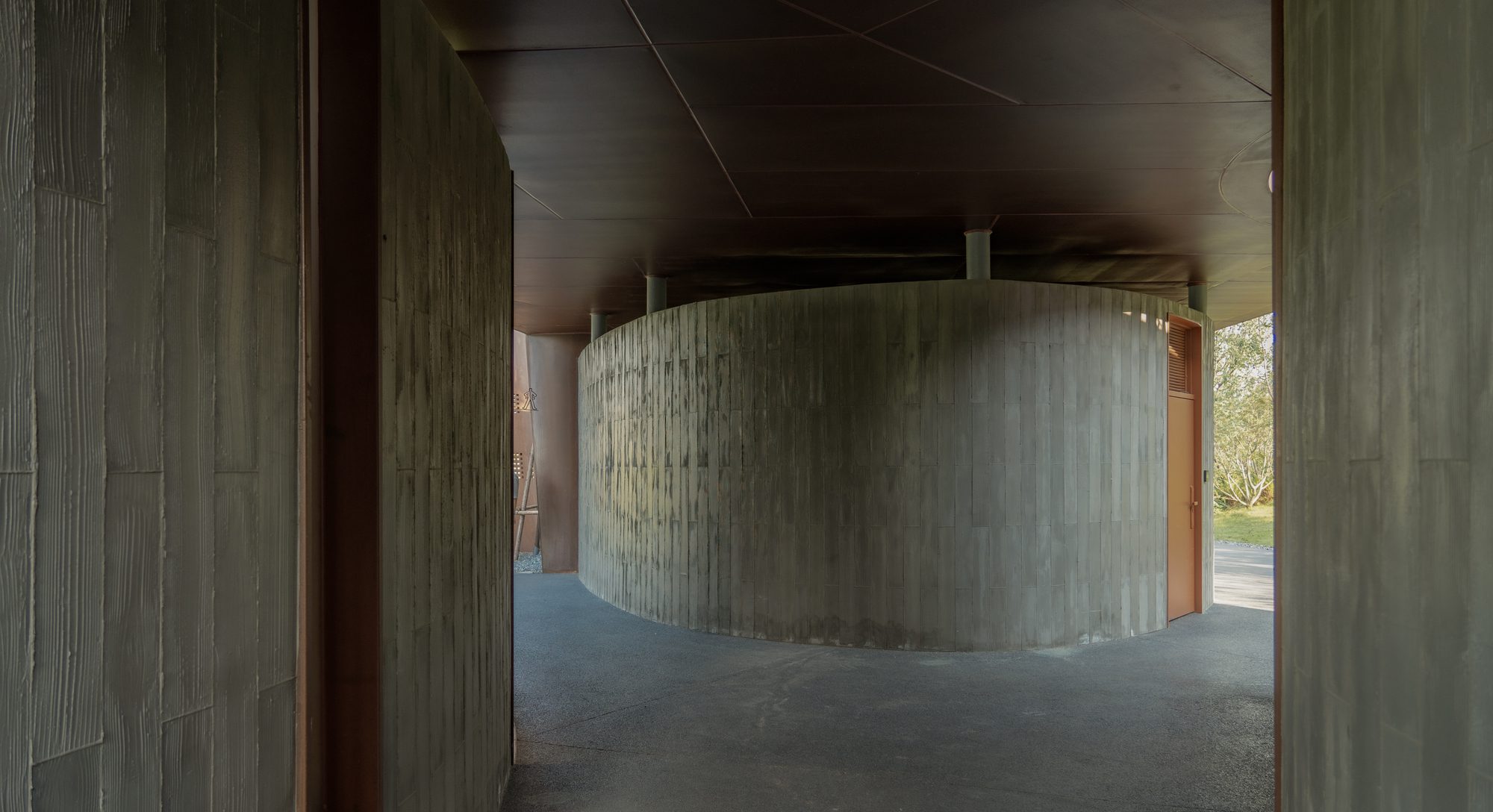
The architecture serves as both a “vanishing presence” and a “conversationalist,” with forms that trace the land’s natural contours. The incorporation of sheltered grey spaces under eaves and semi-open transitional zones intentionally blurs boundaries between interior and exterior. These elements connect visitors with the surrounding landscape, transforming spatial experience into a dynamic dialogue between people and place.
Courtesy of ZHIFEI ARCHITECTURE DESIGN
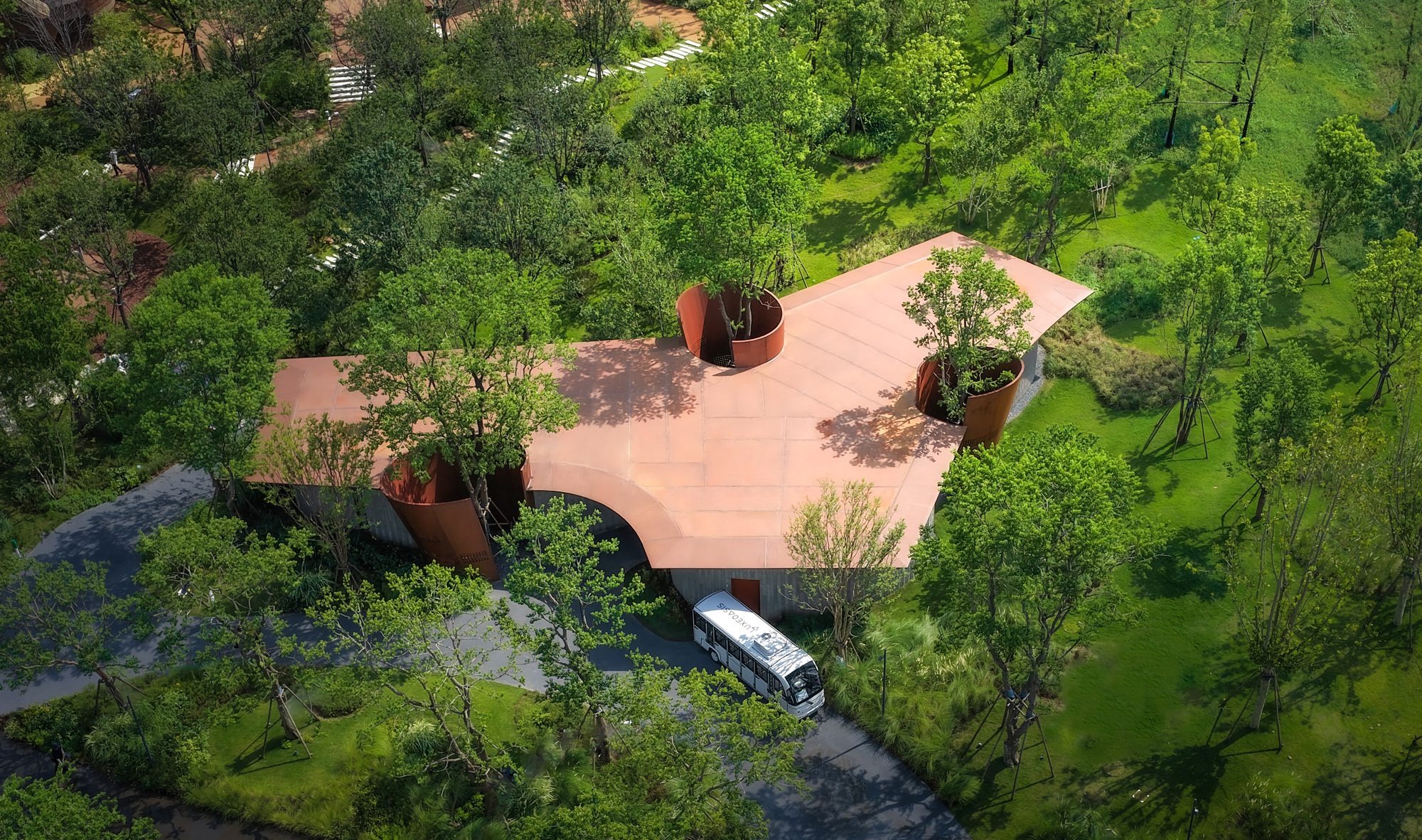
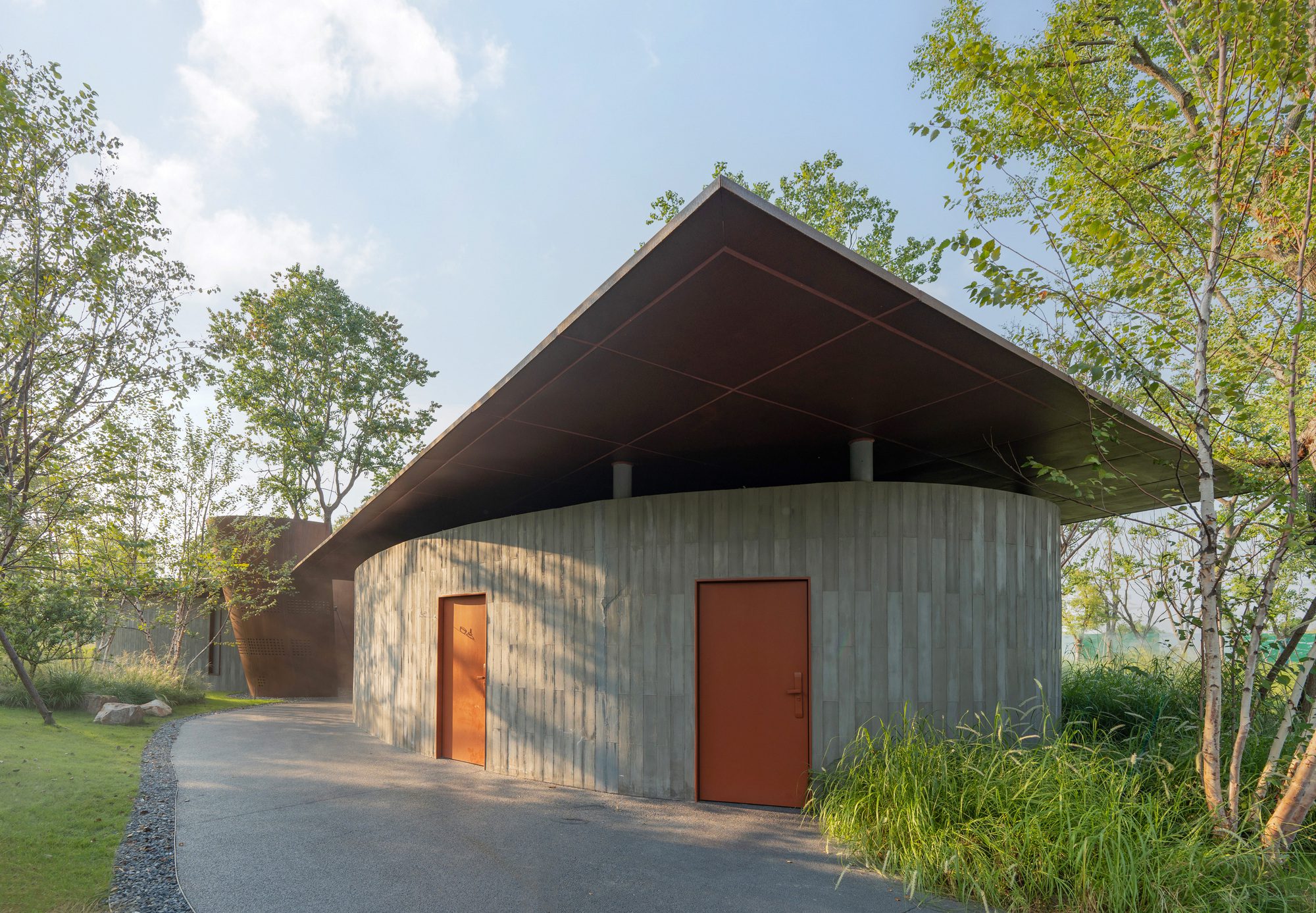
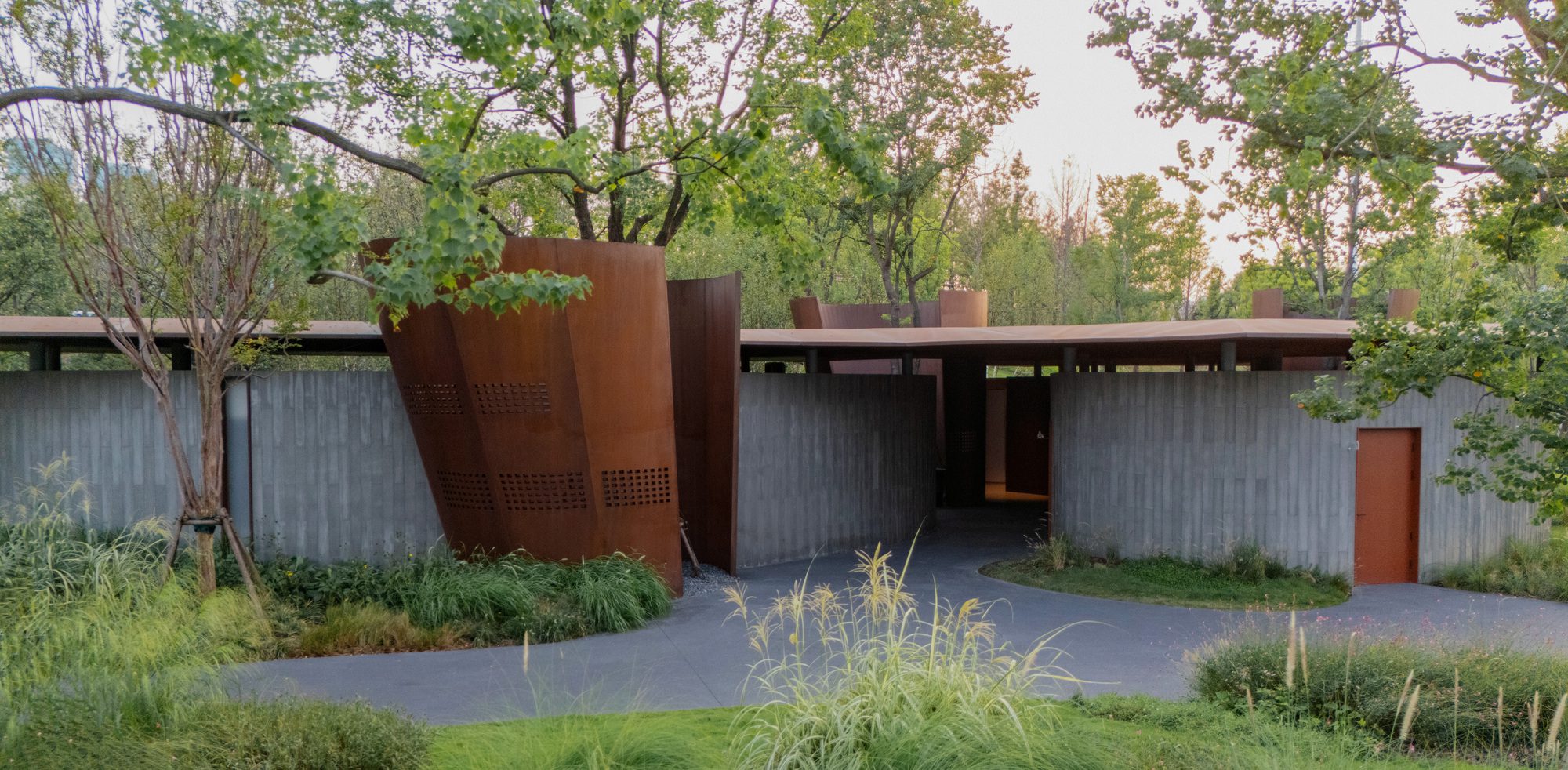
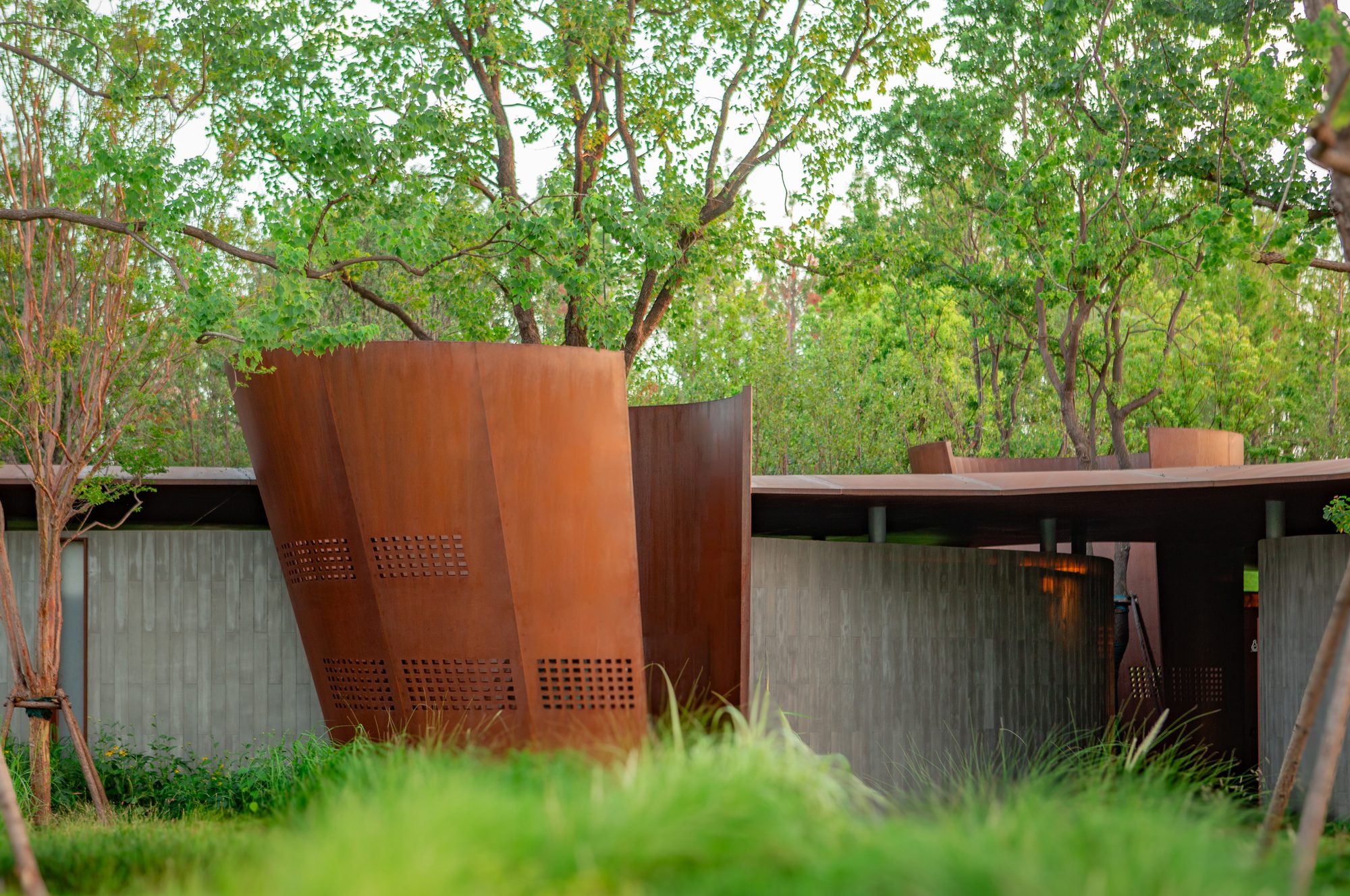
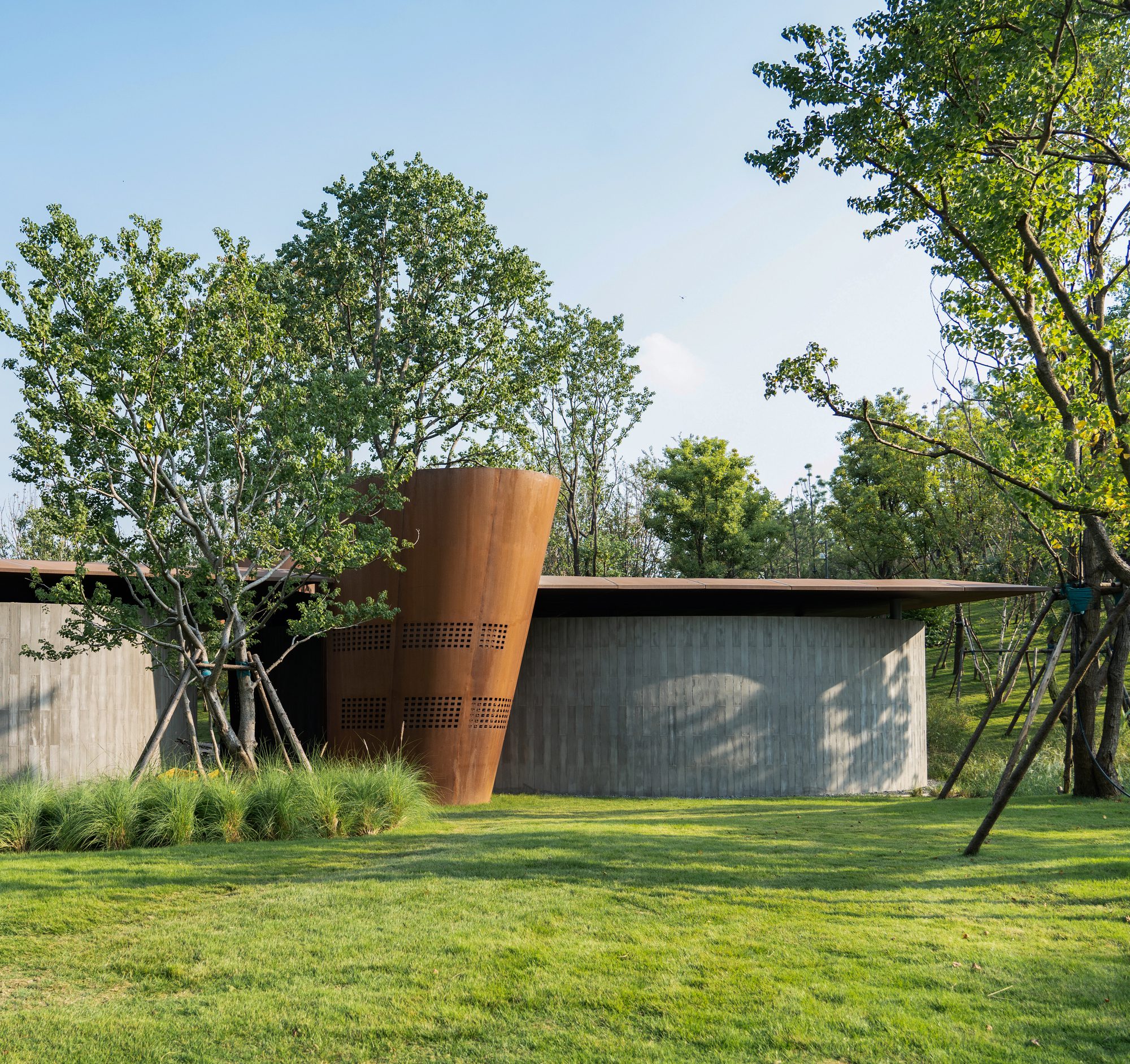
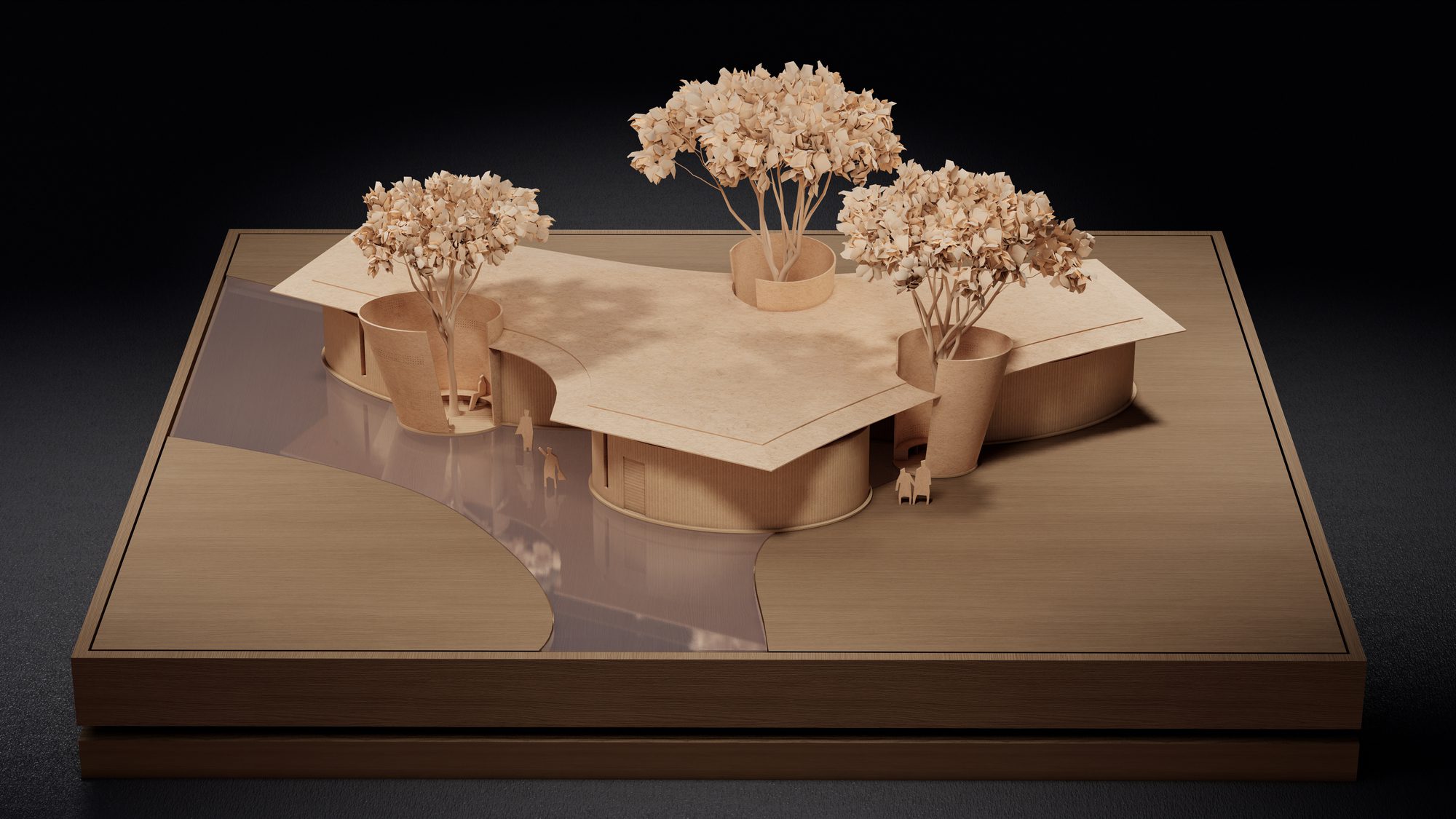
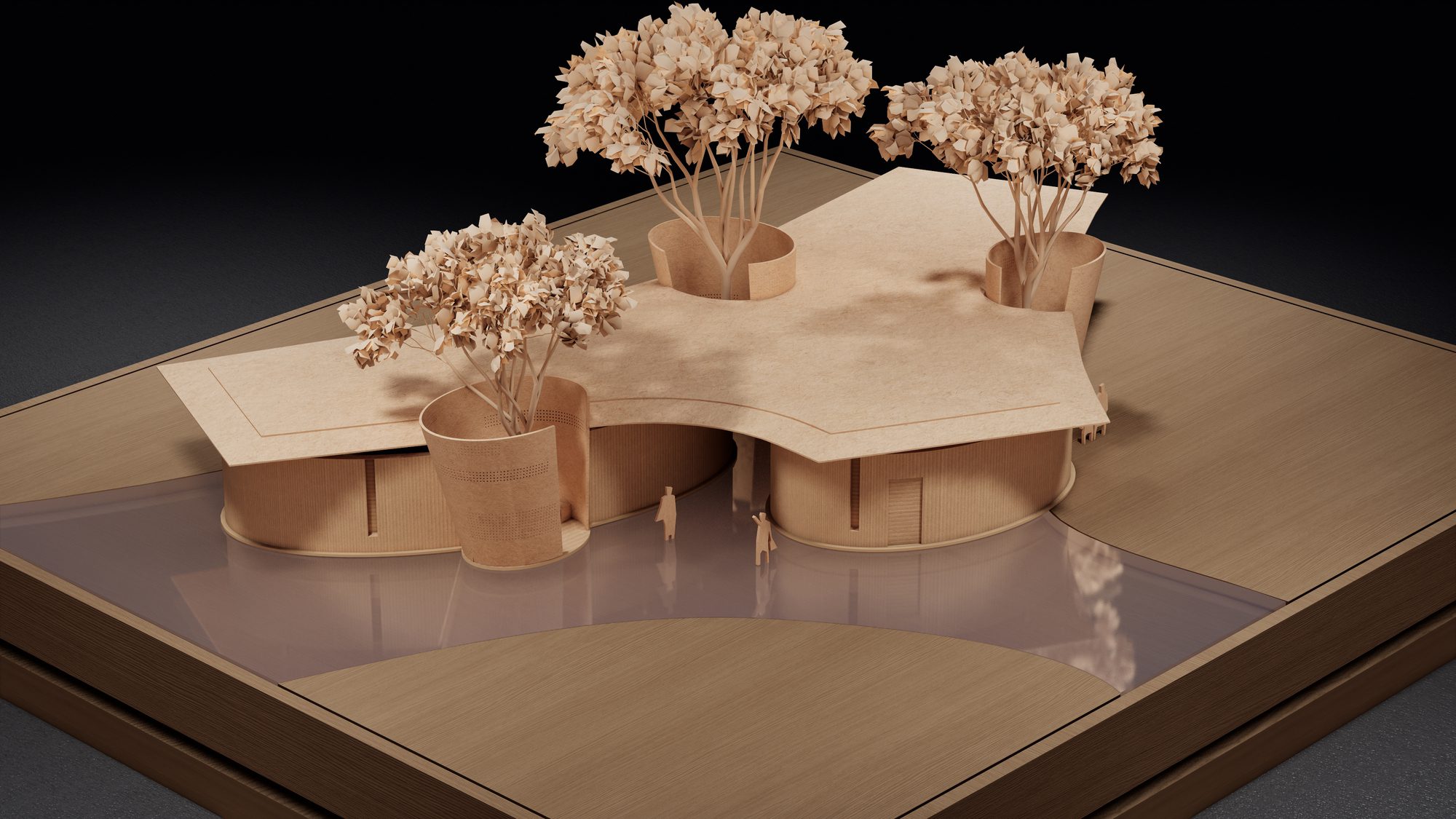
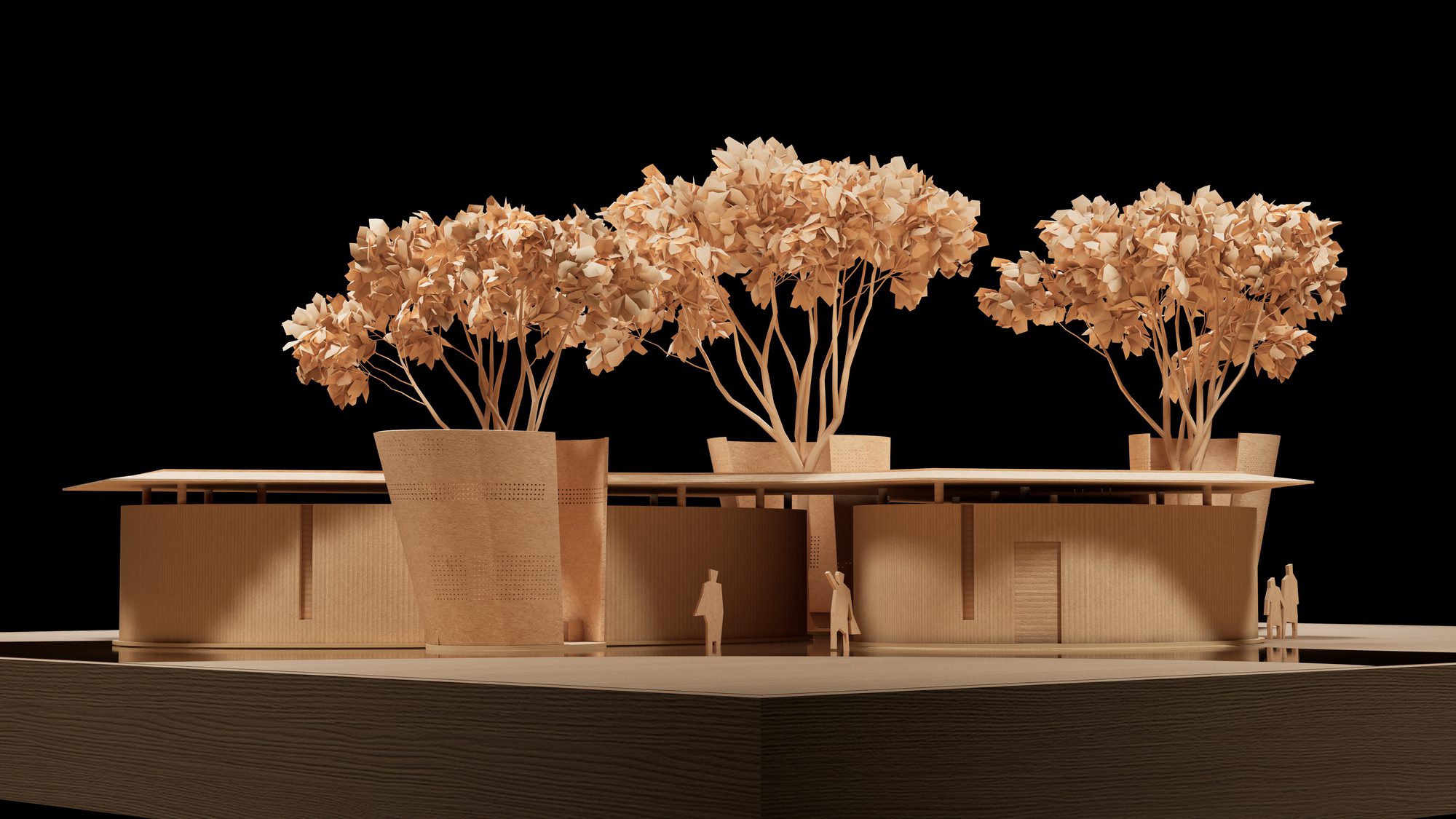
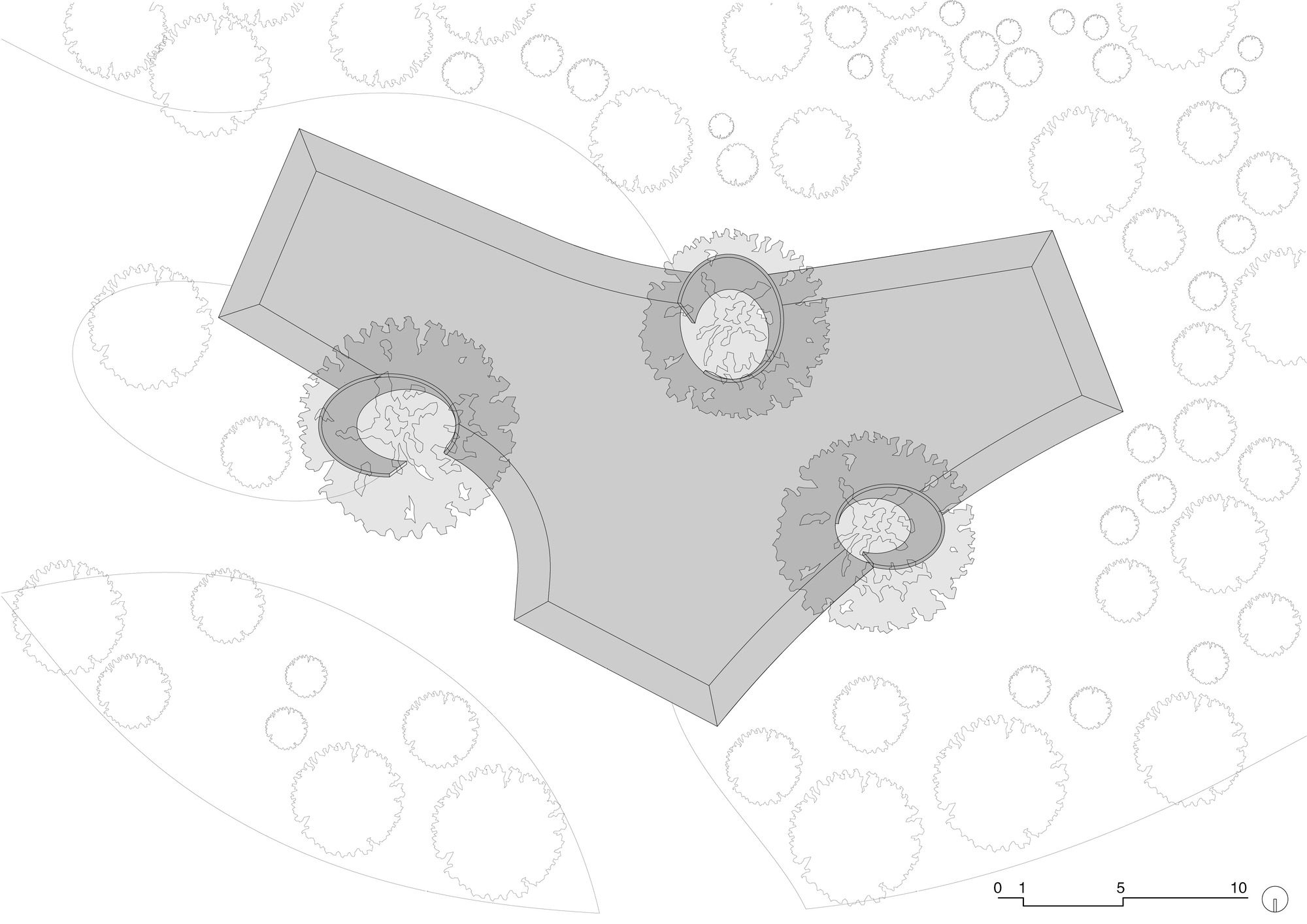
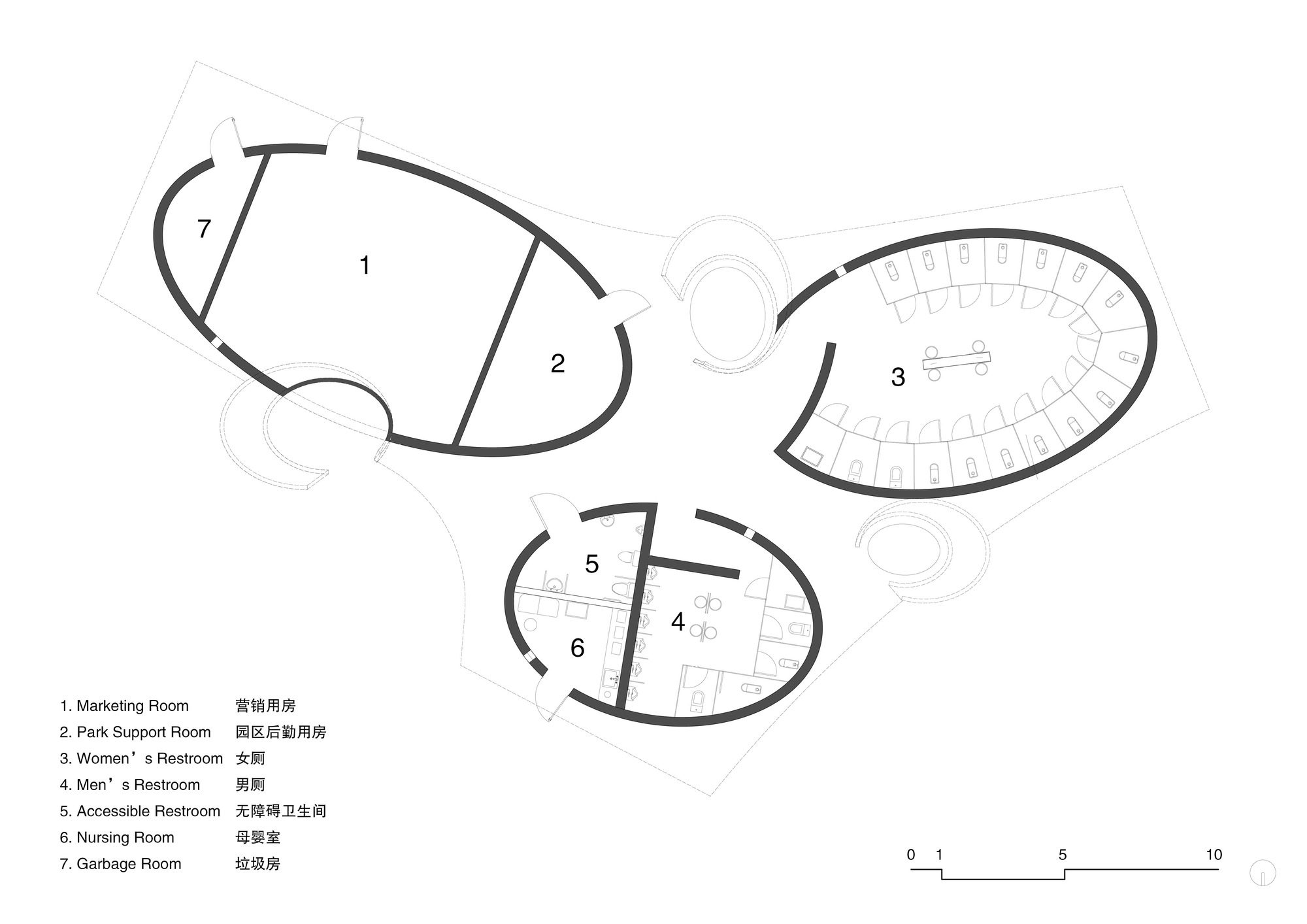
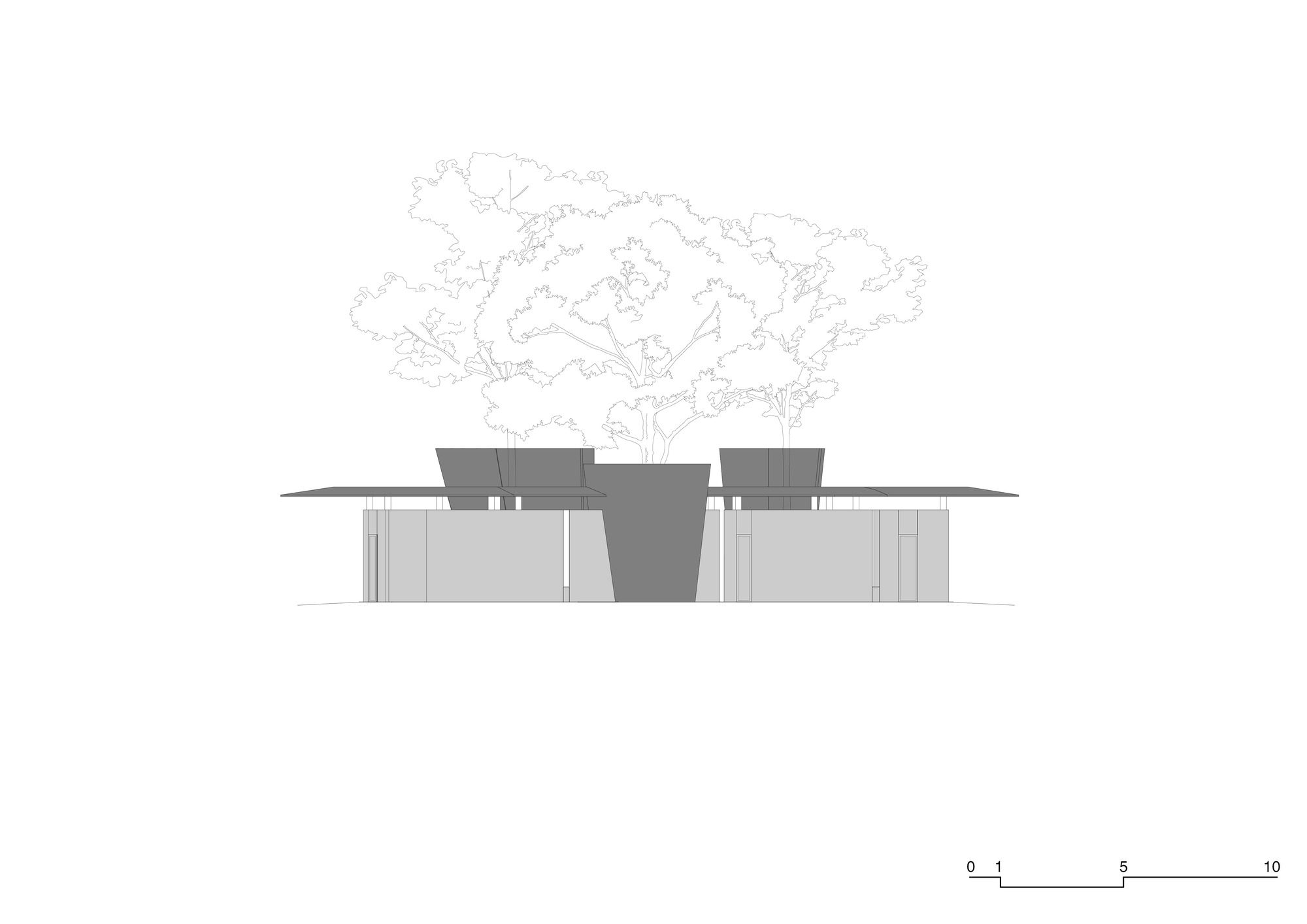
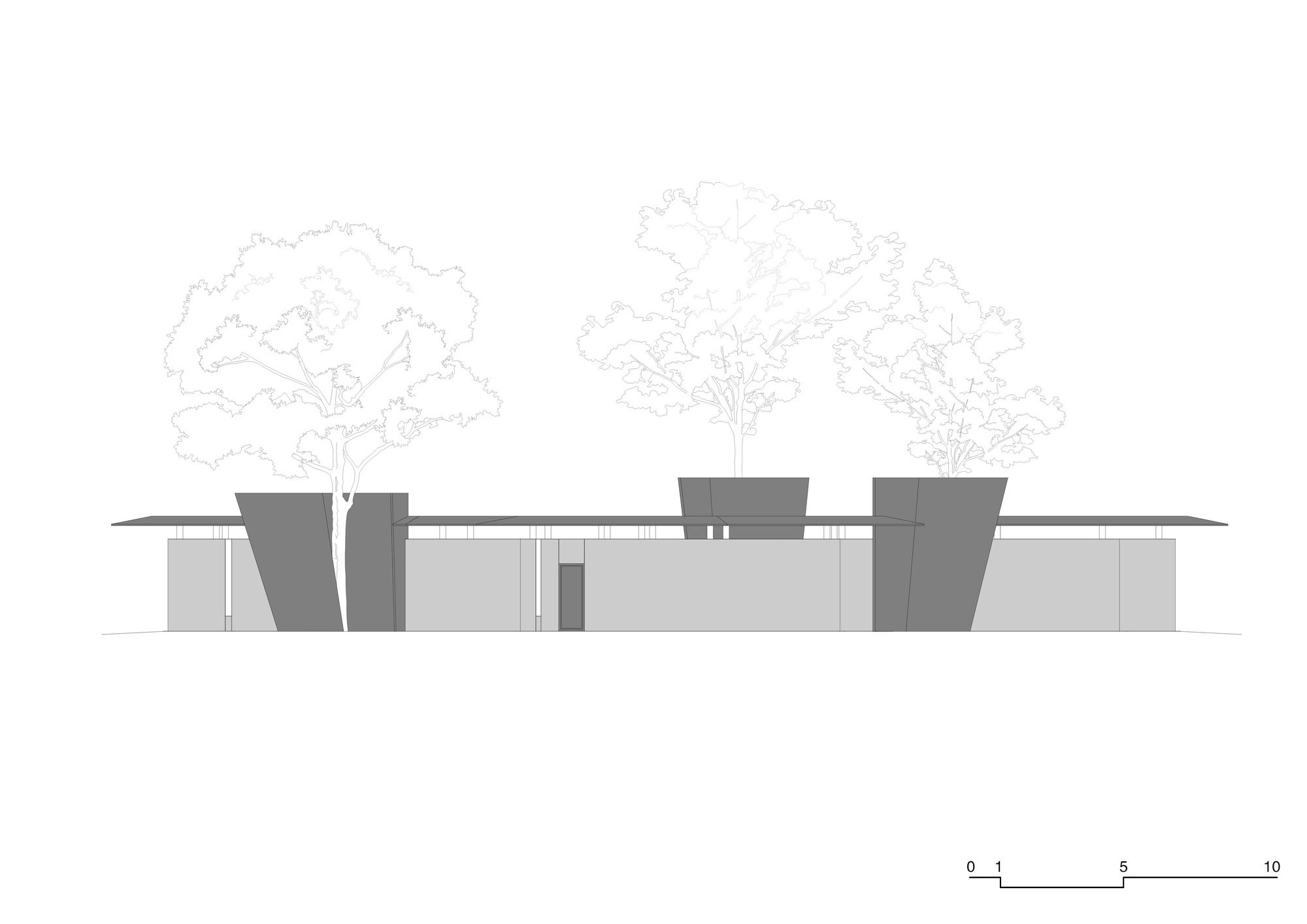
The roof features three gently converging curves, beneath which three independent elliptical volumes house restrooms, storage, and park support facilities. Their soft, curved profiles dissolve visual barriers between built form and natural setting. The separation of walls from roof enhances the canopy’s floating appearance, promotes passive ventilation, and reduces mechanical reliance—enabling the structure to “breathe” in alignment with the park’s ecological principles.
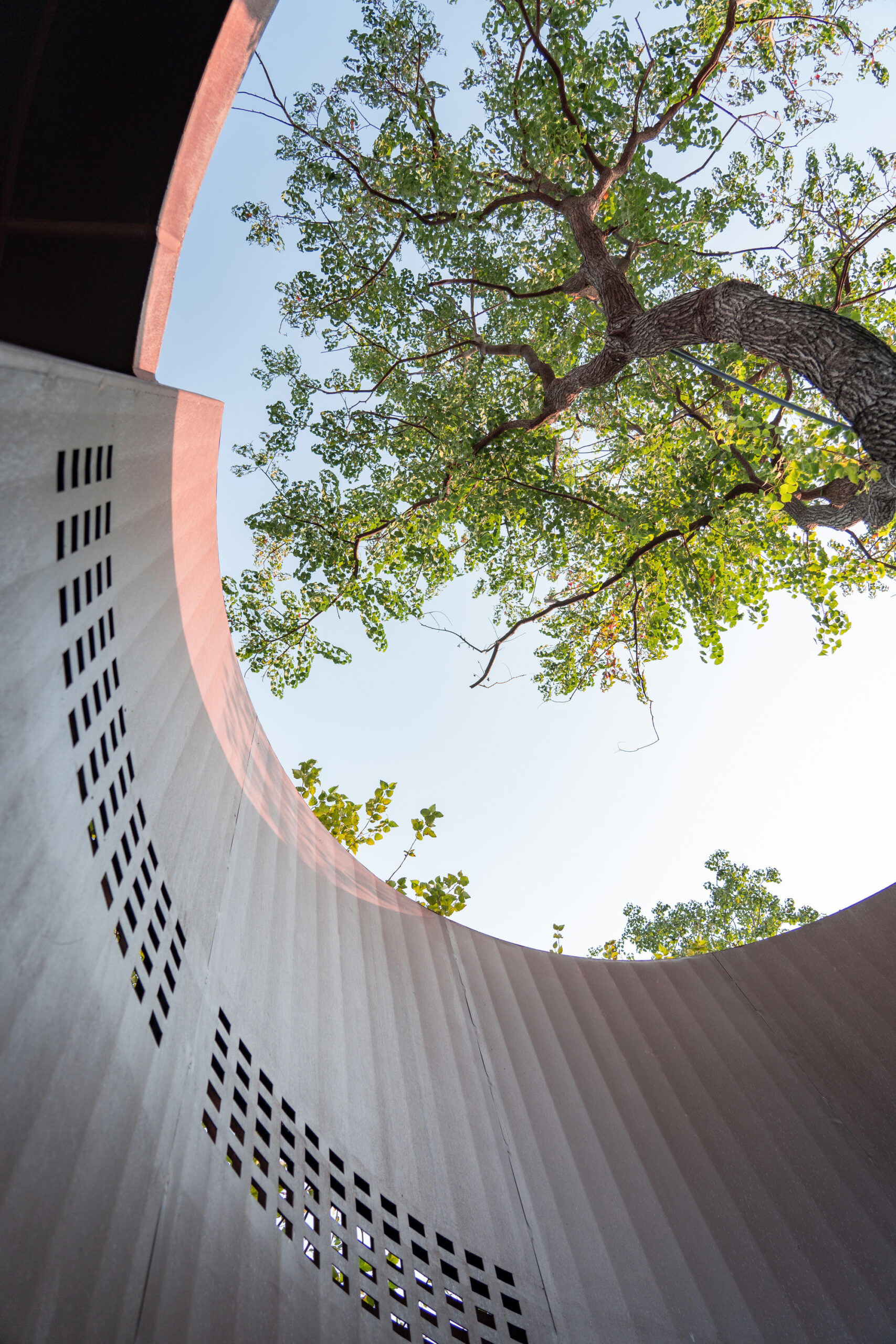
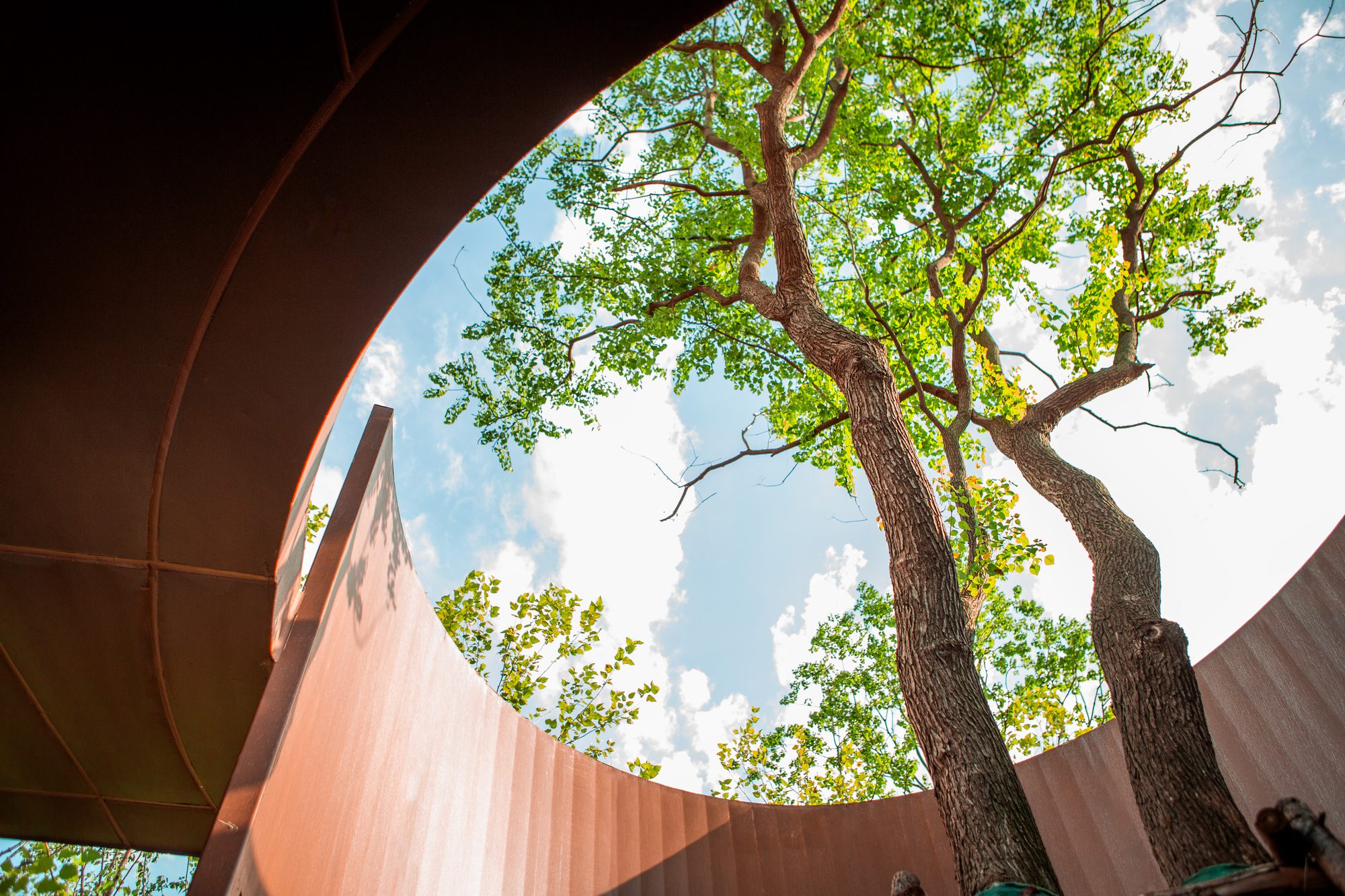
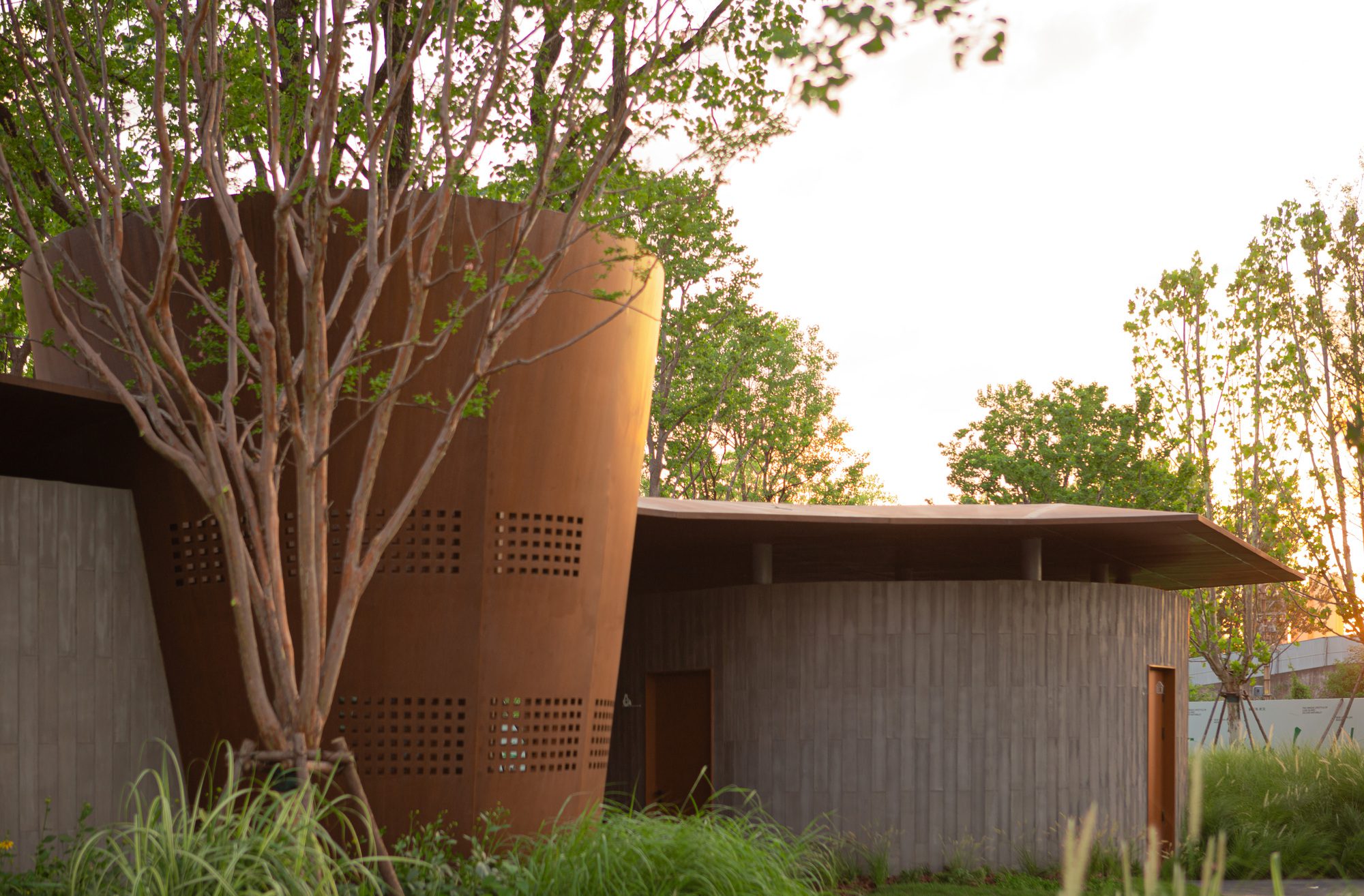
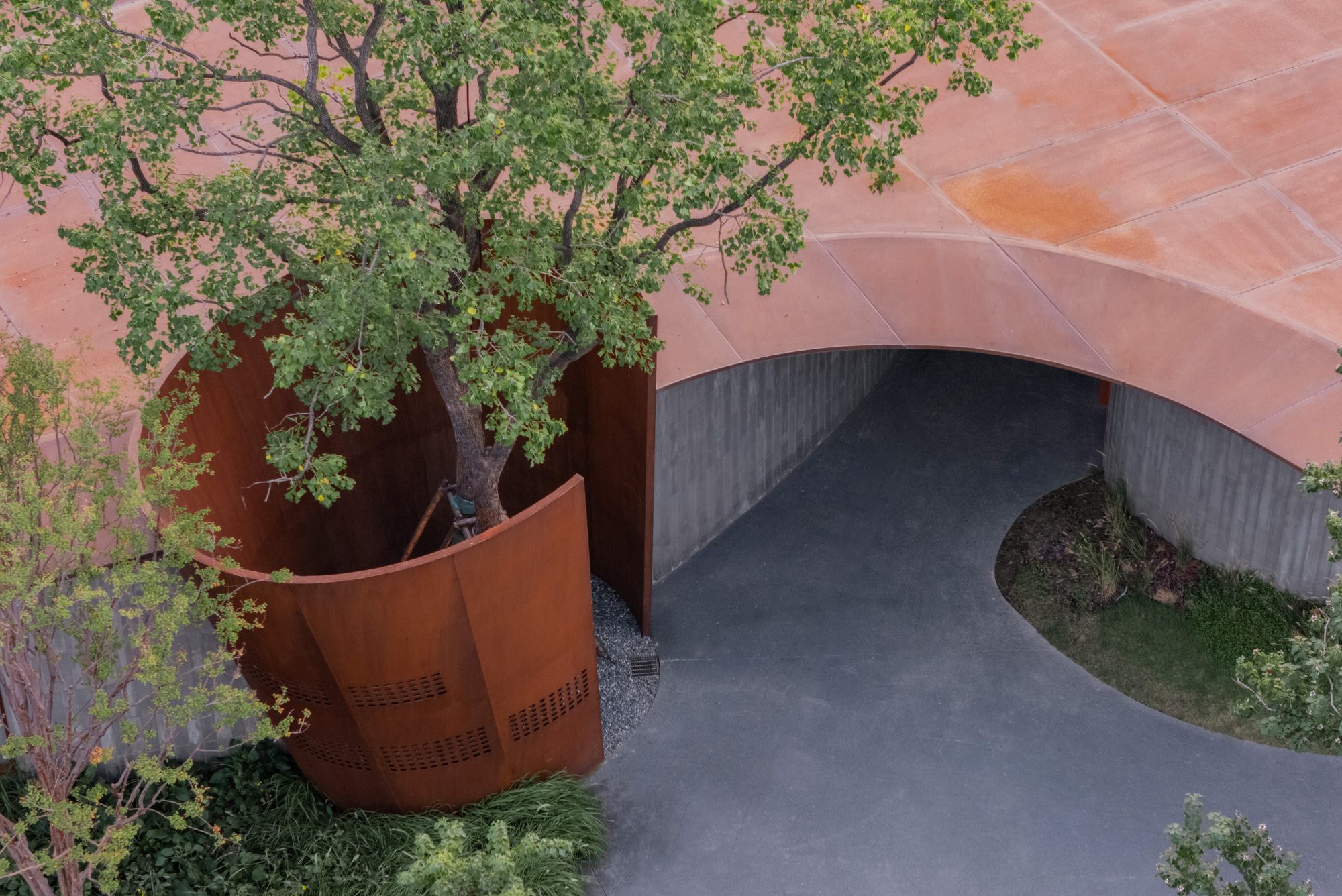
Cylindrical “flowerpots” embedded within both roof and walls extend the Corten steel canopy downward, creating an interactive experience. Each tube centers on a tree, establishing a symbiotic relationship between architecture and nature where shelter and dappled shade create a sense of dual enclosure. Visitors are invited to step inside and immerse themselves in the tranquil atmosphere.
Courtesy of ZHIFEI ARCHITECTURE DESIGN
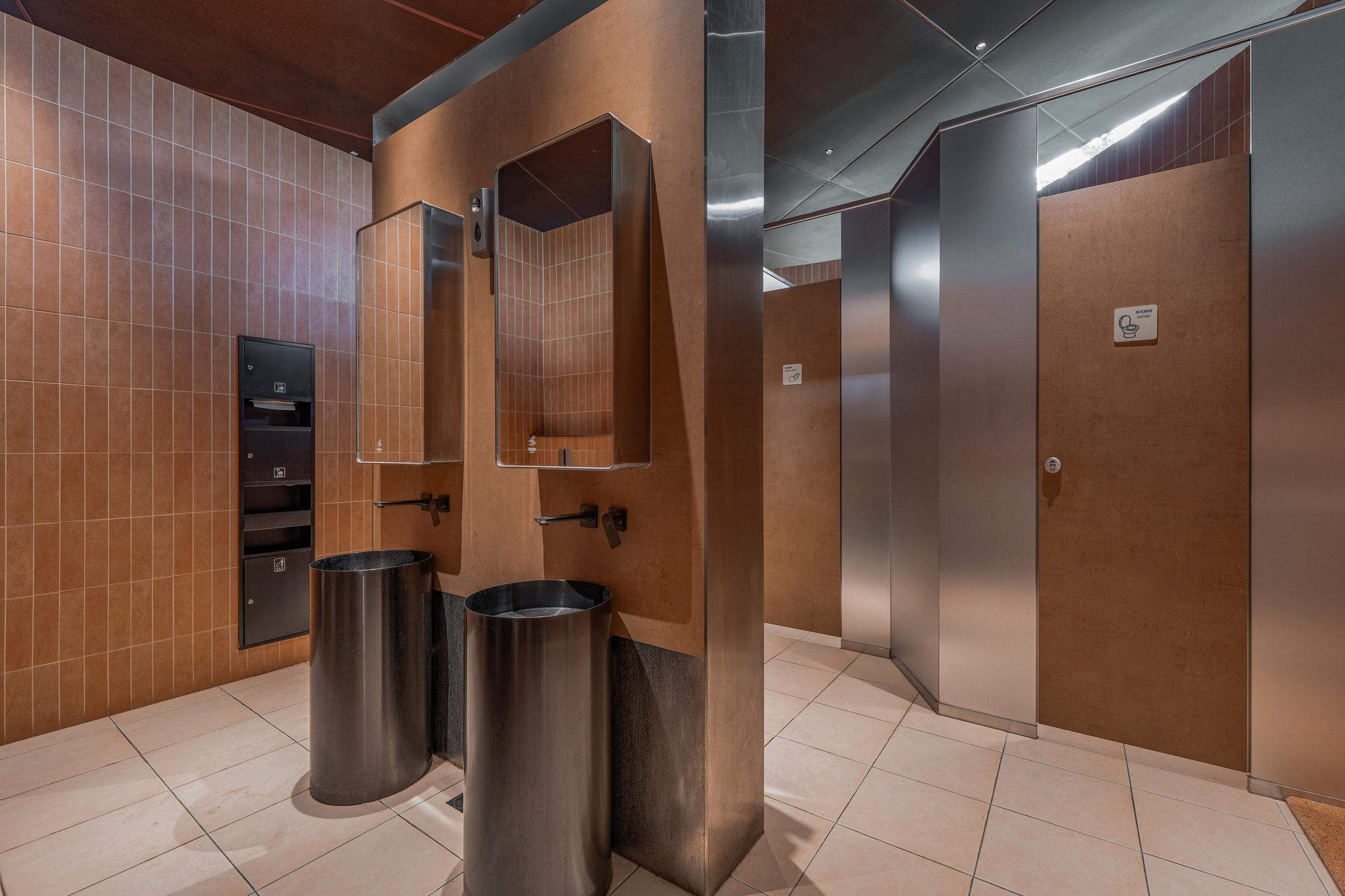
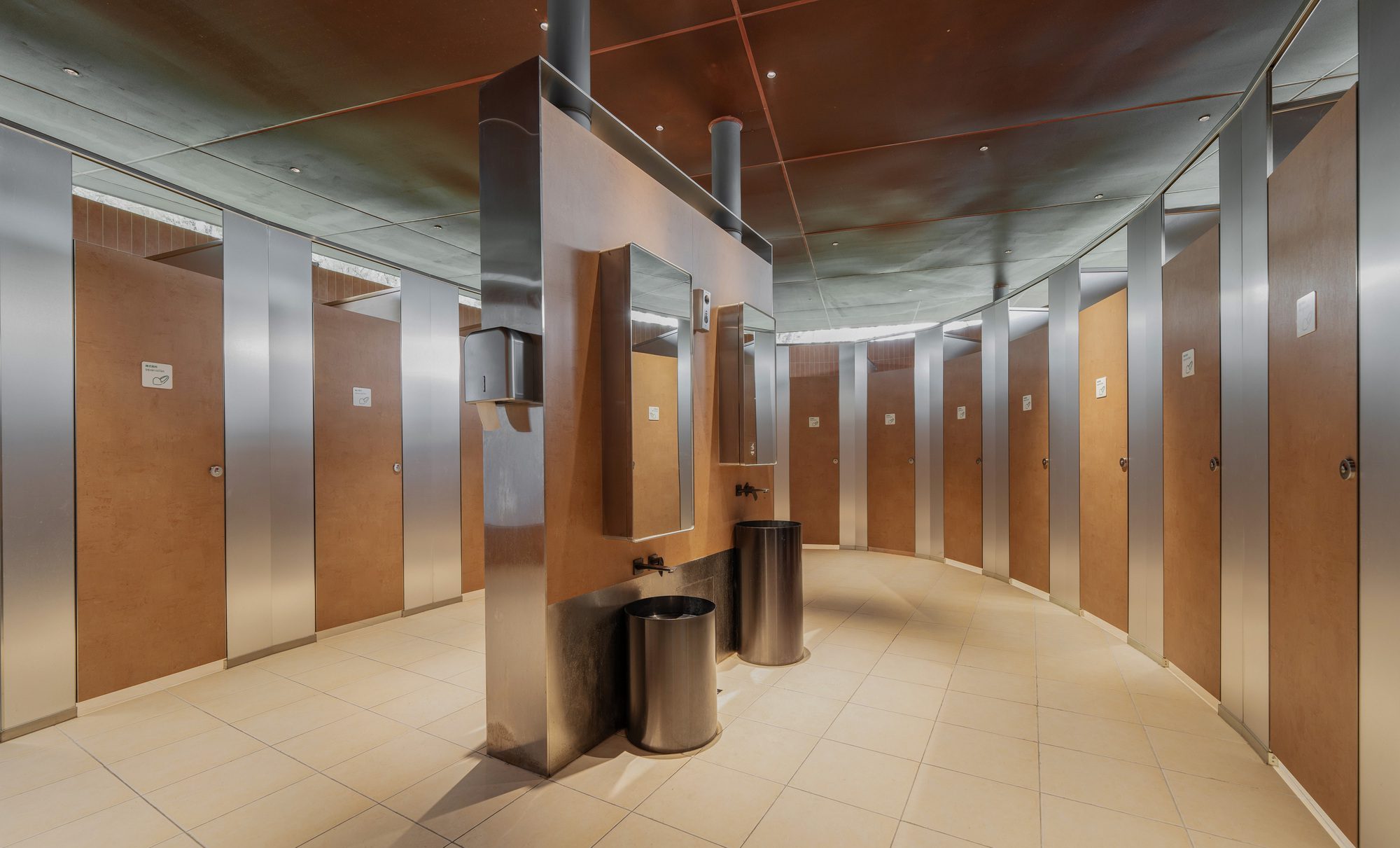
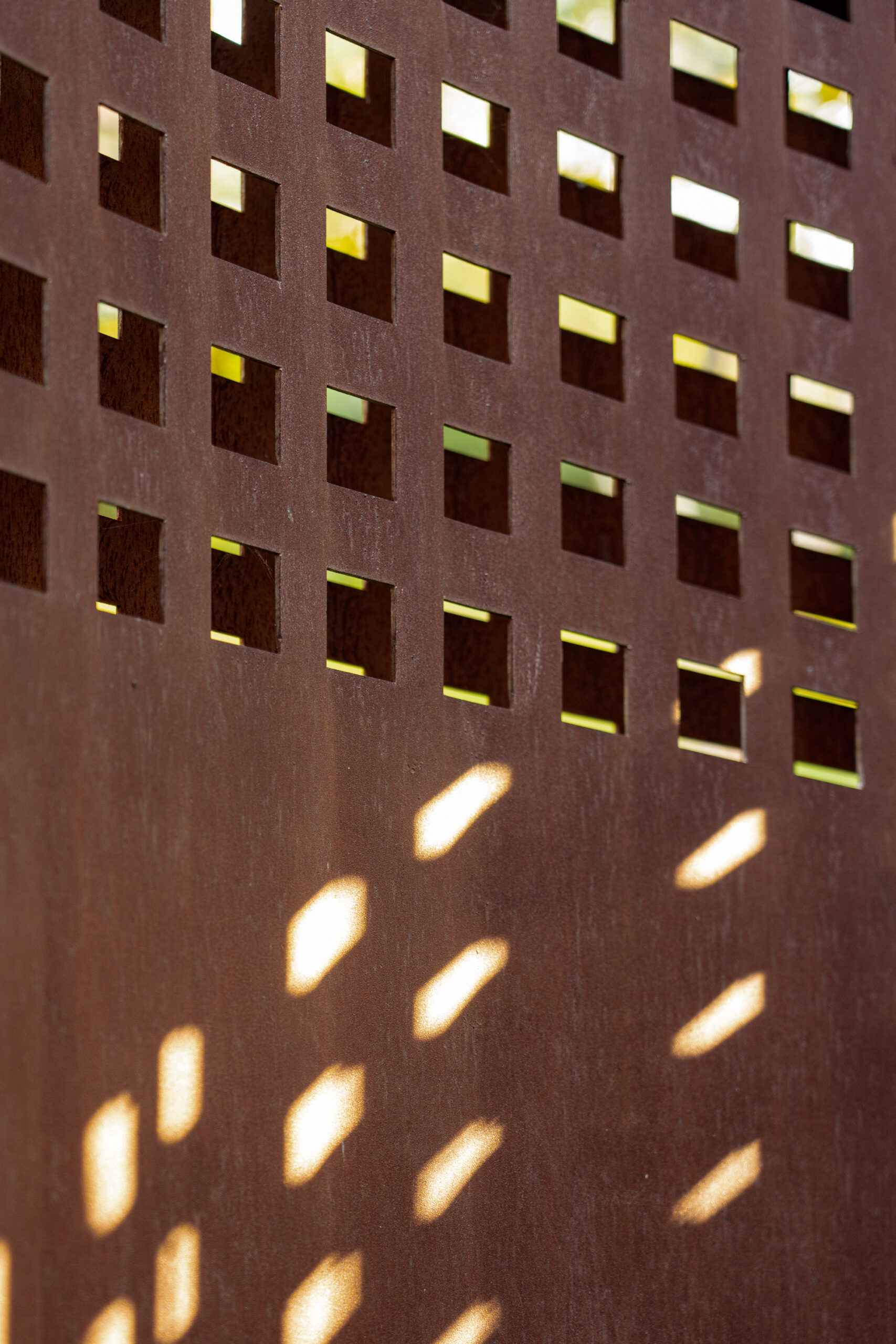
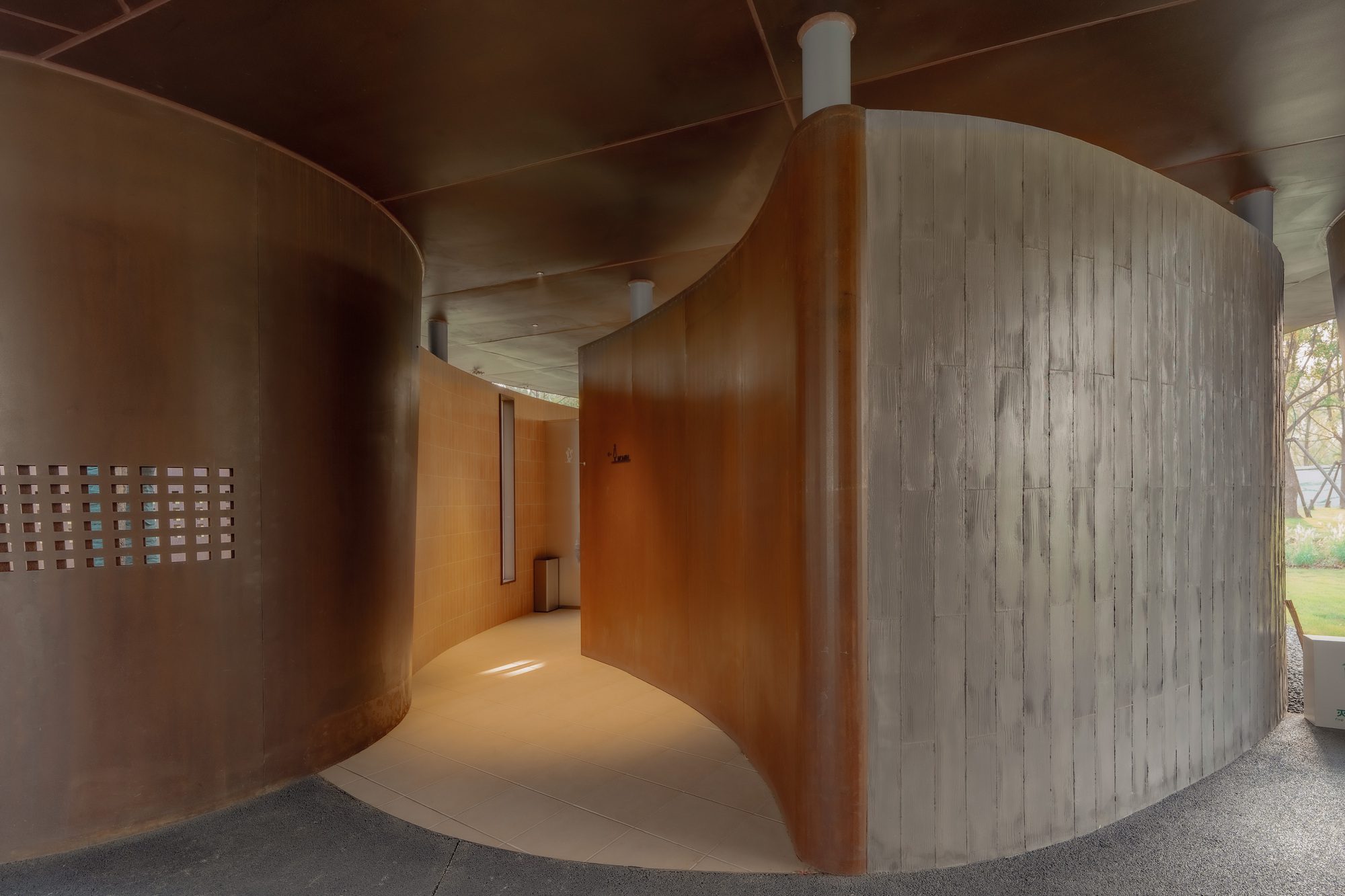
A material palette of concrete and Corten steel fosters deeper dialogue with nature. Concrete’s textured finish echoes the site’s inherent materiality, while Corten steel develops a rust-red patina over time—allowing the architecture to acquire traces of growth and weathering. Inside, warm-toned tiles combined with terracotta bricks create a tactile counterpoint, guiding visitors from exploration to sheltered repose through shifts in tactile sensation and ambient temperature.
Project info:
Design Team: Ma jie, Li zitao
Project Management: Chengdu Luxi Cultural Tourism Development Co., Ltd.
General Contractor: Hubei Tianmai Construction Engineering Co., Ltd.
Construction Drawing Design: Shanghai United Design Group Co., Ltd.
Decoration Construction Drawings: Sichuan Zhonghengzhuke Survey and Design Co., Ltd.