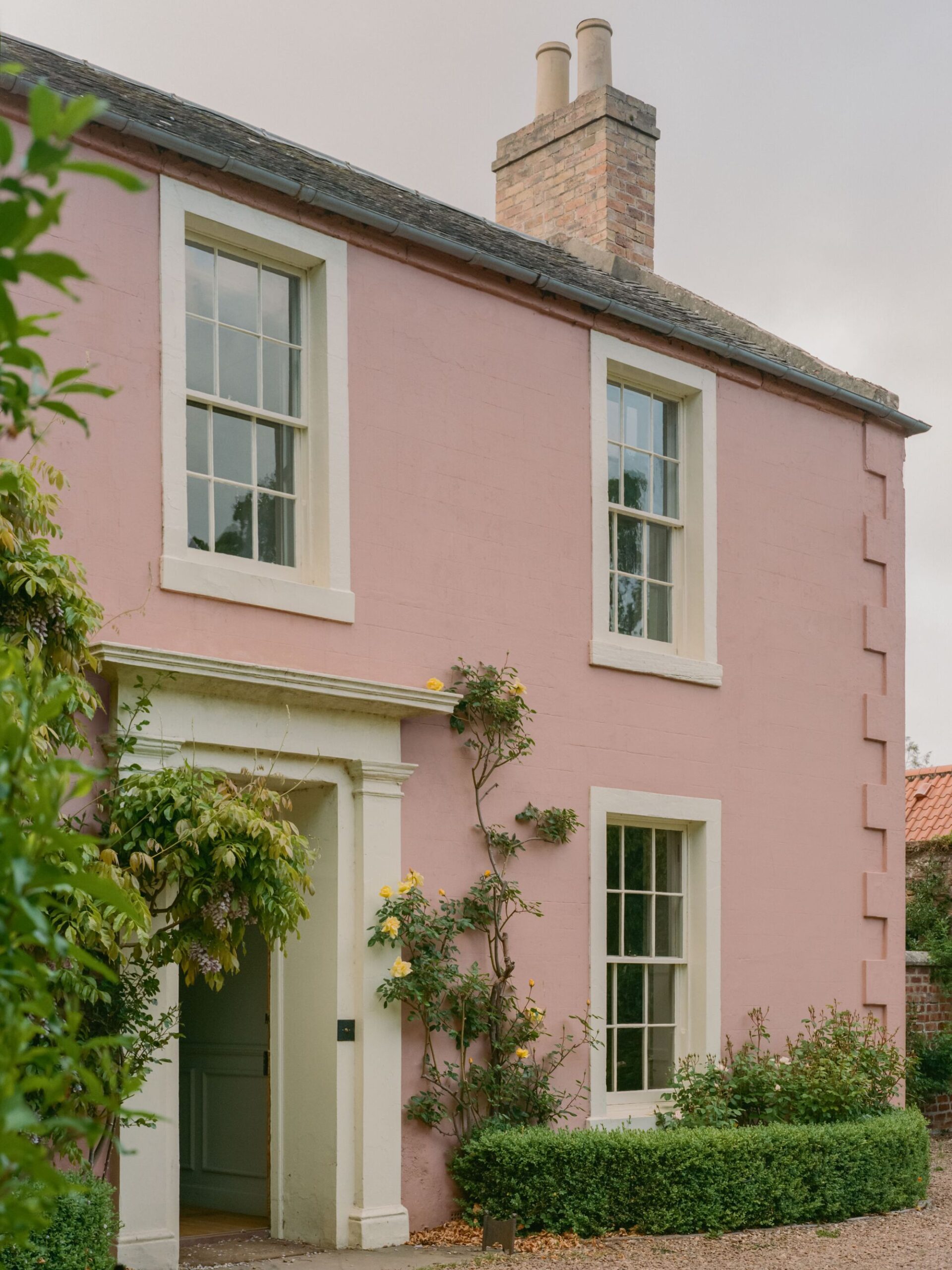
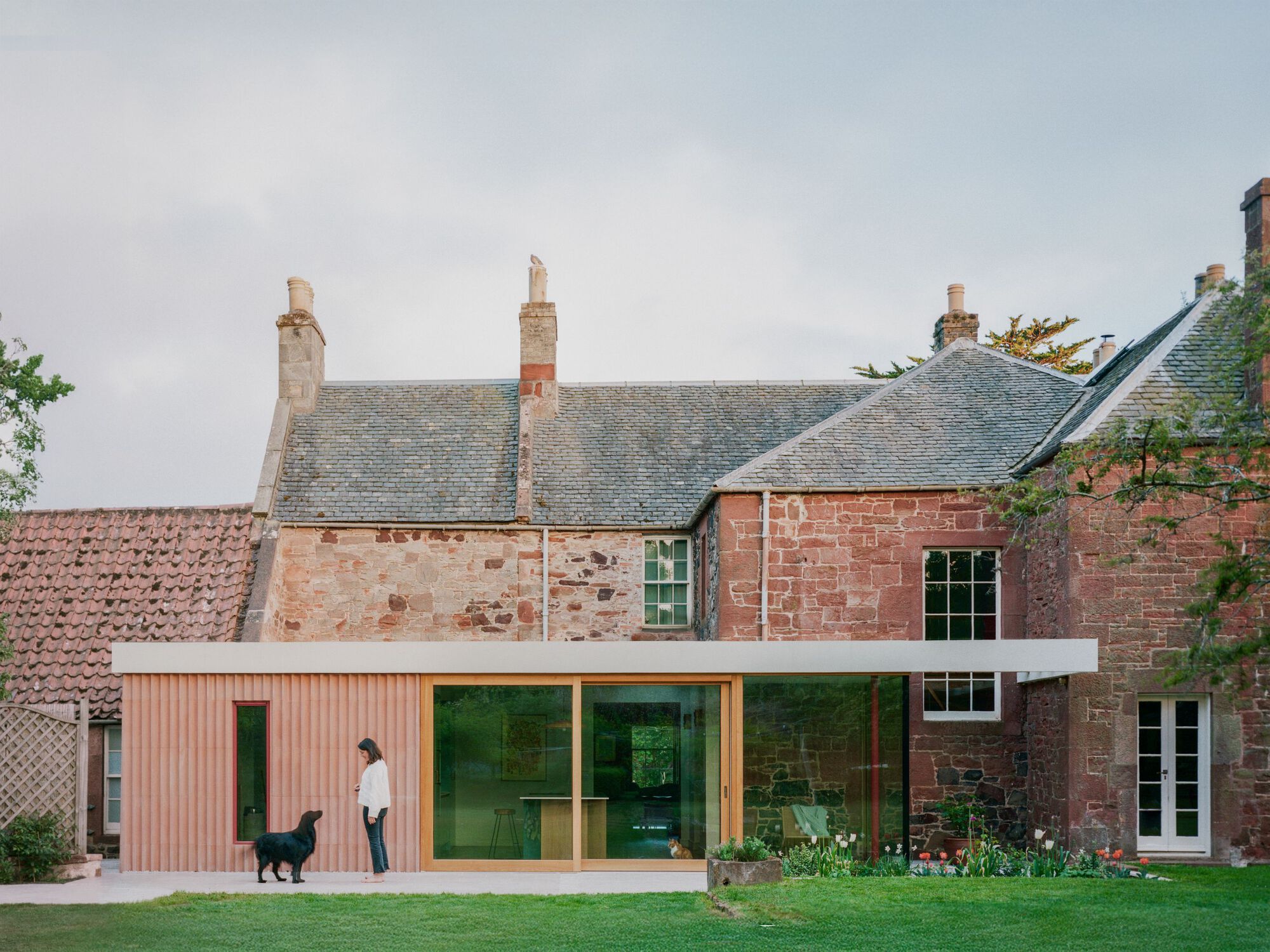
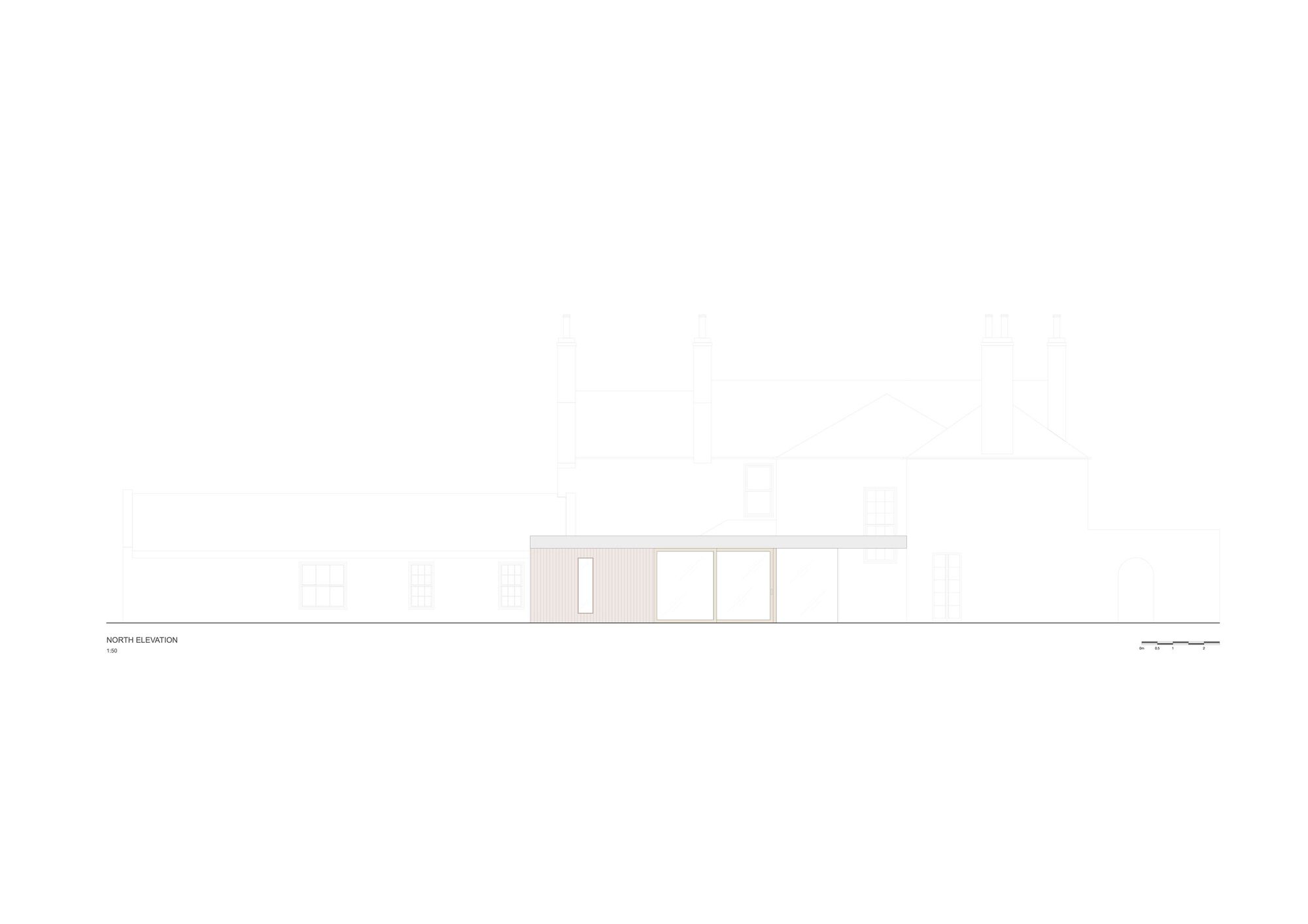
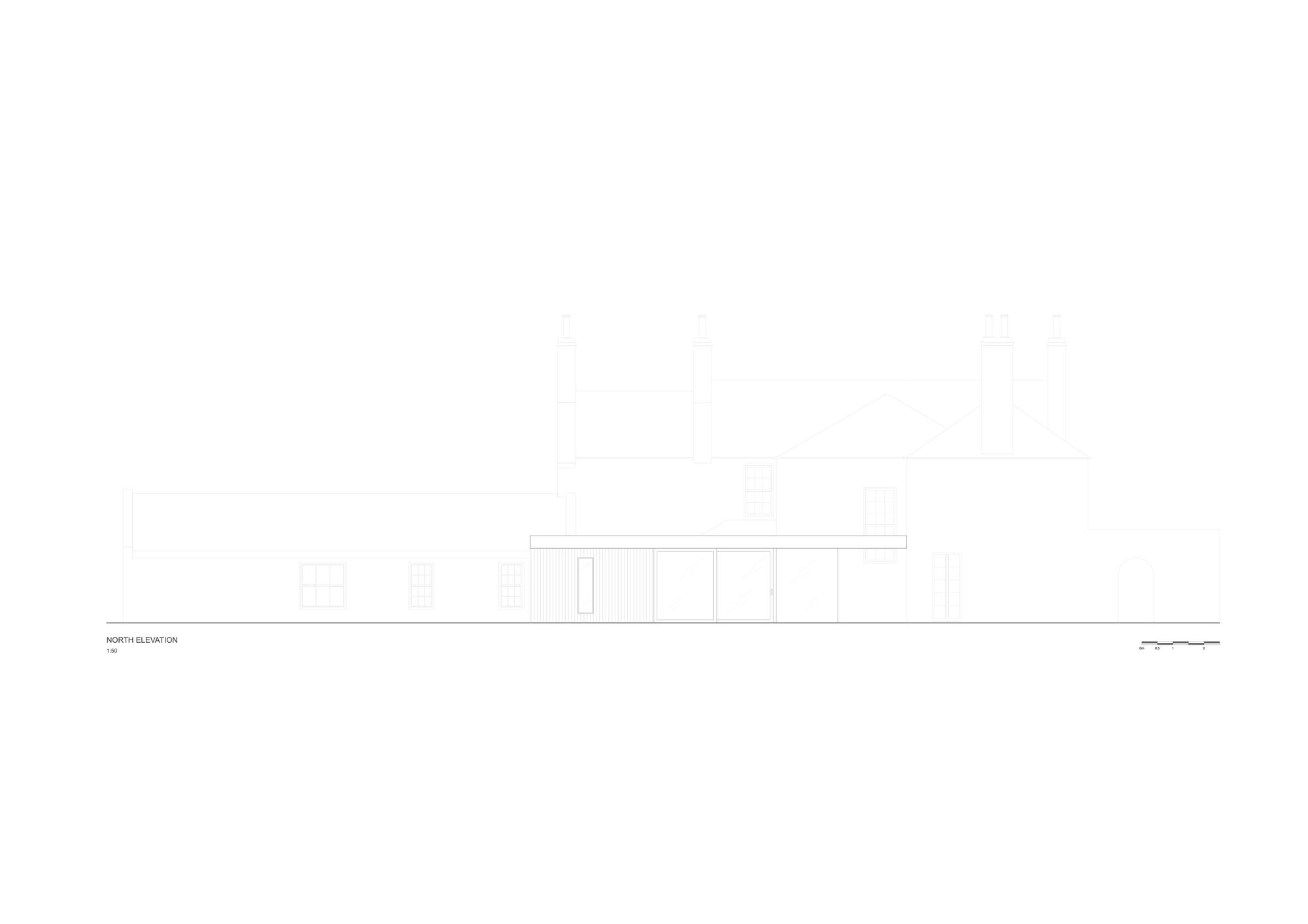
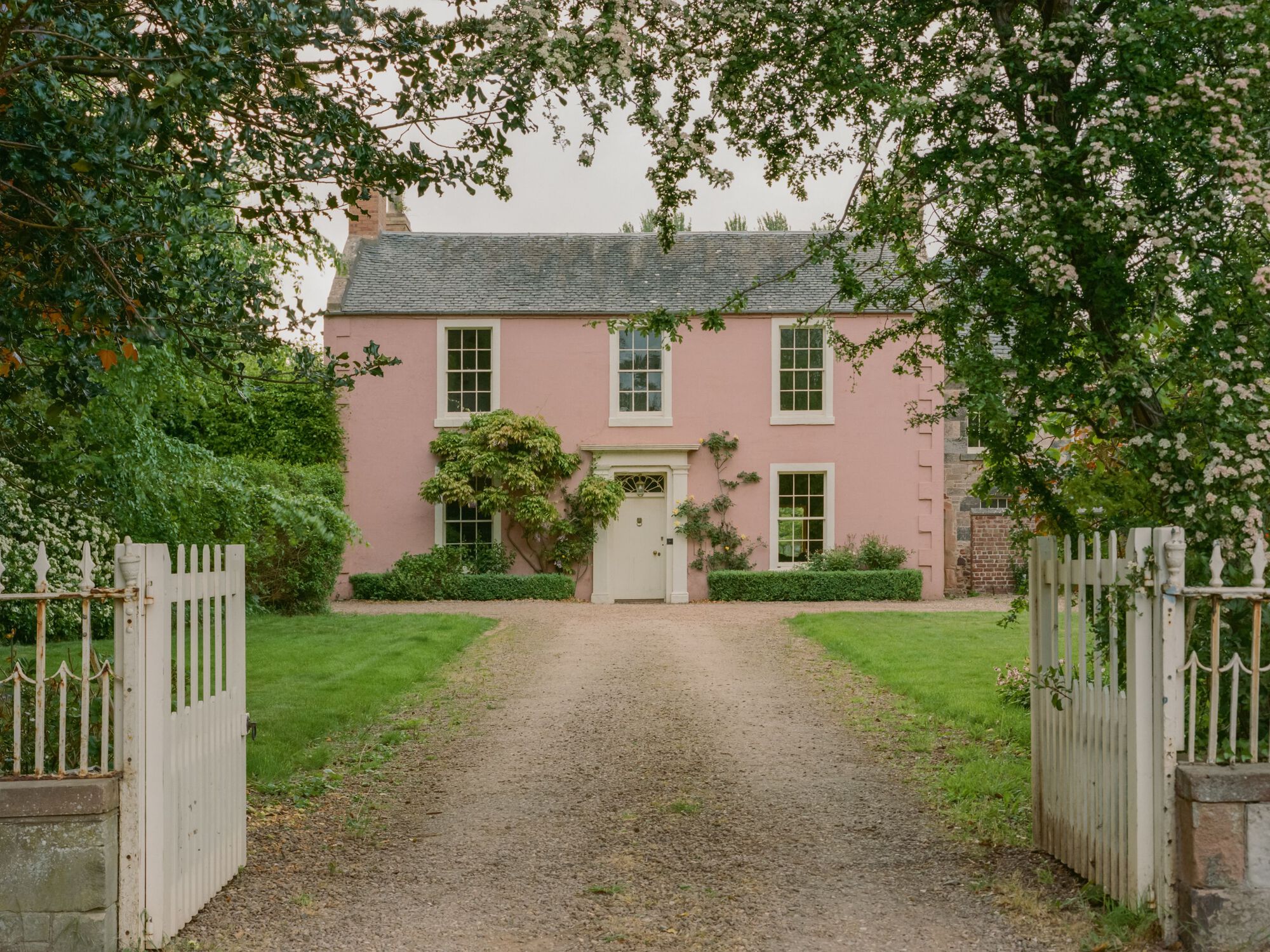
Whitberry House Extension, Pend has completed a sensitive renovation and expansion of Whitberry, a Grade B listed Georgian farmhouse in East Lothian, Scotland. Working alongside the clients-turned-project-managers, the Leith-based architects unified the home’s fragmented rear elevation and introduced light-touch interventions to the ground floor to support contemporary family life. In contrast to its charming pink frontage, the back of Whitberry reveals a curious arrangement, a patchwork of historic and somewhat haphazard additions characterized by reddish sandstone and brickwork, each a record of the masonry techniques of its respective eras. The arbitrary nature of these successive add-ons had resulted in a difficult, cellular interior layout, requiring the family to pass through several rooms to reach the garden.
© Lorenzo Zandri
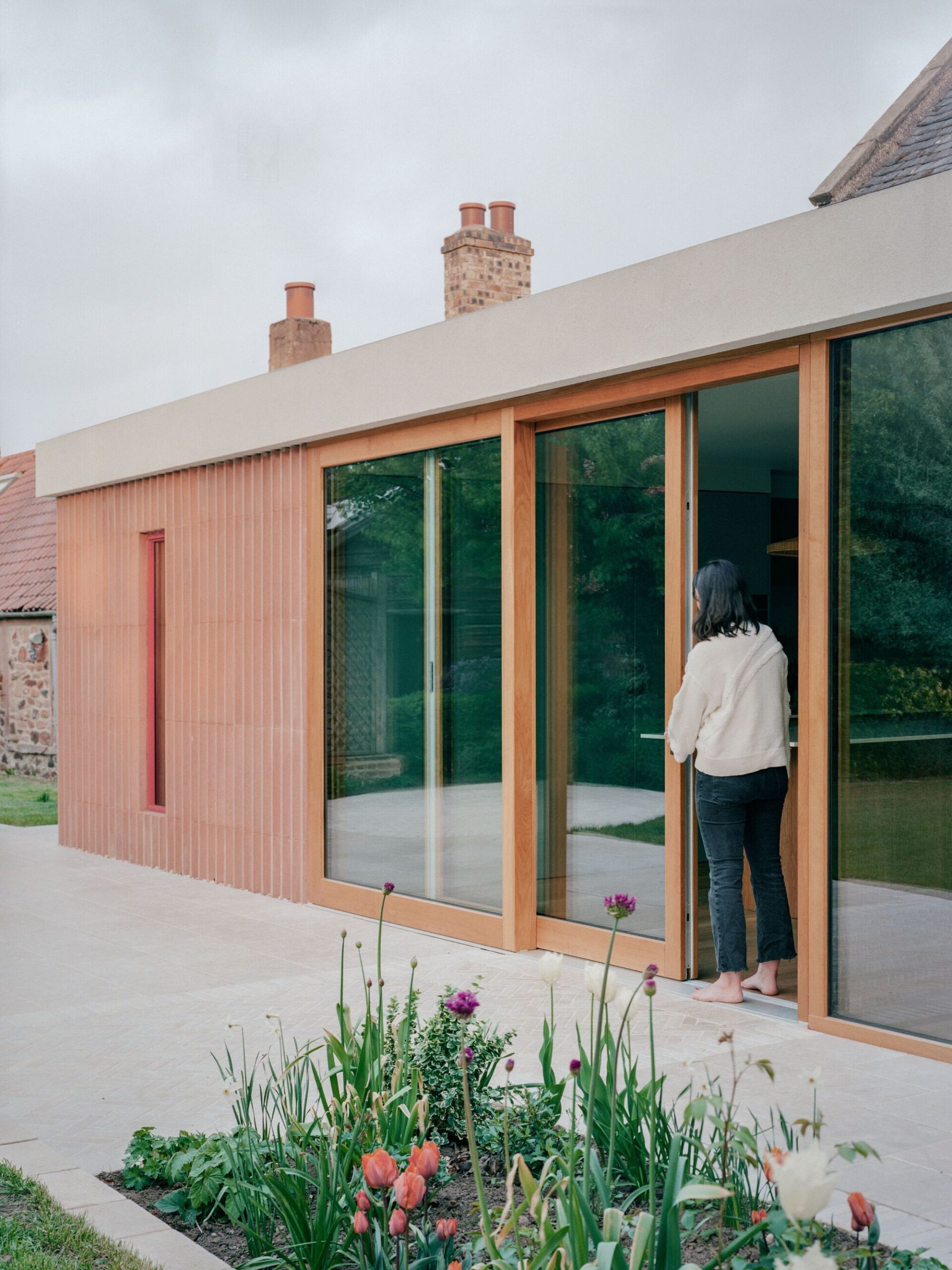
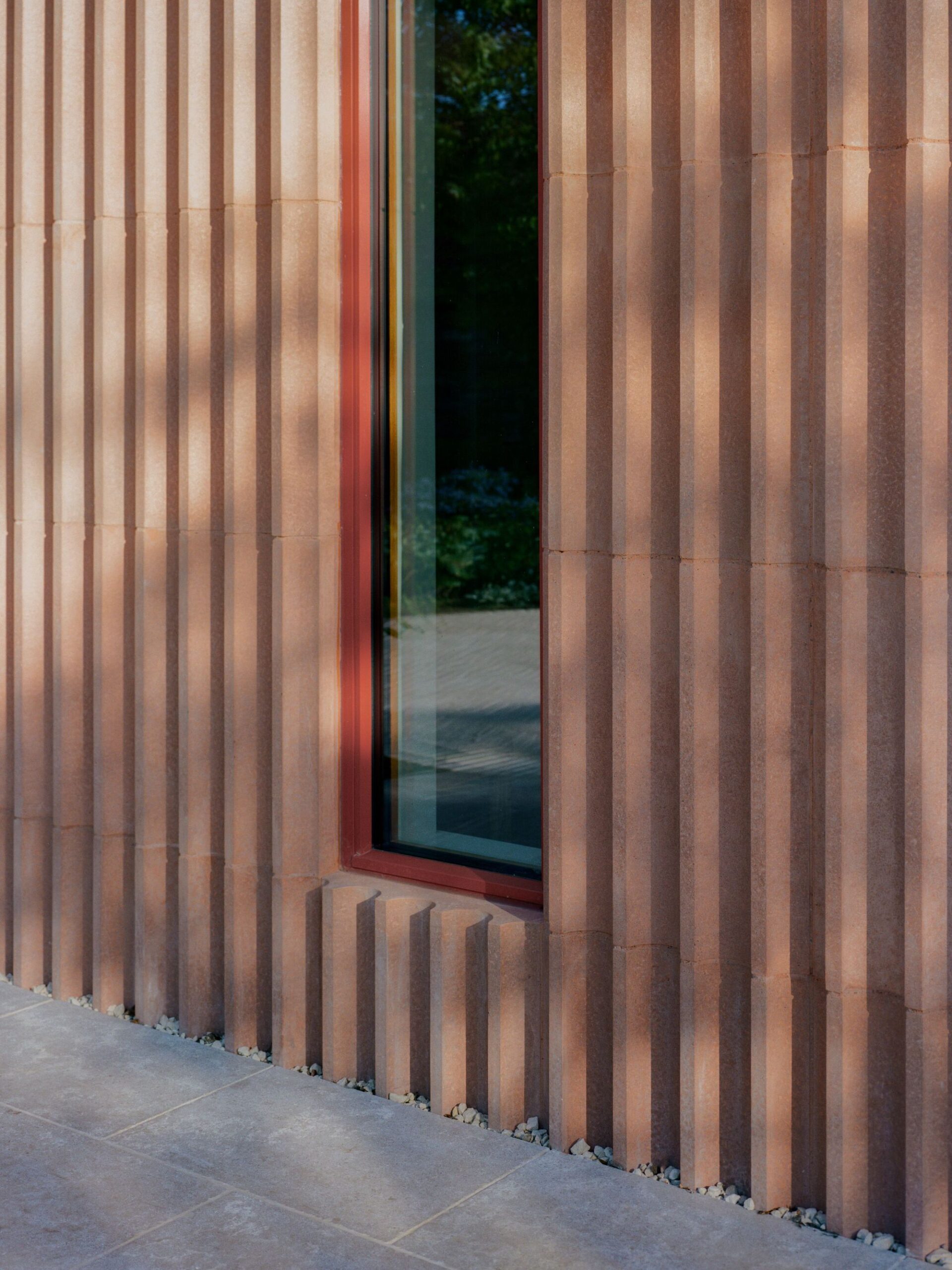
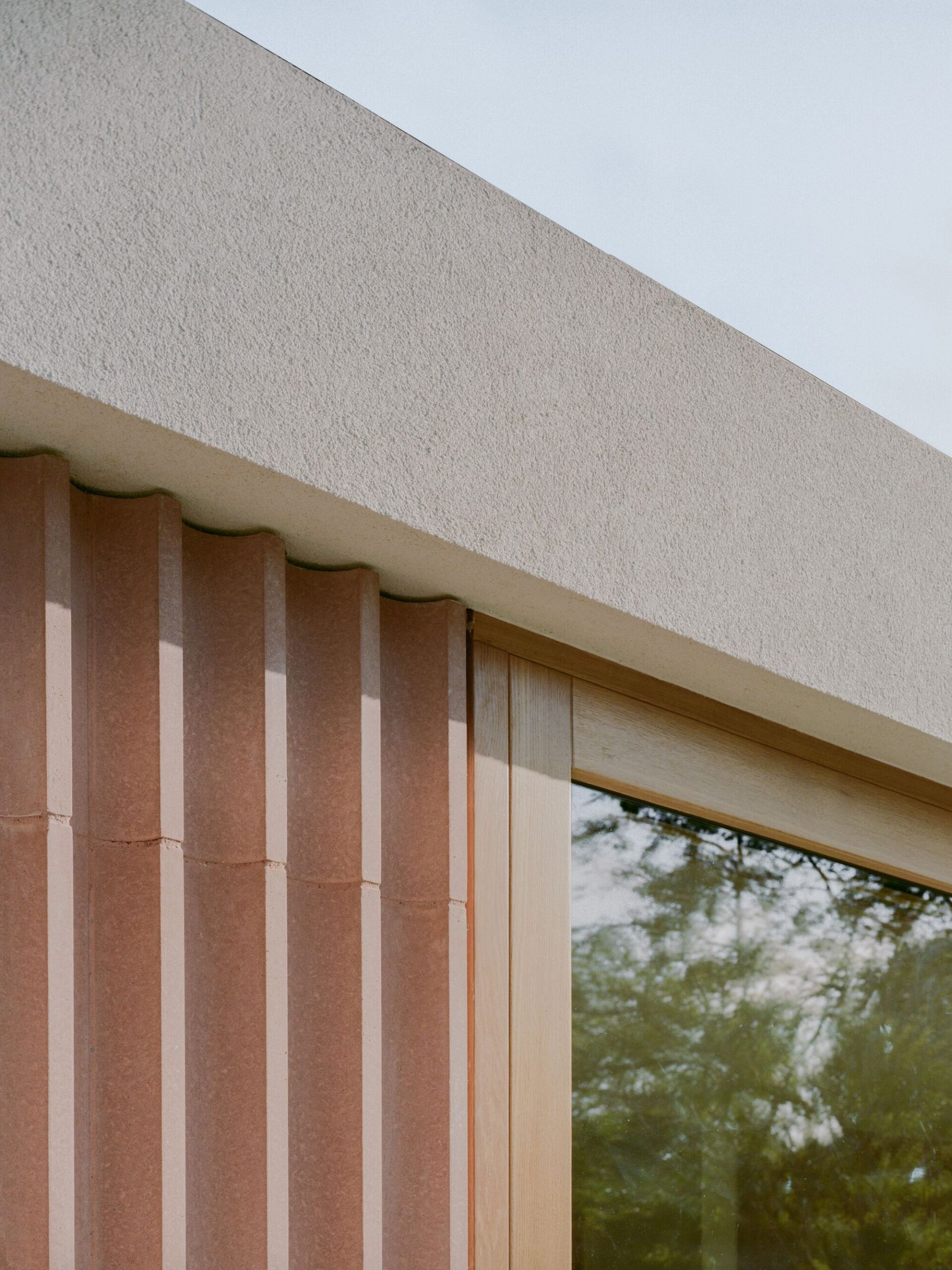
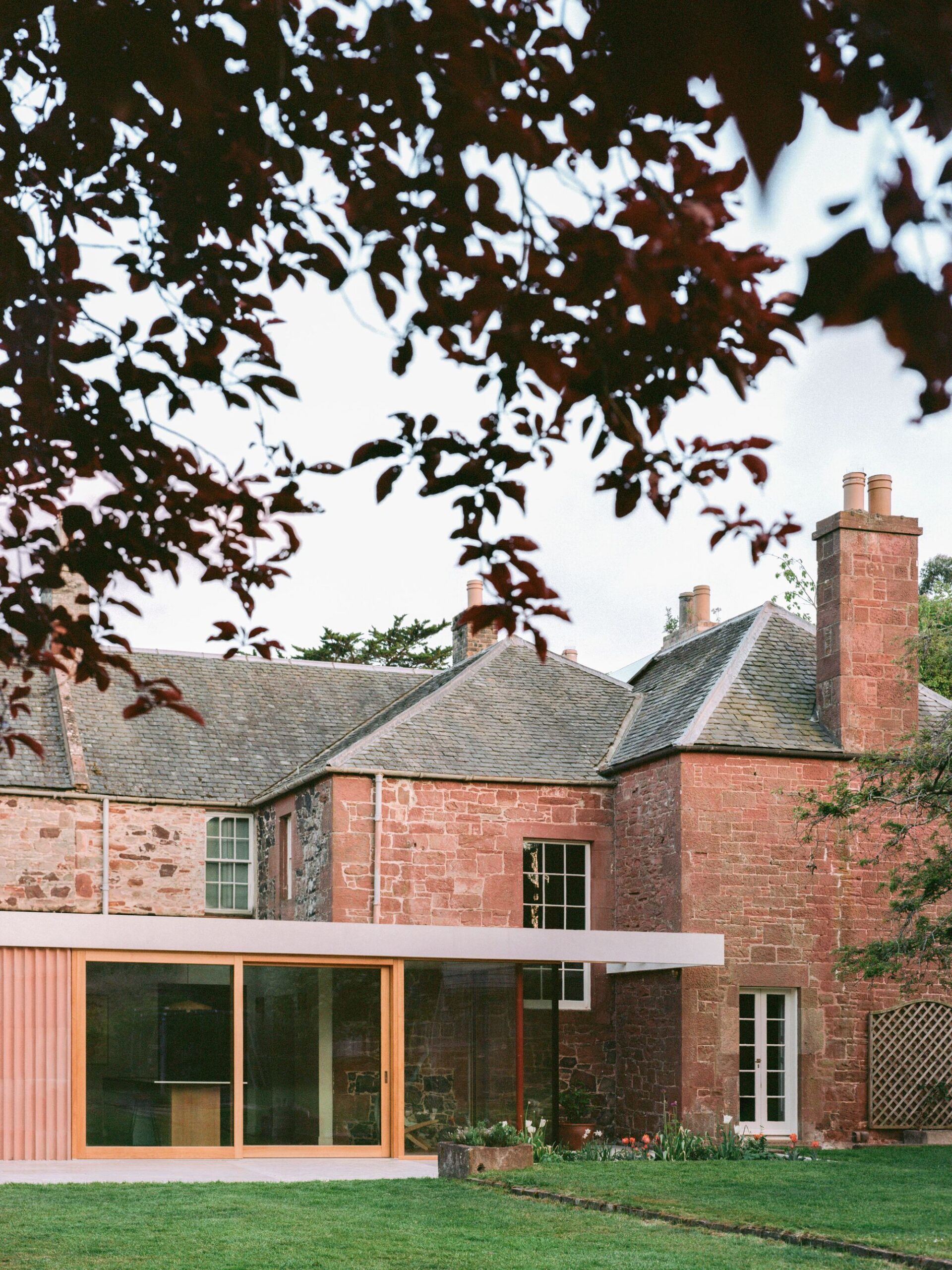
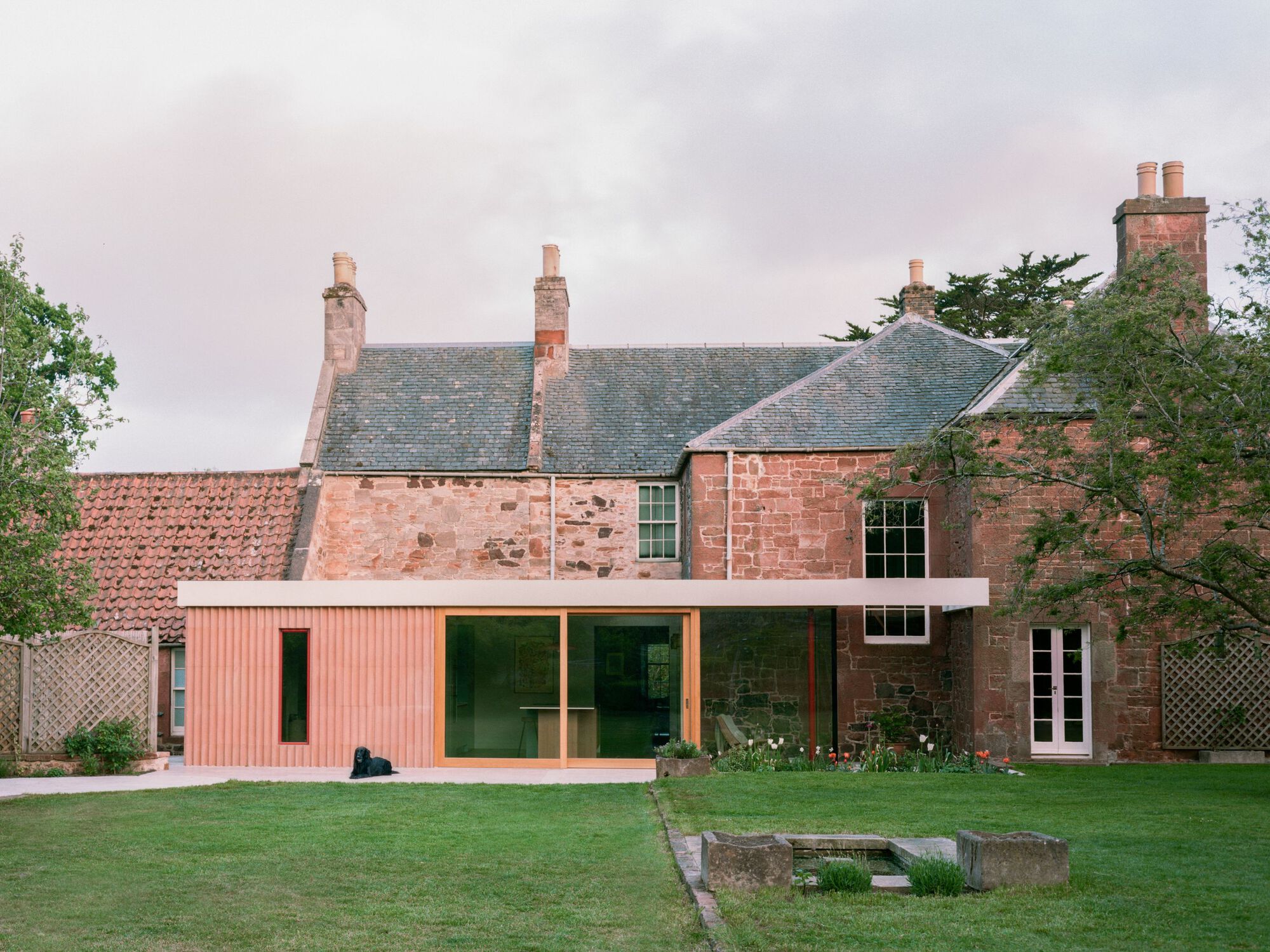
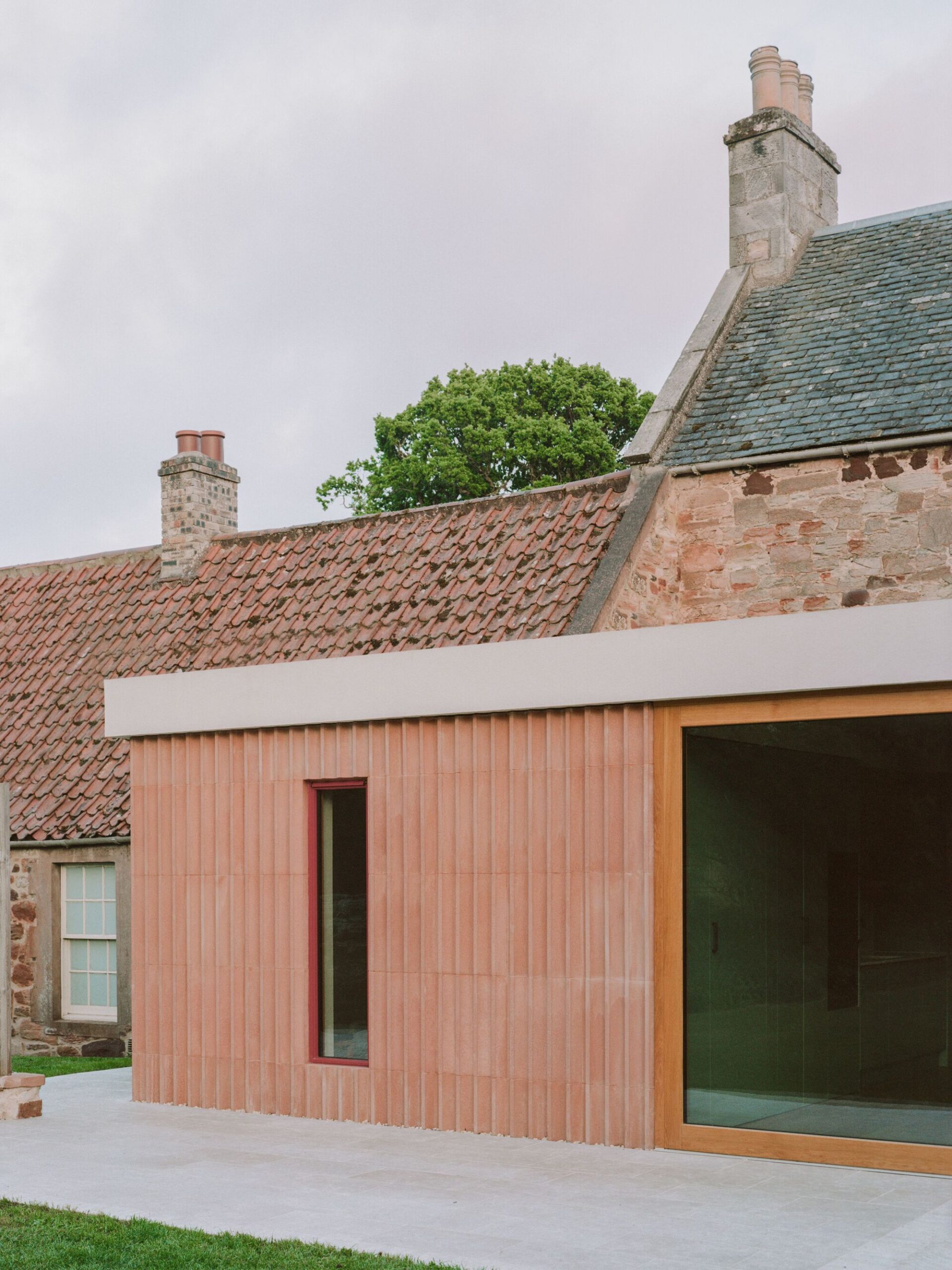
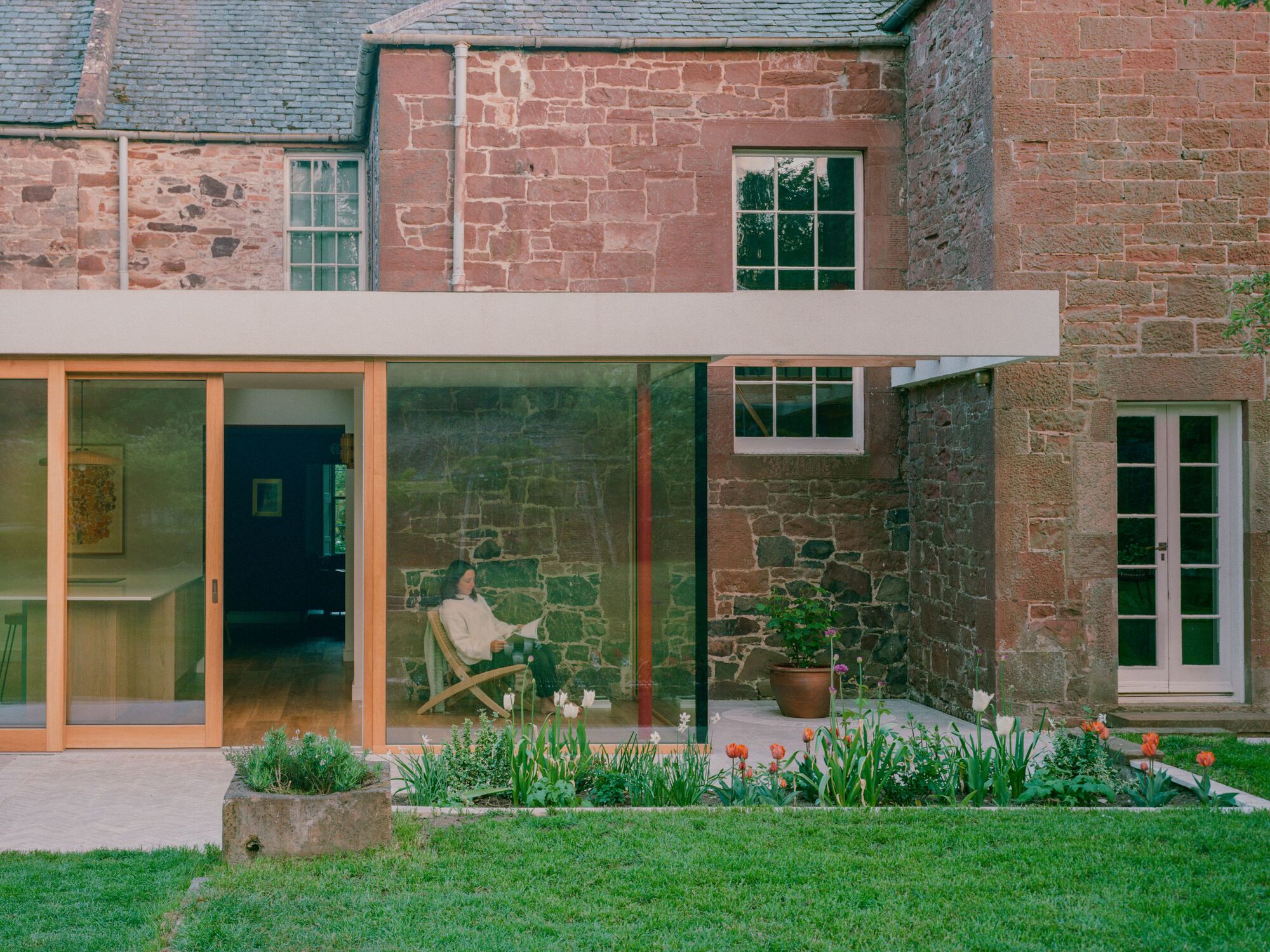
As part of Pend’s architectural scheme, a characterful extension was designed to consolidate the rear elevation and establish both a visual and physical articulation between interior and exterior. Distinctly contemporary, a fluted stone wall interrupts the chronicled facade, shifting into full-height glazing with cherry timber-framed sliding doors and a discrete glass-to-glass corner.
© Lorenzo Zandri
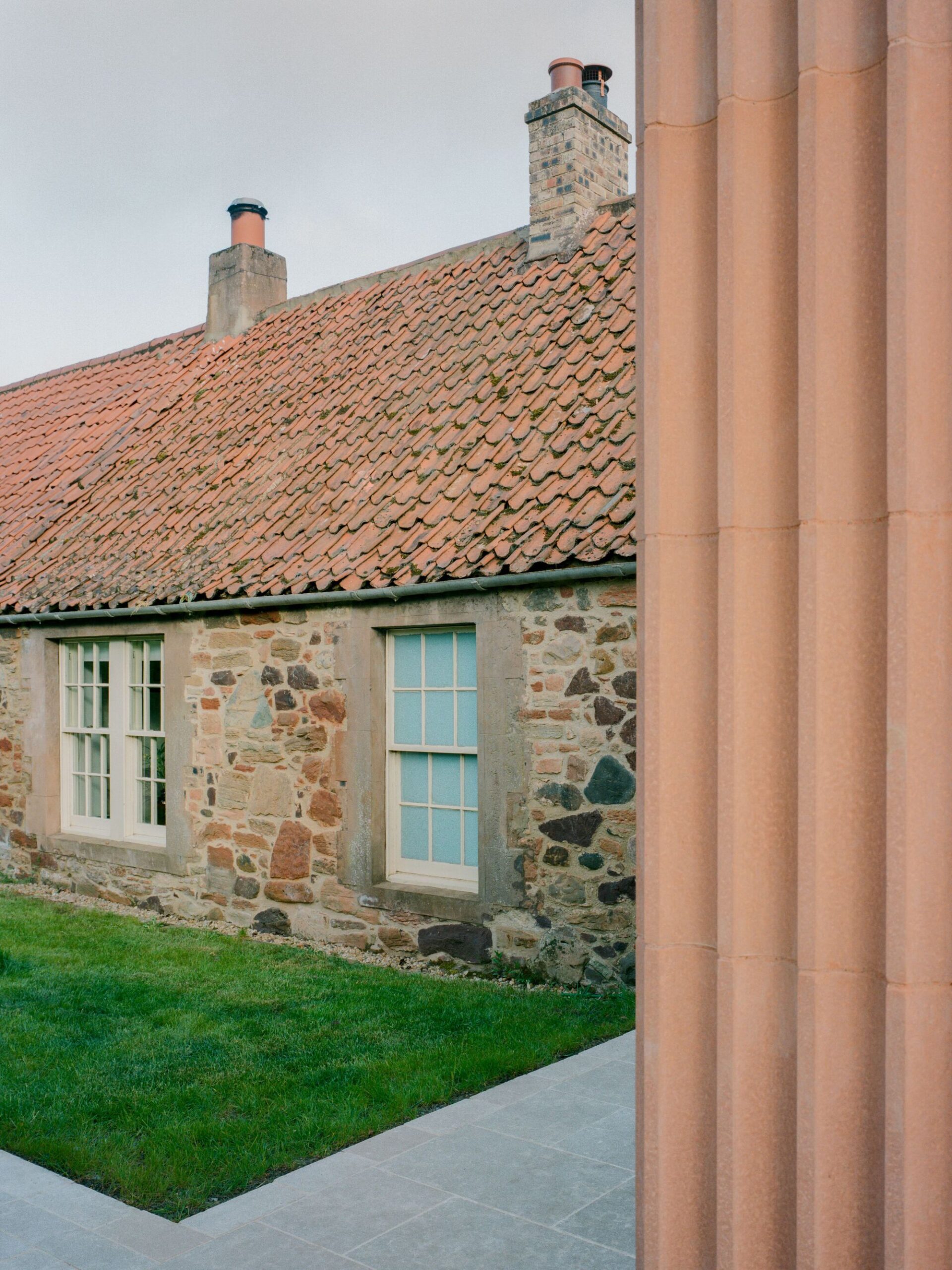
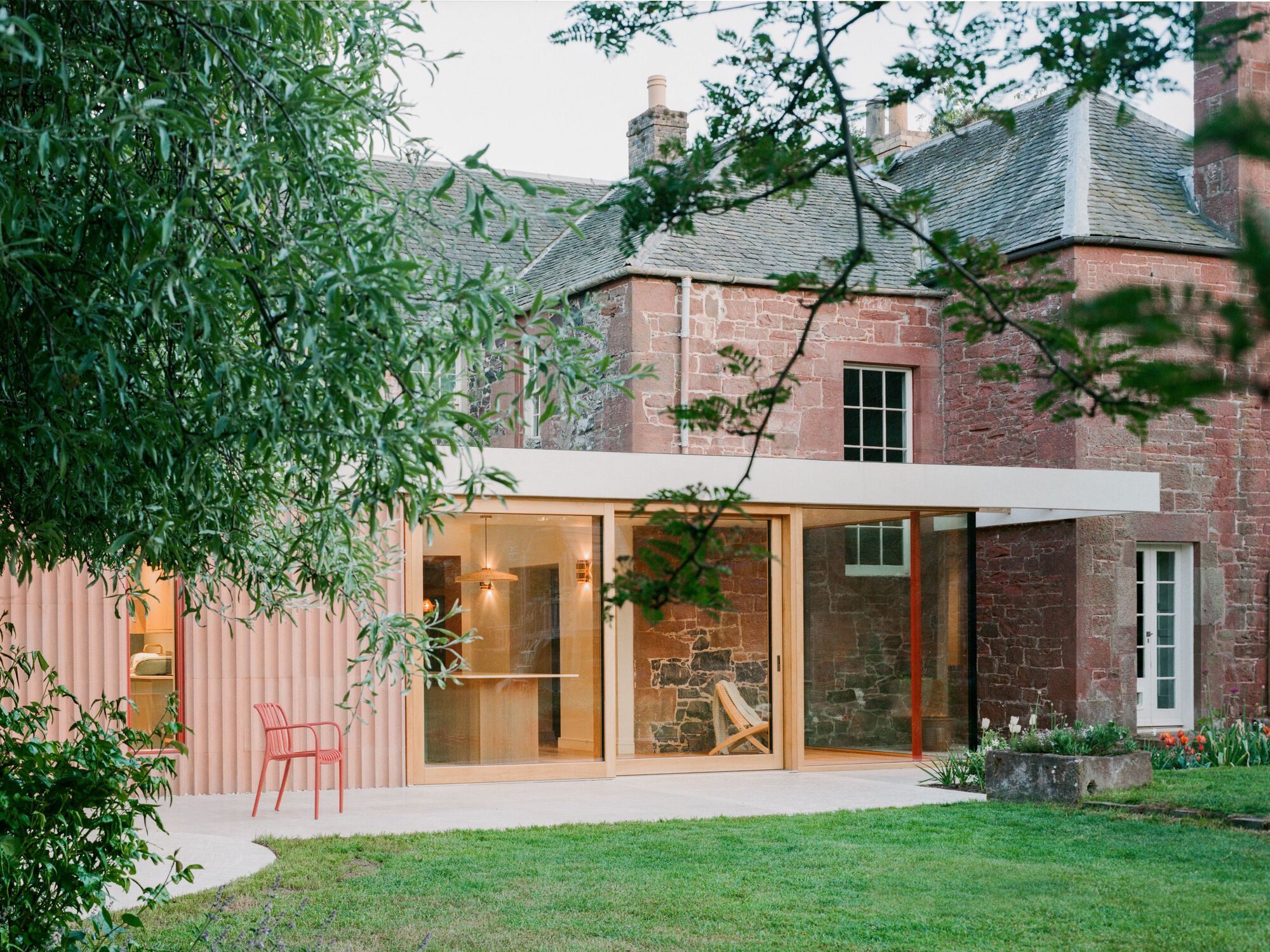
The extension visually stabilizes the rear facade, with a horizontal, light-colored concrete fascia tying the disjointed historic extensions together. Below, a blush-toned precast stone wall, designed by the architects, continues the narrative of masonry additions. In turn, reflecting the materials and techniques of its time. The reddish-pink coloring of the stonework playfully references the existing East Lothian sandstone and brickwork, while its fluted form echoes the undulating pattern of the adjacent pantiled roof.
© Lorenzo Zandri
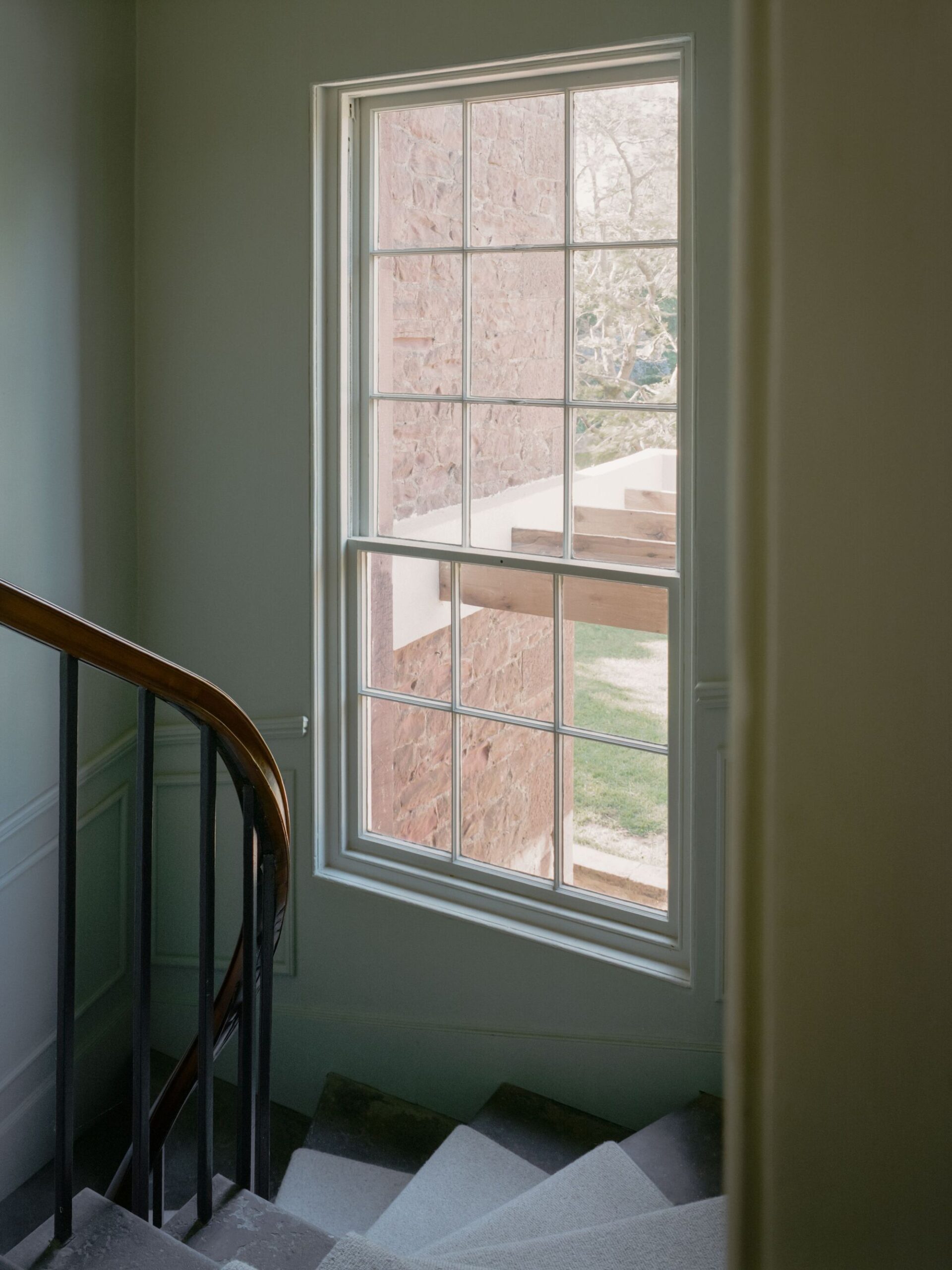
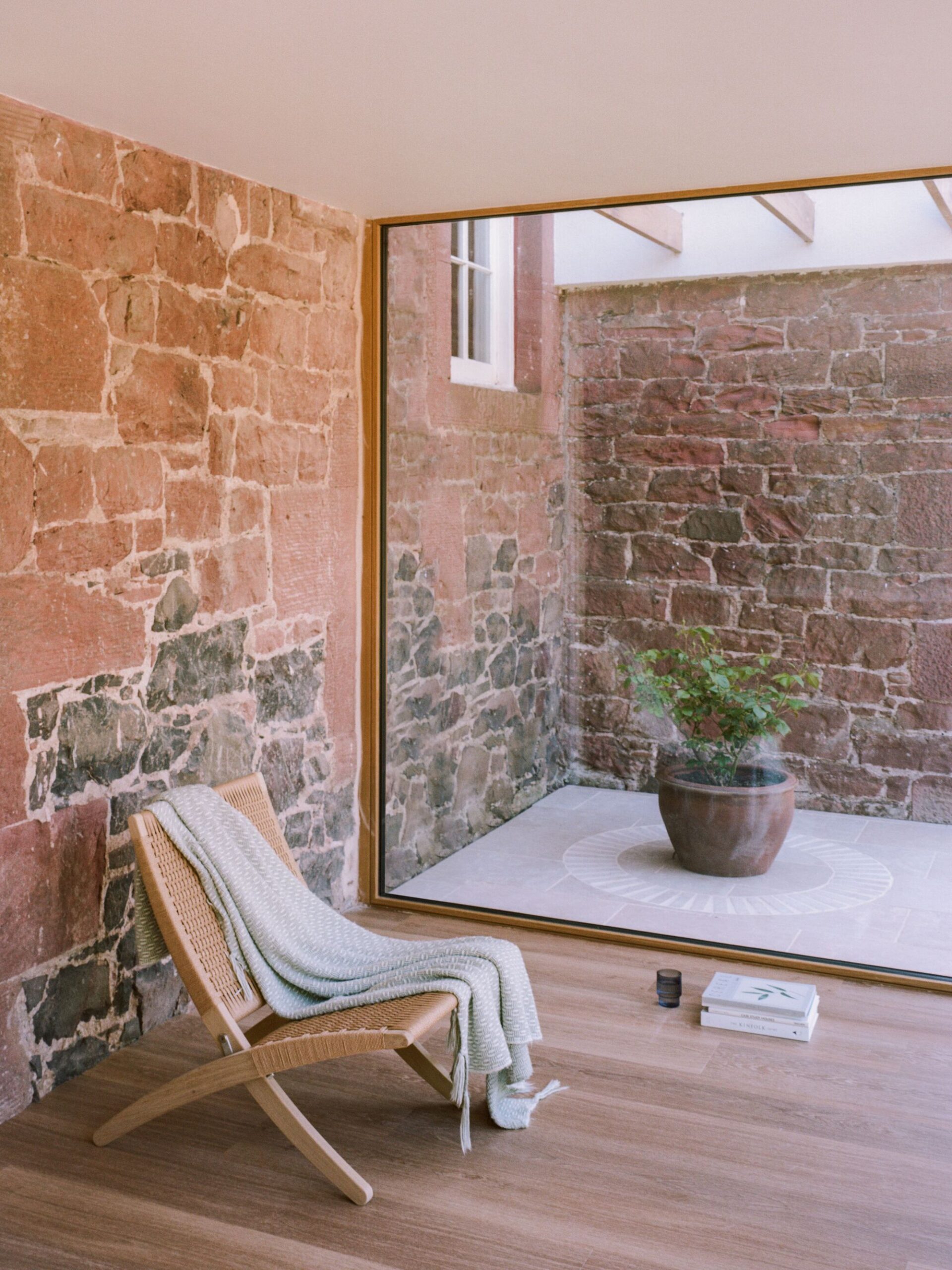
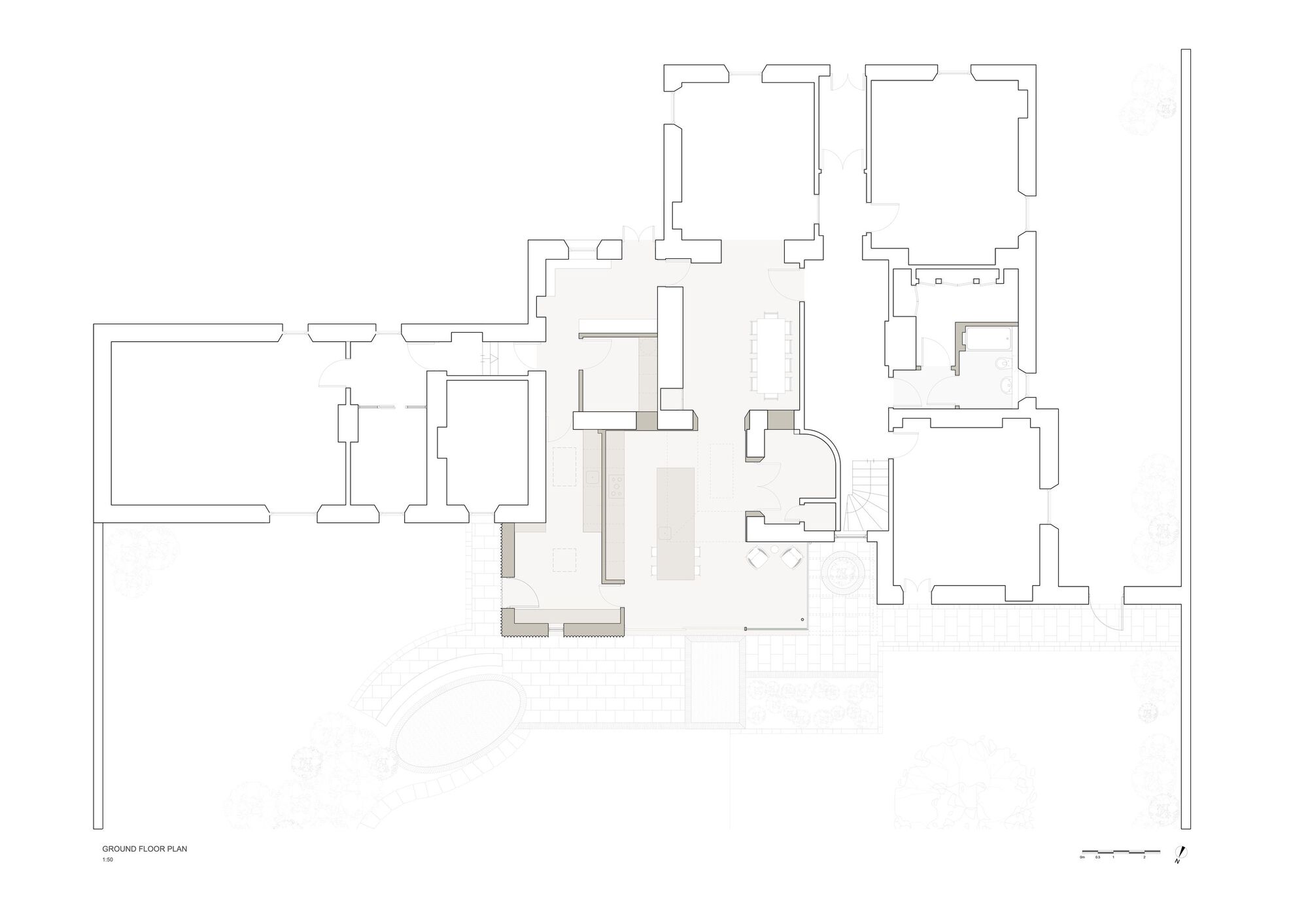
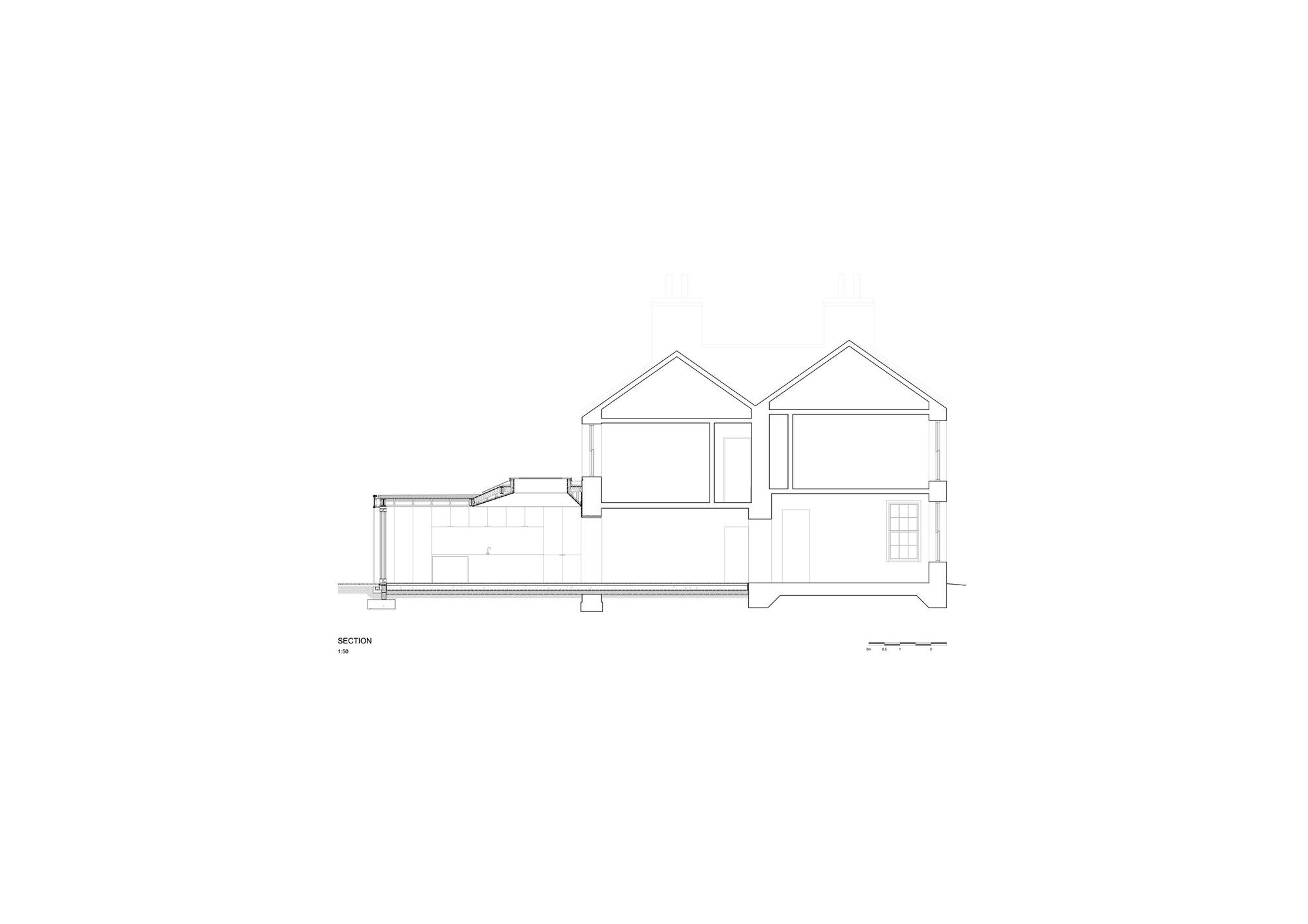
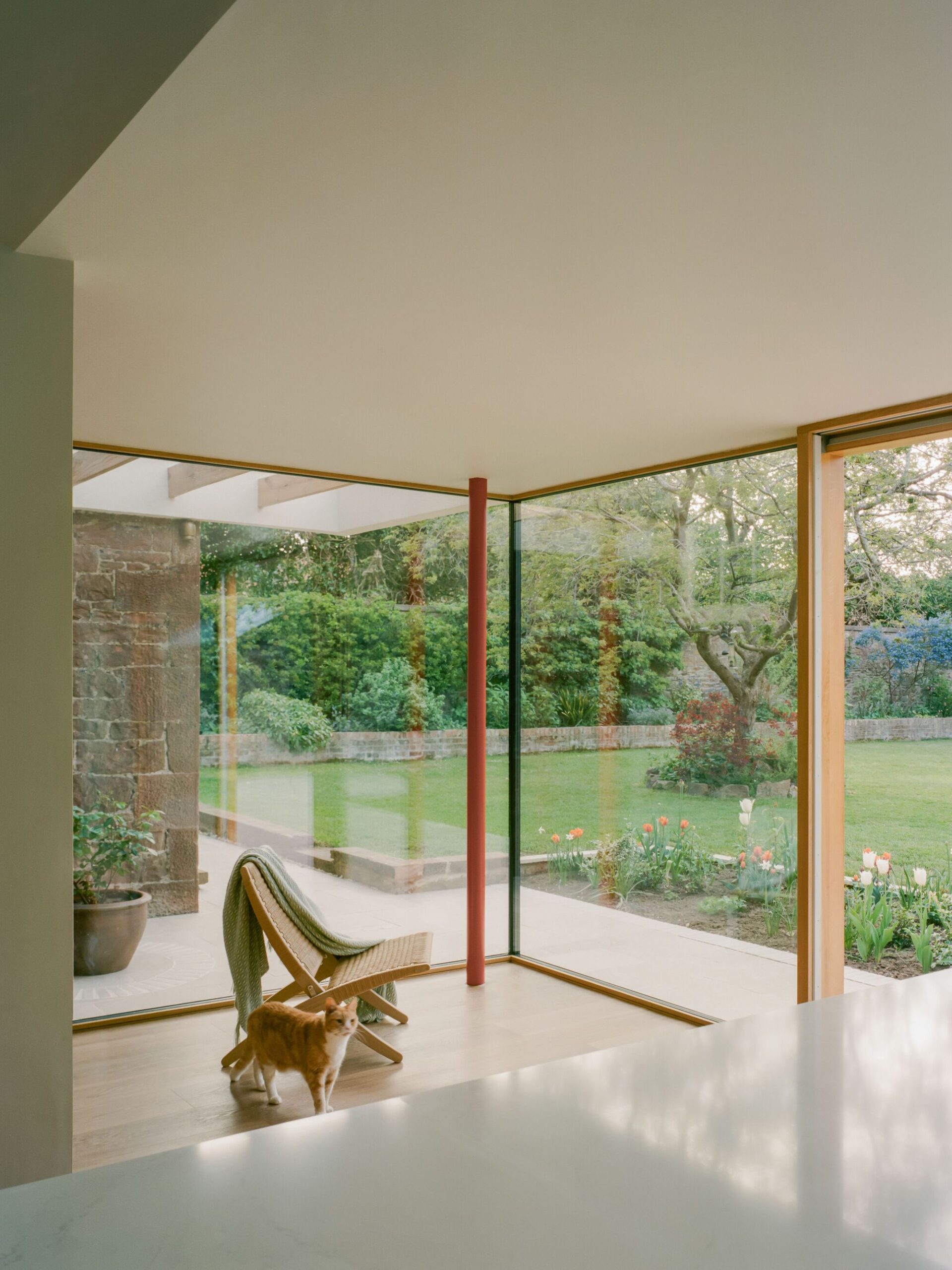
Behind its concrete fascia, the contemporary glazing returns to meet the original stone wall of the house, a strategic gesture to preserve daylight to the existing stair window. The glass junction sits flush against the masonry, which continues into the kitchen within, allowing the modern extension to remain in quiet dialogue with the old house. Outside, a small courtyard has been created in the void left by the return, topped with a timber canopy.
© Lorenzo Zandri
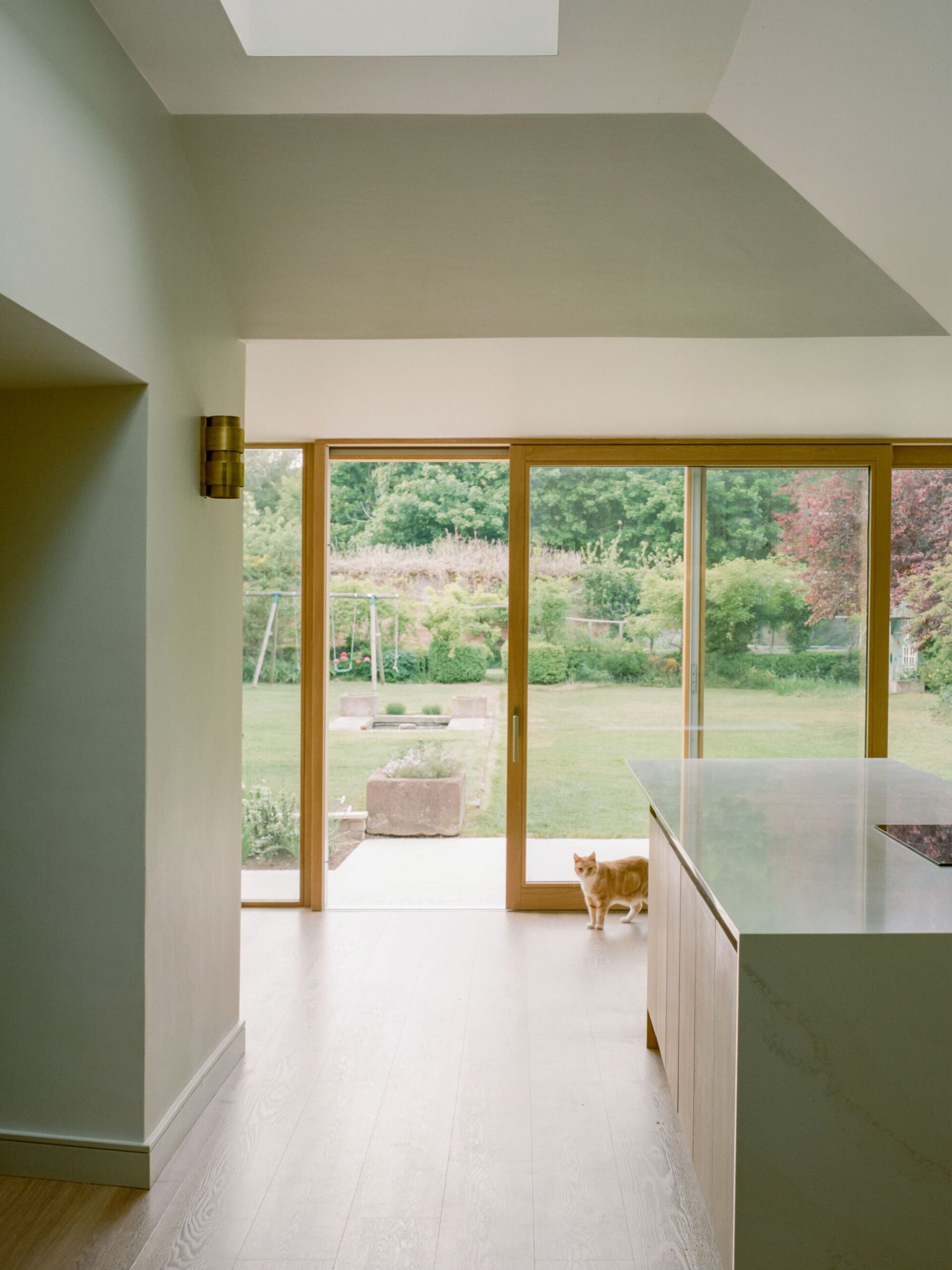
Previously constrained in the center of the plan, the original kitchen was cut off from the garden and limited to a single, small north-facing window. The dark, narrow space was a particular pain point for the family, who longed for a generous, light-filled environment with easy access to the outdoors. As part of their initial spatial analysis, Pend identified several interior zones, private, public, and service, and worked closely with the clients to develop a cohesive spatial plan. While maintaining these functional distinctions, Pend placed greater emphasis on the public areas of the home, in particular the dining room and kitchen, expanding and reconfiguring them to encourage togetherness and create a strong flow between spaces.
© Lorenzo Zandri
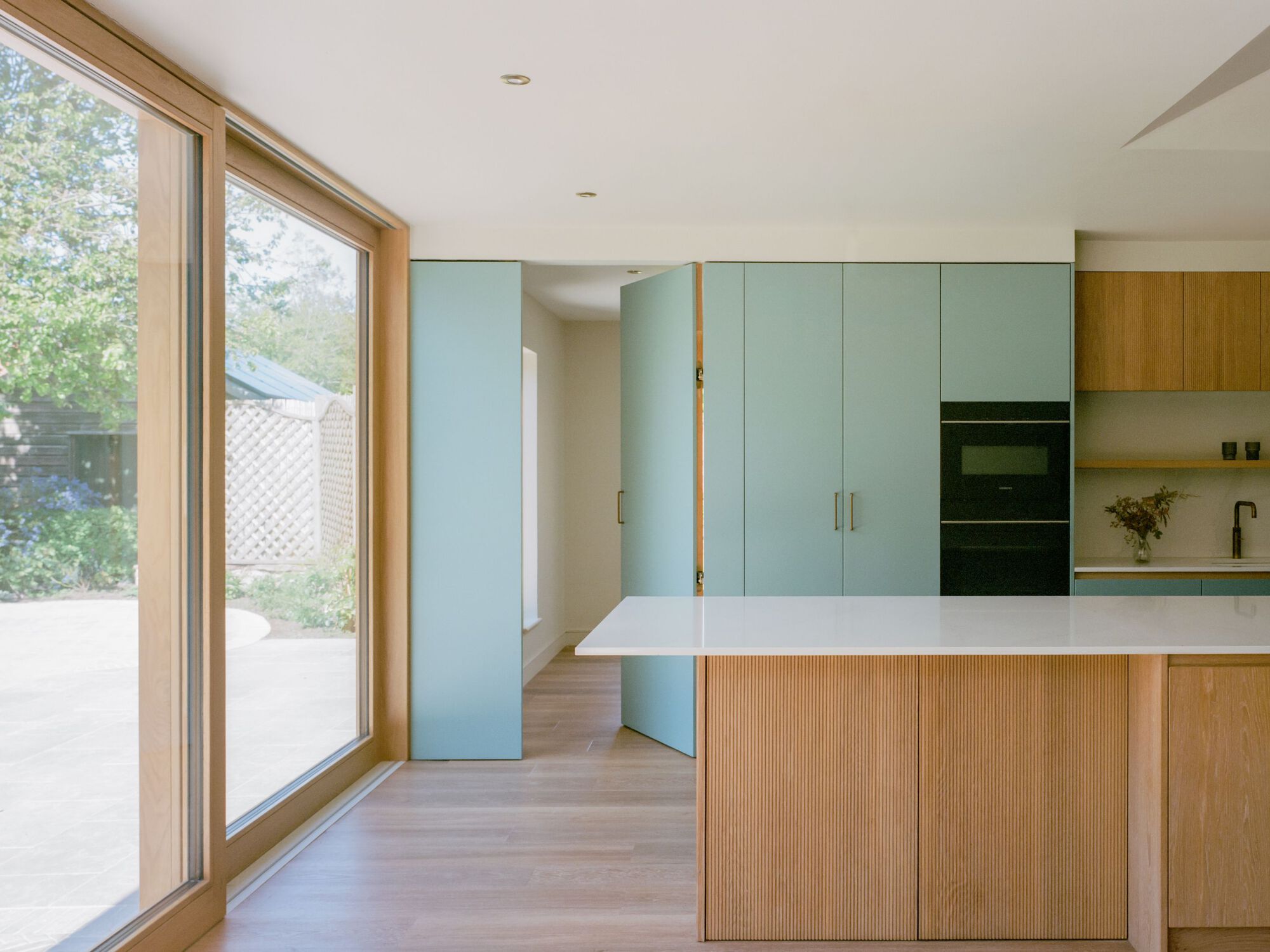
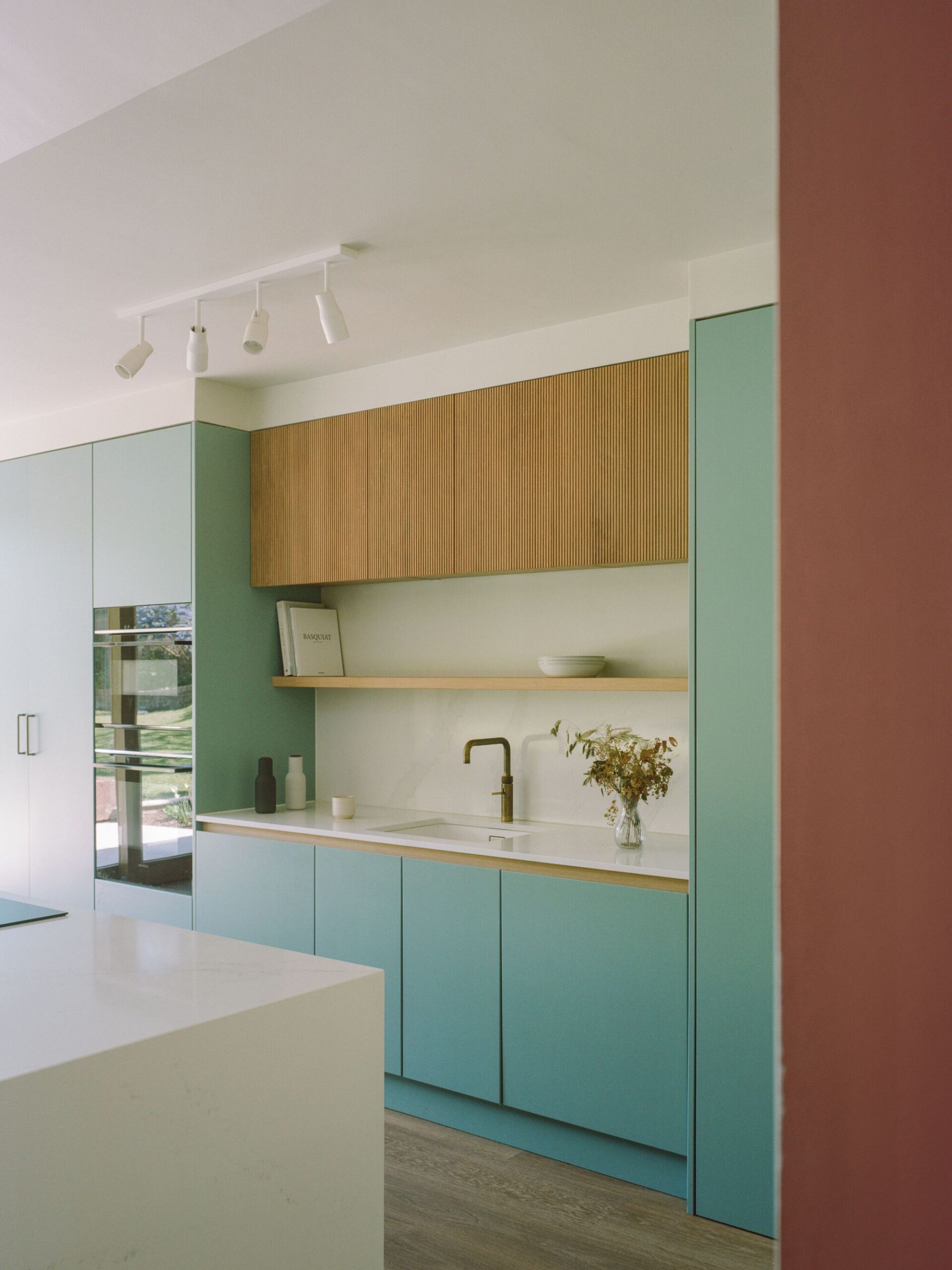
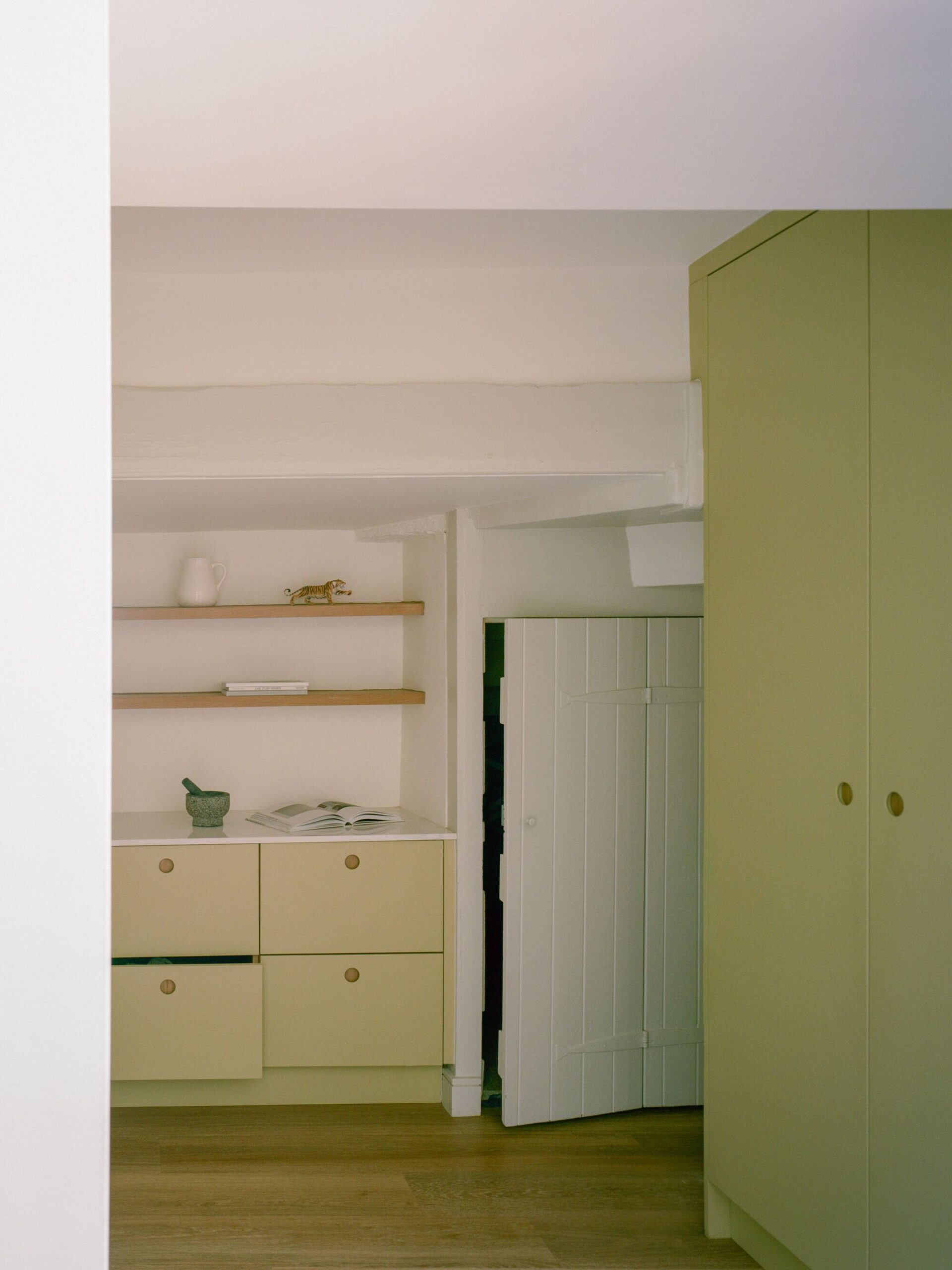
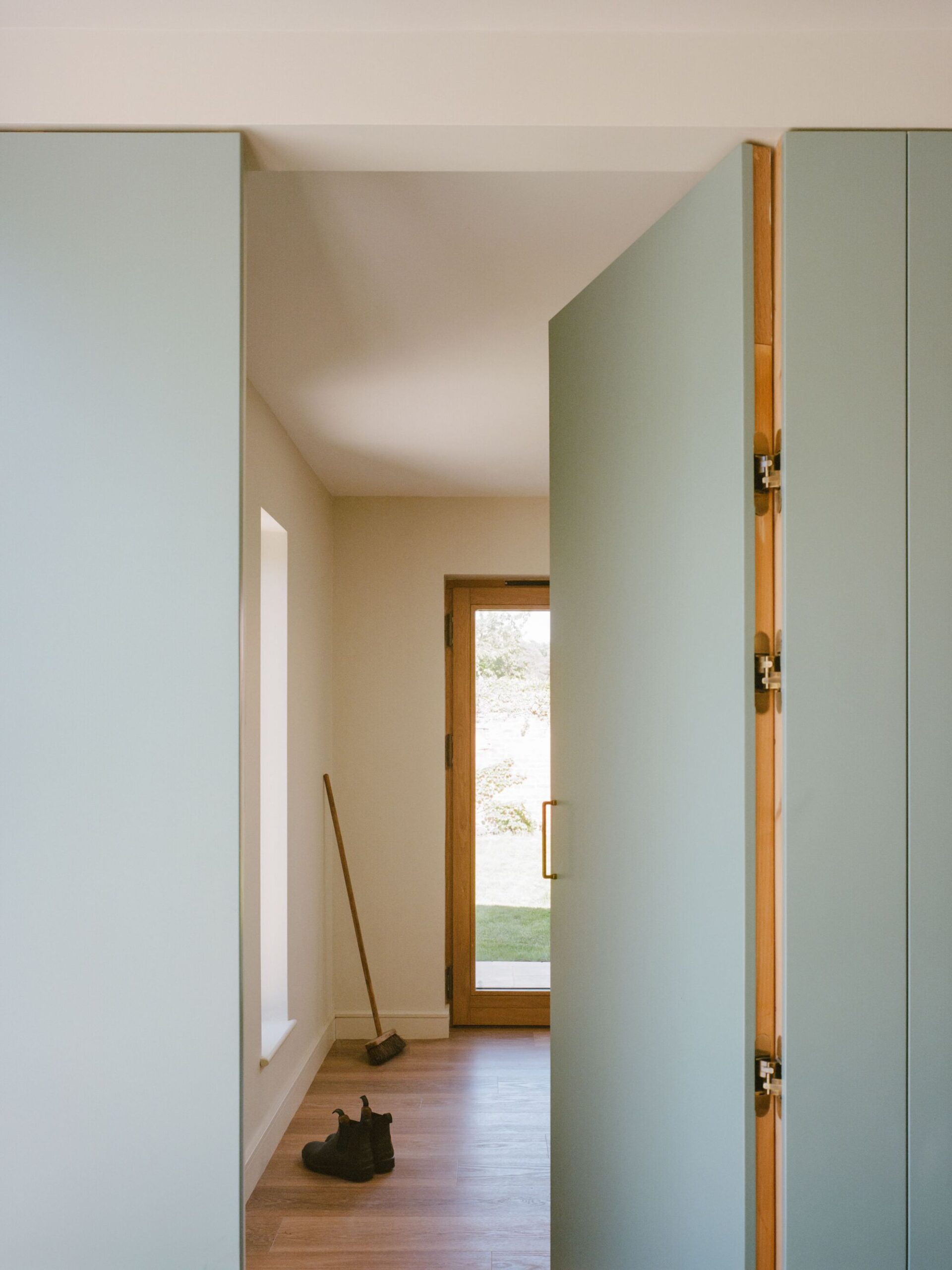
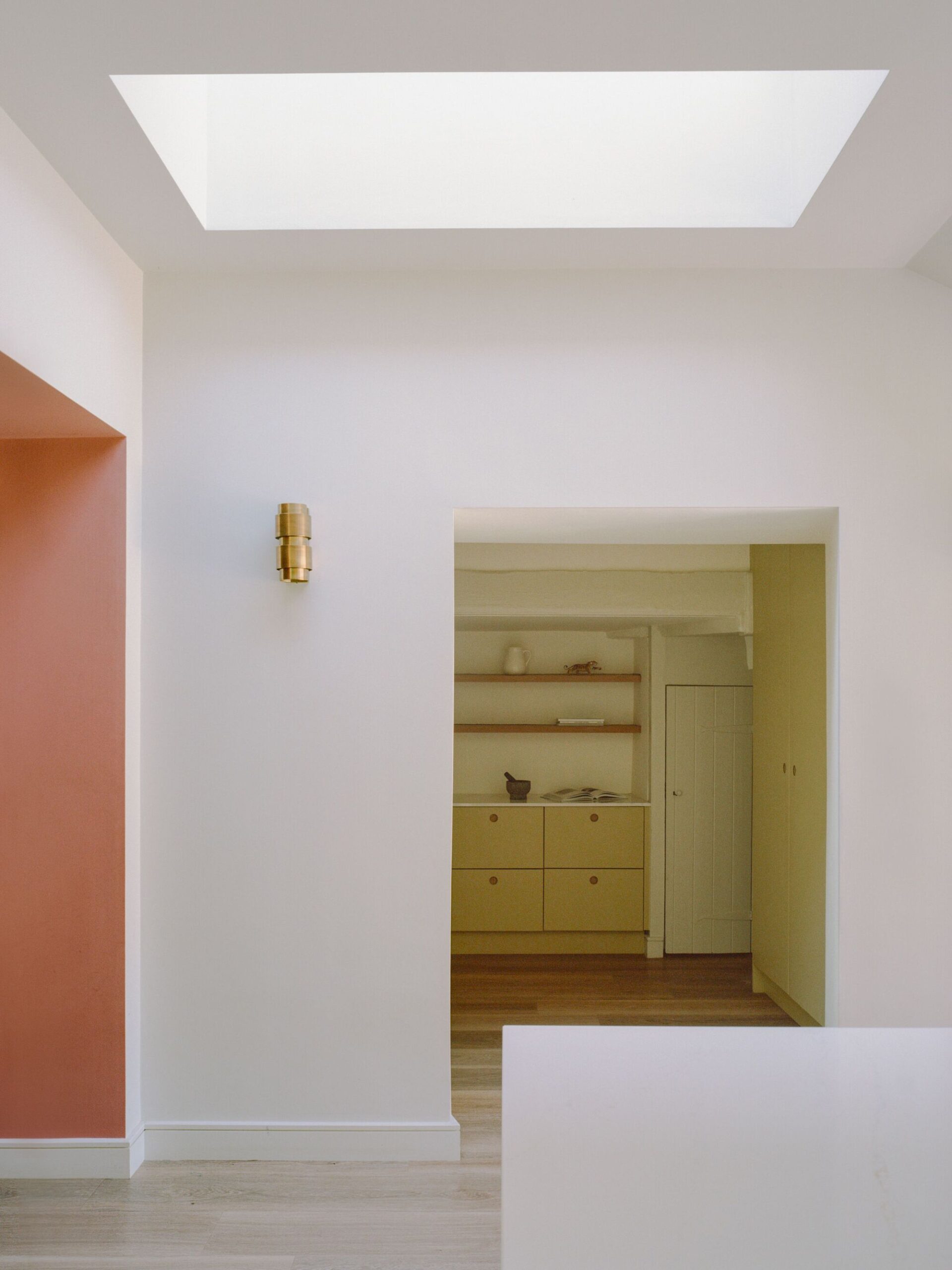
Now relocated to the new rear extension, the kitchen forms the central heart of the home, open, social, and framed by dual-aspect views of the garden and small courtyard. Underfloor heating further adds to the comfort of the space, integrated throughout the ground floor and powered by an air source heat pump, a new and efficient system for heating the house’s water. Given the north-facing orientation of the rear elevation, Pend were conscious to maximize natural light. A large vaulted skylight brings daylight deep into the kitchen, while a wide internal opening allows it to filter through to the adjoining dining room, creating a continuous sense of brightness and spatial flow. A concealed door, designed to blend into the kitchen joinery, leads into the service rooms, including a laundry and boot room, which form a practical threshold between the main house and the annex, now used as an Airbnb rental.
© Lorenzo Zandri6
Pend approached the project holistically, taking time to understand the family’s routines. Though no longer a working farm, the household, complete with three young children and several dogs, has daily comings and goings from both the front and back of the house. Observing how the family actually used the home directly informed the placement of external openings and built-in storage, preventing muddy boots and sports equipment from traveling through the main living areas. As with all historic properties, Pend approached the project with sensitivity and care, crafting a thoughtful and well-reasoned case for planning approval. Pend skillfully demonstrated how the new extension would not only enhance the home’s functionality but also contribute meaningfully to its ongoing legacy. The extension is both contemporary and contextually grounded, something original and new, yet deeply connected to what came before.
© Lorenzo Zandri7
Ben MacFarlane, Associate, Pend Architects, said: “Whitberry presented an opportunity for us to become the latest part of an ongoing story of a special building. We began by analyzing what it was that gave the existing property so much character and charm, to enable us to learn how to preserve and enhance this through our own interventions. We were strongly convinced that our designs, like the extensions before them, should be contemporary and reflective of the construction technologies available at their time. With trusting and supportive clients, we pushed the boundaries of what could be achieved and created a playful and contextually appropriate solution for the rear elevation, which sat comfortably alongside its predecessors and facilitated a modern family lifestyle.”
Project Info
Architects: Pend Architects
Country: United Kingdom, Tyninghame
Area: 408 m²
Year: 2024
Photographs: Lorenzo Zandri
Area Annex: 70 m2
Kitchen Design: Archispek