

Viver Quartier Residential Complex is located in a neighborhood designed by the office of architect Jaime Lerner in an urban void in the city of Pelotas, Rio Grande do Sul. The design anticipated the expansion of the urban layout with the creation of high-quality public spaces and a linear park that runs along a conservation area situated along one of the neighborhood’s boundaries. According to the office, the project’s intention was to promote the use of public space by incorporating into its limits all the uses and activities that characterize urban ambiance.
© Lucas Daneris
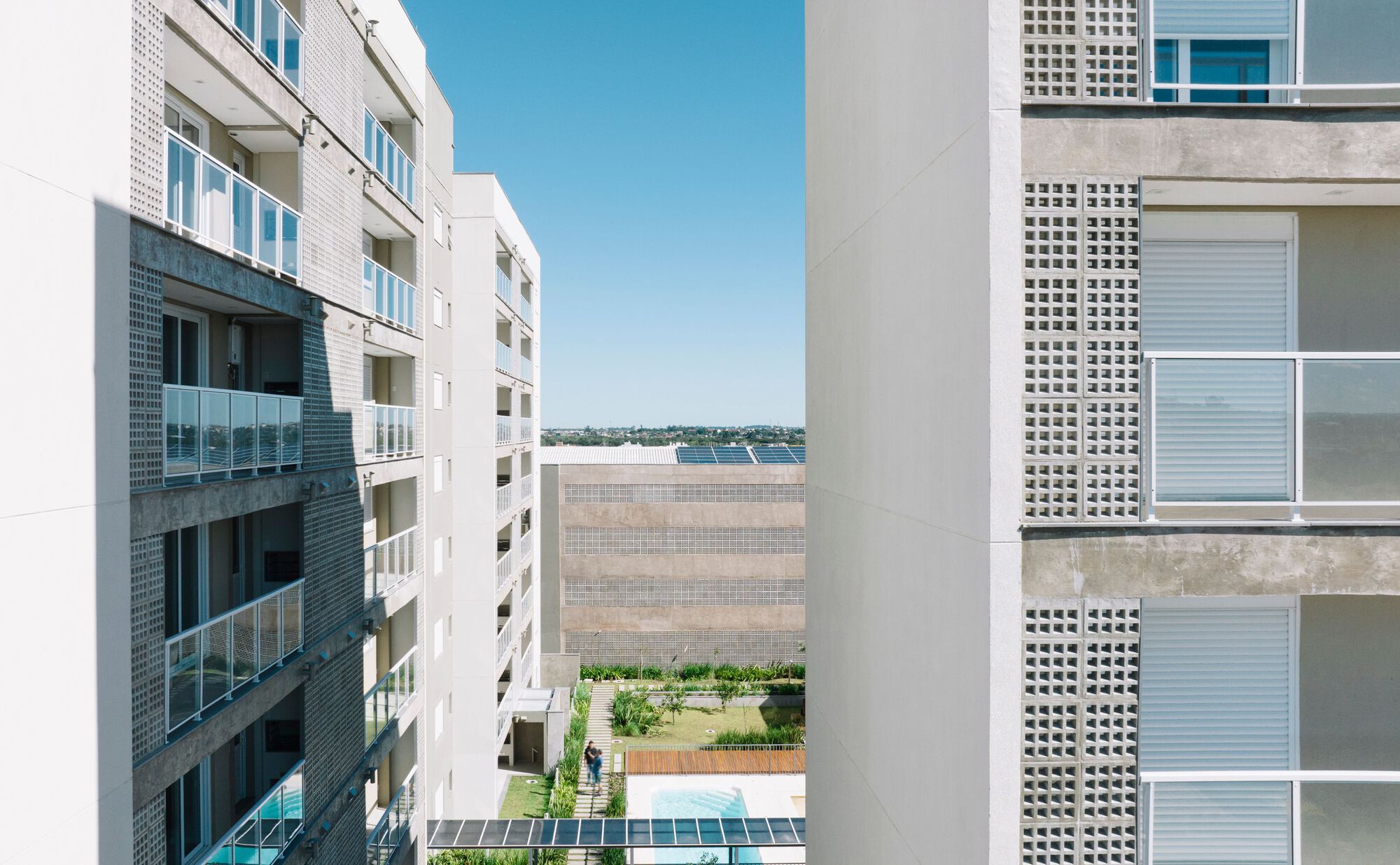
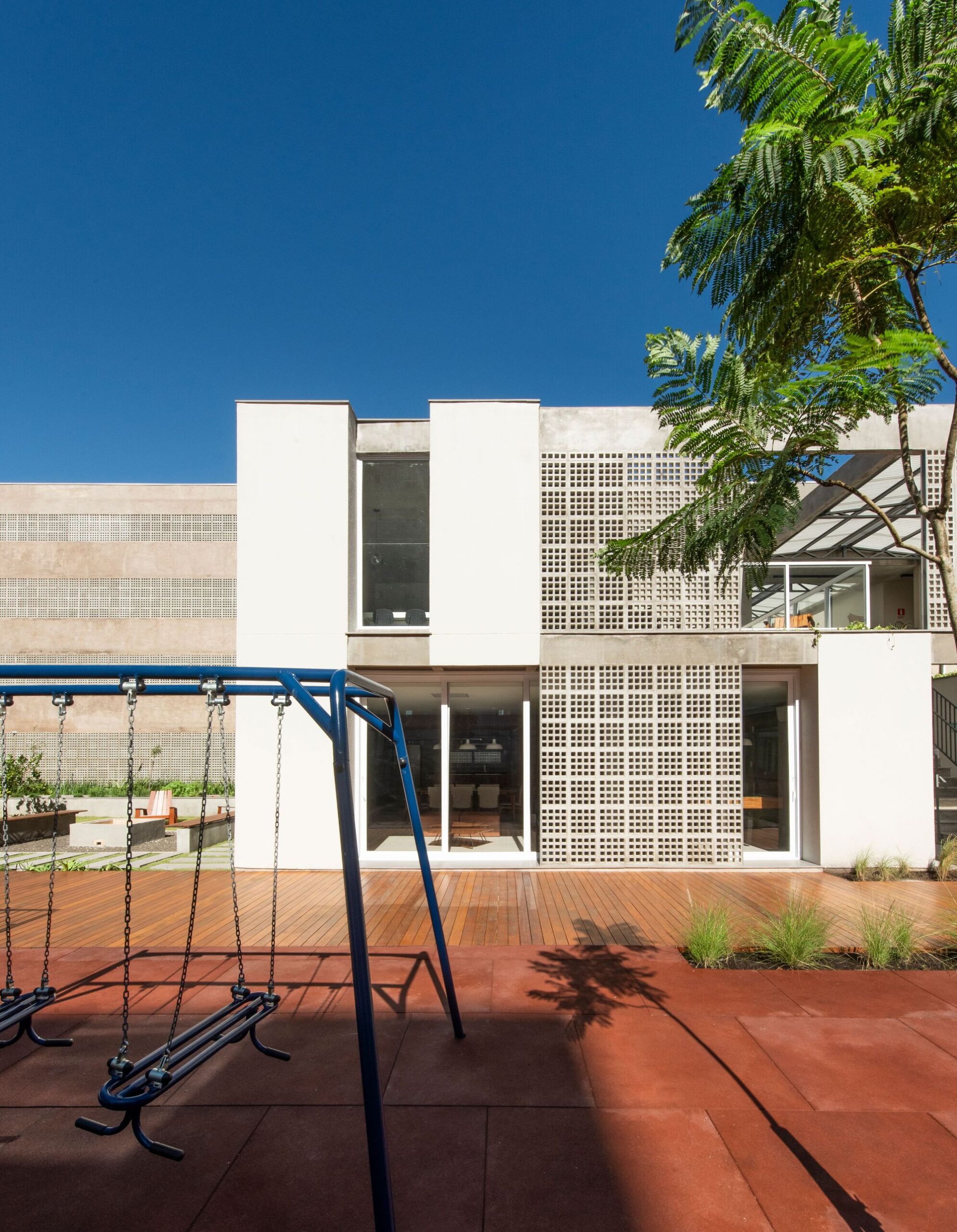
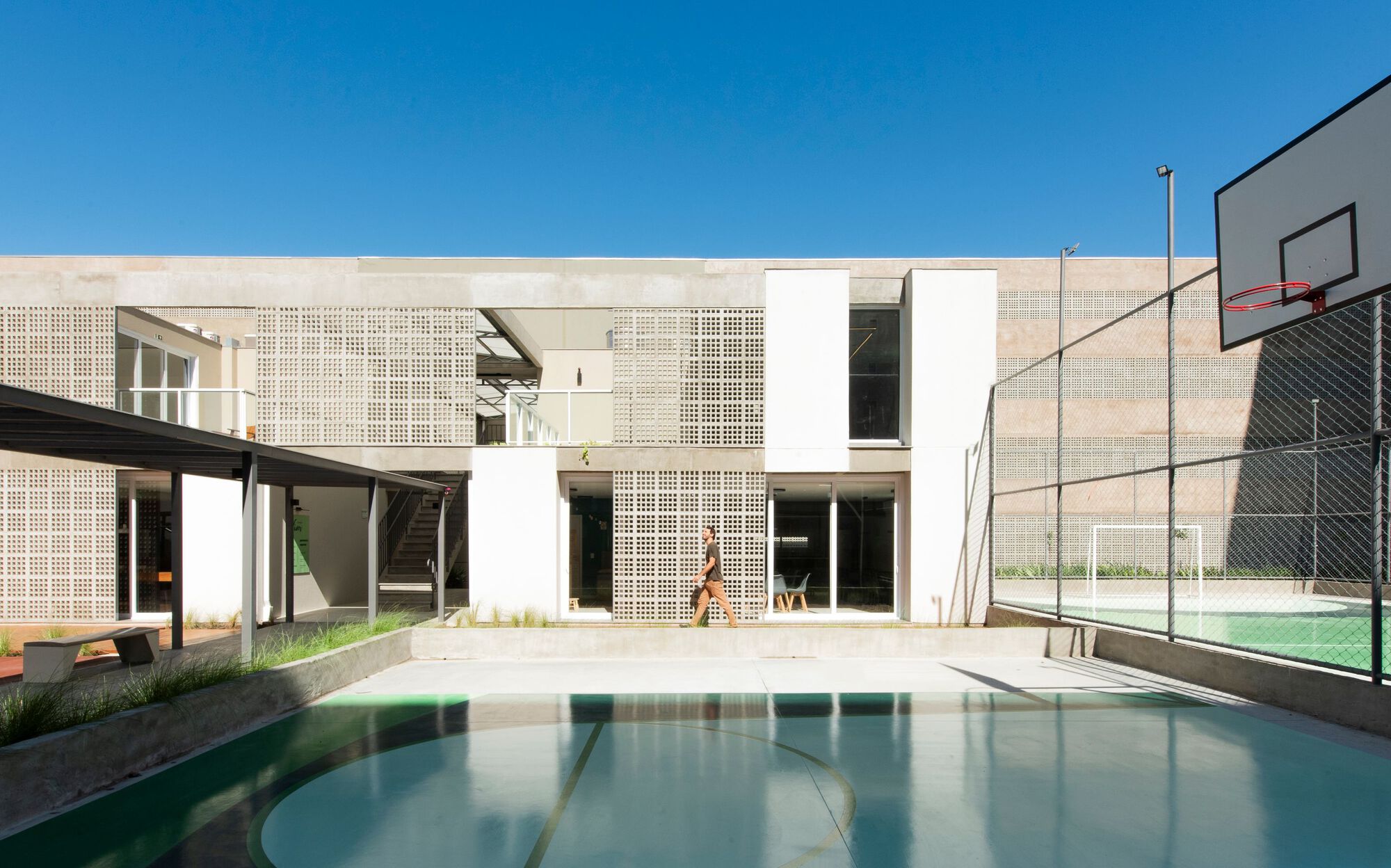
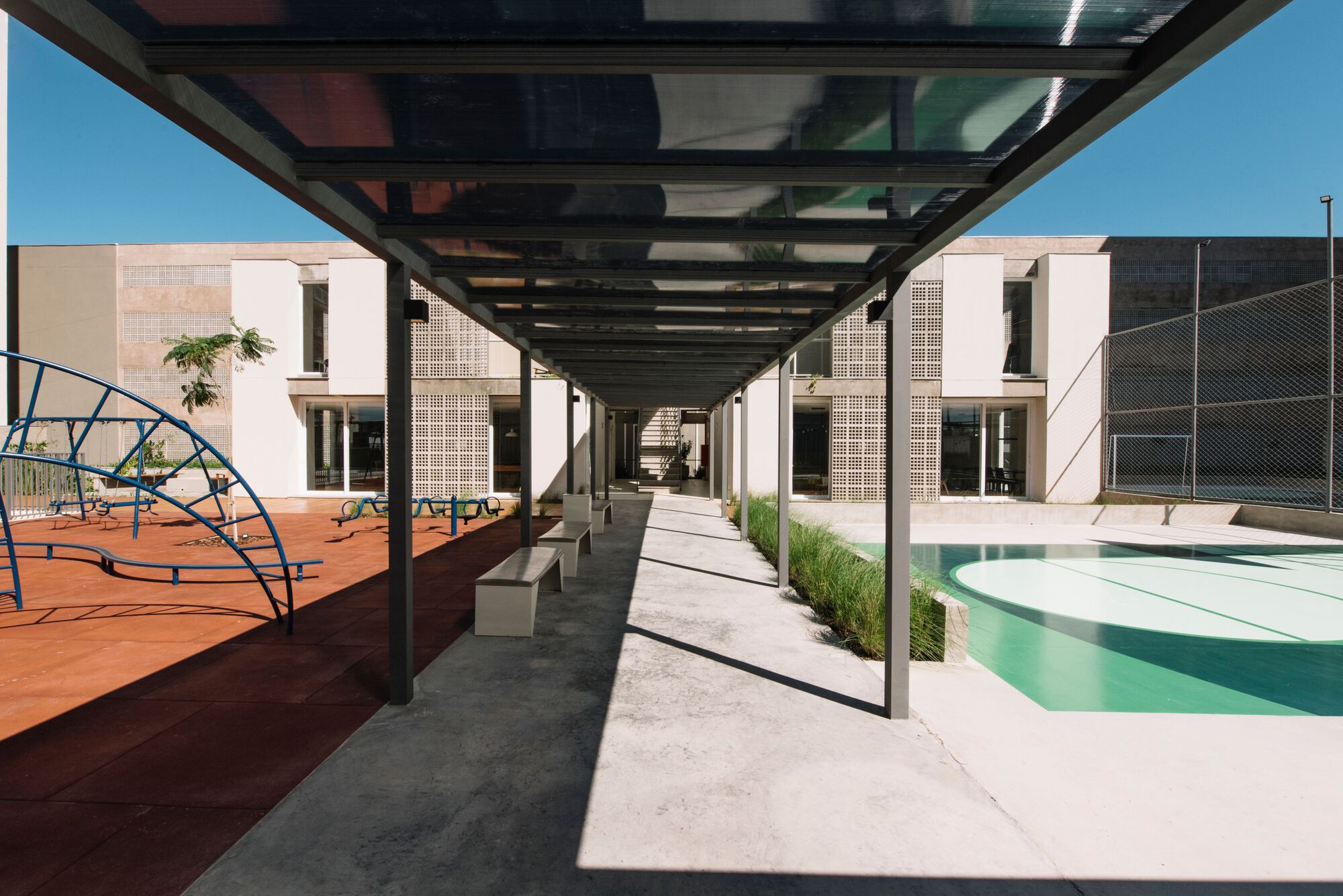
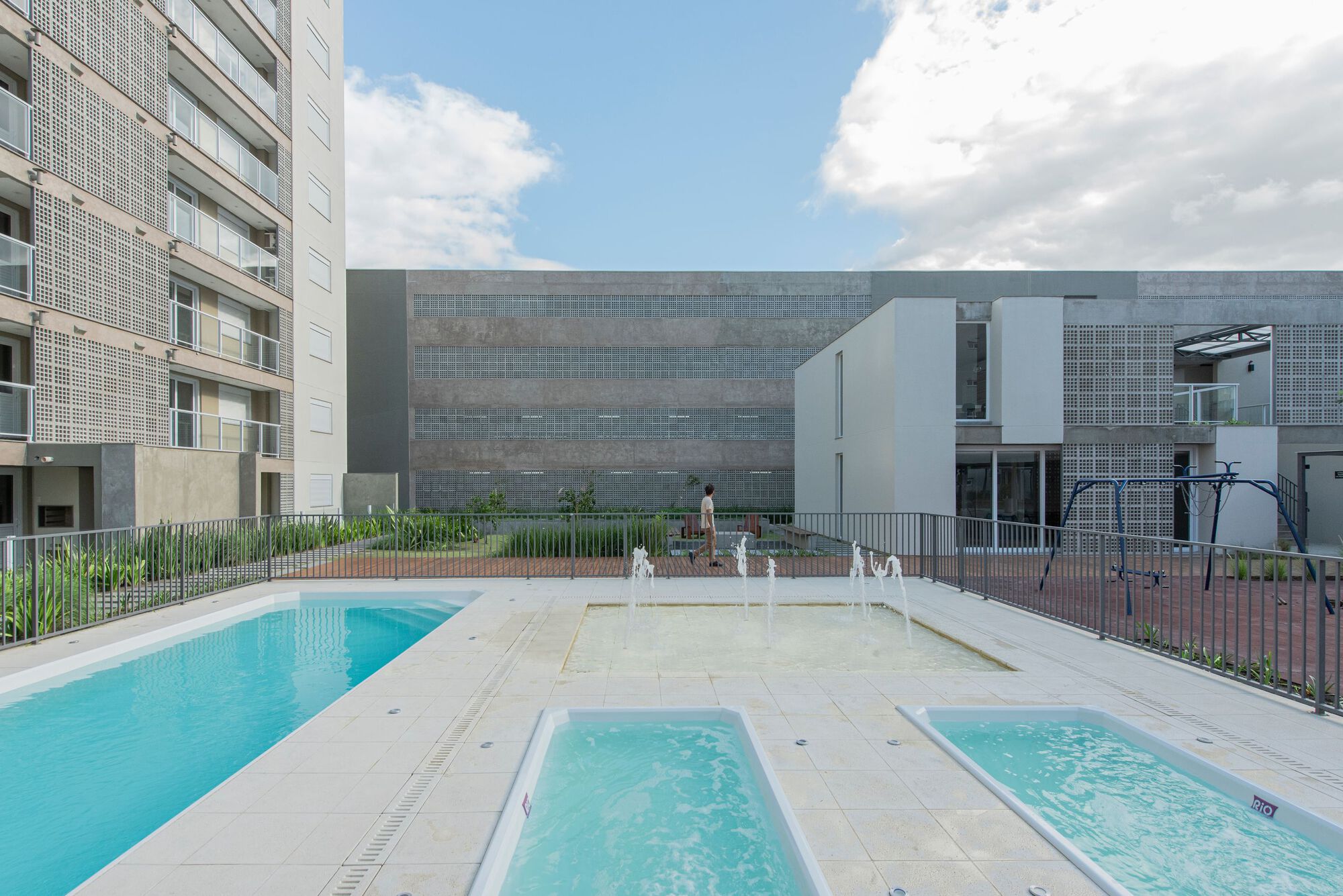
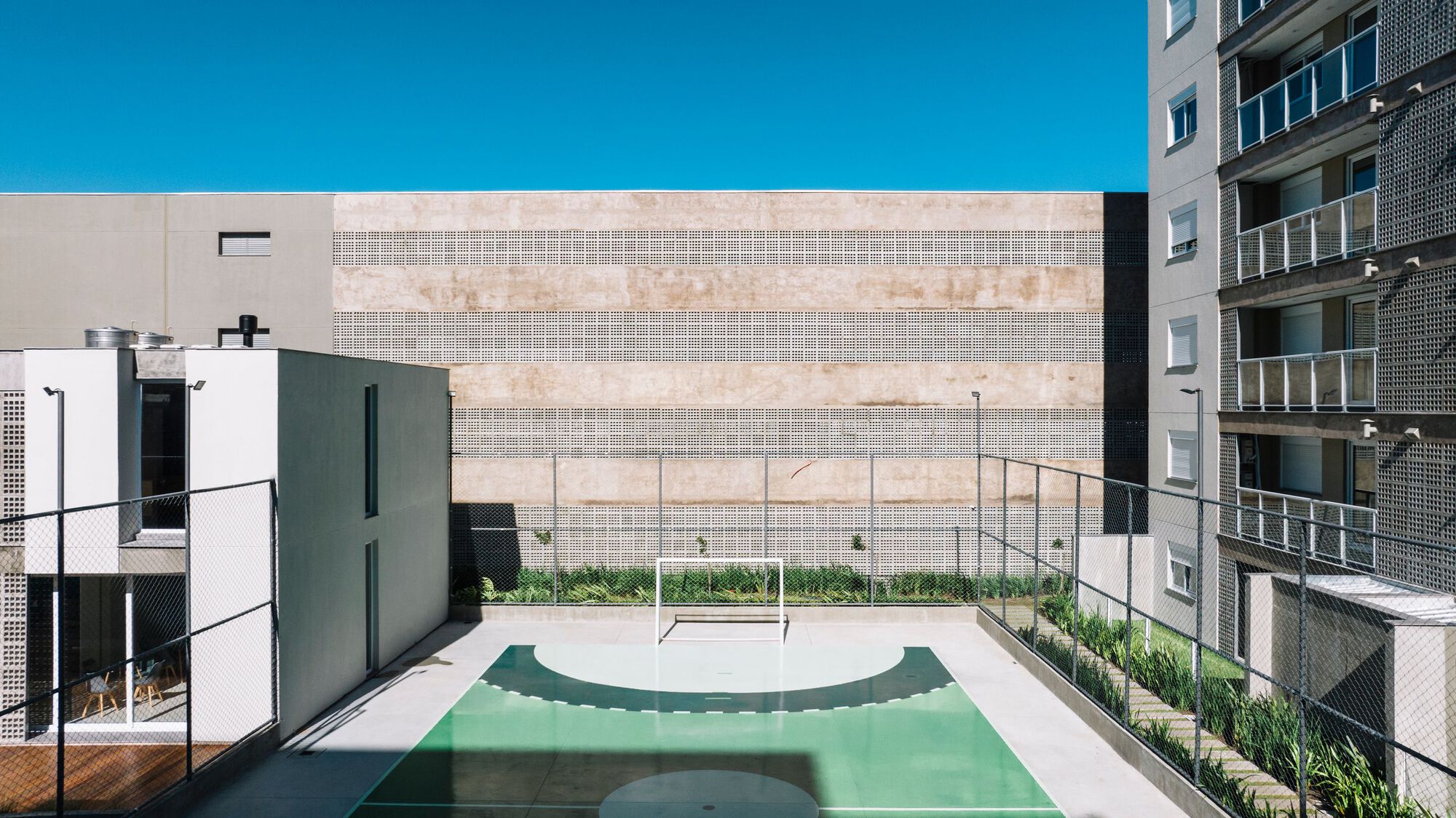
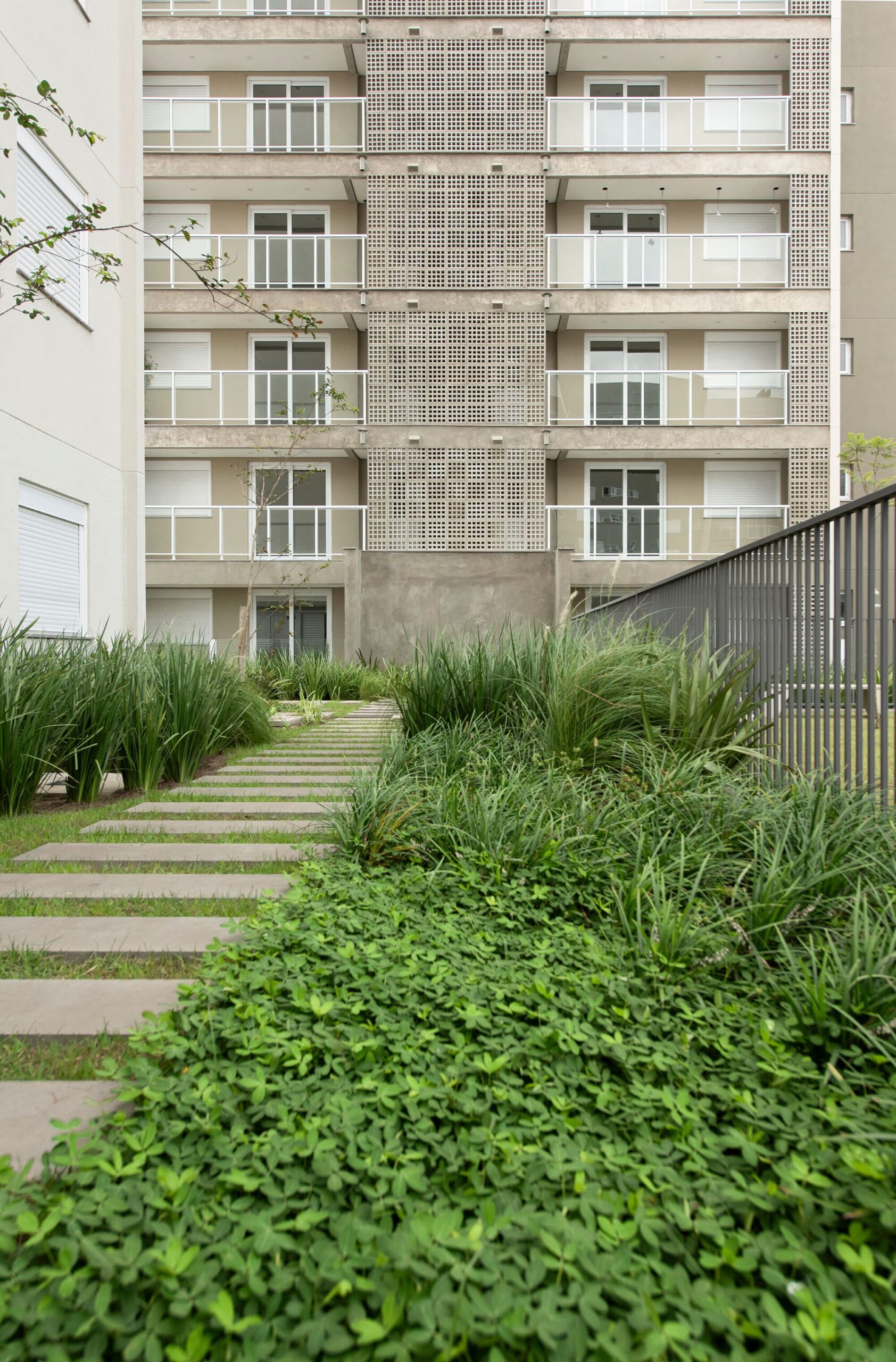
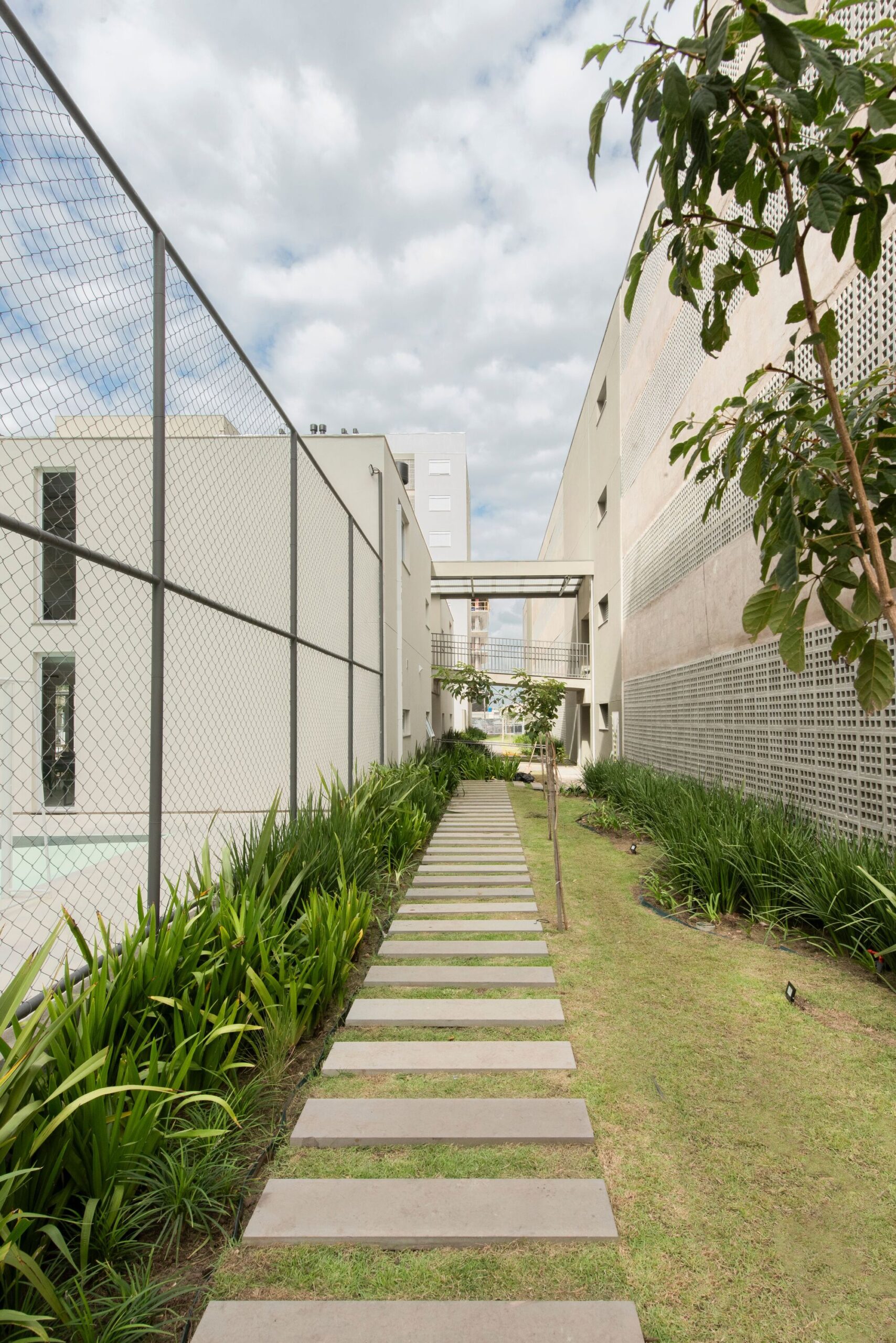
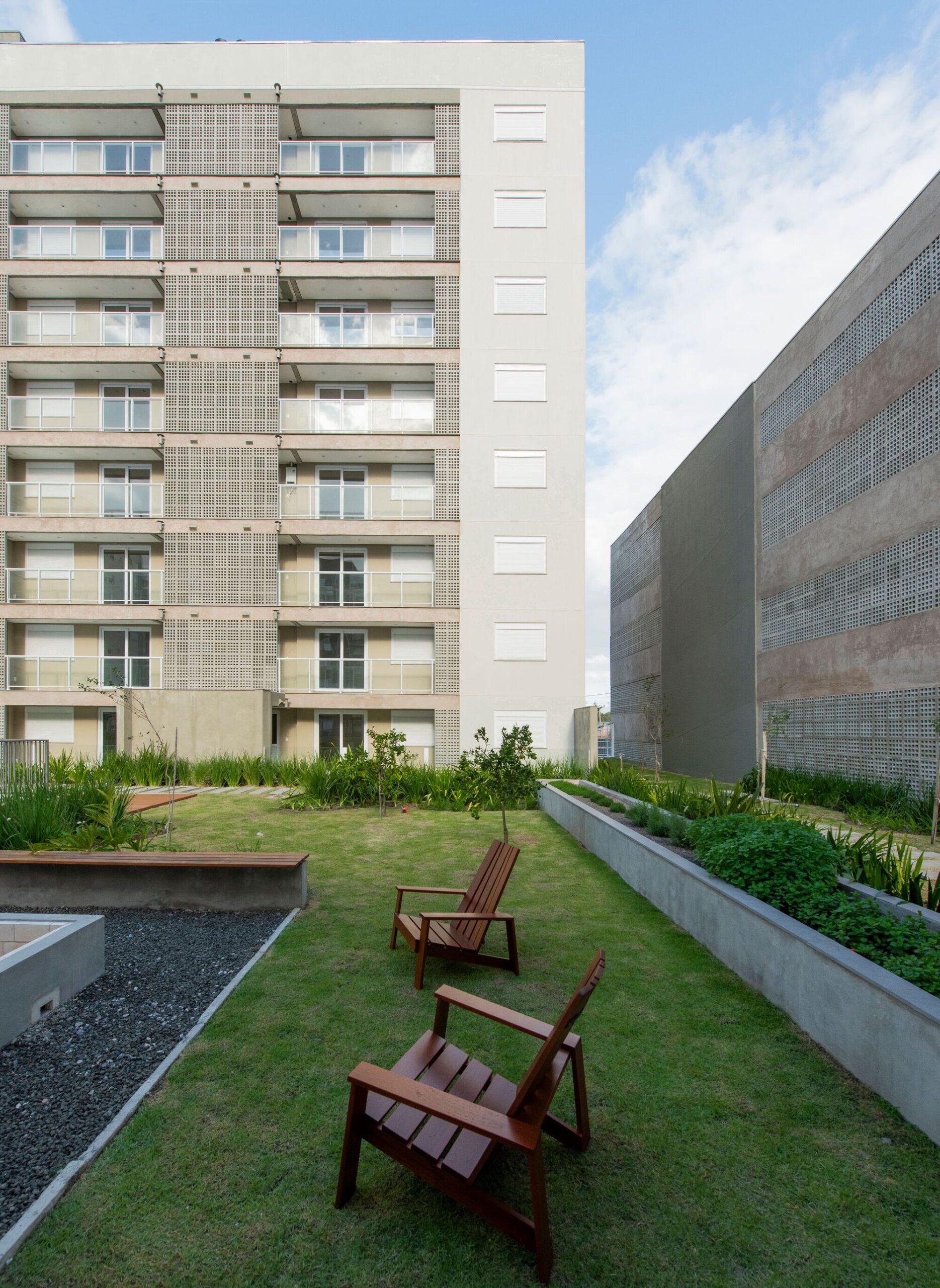
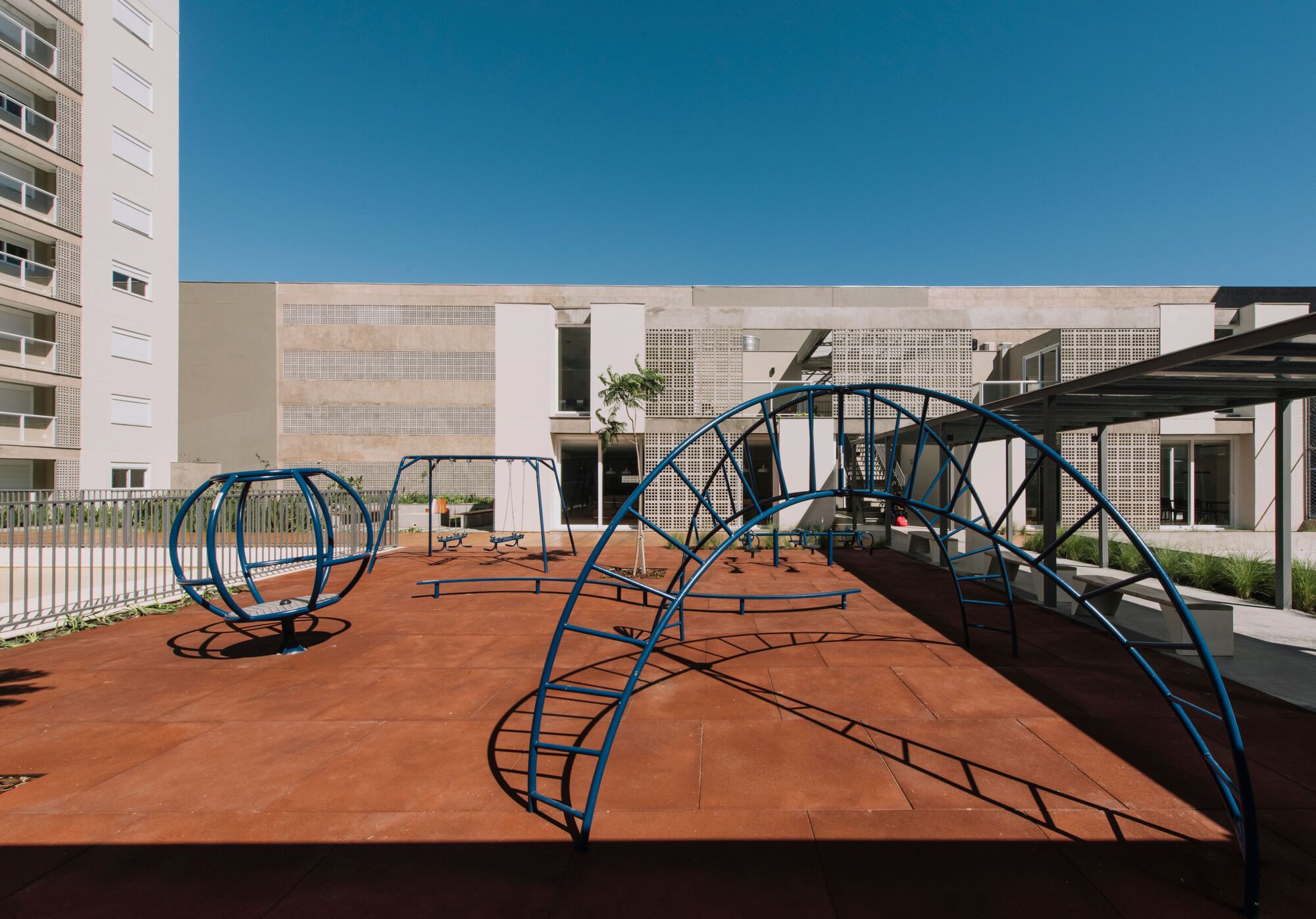
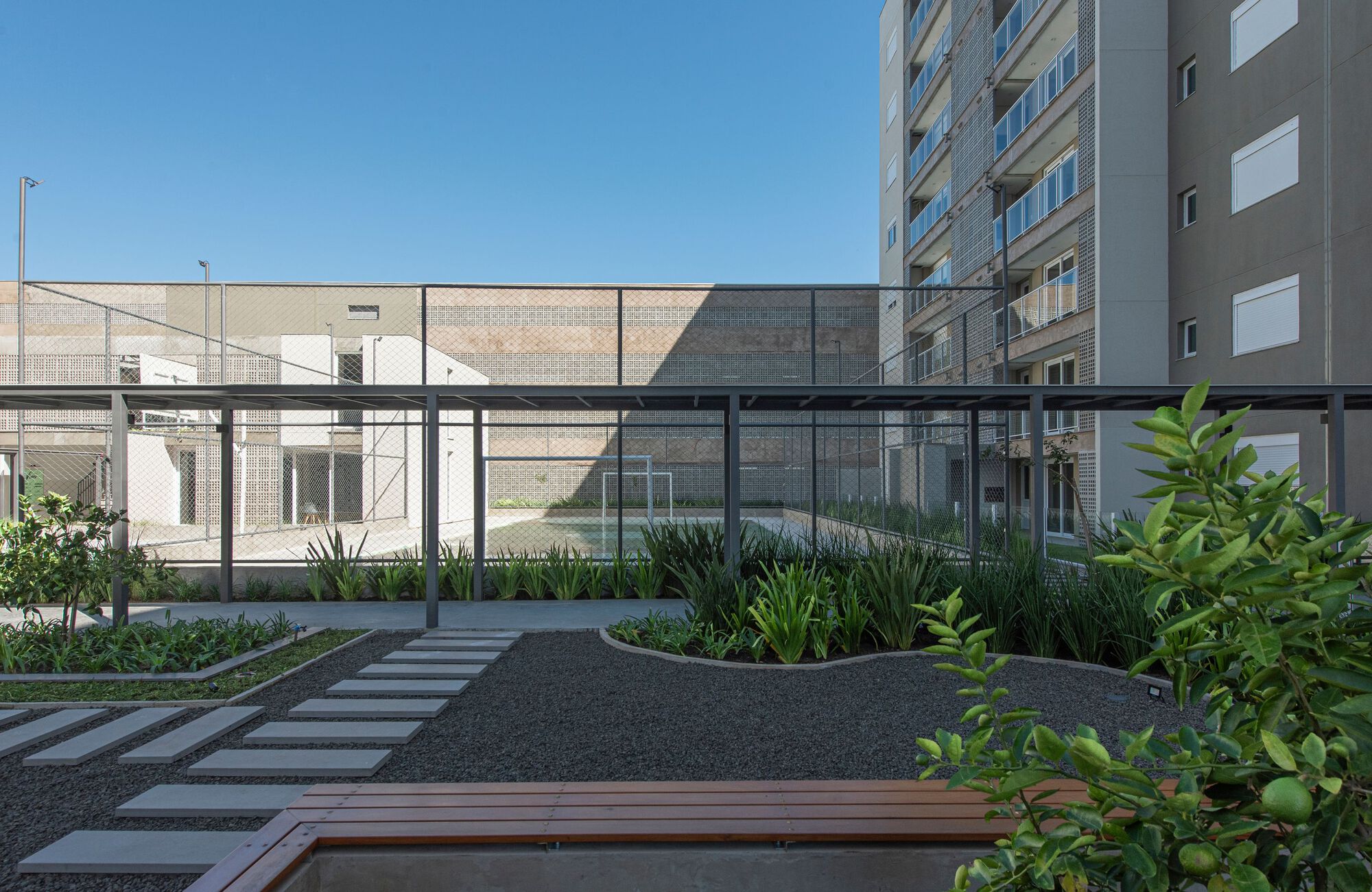
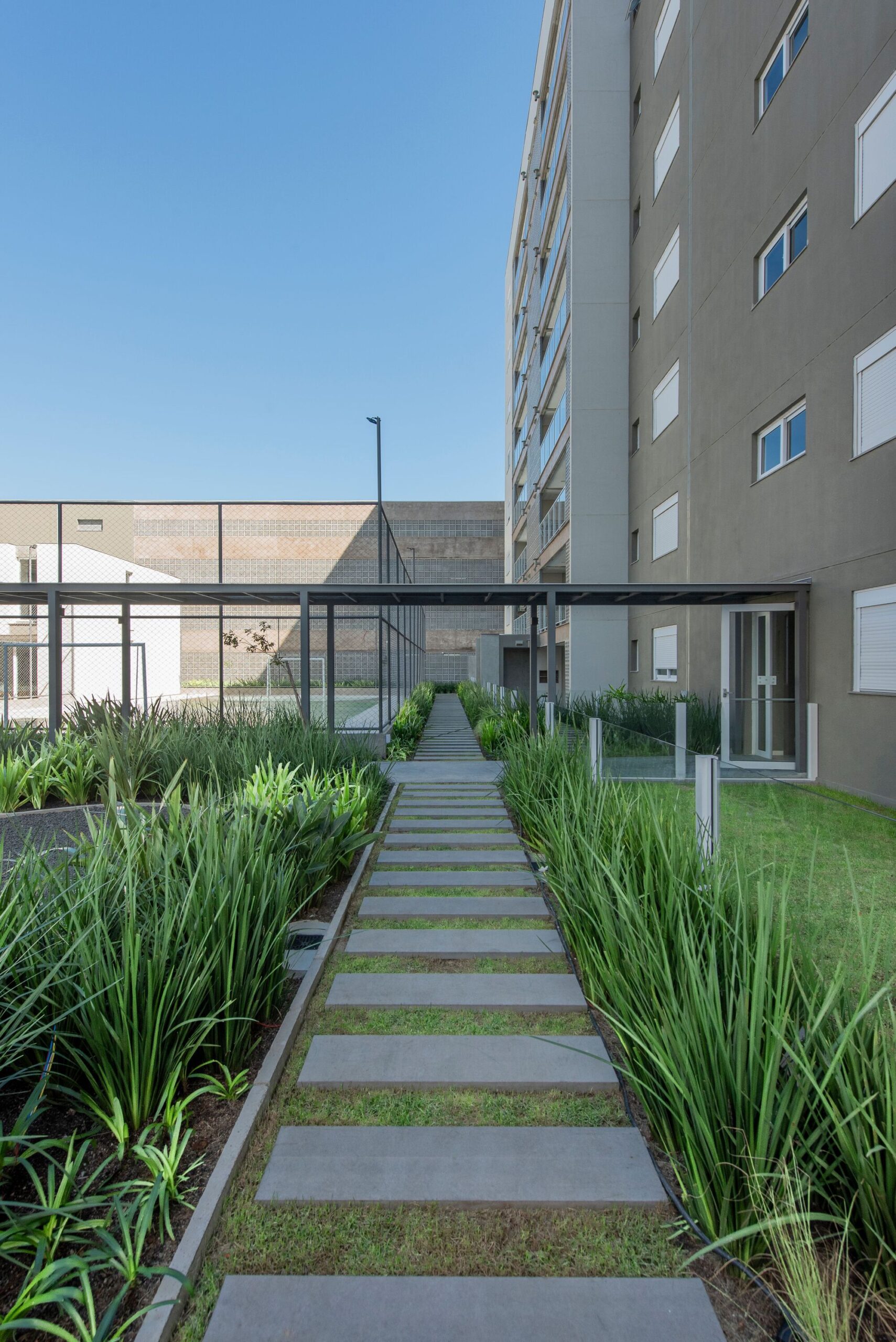
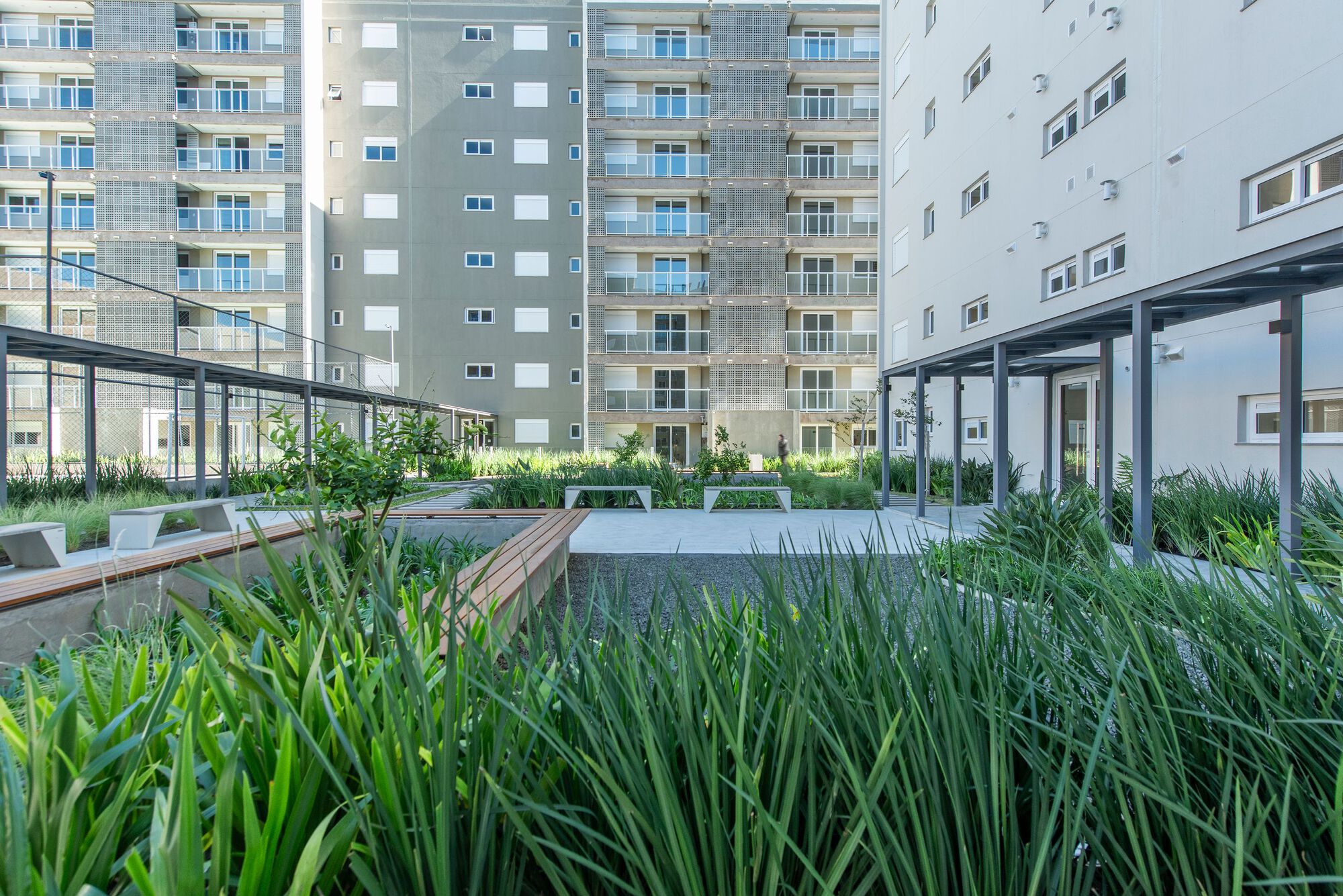
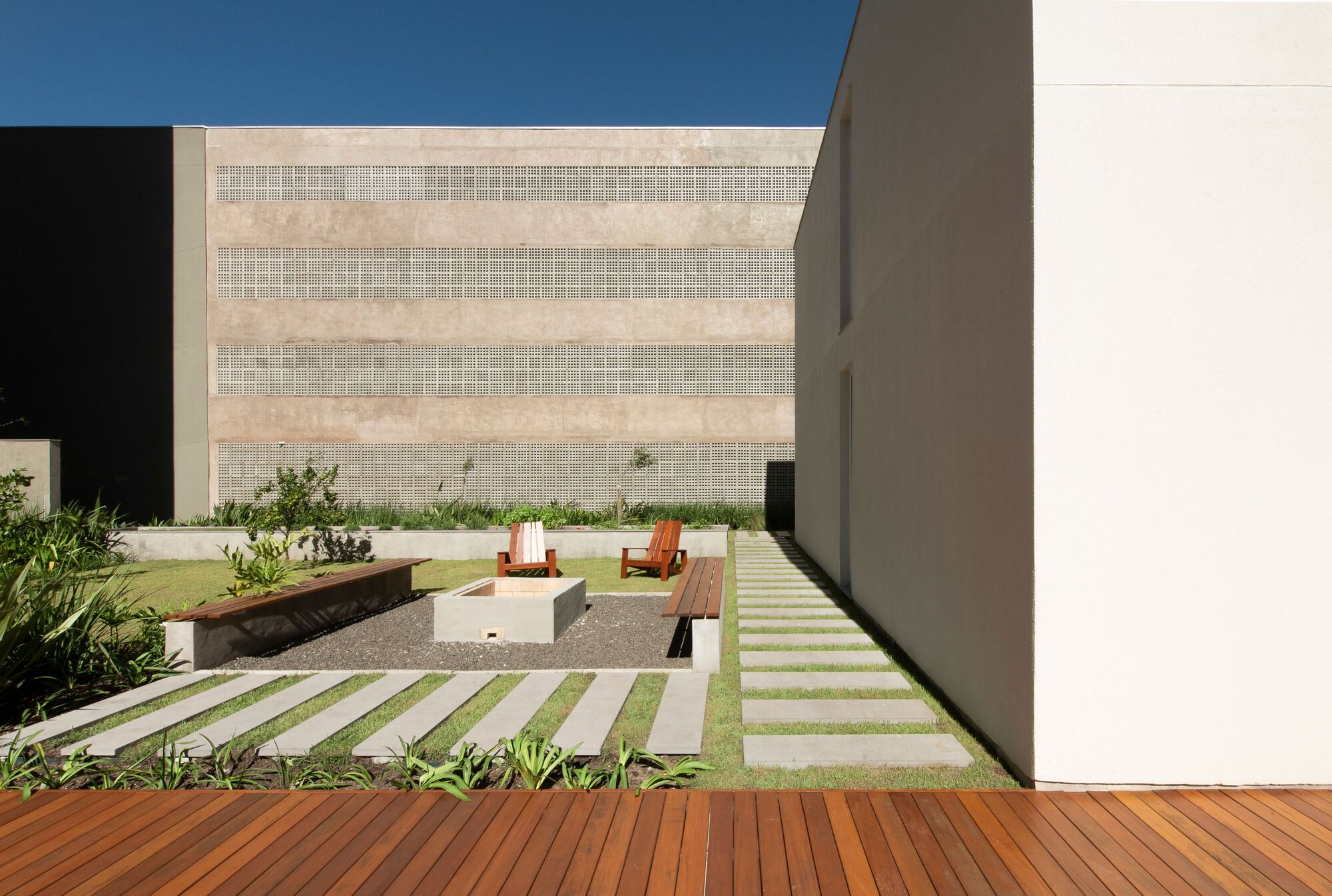
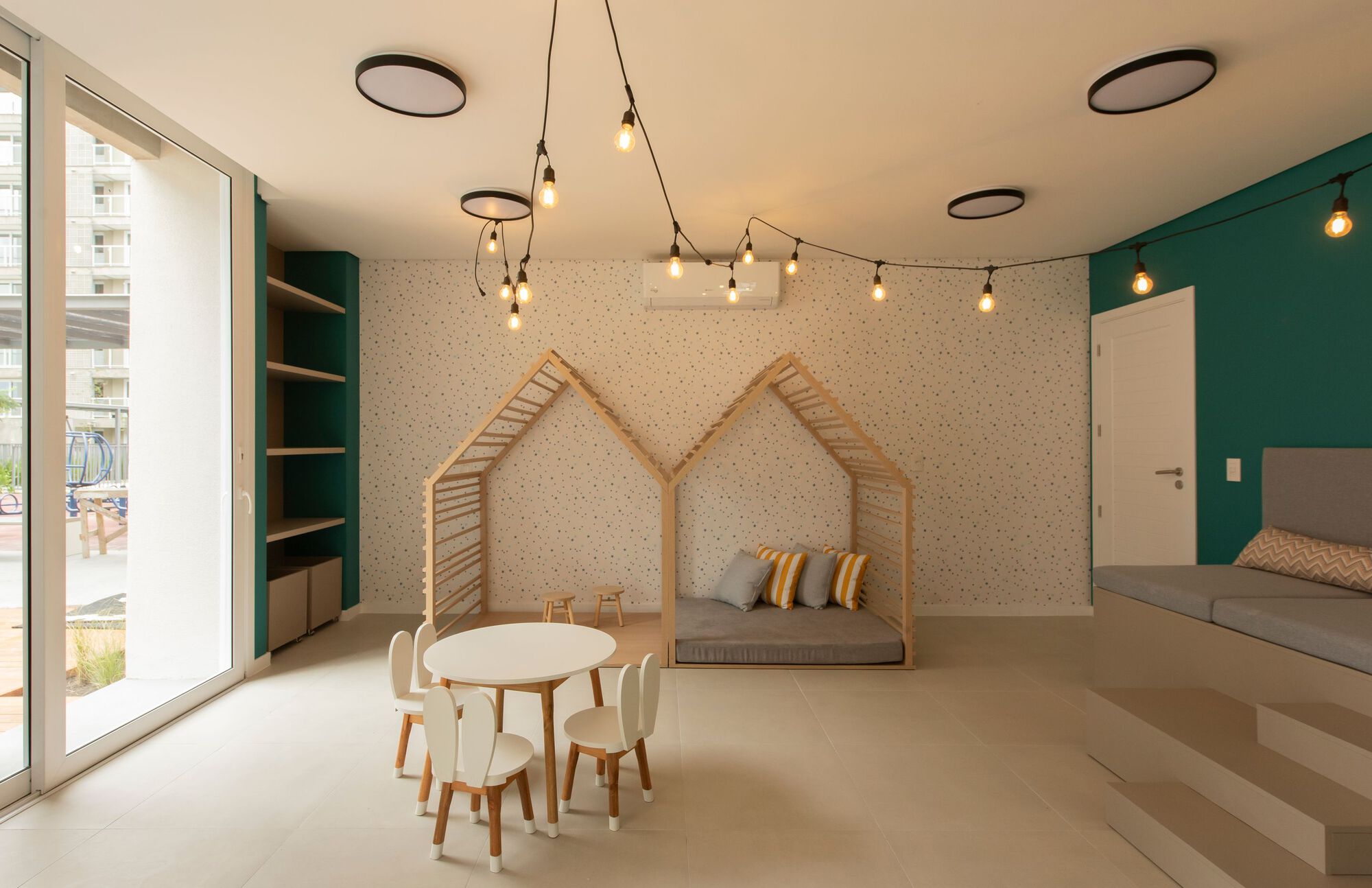
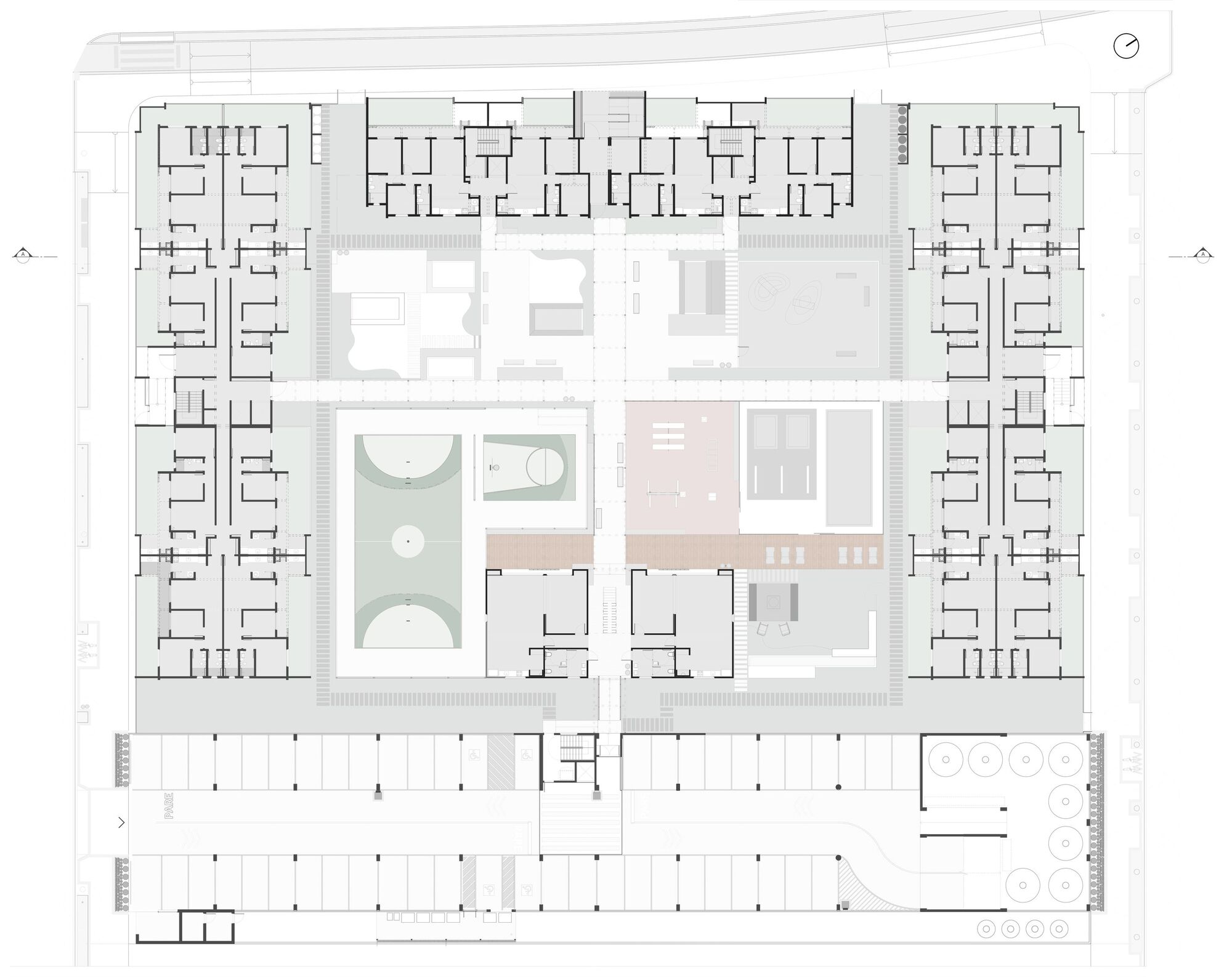
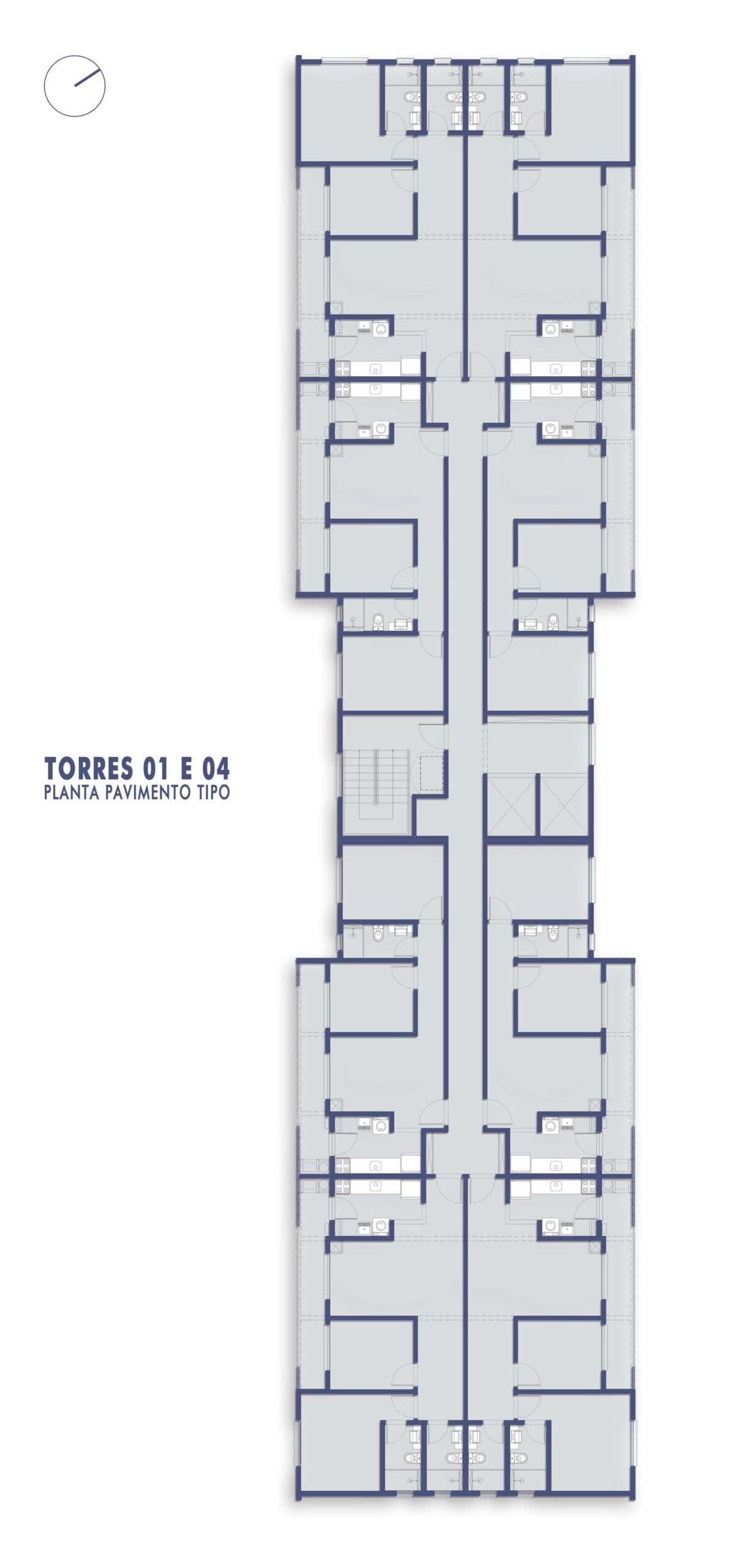
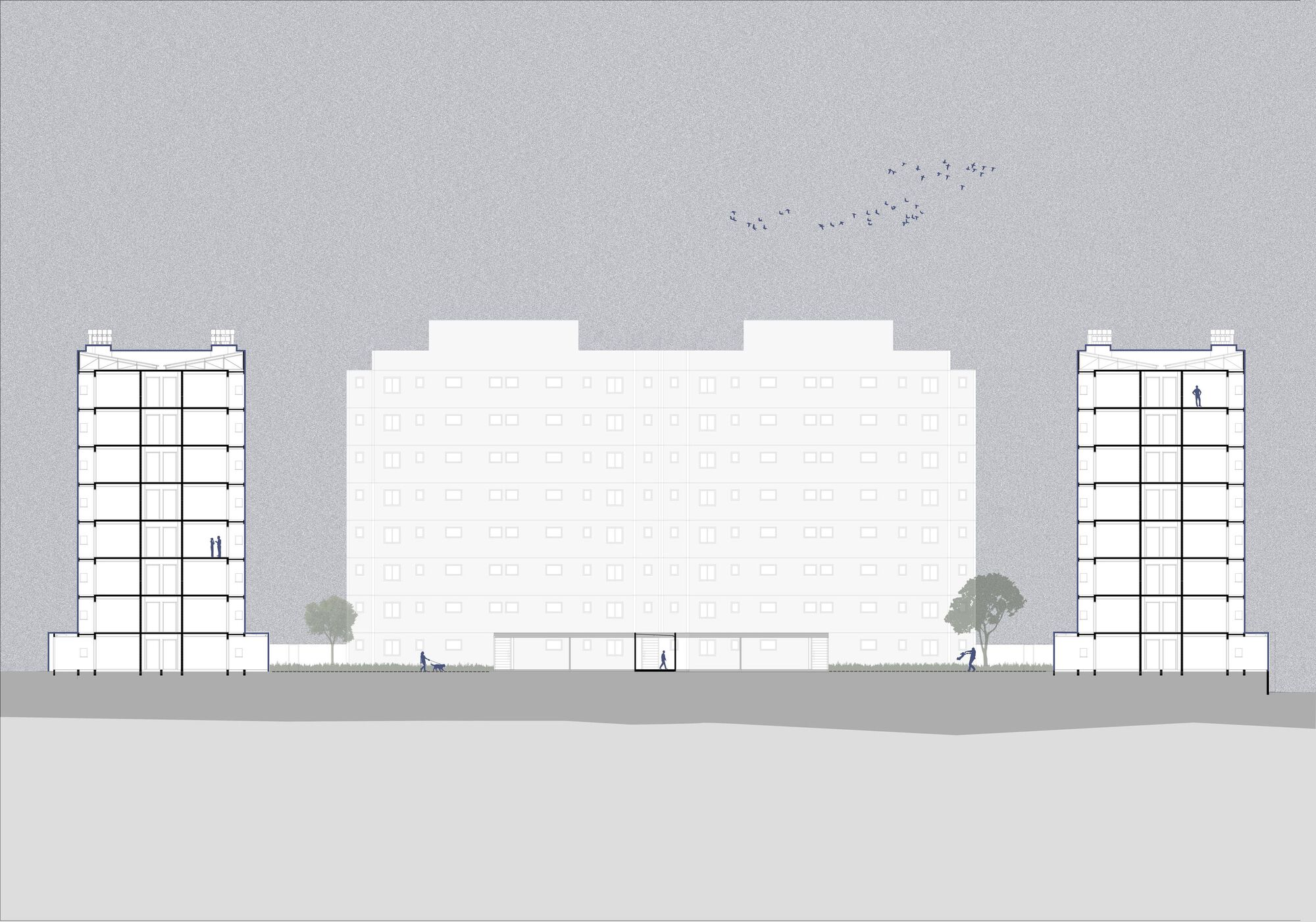
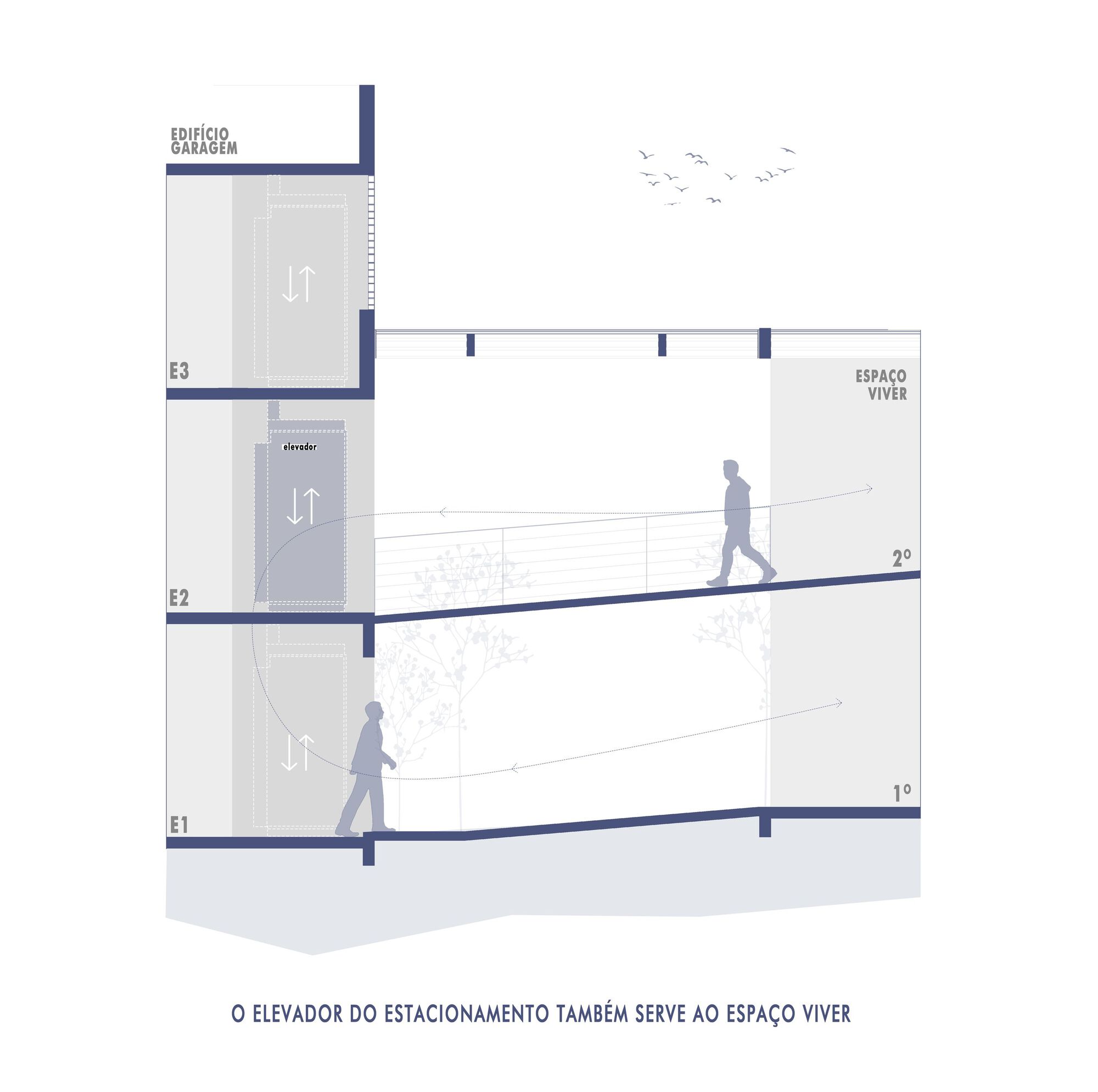
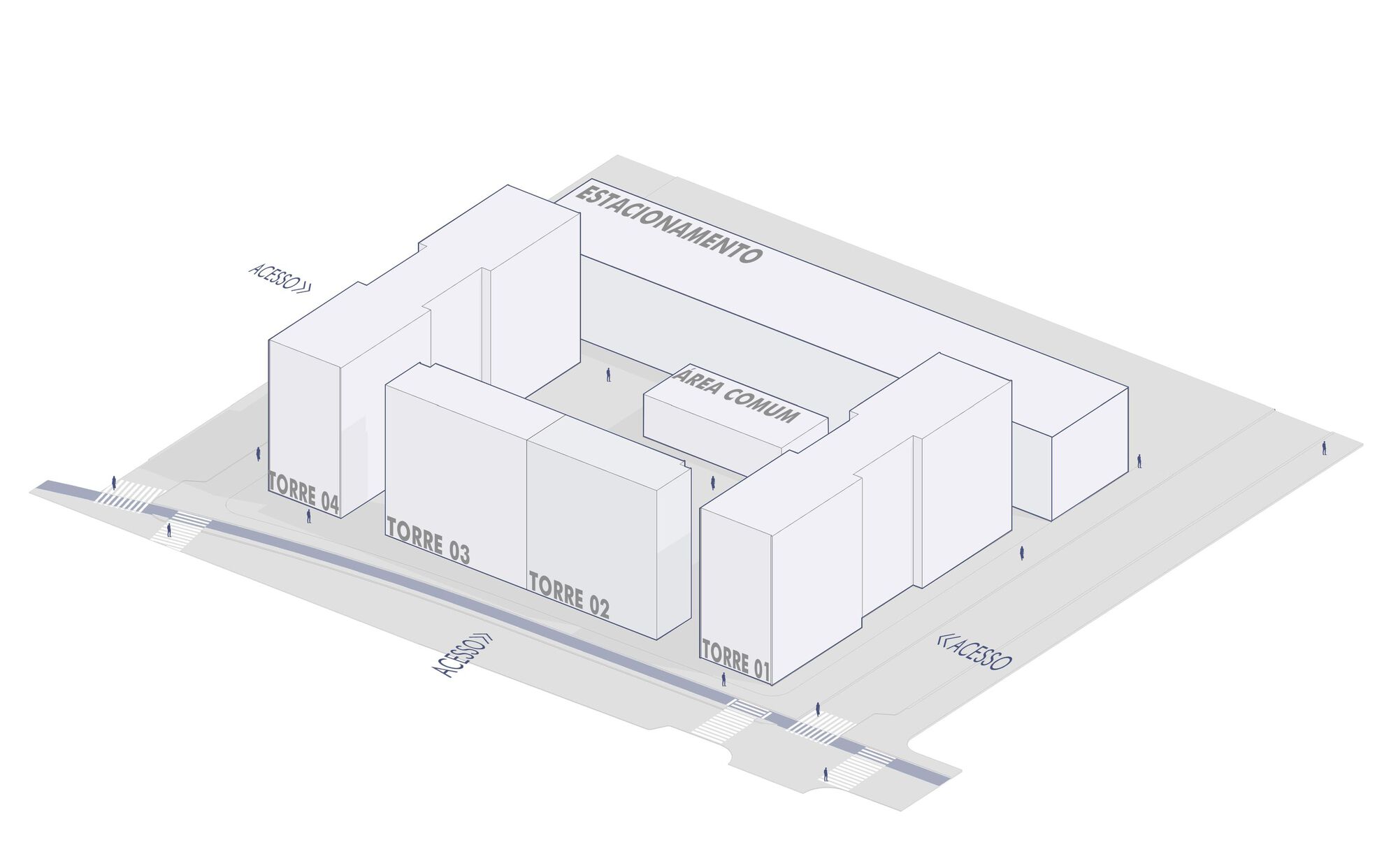
Situated on a lot of approximately 7,000 square meters bordered by three different streets, the project’s design took advantage of the neighborhood’s exemption from front and side setbacks. The apartment blocks were arranged peripherally, close to the building line, creating a central space where circulation is organized along two axes. These axes, in addition to defining the pathways between the blocks and the common use area, divide the central space into four sections. Near the main entrance, there are landscaped areas and spaces for passive leisure, while the other two sections focus on active leisure activities, such as sports courts, a playground, and swimming pools.
© Lucas Daneris
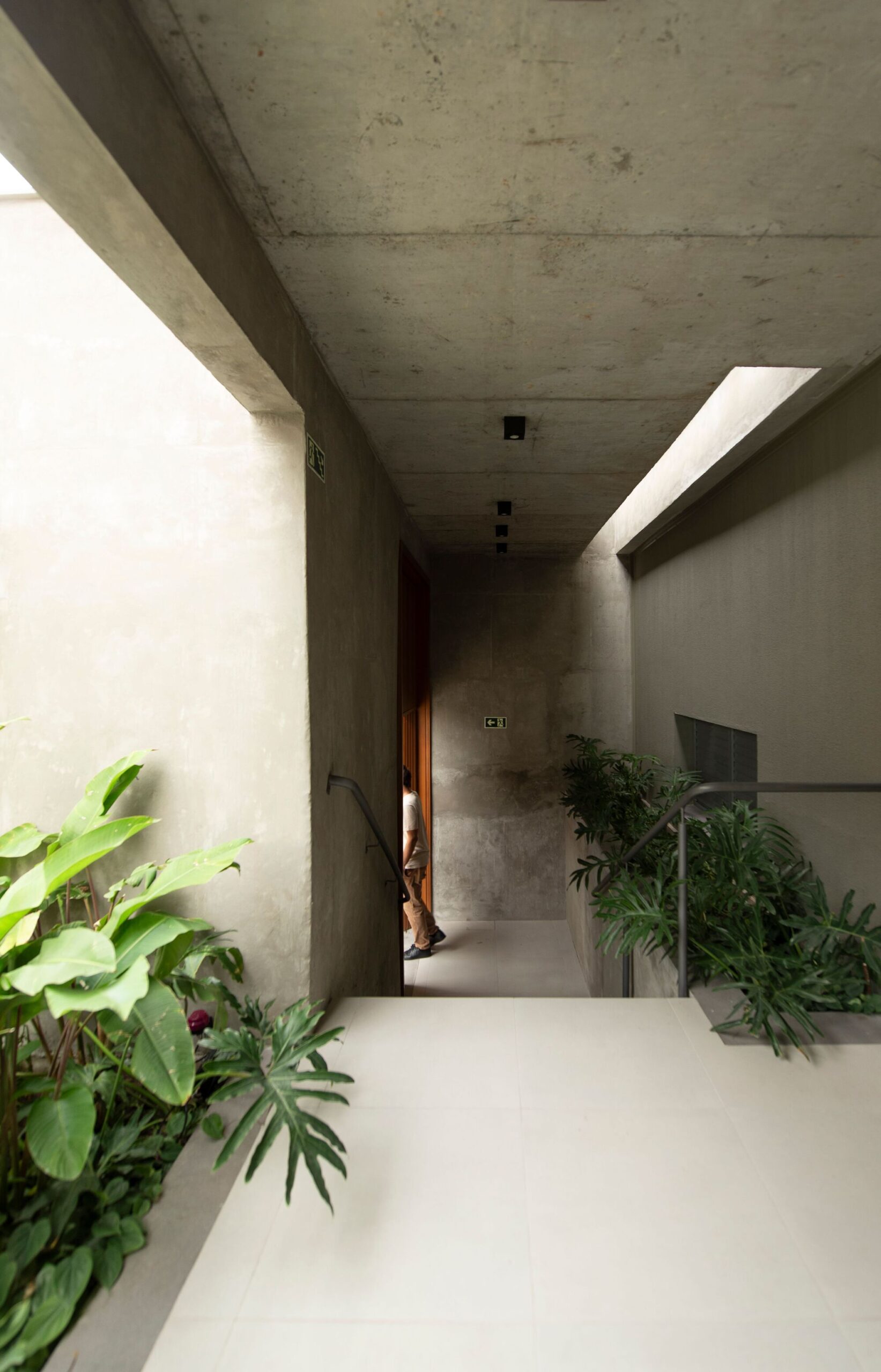
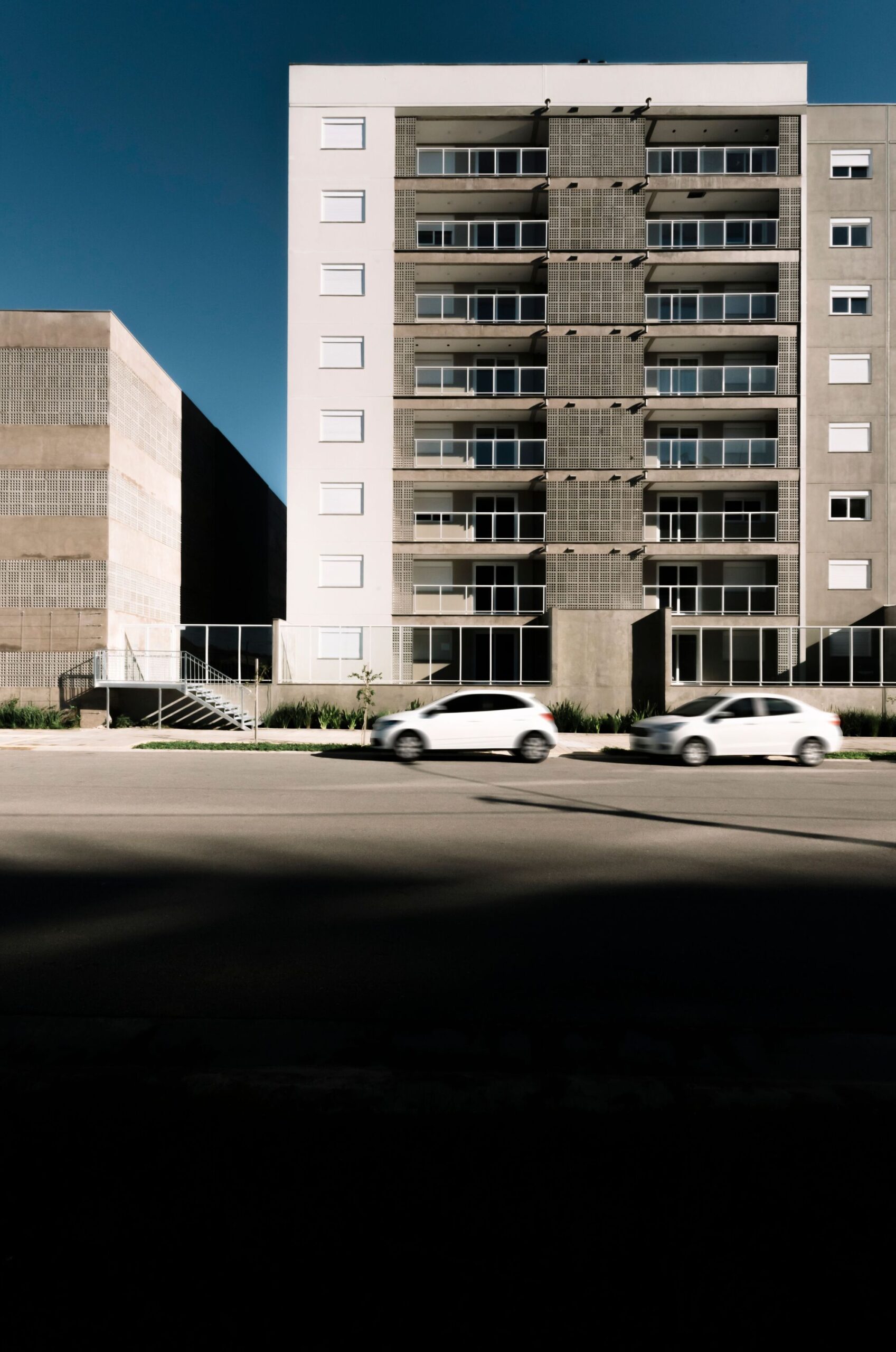
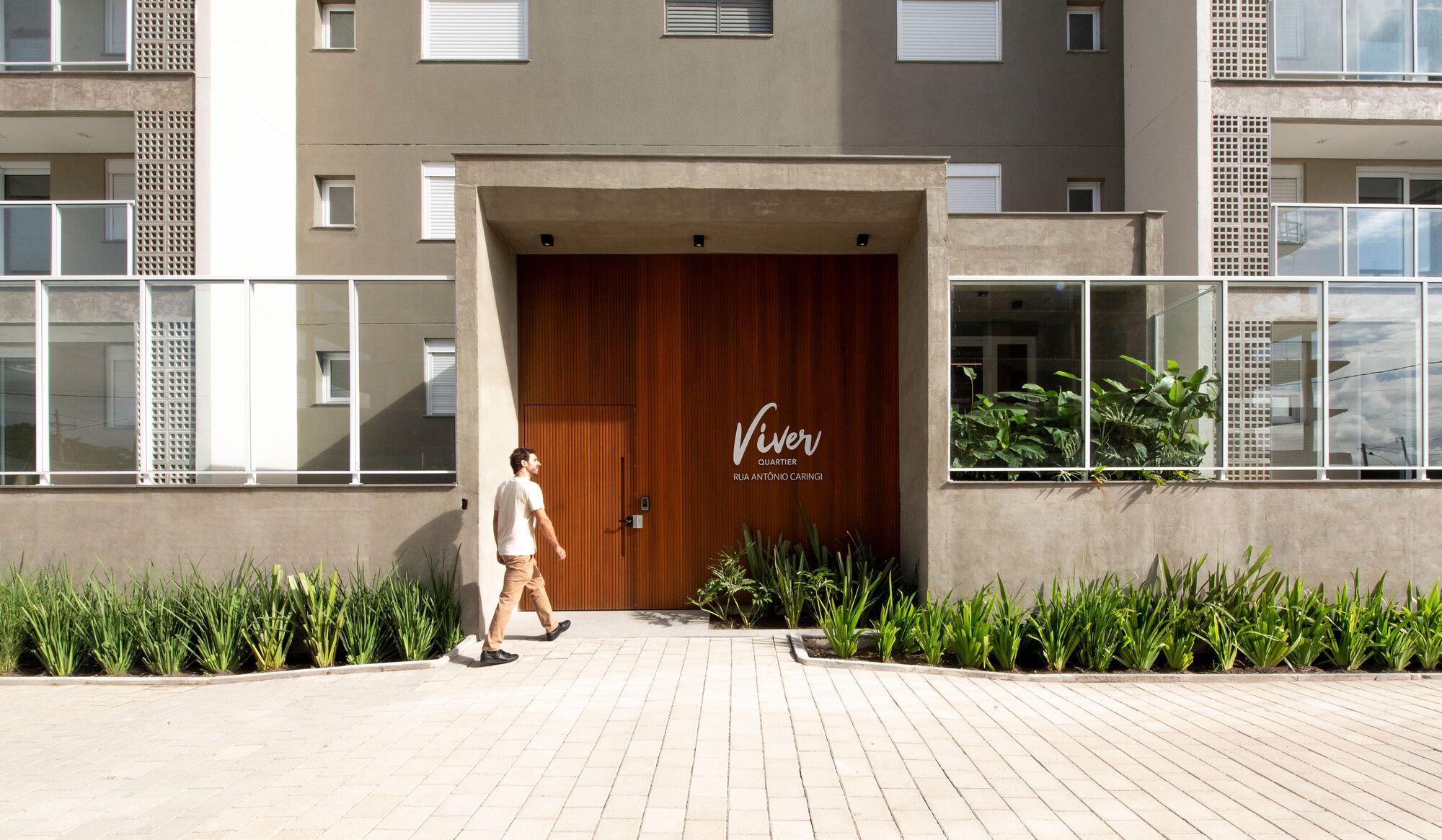
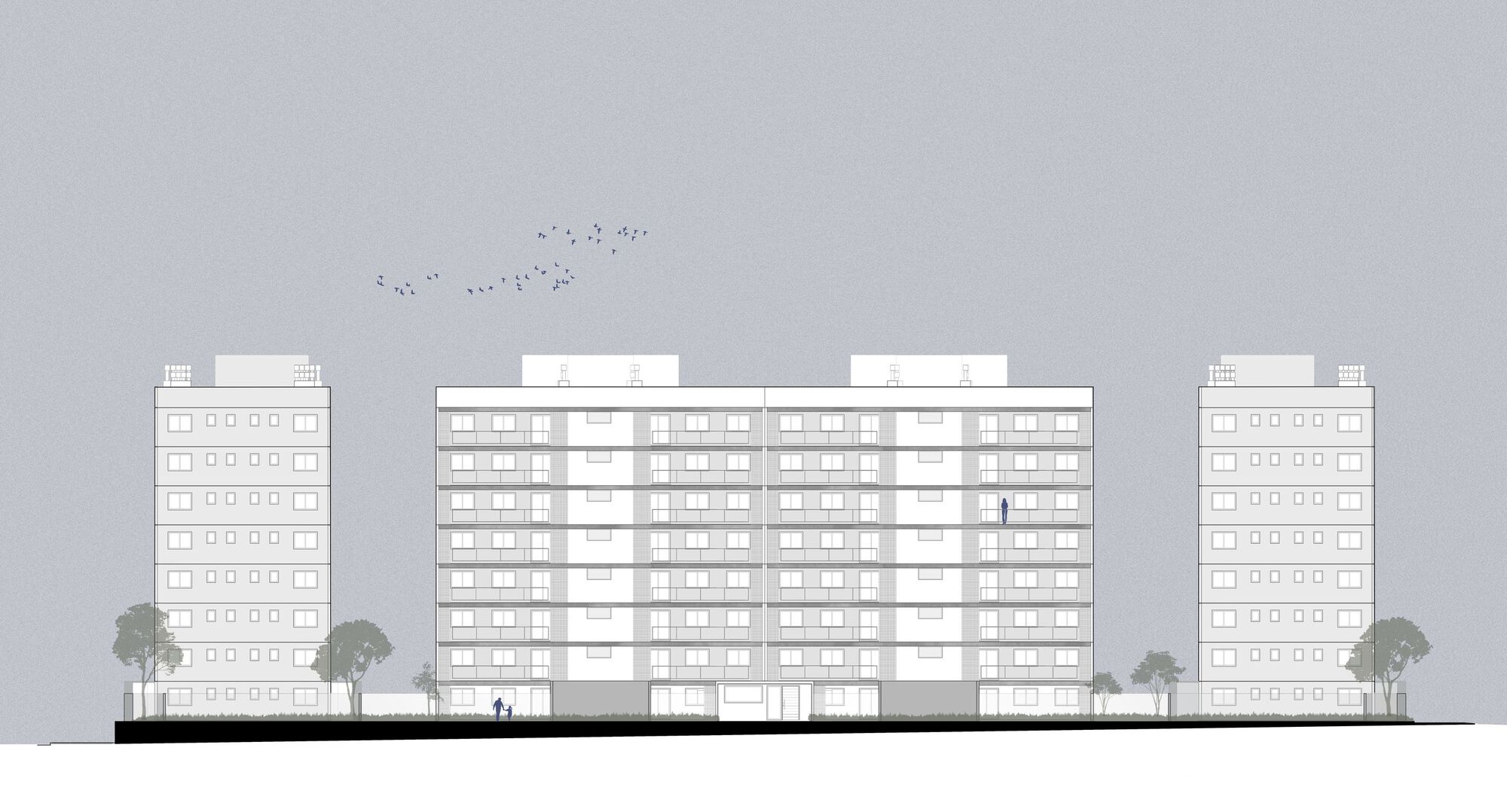
The perimeter distribution of the built volumes, where each of the three blocks faces a different street, not only ensures the lighting and ventilation of the units but also allows them to be accessed independently. This promotes the use of public space and contributes to the neighborhood’s vitality. Additionally, the blocks close to the building line enable visual contact with the streets from inside the apartments, reinforcing the intention to connect residents with the public space.
© Lucas Daneris
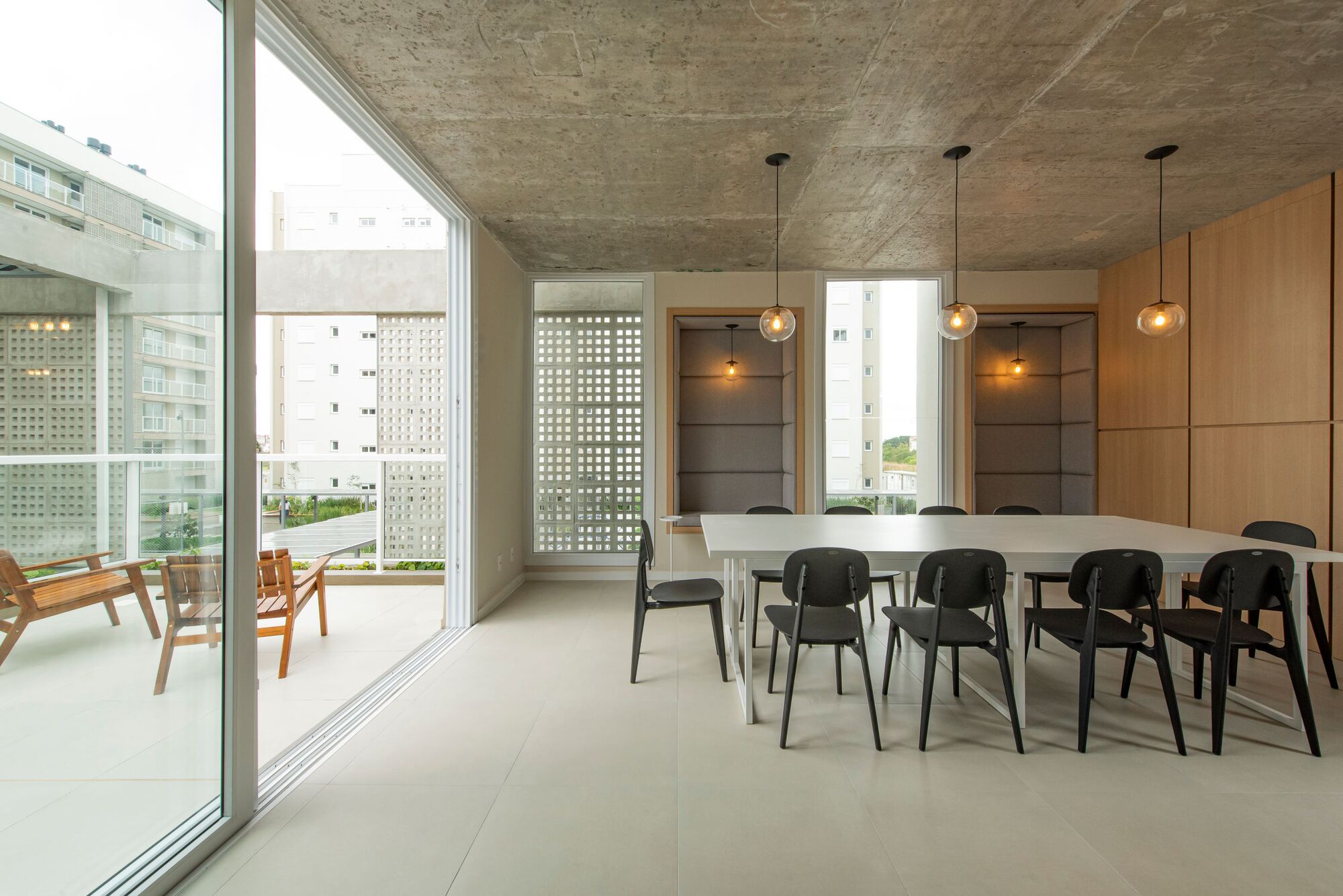
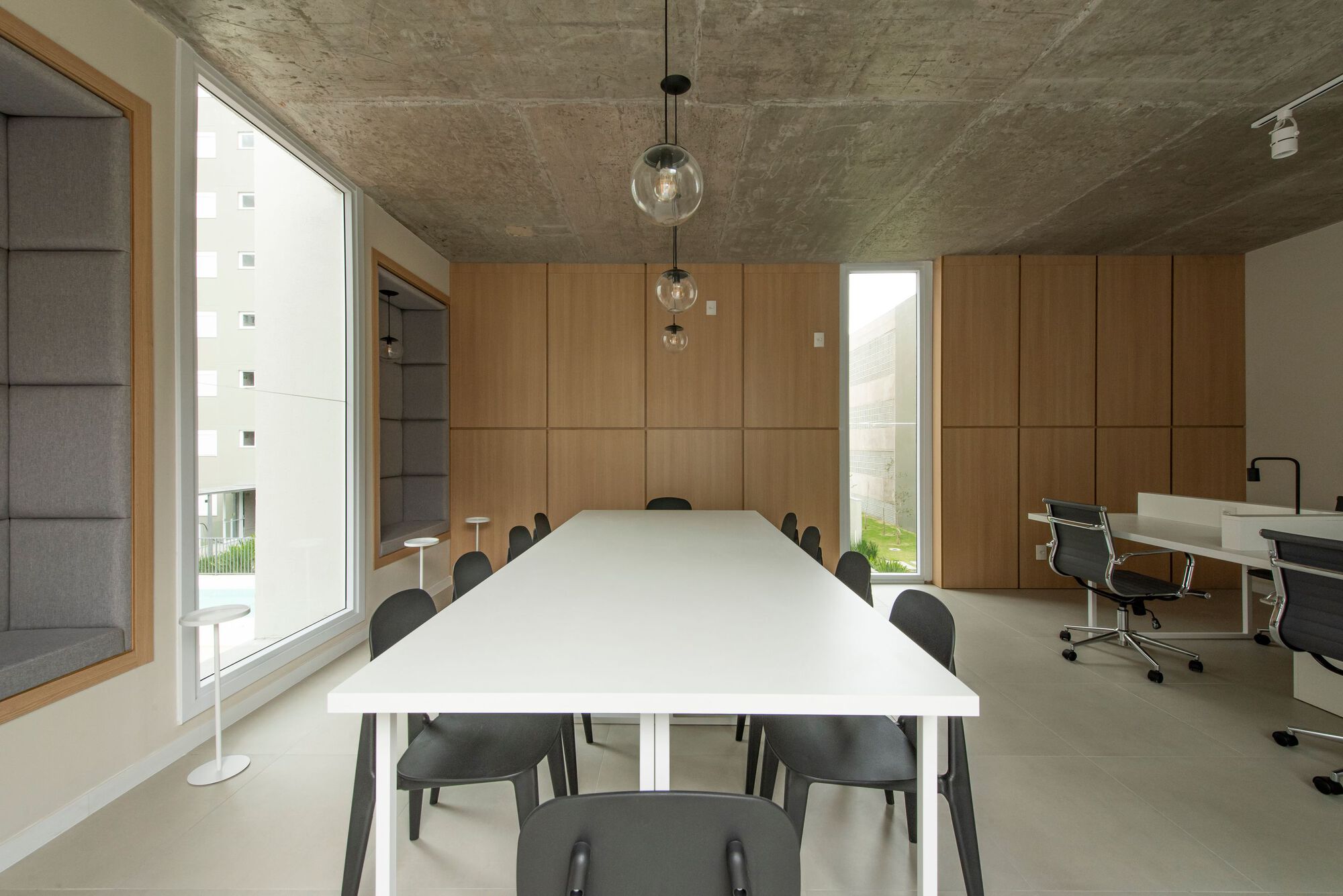
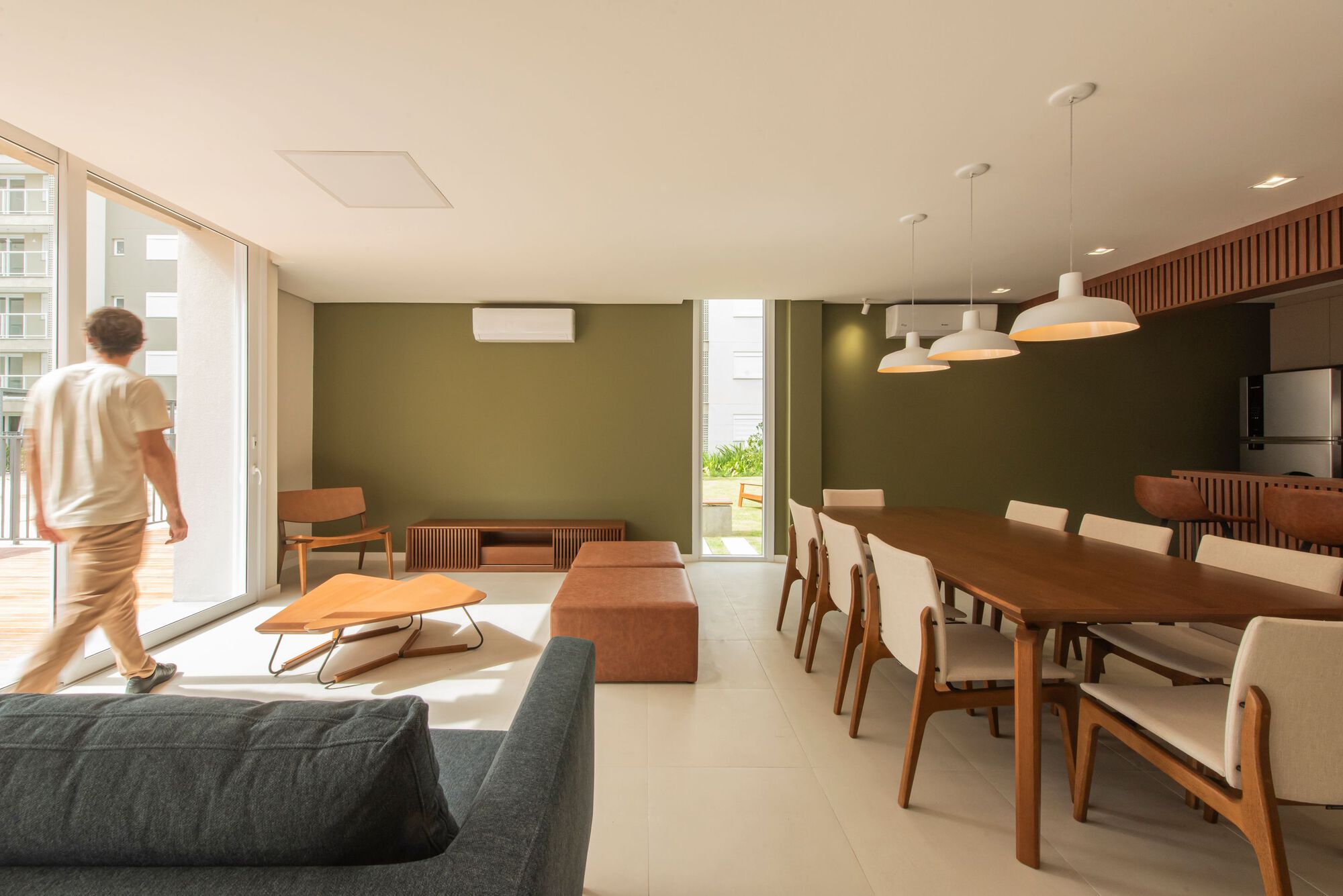
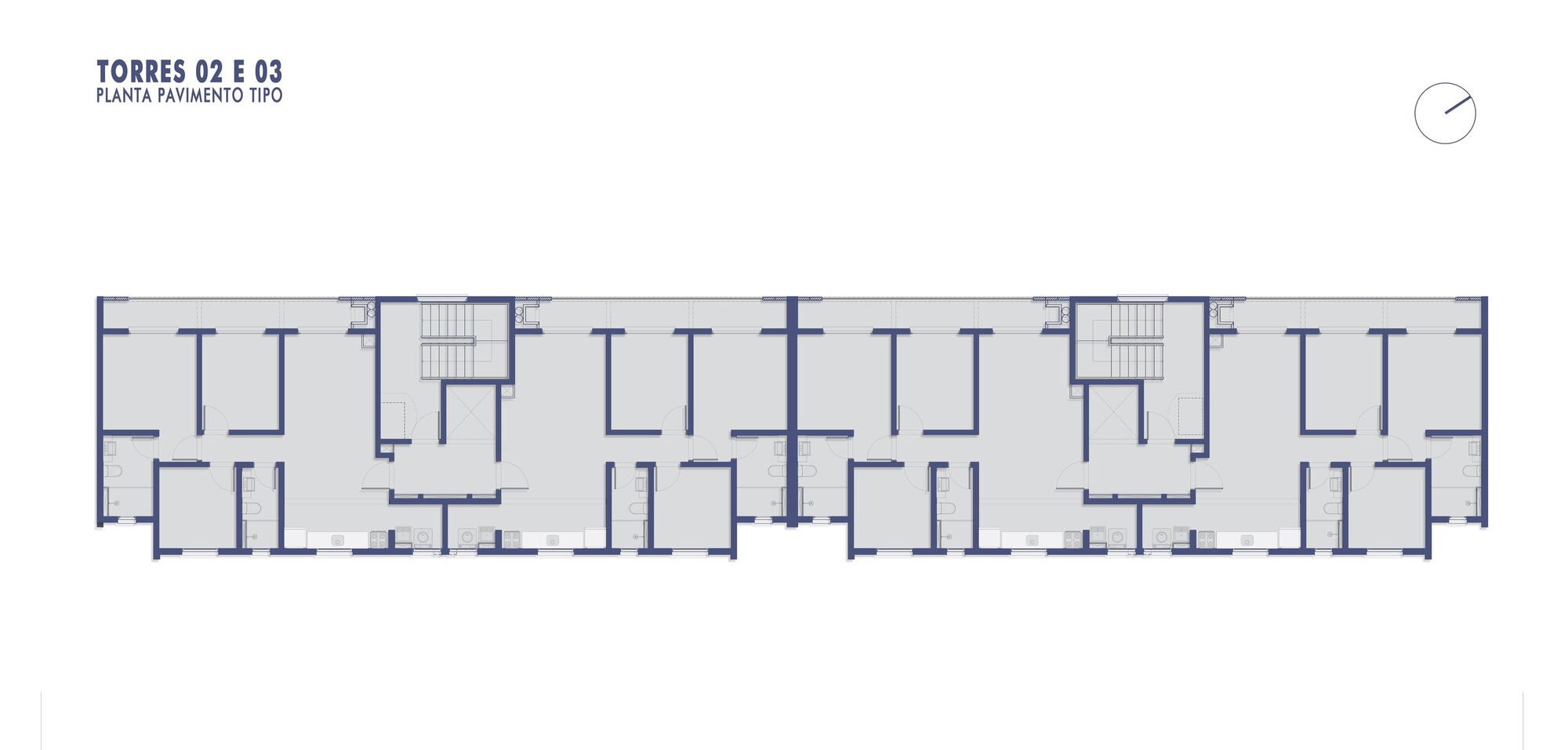
At the apartment scale, the distribution and organization of spaces allowed for the integration of social areas for better space utilization, while segmenting intimate areas to ensure residents’ privacy. The arrangement of the apartments also aimed to optimize sunlight and wind exposure, which, along with the building’s construction features, ensures environmental comfort for the residents.
© Lucas Daneris
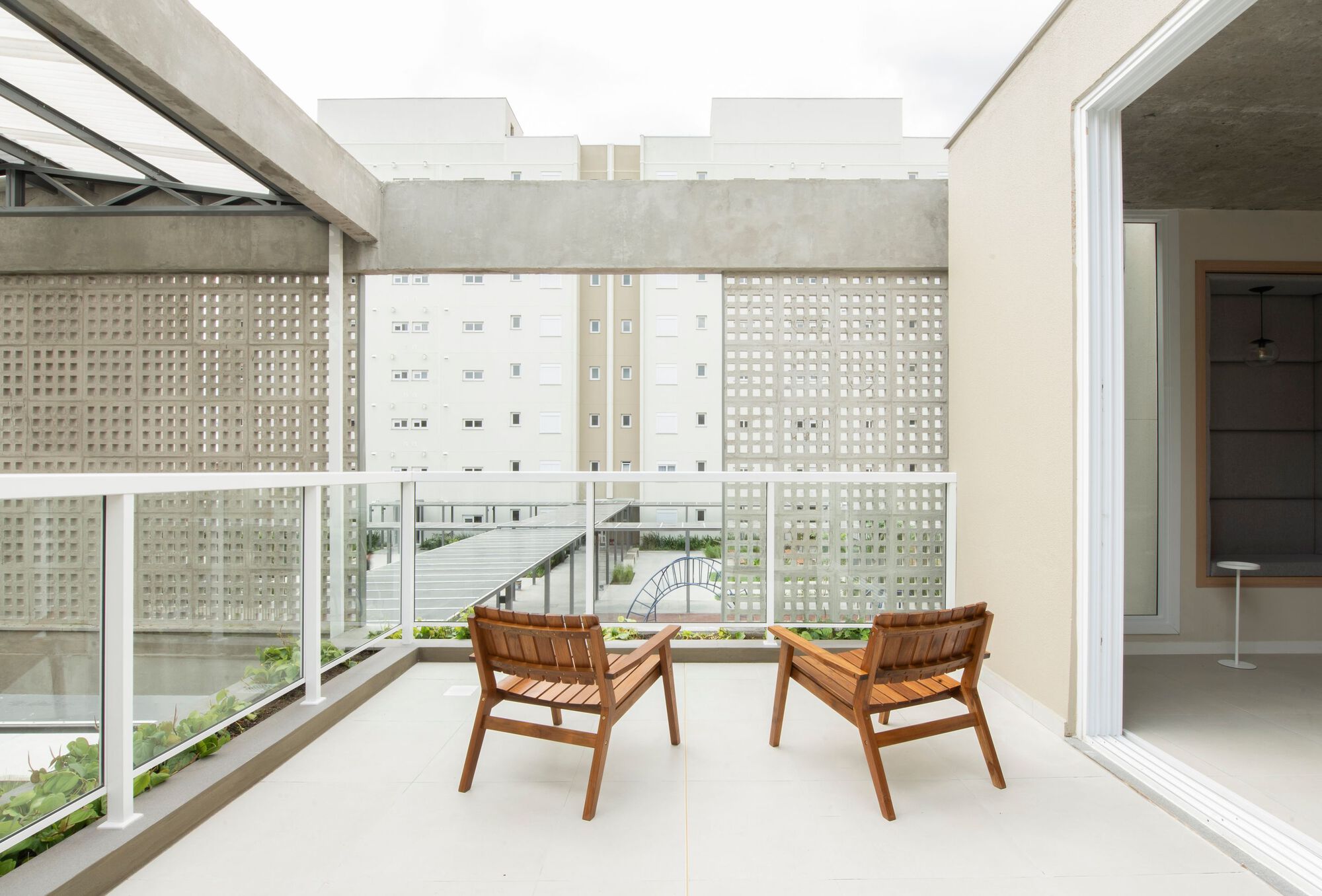
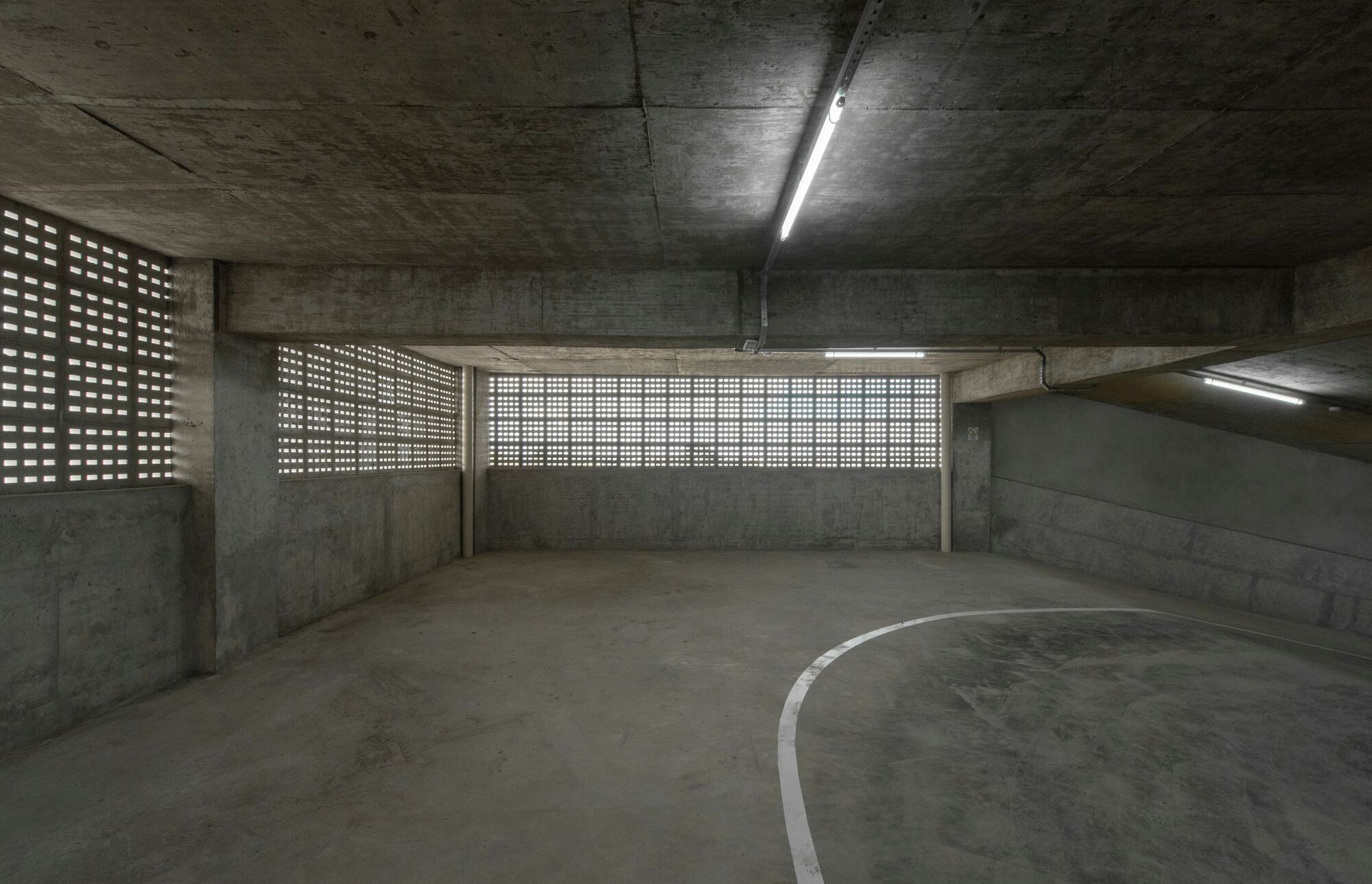
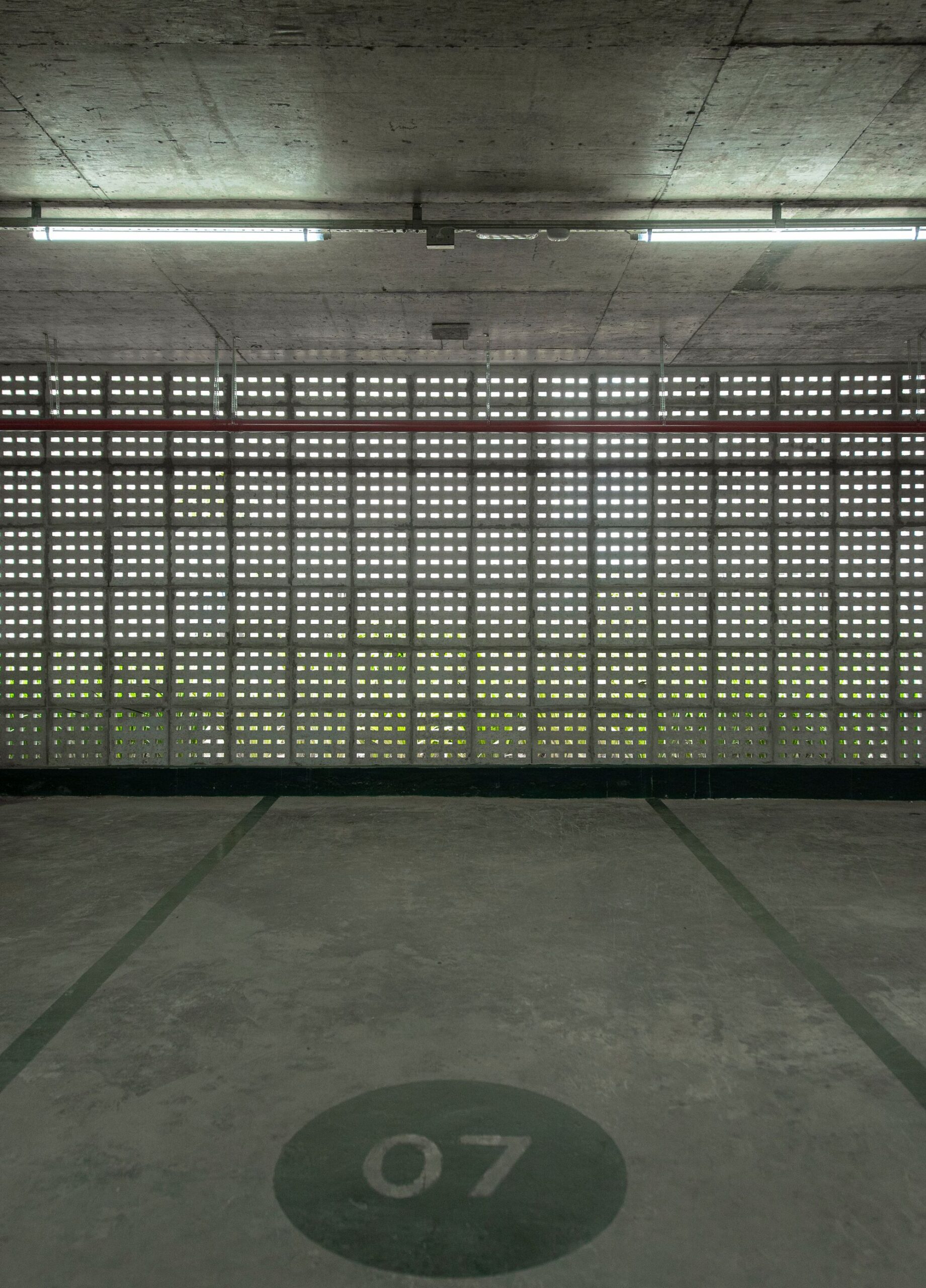
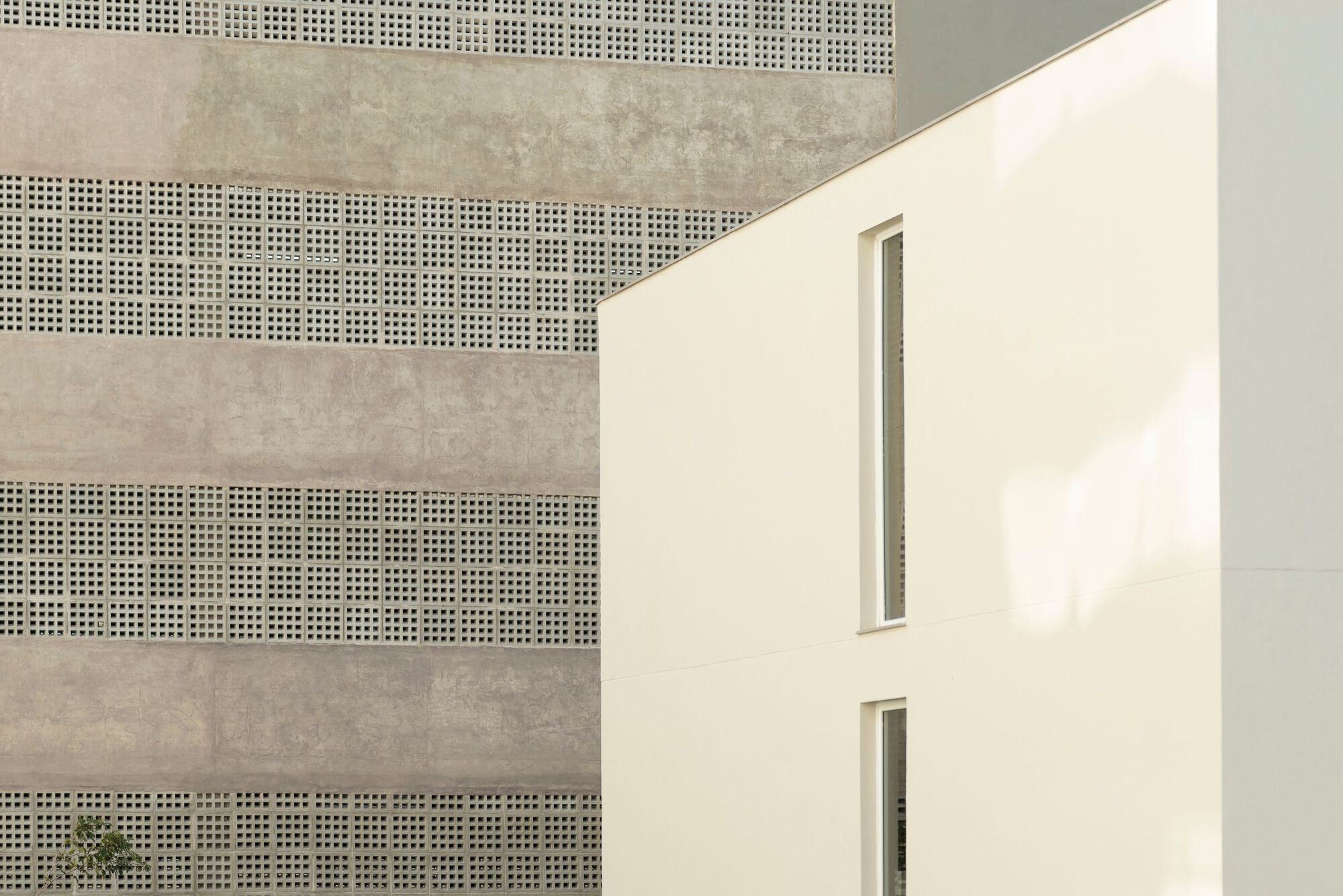
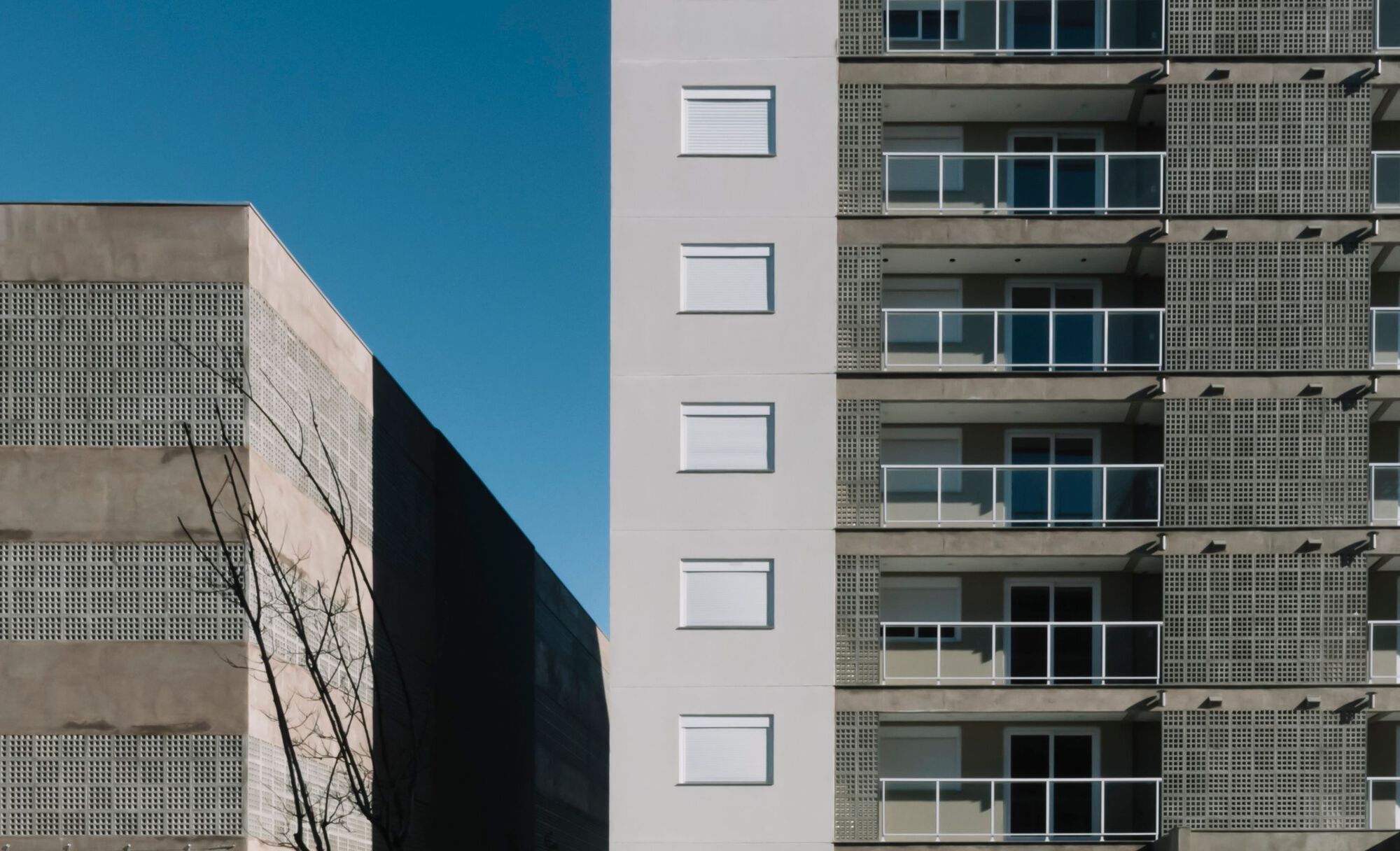
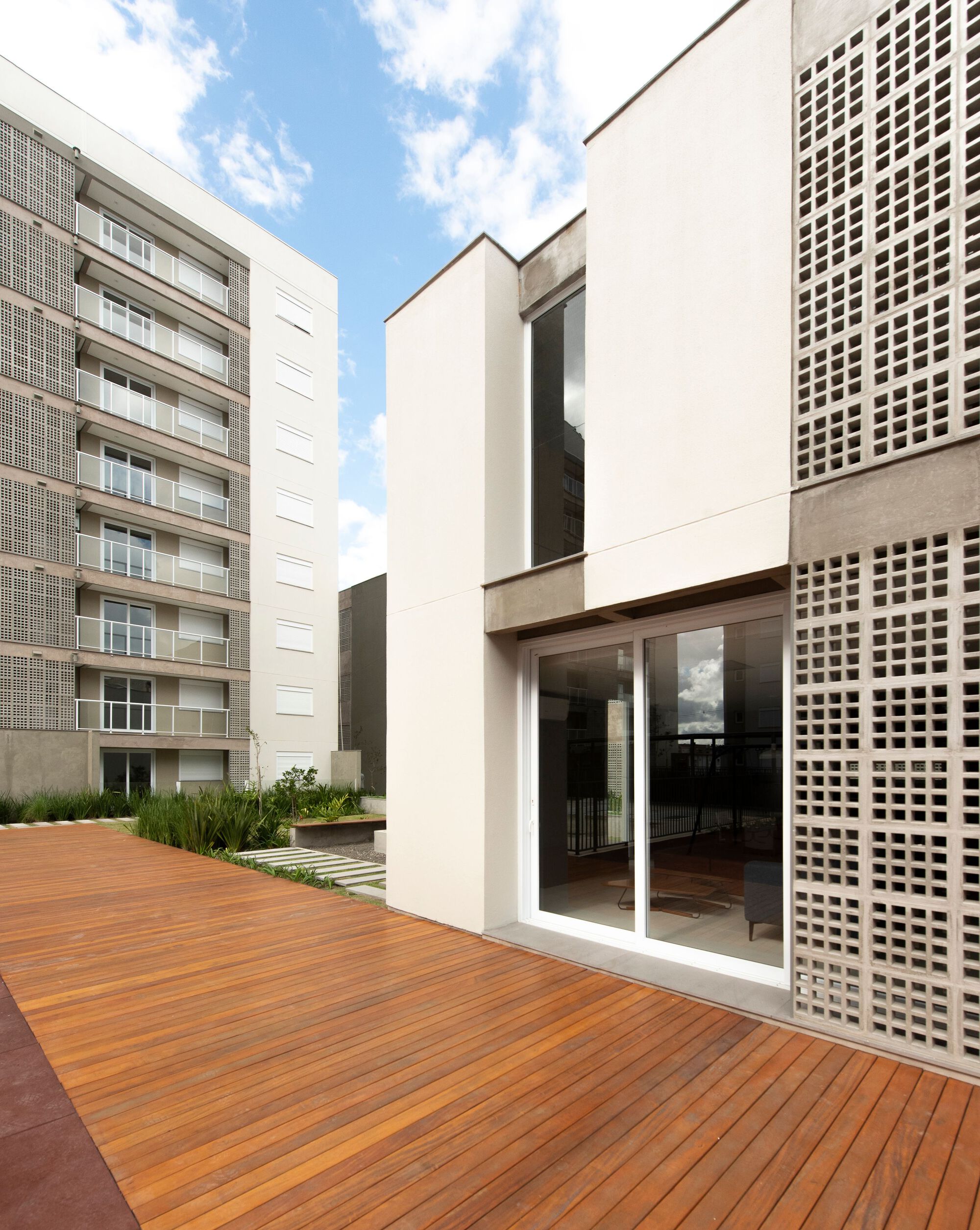
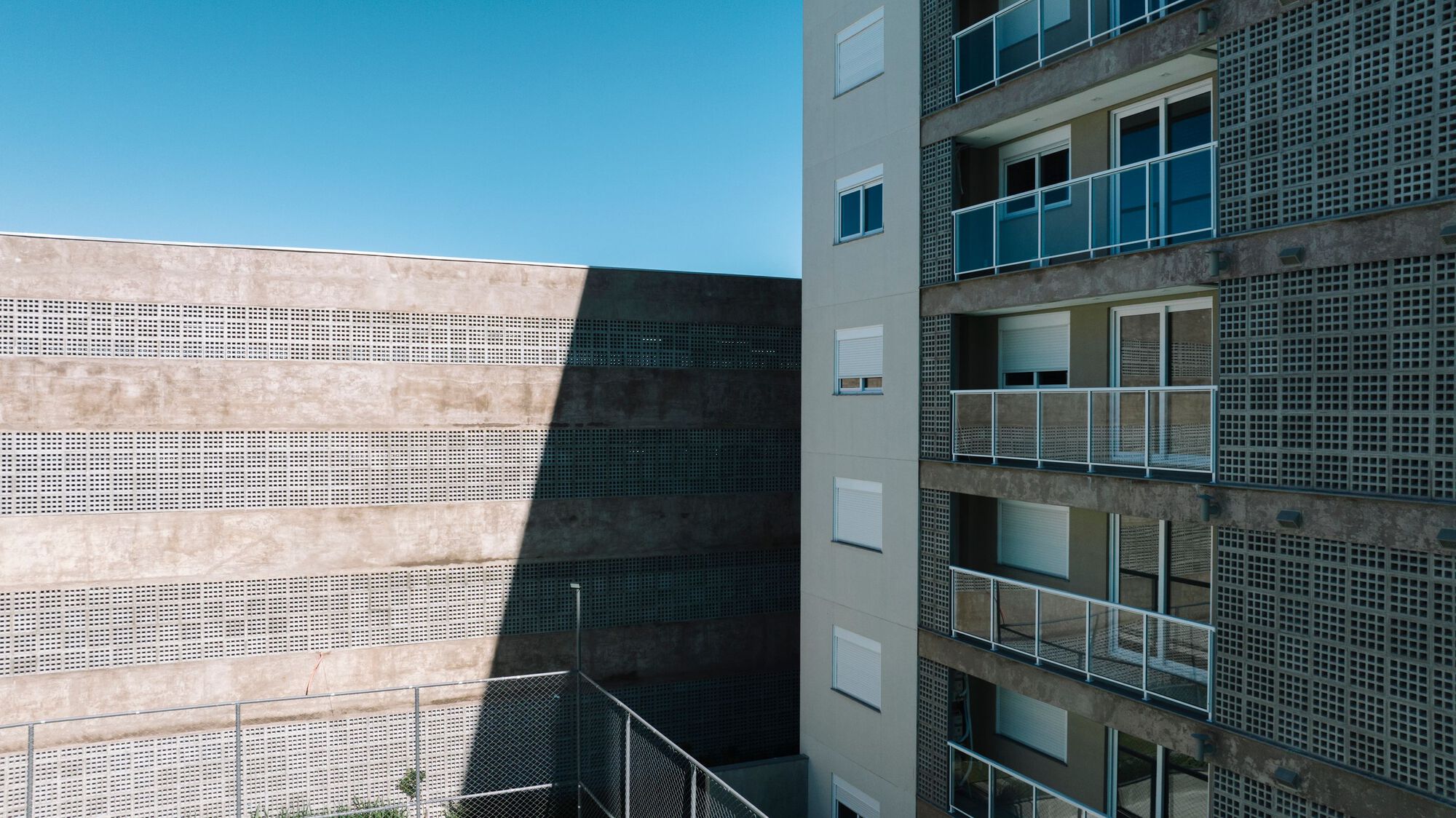
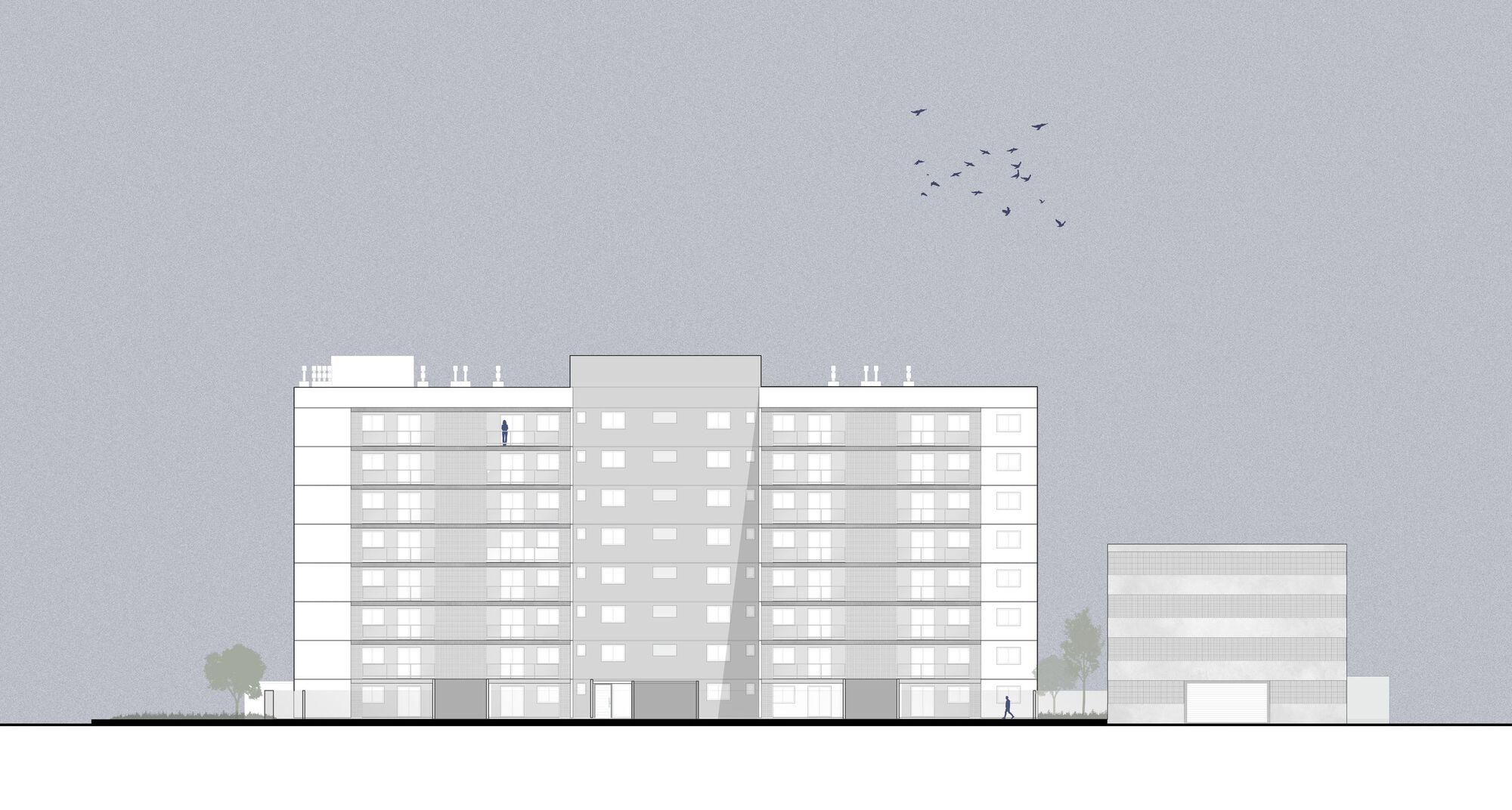
Notably, structural masonry was used as the construction technique, a solution widely adopted by local builders due to its resource availability, ease of execution, and good thermal and acoustic performance. Being a self-supporting system, the floor plans are modular, creating pure, compact prismatic volumes. In contrast, volumetric subtraction operations were used as a compositional strategy, visible in the apartment balconies and common area terraces. The use of cobogó also served as a design element to break the compactness of the volumes, adding identity, materiality, visual permeability, and light and shadow play to the facades.
Project Info
Architects: parte arquitetura
Country: Brazil, Pelotas
Area: 19822 m²
Year: 2019
Photographs: Lucas Daneris
Architectural Design Co Author: Eduardo Riemke
Building Company: Roberto Ferreira Comercial e Construtora Ltda.
Landscape Project: Alice Moraes, Eduardo Riemke e Pedro Stigger
Interior Design: Alice Moraes e Eduardo Riemke
Post Production Of Technical Drawings: Amanda Sehn e Gustavo Benenedetti
Technical Drawings: Francielle Silveira, Thomaz Dufau, Pedro Stigger, Marina Trentin
Hydraulics Project: Termogás
Gas Project: Termogás
Masonry Project: MMC projetos e consultorias
Electric Project: T. e A. Engenharia Civil e Elétrica Ltda.
Infrastructure Air Conditioning: Engenhar Climatização
Foundation Design: Solobetin Locação de Equipamentos Construção Civil Eireli
Landscape Design: Duma

Sophie Tremblay is a Montreal-based architectural editor and designer with a focus on sustainable urban development. A McGill University architecture graduate, she began her career in adaptive reuse, blending modern design with historical structures. As a Project Editor at Arch2O, she curates stories that connect traditional practice with forward-thinking design. Her writing highlights architecture's role in community engagement and social impact. Sophie has contributed to Canadian Architect and continues to collaborate with local studios on community-driven projects throughout Quebec, maintaining a hands-on approach that informs both her design sensibility and editorial perspective.