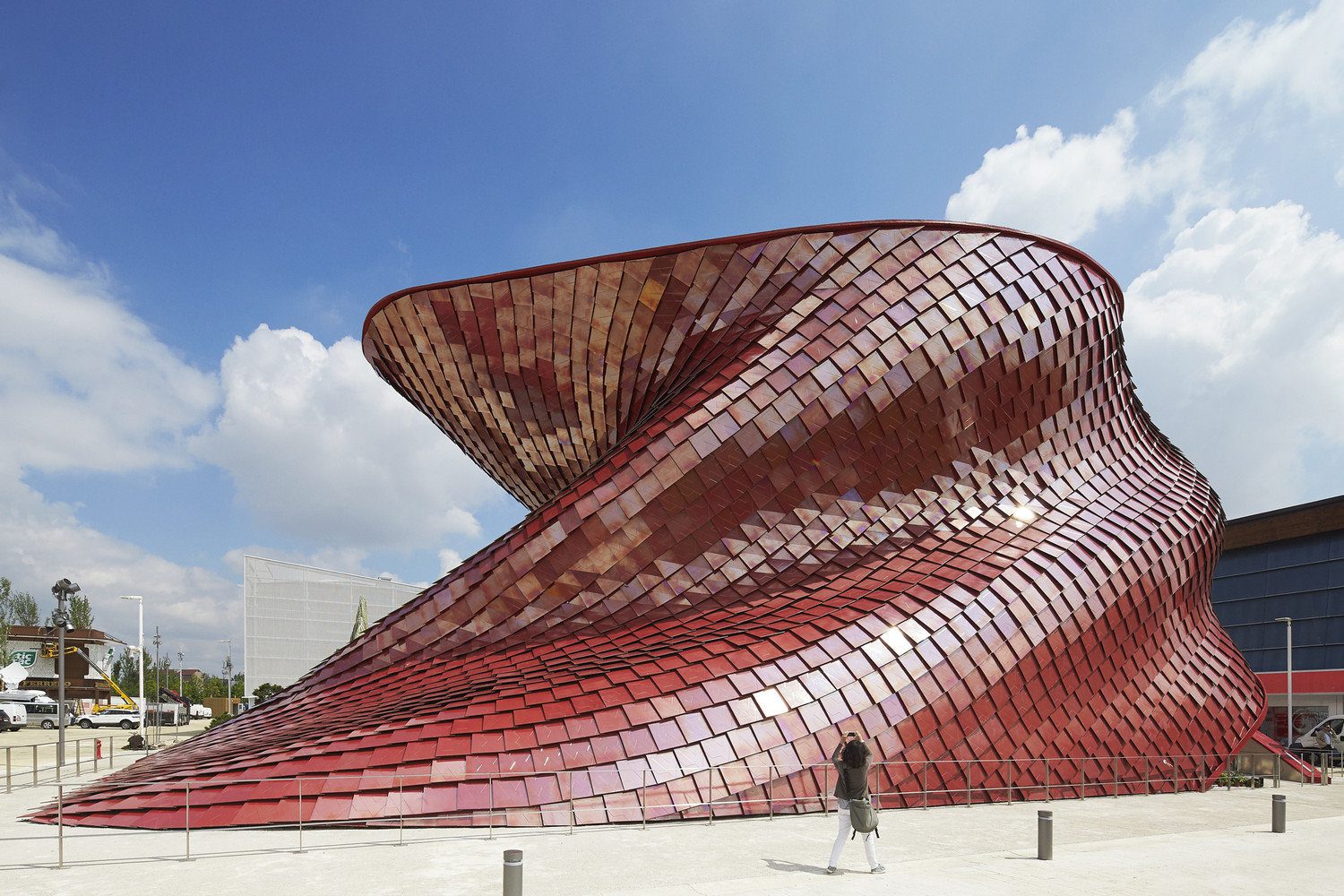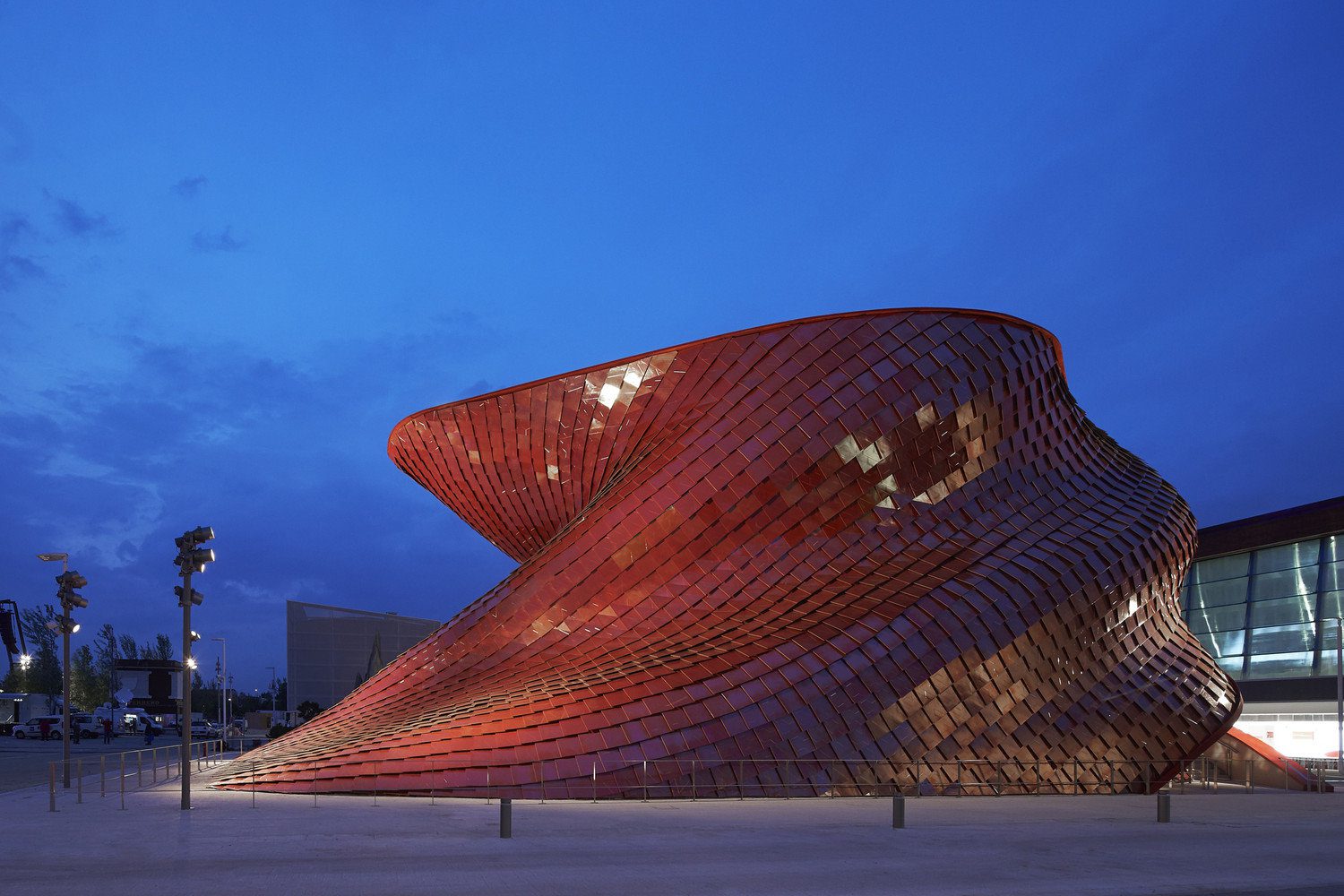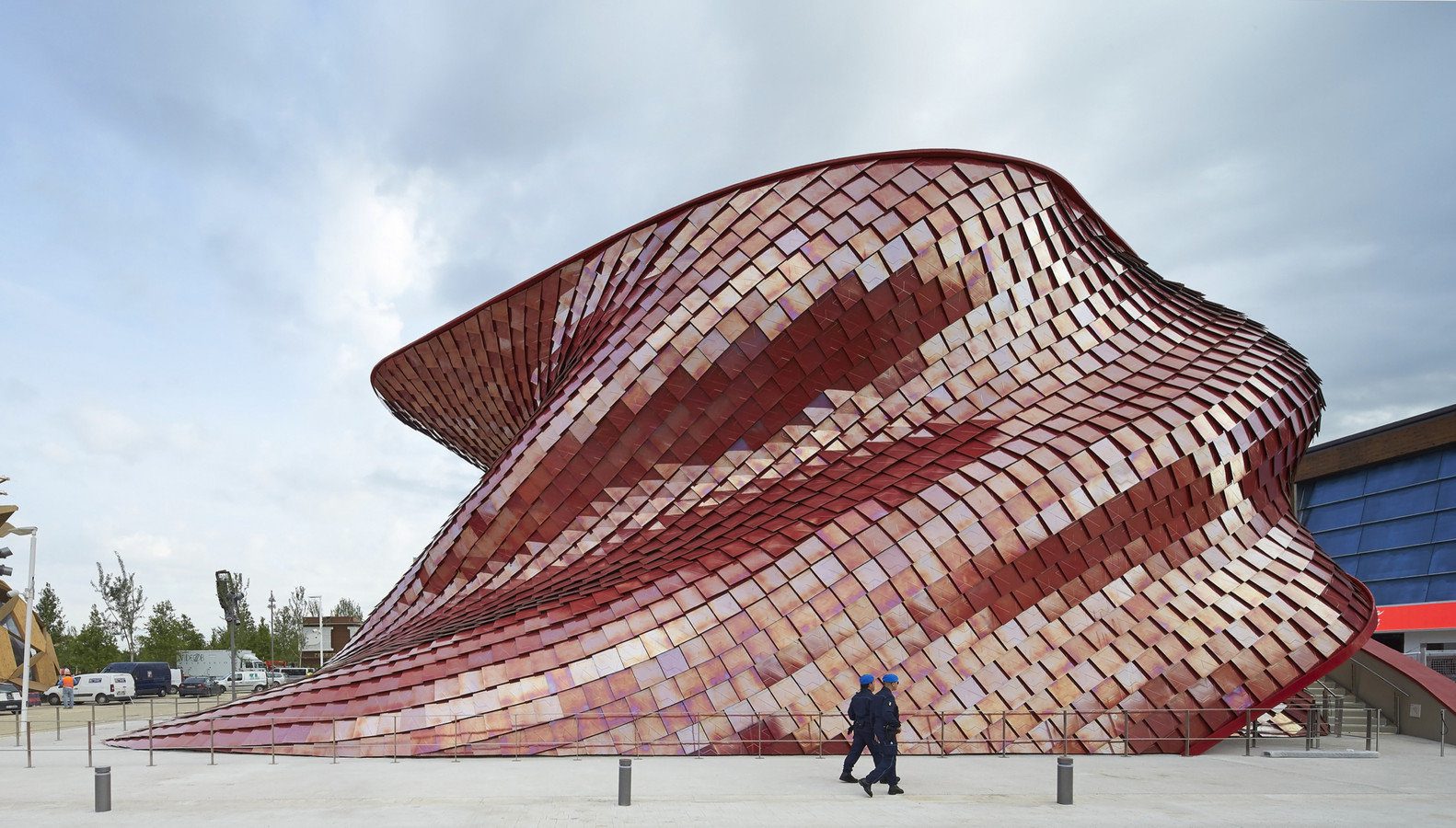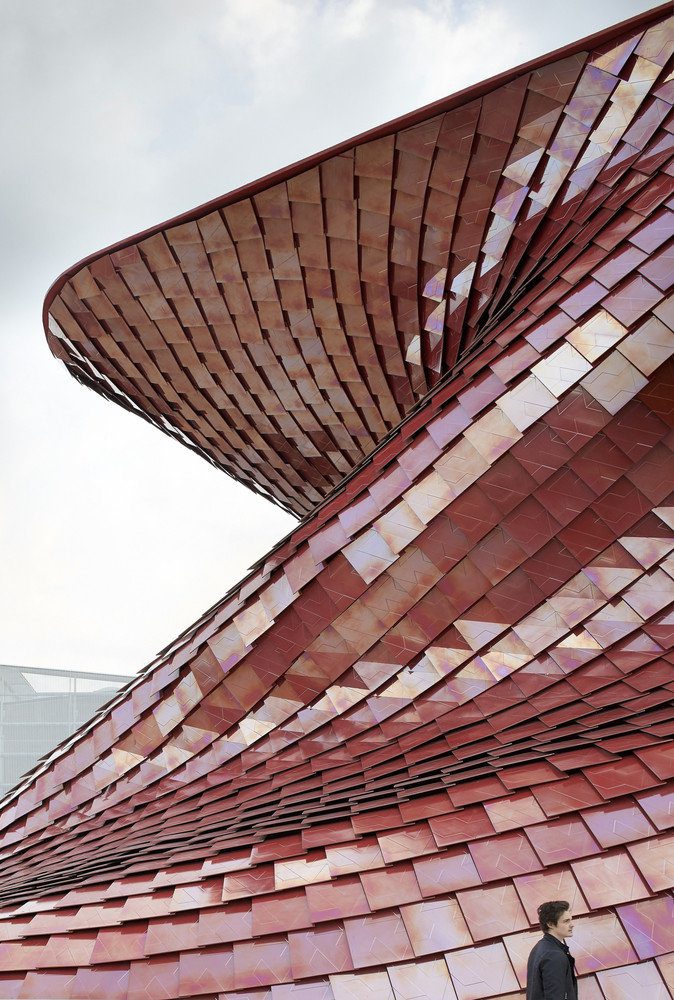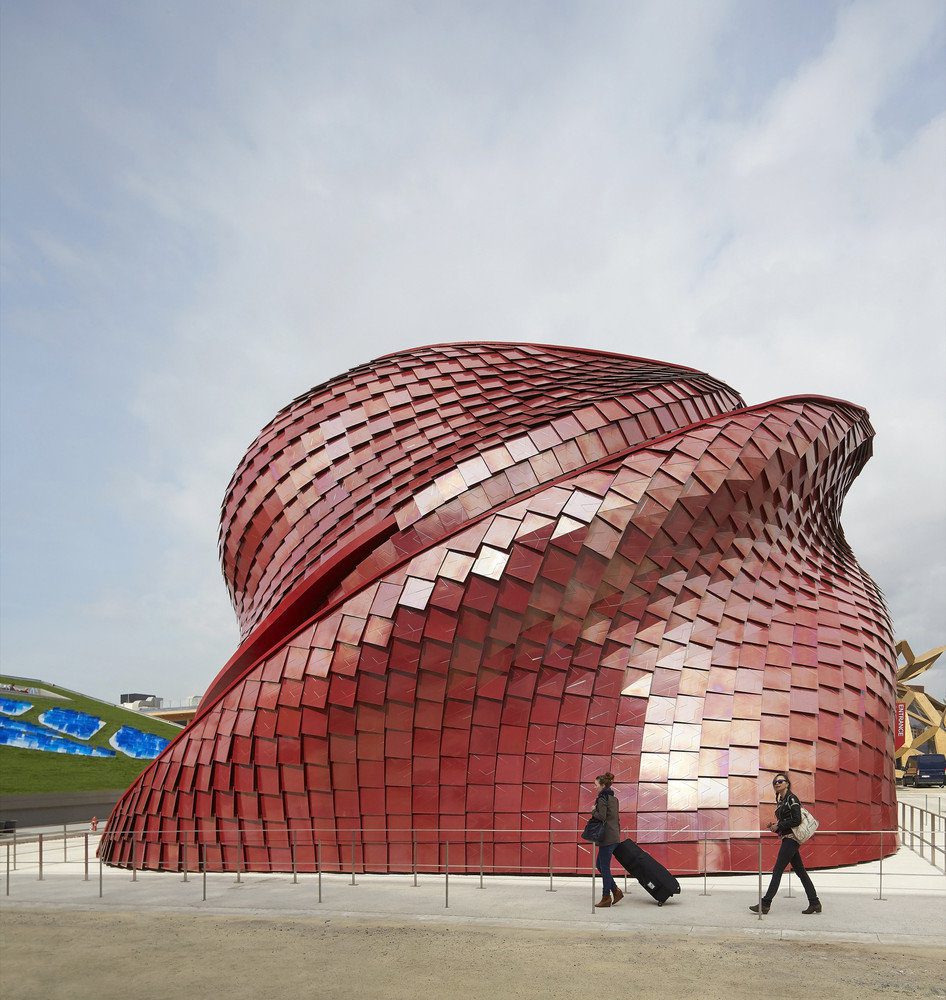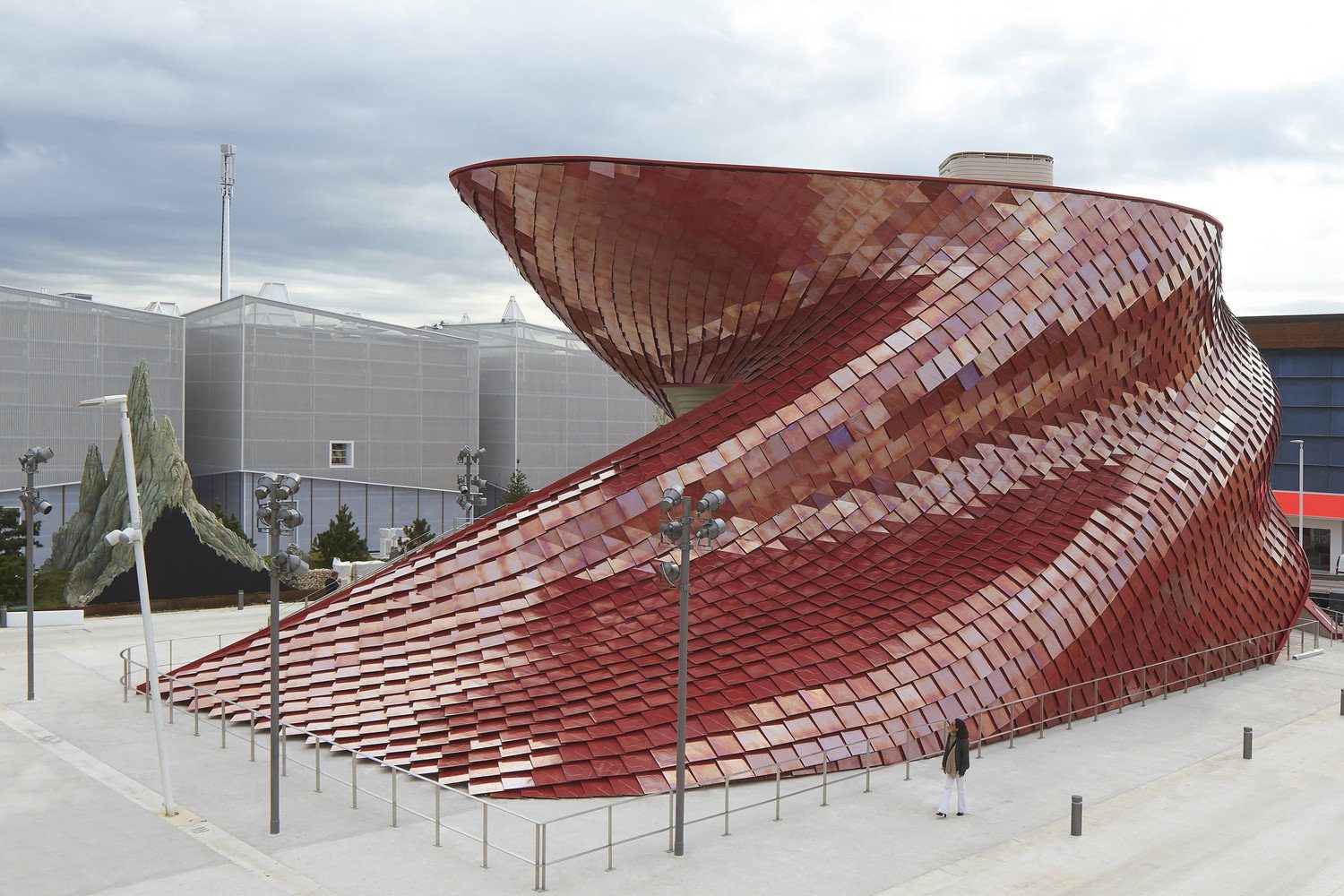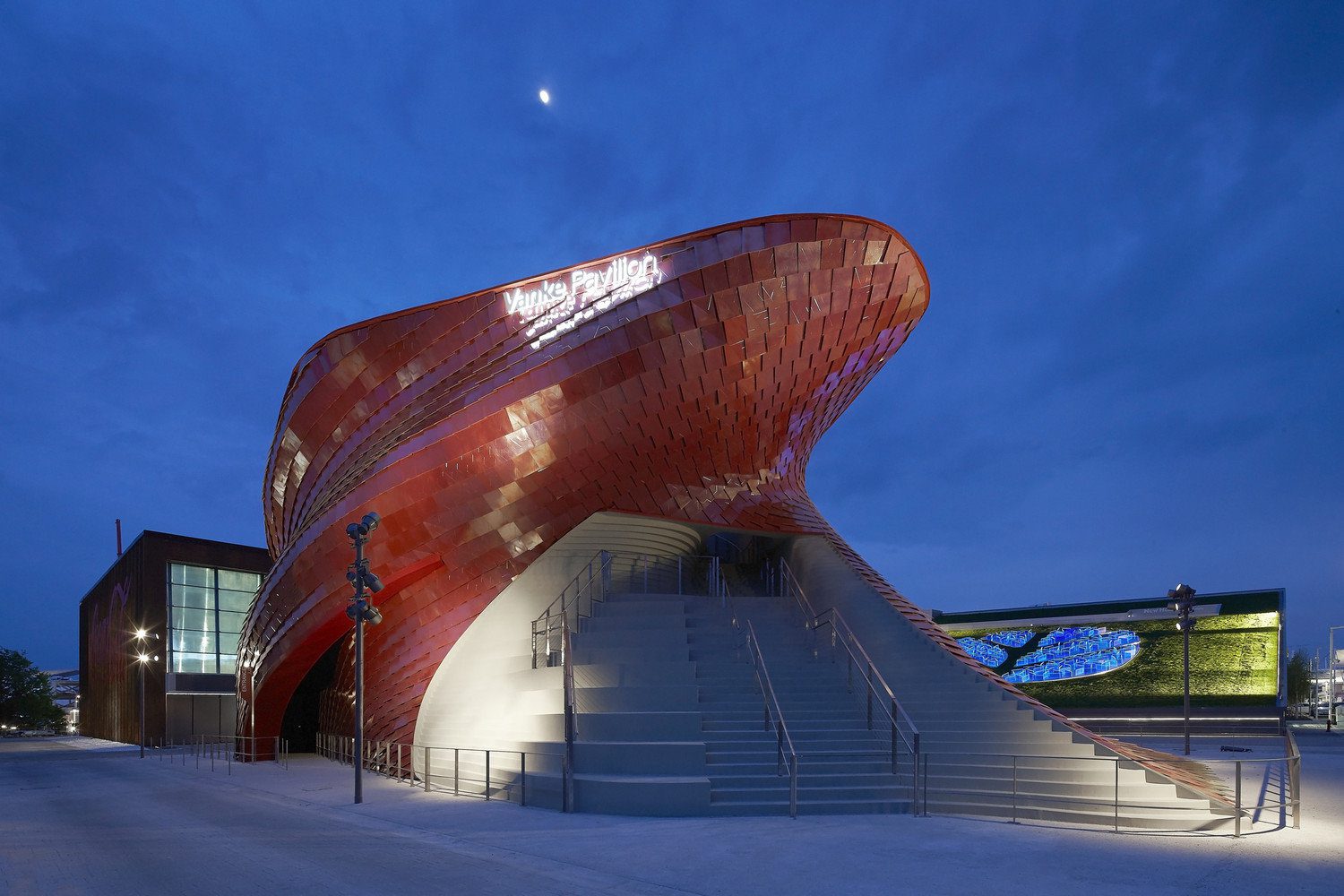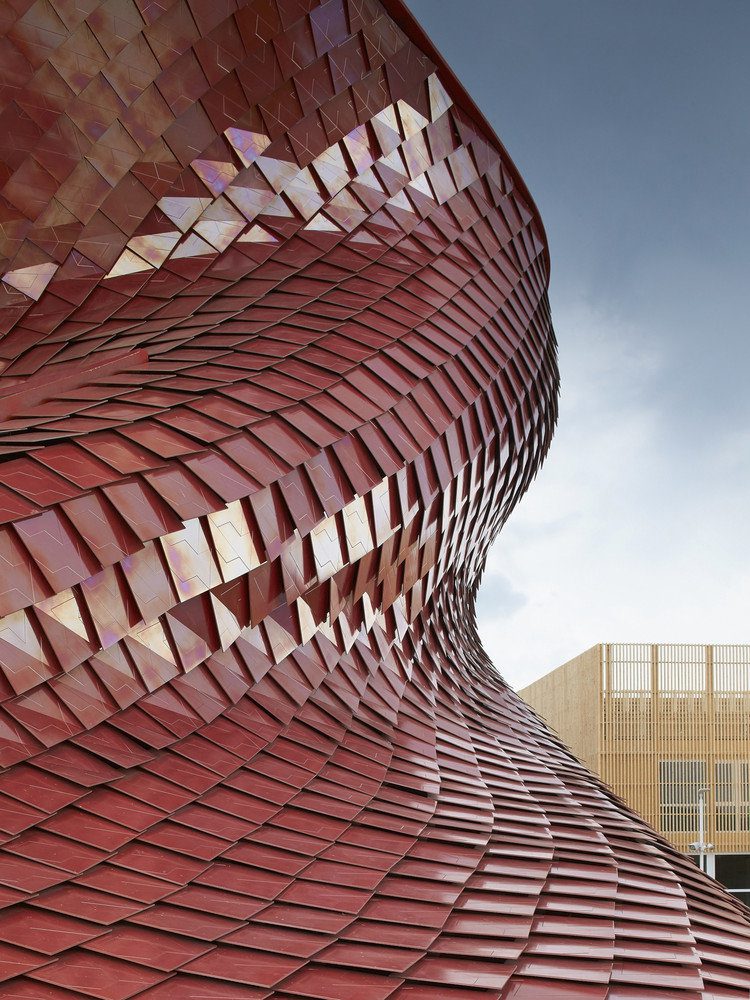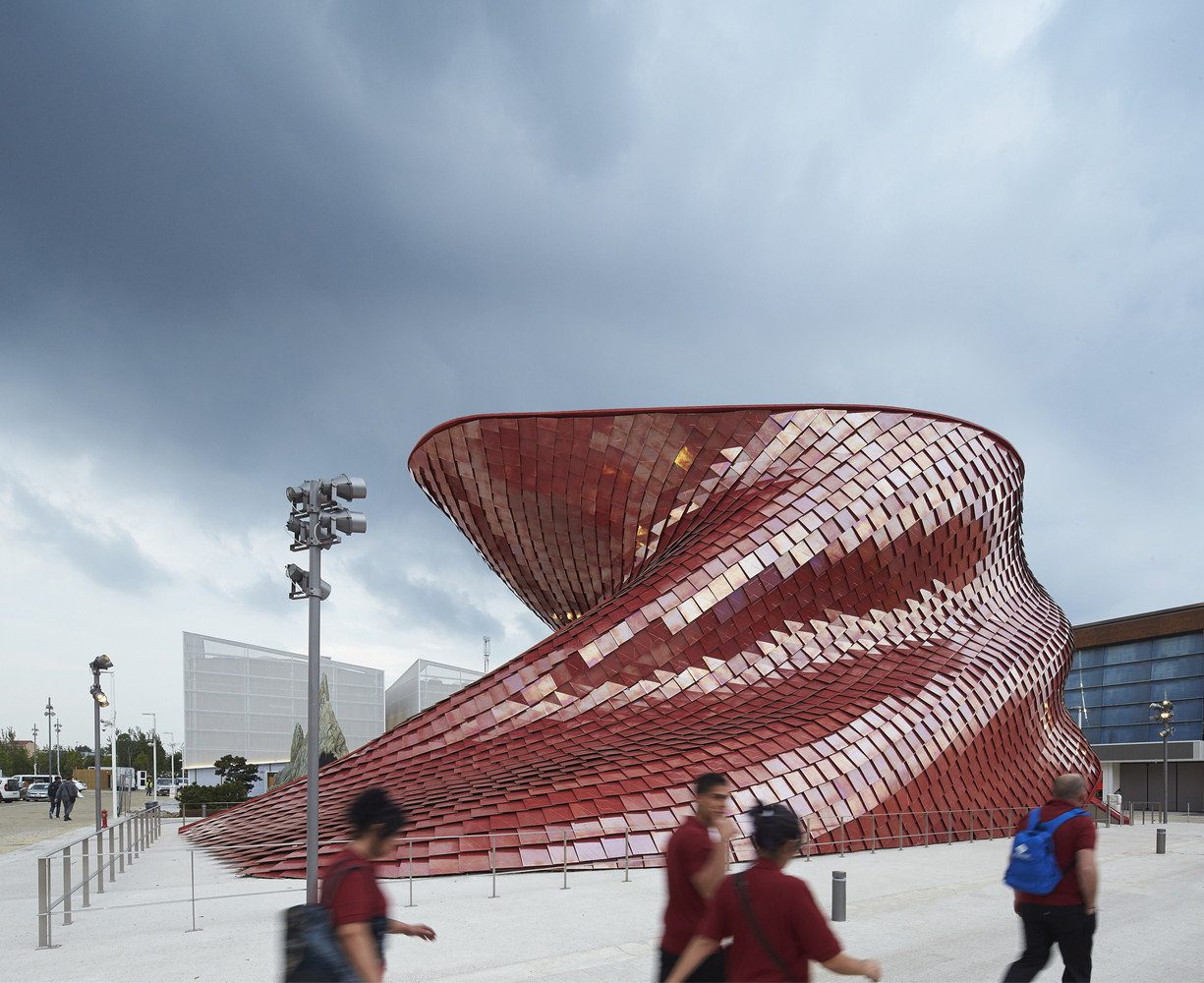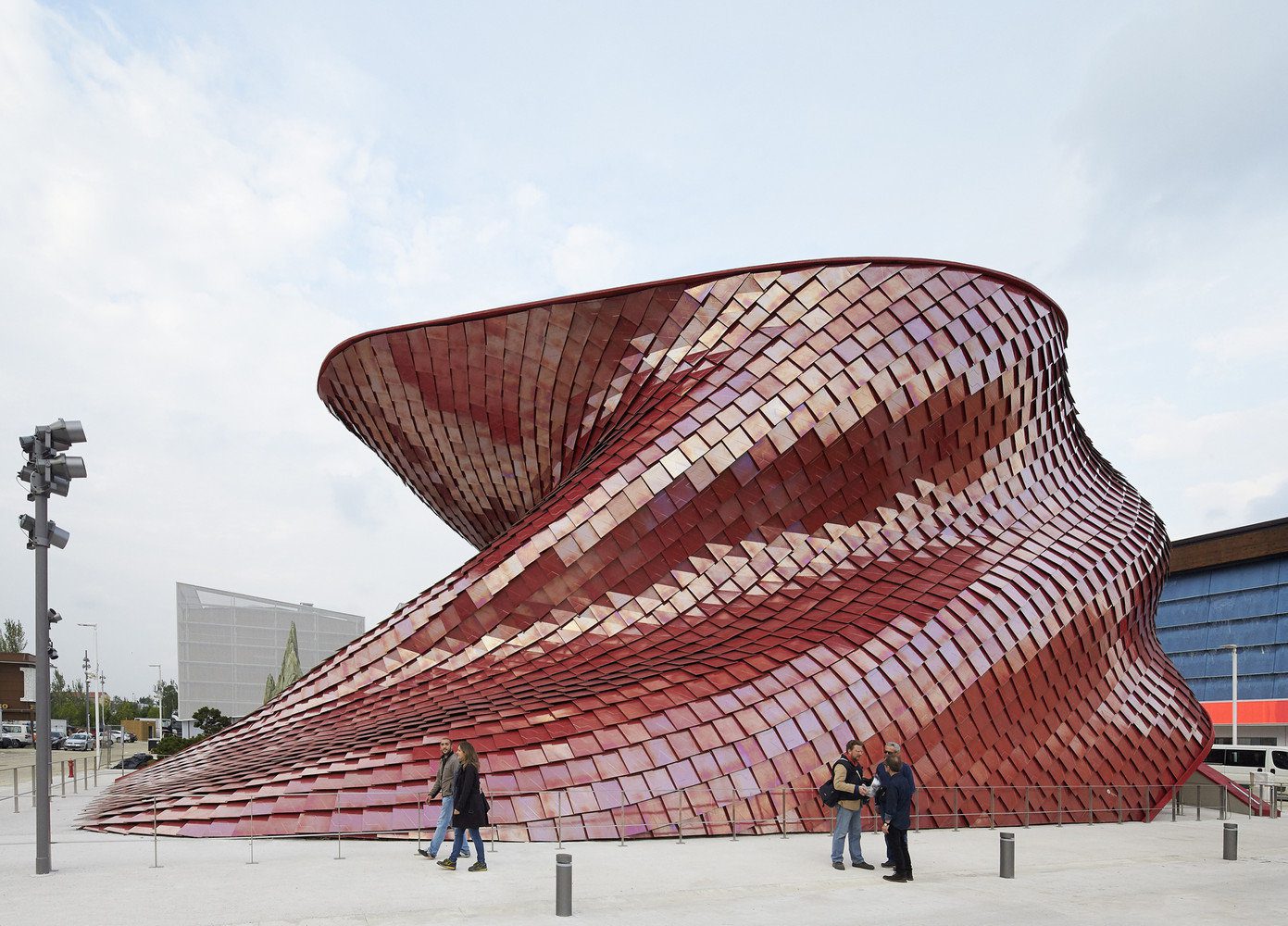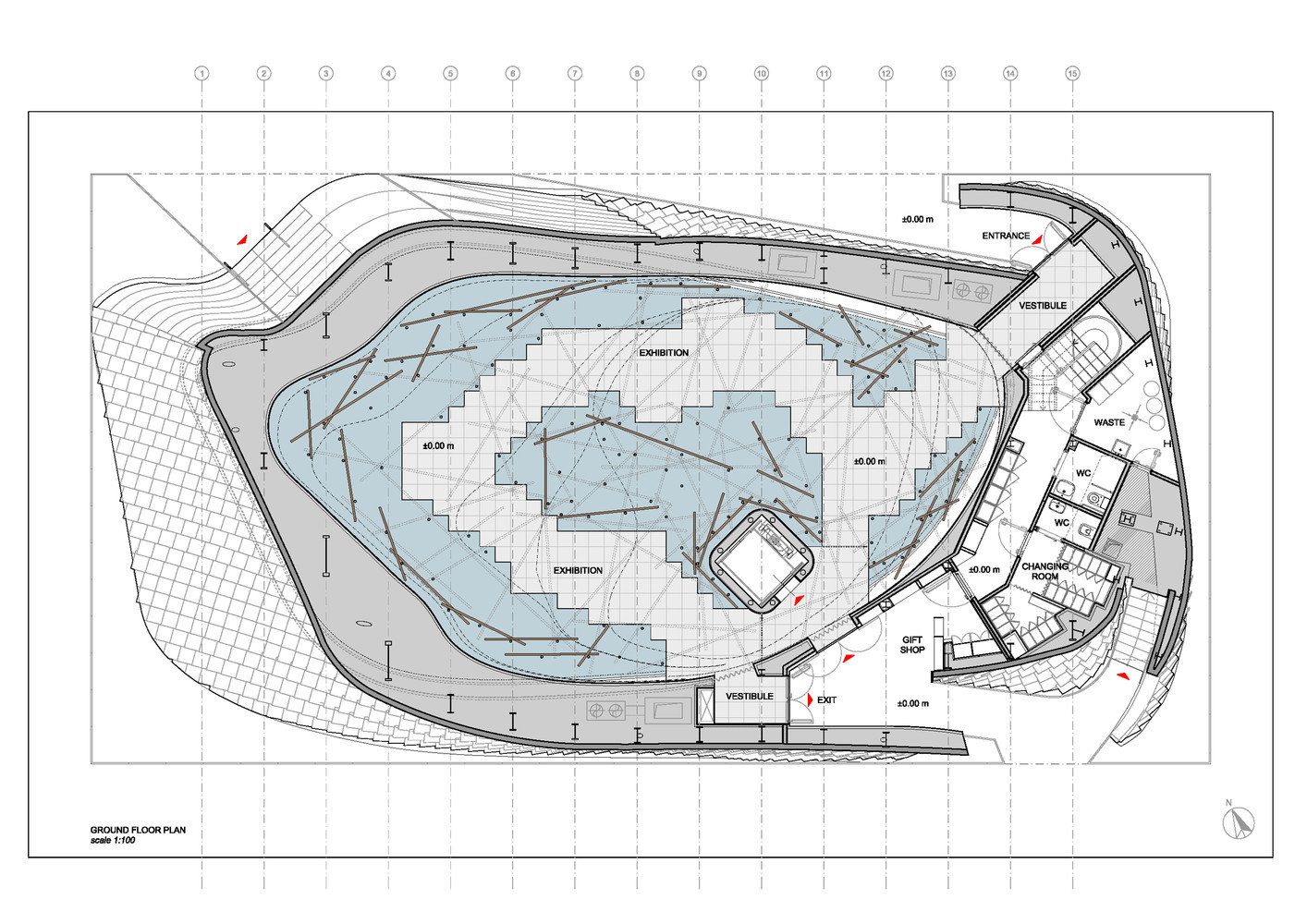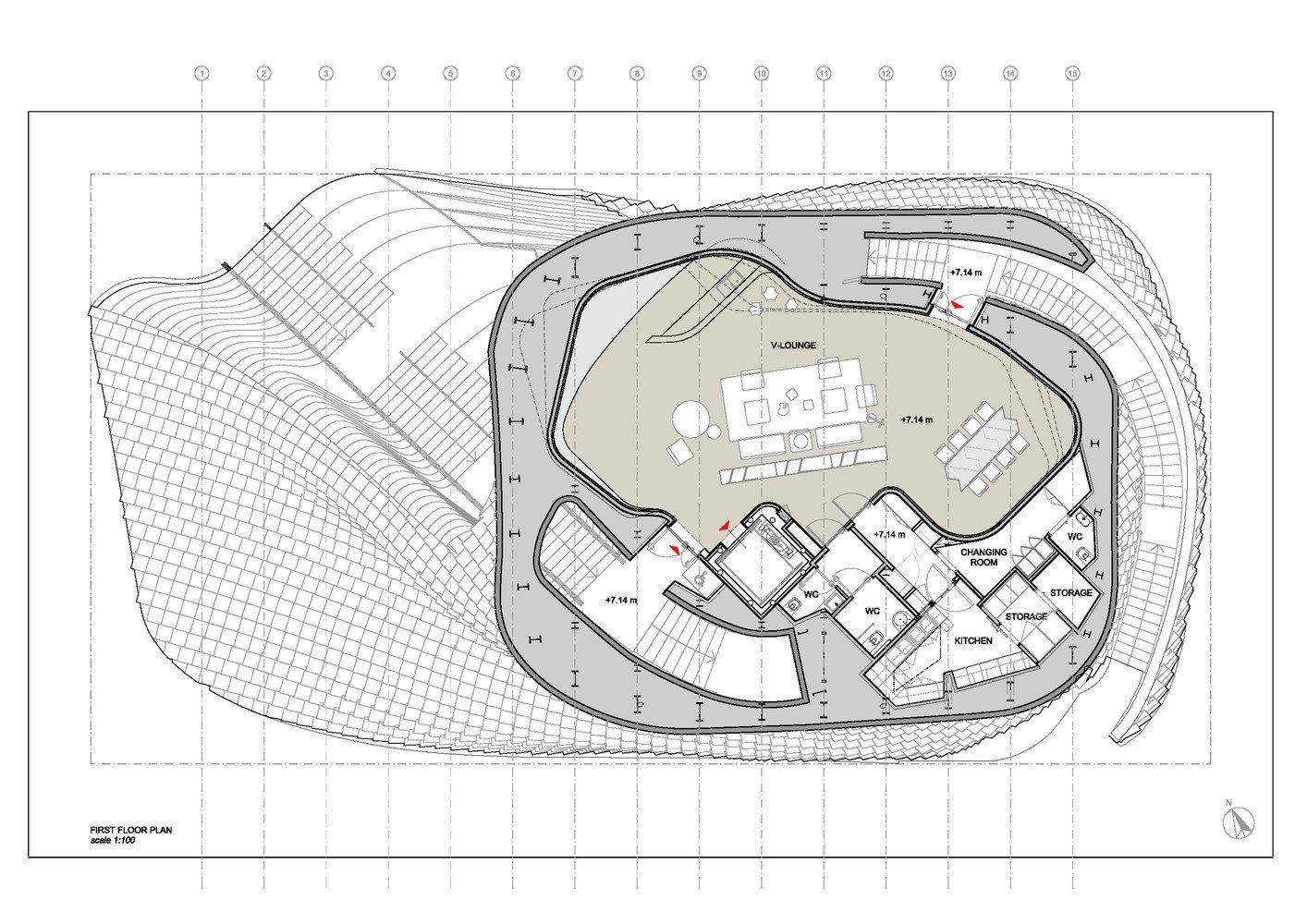

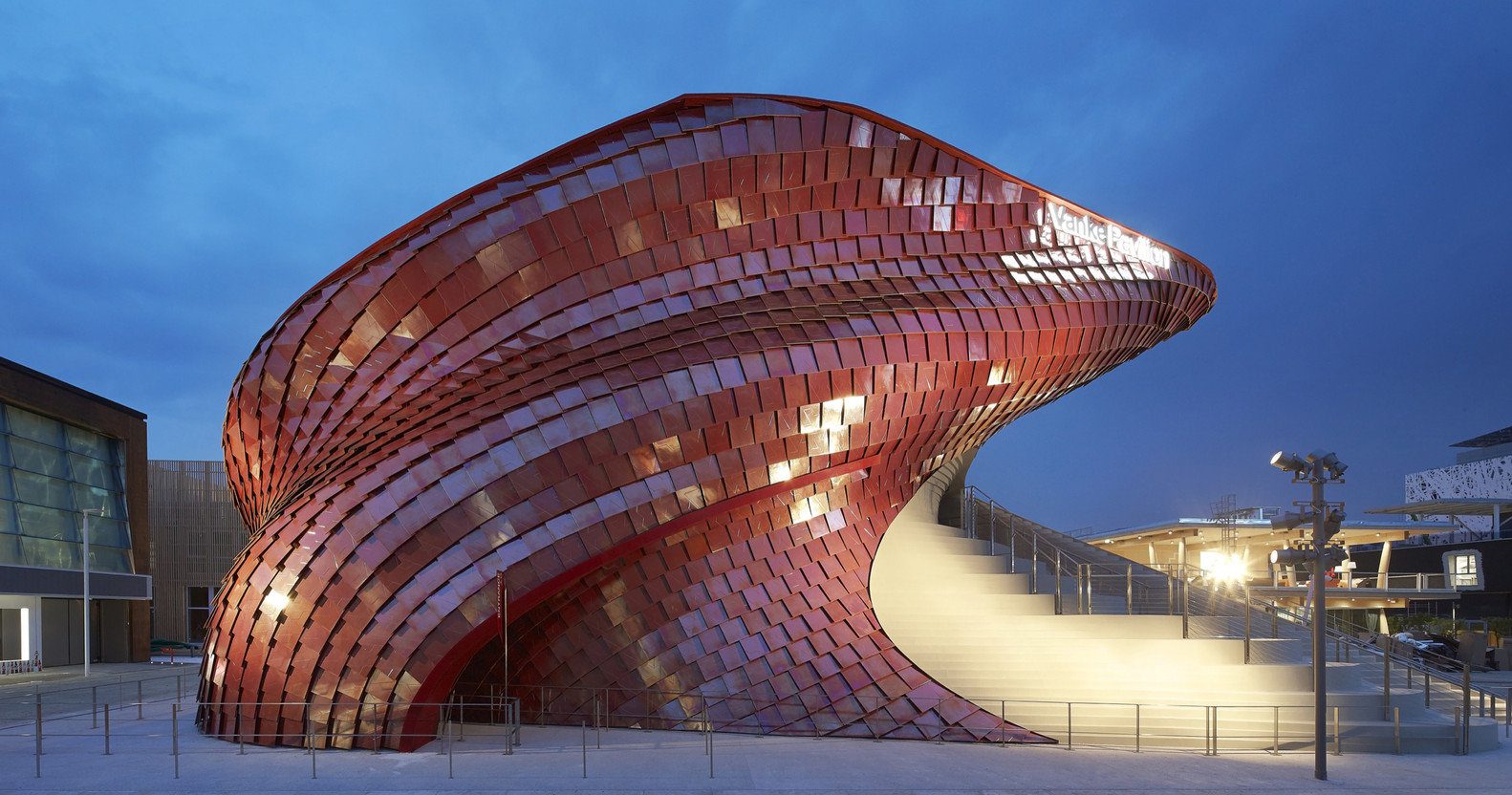
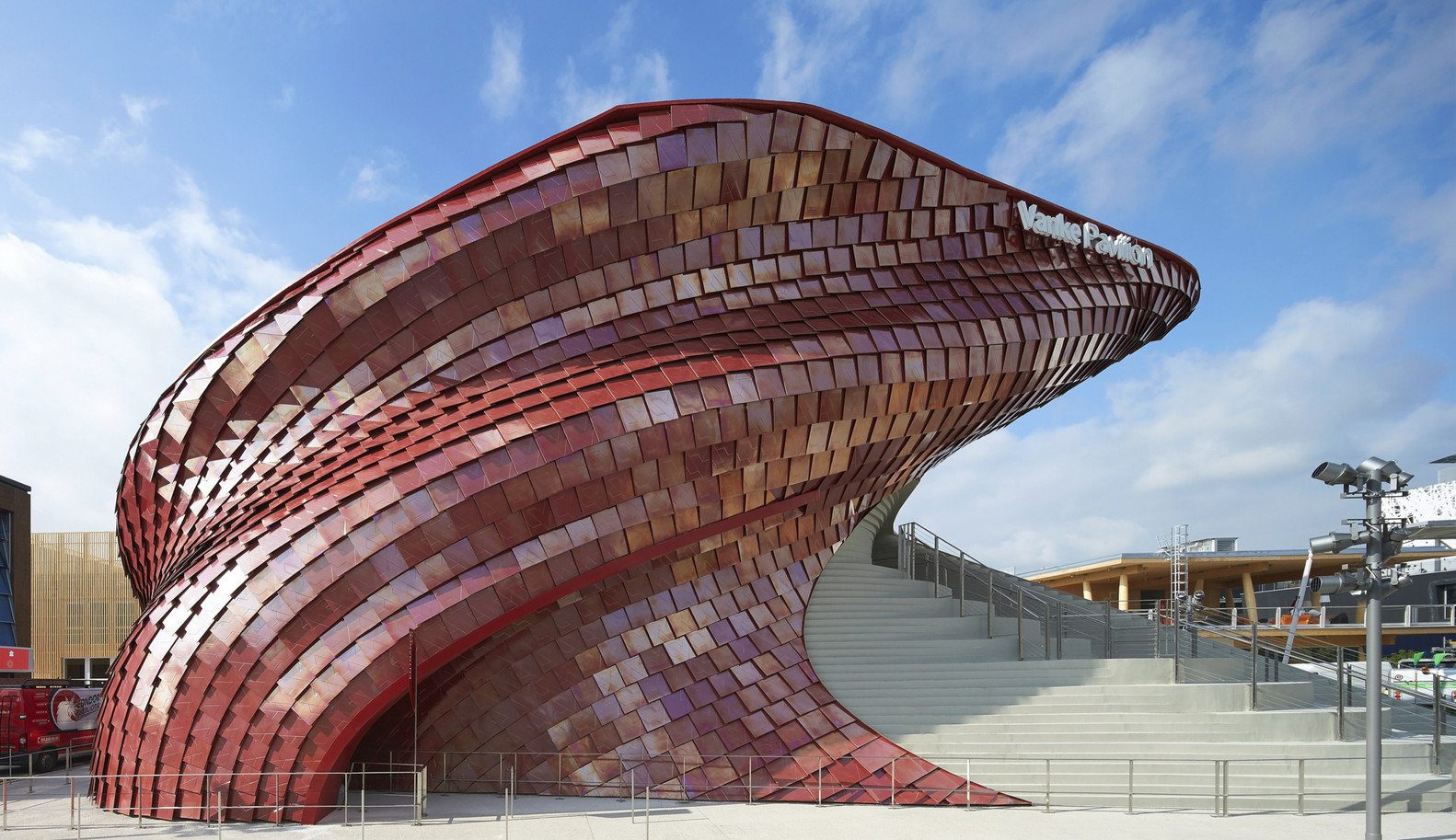
The goal of a pavilion in an Expo is to have an impact and catalyse change. Architect Daniel Libeskind in designing the Vanke China corporate pavilion certainly triumphs in this feat At first glance the pavilion seems as if it is a red serpent rising from the ground – evoking the impression of a piece of art. The form, the exhibits and each element of the pavilion explains its theme.
© Hufton+Crow
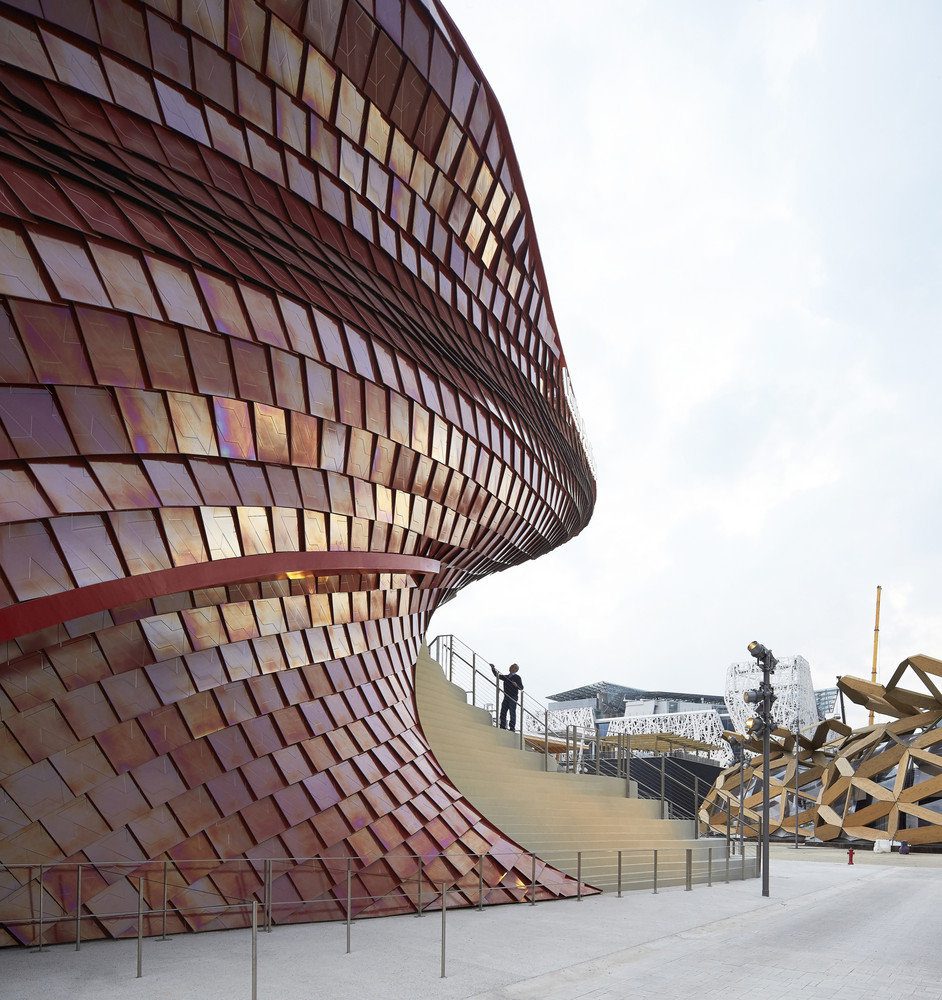
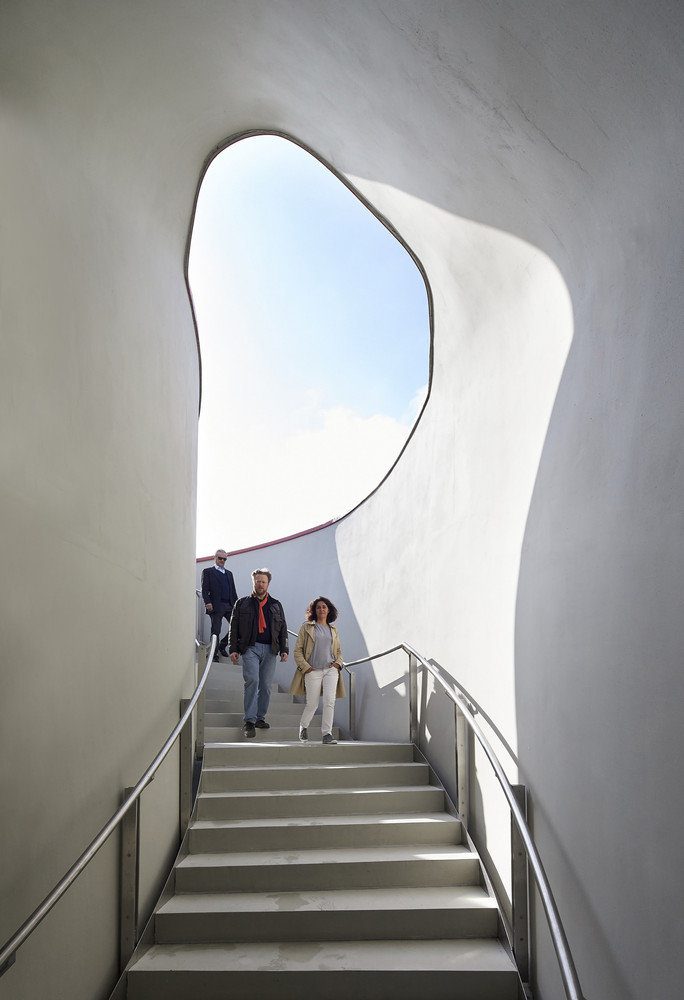
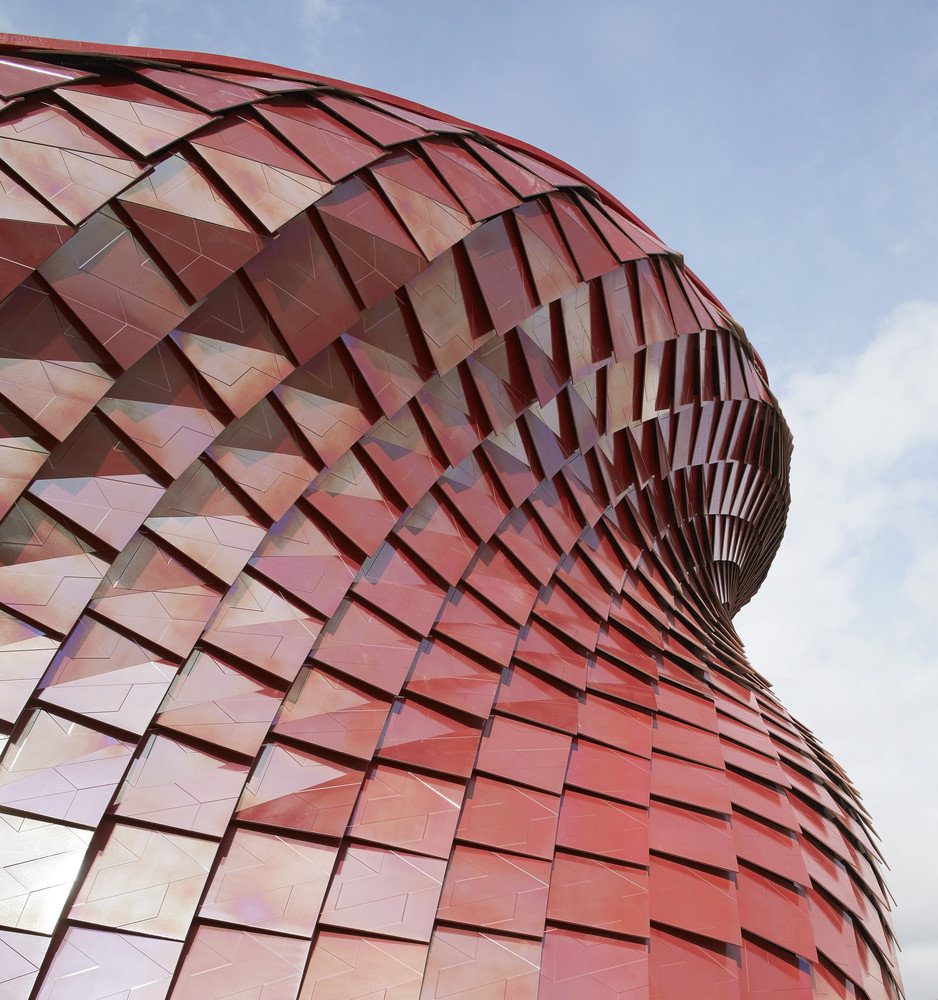
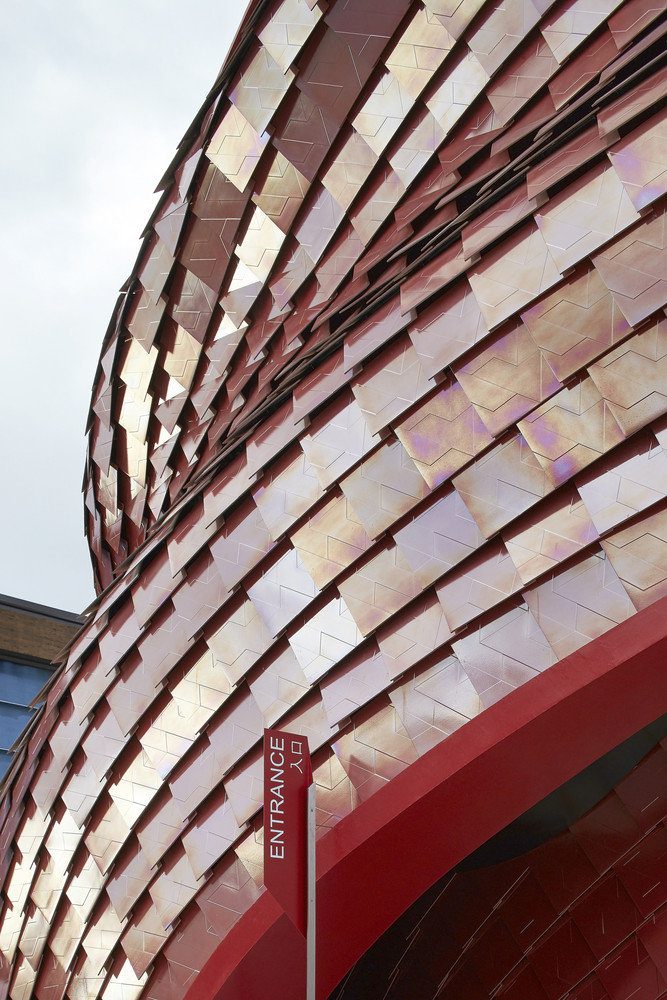
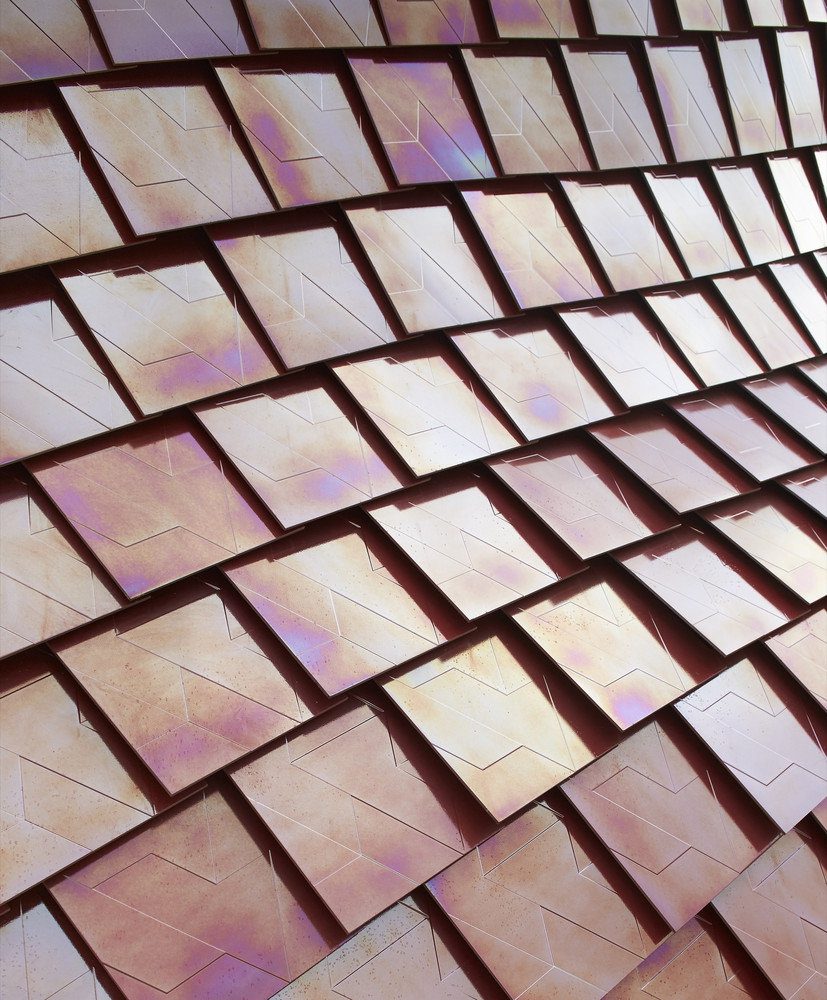
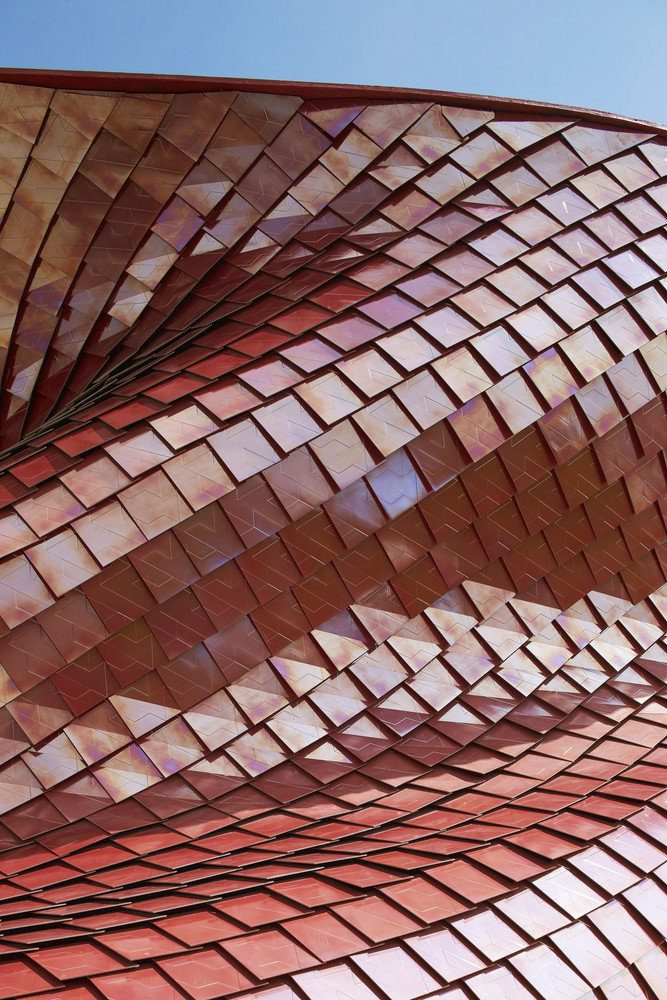
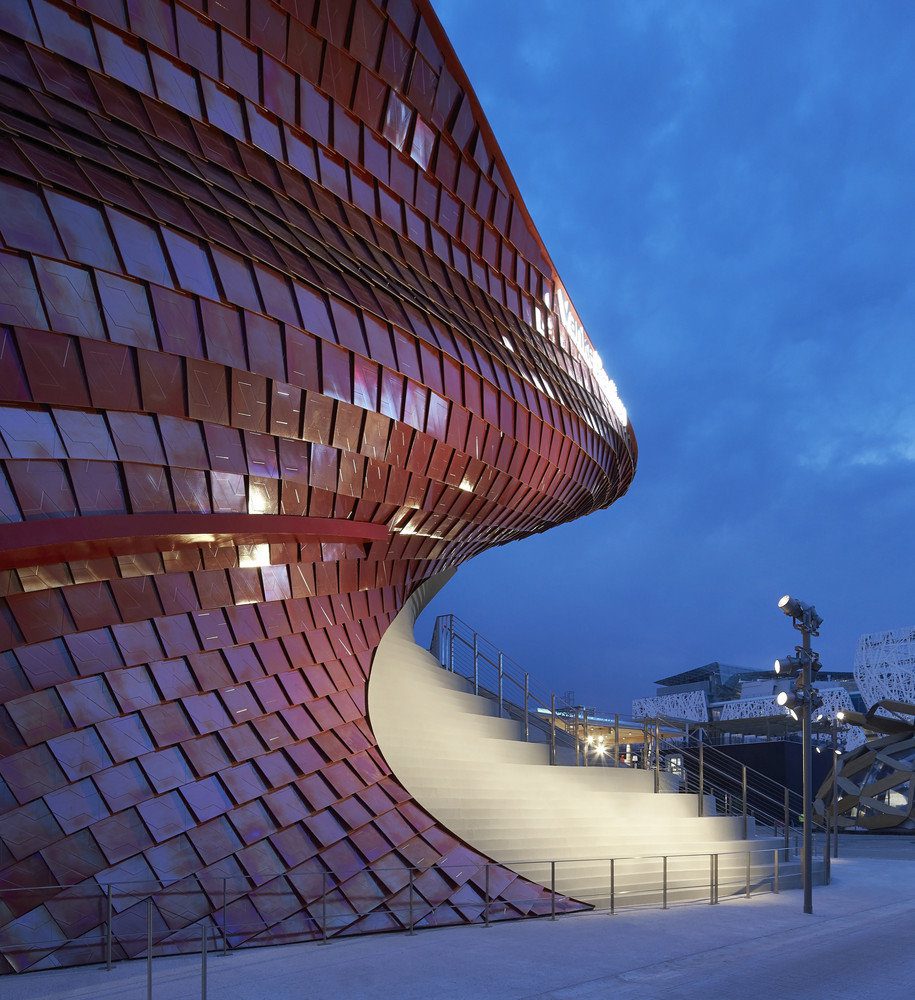
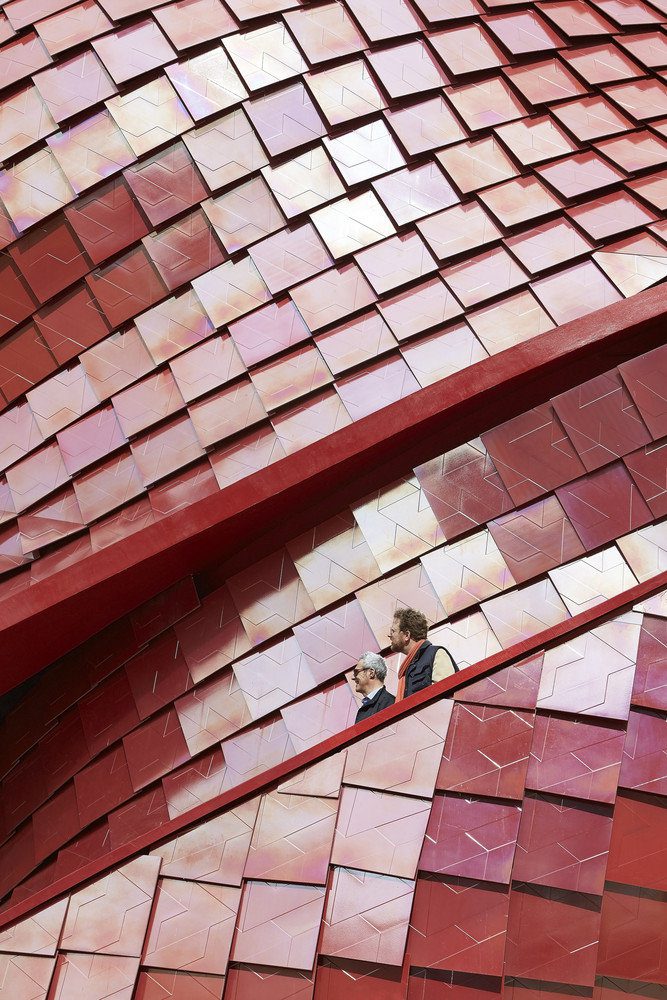
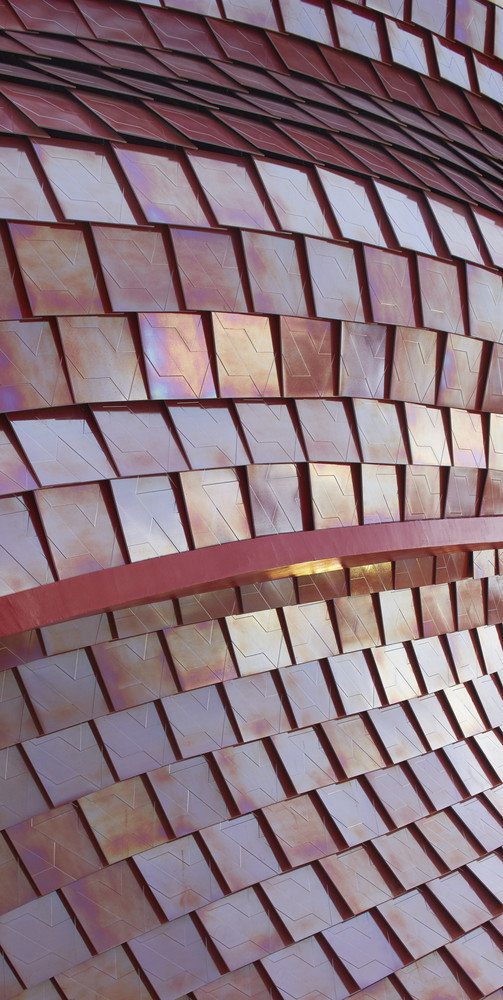
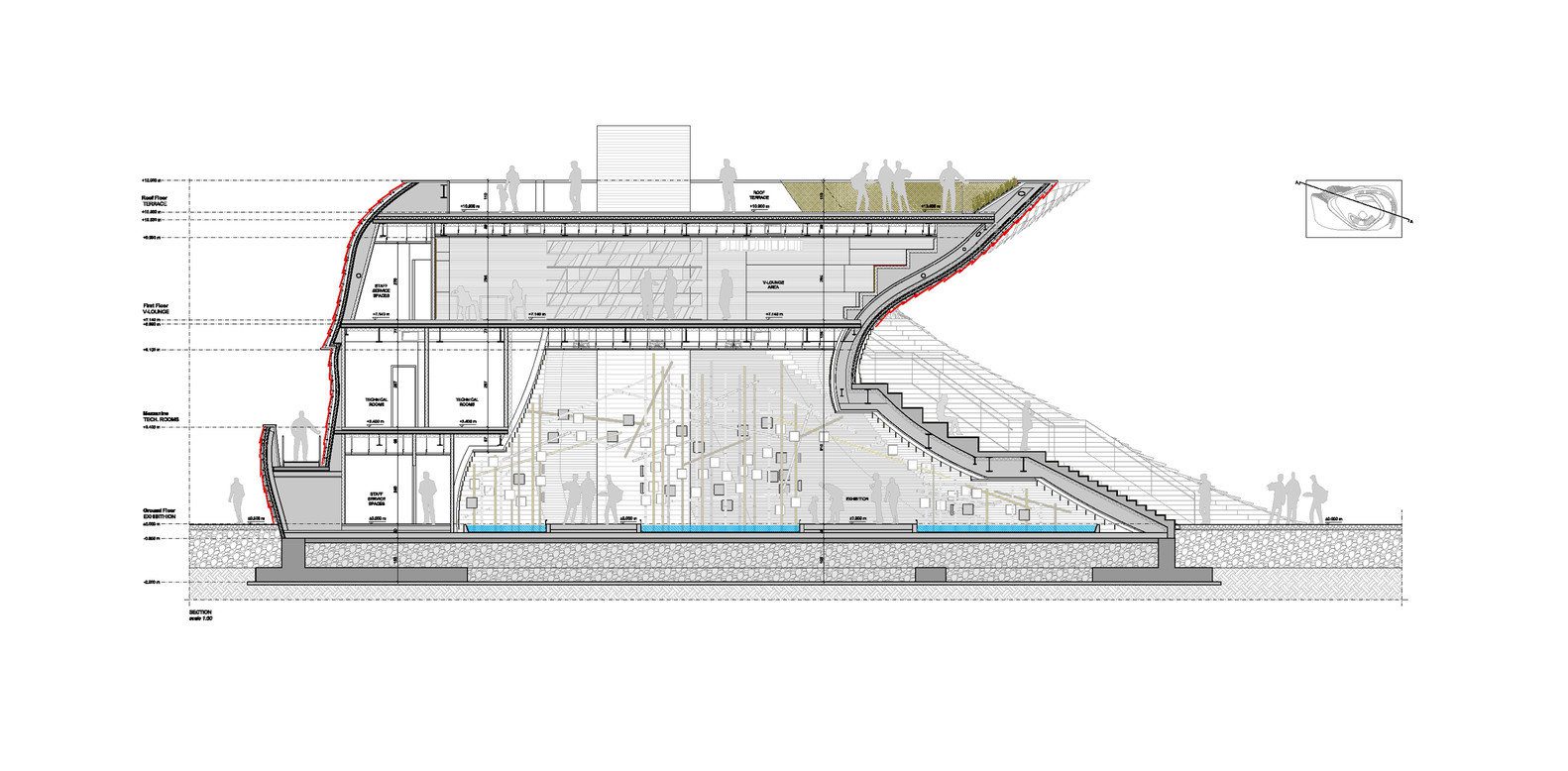
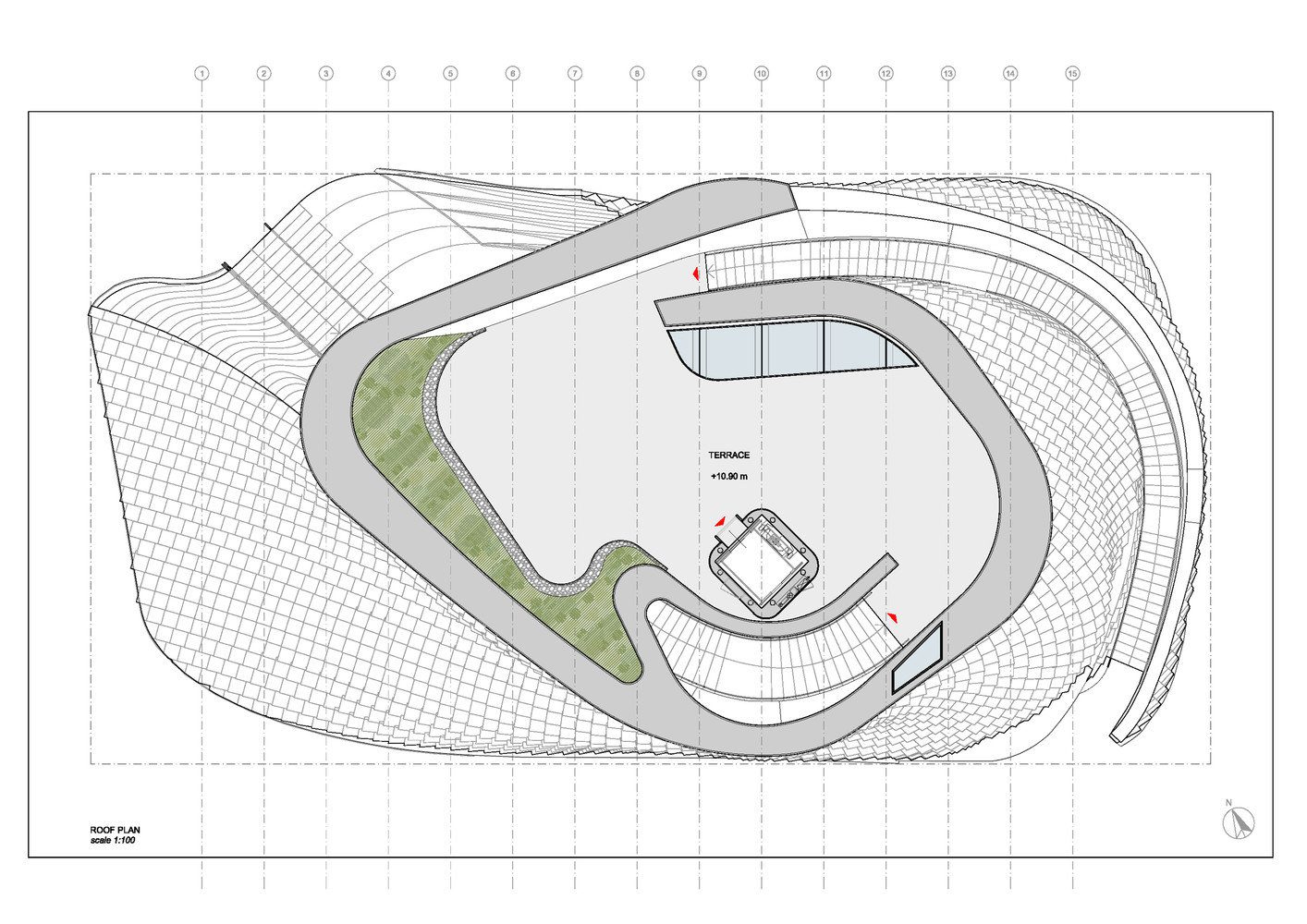
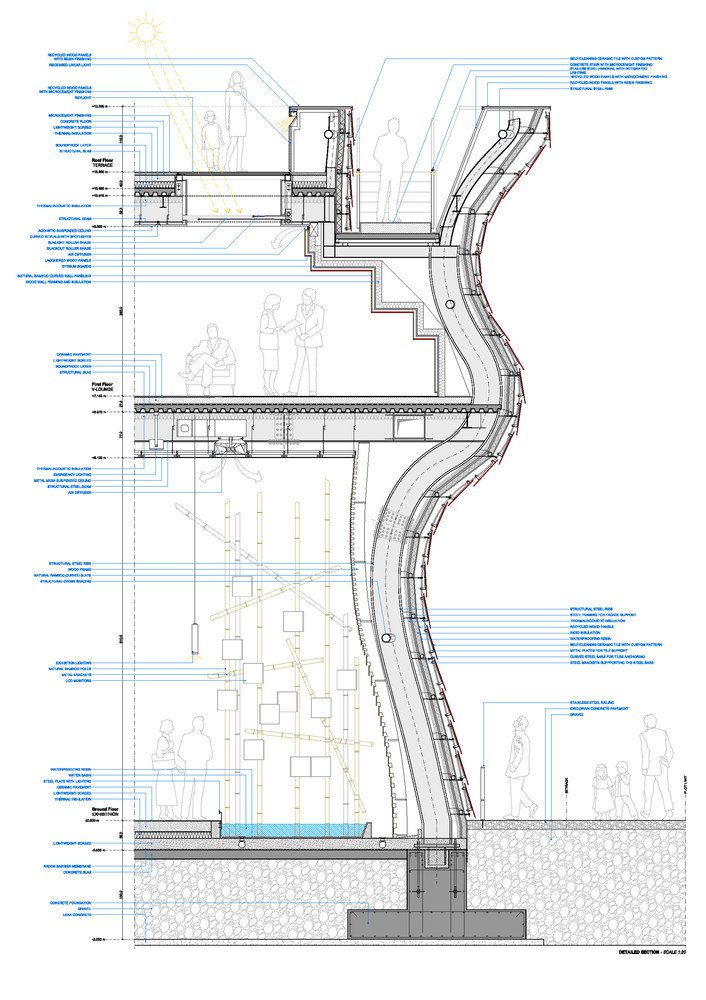
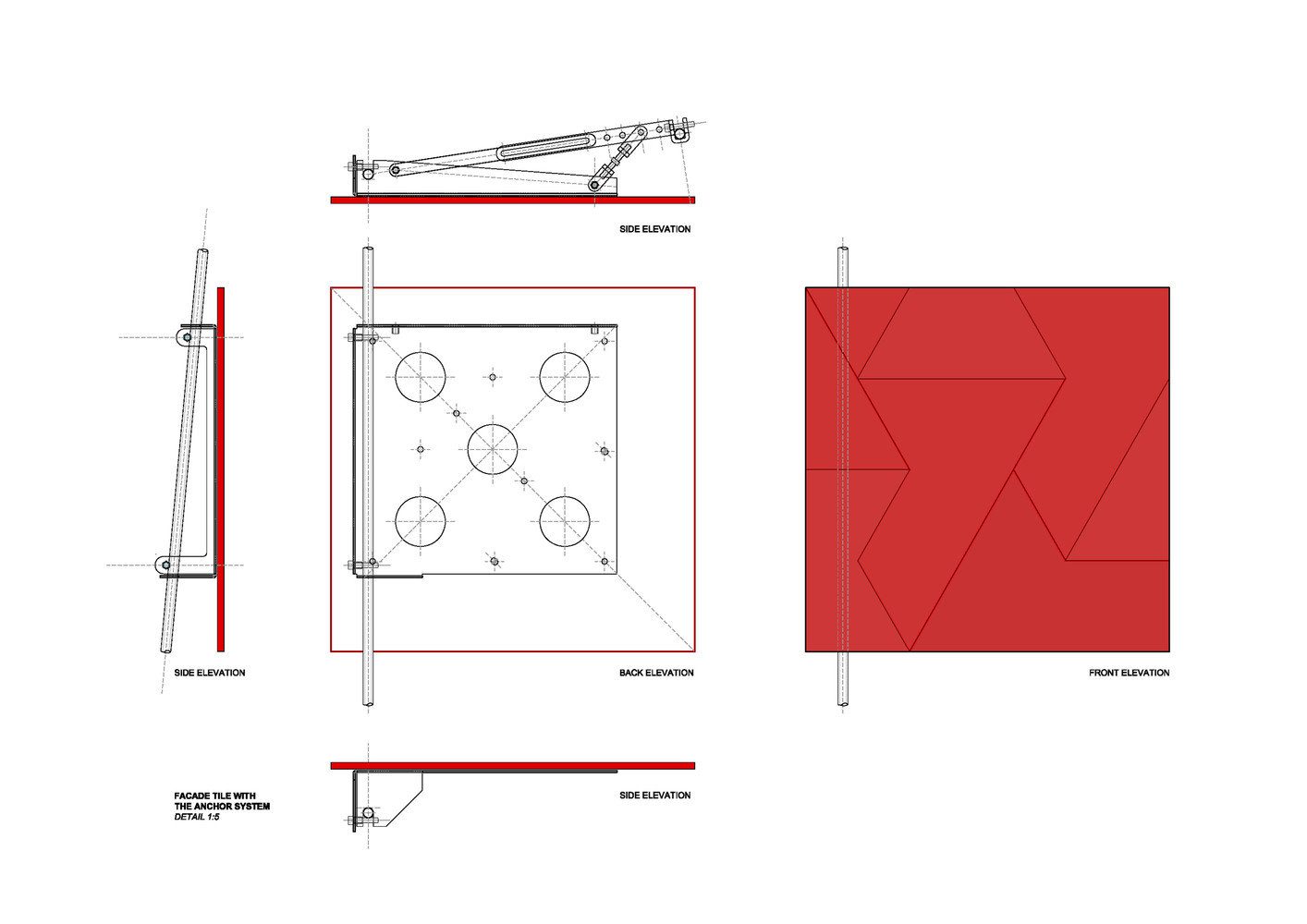
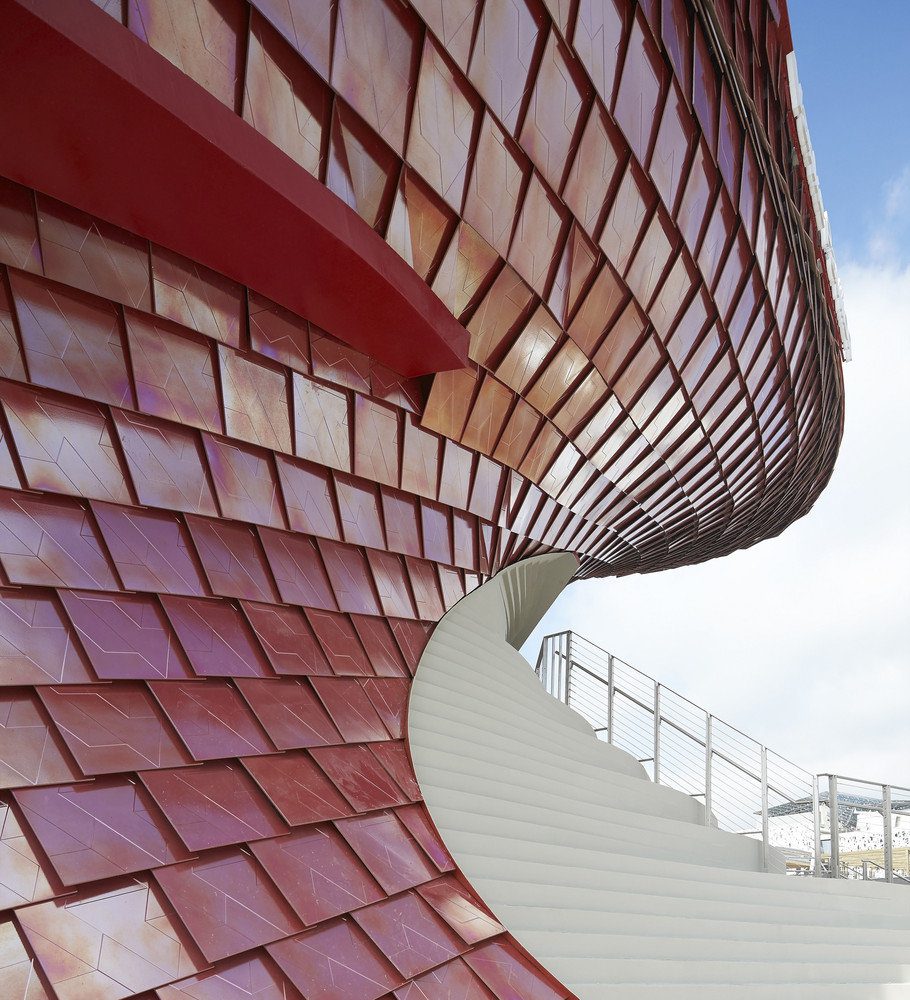
Viewing the theme of the Expo “Feeding the Planet, Energy for Life” in a unique manner, the pavilion is inspired from Chinese culture related to food.Chinese culture sees landscape as the fundamental element to life, and thus the pavilion located near Lake Arena has been designed to be an extension of its surrounding landscape, as it seems to rise up from within the ground. The form represents a dragon, which is “metaphorically related to farming and sustenance.” The red scales of the dragon are 4000 metalised tiles that the architect designed with the Italian company Casalgrande Padana. These tiles are sustainable and self-cleaning and also have air purification properties. The tiles seem crimson, gold or white depending on the intensity of light and the viewpoint. A grey concrete staircase cuts through the pavilion. It leads to a rooftop observation deck.
© Hufton+Crow
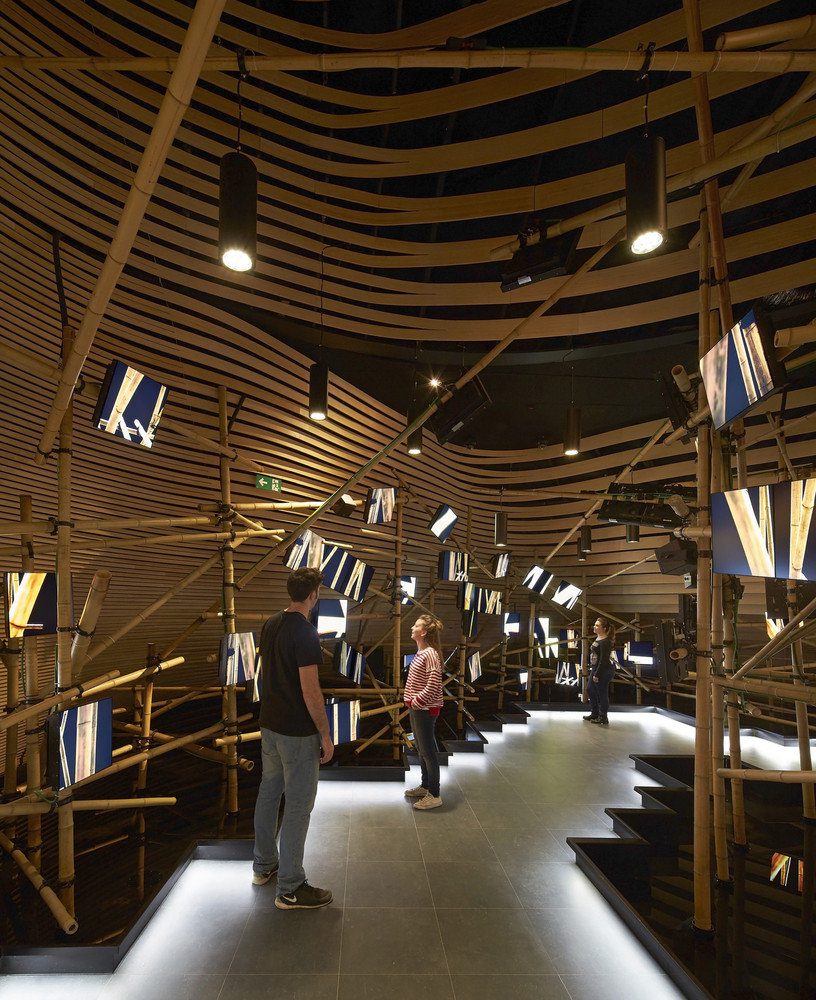
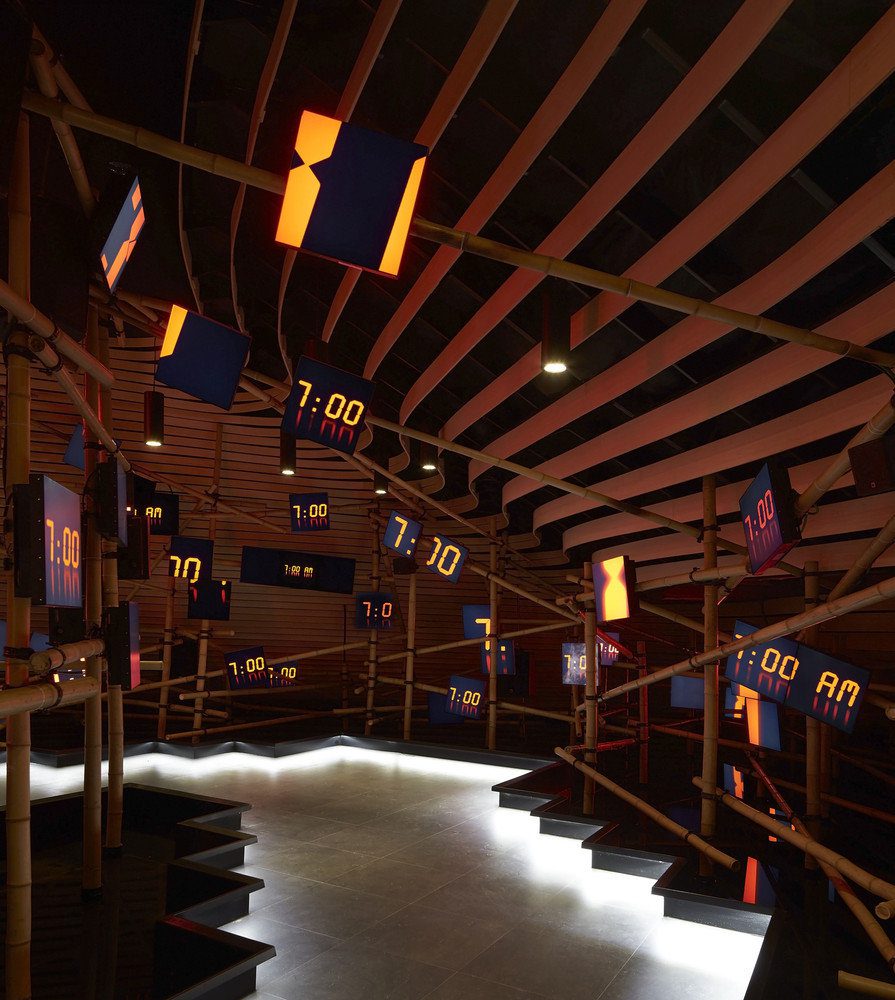
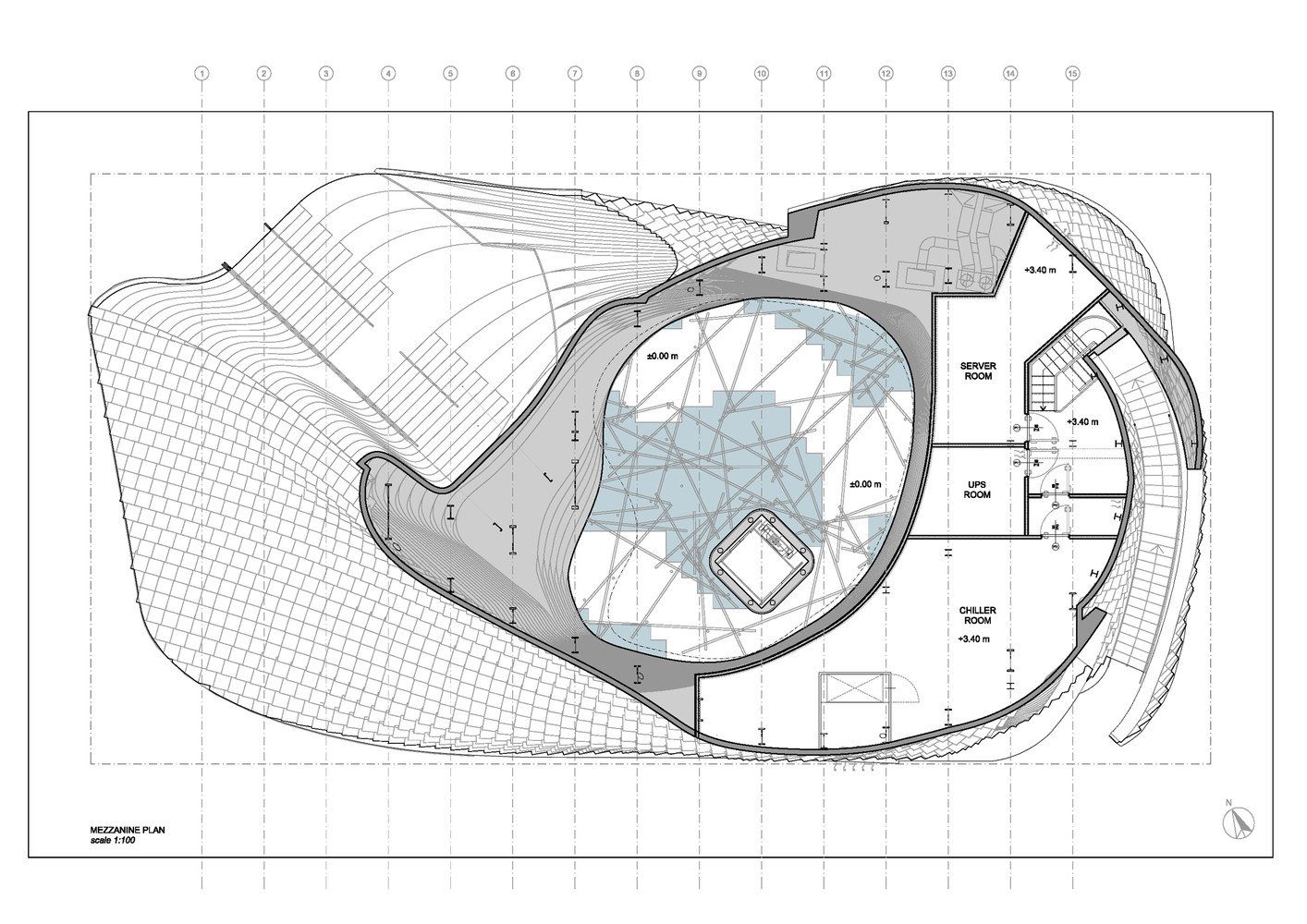
Bringing out the message of the pavilion is the interior space. 200 screens look down from every point and angle, creating a unique audio-visual presentation. These have been mount on bamboo scaffolding, giving an experimental look to the space thereby attracting the curiosity of the visitors. Through various experiences of the people, this audio visual exhibit relates the power of Shitang, a traditional Chinese dining hall.
© Hufton+Crow
Shitang not only represents a place of eating, but a social structure that still exists in contemporary Chinese society. In the time starved and crowded city life, social and human links are growing weaker. The idea of a communal meal is the complete opposite of this as it takes time to prepare and consume, creating opportunities for rich conversations and forging bonds, thereby building healthy communities through a “sustainable and innovative environment.”
Project info:
Architects: Studio Libeskind
Country: Italy, Milano
Area: 1210 m²
Year: 2015
Photographs: Hufton+Crow
Manufacturers: Vectorworks, FiAM, Keil, Lasvit
Technical Director/Architect Of Record: Agostino Ghirardelli
Exhibition Design & Media Content: Ralph Appelbaum Associates
General Contractor: Bodino Engineering Srl, Pavilion / Nussli, Exhibition
Architect In Charge: Yama Karim
Project Management Consultant: J&A Consultants Srl
Director Of Works: Ginevra Macchi
Sustainability: Deerns Italia Spa
Structural Engineer: Ramboll
Structural Installation: OCML Spa
Light Fixtures: iGuzzini
Vip Lounge Chandelier: Lasvit
Vip Lounge Furniture: Poliform, Domus Tiandi
Vip Lounge Monitors: Fiam
Doors: Tre P & Tre Più
Mechanical Engineer: Deerns Italia Spa, Gianni Benvenuto Spa
Installations: Deerns Italia Spa, Gianni Benvenuto Spa
Exhibition Design Principal: Ralph Appelbaum
Exhibition Design And Project Director: James Cathcart
Exhibition Director Of Media: Alex Vlack
Exhibition 3 D Design And Project Management: Anthony Dong
Exhibition Graphic Director: Josh Hartley
Exhibition Head Of Production: Lilly Preston
Civil Works: Paterlini Costruzioni Spa
Electrical Engineer & Installations: Deerns Italia Spa, Diesse Electra Spa
Façade Engineer & Installations: Nerobutto Snc, Casalgrande Padana, Bodino Engineering Srl
Mechanical Engineer & Installations: Deerns Italia Spa, Gianni Benvenuto Spa