


UnSolid by Mauro del Santo
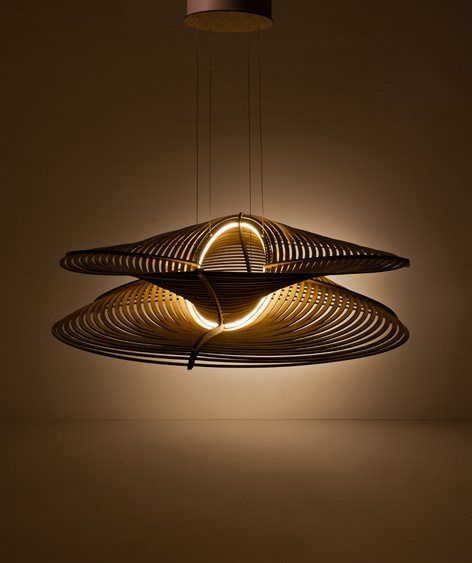
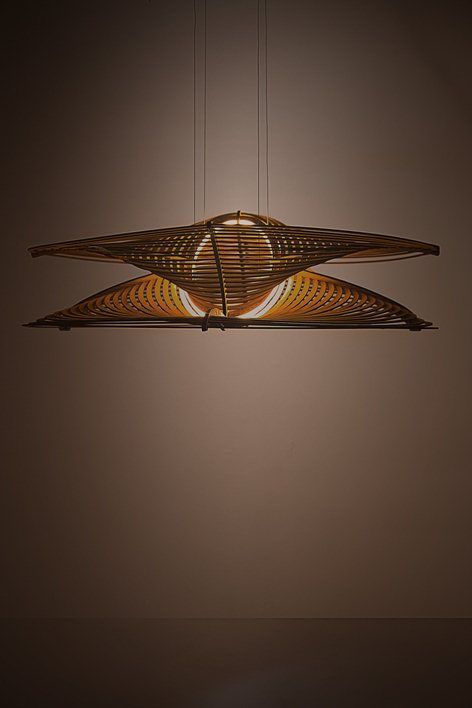
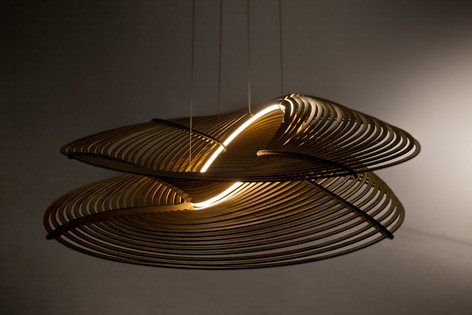
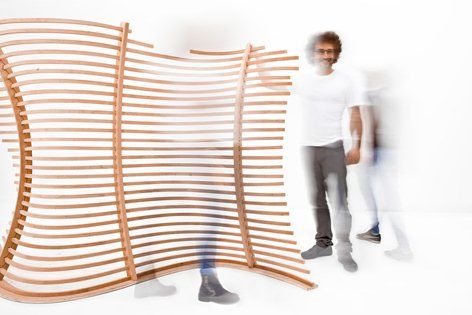
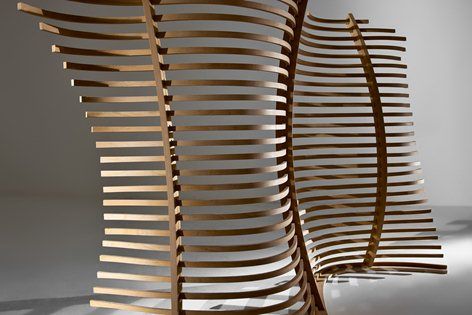
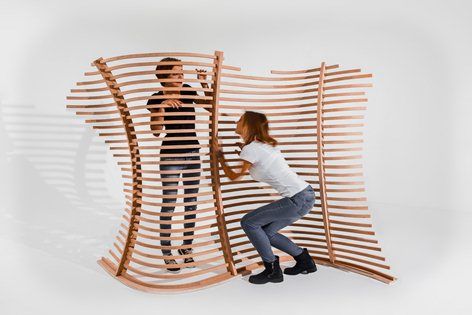
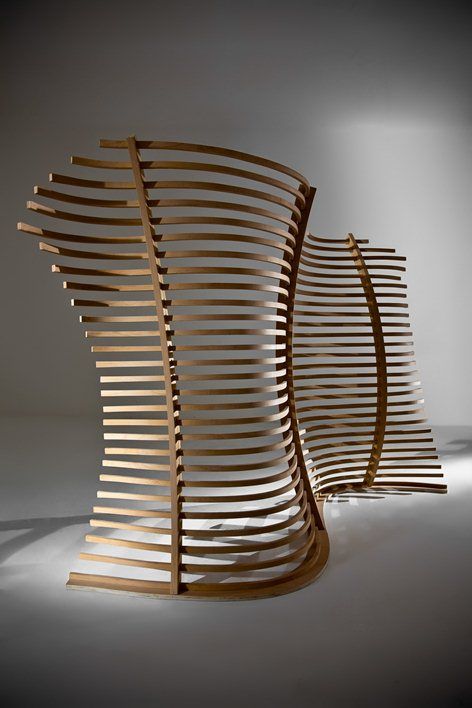
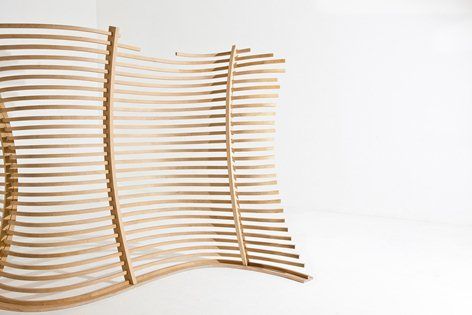
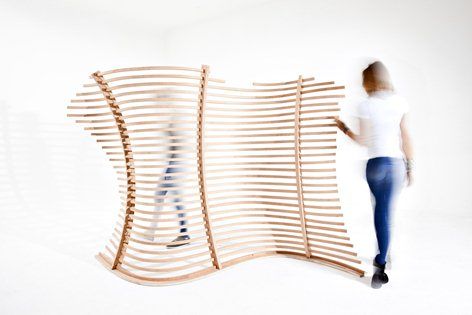
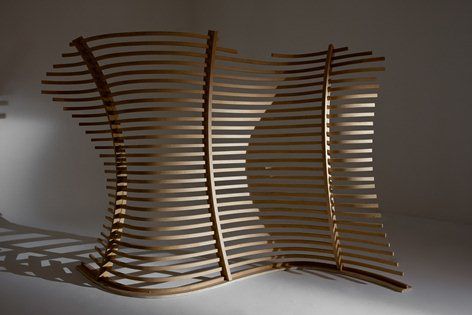
Design morphology is at the heart of the new and groundbreaking technology of representing objects in a more structural & computational way. One such project is Mauro del Santo’s swirling and attractive looking lamp design & partition wall.
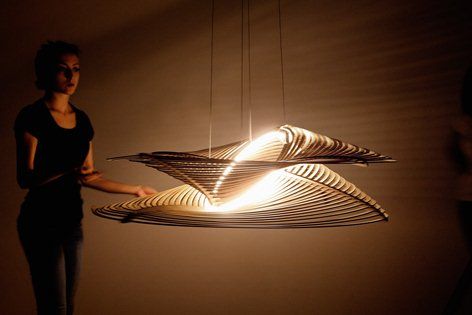
Courtesy of Mauro del Santo
According to what the lead senior designer Valerio Isacchini, junior designer Julia Cavallini, and equally importantly – the matematician Alessandro Evangelisa have created as a prototype, the design rationale for their luminaire body and the partition wall comes from the development and re-contextualisation of Euclediean geometry with the help of mathematical computations and innovative materials manifacturing. The team of three together have combined skills – craft and mind, and thus have produced an ingenious looking piece which great matematicians from the past shave suggested yet have not had the knowledge to conceive and create.
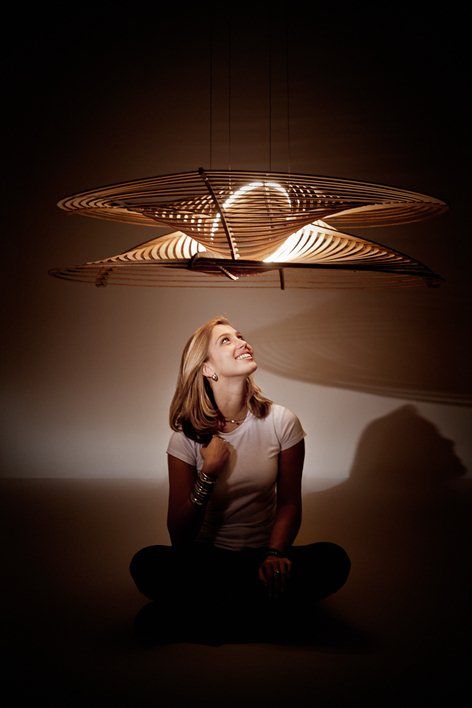
Courtesy of Mauro del Santo
Looking at UnSolid, this object is an example of a visual example of hyperbolic geometry, introduces by Lobachevsky. This modern conception of geometry helps designers escape from the Eucledian 2D plane and its postulates in order to render their futuristic ideas with the use of CAD and absract mathematical processing. Speaking of abstract processing, the UnSolid is quite reminiscent of M. C. Escher’s tessalations and visualisations of hyperbolic geometry.
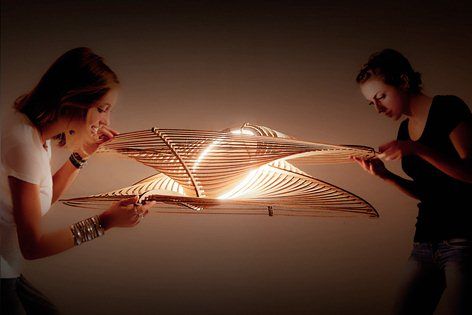
Courtesy of Mauro del Santo
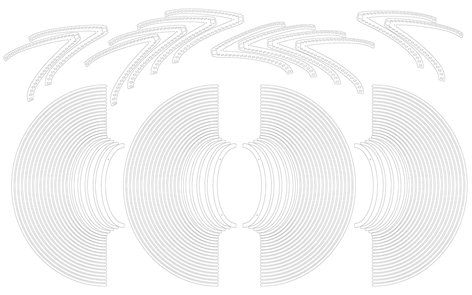
So how exactly does the team of UnSolid stand out from the vastly popular fashion for computer-generated geometry? They introduce design morphology at the core of the interior and furniture design research in their career. Analysing and synthesising the need of light with that of its efficient spread-in-space and emotional-health impact on the human body, the team uses mathematical trigonometric functions for all 3 coordinates of the 3D space in order to achieve a striking result. And the outcome is that with the use of computer generated geometry they have a clear idea of how to effectively and efficiently use material – in this case, wood.
The team’s modus operandi is fast and economic in its essence, involving new and simple woodworking techniques with primitve and very easy-to-follow construction method. Simplicity, quite present in the studio’s UnSolid lighting design, is indeed the ultimate form of sophistication [Leonardo da Vinci].
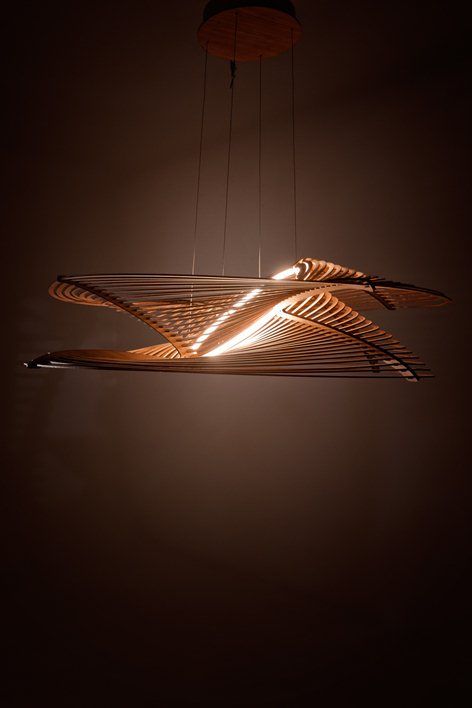
Courtesy of Mauro del Santo

Anastasia Andreieva is an accomplished Architectural Projects Editor at Arch2O, bringing a unique blend of linguistic expertise and design enthusiasm to the team. Born and raised in Ukraine, she holds a Master’s degree in Languages from Taras Shevchenko National University of Kyiv. Her deep passion for architecture and visual storytelling led her to transition from translation and editorial roles into the world of design media. With a keen eye for conceptual clarity and narrative structure, Anastasia curates and presents global architectural projects with precision and flair. She is particularly drawn to parametric and digital design, cultural context, and emerging voices in architecture. When I’m not analyzing the latest architectural trends, you’ll probably find me searching for hidden gems in cityscapes or appreciating the beauty of well-crafted spaces. After all, great design—like great connections—can be found in the most unexpected places. Speaking of connections, because architecture isn’t the only thing that brings people together.