

Travertine is a natural stone: a form of limestone deposited by mineral-rich springs, often hot springs, as calcium carbonate precipitates out of the water. Gas bubbles and plant matter trapped during that process leave its characteristic pits and voids, and its colours run from cream and ivory to walnut, gold and red. Architects have used travertine for two thousand years, from the Colosseum to the Getty Center. This guide explains what travertine is, how each finish behaves, where it works and where it does not, and how to keep it looking good.
It is written for architects, interior designers and homeowners choosing a floor, wall or facade stone, with each finish matched to the applications it suits.
What travertine is
Travertine is, in geological terms, a terrestrial limestone deposited around mineral springs. It forms where groundwater rich in dissolved calcium carbonate reaches the surface, at springs, in limestone caves and around hot springs. As the water loses carbon dioxide, the mineral comes out of solution and builds up in layers, which is why many slabs show a banded grain. Roman travertine was quarried in the sulphur-spring basins around Tivoli, east of Rome, where it was called lapis tiburtinus, the stone of Tibur, the ancient name for Tivoli; the same quarries are still worked today.
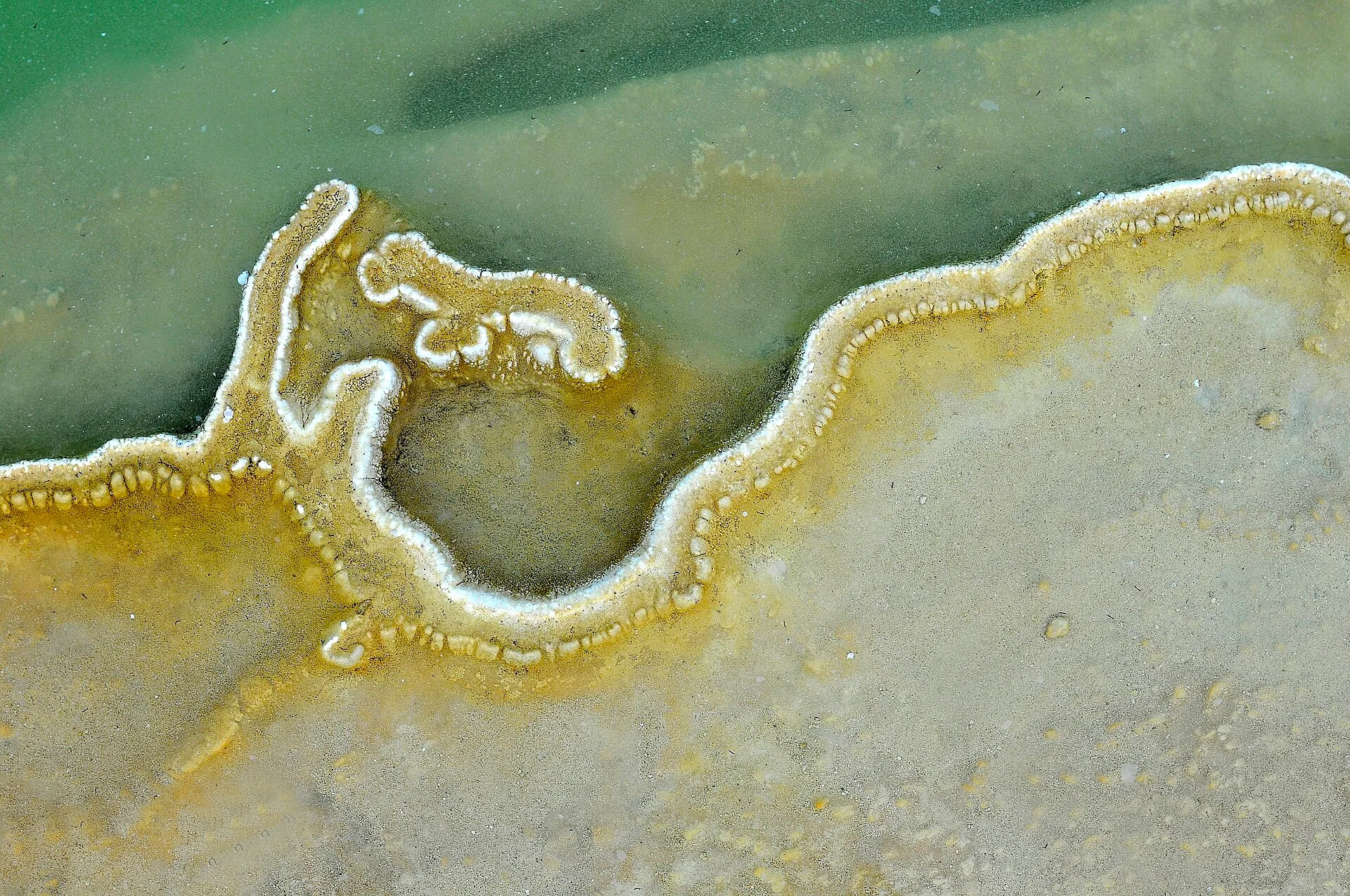
Is travertine a real marble? No, although it is often sold alongside marble. Travertine is a sedimentary stone, a type of limestone formed at the surface, while marble is a metamorphic rock: limestone that has been recrystallised by heat and pressure deep underground. Both are made mainly of calcium carbonate, which is why they share the same weakness to acids, but travertine is generally more porous and has open voids that marble does not.
How a slab is cut also changes its look. Cut along the layers (often called cross-cut or fleuri cut), travertine shows a cloudy, mottled pattern; cut across them (vein cut), it shows straight, linear bands.
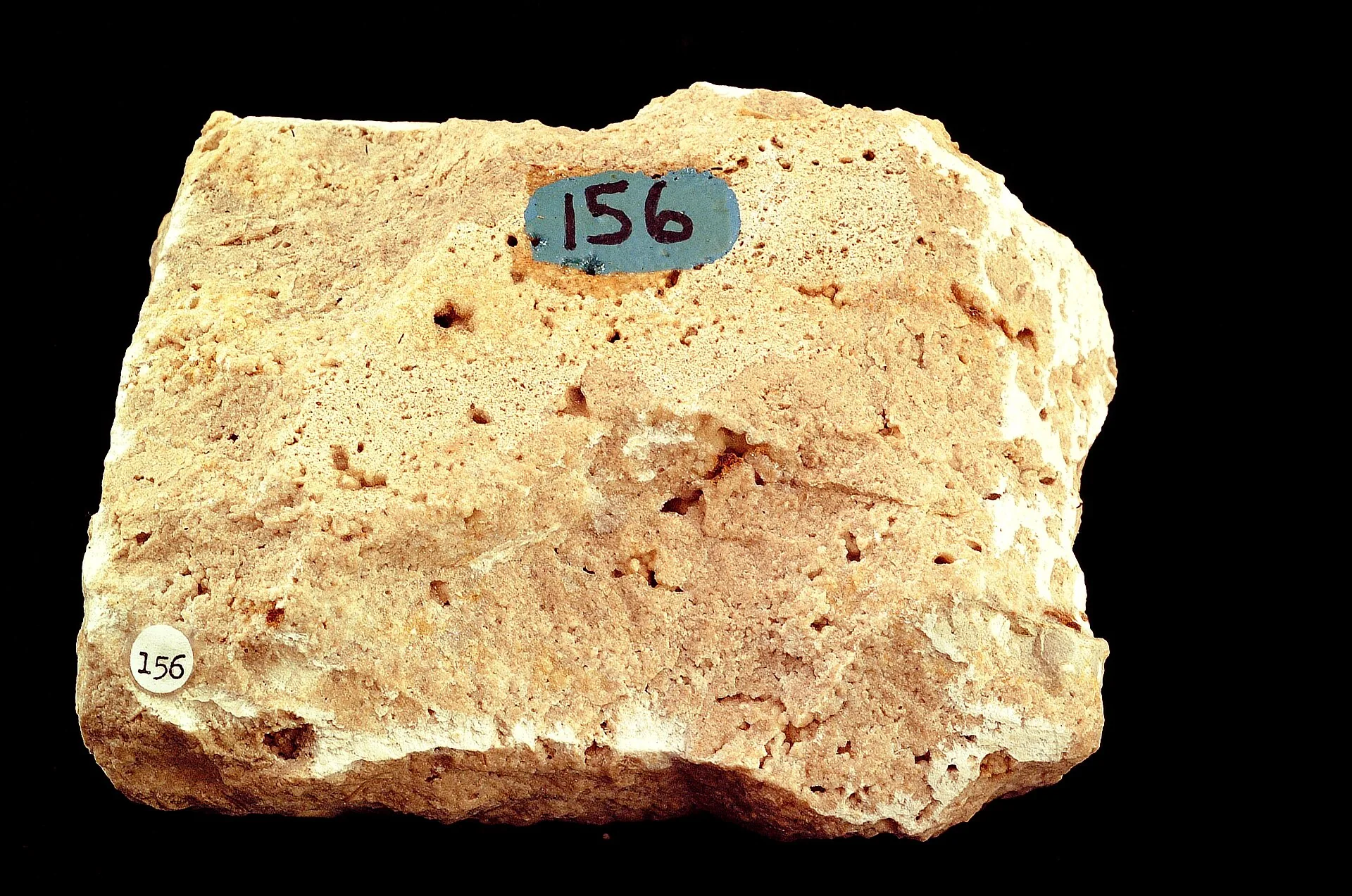
Travertine finishes
The finish decides how travertine looks, how it feels underfoot, how slippery it is and how much care it needs. The table summarises the main options.
| Finish | How it is made | Look and feel | Best for | Care notes |
|---|---|---|---|---|
| Honed | Ground to a smooth surface | Matt, calm, smooth | Interior floors and walls | Hides wear; re-honing removes etch marks |
| Filled (honed or polished) | Voids filled with cement or resin, then finished | Flat, uniform | Floors in kitchens and bathrooms | Easiest to clean; filler may need renewal |
| Unfilled | Natural voids left open | Textured, visible holes | Walls, outdoor areas | Voids collect dirt; seal well |
| Tumbled | Tumbled in a drum with grit and water | Rounded edges, aged look | Patios, pool surrounds, rustic floors | Seal before and after grouting |
| Brushed | Wire-brushed surface | Lightly textured | Outdoor paving, floors needing grip | Moderate; seal |
| Polished | Ground and polished to a shine | Reflective, closest to marble | Walls, low-traffic areas | Shows scratches and etching most |
| Split-face / cleft | Split rather than sawn | Rough, three-dimensional | Feature walls, facades | Dust and dirt collect in the relief |
Source: Arch2O synthesis of manufacturer and installer guidance (Tile Shop, Home Depot product guide, Hunker) and the Getty Center description of cleft-cut travertine (as of 21 October 2026).
Honed stone is ground to a smooth, matt surface. It is the most common finish for interior floors and walls because it looks calm and hides wear better than a polished surface.
Filled or unfilled. The natural holes are often filled with coloured cement or resin before honing or polishing. Filled travertine is easier to clean and gives a flatter surface; unfilled travertine shows its texture but collects dirt in the voids, so it suits walls and outdoor areas better than kitchen floors.
Tumbled tiles are tumbled in a drum with abrasive grit and water, which rounds the edges and softens the surface into an aged look. It is popular for patios, pool surrounds and rustic floors, and it is usually sealed before and after grouting because the open surface absorbs grout and stains.
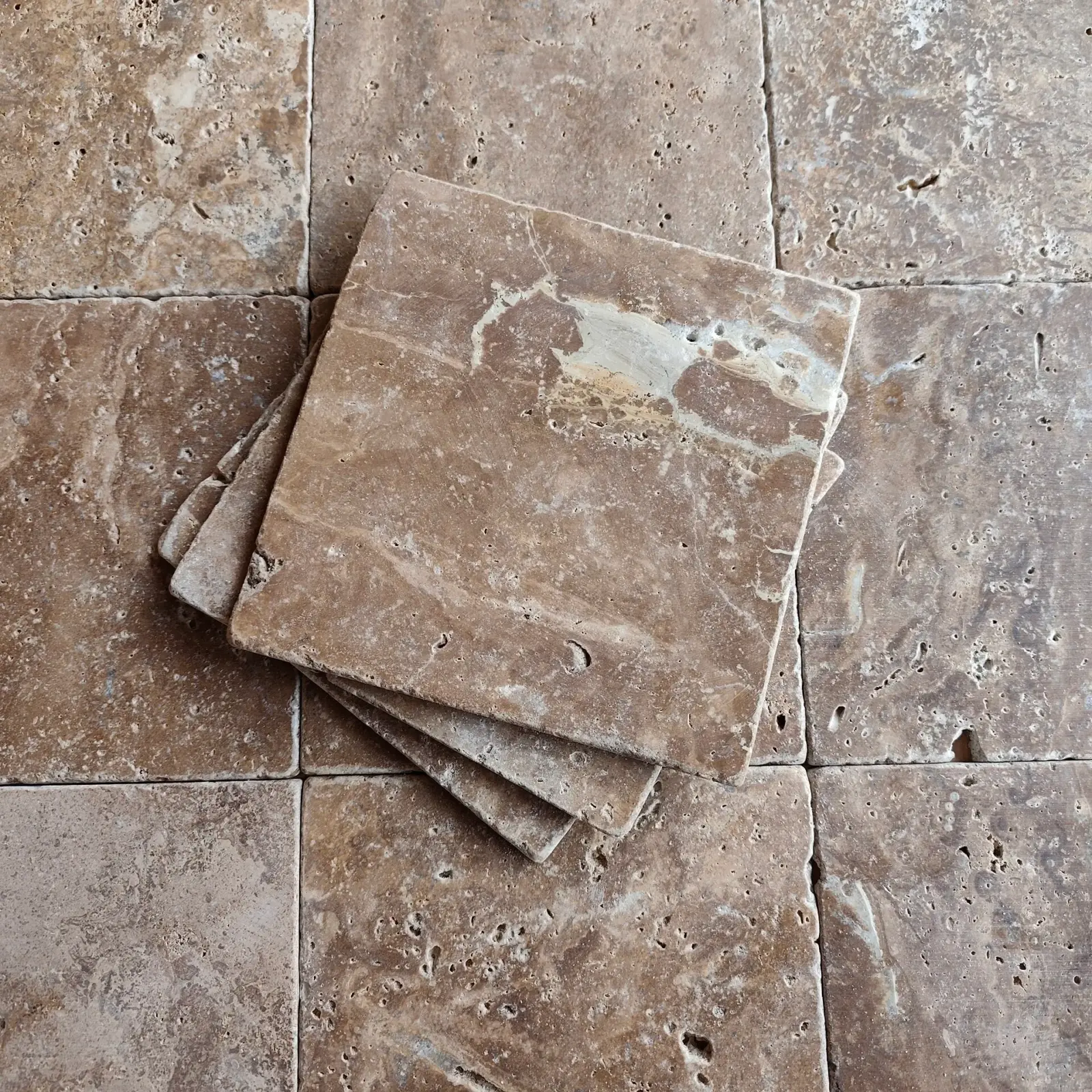
Brushed stone is worked with wire brushes to give a slightly textured surface between honed and tumbled. Polished stone is ground until it reflects light; it looks closest to marble but shows scratches and etch marks most clearly, so it suits walls and low-traffic areas. Split-face or cleft stone is broken rather than sawn, leaving a rough, three-dimensional face for feature walls and facades.
Where to use travertine
- Interior floors: honed and filled tiles in living areas and bathrooms; check slip resistance for wet areas.
- Bathrooms: works well for walls, floors and shower surrounds if sealed and maintained; avoid acidic cleaners.
- Kitchens: possible for floors and splashbacks, but risky for worktops because lemon juice, wine and vinegar etch the surface.
- Outdoor paving and pool surrounds: tumbled or brushed finishes stay relatively cool underfoot and has good grip when textured. In climates with freeze–thaw cycles, choose a dense, frost-resistant grade and check the supplier’s test data.
- Facades and cladding: large-format stone panels on rainscreen fixings are a classic facade material; see our guide to how to choose facade cladding materials for how stone compares with other options.
Pros and cons of travertine
Advantages
- A warm, natural look with no two pieces alike.
- Durable enough for floors and facades when correctly specified; Roman buildings in this stone have lasted two millennia.
- Many finishes from the same stone, from polished to tumbled.
- Textured finishes give good grip outdoors and around pools.
Disadvantages
- Acid sensitivity: as a calcium-carbonate stone, it etches when it meets acids, from citrus juice to some cleaning products.
- Porosity: the stone absorbs liquids and stains unless sealed, and unfilled voids collect dirt.
- Maintenance: it needs resealing over time and pH-neutral cleaning.
- Weight: stone floors and cladding need a substrate and structure designed for the load.
Is travertine an expensive stone? It typically costs more than ceramic or porcelain tile and less than many premium marbles, but prices vary widely with origin, grade, size, finish and whether it is filled. Installation, sealing and the substrate can cost as much as the stone itself, so compare complete installed prices from local suppliers rather than stone prices alone. Is travertine out of style? There is no reliable data on design fashions, but it has been specified continuously for public buildings for centuries; choosing a calm honed finish in a neutral colour is the safest way to avoid a dated look.
Travertine vs marble, limestone and porcelain
Clients often weigh travertine against three alternatives. The comparison below is general; individual quarries and products vary, so always check the supplier’s technical data.
| Material | Origin | Typical surface | Acid sensitivity | Maintenance |
|---|---|---|---|---|
| Travertine | Sedimentary: limestone deposited at mineral springs | Pitted, banded; filled or unfilled | High (calcium carbonate) | Seal; pH-neutral cleaning; refill voids |
| Marble | Metamorphic: recrystallised limestone | Dense, veined, takes a high polish | High (calcium carbonate) | Seal; etches and scratches show on polish |
| Limestone | Sedimentary: marine or lake deposits | Even, often fossil-rich, fewer voids | High (calcium carbonate) | Seal; softer types wear faster |
| Porcelain (stone-look) | Manufactured ceramic | Printed pattern on a dense body | Very low | No sealing; pattern repeats |
Source: General geology and manufacturer guidance (EPFL Graph Search; Tile Shop); check supplier technical data for specific products (as of 21 October 2026).
Porcelain tiles printed to look like travertine are the low-maintenance option: they do not etch and need no sealing, but the pattern repeats and the edges and back show that the tile is not stone. Real stone can be re-honed and repaired; printed porcelain cannot.
Specifying travertine: a checklist for architects
- Grade and origin. Ask for the quarry, the commercial name and the grade. Better grades have fewer and smaller voids and more consistent colour; lower grades need more filling.
- Cut and finish. State vein cut or cross cut, the finish (honed, polished, tumbled, brushed, split-face) and whether the voids are filled, and with what (cement or resin, and in which colour).
- Technical data. Request the supplier’s test results for water absorption, flexural strength and, for external use in cold climates, freeze–thaw resistance. Use the test methods required in your jurisdiction; local standards govern.
- Slip resistance. For floors, ramps, wet rooms and pool surrounds, specify the slip-resistance value required by local regulations and choose a finish that meets it; polished surfaces rarely do when wet.
- Thickness and fixing. Floors are usually bedded on an adhesive or mortar bed over a stiff, flat substrate; facades need mechanical fixings designed by an engineer for the panel size and wind load.
- Samples and a mock-up. Approve a range of samples, not one perfect tile, so the client sees the natural variation, and build a mock-up panel for large areas.
- Sealing and maintenance. Specify the sealer, who applies it and when, and hand the client written cleaning guidance.
Sealing and care
- Seal before use with a penetrating (impregnating) sealer suited to natural stone, and again when water stops beading on the surface.
- Clean with pH-neutral products. Avoid vinegar, lemon-based and acidic bathroom cleaners, which etch the stone.
- Wipe spills quickly, especially wine, coffee, oil and citrus.
- Protect floors with mats at entrances, because grit scratches polished and honed surfaces.
- Repair, do not replace: etch marks on a honed surface can usually be re-honed, and lost filler can be renewed by a stone specialist.
Travertine in architecture
Two buildings show the range of travertine better than any sample board.
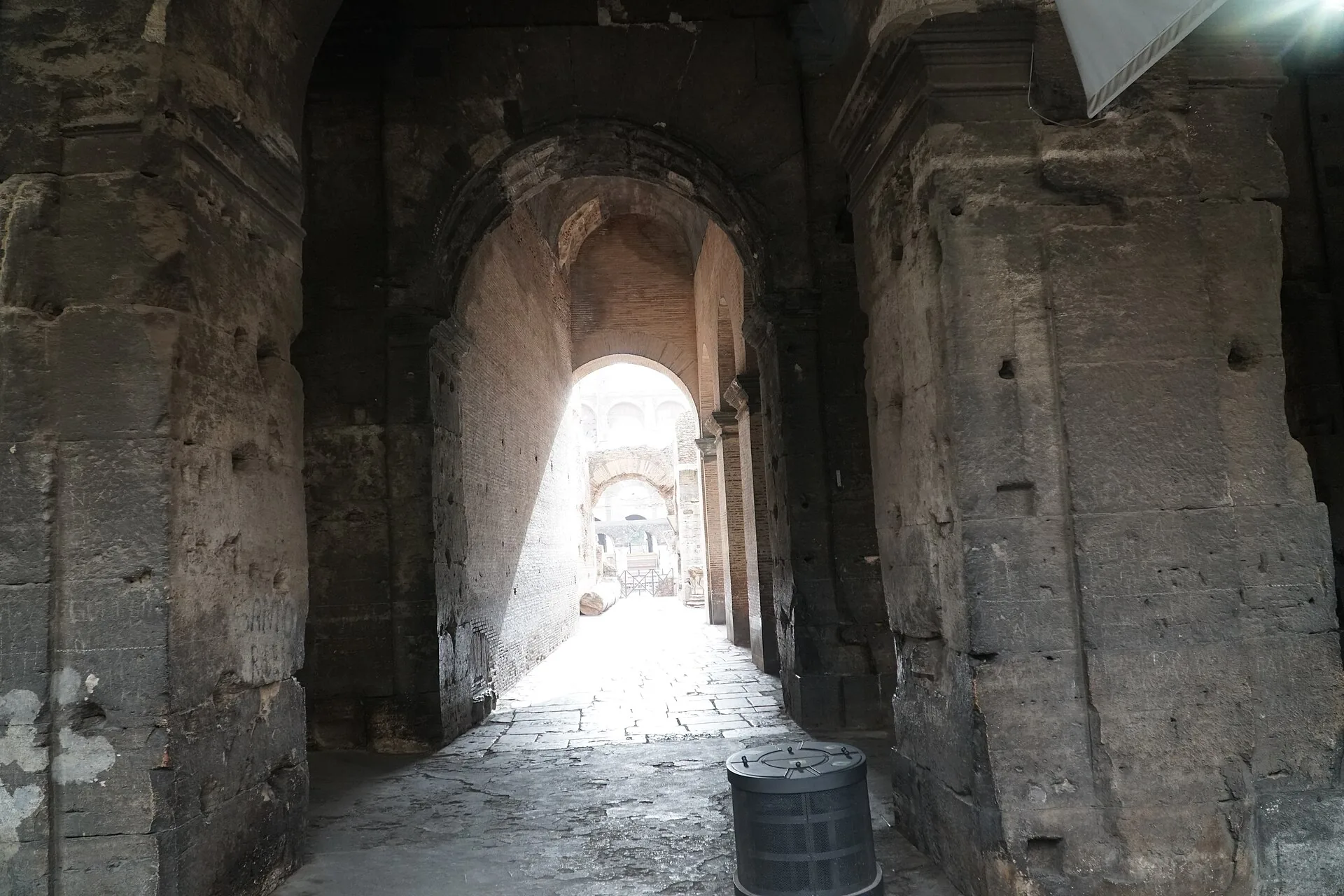
The Colosseum, Rome. Its outer walls were built largely of travertine quarried near Tivoli and floated downstream to the city, and restorers have recently sourced new slabs from the same quarries. The porous texture visible today is partly the natural voids and partly two thousand years of weathering.
The Getty Center, Los Angeles. For Richard Meier’s campus, completed in 1997, the Getty reports that 16,000 tons of travertine from Bagni di Tivoli, Italy were used for paving and cladding. To give the stone a rough, fossil-rich face, the panels were split along their grain with a guillotine process developed especially for the project, so that every wall shows the texture of the stone’s formation.

Travertine pairs naturally with other mineral surfaces such as terrazzo floors, which also rely on natural stone aggregate and honest, durable finishes.
What to ask for before ordering travertine
Request samples of the actual batch in the proposed finish, including filled areas and the least regular pieces. View them dry and wet under the room lighting. Ask which filler is used, where the supplier permits the stone to be installed, and how the finish should be cleaned. Agree how holes, edges and colour variation will be treated before installation. For floors and wet areas, obtain the relevant test information for the supplied product; the word travertine alone does not establish slip resistance, frost suitability or the strength of a thin tile.
For the wider specification process, our guide to selecting architectural building materials explains how to compare requirements before choosing a product.
Summary: choosing travertine
Choose travertine for warmth, texture and longevity, and choose the finish for the job: honed and filled for interior floors, tumbled or brushed for outdoor paving and pools, polished for walls, and split-face for feature walls and facades. Avoid it for kitchen worktops unless the client accepts etching, seal it, clean it with pH-neutral products, and check frost resistance before using it outdoors in cold climates.
For care rather than a product guarantee, the Natural Stone Institute distinguishes acid damage to calcareous stone from staining and explains the role of impregnating treatments. Follow the supplied stone and finish requirements.

Luca Moretti is a content strategist with a foundation in urban design and architecture. Based in Milan, he focuses on writing that bridges aesthetics, material culture, and everyday spatial experiences.