

Honorable Mention
Next7 Competition
Jiayi Jin, Yu Yongzhen
United Kingdom
The site Pudding mill lane can be treated as an urban fringe which is sitting between the flourishing Olympic heritage and the contested territory of Bromley by Bow. As an urban fringe, urban ecology “interrelationship between social, environmental, and mental” of the pudding mill lane is changing in various direction and magnitudes. The investigation starts from the application of rhizomorphic theory. Within these contradictory fragments in the site, transportation infrastructure is my main focus. Then, the research of transportation displays a history of acceleration of speed with various object and information. Technology development is pushing our “speed” to its limitation, and the core of transportation is also changing from physical to digital.
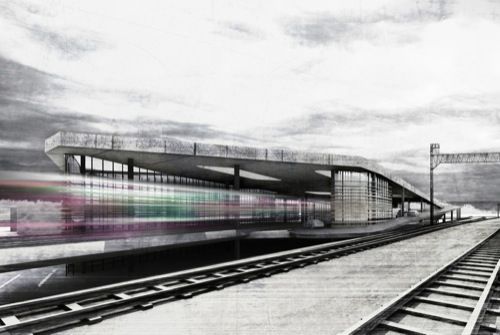
Transport identity
The transportation culture is one of the identities of the site. The transport infrastructure is the major factor which is influencing the redevelopment of pudding mill lane, and its layout has not change during the last century.
The transportation infrastructure on one hand is a heavy isolation which people can only come into the pudding mill lane by two bridges, but on the other hand, these canal, rail way, and high street provide a potential convenience access to Olympic park.
Future scenario
The history of transportation indicates that the major object of transportation is shifting from goods to people and then to digital information. The acclamation of speed is pushing speed to its own limitation, which is the speed of light. In a book Aesthetics of disappearance, speed is treated as time and space. In the future of 2040, digital technique is advanced enough to break the boundary of real experience and artificial memories. Based on the development of transportation and the ideology of “City of panic”, the transporting technique will be advanced enough to transfer memories and experience. The urban paranoia is that people will not travelling anymore because they can experience everything through digital technologies. It isolate people from the complex real world and their divers culture and also will limit the ability of perception, ability of communication, and also cause losing identity.
In order to interrupt the city paranoia of non-physical travelling future, an alternative “Travelling future” will be proposed. By 2040, Nomadic culture is raised, Instead of exploring the world by opening a “machine”, people are happier to experience the real world just by open their doors.
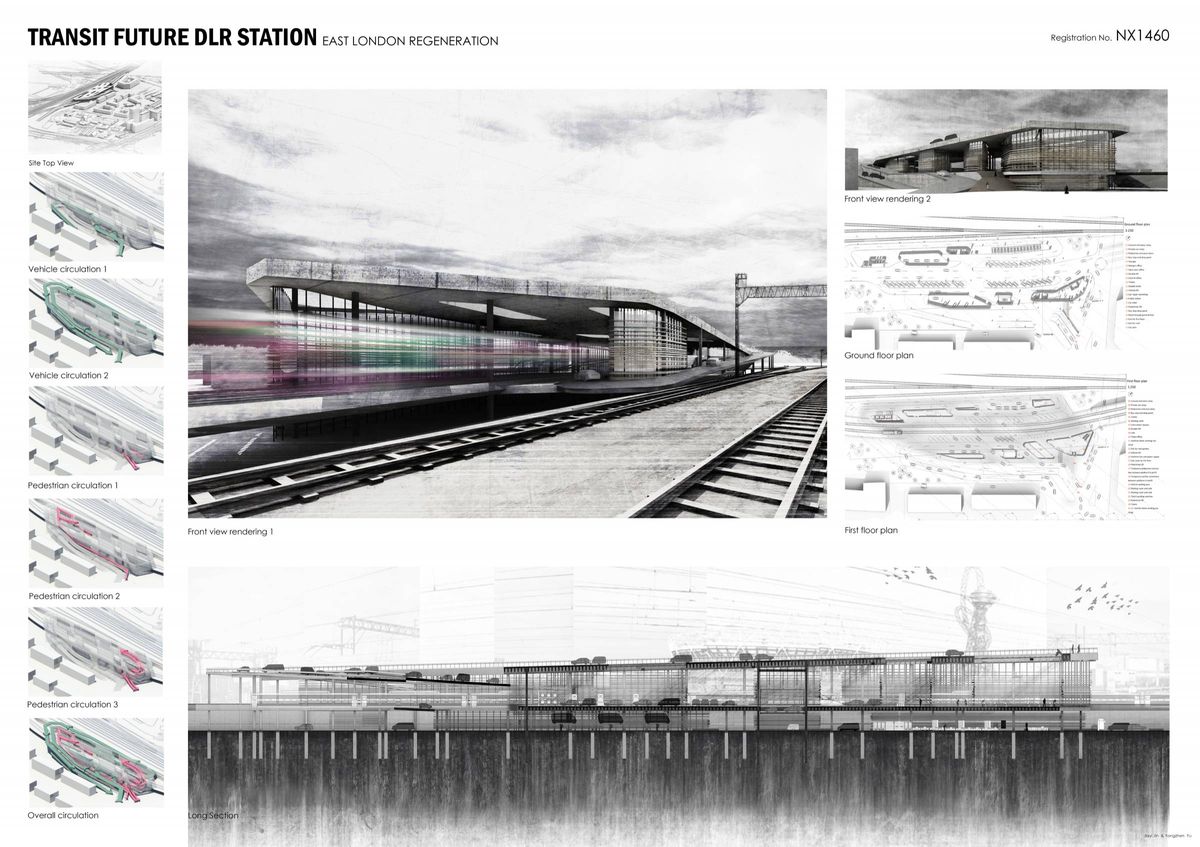
After conducting these research of environmental, social and mental study of pudding mill lane, and based on the development of transportation of the site, and the ideology of “City of panic”, the urban paranoia is that people will not travelling anymore because they can experience everything through digital technologies.
An alternative future is a travelling future. By 2040, Nomadic culture is raised, Instead of exploring the world by opening a “machine”, people are happier to experience the real world just by opening their doors. Because of fuel and energy limitation, there are no road between city and city; cars are integrated with trains for long distance travel.

Ibrahim Abdelhady is an architect, academic, and media entrepreneur with over two decades of experience in architecture and digital publishing. He is the Founder and CEO of Arch2O.com, a leading platform in architectural media, renowned for showcasing innovative projects, student work, and critical discourse in design. Holding dual PhDs in Architecture, Dr. Abdelhady combines academic rigor with industry insight, shaping both future architects and architectural thought. He actively teaches, conducts research, and contributes to the global architecture community through his writing, lectures, and media ventures. His work bridges the gap between practice and academia, pushing the boundaries of how architecture is communicated in the digital age.