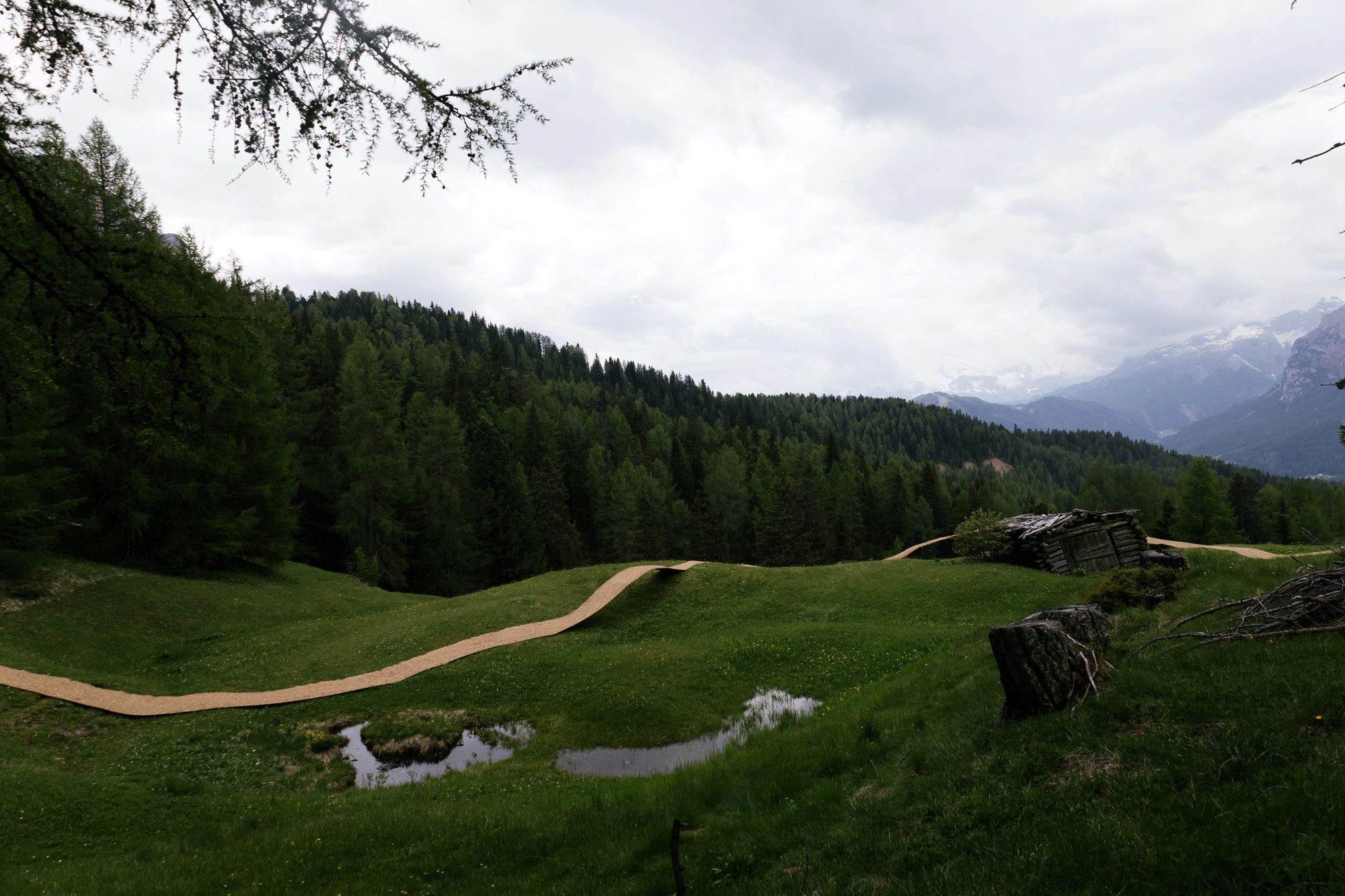
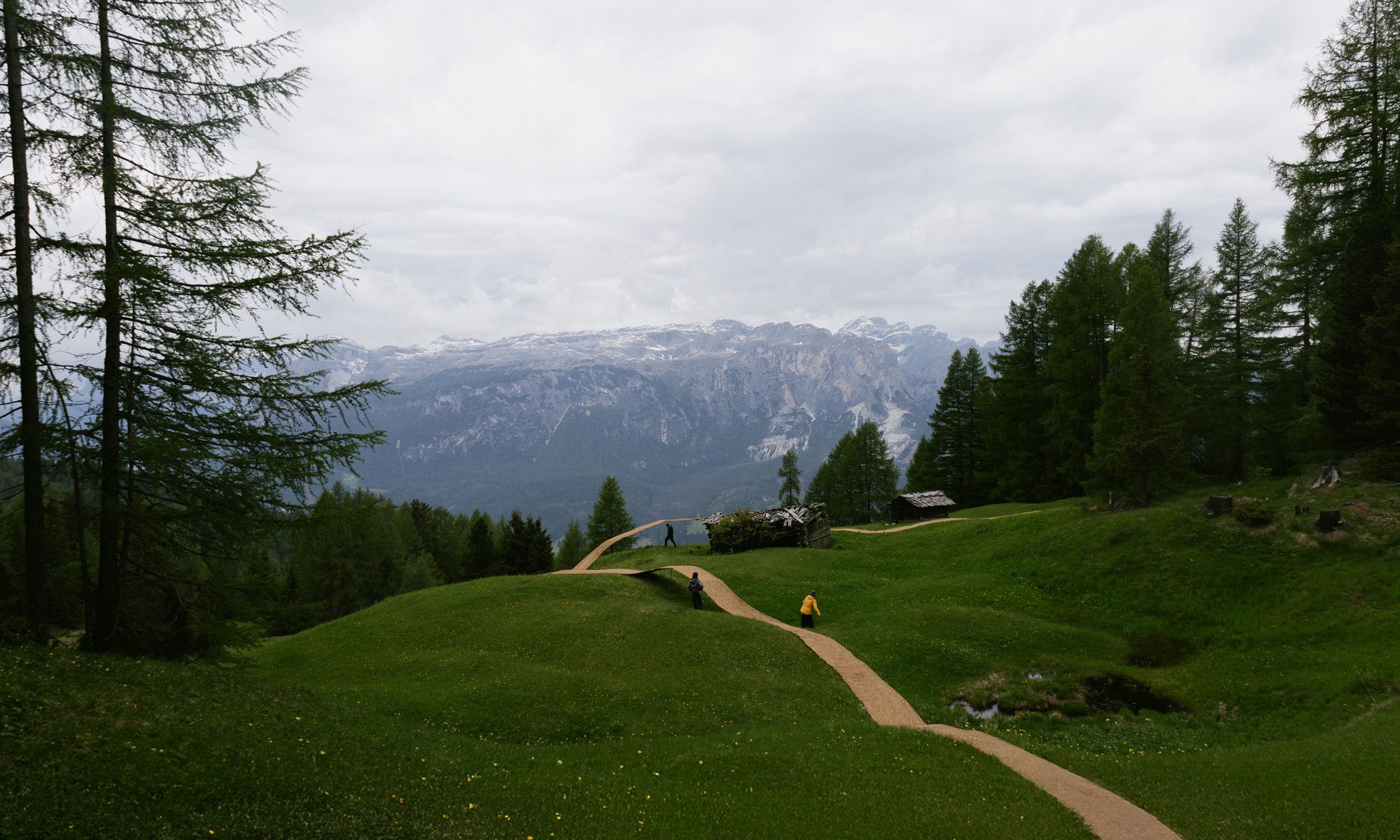
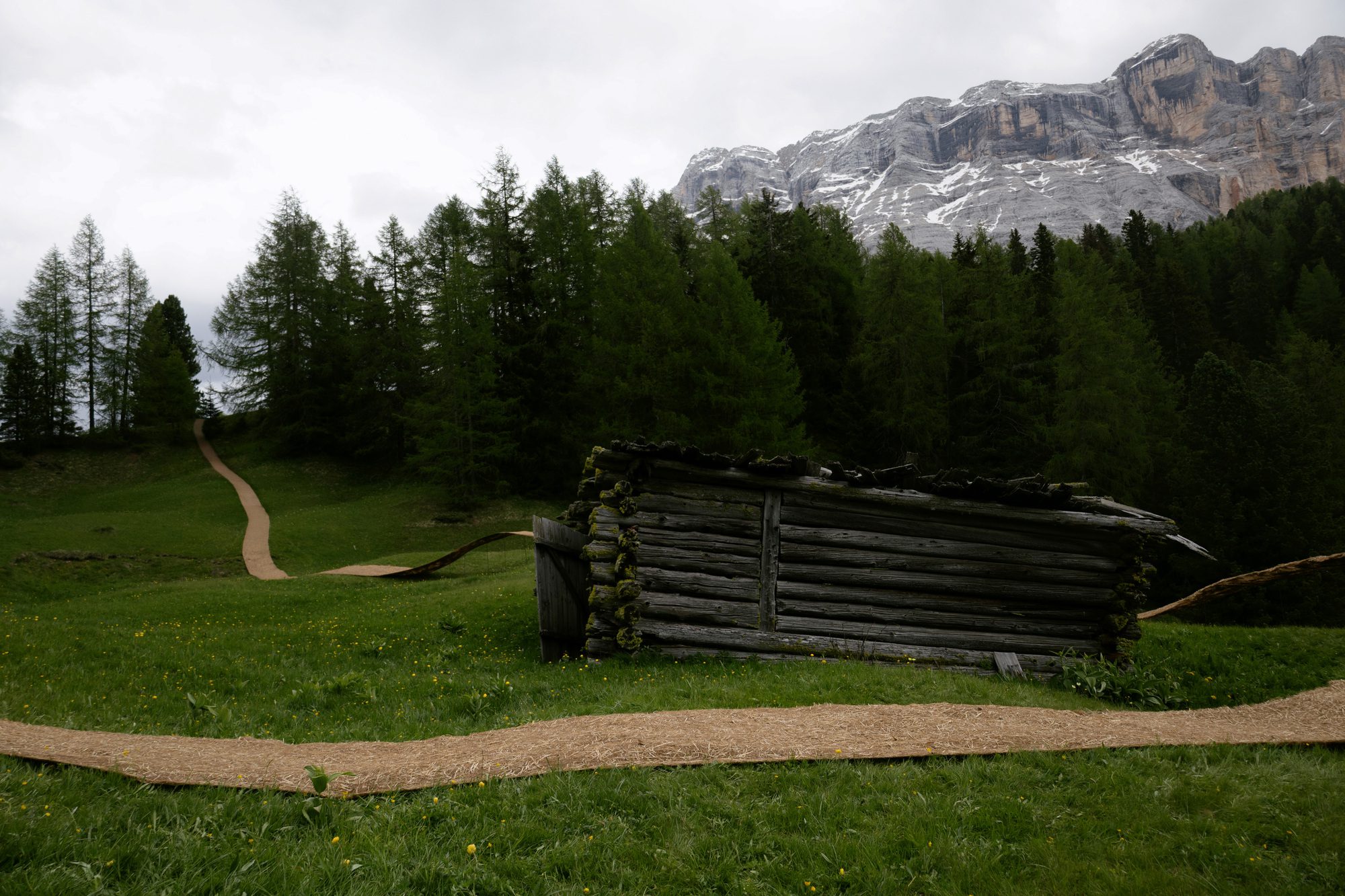
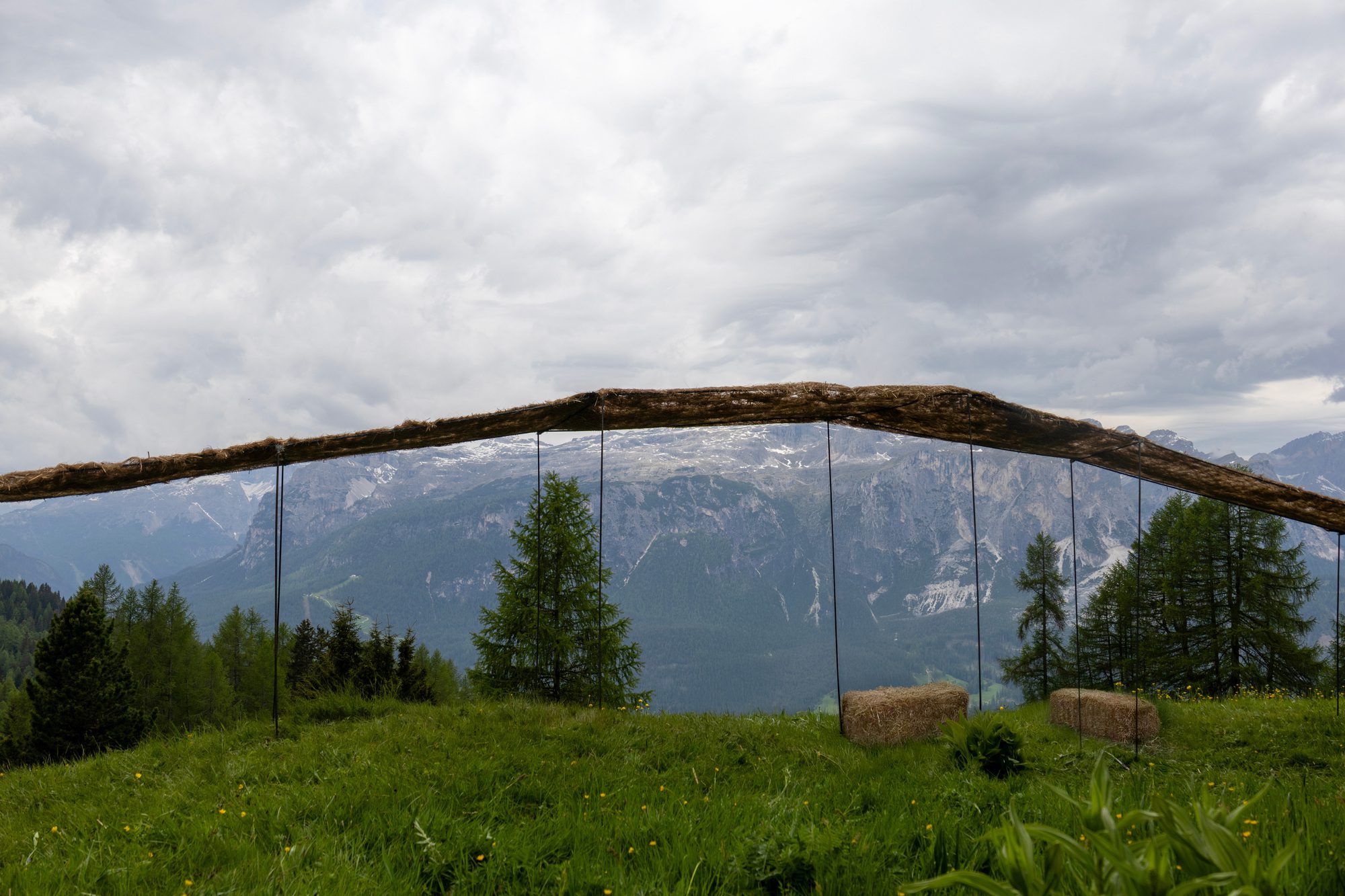
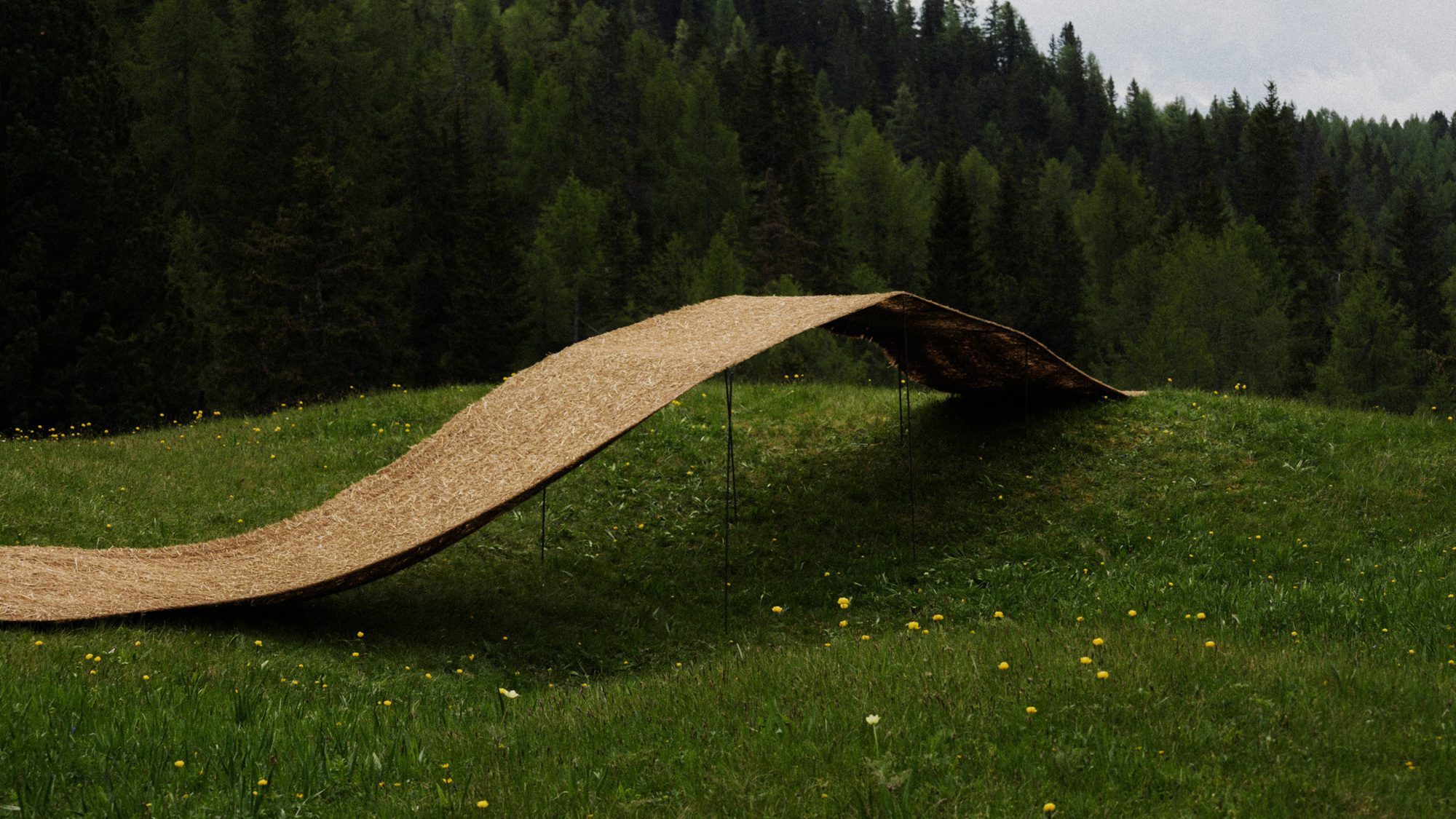
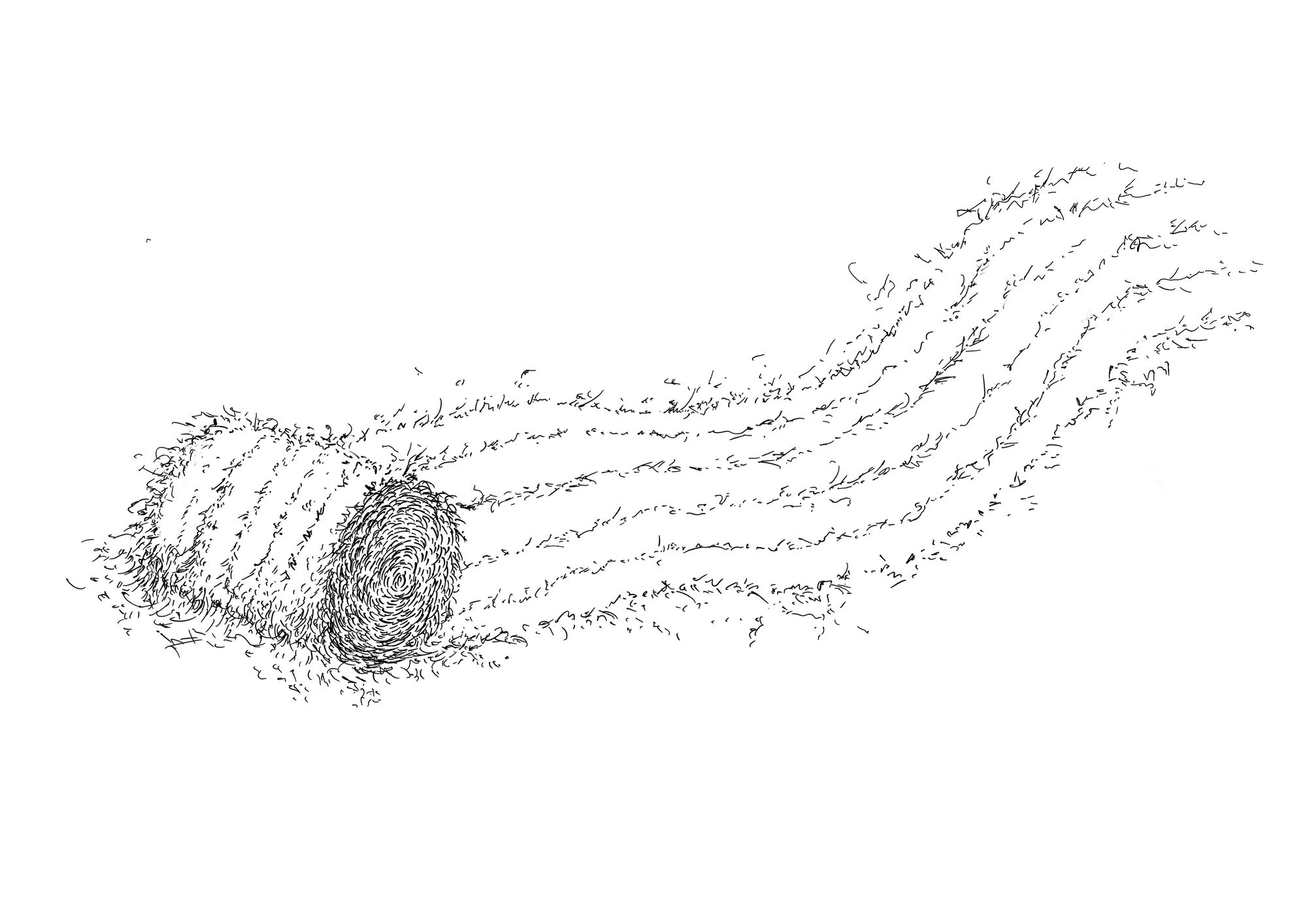
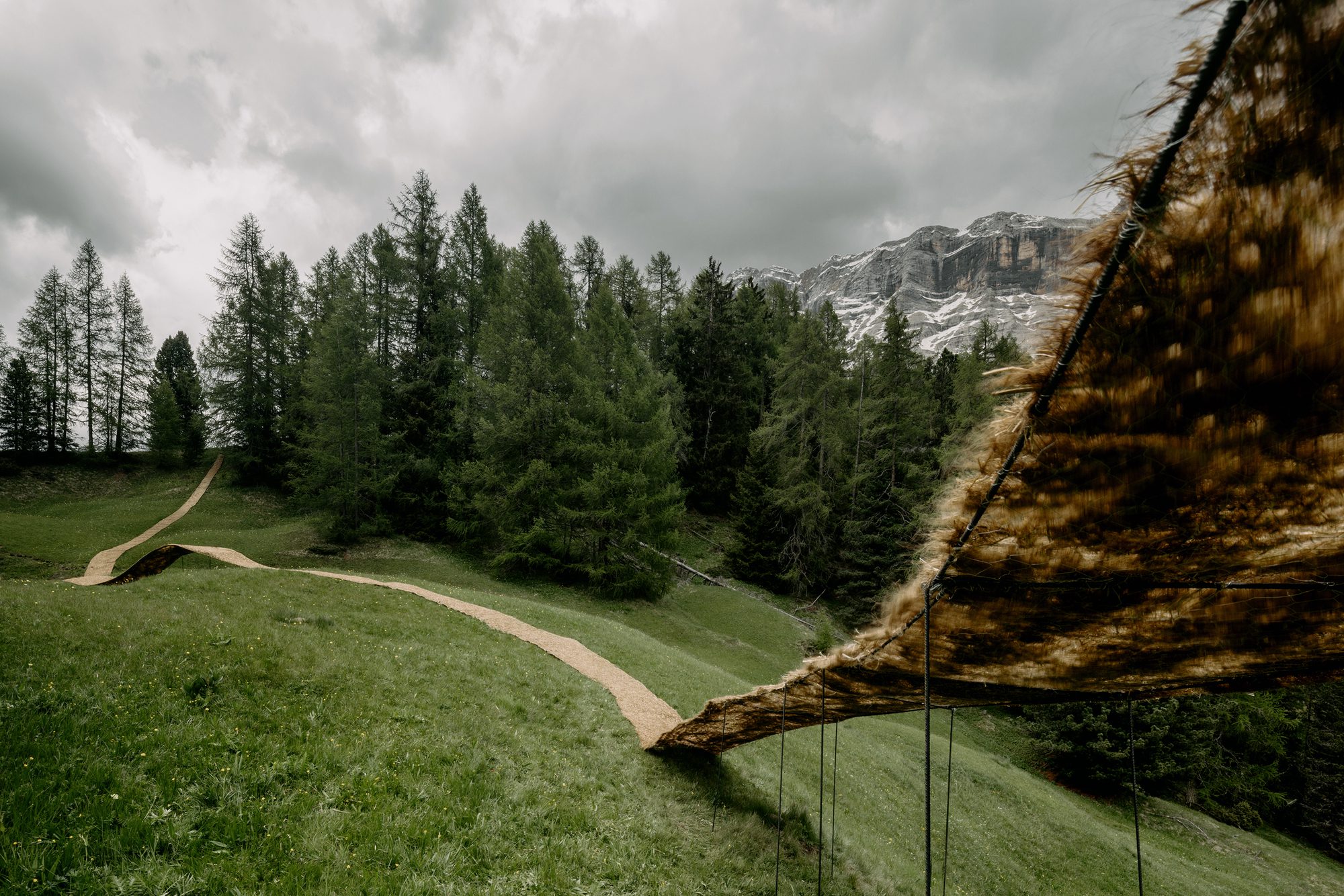
Selected as part of SMACH 2025, the international open-air art biennale in the Italian Dolomites, the installation Trace of Land, designed by ELSE, imagine a large, round hay bale traversing the slopes of Armentara, climbing, descending, leaping, and leaving a trail of dry grass behind. This poetic vision materializes in the landscape as a meandering canopy that follows the terrain, inviting reflection on labor, landscape, and renewal.
© Gustav Willeit
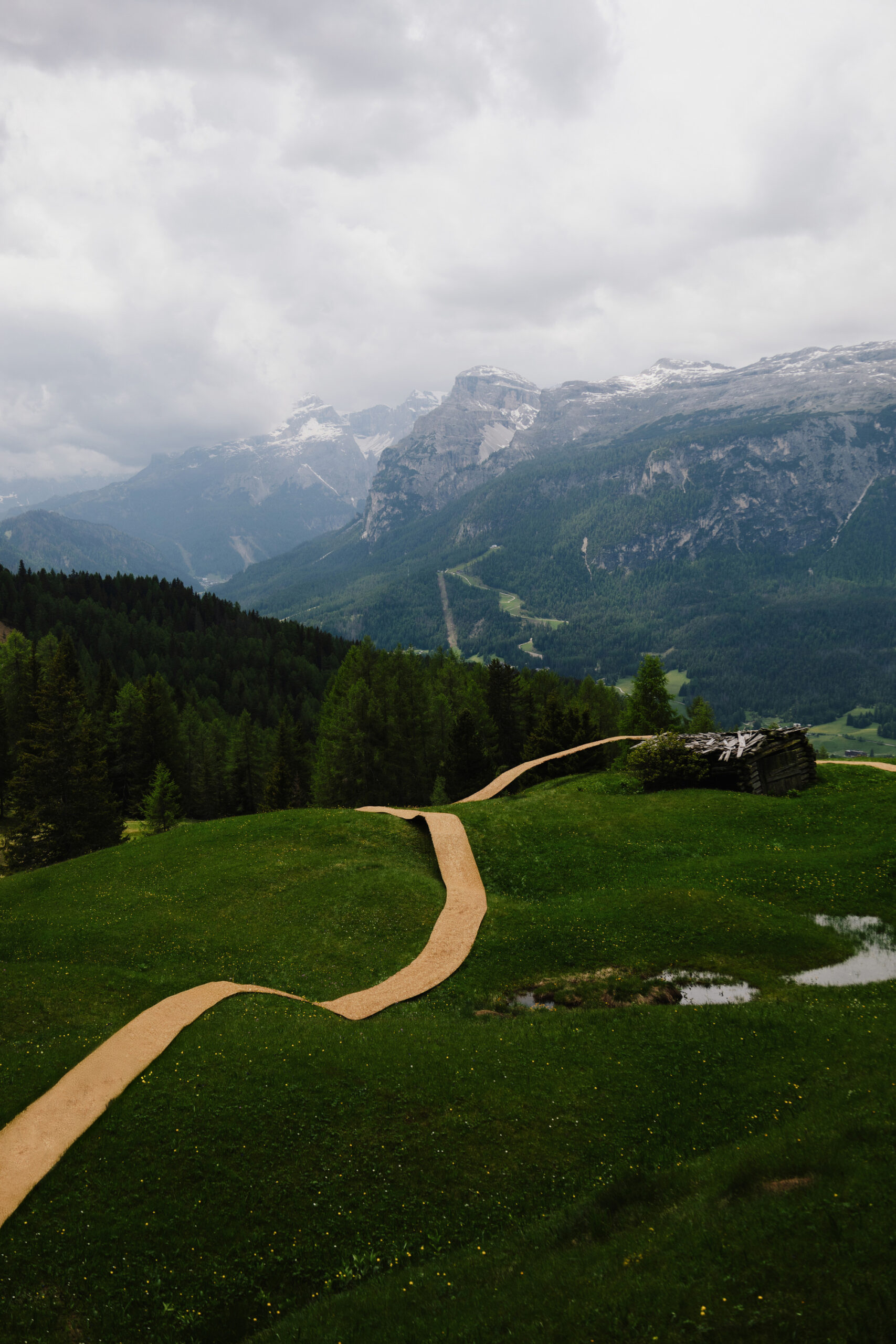
In the alpine pastures of Val Badia, a familiar yet transformed landscape unfolds—a continuous, meandering path of unfurled hay bales across the undulating terrain. From a distance, this straw path resonates with the mountain trails of the Dolomites, while the rising and falling geometry echoes the ridgelines of the surrounding peaks. Removed from its functional context, the hay bale becomes a sculptural intervention—once a practical product of labor, it is now a material expression of the relationship between labor, tools, and nature.
© ELSE
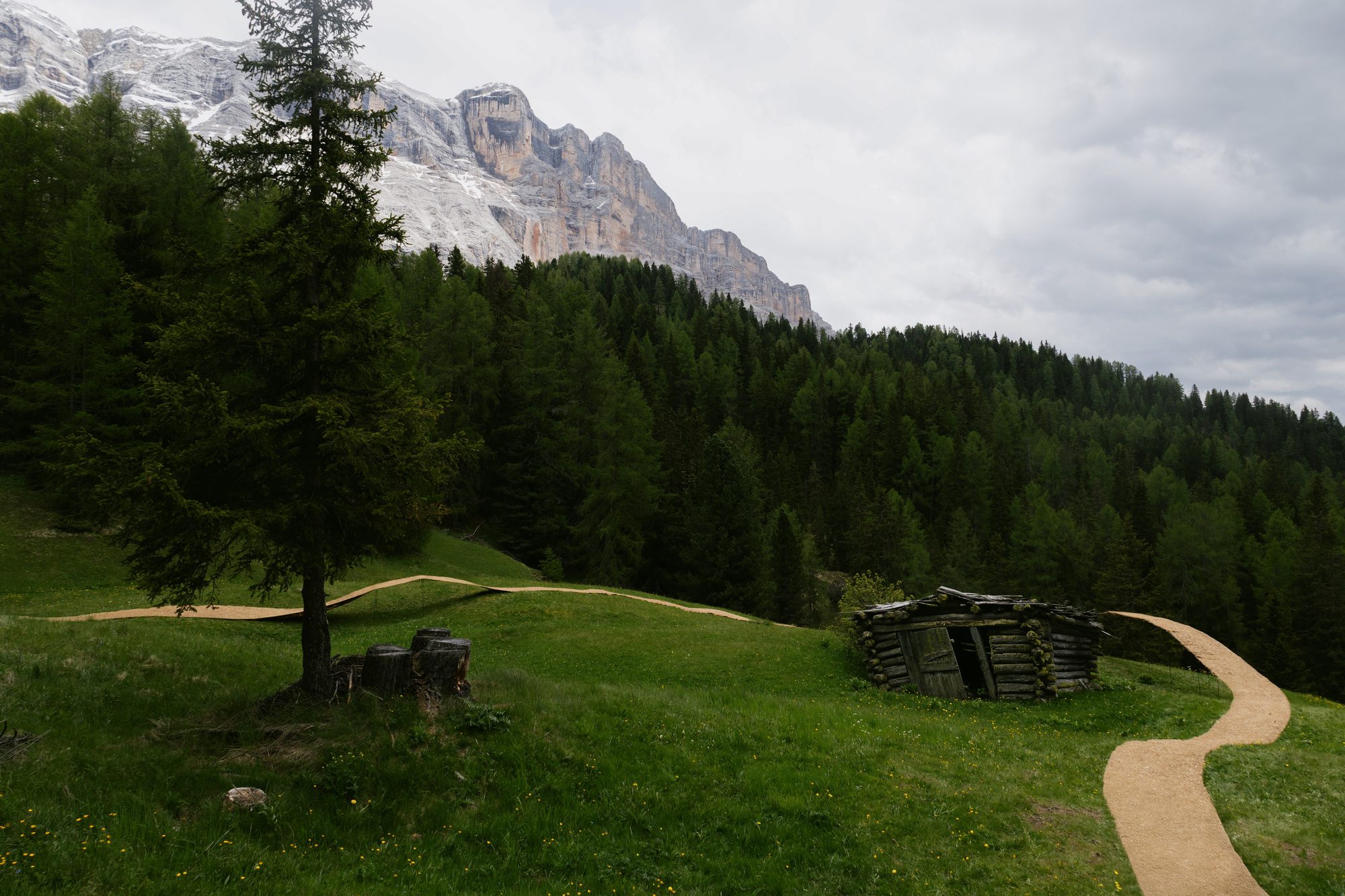
Often seen as picturesque remnants of agrarian life, hay bales are in fact products of industrialized processes—bundled, transported, and stored with mechanical precision. Like this year’s SMACH theme, la cu (the Ladin word for whetstone, a tool that sharpens harvesting blades), hay bales embody the reciprocal relationship between human effort and the land. Freed from their compressed form, they unfurl to trace the contours of the meadow.
© ELSE
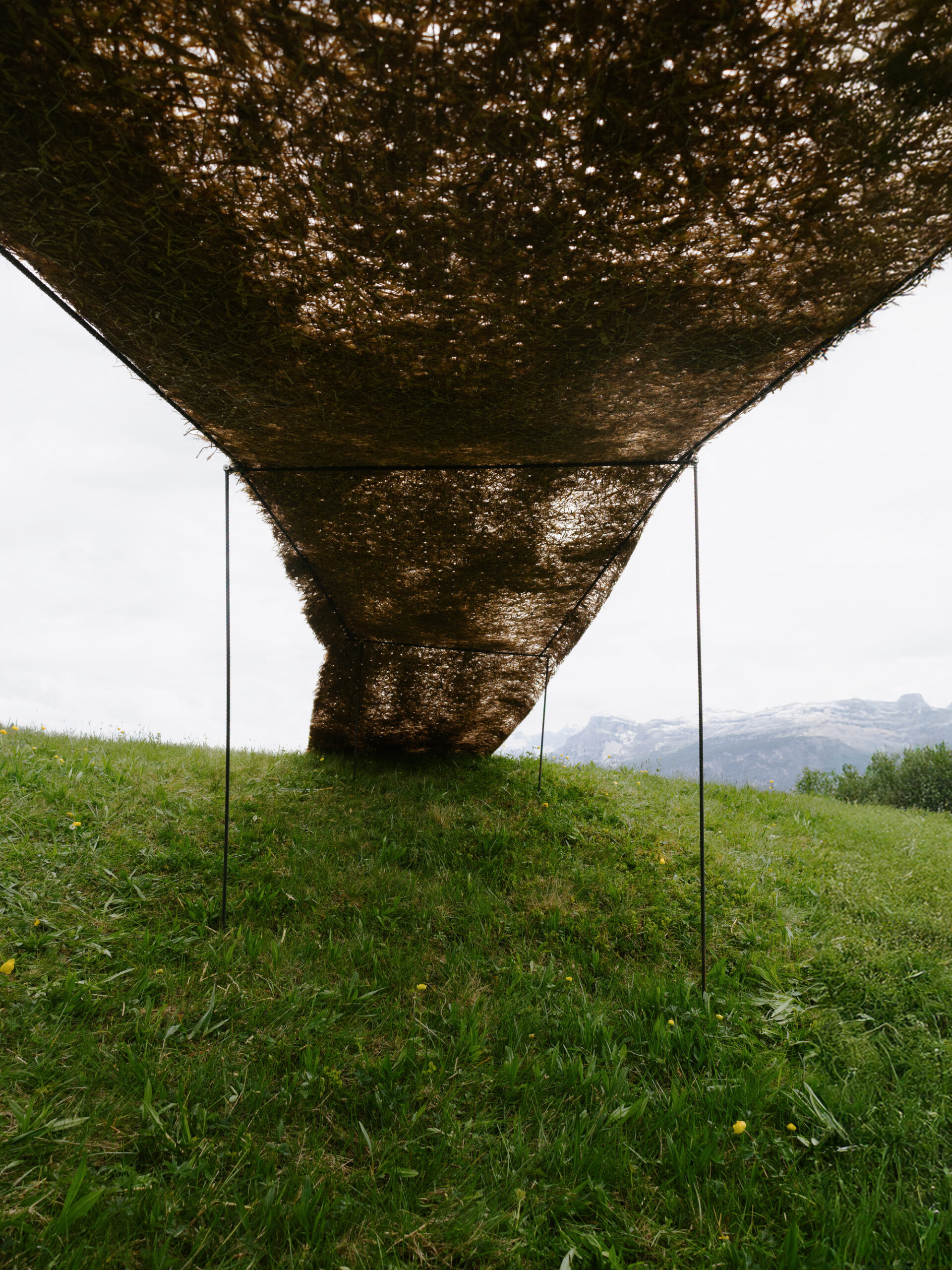
At times they lie directly on the ground, at other moments they rise lightly to create shaded passages—the undulating geometry echoes the contours of the Dolomite mountains, blurring the boundary between the artificial and the natural. From a poetic vision, the installation transforms into landscape architecture, dialoguing with the nearby “tablà”, the wooden barns typical of the Ladin valleys.
© ELSE
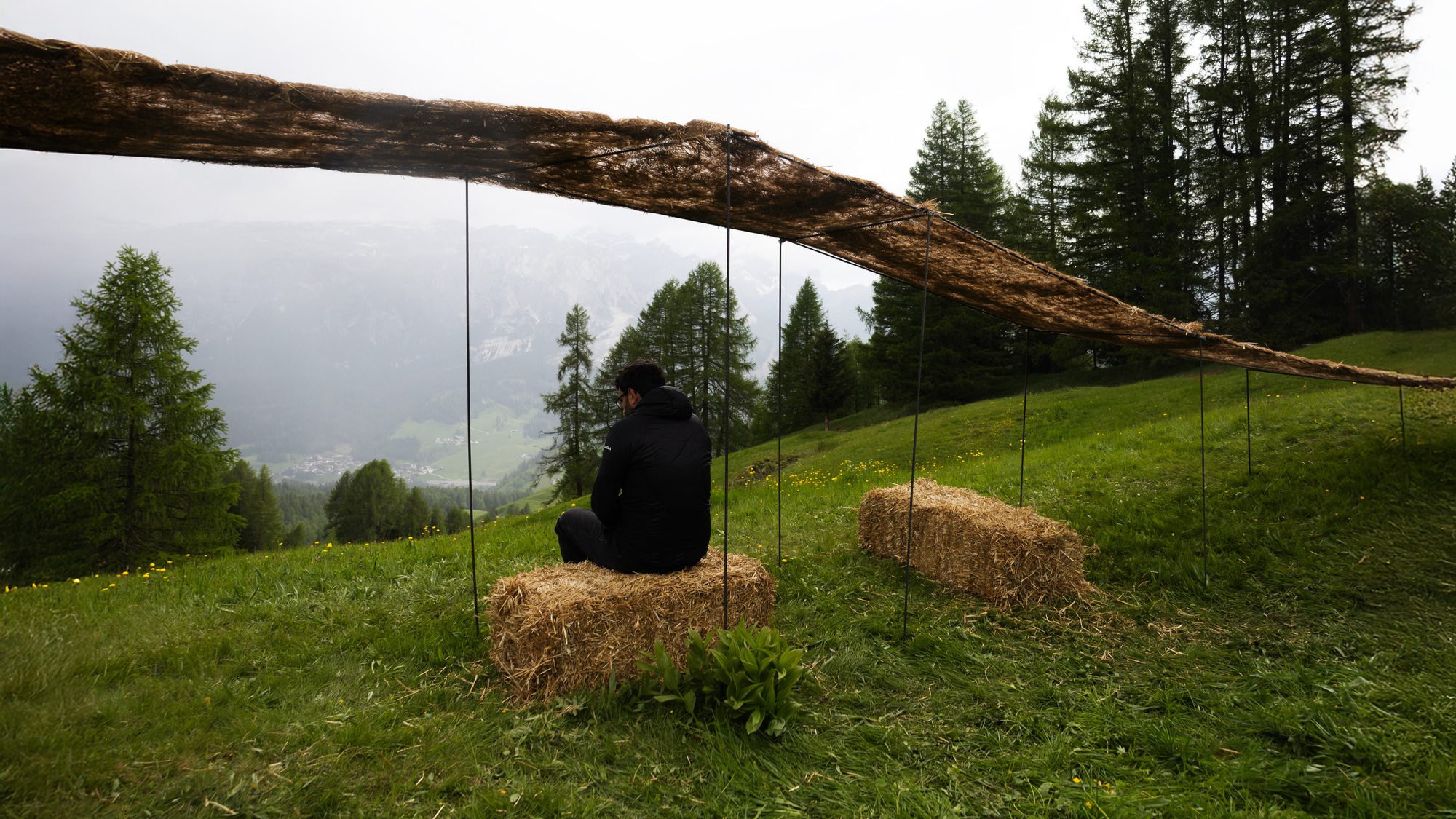
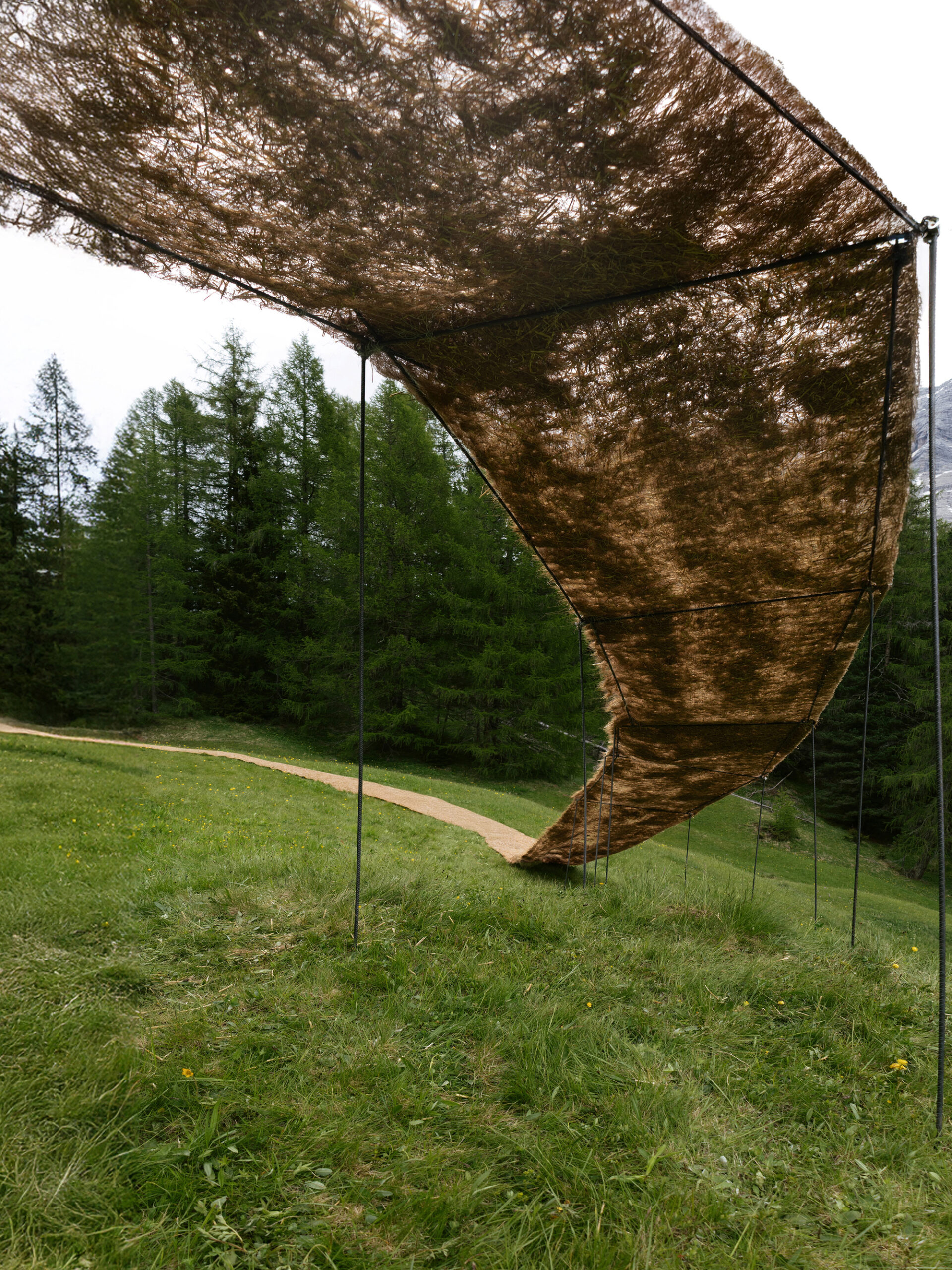
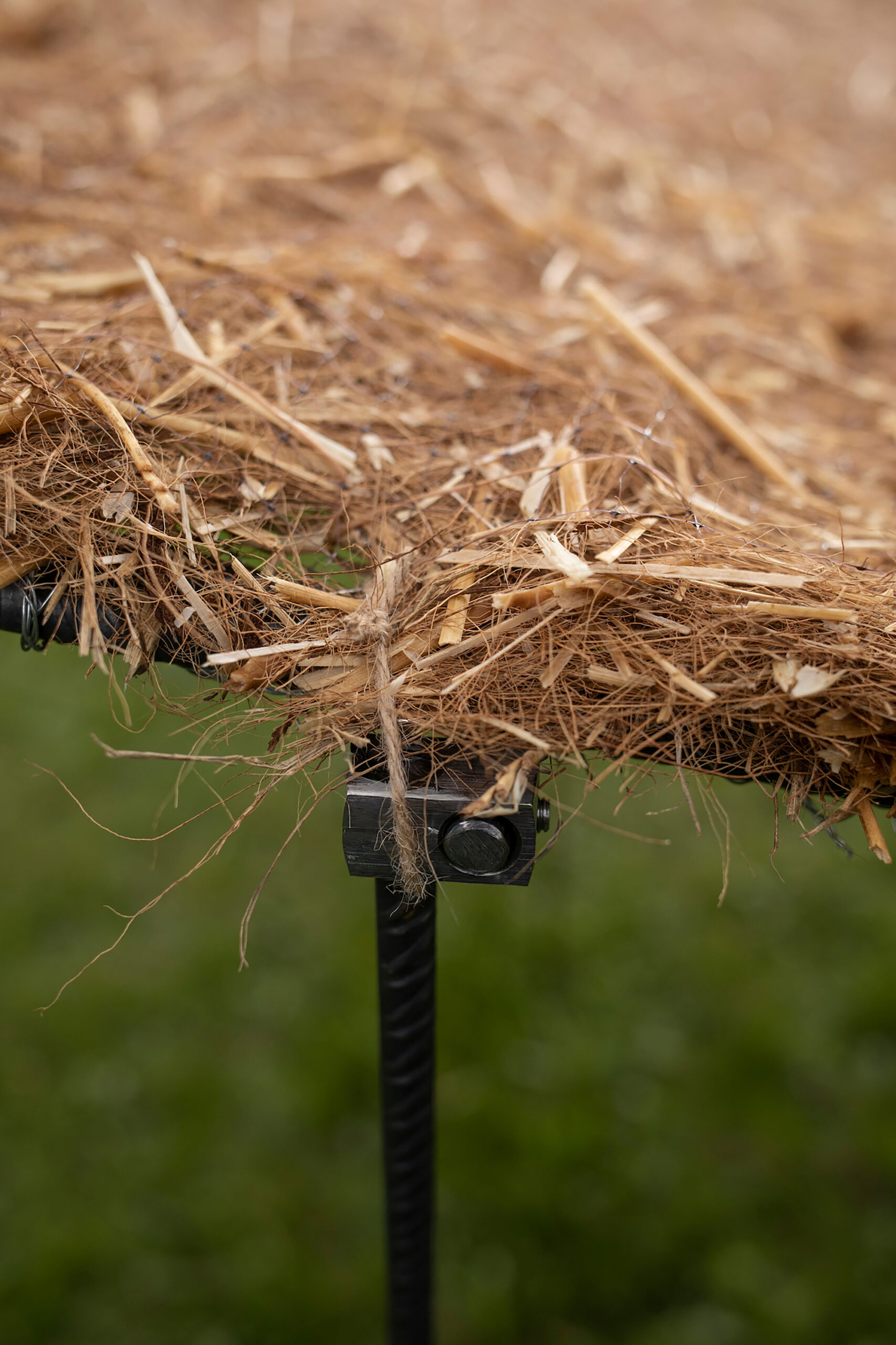
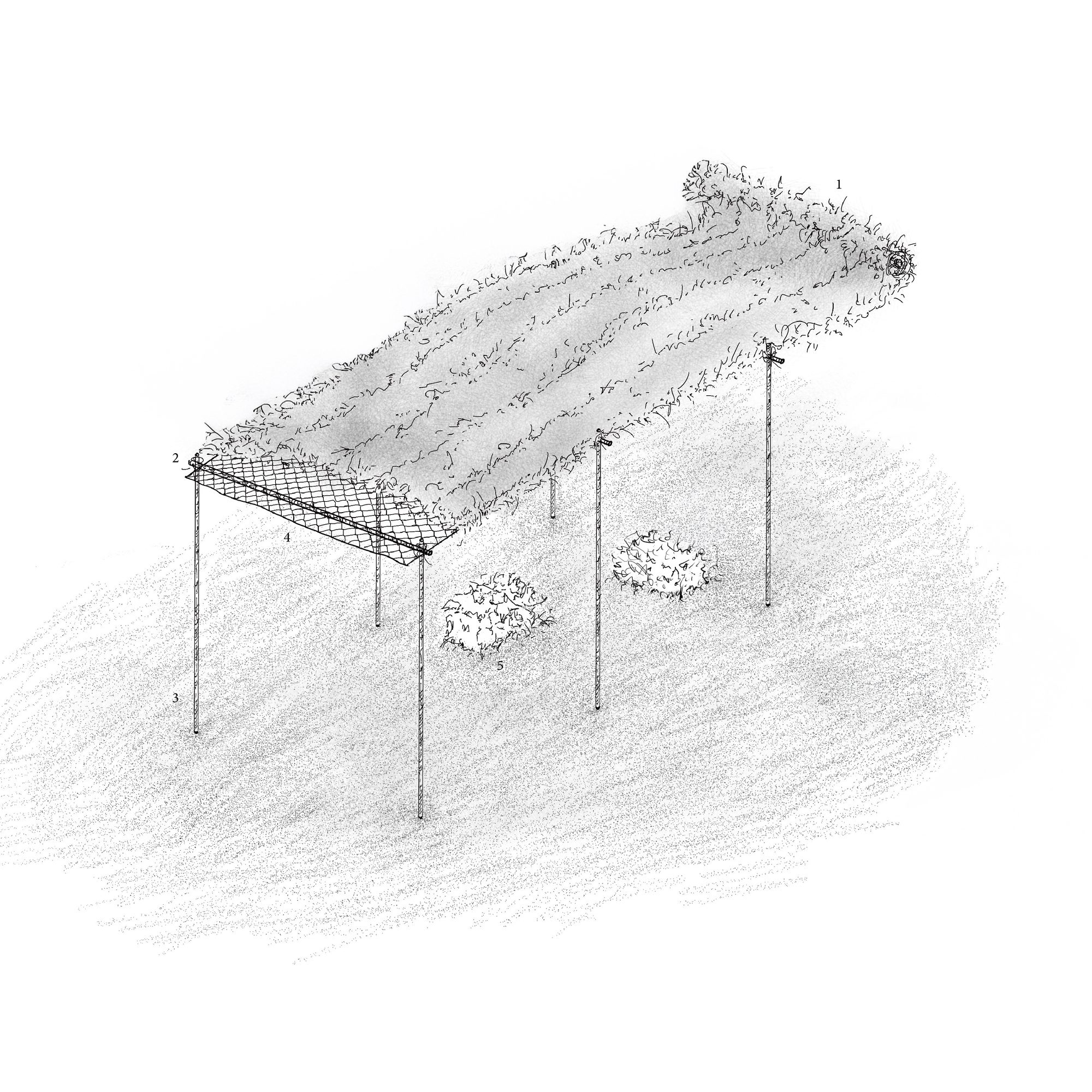
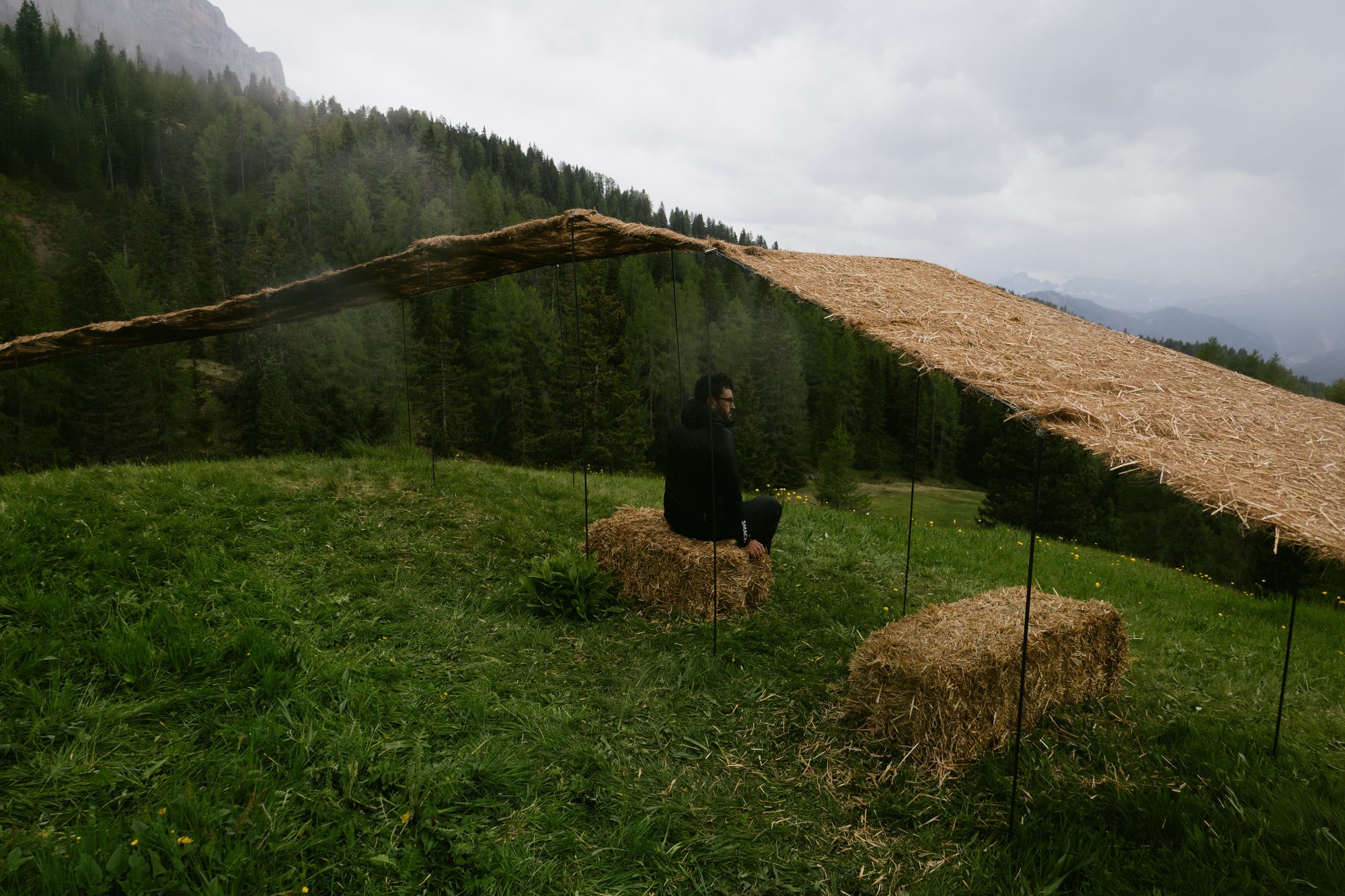
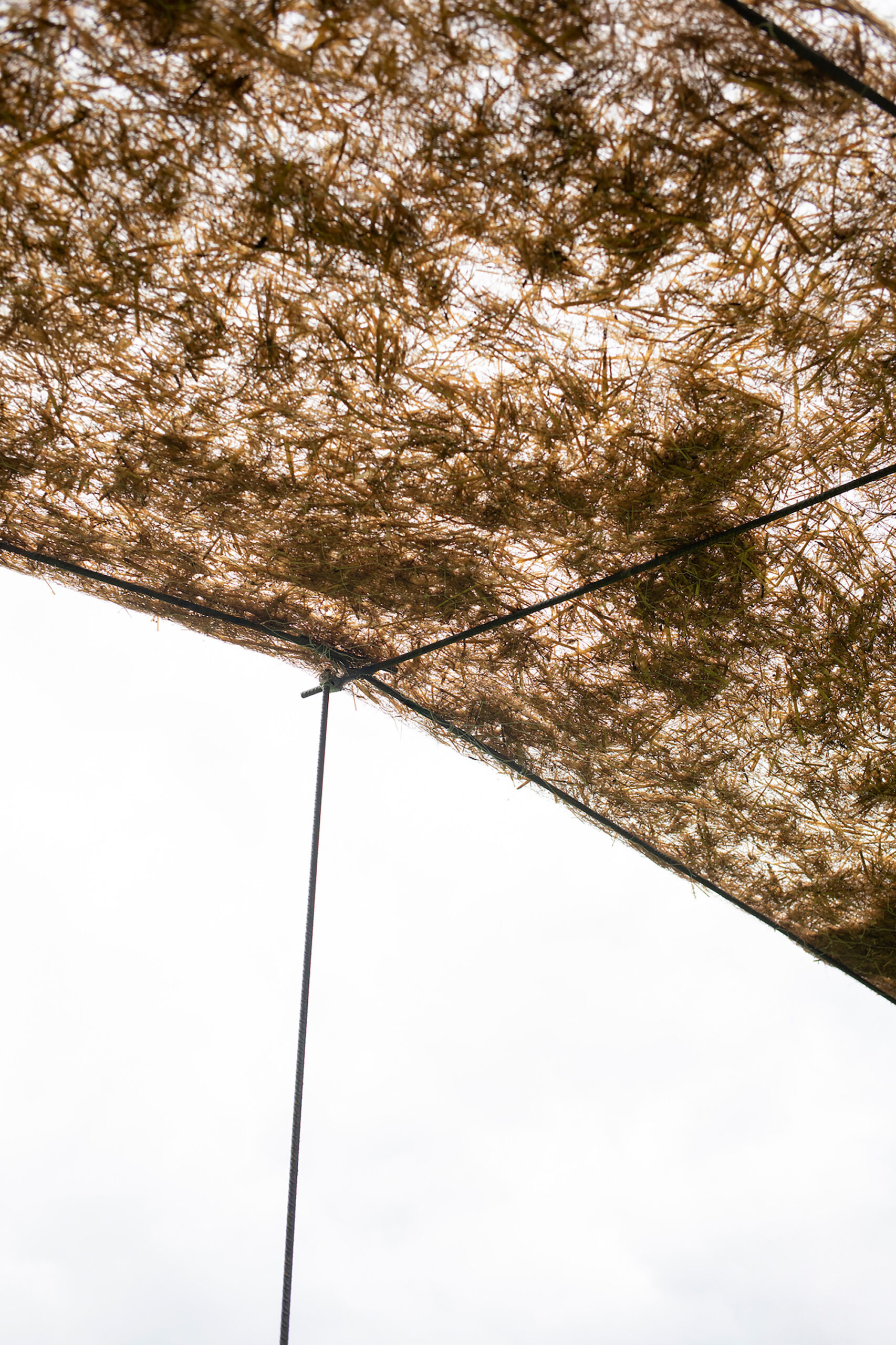
The construction remains minimal and adaptable: vertical rebars are driven into the ground and tied together with horizontal steel rods to form a lightweight frame. A surface of wire mesh supports the unfurled hay, which is bound in place with grass ropes. This simple system ensures a minimal footprint, allowing the canopy to adjust to different terrains and lengths while integrating seamlessly into the pasture. Up close, the hay reveals a tactile texture—fibers layered and porous, filtering light through the canopy to create a presence that feels at once rough and delicate.
© Elisa Cappellari
Visitors are invited to walk along and beneath the canopy, moving with the contours of the pasture, to gather, rest, and engage with the space. Rectangular hay bales provide seating, reinforcing the dialogue between function and abstraction. Over time, as the hay decays, it returns to the earth, completing a cycle of use and renewal.
Project Info
Architects: ELSE
Area: 100 m²
Year: 2025
Country: Rocca Pietore, Italy
Photographs: Gustav Willeit, ELSE, Elisa Cappellari
Lead Architects: Zhifei Xu, Zimo Zhang
Construction Team: Zhifei Xu, Zimo Zhang, Qiannan Ruan
Clients: SMACH