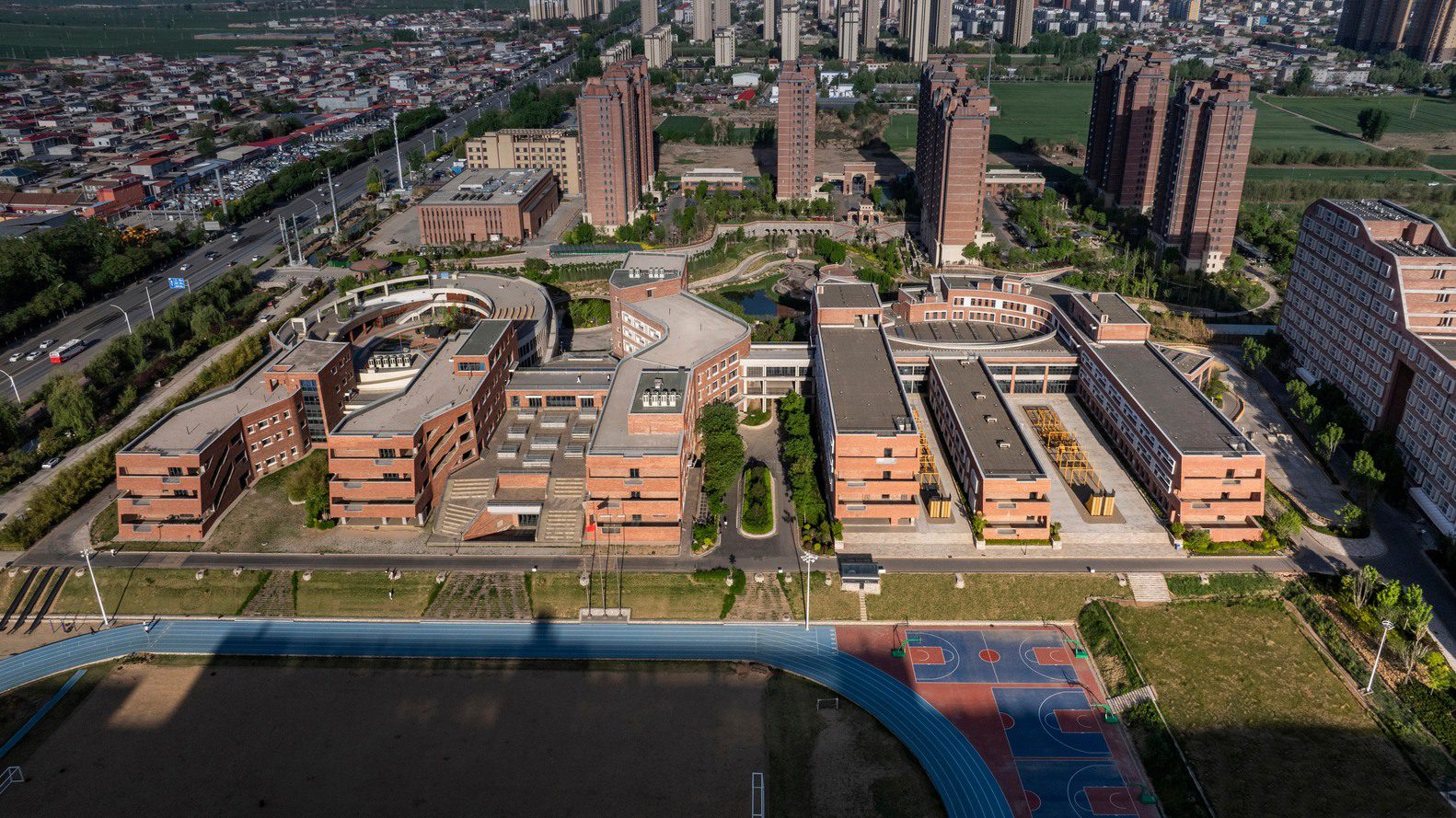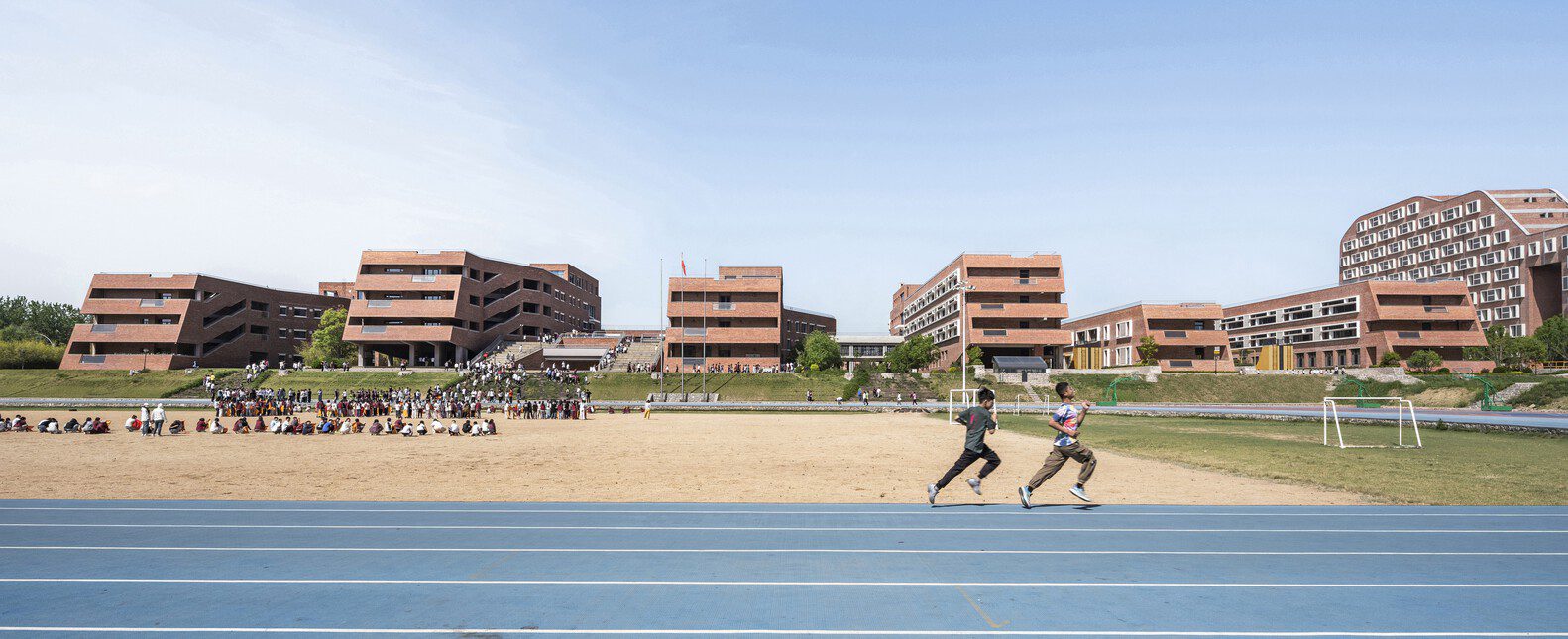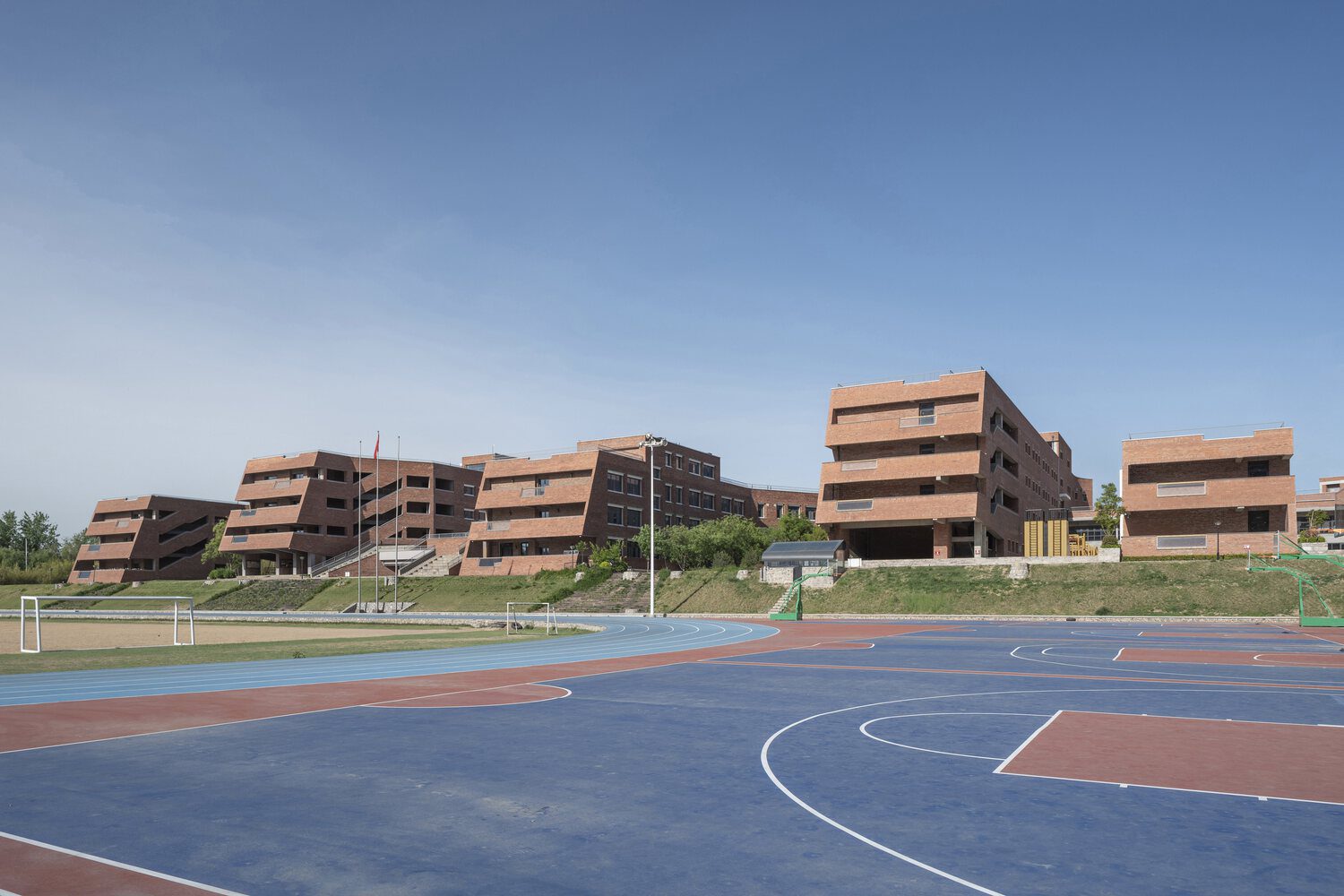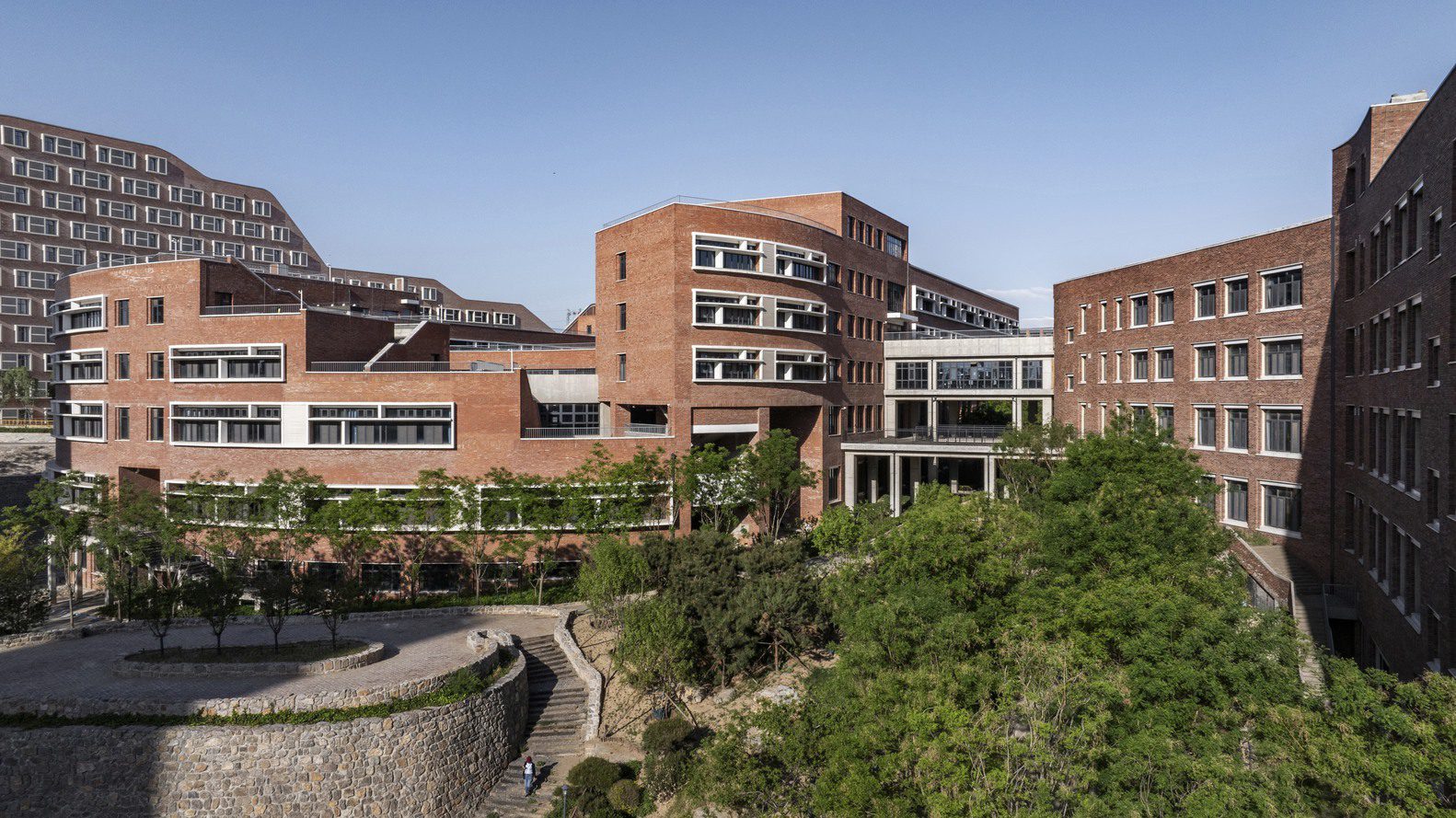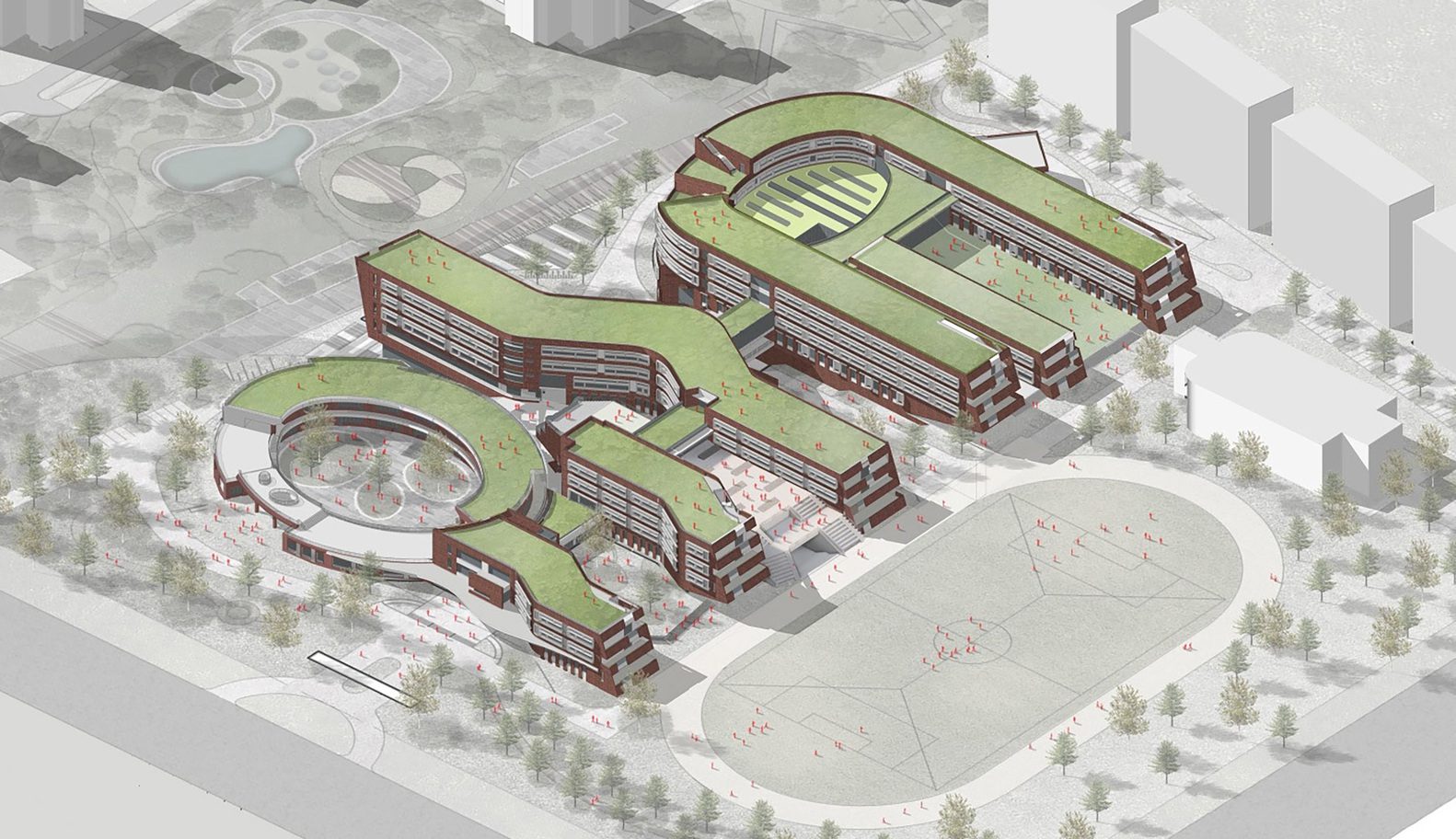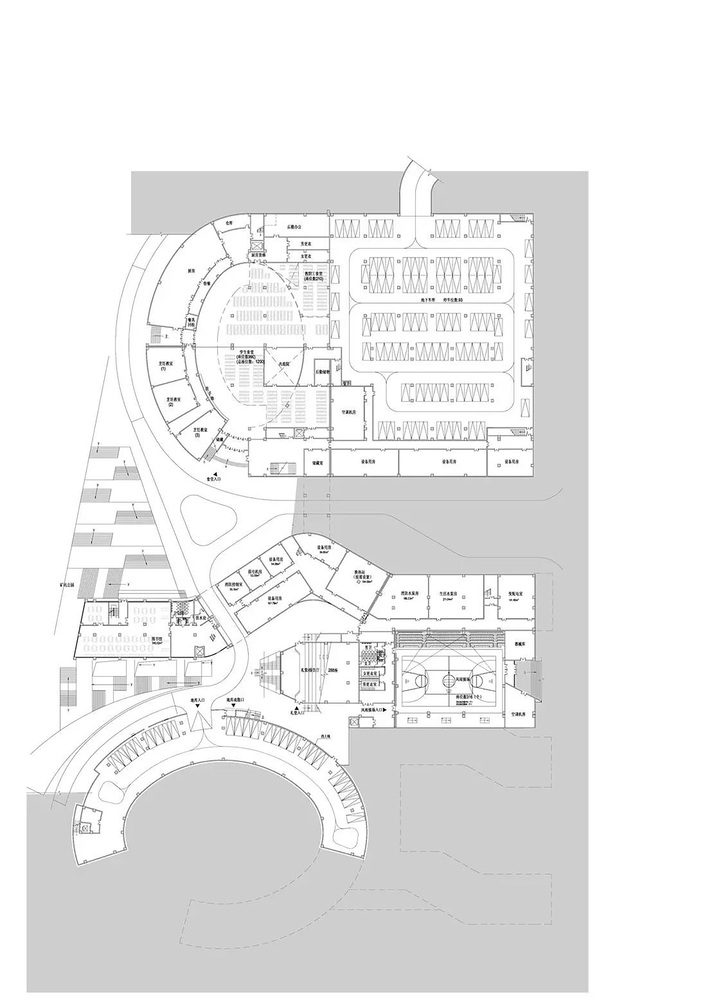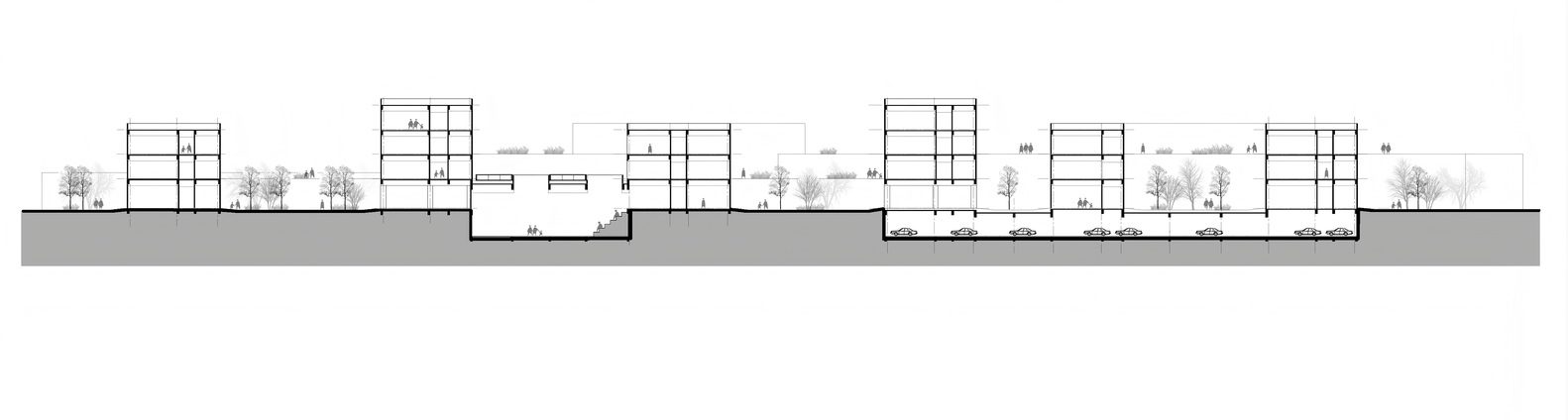


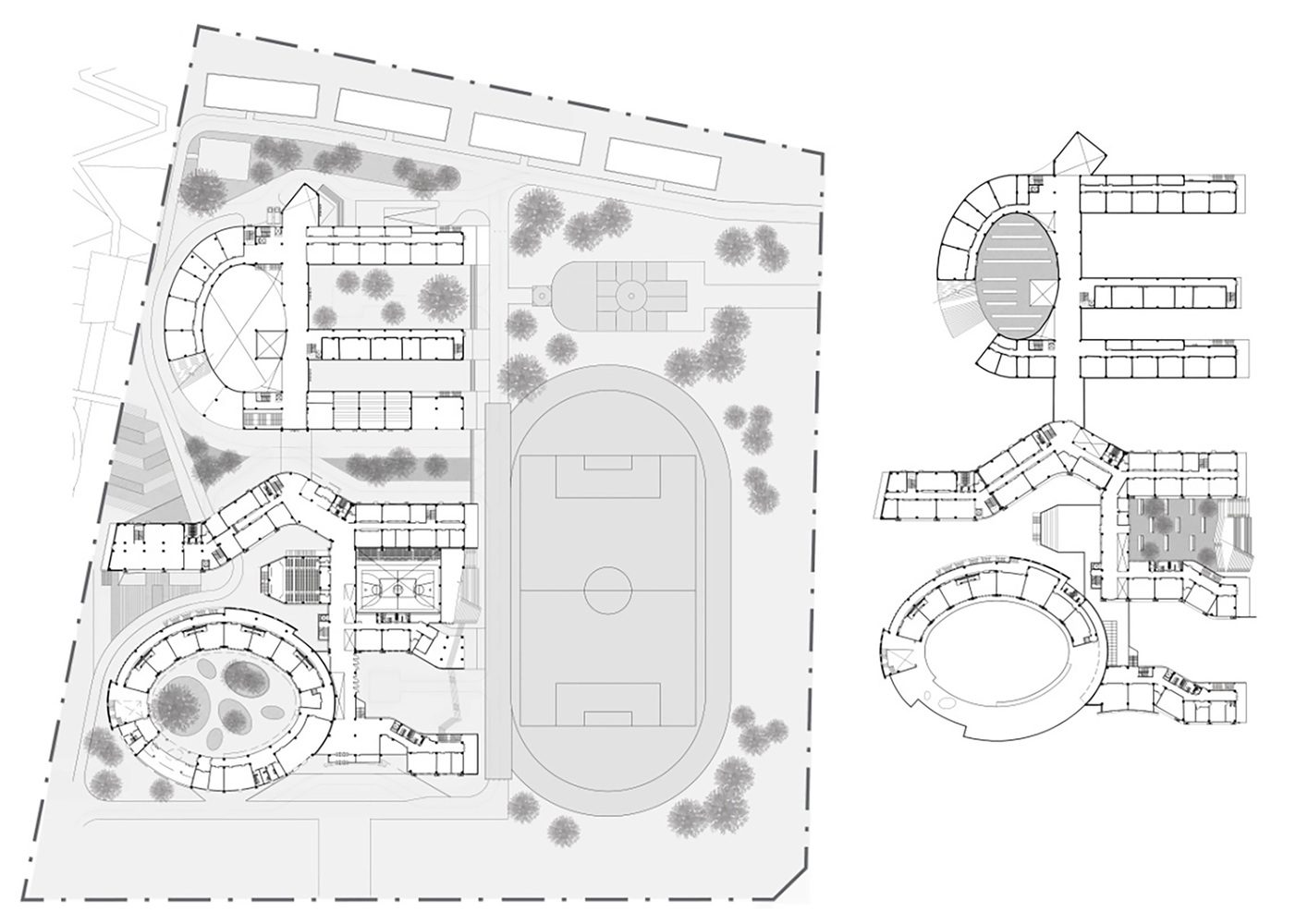
Tongtai School is located in Ningjin County, Hebei Province.It was funded and built by a socially responsible local enterprise and contains educational facilities from kindergarten and primary school to high school. The total floor area of the school is about 60,000 square meters. Tong Tai School has a total of 72 classes.The phased construction and reasonable layout of shared supporting facilities are the key points of the overall campus planning.
© Weiqi Jin
According to the construction stages according to the arrangement of education from young to old age, the single layout of each grade from south to north, and from young to old age group to layout.Among them, 12 kindergartens are arranged in the southwest corner independently.It is close to the west living supporting area and provides convenient school transportation for employees. As a shared facility for the whole school, the library, art building and playground are arranged among different teaching departments.As a supporting facility for all ages, the art building, wind and rain playground, library, and multi-purpose auditorium are located between the primary and secondary schools.
© Weiqi Jin
SITE STRATEGY
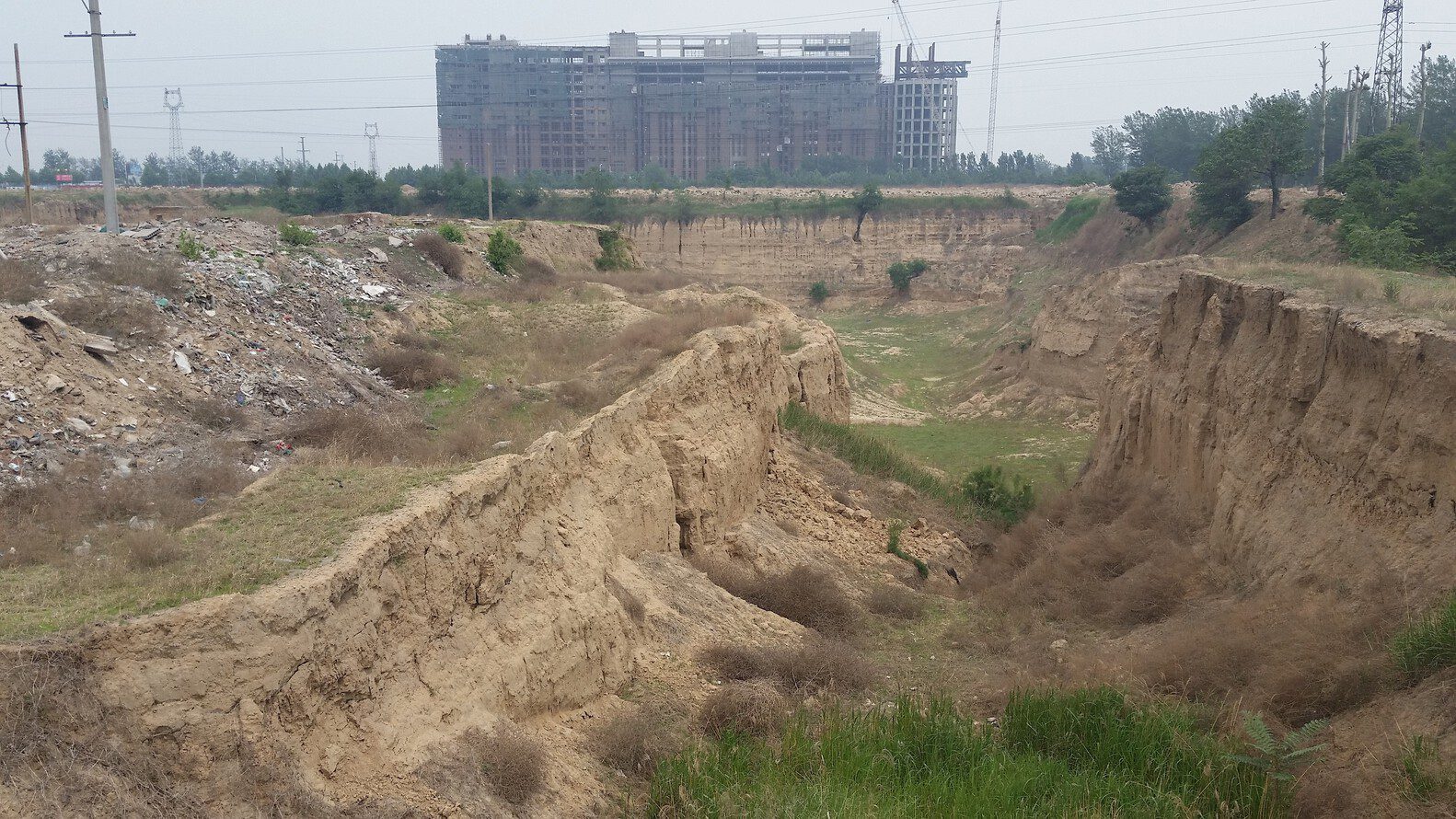
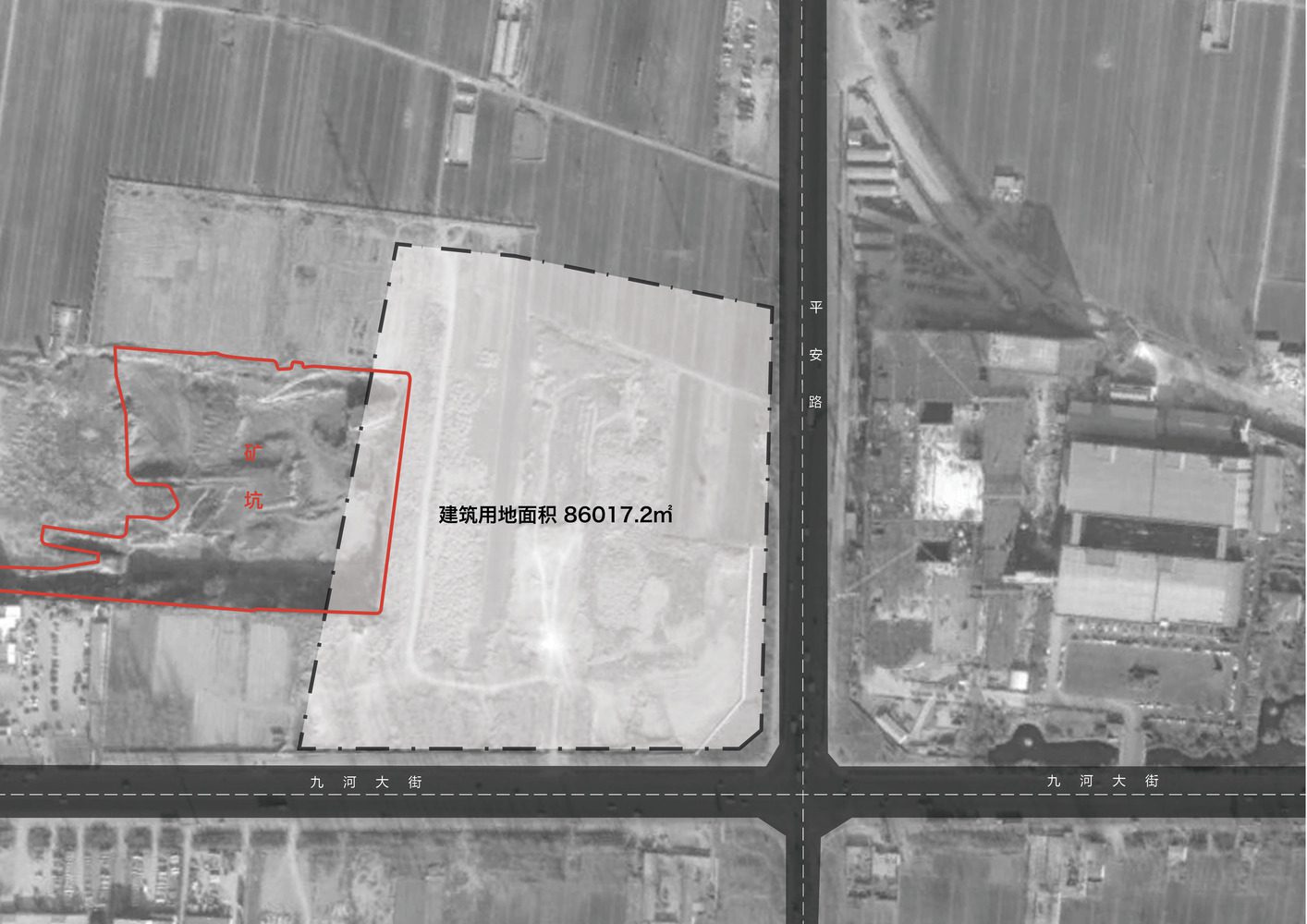
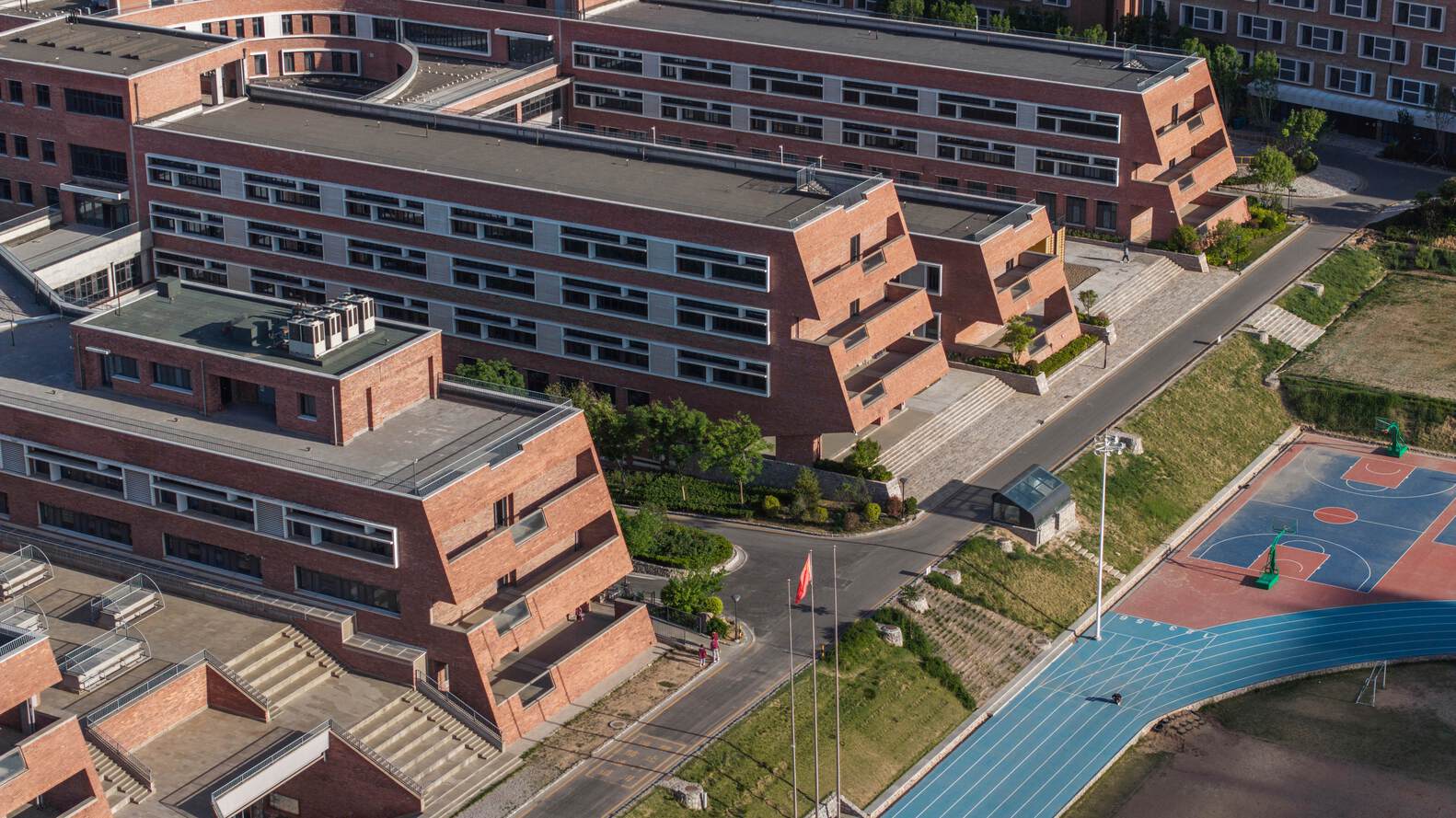
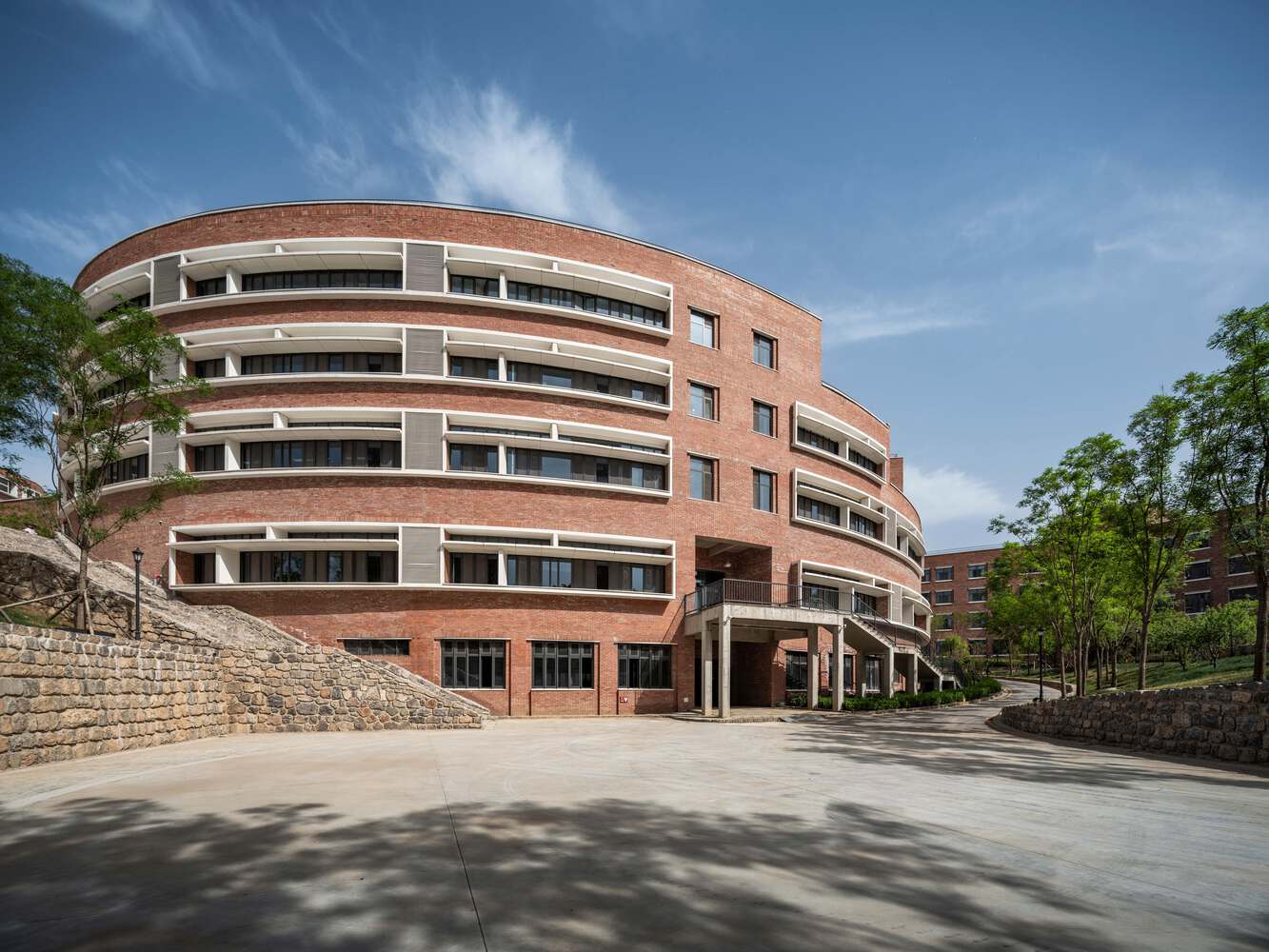
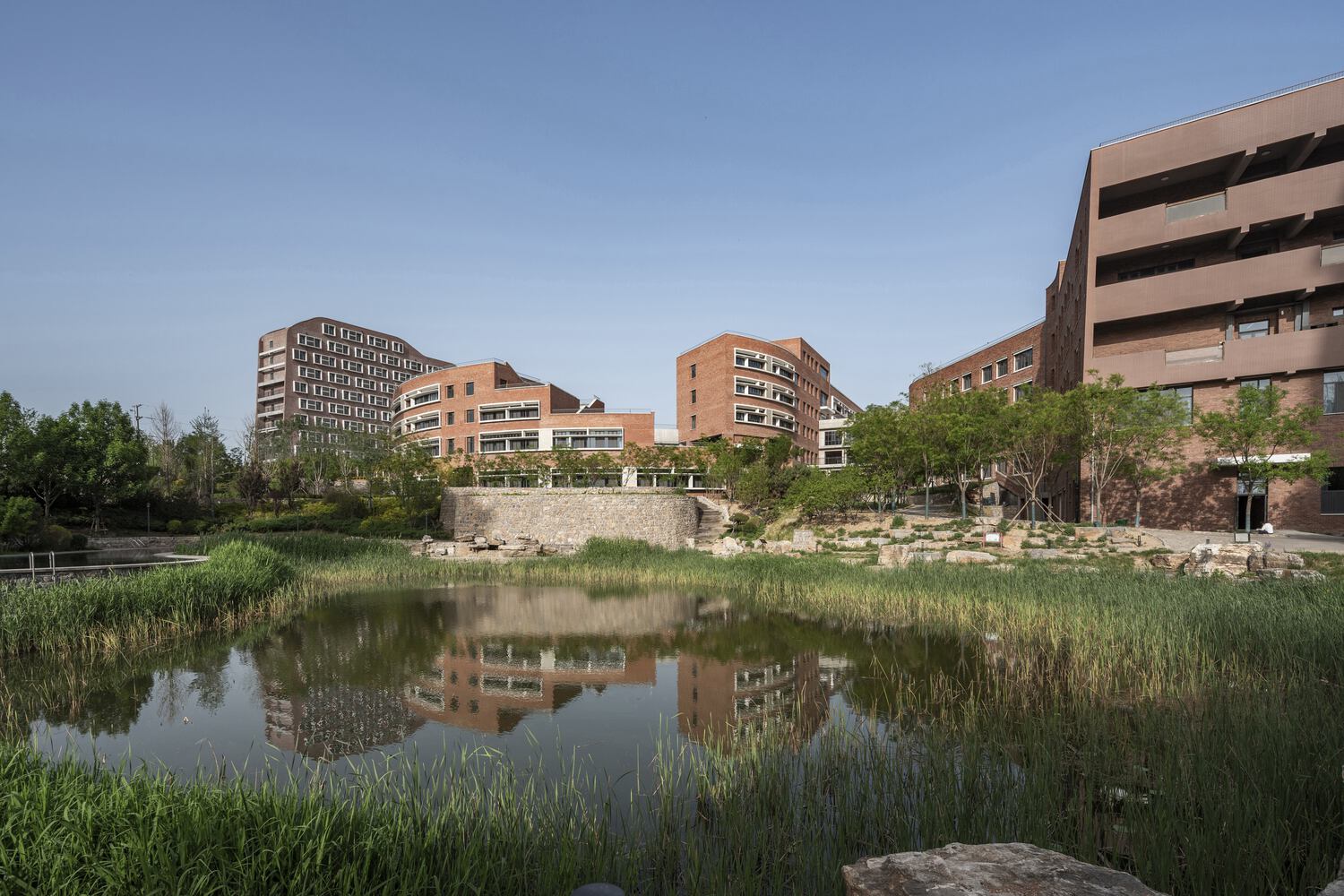
It is next to a mine left over from an abandoned brick kiln and is 18 metres deep, covering more than 15,000 square metres.The mine occupies part of the west side of the school site.This is an important starting point of the site design of this project for its moderate ecological restoration and positive rational utilization.The historical imprint of the kiln becomes the image of the red brick architecture of the school project and the overall enterprise park.

© Weiqi Jin
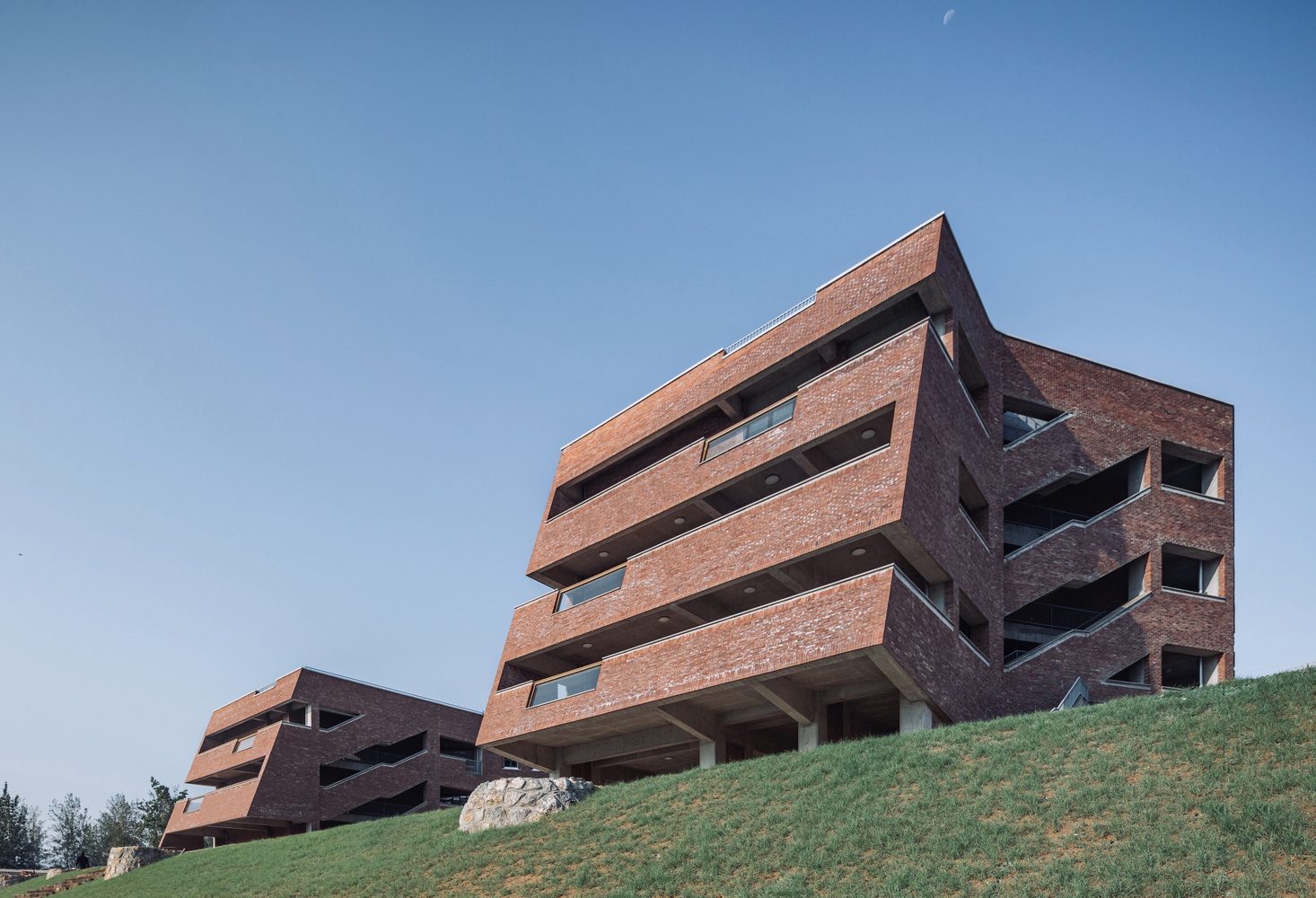
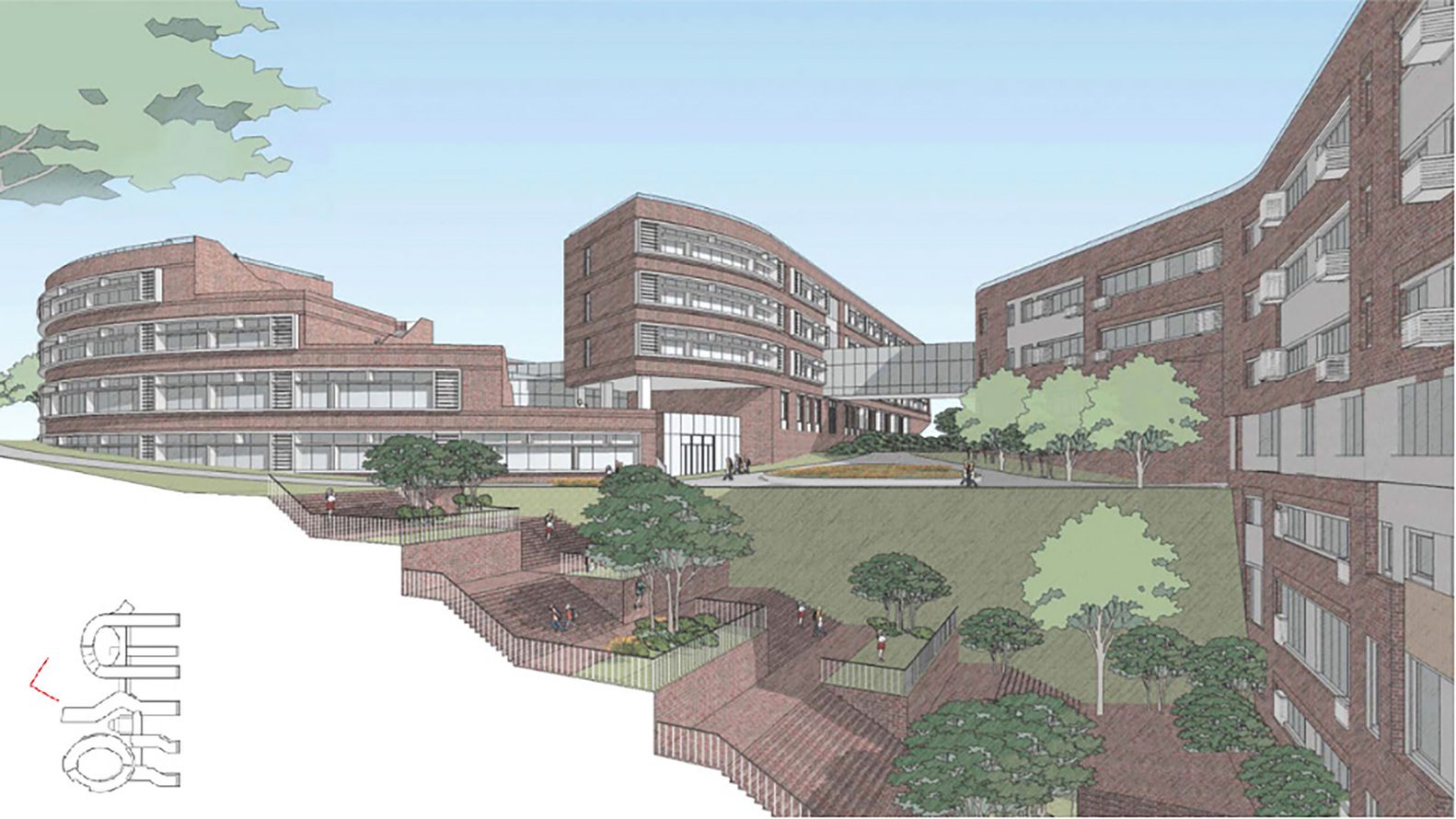
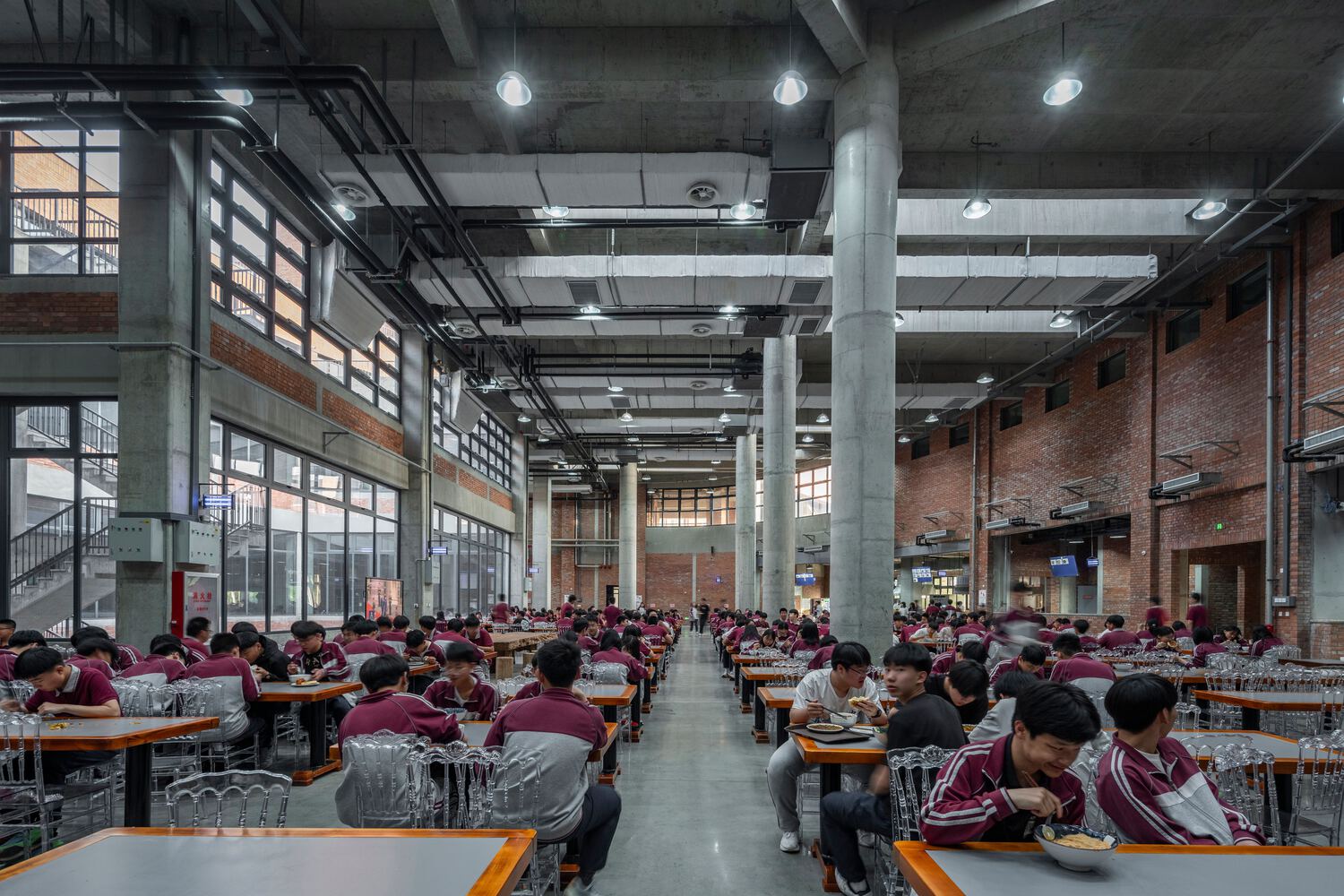
The west end of the school centre library and arts/Works building extends underground to the bottom of the mine.The landscape on both sides also descends to the pit floor along with the terrain. In addition to the large skylight windows in the classroom, the corridors of the teaching building are connected to outdoor platforms at both ends, providing ample natural ventilation indoors and outdoors stands for watching sports games on the playground. The dining hall utilizes the natural height difference of the mine pit, and the large area of lighting windows provide sufficient lighting and natural ventilation for the cafeteria on the basement floor. The noon sun shines on the warm red brick walls, creating a pleasant dining environment for students.
© Weiqi Jin
RED BRICK MATERIALITY AND THERMAL OPTIMIZATION
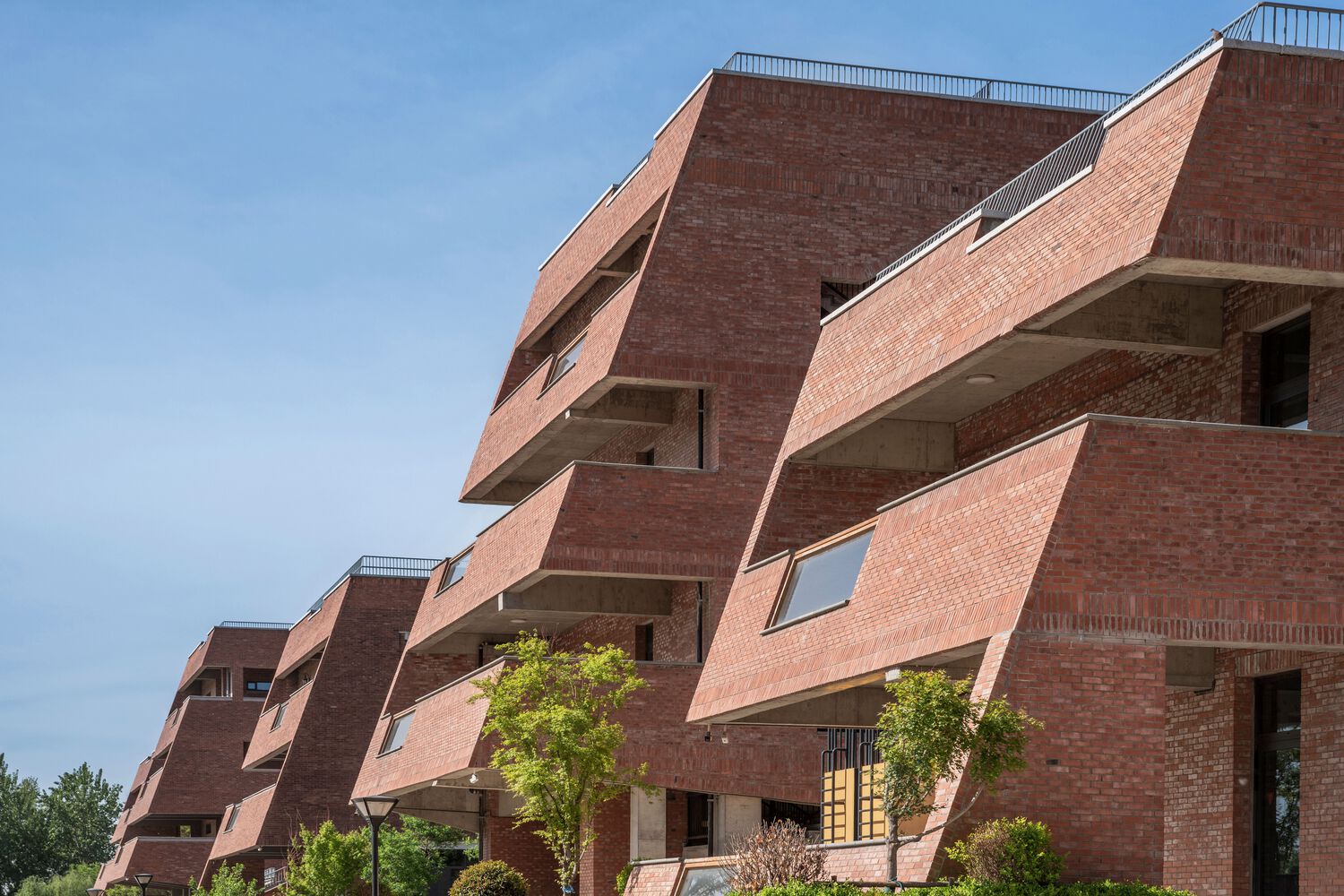
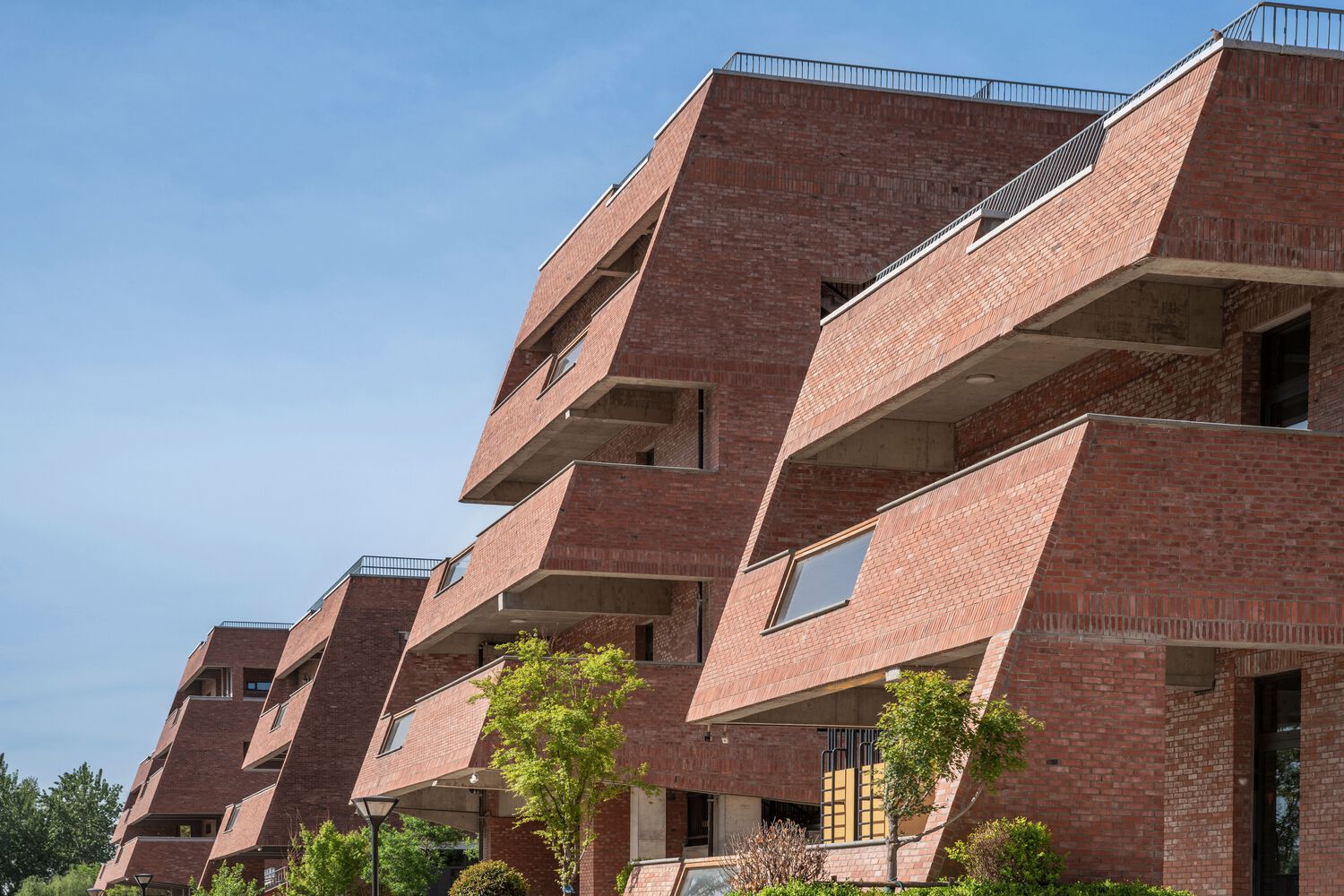
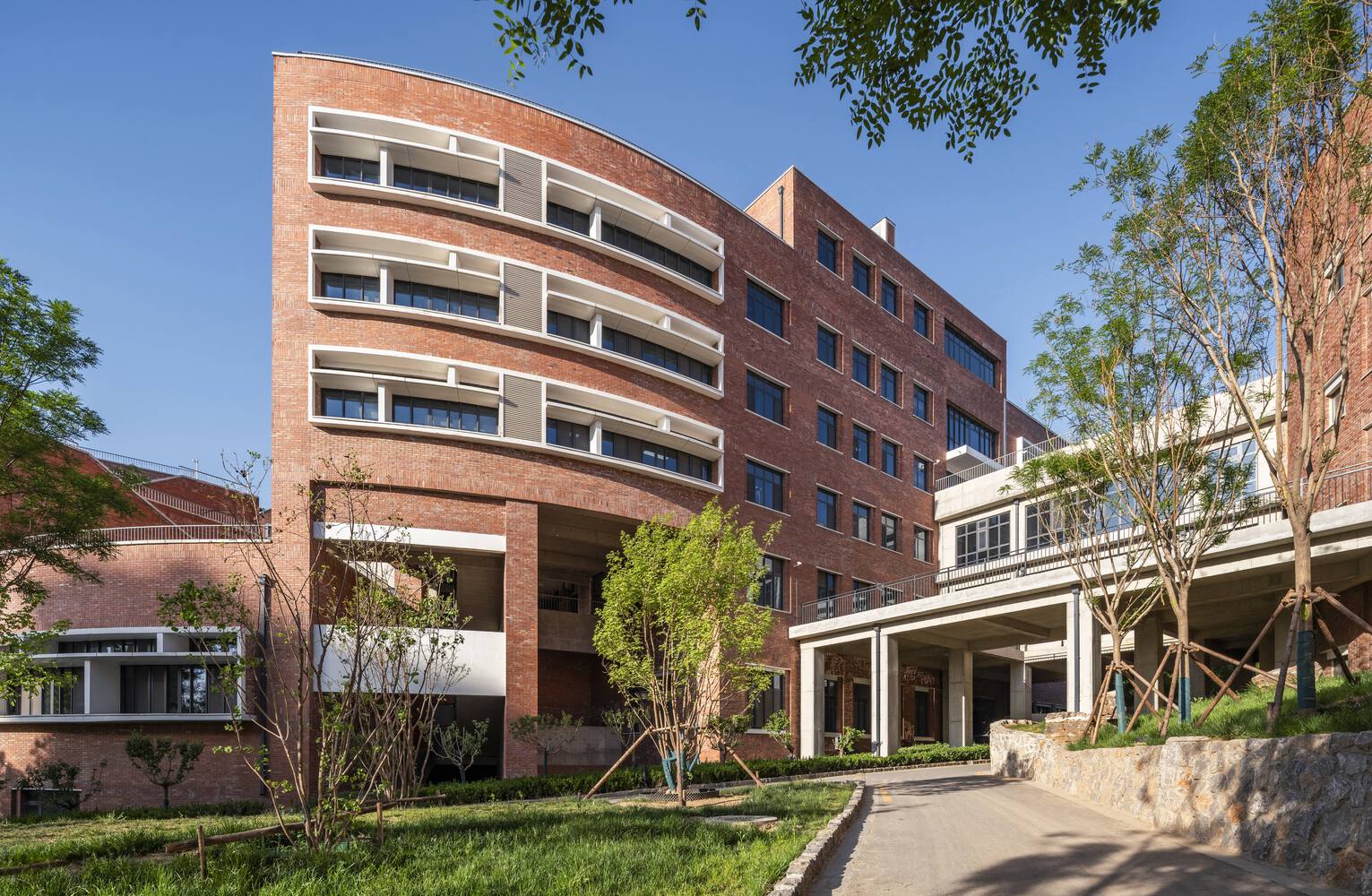
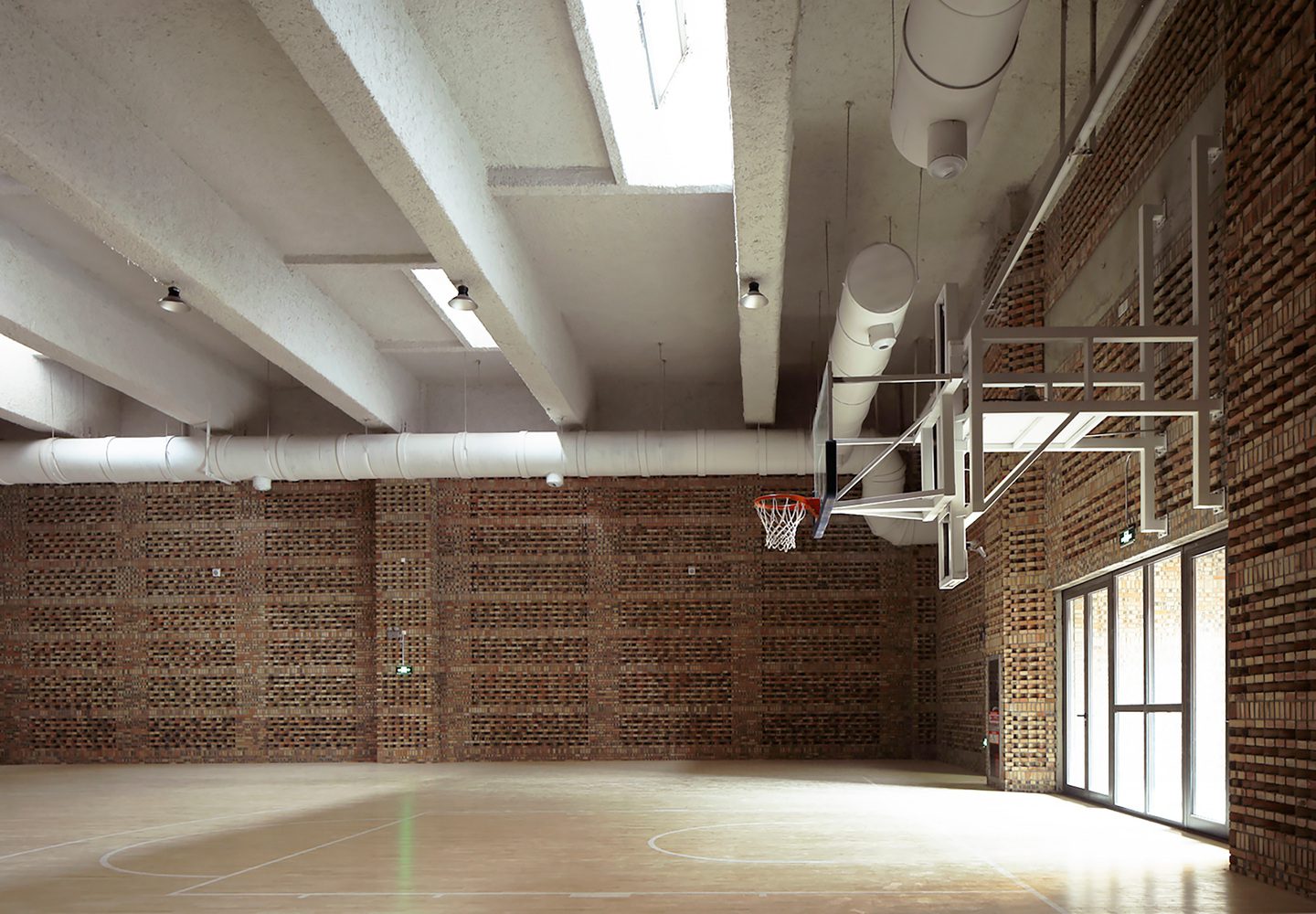
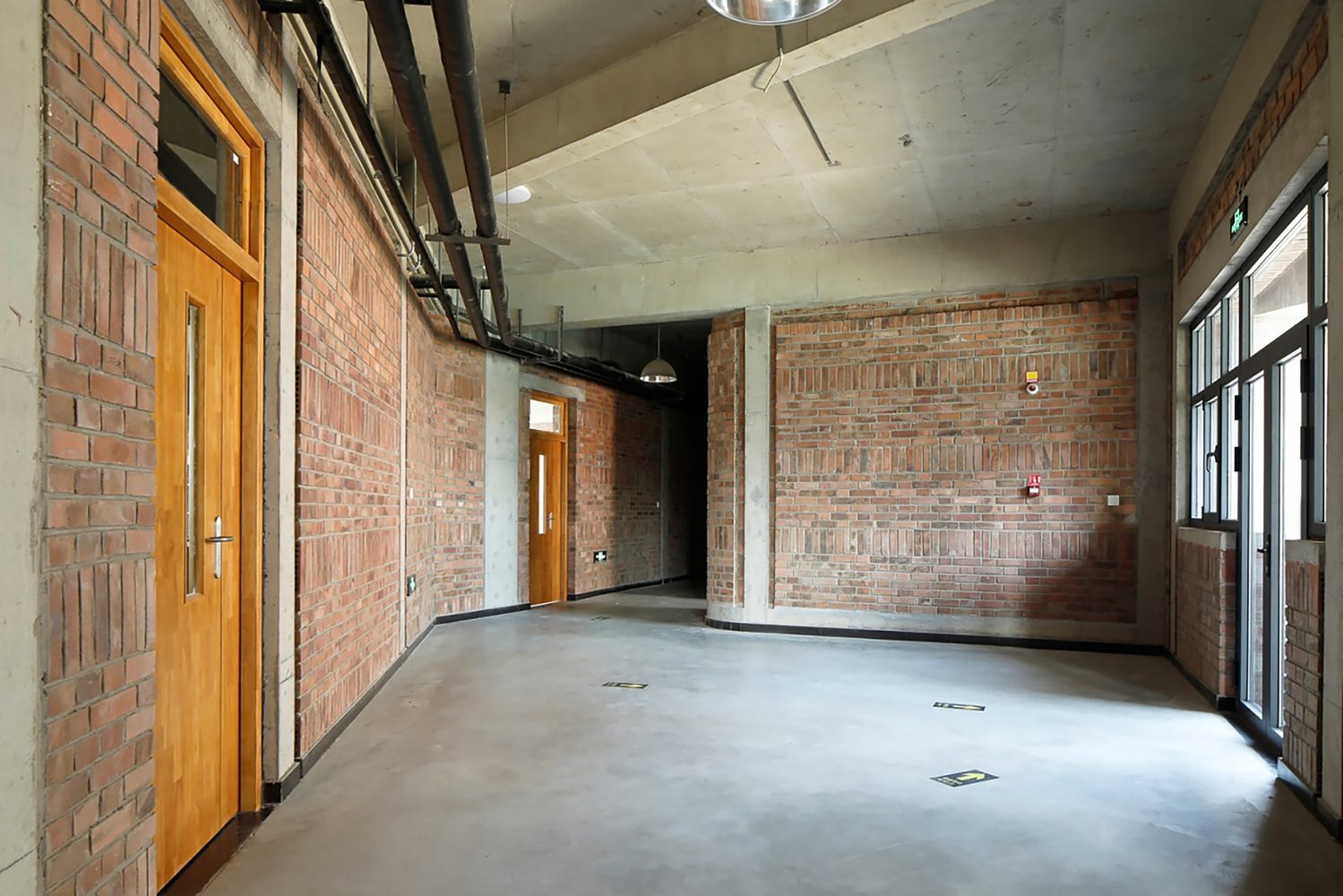
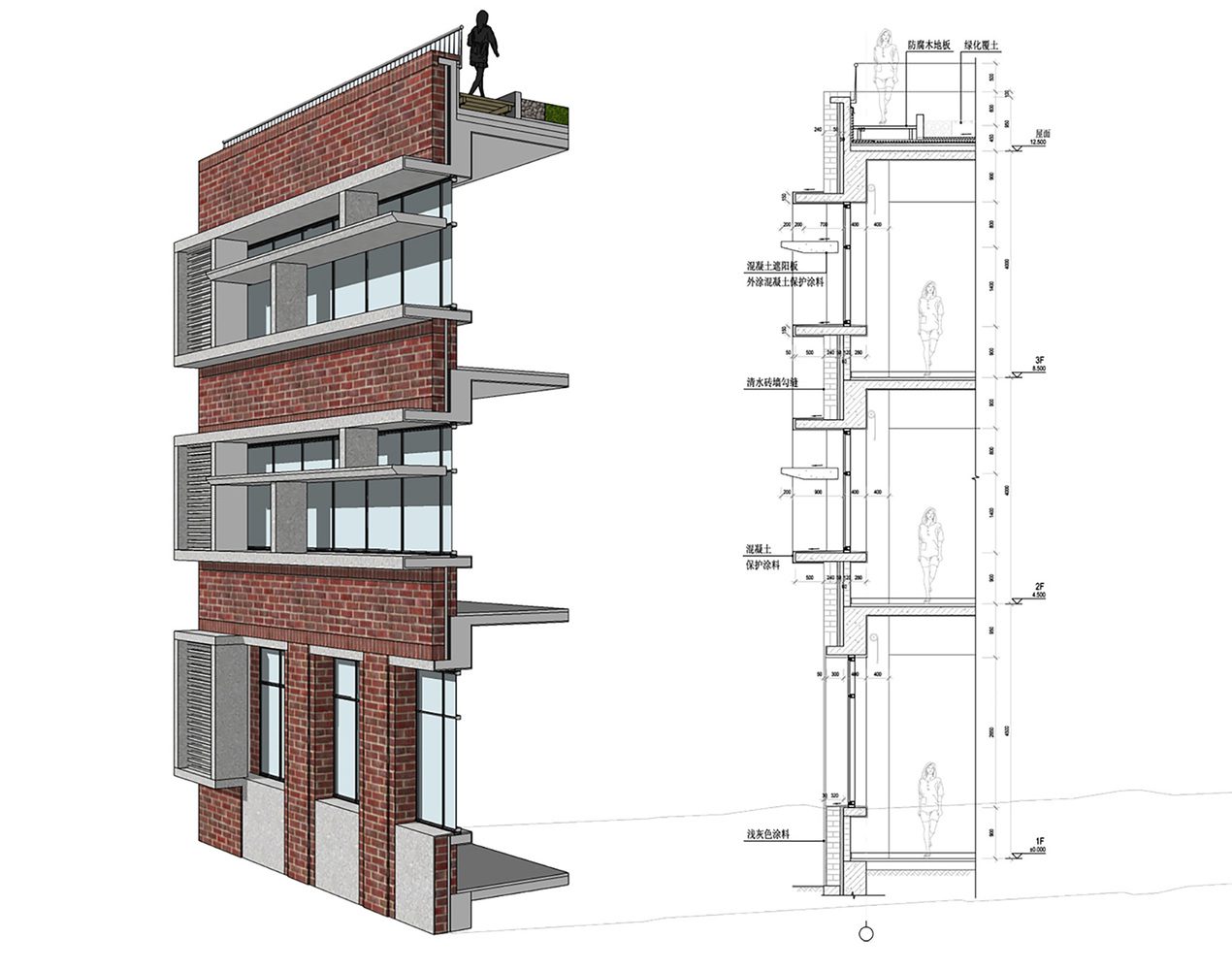
Extensive red brick block walls are used for both the facades and interior spaces.It becomes a continuation of the life of a particular site.Sandwich brick walls provide double insulation for the cold winter weather in the north.The window coverings on the south facade actually increase the window depth to 1 meter.It also added a light shield.This not only provides summer shading, but also greatly optimizes indoor natural lighting.Brick walls extend from the exterior to the interior, creating a warm and unique public space for the school. Red bricks, with their simple materials and warm tones, can give buildings a unique natural charm.
Ground Floor Plan
KINDERGARTEN WITHIN THE SCHOOL CAMPUS
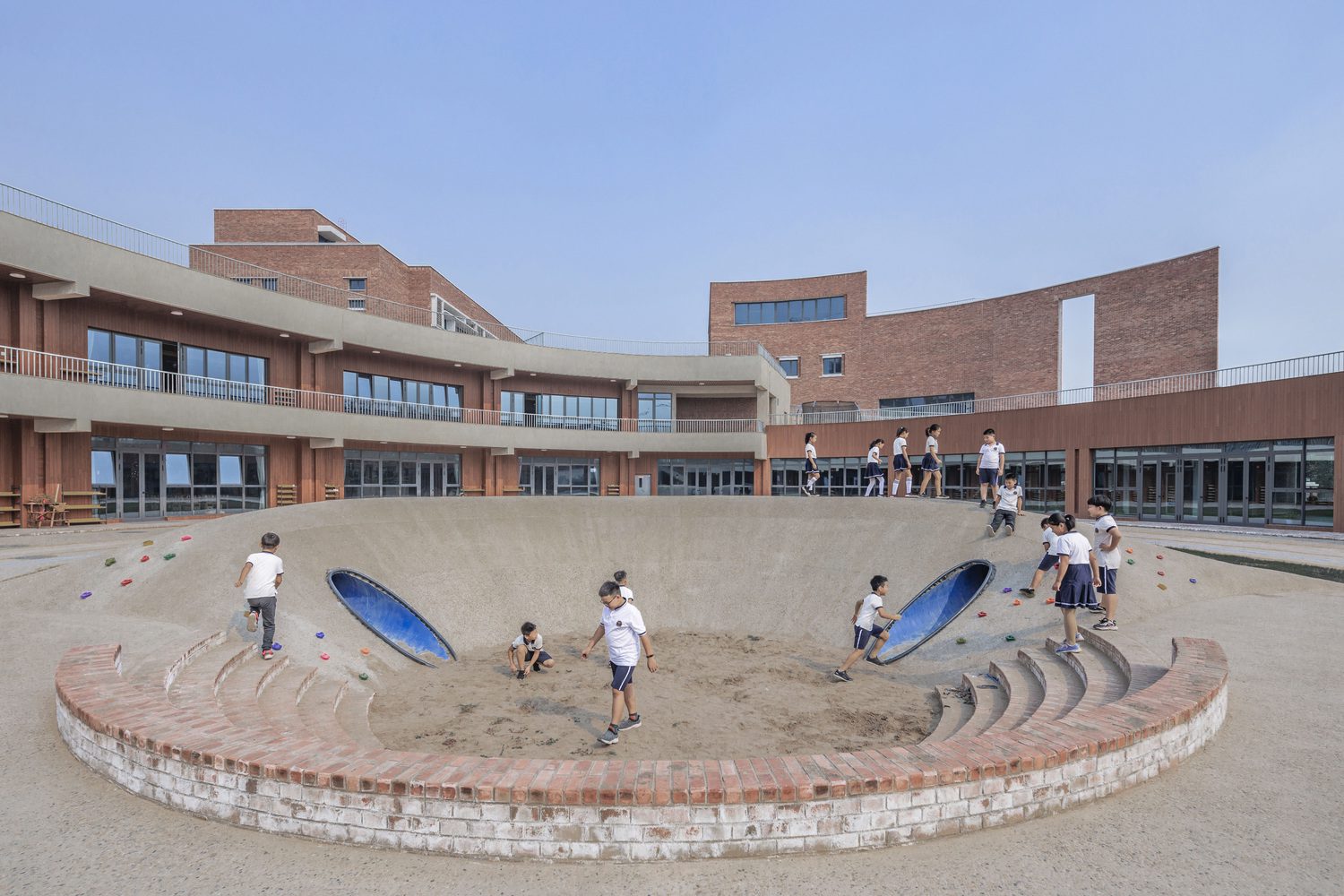
The kindergarten is located in the southwest corner of the campus.The class activity room is arranged on two floors.The center around the oval activity site.The height of the floor is reduced as much as possible to ensure a convenient connection between the activity platform on the first floor and the oval activity area in the center of the first floor.The venue, roof platform and building facade are all made of environmentally friendly material heavy bamboo panels.The appropriate scale and color of the warm uniform material gives the space a stronger sense of belonging and security.
Project Info:
-
Architects: E PLUS/SZA DESIGN
- Country: Xingtai, China
- Area: 59560 m²
- Year: 2024
-
Photographs: Weiqi Jin
-
Lead Architects: Wang Zhe
-
Category: Schools
-
Design Team: Shi Wei, Wen Zewei, Gao Huilai,Han Qi,Li Hongbo, Liu Mengchen, Zhang Yan
-
Construction Drawing Design: NORENDAR INTERNATIONAL LTD