


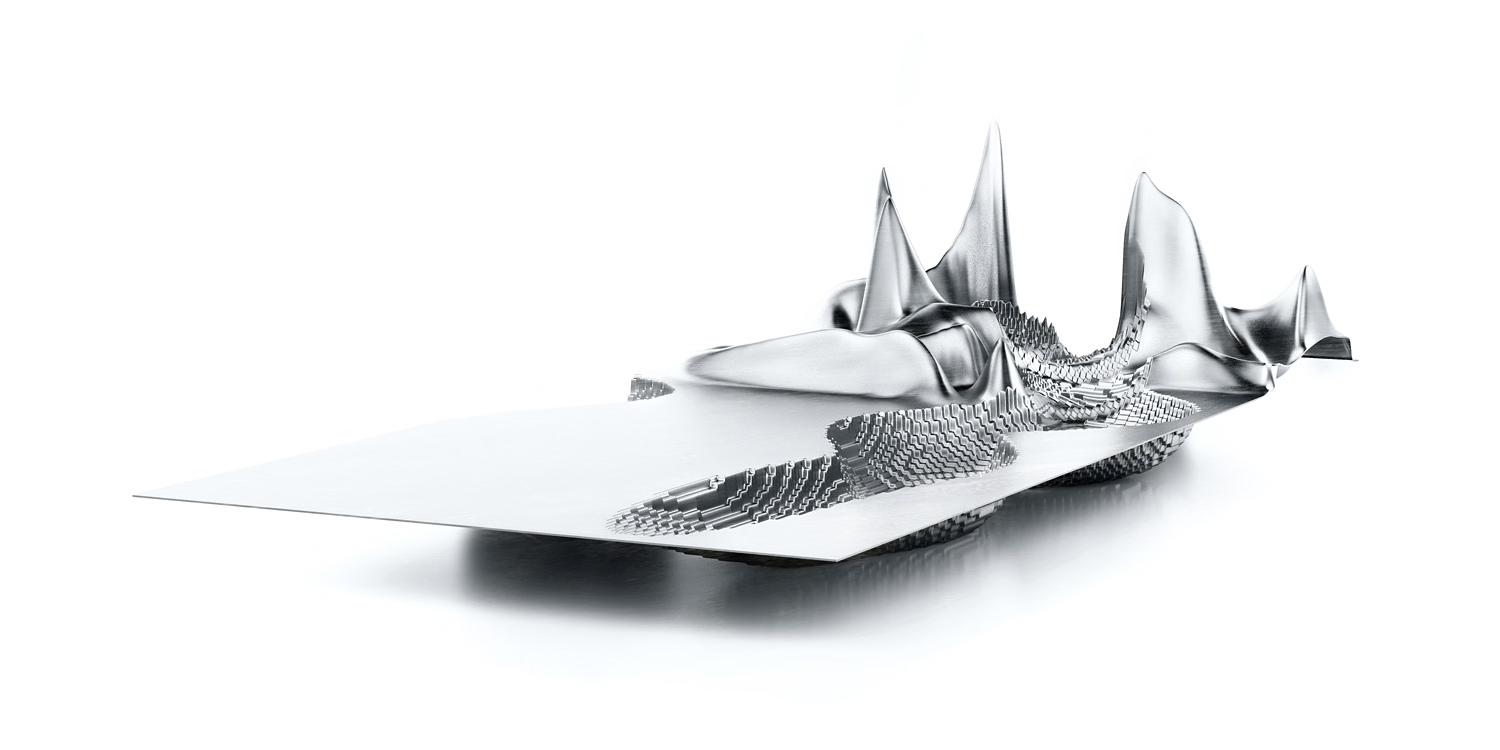
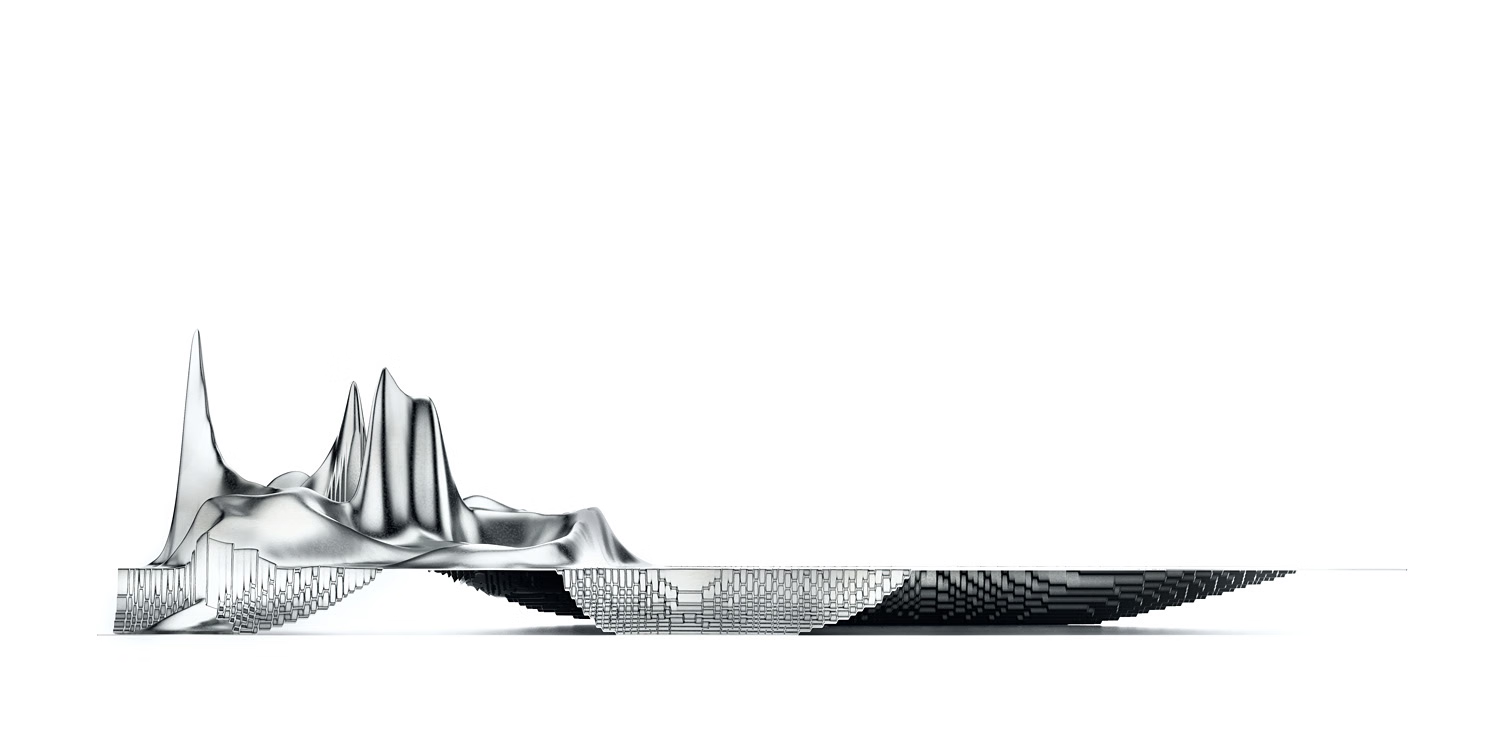
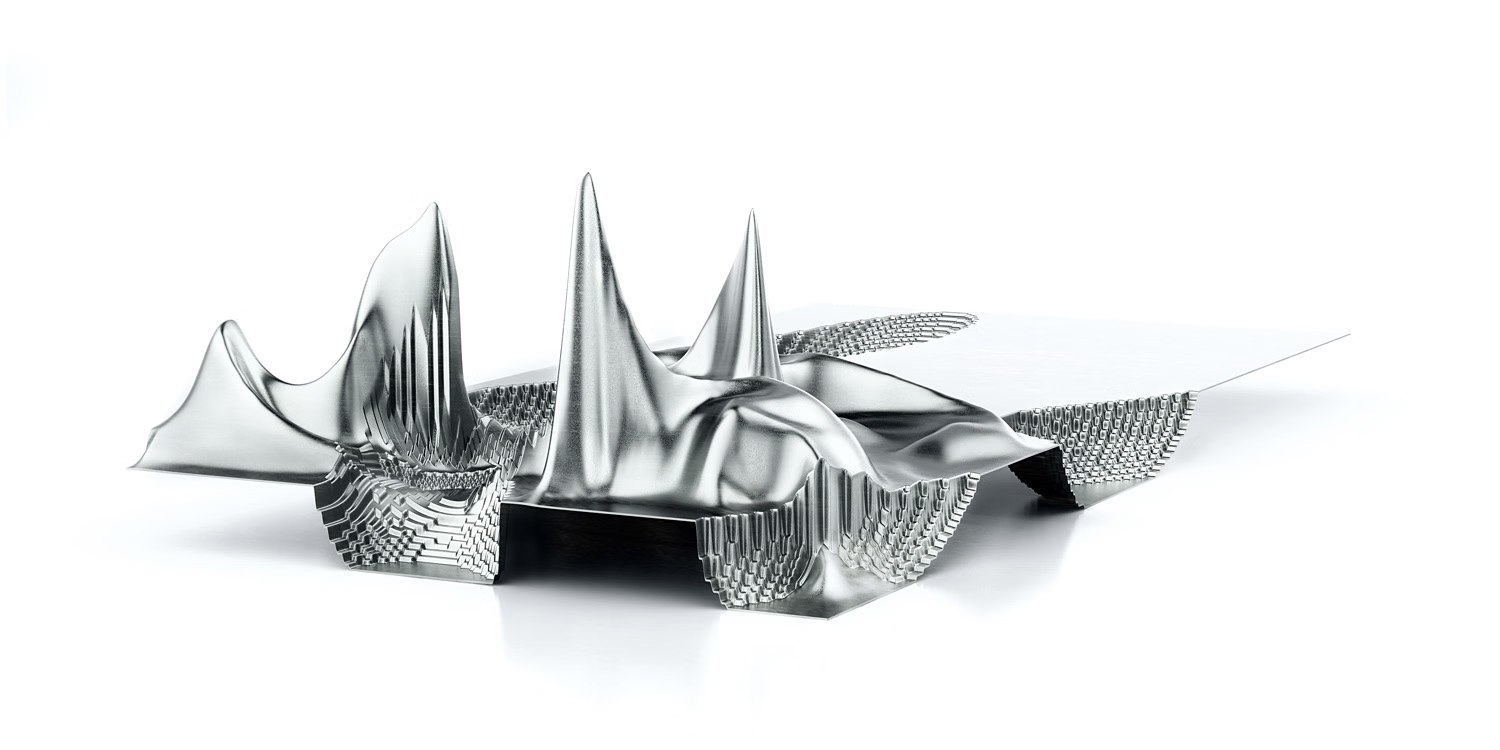
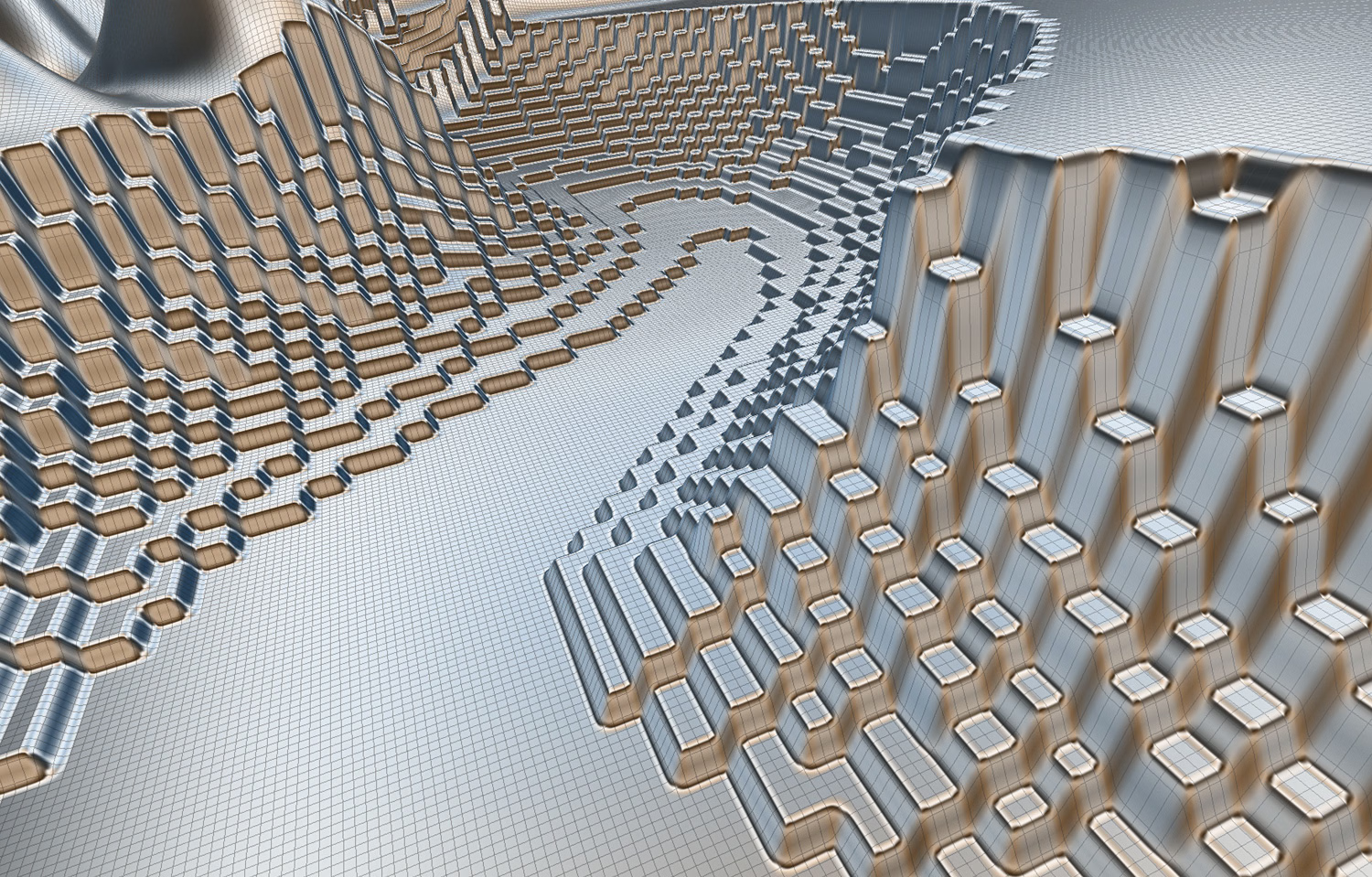
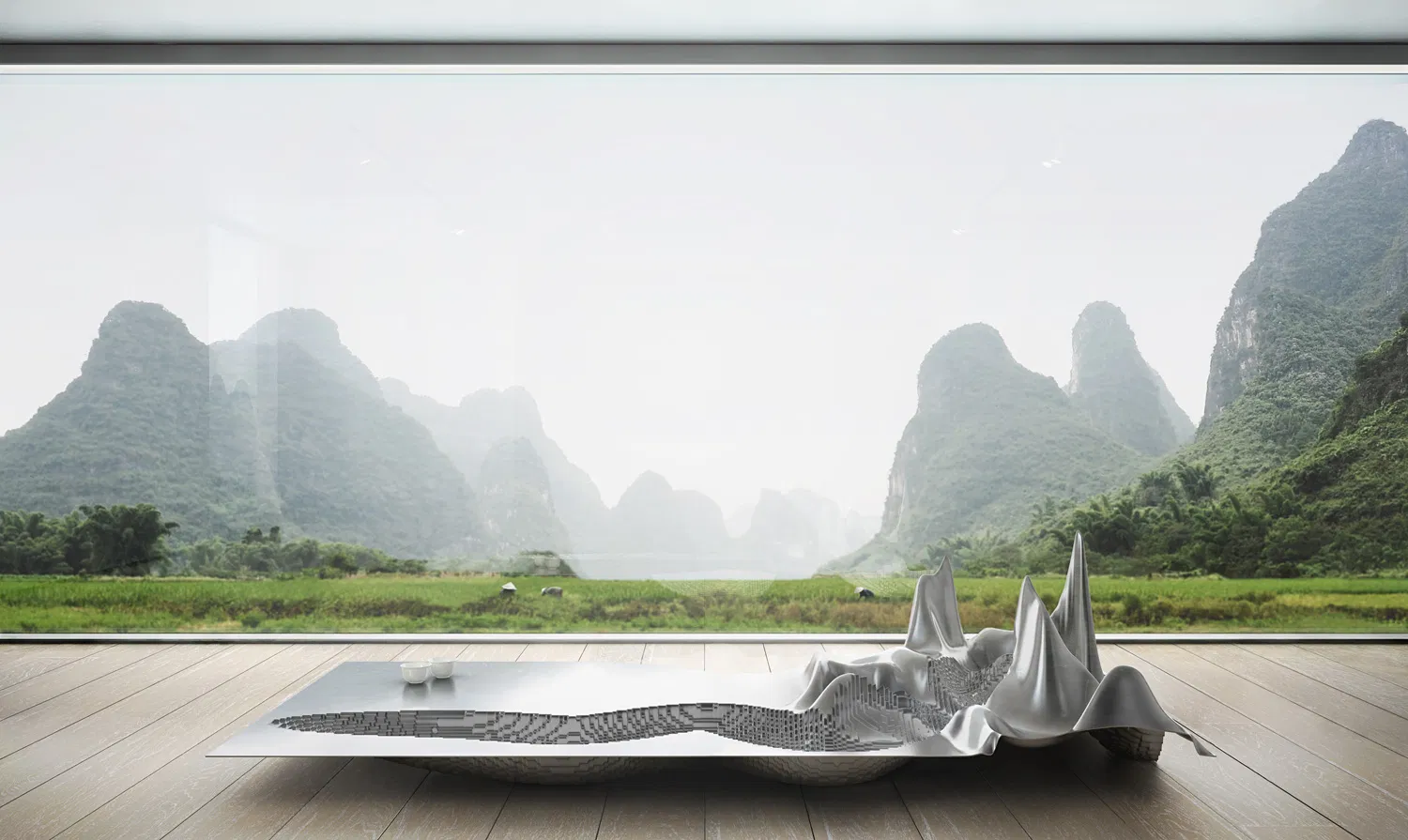
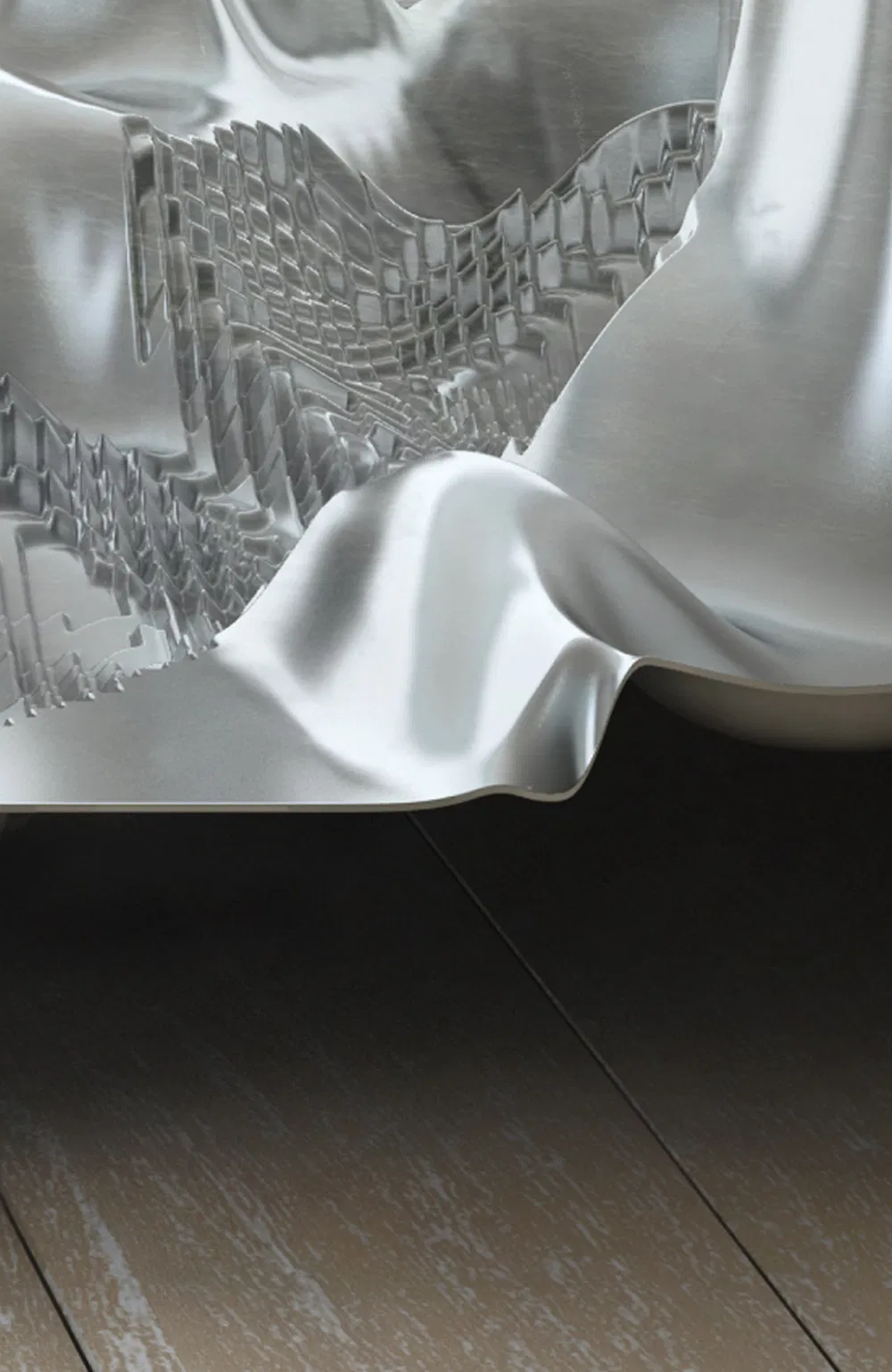
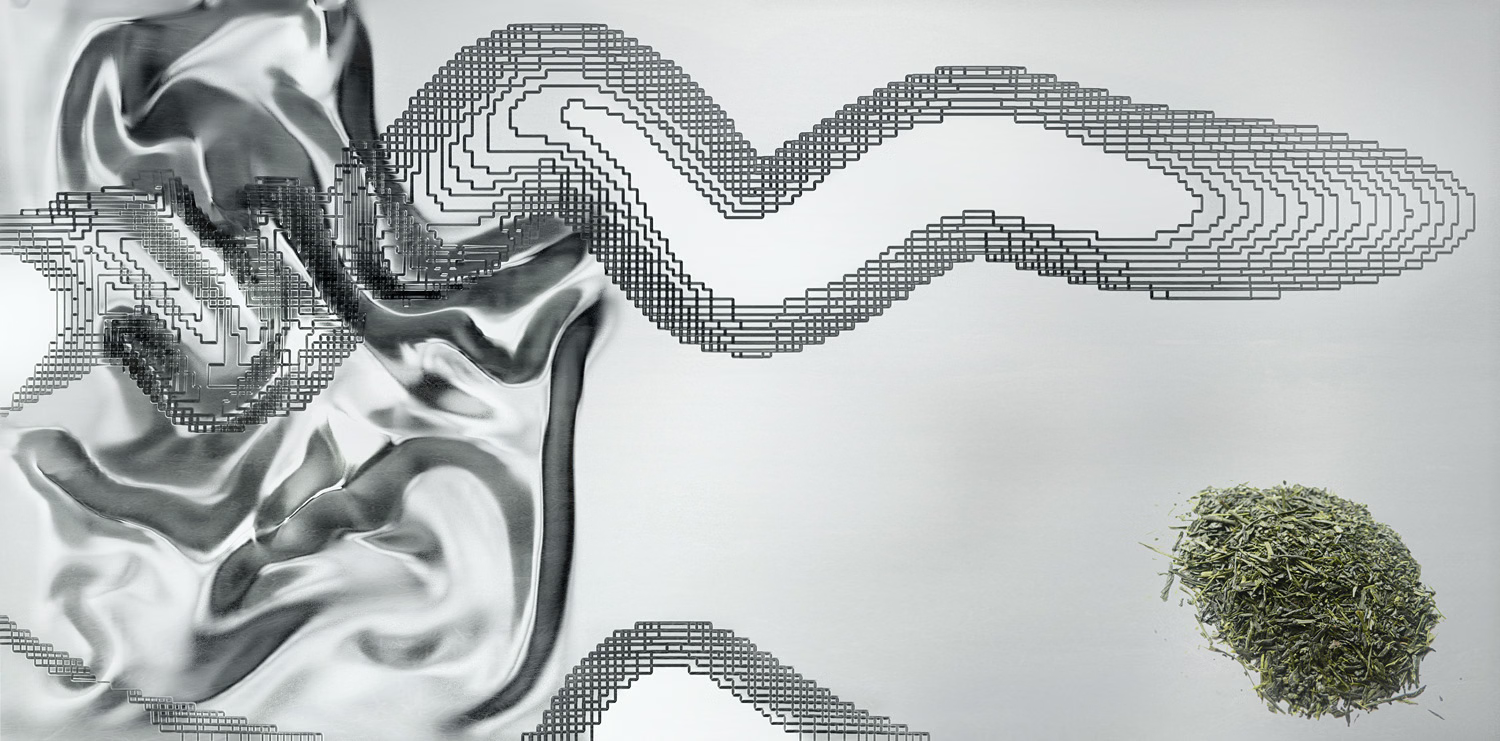
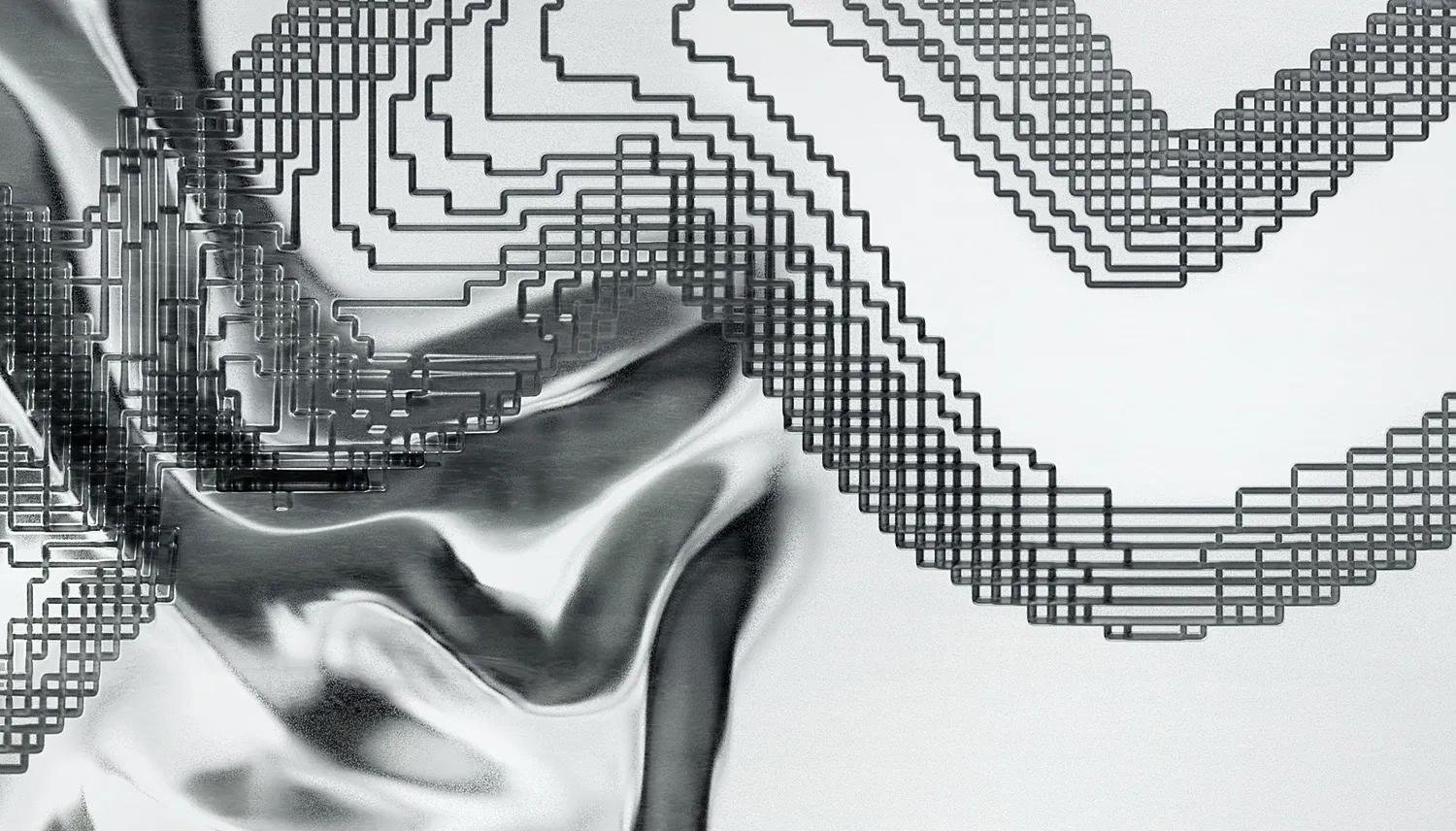
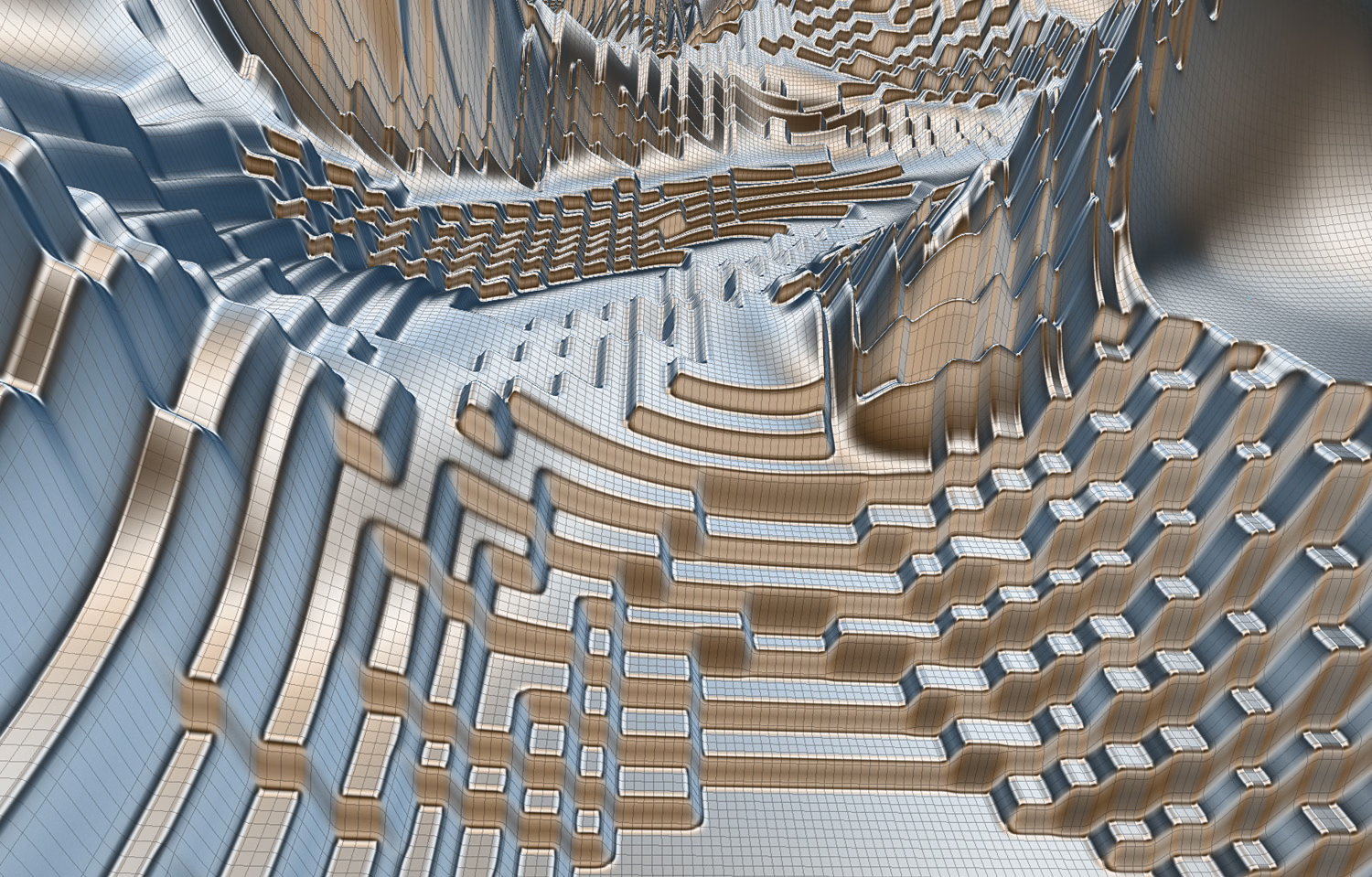
The ‘T’able is a unique representation of the mountainous topographies in which specialty teas are produced. Tea is known for its health benefits and it’s ability to rebuild damaged cells in the human body while the industrialization of tea production removes and erodes our planets natural landscape. Mans use of the land supports economic growth, like the pixelated mining of the ‘T’ables’ landscape supports its surface.
Courtesy of Daniel Gillen
The customary act of preparing and drinking Chinese Tea called Chayi (“Art of Tea”) involves a cleansing ritual begun by pouring out the first brew and letting it wash over cups and utensils at the table. As Tea rains on the mountainscape the tables terraced stream collects and channels runoff.
Courtesy of Daniel Gillen
The iconic ‘T’able is a catalyst for discussion; a place for sharing of ideas, dreams, and Tea, with family and friends, loved ones, even a perfect stranger. While enjoying your Tea you can reflect on both the serenity of nature as well as how we can positively impact it. Proceeds from each ‘T’able sold go directly to local Tea farmers and to preserving their ecological landscapes.
Courtesy of Daniel Gillen
EACH TABLE IS ONE OF A KIND, LIKE THE TEA YOU DRINK
Courtesy of Daniel Gillen
In modern China, virtually every dwelling, even the most basic has a set of tea implements for brewing and drinking a cup of tea.Total tea consumption in China increased by over 25% since 2009, making it the largest in the world. In China the average person consumes 400 cups of tea a year. Paired with an expanding GDP, and an increase in disposable income unique ‘T’ experiences are more desired than ever.
Courtesy of Daniel Gillen
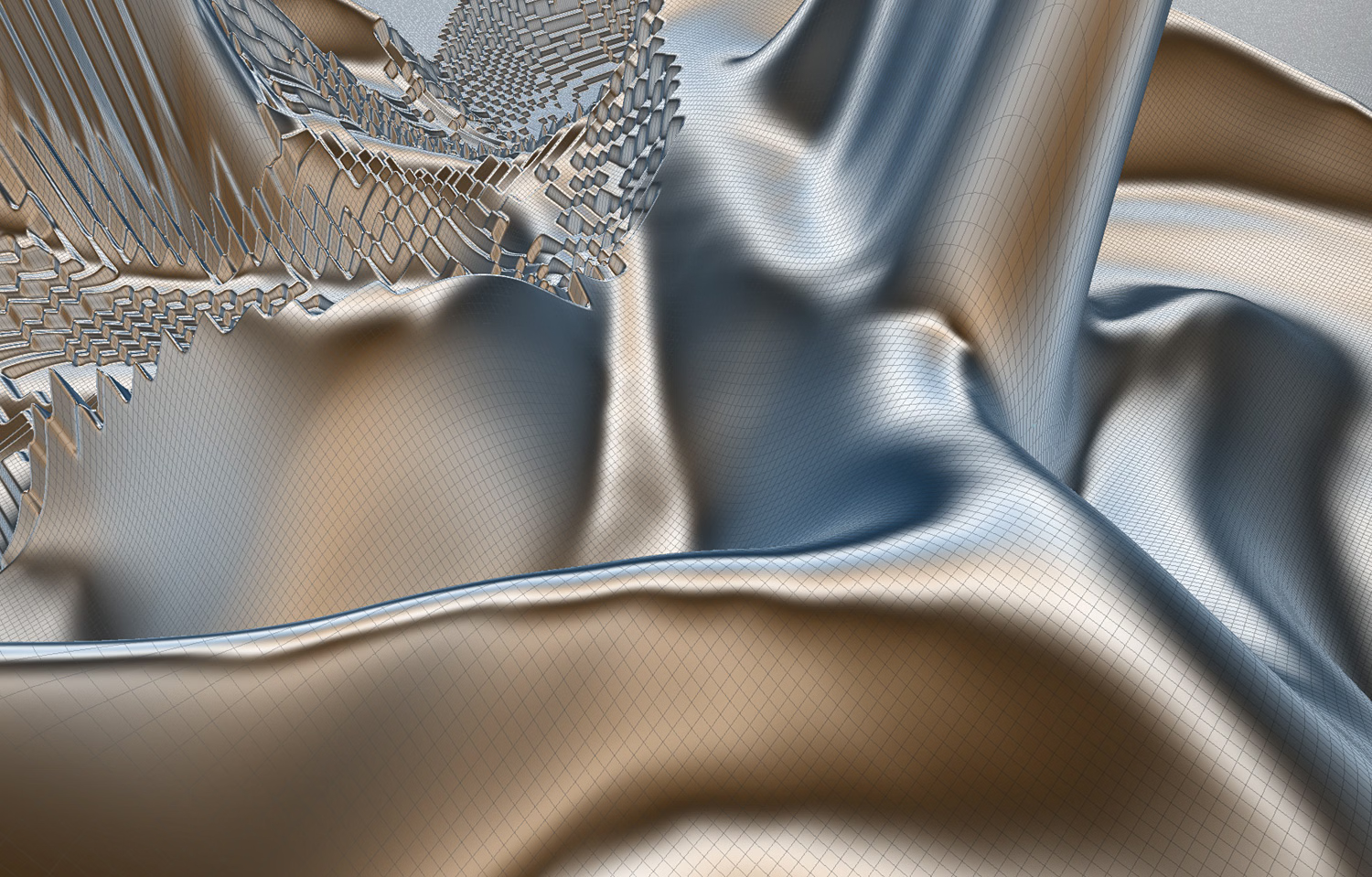
‘T’ables are made of a single sheet of 2mm stainless steel and contain no joints, welds, clips, or fasteners. Slumping/Stamping: Final designed surfaces are digitally contoured and milled from flat pack material in sections. Each section relates to the pixel dimension and also corresponds to the width of standard off the shelf materials. 50% of sections require a standard 3axis CNC mill and 50% require a 5axis mill. Mold sections are then assembled into a ‘positive’ and similar to acrylic vacuum forming the stainless steel sheet is heated and slumped to the mold. If slumping is not available a positive and negative mold are made and the metal can be pressed or stamped between the two. Large scale industrial and reconfigurable pin press machines are by far the most efficient and cost effective but currently do not offer the size or resolution necessary for ’T’ables. In order to reduce mould waste and fabrication time an alternative process is ‘Lost-Wax Casting’. A process where metal is poured into re-usable wax filled molds.

Ibrahim Abdelhady is an architect, academic, and media entrepreneur with over two decades of experience in architecture and digital publishing. He is the Founder and CEO of Arch2O.com, a leading platform in architectural media, renowned for showcasing innovative projects, student work, and critical discourse in design. Holding dual PhDs in Architecture, Dr. Abdelhady combines academic rigor with industry insight, shaping both future architects and architectural thought. He actively teaches, conducts research, and contributes to the global architecture community through his writing, lectures, and media ventures. His work bridges the gap between practice and academia, pushing the boundaries of how architecture is communicated in the digital age.