


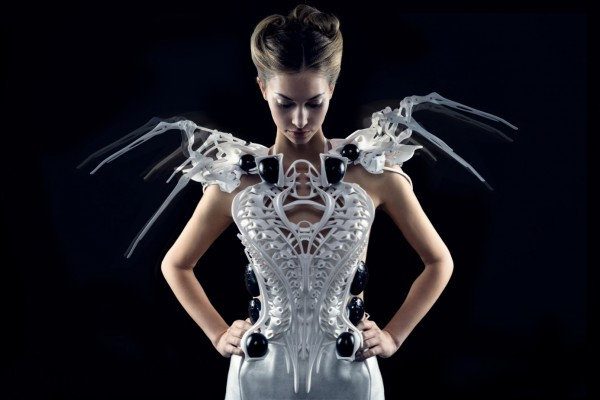
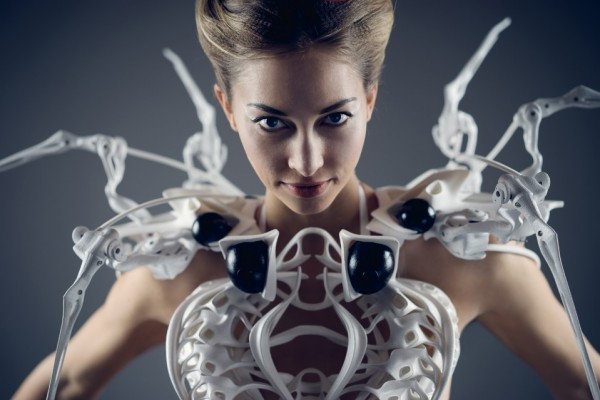
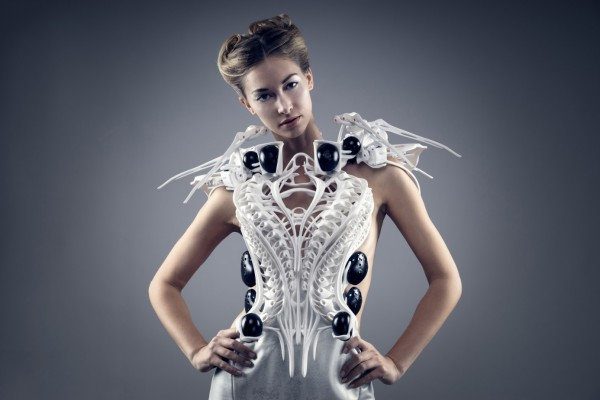
The Spider Dress 2.0 by Dutch designer Anouk Wipprecht is another step taken to show the power and beauty of technology integrated into fashion. We have witnessed a multitude of 3D printed elements in latest designs, but the Spider Dress is created with animatronic mechanical limbs with sensors, that protect your own personal space. Conceived to respond to external factors through proximity and respiration sensors, the piece extends or retracts its “spider legs” once the sensors are stimulated.
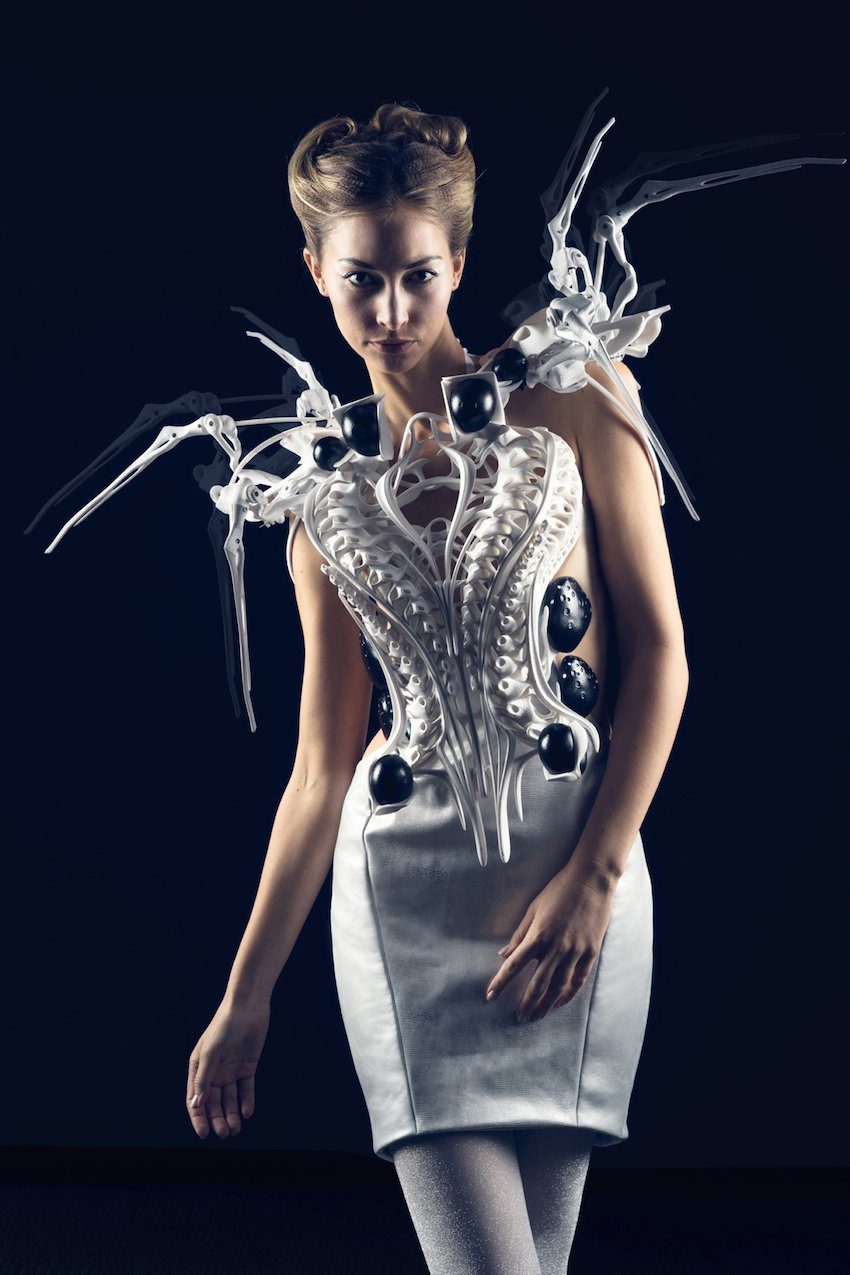
If the person wearing the design is approached aggressively, then the limbs assume the attack position, but when approached in a calm manner, the limbs create smooth gestures and ease the closeness. At a closer look, we can observe that the entire dress is created in this contrasting manner: although it can aesthetically be perceived as high tech, soulless piece, when noticing the “braided” details and the delicate elements, the piece becomes a work of art.The exoskeleton-type dress was digitally developed alongside Philip Wilck, and will premiere at the 2015 CES in Las Vegas.







Lidia Ratoi is a Romanian architect, educator, and researcher, currently serving as Assistant Professor at the University of Hong Kong’s Department of Architecture. With a background in both architectural design and theory, her work explores the intersections of technology, media, and politics in the built environment. Ratoi’s research focuses on the aesthetics of power, surveillance, and virtuality, with a strong interest in critical and speculative design. She has practiced internationally and exhibited in venues across Europe and Asia. Passionate about challenging conventional narratives, Ratoi integrates digital tools with philosophical inquiry, encouraging experimental approaches to architecture. Her contributions continue to shape emerging discourses in design and architectural pedagogy.