

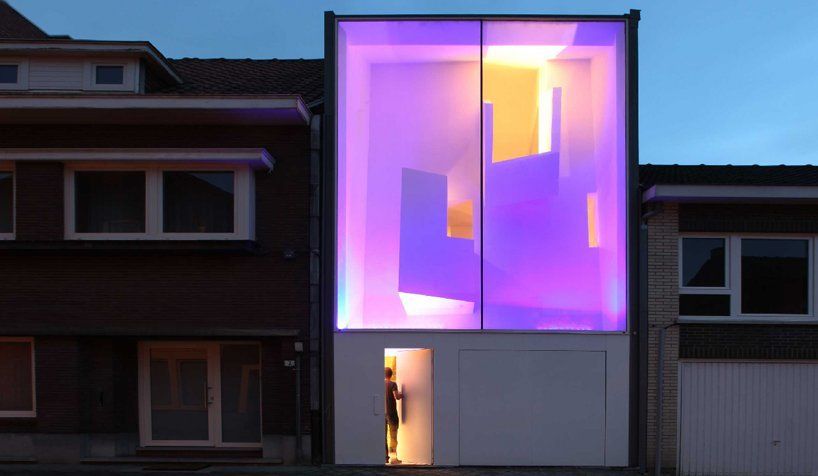
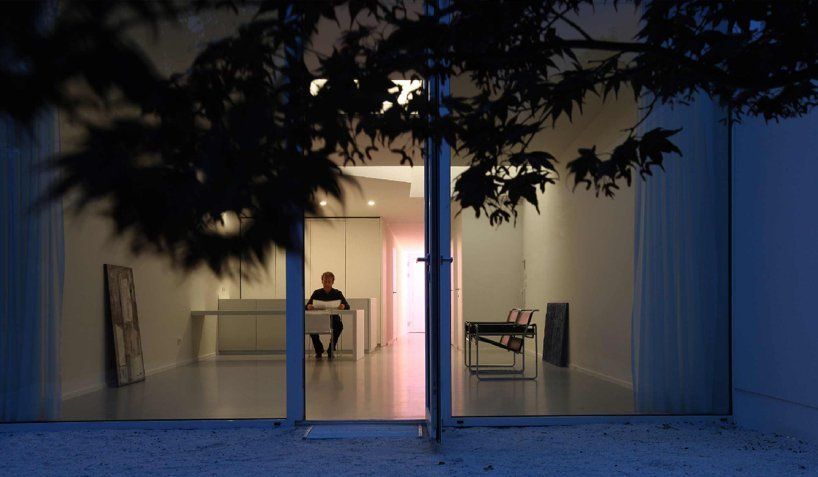
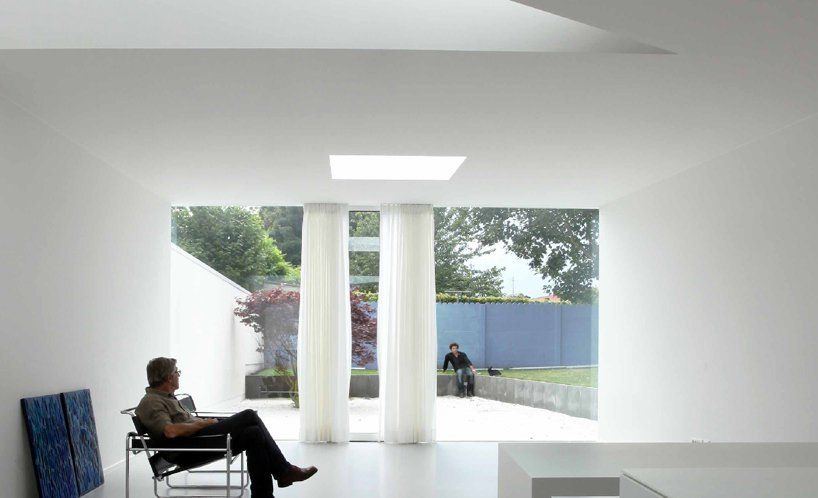
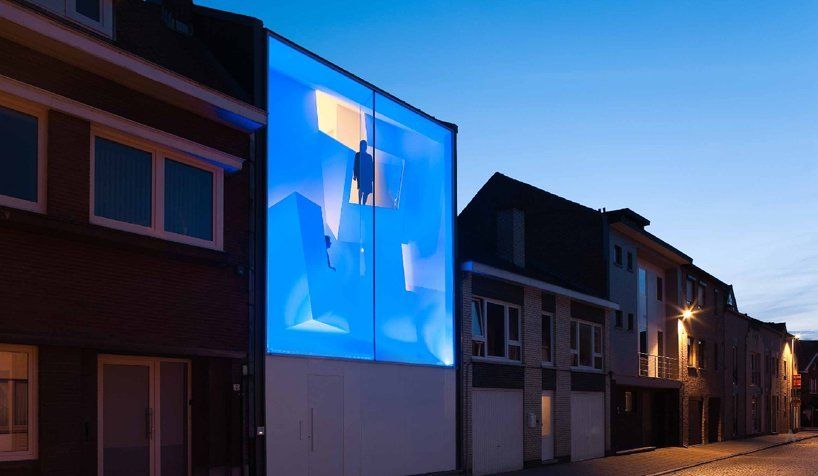
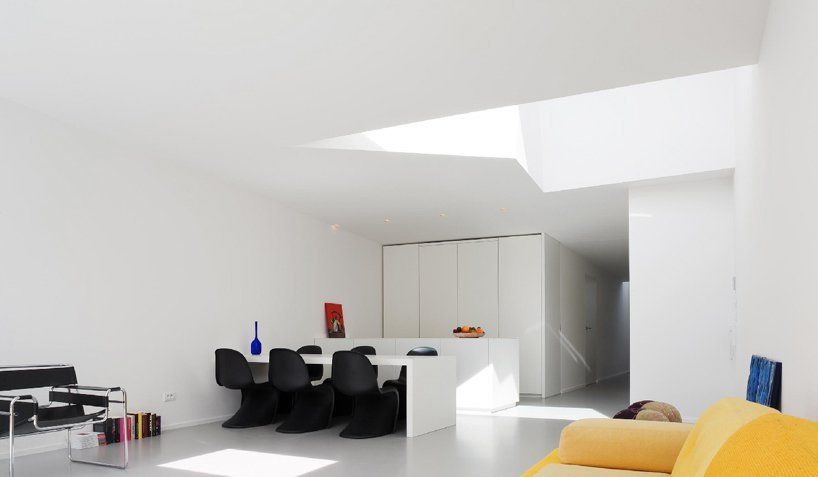
The “narrow house” is a 5.30 m wide house situated on an equally narrow site in Bilzen, Belgium, near the Holland frontier. The clients are middle aged with a passion for the arts. Their house is the architect’s first realised project.
Courtesy Of Bassam El-Okeily. Photographed by Tim van de Velde
‘what‘s a house? A space to live,
To project our happiness between four walls,
Then to spread out our vanity outside these walls.
Can there be space for something else?
A space for our melancholy, our scars,
Then the luggage of our memories.
It is a narrow house which leaves with its threshold,
Our thousand and one smooth and invented lives.
It is a narrow house which offers to a narrow street:
The history of a man, a woman and their passions.
History of a house imagined to live.
But also to remain.’
Courtesy Of Bassam El-Okeily. Photographed by Tim van de Velde
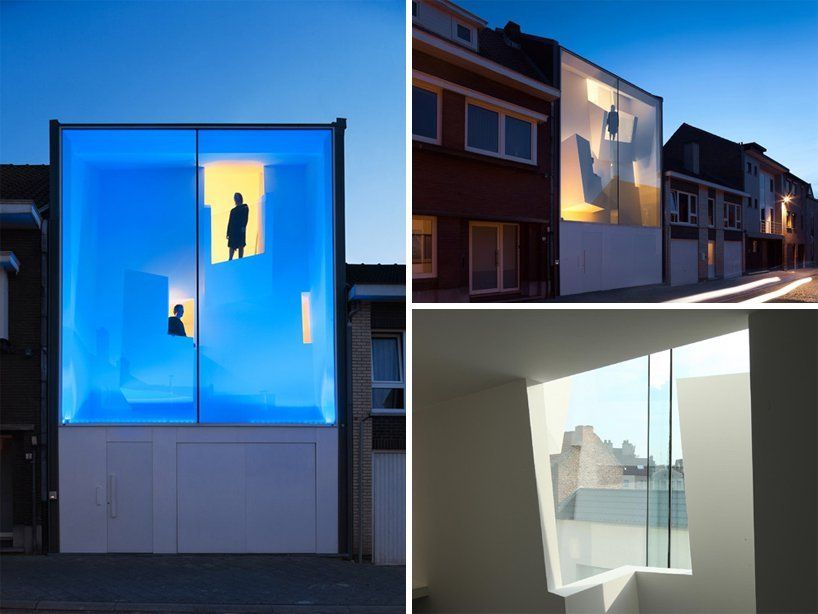
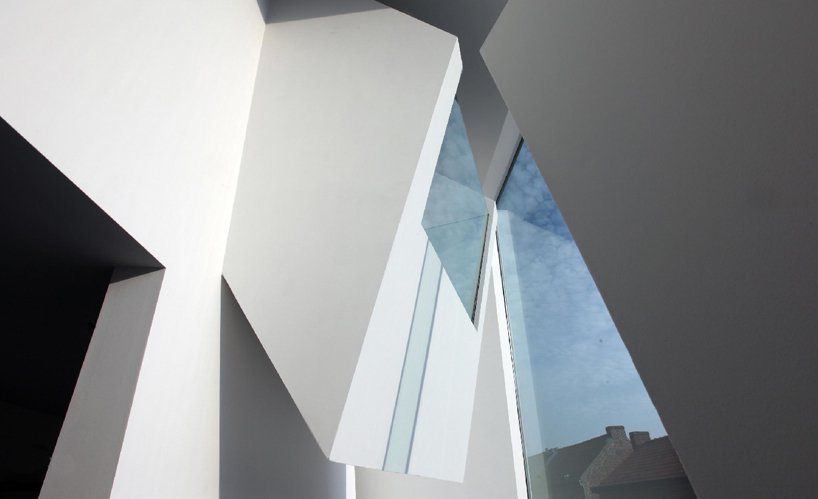
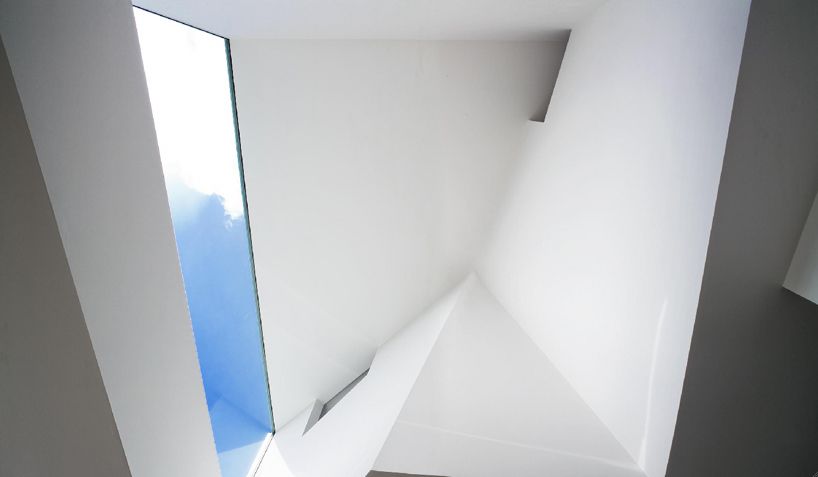
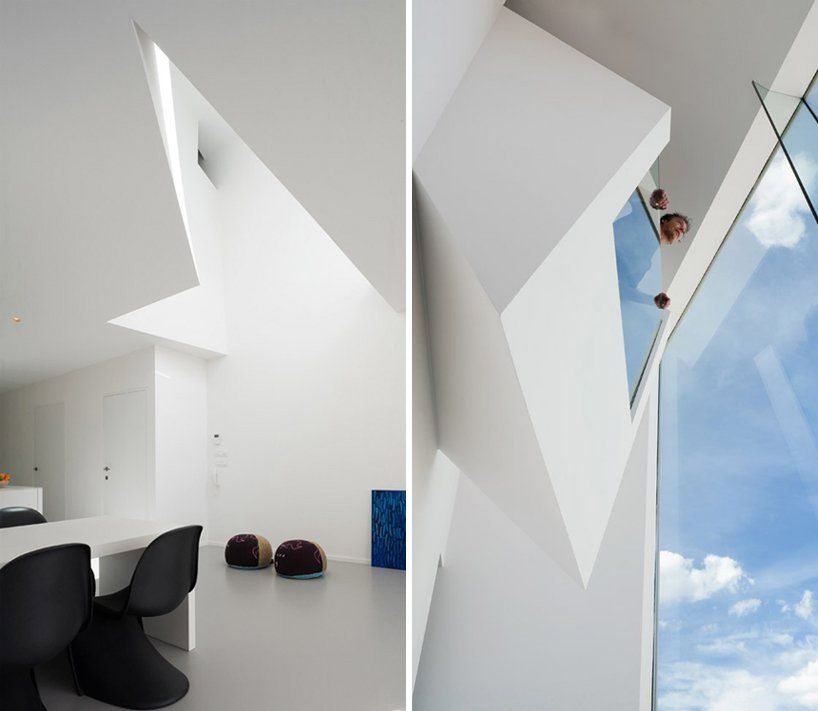
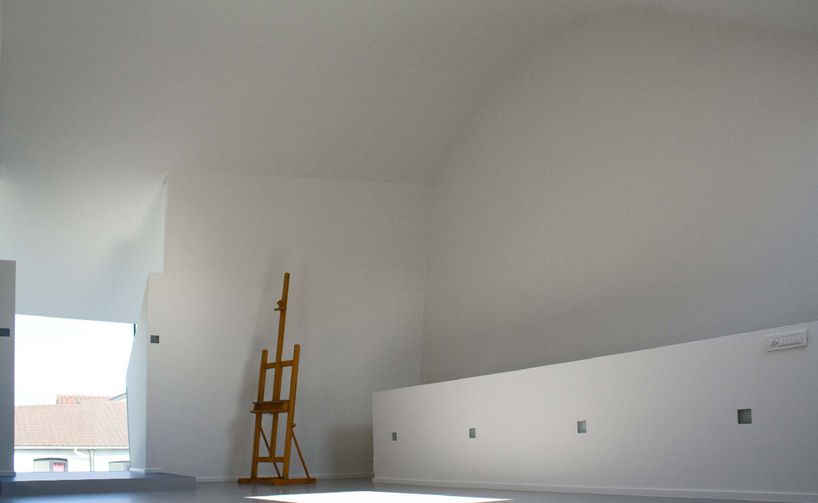
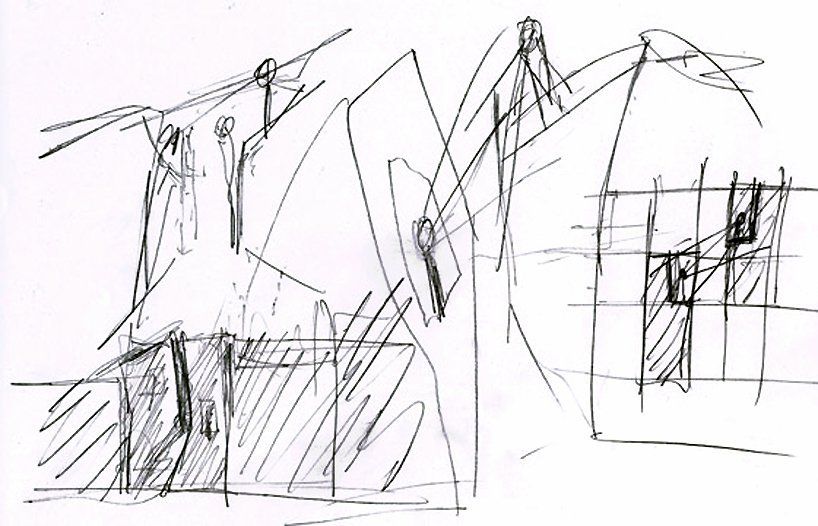
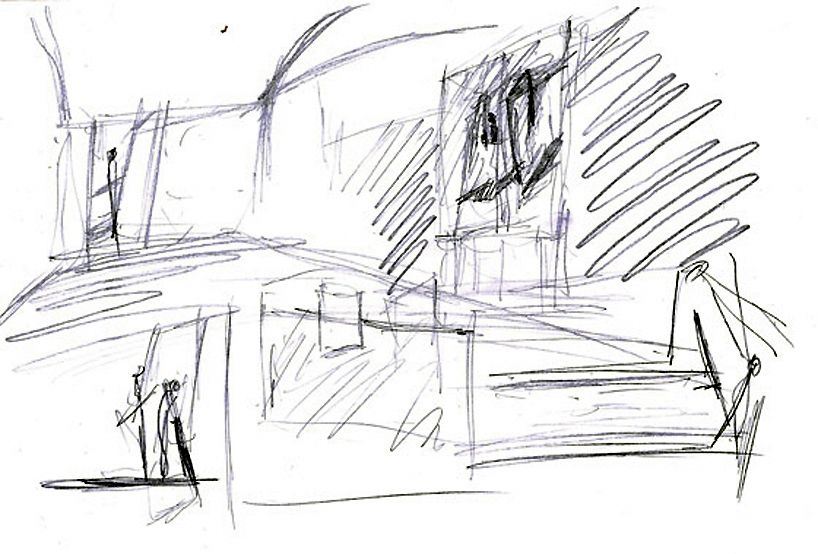
The project’s ground floor pure white facade has only two openings for the entrance and the garage. The other two floors rest on this white box and are in contrast completely transparent. The façade in the form of a display window reveals two balconies in skewed positions projected from the white façade in the background. The glass frame contains cubist like playful volumes lit with different colours during the night bringing alive this three dimensional painting. The lower balcony accommodates a reading corner for the library providing a sheltered view of the street while the upper balcony accommodates an artist’s studio. Blue light turns the façade into a spectacular light sculpture after dark.
Courtesy Of Bassam El-Okeily. Photographed by Tim van de Velde

Ibrahim Abdelhady is an architect, academic, and media entrepreneur with over two decades of experience in architecture and digital publishing. He is the Founder and CEO of Arch2O.com, a leading platform in architectural media, renowned for showcasing innovative projects, student work, and critical discourse in design. Holding dual PhDs in Architecture, Dr. Abdelhady combines academic rigor with industry insight, shaping both future architects and architectural thought. He actively teaches, conducts research, and contributes to the global architecture community through his writing, lectures, and media ventures. His work bridges the gap between practice and academia, pushing the boundaries of how architecture is communicated in the digital age.