

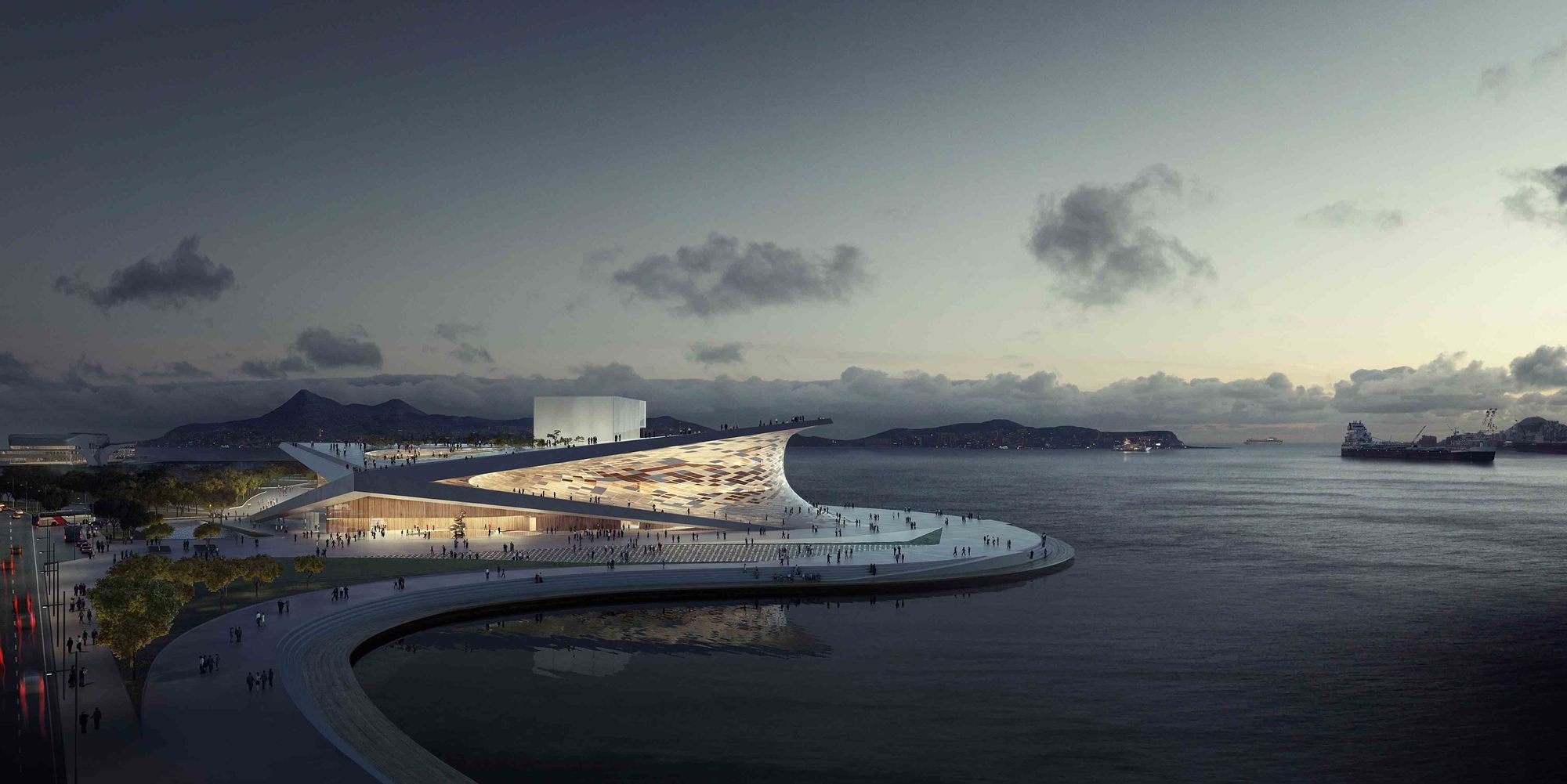
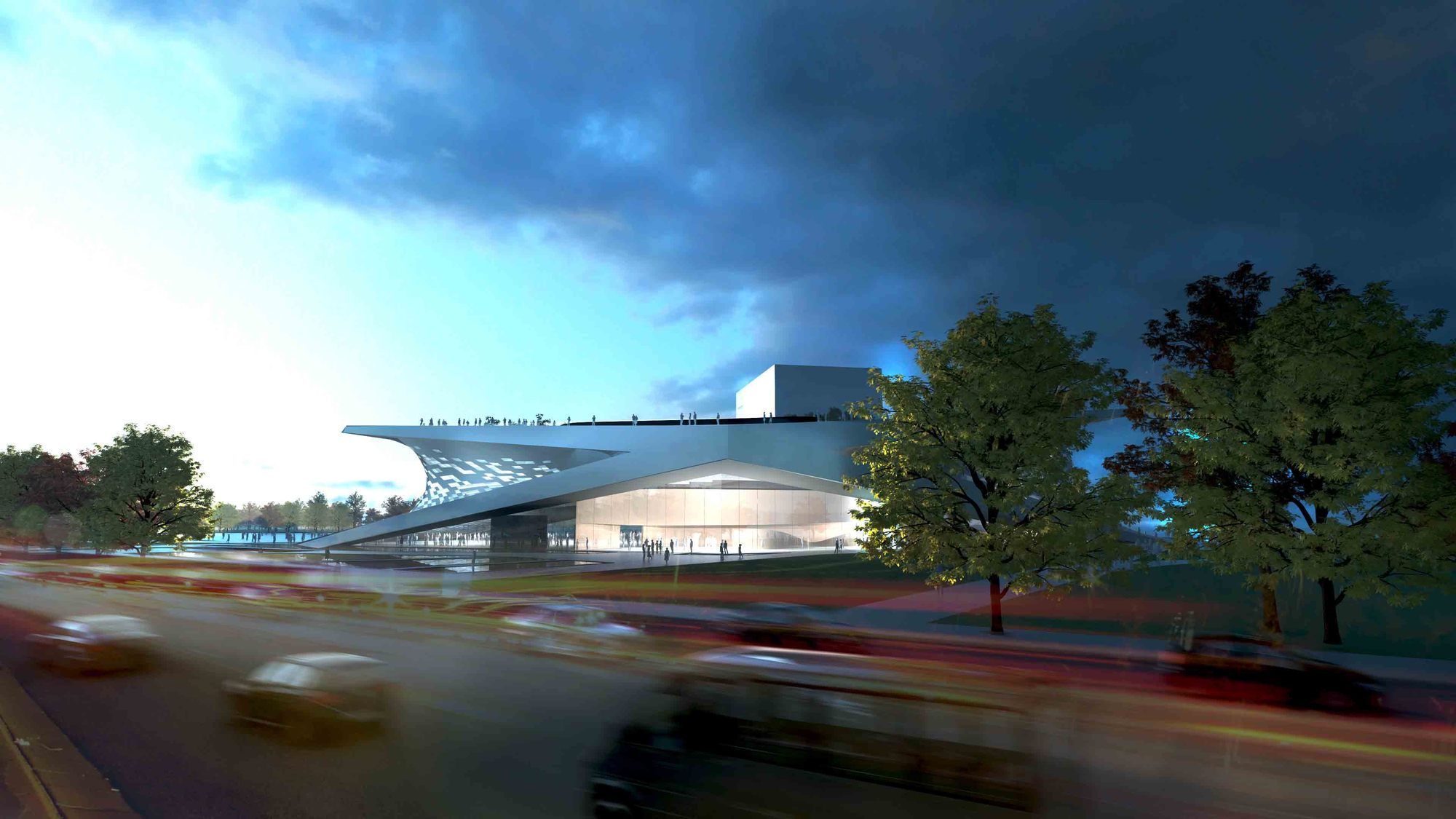
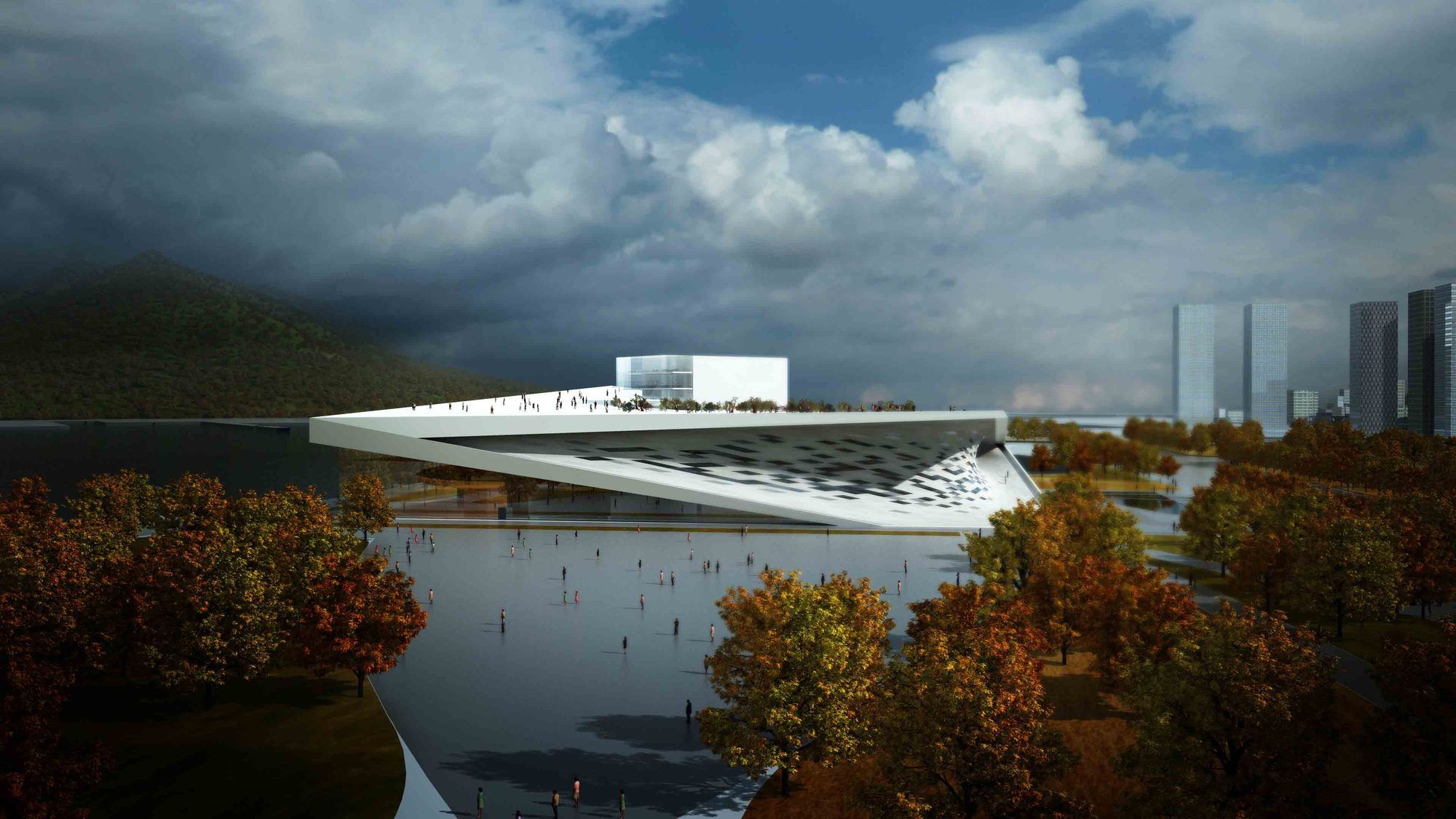
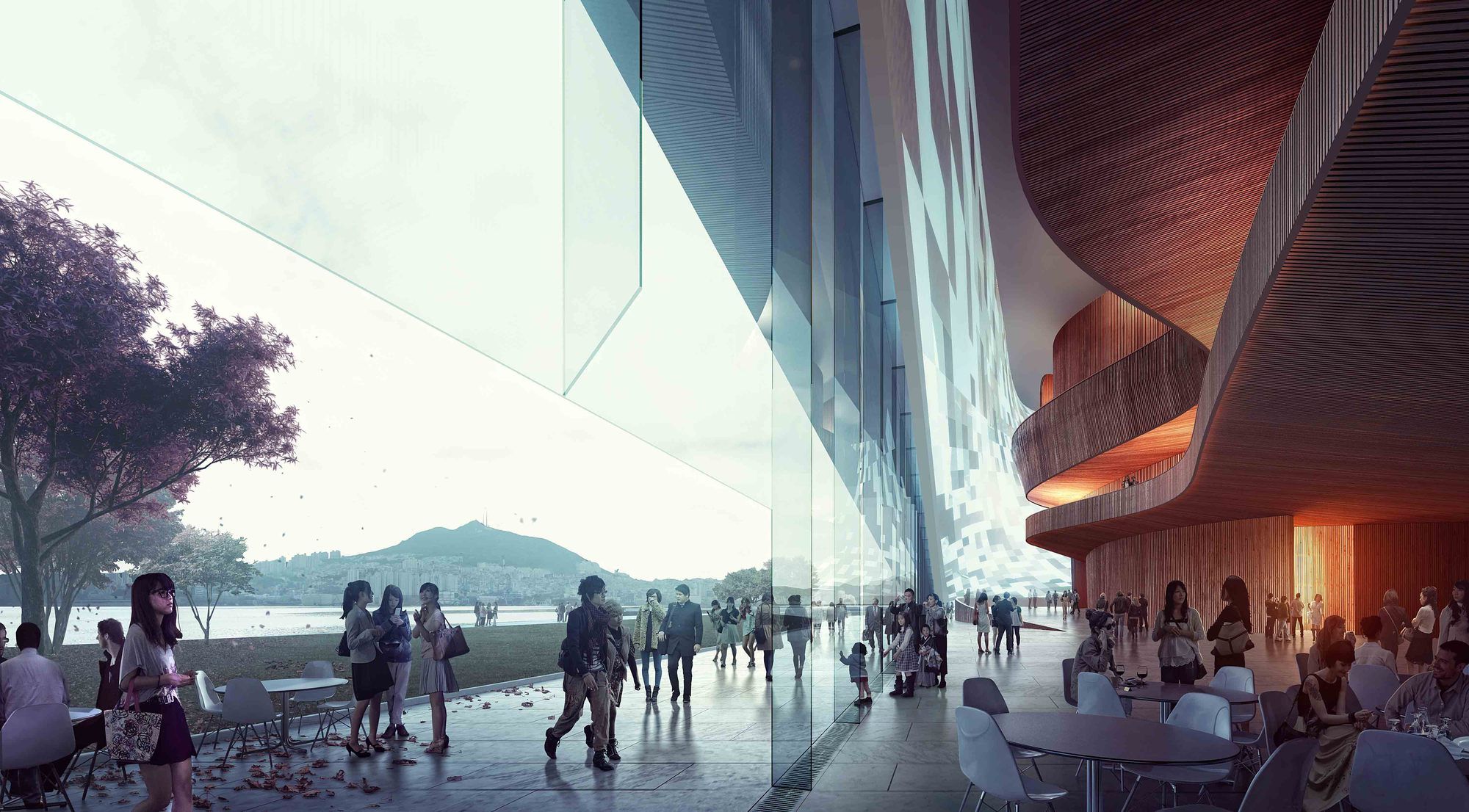
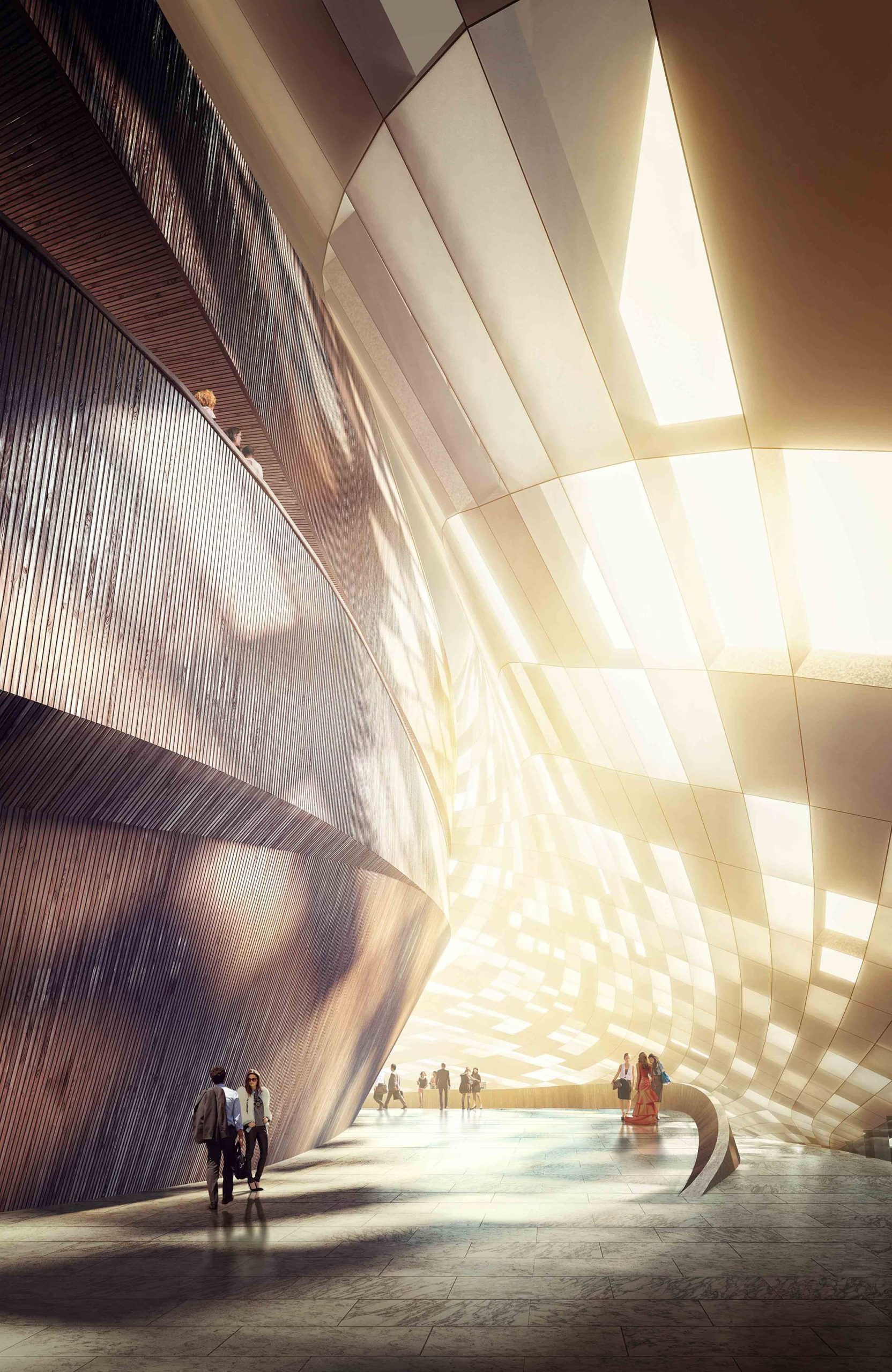
The Busan Opera house, As part of an international design competition intended to a establish a design for the Busan Opera House that is to be constructed in 2014, the architects have come up with a sustainable building that uses elements of culture and history of Korea. It is also impressive to see how the designers incorporate a high level of technology into the building without losing its original free brush stroke-like form. Below is the project description from the architect.
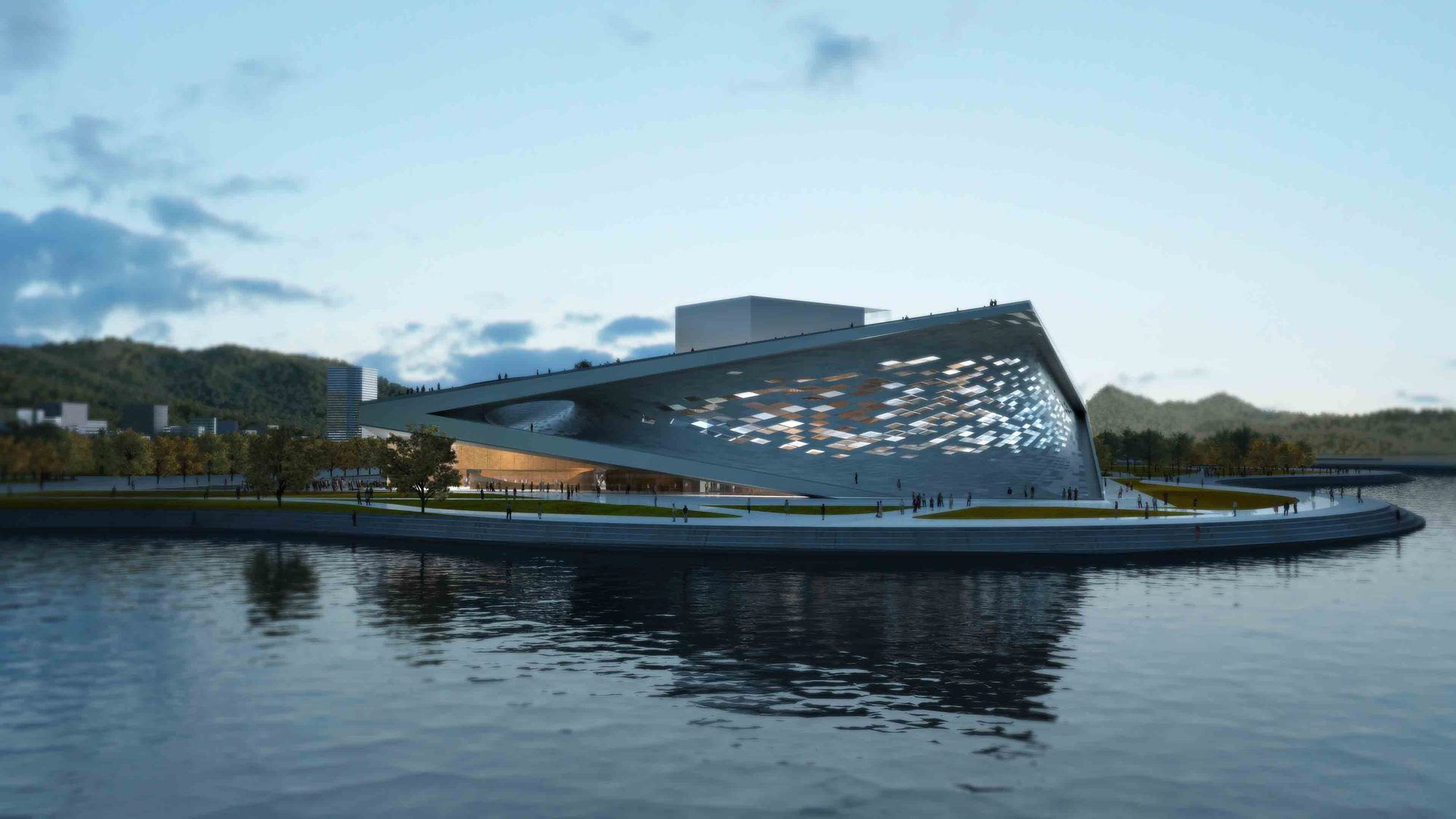
Courtesy of Snøhetta
Architect Description:
Snøhetta proposed a design solution for the Busan Opera House competition that symbolizes the elements of culture and history of Korea. Alfonso Lopez, lead designer describes the origins of the design: ‘A very special characteristic of Korean heritage is the linked uniformity of the art, history, culture and language. Much of this is based on the beauty and the pleasure that each element of nature represents to the individual and the community’.
Snøhetta team chose to incorporate into the basic building form the elegance of the brush and ink paintings of the Fourth Era of the Joseon Period. In these paintings the Korean artists chose natural elements according to an aesthetic sensibility. The concept of sohwa is the overlay of several elements of art and culture as when painting and calligraphy are joined. Emerging from these concepts they developed a simple expression of nature and peaceful elegance.
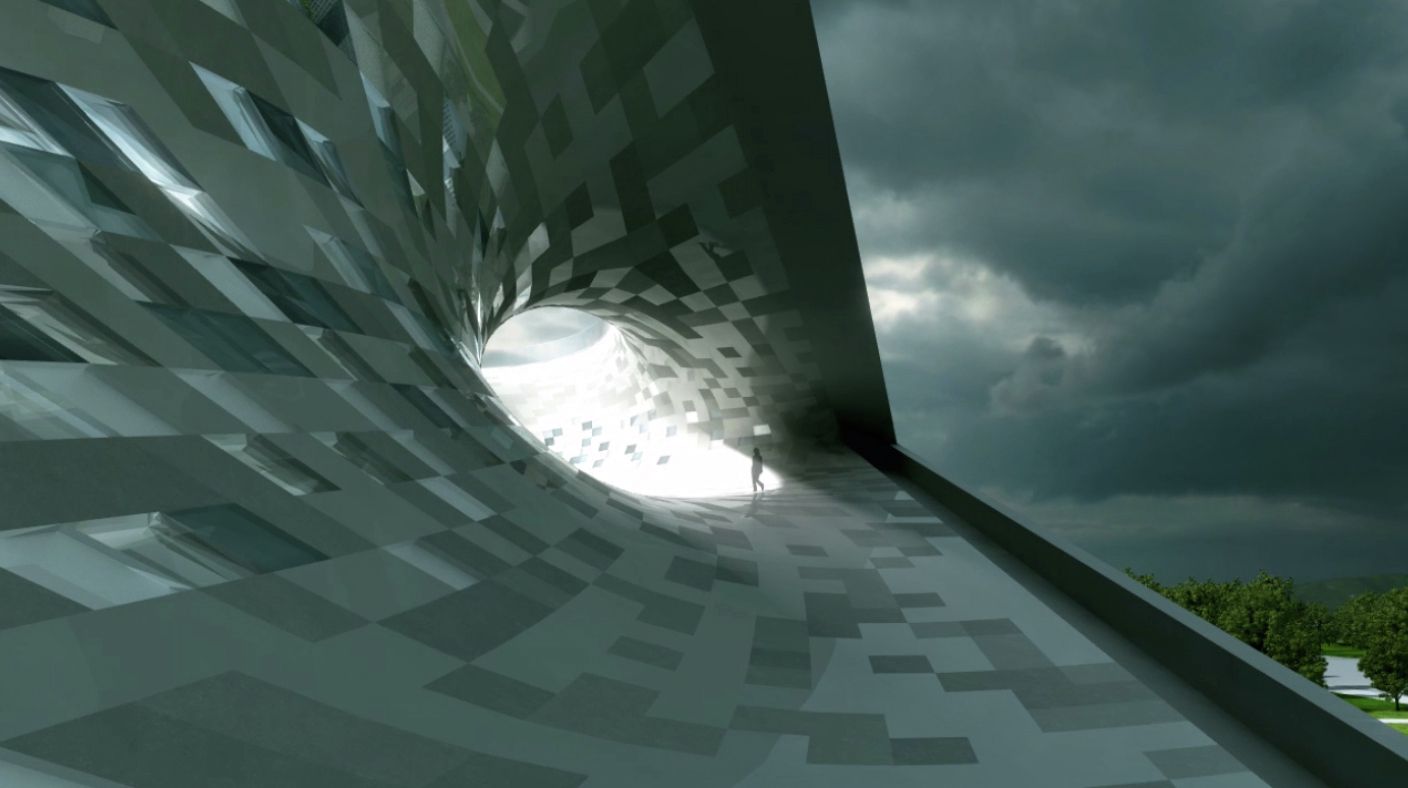
Courtesy of Snøhetta
Snøhetta were attracted to the free flowing lines that characterize the paintings of this type take on a very lyrical almost musical quality in the abstraction of the images above. They took the two dimensional basis and expanded this into the third dimension of building volume without any loss of the original element. This to them was the emerging of the sohwa principle that we wanted to try to express in this building.
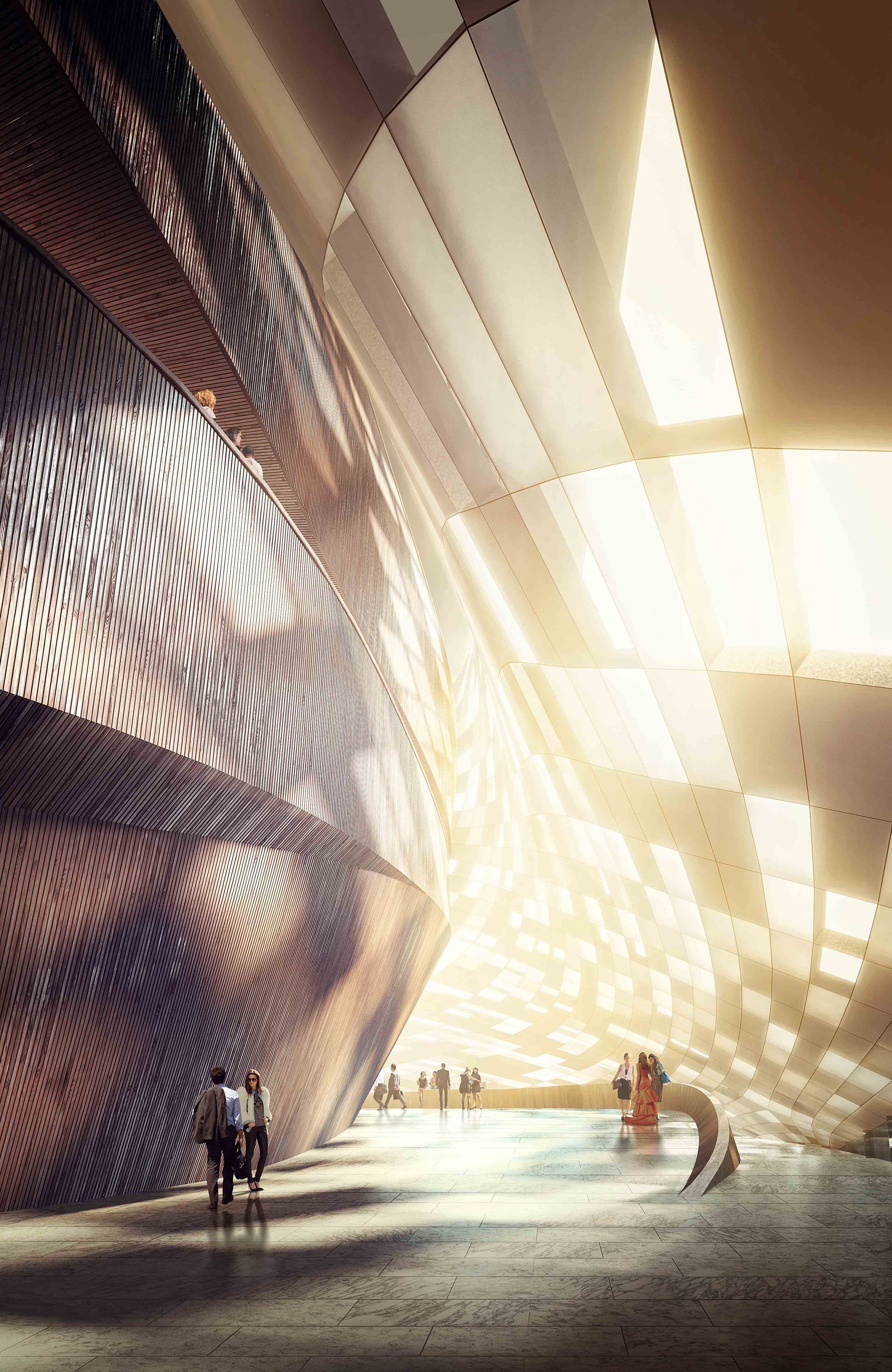
Courtesy of Snøhetta
Their early concepts were then developed to integrate these shapes and elements into volumes that would not detract from the original intent and yet allow the incorporation of a state of the art voice performance facility coupled with the various ancillary uses. Staying within the traditional artistic parameters, they first placed the conceptual diagram on the site. Then, they diagramed the building shapes and the essential volumes.
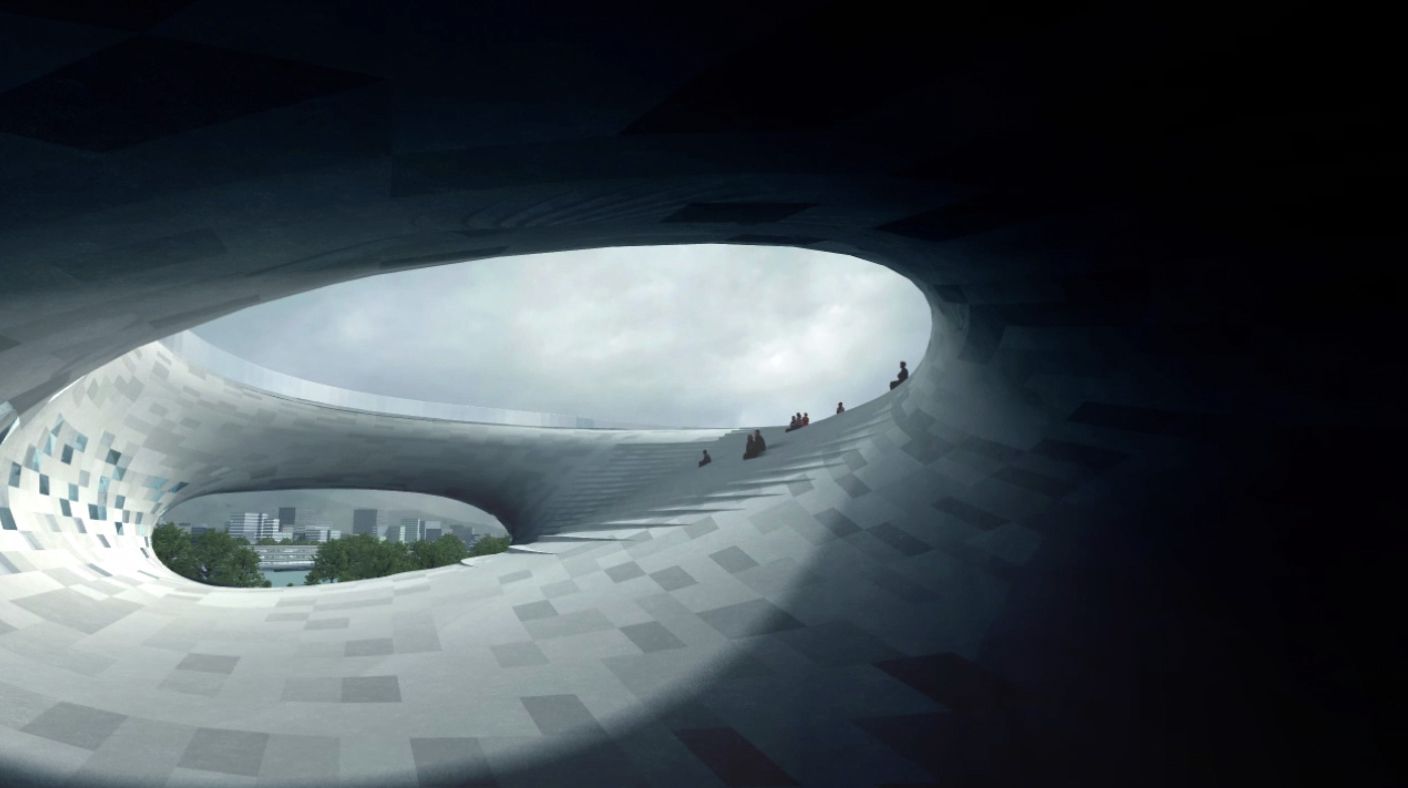
Courtesy of Snøhetta
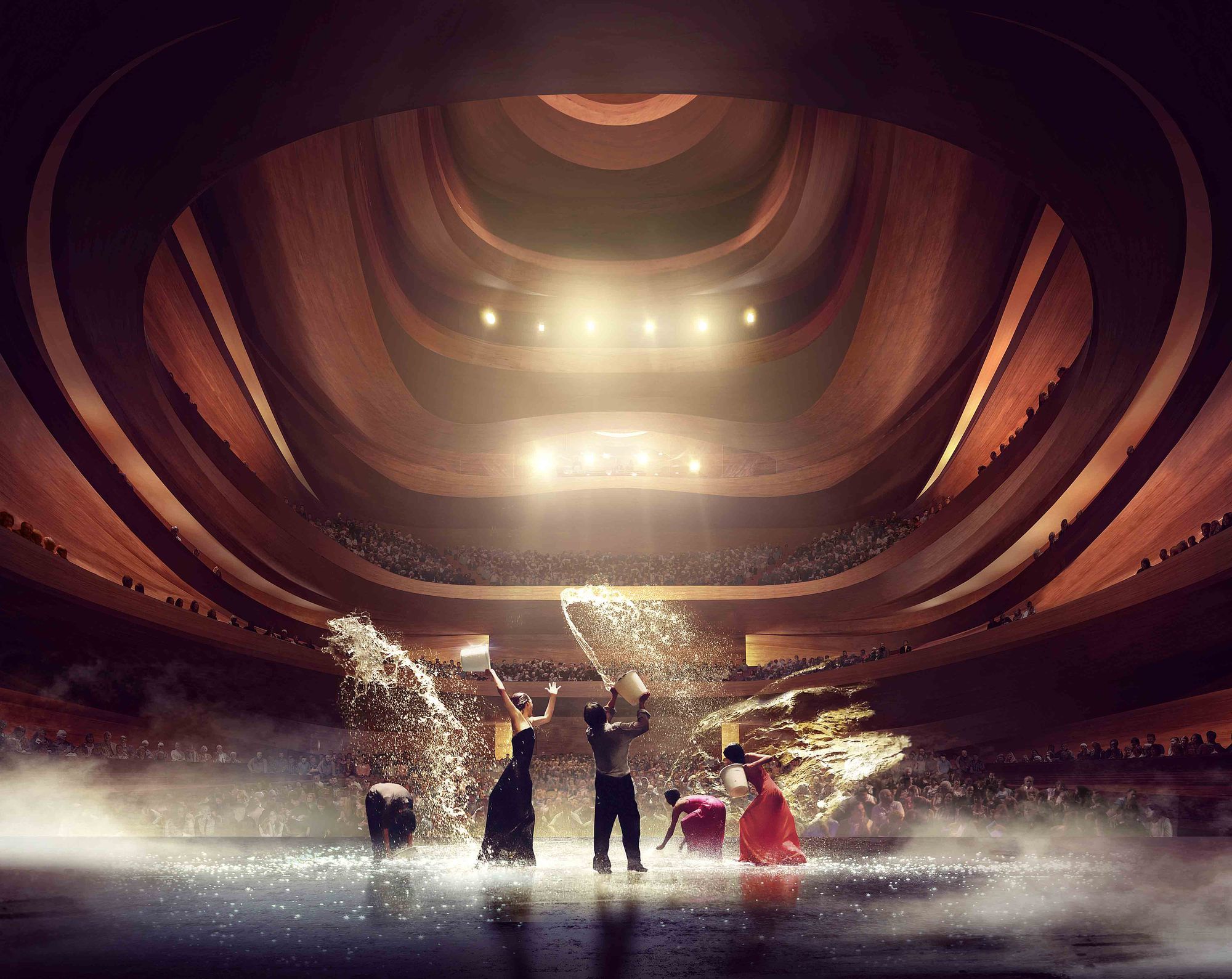
Snøhetta used the original ink brush strokes to freely become building elements. By varying the connections to the earth and varying the edges and heights of roof shapes they found that they were able to provide strong volumetric edges that reinforce the freedom of the original art. It is also important to note the integration of sustainable systems for this project. Snøhetta have integrated technology into this building which includes roof based solar collectors, sea water differential temperature cooling, tidal current generators and geothermal mass storage.
Courtesy of Snøhetta
The orchid is classified as one of the “graceful” plants and represents “refinement” in Confucian philosophy. As one of the symbols of the four seasons the orchid represents summer and the dissemination of its fragrance far and wide. The design of the Busan City Opera House symbolizes the hospitality and welcoming of the peoples who extend the unique flower in greeting. The design solution has its conceptual base in the cultural symbology of Korean history – in this case most specifically music, voice performance and art.

Ibrahim Abdelhady is an architect, academic, and media entrepreneur with over two decades of experience in architecture and digital publishing. He is the Founder and CEO of Arch2O.com, a leading platform in architectural media, renowned for showcasing innovative projects, student work, and critical discourse in design. Holding dual PhDs in Architecture, Dr. Abdelhady combines academic rigor with industry insight, shaping both future architects and architectural thought. He actively teaches, conducts research, and contributes to the global architecture community through his writing, lectures, and media ventures. His work bridges the gap between practice and academia, pushing the boundaries of how architecture is communicated in the digital age.