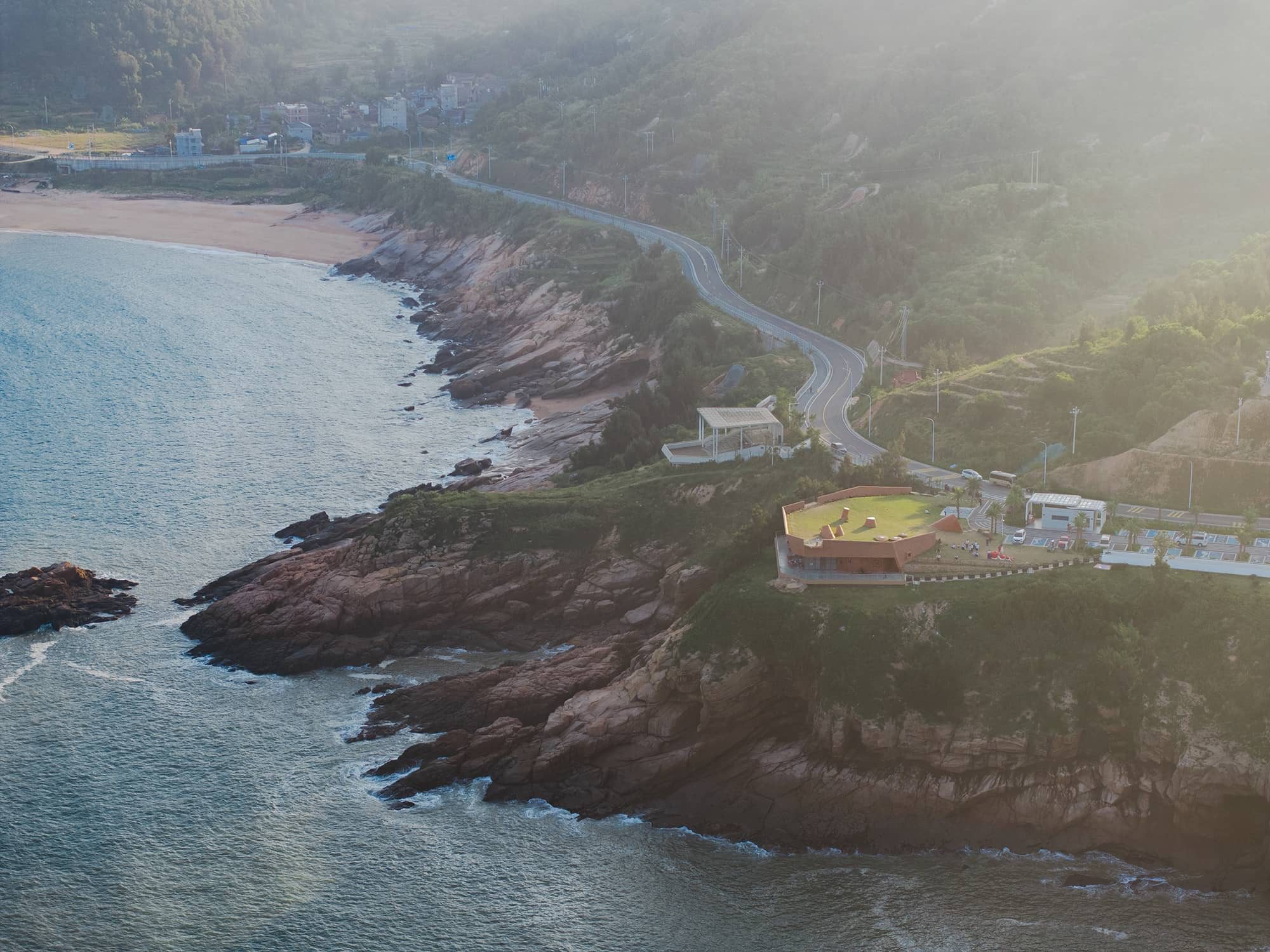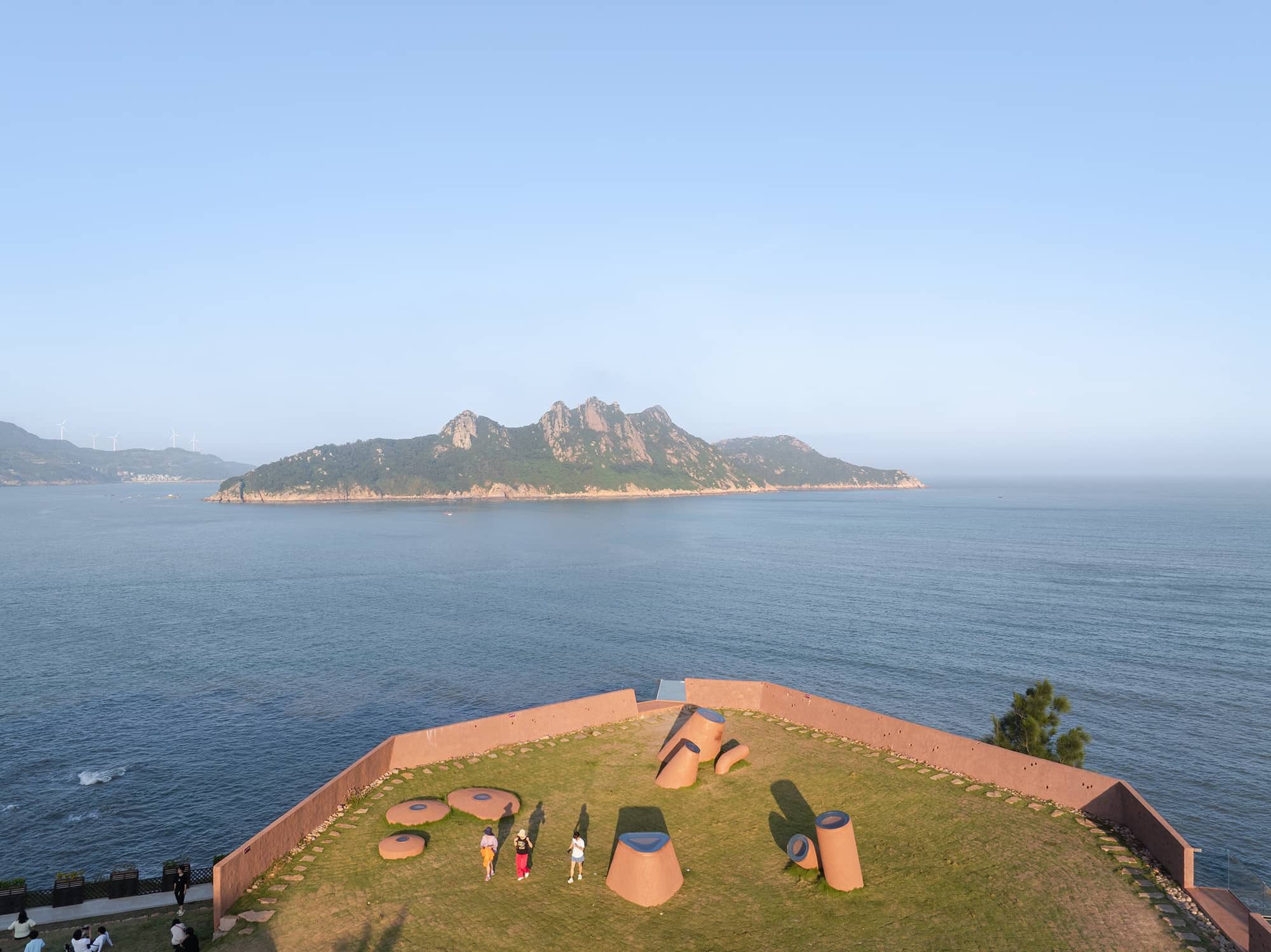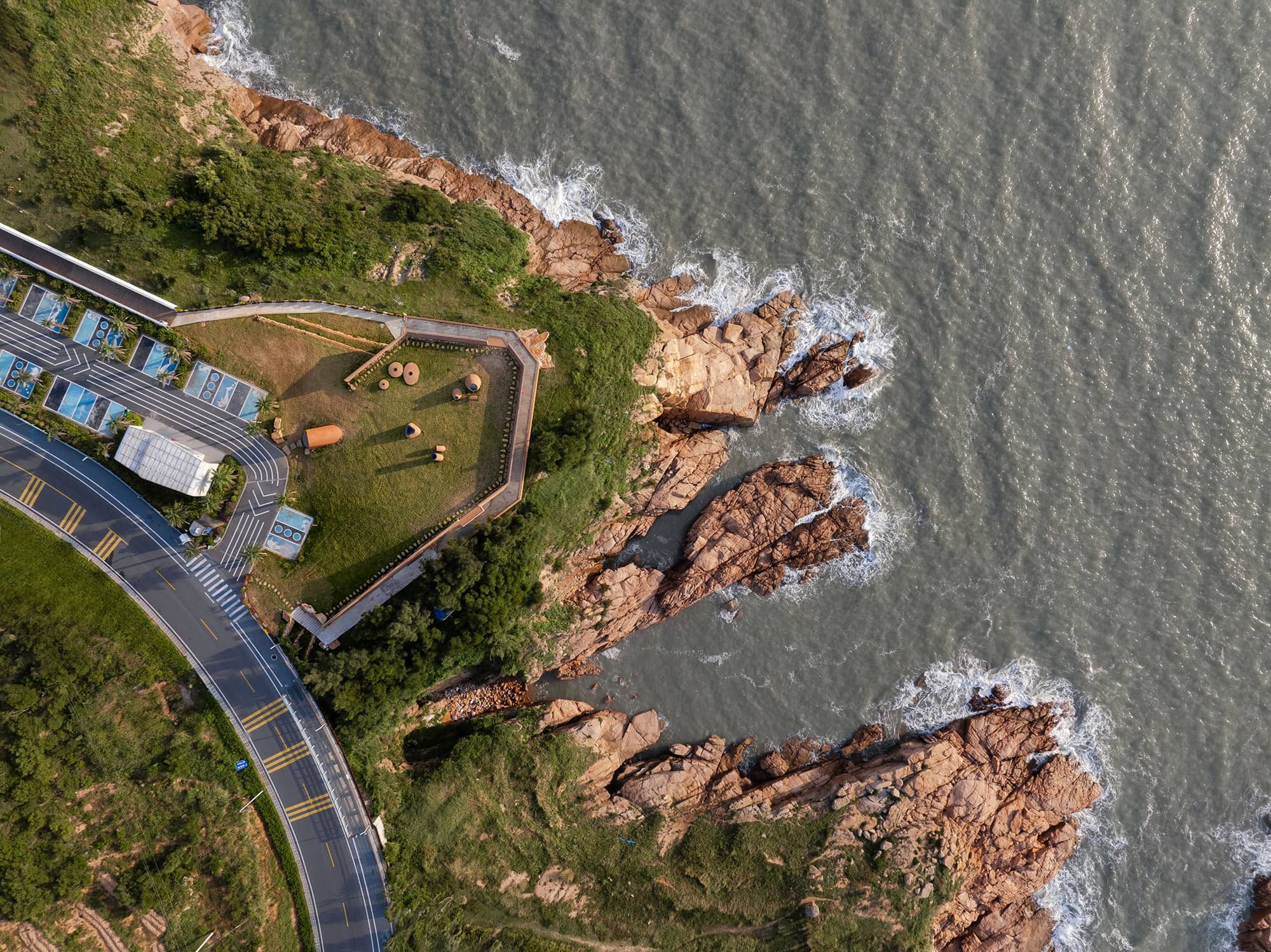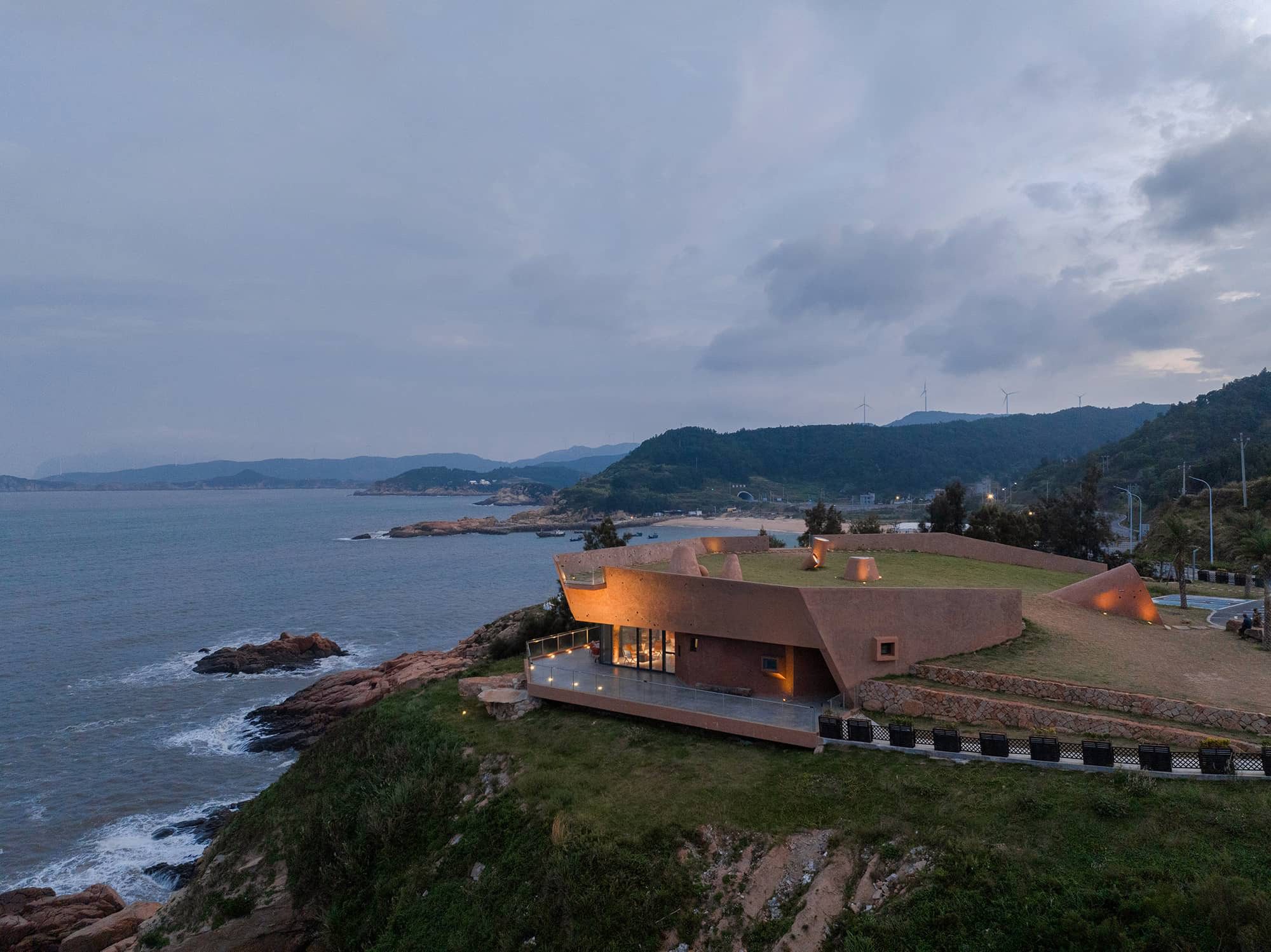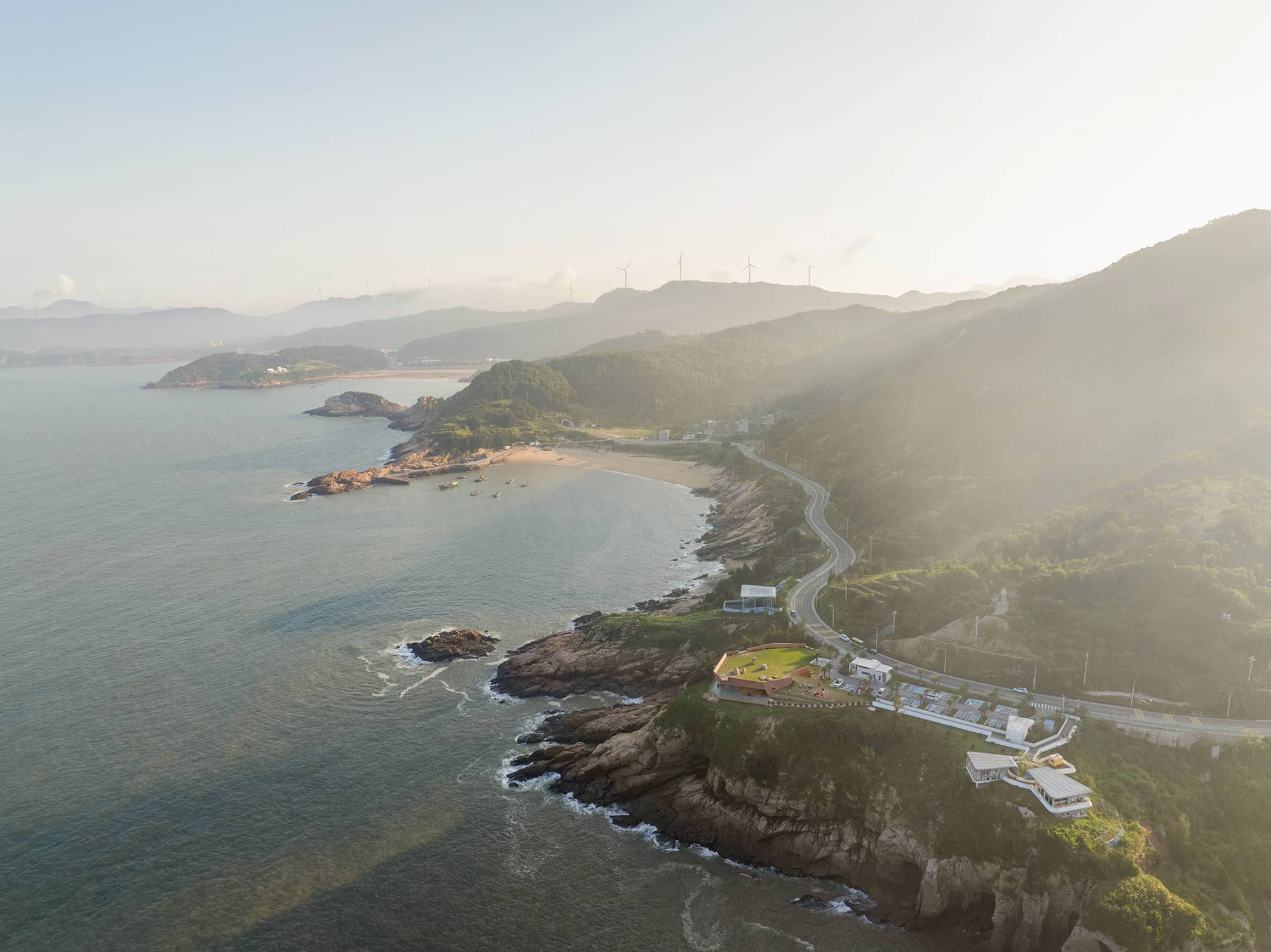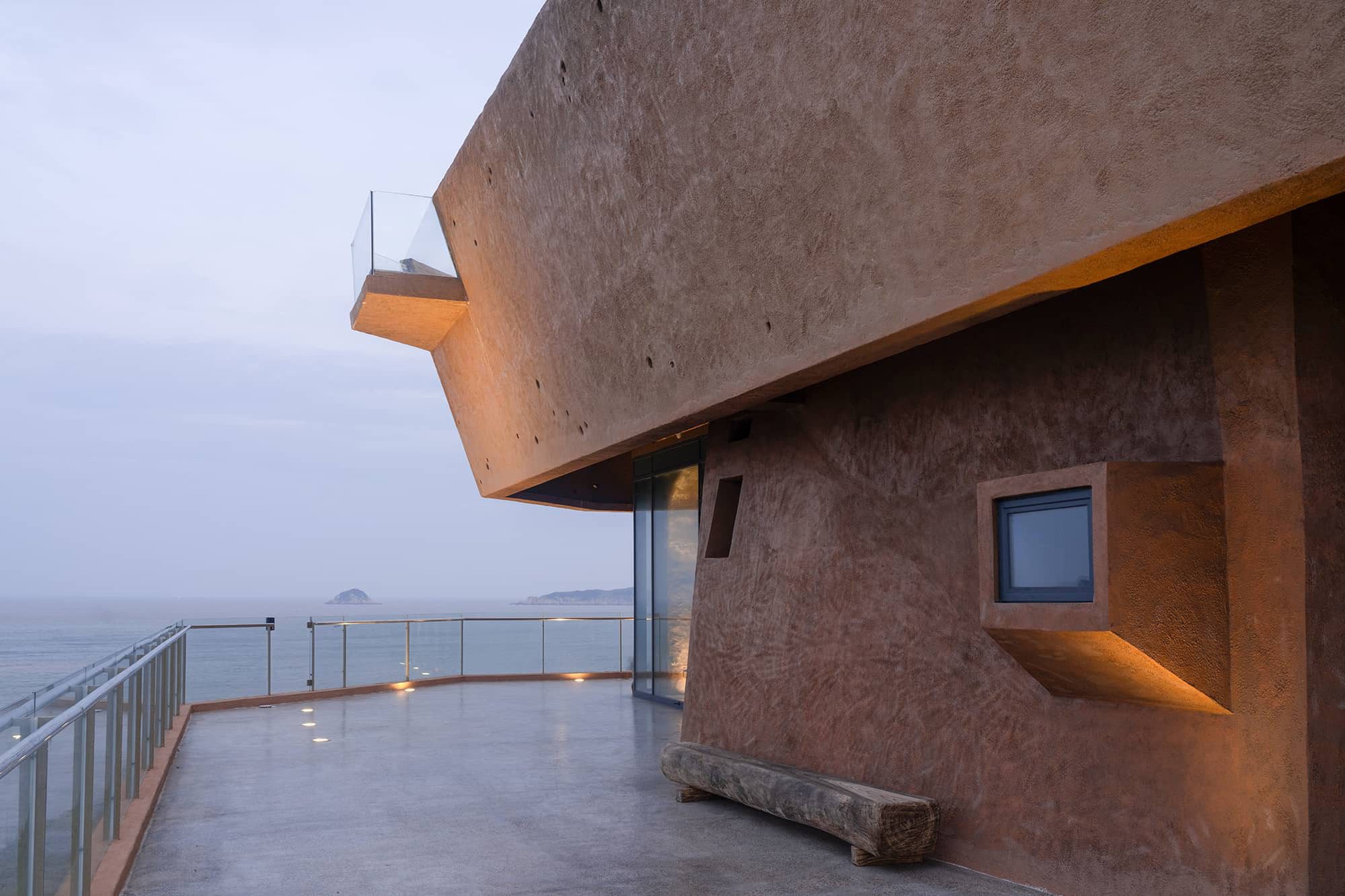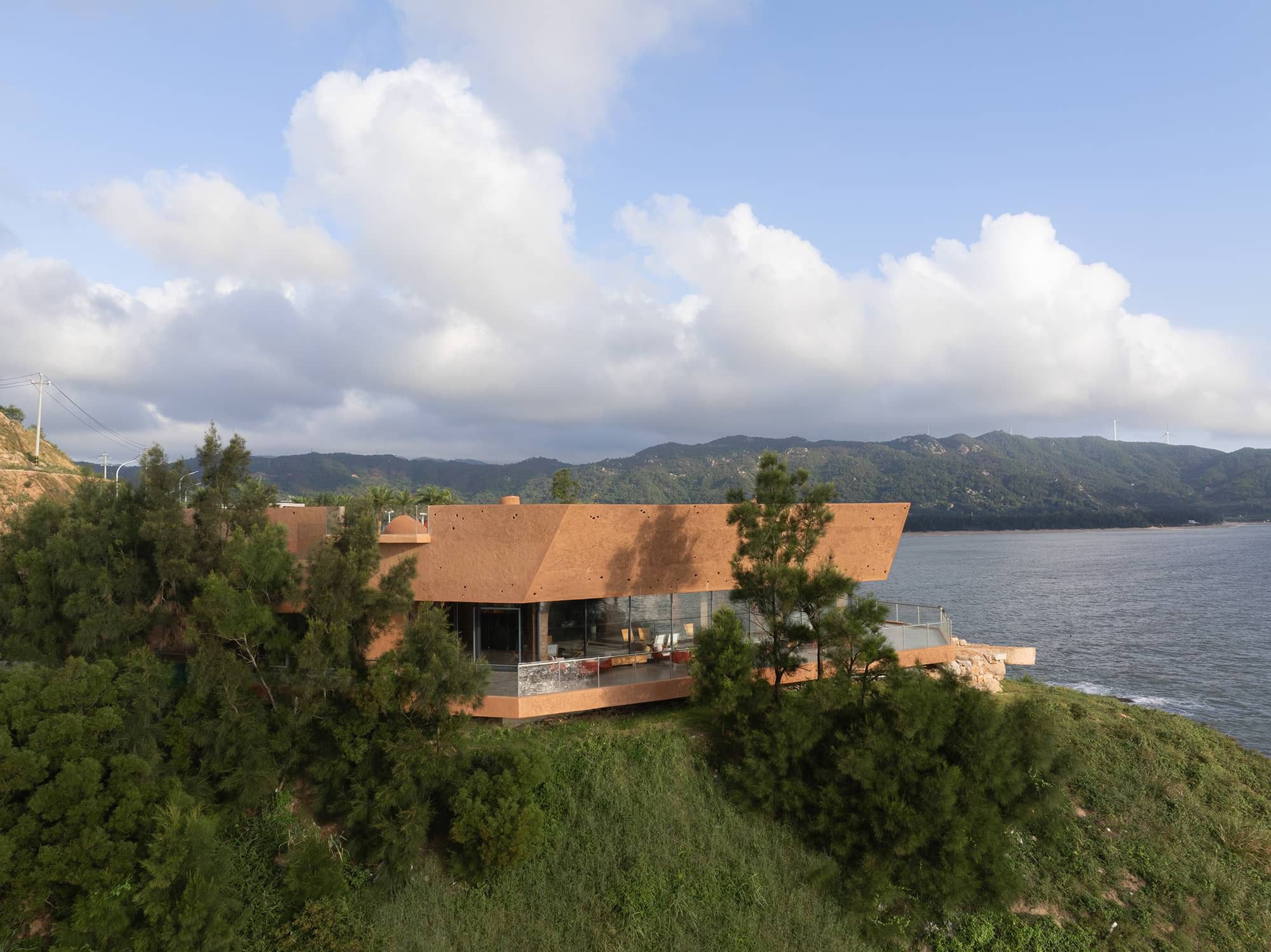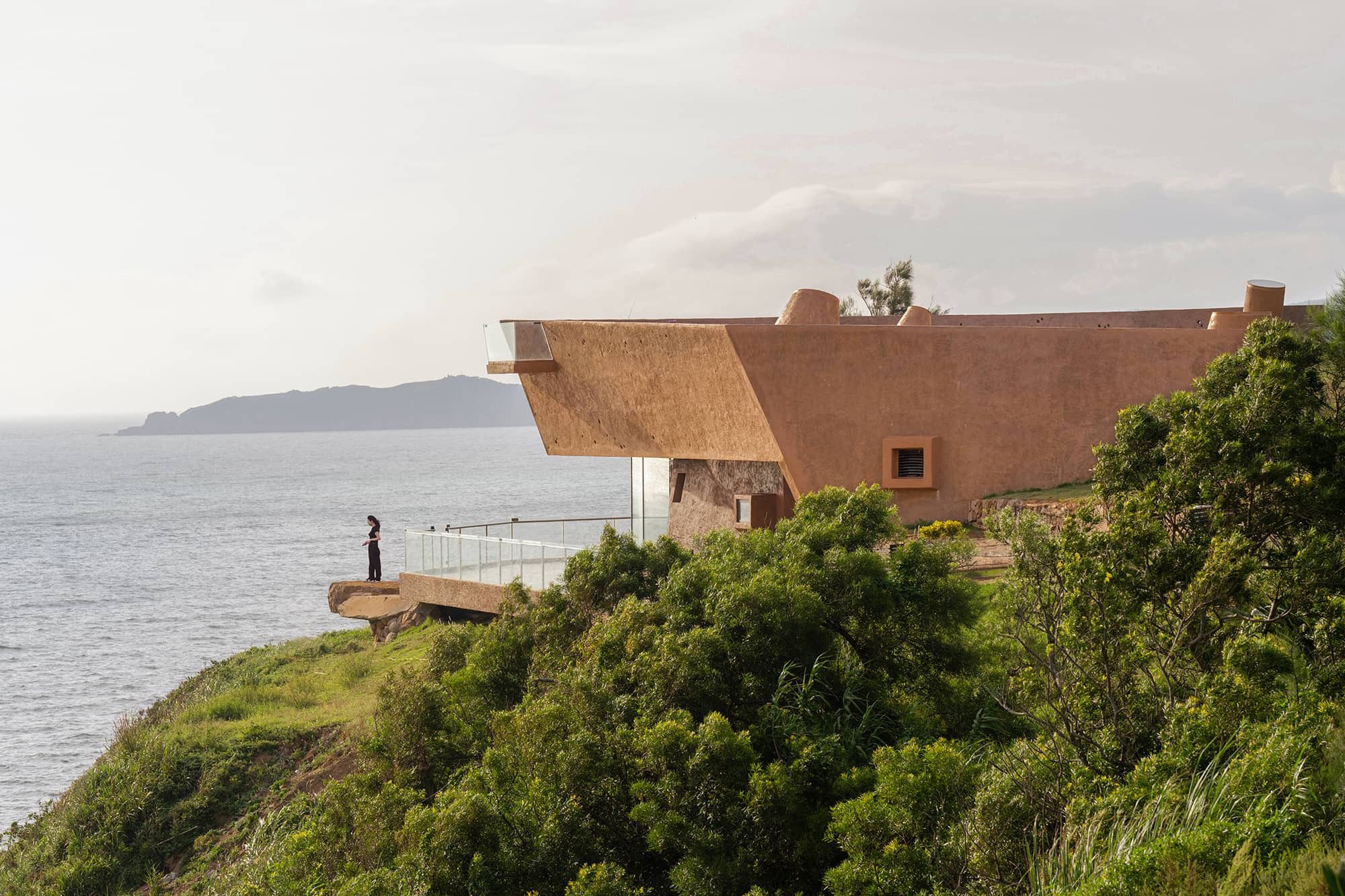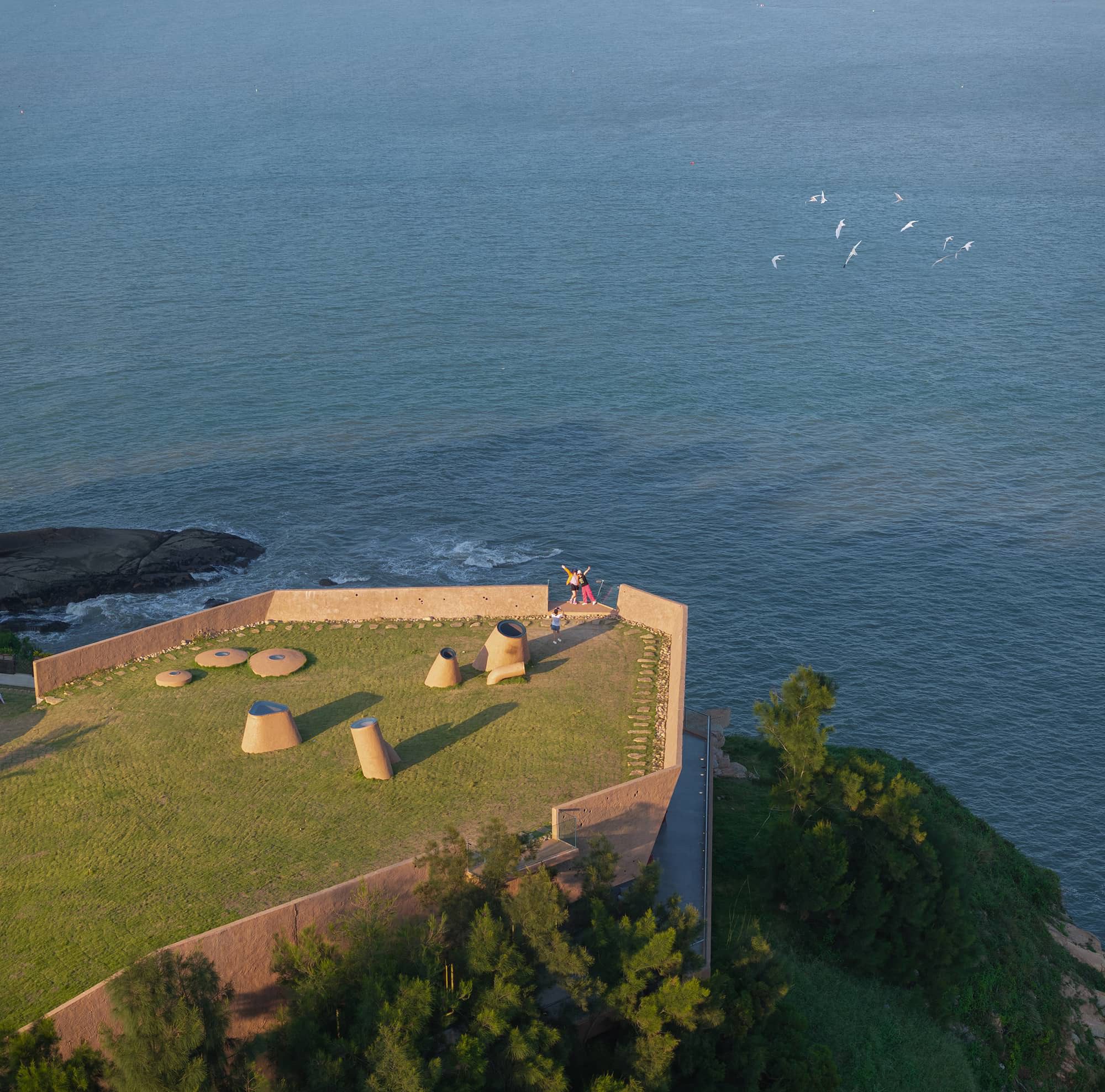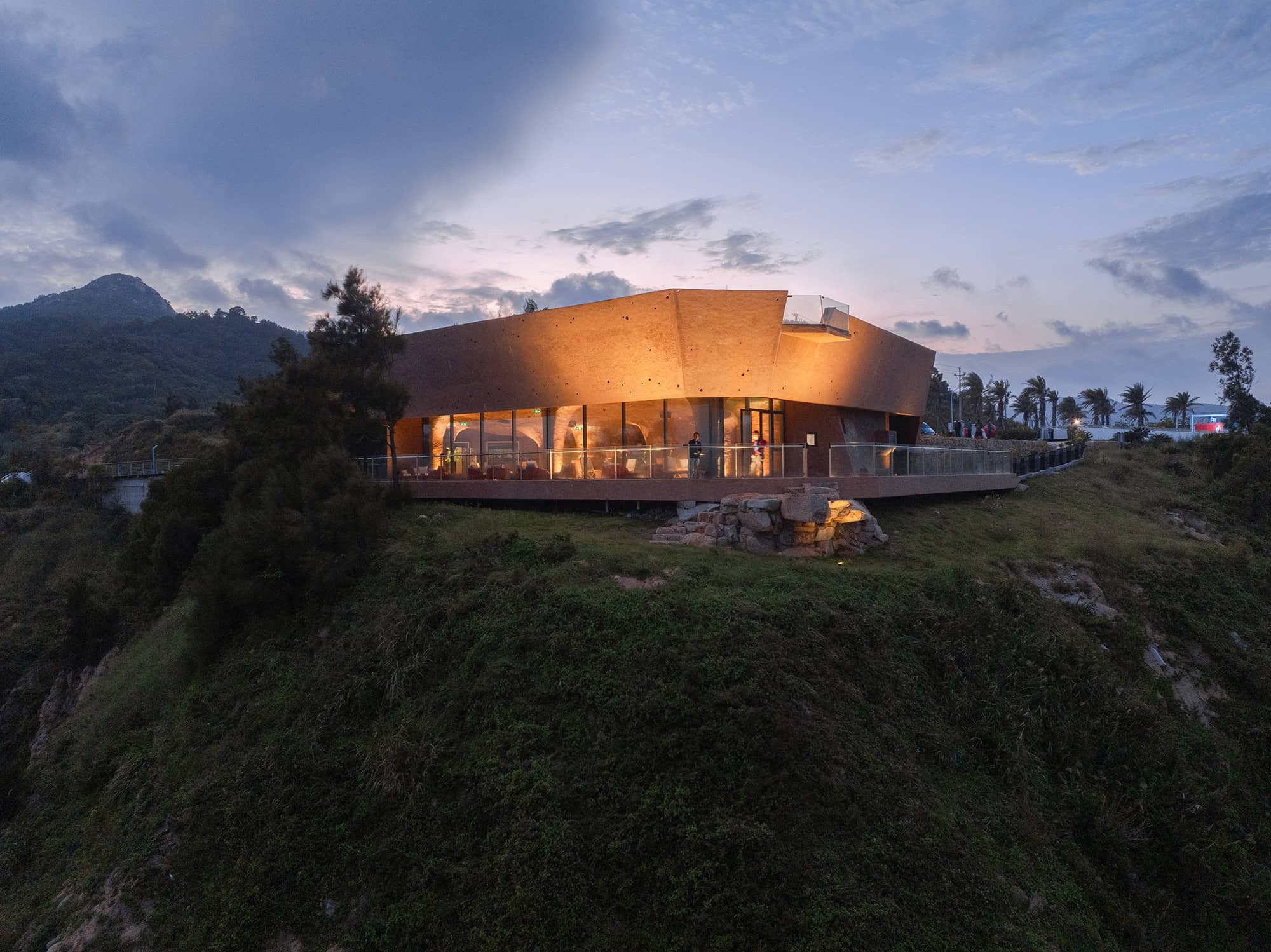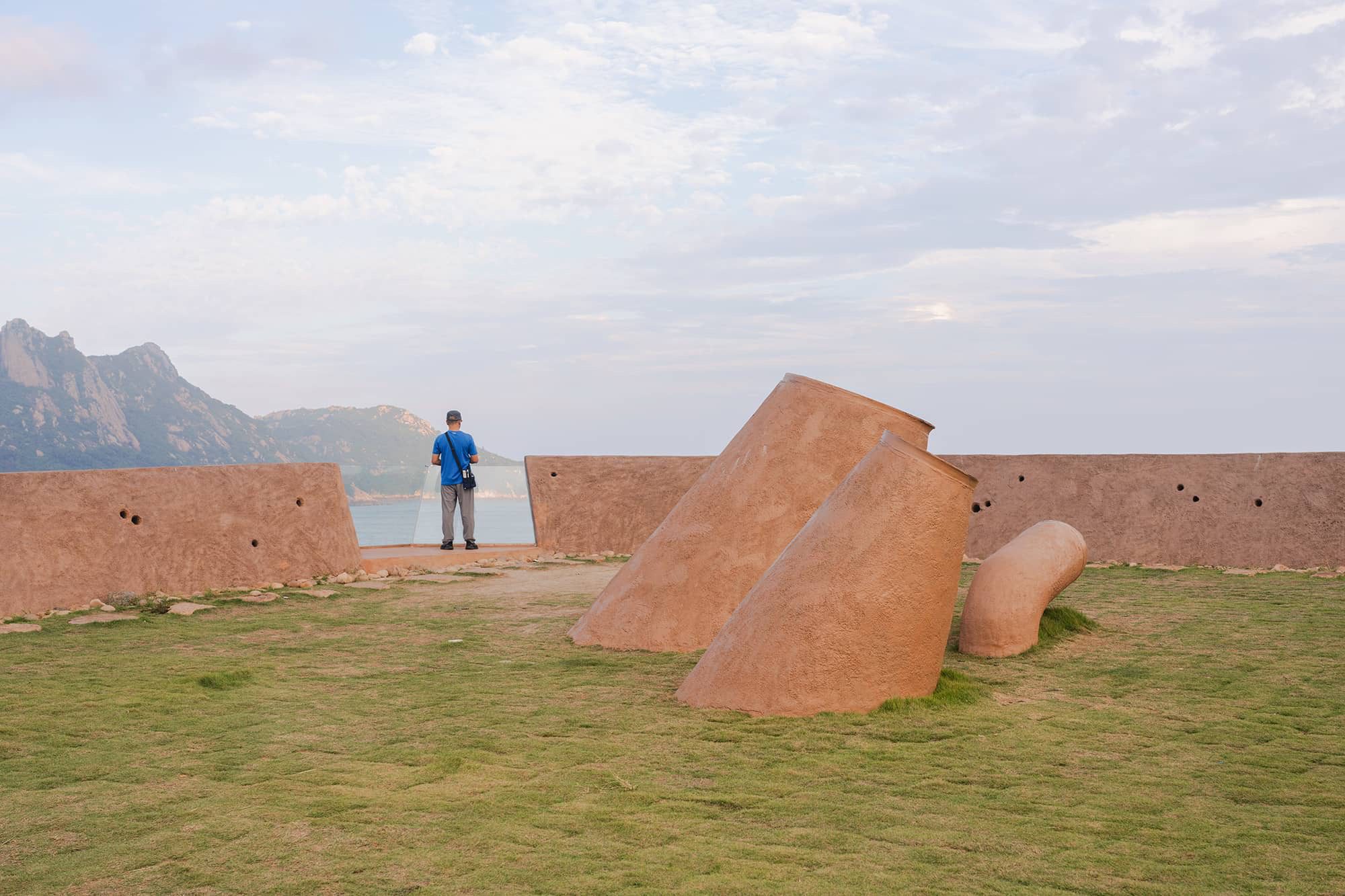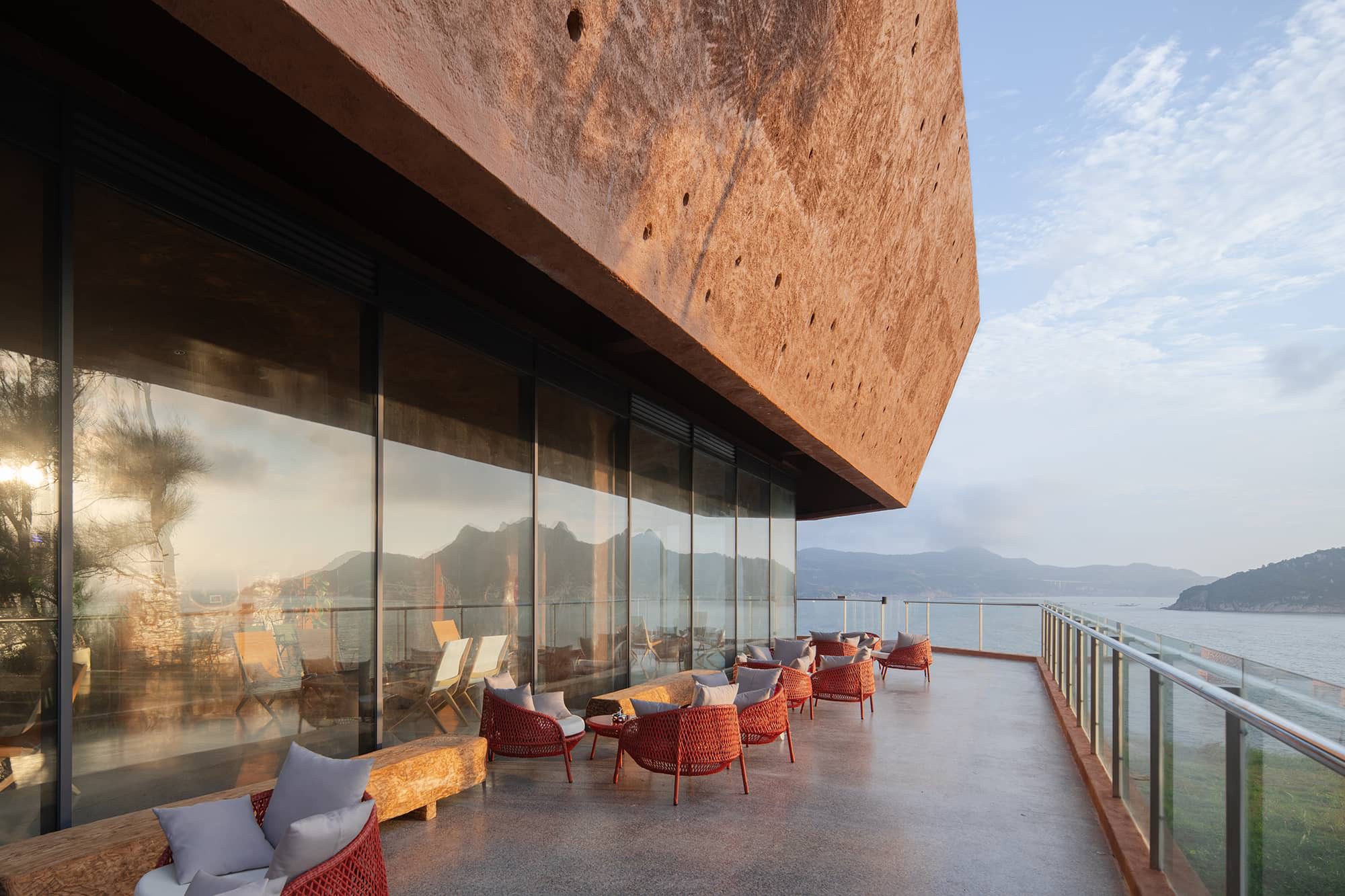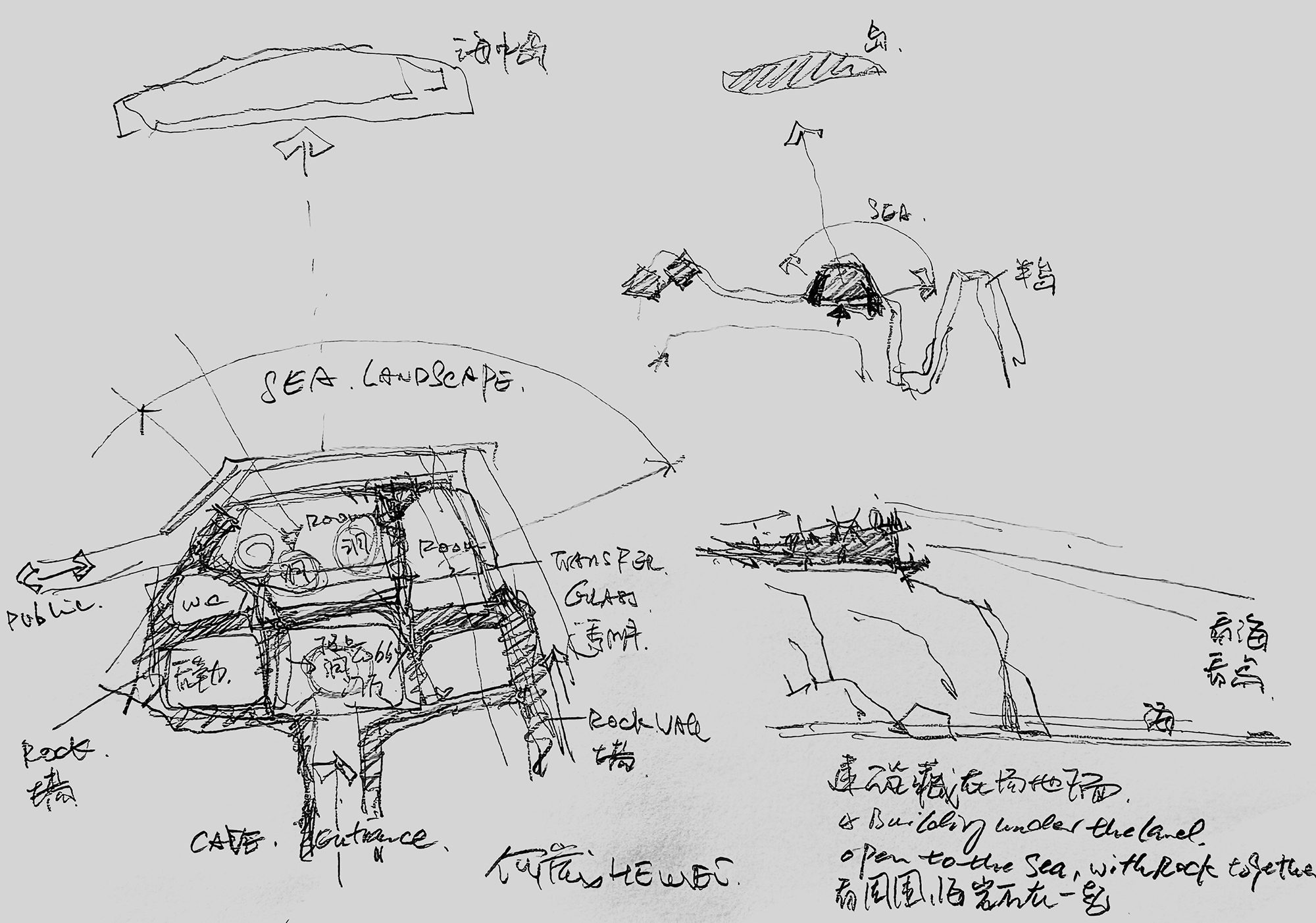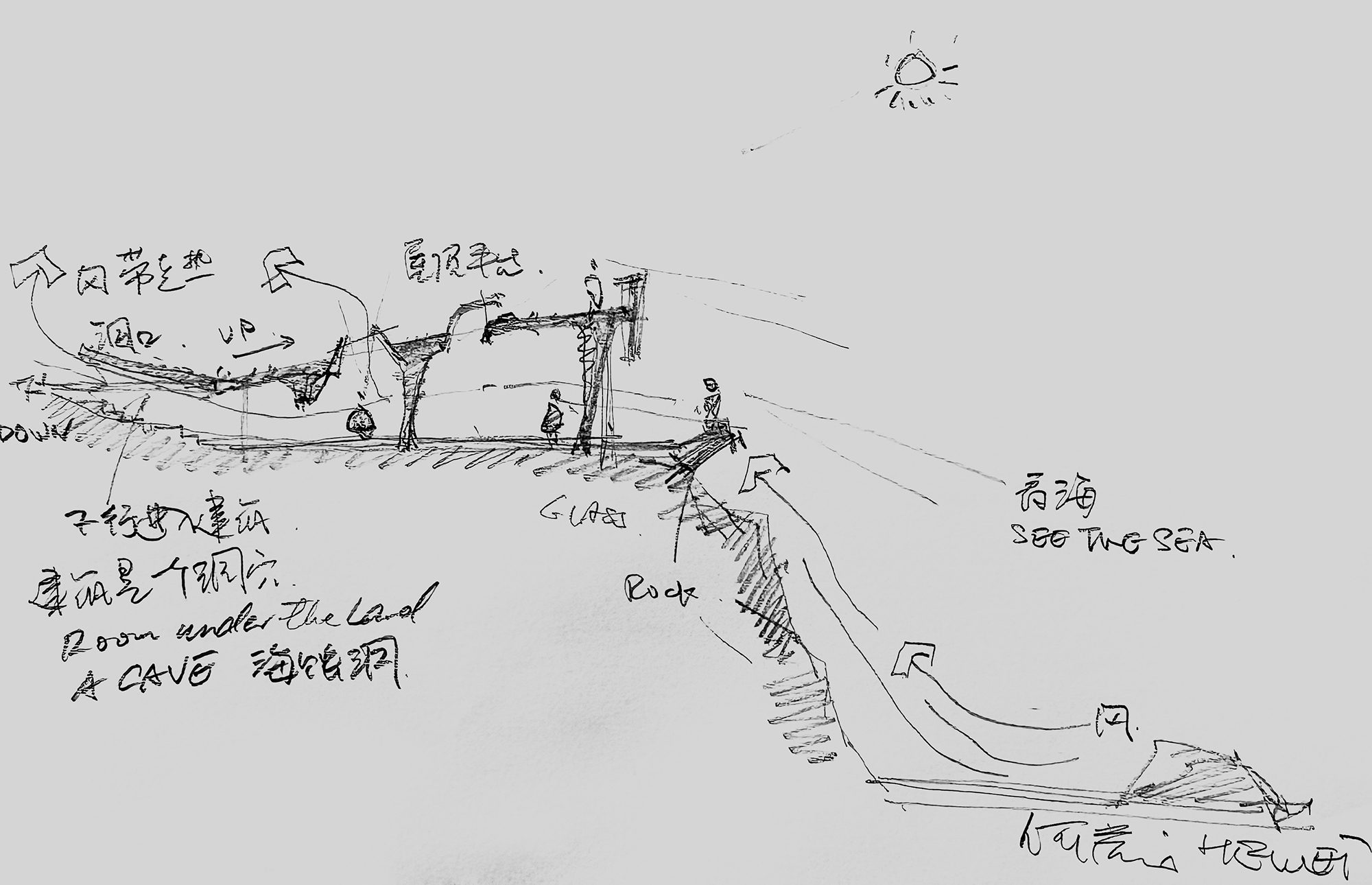


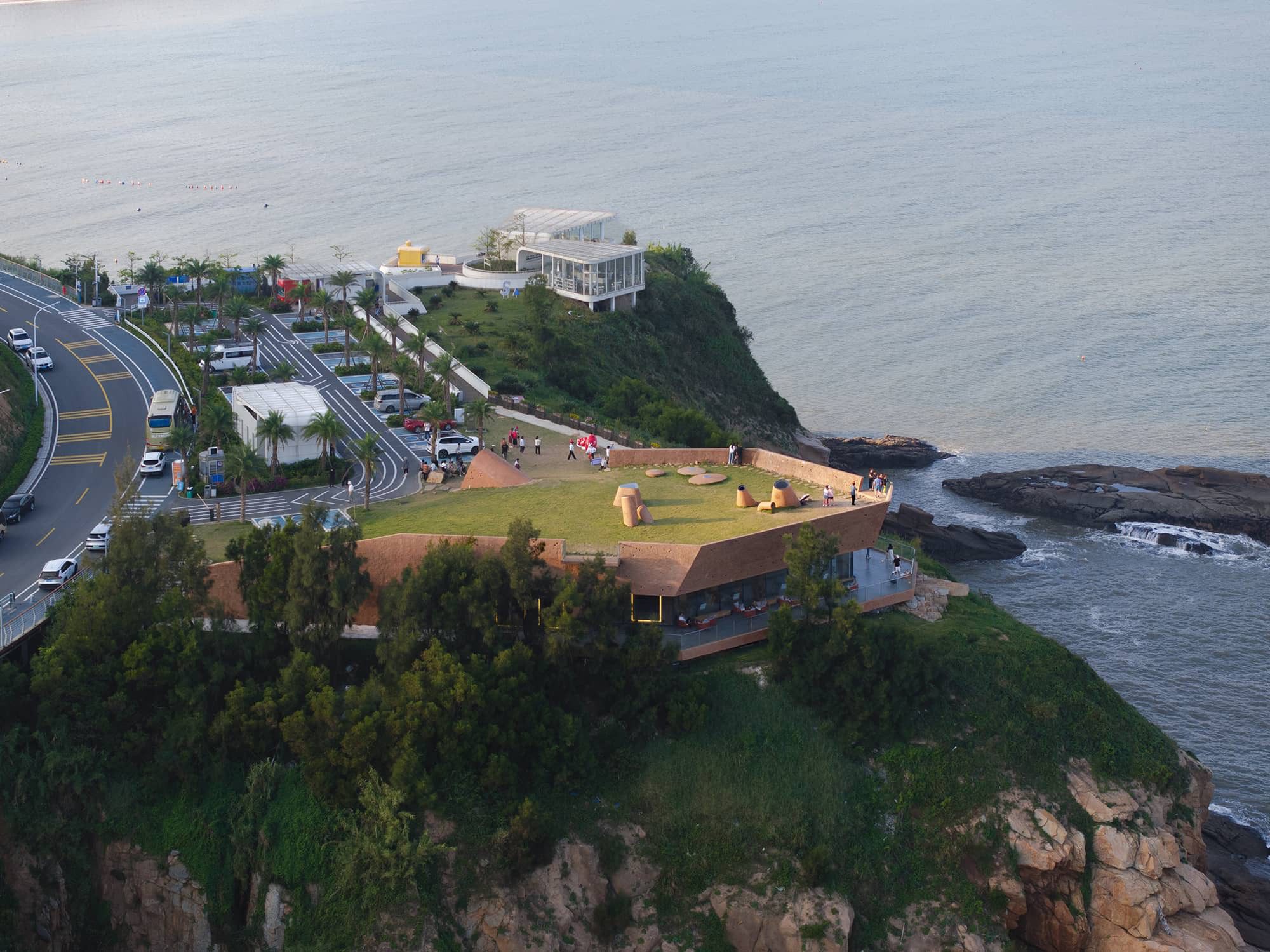
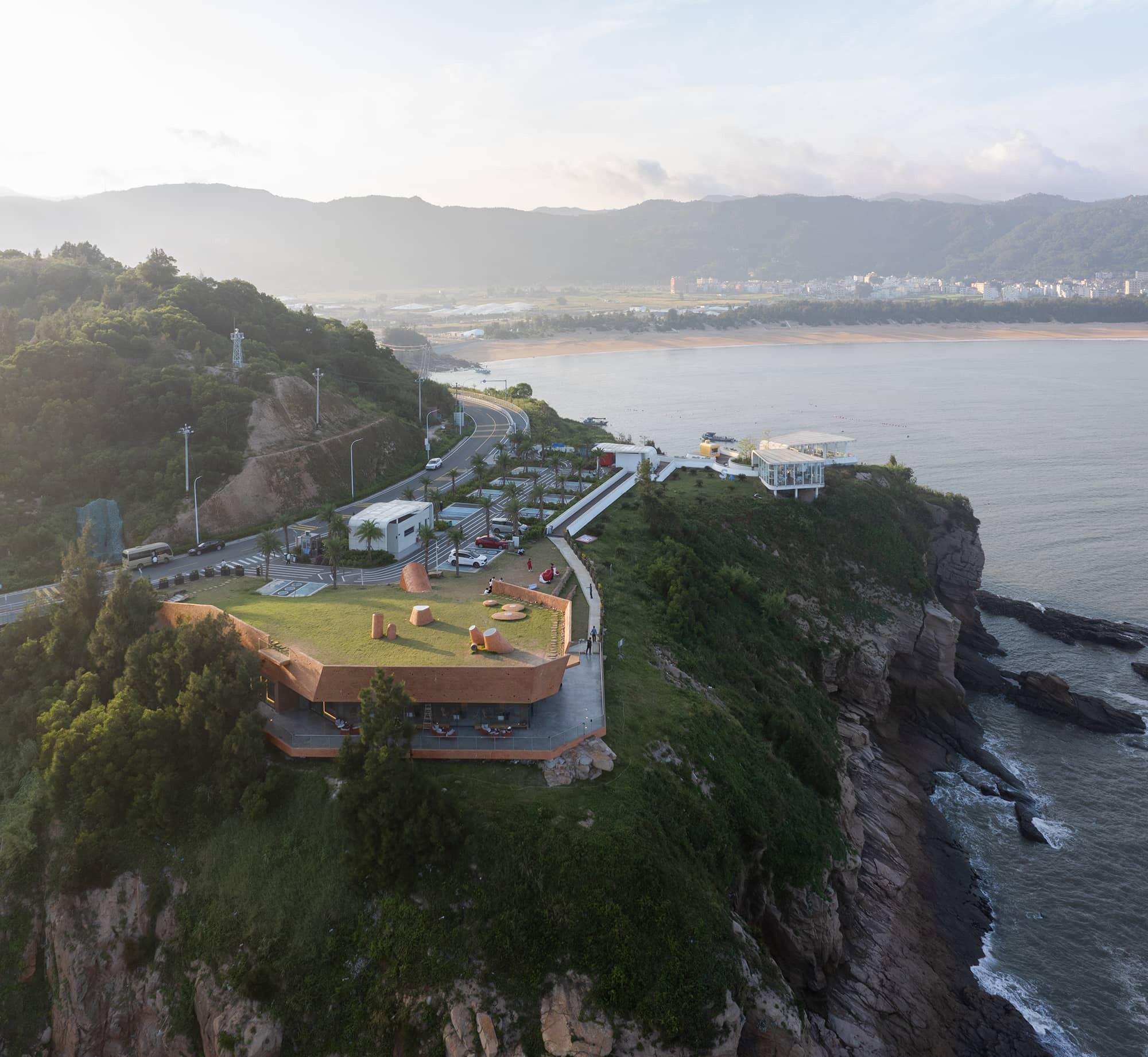
Hidden Underground And Viewing The Vast Sea. The Blue Insight Cave Space by Donghai No.1 Road. The project is situated along Donghai No.1 Road in Xiapu, Ningde City, Fujian Province, and serves as a crucial element in the construction of Ningde’s “Zero Carbon Island”. The original site comprised a viewing platform and a parking lot. Adjacent to the East China Sea, it boasts a vast vista. Directly in front of the platform stands Bijia Mountain Island, rising majestically from the sea, with numerous reefs and sea caves lining the cliffs below. The sea breeze, waves, islands, reefs, and sea caves collectively create a unique coastal scenery.
© DONG Image
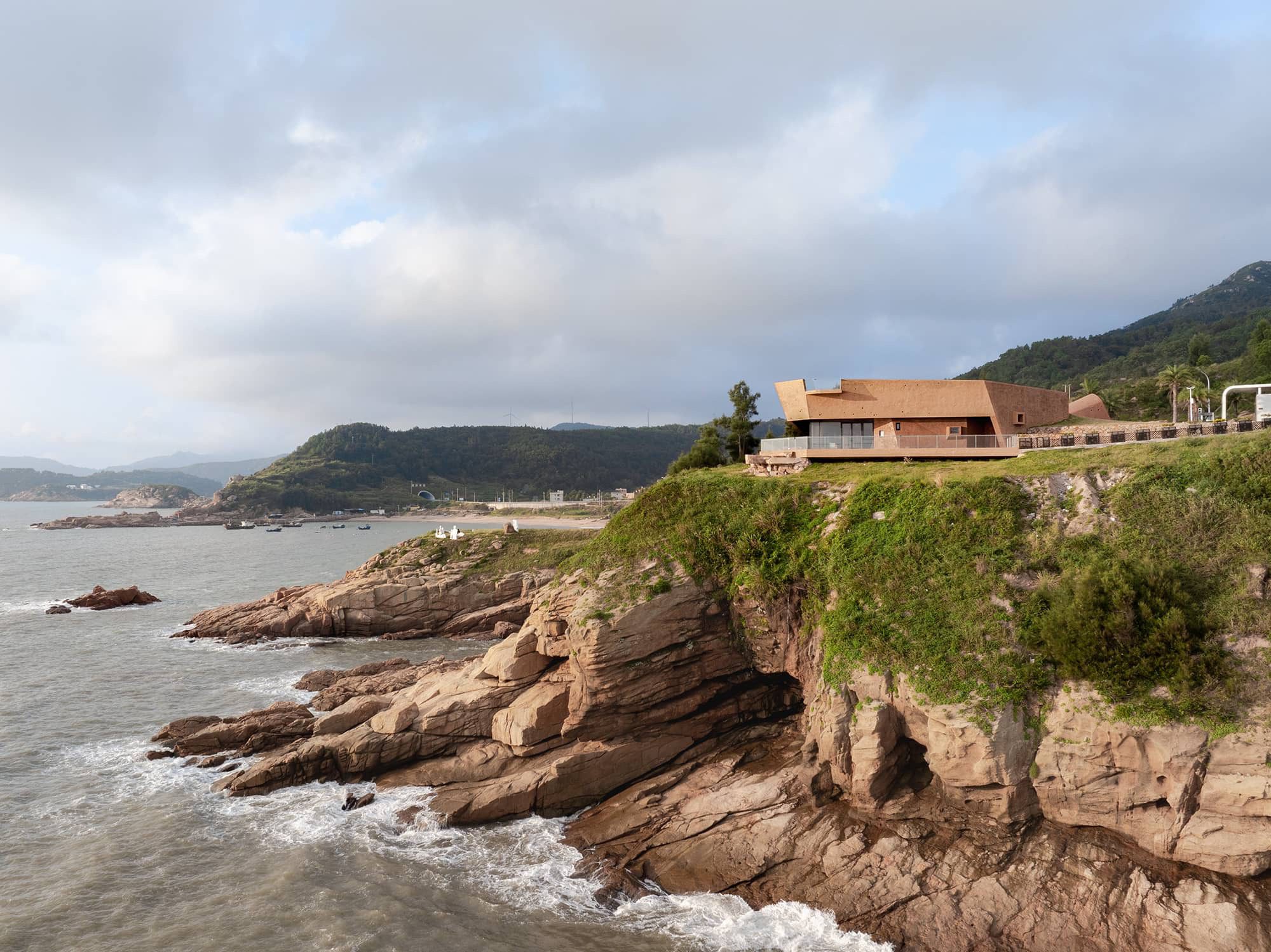
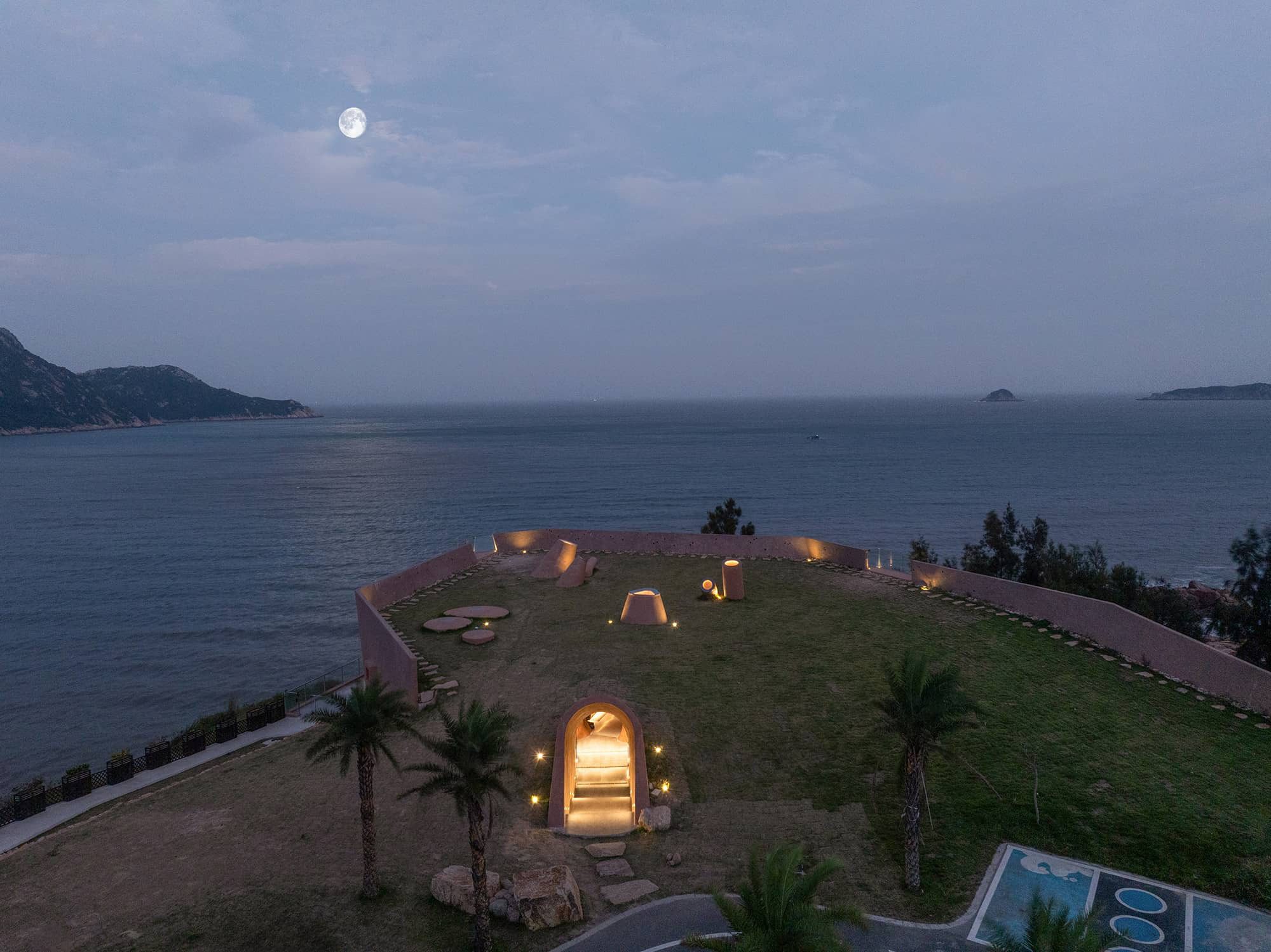
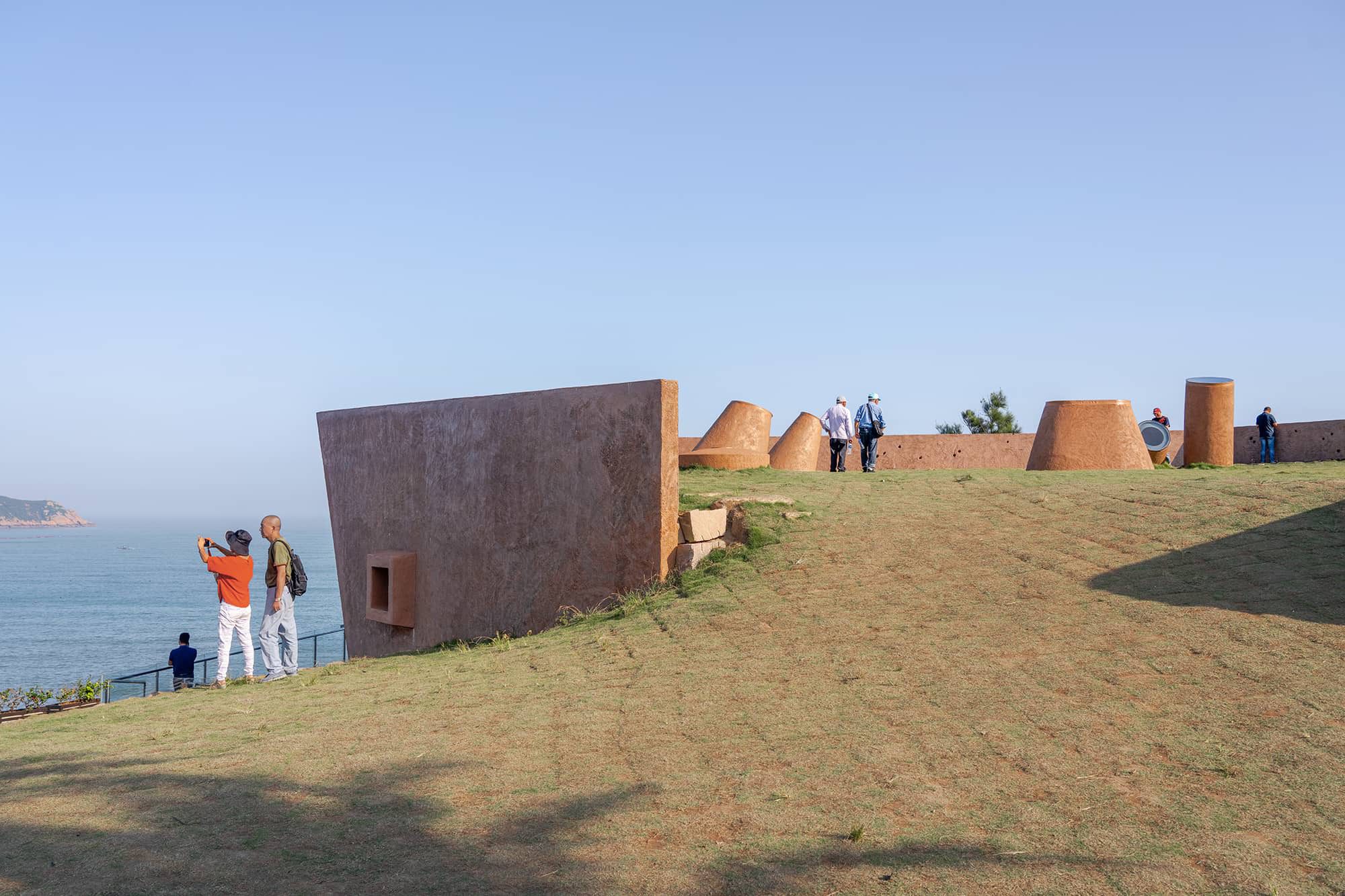
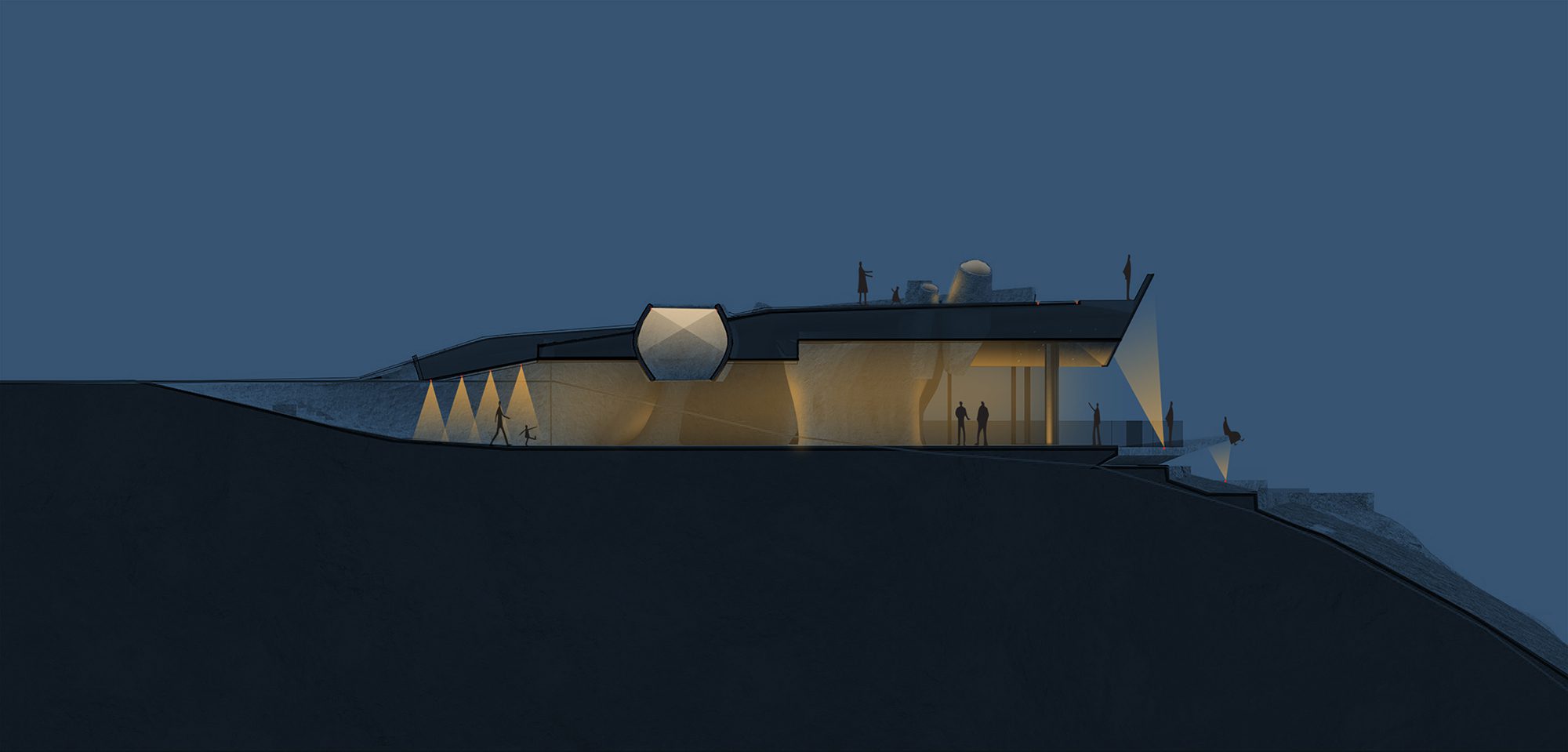
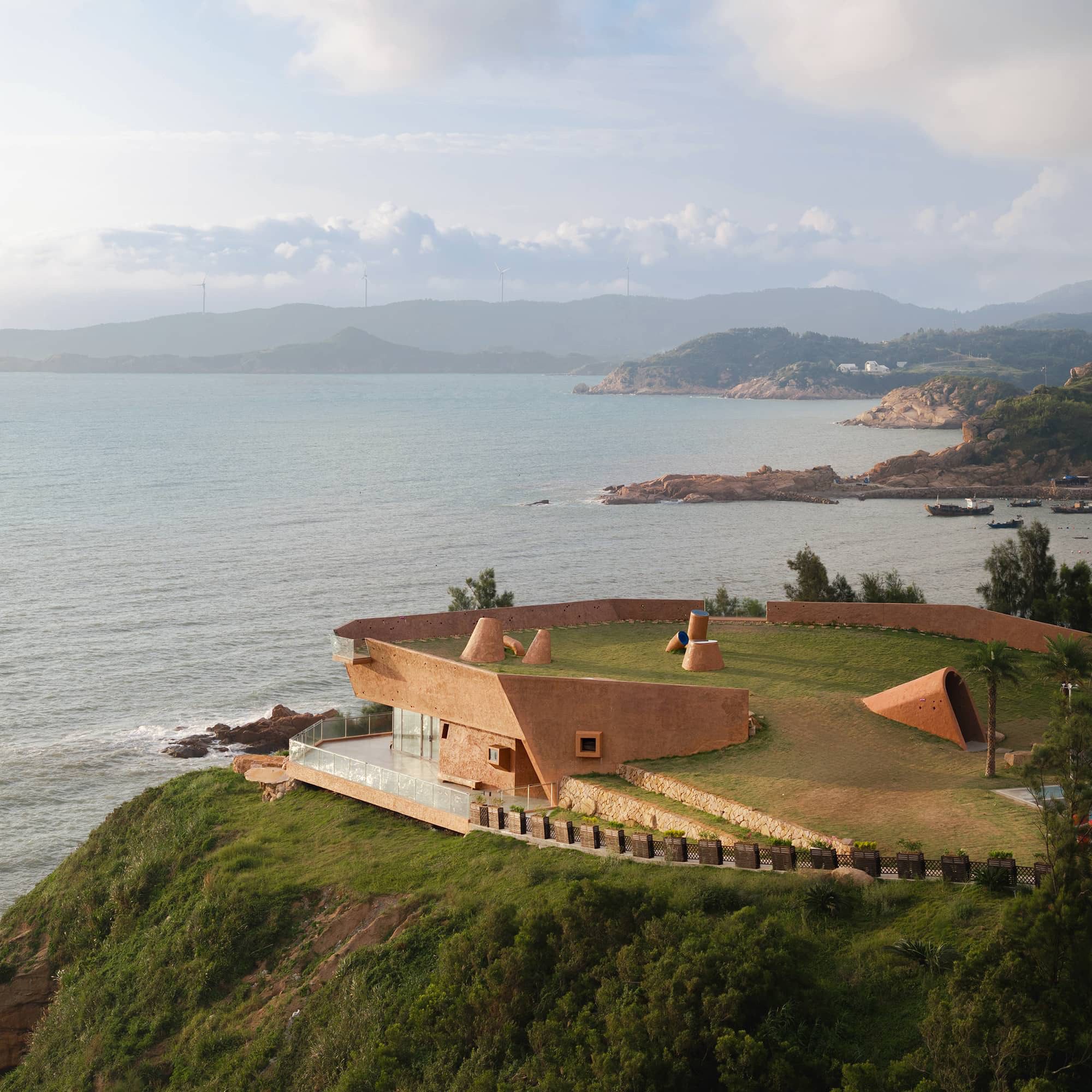
After discussing with the owner, a consensus on the design principles had been reached. As Chairman Zhou Wenling of Ningde Tourism Development Group stated, the building should embody three words: “precipitousness, concealment, and integration.” Precipitousness means facing the sea but not exceeding it, while also giving people a sense of danger and suspension. Concealment means hiding in the ground, like what grows in the ground, appearing humbly, not disturbing the environment, and not making noise. Integration means blending into the coastal landscape and local culture.
© DONG Image
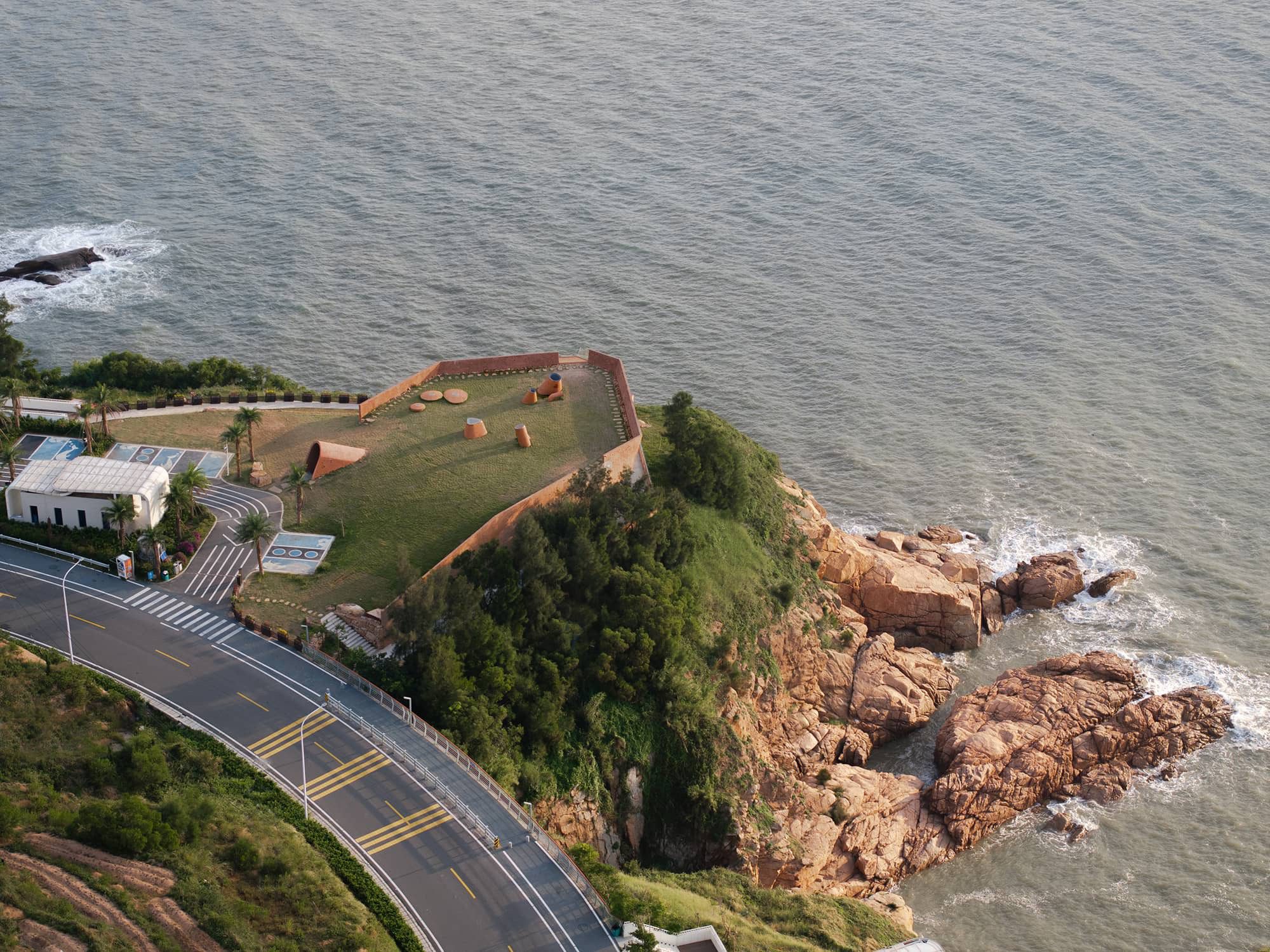
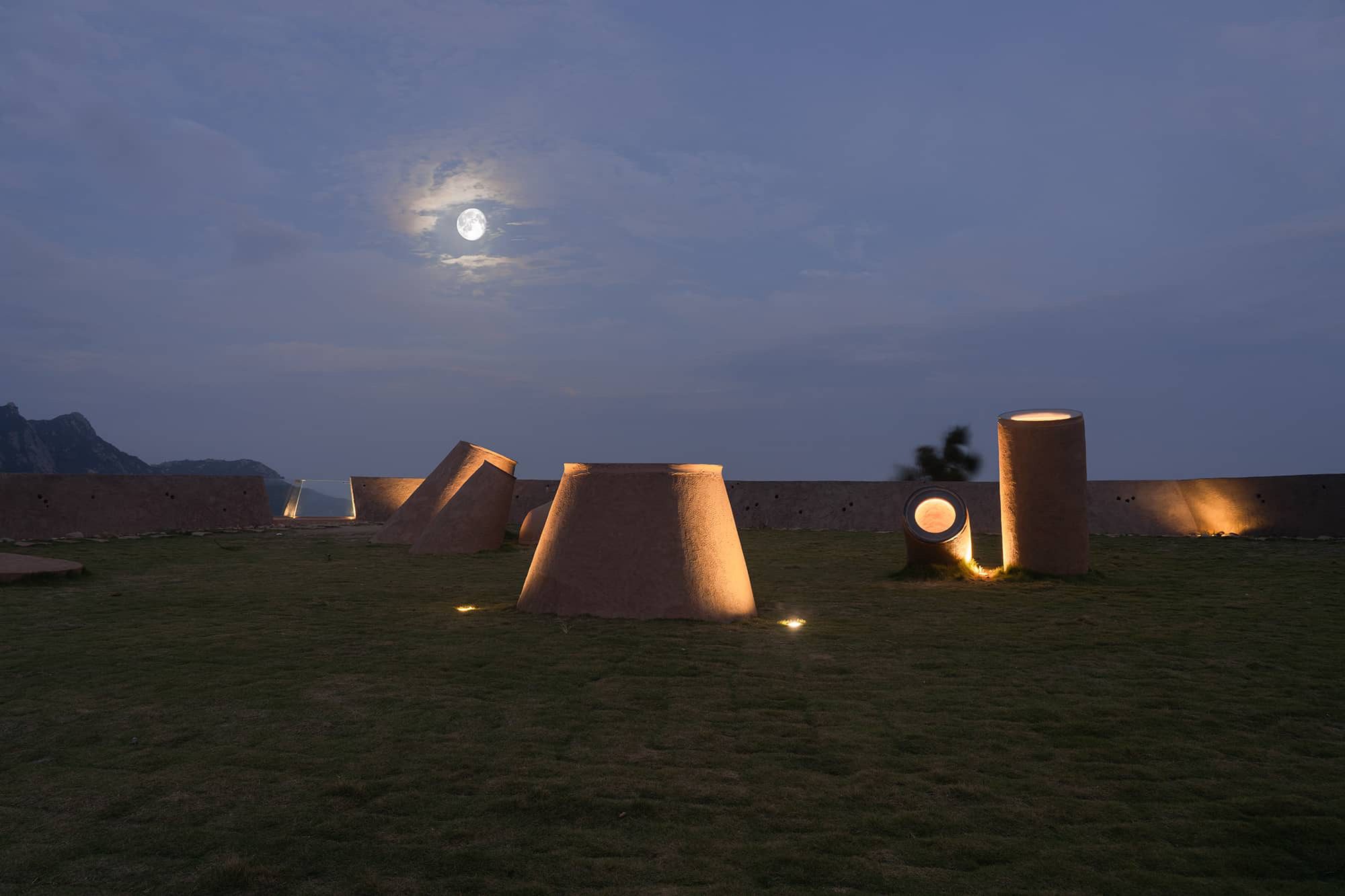
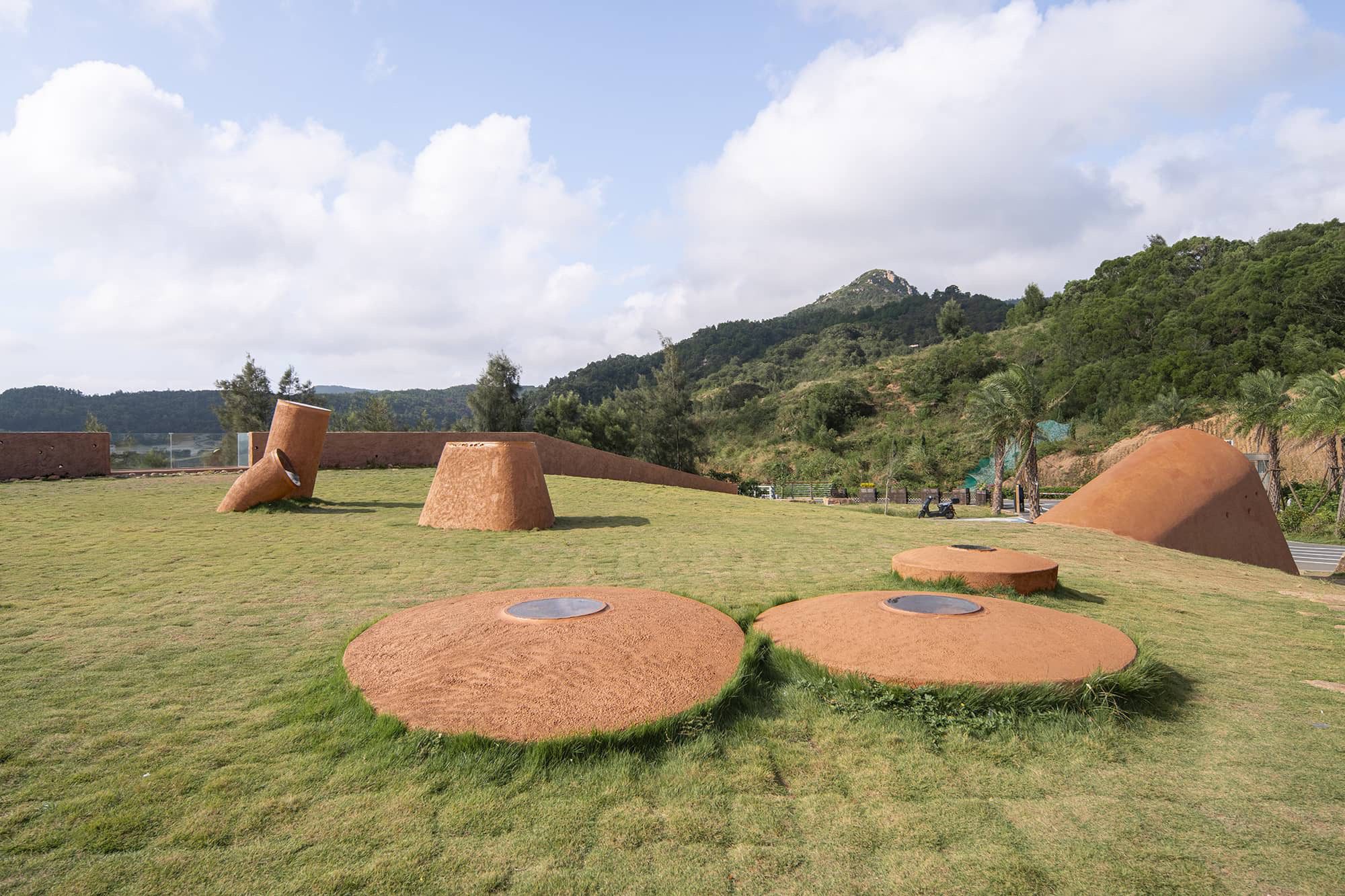
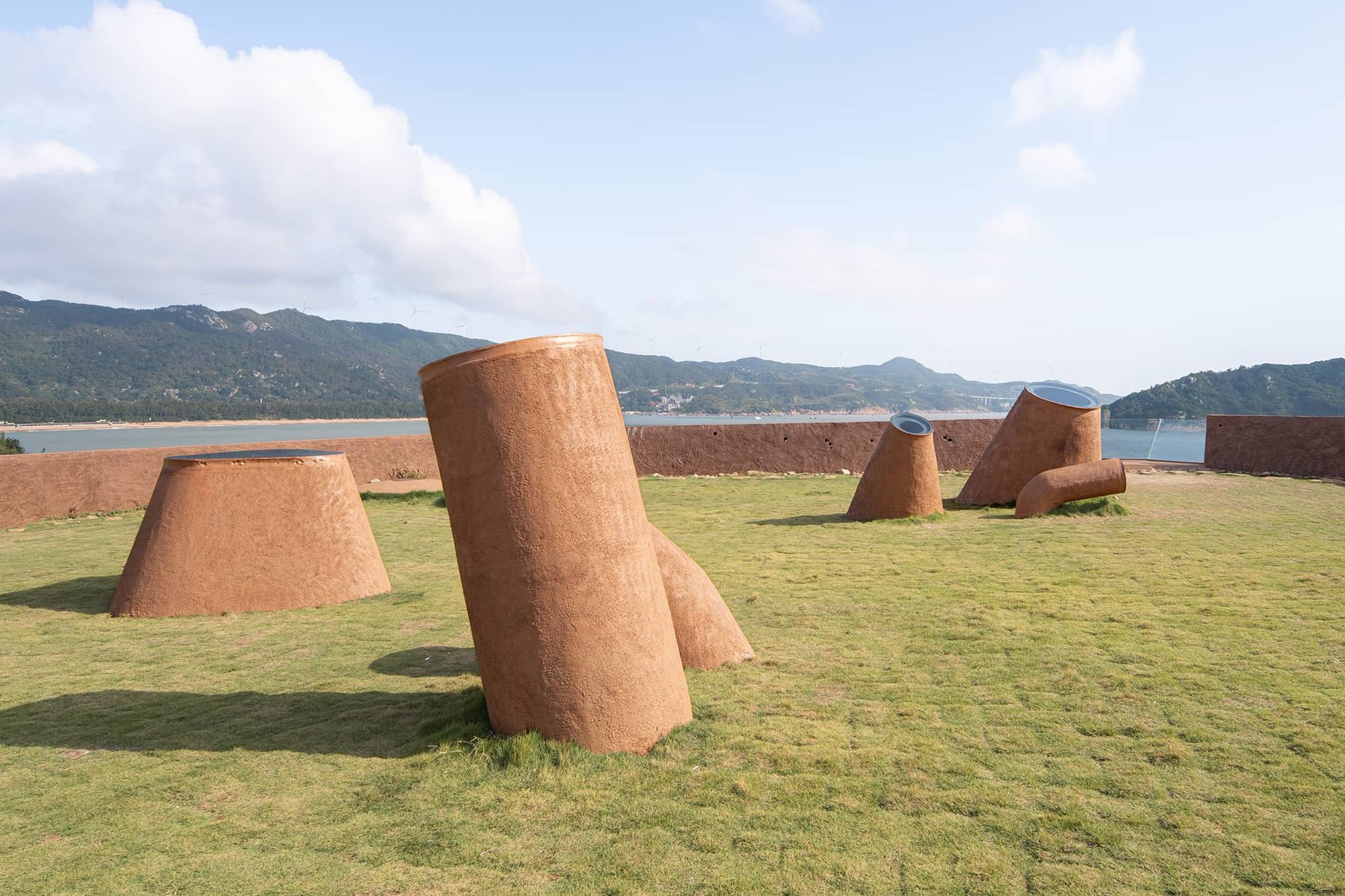
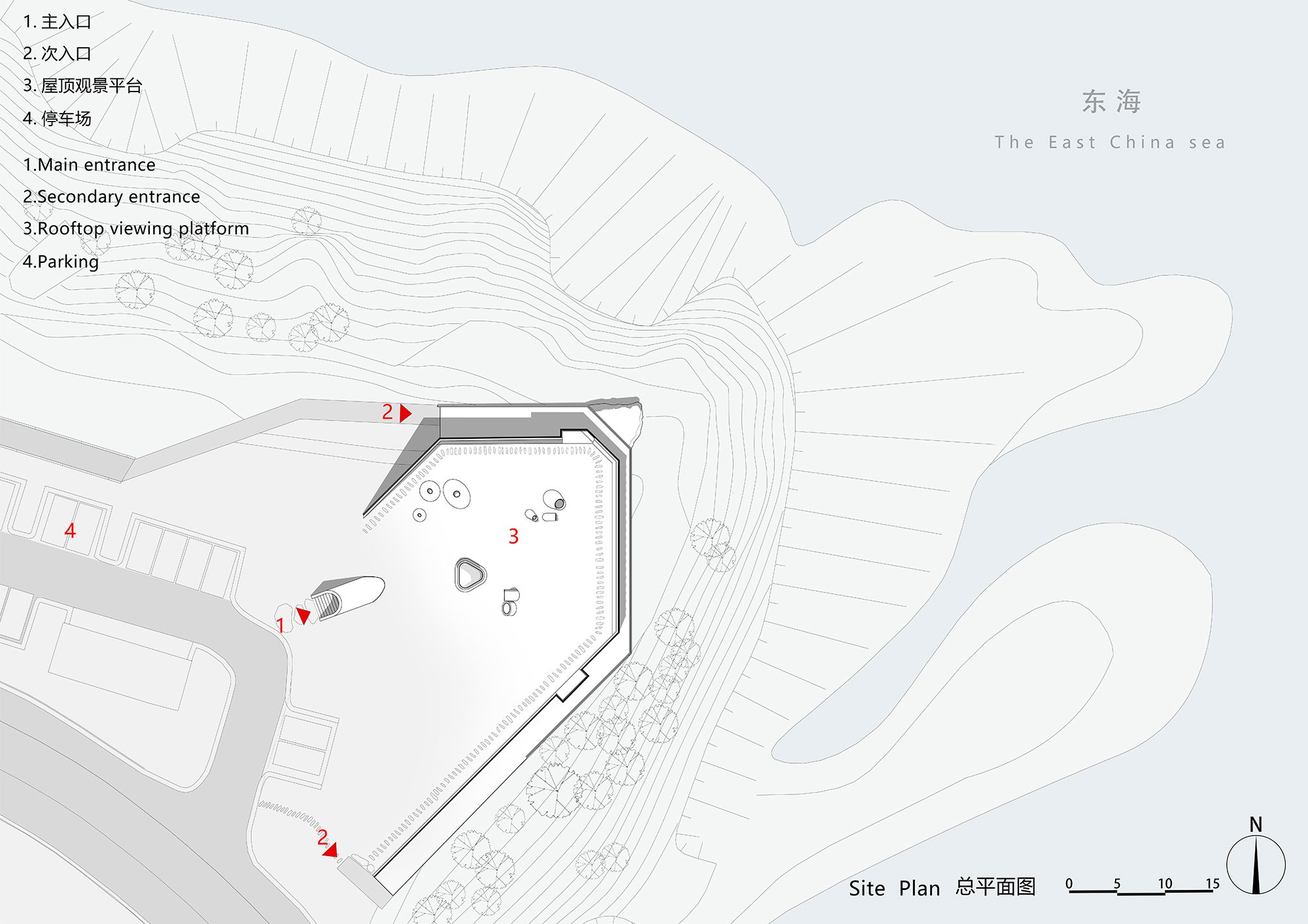
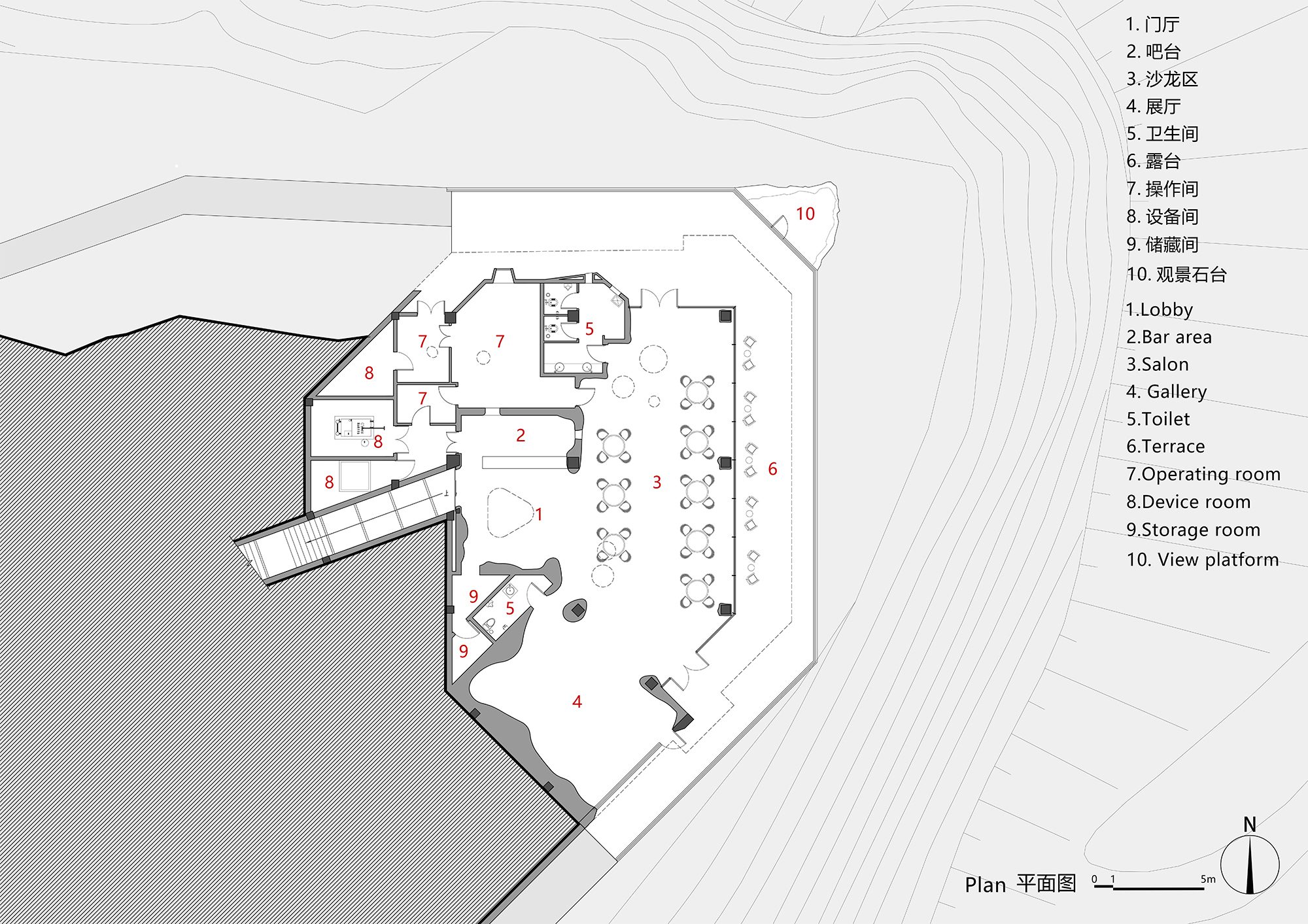
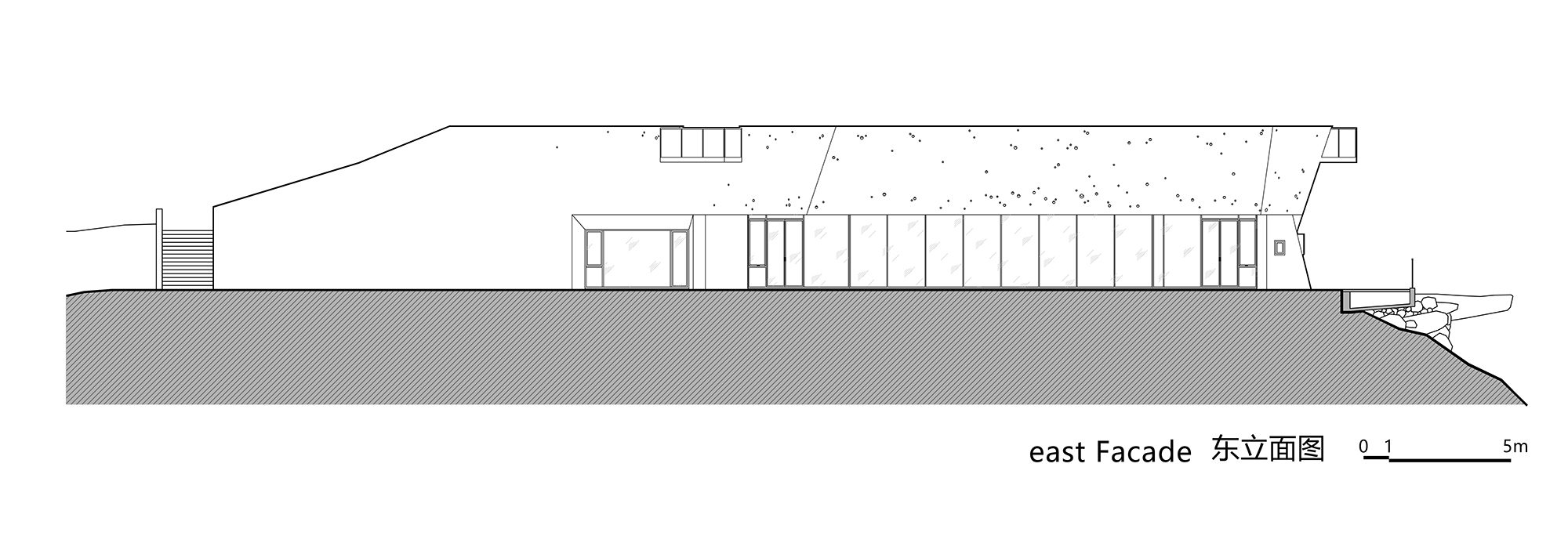
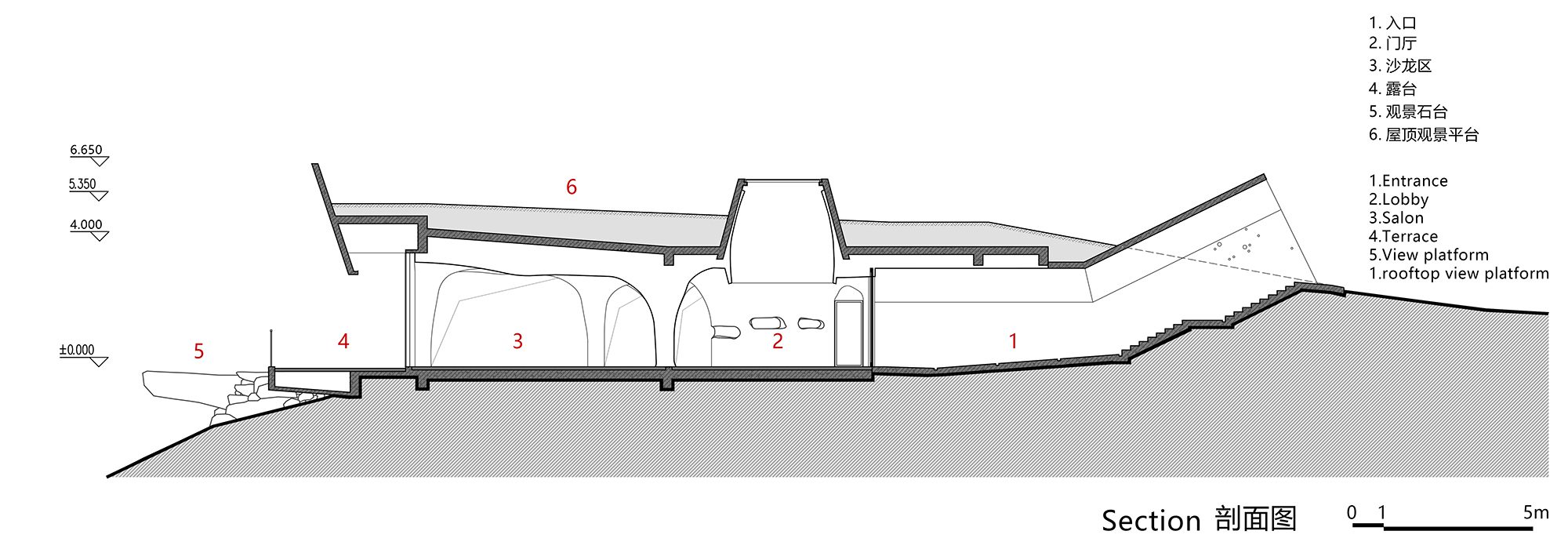
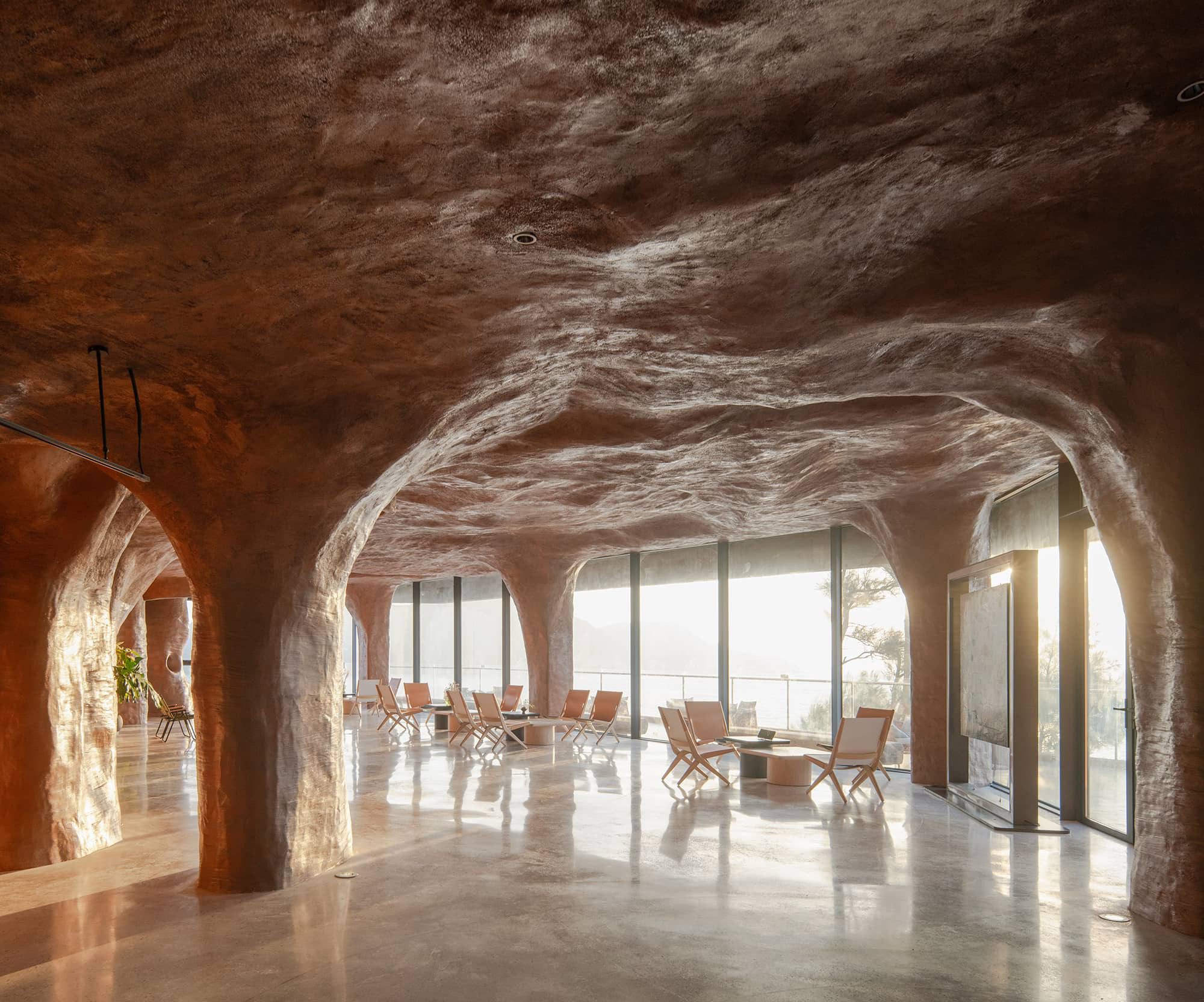
The design inspiration comes from the reefs and sea caves around the site. The building has an irregular shape, and the non right angled shape reminds people of the reefs around the site. The building adopts a soil covering form, which minimizes the occupation of land to the greatest extent possible. The main body of the building is hidden underground, which not only respects environmental factors but also maintains a relatively stable indoor temperature, reducing the energy consumption of cooling in summer.
© DONG Image
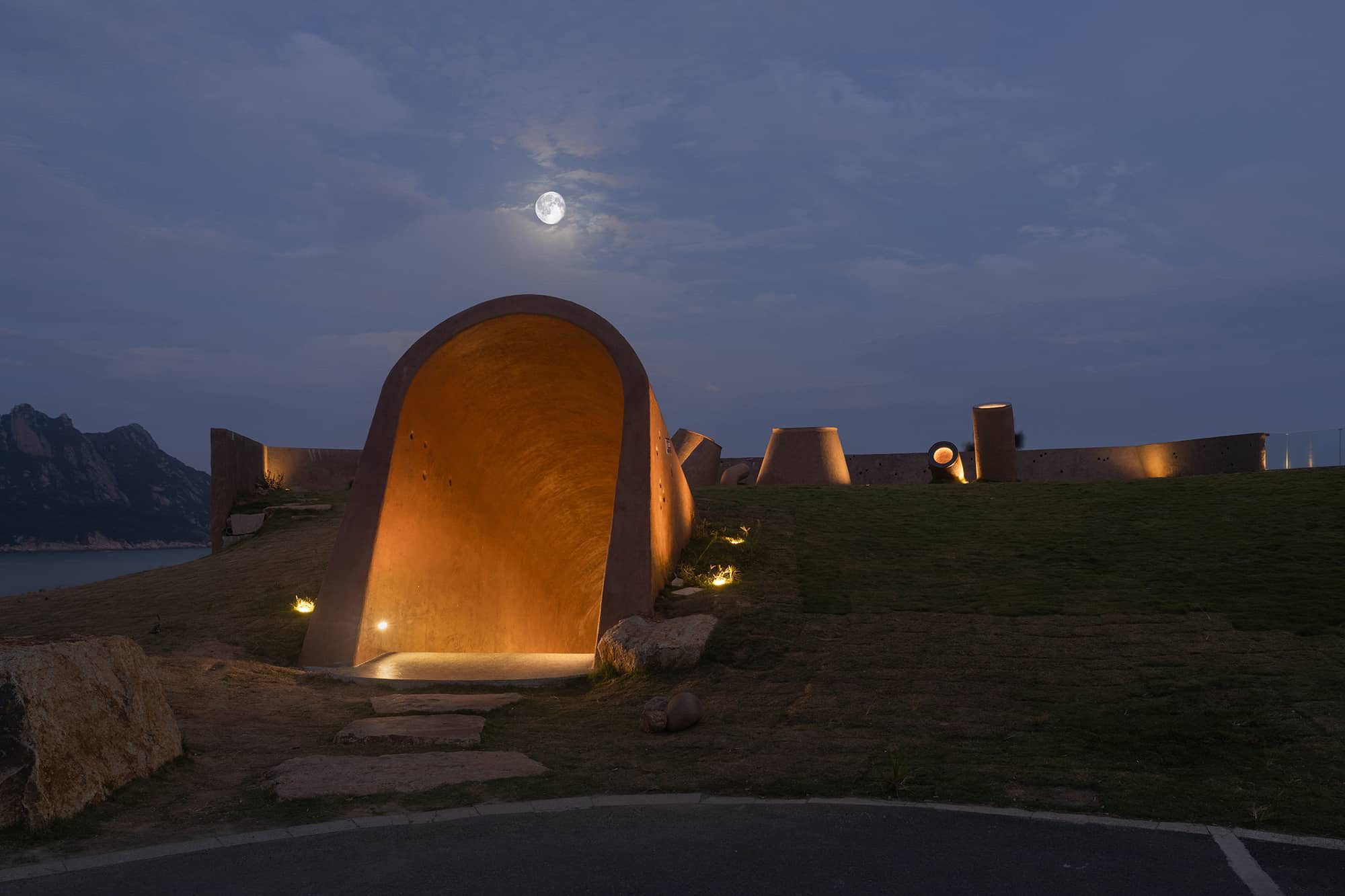
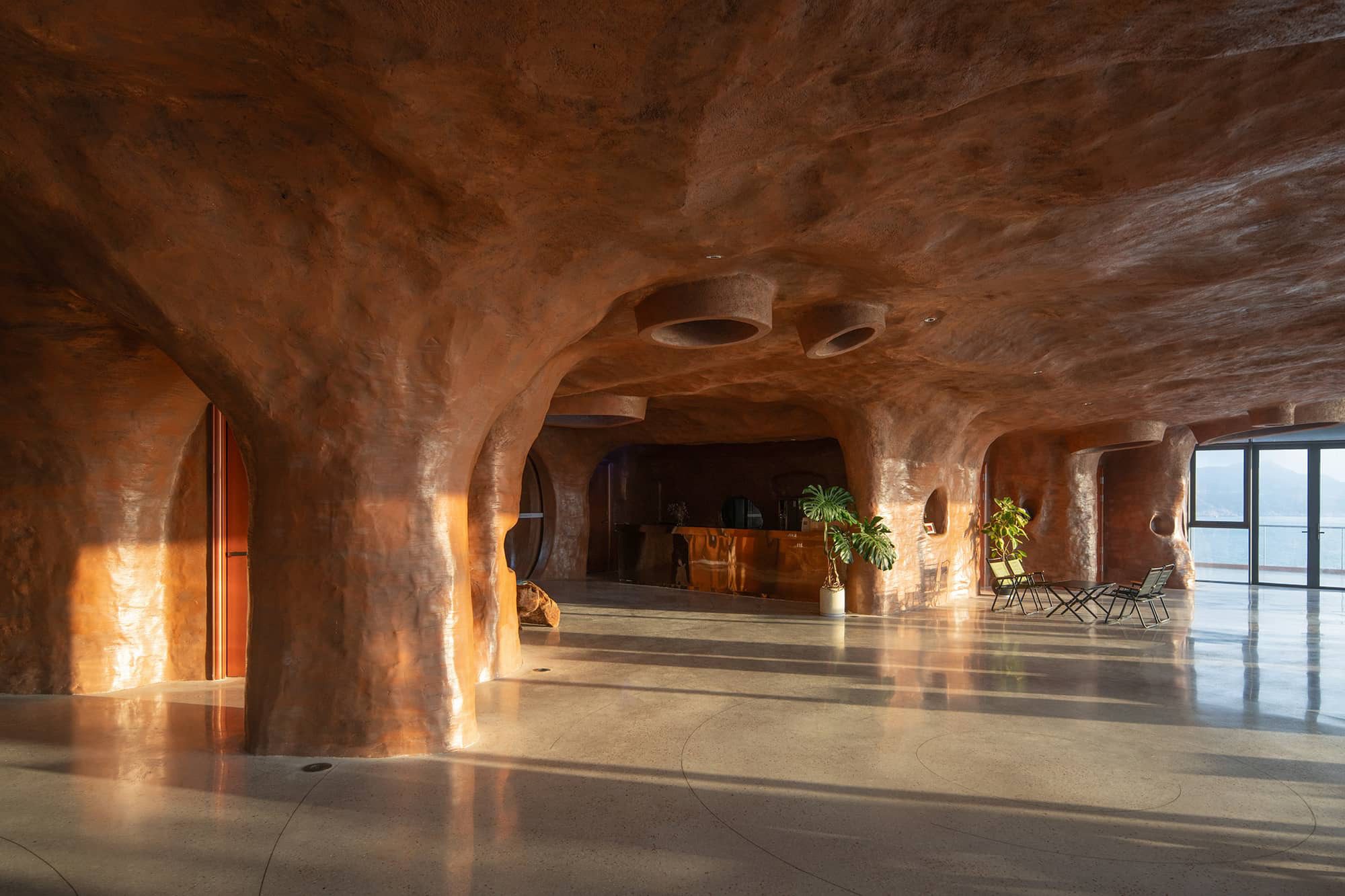
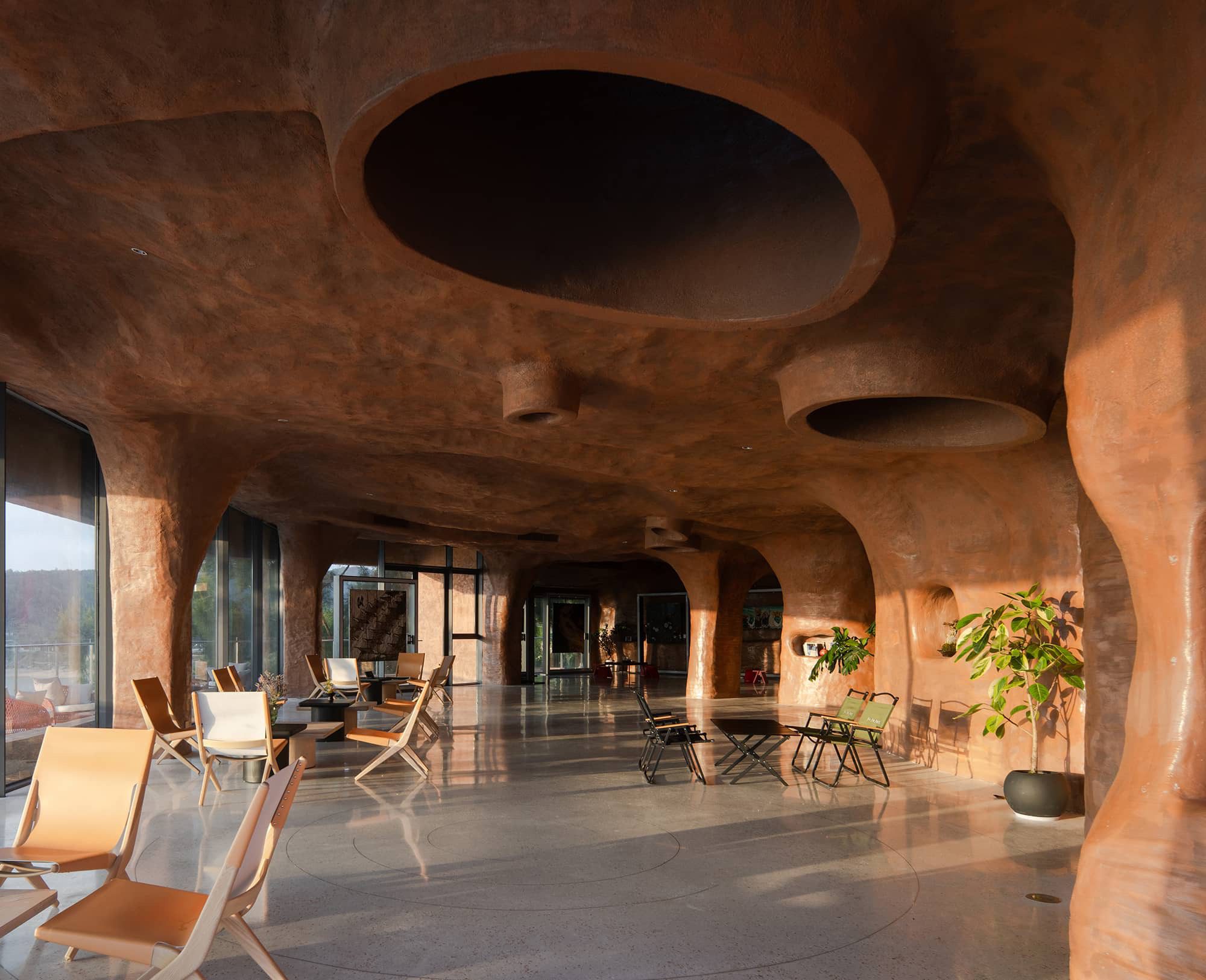
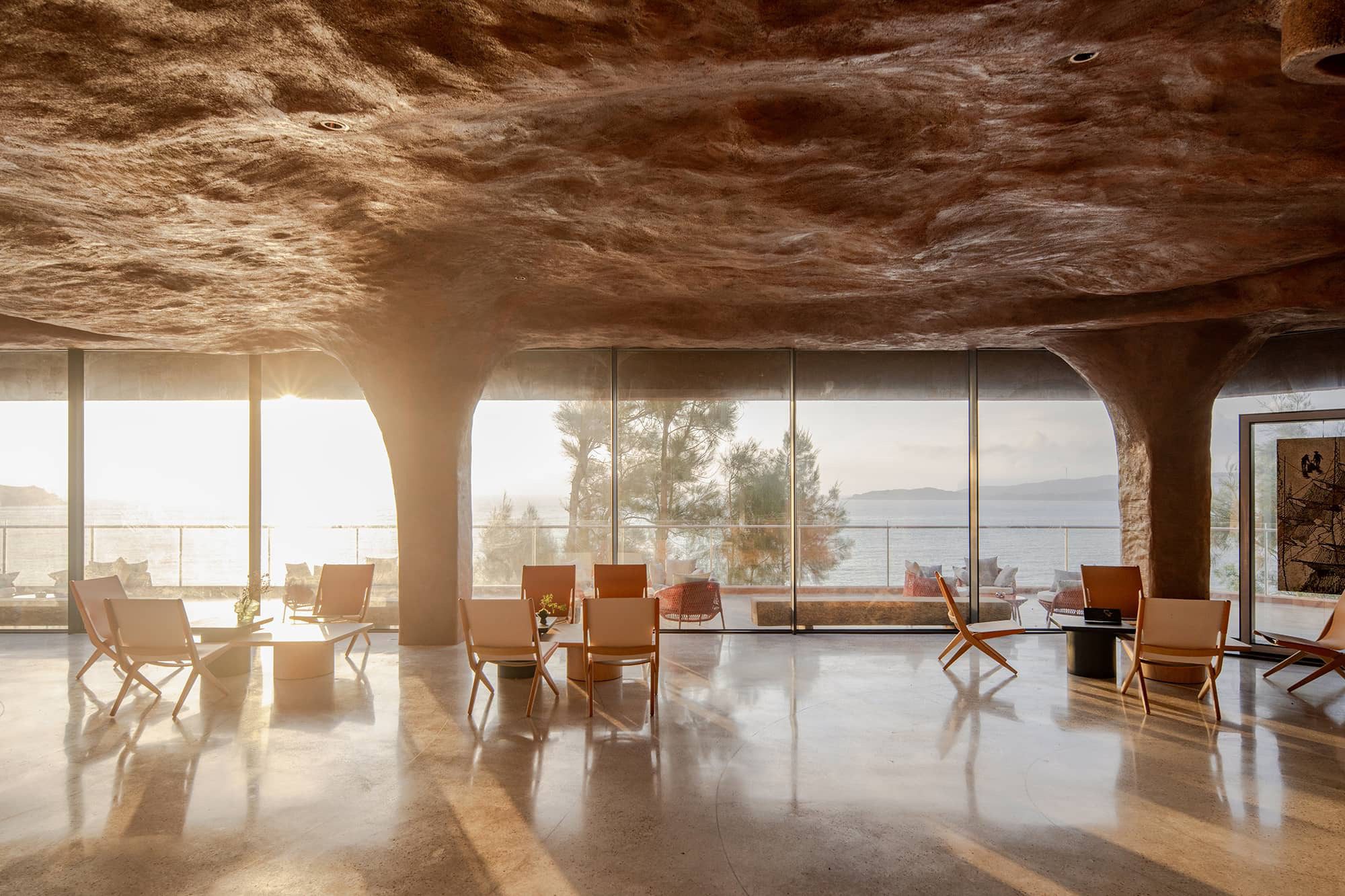
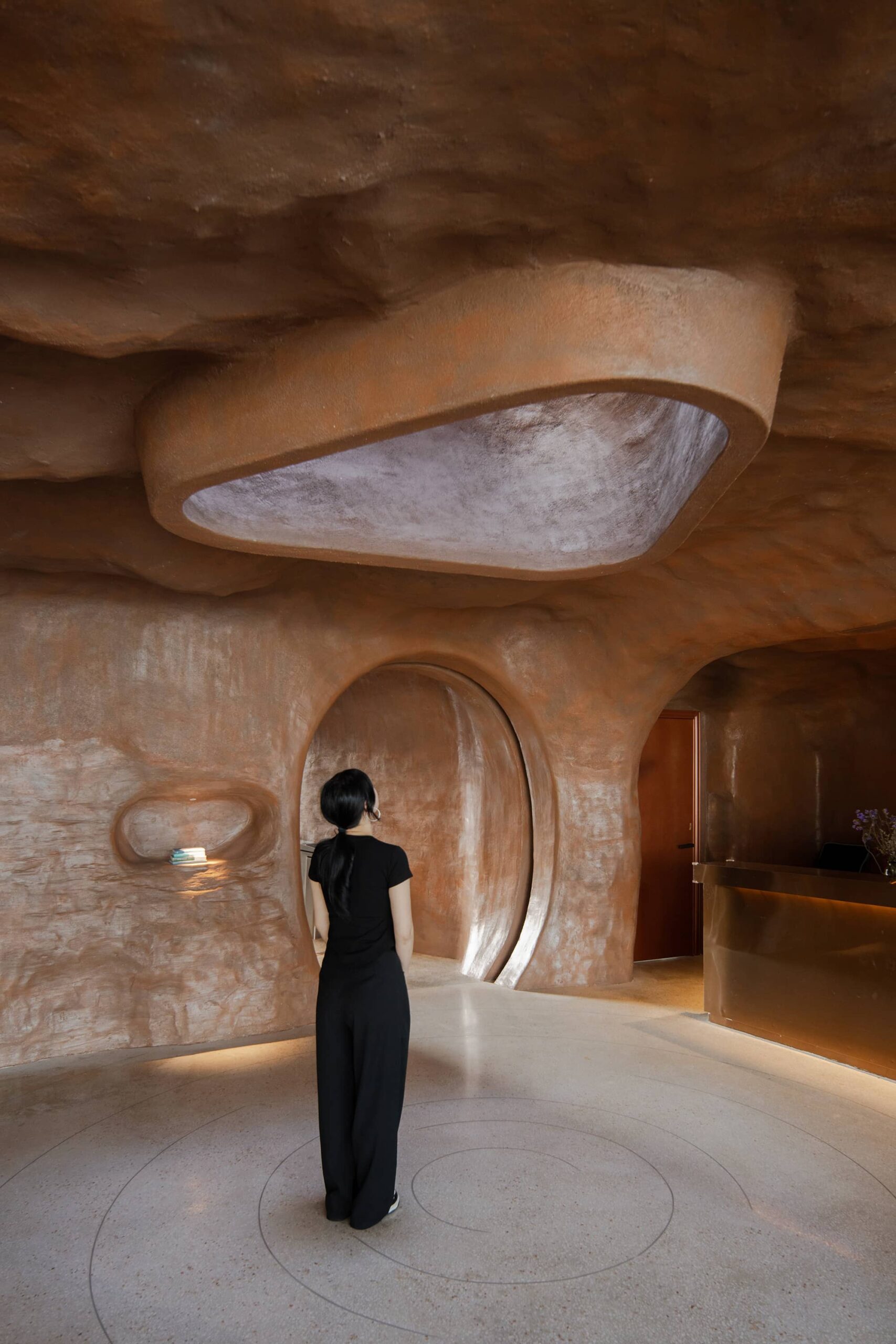
The main entrance of the building is located on the west side of the roof, with a semi-circular shape that extends from underground. From here, people can enter the interior of the building through the descending passage. The interior of the building is composed of multiple interconnected “cave” spaces. The architect drew inspiration from the surrounding sea eroded landforms and created an organic and dramatic space through mimicry.
© DONG Image
This place can host exhibitions, small gatherings, and provide catering services. The Blue Insight Cave Space is a small cultural and tourism project, yet also important for the local community. Firstly, the building provides a brand new public space for tourists coming to Donghai No.1 Road, filling the regret of the long-term lack of high-quality cultural space in the area. Secondly, the unique appearance and experience of the building have become a new cultural and tourism landmark in the area, playing a good role in attracting people flow.
© DONG Image
Project Info:
-
Architects: 3andwich Design , He Wei Studio
- Country: China
- Area: 460 m²
- Year: 2024
-
Photographs: DONG Image
-
Construction Unit: Fujian Minxinsheng Construction Engineering Co., Ltd.
- Category: Visitor Center, Landscape Architecture, Commercial Architecture
- Design Team: Wang Ziyi, Meng Xiangting, Wu Wenquan, Liu Hao, He Xingchen, Wang Jun, Zhi Haiyang