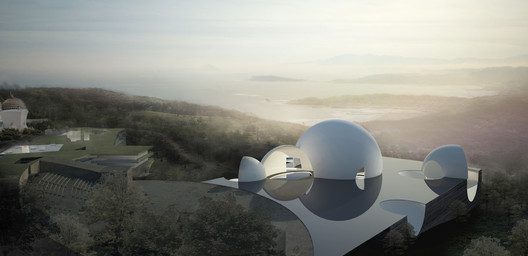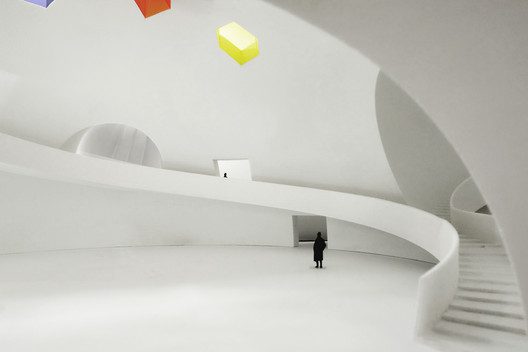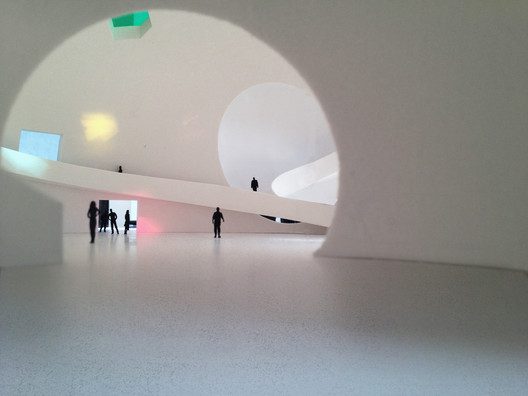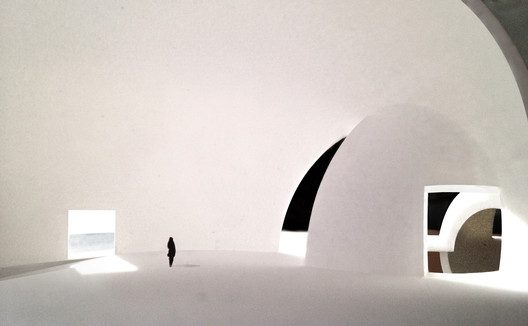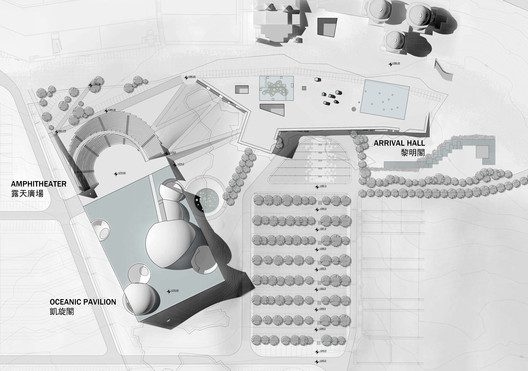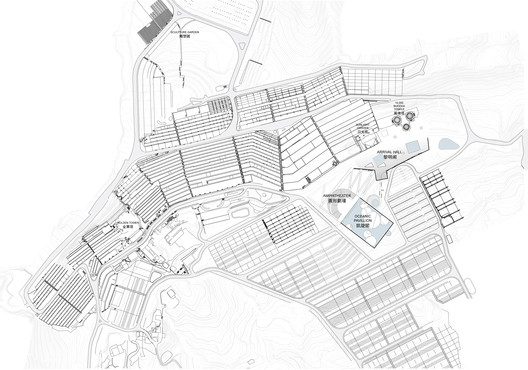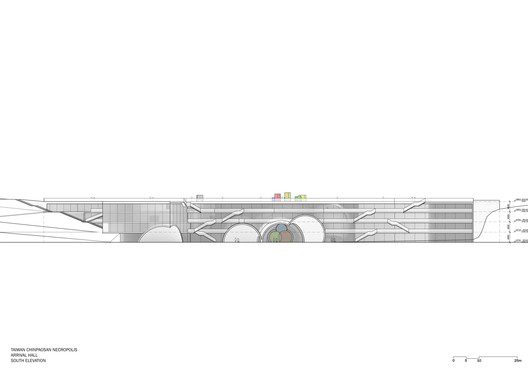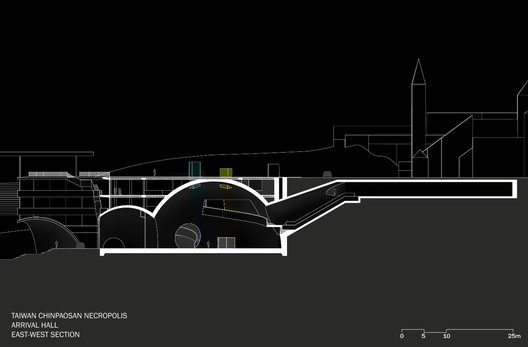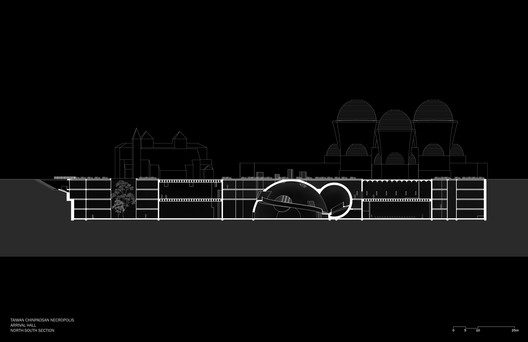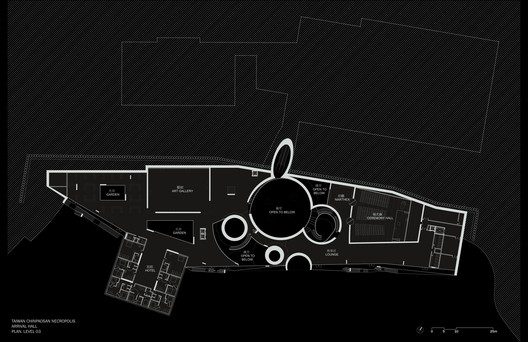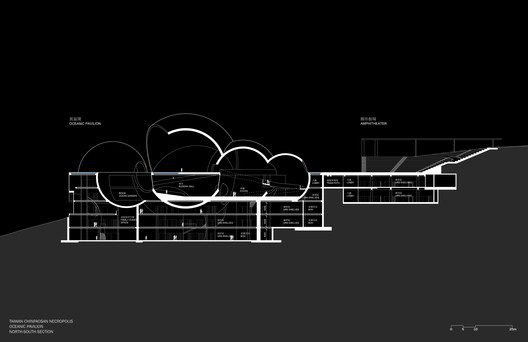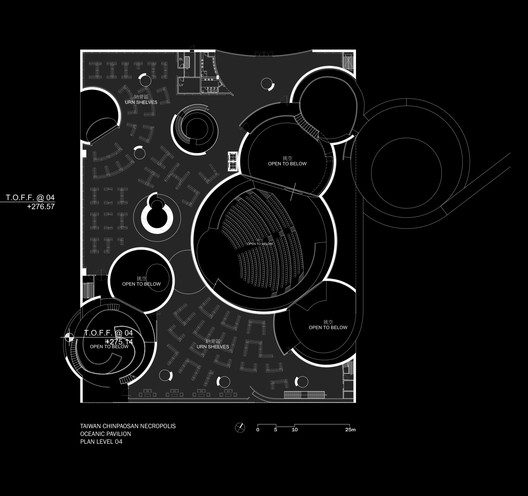


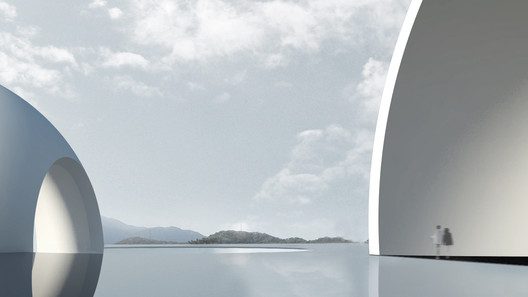
Steven Holl’s proposal for the Taiwan ChinPaoSan Necropolis welcomes us to the future. Architects are stating that the 21st century has begun, whether we are ready for it or not.
Courtesy of Steven Holl
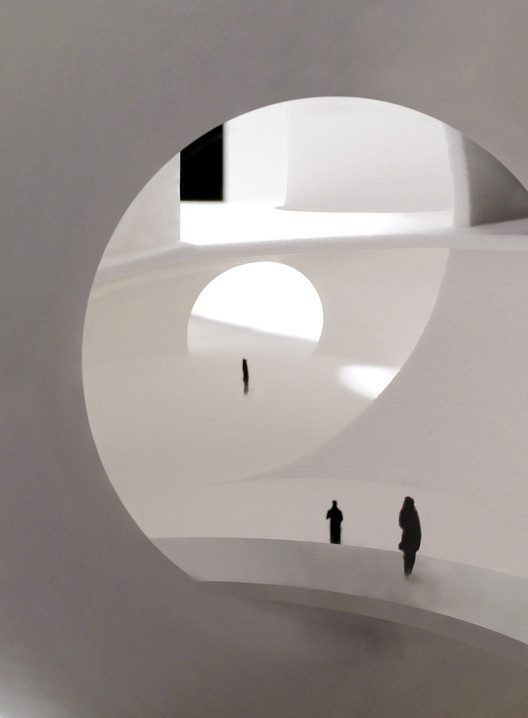
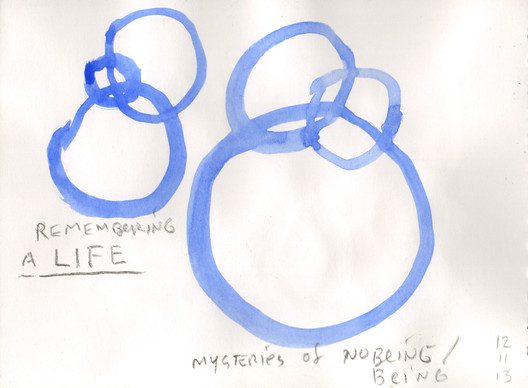
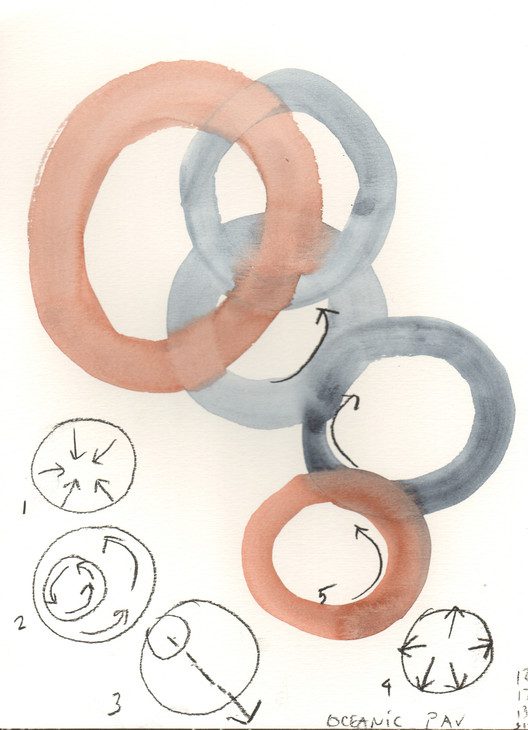
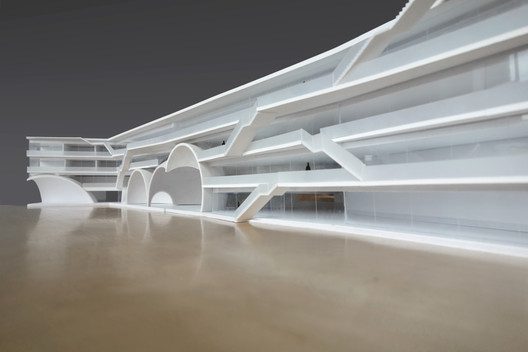
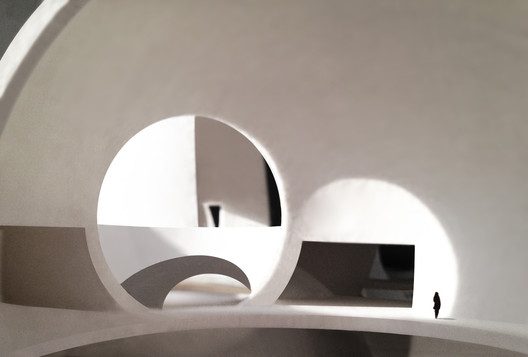
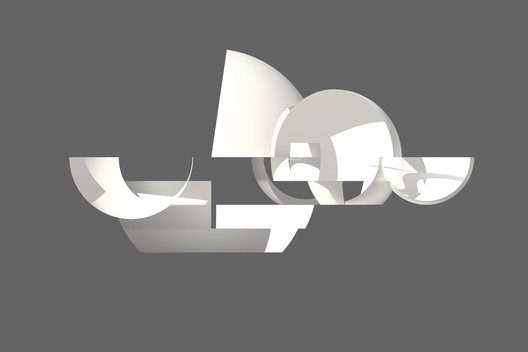
The construction can be perceived as relatively simple in form, but these immense spherical elements create a science fiction, out of this world aesthetic. Although the proposal is very futuristic, the artist’s process was a journey to the past. First of all, Holl declared that he chose spherical shapes because “The geometry of intersected spheres refers back to a rich ancient history of symbolism. Borromean Rings appeared in Buddhist Art, Viking rune-stones and Roman mosaics thousands of years ago. Borromean Rings also represent the karmic laws of the universe and the interconnectedness of life. In the I Ching, the earth is represented as a square and the heavens as a circle.”
Courtesy of Steven Holl
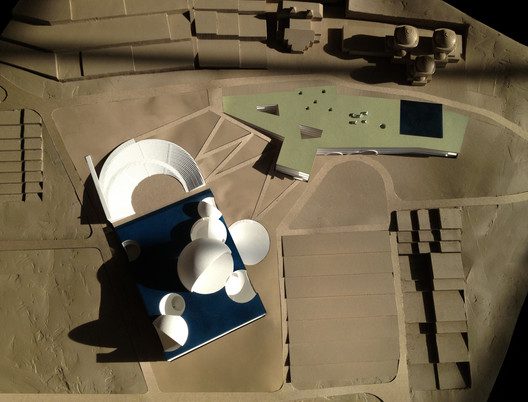
Additionally, the architect’s traditional approach continues with his watercolor sketches, which were selected of other 30 other submitted schemes. His proposal consists in integrating the ocean horizon into the architectural composition, while the intersected sphere will be constricted in a rectangular planetary wrapped by water.
Courtesy of Steven Holl
The water is an important factor of the construction – not only does it complete the overall aesthetics, it also provides 60 percent of the electricity for the buildings, through underwater photovoltaic cells (which are even more efficient than the normal ones, since the water cools them and makes them 20 percent more efficient). Other sustainable solutions adopted are geothermal heating and cooling, rain water collection and passive cooling strategies.
Courtesy of Steven Holl
Natural lighting will penetrate the building through openings created in the intersections of the spheres. The building will hold an interesting mix of materials, from the white concrete spheres which contrast with the black granite floors, to the Hinoki wood used for doors and the alabaster and gold-leaf used for the ceremonial areas.Architecture is all about preserving the past while stepping into the future. Steven Holl’s creation is a happy balance between these two, which makes his project one of the most anticipated ones lately.
Architects: Steven Holl Architects
Location: Taiwan, Taipei City
Project Year: 2018
Photographs: Courtesy of Steven Holl Architects
Area: 54000.0 m2
Design Team: Steven Holl (design architect), Roberto Bannura (project director), Noah Yaffe (partner), Michael Rusch (associate), Xi Chen(project architect), Yu-Ju Lin (project architect), Yun Shi (project team), Bell Ying Yi Cai (project team), Zach Cohen (project team), Wenying Sun (project team), Yan Zhang (project team), Arseni Timofejev (project team), Qiyue Hu (project team), Shenpei Ha (project team), Justin Bouttell (project team)
Client: ChinPaoSan Group
Local Architect: Chou Chienping Architects
Local Engineer: TH TSAI and Associates
Structural Engineer: Guy Nordenson and Associates
Mechanical Engineer: Heng Kai Engineering Consultants Inc.