

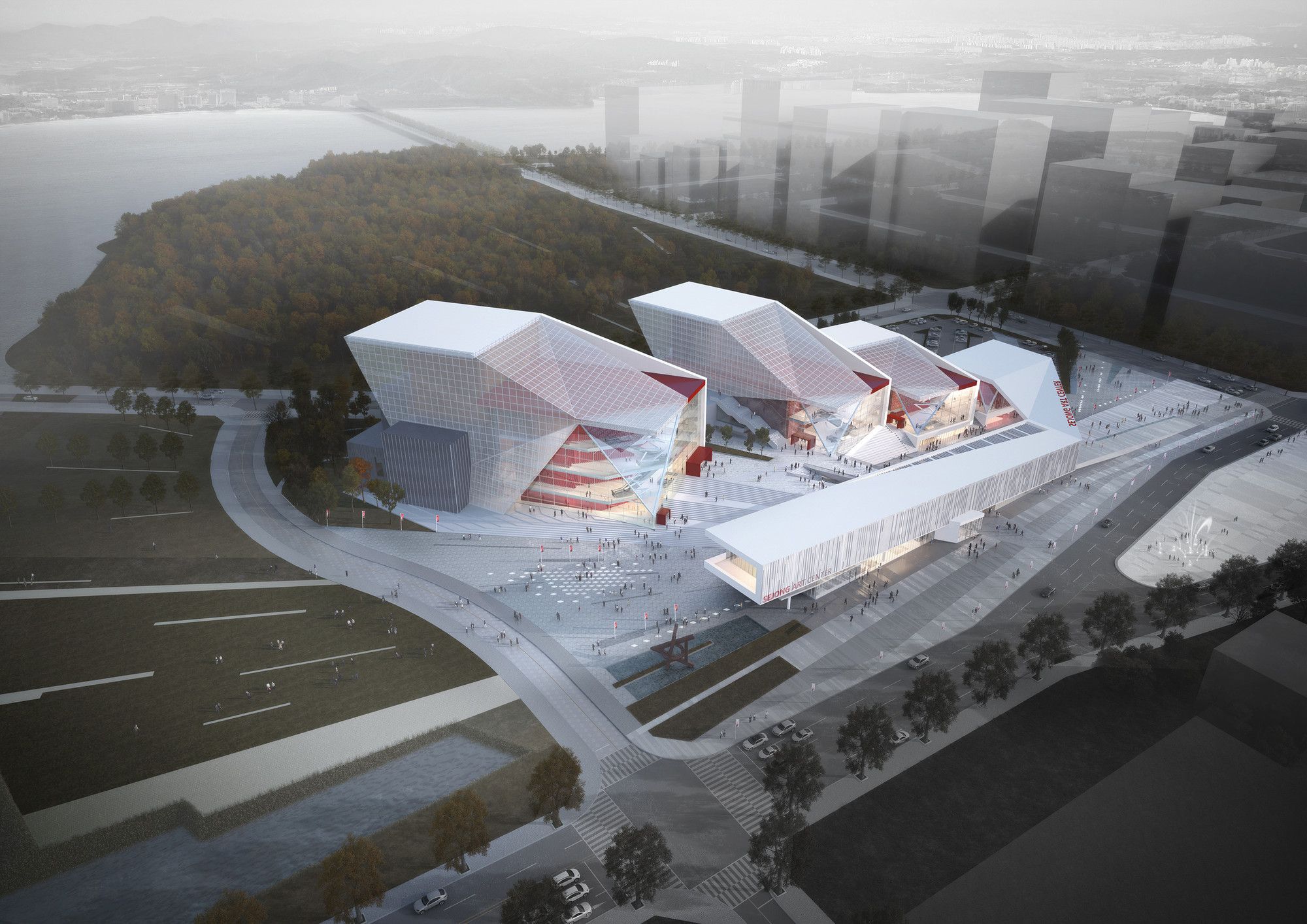
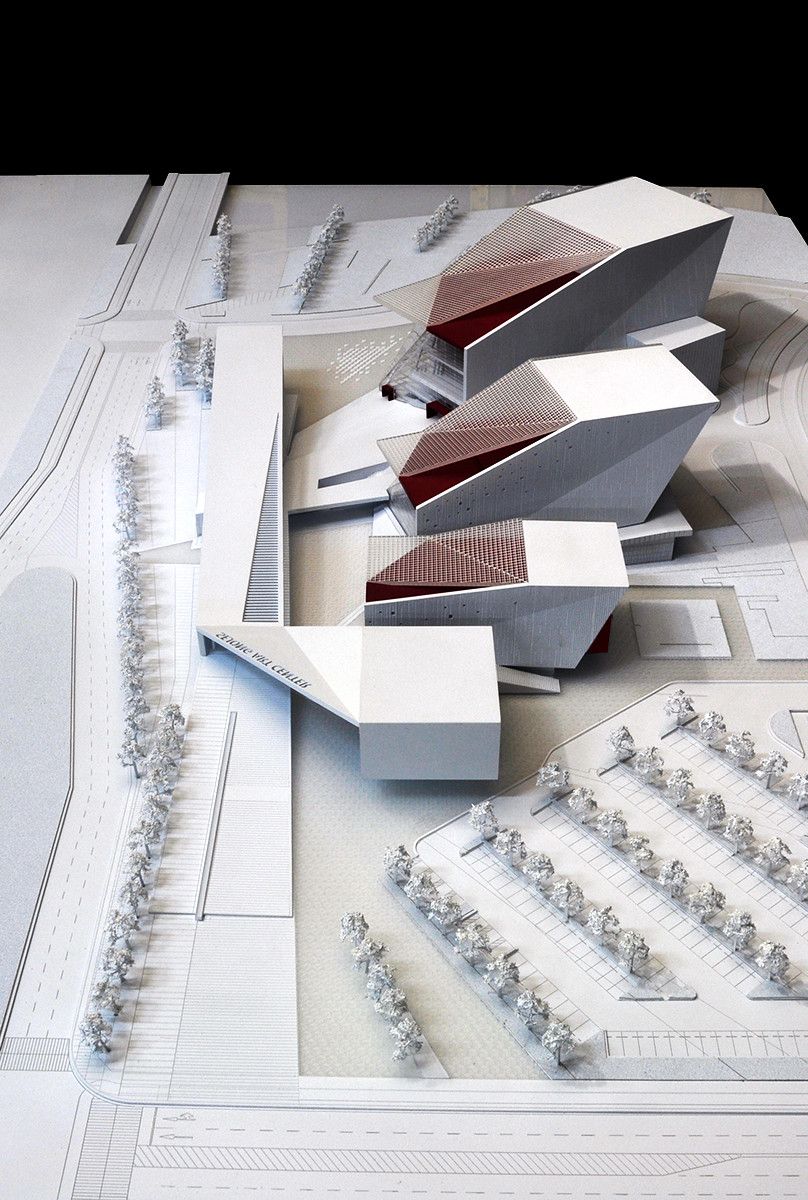
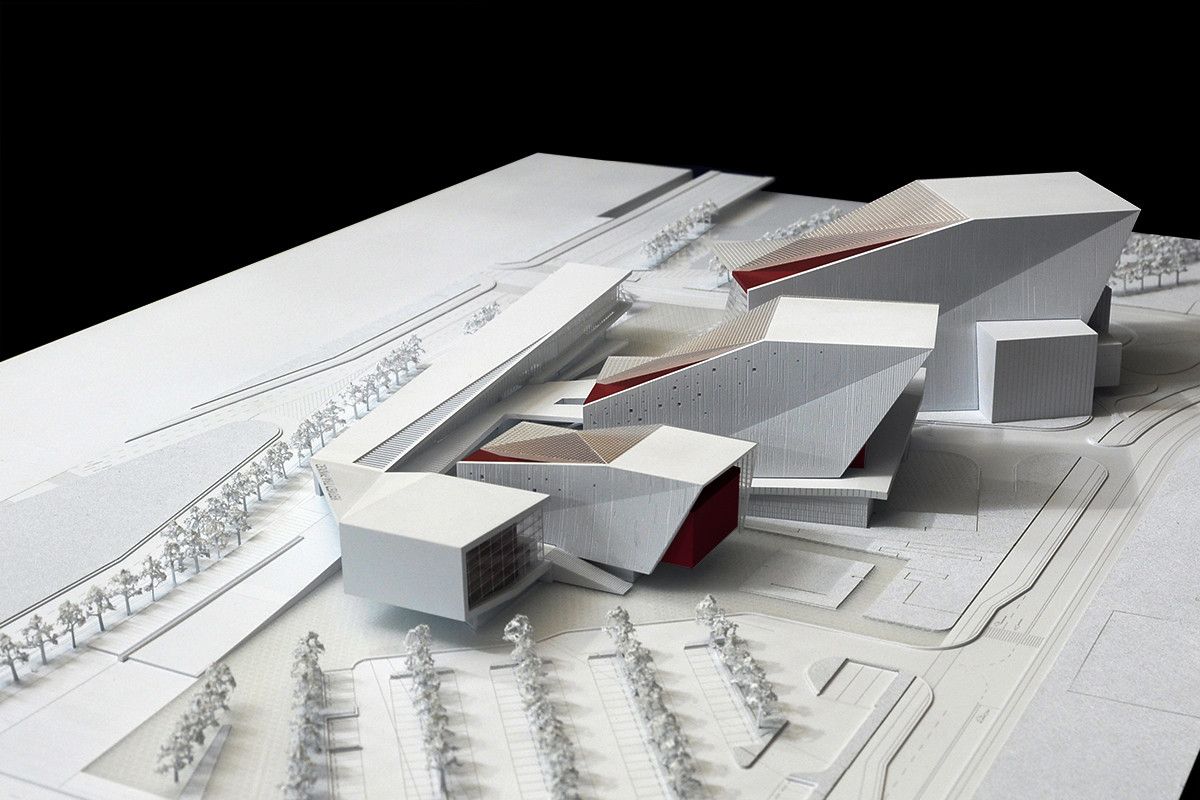
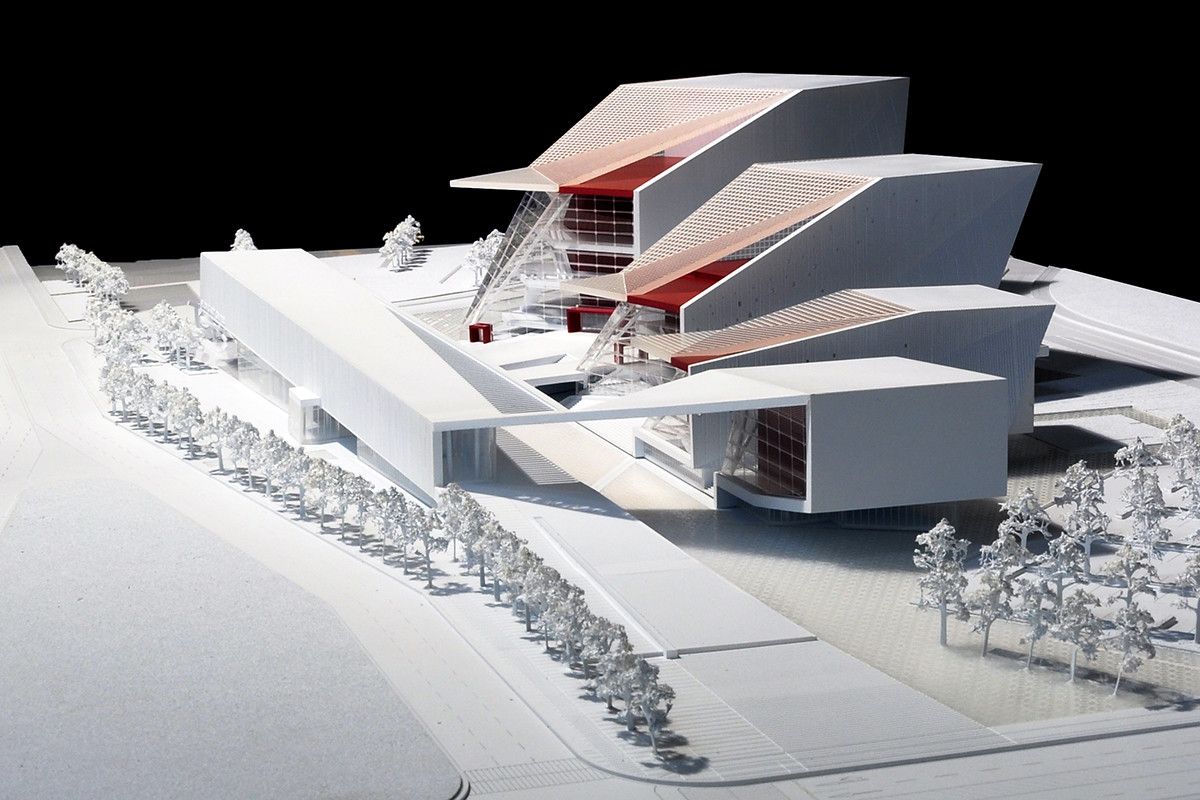
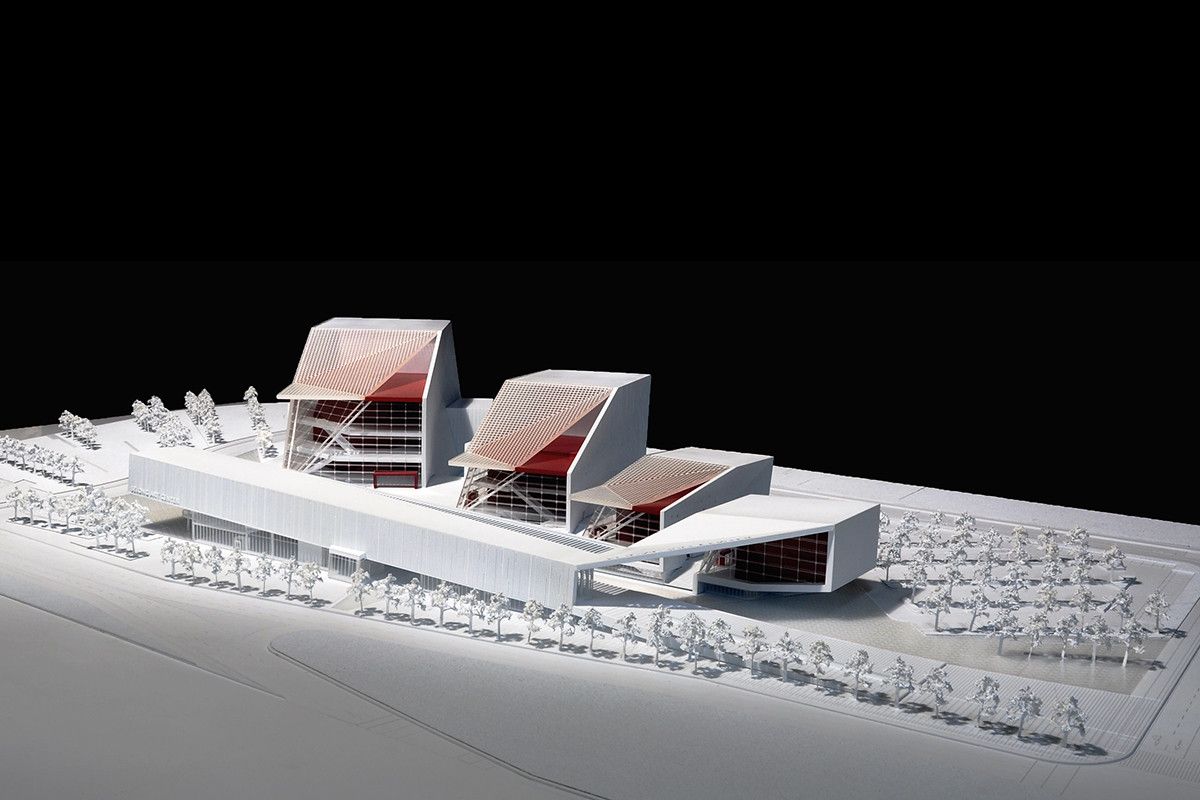
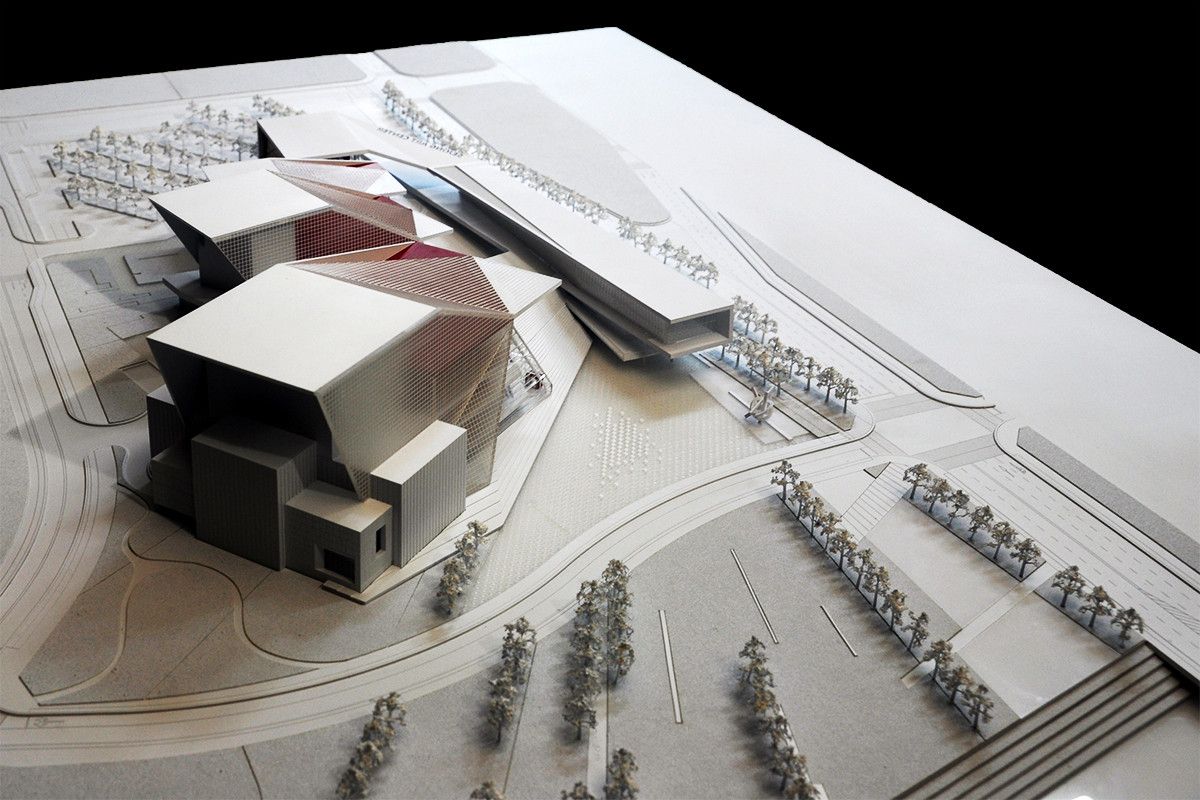
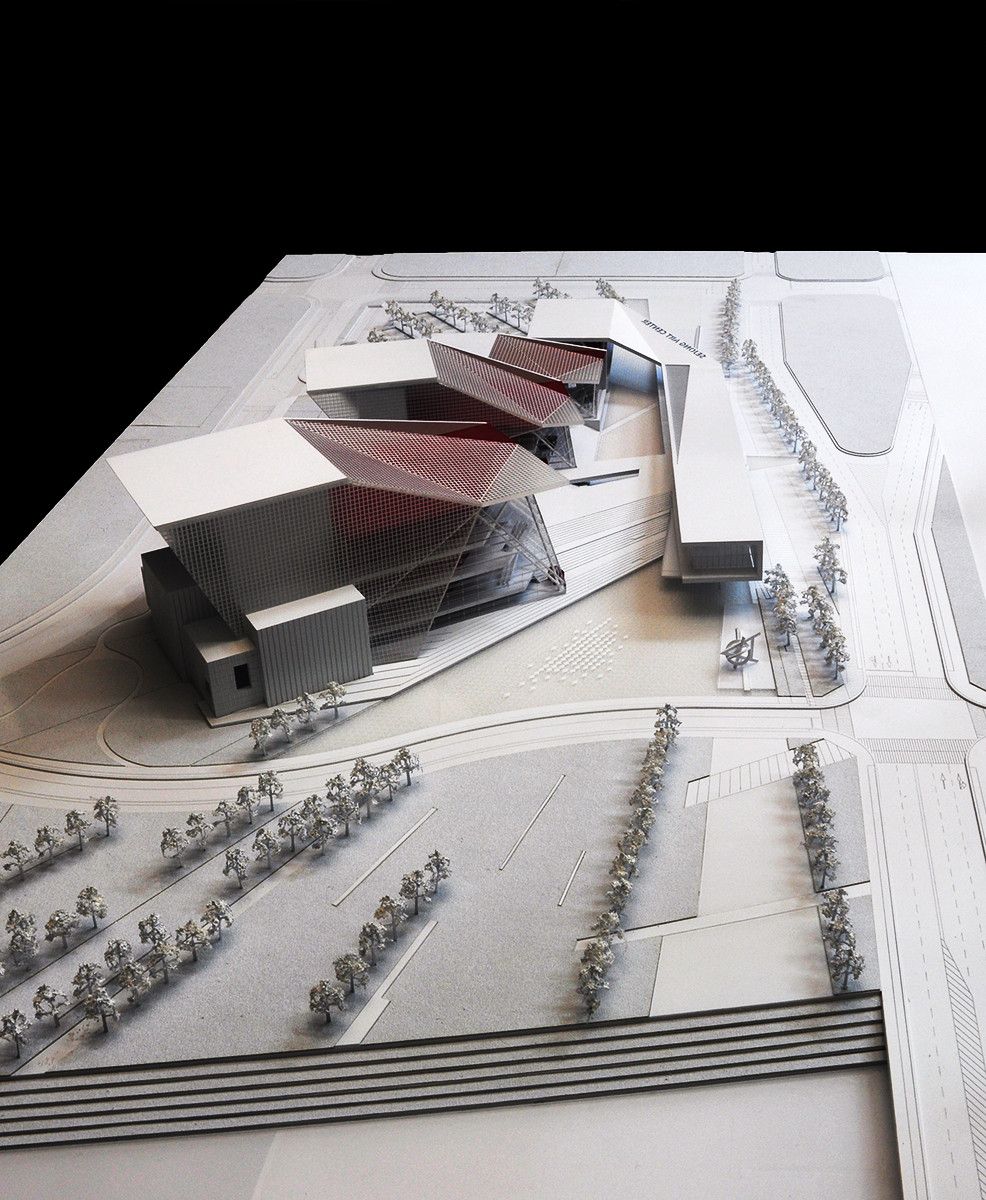
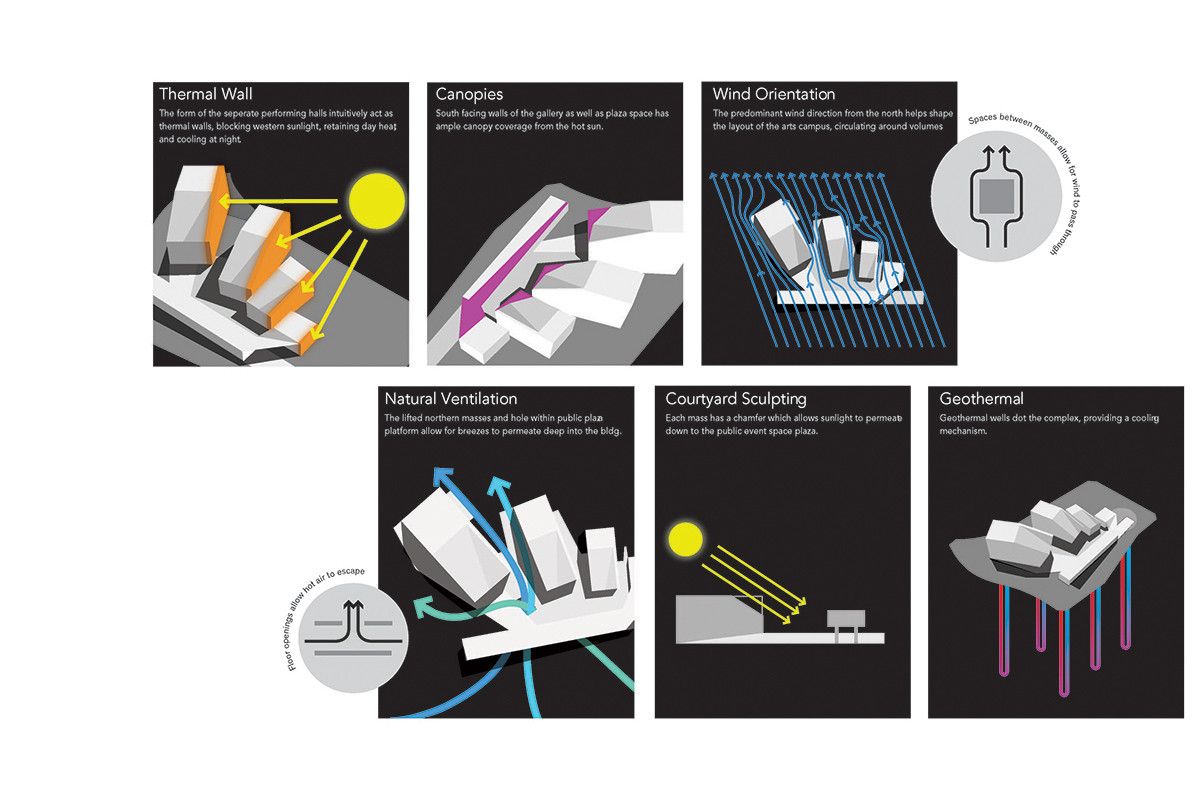
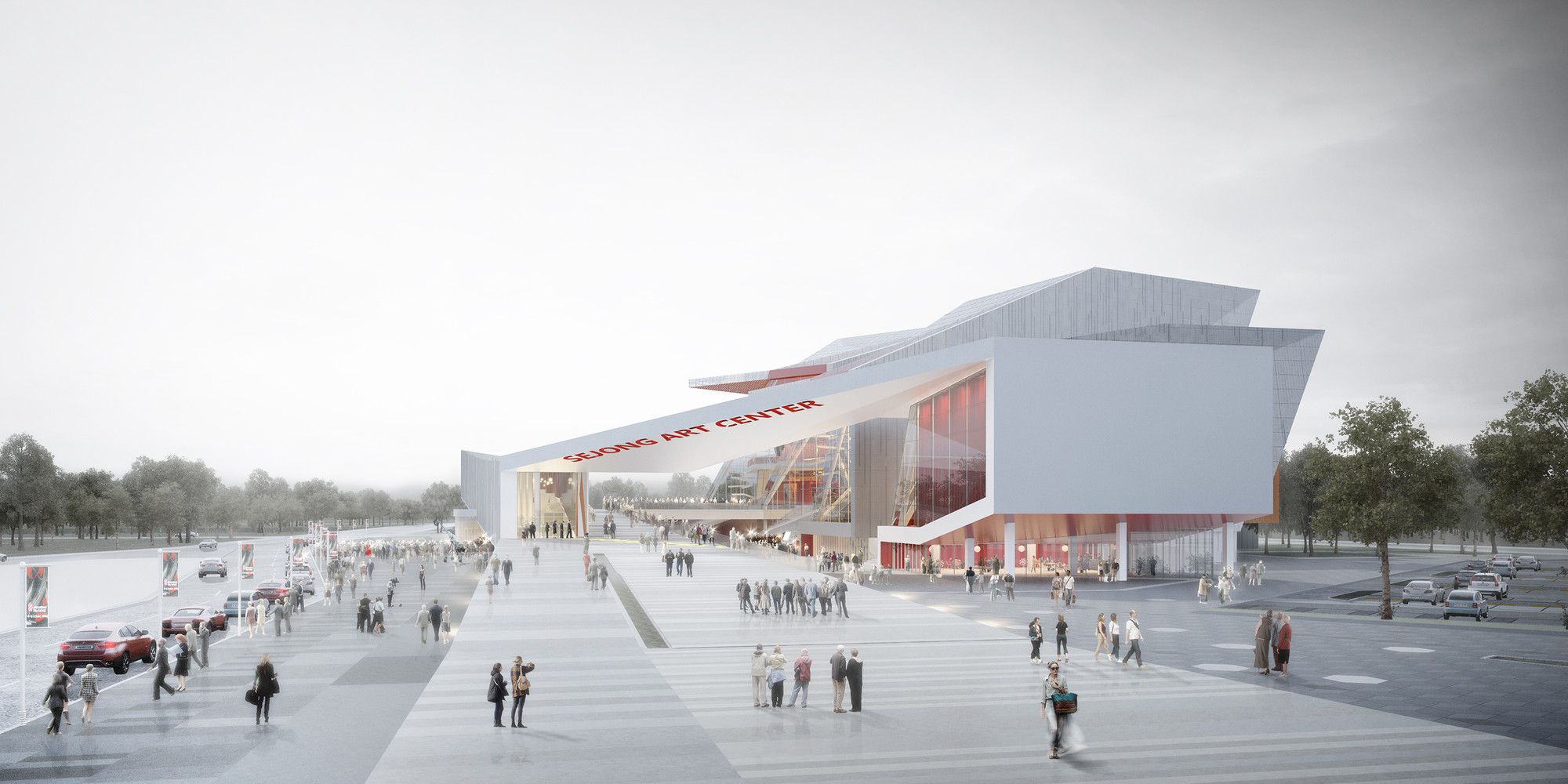
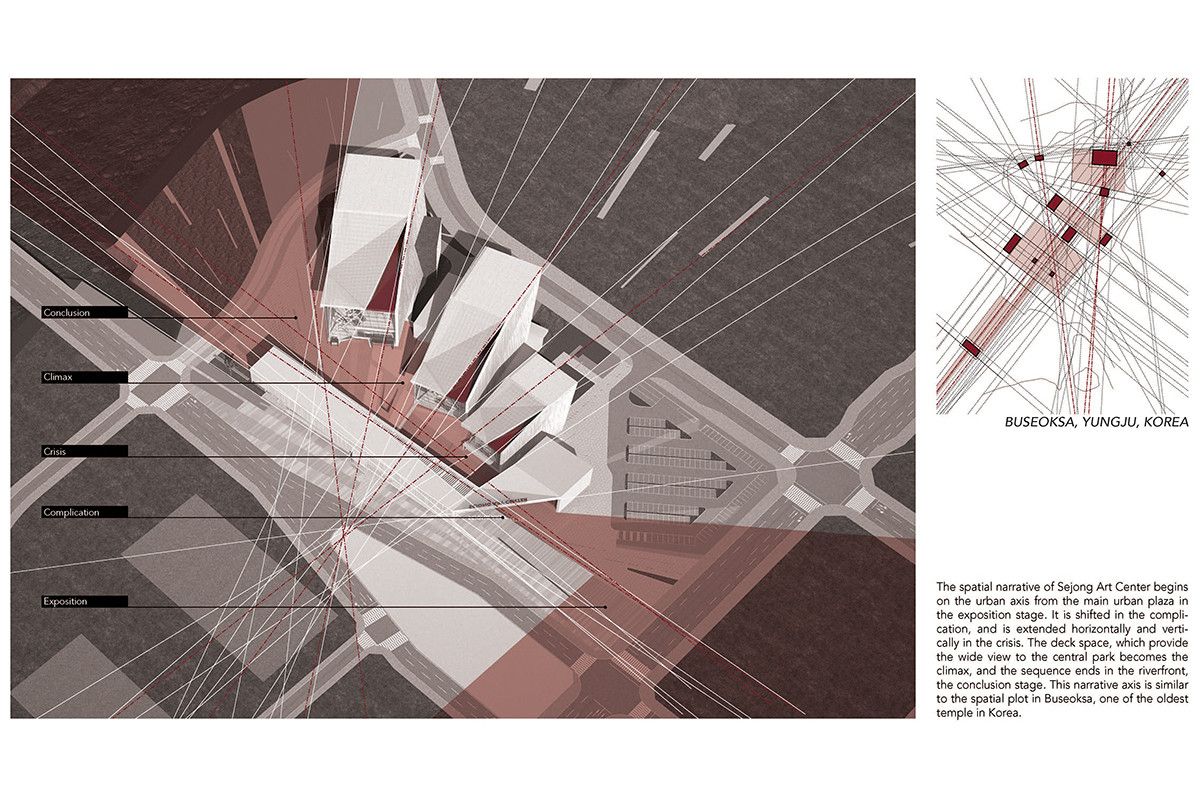
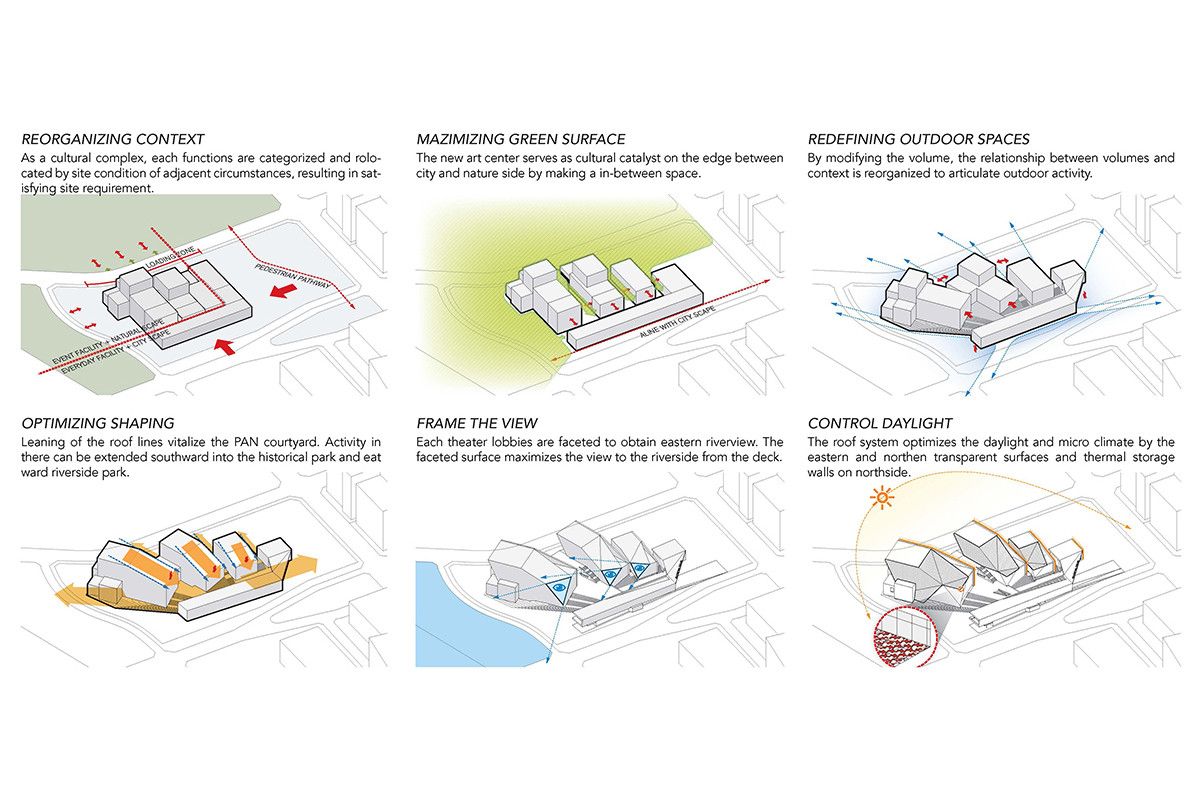
As part of a competition to design the new Sejong Art Center in the new cultural hub of Sejong City, Korea, H Architecture in collaboration with Haeahn Architecture proposed this design, a contemporary complex consisting of a series of buildings. Located at the edge of Sejonhg, the design aims to embrace the polarity of the city with nature and allow the dichotomy of city and nature to coexist in order to produce a more interesting environment. By focusing on this relationship, special moments in and around the structures occur that actively brings nature into the complex and makes way for sunlight, wind, and foliage to infiltrate.
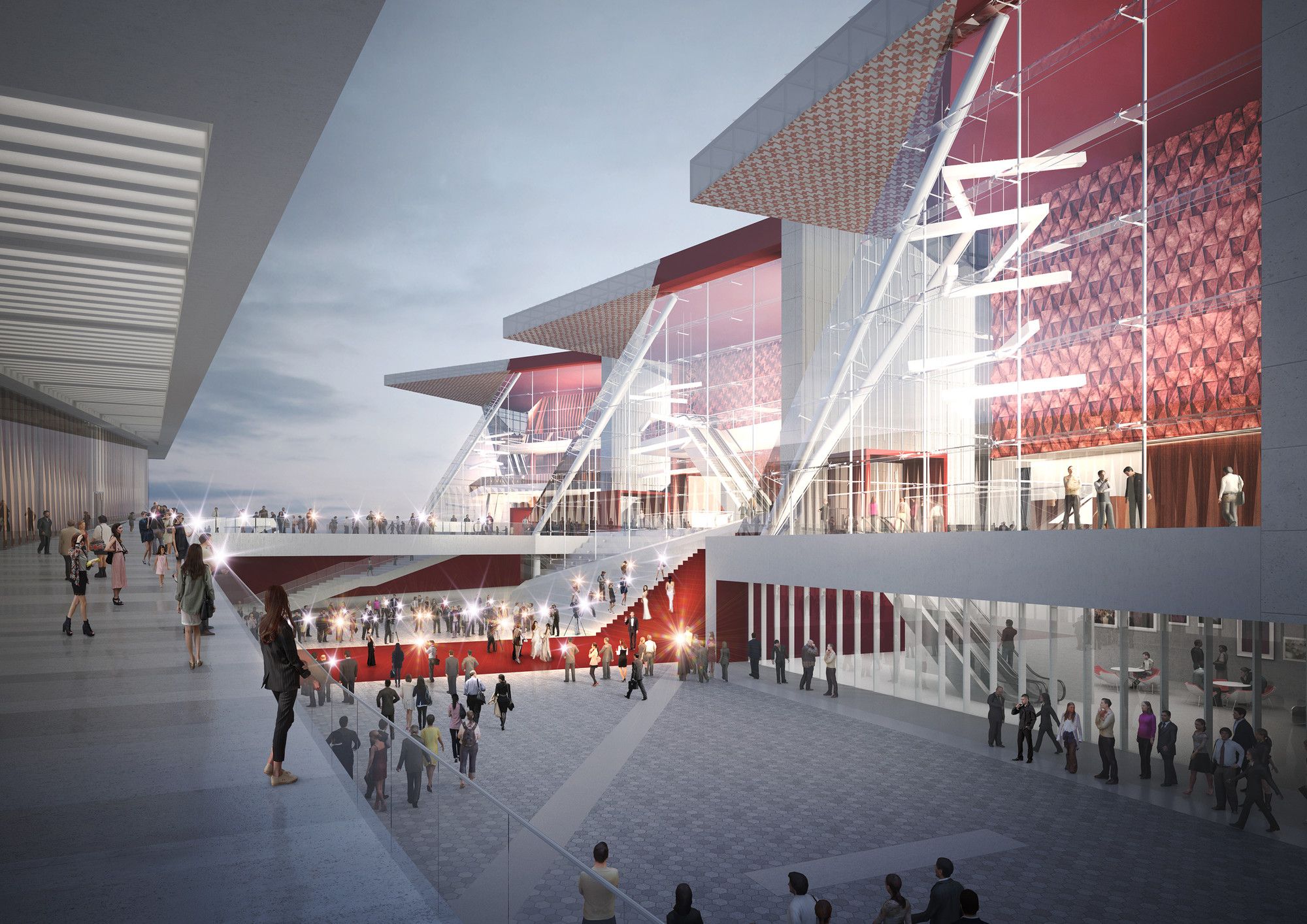
Designed by H Architecture + Haeahn Architecture
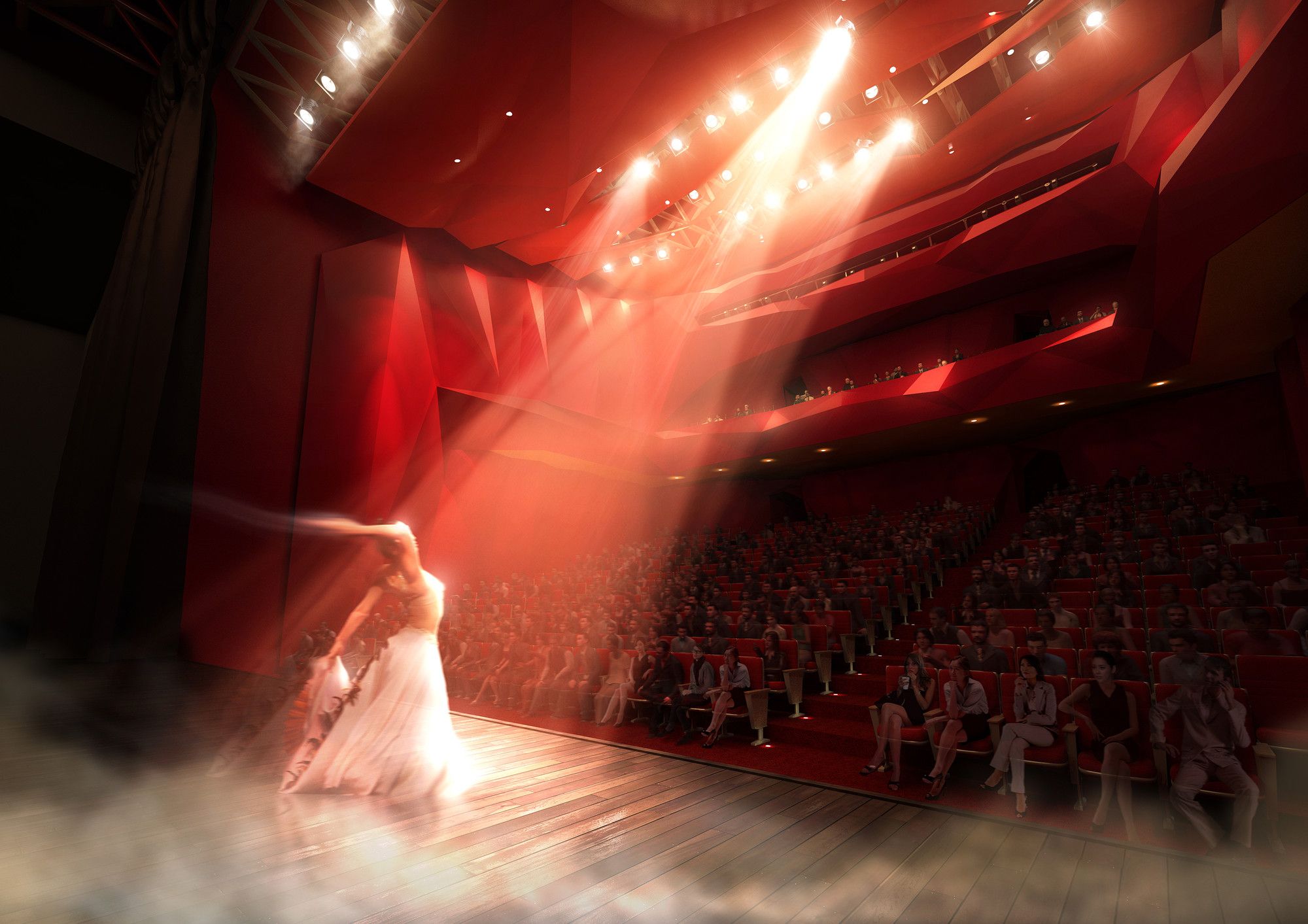
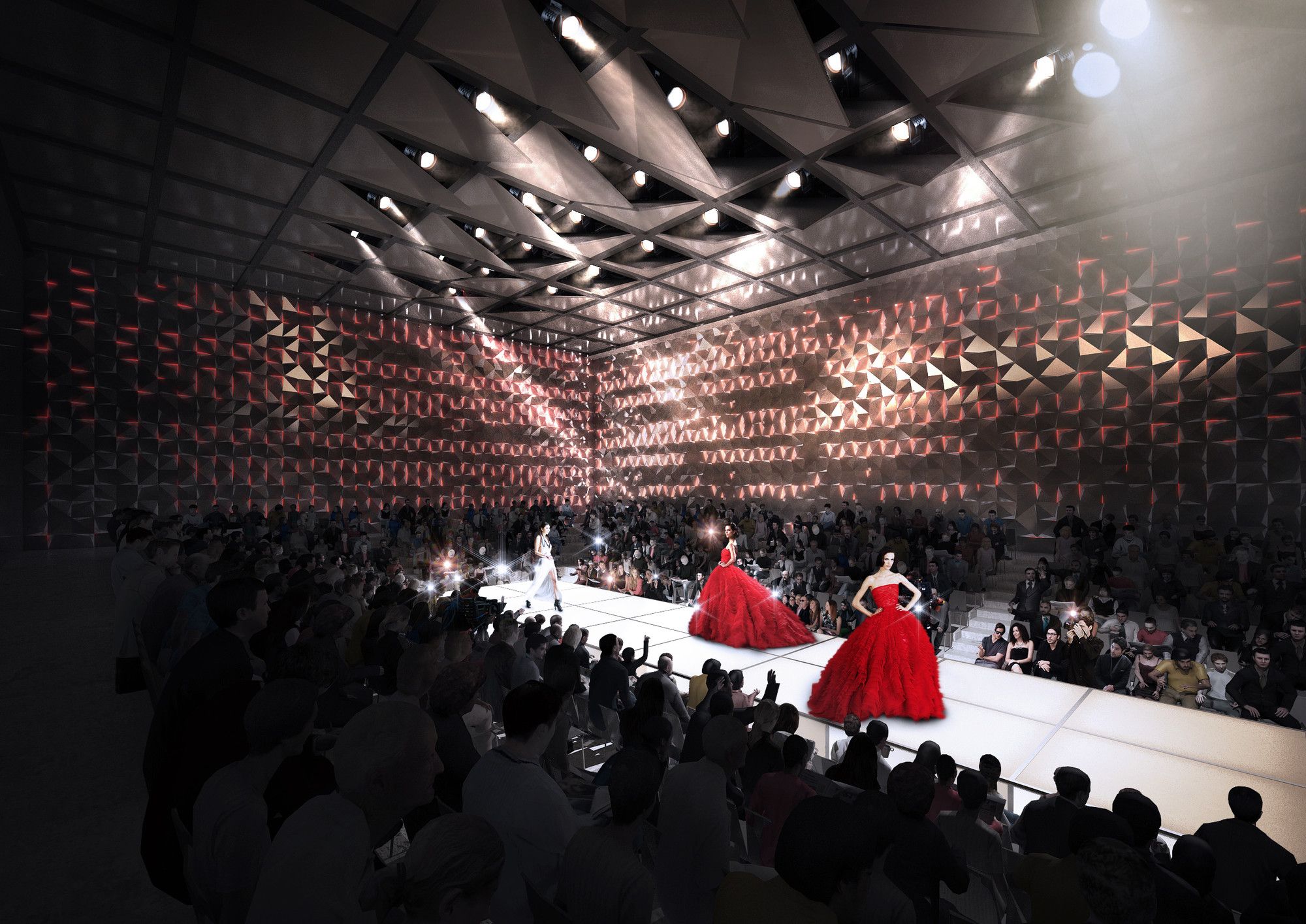
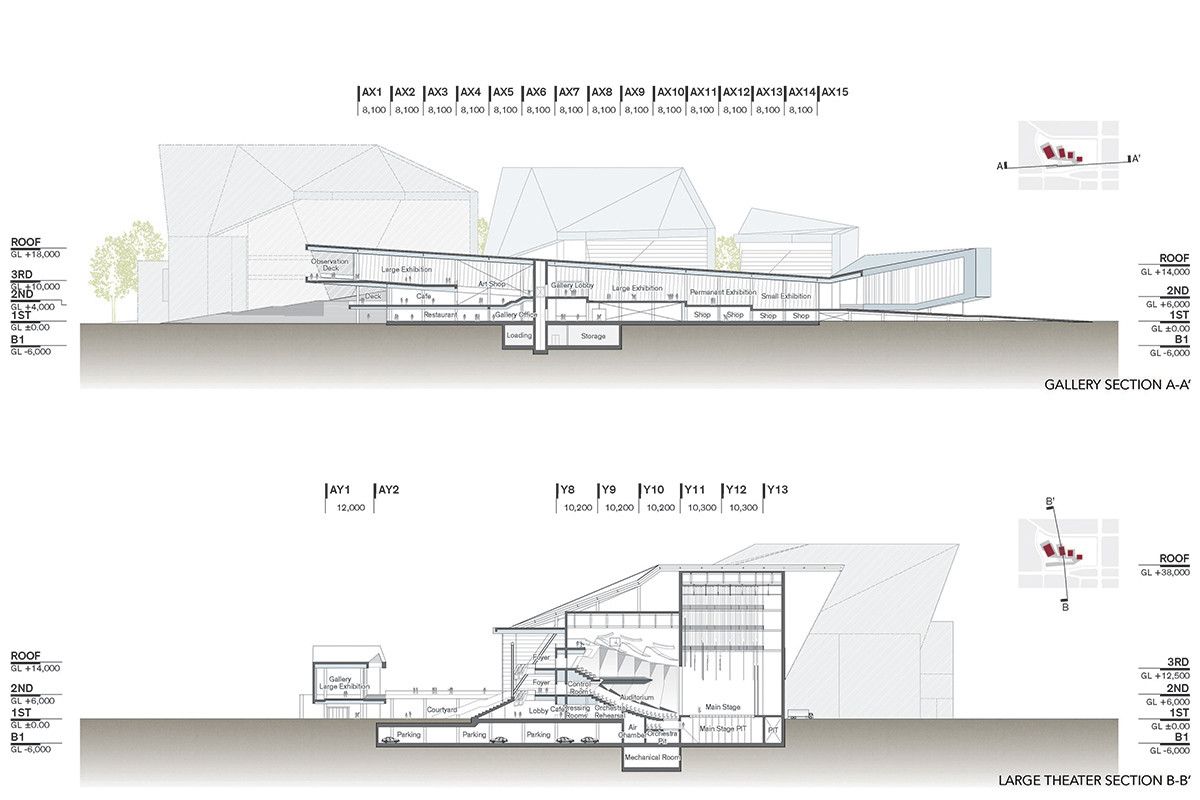
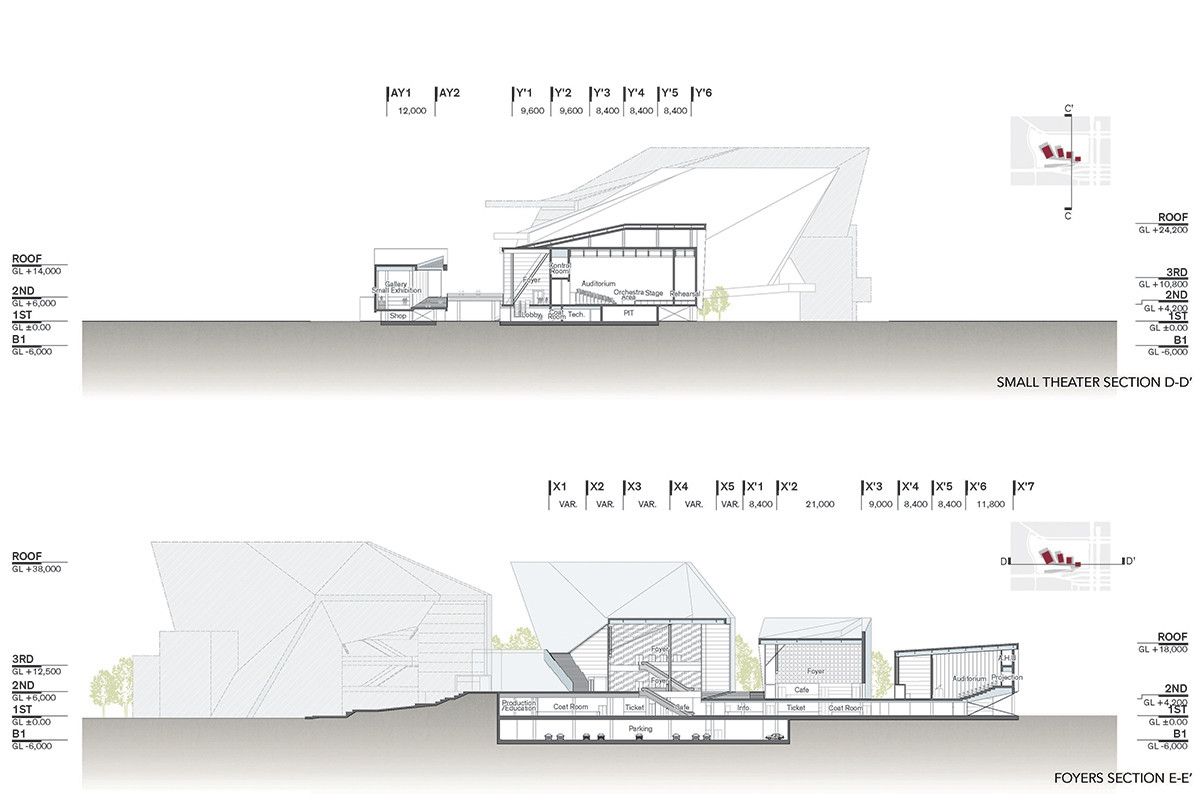
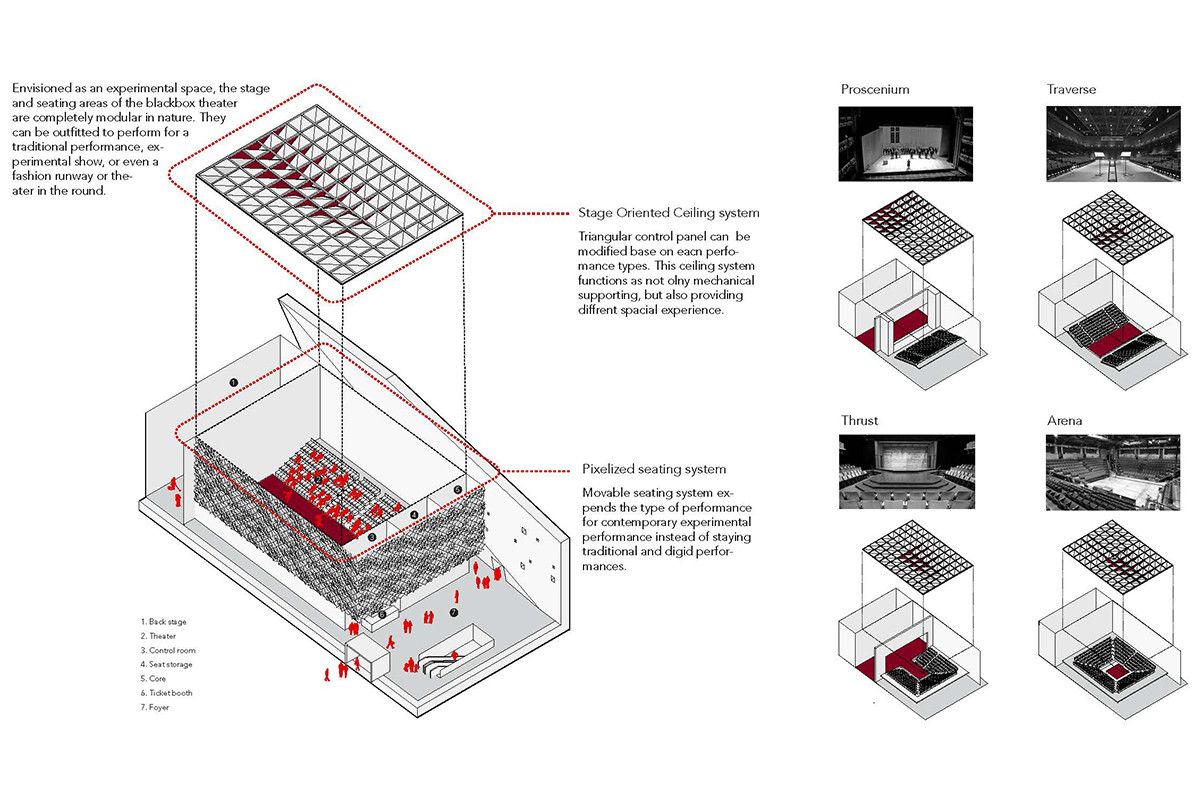
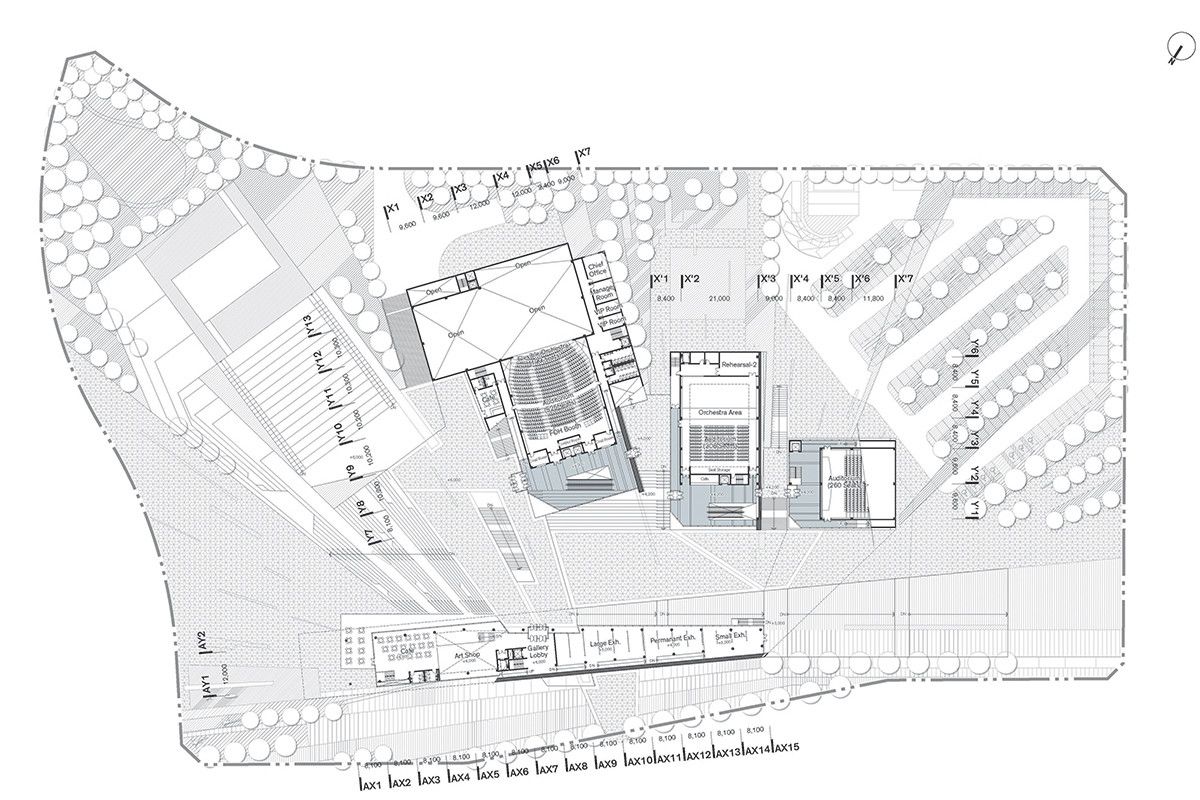
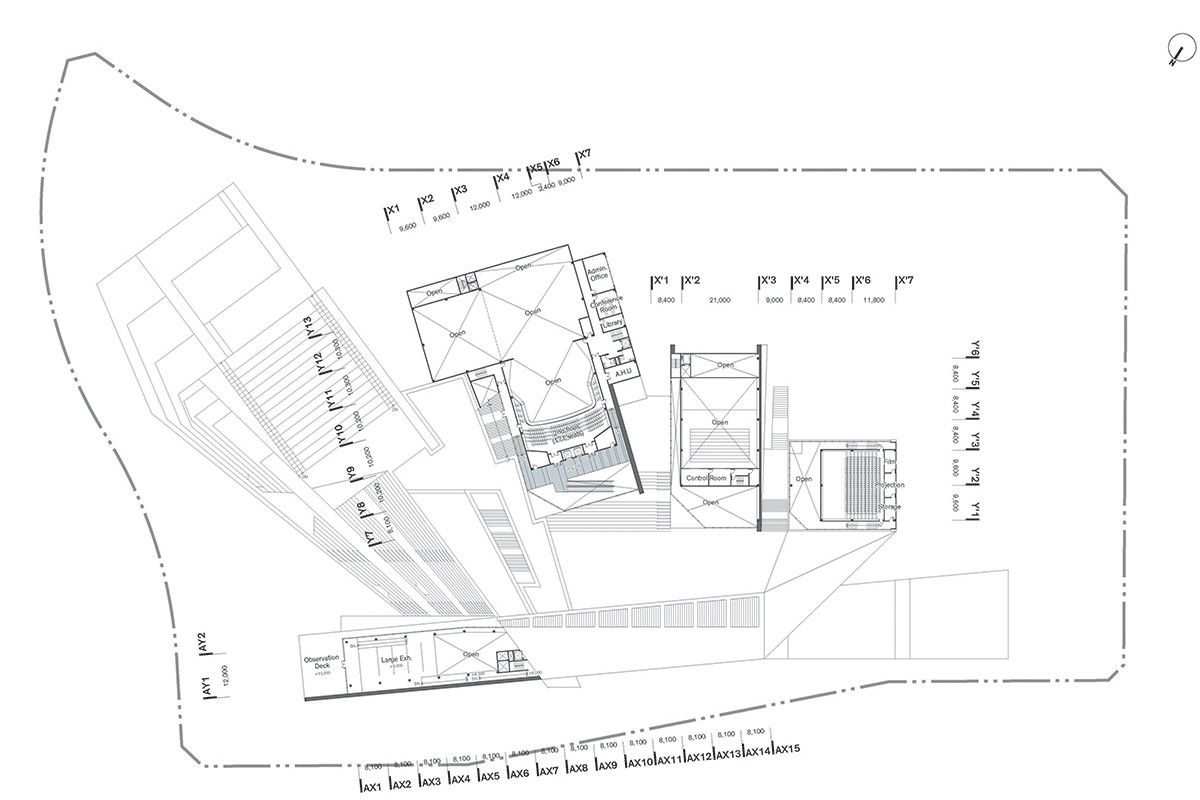
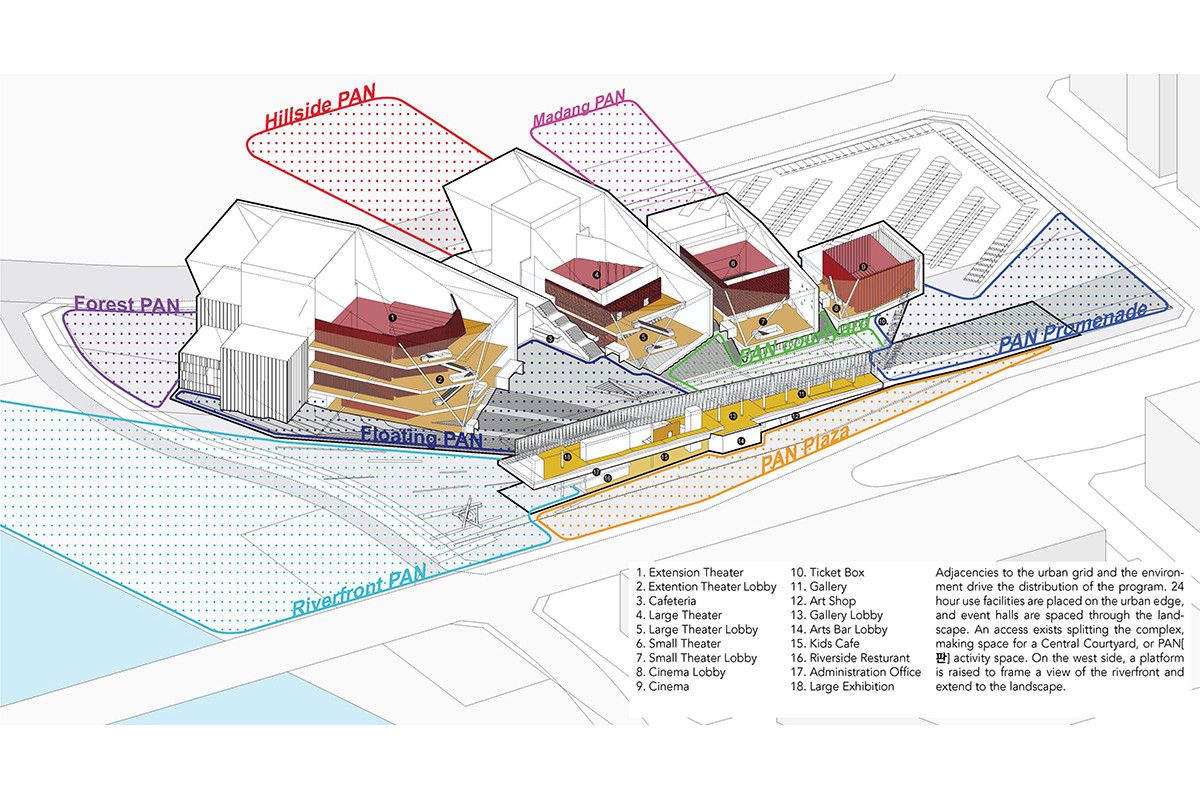
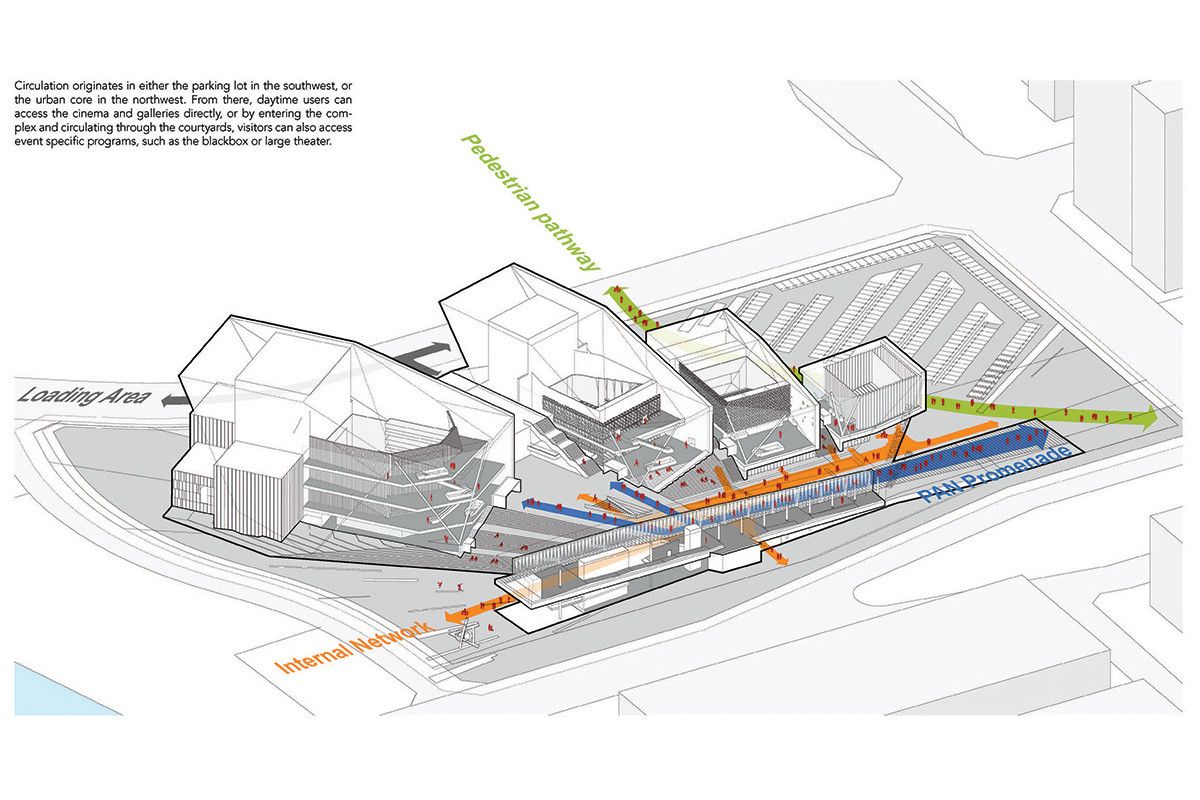
 With a total gross area of 11,138 square meters, the complex includes a 700 seat performing art center for classical concerts, ballets, and musicals, a 300 seat black box theaters, a cinema, gallery spaces, a 1,500 seat opera theater as an extension, a restaurant, a café, and parking.
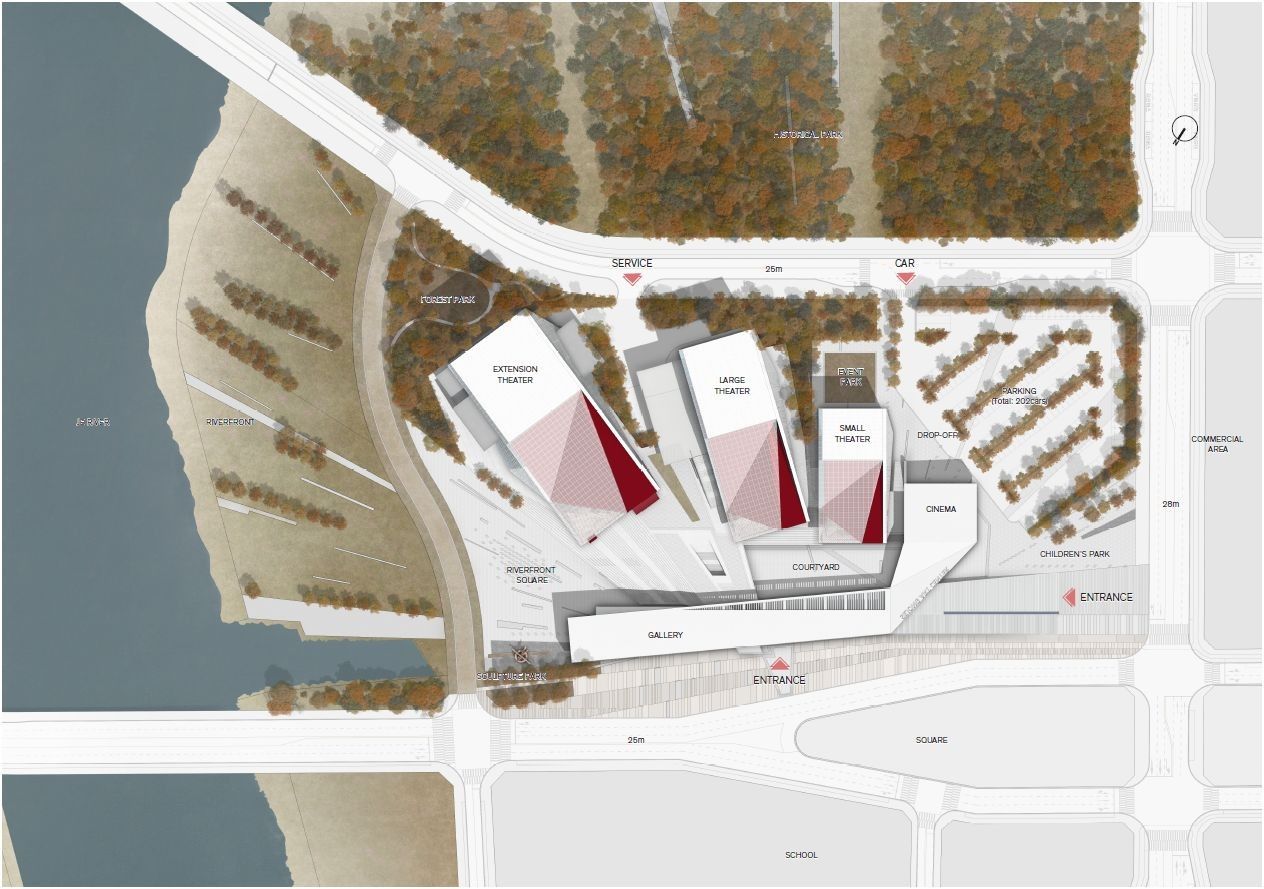
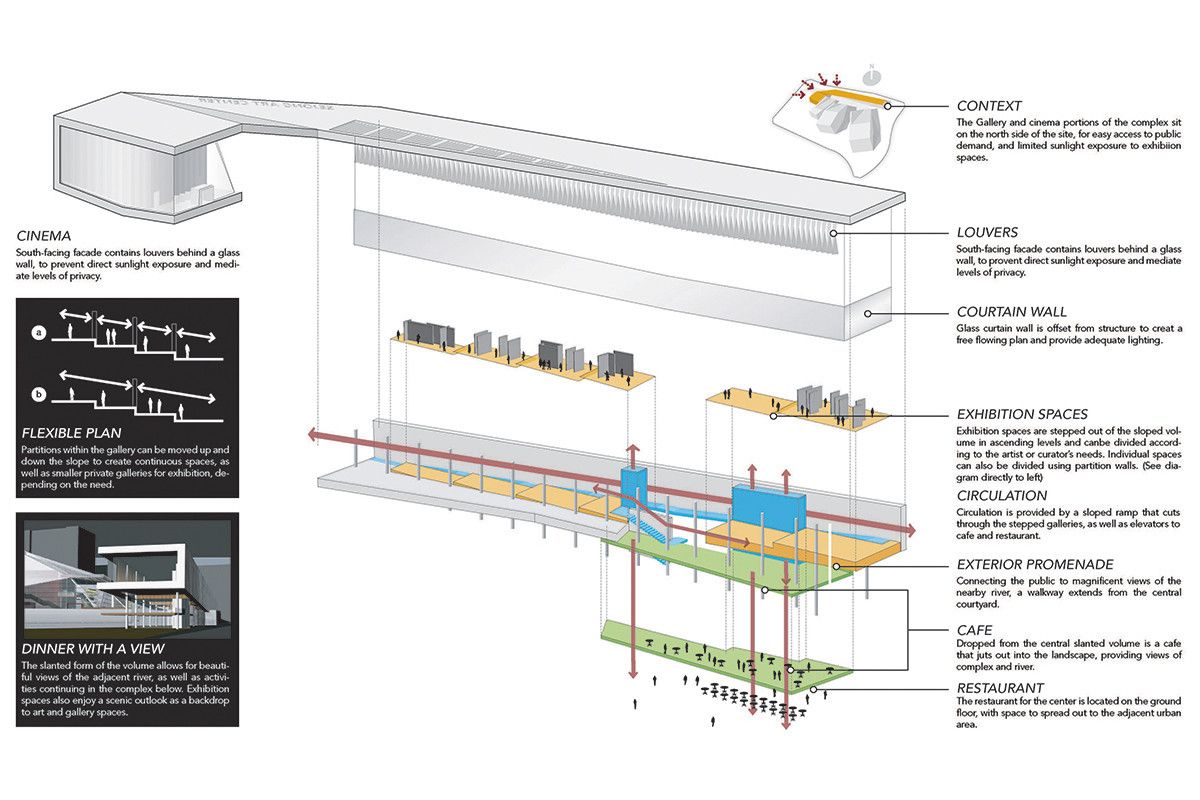
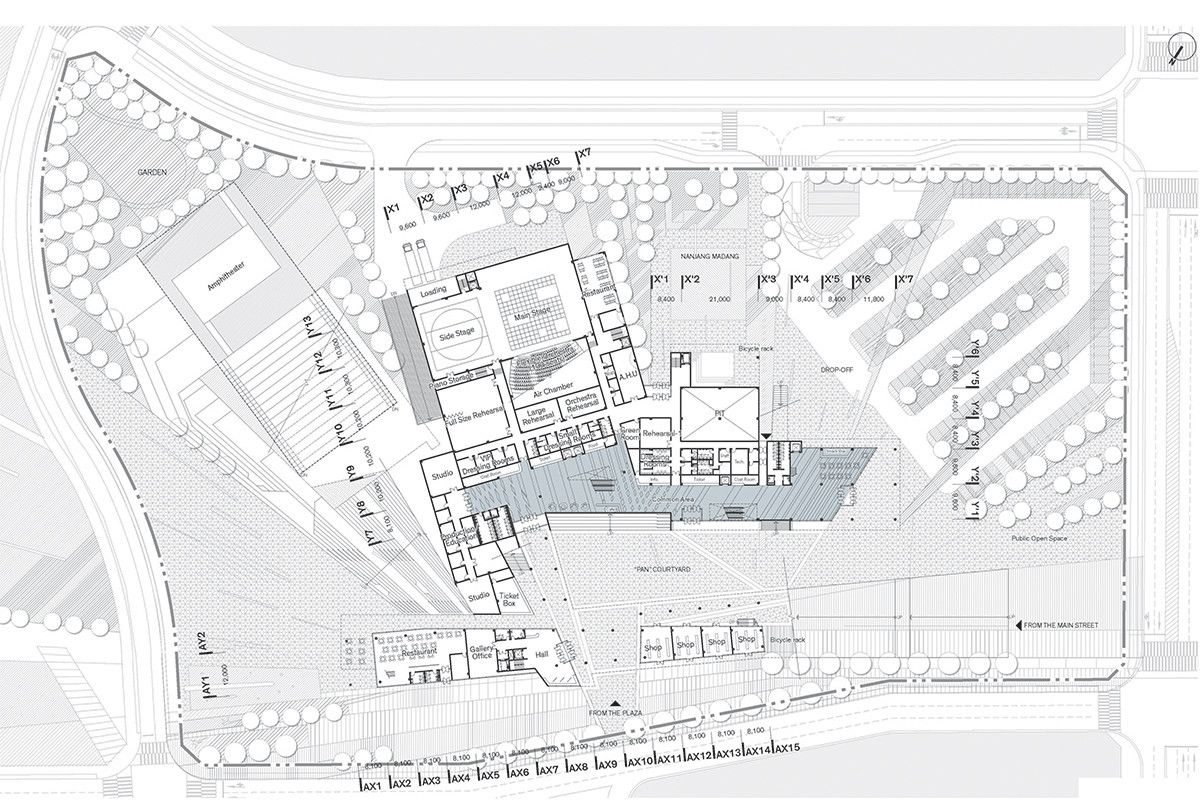
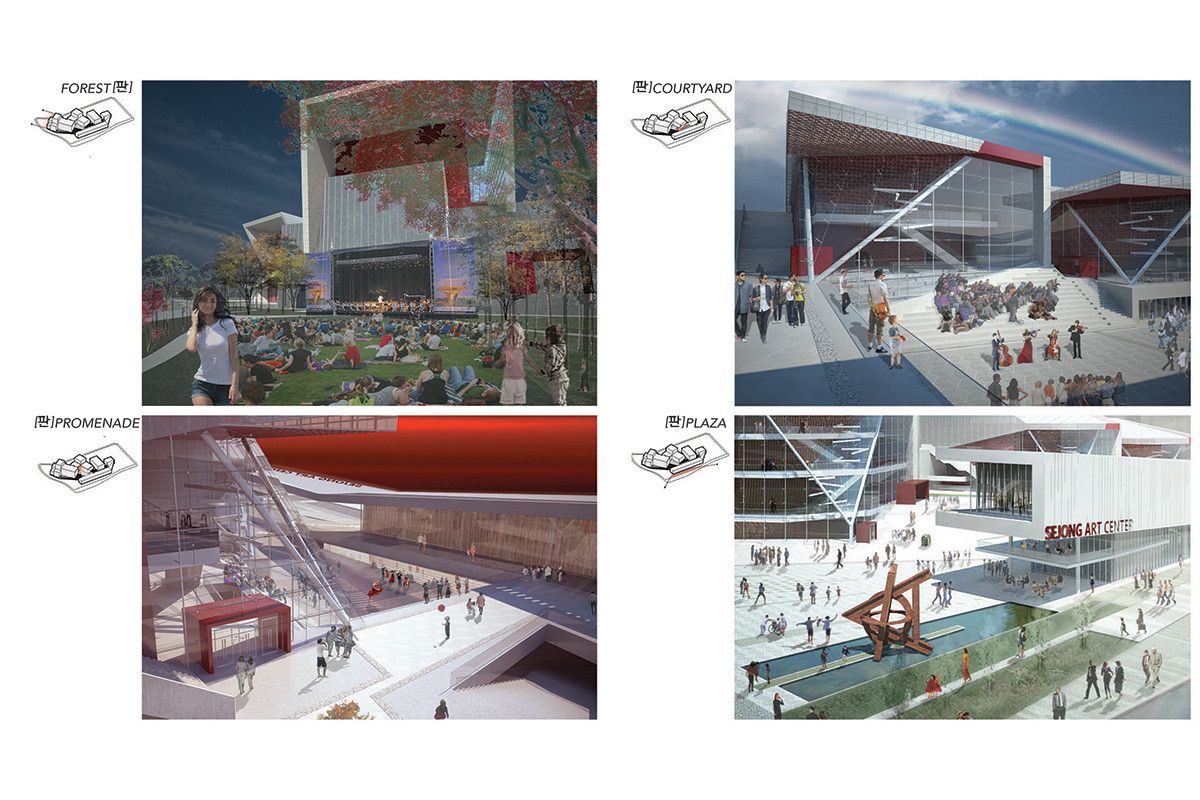
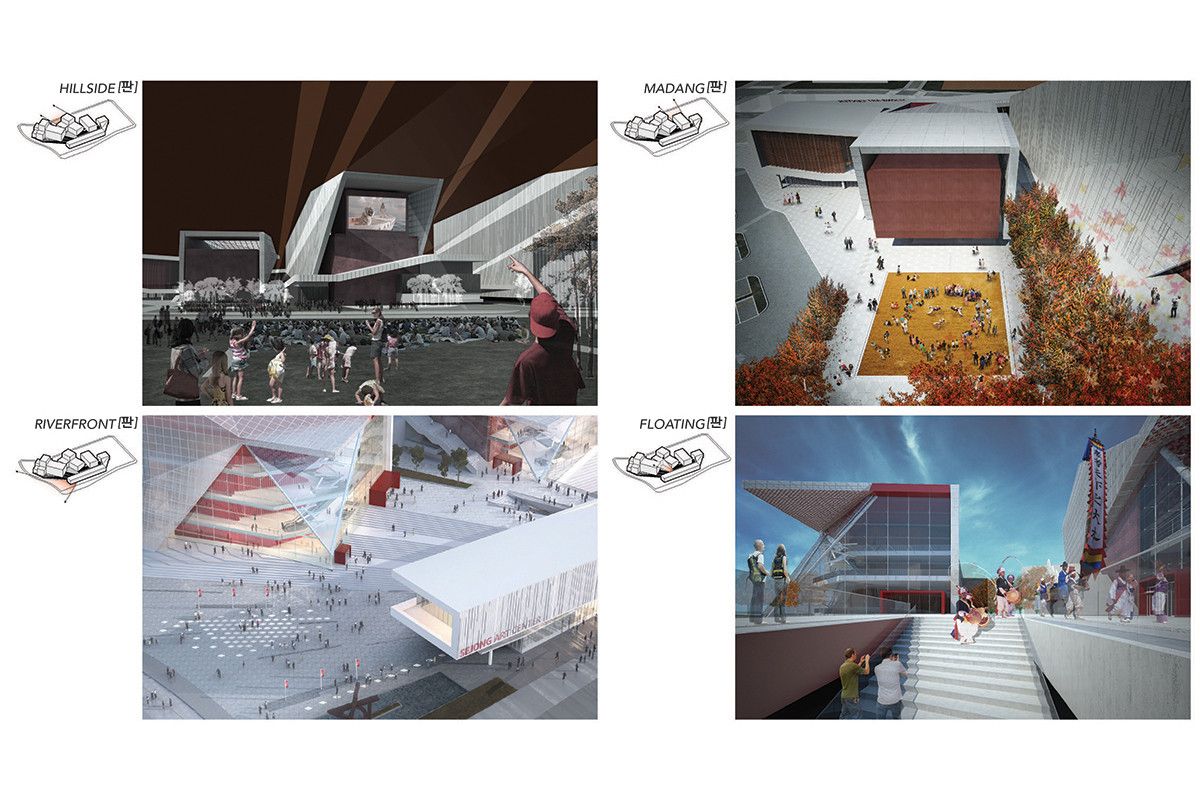
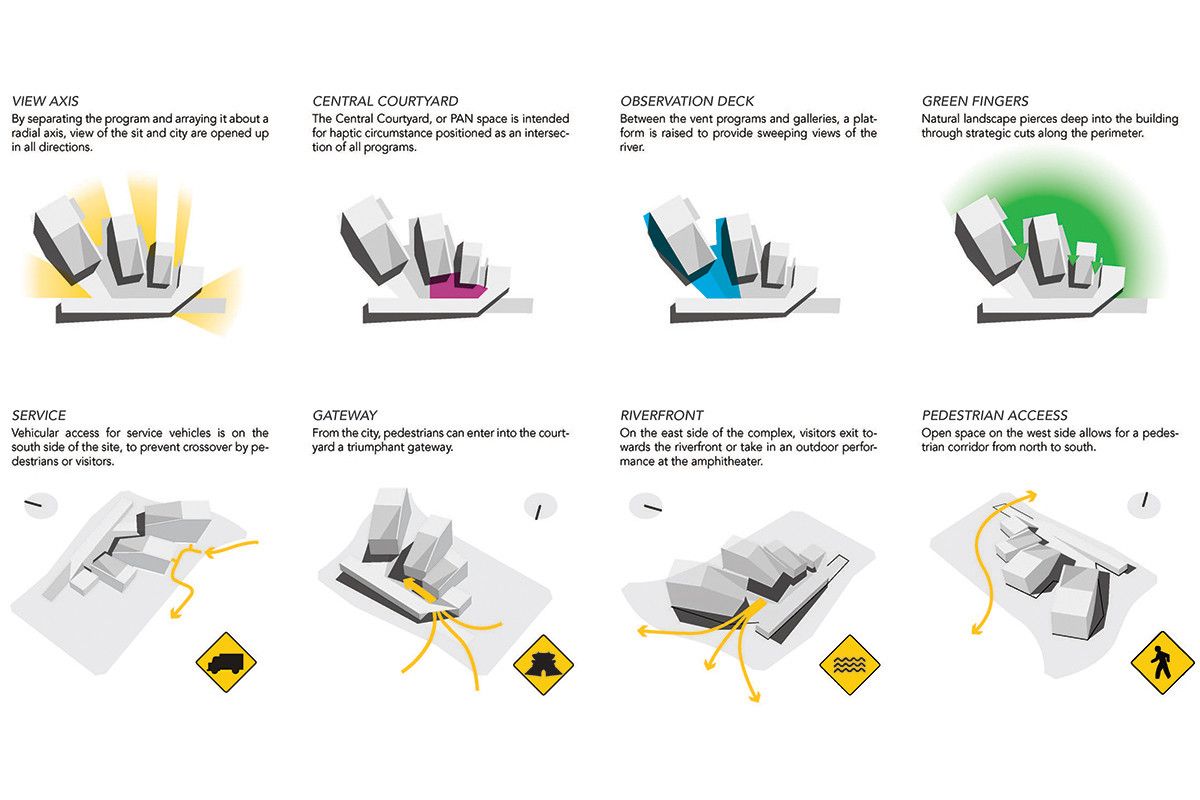
The gallery and cinema programs are located at the outer edge of the complex to allow visitors easy access since they house facilities that are open every day. The long arm of gallery portion of the building creates an axis that the other buildings, which hold theaters, fan away from, opening the back portion of the lot out to the river side. Not only does the outdoor spaces become an enjoyable place to take a break during performance intermissions to reconnect one with nature, but can also accommodate numerous outdoor performances such as a concert in the forest, a traditional parade, or a summer night film festival.
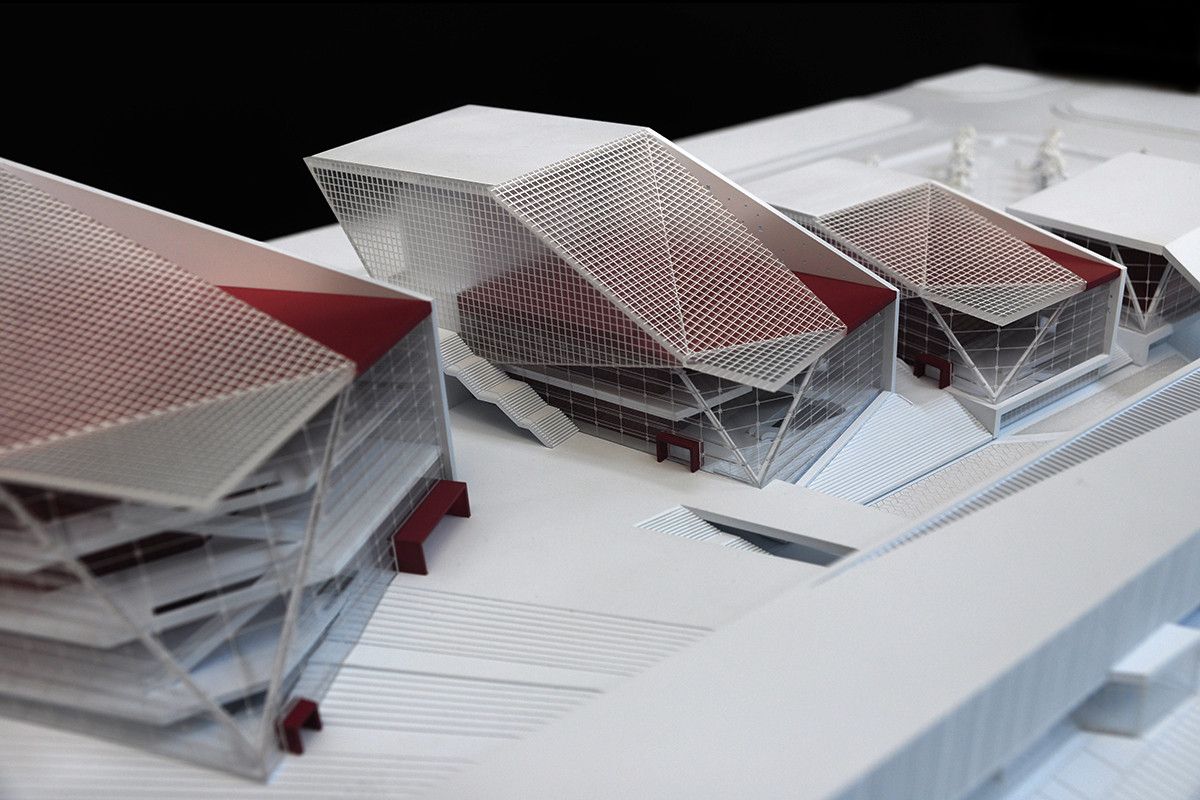
model 03
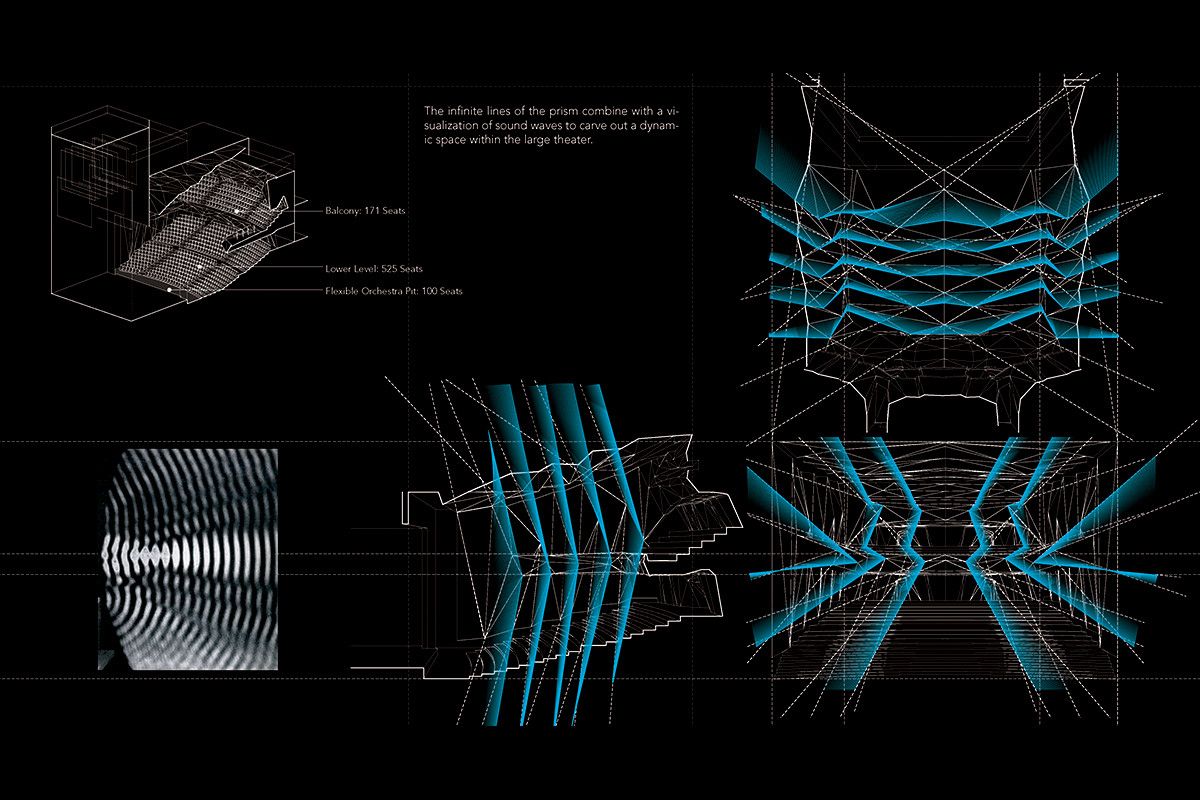
 The even facilities are located at the inner layer of the complex, maximizing direct contact with the surrounding park, river, and hills. Each theater resides within its own structure within the complex, to separate competing noise from one performance theater to another and to provide more external conditions for the visitors.
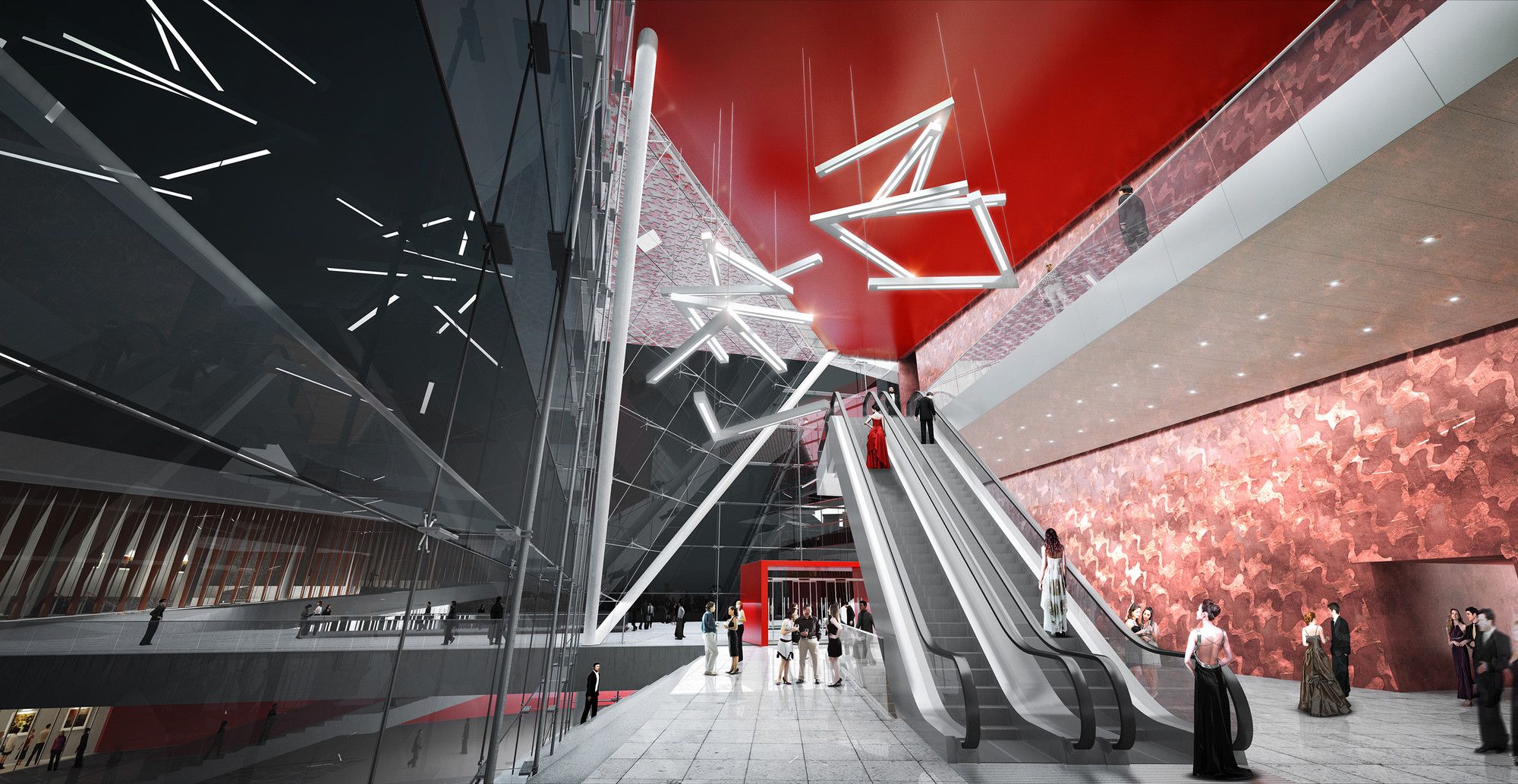
Designed by H Architecture + Haeahn Architecture
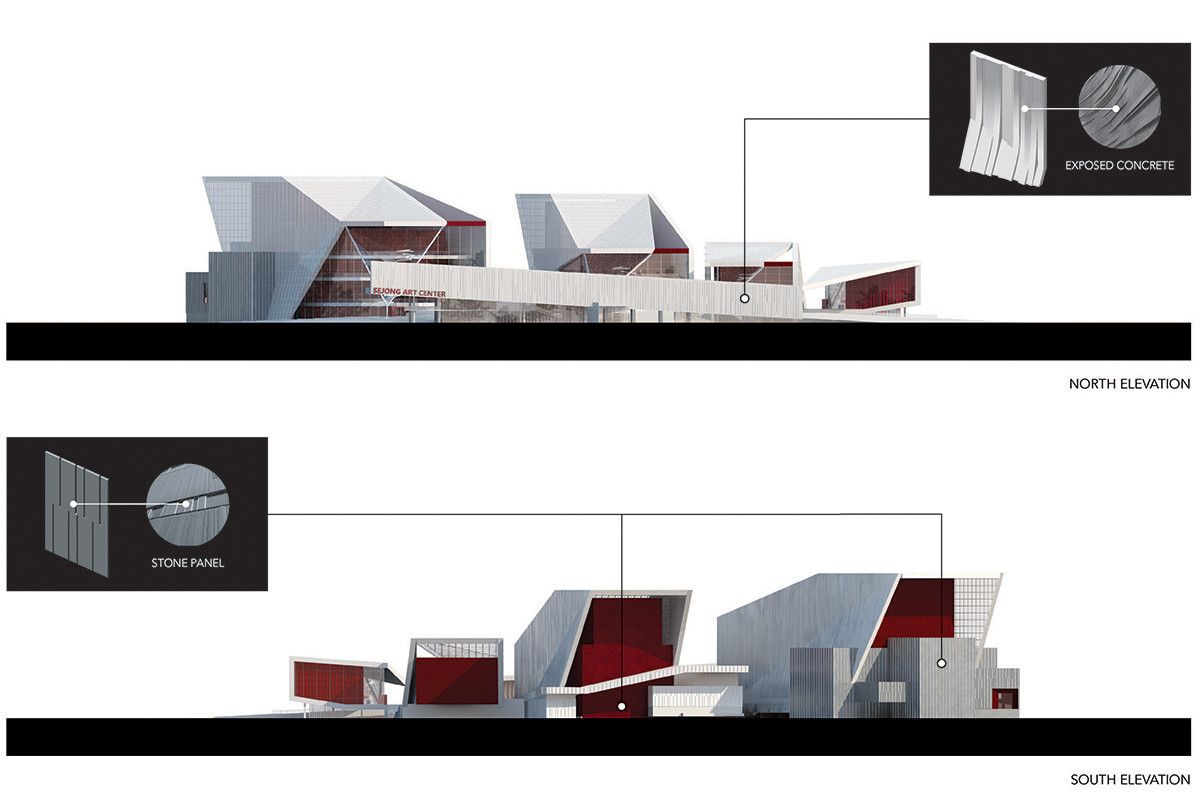
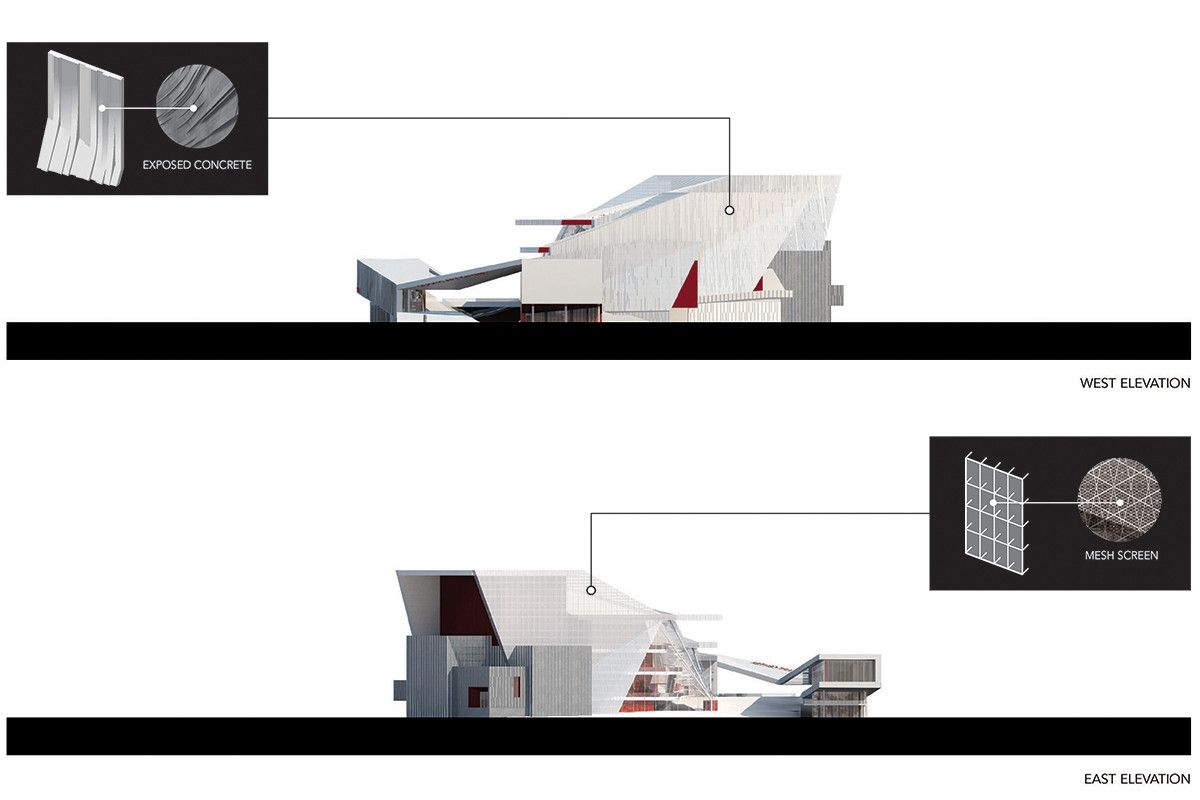
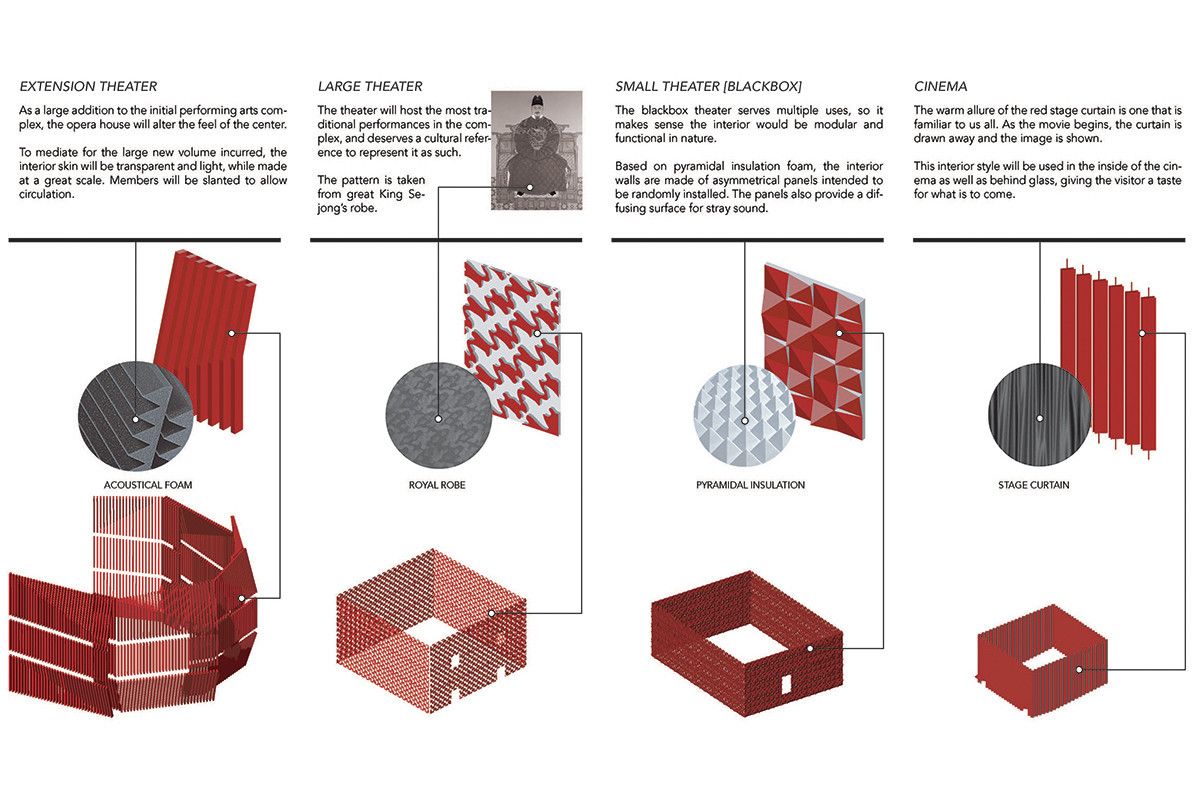
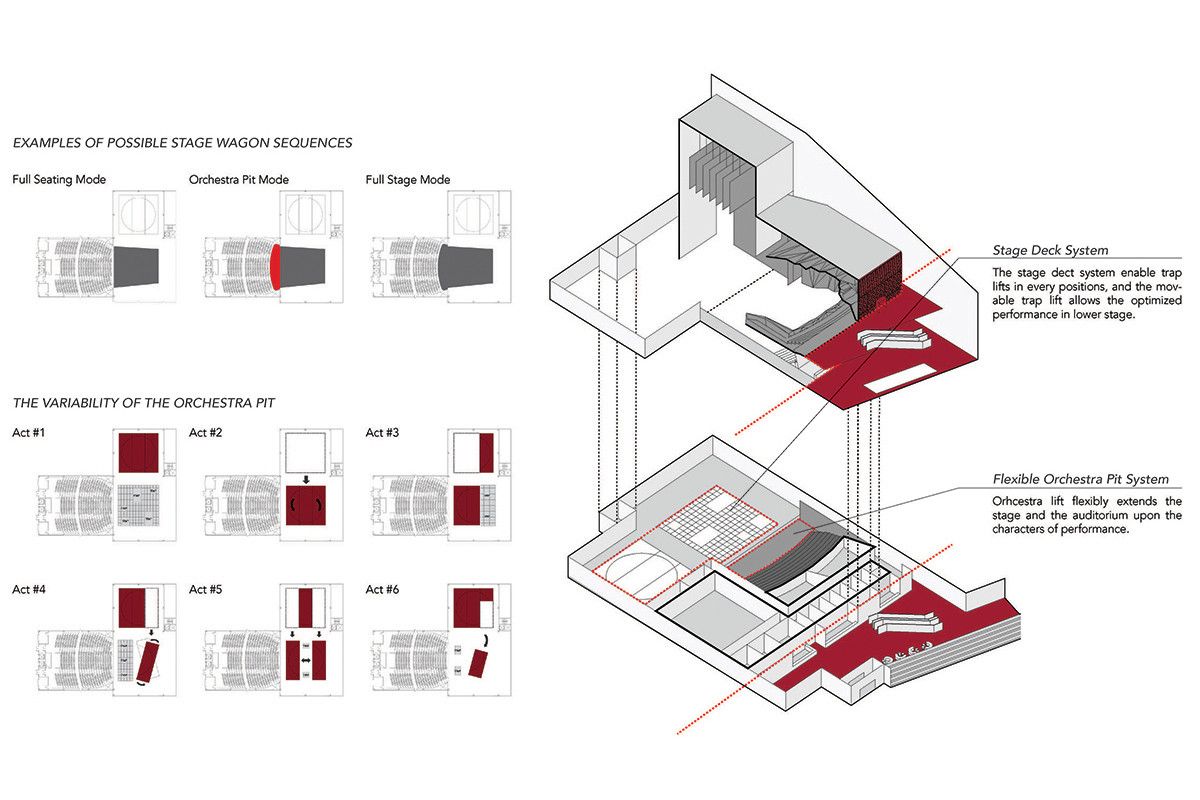
Each theater, including the cinema, was designed using different acoustical and insulation strategies in accordance to the designated purpose for each theater. As a whole, this proposal does a nice job at recognizing the differences each program needs in order to function at the highest level while still designing the entire complex to look uniform and cohesive in order to tie all the programs together. Although all the buildings and programs are separated and housed in specific locations on the site, the way the individual structures flow and move together creates an appealing harmon
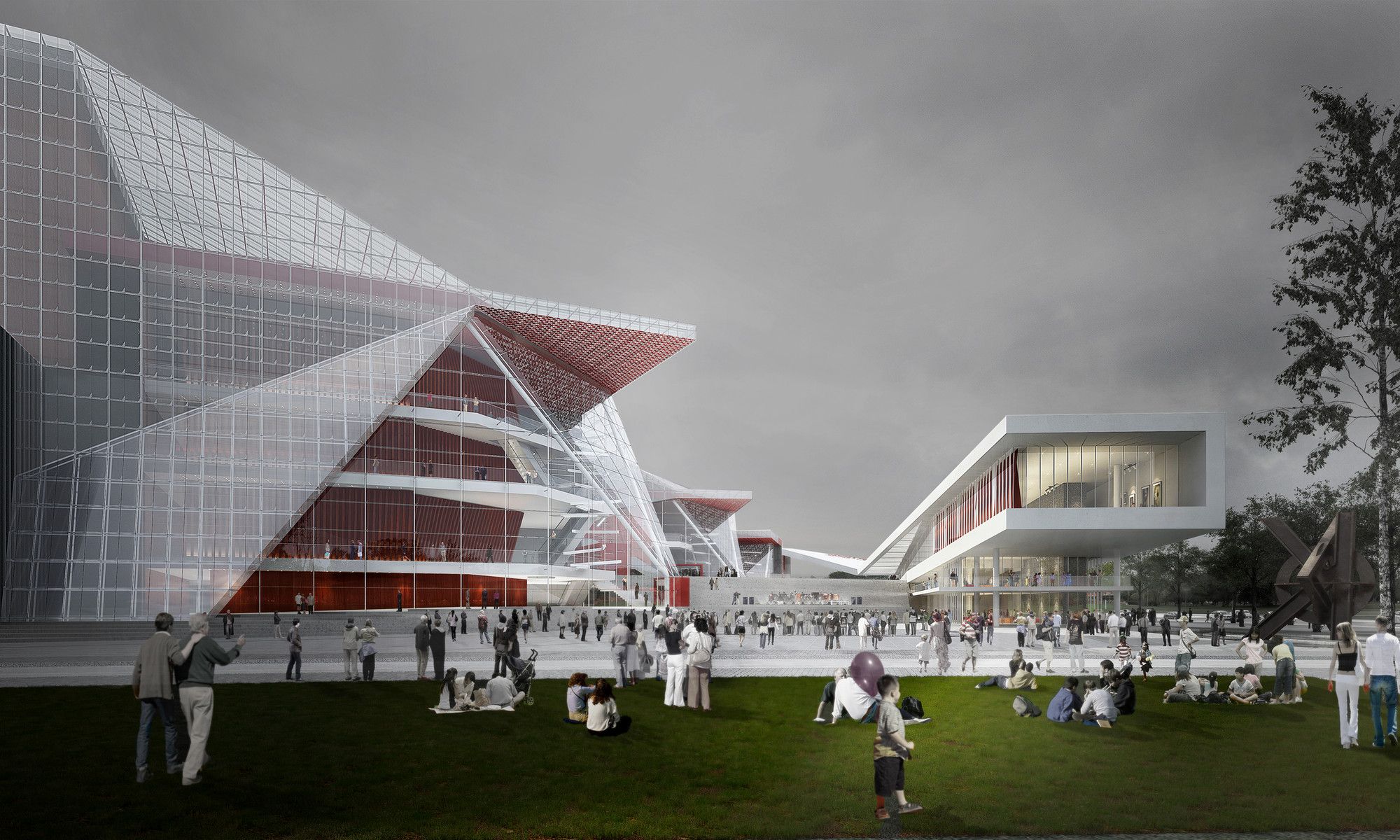
Courtesy of H Architecture + Haeahn Architecture

Kristin Hoover is an editor at Arch2O and a proud graduate of Virginia Tech. Since joining in July 2014, she has authored over 200 insightful articles covering everything from adaptive reuse and cultural centers to eco-buildings and urban infrastructure . With a passion for architectural storytelling, Kristin skillfully curates and crafts compelling narratives that bring design innovation to life. Her editorial work reflects a broad yet finely honed interest in how architecture intersects with society, technology, and the environment—making her a key voice shaping Arch2O’s explorations of contemporary built form.